
I’m around 8 years old. It’s late December, which for a Winnipeger means cold and snow. My parents have entered my room to get me out of bed, a 4 A.M. wake up call my young body is not yet accustumed to. Still half asleep, they usher me into a packed van, ready to make the long drive to Toronto to visit our relatives for the holidays. As the only ones in the family to live outside of the GTA, these trips would be common place and an annual affair.
I have very little awareness of the challenge the 2400 kilometer trek is for the ones behind the wheel. Navigating the treacherous northern Ontario portion of the transcanada highway in the middle of winter while attempting to occupy three boys in the backseat. I do have a distinct memory of being tossed out into the snow with no shoes during one of these trips, the van doors being locked along with the message that I would now need to walk the rest of the way. Good times.
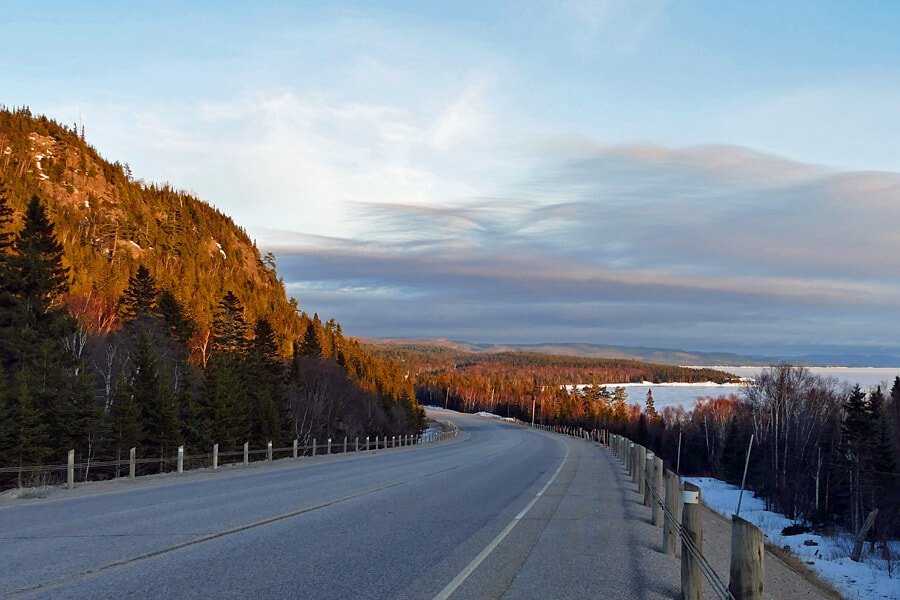
For the most part it is the small things that stick in my memory more than the big events. This big events tend to blur together into a singular portrait I call “summers at the cottage” or “Christmas with the cousins”, littered with a smattering of iconic ventures such as riding to the top of the CN Tower, visiting the Falls, or braving the coasters at Canada’s Wonderland. The smaller memories are the ones that engage my senses, the ones that I can embody and which place me back in the moment. Like being ushered in to the van at 4a.m and snagging a prime spot on the floor of the van by the heater, letting the sound of the hum lull me back to sleep. Or waking up with the sunrise to the presence of those bright red cliffs that tell inicate we are now in northern Ontario. The great lakes coming into view. Obligatory stops in towns like Thunder Bay, Christmas, Wawa, and Sault St. Marie. And of course the first glimpses of the big city skyline, Fighting over those 12 packs of cereal boxes so that we wouldn’t be the one stuck with the bran flakes or rice krispies. The smell of the grandparents house. Sitting and listening to the old transistor radio for the next big police chase or fire, the old hand run manual washing machine churning in the background.
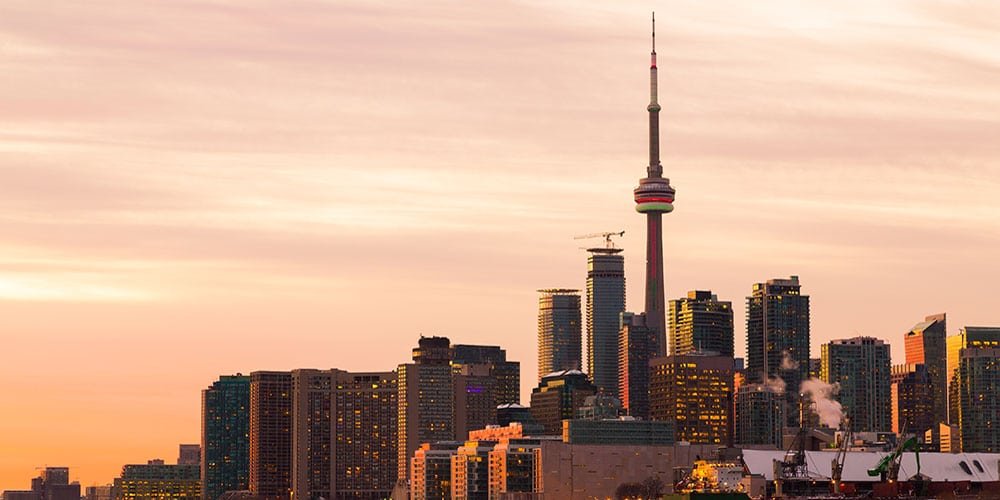
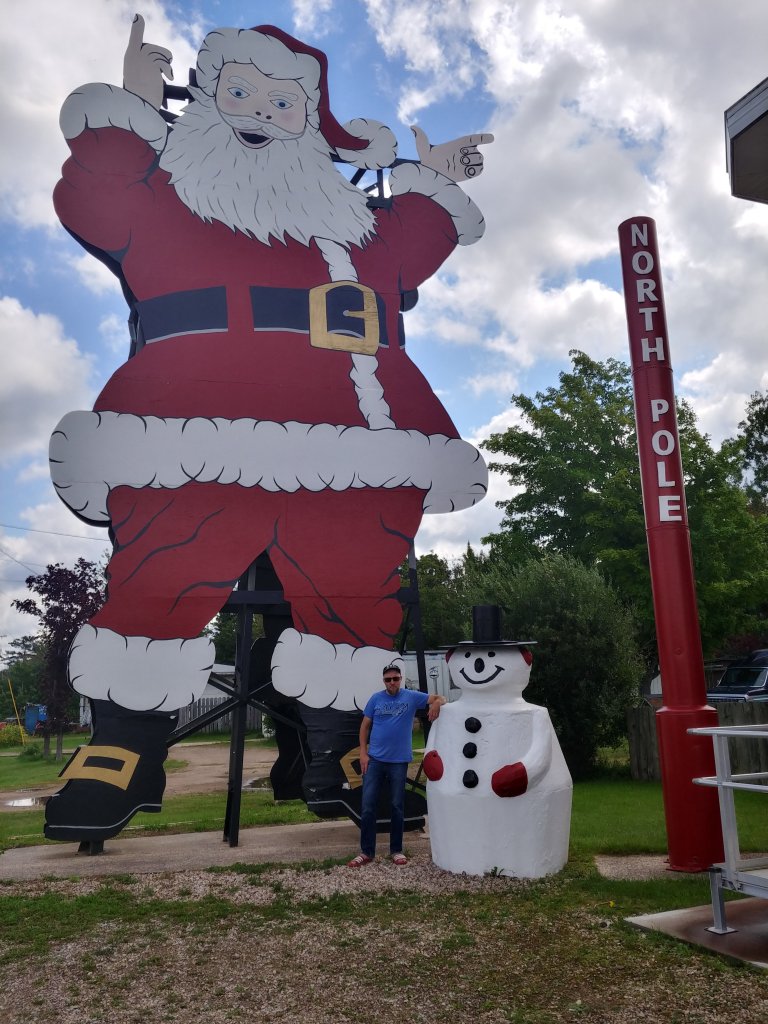
There was an undeniable sense of adventure that accompanied these early endeavors, breaking out of the bubble that is the middle of nowhere Canada and broadening my understanding of the world. To this day, trying to explain to my relatives what it is like to live in a place where the next significant major city center is 1200 km away is difficult to say the least. Living in the most populated part of Canada where you are never more than a few hours drive from the next massive city center is sort of like living in Europe, where a couple hour flight or a short train ride has them crossing multiple countries and timezones. If you’ve ever tried to give a European a sense of how big Canada actually is then you know what I mean.
Its precisely that vantage point though, distanced as we were, that allowed the adventure to exist. For as much as I love Winnipeg, the sense of wonder that was birthed by making that 2400 km trek never gets old. I point to these trips as the seeds that would grow my love for travel and my inate ability to be fascinated by even the smallest and most ridiculous things. The feeling of entering an unfamiliar space has a way of shaking up the imagination. When we became parents and eventually introduced our son to some of these same experiences, it struck me how, even seeing these well worn roads from a much different perspective this side of 40 was offering something more than mere nostalgia. Such experiences now blended with a greater awareness of history and geography and architecture and culture. It might be following in the footsteps of my childhood self, but it also reframed it as a fresh endeavor, perhaps molding the memories into concrete and tangible knowledge
So why all this reminsicing? My wife and my son and I had done this trip using the Canadian route a couple times before and during the pandemic, but this reflection was actually sparked by a recent trip we took down these same roads, only reliving one of the more expressive of these childhood memories on the American side of the border: embarking over what my young mind only knew at the time to be the “giant bridge”, which I later came to know was called the Mackinac Bridge. Anytime we chose to cut across Michigan rather than snaking our way through northern Ontario, we crossed this bridge. The Mackinac is a 5 mile suspension bridge, listed as one of the longest in the world, spanning the Mackinac Straits, connecting the upper and lower Peninsulas of the state of Michigan (or as they say in Michigan, connecting the “Yoopers” with the southern “Trolls”).
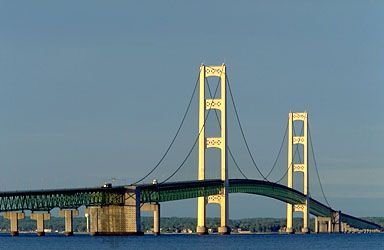
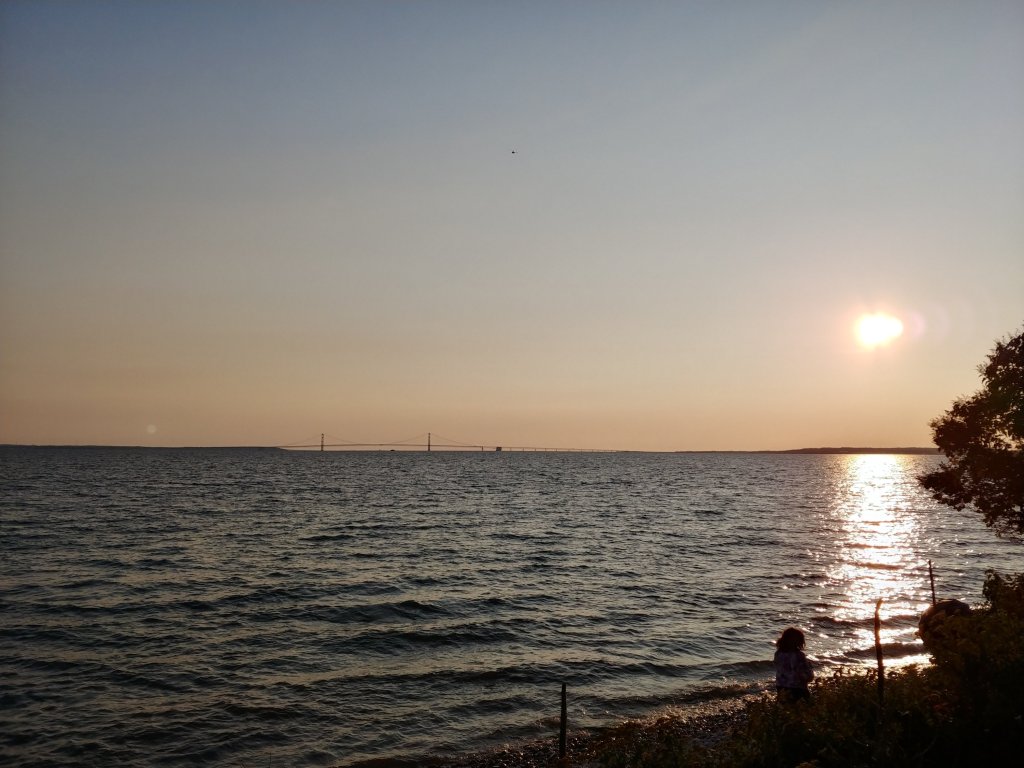
The thrill of the long ascent would meet with the nervous sounds of those metal tracks lining the top. The majestic views of the strait, when I wasn’t attempting to look straight down at our imminent death, was always awe inspiring. My wife hates heights, and hates heights over water even more. So this was of course the natural choice.
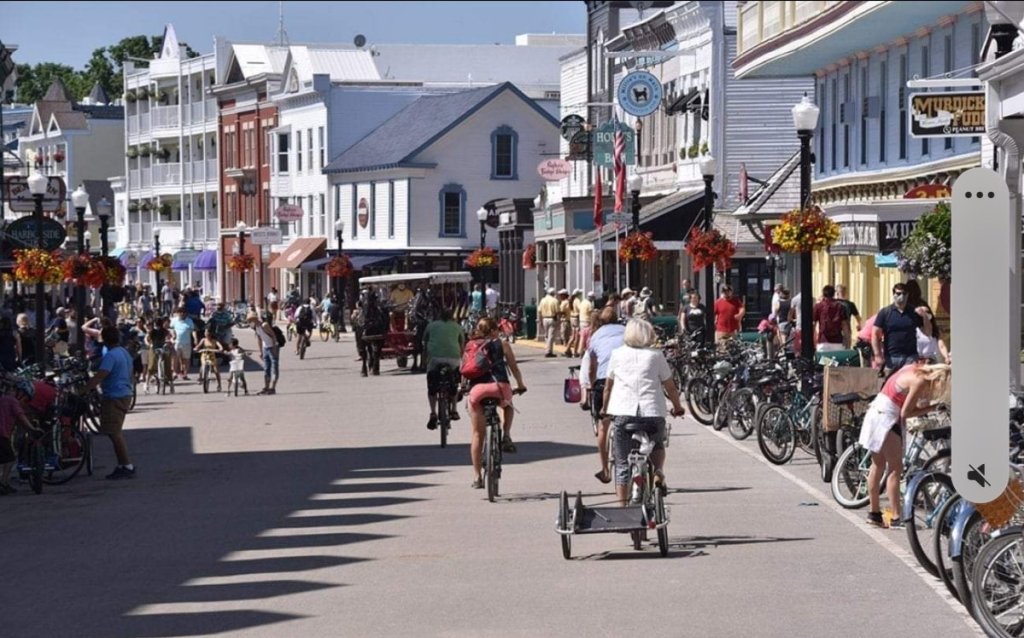
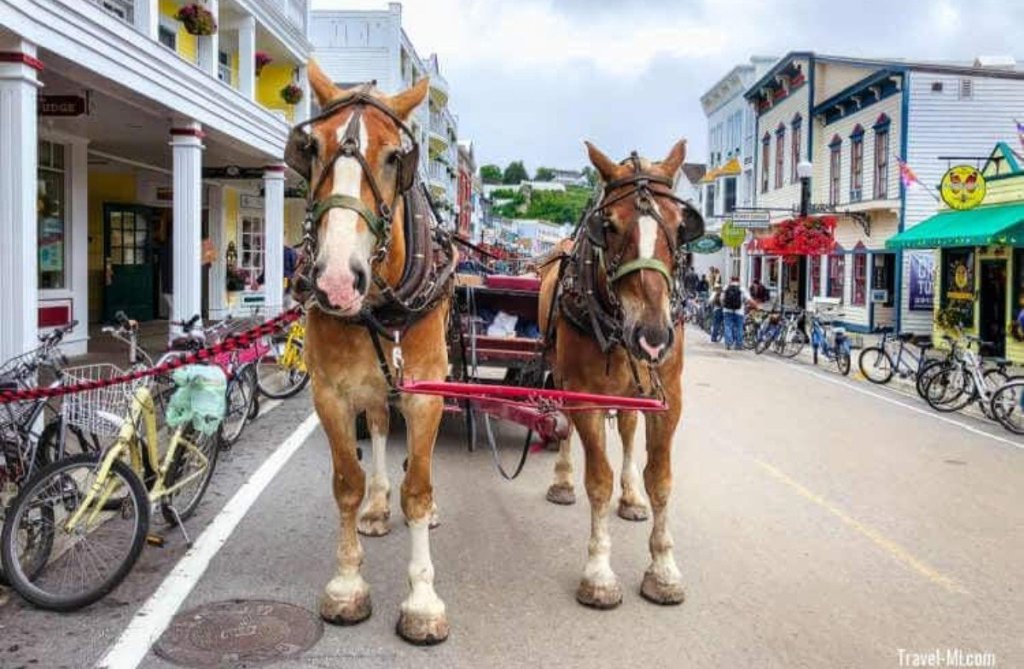
Here is the thing though. This time we weren’t going to Toronto. Rather we were stopping at the bridge to explore something my young eyes had managed to miss through all those years of travel, something my ignorance had hid from my sight: the populated island situated mere miles off the shore. An island where cars had been banished years ago and bikes and horses continue to rule the day. An island where the fudge is as iconic as its array of eclectic and independently owned B&B’s. An island distinct from the mainland and yet somehow still a part of it. An island aptly named Mackinac,
When I first became aware of this island’s existence it immeduately made my bucket list. Which is really more of a multi-paged product of my OCD stored on my computer. It baffled me that the place had managed to hide in plain sight, the ferry dock snuggled under the bridge, bound to the streets of Old Mackinac City. To ask others, “have you heard of Mackinac Island?” was to be consistently met by puzzled looks. Finally taking the plunge would continue to be met with exclamations of, “where is that exactly”!? We left people even more puzzled because, barely a month prior we had vacationed in Oklahoma City. Where is that became paired with “why Oklahoma!?” It sounds silly, but it felt like we were unearthing a little known secret or experiencing a little known exotic locale in our own backyard. And truth be told, it might be a mere 20 minute boat ride from the mainland to the island, but those first glimpses do make you feel like you have travelled to the other side of the ocean.
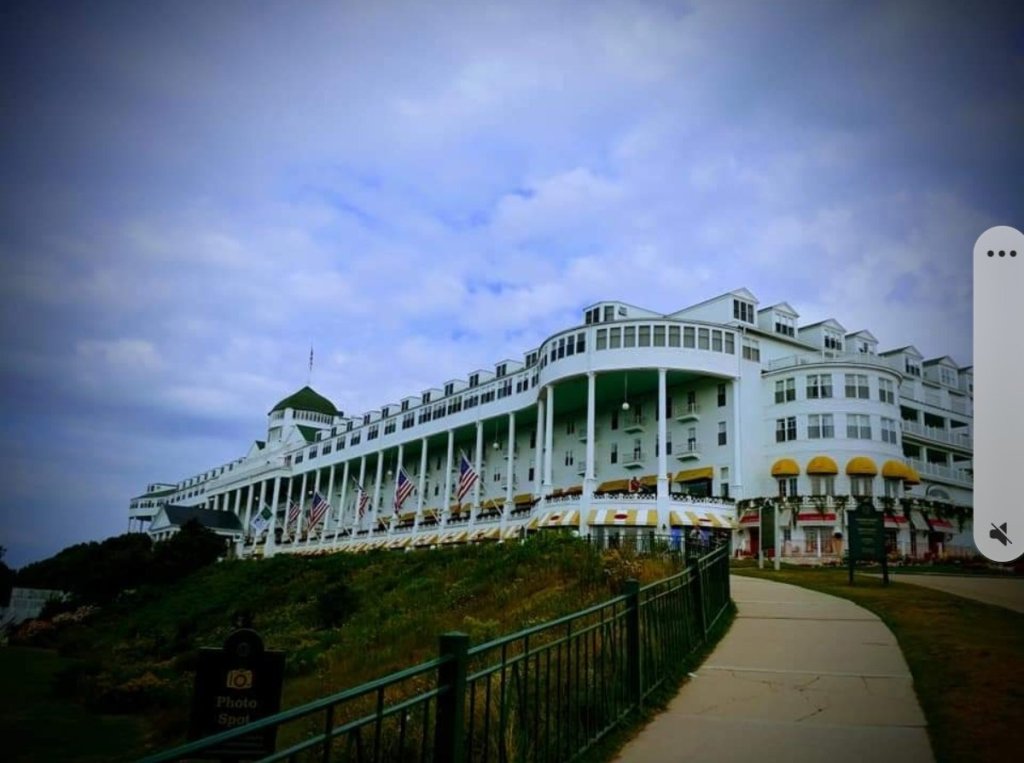
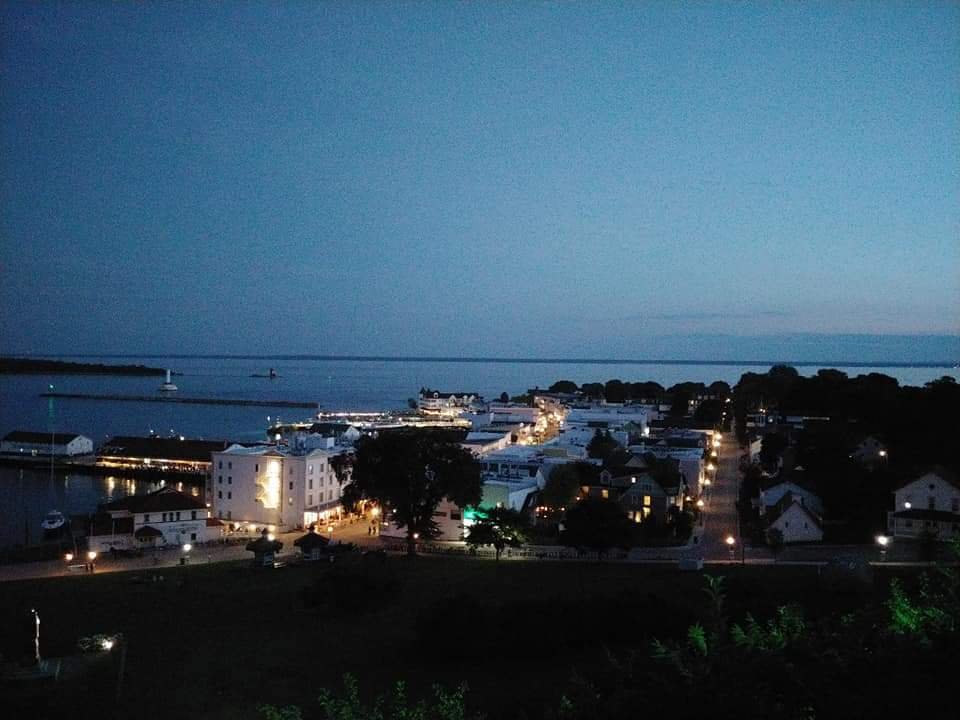
The first thing that comes into view from a distance is the majestic Grand Hotel looming over the hilly incline When you get closer you are hit with the smells. It is difficult to describe, so I’ll borrow a descriptive from a local; it is a unique blend of fudge, horse dung, and seaside. If that sounds less than ideal, it is not. It is the sort of scent that helps frame a memory and tie you to the place uniquely and forever. When I visualize the place, I smell it. A comforting frame of reference that pairs one sense with the other.
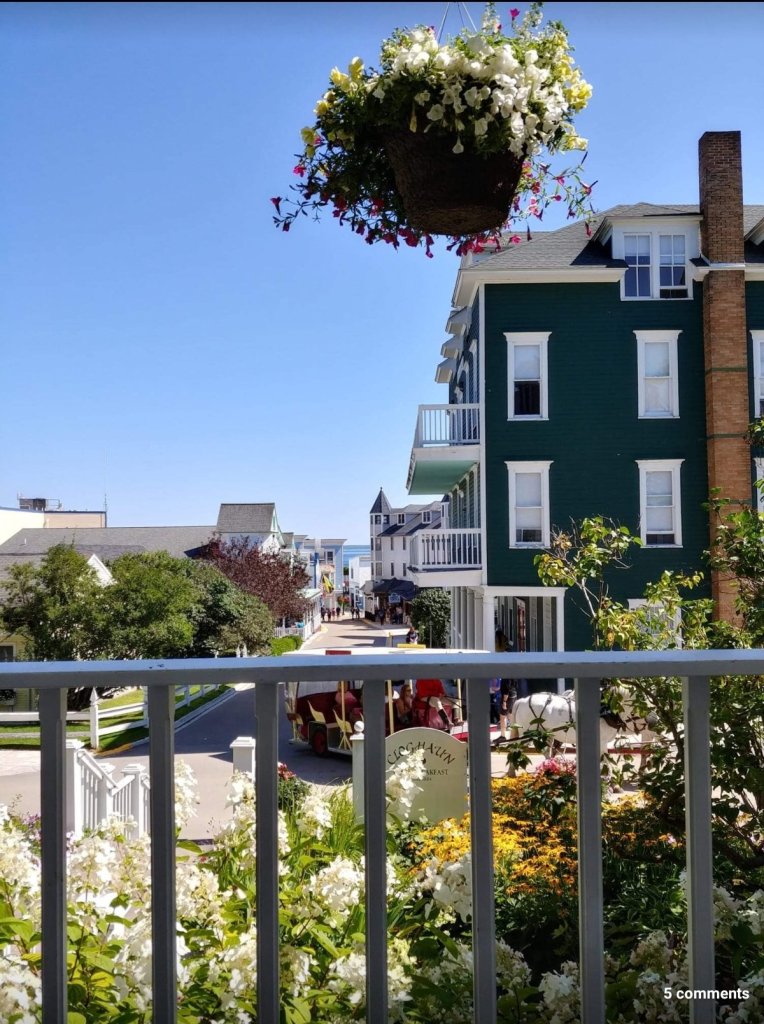
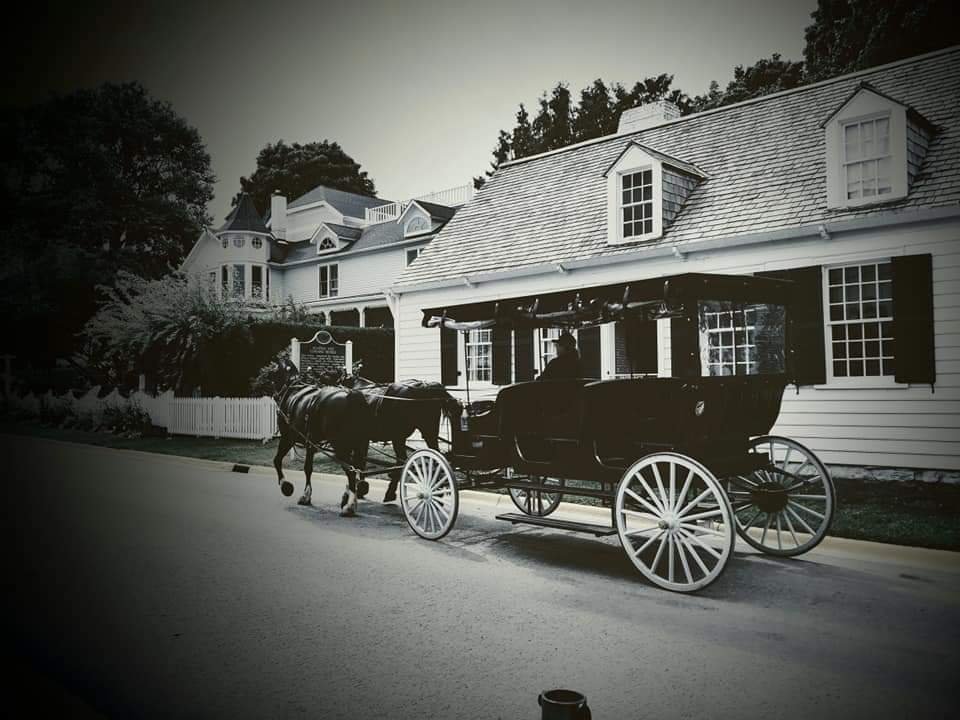
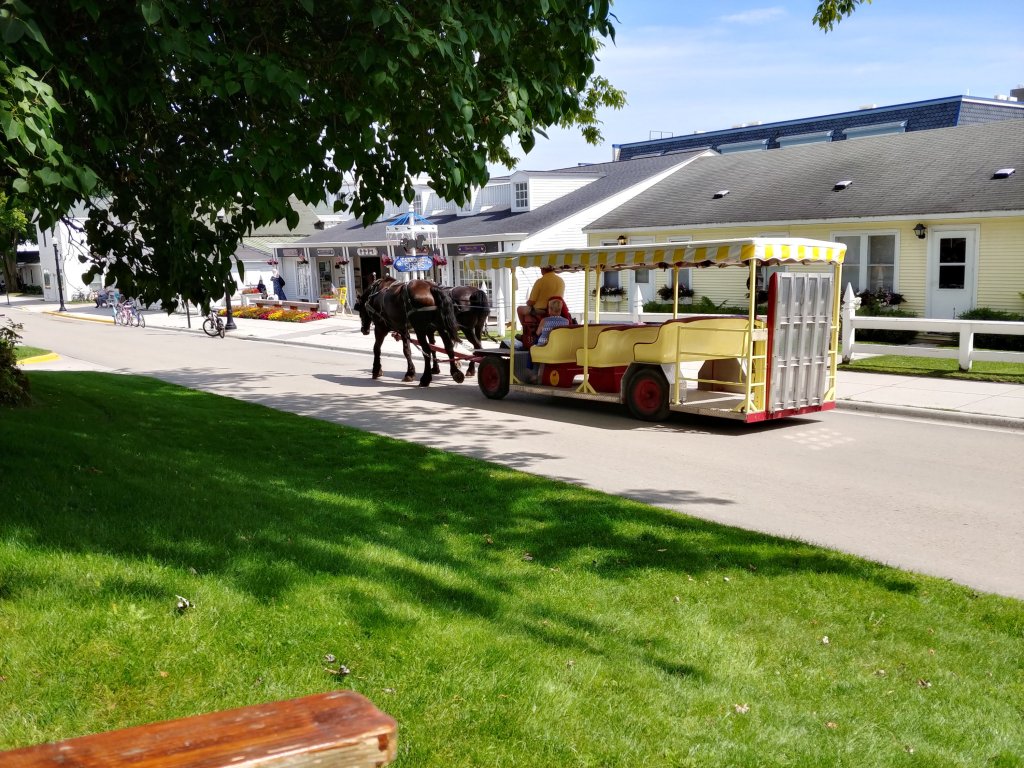
The sense of sight: What greets you when you dock is the glimpse of Main Street peeking through the alley way. Stepping on to the platform, this soon melds into the sounds of its busy foot traffic, the moving wagons, the zoom of bikes, and the clicking of hooves. Dave McVeigh and Jim Bolone’s The Dockporter, a novel that accompanied our drive to the strait, captures this experience perfectly.
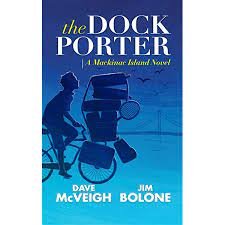
For me it mirored my experience of arriving in Venice. It required immediate reorientation, something that I gained by slowly emerging into the thick of the hustle and bustle. Over the course of the next few days some of my most cherished moments would become the early mornings, where these same streets would transorm into a mostly silent and vacant oasis, the sightlines of the sun rising unobscured and radiant across the open waters and across the cobblestone streets. I don’t know if this inspires a descriptive of an “island’ way of life, but it certainly has a way of drawing you under its spell. For the moment, the sheer busy-ness of it all was energizing and stimulating.
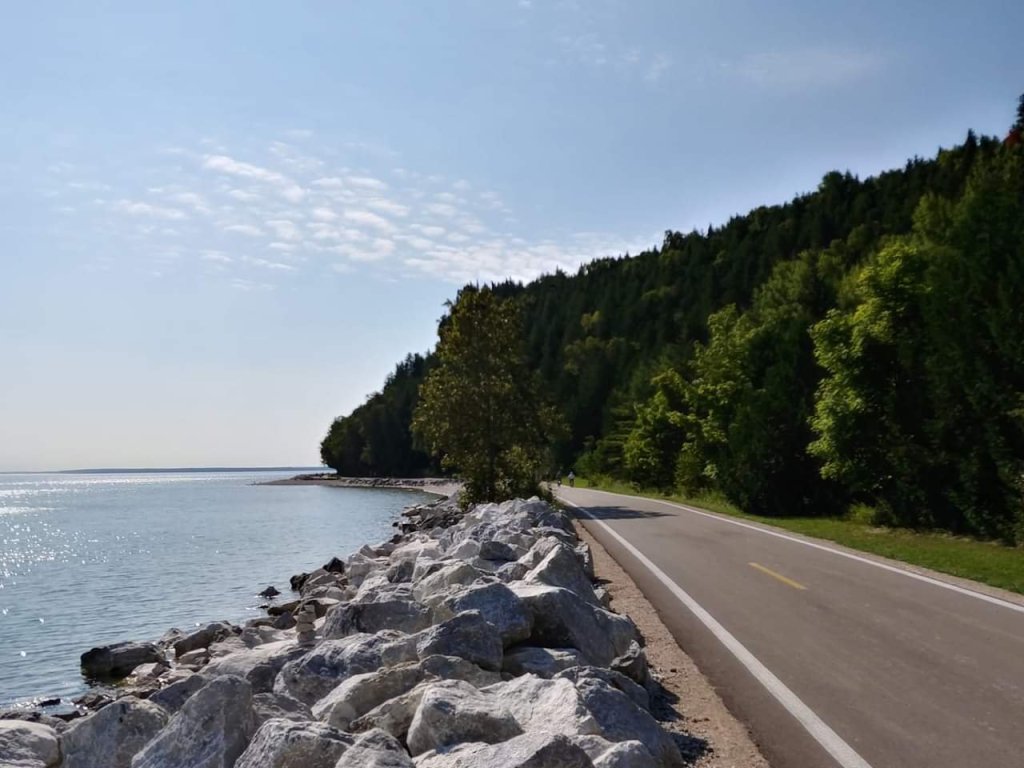
The island is essentially connected by a narrow car-less highway that circles the perimeter of the landmass, the only highway of its kind in America.

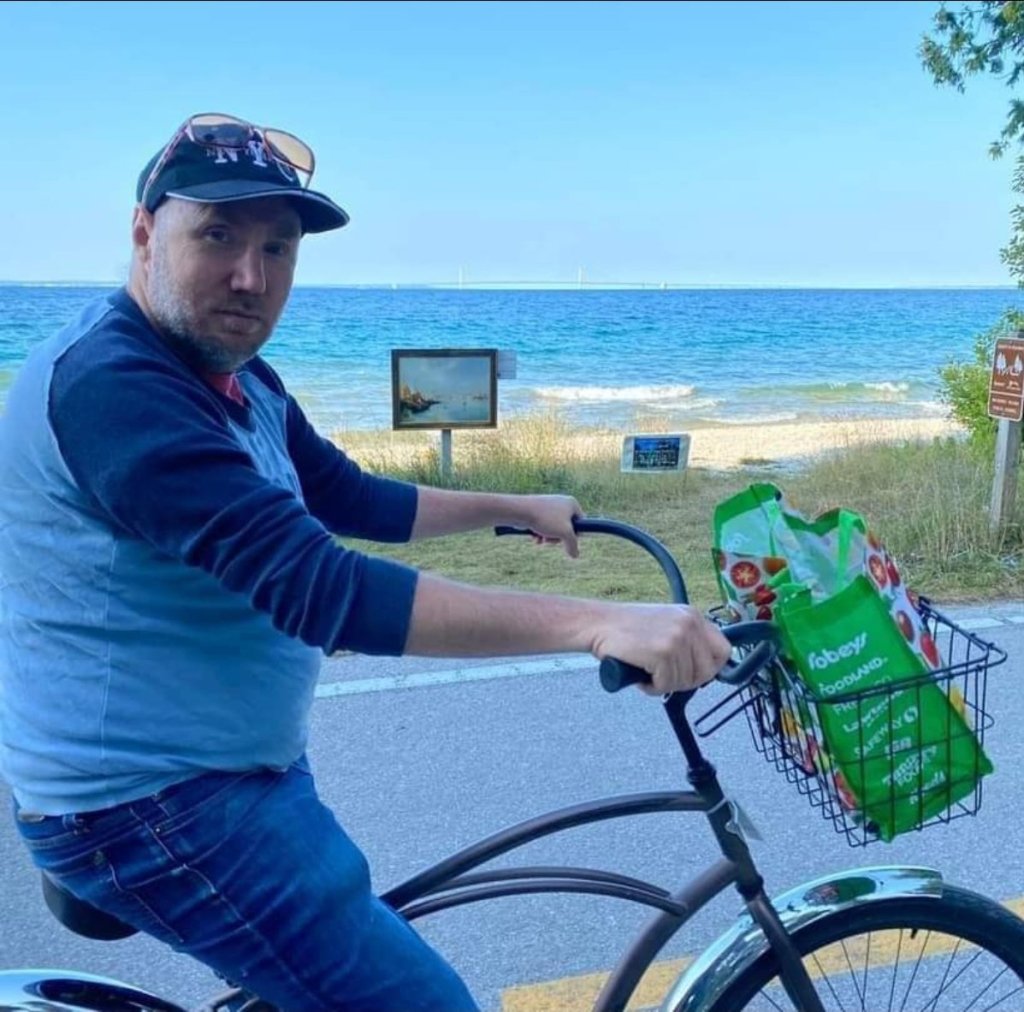
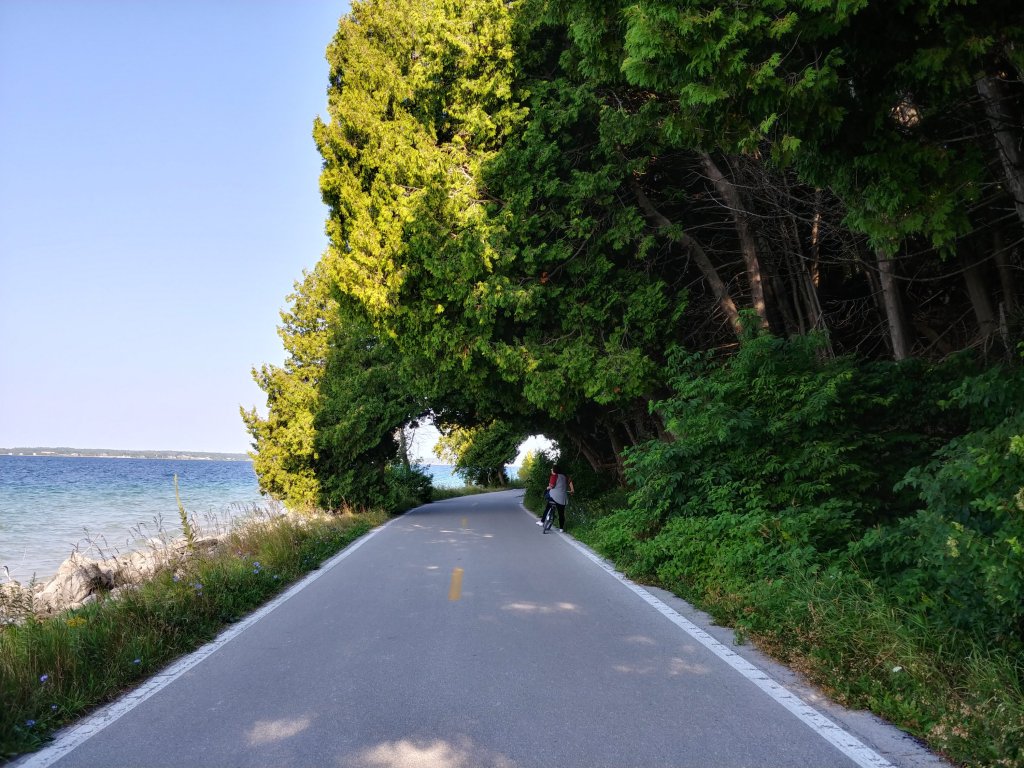
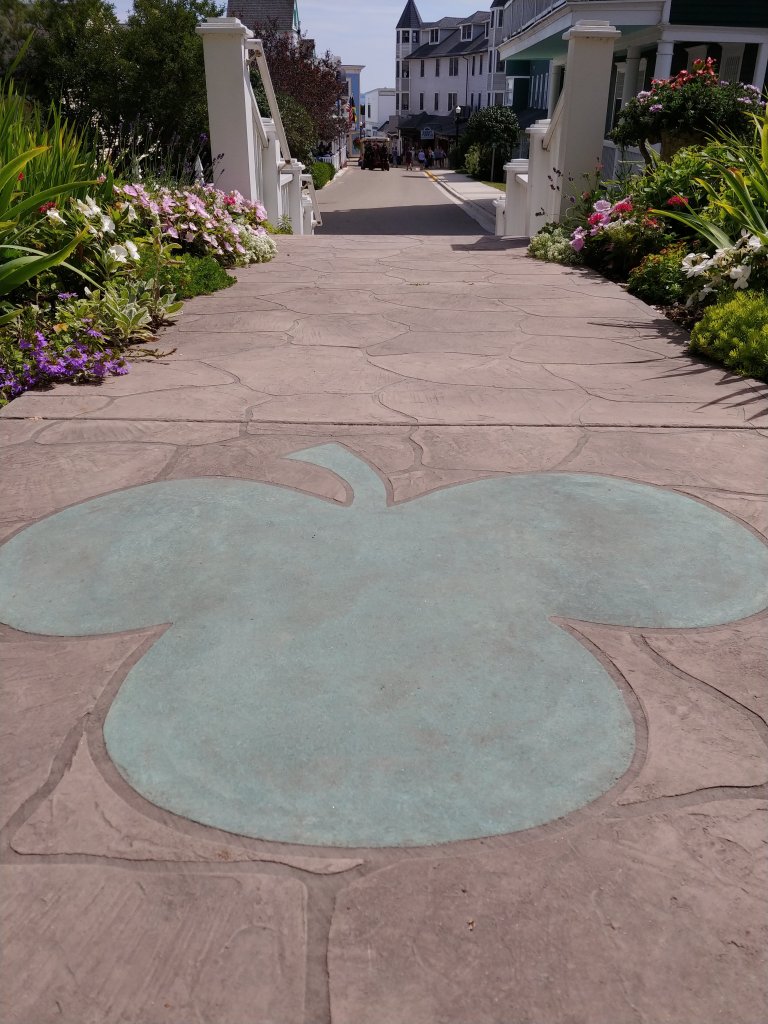
This is contrasted by the gradient, hilly center. Thus the minute you step off of Main street you are venturing inwards and upwards on a persistent incline, most of the lodging lining the raised streets above. We stayed at a historical Irish mansion, situated one block off of Main on a central throughfare for bikes, horses and wagons. Once the quiet of the morning oasis met with the busy-ness of the day, it became the perfect place to commune with guests on the porch or to people watch from the wooden lawn chairs accompanied by an endless array of complimentary coffee and snacks. Island life, as it were, comes with very little demands. Its possible to experience the whole island in a day. To experience it well in two days. Three days might be considered a stretch for some, but for us it presented the gift of entering into its rhythms.
When Therasa Weller embarked on a project in the hopes of tracking down the Anishinaabe name of her anscestors, she uncovered a distinct reality of the Mackinac Island Band that she belonged to. The island was unique given that the Anishinaabe who occupied it were born of a varied mix of Bands, which meant that this isolated island did not abide by the singular customs that tended to govern the mainland. This included exogamy, meaninng that, unlike the mainland, mixed clans meant that intermarriage within the tribe was common. The problem for Weller was that this made tracking down her ancestral roots near impossible. It did however grow her awareness of just how unique this island was.
But of course the Islands history isn’t simply confined to its post colonial reality, despite the Fort that still marks one of the highest points of its outer limits. Shaped by the last ice age, the island’s occupation reaches back into the great native american traditions of the early centuries of the emergent civilization, the name (Mishimikinaak in Ojibwe) evoking the great Spirit believed to inhabit the island. It would be in the 1600’s that a French mission would meet the British occupation, resulting in the islands Fort Mackinac being dismantled from its original location on the mainland and moved to its present day spot in the onset of the Revolutionary War. A later treaty would secede the island to the Americans before the onset of the war of 1812, resulting in the now infamous (for island natives) Battle of Mackinac Island. The war, which Britian won, ultimately ended with the land being returned to the Americans, paving the way for the early tourism boom of the 1800’s to reform the island from anceint indigenous territory and modern fishing village to a national (and eventually state) park and summer escape. There is perhaps no greater sign of this transformation than the Grand Hotel, the largest summer hotel in the world, The banning of automobiles would eventually solidify its unique identity both as an island society and as a destination.
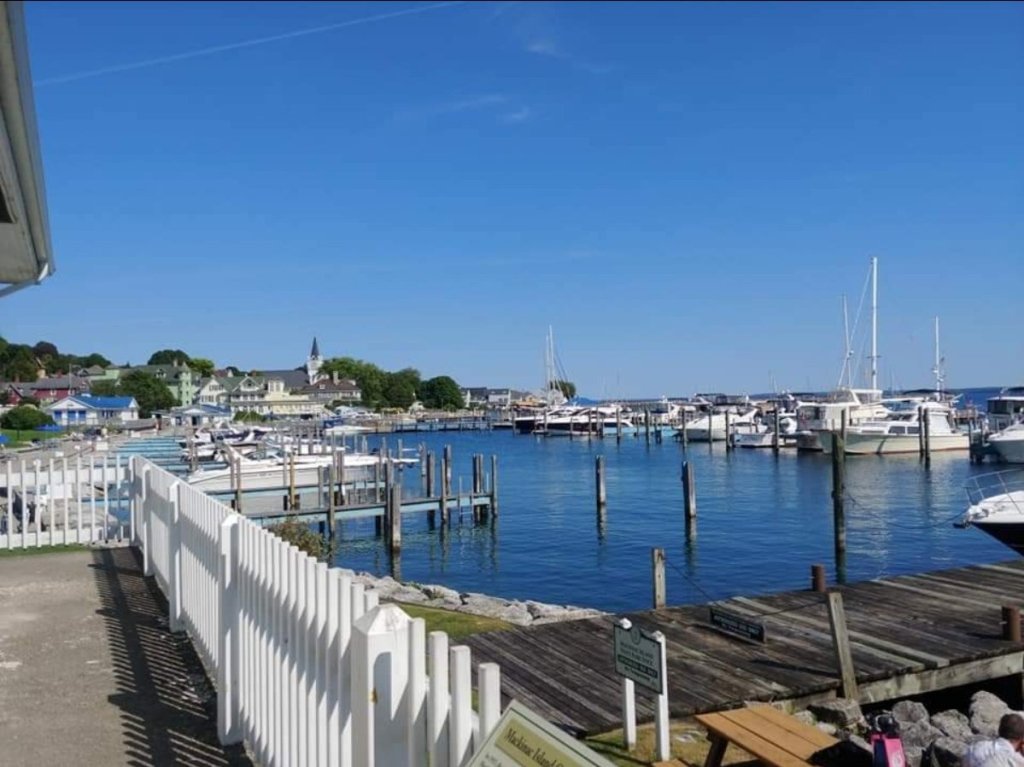
All of this really lends the island its aura of distinctivness. It was said (to us) that the population of full time residents sits somwhere between 600 and 1000. It might be easy to mistake the destination as a tourist trap framed by a litany of ready made gift shops, but that would be misunderstanding what this place actually is, Yes, prices reflect the isolated location; bring your own snacks/food from the mainland if you want to save some dollars. But unlike, say, Disneylands Main Street, which reflects a manufactured ideal and an optimistic expression of “Americana”, or even Venice’s overt catering to its incessant tourism, replacing authentic Italian Gelato and Pizzarias with generic, marketable versions (as local Italians will say, if it has bright colors and sits in the open air, its a forgery), the shops of Mackinac Island are indeed independently owned, and plenty even owned by local residents. This is a desination, but its also a home with a local culture fueled by a school, congregations, workers and residents. Even the famous fudge shops, desgned to foster friendly competition (we actaully went during the annual fudge festival, which, its worth noting, is not really a festival as much as an excuse for a late summer season draw) are immersed in a genuine love for the craft. Equally so for the local artists whom line the adjacent streets, giving the island an interpretive representation and crafted presence. This is part of what endeared me to this place, is the apparent authenticity lying beneath the surface of its curated island life. It might be easy for young mainlanders to treat this space as a simple weekend away or a night out at the island eateries, but linger a little bit and get to know the voices who speak its story and you’ll find staunch defenders and protectors of the islands good name. For me, it was a reminder that even the brightest eyes don’t always see the value of what’s right in front of them. And yet this became an opportunity to reshape old memories into something entirely new.
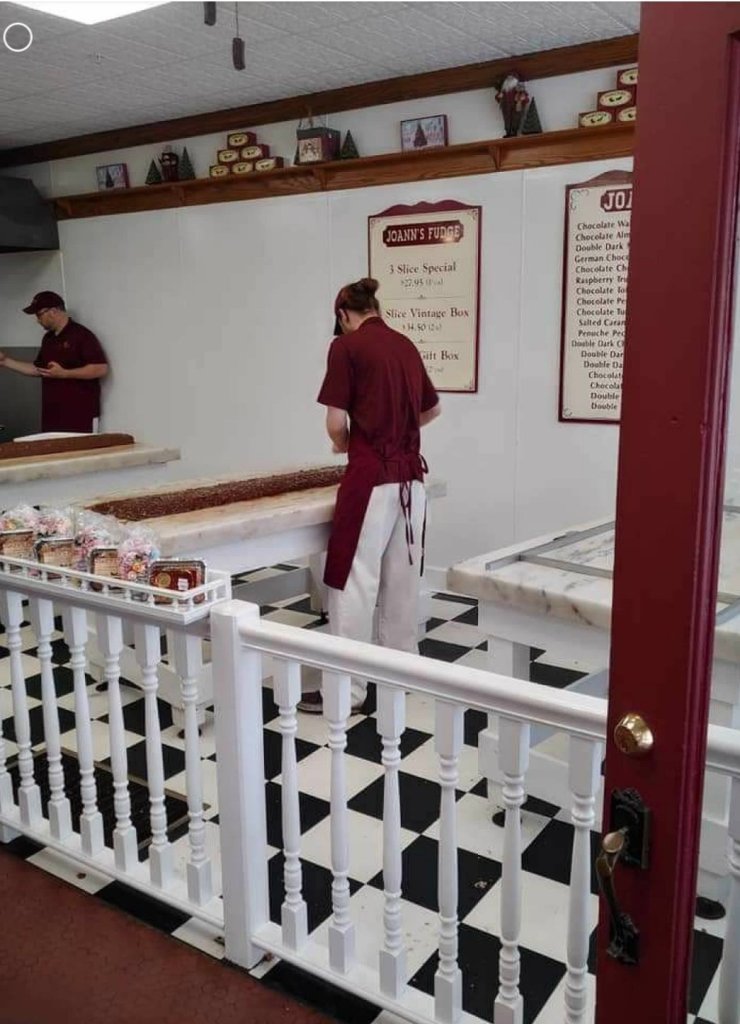
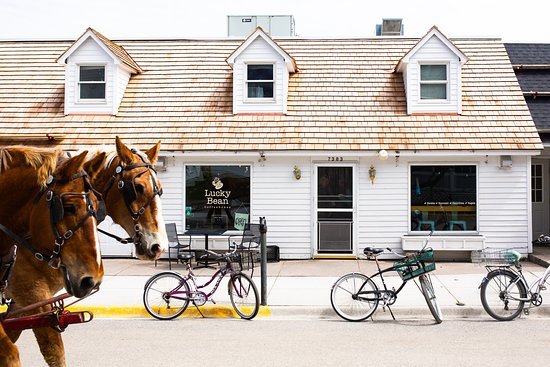

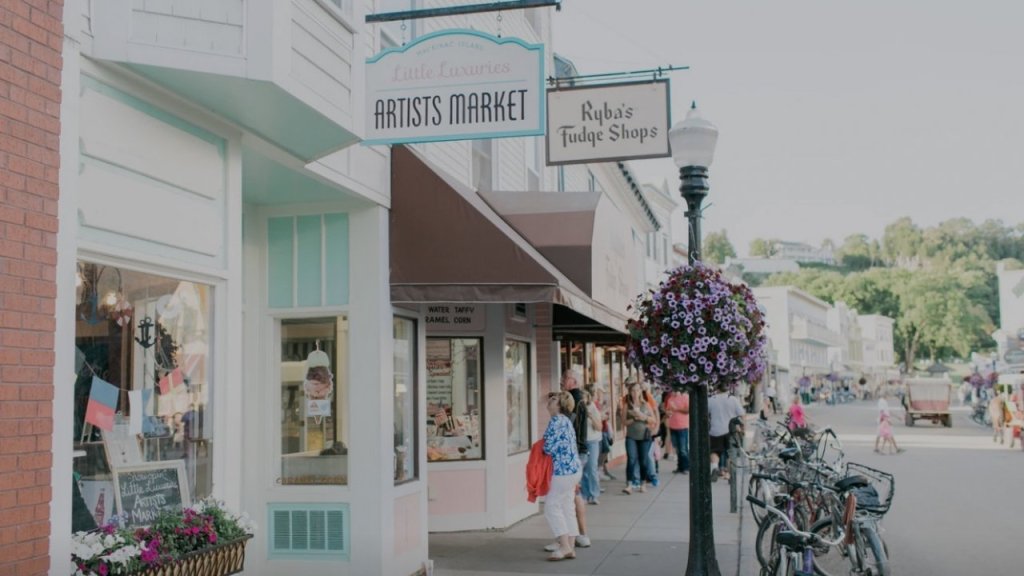

With that in mind, what does it look like to linger?
It looks like buying into the tradition, renting a bike and riding the highway around the island.
It looks like sunsets on the rocks with the original Macinack Island Fudge ice cream, soaking in the sea air and sitting in the shadow of the bridge across the strait.
It looks like perusing the artists shops and inquiring about the artists work.
It looks llike grabbing the famous Love Potion #9 coffee, a spicey brew, from the only coffee shop in town and strolling through the shops of Main street.
It looks like venturing up the incline to admire the majesty that is the Grand Hotel.
It looks like tracking down the different locations for the on location shoot of Somewhere in Time
It looks like listening to the Mackinac Island Podcast interview locals and businesses and helping to unearth the islands story.
It looks like perusing and purchasing a book from the local island bookstore and immersing yourself in the islands history and culture.
It looks like learning the art of doing nothing and having nowhere to go.
It looks like life removed from the mainland, yet remaining accutely aware of the wide world that surrounds it.
 The Stories of my Life