
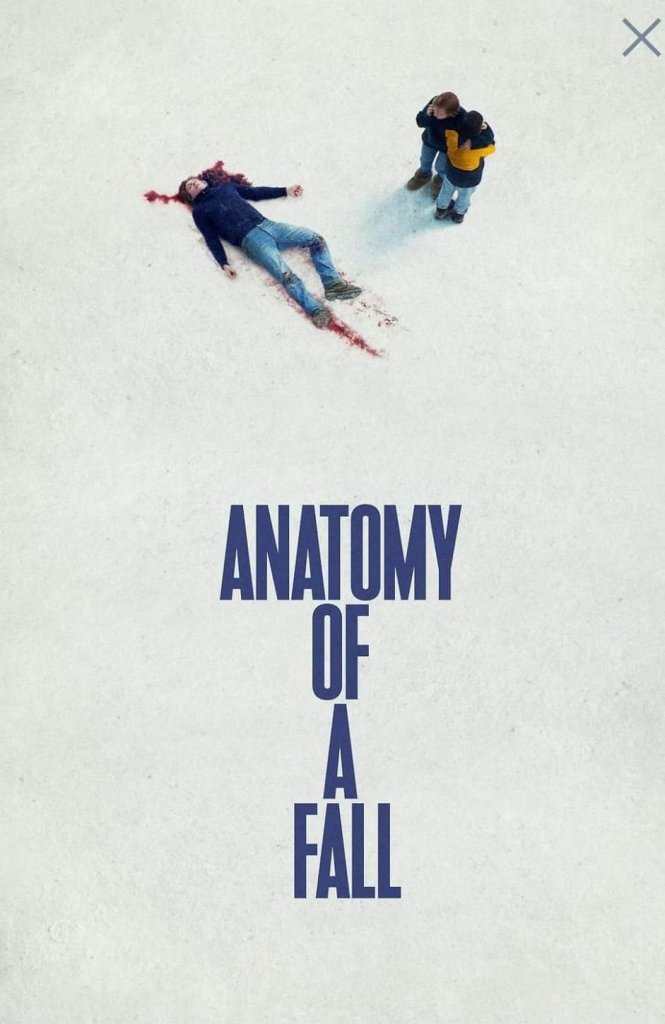
Film Journal 2023: Anatomy of a Fall
Directed by Justine Triet
At one point during this riveting legal thriller, one of the characters ruminates about the uncertainties surrounding the issues on trial, suggesting that when we are faced with doubts about what is true and what is not, at some point we simply need to choose a side and decide what it is, or who it is, we are going to believe. This is the only way we can actually move forward in meaningful and constructive ways.
Anatomy of a Fall is largely a film about how we navigate those uncertain places. As the title suggests, at the center or the story is the investigation of a fall that results in one man’s death, a man who is both a husband and a father. The investigation itself digs into the details of what happened, attempting to determine if it was an accident, a suicide, or a murder.
It is within this that the film allows the term “anatomy” to play as allegory, both for it’s legal drama and the ensuing court case, but also for the characters themselves. It’s as much about the question of what happened as it is about the ways this event impacts the different people involved, beginning with the family itself.
And for as captivating as the court room drama is, it is in the character development that the tightly drawn and layered script really shines. The more the court case goes on, the more we get to know about the family dynamics, and it provides a way for the viewer to consider the intricacies of these relationships, especially where they are thrown into a state of such uncertainty. Its not just the results of the case that hang in the balance, but so much about who they are and their ability to move forward with any real sense of direction and intention in their lives. As one character suggests, when we can’t figure out the what, perhaps that’s when we start looking at the why.
The patient and attentive approach to the direction goes a long ways here, never pushing for concrete answers but rather sitting in the formative space of its relationships. It is rich with nuance, allowing the scenes to show rather than tell, and much of the game here for viewers is searching the different scenes for clues that might help us understand things just a little bit more than we did before.
Part of that process is allowing each voice the freedom to speak and to say what they will from their own point of perspective. Where voices clash, this becomes integral to drawing out a minutia of hope in what feels like an increasingly hopeless situation. We might see different things and interpret the same things differently, and that becomes part of the bigger picture at play. As one character suggests, we can’t take a moment and make it everything. A moment is a moment, and every moment has the power to tell the story as it will in it’s own way. And yet this is precisely where those doubts become necessary decisions. Its one thing for a trial case to be proven beyond a doubt, it’s quite another to live within the decisions that follow. No matter the trial, no matter how much we want to believe in something conclusive, it is still left to those looking in from the outside to make their own decisions about what it is they are going to believe. And that’s really where the true trial happens, in the everyday of our lives, in the eyes of the public, in the ebb and flow of our relationships with the people we feel we know, or should know, the best.
Decisions remain necessary. Decisions have implications. They hold the power to tell the story and control the truth in that everydayness. Can we be okay with that fact of our human existence? True to form, the film leaves that question for viewers to decide for themselves.
 The Stories of my Life