
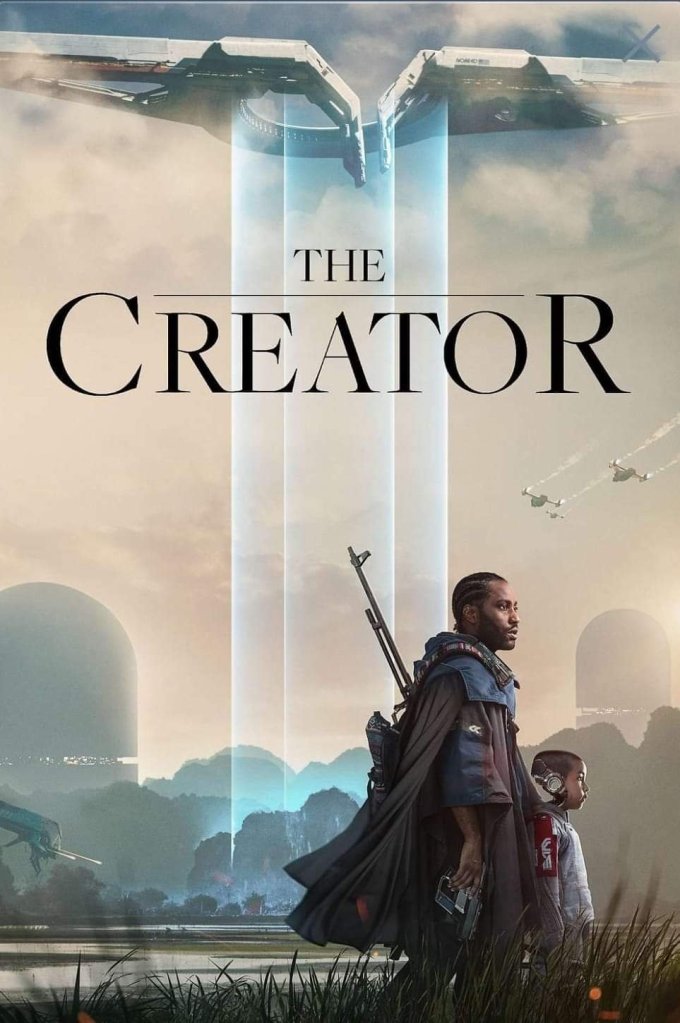
Film Journal 2023: The Creator
Directed by Gareth Edwards
If Edwards proved anything to me with Rogue One, its that he knows how to tell a good, old fashioned story, and how to tell it well. His ability to do this within a well established mythos was simply a testament to his disciplined approach behind the camera.
The Creator doesn’t have these same constraints, building its mythos from the ground up, and in many ways this film is his most accomplished work yet. It all begins with his attention to detail and his commitment to shooting on location using practical effect and real world set design. The CGI is there, but it works seamlessly, integrated as it is into the films stunning design. If you get a chance, do a little digging on the cameras he used and the number of different locations he shot in. It is beyond impressive and makes use of every inch of the big screen format.
These are visual tools that he uses to tell his story, and the story itself is a richly imagined sci-fi epic told on an intimate scale and with a deep interest in questions about meaning and the nature of humanity. The story structure is built around the different movements within the story, each section centering on a central development in the plot. These sections add a piece to the puzzle while digging deeper into the ethos of our central characters. The story concerns a man named Joshua, played with real honesty and integrity by John David Washington, whom we meet in a developed relationship with a woman named Maya (Gemma Chan). Events unfold, and eventually Joshua crosses path with an advanced AI named Alphie, a nuanced and complex character that adapts to the striking range and raw talent of a young Madeleine Yuna Voyles. It is through the lives of these characters that the film finds depths to explore.
Thematically speaking, Edwards uses some powerful parallels to explore and examine aspects of our present day realities that feel all too real. The sci-fi premise is grounded in ideas that feel very much attune to the current progression of AI, but what makes it all the more powerful is the way these questions are able to play into the whole of human history at the same time. When we first meet Mia in the opening minutes of the film she is pregnant. The young AI is then juxtaposed alongside of this as a way of anchoring its creation within the human experience.
All along the way the film keeps pausing to wonder about where precisely the line is between robot and human, especially where the real world science of humans attaching themselves to otherwise benign material objects is concerned. The film even presses this further, wondering about how, and why, we could hold an external force like AI responsible when we are its creator. How much agency can it possibly have on its own? And in that light, perhaps we tend to see agency and liberty in a human sense as more than it actually is within the scope of our own lives. Somthing that challenges our conceptions of liberty.
There is an astute sense here of Edwards using this story in order to hold up a mirror to our own faces and our own reality. As the sentiment emerges from the mouths of a few characters, to say “they (meaning, their humanity) aren’t real” is simultaneously to wonder about what makes us real, or if we can lay claim to such realness at all.
The film teases out this sense that what we call real is bound up in relationship to others and to this world. In many ways this means that our reality is bound to our observations and experiences of this world, however subjective or objective this can become. And whatever we say about our humanness is measured by the nature of this experience as it relates to felt feelings and emotions. This is particularly evident when it comes to suffering. There is a powerful point in the film when we hear a brief monologue that relates the robot to the emergence of humans in a world once filled with Neanderthals. The common adage is to think of neanderthals as less intelligent and less civilized and lesser beings. The same way humans often think of other species or animals (watch for how often Edwards inserts a scene contrasting animals with humans and robots). They are dehumanized on the simple basis that they do not share what we perceive to be unique hominid capacities and characteristics. And yet history tells us this is almost certainly not the case. This becomes our point of clarification for how to think about the precarious relationship between humans and AI. It might seem like the unexpressed fears we hold about AI stem from the fear that we might be deemed the lesser species. The irony of this is that human history seems to suggest this fear is about a loss of power. It’s possible this fear is actually about a loss of measure. If we can no longer measure what is deemed to be good and right by the term “humane”, then where does that leave morality? More frightening yet- what happens when humane is attached to the atrocities of humanity’s potential for bad?
All of this gains a socio-political commentary given its interest in navigating the East-West divide. It cuts to the heart of the perpetual hostilies that exist between America and China, and wonders about how the ways these two entities percieve one another emerges from the trappings of progress. The inability to ask the right questions of our creations leads to dangerous places. A loss of our humanity one might say.
If all this seems like weighty stuff for what is supposed to be an entertaining blockbuster, trust me when I say that’s a big part of what makes this film so profound. It entertains, without a question. It also makes you think. Its ultimately where it manages to make you feel that it reaches yet another level. The emotional stakes are as real as they come.
 The Stories of my Life