
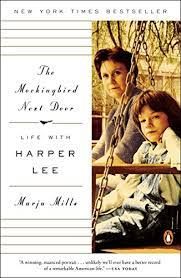
Reading Journal 2024: The Mockingbird Next Door: Life With Harper Lee
Author: Marja Mills
Nothing sullies a reading experience like being made aware of controversies after you finish the book.
In this case, the controversy stems from a statement, issued in Lee’s name, saying that she was not made aware of this book before its release, nor of Mill’s intentions to use their relationship to release the book. Which, for anyone who has read The Mockingbird Next Door, a book that follows Mill’s unexpected invitation to meet with Lee, who was notorious for her privacy and her outright disdain for rumours regarding her and her private life, and the even more suprising time-extended relationship that ensued (leading to a move of temporary residence for Mills in Monroeville, a former writer for the Chicago Tribune), will render this book a lie.
Here is the coles notes of the controvery: Lee gains unprecedented access to Lee and her closest relationships (Alice and Tom). Lee eventually pens and releases this memoir about her relatiionship with Lee. An official statment is released saying that Lee never consented to the book and denies any suggestions that she did. Some take this as a condemnation of Mills. More reports suggest that the statement came from Lee’s estate and lawyers after she could not longer speak for herself. There is also testimony from Tom that seems to speak in support of Mills, and signed consent from Alice, which have likewise been disputed by the estate as being unverified in their reliability (meaning, she was old and may or may not have been in her right mind).
What is the truth? I’m not sure. One things for certain though. It would be a highly difficult thing to argue that Mill’s book is in any way negative, decieving, or slighting when it comes to her descriptions of Lee. It is, in fact, quite the opposite. It is deeply resepectful, adoring, detailed and uplifting. My suspicion is, just based on the details that we get from the book, that perhaps all of this happened out of view of the estate and the lawyers, and thus the reactionary part came from people for whom the details of this relationship had been kept secret. It is also entirely possible that some of the chapters were included after Lee’s stroke, an those might be the ones they are reacting to (the ones that start to veer into the reporters conjecture). But who knows.
As for the book itself, taken on its own terms? Let me get this out of the way first- the writing isn’t very good. You can hear the reporter in her words, to be sure, but you can also see her struggling to adapt to the 250 page exercise. The first half is better than the second half, as it is in the second half that things start to get repetitive, where it takes random jumps into different subjects that break the overall flow of the book (such as Lee’s relationship with Capote).
That said, there is a certain charm to the grassroots style. Something forgiving about it being rough around the edges.
There is also the question of the book’s subject matter. This is as much about Mills as it is about Lee, and while we are given direct citations from Lee, and while Mills allows portions to be directed by Lee without conjecture or interpretation, the lines get blurred often enough to make this much more about Mill’s adventure of a lifetime, for better and for worse depending on what you are expecting from it. I bought this book during my trip to the south and the area this book largely helps to bring to life. As such, it satsified my hopes in that it allowed me to see and feel the same roads and sights that I travelled, giving me a better picture of the area and the town. If nothing else, Lee comes alive in these pages through her relationship to this place that informed and formed her, and Mills makes sure to allow that aspect to shine through.
Apart from that, its a quaint, at times lovely, at other times overdone, romp through the ebb and flow of their unexpected relationship. Whatever one thinks of the controversy, I can’t find anything that suggests that details that Mills records, of life in Lee’s house, of engaging in their favorite past times, of going to their favorite eating spots, of unearthing Lee’s favorite authors and books, ect ect, are in any way lies. They feel authentic, and Mills remembering and retelling of these experiences feels deeply appreciative. Lee was an enigma, given that she never wrote another book after the success of To Kill a Mockingbird. She remains an enigma to this end, even after reading this book, which is part of the respect Mills affords. We get snippets of why Lee was so resistant of publicity, And we get more mystery. And perhaps that is exactly the way it should be.
 The Stories of my Life