
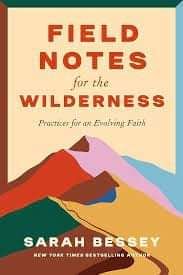
Reading Journal 2024: Field Notes For the Wilderness: Practices For An Evolving Faith
Author: Sarah Bessey
We all bring ourselves to the things we read and watch. To try or want to remove ourselves from the equation so that we can speak to something truly objectively would be to miss the point of why we read and why we watch. We can not experience or grow if we fail to recognize where we sit as an essential part of the conversation.
This is especially the case with a book like this, which is bound to find people on all different points of the faith journey it wants to explore, namely those who have or are in the process of deconstructing and/or reconstructing (which she acknowledges is a tired phrase). If I may offer one small point of objective measure, I feel like I can rightly say that the book’s primary audience would be someone in the early parts of this journey. Field Notes For the Wilderness is very much a book for those who find themselves in a space they don’t know how to explain or describe, with its later chapters then describing to that audience, from the perspective of one well travelled wrtier, the sort of community of wilderness people they might expect to find.
So where do I find mysellf in all this? I’ve travelled the path she describes. I am of the generation who first encountered this notion of deconstruction in writers like Brian Mclaren and Rob Bell, and I am well versed in the larger community (the Evolving Faith community) Bessey has helped to foster and grow, including being an avid listener of Pete Enns and follower of Barbara Ann Taylor and the late Rachel Held Evans (who’s book Wholehearted Faith was nothing short of transformative).
What she has to say about the process she is engaging is deeply familiar to me, and much of this served as a reminder of the sorts of emotions and questions and challenges and experiences that first led me into that wildnerness space. I know first-hand what it is to experience those things and ask those questions and face those challenges and lose your sense of community and belonging in the process of simply attempting to be honest about where you are. The culture which I grew up in is one where you are either in or you are out based on your affirmation of a particular set of doctrinal beliefs, and to find yourself at odds with even one is to find yourself cast out. I’ve been called the devil. I’ve been called worse.
Here is the thing though. I’ve also experienced something similar from those in the wilderness. Don’t get me wrong, Bessey says all the appropriate things in the book. She speaks of making room for all, of remaining open, of learnning how to be for and not just against, of rejecting the notion that deconstuction/reconstruction (or her favored term, evolving faith) must look one way. The problem is, I’ve experienced enough to know this is not how the wilderness community gets established. Perhaps it comes with more than a little irony in tow, but I know first hand the singular way of thinking that one encounters in these communities, and how quickly one finds rejection if they don’t reject the right doctrines, tow the right lines, or if they take a slightly different path back into faith then the norm.
And to be sure, it is every bit as lonely of an experience as challenging your old paradigms to begin with. You might not be called the devil, or worse, but it can feel like you are being deemed a figurative version of the same thing. Most common is simply silence. The quiet rejection that tells you that you are not of one mind, and therefore there will be no theological conversation. The lines have been drawn between conservative evangelical/reformed christiantiy and progressive christianity, with no liveable space outside of these circles.
I have no doubt that Bessey is a great, well meaning person. I’ve benefited from her podcasts and speaking and writings. Similar for many within the wilderness community. There is much in this book that resonated for me and helped reframe things I thought I knew (permission to not be the perpetual cycnic is a good one). There was also some portions that reminded me of my personal struggles, despite Bessey doing a good job of attempting to counter a good deal of what I described above. The problem is, she fits firmly within that evolving faith community. She shares a language, shares in that experience and the “evolved faith” that emerged from it. I don’t quite belong. I know that. Even as I also don’t belong in those same ways within the communities she and others deconsructed from.
Of course, none of that is a direct criticism of the book. It is well written, very aware, and I have no doubt many will find it extremely helful.
 The Stories of my Life