
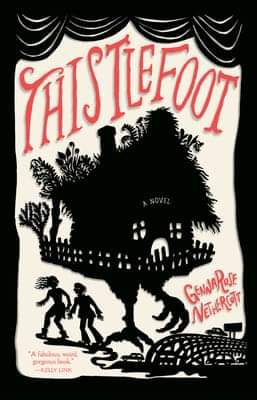
Reading Journal 2024: Thistlefoot
Author: GennaRose Nethercott
Full credit to this book for introducing me to the legend of Baba Yaga, an enigmatic and popular figure in Slavic folklore (full points too for the Ukrainian backdrop for this most recent adaptation of the famed story). This also helped me to make sense of its reference in the John Wick series, but that’s an aside.
Baba Yaga has certain distinctives, including being an animate house that stands on chicken legs. Depending on the iteration, the figure can be either good or evil. The figure also tends to aid in times of transition, especially when it comes to life and death.
Baba Yaga has a history of being recontextualized into different times and settings and roles. As it writes, in Thistlefoot, it “reimagines Baba Yaga as a Jewish woman living in an Eastern European shtetl in 1919, during a time of civil war and pogroms.”
In this iteration in specific, it is something of a back tale and origins approach as well. Which I found to be a decent starting point for someone like me who is reading in ignorance. I’ll be honest, it’s a long read, mostly because it’s a difficult read. It requires attention, and it’s not a book you can rush. Given that I not only had little awareness of the figure, but also of the historical and social context the folklore is attending to, it took double the effort to really enter into its world. I’m not sure if it’s a weakness, but the world is never really fleshed out. It simply is what it is. It’s a world where an animated house that stands and walks on chicken legs exists, and where different abilities coexist. I’m certain it all has an allegorical place, but when you are missing a lot of that context it can feel like you are missing a good deal of the process.
That said, I really liked Bellatine, who was the driving force and beating heart of the narrative. Thankfully her portions were easier to follow. I also thought the films central evil, Longshadow Man, was effective and creepy, giving this a legitimate horror vibe.
Ultimately I left feeling like I know this story has power. I felt much of that power come through the writing. I understood far less of it. Taken together though I was able to experience and thus know how this story could easily be contextualized into any number of more familiar scenarios. And that sparked my imagination, helping me to see the history behind the folklore more clearly. It left me thinking, sometimes it’s good to encounter a book that requires you to work for the experience, and to work to uncover its meaning. All the better when it opens you up to a cultural touchpoint that I previously was unfamiliar with.
 The Stories of my Life