
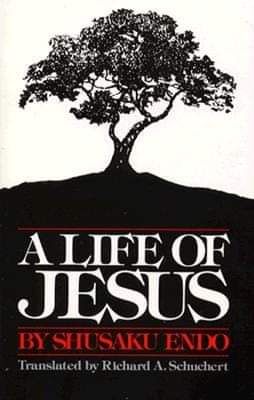
Reading Journal 2024: A Life of Jesus
Author: Shusaku Endo
It is equally as important to assess the target audience of Endo’s biography of Jesus as it is to assess the content, as each becomes a window into the other. Perhaps more important is the ability of this relarionship to allow the book to reach beyond the target audience to a wider world, something that Endo’s body of work has arguably already done.
Who is the target audience? I would say he is speaking to Japenese Christians, helping them to find the language of the Gospel in a way that makes sense to their culture and context. And to Japanese culture, simitaneoulsly using the book to bring the Gospel in a way that will make sense to that cultural context. Endo is very intentional about the lens through which he approaches the text and about locating the appropriate questions and concerns that might arise for his readers.
So what about the content? Endo sets the stage for his approach upfront in the initial chapters, purging some of the baggage of Western obsessions with truth as a kind of empirical fact and allowing the truth of the text to speak into the Japanese focus on narrative and myth. For Endo, it would only be in the West that myth comes to define a distinction between truth and fiction, and thus he fully embraces the broad spectrum of studies (biblical, theological, narrative, historical, textual) that is able to free him to navigate both what the initial readers/writers would have meant/thought in their time, and how that can be reconextualized into Japanese culture for the sake of the Japanese peoples.
One of the outcomes here might be isolating potential readers outside of this cultural context of course. There is a sense in which his commitment to both audience and form/content becomes indebted to his own convictions and his own faith, and certainly how he reasoned(s) towards it in his own life. It is as much a story about what compelled him towards belief as it is an exercise meant to fill what he sees as a gap between a highly westernized Gospel and text and a culture that needs to hear it and encounter it in their own language. Language reaching much more broadly than mere words. Here he leans on those personal connections and preferences, sometimes at the expense of detailing the larger scholarship or even doing the leg work to explain why and how he arrived where he does on given interpretative choices. To be clear, this is an intelligent man who brings a compelling perspective and voice to what would be for many in the West familiar stories. Yet there are points, as there would be for most of us, where he seems to miss some important scholarship along the way. This is partly, I imagine, because he is distinctly interested in that which might apply to his target audience.
What he does do though is establish a strong foundation, and this comes with the expectation that what he has to say will challenge both his audience and those outside of that reach in different ways. For those coming in from the outside, it is an opportunity to have our own bias’ and tendencies deconstructed and equally to get to know how a Japanese person might read and understand the text from their vantage point, and for those within the scope of his audience the Gospel, by its nature, challenges their cultural norms with its counter cultural concern.
One could then call this a deeply layered work. It reads however with a given simplicity at the same time, bringing with it a meditative quality meant to invoke the power of spiritual practice and the sacred text.
 The Stories of my Life