
Travel
My reading year started in a place of aspiration and hope. A chance to jump start some travel plans by diving in to a holiday purchase, Airplane Mode: An Irreverent History of Travel. Part philosophical and spiritual exercise, Airplane Mode is an unfiltered look at why we travel and the complicated history of how travel came to be. I said as much in my review, but it’s rare to cross paths with a really good travel book. This is one of those that immediately found a place on my forever shelf.
Throughout 2024 I read a few more titles related to travel, including the classic Steinbeck memoir Travels With Charley which was as quaint and lovely as I expected with its broad view lens of America from the road, and the quirky, fun A Travel Guide To The Middle Ages: The World Through Medieval Eyes. I even managed to catch up with a holdover from the previous years travels to Wisconsin and Milwaukee (Brewtown Tales: Stories From Milwaukee and Beyond) and a couple tbr titles that had been eluding me for a while (Conor Knightons Leave Only Footprints and Frank Delaney’s narrative take on the history of Ireland). There were, however, three specific titles that topped my list in this genre, all for different reasons:

Off The Tracks: A Meditation on Train Journeys in a Time of No Travel by Pamela Mulloy
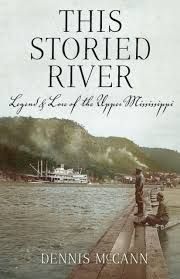
This Storied River: Legend and Lore of the Upper Mississippi by Dennis McCann

Imagined Places: Journies Into Literary America
Mulloy utilizes the pandemic as an opportunity to reflect on the past, present and future of train travel, effectively rendering this a love letter to a nostalgic but still relevant approach to everyday commutes and exploration. McCann writes a travel itinerary using a writer to navigate the spaces that anchored their stories. A particular insight has stuck with me all year- we all have two basic conceptions of place, the place in which we live and the place(s) we are drawn to. And lastly, McCann provided me with a welcome new addition for my growing library of books on my favorite river- the Mississippi. What makes this stand out is not just the insights he brings to his area of focus (the upper river), it’s the fact that he melds this into an easy and helpful travel itinerary. Leaves me with a desire to return, especially given I purchase this following my completion of the upper portion of the Great River Road this past summer. That leaves the final stretch from Memphis to New Orleans on my bucket list
Non-Fiction
Perhaps fitting within the travel genre, this memoir of one reporters unexpected opportunity to document the otherwise secretive and enigmatic life of Harper Lee (The Mockingbird Next Door: Life with Harper Lee) is another holdover from my trip to Alabama and Georgia the previous summer, having visited the place this book documents. On that level this uneven, not well written and mired in controversy work gained a sort of grassroots level charm that made its weaknesses easy go forgive. If nothing else it opened uo the writers relationship to this place she called home.
Another book worth a mention is Charlie Peakocks Why Everything That Doesn’t Matter, Matters So Much: The Way of Love in a World of Hurt, a book he tandem wrote with his wife Andi Ashworth. It’s a sort of autobiography that uses their storied journey through the complicated nature of the American Christian music scene of the 80s and 90s into a new found appreciation and perspective for where they are now, coming to find God in the ordinary and the everyday, and recognizing that we are all occupying space in the same circle moving in one of two directions- away from Jesus or towards Jesus.
Three particular standouts for me in this genre:
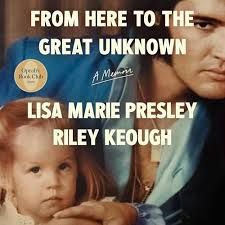
From Here to the Great Unknown: A Memoir by Lisa Marie Presley and Riley Keough
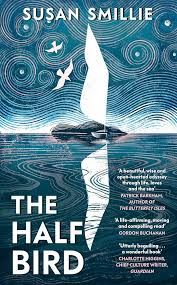
The Half Bird: One Woman’s voyage of self-discovery from Land’s End to the shores of Greece by Susan Smillie

Gone to the Woods: Surviving a Lost Childhood by Gary Paulsen
The story behind this memoir from and about Lisa Marie is as captivating as the story itself. Following Lisa Marie’s death, her daughter completed this project by forming it into a conversation between her and her mother across the great divide. It’s powerful, along with being an unfiltered, and uncensored fusion of perspectives shedding light on generational bonds. Occupying a different space is The Half Bird, the story of one woman’s unexpected journey on to the sea and around the shores following life upended by circumstances and struggle. I adore the waterfront, I’m not as fascinated by journeys on the water, so I didn’t expect much from this book. Whatever compelled me towards it was following a right intuition, as it turned out to be one of the biggest surprises of the year. A book about finding light in the dark, beauty in the storm., all wrapped around this touching relationship she forms with her boat (Isean).
Lastly, the post humous release of Paulsens memoir, Gone to the Woods, was perhaps the most affecting reading experience of 2024, Paulsen being a formative figure from my own childhood and a personal hero. What made this more special is I had no idea it was being related until I accidentally stumbled across it.
History
Sadly, I didn’t read a ton of history books this year, but three that stood out for me:

Goodbye, Eastern Europe: An Intimate History of a Divided Land by Jacob Mikanowski/The Middle Kimgdoms: A New History of Cemtral Europe by Martyn Rady

The Invention of Prehistory: Empire, Violence, and Our Obsession with Human Origins by Stafanos Geroulanos
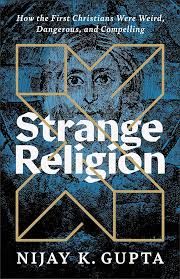
Strange Religion: How the First Christians Were Weird, Dangerous, and Compelling by Nijay Gupta
The first mentions were tandem or supporting reads helping to unpack the unique history and positioning of central Europe, an area I’ve had an interest in ever since visiting Ukraine. There’s a lot of overlap, with Goodby being a bit more interested in the philosophical and cultural underpinnings and Middle Kingdoms being the more accessible, straight forward history of a place that has consistently struggled with matters of langauge and identity in spaces with ever changing borders, caught between powers east and west.
The Invention of Prehistory is probably my most recommended book of 2024, bringing to light important insights about how it is we perceive progress and the enlightened West at the hands of invented caricatures of a non-existent ancient past we use to prop up our us versus them paradigms. Gupta, a fitting compliment to the Invention of Prehistory in some way, helps to explore how the first Christians found themselves confronting and challenging these us versus them paradigms in their own context of an invented paradigm of Empire and its false promises of unity and progress. It’s just as weird to the world to confront this invented prehistory and its problems today, given it comes at the hands of Empire and its same promises in the modern world.
Theology
Unlike history, I had a big year when it comes to transformative and paradigm shifting theology reads in 2024. The highlights:

Lamb of the Free: Recovering the Varied Sacrificial Understandings of Jesus Death by Andrew Remington Rillera (required reading for anyone interested in exploring fundamental misunderstandings of the sacrificial system and better more faithful readings that can challenge problematic allegiances to things that penal substitution)
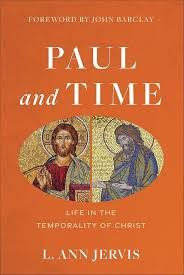
Paul and Time: Life in the Temporality of Christ by Ann Jervis (might sound a bit geeky, but it is much more relevant than the might think, delving into the complicated notion of the already-not yet, new/old age, fulfillment of the Law language that permeates Paul’s writings as a faithful Jew)
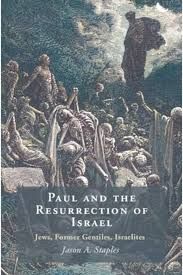
Paul and the Resurrection of Israel: Jews, Former Gentiles, Israelites by Jason Staples (a book that’s been shaking up the scene in 2024, making a case for how much of our theology in the West has been built on wrong conceptions of the terms Israel, Jew, Judean and Gentile. Understanding how each of these terms have their own meaning and are not interchangeable, as they often become in common readings, opens up important observations about the narrative we find in Paul’s writings, particularly as it sits in relationship to the Gospels)
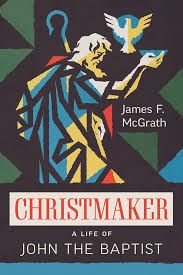
Christmaker: A Life of John the Baptist by James McGrath (a simple but well researched, concise and interesting work that seeks to bring the character of John the Baptizer out of the inevitable shadows cast by the one who would come after. For anyone interested in learning, more about the narrative and historical connections between John’s ministry and Jesus’ ministry, including gaining insight into what baptism was and how it applies to Jesus)
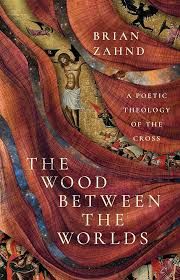
The Wood Between the Worlds: A Poetic Theology of the Cross by Brian Zahnd (a beautiful take on the cross, using what he calls a theopoetic lens to bring some of its baggage to the forefront of some long standing theological positions so that we might be able to reimgine it afresh)

Hunting Magic Eels: Recovering an Enchanted Faith in a Skeptical Age by Richard Beck (It is a book for those who have struggled with this present age, who have been left feeling disenchanted by it all, who have been left with more questions than answers, and whom have a desire to find some direction in the language and experience of faith. In knowing how to recover an enchanted faith. there are differences between skepticism and enchantment. It is the difference between a “scientific description of the world” versus “beholding the sacred meaning of the world.” The question is not whether the observations and data are true- we all observe the same world. It’s about what has the power to define the meaning of reality and how we get there. The invitation is to rengage the hunt, to learn how to perceive reality anew the way faith intends to see it. Enables us to see it. It is about learning how to submit our skepticism to the imaginative power that faith affords us. Not in abandoning our questions and our sense of reason, but allowing it to be captured by that which can expose the limits of our knowledge and awareness.)
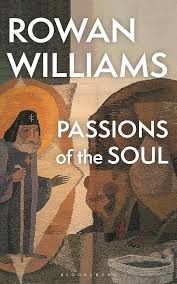
Passions of the Soul by Rowan Williams (This is the kind of book one highlights and cites and quotes and returns to. It’s small, it’s brief, but it’s powerful, even if you have no connection to the Eastern Orthodox Tradition. It is universal, and it will connect you not just to the Gospel, but to the fundamental heart and nature of the Gospel as a way of knowing, a way of telling the story about our lives and this world in such a way that reveals its truthfulness more deeply and more intuitively.)
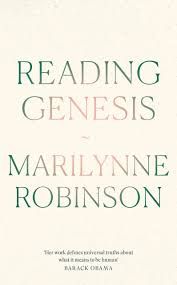
Reading Genesis by Marilynne Robinson (it’s not just Robinsons grace filled spirit and approach that makes this book shine, it’s her willingness to embrace it all- the challenges of both faithful criticisms and academic rigor and the challenges of faithful conviction. She exhibits how to do this in real time, walking through the text, asking good questions, and exploring the potentials. The result is an invitation to fall in love with the process, and more importantly to trust it).
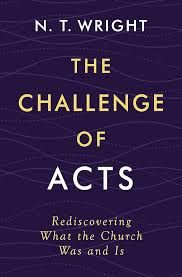
The Challenge of Acts: Rediscovering What the Church Was and Is by NT Wright (There is nothing necessarily new in the details, language and approach for anyone who has read Wright, but as is typical, the richness is in a narrowed focus, a fresh lens, and a particular application of his ideas in a text he hasn’t quite dived before, at least not in this way. A nice mix of academic and pastoral interests)

Fully Alive: Tending to the Soul in Turbulent Times by Elizabeth Oldfield/Everybody Come Alive: A Memoir in Essays by Marcie Walker (two books about what it means to be alive in spirit, faith and circumstance, albeit from two very different perspectives sharing equal degrees of skepticism, enchantment and hope)
A Life of Jesus by Shusaku Endo (picked this up after it was announced that Scorsese would be adapting it, it’s a classic text with his familiar approach to faith and the Christian story, seeing it through the lens of culture and history and contextualization)
Science/Philosophy

The Sovereignty of the Good by Iris Murdoch (What Murdoch argues for is an essential differentiating between beauty and goodness. Beauty is that which we can observe and experience as a shadow, while goodness is the higher virtue that can only be seen dimly. To say that goodness can never truly be grasped or seen or reached or defined might seem antithetical to the modern approach, but it is in fact the very thing that allows us to locate it within the empirical process. What we observe then in beauty (and its counter, the ugly) is freed from having to bear the weight of explaining it’s own existence, and it is this act of seeing that binds us necessarily to knowledge as an intrinsically external reality)
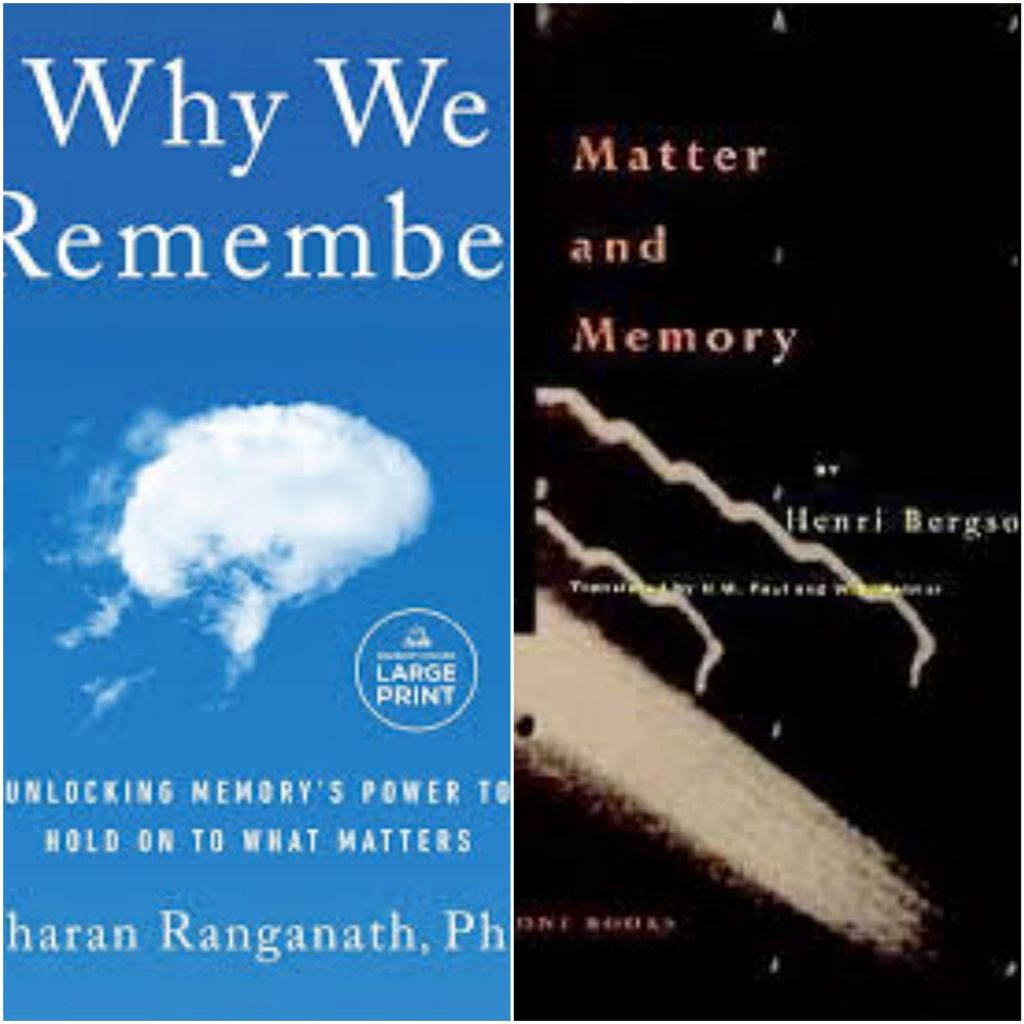
Why We Remember: Unlocking Memory’s Power to Hold on to What Matters by Charan Ranganath/Matter and Memory by Henri Bergson (two different explorations of memory using the field of science, one exploring the biological function, the other exploring the philosophical and historucal component. Both solid reads and good additions for anyone interested in the topic, Why We Remember being the more accessible and practical of the two).
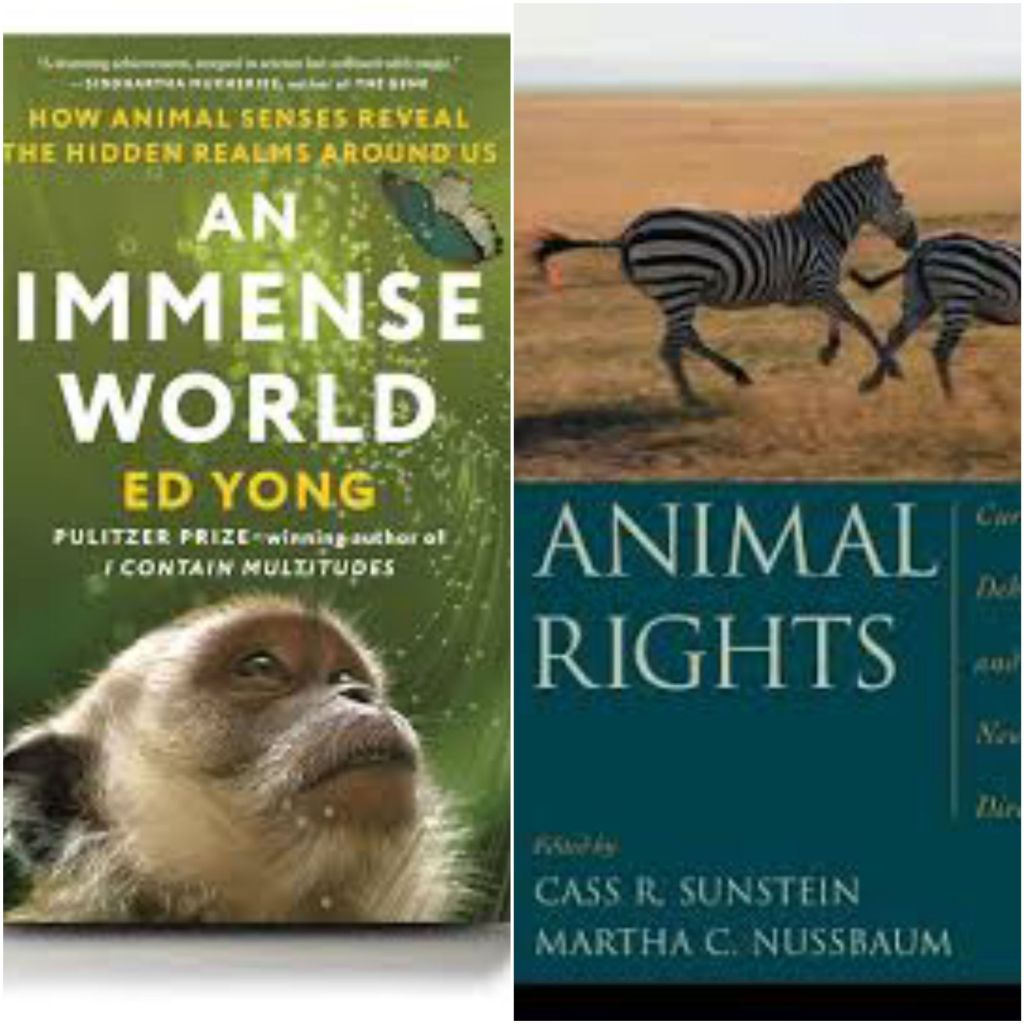
An Immense World: How Animal Senses Reveal the Hidden Realms Around Us by Ed Yong/Animal Rights: Current Debates and New Directions by Cass Sunstein (Both books left their mark on me in their own way, the first one exploring how seeing and interacting through the sensee is a universal reality with unique expressions, not better or worse, simply framing that perspective in ways that create different vantage points with different strengths across the field of what we would call life, enabling one to see what the other cannot. Animal rights is a practical and political and moral/ethical discussion looking at the disparity that exists in how we treat one life form differently than another. It challenges how we might conceive of something like the basic right to life as a universal value and some of the logical arguments that both challenge and support it)
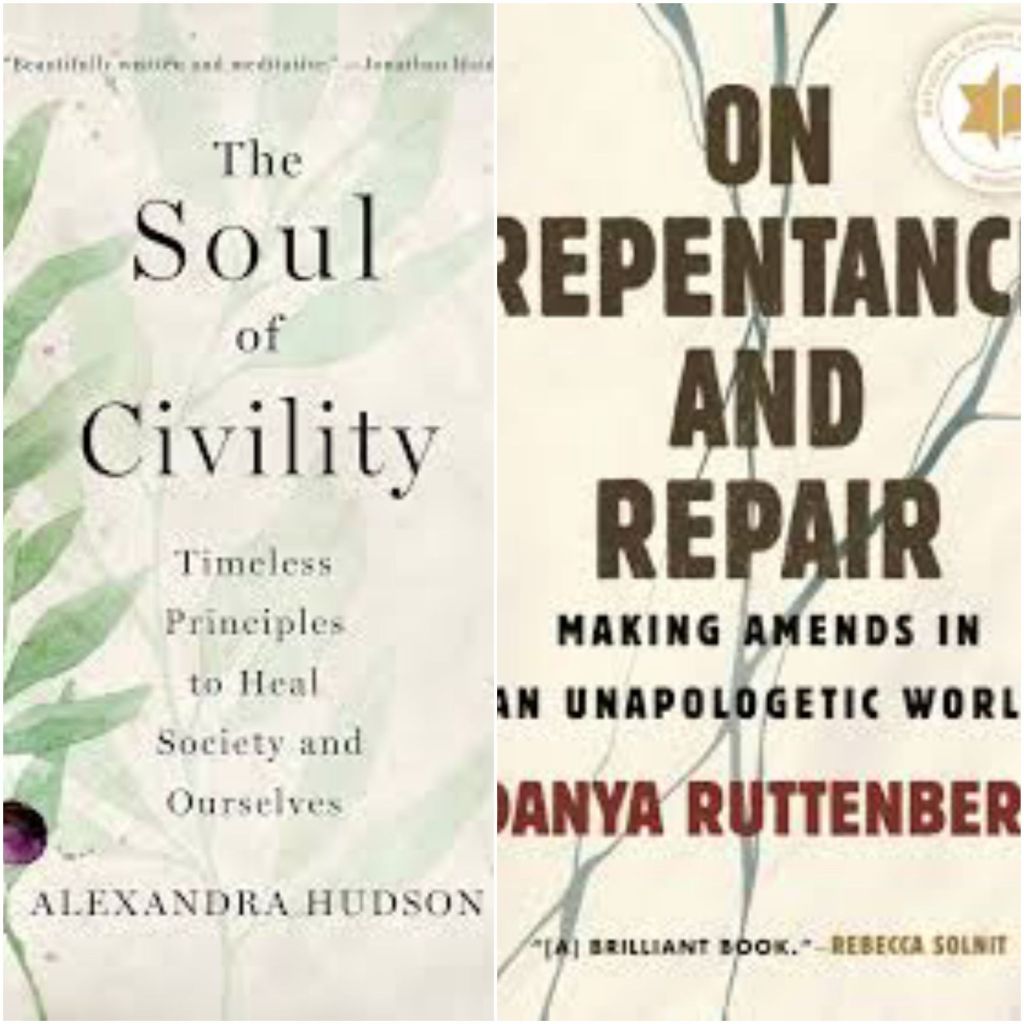
The Soul of Civility: Timeless Principles to Heal Society and Ourselves by Alexandra Hudson/On Repentance and Repair: Making Amends in an Unapologetic World by Danya Ruttenberg (I’m not sure either of these reads ultimately establishes the necessary foundation for its ideas, but the ideas of civility and reconciliation have a strength all their own, making these two books important and relevant)

Supercommunicators: How To Unlock the Secret Language of Connection by Charles Duhigg/Storyworthy: Engage, Teach, Persuade, and Chamge Your Life through the Power of Storyelling by Matthew Dicks (in case one wasn’t convinced, these are two books that show how the science behind our interactions in this world are all about necessary manipulation. However one feels about this realization, both books give practical insight for how to communicate with intentiom towards a given and wanted end)

The Message in the Bottle: How Queer Man Is, How Queer Language is, and What One Has To Do With the Other by Walker Percy (one of my books of the year, for sure. The way he helps distinguish between sign and symbol, both relating to the role of language in shaping knowledge of his world, is profund, illuminating and compelling)
Fiction
As I sit here writing this, i just finished a first chapter in Kawaguchi’s Before We Say Goodbye. It has become something of a rite of passage for entering into the new year, as every year it seems I kick things off with the next in the series. In 2024 it was Before Your Memory Fades, which once again follows the familiar emotional and sentimental pattern that it has become famous for. It’s like an old friend.
A second note about 2024: I read a lot of books about books. The Days at the Morisaki Bookshop, The Book of Doors, The Book Woman of Troublesome Creek, Bookshops and Bonedust, The Book of Stolen Dreams, The Ogress and the Orphans (that last one doesn’t have books in the title, but a library sits at its center).
A third observation: I read a lot of books set in my hometown and about my hometown. Largely because it was Winnipegs 150th anniversary this year. When the Pavement Turns to Sand, The Shadow over Portage and Main, The Art of Ectoplasm: Encounters With Winnipegs Ghost Photographs, More Than Books: The History of Wimmipeg Public Library
Mostly though, what stands out to me in 2024 is not just the diversity of my fiction reads, moving between classical and modern and revisionist takes on classics, it’s that many of these reads that make up my top 10 felt important and monumental, if in different ways.
Here is my top 10 reads in 2024 (in no particular order):
Small Mercies
This might be the least significant pick in terms of relevance and importance, however it’s worth pointing out that it every new release by this author comes with great anticipation because Mystic River, still his best work, is on my all timers shelf. If this doesn’t live up to its brilliance, it nevertheless remains incredibly satisfying to be able to rust an author to engage me with a genre that I don’t typically go for. Propulsive, strong, and thematically interesting. Lots of praise for this one.
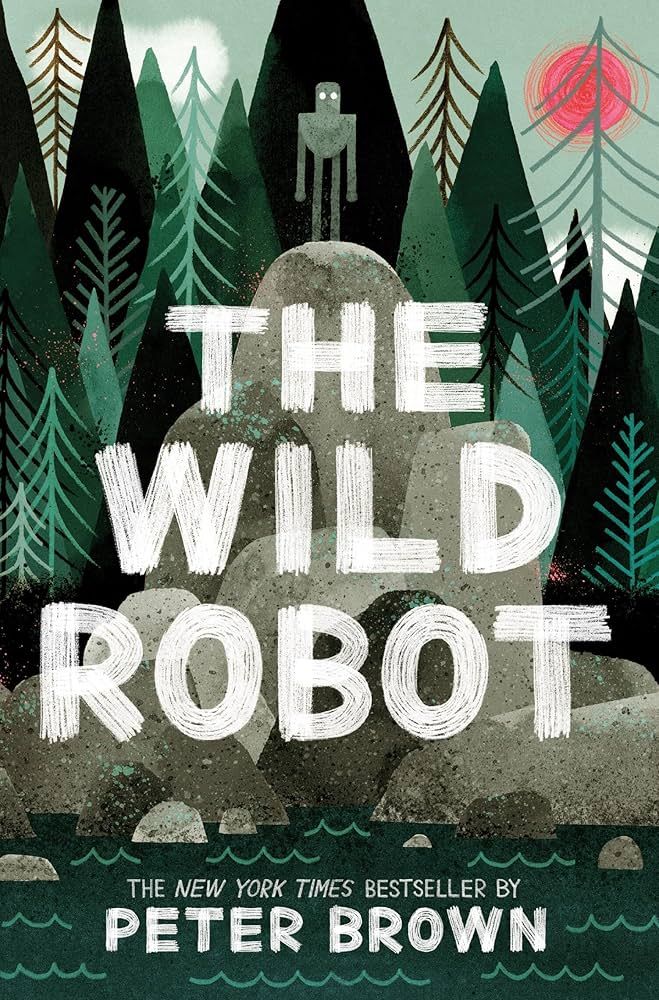
Wild Robot
Picked this one up to prepare for the big screen adaptation. I immediately wished it had been around when I was younger. It asked a lot of the big existential questions I was asking at the time, and explores some complex ideas, using the image of technological progess to explore the connection between humanity and the natural world. Not a problem to call this an instant classic since it already is.
Once a Future Queen
This one took me back. It’s reminiscent of Lewis and Mcdonald, and in fact opened me up to an author who is immersed in that literary world. I love new discoveries, and i also loved this book. Magical realism at its best.
James
Everyone’s talking about it as a 2024 release that is topping lists everywhere, and for good reason. It’s one of a handful of new releases I read this year, and it is the real deal. Fun, inventive, biting. It takes some big swings. As a revisionist take on a familiar classic, ut functions both as inviting nostalgia and challenging commentary, giving it the sort of layers that help the risk pay off. Rather than isolating fans of the classic, it celebrates it while also inviting readers to acknowledge our contemporary lens.
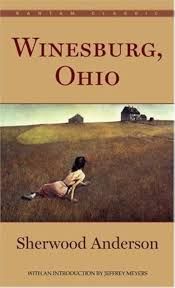
Winesburg Ohio
“In the beginning when the world was young there were a great many thoughts but no such thing as a truth. Man made the truths himself and each truth was a composite of a great many vague thoughts. All about in the world were the truths and they were all beautiful.” Beautiful even where it finds things like depression, loneliness, boredom, death, addiction, and unrealized longings. This is a book that doesn’t feel the need to mask over the truth of these realities, instead embracing them as part of what binds us together.
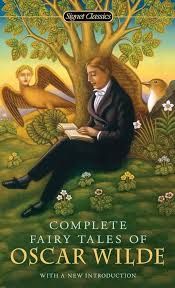
Complete Fairy Tales of Oscar Wilde
I love this kind of thing. The simplicity of a fairy tale melded with the profundity of these philosophical questions. And I found many of these stories to be both entertaining and incredibly meaningful, sometimes cynical, sometimes hopeful, always honest. So glad i picked this up from the discount bin

Northwind
The final book Paulsen wrote. It’s a bit messy, but there is a poetic undertone to the prose, bringing together his real life experiences with the pacific northwest coast and Nordic mythologies. It doesn’t always makes sense being blended together, but there is a beauty to the madness. Paulsen’s affection for the natural world and its creatures is an expected and important facet of the story, which is part survival, part adventure, part internal process as our main protagonist makes his way across a rugged landscape. From this flows his philopshical ruminations, weavimg in and out of subtle theological touchpoints.
At its heart, the book seems to be about the movement from life to death to life, with the uncertain nature of this journey with its all its questions and doubts and unknowns being caught in the crosses that nature itself exhibits. The struggle begins, and perhaps ends, with the basic observation that beauty clashes with the honest brutality of the nature we observe. It becomes difficult to imagine, then, what is illusion and what is not, especially when it comes to speaking about good and evil. Even more difficult to imagine life and death having meaning that isn’t constructed over and against this confusion of realities. The presence of Nordic myth gives this an added dimension as well, transporting these same qualities to our ruminations about the gods. If we cannot say the gods are good or evil, then god becomes a distant entity that is both the author and result of this confusion. Equally so with life operating distanced from the gods. Which leaves death as the great leveler. In such a world the brutality is the only true measurable reality. Driven by instinct and evolution and survival. It becomes the only true certainty.
And yet, as Paulsen confronted his own experience of brutality, he became equally compelled by something else- an untamed beauty, as irrational as it was. He found this in the most unlikely of places; in nature where one would expect the brutal reality of this existence to loom largest. This contrasted the humanity where he found beauty to be most hidden. One of the most striking things about his life, something I gleaned from his autobiography, is how it is his encounter in nature and survival that helped clear his confusion about humanity. It gave him a fresh lens to see existence through. And in some real sense that’s the undercurrent running through his final book. If the one true measurable reality is in fact death, then reality must become immeasurable for life to make sense. For me, this is an idea that endeared me as a child and continues to captivate me as a now aging man.

The One and Only series
Finished the final books in the series this year, ending with the fitting and poetic finish in Family. I’m sad to say goodbye, but I’m so glad I took the journey
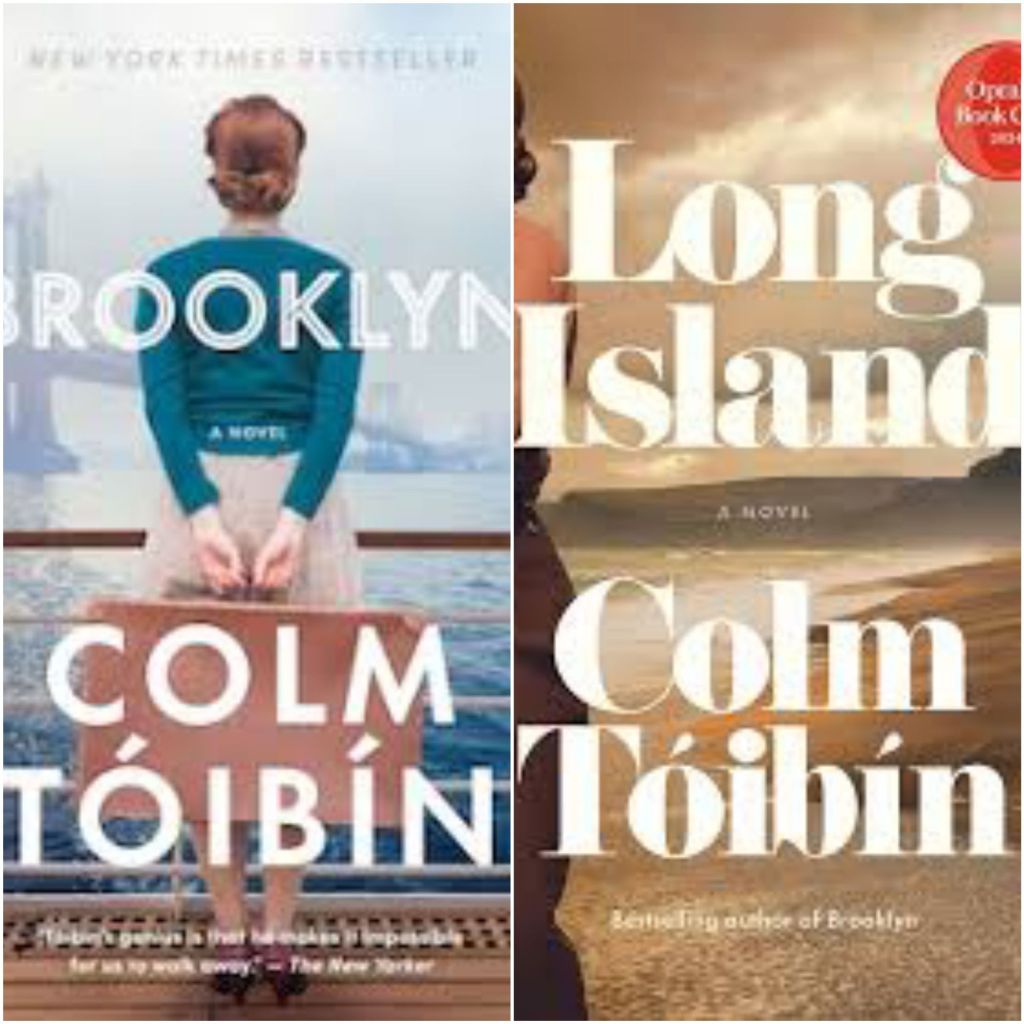
Brooklyn/Long Island
An all time favorite film paired with the release of a long awaited sequel led me to finally check Brookyln (and its sequel) off the list. It was worth the weight. I’m still mulling over how I feel about the sequel, but Brookkyn brought back the feeling of seeing the film for the first time. Very much familiar to its adaptation with its mix of philosophy, love, immigration, displacement, change, progress and home.

Earth and High Heaven
Particularly absorbing were the characters, filled as they were with nuance and complexity while never betraying that sense of raw, unfiltered dialouge running underneath. It subtly keeps adding natural layers as it goes, giving it the sense of getting to know these strangers on a level befitting friendship. There’s the Canadian context. There is the context of the war. There is the socio-political dynamics of the three central povs- jew, gentile, and french. The way the author brings these dynamics to the surface as a unique exploration of a specific place and time is impressive, and the insight it gives to all three of these dynamics carrying their own sense of isolation in contemporary Montreal was fascinating.
Most important- its a good story. Its entertaining and engaging and meaningful, the perfect balance of crowd pleaser and substance where you can have fun cheering for particular outcomes while growing in the process.
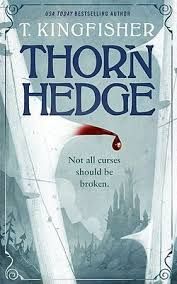
Thornhedge
A fascinating, and very brief at just over 100 pages long, reimagining of the aged fairy tale, Sleeping Beauty. Characters are swapped and reshaped in ways that turn the story upside down and and sideways and backwards, so much so that it makes the unfolding tale nearly impossible to predict. And in so doing, it allows its voice to challenge our conceptions and assumptions at the same time, exploring themes of good and evil, and how such notions frame our tendency to judge the exterior rather than to allow ourselves and hear and see those internal realities that lie hidden beneath the surface, or beyond the thornhedge. As the book suggests, this is just as true of ourselves as it is of the world we live in, both in a material and a spiritual sense.
In this sense, T. Kingfisher has written more of a myth than a fairytale, one that challenges some of our modern trappings and resistance to a reality framed by more than simply one side of the Thornhedge. Myths are important, and necessary, because they challenge our tightly guarded conceptions of reality and epistimology. The minute we decide that this is what reality must be, is the very moment reality, should we be willing to see and hear, bears itself out as something not content to simply exist within our manufactured restraints. Thus why one of the central characters in this story is a seeker, and the other a protector. It is when these worlds collide that the hedges can be cleared away and greater realities to break in, which brings with it danger and struggle, especially when it comes to our grasp on reality, but also beauty and great reward.
 The Stories of my Life