
Reaching the end of the first quarter, I thought I’d take a look at where I am in my reading journey thus far in 2025. Note some relevant threads, some hightlights/lowlights:
As has been the case in previous years, I started things off with the next book in Toshikazu Kawaguchi’s Before the Coffee Gets Cold series, titled Before We Say Goodbye. Each book is built around a similar structure (a series of stories connected by shared themes, all intersecting at this coffee shop where its possible to travel back in time to any moment that occured in this coffee shop), while also advancing the larger overarchcing themes of the reoccuring characters whom run and operate this coffee shop. For me this is comfort food, with this book dealing with buried and lost moments of regret. Given that one of the rules of the travel is that one cannot actually use the past to change the present, it is always interesting to see why different people choose to travel. By its nature, it relates to changing something in onesself- a perspective, a letting a go, a knowing, a sense of closure. These are the questions that make this series compelling.
Why would I choose to go? Where would I choose to go? The interesting element of this queston centers on the notion that our memories are deeply tied to our sense of place. The moments they are revisiting are tied to experiences at this coffee shop. Thus, for me to think of when I would go back to is to think of where I would go back to, which is both a specific time and a specific place.

This is an idea that travel writer Frances Mayes explores in her book A Place in the World: Finding The Meaning of Home. This was a highly anticipated backlist read that I finally managed to get to this past January. While its also one of my biggest letdowns of the year for me thus far (a great concept marred by a lack of vision when it comes to execution), the idea, the reason I was drawn to it in the first place, is what remains compelling. What is it that ties us to our sense of place if not the memories that give these places their sense of meaning. We cannot conceive of the moments that shape us apart from the power of the places that hold them in our consciousness.

It’s interesting the follow the thread of this idea through some subsequent reads that seem to give this notion a transcendent and metaphysical presence. Such as Christopher Alexander’s fascinating and illuminating The Timeless Way of Building. A book for architects, interested n giving architecture a philosophical foundation, Alexander explores how acts of building, creative acts, bring about something that takes on its own creative possibilities- in other words, a life of its own. This philosophy is drawn from nature, looking at how nature functions, with each act of creation bringing about something that creates in and of itself. This is similar to how Kawaguchi imagines this coffee house, with a singular moment giving life to consecutive moments, all of which have the power to create their own threads of historical narrattive while being bound to this shared, singular point in space and time. Meaning, if something different had been created in this singular moment, what emerges from this moment would create subsequent moments all with different creations of their own. This is the complex web that reads against temptations for linear readings of space and time.
Or Walker Percy’s Signposts In a Strange Land, a book that uses the specific context of the American south, or the even more specific context of his hometown as a bridge or dividing line between the south and the larger framework of America, to explore the larger truths of our existence. All are signposts pointing to something true at the heart of things.
Taken together with David Bentley Hart’s magisterial All Things Are Full of Gods: The Mysteries of Mind and Life (a must read for anyone interested in these big ideas, and a truly revolutionary work that should advance the field of philosophy and metaphysics), or Spencer Klaven’s Light of the Mind, Light of the World: Illuminating Science Through Faith, a book that, similar to Hart, deconstructs materialism in favor of finding those necessary metaphysical truths which give reality its definition, grounding the creative process in a necessary foundation. This suggests that the ebb and flow of life as a creative movement is always anchored in something true.
A shared foundation, and yet one that gives life to the specifics that shape our unique stories. This becomes the ebb and flow of all philosophical and theological exercises. This is how we bind observation/experience to our sense of meaning.
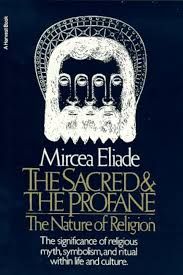
Perhaps one of the most profound exercises to this end was checking off the now iconic classic work, The Sacred and the Profane by Mircea Eliade, one of the strongest arguments for the existence of a God that I’ve encountered in a long while. Which is not to say that this is what the book sets out to do, rather it is the implications of its examination of two central truths regarding the nature of this existence- our observation and experience of the sacred and the profane, and the way these two things shape both our understanding of all things and our participation in all things. Indeed, all things are full of gods, which for Hart is reflective of that singular foundation for all truth- God.
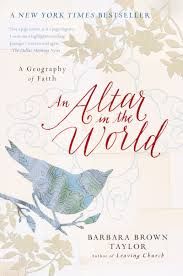
Intuitively, this is what shapes books like Brother Lawrence’s The Practice of The Presence of God (finding God’s presence in all places and as the formative, driving force of all things), or Barbara Anne Taylor’s popular An Alter in the World: A Geography of Faith.
Faith rooted in our sense of place.
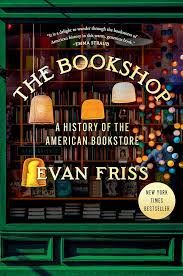
It’s even found in something like Evan Friss’s The Bookshop: A History of the American Bookstore. Like The Timeless Way of Building, bookshops are defined by the relationship between a building or a space and the people that occupy them. The meaning of a place intersects with our experience of something real and true. While a bit inconsistent in its structure, I found Friss’ examination of the life of the bookshop endlessly fasciunating and engaging.

I had shelved a book by Canadian author Rice Waubgeshig titled Moon of the Crusted Snow, specifically waiting to read it in the winter months (seasonal mood reading for the win). Picked it up this past January. It’s breezy but not shallow, it has horror notes, but it’s not overtly scary (haunting perhaps). Those notes are grounded in its commentary about indigenous history here in Canada, using an apocalyptic type setting to parallel the horrors and confusion of a people ousted from their land and forced to relocate to the remote north with full expectation that they would not survive. It’s not super complicated in terms of allegory, but I thought it was creative. What makes it one of my favorite works of fiction that I’ve read in 2025 is the way it connects real historical realities to an examination of the profane, or the horrors that shape our experiences of this world. This is equally important to pulling out the sacred, that which reaches beyond acts of survival to the preservation or seeking of that which has meaning. All of this packaged in an entertaining narrative.
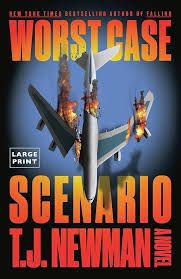
One of the masters of holding this tension within the framework of a propulsive blockbuster level entertaining narrative is T.J. Newman, and his newest effort, Worst Case Scenario does not disappoint.
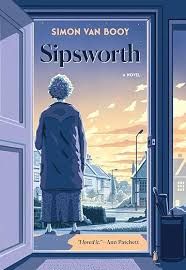
Playing on a different wavelength, which is to say short, sweet, lovely and simple, is Sipsworth by Simon Van Booy. This had been making its rounds in the booktalk world since its release a couple years ago, winning people over with its story about an old, aging woman spending the final quarter of her life in the absence of the stuff that has afforded her an identity and meaning, forming this bond and friendship with an unsuspecting mouse. It’s not earth shattering, but it does live up to the selling point of its promised charm.
If I had to choose my top three fiction reads of the first quarter, they would be the following:
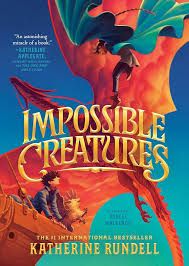
Impossible Creatures by Katherine Rundell
This one hit plenty of checkmarks for me. One of the things I loved about this teen fantasy, chalked full of magical realism, is the way it imagines, or perhaps more correctly describes, the central crisis of our world, at least here in the modern West, as a persistant neglect of our connection to the spiritual dynamics of this reality. In the world of Impossible Creatures this perceived separation of the material and spiritual world has left the spiritual world unseen and forgotten, despite these two worlds overlapping. It is the ones living in proximity to this spiritual reality that have the eyes to see, and it is the embrace of, and more important participation in this reality, this world as it truly is that can awaken us to its suffering.
There is an eternal truth that we all seek, whether we know it or not, something that is as illusive as it is present within the joys and struggles of this existence. It is this intersection where we find what is most needed- hope. A hope that stories like this, steeped in relevance as well as fun and adventure, can reawaken us to.

Aurelia by Stephen Lawhead
Lawhead is a favorite author of mine. A definite auto-buy. It has been too long since he wrapped up his previous series, and this one is actually a prequel of one of his most famous- his King Arthur series. Of course, if I had my way I would have wanted a brand new series, but as a prequel it delivers exactly what I would hope for. It’s scaled back, focused on setting the stage for the grand and epic narrative which is to follow, and can absolutely stand on its own. That and one of the great joys of my life is the opportunity to spend time with his stories and his writing, so I am just grateful to have something new that allows me to do just that. It was far and away among my most anticipated new releases of the year, so it’s not surprising at all that it would be topping my list of favorite reads thus far
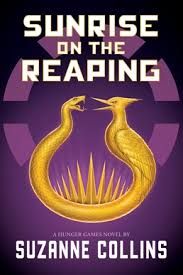
Sunrise on the Reaping by Suzanne Collins
Also on my most anticipated list. Because, well, it’s a new addition to the Hunger Games series. A prequel to be exact. And a near perfect bridge between the previous prequel, documenting the rise of Snow, and the first Hunger Games book, documenting the rise of Katniss. That bridge is, of course, the story of Haymitch. This doesn’t just feel necessary, it feels essential, filling in the gaps and completing the series in a way that elevates it to greater heights
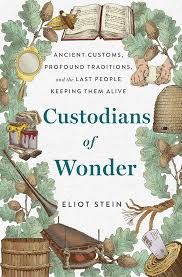
My biggest surprise of the year? Probably Eliot Stein’s Custodians of Wonder: Ancient Customs, Profound Traditions, And the Last People Keeping Them Alive. Biggest surprise if only because I had never heard of it before stumbling across it on the Rick Steves podcast. Maybe if I had been aware of the author’s career as a journalist prior to reading it, especially since over half of the book is taken from journal pieces he had previously published, it might have been less surprising, but going in blind I was absolutely taken in, not just by his writing style but by his deep affection for the human stories he is capturing, the deep questions they are posing, and the ability these stories have to recover wonder in what has become a cold and calculated world. I love it when books force me to slow down and appreciate the moment when I’m in it. This is one of those books.
A close second would be My Roman History by Alizah Holstein. This was a blind buy straight off the shelf. I was intrigued by the synopsis, using the memoir as a way into reflecting on the power of Rome as a place. What I found was so much more. Deeply philosophical. Often moving. Shaped by a genuine and real love of history, but in a way that reads this history through a boots on the ground awareness for its real life and real world impact. It is history through her eyes manifested in the present, formulated as parallel narratives working side by side- her story and the story of Rome.
My most formative or paradigm shifting reads? I’ve already mentioned David Bentley Hart’s All Things Are Full of Gods- essential reading on philosophy and metaphysics. I would toss four more into the mix, two of which have been slow reads (reading them in bits over a longer period of time). The first is the book How To Write Your Own Life Story: The Classic Guide For the Nonprofessional Writer by Lois Daniels.
This book is actually based off of a course she teaches, but what makes it paradigm shifting for me relates both to the central idea, and to the way it intersected with my own life in the present moment. On the former, it argues that this process is not self centered, but rather something everyone in any stage of life can and should do. It’s not meant only for those looking to tackle something like this, but to encourage people to consider doing it, precisely because there is great worth in doing it. On the latter front, this was something I had been trying to do for the past 3 years without success. This not only gave me the tools, it gave me the inspiration to do it. I am now three quarters of the way done in finishing that project.

The second slow read was the classic book How To Read a Film by James Monaco. This was a Christmas gift, and it’s a hefty one. No small task. And yet as a cinephile, and as someone who has a deep love for the art of story and filmmaking, it absolutely transformed how I see the form. It gave me the language and opened my eyes to the artform on a technical, historical and philosophical level. Thus why I say it was paradigm shifting.
And then there was Brant Pitre’s Jesus and Divine Christology. In terms of theological trends, this is a game changer. It resets the entire field of discussion relating to the question, who did Jesus claim he was. Not who did the Gospel writers say he was, but what, based on an objective, critical approach, did Jesus claim he was. Did he see himself as human, or did he actually claim himself as divine? Pitre takes the long standing divide between liberal and conservative scholarship and leaves little to no doubt (and that’s not hyperbolic) that not only do the Gospels claim Jesus thought he was divine, but the best explanation for why the Gospels claim this is that Jesus claimed this himself. Going forward, that classic debate should be laid to rest, and anyone grappling with the question in either theological or historical terms will have to go through Pitre’s work first.

Lastly, Shai Held’s Judaism Is About Love: Recovering the Heart of Jewish Life. In a world where the long standing divide between Christian and Jewish thought sits alongside some wrong headed assumptions about Jewish life in secularist academics and popular ideologies, Held’s book is an invitation for the seeker to reconsider what the Jewish story actually is and what it actually says. It’s the sort of book I want to hand to everyone. It’s also the sort of book that I will be revisiting many times over. And I say that as a Christian. It was a reminder of the ways Christianity cannot make sense apart from this story, and it was also one of the most helpful analysis of its distinctives, meaning how Christianity continues to tell that story in distinctively different ways than Rabbinic Judaism. One thing remains true- without a proper understanding of Judaism we cannot understand Christianity.
An honorable mention in this category- The Last Romantic: C.S. Lewis, English Literature, and Modern Theology by Jeffery Barbeau. There’s not shortage of academic works on Lewis. It’s rare for any new work to really set itself apart, rather what tends to happen is repeated engagement across disagreements, usually with pioneering works (such as Allister McGrath’s biography) as representatives of those sides. The Last Romantic cuts through that noise by narrowing in on an underrepresented period and facet of Lewis’s life, namely the influence of the English romantics, particularly on Lewis’ autobiographical approach. It’s short but dense, structured in a call and response (article and critique) by select conversation partners. It’s also a powerful reminder of why Lewis’ central convictions regarding myth and truth matter across disciplines today.
 The Stories of my Life