
Both sets of my Grandparents have since passed, given now to the problematic nature of memory. Memory is a subject of which I’ve long been fascinated by. Some of that is rooted in an experience. Previous posts in this space have outlined that, but the summarized version is- I had what I call a Word from God calling me to give myself to the task of remembering.
That task is also fueled by what it has been uncovering in the years since. Who I am. Who God is. What this world is. How it is I can say I know anything at all about these things. It’s all rooted in memory. For my past self, who had been convinced knowledge could be redueced to propositions, that was a troubling notion. Even more so, perhaps, a defeating notion. Because, if all I have is a set of propositions, how can I trust such knowledge to actually make sense of the world I am remembering?
One of the breakthroughs for me personally was understanding what memory is- narrative. This is what flipped things around for me. How is it that we kow anything about these things? Propositions arrive as information. Or, if you will, “memorized” information. If all I have is information, the sort of information I can recall on a given examination, and dictate at an instants request, can I truly say I know what that thing is? As I’ve come to be persuaded, its possible to recall all the information in the world and still not actually know anything about it. That’s because there remains a distance between the thing being known and the knower. In fact, the relationship between those two thing becomes completely uneccessary when it is reduced to propositions. Which of course creates a logical problem- how do we attend for the knower in that equation if knowledge is reducible to information? I don’t believe we can.
Narrative on the other hand, is built on the relationship between the thing being known and the knower. For information to be translated or interpreted as knowledge it needs a narrative. That’s the only way for us to truly know something- we engage a thing as participants in a story. It is not the information that defines a thing, but the way it makes sense within the story we embody that does.
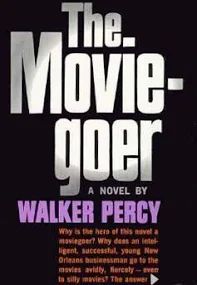
In Walker Percy’s novel The Moviegoer, he is using a ficitonal character to reflect on certain philosophical truths regarding how we live in this world. In the first few chapters he describes this idea of living as a “search.” When this idea occurs to the book’s main character, it is in the midst of despair. As he writes, “A man can look at this little pile on his bureau for thirty years and never once see it. It is as invisible as his own hand.” This is the nature of the despair he is talking about. To be so “sunk in the everydayness of (ones) own life” that life gets reduced to its demonstrable function. And yet, despair has another side to it. It can also be the space in which something can become visible. As the character in Percy’s novel suggests, “once I saw it, the search became possible.”
And, “to become aware of the possiblity of the search is to be on to something.” That is how we move from despair to knowledge.
But what is that something that we seek? Here the character notes the fundamental obstacles that prevent us from “seeing” that which has been clouded by despair-
- the fear of exposing our own ignorance
- the fear of social hiearchies- “For as everyone knows, the polls report that 98 percent of Americans believe in God and the remaining 2 percent are athiests and agnostics- which leaves not a single percentage point for a seeker.”
The second point is anchored in this idea that to name that which i seek is to either “set myself a goal which everyone has reached,” which means raising a question for which no one else has interest, and equally to be found dead last to knowing the truth. In reality though, it is the first point that gives fuel to the second- to seek is to be exposed.
Here the seeker in Percy’s The Moviegoer is left wondering- what is the difference between naming that which we seek and being so certain about the information we have as to call it knowledge? Wouldn’t such a thing simply lead to despair? To have the information means to “be sunk in the everydayness” to which despair belongs. It means that one is no longer searching.
But this only leads us back full circle- how is it that we can then know anything, truly know anything, at all. The answer here comes back to memory. To narrative. To seek is to need a story. Seeking is a participatory act, not a propositional one. This is, in fact, how our brains work on a scientific level. Our brain takes informaiton and weaves it into a story we can comprehend and make sense of. We call this narrative memory. Without that, reality would be a incomprehensible void made up of functional data. Thus, to seek is to also TELL a story. A story that makes sense of the world we observe and experience.
Which is simply to say this: all knowledge is rooted in that story which makes the best sense of the world we observe and experience. This gives us the necesssary lens through which to “seek” through. A story we tell using the language of our senses. It is the narrative to which all information we aquire belongs.
So, to come back to where I began, with my grandparents. Why was I remembering my grandparents? As it is, in the middle of my own routine, my own despair if you will, I stumbled across something I had not truly noticed before. As such things are prone to do, it disrupted my routine. That thing was a simple question. A question I noted was asked by all three of us in our housebhold on a daily basis, simply in our own words. For me it is, “How do I know that the actions I do lead to better outcomes and a better world?” Can we ever truly “know” such a thing?
Which led me back to my grandparents. In their own way, I can recall them asking this same question growing up. And there were always two sides to this coin. The first would be, the world their generation handed us is not the world they thought they were making before the world wars hit. They were on cusp of the great accomplishment of the western enlightenment- the creation of the free world. Only to have this world come crashing down through the ebb and flow of their accomplishments eventually creating a landscape of failure. The world they handed my parents was a world my parents were supposed to reimagine and remake on the other side of that despair.
The world my parents handed me, the world my grandparents were wise enough to look at with well worn suspicision, was a world created by the industrial age, one shaped by the technological revolution that had been handed to them, and a true celebration of the enlightenments modernist approaches built on institutions. Institutions that, as I came of age, reframed the western wolrd once again against its monumental failures and corruption. This was the world handed to us, the world we were expected to remake and reimagine, this time with the internet in one hand and our smartphones in the next. We needed to dismantle the institutions using our new technological world.
Only to discover that the world we reshaped and reimagined brought its own return to despair. Unprecedented rates of depression, addiction, and suicide. Feelings of meaninglessness. Phone addiction. Disconnection. The toxic nature of social media. A world shaped by a world once again at war. Endless political division. The loss of institutions and trust of institutions and their leaders. All of these things are a product of what my generation handed the next, all in the name of believing “our actions make a better world.”
Now, this is purely anectdotal, but it is something that I’ve undeniably seen, felt and experienced. In the midst of our own despair, where do we go back to? The past. We go back to the world of our grandparents. In this case, not to institutions, but to nature. To the environment. Why? Because somehow it feels like whatever our parents deconstructed and handed down to us lost something valuable. Their world becomes our scapegoat. And because it seems equally necessary to know we are rebelling against our own parents, that generatonal gap feels like a needed safety measure. Distance that allows us to say that we are unsatisfied with our world and that we week something better. Nevermind that the world we feel we are rebelling with is the one that our parents gave us.
Which creates a kind of ironic tension. On one hand, like every generation that has come before, this present one finds itself stuck in despair trying to figure out that which it seeks. In the present narrative of the western world, this is “a better future.” Or progress. The undying belief in the notion that “what we do makes a better world.” But here is the question that has been plaguing me in my own seeking. Can I justify that narrative when I look at how these three generations are connected.? When I look at history? Can I genuinely say that what we do, or what I do, handed the next generation- our kids- a better world? Can I genuinely sell them on the fact that what they do will bring about a better world?
Here I find myeslf wondering whether we are actually seeking anything at all in these cycles. Have we instead, at the emergence of the enlightenment, named that which we seek (the promise of progress and a free world built on propositional truth), and in the process given ourselves to despair? And if so, how do we break from that despair and become seekers once again?
I don’t know the answer. This is simply what that observation set in motion for me over the last while. However, I do feel like I know this- the story we tell matters. The narrative our lives belong to matters. Without that, as Percy would say, we cannot seek, precisely because we cannot see.
 The Stories of my Life