
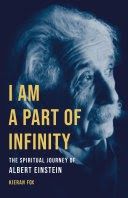
In his book, I Am Part of Infinity: The Spiritual Journey of Albert Einstein, author Kieran Fox talks about how Einstein’s “spirituality was mocked and misunderstood during his lifetime,” and worse yet buried and “all but forgotten” by modernitys growing hostility in a post-enlightnement era.
This book was en effort to understand why that was.
He goes on to write,
“These are truths the textbooks never talk about: the spiritual convictions behind the scientific creativity, mysterious motivations that drive certain minds to seek a transcendent pattern pervading all the transient appearances. And in realizing that a religious yearning had always permeated the scientific quest…. I’d spent years searching the world for a spirituality that didn’t force me to surrender my common sense, that could at least be compatible with science. And yet all the while, at the origin of Western civilization was a system where science and spirituality were the closest of companions- a transformative teaching known as the hieros logos: the sacred science.”
The sacred (holy) science, or the sacred discourse”(hieros logos) as a kind of religious rhetoric or conversation between the knower and the known, between the person and the creation, or between the creation and God.
The most interesting point is that this journey begins with the author’s stated desire or longing. He had been taught by modernity that the world is reduced to scientific data. This is the aim of science- data that hands one a world which can be controlled and manipulated. And yet, he also had this innate sense that the world he observed and experienced did not make sense within reductionism. No more than a feeling within this framework, but one that was powerful enough to lead him to seek. How suprising then to see that this seeking leads him to discover that the whole modern scientific enterprise was not only inconistent with its foundations, but actively hostile to it.
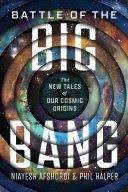
A similar sentiment is echoed in a recent interview on the unbelievable podcast with the authors of the book Battle of the Big Bang, suggesting that not only do science and religion wrestle with the same essential questions regarding the mysteries of the universe, the greatest misery and defeat of science would be to suggest it has handed us certain answers. For then there would be no reason for the search. We would cease to be drawn to anything at all.
Which just might be one of most powerful indicators of Gods existence. God opens up knowledge of the world. Reductionism shuts it down. As Fox suggests,
“Its not that Einstein can’t be understood: it’s that he asks too much. Just as his science forced physicists to radically revise their most basic assumptions about the fabric of reality, his spirituality challenges us to reconsider our fundamental assumptions about both the form and function of religion… (Einsteins doctrine) compels us to confront the sublime spiritual feelings that animate the scientific enterprise… an integration of the apparently irreconcilable, a reunion of reason and religiosity…”
Here is what is interesting to me. One important question becomes, at what point did this assumption about science and religion being at odds come to be normalized in the modern west? What and who told us that these things were acting opposed to each other? One of the points the autior is making is that the practice of science, and scientists themselves, did not hand us this. Something else did. And that something else is a modern western social construct.
There is a further important question- does this construct hand us something that limits our seeking rather than enabling it? Have we not then said that we have arrived at a certain scientific truth which has reduced the world to the necessary material, scientific properties needed to manipulate and contol? Has it not reduced knowledge to this same scientific data? If so, what else is there to seek beyond further technological advancement? Worse yet, on what grounds do we make sense of the seeker?
What, amongst the history of ever changing and constantly overturning scientific theories, ever arrives somewhere other than the same base material world that we have already defined? Just to be clear, in such a view no further scientific process could ever reveal a spirituality or God in that view. The conclusion has already been decided from the outset, which is why this process has been constructed in the first place. So what else is it uncovering? In the case of this book, what world would Einstein be exploring and uncovering? If science is not only seen to be at odds with spirituality and God, but in fact does away with it, isn’t the very basis of this assumption the notion that anything left to disccover is simply constructs born from the same material, physicalist reality? After all, it cannot be “other,” otherwise the entire enterprise gets overturned. Fox quotes physicist Steven Weinberg saying, “The more the universe seems comprehensible, the more it also seems pointless.”
Fox admits that it kind of seems monstrous. This is, perhaps, what led him on his search. For me, while I do ultimately find my search brought me to a different conclusion than Fox and Einstein, what I find fascinating is this basic admission lying at the heart of the scientific enterprise-
“As it turns out, the new mythos made by the rational mind meshes suprisingly well with what spiritual seers have been saying for centuries: all things share a single origin.”
The primoridal singularity. All things built for eternity precisely because this same eternal presence occupies all things- as Fox notes, in this view the disintigration that comes with the singularity multiplying itself never means destruction.
It means the unifying of the cosmic religion. The cosmos cannot destroy itself.
Even more fascinating is Fox’s examination of the simple fact that no one agrees on what this religion meant when it comes to God in Einsteins view. The atheists make him an atheist. The Christians bring him closer to Christianity. Biographer Walter Isaacson makes him a Deist. Fox notes he’s been called a realist, simply a way of naming capital R Reality, and has been called agnostic. And yet Einstein himself wanted to shun it all, at least by association (dogmatism can be a lesser evil for the masses). With the best of the cynics, constructs had no claim on religious truth, religious truth could only be sought, and is inevitably only ever sought and truly found by the very few who manage to ascend and transcend what he called the three phases.
There is however, as Fox notes, very little doubt about the people Einstein read and was formed by, Spinoza being among them. Here I do wonder if Fox himself falls into certain trappings, blurring the lines between his own views and Einstiens, his own journey and Einsteins, and clouding the fact that he is an invested interpreter of this history.
For as much as Fox critiques the biographers and writers that came before him for misrepresnting and clouding Einstein’s true beliefs, I wonder if he gets in the way of his own objective observations of a man who is a product of a particular time and place and moment. It should not be the case that critiques of Einstein’s views equate to small mindedness. For example, I think Einstein’s analysis of the first phase of religious evolution as being fear based is a narrow and unfortunate caricature that does not correlate with reality. His assessment of the second phase as the necessary emergence of “moral religion,” fails to attend for the historicity that lies behind it regarding a necessary foundation. I think his assessment of religion as being rooted in the desire to “escape the pains of this earth and go to heaven” would have met a robust critique in the emergence of the new perspective, which recasts that deeply Greco-Roman, platonic ideal in a proper marriage of heaven and earth.
What seems to be driving Fox, and more importantly his interest in Einstein, or his own interpretations of Einstein’s life and spirituality, is growing an awareness for the necessary tension that exists between encountering the transcendent and our own imperfections. This might be the thing that leaves me most puzzled. Where he sees the religion of the second phase as immersed in a need for perfection (or in religious terms, sanctification), I find someting quite different. I think what he misses here is the interest of something like Christianity in the physical world. Of the interest of the spirit in the resurrected body. And this requires moving away from the shallow caricatures of religion as being rooted in the fear the death, and towards the place of religion in saying something about life itself. Fox admits that he, with intention, tries to steer away from saying anything concerete. Perhaps keeping to the spirit of Einstein himself. And to a great degree this is admirable. And yet, if we cannot say something concrete about the nature of the spirit, I wonder how it is we can say something true about the body. About this physical, experienced reality which we all inhabit.
If that feels a bit critical, I do think there is a lot of good here in terms of Fox’s study of this enigmatic figure, and the insights he brings to the table. All Truth needs a foundation, and it is that foundation that I think allows our convictions to embrace the mystery of the ifinite. I think Fox’s foundation is solid at points. It’s impossible to even enter into these discussions if we refuse to allow rationalism to be challenged, for example.
I think his observation regarding wonder is the most powerful. Wonder as the necessary foundation of the cosmic religion. Wonder means that whatever we give a name to remains both embodied by the human made construct but also rooted and driven by the mystery of the transcendent. It knows that the Divine is there, present in all things. And yet it also knows the Divine can never be truly fully known, only encountered. That Einstein, in line with Spinoza, saw these encounters within the natural order and the rational mind is, I think, one of the necessary tensions we all must be willing to carry if we have any potential of encountering something outside of ourselves. Wonder is a”beginning rather than an end.”
Fox also is right in bringing a more nuanced approach to the reemerging narrative of Western society and the scientfic revolution being birthed from and within Christianity. This is kind of true, but its not the whole picture. For Fox’s interests, the window should open a door to both the Greco-Roman world and the Eastern Traditions that lie underneath. Its on this basis that Fox, in dialogue with Einstien, finds the notion of the “personal God” to be antithetical to rationalism (going so far as to lean into a bit of polemicism by saying “we’d all be better off without miracles,” a statement that acts in response to the problem of evil). But here is the thing- the rationalism that Fox wants to appeal to in his search for the Divine has no actual way to make sense of Life, precisely because it cannot make sense of Death. Or more importantly, it cannot name Death as antithetical to Life, despite all of life operating and being defined precisely in this way. To attend for this natural world and our experience of it cannot be rational apart from that basic fact.
That all religion is a construct is a good and necessary foundation. To note the essence of a harmony or unity within all things is a good and necessary foundation. A unity of mind and material even. The emphasis on a life lived in union with the Divine is a good and necessary foundation. To quote Einstein, “Whatever there is of God and goodness in the universe, it must work itself out and express itself through us.”
And yet, to pull the cloak off the necessary pantheism that flows from Einstein’s cosmic religion is to find oneself face to face with a very real problem- when do ones efforts to reduce the necessary constructs begin to betray one’s appeal to Truth? What’s interesting here is that Fox clearly has issues with organized religion, beginning and ending perhaps with the Judeo-Christian narrative, and many of his issues appear rooted in the dogmatism he sees it embodying. This appears to betray the fact that his potential ascent to the third phase is not just built on those good foundations, but also the common carticatures of those religious constructs he loathes. Such as his insistence that the Judeo-Christian narrative endorses violence. Or the already stated falsehoods above that see these religious constructs as being about “escaping this earth to go to heaven,” or being motivated by fear of death. This is perhaps no more noted than the quote he takes from Einstein:
“My God may not be your idea of God, but one thing i know of my God- he makes me a humanitarian.”
And of course, this necessary panthiesm is bred in the waters of that Buddhist mantra of doing away with the self and the ego. What’s most suprising in this regard is the fact that Western civilization has embraced this under the guise that there is no God in Buddhism. It is the spiritualism of the atheist. And yet Buddhism very much is a religious consruct that holds to belief in God. If, as Fox says, many paths lead to Infinity, Infinity still needs to be articulated. It needs to be articulated and named in order to make one (the illusionary self) a humanitarian through communion with the Divine.
Here Einstein’s cosmic religion, and Fox’s affinity for it, seems to struggle to get beyond what is titled the “eternal inigma.” Truth, as it says, must be comprehendable and knowable. And yet it is known in our participation. That’s the problem with the cosmic religion. If the only way to be exalted to the “Oneness” of the Divine is to lose the illusion of the self along the way, there is no way to enter the rational world of the senses. There is no way to love both God and other. There is no true relational fabric that holds the universe together.
I can’t help but think then, that if Fox took some of the foundation in this book and actually allowed the fallible constructs of our religions to awaken the Truth of its witness to a relationship between the Divine and a contingent Creation, that he would have a far more robust critique of the first and second phase (old) religions and a proper articulation of the third (new) religion of the future. The third phase loses itself without that necessary conversation. For example, within the Judeo-Christian story the reformation is in dialogue with the thing it is critiquing (the construct of the Catholic Church). Equally so for the new perspective being in conversation with the reformation as a critique. The third phase, in Fox’s assessment, binds itself to a wholesale criticism of the evolution of humanity itself. The problem being, it can’t get past its simple conviction that truth exists in order to say anything rational about the Truth the constructs are all in conversation with. It cannot name anything at all. Nor can it shine a light or mirror back on Fox’s own biases.
And yet, I remain appreciative of this book. I remain appreciative of Fox’s longing and desire for the Spirit. I think there is a lot of important observations here, both within the ideas and in a fresh examination of Einsteins “spiritual journey.” As a source to that end it is very worthwhile. As an advocate of this approach, it’s easy to respect even if I find some of its critiques to be misplaced and some of its convictions to be less than persuasive. But that is the power of diversity. Differing interpretations of the Divine in conversation is the very thing that allows us to embark on that journey in the first place.
 The Stories of my Life