
There seems to be a common theme emerging for me this summer through conversations with people and with the things I am reading. Certainly some of it connects to the present state of politcs between Canada and America. The concerted movement to “reinvest” in Canada feels reminiscent of the Covid years where the shutdown was initially demonstrated as a bit of a strange novelty and perhaps even emraced with a tint of romance and aspiration (which is, of course, not noted at the expense of the real world tragedy of the virus). The present political landscape is drawing out different forms of social pressures and demands based on particular concerns and targeted responses. Part of the result, which is fascinating to parse through, has been a noted reclamation of the flag which, as one article I read put it, had been seen to be coopted during the pandemic by a certain faction of the political right. For some, which is a demonstrable statistic given the real world impact this response has had on both sides of the border, this present political state has been a wake up call and an attempt to recover that notoriously difficult question of what it means to be a Canadian.
Part of this discussion has of course spilled out into the question of people’s travels as well. The “buy Canadian” movement has trnaslated to an intentional commitment to avoid travel to the U.S.. This has inadvertently led to an increased sense of publicizing people’s travels to places not the U.S., be it in Canada or otherwise.
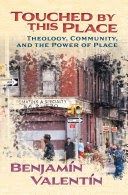
That’s where the book by Benjamin Valentin titled Touched By This Place: Theology, Community, and the Power of Place comes into the picture for me. It caps off a rich summer of reading filled with books wrestling with our relationship to home, be it Patti Henry’s The Story She Left Behind, a book that explores this mysterious connection between our main character’s life in America and an unknown history contained along England’s rural landscape. Or David Sodergren’s Summer of Monsters and Mary Lawson’s Crow Lake, two stories about struggling persona’s trying to reconcile the present state of their lives with the history that made them, both finding it rooted in their connection to the places they called home growing up. The Homemade God by Rachel Joyce, a book about the ways the interconnected characters of this estranged family have been shaped by the space that holds their histories (and their history) in its memory. Best of All Worlds by Kenneth Oppel, set in a dystopian future where the space is familiar but the place is not.
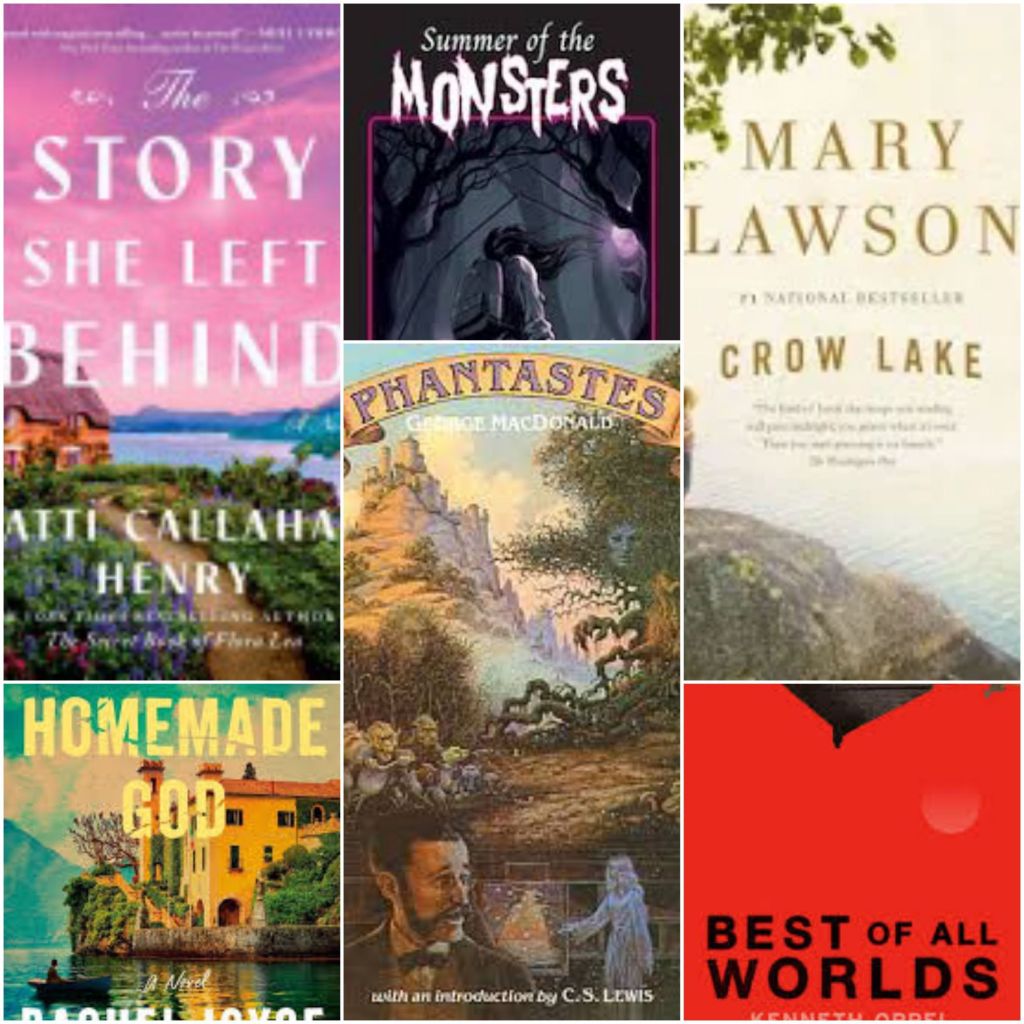
Destiny’s Past about an unknown connection to a place yet unknown that inspires a young woman to go on a journey to find herself across time. George Macdonalds Phantastes, about a felt home one knows but cannot see and seeks to find. Mark Allington’s Boogie Up the River about a journey to seek the meaning of the space (the Thames River) that has informed his life. Similar to Farley Mowat’s The Boat Who Wouldn’t Float and his journey up the coast of Newfoundland. Or Jerome K’s classic Three Men in a Boat, following their own journey up the Thames.

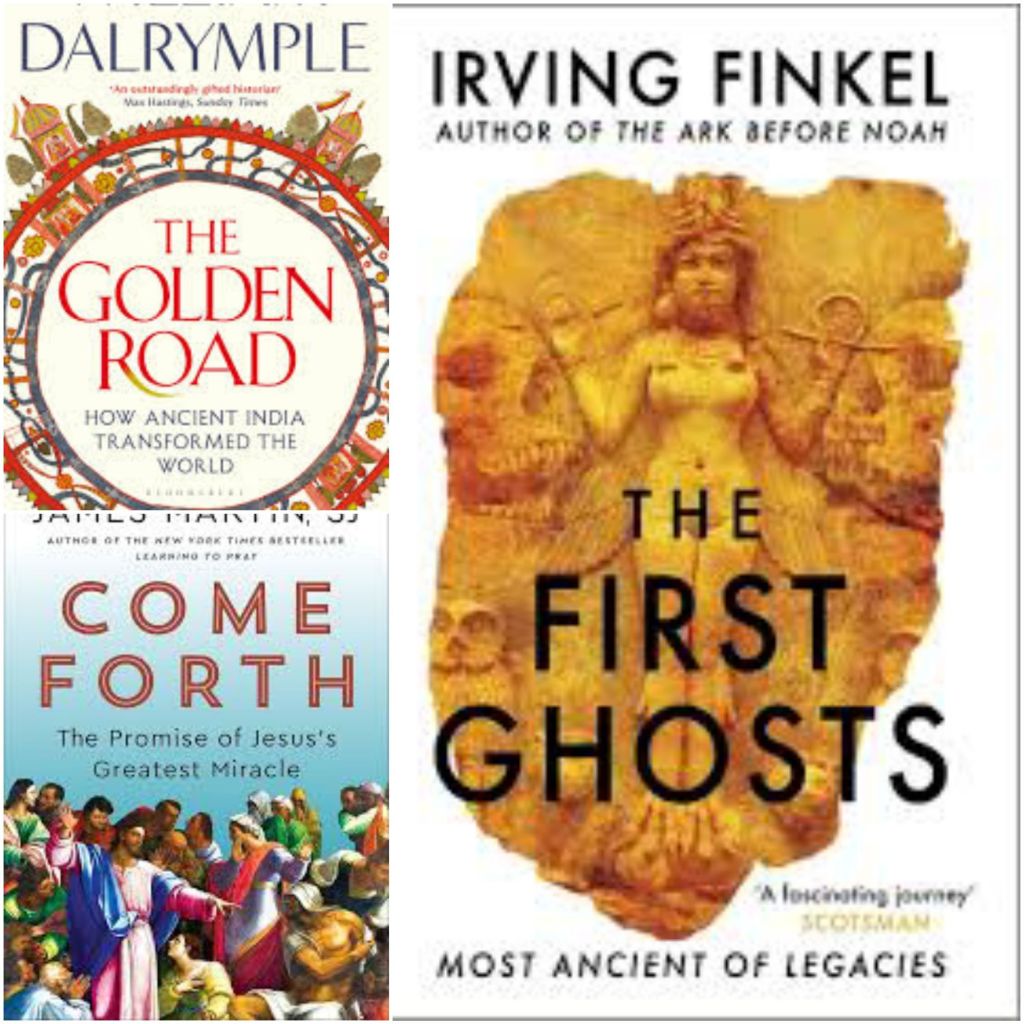
Or perhaps the non-fiction, be it The Golden Road, a book about a place (India) that transformed the world. Come Forth, a book about the power of a place to transform a life (Lazarus’ tomb). Ben Judah’s This is Europe, exploring how people are shaped by their sense of place. The First Ghosts, exploring the phenomena of spirits from an objective point of view in relationship to the places that appear to give these encounteres definition.
At one point Valentin cites Edward Said in his own attempts to explore this concept of place.
Is the beginning of a given work its real beginning, or is there some other secret point that more authentically starts the work off? (Edward Said)
This citation is meant to capture how who and what we are, and in this case what we do and create, is anchored to the spaces that shape us. He goes on to tie this to T.S. Elliot’s Little Gidding.
We shall not cease from exploration, and the end of all our exploring will be to arrive where we started and know the place for the first time.
This then becomes a window into how it is we discover this place. To know a place truly is to know the ways it has shaped us. Thus we cannot know either apart from this necessary relationship. We need the journey of exploration that life represents to truly know both.
I’ve been thinking about this idea a lot over this past week. For me this isn’t so much about the question of what is Canada, although this is part of who I am. It’s about the question of where the different facets of who I am come from.
For example, I was having a conversation with a relative the other day who was commenting on the public onslaught of people on vacation and declaring their vacation plans and obsessing over travel. As someone who, to quote “has never been anywhere” beyond the two places they call home- where they presently live and where they grew up, they called the need to travel an “addiction,” and suggested that they “have no need or desire to go anywhere.” After all, when they can walk out of their front door and be at the riverfront, and when they can walk out of their cabin door and be at the lakefront, what’s the point of doing the same thing somewhere else.
This got me thinking about our different upbringings. They grew up in a place where people did not go anywhere (the GTA). In fact, my whole family except for us (my immediate family) did. I was born in Winnipeg. If the thought of travelling more than 3 hours was foreign to my Toronto kinfolk, in Winnipeg it was nothing to pick up and make a quick weekend out of a trip to Minneapolis 6 and a half hours away. This was commonplace when the next nearest Canadian center of significance was 14 hours away (sorry Regina). It’s just what we did. To be formed by Winnipeg was to be a traveller, even when it came to annual trips to the GTA over summer or Christmas growing up.
This relative moved to Winnipeg later in life, but retained the formation of his own sense of place back home. Which gives me a decent case study into how it is that we are products of where we are. As Valentin puts it, we are shaped by the places we inhabit through their “multidimensionality.” Places are nade up of both “physical realities and drenched in cultural meaning.” (p107) Thus, “Places gather human and non-human materialities….( becoming) potent epistemic catalysts (and) influencing all our ways of knowing.” (p108) Or epistemic agency of place, as it is described later.
Even further, he notes that the places in which we dwell and through which we move contribute something to the knowledge and truth claims we make. Knowledge doesn’t just emerge from the mind or “biological brain.” Knowledge is never just information. Knowledge is “in the world” as an act of contextualization, anazlyzed through the different facets of reality, be it historical, sociological, cultural and material.
Places are embedded in memory and as a practice of memory. Meaning, to return to a place is to be reminded both of what it is and therefore who we are in relationship to it. It is to know it as truth.
And this doesn’t just connect to where we live. It connects to places we visit, places we occupy for brief moments. Our memories are attached to the whole collection of spaces/places that make up the scope of our lives.
To drive by our first home is to occupy that space where my wife and I navigated the early years of our marriage. There I can see the intersection of so many different aspects of our lives, be it our decision to move into a cheap north end home while everyone else we knew was navigating to the more upper class neighborhoods East of the river. I can see the two dogs and lifelong companions that rescued us during some rough moments. I can see the busy nature of our lives in this time, fleshing out the shapes of our careers amidst working 6 different jobs between the two of us. I can see establishing routines, first “do it yourself” renos. I can picture the connections between the different faces and places in our lives and those commutes. I can imagine the decisions and choices, the trips, the smells of our routine meals.
Or there is the routine trips across the border to Grand Forks or Fargo, or weekends in Minneapolis, all places that hold our memories in their grip. To return to these places is to have those parts of ourselves come alive through those parts of that place that formed us, that awaken that sense of familiarity. Same with New York City, which became a significant part of our marriage story over the years.
There are also the endless places that we likely will never return to. Certain neighborhood spots that are no longer there. Faded memories of downtown Winnipeg from the eighties where we would head for everything from shopping to movies to restaurants. Spots that hold the memories of life shaping encounters and the formation of big, life altering ideas.
And of course the countless roads we have travelled to unfamiliar places in that effort to keep the push and pull of routine and investment in check by shaking up our senses, if for a moment.
A final short story to this end. In his younger years our son Sash hated travelling. He resisted it with a fervent passion. Having been adopted from Ukraine at 12 years old, the only world he knew before coming to Canada with us was the orphanage, And so we made a concerted effort to try and fill his years here with the sort of memory shaping endeavors that had been important to us, or at least to me, growing up, building into our routines a willingness to pick up and explore at a moments notice.
For the longest time we assumed this had been a complete failure, because from our point of view none of it had worked. Every memory seemed to be met with a miserable reaction. To be fair, part of that was keeping ourselves in check, as perhaps moving from one country to another was more than enough to occupy his sense of self in that moment in time.
And then he suprised us. Having been at his job for long enouigh to have a decent amount of vacation time, he had decided to book some time off. He is now almost 24. Out of nowhere he decided he was going to plan a trip to Banff. For him, he wanted to return to a place that was in his memory. A last minute sidetrip we had attached to a roadtrip to Edmonton and Calgary years back. For him this space reflected something signficant for him in terms of his story. And so he went. And he loved the experience of returning to a place he had been before. Like the T.S. Eliott quote above, discovering what that was all about by coming full ciricle.
Which is to say, whether we recognize it or not, we are touched by the places that inform our lives. The joy of living is the exploration of what these places are, as that’s where we find ourselves. And not only find ourelves, but find ourselves in connection to the world.
 The Stories of my Life