
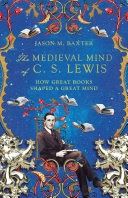
I recently finished the book The Medieval Mind of C.S. Lewis: How Great Books Shaped a Great Mind by Jason M. Baxter. Highly recommended. It’s a rich and compelling exploration into the writers that shaped Lewis’ own journey and thought practices. It is in fact these voices that provide a window into what plagued his own sense of restlessness with the world, both as a once staunch athesit and a christian convert.
It is often assumed that we can jump to spirituality apart from religion or without it. Or we think that spirituality is the foundation of all religion. One of the compelling ideas that I took away from this book is the authors conviction that what we find in the medieval mind of C.S. Lewis is this deeply felt conviction that it is in fact religion that is the necessary foundation for a true spirituality.
And for Lewis, he found this shared conviction in the medieval minds that shaped the space he occupied standing on the precipice of these shifting tides between the old world and the new. Lewis was a product of modernity, a world in which he felt he never belonged. This is where he finds an awakening of the imagination in the works of those looking backwards to the world modernity had forgotten and left behind in the shadow of its failed promises. This framed and formed his relationship to the Inklings, anchored as it was in the chorus of voices preserving the act of mythmaking and mythtelling in the face of an entirprise that threatened to redefine such essential human practices as allegiance to stories that “are not true.”
There is a curious sense then, at least for me, in which modernity of course never did truly buy into its own positivist premise. Spirituality just kept breaking back in and imposing itself on to the sometimes unarticulated but often expresssed disatisfaction with the world modernity was creating.
One question this book begs is, but what about religion? What is spirituality apart from its formative myths? What is it that makes religion the demon and gives spirituality its accepted preservation in the age of modernism?
There could be many ways to answer this. Some practical. Some theoretical. Some philsophical. What this book underscores is that religion and myth-telling are one in the same thing. The problem then is not religion, but the demonization of myth-telling. Reclaiming myth-telling means both challenging modern definitions and challenging conceptions that any truly exist apart from a formative myth. We are all in this sense religious creature and religious beings, although not in the way modern apologetics often likes to state it. It is simply meant to say that no spirituality, or a perceived lack of such, exists apart from a necessary myth. Myth is simply the narrative that governs how we interpret the world. It makes it coherent and gives it defintion. It names the Truth that our intperpretations are responding to.
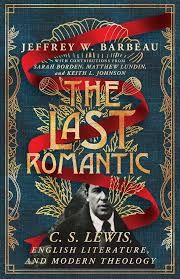
Earlier this year I read the book The Last Romantic: C.S. Lewis, English Literature, and Modern Theology by Jeffrey W Barbeau. Equally recommended, and it covers much the same topic by narrowing in on how Lewis was shaped by the Romanticists based on his same disatisfaction with the modern world. Here he locates an undeniable witness to a shared disatisfaction, with this historical movement and interest functioning in direct response to a world that needed to be reenchanted by recognizing our need for myth-telling. It is only here that we can distinguish between the competing narratives of our world.
So why is religion necessary to this conversation? Perhaps it is because modernity is left needing to attend for spirituality but without a way to catgetorize it or make sense of it. Perhaps because modernity cannot function apart from this essential part of what it is to be human. To be human is to be a religious creature. Perhaps it is a simple acknowledgement that attempts to reposition ourselves in a world defined by the absence of myth has actually made the world incoherent.
It is true that even for views that reject spirituality, they are still operating from a religious foundation. It does however carry a unique relevance for those who acknowledge the presence of spirituality in our world.
However we come into that conversation, this simple idea that religion always precedes spirituality has been forcing me to reconsider how it is I find my own resistance to religious structures. It is easy to misplace such resistance as a targetting of systems and organization and institutions. After all, when we find ourselves wrestling with certain realities and pushing back on things that leave us unsettled or reactive and responsive against, we need somewhere or something to function as our scapegoat. And if we accept that spirituality appears unavoidable on a cultural and social level, this affords us the appearance of a spirituality that is able to break the chains we are trying to dismantle all its own. What the historical vantage point of this book challenges is the idea that spirituality can ever logically stand on its own own. If we have recovered or rediscovered or discovered spirituality, it means we are operating from a religious foundation. This is a good and necessary thing, perhaps at odds with a world which has spent so much of its energy dismantling both our institututions and our belief in them, but nevertheless coherent when seen in the light of a studied historical reality.
Which is to say, if the end for Lewis was a liberated spirituality, that liberation needed to be able to both name the narrative/myth it embraces and the one it is challenging. It needs to be able to afford us a narrative lens through which to reason from if it wants to be able to critique a lens it sees as a distortion of the truth. This is not a bad thing. We’ve been taught to fear the notion of conviction, but convictions, or true beliefs, are necessary to living in this world in a way that is truthful. For Lewis this meant coming to terms with the fact that he felt isolated and alone in his disilusionment with modernity, and equally at home in encountering the voices bringing some of the necessary parts of that medieval mind back into the conversation. In a similar way, I find books like this allowing me to feel a little less alone in the world I occupy. I have long resonated with the concerns and intrests of The Inklings, and this book helps capture why that is the case.
 The Stories of my Life