
Question:
As agnostic neuroscientist suggests in his book How God Changes Your Brain, it’s not so much that this external concept changes some brains through selective engagement with influences outside of ourselves, it’s that all human brains evolve through a necessary belief in God. If this is the case, this taps into that an important part of our reasoning regarding the existence of God, which is simply this question: is belief in God a natural outcome of the human process, or is it influenced by cultural forces from the outside, and what are the implications of either reality on our reasoning and on our lives?
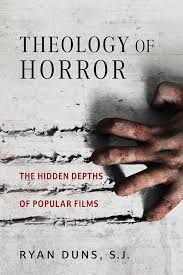
In Ryan G Duns book Theology of Horror, he sets the stage for the discussion of horror in the following way, which I found helpful to exploring the above question.
First, he describes metaphysics as raising two necessary questions: what is being and what does it mean to be.
He sees metaphysics as primarily instructive in its nature, exploring the relationship between the two root meanings of the Greek “meta,” which connects that which is amid or within with that which is beyond. As he writes,
“Metaphysics begins with the experience of astonishment that catches one off guard as one dwells amid (meta) finite beings. To the unastonished mind, a mind struck by the contingency and non-necessity of being, the world suddenly appears as uncanny and haloed by mystery. This uncanniness invites reflection on what is beyond (meta) finite being.”
One’s metaphysic then is the culmination of one’s “reflective examination of the nature of meaning of being.”
He then moves on to bring in the term theology;
“If metaphysics seeks to arouse a sense of wonder and astonishment that anything exists at all; theology asks “what would happen if this creative mystery were to speak and reveal itself to us?”
Here he describes theology as “the art of faithfully discerning and responding to the ways God has revealed the divine self in history.” What I found equally helpful is his further exposition of this term held against Anselms own definition of theology as “faith seeking understanding.” He notes how at its root theology is an active and holistic process of “seeking and responding.” As he writes,
“Theological reflection involves a person who’s personal faith (fides qua) seeks to understand what the Christian tradition believes, how God has spoken within history, how God continues to be known, and how one is called to live one’s faith in solidarity with others. In the act of theological reflection, fides qua (act) and fides quae (content) are inseparable yet irreducible: faith (or acting) without content is vacuous, and content without faith (action) is indoctrination.”
Faith in this sense is “a mode of knowing that, through the gift of grace, allows the believer to participate in Gods self knowledge.”
What I found compelling about this articulation is a two-fold observation:
First, while not all metaphysics necessarily lead one to God, theology is a natural outcome of one’s metaphysicical concern.
Second, both metaphysic and theology are embodied practices. Meaning, they are forms of knowledge that can only be obtained through participation in this world, even as they seek something more true than the act of participation can hand us apart from content.
If this is the case, what Duns helps articulate is the simple fact that while participation grounds us in our sense of finite being, it is that which disrupts our sense of being that allows is to see beyond the finite and towards the infinite (the source of our metaphysical interest)
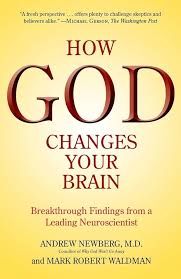
What struck me here is how the observations I found in the recently finished and aforementioned book called How God Changes Your Brain by Andrew Newberg shed some light on and support this essential idea. Newberg is an agnostic scientist whose research has led him to the essential understanding that belief in God is integral to the evolution of the human brain. While this doesn’t necessarily mean that a God exists, it does mean that our brains appear to function through a necessary belief in the conception of God.
Meaning, our brains are actively seeking that which is beyond (the abstract) precisely because it presents a necessary tension with that which is concrete. We are born with the knowledge that both of these things exist in relationship. All conceptions of God are responsive acts to this essential component of our experience of reality, and our brains essentially reformulate this tension by giving the abstract concrete images.
In other words, we imagine metaphysics and theology in embodied and human terms because this is the language we have and it is how we connect our sense of being with that which is beyond. Again, we intuitively know and are aware of both of these fundamental aspects of reality. So much so that this basic practice and awareness is already present in us as infants. But it doesn’t necessarily work in the way we might percieve it from the vantage point of our experience. As Newberg puts it, rather than moving from the abstract to the concrete, our brains begin with the concrete and move towards the abstract, precisely because we are aware of the tension that the finite-infinite natures of reality presents. It is, in Newberg’s words, the active and present mystery regarding the infinite nature of Reality that allows us to grow in knowledge, not the abtaining of concrete facts regarding a finite world. There is a degree to which the modern scientfic ethos that has come to define the modern world acts contrary to how it is we know anything at all. It actively cuts us off from the necessary mystery or tension and reduces the world to its finite properties. Whether we recognize it or not, our brains do not comprehend the world in this way. We do not act in the world in this way.
If modern societal constructs that have brought about what has become known as atheism doesn’t use the word God, assuming Newberg is correct (and I think he is), the science seems to show us that we are all still engaged in the same basic function. We are all seeking that which is called God because it’s what knowledge of this world demands of human experience. Without this we wouldn’t be able to preceive reality at all.
 The Stories of my Life