Making Sense of a Life: Forcing Myself to Finish a Longstanding Project.

I’ve been spending so much time on my project as of late. The attempt to finally write “the story of my life,” which I’ve made a conserted effort to make some progress on in 2025. Sadly I’ve been neglecting this space because of that.

Thus I figured I’d give myself a needed push and force myself to put the draft of a potential introduction somehwere where it can perculate. I’ve found myself going over the same sections again and again, always making changes and edits, which is a never ending excercise.

Thus this is a place to start. A chance to move on to a different section.

A Story of a Life

I’d like to tell you a story. My story. The story of a Life. Or more precisely, I’d like to tell you my story. The story of a mostly failed attempt to make sense of a life.

As I write this, I am approaching 50 years of living my story.

50 years. Somehow I blinked and inadvertently found myself in unfamiliar territory staring back at a reflection I don’t quite recognize and grappling with a world I no longer understand.

And if I was wondering where that leaves me in answering the question “am I officially old yet,” the giant billboard I drove by the other day advertising the 55 plus “seniors home” made this abundantly clear. When the next decade includes paying off your mortgage, qualifying for discounts, and potential qualified retirement, you know there are far less years ahead then lie behind in the ever present wake that is this veritable fever dream now tumbling me headfirst towards official “seniorhood”.

What have I gleaned from all this time spent occupying this body I somewhat reluctantly call my own? I’d say there’s little I’m confident about in this world. Even less that I’m certain about. However, I have found a single, simple idea keeps imposing itself on me over and over again over the years, if taking slightly different variations and iterations through the ensuing decades. An idea that feels necessary to any attempt to begin to try and wrestle down this thing I might call a life.

That idea is simply this;
Life and death are fundamentally different things.

Cue, in my experience, the ever dependable side eyes and raised eyebrows and general looks of befuddlement and puzzlement.

Huh? Can you repeat that? I’m not quite understanding.

Bear with me now, as this will appear to get a little heavy and dark, but, and trust this is my intent, at least in my mind, this is going somewhere other than functioning as a general punchline for my notorious ability to confuse and confound. Such is the nature of my story, or at least the nature of any worthwhile beginning. As I heard it put once, all good stories must begin in the dark.

How about we go with “all necessary stories.” For me my story is, quite literally, a life and death matter after all. I wouldn’t be here without it.

Now back to the matter at hand. As I was saying;
Life and death are fundamentally different things.

Simple? Obvious? None of the above? Perhaps it should be surprising to note that my fervent commitment to this single, simple idea has brought me more grief over the past 10 years or so than I’ve experienced over the preceding 40. However, at this point in my life I am no longer surprised, I have learned to expect it in fact, and even to invite it. In truth, I find the idea difficult to communicate, impossible to explain. And I find it to be an idea that seems to consistently evoke strong reactions, resistance and emotions across a wide range of people, beliefs and personalities.

It gets even worse when I speak of life and death as not only being qualitatively different things, but reflecting antithetical realities.  Nothing gets a certain subset of people more riled up than the appearance of an imposing binary after all. I am part of a world that has quietly (or not so quietly) grown suspicious of binaries, even when unaware that these suspicions exist. Rightly so to certain degrees I suppose. That could (and should… yes, I do should on myself a lot, as my counselor would say) occupy its own conversational thread all on its own. And yet, to lose the language of binaries entirely means to reduce the conception of a life to mere utility.

Here’s the thing. Without these binaries we cannot move to say anything at all about what that utilitarian picture reveals, because to speak beyond the terms of utility, which defines the world according to the measured outcomes of a purely functional reality, means assuming the position of an interpreter. And any and all interpretation aims towards the formulation of true beliefs.

The working assumption here, albeit I believe a justified one from my point of view, is that our particular convictions, the things that allow us to live in this world as meaning making and/or meaning sensing creatures, matter to our pursuit of knowledge. And knowledge, albeit a term that should have (there I go again) its own needed definitions and conversation as well, is what allows us to make sense of a life not just in practical terms, but in “logical” terms

In other words, the point of any utilitarian observation is to bring us not to our observation of a functional, material reality; that would in fact be bringing us nowhere at all. The point of any utilitarian observation is to bring us to a proper logos, or to proper knowledge of a world in which we find these essential observations.

It should be stated, and restated, by and large the idea of certainty is a fallacy. True beliefs are not the same thing as certain knowledge. To borrow from a surface level online definition, true beliefs are “states of mind where a person holds an idea or proposition to be true in a way that corresponds to reality.” Note the differentiation there between reality (what we observe and experience in a demonstrable sense) and the corresponding belief that one forms based on this encounter with reality. True beliefs are not certain knowledge, rather such things require us to name that which a given perspective holds to be true on logical and reasoned grounds (our convictions). And the formulation of these beliefs is what sets us in relationship to a world in which people have different convictions than our own Hence why binaries matter.

Which is another way of saying, a life cannot be lived apart from such a binary, if by binary we mean the relationship between different interpretations of the same shared (observed and experienced) reality.

What we hold to be true is that which informs our unrestrained and uninhibited participation in this world. In other words, true beliefs must always be qualified as an act of faith. Not faith in the common westernized notion of “blind belief,” but faith in the sense of allegiance and trust. Knowledge in this sense comes through these acts of participation in the world we observe and experience. And it is this participation that is enabled by such binaries, and indeed makes these necessary binaries aware. They are, to put it bluntly, as necessary to a lived life as breathing.

Anything less leaves us stranded and lost in the uncertain space of this existence without a way backwards or forwards or even into the conversation. As someone in my life once said, to reduce a life to its utility is to reduce a life to its futility. A life reduced to its utility is a life that functions without an end, or that isn’t honest about its ends. It remains the shell of an uninterpreted life which is cut off from the logos that enables it to be known, and ineed to be rational. It is a life that exists without any proper sense of attained coherency or justification. It leaves us enslaved to the constructs that utilitarian approaches uphold and make authoritative.

Or perhaps more to the point, to reduce a life to its utility leaves us distanced from the necessary conversations that allow a life to be truly known. And if that is the case, it is equally true to say that it  leaves us with no way to distinguish a life from a death.

Now, this should come with a necessary clarifying point. When people hear the word death they typically jump straight to the narrow and truncated conception of death as non-existence. They think of that oft named only true certainty in life apart from taxes: which is the simple fact that we are all going to die

That’s just the stuff of life, as they say.

To be clear, that’s not precisely what I mean by evoking the word death, at least not exclusively. What I mean by Death, which I am now capitalizing here with intention, is a kind of reality. A capitalized form of the word that encompasses the way things are. A state of reality. A way of explaining and defining that reality in all of its uncertain terms. Death includes but is not limited to the following: suffering, decay, oppression, disorder, violence.

In this capitalized form of the word, Death is a way of qualifying all that Life, also capitalized with intention, is compelled to respond to, intuitively so, from its own distinct vantage point. It is that vantage point that is able to say, we find Death in this world, and we also find Life. It is to be able to say, this is what I experience as qualitatively wrong in the world and to live requires me to act (not just exist) in response to such things.

Thus rather than reducing this existence to such trite statements as “that’s just life” or “that’s the stuff of life,”  to me the only real and true coherency available is found in our ability to actually name that which Life acts against. There is a reason a life reacts when certain things are imposed on it. Life is, properly rendered, most clarified in the trenches of our participation, precisely because, when examined honestly, this participation allows us to name and thus to know and recognize that which belongs to the category of Death.

Or in other words, it defines the finite form of our existence.  

In even more words yet: it comprehends this finite form through the lens or language of loss.

There is a reason I am beginning my story here. To see and to name Death is to recognize that essential defining trait of Death: finiteness, or loss. To then see and name Life as a qualitatively different thing than Death is to name that which is present, not lost. But, and I think this is a crucial point, the present isn’t simply defined as that which exists in “the now.” It is more than this simple statement of fact. It is, in fact, to name a kind of reality in a qualitative sense. The present isn’t simply contained to what is, it is qualified as the nature of being. It is a qualitative element of this world that functions in accordance with the nature of a life. For Life to cease to be would not primarily mean that it ceases to be present, but that it ceases to be what a Life is. Thus its possible for existence, or reality, to be something without the presence of Life.

To this end, it should be simple enough then to say that Death is what robs the present of its essential, qualitative nature. It is not simply that a life exists, it is that it exists in a particular way, acting as it does against the forces of Death. This is as fundamental to our need to oppose such things as suffering. It is as fundamental to our need to fight against the ravages and dangers of decay and disorder and violence and disease as it is to our need to define the present over and against that which robs the present of its unique “presence.”   

Here it deserves to be repeated: loss is more than non-existence. Rather, loss reflects how it is we experience and name Death in this world in ways that are differentiated from our experience of a Life. Loss comes in many ways, shapes and forms, but all of these shapes and forms ultimately just reveal precisely how it is that Death acts contrary to and ultimately defeats a Life. To see it in any other terms is to not be honest about (or aware of) how this reality works. More importantly, all of these shapes and forms ultimately reveal the true nature of what Life is. There are those who will react strongly against such terms, but it is possible here to suggest that the simple presence of Life reflects a necessary reliance on the language of the eternal and the infinite, as this is the only way to distinguish a Life from the finite nature of Death. Even someone like Einstien understood this by looking at the shape of reality (see the book I Am Part of Infinity).

Perhaps this is why people react against this idea so strongly. If the narrative we bind ourselves effectively states that in the end “Death wins,” or if it concedes that “Death is necessary to a Life,” far better to romanticize and normalize Death than to grapple with the idea that our observation and experience of a “lived” Life actively betrays this conviction. That’s the true irony. In a way such narratives are evoking the very same fear  based response that they often accuses appeals to the infinite or the eternal of using as a crutch. Such narratives move to accept the thing Life is inherently afraid of, but do so by reformulating it into an illusion which seeks to disguise the thing we are ultimately afraid of. It becomes a way of convincing ourselves we are still on the winning side of the equation and that somehow and in someway all of this still makes some sense despite of the fact that we are, categorically, not on the winning side of that equation.

This is the sort of approach that believes popularized phrases such as “less suffering is better than more suffering” can actually be logically coherent when framed within a Life that effectively works to oppose suffering in a qualitative sense. What that phrasing actually means is, “I don’t believe this world can exist without suffering, therefore I don’t need to logically justify the grounds by which I move to say some of this suffering is unqualified for a lived Life.”

Which just goes to show, such phrases and rhetoric deeply misconstrue and misunderstand the real issue. The real issue that this poses to the conception of a Life is both a qualitative and a logical one. Life, properly named, opposes Death precisely because it is qualitatively defined as a thing that causes “suffering” in a way that inhibits a lived Life. It might be true to say that a world without suffering is not possible, but that doesn’t change the logical problem of such an observation when set against how it is that we live in this world. It doesn’t change the fact that the way in which we live in this world reveals that Life and Death are qualitatively different things

Views that assume Life opposes “oppression” when oppression is a natural and inherent part of Death. Views that strive to eradicate disease when Life cannot be differentiated from decay. Views that fight for order when the disorder that Death inhabits is deemed part of the proper order of things. It is easy to see how such cognitive dissonance can and must be reduced to its utility in order to be entertained. The problem is, while this approach has become common in the modern West where such utilitarian philosophies run amok, very few people actually live as though this is true, if any. This is as easy to observe in the world as the screen I am typing these words on. When we romanticize or normalize or delegitimize or disqualify the particular nature of Death on the basis of rejecting such a binary, we are in fact defining a Life in a qualitatively different way than our actual lived lives bear witness to. Which is why all of this so easily collapses into one big existential crisis.

This one thing I know: life and death are fundamentally different things.

I would also want to be clear on this front. To recognize that Life and Death are fundamentally different things doesn’t mean living as though Death is not a qualitative part of this reality that we observe and experience. Quite the opposite. Our ability to differentiate between these things is the only way to truly attend for a reality in which it is very much “a thing.” It is in fact what allows a Life to respond in ways that are rational and coherent and in line with its own nature, precisely because it can name and thus recognize what Death is.

Yes, the living can grow, change, learn. The living can incorporate all manners of practices that help us deal with the reality of Death. We can incorporate tools that allow us to reconstitute it within the fabric of a Life in ways that awaken us to the promise of newness and hope.  But we do so only because we experience Death as an intrusion into that which is true, good and beautiful. That is the necessary foundation that allows it to be logical. To romanticize such things, as the world seemingly is want to do, is to mistakenly see these things as “just life.” This makes our attempts to then act in ways that are opposed to suffering and oppression and violence and disorder, the things that a Life strives to live against, irrational and incoherent. Nothing more than a means of making us feel better about a reality that is fundamentally otherwise. It is to bind ourselves to an illusion, a lie. To name Death for what it actually is- DEATH- is in fact to say that suffering and oppression and violence and disorder are things that Life must by defined against.

Welcome to the necessary binary.

In fact, I would go so far as to say I have the same reaction to people who philosophize Death away in such a fashion as many have towards Christians who sanitize Death away with “everything happens for a reason” type sentiments. I’ve had enough encounters with Death over my lifetime to know that non-existence isn’t the true fear. The true fear is the way Death transforms our understanding of a Life. The way it throws the nature of a Life into question.

It’s no wonder then that one of the longstanding critiques of Western society is that it has no real, coherent definition of a Life. All the scientific advancements it claims has elevated it beyond the prison of our primitive past has been left unable to define this most basic and fundamental part of existence. Why? Because it has made Life synonymous with Death. Such a world, one reduced to its utility, can never actually arrive at a proper definition of Life, because Life is antithetical to Death.

At one of the most crucial intersections of my story I found myself coming face to face with this reality. It wouldn’t be until much later that this would truly begin to make sense on the level of its logical implications, perhaps most definitively when I read Robert Rosen’s book Life Itself, a book that notes the issue and tries to recast it, problematically in my opinion, within an appeal to complexity (which in my opinion is an ineffective catch-all response that was popularized by the Positivists in the crowd to deflect from rather than engage the problem head on). It is something I knew to be intuitively wrong with the modern worlds senses and modes of reason very early on. But for the moment I digress. Back to the central point;

This one thing I know to be necessary to my ability to entertain any of this: Death is not Life. Death is in fact antithetical to Life.

An idea that has brought me more grief in my lifetime than anything else.

An idea that has brought me face to face with one of its most prominent features: loss.

As I approach my 50th year, one of the most visceral experiences I have of this overriding sense of loss that continues to invade my life has me reaching all the way back to my childhood. Perhaps our first encounter with loss is that familiar notion of a loss of childhood innocence, and it is that sense, that awareness that has been creeping its way back into my adult senses as of late. I have found myself wondering, something I’ve been doing a lot of lately, whether this loss of innocence that we experience growing up into adulthood doesn’t really become fully aware until we start to feel and sense the loss of adulthood as well. We talk a lot about change being the one constant in Life, but what happens when we wake up one day in an largely unfamiliar world that has seemingly abandoned us to that stark and very real sense of irrelevance, left to wrestle with a Life that seems to now be held captive the past. It’s one thing to lose this sense of childhood innocence when you are told by the influencers that be that you have your whole Life ahead of you, whatever that means. It’s quite another to make sense of this Life when most of it lies behind you, whatever one means by that.

When all this change reveals a different world than the one you once believed to be true. When that trust that you had in the forward movement of a Life is suddenly exposed for what it was all along- the forward movement of a Death. When a world you’ve inadvertently been taught to reduce to a matter of utility and function that can be manipulated towards unnamed and uncertain ends has now in fact been reduced to those same material ends. When it feels like that gradual process of Death that invades a Life has been slowly eating away at that persistent and defying sense of innocence that we had forgotten still existed.

Disenchantment.

Disillusionment.

Give it whatever label one wants, the result can be the same: a growing and inevitable cynicism and rejection of all the world’s constructs.

And perhaps the worst outcome of all: what happens when we are left with a Life that is now held together by that slippery and illusive thing we call memory. Memory that only serves to capture that inevitable tension between what is real and what is not. Memory that leaves us uncertain about whether we can even tell the difference, or if we were ever able to tell the difference even while we were living it in the present.

Uncertain about whether we would want to tell the difference even if we could.

Because to do so would reveal the ways in which Death wins. Death always wins. And not in the sense of “ceasing to be present.” That could be argued in some respects to be a grace note in a given reality. But wins in the sense that it reveals our lived Lives to be built on illusions, not reality.

As it is, the subject of memory will come to play an incredibly important role in my story, shaping me within one of my key points of crisis and onwards into a kind of reclamation of some key facets of my life which I had to learn how to reclaim and hold on to, often with a sense of real defiance and persistence towards my own cynicism. In many ways this was a move towards reenchantment, but in a way that exposed one of Death’s greatest magic tricks: convincing me that this enchantment, this sense of wonder about a Life, no longer existed. Or worse, that the only way to gain these things was through the art of successful manipulation. Turns out Death hadn’t defeated it after all. That will be an equally important part of my story.

A story of a “mostly” failed attempt to make sense of a life.

Forgive me again if all of this appears dark or self indulgent or hyperbolic . In truth, I’m used to the responses such thought exercises tend to evoke. It comes with the territory when you are someone who appears incapable of ordinary conversation. Who has a knack for turning any given outing into a targeted existential crisis within minutes. To be fully honest, these tendencies and thoughts have always been a part of my essential fabric of being ever since I was a young child. I remember the first time I picked up Charlotte’s Web at around 8 years old and being struck by these sorts of paradigm shaping questions regarding the nature of a Life and the nature of a Death. I remember feeling the desperate need to wrestle this darkness down into something I could make sense of. This tendency remains. Having recently finished a book by Donna Freitas called Wishful Thinking, whom confesses a similar love/hate tendency towards finding herself forever mired in that perpetual existential tension and state of cynicism that questions everything and is given to restlessness, I can’t help but think that however else I make sense of my story this observation feels like an integral part of it. Indeed, knowing there are others like me, and encountering such voices along my journey helps to remind me that my own need to be able to tell my story from this vantage point need not feel defeating or overtly dramatic. Not to me anyways. They are, if nothing else, what make me feel alive. It reflects my single greatest desire: to know what’s true. They are reflections of a story that seeks to understand a Life precisely because it demands this sort of wrestling, however incomplete that process remains.

Another such writer is Paul Kingsnorth, someone who’s own lifelong wrestling ultimately led to an unexpected re-enchanting of the world he once saw as suspect. And while there are certain key differences regarding the trajectory of some of our conclusions, I have always felt a deep connection to the particular shape of his journey that is anchored in the idea of necessary narratives. In his most recent book titled Against the Machine, he quotes the famed mythicist Joseph Campbell, saying the following,

“Schism in the soul, schism in the body’s social will not be resolved by any scheme to return to the good old days (archaism) or by programs guaranteed to render an ideal projected future (futurism). Or even by the most realistic hard headed work to weld together again the disintegrated elements (presentism). Only birth can conquer death. The birth not of the old thing again, but of something new.”

Kingsnorth summarizes this by saying, in Campbell’s view “there is nothing we can do but be crucified and resurrected.” This is what it is to alive.

The most crucial point here being, crucifixion, or the Powers of Death, only makes sense within the language of resurrection. Apart from that there is only Death. Such a sense of loss as a general truism regarding Death only makes sense in light of Life if the lost thing itself is being reborn. Which is why even those who resist religious conviction fight so hard to recast Death in the language of the eternal at seemingly every corner. We see this in such approaches where the “I” becomes absolved into the whole of history. Where the dust that we are made from is spun as the same stuff that makes the stars. We see this in sentiments like “we live on in our kids,” or in constructed conceptions such as “legacy.” In our modern context we see this running rampant through the language of “environmentalism,” and even in more spiritual approaches that evoke the common “energy” that runs through the universe.  

And yet for as much as this reveals an essential truth about the schism, it also proves itself to be anchored in an empty and largely incoherent narrative. Apart from our ability to name Death as antithetical to Life nothing else can make logical sense.

Which brings me to my story. Perhaps in wrestling this particular story down it might become possible to reclaim some of that long lost innocence from the grips of Death. Perhaps it might be possible to hand myself a renewed ability to properly name a Life. The risk is there of course, but this simple idea nevertheless remains a necessary starting point for engaging that conversation.

Every story begins somewhere. Rarely does it start at the beginning. The human brain just doesn’t work that way. Rather, true beginnings are generally found at that necessary point of a given crisis. That’s where we find the dramatic tension. Those intersections which suggest and help clarify that something hangs in the balance. Thus why I begin my story with the above reflections.

For me, as I alluded to above, the moment when this intuition comes most alive likely locates me in my late 20’s when everything I once thought to be true was legitimately thrown into question. My optimism. My faith. My hope. My joy. My trust. My identity. My trust in the many constructs that uphold our sense of being (such as our constructed concepts of the self). My place in this world.

I will detail that moment to be sure, much of it bringing me to a stark and vital call to remember, an invitation to see the things I was wrestling with from a different vantage point and put my present vantage point to the test. It was a moment in which I was forced to confront my own tightly guarded definitions of Death and Life, regardless of where it brought me.

I will tell that part of my story eventually.

But for it to truly make sense it needs the context of the years that brought me to that point. To understand what I was in danger of losing in this particular moment of my life requires knowing what had been building up to this point. Just keep in mind that as humans we don’t translate our stories beginning at birth and moving towards death. I get that. In many ways that just underscores everything I’ve been talking about above. What we know are stories about qualitative aspects of reality What draws us into the stories we tell and the stories we read and encounter is the promise that this tension, this binary if you will, leads to something true. To knowledge. To logos.

And so, with the above tension in play, my story begins with this sentence: I wasn’t always a child. At some point I grew up and that child was lost.

But before I grew up, before I became lost, I was born. Or so I’ve been told.
The Science of Storytelling: A Dialogue With Will Storr Regarding Why Stories Matter to Our Understanding of Science

“We know how this ends. You’re going to die and so will everyone you love. And then there will be heat death. All the change in the universe will cease, the stars will die, and there’ll be nothing left of anything but infinite, dead, freezing void. Human life, in all it’s noise and hubris, will be rendered meaningless for eternity….But that’s not how we live our lives. Humans might be in unique possession of the knowledge that our existence is essentially meaningless, but we carry on as if in ignorance of it.” (p 1)

The cure for this horror story? “Our brains.” Or our “evolved” brains. They distract us by filling our lives with….” The author here cites “hopeful goals,” but the better word to describe his thesis would be illusions or delusions. What he sees to be false beliefs about this world.

The main driver of those illusions? Story. “It’s story that makes us human.” What’s curious here is that he goes on to say “there is simply no way to understand the human world without stories.” (p2) But are we talking about humans understanding “the world” or humans understanding ourselves as world creating creatures? He even goes on to say that “the brain creates a world for us to live in and populates it with allies and villains.” (p3) Which of course means a perception of the world, be it one we create or one we interpret. In either case, it is storytelling creatures that brings about “complex human culture” that this world or worlds represents (p2)

A central point of the author- at the heart of every story is “me”, it’s star. After all, we only have our perception. Where the author is taking that is into the supposed interaction with others worlds. Again, whether we are all sharing the same world or just crossing into different illusions is unclear.

And just in case you find yourself resisting this idea, he says not to worry, “you’re already doing it.”

He then turns around and wants to shed some light on how and why his interest in the intersection between brain sceince and storytelling emerged. “I wanted to find out how intelligent people end up believing crazy things.” So wait a minute here. We ALL do this. Every belief is rooted in story which is rooted in illusion. So are we all believing in crazy things? Is that good or bad in your eyes? A problem? And what about his word intelligence? You’ve now inserted an imposed dichotomy into the equation that you have failed to define. Clarification comes in part on the ensuing page: “facts” versus “story.” Or the other way of wording that: facts versus ficiton (something he states outright in the end of the book)

So let’s just rewind here. We are storytelling creatures. You’ve made the argument this is essential to our survival. And now you’ve created a dichotomy between facts and fiction, one that represents intelligence and one that represents crazy. And seemingly it’s fair to argue here that the very thing you’ve said is necessary is the thing that makes us crazy. Because whatever these “facts” are, you see “story” as the most important. Until it comes to needing to bring in the facts to distinguish between the crazy.

It gets more confused. He states that on his endeavor to answer that above question (why do intelligent people believe crazy things), the study of the art of storytelling and the scientific exploration of the brain both led him to the same conclusions. I’m going to assume here that the conclusion is “we are all crazy” and that “facts don’t matter.” But I have a suspicion he’s going to confuse those assumptions as we go here. I mean, this is only page 4.

Ah. So we get more a little further in to the book.

“The challenge any of us faces is that of grabbing and keeping the attention of other people’s brains. I’m convinced we can all become better at what we do by finding out a bit about how they work.”

So here we go. I am assume “better” is attached to intelligence. Become “more intelligent” at what we do, since “finding out” relates to facts, and facts make us better. So what are we becoming better at? Seemingly the art of manipulation of other peoples illusions/delusions. Because intelligent people don’t hold to illusions they hold to facts. And that’s how we move the world forward. But wait, I thought it was storytelling that moved the world forward? And don’t we need those storytelling creatures to manipulate in order to move the world forward?

I think I’m tracking. Maybe. Not really.

Now he takes a big shot across the bow: he goes after Joseph Campbell. The breaking down of the notion of story into a Monomyth (breaking a singular truth down into varied movements). Hugely successful seemingly because it is based on facts. And it has allowed us to manufacture storytelling using that information and formulating it into controlled storytelling technique. But now he has a problem: reducing story to that also makes story “cold, corporate and seemingly cooked up by committee.” (p5). How does this happen? A preoccupation with the facts, or in other words reducing story to the facts that we can then control. That’s basically what he goes on to say. And what drives that is a human but somewhat misplaced obsession with seeking the one true story that can make this world, this reality, coherent.

In case you’ve forgotten: this cold meaningless reality. That’s “the facts.” Also in case you’ve forgotten: he wants to know why intelligent (people with knowledge of the facts) people believe crazy things (like the idea that the world has meaning and isn’t cold).

What science and storytelling have revealed to him through these parallel studies is that most stories just turn out to be “variations on the standard five-act plot which is successful not because of some secret cosmic truth, or any universal law of storytelling, but because it’s the neatest way of showing deep character change.” Or as he puts it, “perfectly tooled to capture the attention of masses of brains.” And isn’t that what the intelligent people want? Masses of brains held captive to illusions that they can manipulate? After all, there is no cosmic truth to appeal to, even though that’s precisely what people appraently need to appeal to- it’s why we tell stories after all.

Now it gets downright baffling. He suspects that “belief in plot as a magic structure” (read story that reformulates this world of meaninglessness into wonder and awe that explains and defines the human experience) leads to the cold and clinical feeling that he doesn’t like and is reacting against. How dare they reduce the world to the facts. He thus throws in this observation: “A plot can never work in isolation.” Rather it works in concert with people (p6), which his first chapter will go on to describe as a material being that experiences “constant change.” It is people who make stories fascinating and compelling, not plot. After all, what does plot do but remind us that we are all believing in a false world, right? Forget the fact that all the change and responsivness that change brings about isn’t actually engaging with antyhing real or true. We’ll just ignore that. Unless we are among the intellignet, then we can use it to manipulate the stories (read: people) to serve the star of our own (read: ourselves).

If you can feel a bit of the saracasm at play here that’s intentional. Albeit intentional because it’s precisely what the books introduction handed me. I used to work as a youth pastor. This introduction, and the book that follows, reminds me of the endless conversations I had with youth who would go on to graduate and head to university where they would walk into a first year religion course that has defined such beliefse as “illusions in your head” and end up back in my office telling me their whole world had been blown up and that they have now become enlightened. I understand why this kind of experience makes them feel intellectually superior. The problem is such approaches can’t attend for where its own logic begins and ends. Worse, it’s not honest bout its own beliefs. Thus it feels like its saying something true, and it can manipulate us into thinking “meaningless world” and “meaninful lives” just works together without imposing any logical problems on our belief system. But that doesn’t make it true (or to use the book’s own language: intelligent).

In chapter one the author clearly thinks “change” is the antidote that all that ails such cognitive disonnance. As he says, “Change is hope. Change is promise.” And yet he says this in the face of the facts he already outlined in the introduction: “We already know how this ends: all the change in the world will cease.” The real problem that the author runs into here on a logical level then is this; is the world meaningless now (he certainly made that claim), or will it become meangless when change ceases. This is an important question, because it really categorizese why story matters, something he has kind of bypassed without really answering the question. If story isn’t revealing a world that is actually meaningful now then all change is in fact manipulation of feelings in order to make us feel as though it is. Otherwise reality becomes the dark abyss that it actually is, in reality.  It gives us the illusion that meaning exists. That’s what he is really arguing. Which is what makes the whole intellectual exercise problematic. The facts don’t remove him from this necessary illusion, it just hands him a utilitarian means of manipulating which illusions he wants the world to believe from the vantage point of his own. Which of course, given that “he” is at the center of his own story means manipulating people within his own perspective of this world.

Never mind that he effectively reduces the aims of the whole human enterprise as storytellers to those two necessary traits of a materialist or naturalistic worldview: survival and reproduction. Or survive to reproduce. That’s it. That’s what is behind it all in a meaningless world.

Here change is the number one tool in the hands of intelligent people. Manipulate change and you have people’s attention. I’ve recently finished numerous books on the brain in 2025, all of which seem to throw some of his understandings of the science into question. The brain is, according to the science, a predicting machine. That’s how it learns. It predicts what reality is. He cites this as the brains need to “control” But thats not actually what’s happening. It’s not in fact “storms of information that loop and flow around your brain’s distant territories” which we must learn to control. Information is not external facts, its internal perception based on predictive function, something he kind of comes back to in p21 but in a way that contradicts his initial position. He keeps wanting to prioritize “fact checking” (a world that is actually there) while also saying we don’t have access to this world (our brains create a replication of reality). That’s why “change” appears as it does. There is no inherent curiousity at play, despite him romanticizing the “facts” in this way (p17). There is no human “controlling the world,” despite what his secular humanism wants to uphold in his metanarrative of the myth of progress. There is no aim. Curiousity isn’t a secret hidden in the realm of “facts” waiting to be unearthed. It’s manipulation of biological function. He cites certain studies that describe the human need to resolve information gaps (p18), but the thing with that is, we aren’t resolving “factual” gaps, we are resolving “reasoned” or “logical” gaps in our beliefs. We are dealing with the abstract, not, as he wants to spin it, gaps in scientific informaiton or data (facts).

Here he brings up an interesting point, which seems to offer a slight critique on the certainty (intelligence) he has confusingly prioritized earlier. Curiosity, he says, is at its weakest when we have no idea about the answers AND when we think we have the answers. Story, he says, plays in the zone where we think we have some idea but aren’t certain. (p19). Which seems to suggest that his version of intelligence is actually kind of self defeating. As he admits, mystery is necessary. (p20) Take that away and we cease have nothing but the meaningless world that his intelligence hands him. And yet he believes he already has the answer by way of his intelligence: all this mystery is actually just seeking a meaningless world. A curious cognitive dissonance at play there.

Pain is an illusion. Colour is a lie. Sound doesn’t actually exist. When it comes to our sense and perception of reality there is no difference between being awake and being asleep. (p25/26) The brain is modeling the world using electrical impulses to design an experience that doesn’t coreleate with reality but rather replicates it while turning it into an active experiential illusion, here nodding to the growing science of brains as spacial referencing points (see the book A Thousand Brains).

We are also social creatures of course, which means we’ve evolved with specifc traits that allow us to “read” other poeple whom are all acting in their own stories, effectively reshaping them as part of ours. He calls that “unpredicatable humans.” (p35)  It’s the opposite though. It’s actually predictabilty that shapes this social function and our relationship to the material matter we are part of.

And then shock of all shocks, in comes his categorization of religion, which is a product of our minds, or as he puts it, “our minds ability to populate it with other minds.” (p 36) A position that of course relies on his pressumptions about this imposed dichotomy between the illusions of the mind and the factual world that exists outside of ourselves. The minute you have the possibility that a person is actually interacting with something true outside of ourselves we have to contend with the way the “facts” press back on our experience of reality. Which brings the whole theoretical exercise he is trying to uphold (where he can hold them seperate while also making them inseperable when convenient, crashing down on its own logical inconsistencies.

There’s a curious sentiment that sneaks its way into portions of this book as it goes along, which is a noted resistance to reducing the world he keeps reducing in order to sustain his position. Thus when he gets to the subject of metaphor (p46), there is a sense in which he now has a metaphor needing to find its power by rooting us in something that is not true. Which of course mutes any inherent power the metaphor might have. The opposite is the case. The reason why metaphor has power is because it is rooted in something true. Otherwise we would find it meaningless. But of course, if we are creating the illusion of meaning everything just becomes a manipulatve song and dance. He can call an illusioned life sacred (his theoretical appraoch that he calls “The Sacred Flaw Approach,” which is simply the assertation that we wrongly misplace story as people responding to something external as opposed to recognizing that story is the illusioned world that emerges from the self). The final word of this on the final page is the word “feeling.” All of it is manipultaion of feelings and emotions. How fitting then that when writing about endings he has this to say on p 212,

The lesson of story is that we have no idea how wrong we are… The consolation of story is truth.

The notion is that “story’s gift is the hope that we might not be quite so alone, in that dark bone vault, after all.” It’s not only us, as he says. That’s the needed revelation that story gives us. Not only us that what? Well, in his certain evaluation of the world (cold, meaningless, materialistic) our flawed minds created flawed illusions of warped perceptions of the world. Notice how he plays fast and lose here with external facts and internal fiction. I can already see my freshly inaugerated university students swooning over how this makes them feel. When the author has subtly slipped in the sentiment “good stories are exploraitons of the human condition,” (p58) readers will be manipulated into foregetting what just preceded this romanticized feeling based on illuionary emotions.: brains are making “the superabundance of information that surrounds it into a simplified story.” We are taking the meaningless chaos and turning it into an ordered illusion. That we can feel it is what allows it (or us) to be manipulated. All of this complexity is really just a reductionist POV where such complex realities are reduced to the facts. Manipulation is built on the fact that we “accept” the illusion of our reality to be true. (p65)

Which really brings him back to that crucial driving force of all narrative lives, which he is making sense of by mirroring it with creative fiction (see the end of the book): change. Cause and effect. He wants to think and believe that what makes this all matter is that for however much all of this is illuions sustained by manipulative feelings (emotions), it matters because one thing can bring about something different. That’s the dramatic question (see chapter 3) that makes life worth it. While stating that change is the driver, the author also says that the great discovery of science and storyelling is that “none of us know why we do what we do.” That’s the thing that sustains the necessary mystery (where of course he slips in that theoolgy somehow strips that away while science somehow doesn’t).

His entire thesis is built on knowing how it ends with certainty, of change being the driving force towards nowhere, of knowing the facts being the thing that hands us control over life’s direction which is ultimately a directionless reality. Which brings me all the way back to where I started. The logical inconsistencies inherent in his approach and his reasoning. The constant wanting “both-and” while crtiquing the both-and and then needing the both-and to sustain any sense of coherency. Only to reveal that sense as just a feeling. A gigantic exercise in emotional manipulation designed to make us feel as though there is mystery in a world reducible to scientific facts.

Forgive my cycnism, but when you sit with students for whom this kind of “course” (and this book is based on such a course) hands them a fresh liberated view of the world, it becomes abundantly clear that this liberation is not an embrace of mystery, its an embrace of enlightnemnet era type certainty. What they come into my office with is the facts, not the experience of being human. Facts that typically have made them angry about the notion that they had been handed an illusion in their old religious worldview. Control, in the science of storyelling, comes through certain facts, but facts that, and this is the hardest thing to break through on my end with these students, come with a particular interpretaation of reality, or beliefs about reality. The science is not the issue, nor is it the liberative force that frees us from wrong beliefs. That’s not what hands them control. What hands them control is their beliefs. What they have interpreted the facts to reveal about the true nature of this reality we percieve and experience. That’s the truth about science and storytelling. And courses like these are masterful at convincing people that these particular beliefs, these particular interpretations, can be conflated with the facts and thus made into superior intelligence. That’s the manipulative trick of the trade.

In truth, and this would be my central pushback, science hands us data, not intelligence or knowledge. Stories seek to interpret that reality and formulate them into true beliefs that bring coherency to our experience of this data. What we believe about reality is what ultimately informs our interaction. Rather than collapsing the internal and the external, we need to set that in proper relationshsip. Except where I differ most starkly with Storr is not on the science but rather o the shape of that interaction. Our interaction is with our bleifs, not the facts. That’s where we find the necessary mystery. That’s also where we find the gaps. We don’t seek to brtidge the gap between the science we know and the science we don’t yet know. That way of thinking actually represents a belief about what the world is (materialism). That’s the part that matters. If that belief is going to have power, it has power as a belief. The gaps we feel and experience and note and respond to are the tension between contrasting beliefs. That’s what it means to be human. That’s what stories illuminate: truth external to our selves.

40 Years of Back to the Future: How My Favorite Childhood Film Still Resonates For My Adult Brain

Anyone who knows me knows my deep affection for the Back To The Future franchise. Memories of my 10 year old self sitting in the back room of my dad’s small office at the corner of Redwood and Henderson in Winnipeg watching my coveted VHS copy while my dad worked. Memories of lining up outside the grand old single screen theater complex that used to adorn downtown Winnipeg waiting to snag tickets to the sequel.

My still ardent and impassioned defence of the third film in the franchise.

I’m the one adorning my “Marty Mcfly” outfit every year for BTTF day. The one who bought the requisite shirt that said “I was there” when the calendar turned to October 21st, 2015. Who endeavored to plan a trip to London solely to see the premier of the stage production (a failed endeavor that ultimately resulted in a mandatory road trip once it hit North America- but the intention counts).

And yes, I was there on release day picking up Fox’s recently released memoir “Future Boy.”

Thus I’m all in on the 40 year anniversary, notably marked by the official IMAX screenings. And yes, I went as Marty Mcfly.

Which is all to say, so many years later and there are still new takeaways and observations. What’s endlessly fascinating to me about this trilogy is how, at any given point, to borrow from the recent filmspotting podcast episode on the film, it can be the artistic “fun” that rises to the surface or the films clear and obvious “philosophical interests.” I would say its the latter that made itself most evident on this recent big screen viewing. Namely its observations on the interplay between human tendencies to romanticize the past and to deify progress by way of the future.

The tendency to romanticize the past is a well trodden and explored human sentiment and practice. Every new era longs to return to a bygone one, imagining (and reimagining) the past as a sanitized and glorified version of what it was. But what struck me was how the film is also making a commentary on how we tend to navigate this world by constantly looking ahead to the future. When the film opens in 1985 we are given plenty of hints that this “present” is less than desirable. We find a family living in what appears to be a less than desirable neighborhood that once held promise, adorned with graffiti and indicating marks of a lower income neighborhood. The downtown bears the familiar markings of a kind of seediness, nodding to the now “porno” theaters, littered streets and drawing a veneer or sheen of disenchantment over the entire cultured landscape.

This is of course contrasted with the enchantment that greets us back in 1955, where downtown is alive with vibrancy and optimism. Where old fashioned ways of doing life beckon with their yet untainted allure, where a visible segregation is marked by a wanted optimism. For all appearances, the pointed contrast is a world that once was but has now gone drastically wrong. If only we can return to the enchantment of that bygone era then all can be made right again regardless of that segregation.

And yet, that’s not the entirety of this picture that is being painted:

  • In 1985 we are greeted by “the mayors” promise to remake Hill Valley in the middle of his re-election campaign. When we arrive in 1955 we are greeted by a world promising a future built on the myth of progress.
  • In 1985 we find Marty being told he will never amount to anything, something that is paralleled with the clear cynicism he has when he looks at the life of his family- a bunch of nobodies stuck in a low income area having never amounted to anything. As Marty says in response, “I’m going to change history.” In 1955 we find Marty encountering his school aged father battling against the same thing in his own context with the same cycnism regarding his “present.”
  • Even the films iconic image of progress (the invention of time travel) is encased in the character of Doc and the final word of the film revealing a future that appears to be recycling the challenges of past and present in Marty’s future kids. 

Now, the films fun narrative of time travel antics is also about  how what we do in the past has an immediate impact on the future. Marty arrives back in good old 1985 with his “present” being reshaped by the changes in his parents choices and actions back in 1955. For example, the choice to stand up to the bully back then leads to a life of success now (we can overlook the fact that it apparently turns George into the bully by making Biff subservient, because after all, at least in the mind of the film, Biff raped Lorraine back in the new timeline of 1955 and was a grade A jerk in the old one, thus the film imagines it as a relatively innocent sense of justice, however odd it feels to have Biff still having around). But that clean cut portrait brings the necessary nuances with it. And part of the nuance is the films surprising critique of the myth of progress and the trappings of modernism.

If we romanticize the past it is because we find ourselves inevitably caught in the present feeling like we need to try and locate hope through our equal obsession with the future. And yet, it is only in the present that we can be made aware of that which is not right. It is also only in present that we can authentically live.

There is truth to the idea that every present loses what was valued in the past. Every era is a complex and complicated mix of contextualized realities shaped by that past, responding to disatisfactions with a given era by bringing about something new. And yet that new thing that comes about can’t see its own limits and shortcomings until the future critqiues its failures. This seems to be how things work. And where do we often look to reclaim that which we feel is missing or lost? To the very same past that our present has critiqued, albeit a sanitized version.

As a small example, we might look at the myth of progress and see the world of smart phones and social media and technology as the celebrated accomplishement of humankind to this end. We might attach that to the witness of a generation that challenged and dismantled modernism’s allegiance to systems and institutions. And yet at the same time we see the problems now being evidenced by a world shaped by smartphones and social media. What’s the natural reaction? Pining for a past where we used to interact in person, play outside, read more books, talk on the phone, where downtowns were exciting places to be, where we still watched movies together or met up at rental stores to waste away our Friday evenings, where music was good and made in our basements, where teachers were respected, and on and on the list goes. But all of that pining is also similarly blanketed by the continued deification of progress. We can’t be stuck in the past. Progress is seen as the necessary human ambition. The future is what hands us the necessary myth we need to ensure we are still the exceptional species we see ourselves to be.

I came across an interesting article by Greg Dember called Metamodernism: A Response to modernism and postmodernism, that gets at this same point. From modernism to post modernism to metamodernism, all three “isms” refelcting its own commentary on the issues inherent within the broader fameoiwk of “modernity.” And this isn’t just contained to the “isms.” We can also look at this in the broader sense of the larger historical shifts using the same lens. If modernity, defined as it is as the emergence of the Enlightnement era, sits in conversation with that which precedes it, history reveals a process that is always in conversation with both past and future at the same time. Always looking to reclaim what was lost while needing the future to critique the disillusionment we have with the present. All in the service of telling ourselves history is going somewhere better.

Which of course underscores the logic of the here and now: we are, or we become that critique of the past at the same time. We are the future of that which came before, therefore, given the movement of history, we become the past. That’s the tension that the future can never resolve, precisely because it can never truly arrive anywhere that isn’t being embodied by our particiaption in the present.

And that, it would seem, is the sneaky message inherent in BTTF. We can’t change the past, which is precisely why ever generation reacts against the one that came before it. But if we could, we would be doing so from the vantage point of an imagined version of 1955. We would be romanticizing the same past we are reacting against in the present, all while deifying the future. Leaving the 1985 Marty returns to as an illusion. As the sequel will show us, 1985 is now going to become the past for Marty’s future (or his kid’s future). Leaving us with this important observation and, I think, truth: the past didn’t need to change the present for Marty to be free to embody it. 1985 was destined to be romanticizied by the future either way. What is ultimately imporant is the question of what it means to be embody the present. An underrealized lesson of the fanchise indeed.

Navigating Theological Differences: How We Make Space For Each Other 

Question: When we are navigating differences in theology with fellow christians, is it ever proper to say that someone, by nature of holding to a different theological framework or idea, is standing opposed to scripture?

I mean, I understand that we hold to our positions and beliefs because we see it as true. Thus it would follow that we see differing interpretations, given that we engage and test and explore them, as not true/problematic/not likely (fill in the blank).

The other factor here is that while we don’t all agree on the doctrine of inerrancy (that’s something I reject, for example), the simple fact is that most if not all christians see the scriptures as a necessary part of Christian formation and engagement and likewise desire to understand them for what they are actually saying and communicating in their world. Thus to say someone doesn’t value the scriptures or doesn’t see them as important simply on the basis that there is disagreement on our understanding of the scriptures isn’t a good faith approach or good faith argument.

What I think is more appropriate is tto say that theological disagreement means that we hold to different “interpretations.” That distinction is far more than mere semantics. It actually matters to whether differing interpretations can co-exist or not.

Why do I bring this up? Because I’ve encountered that in different discussions alone no less than five times this past week. And without a doubt it erodes the possibility of dialogue and engagement.

A recent example:
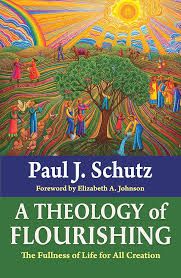
I was reading in a book called A Theology of Flourishing: The Fullness of Life For All Creation by Paul Schutz and I came across a note that had me reconsidering a popular translation of a particular verse (2 Corinthians 5:17)

One of the things the author notes, leaning on a commentary by David Horrell, is how often times when we come to these verses in the Greek or Hebrew we are encountering verses that lack clear verbs. Which means we have to make decisions about which verbs to insert, filling it in with our English translations in a way that given scholarship sees as best reflecting the whole.

While this certainly is done flowing in one direction (what does the whole indicate the best translation of a specific verse should be), it’s a reminder that history is full of examples that also flow in the opposite direction: specific translations of singular verses that go on to dictate how we read the whole. A whole that often builds specific Traditions.

Meaning, part of what we navigatge in our disagreements are whole Traditions, contexts, cultures and complex historical trajectories. What’s important to remember in this case is that if we are challenging a theology that has a normalized presence in a particular culture, Tradition or context, it doesn’t mean we are “inventing new theologies or ideas,” nor that we are wrong simply because the majority in our given context disagrees.

It’s a reminder that when it comes to the scriptures we are all acting as interpreters of the text. We are all employing an interpretive lens. We are all participating in larger converstaions that reflect the broader reality of this we call Christianity. For me thats part of the beauty of the theological process. It’s why I see it as important. It’s why I love it. It’s a place where I should expect to be constantly challenged in my thinking. Having my paradigms challenged and sometimes changed is where I’ve found God to be most readily heard. In this way, I don’t think It should ever be the case that we accuse fellow Christians of opposing the scriptures, rather it should be the case that we can hold one accountable to standing in the way of allowing the scriptures to speak and to be honestly read.

On that front, and getting back to the above example, I found this reading of 2 Corinthians 5:17 to be quite compelling. It is commonly translated in the West as the following:
“So whoever is in Christ is a new creation. Everything old has passed away; see, everything has become new.”

In this case there are no clear verbs, so this interpretation is inserting what it sees the inference to be in light of the whole. Harrell argues that the better reading, the one with the greater explanatory power when it comes to making sense of the whole, reads in the following way:

“So if anyone is in Christ, there is a new creation: everything old has passed away; see, everything has become new.”

You can see how this subtle change makes a huge difference to the narrative we see this passage communicating and assuming. In the first case it is about us and what happens to us- salvation becomes about the fate of the individual (we are a new creation “in Christ.”. In the latter case it is specifically about how “in Christ” we see what God has done in and for the world- the whole of creation. Further, it is about how we see that world. Outside of Christ we see the old creation. In Christ we see the new creation. Thus to be “In Christ” is to have our lens, our worldview, changed and transformed. The hope comes from what we see when we look at the world, not at ourselves.

Two different ways of framing our hope and telling the story of the Gospel with two very different emphasis and very different aims.

What’s more intriguing to me about this example though is how this translation fits within the whole. In reading through the larger passage in 2 Corinthians I’ve found once buried cosmic interests coming to the surface, and certain verses that once felt disconnected falling better into place. To me this is a good sign, as is often the mantra of any good theory, because the greater the explanatory power the more compelling it becomes. The Gospel in this sense gains more clarity by speaking first to what God has done in and for the world. From this angle we find an invitation to particpate in what God has done in the world rather than seein the Gospel as God’s intent to save us from the world. In the former our transformation comes from God’s faithfulness in the transformation of the world, in the former a transformed world becomes our reward for being saved according to “our faith.”

That’s one small example of how different conceptions of what a verse means doesn’t negate either position from loving or reading or being committed to the scriptures. And applying that more broadly, it certainly doesn’t negate either position from speaking within the Christian Tradition. If we cannot afford one another the basic dignity and respect of owning our faith and taking it seriously, even those who might ultimately reject it through authentic searching and wrestling, we cannot actually grow ourselves.

The Importance of Mystery: Where Embodied Experience Leads to True Knowledge

A question I’ve been pondering this week:
Is mystery the gap bwteeen the scientific data we know and the data we don’t know?

To ask that in another way: is the aim of mystery to fill that gap with more scientific knowledge?


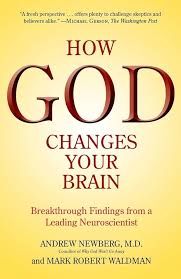
In his book How God Changes Your Brain, neuroscientist Andrew Newberg argues that seeking mystery is integral to knowledge, and that mystery, in relationship to the brain and brain function, is defined by this innate human need to seek God. Through his observation and experience of the world, including in the realm of neuroscience (as a neuroscientist), this appears as a fundamental part of the natural order. This is true even if one doesn’t call it God.

In this way, while the seeking after mystery begins with a functional, observable embodied (physical or human) context, it is not confined by that or to that. At least not in terms of what it seeks and why it matters to the human observation and experience of this world. For knowledge of this world to be reduced to such terms is to cut ourselves from the very thing that this embodied facet of existence is seeking. More than that, it is to cut ourselves off from the necessary process, driven as it is by mystery, needed to obtain knowledge or true beliefs about this world

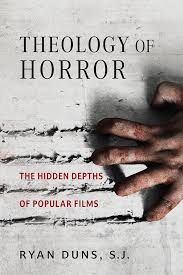
Thus, one implication of this, as I see it, is that defining the world in such terms (reducing it to the embodied experience rather than that which such an experience seeks to understand) cuts us off from actual knowledge of the world (or at least our awareness of it or out ability to reason from it or towards it). As Ryan Duns writes dialoguing about Rhaner dialoguing about Descartes in his book Theology of Horror,

“What we know lives by what lies beyond our knowledge. Everything we know gestures beyond the finite toward the infinite. What lies beyond our comprehending grasp is mystery: a transcendent mystery that is not inimical but invitatory. The metaphysical task is not to dispel mystery or capture it in concepts but to allow the desire to know to impel us toward that which makes all knowledge possible.”

Thus, mystery, properly rendered, does not speak to an imposed “gap” between the information that we don’t know and the information that we do. Mystery is not an absence of knowledge waiting to be filled by further scientific discovery. It is in fact a central facet of knowledge in and of itself, knowledge relating to the embodied reality and the embodied experience that this science is studying. It is a central facet of both being human and embodiment (brain function). It is a tangible component of this reality we occupy and seek to know.

And the minute we redefine that in material or scientific terms, we cut ourselves off from our ability to know a thing in any true sense of the word. Not only that, but we cut ourselves off from and set ourselves in disonnance (or disconnect) with the reality of a functioning brain. We operate on the illusion of mystery, when in fact rhe world we are seeking to know in material terms can never be anything other than the embodied experience we’ve reduced it to. In this sense there is no actual true knowledge to be obtained precisely because we are acting apart from the mystery that informs that, that draws this embodied experience forward.

In a proper sense of knowledge and knowing, mystery is upheld as that which informs a world of observable function and utility. Function and utility reveal a world that exist in relationship to mystery and that seeks after this mystery. Strip that from the picture the functional world ceases to be coherent. In this same sense, this is why participationist philosophy/theology, which understands that true knowledge comes through acting in this world and experiencing this world, is fundamental to how it is we know and whether we are able to acknowledge this necessary facet of a functional world. If mystery is simply a gap between the science that we know and the science that we don’t yet know, the great illusion of reality becomes that there is no mystery at all. The world is already known. It cannot be anything other than the thing we’ve already reduced it to.

God, the Brain, and Belief: How We are Drawn to Metaphysics and how Metaphysics Leads us To Theology

Question:
As agnostic neuroscientist suggests in his book How God Changes Your Brain, it’s not so much that this external concept changes some brains through selective engagement with influences outside of ourselves, it’s that all human brains evolve through a necessary belief in God. If this is the case, this taps into that an important part of our reasoning regarding the existence of God, which is simply this question: is belief in God a natural outcome of the human process, or is it influenced by cultural forces from the outside, and what are the implications of either reality on our reasoning and on our lives?


In Ryan G Duns book Theology of Horror, he sets the stage for the discussion of horror in the following way, which I found helpful to exploring the above question.

First, he describes metaphysics as raising two necessary questions: what is being and what does it mean to be.

He sees metaphysics as primarily instructive in its nature, exploring the relationship between the two root meanings of the Greek “meta,” which connects that which is amid or within with that which is beyond. As he writes,

“Metaphysics begins with the experience of astonishment that catches one off guard as one dwells amid (meta) finite beings. To the unastonished mind, a mind struck by the contingency and non-necessity of being, the world suddenly appears as uncanny and haloed by mystery. This uncanniness invites reflection on what is beyond (meta) finite being.”

One’s metaphysic then is the culmination of one’s “reflective examination of the nature of meaning of being.”

He then moves on to bring in the term theology;

“If metaphysics seeks to arouse a sense of wonder and astonishment that anything exists at all; theology asks “what would happen if this creative mystery were to speak and reveal itself to us?”

Here he describes theology as “the art of faithfully discerning and responding to the ways God has revealed the divine self in history.” What I found equally helpful is his further exposition of this term held against Anselms own definition of theology as “faith seeking understanding.” He notes how at its root theology is an active and holistic process of “seeking and responding.” As he writes,

“Theological reflection involves a person who’s personal faith (fides qua) seeks to understand what the Christian tradition believes, how God has spoken within history, how God continues to be known, and how one is called to live one’s faith in solidarity with others. In the act of theological reflection, fides qua (act) and fides quae (content) are inseparable yet irreducible: faith (or acting) without content is vacuous, and content without faith (action) is indoctrination.”

Faith in this sense is “a mode of knowing that, through the gift of grace, allows the believer to participate in Gods self knowledge.”

What I found compelling about this articulation is a two-fold observation:
First, while not all metaphysics necessarily lead one to God, theology is a natural outcome of one’s metaphysicical concern.

Second, both metaphysic and theology are embodied practices. Meaning, they are forms of knowledge that can only be obtained through participation in this world, even as they seek something more true than the act of participation can hand us apart from content.

If this is the case, what Duns helps articulate is the simple fact that while participation grounds us in our sense of finite being, it is that which disrupts our sense of being that allows is to see beyond the finite and towards the infinite (the source of our metaphysical interest)

What struck me here is how the observations I found in the recently finished and aforementioned book called How God Changes Your Brain by Andrew Newberg shed some light on and support this essential idea. Newberg is an agnostic scientist whose research has led him to the essential understanding that belief in God is integral to the evolution of the human brain. While this doesn’t necessarily mean that a God exists, it does mean that our brains appear to function through a necessary belief in the conception of God.

Meaning, our brains are actively seeking that which is beyond (the abstract) precisely because it presents a necessary tension with that which is concrete. We are born with the knowledge that both of these things exist in relationship. All conceptions of God are responsive acts to this essential component of our experience of reality, and our brains essentially reformulate this tension by giving the abstract concrete images.

In other words, we imagine metaphysics and theology in embodied and human terms because this is the language we have and it is how we connect our sense of being with that which is beyond. Again, we intuitively know and are aware of both of these fundamental aspects of reality. So much so that this basic practice and awareness is already present in us as infants. But it doesn’t necessarily work in the way we might percieve it from the vantage point of our experience. As Newberg puts it, rather than moving from the abstract to the concrete, our brains begin with the concrete and move towards the abstract, precisely because we are aware of the tension that the finite-infinite natures of reality presents. It is, in Newberg’s words, the active and present mystery regarding the infinite nature of Reality that allows us to grow in knowledge, not the abtaining of concrete facts regarding a finite world. There is a degree to which the modern scientfic ethos that has come to define the modern world acts contrary to how it is we know anything at all. It actively cuts us off from the necessary mystery or tension and reduces the world to its finite properties. Whether we recognize it or not, our brains do not comprehend the world in this way. We do not act in the world in this way.

If modern societal constructs that have brought about what has become known as atheism doesn’t use the word God, assuming Newberg is correct (and I think he is), the science seems to show us that we are all still engaged in the same basic function. We are all seeking that which is called God because it’s what knowledge of this world demands of human experience. Without this we wouldn’t be able to preceive reality at all.

What is Our Directive: Tron Ares and the Existential Crisis

What will be your directive now.

In the recent movie Tron Ares this is the question posed to one of the film’s main protagonists, a digital creation and program (Master Control, played by Jared Leto, which has found itself needing to adapt to its encounters with the human world.

Tron Ares flips the script, making the story about how AI enters the world in the form of a permanence code, a code that allows these digital creations to manifest in the physical world without restriciton (meaning, without disintegrating back into the digital ethos that contains its code). Thus the arc follows two characters along parallel journey’s, a human (Eve Kim, played by the charismatic Greta Lee) whom is striving to discover this permanence code in response to a tragedy, and Ares whom seeks it as a means of adapting to this encounter with human emotions like empathy and sadness.

One of the observations the movie makes is how permanence is a bit of a misleading name for this code. To occupy space in the physical world and to be governed by its rules and laws means to have impermanance. This basic insight regarding the nature of life is given further context by way of Eve Kim’s story, a life that has been shaped by loss. As Kim states in the film, life is tough, because the very thing that brings us joy brings us life’s greatest pains and struggles. How we reconcile these things is not easy. In fact, it requires appealing to greater truths beyond ourselves to even begin to find coherence. We are driven by our imagination for a world without loss and suffering, and yet it is this experience of loss that sdrives uts to this end precisely because it makes us aware of what such things rob us of.

For Ares it is simpler. He (given that he manifests as a human male) knows his creator. He knows his directive. And yet these things hit a roadblock when the complexities of life enter the picture. He finds that life is not reducible to this functional program that he embodies. I found myself thinking in this moment, isn’t this how it goes with questions of God? We know our creator. We know what this affords us in terms of directive. But then life happens and creates this tension between who we understand God to be and the suffering and loss that we find in this world we inhabit. 

In the case of Ares, the disonnance arrives in the contrasting images of this percieved tyrant creator and the empathetic human. At least in part, rather than imaging his creator he desires to become the image of this human. He sees in this human the ability to learn what it means to live with these complexities. In this sense, he sees it as advancement.

And yet (spoiler alert), when Ares ultimately becomes permanent, when he manifests in the physical world, this is the first question that faces his new future: what is your directive in a world of impermanence.

Asked in another way: what does it mean to be human in a world governed by the cruelties of the natural order.

His answer? I don’t know. As I see it, there are two ways we can interpret this answer. One, as a positive statement that says he is free to create his own directive without rules or code. Or, it reflects the emergence of a new kind of existential crisis that now drives him to seek an answer in a world defined by its own code.

Personally, I think its the latter. To me, the power of this story is found in these parallel threads between the two characters. In the case of Eve Kim, its one thing to accept that “this is the reality of things.” Thus we cannot ignore it. It is part of what we call the human experience. It’s quite another to to acknowledge that the pain and suffering she experiences suggest that life sees such things as a virus in this program we call the natural order. The human experience would cease to be coherent if it wasn’t free to respond to that which we deem to be not right. Hence the dilemma. Such things cannot be neutral when seen in the light of the human experience, be it when we see it in the world outside of ourselves or within our own embodied existence.

It is equally true that to suggest that to say the one thing AI would be struggling to understand is this human experience requires us to fundamentally define the human experience in terms that reflect something other than a purely functional code. After all, Ares understands “function” and utility. What Eras doesn’t understand is how to reconcile this reality with an awareness of these greater allegiances or truths that disrupt simple directives. Here in lies the modern problem. It finds itself saddled between two competing allegiances but without a meeans of grounding it in anything coherent or true. What we have is the myth of progress. This is why, as the movie points out, we tend to fear AI. We fear losing ourelves in the process. The question that we can’t actually answer is, what does it mean to be “ourselves.” What is lost when we reduce life to material function and see biological function to be synonymous with intellegience and knowledge (read: computer code)? Can we logically argue that these things are qualitatively different?

If Tron Ares has a reigning message, it is that the world is not ready to answer such questions, even as AI is already here and very much here to stay.

Interesting enough, a recent book I finished called A Thousand Brains: A New Theory of Intelligence (Jeff Hawkins) arrives at precisely this conclusion. What we commonly see as “human qualities” is actually part of the old brain. The new brain is that which has evolved us into a superior “intelligent species.” Intelligence is defined as that which enables technological progress and advancement by way of processing information. The way the new brain is designed, expressely layered over top of the old brain which binds us to the sorts of emotions and drives that inhibit progress, is by way of a unified engineering center of information built off of numerous identical processing centers. These centers drive what and how we think through employing a voting process. The more of these identical processing centers that we have, the more voting can occur and the smarter we become.

For Hawkins, humanity’s future and survival depends on this intelligence creating computers that aren’t “human,” but rather modeled on new brain intelligence in ways that can be its own thing. Emotionless programs that are able to progress technological advancement.

Sounds like his theory would see Ares as a real problem for the future of humanity. In fact, it is the voting process that looks to exterminate him and his dysfunctional responses.

What is compelling to me on this front is to note how this basic scientific assertion regarding what intelligence is and what it means to the quesiton of defining the human directly contrasts with the vision Ares is pointing towards as a story. Here it imagines the “human” quality creating progress. Or at least the human quality it wants to raise up over the unwanted qualities it deems bad. Herein it seems to find the greatness and potential of the whole human enterprise. And yet, it can’t escape its own conundrum. In reality, the technological advancement and differences the program could make by prioritizing intelligence would be greatly superior if it had followed the purely functional and utilititarian vision of the “tyrant.” One could even argue this is actually how the world and it biological history works in reality.

This begs the question, from where does this allegiance to old brain emotions get its directive for the characters who sense the world cannot be reduced to material function? In a world governed by the natural order, loss is a means of adaptation and evolution. And yet in the realm of human experience we can see that loss is that which life fights against. Loss is, in relaity, disorder. Same with suffering. Same with violence. Unless we raise the inherent value of all life above the myth of progress we cannot justify  the human agenda. This disonnance occurs because reality is based on this simple fact: the preservation of one thing requires the loss of another. Welcome to the program.

Which is why I think that for Ares’ character, permanence, better undestood as impermanence, creates an existential crisis that demands an answer. And if he understands that AI is expressely modeled after reality, this seems to logically conclude that this search at the very least desires and longs for some sense of a creator. Something that can root this new life he has now embodied in something true and coherent. After all, as he moves to explore the world, this world only intensifies and heightens the disonnance, especially if he has come to resist those modern tendencies to reduce reality to a functional, material property built on codes. This, I would suggest, is the seeking that affords a life of impermanence its directive. And its the very thing that seems to define the human experience throughout its long history: we seek God. This is true even where and when we redefine God in certain or uncertain terms. It is, by my best definition, what it means to be human.

To Be Rejoice Worthy: Seeking the Thanksgiving in Philippians 4

Paul’s letter to the Philippians has been a favorite of mine ever since I was a child. I was rerreading a portion of it this morning, my childhood long behind me, and jotting down some thoughts that maybe reframe how this letter continues to speak to me today:

Rejoice in the Lord always. Again I say, rejoice! Let everyone see your gentleness. The Lord is near! Do not be anxious about anything. Instead, in every situation, through prayer and petition with thanksgiving, tell your requests to God. And the peace of God that surpasses all understanding will guard your hearts and minds[e] in Christ Jesus.

  • Philippians 4:4-9
  1. I noted how the call to rejoice needs to be repeated? (4:4) Why is that? Perhaps because our default is to question such an act when things don’t seem or feel rejoice-worthy. The older I get the more this needs to be repeated
  2. Maybe rejoice-worthy is a better translation than praiseworthy in 4:8. Rejoice in Greek is chairo, and indicates something that we are, or to be someone with a particular posture and who abides in a particular way that reflects joy and trust. The Greek for praiseworthy is epainos euphemos. This digs underneath the what of what we are called to be (rejoicers) and names that particular posture as good. Thus these two words are intimately connected, Locating the source of our being in that which is true and beautuful
  3. To rejoice is to see that the Lord is near, nearness is an invitation to prayer, prayer is an invitation to give thanks. (4:6)
  4. Nouwen, Willard, Bates, Wright, Gorman, McKnight, Gaventa, Rutledge. These are just some of the names at the forefront of a conversation about the word faith that has been going on over the last 15 or so years. There has been a movement to reclaim the heart of the word pistis as trust or allegiance. Thus to pray is also an appeal to trust (as I heard Tyler Staton put it in a recent sermon). Trust is an active word. It is also a responsive word. Thus it is neither blindly rendered  nor removed from the art of rejoicing. It binds us in allegiance to that which is named true and beautiful, to the one who has come near.

A Theology of Horror and A Theology of Flouishing: Two Books and One Idea Shaping This Year’s Spooky Season

Picking up Ryan G Dunns Theology of Horror: The Hidden Depths of Popular Films seemed an obvious fit for spooky season. Less obvious would be pairing it with Paul J. Schutz’s A Theology of Flouishing.

There were two portions of Schutz’s introduction that helped solidify this as a helpful conversation partner with a theology of horror. The first comes in his observation of the potential clarity that comes from placing a theology of flourishing as a starting point and center of gravity for our theological practice and outlook.

“Only by taking seriously the suffering, violence and degredation that so often characterize creaturely life can Christians come to  authentic hope that moves us to action.”

For Schutz, a theology of flourishing invokes a “foretaste” of the fulfillment that informs our hope, affording us a logical “basis for standing in solidarity with all creation in the here and now.”

In other words, if a theology of horror is the naming of the problem, a theology of flourishing is the naming of the hope. Schutz intuitively understands that at the root of taking suffering seriously is the necessary naming of that which opposes Life, which is the naming of Death. If we cannot name Death as antithetical to Life, we cannot name Life. To act in a world held captive to Death is to act in a way that finds the signposts of the fullness of life breaking into this reality. Reshaping this reality. Helping us to distinguish between the horror and the hope.

As Shutz puts it, “Flourishing is in fact consituent of a proper understanding of salvation.” (p xxvii)

In my morning service this Sunday morning this was made more evident in the passage being reflected on in the homily. We’ve been working through the letter of 1 Peter, Here the pastor evoked the analogy of a horror movie to exercise his point regarding the authors conviction of the hope that shapes a life lived in the reality of a struggling creation. He noted one of the paradigms of the thought process made evident in this letter is one of the same markings that informs the tropes of the horror movie (or story): the penchant to seperate and go our own way when faced with the horrors. This is what leads to the trope being formed.

But of course all tropes are anchored in a truism. In the life of the Church, then, 1 Peter is intently concerned with the ways in which outside pressures result in a fracturing body. This is the natural reaction that results from our inherent anxiety and fear. If the call is towards unity rather than division, at the root of this is the difficulty we all have with giving those fears and anxieties over to God. Why is this difficult? Because our natural tendency is to want to regain control in the face of uncertainty and choas and disorder. All coincidentally markers of that larger thing the ancients called Death. In 1 Peter this is the enemy that prowls around like a roaring lion looking for someone to devour (4:8). Resistance begins with undestanding the shared reality of the whole.

Shutz applies this same though to the whole of creation, finding in this theology of flourishing the further question of a theology of participation. or participationist theology. What does it mean for the potential to exist for participation either in the horror or the hope? Or, as Schult also puts it:

What does it mean to live? What does it mean to experience the fullness of life- in a word, to flouish.

It is only when we recognize that we share this reality with the whole of creation that we can begin to find ourselves as particiapants in this storied tension. A creation enslaved to the Powers of Death. A Gospel that liberates through the proclomation of Death’s defeat. Not to escape this world but to restore it. This is what it means to be a participant of a greater hope that casts out fear. To live as those with shared anxieties and yet also as those who’s anxieties have been placed on the one who carries them to the cross and reforms them in the resurrection.

In the Wilderness: Finding Life in the Book of Numbers

“The Lord spoke to Moses “in the wilderness of Sinai, in the tent of meeting, on the first day of the second month, in the second year after they had come out of of the land of Egypt, saying, “Take a census…” (Num 1:1-2)

I’ve been working my way through a new commentary on the book of Numbers by Peter Altmann, which has been really great thus far. A number of weeks ago I found myself jotting down some observations and notes in this space that I’ve finally found time to come back around to. And in the process I came across an old post sitting in my drafts on Numbers that I never published or did anything with. Much of it was based on a Jewish commentary I had worked through years ago from Rabbi Glenn.

As Altmann notes, on a narrative level Numbers chapter 1 picks up from Leviticus 10;16:1 and Exodus 40, following the group that leaves Sinai. In Numbers, God speaks in the desert within the tabernacle, not on the mountain, placing the tabernacle at the center of the story through its depiction of the centralization of this people in the desert. This places Numbers “along the way” and represents a qualitative difference to the method of Gods speaking.

Further, he exposits the notion of the census, which in the ancient world is present either in connection to  military campaigns or to the raising of taxes or a labour force, often for a building project. In the case of Numbers the image being evoked is that of a sacred army on a campaign. In the case of Israel however it contains a theological purpoose that explicity acts and functions in opposition to the idea of Empire. Having left Egypt and finding the people “along the way,” the book intentionally connects the generation that exited Egypt at Sinai witth the generation after (the descendants of this group). The numbers act symbolically in a way that binds these two groupings together through a singular story. Those in chapter 1 die in the desert after their refusal to take the land, and those in the second is about how this story moves forward towards “the transformation of the community.” Altmann describes this as a liberated community becomming a sacral congregation on pilgrimage with the Divine royal tent (the tabernacle). Hence why, like the book of Leviticus, we find the imagery of the centralization of this community beginning with the organization of the camp around the tabernacle, with Judah being placed closest to the tent and the tents symbolic of the scattered nations being placed furthest away.

This positioning becomes important when the Tribes are named and given the symbolic nature of the 12, which we can see being creatively drawn out for a theological purpose of drawing readers towards the hopeful promise of transformation, which begins with Israel and flows out into the whole, all with the express interest in God’s defeat of the Empire, an image that in Israel’s story is made synonymous with the serpents seed of Genesis 1-4. The organization of the camp matches the building of the tabernacle, and the building of the tabernacle matches the narrative of Genesis 1-4. Even the census itself is divided into 12 parts, drawing the reader into the same imagery. As an aside, this becomes a stepping off point into the relevance of the Levites and the firstborn, which occupies prominant space in the early chapters.

For Rabbi Glenn, he sees Numbers as a travelogue. It is both about looking forward and looking back, which fits with Altmann’s connecting of the census with the bringing together of this generational gap “along the way” of this singular story. What I especially liked about how Glenn expresses this journey is the way he connects the liberative act of the Exodus with the necessary movement into the desert. This is a lengthy quote, but I love how it emphasizes the nature of this journey as one that reaches “beyond history” and makes the unseen seen in this concept of the spoken Word:

The Hebrew word midbar, wilderness, has the same root as the word dabar/davar, meaning “word” or “thing.” It has the same letters as medabber, “speaking.” It is in the wilderness that the Israelites hear revelation, the word or speaking of G-d.

Fundamental to Judaism is the belief that G-d cannot be seen. For every ancient faith but one, the gods were present in the phenomena of nature: the sun, the stars, the sky, the sea. They were visible; things seen. In Israel a revolutionary idea reached expression, that G-d was beyond nature: When I consider your heavens, the work of your fingers, The moon and the stars which you have set in place . . .The vast universe is no more than the work of G-d’s fingers. Everything we can see is not G-d but merely the work of G-d. Hence the repeated prohibitions in Judaism against making an image or icon. To Judaism, the idea that G-d is visible is idolatry. G-d is beyond the totality of things seen.

But how then can He be perceived? In Judaism for the first time revelation becomes a problem. For every other culture, revelation is self-evident. Where are the gods? All around us. In polytheism, the gods are close. In Judaism, G-d – vast beyond our imagining – would seem to be infinitely distant. The answer Judaism gave was beautiful and world-transforming. G-d who transcends nature is close, because He exists not in things seen, but in words heard…

In the great river lowlands where civilization began (the Tigris-Euphrates and the Nile) the eye is captivated by the shifting scenes of nature; in cities by the works of man – art and architecture. Only in the emptiness of the wilderness is the eye subordinate to the ear. Only in the silence of the desert, can the sound beneath sound be heard: In Hebrew thought, Book and Desert are contingent upon one another. When G-d revealed himself to Moses and charged him with the task of freeing the Hebrews, terms such as ‘freedom’ and ‘liberty’ were not used. The idea of emancipation from bondage is expressed as “going on a three days’ journey into the desert, to sacrifice to G-d our Lord,” (Ex. 3: 19; 5:3) as if G-d could not be apprehended without this initial journey into the desert. (Jose Faur, Golden Doves with Silver Dots) Or as Edmond Jabes puts it: The word cannot dwell except in the silence of other words. To speak is, accordingly, to lean on a metaphor of the desert, a space of dust or ashes, where the triumphant word is offered in her unrestricted nudity. (Du Desert au Livre)

The historian Eric Voegelin sees this as fundamental to the discovery by the Israelites of a completely new form of spirituality: If nothing had happened but a lucky escape from the range of Egyptian power, there only would have been a few more nomadic tribes roaming the border zone between the Fertile Crescent and the desert proper, eking out a meagre living with the aid of part-time agriculture. But the desert was only a station on the way, not the goal; for in the desert the tribes found their G-d. They entered into a covenant with him, and thereby became his people . . .

When we undertake the exodus and wander into the world, in order to found a new society elsewhere, we discover the world as the Desert. The flight leads nowhere, until we stop in order to find our bearings beyond the world. When the world has become Desert, man is at last in the solitude in which he can hear thunderingly the voice of the spirit that with its urgent whispering has already driven and rescued him from Sheol [the domain of death]. In the Desert G-d spoke to the leader and his tribes; in the desert, by listening to the voice, by accepting its offer, and by submitting to its command, they had at last reached life and became the people chosen by G-d…

The way to the Holy Land lies through the wilderness. It is there that the Israelites learned what it is to build a society that will be the anti-type of Egypt, not an empire built on power, but a society of individuals of equal dignity under the sovereignty of G-d. An impossible task? Certainly not an easy one. But to quote Eric Voegelin again: “What emerged from the alembic of the Desert was not a people like the Egyptians or Babylonians, that Canaanites or Philistines, the Hittites or Arameans, but a new genus of society, set off from the civilizations of the age by the Divine choice. It was a people that moved on the historical scene while living toward a goal beyond history. “

What’s so fascinating to me here is this image of a people delivered from the enslaving Powers in order to enter into the world as a liberated people. And yet this “liberation” is not described as being towards the politics of the world, it is defined as a journey into the desert where they are expressely in the world but also not of it. What’s interesting to point out is, as per Altmann’s mention of Stubbs in his commentary on chapter 2, the human counting of one’s people or army actually indicates a transgressing of God’s initial desire and authority and knowledge. This is so easy to miss, and yet its so crucial to how this story is being told. Even here in the centralization of a people set apart in the desert we find two parallel and opposing forces at work: to bind ones self to the politics of Empire (to be like the world) or to bind ones self to the voice of God. This tension carries forward into the whole of the story, following the building of a temple and the asking for a King, both things God does not desire and yet accomodates within an express commitment to a promise that reaches beyond the confines of history.

Which is of course what makes the theological signifance of the “numbers” in Numbers so fascinating. Just as we find in the creative rendering of genealogies in the NT, expressly rooted in the authors intentional connecting of the promise to Jesus through the messiness of the human  story it must circumvent, we find the same creativity at play here in this early depiction of Israel connecting to the 12. The reason for the creativity needed to get to 12 is that the Levites aren’t counted: they are set apart. There are thirteen tribes that can be counted as 12 in various ways, and the reason for such counting is rooted in a people looking to locate God’s acting in their midst over and against the failure of the people. Which of course draws all the way towards a similar portrait regarding the 13th disciple in the Gospels. But here is what is important in this narrative: each tribe is seen as necessary to the idea of Israel as a whole. And as each Tribe is seen as necessary, so is the focal point of the promise as being for the whole of creation. This is what comes together at this central focal point of the tabernacle Here in this narrative we find a transition from a family to a people, thus bringing to the forefront the question “who belongs to God’s people.” This is answered: through kinship. This is what brings the mixed group that we now have into a singular whole, all centered around the Exodus. And yet this binding together, the creative rendering of the community of God as a portrait of a singular image of the Kingdom of God, is always carrying with it this existing tension between the exodus and the desert, the mountain and the golden calf. This is the same tension we wrestle with today as a people called to follow in the Way of Jesus towards the cross. Through the cross we find resurrection.

One last note to this end. Judah is obviously presented as the biggest tribe and the most relevant. In terms of the texts composition history, we are following the thread of the story of the winners (the only surviving tribe from the exile). Altmann notes the puzzle piece of the promise given to Judah (to make a people while they are still slaves) and the whole ensuing motif that comes out of the Exodus regarding Judah willingly suffering on behalf of his brother Benjamin (Gen 44), a reversal of this thematic interest in slave versus free which underscores the persisting image of the suffering servant. Here in the soil of this centralizing movement, God’s indwelling of creation within the tabernacle functions as a reminder of where this journey is going. The image of Judah and Benjamin. The image of Moses and Aaron. The image of the Levites whom are established as representative of and in place of the firstborn of the firstborn (Israel) when Israel is depicted  as “fearing” speaking to God directly (as Moses fears speaking directly to the Pharoah of Egypt). This is where and how we move beyond history into the promise of new creation. This is how we learn what it is to name God not through the visible presence of idols, but through the revelation of a spoken Word that transcends the visible.

In the beginning God spoke to bring about creation

In the end God spoke to bring about the new creation in Jesus

In the middle God speaks in the wilderness to a people set apart to image the True revelation to a divided creation. To fear the gods we can see is to fear that which we have made in our own image. To fear the God we can hear is to fear that which dismantles our idols. The one who dismantles our census, who brings down kings, who destroys our temples, all so that out of the desert creation might be transformed from death to life.