“Film is difficult to explain because it is easy to understand… somewhere between lies the genius of film.” (P191
If film is distinguishable by its adherence to technology and technicalities, it is equally distinguishable by its esthetics. Understanding the technical dimensions (the science of film) can make us better readers of the films esthetics, or symbols (interpretation of meaning). In his book, How To Read A Film, James Monaco spends the first nearly 200 pages on the science before moving into the necessary function of interpretation.
As Monaco suggests, “much of films meaning comes not from what we see (or hear) but from what we don’t see.” He goes on to describe this as the ongoing act of comparing what we see with what we don’t see. Here the practice of studying function and form become a foundation for asking what these signs are pointing towards. And for this we need symbol, or language. As Walter Percy so wonderfully expresses in his book The Message in the Bottle, signs and symbol are both integral to our ability to speak about this world, the world we observe and experience, with any sense of coherency. Science is but one way of knowing and gets us to a singular point- the basic constrcution of a film. For us to know what a film means we must ask what a film is saying.
Which of course means understanding the artists role and the role of the viewer. As Monaco noted earlier on, one of the outcomes of modernism and its indebtedness to a singular way of knowing (science) is the collapse of the art itself into the product of the viewers own making. There’s an irony to this, as the reason for this is the gradual deconstruction of arts sacredness along with the sacredness of the artist. Art becomes a mirror of societies true form of worship- progress, and thus it no longer mirrors the world it is imitating but remakes the world in its own image.
And yet, at its heart, beholden as it is to technology and as captive as it becomes to the modern project, film, has the power to bind us to something more eternal, and what sits behind this is the simple reality of how it is that we know anything at all
Signs will always need symbols.
“Very few films are strictly denotative; they can’t help but be connotative, for to speak film is partly to invent it.” p 190
To speak is to invent. Invent what? Language.
Monaco bridges the line between the peculiar nature of film as a form without a language, and the fact that it functions LIKE a langauge. It simply cannot be broken down into parts that are able to speak on their own. The parts will always be compared with the whole, the same way language, or symbol, is appealing to something external to itself. The part stands for the whole or the whole for a part (p188), and in both cases remain interconnected in an appeal to knowledge, or to the act of knowing.
We learn to read the image to understand the image, as Monaco puts it.
Language analyzes. Or as Monaco insists, the real value of language, or symbol, is the wealth of meaning we can attach to it. Further, what’s unique about film is that it is a continuum of meaning. Which cannot be broken down and explained by the science of its construction. It is moving us towards something transcendent, something true about the sign, which includes a signifier and the signified, which the symbol is seeking to interpret.
There is yet another important facet of this, which connects to the difference between the page and the screen. Monaco notes that “The reader of a page invents the image, the reader of a film does not.” Yet he insists, both… must work to interpret (sign and symbol). What does this mean? The langauge that we find in the written or spoken word is itself evoking the need to imagine the image the word is signifying. Words give meaning to that image we sense but cannot otherwise explain. Film by contrast is both word and invention. And yet the power is found in the simple fact that this becomes, in a sense, it’s own language, it’s own word that must be interpreted all the same. It would be a fallacy to state that the technology erases this need for interpretation, even if modernism has spent so long convincing us that this must be the case.
The same is true for our observation and experience of this world. If technological advancement mirrors scientific advancement, the temptation of modernism is to be convinced that we have arrived at the ultimate meaning and truth, when in fact we have simply arrived at an understanding of its function and form. We haven’t collapsed a once robust interest in knowledge of the whole into its parts, nor have we filled in what is often stated by some superficial readings to be the god of the gaps. Our world is much the same as it has always been- function and form that require language and interpretation to say something about it. To know something about it. Rather than having done away with the need for such an appeal to transcendence and meaning and truth, the real illusion is this idea that these things can either be reduced to function and form or created in its own image. Art, and film, remind us that such truth must exist in order to be appealed to. Signs and symbols must have that external force of presence for art to matter, and perhaps the most compelling evidence that it does is the simple fact that art, even when presently being consumed by the narrow confines of the modernist enterprise, still seems to matter.
Even further, it still seems necessary and essential to knowing anything about this world that it is analyzing at all.
In a recent episode of the Bema Podcast, host Marty Solomon references Brad Gray, discussing one of the distinguishing factors of the Judeo-Christian narrative. I mentioned in a previous post on this site that memory is a concept indebted to the Judeo-Christian Tradition, at least in the way it utilizes it as redemptive act and concept. Solomon notes how the Judeo-Christian tradition referred to the future as “the behind days”. Unlike pagan cultures (pagan being defined appropriately rather than polemic) which were obsessed with future and a forward facing posture, the Judeo-Christian Tradition taught and practiced a backwards facing posture. The future is unknown, the practice of faithful living is rooted in memory, or remembering. Therefore they “backed into the future”, precisely because they were always facing backwards.
I loved this concept. It’s written into the whole of the scriptures. It feels right to the posture of my own life living in a western society obsessed with the myth of progress.
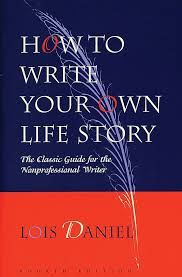
The entire premise of this how to manual (more of a course than a book, as Daniel’s describes) is built on the notion that the author/professor firmly believes everyone should engage in this process, and second that it is built on the practice of building a memory bank. Memory is at the core of this process. More striking is the fact that Daniel’s has seen this process bear fruit in both young and old. It’s not something we do necessarily after we arrive in the future, it’s something we do as a valuable part of living our pasts into the future.
I’ve started this process. Thus far its been illuminating and fascinating- and I’m only at the part where I’m logging memory. The more I log, the more memory starts to take central focus in how I am seeing the present. In fact, this is one of the tips of formulating this into a story, is always connecting the past to the present. This allows us to see how we are formed by this practice of remembering, and likewise how it can be a part of our daily living in the now.
He (Jesus) was teaching in their synagogues, and everyone praised him (Luke 4:15)
All the people in the synagogue were furious when they heard this (Luke 4:28)
Separated by a meager 13 verses, the fourth chapter of Luke’s Gospel details these polarized responses by the “people in the synagogue” in Galilee, Jesus’ hometown.
Which begs the question, what leads to the shift in posture? Why the change?
Picking up on some of the patterns embedded in this small section of text can help in parsing this out, beginning with 4:22:
All spoke well of him and were amazed
Directly preceding this we find Jesus stating “Today this scripture is fulfilled in your hearing.” (4:21) What scripture? Jesus cites, in the traditional posture of a rabbi, Isaiah 61:1-2. What is this passage about? It is about proclaiming the long awaited and long expected “year of the Lord’s favor.” The fullness of time. For any faithful Judean, the people occupying the synagogues, this would have been marked by the return from exile. Hence why stating that the time had come led to amazement.
But here’s the key to understand the shift: note what precedes the proclamation of the Lord’s favor
Proclaim good news to the poor
Proclaim freedom for the prisoners
Proclaim recovery of sight for the blind
Proclam liberation of the oppressed
Now look at how Jesus responds to the amazement. Sure, you’re amazed now, but I know how this story goes- the prophet is always rejected in their hometown. Remember Elijah (vs 25)? Instead of going to the widows in Israel he went to a widow in Zarapath. Remember Elisha? Instead of attending to leprosy in Israel he cleansed the Syrian.
Hence, your amazement is because you will want me to do here what I did in Capernaum, missing who I am and what it is I came to do- the scripture is fulfilled (Israel’s renewal) in the outflow of the spirit, not in its containment. This is the great paradox Jesus represents. It’s like Paul states in Romans 9-12. The outflow to the Gentiles is good news for Israel, and the salvation of Israel (the outcome of this outflow) is good news for the Gentiles. It is in the outflow that “all Israel shall be saved”, and it is in the salvation of Israel that we find this salvation (good news) flowing out into the whole of the world.
There’s a familiarity to the response we get from the people in the synagogue. They are furious. So angry in fact they want to throw him off a cliff. Any amazement they had is now gone. And where does Jesus go? To capernaum. Luke underscores the irony by contrasting the people of the synagogue (who is this, isn’t this the son of Joseph) with the demons (I know who you are). The synagogue- are you going to leave us languishing? The demons- have you come to destroy us?
Welcome to the life of the prophet.
Only here we come to perhaps the most important part. Jesus concludes this passage by stating,
I must proclaim the good news of the kingdom of God to the other towns also, because that is why I was sent
The good news
The fulfillment of the promise made with Israel for the sake of the world.
Here’s the thing about the Gospels being situated within the prophetic Tradition. Prophecies were always about immennce. It was about the thing sitting directly upon the horizon (the judgment of the surrounding nations bearing down on faithless Israel) and always set in contrast with God’s continued faithfulness. In Jesus, the imminence shifts to fulfillment. It is about “today.” It is about the person standing in their midst.
This is the good news, even if it doesn’t sound like good news to the Galileans watching this person heading in the direction of Capernaum to bring good news to the poor, freedom to the prisoners, sight to the blind, liberation to the oppressed. For any Judean seeing themselves as the sole survivors of exile and sole representative of this idea called Israel, this was deemed a condemnation of their faithfulness to the Torah. Jesus looking outwards was, in their minds, like speaking to a dead idea. The hope of the world started with them. In a sense this is true. Jesus’ resurrection would begin in Jerusalem with the arrival of the kingdom of God. But it is in the outflow that this dead idea called Israel would turn into good news for Judea.
In his commentary on Luke Scot McKnight calls this an act of holistic redemption. Everything being turned inside out.
This is our faith, that God has interrupted history from its middle in Jesus Christ, and we know the end from the middle because God has known the end from the beginning
This is the persistent witness of God’s faithfulness. This is the good news. What was imminent has become today. Which is precisely why we continue to look to the outflow. If we want to know who Jesus is and what Jesus did we look to what He continues to do all around us in the world. Good news for the world becomes good news for our own lives. This was always the point, that God’s glory (presence) would fill the earth and that in so doing Sin and Death itself, that enslaving agent that has creation in its grip, would be defeated.
I acknowledge that the majority of my friends and acquaintances find this weird. I also know I’m not the only one who feels this and thinks this. But whenever I find myself in discussions with others about an assumed and seemingly common and pervasive desire to escape or retreat back to nature and the outdoors, I often feel obligated to reply by stating that my ideal conception of a retreat or escape is actually going further into the heart of a city. I find what is often described as “nature”- the woods, remote hikes, mountains, camping- to be stressful rather than therapeutic. What is therapeutic to me has always been experiencing and embracing a marriage of culture and environment.
I’ve been working my way through Christopher Alexander’s book The Timeless Way of Building. I’m loving it so far, described since it’s release as revolutionizing the way we think and theorize about archecture and city spaces, but it was a chapter dealing with the “nature” of building (or building’s) that shed new light on why it is I feel the way I do about this common desire to escape to nature,
It largely stems from his appeal to broadening our definition of nature. Rather than conceiving of it as non-human and non-human created physical properties, objects or spaces found in the world, or further spaces uncorrupted by and absent of human activity (as though we exist apart from or against nature), nature should be reapplied to mean, more appropriately, the true quality (or nature) of a thing. To speak of nature is to speak about what something is.
Along these same lines he makes a similar appeal when it comes to the concept of life itself. I remember reading a book by that same name (Life Itself) and coming to the realization that life has no accepted and agreed upon definition. In the world of academia and scholarship, and similarly in the workings of everyday society and common understanding, the application and use of the word life is inconsistent and largely held captive by its culturally positioned usages. We use it and redefine it when it serves a functional purpose, but we cannot locate a singular, governing application that tells us where the line between what is alive and what is not, what is less or more valuable, gets drawn, or whether there is even a line at all. All we have are social constructions.
Alexander, then, utilizes the freedom this space affords to recontextualize life in a broader and more unifying sense. Even if we distinguish between the life of a space or building and the life of a creature, both things share the same universal qualities. Life denotes something that exists in relationship to the world it occupies, something with the power to both be transformed by it and to transform these surroundings. As such, we can speak of buildings and spaces as being alive, of having a presence. We can also speak of them, in cases of buildings and spaces that stand detached from their environment or those which are non-expressive in their nature, as dead space devoid of life.
Perhaps the most intriguing part of this theory is the idea that buildings and spaces can have a life of their own. This obviously evokes the fact that buildings and spaces are acts of creation, and as such cannot bring about their own existence. And yet, as subsequent chapters point out, acts of creation are imitations of reality, meaning they are always reflective of the patterns that we find governing reality as a whole and which are inherent to the world we are creating within.
This does not mean, however, that the creations themselves are static and uniform. He speaks of such things as having a dynamism that ensures each thing, for what it shares in qualities, also has a unique representation. This is in fact something we know intuitively, and exists precisely because creators of buildings and spaces each have a necessarily limiting and thus differimg and diverse vantage point and set of knowledge of the world. We understand, intuitively so, when these buildings and spaces become stripped of that perspective and become products of an established and governing system detached from this creative process- for example, suburbia, or strict enforcement of rules regarding new developments of neighborhoods and condos (where every blueprint is the same). We also understand this to be true in what we normally mean by nature. Nature is an act of creation, but it is also, in and of itself, constantly creating. What emerges from these acts of creation is diversity. No blade of grass, no tree is the same. The fact is, if it was all the same we would cease to see it as life giving or alive. The world would be perceived as dead.
Coming back to my happy place- sitting in a coffee shop connected to the sidewalk and streetside of city blocks infused with a mix of buildings, trees, parks and structures, all coexisting in relationship. Train stations, seaports, cathedrals and coliseums, old cities and sky scrapers bridges, rooftop patios and old market squares, grand old cinemas and modern arenas, quiet shops and bookstores and busy outdoor markets. These are the spaces where I find myself rejuvenated. The best of these buildimgs are creative acts that open the door to reshaping its relationship to the space that surrounds it. Where lakesides meet living, or where shared roadways lead to shared destinations, where reclaimed history leads to remagined lands of the living.
Don’t get me wrong, I’m not disparaging the woods or dumping on the tranquility many find in the outdoors. It’s simply that I personally feel disconnected from the world in these spaces. I lose sight of where I fit within it, and it makes it harder to appreciate the patterns. I lose sight of that relationship and it’s transformative power. It creates this divide between where I feel like I am trespassing and where my own mode of living, as part of nature, is allowed to be and exist. It reduces humanity to the unwantedness and finds in nature some kind of unpolluted antidote. Which of course leaves me just as uncertain about the spaces I return to as well.
A small caveat here- I fully understand humanity’s role in neglecting and abusing it’s relationship to the world around it. This exists. I just don’t think the answer is established dichotomies. To me this actually makes the problem worse. Reimagining the relationship and building to feed this relationship is the solution. To find humanity in the world and a world with humanity in it helps to share my perspective of a world set in relationship to its different living parts
Some more thoughts on my journey through the book How To Read A Film by James Monaco.
Thoughts relating to how we see, how we know.
Monaco points out that a common artistic presence runs underneath all forms of art regardless of adaptations of technology and the subsequent development of new technique. One can study painting, for example, without needing knowledge of oil. The single exception is film. Why? It is indebted to and a product of technology. In a sense, it acts and functions as a technological lens through which to see the entire spectrum of the arts as a unified whole.
There are two levels of narrative cohesion at play here. One anchors film as a uniquely modernist expression or creation (the lens). It locates its revelatory power in the myth of progress, having relocated the artistic process in our ability to capture and tame the mysteries of the world through the employment of physics. We have captured the laws of time and space that govern this world and use this to remake the world in our own image. Art is no longer imitating life, life is being formed through the employment of this structural and practical artistic process- life itself has become the mirror image of our technological advancements, blurring the lines between what is artificial and what is real, or creator and creation.
And yet there is another level of narrative cohesion at play here, and it lies with this simple question: can this technological advancement ever outrun its necessary foundation.
Or to put it this way- can this technological advancement ever render that common artistic presence obsolete.
I don’t think it can. The persisting critique of modernism is simply this- the promise that it can unify the world and make sense of the world through its singular lens of science and progess has left the world without a necessary foundation. The only world it can know is the world of its own making, reducing knowledge to a singular way of knowing (science) and seeing as a singular conception (progress). The danger of film is that it leads us to think that artistic progression is the point rather than the art. That the form is able to transcend the aim of its knowledge.
In truth, the form, properly understood and detached from the reality of art’s necessary progression and innovation, reveals that necessary narrative foundation, it doesn’t render it obsolete. To neglect this foundation is to find ourselves in a crisis of meaning, measuring reality as purely a matter of form and function rather than a reality that has any inherent value, meaning and defintion. This is the same thing we see in modernism’s gradual march towards redefining naturalism in opposition to appeals to the transcendent. Naturalism, once simply a concern for knowing the nature of reality itself, became a way of domesticating the necessary mystery within the structural confines of form and function- scientific progress renders the common presence of knowledge and sight obsolete. We lose that necessary foundation for knowing and seeing truthfully.
The strength of film is that it can awaken us to the reality that knowledge and sight is rooted in the necessary foundation that form and function help to reveal and to understand.
To set this directly within the practicalities of function and form, consider the film lens. As Monaco describes, there are two kinds of lenses- wide angle or telephoto (wide and narrow). These lenses are distinguished by their points of perspective, their specific angles which define how and what we see.
Monaco makes an interesting observation in pointing out just how bound these lenses are to the laws of physics. The camera cannot achieve the concept of depth purely by appealing to a singular form of perspective. It needs them both to create the illusion of depth of perspective. Depth comes from playing with both the wide and narrow lens simultaneously. As one gradually narrows the other gradually expands, establishing this sense of uniformity. In this sense, the modernist appeal to form and function as a primary interpretive lens actually creates the absence of depth, not greater knowledge. The same would go for neglecting function and form in favor of the wide angle lens, a fact that should counter responses to modernism that neglect or ignore the sciences,
There is one more aspect of the lens that becomes important here- the reality of light. Without light any such visual representation would become incoherent. We need light to see regardless of which lens we are employing, and a filmmakers primary role is to determine how much light is let in (aperture) based on how dark the space is.
Light is the illuminating source that allows us to see. No matter how much technology progresses, this basic truth remains uniform. It’s a reminder of our dependency on both form and meaning. A filmmaker can use a lens in relationship to the light to focus us on a particular image, but that image will always be purposed for the sake of revelation. Not of itself, as though a film sequence exists solely to reveal the details of its form and function, but of the meaning and nature of this reality. The foundation of art itself.
The subject of memory became crucially important to me following an experience I had some years ago during a particular dark night of the soul. I detailed that experience in this space before, and I also talk about it with the Fear of God Podcast in a conversation about the film The Never Ending Story (part of a what scares us and what saves us series). At the heart of my story however was something that I called “my letter from God.”. That letter called me out of the darkness and into an act of remembering. Or more specifically, left me with the charge to remember my story rightly. I have been on a journey of remembering ever since.
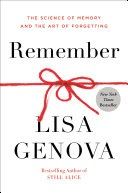
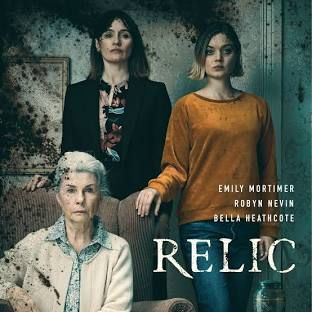
In part 1 of this reflection on memory, i dialogue with the 2020 film Relic and the book Remember: The Science of Memory and the Art of Forgetting by author Lisa Genova. I cited Robert Vosloo from his article Time in our Time: On Theology And Future-Oriented Memory. Vosloo notes that the importance of remembering is an explicitly Judeo-Christian idea that emerges in conversation with the Greco-Roman world. At the same time he describes a larger cultural idea, one that pushes back on a history of turning forgetting into a virtue and an artform Michiel van Veldhuizen is anothef scholar who fleshes this out further in his articleA Theology of Memory: The Concept of Memory in the Greek Experience of the Divine;
“Without sacred texts and dogmas, the Greek polytheistic system depends on the functional interaction between mortal human beings and the pantheon of immortal gods; and in a system of highly ritualized rules of reciprocity, the proper procedure is of defining importance… memory fulfills this role, in bridging mortality and immortality, life and death… the knowledge to which the Muses and Zeus have access, through their structural proximity to Mnemosyne, is the knowledge of the past, which is to be ritually commemorated through the performative powers of the Muses.”
In the Greco-Roman world, MNEMOSYNE was the Titan goddess of memory and remembrance and the inventor of language and words.
“Mnemosyne sits at the heart of the pantheon, bearing Zeus nine children (muses), out of which memory plays out in the human experience.”
Thus, in the Greek goddess we have this established relationship between forgetfulness and remembrance built on necessary opposition.
“Forgetfulness seems to denote more than the simple absence of pain or grief; rather, it implies a state of being that belongs to the realm of divine perfection, while sorrow belongs to the realm of human misery, suffering, and mortality… the dialectic reciprocity of, for that matter, any Greek divinity… Mnemosyne provides access to a kind of knowledge that in itself resembles a religious initiation.”
In other words, to forget is divine, to remember is to be human. Transplant this into the enlightenment and it could read: forgetfulness is to progress, to remember is to regress.
Genova locates a similar discussion of how memory works in the sciences, suggesting, in this chasm that exists between remembering and forgetting, that our brains could not function if it remembered each and every detail of our lives.
“Most of us paint forgetting as our mortal adversary, but it isn’t always an obstacle to overcome. Effective remembering often requires forgetting.”(Page 7)
In her view, forgetting is necessary because of the way memory functions as a relationship between different kinds of memory, be it conscious or unconscious, working memory (what we know right now) versus static memory (knowledge that decays), declarative or muscle memory, episodic or semantic memory. When we encounter a new piece of information or a new experience, our brains change, incorporating new patterns of information that are then stored and able to be either retrieved or formed into an unconscious function of memory. This retrieval is not like “replaying a home video”. Rather,
“remembering is an associative scavenger hunt, a reconstruction job that involves the activation of many disparate but connected parts of the brain… Whenever we remember something, we are reactivating the various elements of the information we experienced, woven together as a single unit.” (p23)
Memory, then, is a matter a stimulation and association that begins with something we have either inadvertently or intentionally payed attention to /experienced by way of living in this world, information that our brains subsequently filter through deciding what to keep and what to discard for our benefit.
According to scholar Matthew Potts, who argues in his bookForgiveness: An Alternative Account for a redefining of forgiveness not as a forgetting of the past but as remembering it properly, Miroslav Volf in his work The End of Memory is cited as seeing
“…human memory as a constant interplay between the practical impossibility of total recall and the everyday reality of selective, often unintended, forgetting… to remember a wrong(doing) is to struggle against it.” (p188)
Further,
“when remembered wrongly, the past metastasizes into the territory of the future, and the future, drained of new possibilities, mutates into an extension of the painful past.”
At the same time he suggests that “the absence” of memory “whitewashes” wrongs. (Volf, 81, 143) As Potts points out, we are, all of us, “composed of our histories.” So, “if forgiveness is forgetting, then don’t we risk losing ourselves?” And if memory hinges on an act of forgetting, as Genova suggests, how do we then find ourselves without devolvimg into an existential crisis?
Or, is it as Paul Ricoeur writes in Memory, History, and Forgetting: “memories do not reproduce the past, they reconstruct it.”
They, in fact, “interpret” it. Which means we are, at first glance at least, the primary interpreters of our own stories.
It is worth saying here that this conversation about memory is intimately related to a further question about the nature of consciousness. Without getting into the weeds of that scientific, academic and philosophical interest, what’s clear to me is that the main point of contention comes from debating which direction consciousness flows from. Does it emerge from the material function of our memory as a constructed reality, or do we best understand it as something that shapes our ability to remember from the top down? Are we appealing to something true, something with the authority to afford us identity and personhood, or is identity/personhood a construction that then becomes our truth.
These differences in ontology say something about the idea of consciousness, suggesting in their own ways that a person either emerges from or is found in the unique vantage point of our positioning in this world. Our memories might function in the same way on a biological level, but it is because we see and experience this information within the confines of our own bodies that they exist uniquely as part of ourselves.
If this is the case, how do we then process memory as a measure of this self, this personhood? If forgetting is necessary to who we are, but also an impediment to knowing ourselves, or in the light of my own personal story to knowing God, and if remembering rightly seems equally critical to this act of knowing, how do we move from this apparent conflict towards saying something true about ourselves?
Robert Vosloo in his article Time in our Time: On Theology And Future-Oriented Memory, suggests that
“Memory is connected to our understanding of phenomena like identity, time, knowledge, and history—personal as well as cultural… (equally so) classical antiquity itself has provided us with the ruins that stir up memories of a distant ‘other.”
In other words, crucial to understanding who we are, or who we remember ourselves to be, is the idea that memory shapes us in relationship to this world and to one another. It connects us to what otherwise would remain distant, and rather than leaving memory mired in contradiction, it connects us through an act of remembering (trauma) and forgetting (triumph) rightly. To remember and to forget rightly means to situate these processes in the act not simply of living, but living in connection to something true, something that sees from a vantage point beyond our narrowed point of embodied perspective.
The way the film Relic, to return to that discussion, imagines cutting through the tension of this seeming contrast is through this same notion of togetherness. We are forced to wrestle with the idea that we are what we remember, a sentiment that turns sharply on this even more precarious notion that we become what, or who, we are remembered to be. With this sentiment comes a sense that perhaps we have far less control over who we are than we realize, and at the same time we have far more agency in shaping who we see others to be than we often realize, a fact that, I think, can also speak as well to those who’s ability to remember is compromised or limited in biological terms. It is at this crossroad that the act of forgetting and remembering meet. In the story of Relic this becomes a way for the daughters to remember for their mother when the only thing she can do is forget, but this involves the painful process of remembering rightly by facing their tendency to sweep her disease under the rug of the relics nostalgia.
Perhaps it is, then, that memory locates the story of who we are in the here and now, but this story exists only in relationship to the tangible experiences of this world that we share together. This is what makes a memory true. And it is in this truth that we are then freed to remember rightly.
ElieWiesel imagines it this way;
“The Talmud tells us that without the ability to forget, man would soon cease to learn. Without the ability to forget, man would live in a permanent, paralyzing fear of death. Only God and God alone can and must remember everything… Faith is essential to rebellion, and that hope is possible beyond despair. The source of this hope was memory, as it must be ours. Because I remember, I despair. Because I remember, I have the duty to reject despair.”
If this is true then I could restate it in this way: This memory is shared and therefore is true. This means it is always something afforded to us by an other. And it is here, in relationship to the other, that we are then free to become. And to become is the measure of our hope.
This is the essential point of remembrance that we find running rampant within the Judeo-Christian Tradition, specifically where it sits in conversation with the second temple and Greco-Roman worlds. Memory marks the journey from creation to new creation. The central story of Israel- the Exodus- is marked by the call to remember. It is equally marred by the continual act of forgetting and simultaneously swept up in the hope of a promised renewal. When Christ takes up the Exodus as a way of articulating His own ministry, His liberating work is likewise marked by a call to remember in light of this forgotten past and a promised future. Only in Christ are past and future seen to collide in the memory of the present. To remember rightly in this sense is, in line with our working brains, to reconstruct the Christ event into our present moment as a way of remembering rightly the true nature of God and creation, which is then able to inform the darkness, the messiness, and the perceived wrongs which continue to occupy the stories of our lives in this world.
Just as in Relic, where the daughter strips away the mothers skin so as to be able to remember who she is with alziemers, an act framed by the powerful phrase “I am loved” as someone with this disease, so do we remember Jesus through the cross, an act of remembrance that flows in both directions; we find God in remembering the suffering of Christ, and Christ remembers us in our suffering, calling us to this movement towards transformation in relationship to God and one another; shaping memories, shaping identity, together.
Could it be then that forgetting rightly has less to do with erasure of the past and far more to do with this act of becoming? If memory is an act of interpretation, with our brains acting as interpreters reconstructing the past in light of a present newness, then forgetting rids us of the pasts constraints and resists its control over our ability to be properly transformed by an act of remembering rightly. We aren’t our memories, we are who our memories allow us to become. That this happens in the context of family (Relic) and community (Christ), is simply a reminder that becoming is an act that inevitably binds us to an other, justifying our stories as ones which have been inevitably shaped by the past. Perhaps the best way, then, to deal with the problem of memory is to simply say this; we are remembered, therefore we are; we remember, therefore we become.
Google the question “can we trust our memories”, and the answer that comes up is an emphatic no. Despite memory being the only tool we have to recollect the past, it is notoriously untrustworthy in the way it reconstructs facts and conceals the truth.
My earliest memories reach back somewhere into the recesses of my childhood. I have vague imprints in my mind of old houses and neighborhoods, old faces and experiences from around 4 years of age. Beyond the persistent and chronic nightmares of my preschool self though, which linger in my mind with a striking degree of clarity, my earliest and most vivid memories come from grade 1 and 2. I can remember one particular morning riding to school in the backseat of our old station wagon. My younger brother had just started attending school, and on this particular day was excited to bring his hula hoop to play with during recess. Only, as we both exited the vehicle he promptly realized that he had left it in the car. The devastation on his face was immediate and palpable, and my instinctual reaction was to take off down the street after the car. To no avail of course. Perhaps most acute is the heartache I carried with me for the rest of that day. As his older brother I had failed to solve the problem, and it is a moment that remains imprinted in my memory to this day.
In her book Remember: The Science of Memory and the Art of Forgetting, author Lisa Genova notes that
“most of us will forget the majority of what we experience today by tomorrow. Added up, this means we actually don’t remember most of our lives.” (P3)
Which of course begs a further question in light of my noted experience above; why do we remember certain parts of our life and forget others? At least one thing seems obvious; experiences that hold the most emotional weight seem to stick around the longest. Genova does a great job in her book of answering this question with observations and insights from science, ultimately rooting the ebb and flow of this remembering/forgetting exercise in the necessary narrative of our lives. She suggests that
“memory is the sum of what we remember and what we forget, and there is an art and science to both.”(p9)
The science then is the observation of brain function while the art is the act of rooting this function in a sense of identity and story. Both of these things together can help us locate the why of our inherent human need to both forget and to remember, while also helping us to understand the how. Genova writes,
“The significant facts and moments of your life strung together create your life’s narrative and identity. Memory allows you to have a sense of who you are and who you’ve been.” (P2)
And yet this still doesn’t solve the essential conundrum of personhood and identity when it comes to the unreliability of our memories. Echoing this problem, Genova writes,
“Much of what we do remember is incomplete and inaccurate… our memories for what happened are particularly vulnerable to omissions and unintentional editing.” (P3).
So if memory is necessary to who we are, how then do we reconcile this with the idea that who we are seems to be reflective of a false version of reality? Genova asks the question this way:
“So where does that leave us with respect to our relationship with memory? How should we hold it? Do we revere our memory as an omnipotent monarch, or do we throw rotten tomatoes at it, denigrating it (and by extension, ourselves) for its inconvenient shortcomings and foolish mistakes?” (P228)
What seems clear is that this problem is made more complex when we consider our relationship to both positive and negative memory. As scholar Robert Vosloo writes in his articleTime in our Time: On Theology And Future-Oriented Memory,
“Narrative memory is never innocent. It is an ongoing conflict of interpretations: a battlefield of competing meanings.”
Vosloo points out that remembering is, historically speaking, a Judeo-Christian idea. With the Greek gods, and in the long standing myths that precede them, remembering and forgetting are in fact expressions of gods at war, relating specifically to how we engage what we perceive to be positive and negative experiences in contest. In this light, positive memories do not so much hold a true correlation to reality as much as they exist to control the negative. This is how we live forward through forgetfulness. If for Genova we forget so that our brains can process, forgetting reveals something crucial about how we process and what we process. Memory seems deeply tied to meaning making, and meaning making wrestles with the negative realities of our existence.
In fact, Vosloo also argues that acts of forgetting have come to define the modern landscape as a sort of virtue finding that guards against the past and helps feed progress. Thus,
“the apparent power of this thought, namely that memory of the past impedes our wellbeing, points in the direction of the necessity to ask about the rightful place of memory in our moral and theological discourse, particularly when one argues that the past is not dead, but is present as triumph and as trauma, as gift and as ghost.”
In other words, to speak of memory in a theological sense means to remember differently than our nature seems to allow. Memory becomes a necessary spiritual discipline.
Elie Weisel in his annotated Nobel prize speech, offers his own observation on the subject of memory, suggesting that,
“Remembering is a noble and necessary act. The call of memory, the call to memory, reaches us from the very dawn of history… And yet it is surely human to forget, even to want to forget. The Ancients saw it as a divine gift. Indeed if memory helps us to survive, forgetting allows us to go on living. How could we go on with our daily lives if we remained constantly aware of the dangers and ghosts surrounding us…”
He then affords the conversation this subsequent question:
“How (then) are we to reconcile our supreme duty towards memory with the need to forget that is (or seems) essential to life?”
Natalie Erika James’ film Relic is a film I have long championed as an underseen gem, and i think it has a lot to add this particular conversation about memory. The reason this film is important to me is because of the way it tackles the theme of memory from the vantage point of its decline. It tells the story of two daughters moving back home to care for their ailing mother who is sick with alziemers. As they return home we see the daughters engaging in an act of remembering, which contrasts with the mothers struggle with forgetting. This becomes a powerful juxtaposition that leads them towards a crisis of identity. In a very real sense their act of remembering leads to a need to forget what is a painful reality, while the mothers act of forgetting leads to a desperate need to remember in light of her painful decline. In both cases this posits a discussion of identity; what does it look like to still be a person in the absence of memory.
It is here that this quote from psychologist Alexander Luria emerges, echoing the struggle while attempting to cast it in a fresh, redemptive light. He writes,
“People do not consist of memory alone. They have feelings, will, sensibility, moral being. It is here you may touch them and see profound change.”
In other words, people are located in the act of living in the present, not in the echoes of the past. A present that is nonetheless shaped by the past. All memory serves the present. Thus is why our brains continually rewrite our memories to serve the narrative now. It’s far less important for those memories to be accurate recollections as it is for them to be necessary applications
As Weisel suggests,
“If dreams reflect the past, hope summons the future. Does this mean that our future can be built on a rejection of the past? Surely such a choice is not necessary. The two are not incompatible. The opposite of the past is not the future but the absence of future; the opposite of the future is not the past but the absence of past. The loss of one is equivalent to the sacrifice of the other.”
There is far more to flesh out here in terms of how these different voices see a way forward through the challenges that memory presents, especially when it comes to our indebtedness to it as persons, as ones seemingly needing this notion of a true and real identity.. But I wonder if Weisel ‘s theological wonderings about the meaning of memory and Genova’s detailing of the science of memory is less about the accuracy of facts we remember and far more about our ability to say that something simply is. We experience something. We come to know something. Therefore It means something when it comes to declaring who we are now in light of the past. And if there is a place to begin in rooting this in some sense of a truthful reality, in beginning to learn what it means to remember differently, or to remember rightly, perhaps it begins with an even greater concept and realization- the idea that we remember together. This is an idea I will explore further in part 2 of this post.
A previous post in this space mentioned I was reading a book called How To Read A Film by James Monaco. Some of what I read yesterday has been inspiring more thoughts
There’s a historical note that describes the formation of film as a specific artform that exists uniquely in relationship to the whole. Film begins in neutral space- pictorial forms relating to media. It then develops into an artform through the “process of replicaton.”
As noted in my previous post, Monaco describes art as imitation- it imitates reality. Here Monaco expands on this thought, noting what is called the “spectrum of abstraction”, a spectrum of modes or forms that “describes the relationship of art to raw reality.” The spectrum of abstraction has practical on one side and musical on the other. Inbetween is environmental (architecture, sculpture) pictorial, dramatic (stage, oral), narrative (written)
He breaks it down in the following equation: modes of discourse explain the transmission of the arts from artist to observer, structure defines the shape of art, the equation of artist plus observer provides new angles of critical approach.
What makes film unique is the way in which the once neutral mode becomes a lens that is layered over the whole spectrum. In doing so it formulates its own language, it’s own codes, now able to converse with the different parts of the whole by way of its tropes.
What’s interesting to me is how this mirrors the process of formulating a worldview. Worldviews are not only a lens through which we explain and interpret the whole, they allow us to establish a relationship with the different parts of the whole, to dialogue with the different parts of the whole. Further, worldviews aren’t static and unmoving. This dialogue, this relationship begins in neutral space- the world we observe- and it develops AS we apply it as a lens through which to make sense of the observed world.
There’s an even further corellation- the relationship between art, artist and consumer. If you look at the breakdown above (third paragraph), a critical approach requires this initial transmission between artist and observer, with art itself being the thing being transmitted. And what, again, is art? It’s relationship to “raw reality” is its imitation of it. It imitates what it sees to be true about reality, giving us the necessary symbols (language) to dialogue about it, and to relate to it.
In other words, it translates our “experience” of the world/film we observe. As Monaco states, “Experience of art comes first, abstract criticism is a secondary activity.”
Criticism=participation. As someone who adheres to participationist philosophy/theology, knowledge comes not through a list of data points or rules or facts that we observe, but by living, experiencing. We then overlay the criticisms as a way of connecting our experience of the world to the world we observe (or our experience of a film to the film we observe). All part of formulating that interpretive lens. It’s in this sense that we can be better or worse consumers of art. It’s also in this sense that the artist is engaging in an act of transmission, not of themskeves but of an experience that exists external to themselves.
One final tought: Monaco suggsests that conceptual structures, which all abstract systems are, exist in relationship to the art, artist and consumer. In this way they “are dialectical and in continual flux.” He makes an interesting corelation to the Protestant reformation. If art used to be the domain of the figurative priest (artist), art is now handed to the individual or collective consumers as an unfinished product meant to shape and formulate according to one’s experience. What once was an act of entering into a sacred space (engaging the transcendent), has now become a question of the sacred spaces we make for ourselves. Not unlike the shift from priest to people in the Protestant reformation.
Is there something lost in this shift? Likely. Gained? Probably. Part of the discuaion perhaps should be parsing out what that is. I suspect that part of what was lost relates to the loss of that sacred space, and with that the inability to recognize the role art plays in the formulation of our worldviews. Or perhaps the loss of our ability to know what a worldview even is. The more we relegate our experiences to a constructed self, the less connected we are to the reality of cultural formation. The less connected we are to the world/film itself.
Back in June I decided to join a number of facebook atheist debate/discussion groups. The words debate and discussion being contained to a necessary air quote variety of terminology.
As a few of my friends noted upon vocalizing my confession- “everyone’s got a calling I guess.” I’m still trying to parse out whether these were words of judgment or absolution.
In any case, I knew what these spaces were before I joined. I guess I now know what they still are. They represent the lowest form of rational discourse (proof arguments), they obsess over uninteresting questions and demands (can you prove a god exists), and every post follows the same inevitable pattern- two sides calling each other idiots until one or both block the other.
I knew this. I know this. And I got sucked right back into it. For 6 straight months. I’ll be honest- better to be distracted by the mind numbing, soul sucking, time wasting threads than deal with my anxieties the second half of 2024 represented. Or so my subconscious told myself.
The first order of business for the new year- unfollow/unjoin (times 10)
It’s been 2 days. I can feel the detox already.
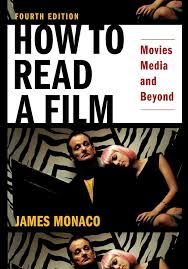
Why do I bring this up? Because I can also feel the natural instinct raising it’s ugly head when I come across a decent piece or quote or idea and immediately want to go and tandem post. I had such a moment today breaking open one of my Christmas presents- the book How To Read A Film: Movies, Media and Beyond (Fourth Edition).
I’m 10 pages in to tackling the 700 page beast and I’ve got two pages of notes reflecting on how the history of the word art mirrors the history of modernism and the enlightenment, shedding light on how it is we have come to see and know the world we observe and experience (these 700 pages are clearly going to take a while). Which of course connects directly to our ability to give langauge to the abstract and parse out how it is knowledge relates to our ability to interpret the abstract using symbols (art, at its core- imitating reality)
I’m hooked. I wish I could sit down and talk with someone about these 10 pages into the late night hours.
I can also tell you exactly what the response would be if I posted any of these observations and reflections for consideration in these groups. Then again, never mind, i won’t go there. That’s in the past. This is now. The second order of business- remembering that I have this space to get these thoughts out of my head and on to the page where, at the very least, I know they are somewhere safe and I can feel free to continue on.
So about this book:
It starts with a quote by Robert Frost
If poetry is what you can’t translate, then art is what you can’t define.
And yet what is an investment/interest in art (or the arts) but the attempt to do precisely that, always with the knowledge that such interpretations can only ever remain subjective, not objective.
Isn’t this how knowledge of the world, of reality works though? After all, if reality could be reduced to a handful of data points derived from the scientific process we wouldn’t need art. And yet art remains as critical for our modern world as it was for the ancients. It has simply become a present casualty of that modern development. The book talks about how the boundaries for what is seen as art has progressively expanded, while that expansion has simultaneously narrowed and diluted it in other respects. Much in the same way modern society has narrowed and diluted its relationship to culture here in the West.
An important observation from the book- for the ancients the arts could be broken down into 7 categories (History, Poetry, Comedy, Tragedy, Music, Dance, and Astronomy). These categories were unified by a “common motivation: they were tools, useful to describe the universe and our place in it… the performing arts celebrated the rituals (of human existence), history recorded the story of the race, astronomy searched the heavens.”
So what changed precisely? The arts got coopted by the enlightenment. The arts were reconstituted as a purely “practical” means of making sense of the world, following this movement in the West towards reducing knowledge and truth to the scientific process. Art becomes the social sciences, the modern sciences, historical criticisms, mathematics, “structural” sciences.
The only two that remained unchanged- music and astronomy. More on this in a bit.
Art becomes so diluted that it gets applied to nearly any practicality- hence the moniker “artistry” or making. What ultimately emerges- a separation between art/artist as one who studies and gains knowledge of the world and the scientific disciplines that reduce this world into utility and function. Along with this comes a differentiation within the category of the arts as well, between the one who creates (artist) and the one who makes (artisan). The artist held the lower standing, the sciences and the artisan held the higher standing. And even within the arts this hierarchy took hold (the visual makers versus the abstract creators)
As the book states,
The arts were no longer simply approaches to a comprehension of the world; they were now ends in themsleves.”
And even then, the entire existence of avante garde, an idea that sees art as necessarily progressive in line with the enlightenments allegiance to scientific progress as the sole proprietor of knowledge and truth, ensured that this separation would persist- art had to become something, it had to conform to a set of visual and structured rules in order to coexist in this new world of practicalities, and eventually this new world of politics (modern art can almost be reclassified as political discourse).
Remember when I said that music and astronomy were the only two that remained unchanged? Here’s what’s interesting about that. The book notes how both astronomy and music occupy the same prersistant grasp on the abstract and the same stubborn refusal to let go no matter how much “progress” we find. They are artistic elements that cannot be tamed or reduced by nature of being fluid and requiring movement, and thus they anchor, on both ends, this notion of the arts in the experience of the abstract. They require artistic interpretation the same way it did in the ancient world. Pick up an astronomy book and you can see this to be true. They often read like religious texts. Try to grasp and understand what music is and how and why we experience it the way we do as a transcendent, religious type of encounter, and you see this to be true. As the book quotes, citing Walter Pater,
All art aspires to the condition of music
The condition of music- the pure abstract being formed into knowledge.
As I stated above, historically art imitates life. In the modern world, life increasingly imitates art. What’s the difference? One is seeking to understand the world by way of applying symbol (interpretation) to sign (observation). The other conforms our symbols to the sign, effectively collapsing sign and symbol together into a singular way of knowing and seeing the world (science, or form, function and utility). It’s the difference between seeking to understand the image of the world and believing we can make the world in our own image. After all, what is science but the accomplishments of humanity.
And yet, what does it mean to encounter a film. To be moved by a song or a score. To be transformed by a story. To reflective on and ponder the grand mysteries of the universe. It means the barrier between art, artist and participant has been transcended. It awakens us to knowledge and truth that we did not obtain ourselves. It seeks to make sense of that which we cannot make sense of ourselves.
It reminds us that this world is not reducible to simple matters of form and function. Even to say that it is would require art- an act of interpretation. These things emerge from that which precedes it, from its source, thus it cannot be understood without that necessary foundation to interpret its meaning, its value and force. And it is that foundation that art seeks to discover and to reveal.
Art, therefore, doesn’t just imitate life, it imitates the transcendent. It makes the invisible visible. Hence one of the great lies of the modern age being this- that any amount of scientific disciplines and discoveries can erase the necessary need for art. Science is but one way of knowing. The ancientss understood this. We have come to see ourselves as better and smarter and wiser and more knowledgeable than those primitive folk way back then. Art can remind us that we are, in fact, not. If anything, we’ve simply taught ourselves to see and think more narrowly about knowledge and truth.
A few years ago I began a New Years Resolution Plan called Rosebud. I heard about it on one of the travel podcasts that I follow. The process essentially looks like this: Step 1: List Three Roses- This is the stuff that I would consider the greatest strengths, successes or accomplishments of the past year, the stuff that has managed to blossom into a Rose. Step 2: List One Thorn This would reflect my greatest personal struggle of the past year. Step 3: List Three Buds Based on my “thorn”, this is a list of what I would like to “bud” into potential Roses in the coming year. Step 4: Come up with a word for the year This should be a single word that can help reflect the direction I want to head in the coming year, a single word that can give my year a theme or a recognizable focus and narrative.
Why Rosebud
I have been asked in the past, why three Roses but only one Thorn? Most of us don’t realize it, but it is often much more diffciult to come up with roses than it is thorns. Also difficult is learning how to speak about thorns in a way that imagines forward movement, seeing it in light of one’s potential for growth. It’s kind of like that old piece of advice that says when you are in an interview for a new job and they ask you about your weaknesses, always give a weakness that you can do something about.
The great part of the Rosebud system is that it allows one to document their struggles and their growth year by year as a kind of working and interactive diary. You can build on the previous year and form an ongoing narrative out of the successes, struggles and hopes. This is not about resolutions persay, at least not in the traditional sense, it is about making space for introspection and observation and forming that into perspective and potential. And it allows one to not just make goals, but to examine what those goals are actual about, the why of our goals. With that in mind…
Looking Back at Rosebud 2024
My three buds:
Figure out my hard conversations and make some hard choices
Celebrate our 20th anniversary
Invest in my local community
Reflection:
I made some of those hard choices and had some of those hard conversations. Those choices shaped the year going forward. It meant embracing changes in finances, trading that security for a job situation with less hours but a healthier atmosphere.
More choices await. Heading into 2024, I am navigating my first full season at this new place of employment and its financial realities. I continue to look for opportunities that can help make this present situation more sustainable in the long run.
The change in financial situation probably played a role plans for our 20th anniversary. Technically it falls in 2025 (January 8th), but the plan had been to utilize either summer or Christmas break in the hopes of going back to NYC (where it all started). This never happened. Our ability to make it happen has been crippled.
As far as the investment- equally a struggle. The changes in job plus entering a phase of anxiety and depression in the second half of the year left me unable to get forward movement and explore possibilities. Small steps don’t get anywhere fast, because I am finding that the “community” is an exclusive inner circle that is difficult to break into and unfortunately reflective of some much of society- built for accomplished type A’s. This is true even for the local arts industry, which is where I would most natural fit.
Looking Ahead: Rosebud 2025
Three Roses
Making changes in my work situation
Continuing to push myself to embrace solo travel
Making concerted efforts to readjust life to care for and respond to challenges our pups are having
One Thorn:
The inability to keep things from spiraling out of control when it comes to my anxiety. The second half of this year has been a steady progression of losing all sense of agency, ability and hope. I made some movement on the big things, but my neglect of the small things have created a fresh set of big things, all of which now feel expressly out of my control. And I don’t do well in these seasons.
Three Buds:
Find a way to reoconfigure my current work situation into something with long term sustainability
Take a first step in regaining agency and control, beginning with reclaiming this blogspace as an important part of my ability to process.
Reclaim time and routine, beginning with getting rid of certain social media presences which have allowed me to escape the weight of my anxieties
Word of the year: Reclaim
Summary:
The difficulty with my present work situation is that the financial struggles pair with the present demands of our current phase of life. What I do (school bus driver) affords me the necessary schedule to be able to be at home during the day and care for our dogs whom have specific needs and demand certain responsibilities. Finding ways or other opportunities to pursue a better financial siutauom compromises those responsibilities. That’s the present dilemma being presented.
Making sacrifices to fit our present financial situation compounds other things, both in terms of future plans and for present demands. Any unexpected detour (car problems, house problems, health demands and vet bills) carries that much more weight, and the ability to dig out of the holes these things consistently create becomes that much more challenged. To put things in perspective, I have had to adjust to living on more than $1000 less a month than I used to get. Thus why my options above create such a dilemma.
That and the things being sacrificed along the way become the things that help afford me some mental and psychological stability (the ability to escape to the movies, to keep up with the latest theology books that typically are not accessible through the library, the ability to dream about potential travel plans, even if they are small). It’s all interconnected.
Things thus far have been managing. What hasn’t been managing is the slow accumulation of the small things which spiral into big things. Big things that cripple my ability to do anything about anything. Thus, when everything feels out of control, it feels to me the way forward is to focus on one thing. To find one thing that I can control and to reclaim that space. Hence my three buds and word of the year.


 The Stories of my Life