Film Journal 2024: The Devils Bath Directed by Veronika Franz and Severin Fiala
And I thought Goodnight Mommy took things to the next level. I mean it did, but this dark, harrowing follow up after the less acclaimed The Lodge is truly oppressive.
Which might not sound appealing, but as a viewing experience it is unsettling in the best kind of way. It’s horror in the sense of atmosphere and tone, while underneath it is a gorgeous period piece and historical drama rich in the kind of tragedy one might expect from a community soaked in superstitions, social hierarchies and corrupted religious powers. Of the sort that would make Eggers thrilled.
There are multiple layered themes at play that all get embodied in the character if a tortured wife, played to perfection by Anja Plaschg, who is forced to wrestle with the demons that surround her, a battle that never seems hers to win, especially as we watch her gradual decent into despair, grief and madness. It’s a character arc that leaves its mark, especially with that jaw dropping final 20 minutes. The interconnected themes of suicide, sin, confession, forgiveness, and salvation are especially poignant.
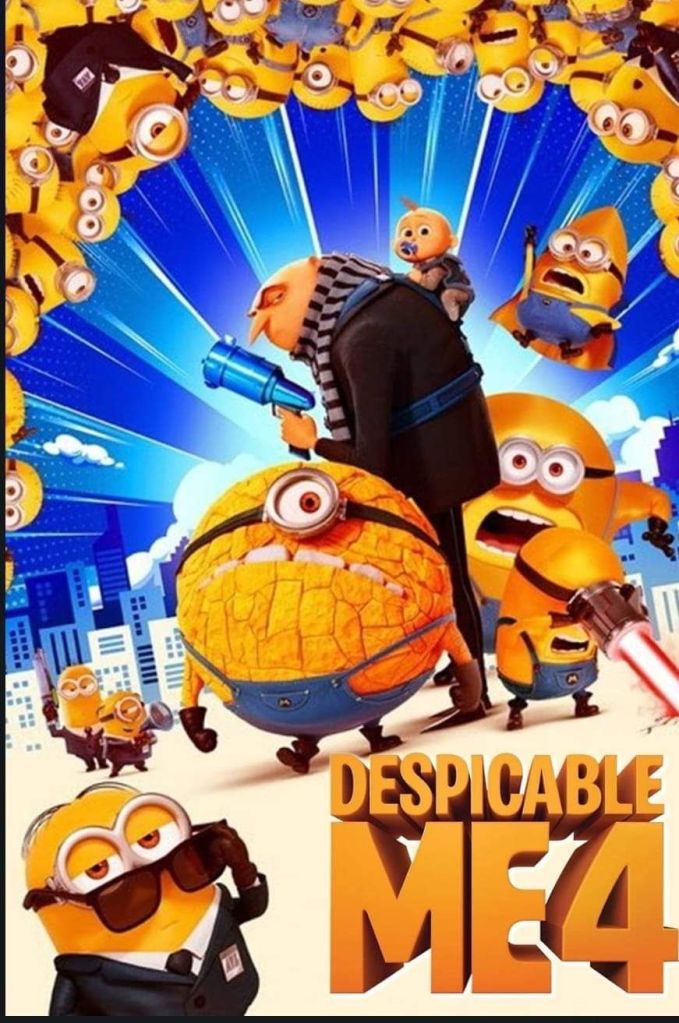
Full disclosure- I’ve been an apologist for this franchise since it started. I loved the idea of the tortured villain in the first film left trying to measure up to standards that label him a failure. The second film found its proper chemistry by balancing the act of bringing the now iconic minions further to the forefront while still keeping Gru at its center. The story there also found its natural progression in the whole villain turned good guy motif.
While I also appreciated the Minions film, a half step down in my ratings from the 4/5 I gave the first two films, and which came as a bit of a surprise with its heart felt premise (who knew you could mine such character development from the loveable comic relief), it would be fair to say the third film followed the law of diminishing returns (3/5). My biggest critique of that film, besides the beats starting to feel a bit repetitive, was one of the worst on screen villains in recent memory.
This fourth film actually reverses that trajectory towards diminishing returns, not by giving us a more memorable villain, rather by making the villain secondary to the real story and concern. Once again, as we found in the first and second films, we find Gru learning from a strong group of female characters, including his daughters and the addition of a charming and likeable next door neighbor. This is paired with the male villain, a fellow student from Grus past, providing a way into Grus troubled relationship with his only son.
Nothing here lives up to the first two films in my mind, straddling a line between fine and enjoyable. There are some decent running gags, but no true laugh out loud moments, and some welcome time spent with what becomes different groupings within the film just building those relationships. It also has a tight running time, which allows it to feel like it never overplays its welcome.
However, I will say, the final 20 minutes makes a valiant effort to come close, offering that moral/life lesson the franchise is known for, concluding the different threads with an emphasis on the family, and even providing a few touching moments that almost earned a tear.
I don’t imagine this franchise is dying out any time soon, but if i was able to imagine a final entry I might dare to imagine it using this upward trajectory to really bring things back full circle as a way of capturing Grus development through the family that has now come to define his moral center. There is potential there for some nice commentary to emerge both through the father-son relationship as well as the different women in his life, perhaps making Gru the central villain once again, subservient to the necessary transformation of course.
Film Journal 2024: The Listener Directed by Steve Buscemi
“We’re programmed to hate the idea that we’re programmed.”
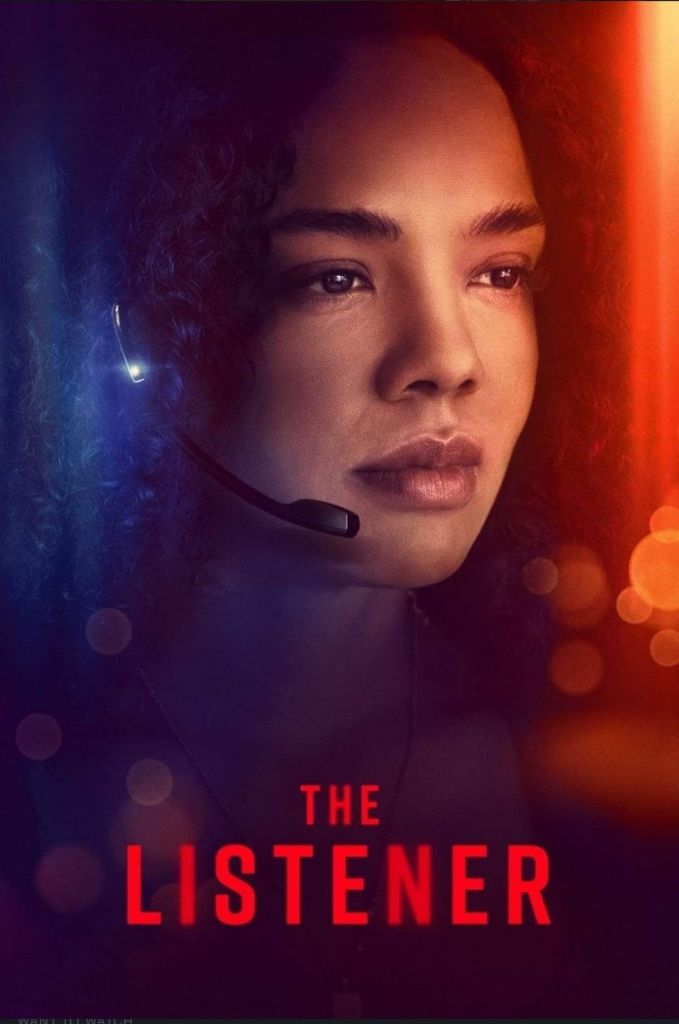
That line has been sticking with me like few others this year. Perhaps the best descriptive of what it feels to live in the tension of attend8ng for reality while at the same time finding the freedom to live within it. For anyone who’s experienced this existential crisis,it can become an all consuming, mental, physical, psychological challenge.to wade through.
We find the language of this crisis fully formulsted in the context of one of the films final callers. Whereas the help line employee has spent the night trying to help people through their personal points of crisis with her words and her verbal presence, the final caller throws all of these words into question by forcing them to attend for reality. How is it that we attend for the illusion of this thing we called life. How do we reconcile the fact that our experiences of this life are essentially dependent on acts of manipulation. As the final caller surmises, we have this inate need to feel like we are the author of our stories, and to feel otherwise is to experience feelings of oppression. The problem is, reality tells us we are not. Thus we find ourselves managing this apparent discord even as we remain unaware or wilfully ignorant about what this discord is.
In a climatic moment, our final caller poses a challenge to the worker to give a rational argument for why someone should not commit suicide, readily anticipating and cutting down the inevitable answers as irrational. I remember distinctly sitting down with an association of mine and giving them the same challenge once upon a time. I noted that there is no rational reason to not to end my life, especially when reality tells me that suffering far outweighs the pleasures of living, not to mention the purely ethical question, should we want to breach that, spilling out into the stark fact that no matter what I do my life will, objectively speaking, do more harm than good simply by me existing. The only way to truly get around my awareness of this was to choose to live in ignorance of this, and to bind myself to truths that were in fact illusions and manipulations of reality. It just felt like something has to give in that equation- either my conception of reality or my living.
This film definitely tapped into all of that old wrestling in a very real way. I loved the simplicity of its premise and the way it uses it to dig down deep into those vulnerable spaces. There’s a subtle progression to the phone calls, even though they are each occupying their own space with different conversations with different people at the same time. It mounts to this space where everything is ultimately thrown into question, and where the language being used to speak to points of crisis is turned back on the worker.
Blue skies on one side, grey skies on the other.
There is a rather clever and brilliant move on the part of the Director to keep the narrative from gettimg locked into any hard and fast conclusions, regardless of how deep and dark and vulnerable it gets. There is no hand holding here that pretends to offer false answers. As it is noted, whenever someone says “there is always beauty and meaning we can find”, or “you mean something to me”, what this is in fact saying is that there is no meaning in a rational sense of the word. This is the language of human nature, grasping as it it designed to do at meaning making constructs. We are designed to fight against what reality ultimately is and says about this world, who we are, and our place in it. And the world, or nature, is designed to push back.
If I can be clear and transparent, I once thought this way. I was this caller caught in the throes of this battle between the world and my ability to survive it. Confronted by the truths that surfaced through my desperate search for some objective truth that could help explain how I was feeling, I was left with no way to reconcile my allegiances to the illusion with my observations about reality. While my journey ultimately brought me to a place where my conception of reality had to give, it did so with a sense unease and fear. Thus I often find myself analyzing and experiencing the world through wearing different sets of shoes. I find it necessary to reason from those differing assumptions and to allow the reasoning to take me where it will within those given parameters. And thus what this film evokes, and where my journey once found me, is as true as the fact that I am still living and would ultimately find myself working from a different set of assumptions. They are both part of me and my story. Which is why I find films like this, even though they go to dark places, helpful and rewarding and even cathartic. It reminds me that my questions and struggles are ones that find good company, even if they find equal resistance on all sides of the philopshical and religious/non-religious fence.
Reading Journal 2024: The Wild Robot Author: Peter Brown
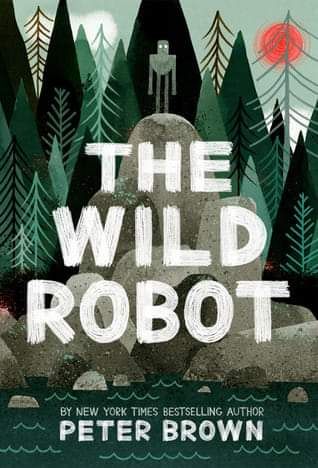
Every once in a while you come across a book that makes you sad for the fact that you didn’t have a chance to read it much, much earlier in life. Bringing together the sensibilities of E.B. White and Gary Paulson, Brown imagines a story that connects their shared interest in both philosophy and nature with a sci-fi premise- what would happen if we took a robot with the capability of learning through participation in (and in relationship to) its environment, and placed it in the wild? What would it become? How would it adapt? What can it tell us about nature? About humanity?
It reaches much broader yet- what could it tell us about life? Death? Family? Love? Friendship? Our humanity?
What’s really astute and powerful about the way Brown draws this story out in his imagination is that he builds into this a connection to the cycles and developments of the natural world, including its landscape. This is deeply visual prose. As it moves through the seasons, it also moves through the land, as well as the growth and development of the robot in concert with the land and its inhabitants. The robot is observing a world he doesn’t quite fit into and understand, while at the same time she is in some sense part of it and contributing to it. The more the robot grows and adapts and develops, the more it finds itself living in a distinct relationship with this world, subverting and transcending that wildness as it seeks to reconcile a fundamental and functioning conscious awareness with the tensions it finds in the wild. This also leads to questions regarding awareness of it’s own identity as a robot. Who am I if not a wild creature?
As a young child, I think I would have really resonated with this book in the same way I did Paulsens works and E.B. White, both formative voices in my life. Reading it now transported me back to those moments, allowing me to engage impossible questions and dare myself to broaden my imagination in the face of what were probably struggles with existential concern and deeply rooted fears that reached beyond my years as a young child. Even then I was fascinated by the notion that there seemed to be a disconnect between the world I could see and experience and the world I longed for, the one that threw me into crisis and the one I could imagine and hope for. A world of nature and of spirit, however lost I felt inbeteeen these two seemingly irreconcilable forces.
The tag line for the book is, “can a robot survive in the wilderness”. At least part of the books intent is to probe the question to us: can we survive in the wilderness that is our lives, and what might that look like from the perspective of our humanity?
No question too big or too small, no person too big or too small. Set in the right story with the right words and the right characters, such questions and observations will always hold power and relevance to the places and spaces we occupy in the present.
Film Journal 2024: The Present Directed by Christian Ditter
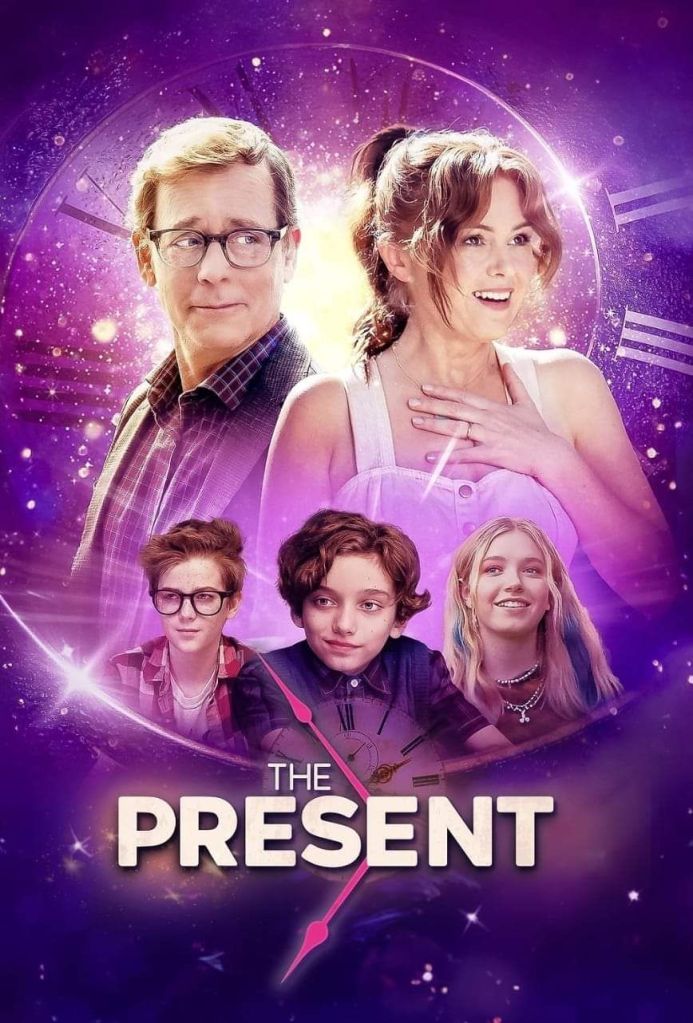
A cute, breezy, honest family film about a group of siblings who try to keep their parents from splitting up with the aid of a family heirloom that can effectively turn back time (a grandfather clock).
There was room here to slow down the pace and narrow in on its central theme, which is the failure of the family to take notice of the distance they have all created with one another in the present. The message still rings clear and true however, with the necessary lessons being something they have to find and work through together.
Nice little indie that can work the young and old of the household.
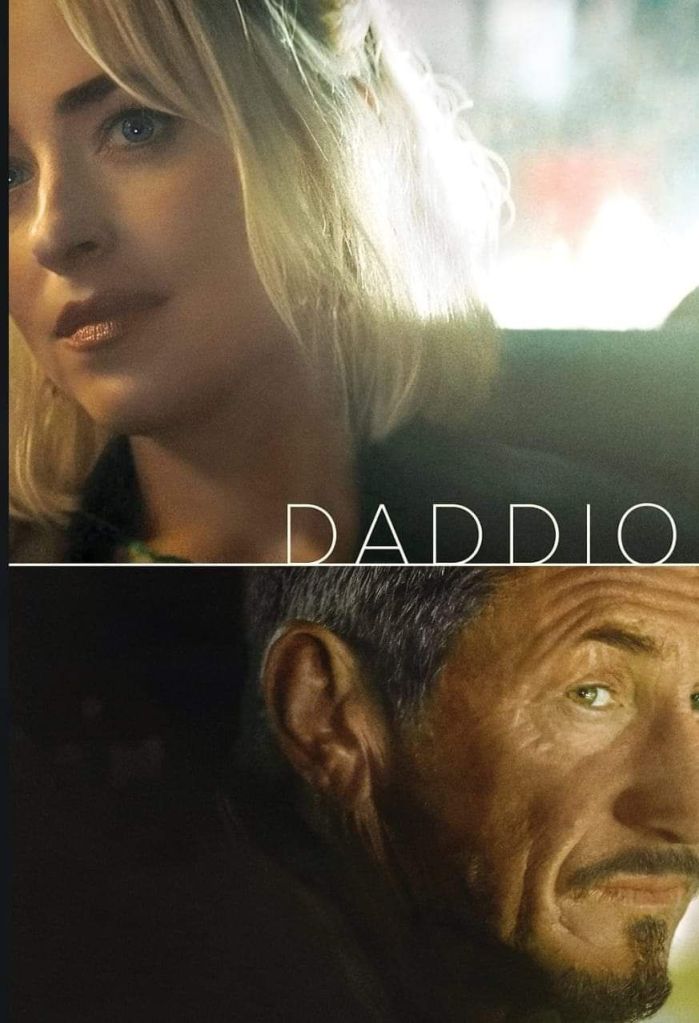
Film Journal 2024: Daddio Directed by Christy Hall
I’m a big fan of Penn, and I can see his sensibilities all over this simple, single location two person conversational drama. But the one to really point here is Johnson. While Penn is busy doing his thing, she’s in the backseat quietly wrestling away the spotlight, little by little. There is a fun little section where they are kind of sparring back and forth, each attempting to outdo the other by telling the best story. Its here where she ultimately delivers the knock out punch.
It’s a meandering film on the surface, moving through topics as one might through the natural progression of a conversation with a stranger. It begins with shooting the breeze, and then slowly but surely over the course of a cab ride the conversation begins to break down the barriers of unfamiliarity and uncertainty, even symbolically at one moment when Penn’s character leans over and opens the glass barrier dividing front and back.
It’s a film about connection, and how quickly this can build through the simple art of conversation. There is a sense here in which Hall is commenting on conversation as a lost art, poking and prodding uncomfortable and unfiltered topics and language (this gets explicit and traverses subjects such as gender roles and sex) perhaps to see where even we as an audience might break or give. The power of the film though is in how two people across a generation gap are able to find themselves in the middle, ultimately reminding us of why all that uncomfortableness is worth the investment. Even for two people who will likely never cross paths again.
The title of the film might be strange, and truth be told I might have gone with something different. But I think I get it? The term does come up in the film, and in a way ties together the central relarionships that surface. Beyond the art of conversation, the film is exploring how our past connects to our present, binding our choices to things like fear and trauma, successss and joys, and filtering that through things like upbringing, parental, sibling and romantic relationship, and social constructs/constructed expectations. It’s a film about who informs our sense of identity and how this is formed through words of judgment or affirmation, be it verbal or physical. What we lack or what we gain often informs how we are able to respond, especially when life beats us down or tells us we are someone who cannot get back up (or that we must be or do something to be allowed to get back up under the power of another).
Not everyone is going to jive with this. It’s an investment and a journey, and the conversation takes a while to unearth what needs to be said, even trudging through uncomfortable silences and words in the process. But I do think it is ultimately doing something pretty special, especially as a debut.
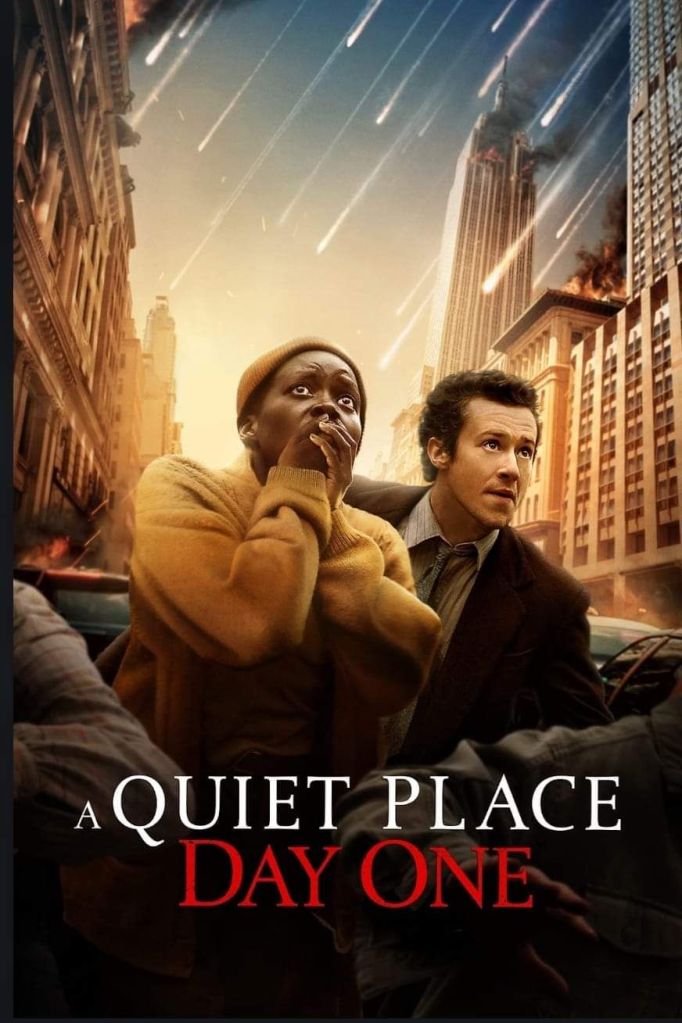
Film Journal 2024: A Quiet Place: Day One Directed by Michael Sarnoski
I have a feeling once the clutter clears from the very real tension that exists between the film I expected this to be and the film it ultimately ends up being, that it will grow even more in my appreciation for it.
The tension surfaces in the simple fact that this prequel veers decisively away from building out the mythology or offering anything new to the larger narrative, and towards crafting its own stand alone narrative. Within this tension are two essential observations. First, the stand alone narrative is really strong taken simply on it’s own terms. Second, by distancing itself from the larger mythology, be it in tone or progression, the whole “no talking” motif, arguably the driving force and defining mark of this franchise, becomes little more than a plot device , and one that is barely even explained or established within the scope of the prequels story.
A caveat to this point would be noting the films intention towards overlaying the motif of sound and noise onto a specific metaphor concerning New York life and culture. It becomes a way of saying something about the busyness of the city, ultimately allowing the specific story of the films main character, Sam, played with a distinct vulnerability by the wonderful Nyong’o, to say something about finding life in the face of death through her relarionship to the noise and sounds of the city (the film does a nice job of trying this to a sensory experience surrounding nostalgia and memory as well).
There is a sense in which I can see a definable three film arc however, in the movement from the family centric focus of the first film to the community and societal centric view of the second. If it seemed natural to move to a global perspective in the third installment, perhaps it would also feel natural to dial things back to a singular person perspective in a prequel.
As I mentioned above, even if it doesn’t function entirely cohesively as a Quiet Place film, the attention Sarnoski gives to character, story and theme nevertheless do the hard work of establishing this as a necessary and worthwhile entry in the franchise as a whole. Its worth pointing out that it’s far more dialed back and patient than some might expect, saturating the dramatic set pieces with quiet reflection and some genuinely beautiful human moments. The action that we do get are really well shot, although I might argue it could have stripped even a little bit more of that out still and been a better and tighter film for it. But that would be a very minor criticism, and I do think some audience members might end up leaning in the opposite direction and find this too sparse and meditative overall. If anything, one of the outcomes of the whole “be quiet” motif taking a back seat to a stand alone story is that the way we experience the film shifts as well. So how you feel about it will probably depend on how much give yourself over to the experience that is there, one that is anchored in a personal journey of real transformation.
I really liked this one on first watch. I think I might like it even more on rewatch. There are many moments that are still sticking with me, and as it stands, it is definitely a welcome return to a familiar world, just from a slightly different perspective.
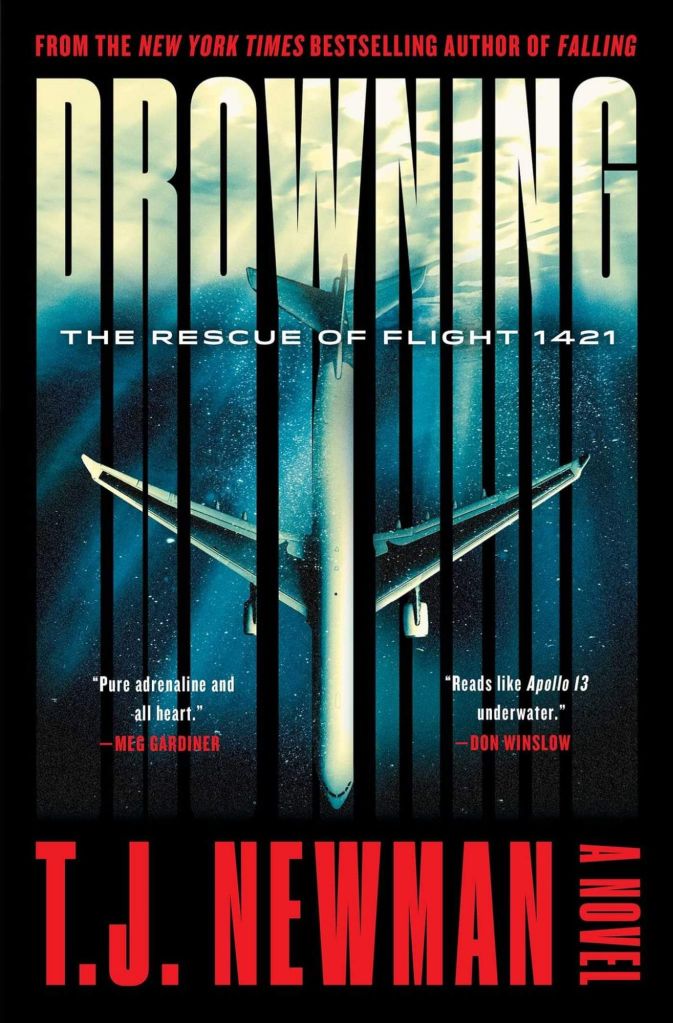
Reading Journal 2024: Drowning Author: T.J. Newman
I might end up in the minority here, and I would have my suspicions/theories on why, but while this follow up to the blockbuster Falling retains much of what made that book successful- propulsive action, a feverish pace, a strong cross section of characters, genuine tension- I found Drowning to be a slight step down in terms of quality. Still good and absolutely worth the read, but lacking a bit on the thematic front and in the substantive category.
The reason I feel like I might be in the minority here is because not everyone resonated with the cynical tone in Falling, nor its rough around the edges philosophizing, its brute subject matter, and unfiltered nature. Those were the elements however that made that book more than just a blockbuster for me personally. Drowning cleans some of those edges up and is far more straight forward and easy to digest.
To its credit it’s also clearly well researched. It trades some of the internal character dynamics of Falling for lots of technical talk and musings on the science/engineering. We get to hear, and feel, how an aircraft works, what could happen in a real life scenario similar to this one, and some of the obstacles that could arise in the case of a needed rescue under water. If you don’t want the heady stuff of Fallen, and if you enjoy reading such details, chances are you will really appreciate Drowning. It has a nice, clean, sentimental lesson about moving forward in the face of hardship too, although I definitely wish we have gotten more of the characters backstories (it centers on one family).
And just like Falling, trigger warnings if reading about a plane crash causes you anxiety.
Film Journal 2024: Hit Man Directed by Richard Linklater
If we are talking about a simple, easy, entertaining enough comedic blockbuster, Hit Man is perfectly fine. A reasonable way to spend a few hours with a likeable star, a passable script and a mix of eye rolling moments and fun banter.
The problem is, the film clearly wants to be more than this. It wants to be taken seriously as a smart, sexy thriller. On this front it falls drastically short of its mark. Beginning with this central problem- the way the film is designed makes it feel like we are watching Powell play a character who is playing characters. This a problem because for the central conciept to work we need to believe in the character transformation, not in Powells ability to have a distinctive on-screen charm.
Let’s get more specific. Problem number 1. The film uses the dual and opposing personalities of the philosophy teacher with no personality or social cache and the undercover hit man with personality and social cache to establish this tension that sits at the heart of the course the teacher is teaching- is the self simply something we are inevitably handed as a construction made up of all those determining external forces that make us who we are, or is the self something we (an operative will) can effectively change by actively embodying someone different, thus pushing back against those external forces. So here is the problem. The film presents no active process in which we can actually explore this tension. The process is simply set in play within the first 10 minutes of the film and effectively answered before we arrive at the answer (at the end of the film). We are asked to buy in to what effectively becomes two working caricatures, both of which we know are equally false. Not only does it feel like there is zero context for understanding Powell as a schmucky teacher with no personality, there is zero context for how it is he goes from that to an uber cool man of confidence and mystery.
Problem number 2: the entire set up for the film digs itself a hole no amount of colorful philosophizing can dig itself out of. If we are to take this film seriously, the teacher personality is who we don’t want to be, and the alpha male hit man is who we want to be. Why? Because it gets us the ladies and some street cred in our socially bound constructs that we call society. That’s the message we get in the first 20 minutes to half hour, and the rest of the film just dances around this basic fact before realizing it ultimately just needs to concede the point- this is how the world works, and no amount of higher education bent on intellectualising this away can change it (although it pretends to try).
Problem number 3: wheras the central concept is good (using the notion that the “hit man” construct is a made up idea we have come to accept as true because of its cultural presence as a way into the question, why is it that we are drawn to such fantasies), the films decision to use the philosophy class as a way into this question gets undercut the minute the plot turns the concept of the hit man and its undercover personalities into a singular personality. It’s at this point that all of the set up goes out the door, because the bigger questions get subsumed by the singular and superficial nature of the plot. So much so that it’s attempts to try to keep the philosophy in play end up feeling awkward and muddled the more the whole charade, bent on establishing twists and turns, goes on. The ending is meant to be this grand revelation that parallels the characters transformation, but the transformation is a ruse. It’s not real and it doesn’t exist and it’s grounds were never really established in the first place. The biggest casualty of this is then the intellectual, or philopshical argument, that is running underneath. It’s conclusions about the self, meant to liberate us from the shackles of determinism, is also clearly a ruse. It doesn’t exist. No amount of inspirational speeches or heavy romanticizing is able to take the aims of our humanity and turn it into something other than a construct. In fact, the films message only leaves us more enslaved to it. Funnily enough, there is a scene on a park bench where this is basically outlined for us. It’s one where two of the characters are debating the nature of the self. One argues that we are who we are because it is who we were determined to be by all the external forces that shape us, the other argues that research suggests we can become a different self. The question that is posed to this moment is, but what happens to the old self? Or further, which one is then real? And how is this new self not an equal construction determined by external forces. And what drives ones ability to change? Are some of us more able than others, and if so, does that not speak to determinism?
It’d be great if the film had actually embraced these questions. Instead I sweeps it under the rug under the illusion of being smarter than it looks,
Final problem: not only does the film end up towing the line with predictability by leaning into the twists as one of the defining traits of the story, it ends up undercutting all the potential outcomes one can foresee by stopping abruptly mid twist. The ultimate outcome is leaving everything but the ruse without actual resolution. There is no lingering questions, nothing to grapple with, no nuance, nothing but a singular and inevitable conclusion. It simply underscores this as a viewing experience that is about as in and out as they come.
One more added gripe- how do you write a film about a hitman where the hitman literally is talking about the hits and divulging his identity in public for everyone to hear? Lazy writing.
Now let me repeat. There is a world in which these problems aren’t anywhere near as big as they become. That’s a world where this film is satisfied with being a middle of road action-comedy. It’s perfectly fine in this lane. A good enough time but mostly forgettable. The problem is, that is so clearly not what this film aspired to be. Thus it keeps setting itself up for failure as it goes, unable to really commit to what could have made this a great film.
Reading Journal 2024: Storyworthy: Engage, Teach, Persuade, and Change Your Life through the Power of Storytelling Author: Matthew Dicks
Simple, straightforward, immensely applicable and practical. The essential premise basically goes like this- we all have stories to tell, learning how to tell the stories of your life, and learning how to tell them well, is both necessary and important for your engagement of the world and your personal growth/development, and we all have the capacity to be good storytellers no matter who you are.
In this sense this is both an argument for the power of story and the necessity of storytelling as an art that connects us to humanity throughout history and to one another. He states upfront that there is no single, schooled theory or exact science in play here when it comes to storytelling, rather he simply wants to argue that the principles of the craft that he learned, even unexpectedly, can have tried and true practical impact on becoming better storytellers. And most of this book sticks with the practical, although the philosophy, or the why of why this matters, does sneak in through the process.
He defines story as personal narratives that are telling our stories from our point of view, which is the only point of view we really have. This is true even when we are telling stories about other people- we are still the one seeing and telling this story from our point of view as part of our story. This becomes a crucial point of observation when it comes to being good storytellers. Telling stories about others that pretend they are stories that are not from our perspective equals bad storytelling.
Even in this set up we get a why observation- “we tell stories to express our hardest, best, most authentic truths.” And as such, your stories must reflect change, as the reason we express such thoughts is because something unsettled us in some area in some way. For our stories to be true they must begin with one version of yourself and end up with another, even if this is simply capturing something of how we observe the world or others or ourselves. To do otherwise us to be reduced to an “anecdote.”
The first piece of practical advice- indulge the dinner test. Is the story you are sharing something you would tell off the cuff at a dinner table with friends or family? If not it is likely not a good story and/or constructed so as to lose its power. Many of the tools the author is going to employ will be about freeing yourself to be intentional about the story you are telling while retaining that sense of being off the cuff. This is as important for you as the storyteller as it is for the ones hearing the story. What you are building is the art of everyday conversation, and learning how to be aware of that gap between teller and hearer (and why that gap exists, remains, or is bridged through the art of storytelling good and bad). In other words, it is about the natural presence and practice of relationship through conversation.
One pushback he notes is that the reason people don’t engage the art of storytelling (or good storytelling) is because they don’t believe they have stories to tell, or worthwhile ones. This would be false. We all experience story worthy moments all the time and every day. We just don’t pay attention to those moments, and thus they tend to pass us by, often overshadowed by our addiction to what we percieve as the big moments that are worth sharing. We look at someone who has experienced these big moments and think they have good stories, and that leads us not to tell ours as they pale in comparison. The author does good work breaking down this fallacy, showing how those supposed big stories worth telling aren’t actually good stories unless they are about the small, important things, and showing how any small moment can be turned into a significant and important story.
This leads to what might be the most important practice in the book- learning how to journal your everyday life. A small amount of time spent each day jotting down moments, memories, observations, can change how you see your life, and how you tell the story of your life. It can help you see where you are in the world and why it matters. But here is the catch: this is not just a temporary homework assignment, it is about establishing a way of life. It is a lifelong commitment. It requires a posture of allowing life to upend you when you become aware of such moments, of learning not to judge your life using external measures, and of forging the process as a discipline.
As the author states, stories, as you find them, will fill in the mental maps of your life and show you how big that map is. And above all, it requires you not to feel awkward or ashamed or dumb about telling “your story”. Everyone does, whether they realize it or not. This is not an appeal to the ego, rather it is about learning how to engage perspective. And we naturally desire others to tell their stories precisely because this is how we get to know a person. The fact that we tell our stories often gets conflated with examples we all know but might not be able to articulate of bad storytelling. Bad storytelling hinges on this- telling our stories in ways that keep others out of our story and unable to relate/understand/experience. It is a communicative issue, not an issue of “talking about ourselves.” Talking about ourselves, and listening to others talk about themselves, should be about bridging relational gaps, not creating them or perpetuating them.
In the midst of this the author seeks to help us make sense of what good storytelling is by outlining a singular overarching and governing truth- all great stories tell of a five second moment in a person’s life. This is true regardless of length and depth. Why? Because this is where the change is rooted, and that change is usually rooted in a point of awareness. And with this as our “bedrock”, we can then move to the second basic truth- start with the ending. Why? Because your beginning will always be the opposite of the ending. Using these three basic points can help you turn any five second moment into a story. Once we know the ending, which should be the most obvious element of that five second moment, all else is in service to this. And in truth, the rest of the book is basically about the art of “keeping” people in your story by making certain things automatic to how you talk and share (avoid “ands” and lean into “buts” for example, or avoid rhetorical statements and questions and props and hand gestures as your goal is to keep the listener in their imagination not in yours).
The practicalities get more specific from here. Understanding how to use humor, learning how not to be afraid of leaving out unnecessary details or conflating different events into a singular one or condensing time lines. This is how all memories work after all. Doing such things does not change the facts or truths of a story, they simply make it communicable and understandable based on how our brains work.
There is a whole lot that I took away from this book. In truth, I have always been compelled by the idea of telling our stories and there is lots here that cuts through some of the fears and hesitancies (and fallacies) that I have often wrestled with. One of the biggest ones is the simple observation that everyone is ultimately talking about themselves, and we want each other to do this. We require it. Poor communication is the obstacle, not seeing the world from our our perspective or sharing that perspective. Talking about our selves, or our stories, is what we all need to be doing more of.
If I had one small critique it is that the author does tend to hide some important and relevant and defining assumptions on his way to trying to speak objectively about the functional aspects of storytelling. One of the biggest things that can derail people is feeling like their story is false or untrue or not believed. What makes matters worse is having this feeling translate to an awareness of a fact about the nature of who we are (or the self), about the untrustworthiness of memory, or the nature of illusions versus truth. Think about it this way: when we exist in a relationship with someone we experience it as a feeling of love. When love gets broken down and revealed as a material process involving biochemistry and mechanisms that can be reduced and manipulated, love loses its power in conjunction with this awareness. Same with the self or the will. Storytelling requires us to invest in these things as true and meaningful, to trust that they exist as transcendent qualities, and thus we must be able to move from the functional back to that transcendent quality for it to be meaningful. We have to forget about the functional. Certainly the author wants us to know and feel and experience this even as he is breaking down the functional aspects. If it doesn’t feel or sound authentic after all then it won’t feel what we call human, however undefinable that notion is.
Along the way he sneaks in some untold assumptions though regarding his worldview that seem to sit counter to the things he is arguing for regarding meaning and life and personhood. I’m less bothered by the worldview as I am by the fact that it seemed to be snuck in through the backdoor, even made to appear as something different than he actually believes. In this context that has a way of making the many stories he tells in this book as practical examples feel false and manipulative by nature of them hiding inportant convictions that might change my conception of what he is saying or arguing for. This is me though. Being able to see and hold on to and accept the why is important to me. Indeed, it is crucial to my ability to live. And when I get this invested in a book and a concept and a revelation (which I was) it can have a particular impact when i end up feeling like the underlying assumptions mislead what I was hearing and feeling and experiencing. Especially when I know if life is a game intended to be manipulated on a functional level that it leads me to many other points of contention and crisis and conclusions.
With that aside though, and being able to compartmentalize that appropriately in hindsight, there is much here that I would call potentially life changing in practice and even in theory.



 The Stories of my Life