Film Journal 2024: I Am: Celine Dion Directed by Irene Taylor
Did not expect this. Really well made. Touching, vulnerable, revealing. And that’s coming from someone who’s only real knowledge of Dion is her most popular songs.
It is from the Director of Leave No Trace, so I guess the quality shouldn’t be that surprising.
Film Journal 2024: Thelma Directed by Josh Margolin
The premise is inspired, taking a classic espionage/spy motif and laying it over top of a simple drama about a 90 plus year old woman (played with undeniable and equally inspired charm and charisma by June Squibb) who becomes the victim of a scam and sets out to get her money back. Part of the inspired nature of this premise is the fact that it is advertised as an action packed movie, but ultimately plays to the speed of its primary target audience. I appreciated its willingness to commit to this level, right down to the quirky, unconventional dialogue and characterization. Thelma’s kids and her grandson are genuinely odd presences, filled with disjointed and often non-sensicle dialogue, and it feels like we are seeing them through Thelmas eyes, for whom the whole world has become strange and unfamiliar.
The film is ultimately about the idea of aging and what that is for both the aged person and the people in their lives who care for them. Here it proves to have a lot of heart as well. If it takes some risks tonally, it absolutely lands the emotional connection. A great smaller gem that I hope gets some love and support
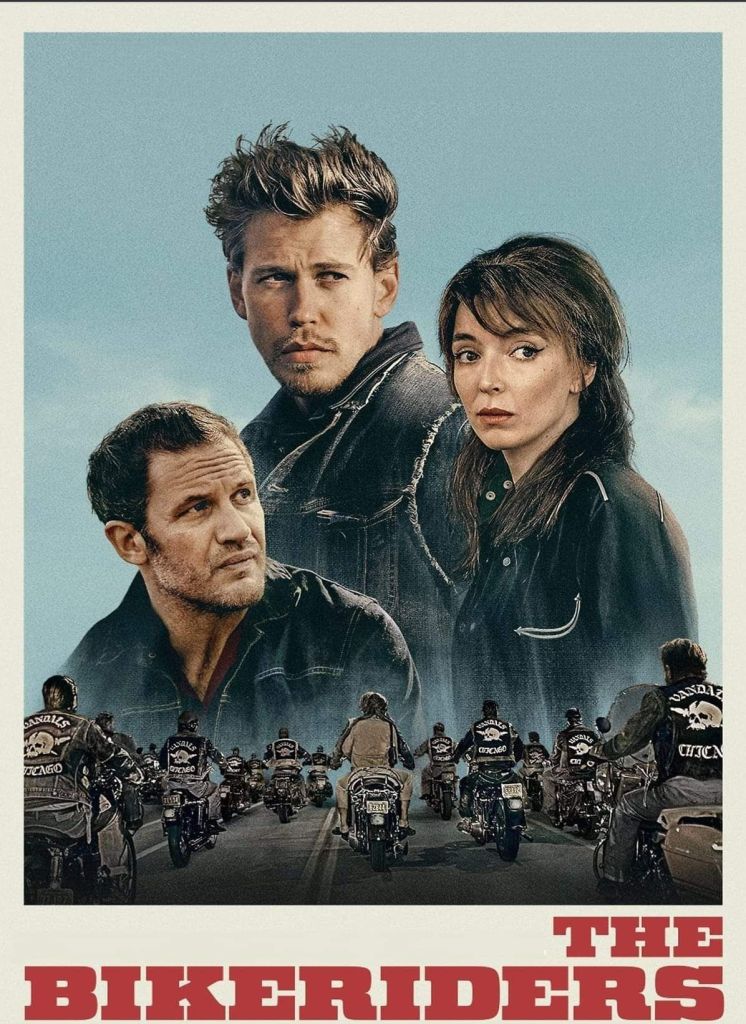
Film Journal 2024: The Bikeriders Directed by Jeff Nichols
I haven’t read the book, but I noticed a few think pieces detailing the films decision to make the female voice the narrator of the film as being one of the central differences between the adaptation and the male dominated story of the source material. Although I can’t rightly make the contrast, I can say that Comer’s complex persona was without a doubt a highlight and strength of the story.
The Bikeriders, a fictional take on a real life biker gang that became the seedbed for familiar entities like Hells Angels, actually caught me off guard with its studied and patient character study. More than a character study in fact, it’s also an examination of a culture, or a cultural and societal formation. That is not what I expected from the trailers, which sold it as a tonal exercise and aesthetically driven cinematic experience. I really resonated with what I ultimately got from this film, which uses Comer’s character, a largely outsider persona who embodies the different tensions inherent within this group of misfits looking for somewhere to belong beyond the constraints of the system that has determined their positions in the world, as a window into their emotional, social and personal psyches. Where there exists emotional repression, Comers embattled character carries the emotion. Where there exists irrationality and resistance to reason, she becomes the voice of reason on their behalf. Where there exists family discord, she models a familial spirit and commitment. All while being lost and embattled herself.
What makes this narrative choice so profound is that it never clouds the bikers from our view, rather it brings them into view with far more clarity and precision. The natural arc of the film occupies the different flavors and sensibilities of the gangs gradual development, allowing the third act to feel like a very different kind of film than the first section or the second. We move from opportunistic to optimism to defeat and complex resolution, anchoring the story in this movement from construction to disillusion and deconstruction, all the while propping up this societal structure as a microcosm of the universal human experience.
It also has one of the more arresting lines for me thematically of 2024, where Johnny, trying to capture the emotional stakes of everything that has been going on, reflects that “you cam try and give everything you have to something and it’s still going to do what it’s going to do.” The fact that this applies to one’s life is what gives this another layer, and it has been sticking with me ever since as I keep thinking about this film.
I never thought a film about bikers could play so broadly, but it’s an impressive feat that really speaks to the quality of its filmmaking and its performances.
Was listening to a talk by Father Andrew Stephen Damick this morning. He suggested, and the following is my own summation, that there are three important things to remember when it comes to navigating differences in beliefs and worldview: 1. Recognizing that its possible that someone actually understands what you are saying and your point of view and still doesn’t agree.
One familiar motif when it comes to discussing beliefs/convictions/worldview is that if someone disagrees it means they don’t understand. This can often be the case. However, things spiral out of control when we assume that the only way a person can understand is if they agree, and this happens all the time, often with both parties equally guilty of doing the same thing
2. Everyone’s beliefs and convictions, or the arguments they are making (which can be ones they ultimately disagree with), necessarily function within the specific boundaries of their given assumptions.
So often what happens in discussions is people believe they are operating without bias and are the only truly objective one in the conversation. Similarly, they treat their argument as though it is able to function apart from their given assumptions in a truly empirical and reasoned fashion. The end result is often propping up a fallacy that then uses their conclusions as an argument for their given assumptions. Not only that, but arguments are used to address a point of view that is operating according to a very different set of assumptions with a very different set of questions, leading to a never ending set of logical fallacies that confuse the necessary limitations of a given argument.
3. We all have a worldview, and we all have beliefs/convictions/biases, and empiricism and reason and logic do not operate apart from these things. They can only function well in relationship to these things. They are in fact subservient to them, and necessarily so.
Empiricism, reason, logic, they do not function in a bubble. These are benign things apart from interpretation and an interpreter. Functional realities cannot and do not speak on their own. One of the great tragedies of modernism is that it convinced us that they do.
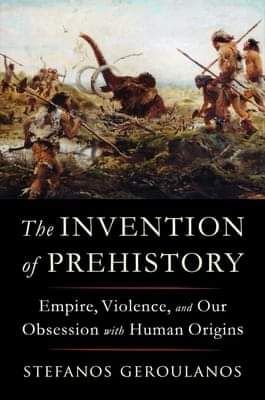
The Invention of Prehistory: Empire, Violence, and Our Obsession with Human Origins Author: Stefanos Geroulanos
There were a few times when I found my mind wandering back to David Graeber’s The Dawn of Everything: A New History of Humanity. A better book that deals with some of the same ideas, albeit Geroulanos narrows in far more explicitly on the question of our demonstrative obsession with the question of human origins.
I really liked the idea being explored, less fond of its approach. Given the way the chapters are structured, moving in a linear fashion through the different points of history as it tracks the development of our obsession with prehistory and human origins, the later chapters lose some of their force and their power once the pattern of this obsession has been established. I already understood how this established itself in the Holocaust, for example, long before we get there.
Thus I found the earlier chapters the most interesting and the most compelling with one small caveat. At one point the author suggests that our obsession with human origins is actually fundamentally about the present and wrapped up in the language of our present. So there is this sense in which the closer the book gets to where we live today, the more it makes sense of its general conceit. You can feel some of what the author is arguing sort of proofing itself in the process of understanding how even my interest in the earlier chapters and their emphasis on the earlier history is interpreted by and shaped by the world I am living in now. As the author says, prehistory ultimately says nothing in and of itself. It cannot speak on it’s own. We arrange it, and them (Neanderthals for example) in our present to say what we need them to say and in “whatever postion we need them to take.”
The first chapter, titled The Human Epic, sets the stage by noting that prehistory is ultimately about our need to tell a story. “The story of human origins tells us who we are, how we came to dominate this planet and each other, how we invented religion and then discarded it in favor of the gods of progress and technology. It supposedly reveals a million little things about human life, like why we desire and whom, how our emotions work, or how we love and care for others.”
And yet, all “these grandiose claims prompt far more questions than they answer.” No matter how many “impressive names” we give to this story, which is ultimately a “story of us”, the only real truth that it can speak is that it is a story about “the triumph of modern knowledge”, or the fundamental narrative of progress. As the author puts it, “the story of human origins offers as good an answer as any we have to the fundamental question: what, after all, is the human.” And why do we tell this story? Because the narrative of progress demands it in order to be upheld, and without the narrative of progress we have no way of making sense of humanity’s arrival on the scene (let alone anything that might supersede it). Thus it is not about the facts of our origin, which can never really be known, it is about justifying our actions in the present. “The deep past so exceeds our grasp… (and) matters so much to who we are” at the same time.
Here then we come to the authors most direct claim- “thinking about human origins has been one of the most generative intellectual endeavors in modern history. It has also been one of the most ruinous.” What does he mean by this? He argues that at it’s most readily observable crisis point we lack a good defintion of humanity, but this wasn’t always the case. Modernitity and its appeal to the story of science and progress, born as it was from the soil of the 18th century and its hyper focus on our story of origins, has simply clouded it from our view.
So what then is the ruinous in this authors view, and what is the good defintion of humanity that he wants to recover? He’s a lot clearer on the former than he is the latter. At the outset he says that “this is a book about science and speculation, about the space where each loses itself in the other, the great gray zone where rigorous research meets with righteous belief.” That grey zone becomes the boiling pot where “human impulses” can take root, creating the ruinous. That impulse, for the author, is born from an inherent need to “convince ourselves” that we are something in comparison to the distant other (or in alignment with a more pure distant other). For the author, the better story is the present, a present that is telling it’s own story about “compound beings, webs of meaning, and cyborgs.” A story in which what we do now is what defines us, not some unknown past and non-existent and undefinable future with no real and actual aim. Here he puts forth an argument for a strident capital H humanism not built on the past but a “skepticism” regarding our answers and our doubts that can operate in service of “a better theory for tomorrow.”
That last phrasing is important to me, as it becomes the grounds upon which I note an inconsistency in his reasoning. The author never takes the time to actually establish and justify a better story for humanity. He assumes a bunch of the ruinous outcomes to be bad, but he never actually does the work to establish why. If progress is built on the necesssdy ruins of the past, what argument are you going to give to the people of the present, the ones who are the apparent products of this ruinous past to say it is wrong? How do you tackle the problem that the modern West creates, a formation that dominates the bulk of this book, when you also want to uphold it as a portrait of a better world than what it left behind in the dirt? The author makes seemingly contrary claims all along the way, trying to build a case that the world is not better on one hand, and saying that it is on the other. And, this is simply my opinion, but I think this is the case because he doesn’t commit enough to his own premise for it to actually say what it needs to say. As you can catch in that last line, he is still committed to a narrative of progress and Humanism. When he says,”There is no grander story than humanity’s emergence out of nature,” it is both tongue in cheek but also honest to his own viewpoint. However he reaches for meaning, it begins and ends with humanity. Stripping us of our need to locate that in our deep history of human origins doesn’t really change the problem.
What is however evident though, and I think this where I found the book most helpful, is his ability to expose human penchants, in a particular worldview, for inventions and illusions to give us meaning, progresses penchant for selective ruination as the necessary driving force of a better future, and the permeating of an invented story in even what we might deem the best of our progress (science, feminism, LBTGQ+ rights, democracy). If nothing else, coming to terms with this reality and recognizing the problematic foundations we are building on today, in many ways which stand in stark and often desperate contradiction to nature itself, if not outright ignorance of the real story nature is telling, should humble us. Especially when it comes to revealing how it is that we come to speak in terms of good and bad. I think the author here, in stripping away the western myths (using his definition of myth), is right on a number of fronts. I just don’t think he is able to find a better story, nor convincingly argue why the one the world seemingly naturally follows is not the best one. And this is just me, but I think one of the reasons this is the case is because he assumes religion to be an invention of the past that is necessarily left in the ruins using the very same reasoning and assumptions he is trying to deconstruct. His basic conclusion is, we all tell our own stories built from our own present, but the problem with this is that when someone is confronted by the basic idea that there is no true aim, or when that present legitimately sucks for a person or persons, or when the lessons of the past require those ruins by their nature, ect ect you need a better story. So where do you find it?
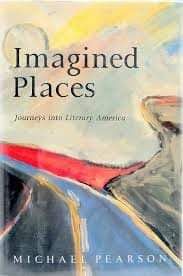
Reading Journal 2024: Imagined Places: Journeys Into Literary America Author: Michael Pearson
Hardly an exhaustive list, but as a literary roadtrip, anchored by a boots on the ground itinerary, it’s a highly entertaining jaunt through the pages of a handful of America’s most well known voices.
It is essentially tying person to place, looking at their stories through the lens of the spaces that shaped them and inspired them. In rhe same way it allows us to experience these places too by way of armchair travel- Frost’s Vermont, Hemingway’s Florida, O’Connor’s Georgia, Faulkner’s Mississippi, Twain’s Missouri, and Steinbeck’s California.
Here is a brief post that I made about one portion/idea that really stood out for me and inspired me personally:
In his book titled Imagined Places: Journey’s into Literary America, Micheal Pearson talks about how people have two basic conceptions of place- the place in which we can live, and the place in which our imaginations are drawn precisely because of the ways in which the place we imagine contrasts with the place in which we live. For Micheal Pearson we need both:
“Everybody has their ideal landscape and an antithetical landscape as well, a place that the person is drawn toward. It’s a place, he feels, that fascinates and startles with the difference from our own home ground. There’s a positive and a negative pole.”
For me, it is prairie and ocean/river. Living technically 10 blocks from the Red River is a microcosm of living 3,000 kilometers from the ocean. The 70 km drive from Winnipeg to Lake Winnipeg a slightly bigger microcosm. All manifest this basic tension in their own way. One roots us, one draws us, and inbetween these places we find perspective
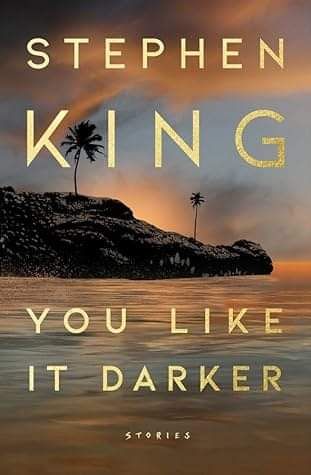
Reading Journal 2024: You Like It Darker Author: Stephen King
A new collection of short stories from the master of horror. Always a worthwhile investment. The collection is made up of a mix of new and previously published works, although it was all new to me, anchored by a multi-chapter mini novel (also subsequently the best of the bunch) in the middle.
What struck me about this collection is the way it weaved through the different stylings of his illustrious career, moving fluidly between classic feeling and sounding stories (Fifth Steps) to fresh visions (Red Screen), familiar takes (The Dreamers) and even a follow up to Cujo (Rattlesnakes). There is scenario driven horror and psychological horror, but perhaps most striking is how subtly he weaves some understated supernatural elements into the mix. It might be a reach, but I honestly felt like it was designed to function as a cohesive whole, and even as a reflective piece that is wrestling with some of the bigger questions of life and death and the unknown mysteries of both. My second favorite, The Answer Man becomes a poetic climax to the overall journey in this regard.
Overall very impressed with this one. It’s an easy read too, and definitely one that will be good to have around to return to from time to time.
Reading Journal 2024: Winesburg, Ohio Author: Sherwood Anderson
Winesburg, Ohio could be described as; chronically melancholic, cynical, depressing. Those descriptives might be true, or at least partly true, but I think it would be a mistake to suggest that this is all the book is. As a collection of short stories that are bound together by the arc of a singular, reoccurring character (George Willard, a young journalist who works and writes for the local newspaper), Winesburg is a deeply immersive and honest portrait of the life of different people living in a small, unassuming, isolated, mundane, non-descript town.
The book is marked on the front end by a chapter titled Book of the Grotesque’, and ends with what I might suggest is one of the best final lines of a book I have ever encountered, if for the pure simplicity of its presence, bringing Willard’s particular part of the storyline to a fitting and poetic conclusion.
Speaking of the prose, while the nature of a short story collection is that some will inevitably be stronger and more interesting than others, which is true in this case, rarely did a page go by where I wasn’t highlighting memorable and quotable phrases, lines and sentences. It is described in the introduction as a “fetish for simplicity”, but that simplicity is profound, “seeking always to penetrate to thoughts uttermost end.”
Which makes his first chapter that much more fitting when he surmises, “in the beginning when the world was young there were a great many thoughts but no such thing as a truth. Man made the truths himself and each truth was a composite of a great many vague thoughts. All about in the world were the truths and they were all beautiful.”
Beautiful even where it finds things like depression, loneliness, boredom, death, addiction, and unrealized longings. This is a book that doesn’t feel the need to mask over the truth of these realities, instead embracing them as part of what binds us together.
I’ve been accused of being melancholic, depressed, cynical myself, so I’m not surprised I found myself connecting with this, and even more so appreciating it. As one character proclaims in the chapter called Mother, “it seemed like a rehearsal of her own life, terrible in its vividness.” Or as it described of Willard, “He is groping about trying to find himself. He is not a dull clod, all words and smartness. Within him there is a secret something that is striving to grow.”
Don’t be surprised if this becomes your own response as well should you give this book a try. I couldn’t have put it better than what I found in this sentiment: “I don’t know what I shall do. I just want to go away and look at people and think.”
I’ll leave it with this exceprt from the forward, “It is essentially a literature of revolt against the great illusion of American civilization, the illusion of optimism, with all its childish evasion of harsh facts, its puerile cheerfulness, whose inevitable culmination is the school of “glad” books, which have reduced American literature to the lowest terms of sentimentality.”
Film Journal 2024: Inside Out 2 Directed by Kelsey Mann
I’m glad I did a recent rewatch of the first film, and that I watched both films in essential succession this morning. I hadn’t actually revisited the first film since seeing it once in theaters back when it released, so I knew that a rewatch might bring some interesting and maybe suprising results. More importantly, it gave me a better gauge for which to make sense of my experience with both films as a seperate but also singular story.
Just to clear the air right up front, if you are stuck on begrudging this as a sequel, seeing it as emblematic of the larger problem plaguing both studios and theaters as they continue to doible down on familiar IP, that will likely define your experience of Inside Out 2. The simple fact that it is operating without the novelty of experiencing its inner world brought to life for the first time I think could feel like justification for resisting its existence.
In truth, I do think this fact forms what might be my biggest critique of the film, which is, by nature of contextualizing both stories into a narrow framework based on age and formation the sequel naturally condenses the reach of its message, both in its present context (puberty) and retrospectively (childhood). Of the two films the sequel suffers more, as I think the original has an already established legacy that applies its message and themes more universally as a concept. Similarly, the first film has the advantage of doing the leg work, which means it does the heavy lifting of parsing out the complexities of its vision and concept in ways the sequel doesn’t need to, leaving a fair portion of the sequel feeling a bit episodic in nature and even a little too on the nose.
It should also be noted though that the first film anticipates the sequel. It sets the stage for it, so to speak, and upon rewatch I think really does operate in faith of its eventual existence. This should help dispel some of those feelings about it being either unnecessary or simply a cash grab. And true to form, if much of the film feels episodic, the recognizable and familiar Pixar “magic” shows up for the final act.
Thematically speaking the film continues where it left off, bringing in the new emotions that come along with puberty and, as the film posits it, the subsequent formation of the self. What’s interesting about the way the film navigates this is, the whole puberty aspect does tend to get left in the shadows the further the film gets into exploring its conception of the self. This is at least in part because the story is so contained and narrowed to its particular situation. I feel like it wanted the simplicity of its scenario driven plot (young girl going through puberty has a chance to discover her dream to be a hockey player at a time of personal transition) to afford it the freedom to then dig deeper into the bigger ideas it is exploring about the self, but there is a bit of a push and pull within the story between these two parallel lines that does end up feeling disjointed. To be fair, the plot of the first film is also far simpler than I remembered, but it had the freedom to commit more wholly and completely to the conceptualized inner workings of the emotional world precisely because it didn’t need to worry as much about the functional self. The natural progression of the sequel is towards bringing in that added dynamic of identity.
I remember when the first film came out that there was a plethora of think pieces dissecting the science of its premise, some supporting it and some criticizing it for pushing the science too far into the realm of ideology and transcendence. I also heard critiques about how it depicted emotions as seperate entities functioning in isolation. The sequel sort of addresses this in a round about way. It assumes the same fundamental end- happiness, or as some define it, happiness as the grounds of human flourishing, but it adds in a new emotion (anxiety) which has the power to bind all the others together. If happiness is the end, anxiety is the means that ensures it is attained. In the first film the story is about embracing sadness as a key to joy rather than its antithesis. In the sequel it is about embracing the whole as the true expression of the self.
Here is where things get really interesting however. The film roots the self in the notion of core beliefs. In theory, it is bringing together beliefs about the world and beliefs about the self, rooting in the natural outworking of puberty as the point in which we begin to build and formulate our identities in the face of these two interrelated realities. Not against our formative years, but in light of it. Beliefs here are seen to represent agency, toying with the question of whether our biology makes us who we are or if we (an operative self) determine our biological function. There is plenty there to parse out as far as reading between the lines in one direction or another, but suffice to say what it is teasing out along the way is the concept of a functional will.
I feel like the contained nature of the film does get tripped up here a bit, because it fails to leave room for wrestling with how past and future connect to the present. It seems to give in to the danger of allowing a point in time when the self generally sees itself as both conceptually autonomous and as the center of the world (puberty) to define the reality of the self in a more empirical and universal way. Its not difficult to look at the way the film conceptualizes beliefs and see that these beliefs are essentially constructs based on perceptual and conceptualized realities. This leaves the self as entity on shaky ground. And not only that, but these are constructs that are determined by external forces.
This left me thinking; why and how should we trust these core beliefs, especially when they appear to be operating in the form of concrete perceptions (I am a good person, for example). The film tries to weave into this a sentiment that sees us as the sum of both our good and bad parts, successes and failures, but this only works on a philopshical level if we make the necessary assumptions about the self that can and will allow us to function freely in the realm of perceptions.
That’s where the conception finds some challenges, most notably when it comes to bringing in a future perspective. If anxiety is about control of the future (or self control), then the future is about contending with life’s impact on our conception of the self. This seemed to me to be a missing piece of the puzzle for anyone trying to apply its concepts beyond puberty. The real question is, can the films construction of the self make sense of reality looking backwards, a notion that gets teased through a reoccurring gag throughout the film. Sure, it can speak to the perception that puberty affords it, but what happens when it is forced to contend for a different reality than our core beliefs assumed? What happens when reality threatens the legitimacy and trustworthiness of our perceptions?
I suppose one of the ways this film addresses this problem is by attempting to say that joy is not constrained to, confined to, or defined by our circumstance. It exists apart from it as a governing force over our lives, holding within it both our meaning and our purpose. There is, i think, fair and good truth here. But what is clear is that puberty perceives life according to its potential. It can feel what it does in the present because it believes there is a certain kind of future to be obtained in service of the self. It functions according to the belief that life has an aim, that progress has a shape, and that human flourishing is bound up in our happiness, or our experience of happiness.
Further, this is tied to our fundamental beliefs, structures that are built through our experiencing of the world. One of the lingering images in Inside Out 2 is of shattered beliefs being reconstructed in a way that pushes further and further out towards something transcendent. At the same time though its philosophy bleeds this transcendence back into its essential construct- the self. Even those things that see beyond ourselves are demonstrated to be part of our personhood, our identity. So what would happen if a third film was made looking back at this person from the perspective of times passage? Would a meaningful life and true identity rest in proving this conception of personhood to be true? In experiences justifying our commitment to joy/happiness as worthwhile? Would our understanding of reality overturn our core beliefs once again, and if so in which direction and to what end? These are of course the sorts of existential questions that recast those fundamental constructs which hold together our sense of meaning and purpose and existence in a different light. I do wonder how the missing component of this story might or could work itself into the story’s we tell to this films target generation, a generation that finds its meaning in a given cultural expectation and norm.
If nothing else, this is the sort of conversation the film opens the door to, and that’s a testament to its strength. Its willingness to go big with its ideas is an admirable thing. And all the storytelling elements that made the first one a beloved classic- humor, character, emotion- are here, just in a slightly more streamlined and compartmentalized fashion. And as I mentioned, the third act finds a way to break the door wide open in this regard, so even if the bulk of this film isn’t operating quite on the same level as its predecessor, it’s defintiely worth the investment as a whole.
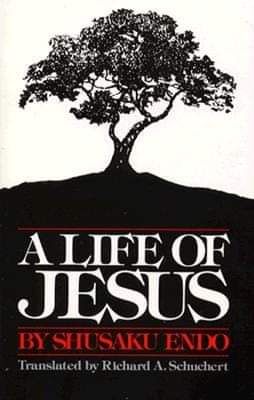
Reading Journal 2024: A Life of Jesus Author: Shusaku Endo
It is equally as important to assess the target audience of Endo’s biography of Jesus as it is to assess the content, as each becomes a window into the other. Perhaps more important is the ability of this relarionship to allow the book to reach beyond the target audience to a wider world, something that Endo’s body of work has arguably already done.
Who is the target audience? I would say he is speaking to Japenese Christians, helping them to find the language of the Gospel in a way that makes sense to their culture and context. And to Japanese culture, simitaneoulsly using the book to bring the Gospel in a way that will make sense to that cultural context. Endo is very intentional about the lens through which he approaches the text and about locating the appropriate questions and concerns that might arise for his readers.
So what about the content? Endo sets the stage for his approach upfront in the initial chapters, purging some of the baggage of Western obsessions with truth as a kind of empirical fact and allowing the truth of the text to speak into the Japanese focus on narrative and myth. For Endo, it would only be in the West that myth comes to define a distinction between truth and fiction, and thus he fully embraces the broad spectrum of studies (biblical, theological, narrative, historical, textual) that is able to free him to navigate both what the initial readers/writers would have meant/thought in their time, and how that can be reconextualized into Japanese culture for the sake of the Japanese peoples.
One of the outcomes here might be isolating potential readers outside of this cultural context of course. There is a sense in which his commitment to both audience and form/content becomes indebted to his own convictions and his own faith, and certainly how he reasoned(s) towards it in his own life. It is as much a story about what compelled him towards belief as it is an exercise meant to fill what he sees as a gap between a highly westernized Gospel and text and a culture that needs to hear it and encounter it in their own language. Language reaching much more broadly than mere words. Here he leans on those personal connections and preferences, sometimes at the expense of detailing the larger scholarship or even doing the leg work to explain why and how he arrived where he does on given interpretative choices. To be clear, this is an intelligent man who brings a compelling perspective and voice to what would be for many in the West familiar stories. Yet there are points, as there would be for most of us, where he seems to miss some important scholarship along the way. This is partly, I imagine, because he is distinctly interested in that which might apply to his target audience.
What he does do though is establish a strong foundation, and this comes with the expectation that what he has to say will challenge both his audience and those outside of that reach in different ways. For those coming in from the outside, it is an opportunity to have our own bias’ and tendencies deconstructed and equally to get to know how a Japanese person might read and understand the text from their vantage point, and for those within the scope of his audience the Gospel, by its nature, challenges their cultural norms with its counter cultural concern.
One could then call this a deeply layered work. It reads however with a given simplicity at the same time, bringing with it a meditative quality meant to invoke the power of spiritual practice and the sacred text.