
“If we imagine that ‘law’ simply means a moral code- as many readers of Romans have done- we will miss much of the point.”
– N.T. Wright (Into the Heart of Romans)
21 So I find this law at work: Although I want to do good, evil is right there with me. 22 For in my inner being I delight in God’s law; 23 but I see another law at work in me, waging war against the law of my mind and making me a prisoner of the law of sin at work within me.
– Romans 7:21-23
In locating the heart of Romans in chapter 8, Wright notes the “therefore”, or the ‘so then’, that opens the chapter as the conclusion of the argument Paul has been making in chapters 1-7. The emphasis of chapter 7 is on the dual nature of the Law, which, as Wright notes, was not a set of moral codes but the first five books of the Torah, the formative story of Gods acting in the world and Gods promise to make the world right.
The question at hand is, how can the Law do two seemingly opposite things:
10 I found that the very commandment that was intended to bring life actually brought death
13 Did that which is good, then, become death to me?
Paul responds definitively;
7 What shall we say, then? Is the law sinful? Certainly not!
13 Did that which is good, then, become death to me? By no means!
So how do we then reconcile the end of chapter 7 with the beginning of chapter 8:
7:25b
I myself in my mind am a slave to God’s law, but in my sinful nature a slave to the law of sin.
8:1
Therefore, there is now no condemnation for those who are in Christ Jesus
The answer, seemingly is found in two pointed realities concerning cheaters 7 and 8. First, Sin is depicted as something that has agency. It is able to “seize the opportunity”. It “springs to life”. It “uses what is good”. “It is no longer I myself who do it, but it is sin living in me.”
And this agency is depicted as “another law at work in me, waging war against the law of my mind and making me a prisoner of the law of sin at work within me.” Earlier Paul locates this “in the realm of the flesh” where the “passions” are aroused. So its not only a matter of Sin as agency, it is a matter of a fleshly reality, which for the ancients was marked by Death, or finiteness which breeds suffering.
Second, Paul says in chapter 7:6 that;
6 But now, by dying to what once bound us, we have been released from the law so that we serve in the new way of the Spirit
Later in 7:25a, Paul offers this precursor to the direness of 25:b;
25 Thanks be to God, who delivers me through Jesus Christ our Lord!
Therefore, it is Jesus who releases is from the Law, not ourselves, nor any good moral works.
Now notice how how 8:1 repeats the claim of 7:25a, adding the specifics in relationship to the broader argument in chapter 7 regarding the Law;
Therefore, there is now no condemnation for those who are in Christ Jesus, 2 because through Christ Jesus the law of the Spirit who gives life has set you free from the law of sin and death.
God fulfills the “aims” of the Law, the thing it was powerless to do in the realm of the flesh where the agency of Sin holds sway, by “sending his own Son in the likeness of sinful flesh to be a sin offering” (vs 3). And in so doing God condemns “sin in the flesh”.
What is the aim of the Law, or as Paul puts it, “the righteous requirement of the law”? It isn’t to follow a moral code perfectly. It isn’t to be sinless in those terms. It isn’t for us, or Jesus on our behalf, to prove faultless in terms of perfect obedience to a set of moral commandments. The righteous requirement was found in the aim of the Law, which was the story of the first five books of the Torah that shaped Paul’s Jewishness, and that aim was the three fold expectation of the defeat of Sin and Death, resurrection, and the establishment of the eternal king on his throne.
In other words, a new reality brought about in our midst “8 Those who are in the realm of the flesh cannot please God. 9 You, however, are not in the realm of the flesh but are in the realm of the Spirit.”
Now read these words in 8:18-21
18 I consider that our present sufferings are not worth comparing with the glory that will be revealed in us. 19 For the creation waits in eager expectation for the children of God to be revealed. 20 For the creation was subjected to frustration, not by its own choice, but by the will of the one who subjected it, in hope that the creation itself will be liberated from its bondage to decay and brought into the freedom and glory of the children of God.
What is the subjection? If we have followed Paul’s argument, we can see that the subjection was the giving of the good Law which promises life, which became the means by which this agency called Sin acts and enslaves according to the flesh and fleshly reality. What is the hope? Liberation of creation from this fleshly reality. 24 For in this hope we were saved. But hope that is seen is no hope at all. Who hopes for what they already have? 25 But if we hope for what we do not yet have, we wait for it patiently.
Attentive readers can then note the connection between this present fleshly reality and the hope of this liberated reality in Jesus, with the connective piece being our own obligation as a people already occupying space in the spirit, or the spiritual reality. 12 Therefore, brothers and sisters, we have an obligation—but it is not to the flesh, to live according to it. 13 For if you live according to the flesh, you will die; but if by the Spirit you put to death the misdeeds of the body, you will live.
Why is this an obligation? Because through life in the Spirit we bear witness to the fleshly reality of our hope in the person and work of Jesus. And not just to one another, but to creation itself. Through our living the new liberated reality is experienced even as we experience life in the flesh as slavery to Sin and Death
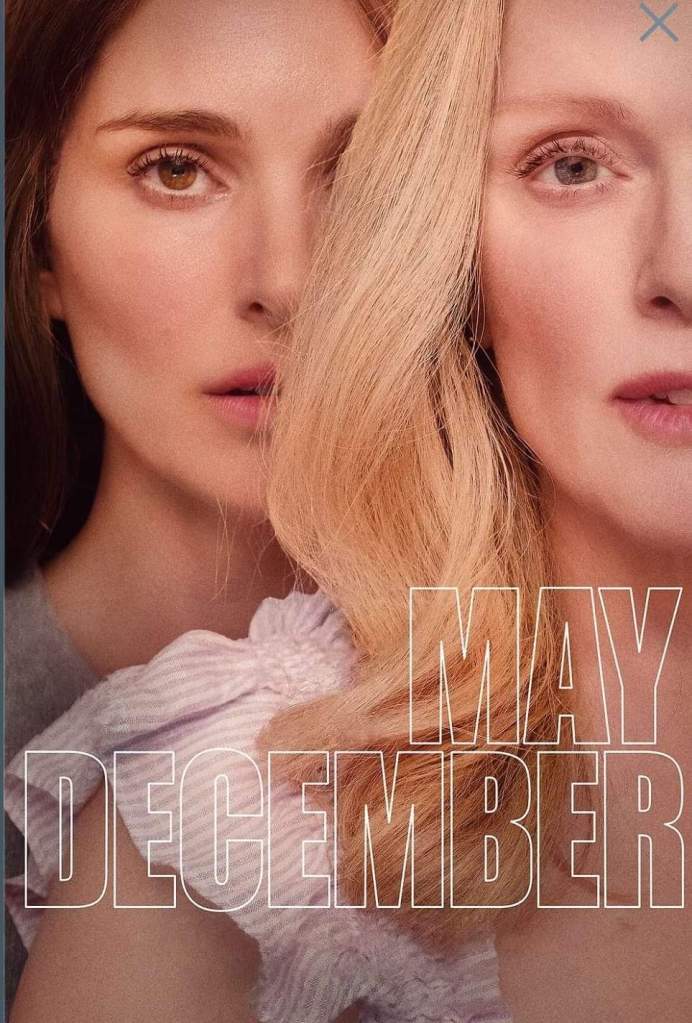
Film Journal 2023: May December
Film Journal 2023: May December
Directed by Todd Haynes
I’m a big fan of Todd Haynes. Far From Heaven is a legitimate masterpiece, Carol isn’t far behind, and Wonderstruck is a legitimate all timer for me when it comes to my personal favorites list.
May December doesn’t feel out of place in terms of his filmography, but it does feel slightly less focused and confident as a project. Perhaps it’s trying to find a way to push the boundaries of some of his recognizable characteristics and sensibilities, to reimagine his penchant for drawing out morally compromised characters in a way that seeks the nuanced and morally ambiguous middle ground. But it felt like it needed something to kind of draw it all in and make it sensible and coherent, something that allows us as viewers to connect with the characters. Perhaps a little bit more work on the script even.
There are points of brilliance along the way. Playing around with the actor playing an actor bit provides some interesting artistic choices when it comes to utilizing Portmans character. There are some haunting and unsettling portraits as the two figures gradually blur together, throwing into question whether this process is bringing her closer to knowing her subject or further away. That’s really where the film is most invested, using the interplay between the actor studying her subject to pull out the nuances of the subject at hand. And Haynes chooses some dark territory to tread, littering it with some uncomfortable humor as a way of making the tone a bit undefinable.
One of the issues is that it all ends up one big nod to the artistic vision itself, leaving any worthwhile or recognizable arc cloaked from our view. Perhaps that’s part of the intent, creating a film that is more about the idea and the experience than the story. On some level it does achieve this. But towards that end it feels a bit too clever for its own good, and certainly the supporting cast becomes a bit expendable because of this.
A bit disappointed with this one overall, even if it has its moments.
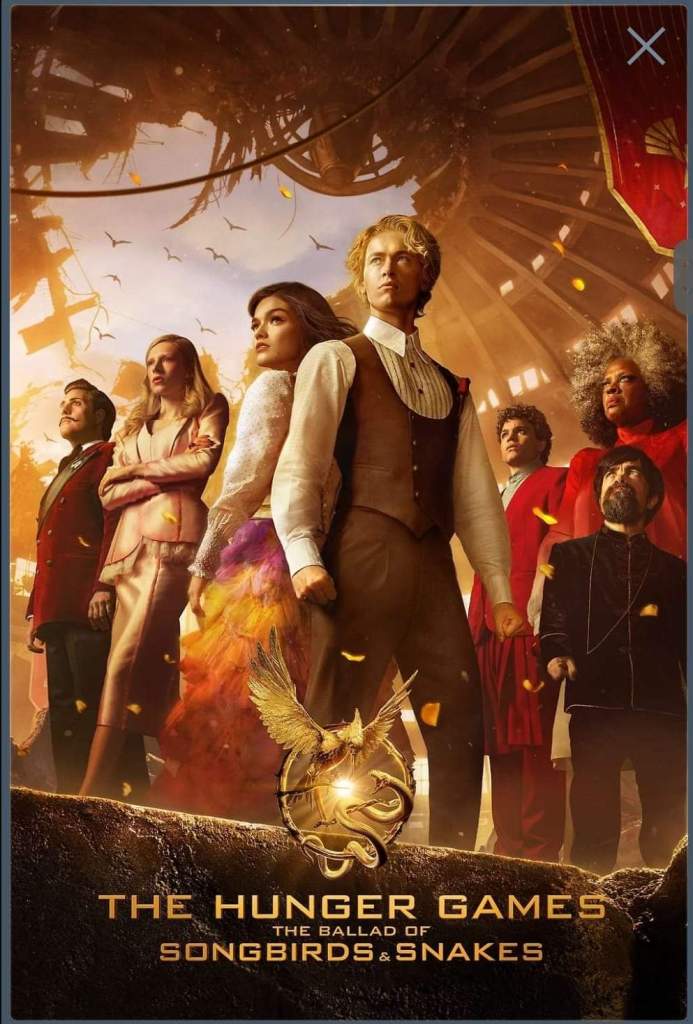
Film Journal 2023: The Hunger Games: The Ballad of Songbirds and Snakes
Film Journal 2023: The Hunger Games: The Ballad of Songbirds and Snakes
Directed by Francis Lawrence
Songbirds and Snakes might not have the same epic scope as the Hunger Games trilogy, but, like the book it is based on, it trades this for something intimate, self contained and distinct. It does of course fits within the same world, operating as an origins story for the franchises main villain (Snow), but its interests are not on progressing the story but rather on adding to it in terms of nuance and depth. And I think the film succeeds on this front.
The construction of the film allows the background of the story leading into the 10th annual Hunger Games, to be told succinctly and concisely. It sets the necessary backdrop for how the games came to be, affords us the context (the early fate of the games is hanging in the balance), and then provides us with the central character who’s future hangs in the balance (a young Snow). From there we dive into the games in the midst of all this uncertainty and chaos.
It’s a stark contrast to the ordered and established scenario we find in the Hunger Games. It’s also the perfect way for us to get to know Snow as a complex individual. We see the things in his past that have left him teetering precariously on the line between knowing and doing what’s right and what’s wrong. His world is flooded with notes of grey, and we gain a glimpse of someone who’s actions and choices can turn him in one direction or another, especially as the events of the film begin to unfold. It’s a glorious mash-up of allegiances and emotional pushes and pulls and desires, and in classic form to the series, much of it hinges on this larger discussion about human nature and its inherent need to survive. Given who we know Snow to be in the trilogy, this whole conversation carrys that much more weight.
The production values here are strong, leaning a good deal into practical set design, and the story spends time in multiple settings that each provide their own flavor to the film. More importantly, the film successfully helps to conceptualize Snow as a person and as a President. I do think it’s a great way to add to the subsequent films in a way that subtly recontextualizes them without losing their truth.
The film of course brings in music, and I think the casting of Songbird is pretty good. This isn’t perhaps jumping off the screen like it did with the iconic figures whom carry the trilogy, but the casting of Snow captures the necessary transformation, while the simplicity of the Songbird helps to anchor the basic struggle of those populating the districts. If it functions as a ballad about the two sides of our nature, I think it becomes a poignant part of the films thematic presence.
This is of course a stand alone story. I do hope it stays that way, as I think it’s a welcome addition and a nice way back into the world that captured many of us on both page and screen.
The Word Made Flesh: A Movement Into The Wilderness Space
Why does understanding John’s intent on reflecting a new Genesis and a new Exodus important for grappling with the idea of the incarnation?
John 1:1-5
1 In the beginning was the Word, and the Word was with God, and the Word was God. 2 He was in the beginning with God. 3 All things came into being through him, and without him not one thing came into being. What has come into being 4 in him was life, and the life was the light of all people. 5 The light shines in the darkness, and the darkness did not overtake it.
Genesis 1:1;3
1 When God began to create…3 God said, “Let there be light,” and there was light.
Some observations
The Word is something that is described as being spoken, meaning it emanates from the source (God). As scholar Carmen Imes points out in her book Bearing Gods Image, in the ancient world, which functioned according go Patriarchal terms, they understood a son to bear the image of the Father, meaning a son is an exact likeness of the Father.
A Word however also, as it says in the verses above, creates. In gives life. It gives light. It is the animating property of creation. Gods speaking is Gods presence. It has Power in and of itself. And in the Hebrew terminology it is often personified, something John is playing off of in writing His Gospel to a Greek world.
If such a “Word” then “becomes flesh”, what does this mean? That God simply procreates? Gives birth to a son? Although Jesus takes on bodily form, this would be misapplying the language of flesh. One of the key questions is, what did “flesh” mean to an ancient Jew? Unlike common perceptions, N.T. Wright notes in his book Into the Heart of Romans that flesh meant not fleshly body in contrast to the spirit, but rather the reality enslaved to Sin and Death itself. Flesh means to be present where Sin and Death dwell, or it means the presence of Sin and Death. Thus for the Word to become flesh, it means the Word takes up its presence where Sin and Death hold reign. Occupying this space means that he experiences the result of Sjn and Death- decay, suffering.
The Son in this sense is not a created being but the very Word that emanates from God and dwells among us in a world defined by the presence of Sin and Death. The reason why this does not divide God into different natures is because the Word emanates from the source itself. It is the very Word of God, meaning the very presence and lifeforce of God that takes residence in the wilderness space with us.
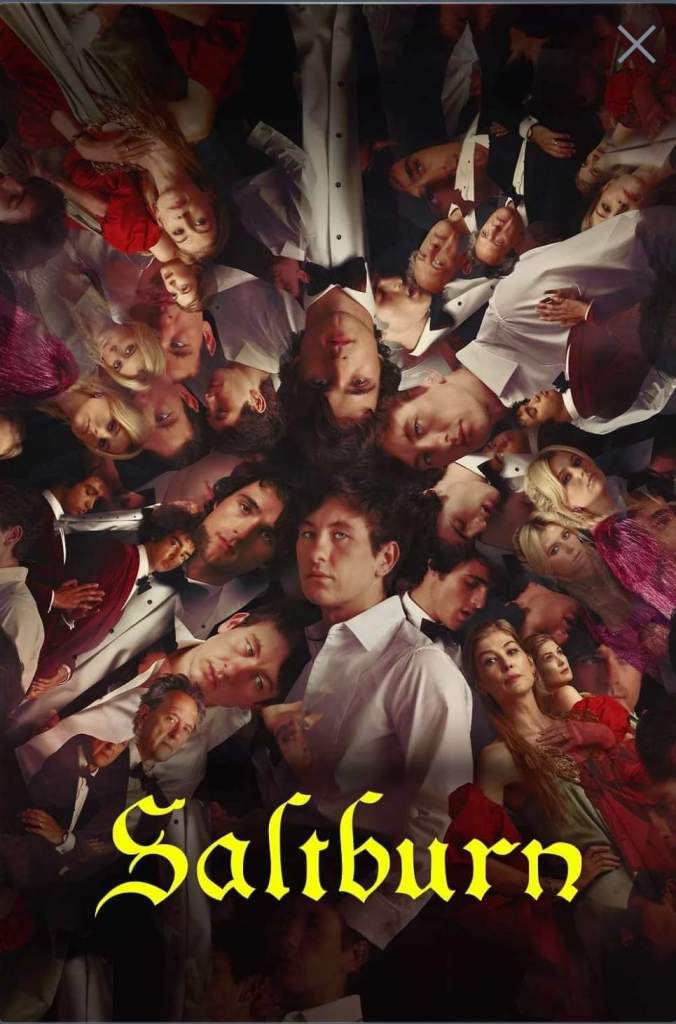
Film Journal 2023: Saltburn
Film Journal 2023: Saltburn
Directed by Emerald Fennell
I could not get on this films wave length, and the end result was a viewing experience that felt more grating than enjoyable or even satisfying. I’m tempted to write that off as simply not my thing, but even still I’m having a difficult time understanding precisely where the draw for this story would come from.
Certainly the performances are good, but the lead is so deeply unlikable that the necessary transformation needed to make this two and half hour exercise in hedonism work is all but absent. Tonally speaking, most of the film stays far too muted and incoherent, and when the highly charged finale finally arrives it feels disconnected and even a bit baffling. I suppose there is a bit of shock and awe that, if it’s your cup of tea could be the hook, but I’m not sure the sexually charged energy of it has anywhere to go either but further and deeper into it’s own assumed sense of artistic vision.
It’s rare that I begrudge a viewing experience to this degree, but in this case I legitimately could not wait for it to be over.
Now I need something to cleanse my palate. Maybe my Wish will be granted.
Reading Journal 2023: Black, White, and The Grey: The story of an Unexpected Frienship an a Beloved Restaurant.
Reading Journal 2023: Black, White, and The Grey: The story of an Unexpected Frienship an a Beloved Restaurant.
I had no idea what to expect when I picked thiis one up. I was inspired to do some after my recent trip to Savannah. Black, White and the Grey tells the story of a white investor an black chef whom embark on an experiment to open up a now famed restaurant in the south. As the subtitle reads, its “the story of an unexpected friendship and a beloved restaurant” called the Grey.
What was so suprising about this book, in a good way, was the way it writes itself warts and all. Half the fascination here is the details we get about the actual construction of this book. Yes, the book is about race, and yes it is about the ways in which race matters. But this was the furthest thing you could get from a story about two different skin colors coming together and proving it doesn’t matter and that we are all one. This is about two embattled people whom get to the end of their story, at least the part contained in these pages, and realize they are still world’s apart from understanding each others experiences. At the same time, the construction of the book becomes a case study in itself for how writing a book in the world today, even together, still marginalizes the black voice, even when it arrives with the best intentions. What we get in this final product is the white voice in regular print, and then the black voice in bold, telling two sides of the same story, sometimes in direct conflict. Its that sort of honest approach that endears this as a biography. We get the ignorance, the fighting, the tension, and we also get the beauty, commitment and growth, both to each other and to a restaurant.
That’s the backdrop of course to the other element of this book- southern food. That conversation in and of itself, and the richly detailed descriptive and background to it, was equally fascinating.
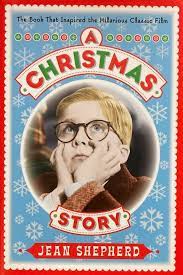
Reading Journal 2023: A Christmas Story
Reading Journal 2023: A Christmas Story
Author: Jean Shepherd
My first though after finishing this book- if they ever remake A Chrirstmas Story it needs to be Wes Anderson
I actually had no idea the classic Christmas movie was based on a book. It’s actually more of an anthology, or a collection of essays, each depicting one of the iconic scenes from the movie. Now don’t get me wrong, I love the classic film. It remains and has been a holiday favorite ever since I first saw it. The prose of this book is operating on a whole ever level. Its not just the quality of the writing, which infuses the quirkiness of the material with real sincerity and depth, its that it captures those uncensored moments of being a child and growing up in a world much younger than our own right down to the smells and the sensations. From the nature of play, to the excitement of recieving something in the mail, to watching our parents fight, to the anticipation of christmas, to racing home to listen to that favorite radio show, to those crazy childhood stories to those memorable neighbors (we get a whole lot more of the Bumpus’ here). Everything felt pitch perfect.
If the film is a whole lot of fun, the book is a real delight and joy. An easy read too. seperated as it is into 6 short episodes.
Now to get on with dreaming about that Wes Anderson adaptation.
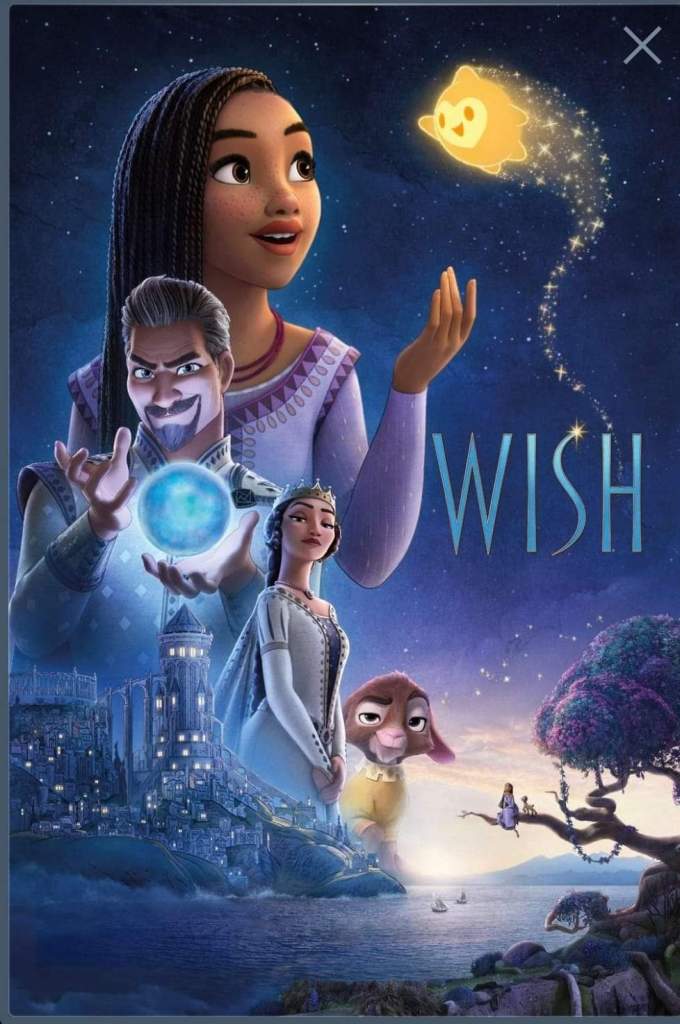
Film Journal 2023: Wish
Film Journal 2023: Wish
Directed by Chris Buck, Fawn Veerasunthorn
By far (and away), the greatest strength of the latest original to come out of Disney Studios is its honest to goodness attempt to reflect on and remember the reason Disney exists and why it makes films in the first place. It takes an original premise and builds around that a collage of hyperlinks to Disneys storied past. Without spoiling it, even the ending manages to bring all of these aspects together in what becomes a symbolic use of Disneys most iconic symbol. I don’t know if it’s an effort to remind themselves or to remind us as viewers, and maybe both at the same time, but thematically the film lands on this simple message- the power of story to evoke wonder and imagination, to unearth the inherent potential that children have to make a difference in this world in the face of real Evils and challenges, and to never be afraid to dream.
Wish isn’t going for the next breakout hit or undisputed Disney classic. Its modest and simple, which we also see in its blend of classic and modern animation styles. Most importantly it feels authentic to its message. Rather than sporting a breakout hit in terms of song, the music functions on a more integrated theatrical level befitting the kind of story that this is.
I would never begrudge an original work. Even the ones that fail I think are necessary in the bigger picture, and it’s far better to have them then not at all. The implications of a problematic box office aside (the sad truth is, if they aren’t supported, they don’t get made), the fact that the film also has some issues, most of which I would relegate to the storyboarding, shouldn’t negate the fact that this deserves your support and is worthwhile viewing. And to be fair, I think some of the issues that I had, it not most, are issues I had personally rather than objectively.
(Minor spoilers ahead)
While I loved the opening 20 minutes and had high hopes for where the film appeared to be taking its whole “wish upon a star” motif, there is a scene just after the quarter point where the depth it could have had gets reduced to another version of the “we are all just stardust” mantra and the subsequent “we are our own origins story” response. This is felt most acutely the further we get into the story, when the film clearly wants to make a case for human potential but is unable to reconcile that with a world where all manners of external factors work to rob one of that potential. Failed dreams, unfulfilled or unrealized dreams, becomes one of the inherent tensions in the story, but what remains greatly undefined is any concrete sense of hope for us to hang our dreams on.
There was an opportunity for this film to offer a critique of the whole fairy tale “happy ending” idea, but it can’t quite commit to this partly because its entire message depends on it. There is a version of this story where the villain actually wins, and part of the question this poses to us is, what do we believe in when this is often the case? What allows us to hope in something, and what is there to hope in beyond ourselves? Heck, there is even a clear and concrete Evil represented in the film, an external and enslaving Power. What is the good? That remains confusing, especially given that the libeesring Power does little more than operate as a proxy for the “self”, quite literally described at one point as “energy”. All being one and connected to the universe might sound like a nice sentiment, but it can only go so far before it hits the wall that is our material reality.
Maybe more concerning is the films clear correlation between the concrete representation of Evil and the sort of dictator that steals peoples agency and liberty under the guise of a promise to protect their hopes and dreams. The invitation to just trust the leaders to do what is best and work for the common good becomes a smokescreen for the controlling government force. It feels like a distinctly American sentiment that, given the murky times, becomes easy fodder for certain political interests, either within the American construct or applying to the current foreign enemy of the moment. That aspect left me a bit uncomfortable.
To bring this back around, while those would be my issues, which pertain to the narrative, I do think there are moments here that do really shine and that help to infuse it with a sense of purpose and vision. If it abandons the depth it could have had, over the course of the film it does manage to sprinkle some of that back in, making this a Wish worth experiencing.
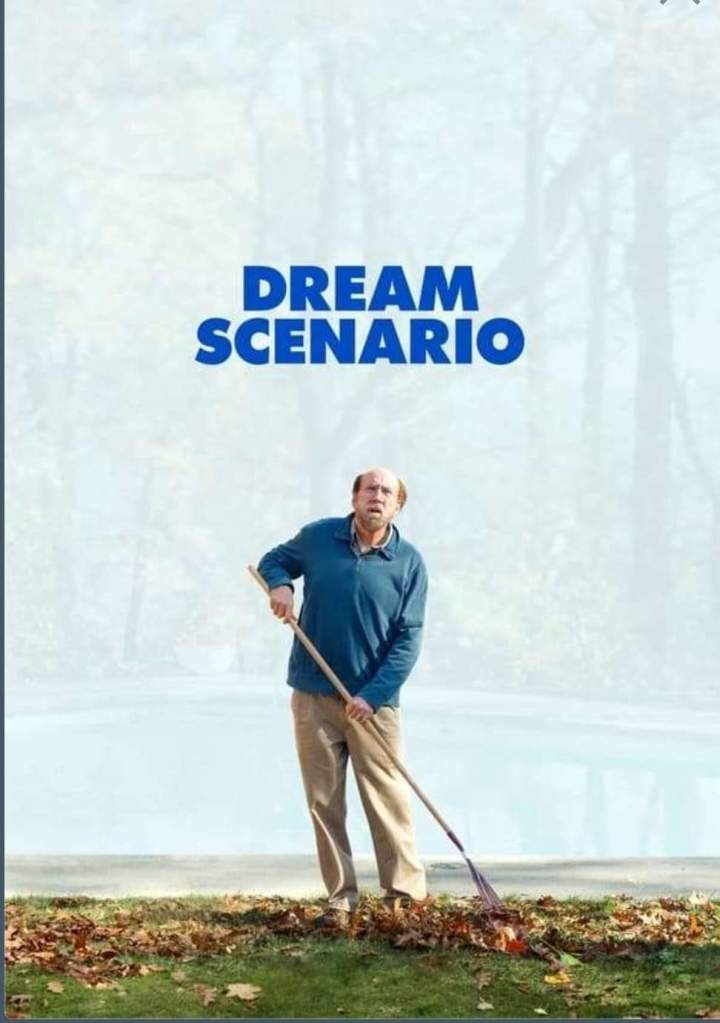
Film Journal 2023: Dream Sequence
Film Journal 2023: Dream Sequence
Directed by Kristoffer Borgli
This far into his current late stage renaissance and Cage is still finding ways to surprise. It’s almost tempting to say he’s playing to type here, but that doesn’t quite capture it. This is it’s own thing, and it’s a ton of fun.
The same could be said about the script. I don’t know if its Cage’s presence and performance or something else entirely, but one of the great things about Dream Sequence is that it is able to take something so off the wall and so unconventional and make it feel relatable in some weird way. Like it’s a grand metaphor for how things work in the real world and something true to everyday experiences. It also has a way of keeping one on their toes, as there is no real way to predict where this thing is going from one turn to the next. It just becomes what it becomes, and by the time it gets to the end, it becomes something else entirely. And yet it all just fits in the same glove.
Best experienced knowing as little as possible going in, but even if you know something about it, its not the sort of film that is easily spoiled.
Film Journal 2023: Napolean
Film Journal 2023: Napolean
Directed by Ridley Scott
You wouldn’t be faulted for walking into this expecting a Gladiator type historical epic. By all appearances that’s precisely what this seemed to be advertising. If you were, or are, caught off guard by the fact that a fair portion of this film ends up a comedy detailing Napleon’s quirks, shortcomings and eccentricities, you aren’t alone.
Which isn’t to say this dynamic of the film doesn’t work.the rise and fall of a madman makes for a fairly entertaining watch, especially where it involves a deadpan Phoenix playing up his own off the rails performance. It does take a bit of an adjustment though. Thankfully the rich historical detail help to make this a strong, visual experience.
There is a version of this film that would have been better served by streamlining the lengthy list of conquests and giving a bit more time to Josephine. There was an opportunity here to flesh out the different perspectives, and it would have been interesting to sit in that space with Joseohine as the one left behind. Director Ridely Scott seemed to want to give us a sense of the gradual progression of casualties that trail behind Napoleans obsessions, and the elongated portrait of these subsequent battles, all of which tend to blend together,becomes part of the viewing expeirmce. And full credit to Scott for committing to that vision, for better and for worse. Even if it doesn’t work for you, I think it would be hard to deny the film has a good dose of character and personality.
Napoleon was a man caught between ego and empathy, and that plays into the growing confusion of precisely what he believes he is accomplishing through his unwavering and often delusional conmitment to patriotism. Its here as well that we see the film straddling that line between its humor and the seriousness of the history. It doesn’t always work, but it does afford the film an interesting dynamic.
Seems weird to say, but Napolean might end up more polarizing then The Last Duel, a film I liked quite a bit, and which actually shares some similar sensibilities (including playing around with the gender dynamics of the time).
There’s a reason why Scott keeps coming back to these types of historical dramas- he’s good at imagining them for the big screen.

 The Stories of my Life