Film Journal 2024: Drive-Away Dolls Directed by Ethan Coen
Definitely missing the other half of the Coen brothers. Seems like there’s an intriguing vision here that doesn’t quite translate beyond the film’s extremely surface appeal. This is basic plot point stuff, taking its story from point A to point B, without much I the way of surprises, intrigue, depth, or nuance. Which is surprising given this comes from one half of the modern cinematic legends.
The film also struggles a bit on the technical front, employing some visual flourishes and editing choices that feel more scattered than cohesive. Those choices, including some digitally enhanced sequences, seem designed to add some artistic presence, but ultimately just end up feeling forced.
I knew nothing about the film and its subject matter going in, and for me, I wanted far less of its clear obsession with sex (it seems like it was trying to push the envelope and establish some noted humor) and far more of its characters. More of the two friends going on a roadtrip in the face of some unconventional circumstances, which could have been a decent basis for having some fun.
Not only that, but given the flavor of the film, it seemed odd for the story to ultimately bind itself to what I would describe as a clear sexual ethic. To be honest, it’s an aspect of the film I appreciated, as it’s rare to find a film willing to be honest about the nature of sex devoid of covemtal language. It just didn’t jive with what the film seemed to be going for in terms of its overall explicitenesss and exessivenesss. It was a weird message and moral to emerge from the film, even if it was a welcome one.
There are some moments that work, to be sure. It’s still a Coen afterall. But it ultimately felt pretty muddled, distant, and shallow as a film overall.
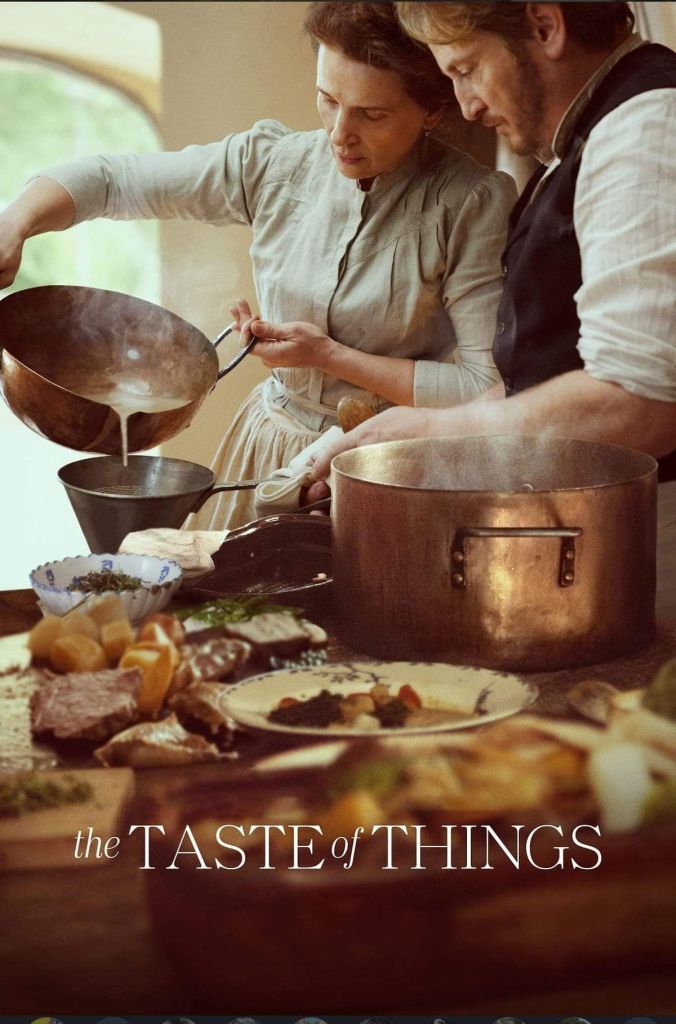
Film Journal 2024: The Taste of Things Director Tran Ahn Hung
The camera work in this film is nothing short of stunning. It not only soaks in every minute detail of its set design, it captures every nuance of the unfolding drama, seamlessly traversing the spiritual nature that exists between human connection and our connection with food. If both might find in themselves the trappings of a carnal nature, this film makes the case for the transcendent.
As it is with transcendent realities, such truths hinge on necessary revelation. Truths that are hidden. Truths that are revealed. Truths that are thus transformative in their nature, which bind us to the mystery. As the central character, an aging man living a storied love affair caught between trying to understand the mystery of human connection and the power of the culinary craft, suggests, we come to such Truths through a fusion of culture and memory, both of which are shaped by our experiences. There is one panoramic shot that does a full 360 through the kitchen, at once binding the present moment to the past in a way that embodies this observation in a visual sense. An example of how this film utilizes the form in a powerful way,
The beauty of the way the filmmakers shoot this film is that that the shared focus on the intimacy and the nuances of cooking food, and the equally stated intimacy of its complex human journey are paralleled in such a way that they tell the same story. The richness it finds in the art of creating a meal becomes a window into the richness of creating human relationship. Both ways in which we experience the world, and likewise each other.
More so, both ways in which we experience the transcendent. Together it drew my attention inwards and outwards simultaneously, reminding me that the space I occupy in this world by way of participation is one that rests in the reality of the transcendent. What we create binds us to that revelatory truth, and becomes a way of knowing the mystery that gives our experiences, our existence, meaning, especially in the face of its tragic notes. As the film so poignantly underscores, human ambition and human creativity can’t save us. However, such things can point us to and reveal that which can.
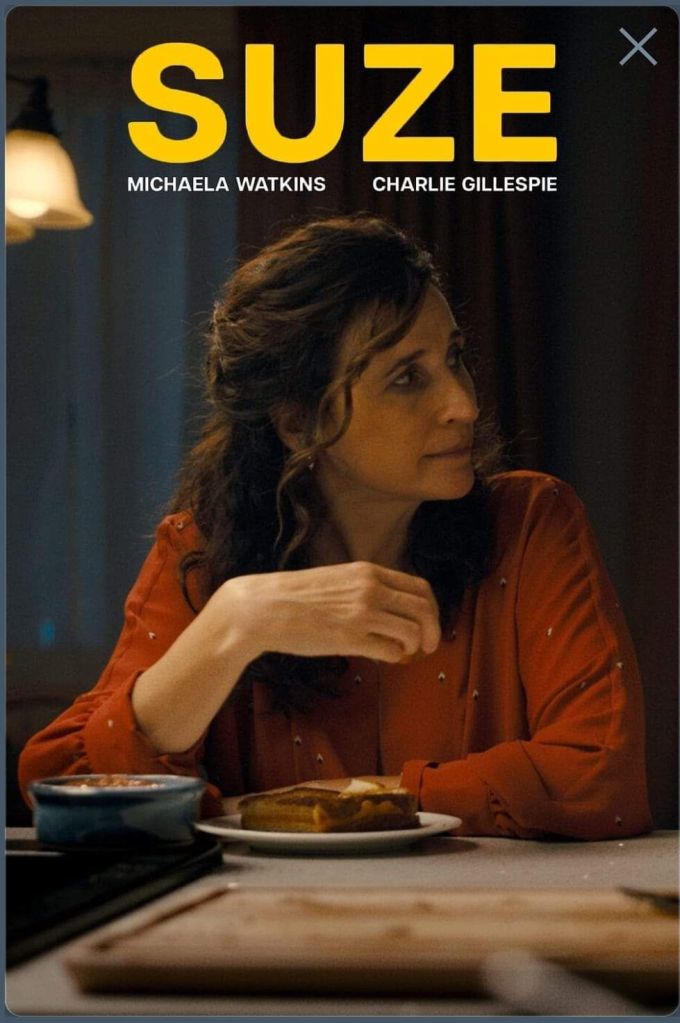
Film Journal 2024: Suze Directed by Dane Clark and Linsey Stewart
Anyone looking for an alternative to the behemoth that is Dune Part 2, this charming, good humored, big hearted drama is definitely worth checking out. It features an unlikely friendship between a middle aged single mother with early menopause and her daughters ex-boyfriend, explored through two likeable performances and a good dose of chemistry.
It’s always great to see films tackling a niche demographic, but the film has far reaching appeal as well.
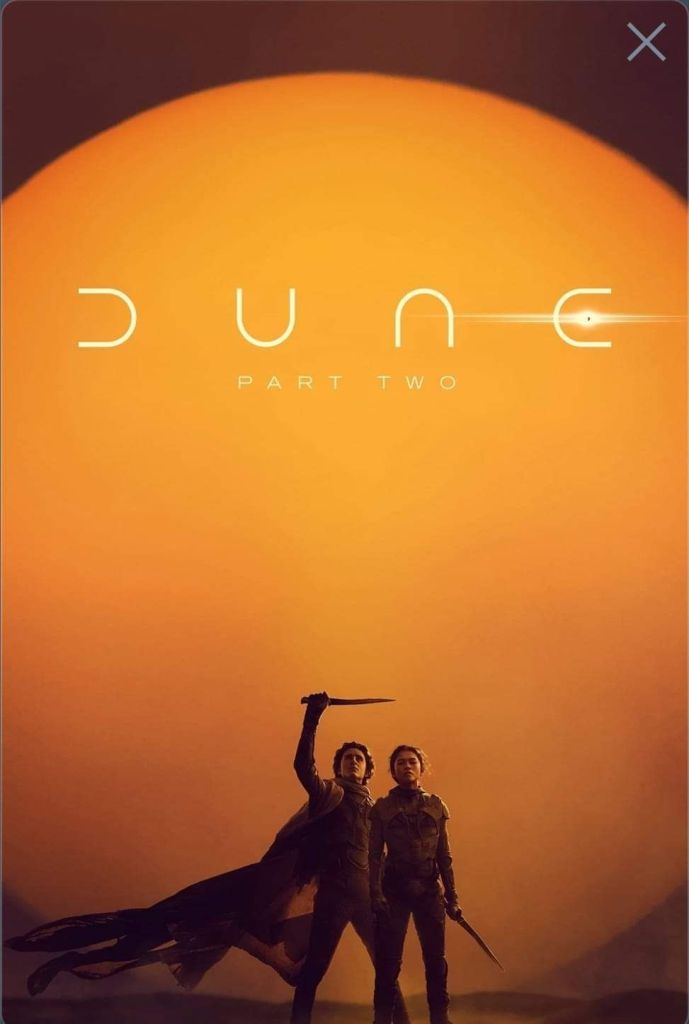
Film Journal 2024: Dune Part 2 Directed by Denis Villeneuve
I’m not sure it says much to state Dune Part Two is a very good, and even exceptional film. Much more relevant to call it an event. The science fiction nature of the story might not be your thing, and you may have certain thoughts and opinions regarding how the film matches up with the book, but it is nevertheless the sort of thing that has the power to captivate the cultural conversation in one way or another, even if you never see it.
And certainly, for those who do see it, the cinematic spectacle is undeniable, from the visuals to the scope to the scale. Its impressive from start to finish.
I know the film has been compared many times over to Lord of the Rings. For me personally, my love and appreciation for the story doesn’t exist on that level, however I can say that the last time I encountered a story this big would probably be the epic finish to the LOTR trilogy. If its not quite reaching to that level for me, I can imagine it would for fans of the book and the science fiction genre.
I’m sure there are things to nitpick here or there, but they would be inconsequential to the experience at best, and a distraction at worst. It’s worth noting how seamlessly Part 2 flows in tandem with Part 1 as a singular arc. If Part 1 felt incomplete, this retroactively makes it that much better. At the same time, the transformation that occurs with the films central characters sets Part Two apart, allowing it carry much of the films climatic push. Thematically too, the film adds layers to the messianic motif, even establishing it as a timely message about the nature of holy wars. There is much to say here, as I noted in my review of the first film, about how Jesus occupies the messianic role in contrast to Dune’s enigmatic “savior”. In Part 2 it places such questions straight within the reality of the kind of motifs that surround Jesus, particularly when it comes to the realities of enslavement and power or rule.
If hope is to be found, it is to be found in the unexpected places that resist the allure of retaliation and Empire, not within it. What becomes even more apparent in Dune Part 2 is a world caught in such perpetuating cycles and needing a promise that can break it.
Didn’t love the non-linear approach, but for every moment I found myself wavering there was an encounter with a page, a plot turn, a section, a conversation that grabbed me and pulled me right back in. It is those moments of beautiful and inspired prose that govern the larger narrative, providing a powerful reflection on the nature of the forces of life and death. Yes, it is in its own way a horror story about a vampire. But this is a long ways from your atypical stories of vampires. This is, at its heart, an essential human drama facing down some of the hard questions of human existence.
Here are portions of the book that, for me, outline and shed light on the meta-narrative that resonated for me:
“They aren’t just for me, you know- the visions. I see, on occasion, what is always there is always true. It’s all there right now: this world the lower branches of a beautiful, fruiting tree, and the perfect glory of God filtering down through the branches, radiant creatuers filling the air, everything singing with joy, and all of it pulling us up, me and you, into love.”
He laughed softely, threw a twig into the fire. ‘I used to never speak of it. I knew it made me sound like a madman. But then, it stopped mattering. People thought I was mad no matter what, so I stopped hiding it. I began just to offer it, to say “the glory and the love that surrounds you, that you breathe in with every braeth, it’s there, if you want it. ‘ What I see is yours as much as it is mine– if you want it…. I have my God. I have my painting. I have my love. I have the world. It’s too much goodness.” – excerpt from Jacqueline Holland’s The God of Endings
“Like you, I have sensed the pursuit of both Czernobog and Belobog for most of my life– not singly, but as one. I have heard and seen strange and terrifying and wondrous things, just as it seems you have, but I have noticed a pattern– and this is a conclusion, mind you, so place no blind trust in it– but the pattern I have seen is that the Emptier must empty before the Filler can fill, a space must be cleared for a gift.”
“… We children do not like emptying, clearing. We do not want Czernobog’s darkness, only Belobog’s light. Even us very old children. We forget that light, without shadow or variation, is blinding. We malign and fear and slander the Emptier, Czernobog, the Dark One, the god of endings. Perhaps we would do well to wait, like children learning patience, learning trust, and see what fills the space he clears, what light breaks into his darkness.” – excerpt from Jacqueline Holland’s The God of Endings
“One short sleep past,” reads the line in the stone, “we wake eternally. And Death shall be no more. Death, thou shalt die.” We wake eternally. Vano was right, as always. A new way, a gift I could never foresee. And his beloved spirit- I can feel iit near me now like a hand in mine, a gentle midwife, speaking reassurances and coaxing the trembling laborer through the loss of all that was and the birth of the unimaginable.” – excerpt from Jacqueline Holland’s The God of Endings
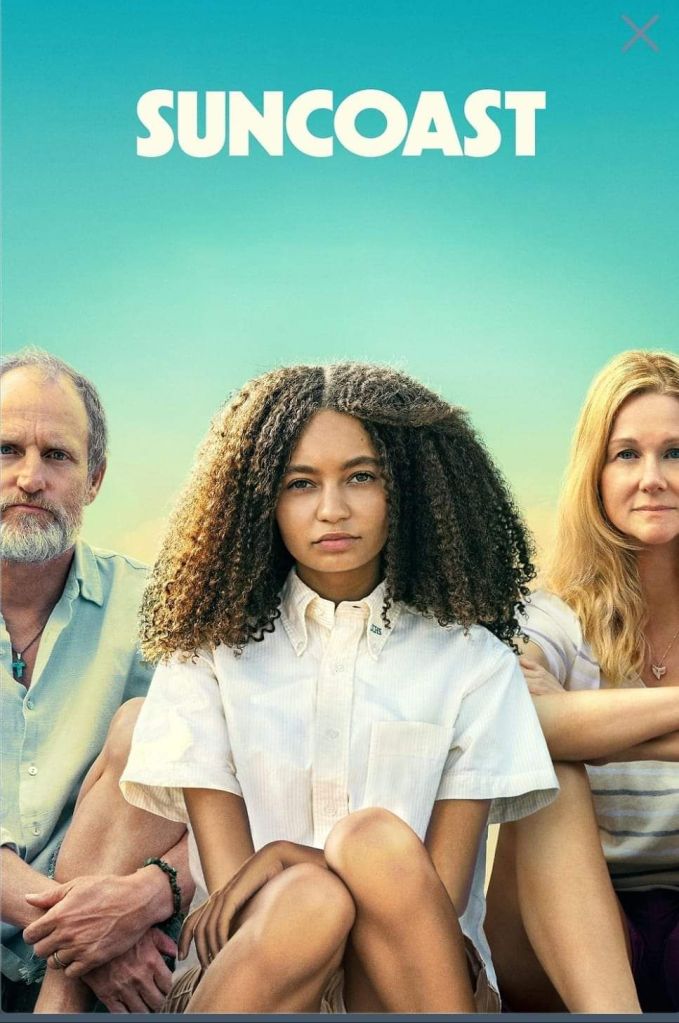
Film Journal 2024: Suncoast Directed by Laura Chinn
Totally my descriptive, not the films, but dang it if this thing didn’t quietly stake its claim for me as one of the best “faith” based films I’ve seen in a long while. Raw, vulnerable, uncensored, and real. Unafraid to bring nuance and empathy to a complex portrait. The mature elements (which are present) befit its subject matter and its approach.
A tender hearted coming of age drama that becomes a studied examination of grief and family. Boasts a quiet but confident lead performance that we should still be talking about at the end of the year.
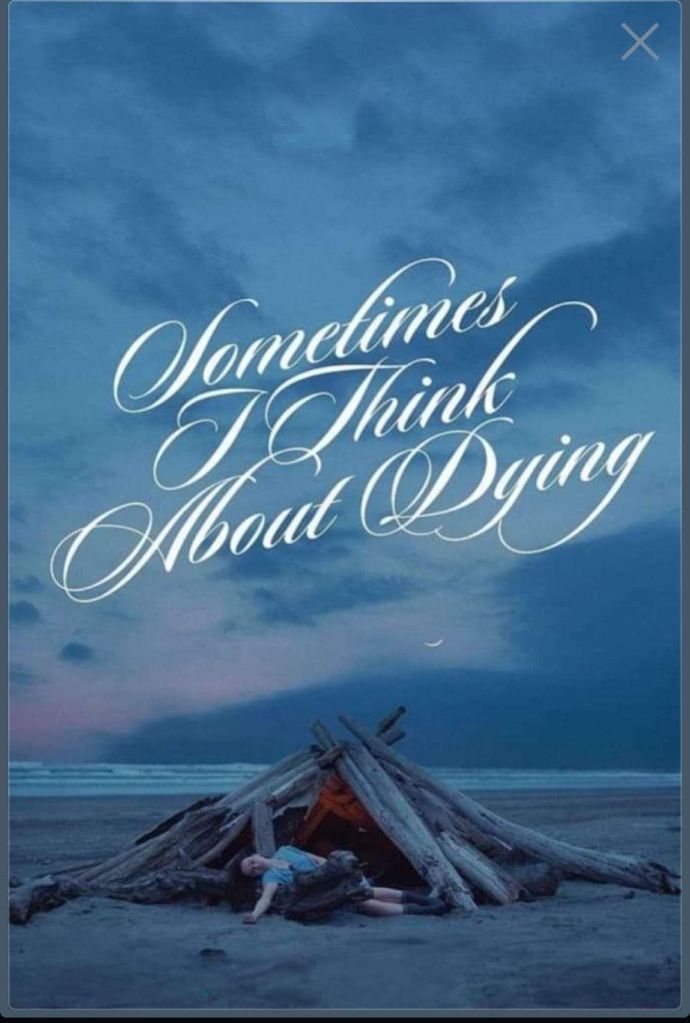
Film Journal 2024: Sometimes I Think About Dying Directed by Rachel Lambert
“Its tough, you know, being a person.”
“The more I think about the movie, the more I like it.”
If the overall execution of this film is uneven and disjointed at times, which is definitely felt in the films deliberate pacing early on, the vision for this film remains abundabtly clear. And the more the film goes on, the clearer, and stronger, it becomes.
I found the films visuals and its aesthetic captivating and mesmerizing. The way it weaves back and forth between different perspectives, using different camera shots and angles. The way it pauses to capture these staid external shots and moments, soaked as they are in atmosphere and imagery. Striking might be the best word.
These visuals also help to establish the tone, including employing a patient and curious approach to exploring the subject matter. It follows a young woman working at a menial office job, navigating a stated and ongoing struggle with social anxieties and inarticulated internal battles with depression. The way the filmmakers help to capture the essence of these things, including a willingness to sit in silence and in a plethora of awkward moments, is super effective. It demonstrates how such struggles can leave one feeling trapped inside their own mind. Which is what makes the different perspectives so poignant and important. Sometimes we get her vantage point, either of the world around her or of herself. At other points we see from the outside looking in at her, an element that establishes this tension between who she sees herself to be and who others see her to be. And then sometimes we see from the perspective of the camera, watching the whole in a more concrete and objective sense.
I really came to appreciate Ridley’s performance as well, tackling a sheltered and protected persona with care and sensitivity. Given how much her character closes herself off from viewpoints other than her own, something which she then keeps guarded and out of view from others in the film, the performance depends on her leaning into the subtleties, and Ridley manages to capture this so well, never allowing her character to slide into a singular conception or expression. She does a lot of work with facial expressions, especially with her smile, which becomes probably the clearest window into her emotions.
It’s not perfect, and it has a defintie indie vibe, for better or for worse in this case (for me I grew to appreciate it more and more as the film went on). It definitely is doing some interesting things on a conceptual and technical level though. Where it ultimately hit for me was in the way it helped to validate experiences with anxiety and depression as real and important.
Reading Journal 2024: Everybody Come Alive: A Memoir in Essays Author: Marcie Alvis Walker
Walker writes with a careful hand of someone with experience. Someone for whom these experiences shaped a perspectives on what, as she says, it means for her to be a woman, to be black, and to be holy in this world
A world that has mired these three things in a history of racism, gender oppression, and problematic views of God.
The book follows a series of interconnected essays in a way that explores the process of growing up into this world as a child of 70s America. There are multiple layers to her story, beginning with her complex relationship with her mother, and flowing outwards into her relationship with her own children, the world and God.
All of which play into her relationship with herself. Who she is as a black woman in America, and ultimately as a child of God. A life, as she says, anchored in being born of the very same Spirit that said “Let there be light” and “declared that it was good.”
It is, above all else, a story of hope. A particular story that wants to give voice to the whole. A reminder that beauty can be found in the pain. That God can be found in the confusion. That being a woman, and being black, can be reclaimed from the childhood that at once tried to steal and conceal it while also giving her the experiences to know what this means.
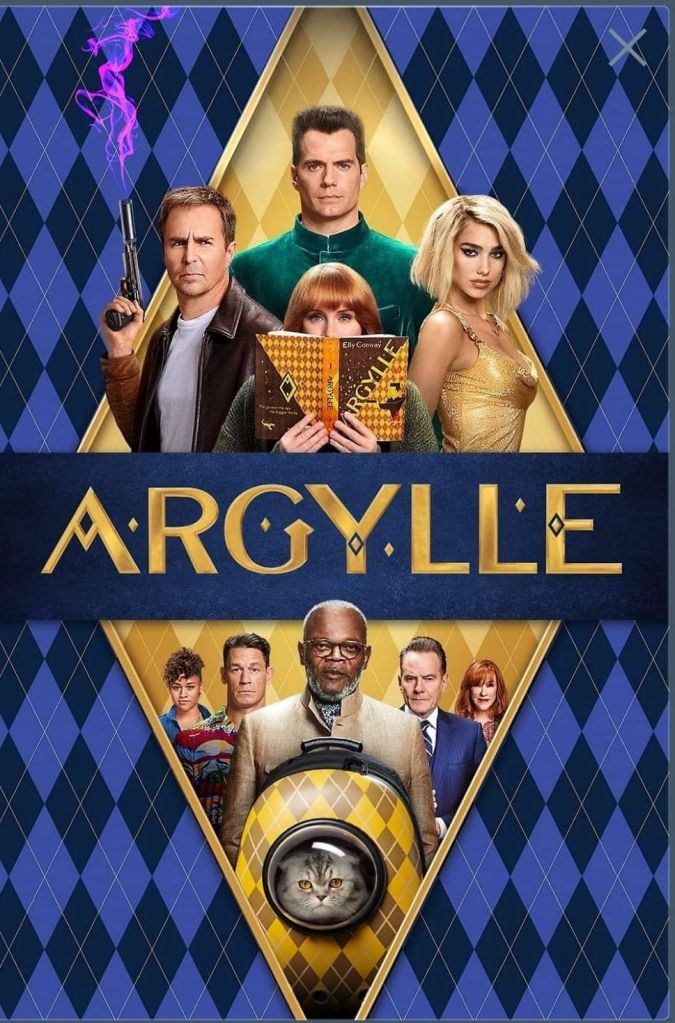
Film Journal 2024: Argylle Directed by Matthew Vaughn Where to watch: now playing in theaters
Seems to find this strangely and somewhat ambiguous soft spot between being even more over the top than it actually is, which would have been one option the filmmakers could have taken, and trying to play this thing pared back and dialed in. The result is a sure handed double, straight into center field. Personally speaking, I found it to be a good deal of fun, even if it trends towards one third act twist too many. Even, I might say, inventive and creative in a go for broke kind of way. Certainly the two leads are enjoyable, each leaning into the quirkiness of the scenario based plotting of the story, and proving to have a decent amount of chemistry.
A solid, mid-budget blockbuster with a decent dose of escapism to fill out those early days of February
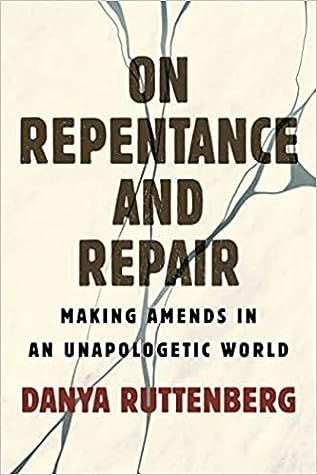
Reading Journal 2024: On Repentance and Repair: Making Amends in an Unaologetic World Author: Danya Ruttenberg
Rabbi Danya Ruttenberg, a celebrated and award winning author, scholar, activist, and thinker, tackles the tough subject of repentance and reconciliation in her book, On Repentance and Repair, using the philosophy of Maimonides as her guide. She moves seamlessly between the personal and the systemic, breaking down heavy set binaries as she goes. As the introductory chapter suggests, we all cause harm, we have all been harmed, and we are all bystanders to harm. Therefore, “it’s critical for all of us to think through the work of repentance.”
Pertinent to the conception of repentance she wants to bring to light is the necessary recognition of categories of thought when it comes to the different words we use to speak of a singular idea. This would include the words forgiveness, atonement, reconciliation and repentance. Knowing that these words express different ideas is crucial to locating the specific force of each one as it relates to wholeness, healing and justice. Distinguishing between these ideas can then help us break down the binaries that often work to prevent wholeness, healing, and justice in our homes, in our relationships, in our workplaces, and in the world. Doing the hard work of understanding these words as social functions with social concern is also a bug part of this picture.
Ruttenberg first moves to give definition to the concept of repentance, before moving to flesh out its personal, public expressions. She then moves through the specifics of institutional, national concern, before ending with broad reflections on justice systems and the complicated social and religious ideas of forgiveness and atonement, key facets of the bigger picture to which repentance belongs.
At the heart of repentance is the concept of returning, or turning to move in the right direction towards where we want to be (wholeness restoration). Part of the reason it’s important to distinguish between repentance and forgivness, for example, is that too often forgiveness is made synonymous with wholeness (or salvation). Equally so with equating repentance with atonement (wholeness, reconciliation, or salvation). If forgivness is the thing that frees us to move in the right direction, it is neither repentance or atonement. Repentance holds in its hands the active force of participating in a different way, but it does not bring about forgivness or atonement. Repentance begins with naming and owning harm, and ends, by acts of change, with things functioning differently.
One of the difficulties here for modern western culture, as Ruttenberg notes, is that our individualistic mindset often leads us to see functioning differently, or rightly, as a purely personal endeavor, as though the aim of repentance, forgiveness, and atonement is our own salvation. The problem is, of course, that harm is never simply reduced to ourselves, and for things to function differently requires us to see how we function in relationship. The end goal is not individual salvation, but restoration of the whole. “The work of repentance, all the way through, is the work of transformation.”
Or, it rests on the hope of promised transformation.
While Ruttenberg keeps God somewhat to the side in favor of fleshing out how this works on a grassroots level in our lives and in the world, it is abundantly clear that what guides the philosophy of Maimonides is his conception of God. Repentance is a concept that pushes and pulls in both directions, stemming from the work on the ground, but also finding its definition and meaning in the divine. This becomes especially important when we consider repentance as a model. We act out of what has been afforded to us in real and conceptualized terms. This is how we know and understand and are able to name, that we are all imperfect people operating in different capacities within different kinds of harm (caused, received, observed). “The work of repentance is, in many ways, the work of looking outside ourselves…”
Looking outside of ourselves also allows us to ask that crucial question, “to whom am I responsible?”
Ruttenberg does a great job of helping us see how these conceptual and functional ideas matter as much to interpersonal relationships as they do to institutions, countries and systems. Lest we forget that we operate in this world together. Knowing how the same rules apply in all these capacities can help us to respond to (or take responsibility for) things that are far bigger than our small section of existence as well. This is, after all, written into the Jewish sacrificial system and rites. Our addiction to make everything into the salvation of the individual misses the essential idea that the day of atonement, the same language we use to understand Jesus, was all about purifying our collective association with a world in which harm (sin and death) exists. It’s primary role is to create a space defined by wholeness and restoration (meaning, a space absent of sin and death), and to declare forgiveness as the removing of all obstacles towards moving in repentance towards participation in this space. It’s the grand vision of Torah, fulfilled as it is in Jesus. And it’s the very thing that calls us all to necessary repentance.
A beautiful and freeing vision for this world and our lives indeed.