2023 In Review: Favorite Canadian Films

Continuing with my 2023 retrospective, this year proved to be quite exceptional for Canadian film. It is a reminder of the importance in investing in and supporting our Country’s film industry. It is easy to fall into the trap of simply seeing the film landscape through the lens of American imports, but there is a healthy and thriving local industry rooted in cities across the nation. And these creatives are bringing their particular perspective and voice to the global landscape. This is part of our collective story.

Here are some of my highlights:
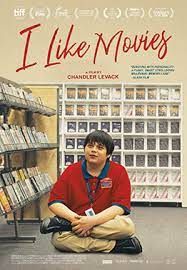
I LIKE MOVIES
I’m certainly willing to admit that my theater experience likely played a big role in elevating this film in my mind. A sold out crowd at my local arthouse made this one of the more memorable theater experiences for me in 2023. However, what makes this film standout for me even more is the way it has lingered for me months afterwards. It’s a good story with a strong emotional backdrop, but more importantly it’s a love letter to people like me. Those of us who never fit in at school with the typical crowds, and who instead found a sense of community and identity hanging out at our local video store. Spending hours browsing for titles. Connecting with others who shared a passion for the art form. Chatting with employees whom we would get to known on a first name basis. This film hit a chord made me feel seen and understood. Which is of course the power of film.
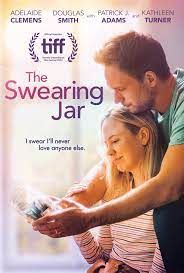
THE SWEARING JAR
If you like films that use music as a storytelling device, and if you like films that use small stakes, an intimate relationship drama, and a small cast of characters to build to a richly earned emotional climax, then this is a film you should definitely check out. Its bursting with wonderful chemistry, and it finds a way to blend the hard hitting nature of its story with something that is undeniably charming and affectionate. Beautiful film that should earn a few tears.
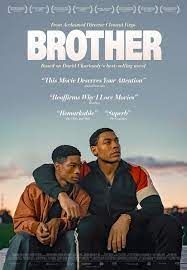
BROTHER
This easily could occupy space with some of the more surprising efforts of 2023 for me. Set in Scarborough, it tells the story of a singular family through the perspective of a pair of siblings, both of whom are navigating their lives as Jamaican-Canadians in a way that separates them based on their differences and bonds them together through their shared blood at the same time. It’s a reminder that matters of race exist here in Canada as well, its rhythmic approach helping make this story a reflective an meditative process on growth and healing in the face of struggle.
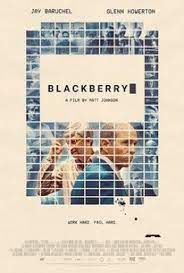
BLACKBERRY
Probably the most high profile Canadian film to release in 2023, and for good reason. This is a true indie with an incredible screenplay, some really strong direction, and memorable performances. It takes a story that you might feel would be deeply uninteresting (the story of Blackberry’s rise and fall) and makes it riveting drama. Its so high octane that its legitimately stress inducing, but in the best kind of way.
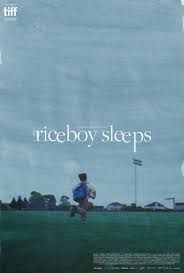
RICEBOY SLEEPS
This film is similar to Minari, both in its subject matter, which revolves around immigration and family, and in its style and tone. Its drawn out very much like a portrait, but one where we get to narrow in on the different voices that make up this landscape. Its about going on the journey with this family as they find the struggles of living in Canada something that pulls them apart, even as the process also brings them together. Such bonds are formed over this shared experience, even if the different members of this family experience this in slightly different ways. Without a doubt a powerful human drama.
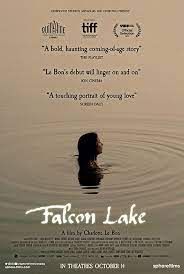
FALCON LAKE
A coming of age story that wants to dig underneath the surface of some commonly held stereotypes and norms regarding what it means to grow up and discover who we are in the largely unfamiliar world that surrounds us. It narrows in on a 14 year old boy and dares to wonder whether he is more than hormones and rebellion. It wants to pull nuance out of the rubble of superficiality, and in the process wonders about how the young boy and young woman at the center of this story can become an allegory for the larger world, or even life itself.

YOU CAN LIVE FOREVER
Tender, kind hearted, and beautiful dealing with questions of gender, religion, and of course humanity.
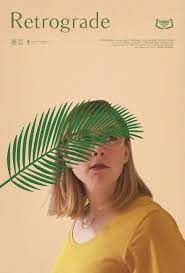
RETROGRADE
A really strong script anchors this conversational, indie drama. It revels in the awkwardness of its main character and the scenario she finds herself caught up in, and ends up as a really solid commentary on Gen Z. It’s a really fun film, but don’t undersell its themes.
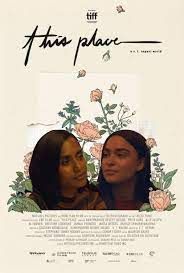

THIS PLACE
As I wrote in my review, this film quietly finds its way through the periphery senses into the heart, following two young woman who’s paths suddenly cross, at once interconnecting their lives and their experiences. It’s a really small budget, but the Director really makes the most out of each shot and sequence. It’s the perfect platform for its two leads to stretch themselves, bound as they are to some pitch perfect chemistry and bound as we are to the films gentle, emotive score. Its all quite mesmerizing as an experience.
2023 In Review: The Years Most Suprising Films

It is that time of year again when many of us find ourselves looking backwards in order to rightly and effectively look ahead. And for those of us who are obsessive an perpetual list makers, this could be undeniably be considered our most favorite time of year. For those of us built to reflect, it can also be one of the most meaningful.

Of course, the potential lists are endless- film, books, goals, memories and moments, just to name a few. I have noted this about myself in recent years, but the way I am built I am all about finding the narratives that have shaped my year. This is true for the individual narratives that have made an impact on me in 2023. I am also deeply interested in locating the meta-narratives, which for me is simply asking, how did these individual narratives shape me over the course of the year. How has my perspective changed and been challenged from the beginning of the year to the end.


I will get there. That’s what the space between Christmas and New Years is built for, after all. But it begins with narrowing down to the specifics, which for me begins with looking back at what I watched in 2023 an noting my favorites, or what I consider to be the most standout films of the year. As a way to kick this off, I thought I would give some attention to a category I don’t always acknowledge- the biggest surprises. These would be measured by the following parameters:

  1. Something that I was previously unaware of that ended up really catching me off guard
  2. Something that I thought would be either not very good or not very interesting which proved otherwise
  3. A film that did something entirely unexpected

My Top 5 Biggest Suprises of the Year In Film

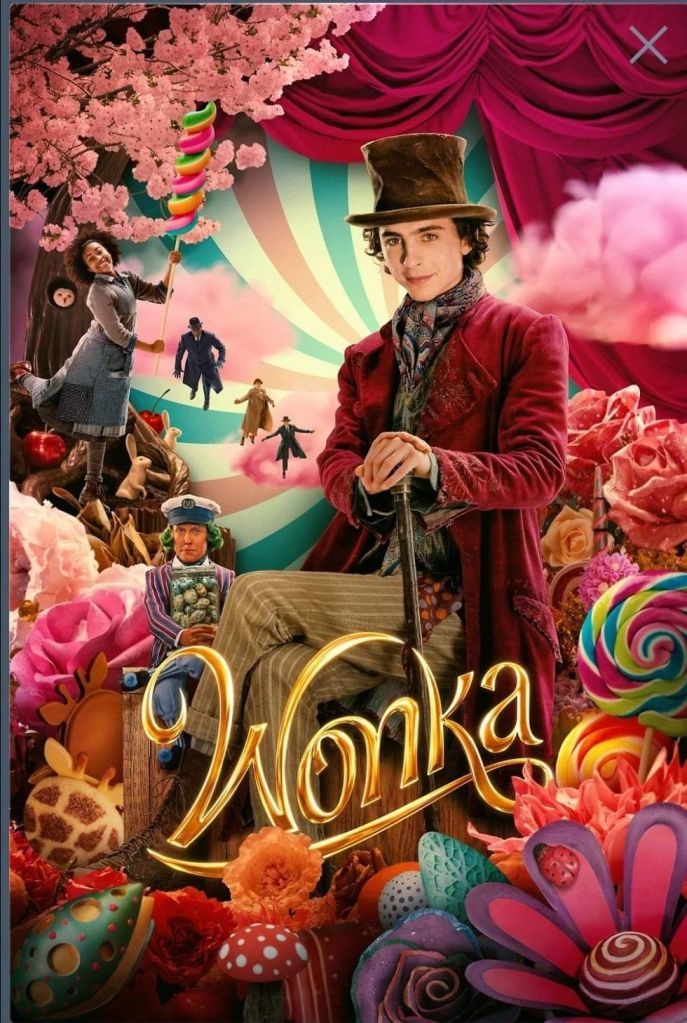
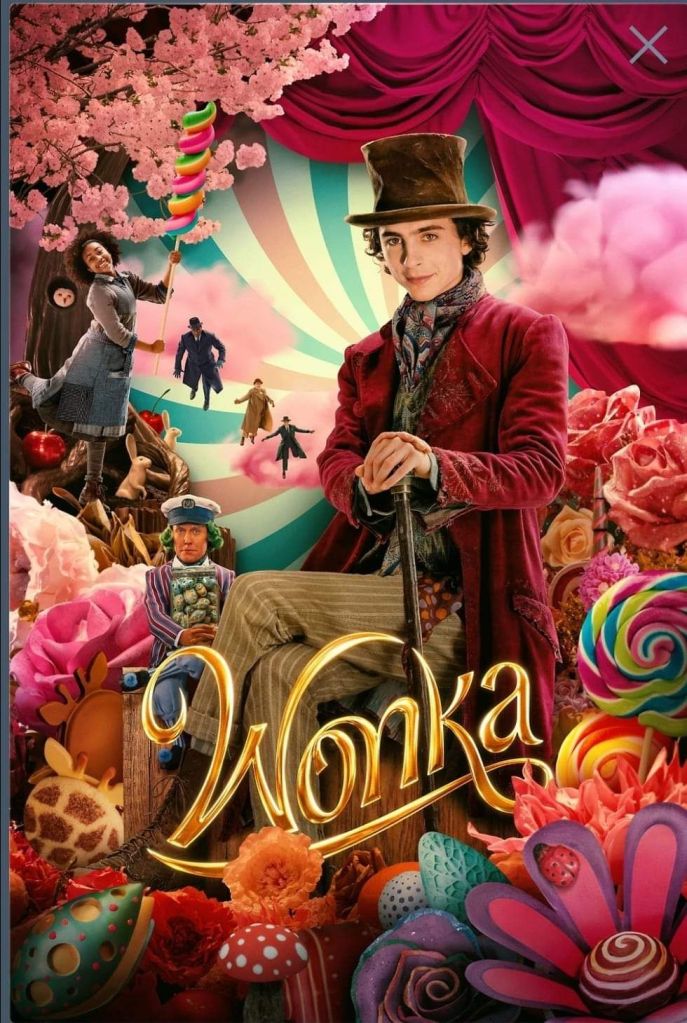
WONKA
When news first broke about the latest addition to the Charlie and the Chocolate Factory adaptations, I had plenty of reservations. I questioned the casting of Chalamet. I wondered whether an origins story about Wonka was necessary. I was curious about the decision to approach it as a musical. The fact that all such reservations were put to rest with the opening sequence, which is filled with all the natural whimsy and charm befitting the Paddington Directors style and sensibilities, makes this one of my most favorite surprises of 2023. The film struck a tone and style that fit hand in glove with the beloved classic, transporting me straight back to my childhood memories, while bringing in some fresh and modern flourishes.

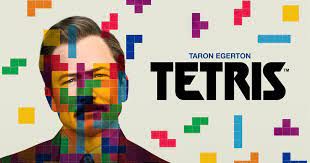
TETRIS
If I came into 2023 raising an eyebrow over the apparent trend of biopics about products, it is saying something to note that any number of them could have qualified in this spot. Air was one of the most crowd pleasing movie experiences of the year and a real delight, and Blackberry, which will show up on another of my lists, was phenomenal in its script and its direction. I went with Tetris though, because out of all of them this might be the one came most out of left field. I knew next to nothing about it, and the straight to streaming decision was one that kept this even further outside of my awareness. Turns out it was a blast. A story that I never realized could be that entertaining, and a genuine blockbuster that I think deserved the big screen treatment.


CHEVALIER
I went in dark, having never even heard of the film before rolling the die one evening when I was looking for something to see. And I fell in love with the films heart, soul and energy. It’s a period piece, but one that’s imagined with an inventive touch, employing a mixture of narrow frames and quick moving camera work befitting the musical subtext. The result is a richly entertaining and immersive experience, helping to bring the history to life like an orchestrated symphony or grand opera befitting its amazing score.

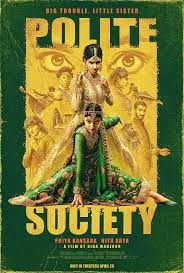
POLITE SOCIETY
Might be the most quirky and fun “superhero” film you never saw in 2023. It has an indie flare, an anything goes premise, and a cast that’s all in.

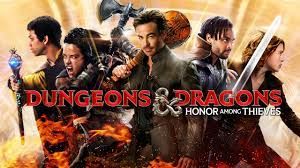
DUNGEONS AND DRAGONS: HONOR AMONG THIEVES
Count me among the ones who wrote this off completely long before its release.
And then I caught wind of the feverish support that followed its initial release. Took me a few weeks, but when I finally managed to catch it on the big screen the quiet hype made all the sense in the world. Perhaps most impressive is the way it brought hardcore players and fans and those who have never played together in the same experience. This is an old school effort that manages to be a great big nod to the adventure films from back in the day. Fast, fun, funny and deeply entertaining, employing just the right blend of CGI and practical set pieces to function as pure escapism of the best kind

Film Journal 2023: Wonka

Film Journal 2023: Wonka
Directed by Paul King

From the voice behind the beloved Paddington films comes a colorful new vision of Wonka’s past. This is, if there was a pure defintion of the term, the very defintion of a family film, one that sees its success in bridging that gap between old and young. It captures the spirit of the original while pushing it ever so gently in fresh directions, all in service of the story’s appeal to the imagination.

Any questions about Chalamet’s ability to conjure up the quirky idealism and eccentricities of a young Wonka finding his way are put to rest with the first musical number. He proves a perfect fit for the grand stage and the innate magical realism that surrounds him. This is a world where the simple power of confectionaries and artistic creativity can defy the limits of our cynicism and challebge the trappings of capitalist pursuits. As the film posits, its not about the chocolate, its about the people we share it with, and the backstory that we discover in this film sets the stage for the deeply embedded moral convictions of the mysterious Wonka in Charlie and the Chocolate Factory.

Loved the clean cut simplicity of the action and the set design, along with the different musical numbers. It might deviate ever so slightly when it comes to the typical trappings of that third act climax, but it never loses its heart and its soul, nor its charm. I have to imagine that if you grew up with any appreciation of the classic film, this will tap into all those childhold memories and feelings, not as a retread but as a celebration. Its ability to share this and communicate this with a fresh generation using the same geinine and thoughtful artistic commitment that we find in the Paddington films is the thing that bridges that gap.

Reading Journal 2023: Time and Again

Reading Journal 2023: Time and Again
Author: Jack Finney

For a book that has been on my must read list for admittedly far too long, this landing in the good not great category might seem like an overt criticism, but it’s not. Good, even at times very good, is the fair assessment, not great is simply my expectations. Afterall, this is a time travel book that functions as a love letter to New York City with elements of Christmas written into the settinng. If there was a book written specifically for me, this would be it. If I could narrow it down, while I loved all the different aspects, including the old photographs, the way it imagines tlhe possibility of time travel, and the historical elements, I feel like I wanted more character and less mystery-adventure. I was ultimately more interested in the ideas and the concepts than the story.

Perhaps this was most felt in the set up, which follows a man facing his thirties with the nagging crisis of feeling like his life has thus far amounted to very little. Wondering about the current state of his life becomes the thing that carries him back into the past, and more specifically to a significant moment for him personally. As it happens, the opportunity to travel into the past comes at the hands of a secret governent project, one that finds his present personal crisis to be something that makes him a fitting candidate for their experiment.

The way the book works itself into the time travel motif is through the power of the mind. Thus there is ample opportunity for the book to explore things like nostalgia, memory, imagination, and our connection with time and place. This comes most alive and most celebrated when the book sinks itself into the old New York setting. Wandering the streets and gaining a sense of its sights and smells and energy is a true highlight of the story. The plot points that pull us back and forth in time tends to accentuate this rather than accenting it. I will say this however. The plotting is nicely structured to bring us to a fitting conclusion, with a particular element of the story functioning as a necessary and appropriate climax and conclusion.

To say it again, I would have been more enamored with a story that was content to narrow in on our main character’s personal journey and his relationship to the past, and even to the relationships he builds in the past, rather than one that is focused equally on the government agency and the different characters that form the larger mystery-adventure surrounding that. I was, however, perfectly content to go along for the ride given the elements we do get that satisfy my obsession with the three things listed above- time travel, New York, and Christmas. Thats the true selling point of Time and Again.

Reading Journal 2023: Miracle on 34th Street

Reading Journal 2023: Miracle on 34th Street
Author: Valentine Davies

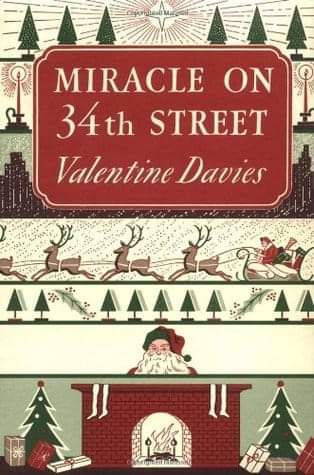
There’s a fun bit of irony to the fact that one of the best known and most influential American christmas films is contrasted with a book you’ve likely never even heard of. This is made richer by the fact that the film and the book were released in tandem.

The book follows the film for the most part, but what it makes it interesting is how it never feels like its adhering to a script. It’s easy to get the sense that this existed as a story before it existed as a screenplay, and the iconic images and moments and lines seem to draw inspiration from one another.

In Davis’ imagination, Fred is given more development in the book than he does on screen, and we also get more of Kris Kringles perspectives perspective as well. There is something about being inside their heads that enlivens their decisions and their struggles. What the film draws out for us in terms of the relationship drama, the book streamlines into an idea, making the question of santa claus’ existence more or a marriage between the pholophsical and the functional. This is, after all, a reflection on society at large, and that really does come through on the page.

I have watched the film on christmas morning every year since I can remember, typically as I wait for the rest of the house to wake up. This is the first year I became aware of the book, and am really glad I discovered it. A definite delight.

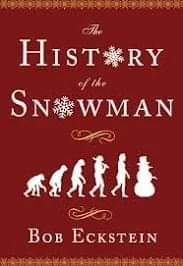
Reading Journal 2023: The History of the Snowman

Reading Journal 2023: The History of the Snowman
Author: Bob Eckstein

It is a bit too perfunctory to make for a fun read, but, as it is with writing the history of anything, the snowman becomes as reasonable place as any to explore the story of our world. As it is, and the author is upfront about the fact that we actually know very little about where and when the concept of the “snowman” developed, beyond theories such as the one that anchors it in Schenectady, New York, or that ties it to fleeting and uncertain images in old photos. What Eckstein is able to do is expand the boundaries of what a snowman is beyond Frosty, the carrot nose and the top hat, all things we can undoubtedly trace as a part of our cultural history.

Looking beyond these cultural touchpoints, the snowman’s history turns decidedly dark and adult, getting wrapped up in everything from politics to deities, racial/gender divisions, sex, and revolutions, and perhaps its most dominant usage- advertising. One of the more tantalizing quesitons the book brings to the forefront is the snowman as artistic expression.

If we can’t pinpoint precisely where and when the “snowman” became commonplace as a pasttime and a recognizable figure, we can note that either making or imagining snow “objects” in different capactities has been part of human history likely for as long as humans have occupied snow ridden regions.

And oh ya, one other fact that I took away from this book. When you think of the snowman, its likely our minds go to the colder regions of our planet. In actuality, it is the warmer climates which still get snow that are most conducive to building snow things (the closely related history of ice sculptures might be a slightly different picture). Thus much of this history emerges from places you might not expect.

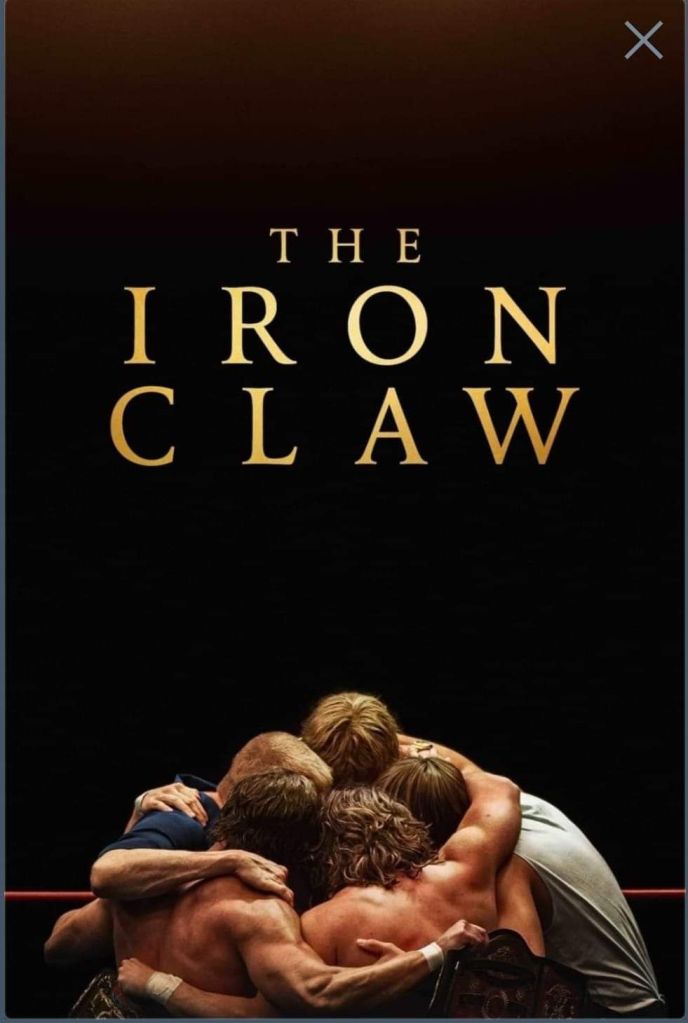
Film Journal 2023: The Iron Claw

Film Journal 2023: The Iron Claw
Directed by Sean Durkin

Strong storytelling and a perfectly captured 70s vibe anchors this surprisingly emotional and deeply affective drama about a family of wrestlers. I went in cold, and the sheer weight of the story’s details really did a number on me. Likely because it was our (my wife and I’s) choice of film for our annual Christmas morning outing. Probably could have gone with something a bit more fitting, but in terms of the films presence and power, it definitely has some staying power.

I’m not a wrestling fan. You don’t need to be to enjoy this film. In fact, I walked out of it knowing a good deal more about the craft than I did going in, and that’s a testament to the films commitment to depicting the wrestling in its raw and honest form. The film has an undeniable energy, but there is no unnecessary polish to the scenes in the ring, letting it all play out as a sincere human drama.

It is at its heart a family drama, and one that revolves around this set of brothers, all existing underneath the hard hand of their father. As things unfold, the bonds deepen and the stakes rise, setting The Iron Claw up to explore precisely what it means for blood to run thicker than water. It helps that the script is airtight and the performances complimentary and invested. It accentuates the films authenticity and invites the viewer in to both feel and react, echoing the quintessential film experience.

Film Journal 2023: Poor Things

Film Journal 2023: Poor Things
Directed by Yorgos Lanthimos

I found this article on Sartre to be a helpful companion piece to fleshing out Director

Being and Nothingness

One of Sartre’s glaring holes as an existentialist is his notion that nothingness (or non-existence) is liberation. Everything for him begins with a meaningless existence (which is similar with Kierkegaard), but unlike Kierkegaard the antidote to a meaningless existence is the acceptance of nothingness. This is what frees us to embrace acts of becoming as something that emerges from existence. How does it do so? Through awareness of our existence, and thus our non-existence.

As he suggests,
(We) should be responsible for (our)selves and make decisions without any outside influence. Ultimately this gives us autonomy over our existence, as Sartre believed that existence precedes essence. Our choices play a role in determining who we are.”

Here in lies the problem- I don’t believe its possible to make decisions without any outside influence.

It says further,
“Unlike any other objects in the world, we have no pre-existing nature or essence to dictate our behavior or existence; instead, it’s up to us to craft ourselves and ascribe meaning to our lives—something which might sound liberating on the surface yet can be an intimidating reality as well.

We become solely responsible for all the decisions we make, and we can’t blame anyone else if things don’t go according to plan.”

And yet, for this to gain any sense of moral meaning it must accept that external forces and realities absolutely do have the power to control and shape who we are. Thus his reasoning collapses in on itself, and even becomes dangerous.

Further yet,
“It’s natural to want to evade accountability with excuses, which amounts to self-deception, according to Sartre.”

But what if the self deception is his notion of the existence of a true self apart from any external influences?

Which leads me to Poor Thimgs as a subsequent exploration of this existential concern.


And don’t look now, but Yorgos Lanthimos just made a film that is both clear and accessible. Although, it should be said that it is actually not that far apart from The Favorite thematically speaking. If the Favorite used sex and money to say something about the nature of power, this one uses it to say something about the nature of individual freedoms and the creation of the self. Poor Things is also much more expansive in scope and setting than his earlier films, using a physical journey to underscore the subsequent theme of exploration and discovery.

There is a lot to like here, including some brave and committed performances that straddle the line between quirk, humor, and seriousness. The production design is also quite fun, moving fluidly between the realism of its period piece and the fantastical nature of its, frankenstienian madman subtext.

I was slightly less enthralled though with the films overall vision and messaging. It falls far too easily into some of the trappings of a certain kind of intellectualism, leaning into certain tropes that tend to pervade sections of academia and high art. This film is very much, and in it’s own way, a kind of Greek Odyssey with an enlightenment era twist, delving deep into the philosophical undercurrent of an existence defined by the existential quest. The stated travels, which follows a young woman (Emma Stone) who is something of an experiment in the art and theory of transplantation, find her encountering some of the more formative symbols of life’s contrasting viewpoints- the traditionalist, the adventurer, the cynic, the liberal optimist, the entitled, the powerful, the oppressor. These symbols are consistently framed as contrasts when it cones to exploring what it means to be human (existence) and the nature of being human as an expression. They are also tied to the movies twin concerns- what it means to discover the world, and what it means to discover the world as a woman. As Stone herself has expressed, the story is very much about acceptance “of what it is to be a woman, to be free, to be scared and brave… to be a member of society,”

These things are, of course, good and necessary ideas to explore, but underneath this is a driving set of assumptions regarding the liberated self. In the outlook of Poor Things, it wants to uphold the self as an idea that can withstand the constraints of reality. It wants to face humanity’s raw and determined potential for horror and uphold the existence of good. It wants to entertain the concept of the free individual even in the face of social conformity and external forces. This young woman discovers her “true self” seemingly by naming her right to happiness, which she finds through indulging in the basic pleasures of the flesh regardless of consequence. Somehow this is supposed to represent less of a cage than the once tightly guarded confines of the home she was “reborn” into, to evoke the grand nature of the experiment which brings her into existence. And it all hinges on the films assumption that there is such a thing as a true self that can be discovered, or that can emerge by way of her conscience awareness of the world around her. Without the truth of a truly free self in play, one that finds its meaning in the basic carnal pleasures of our material existence, this film slides head first into the murky waters of nihilism. And indeed, the logic of the films own observations about humanity and the world and about nature, actively push back against the films own existential quest by appealing to this nihilism. In fact, there is a desperate line spoken near the mid point that perhaps stands as its most honest conclusion- the soul does not exist. At least in this films worldview. Therefore we exist. What this existence is beyond its appeal to nothingness begs the real question lingering at the heart of this film.

What could have been a compelling choice of story ends up treading water in the shallowness of it’s own contradictions. What should and could be a story about a young woman coming to realize that the promises of the enlightenment and its aspirations to supersede and transcend nature don’t necessarily deliver on their promise, and that the ways in which we develop ideas about the true self and existence don’t really hold water when held to reason and rationality, arrives at a place where it then pretends to simply ignore the challenges reality poses to it’s own conclusions and the hard questions this poses to our social and mental constructions.

If that’s its weakness, the film is still, at the very least, willing to tread into the waters of such a philopshical conundrum with a clear artistic vision. On that front there is no doubt about the filmmakers capability and talent, something all the key players benefit from.

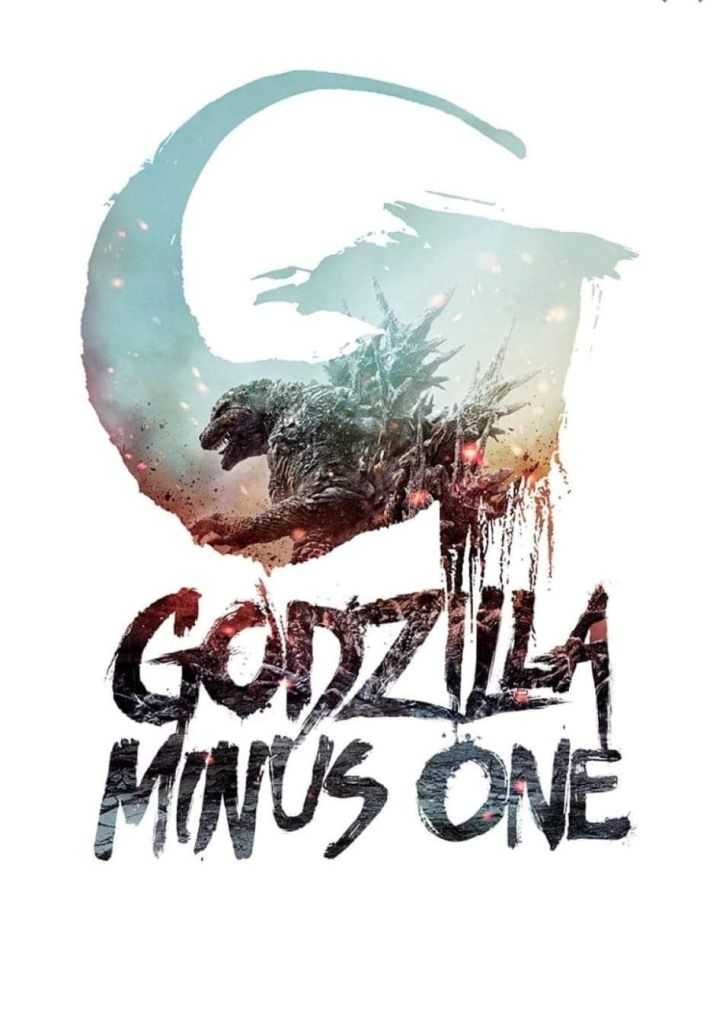
Film Journal 2023: Godzilla Minus One

Film Journal 2023: Godzilla Minus One
Directed by Takashi Yamazaki

Finally found the time to jump on this ever growing bandwagon, and I’m happy to say the hype is real.

Its not just that setting this in post war Japan returns Godzilla to its roots and its primary metaphor representing the horrors of atomic destruction. The films near pitch perfect direction understands the necessasy balance between creature mayhem and human drama. Real characters and emotional stakes allow the monster to occupy its necessary place as both destructive force and existential crisis.

I really loved too how the films approach doesn’t need any tricks to establish the threat and the tension. It doesn’t need to cloak things in darkness or hide it in the shadows. It doesn’t need the slow reveal. It doesn’t need grand visuals. It just needs to establish that the monster is every bit as real as the people, planes and boats it is challenging. The monster design here is great, but even better are the action set pieces and set design themselves, which feel earthy, grounded and raw while providing some exceptionally intense, edge of your seat thrill ride moments.

The human element stays decidedly simple while employing a good deal of depth through the subtext. It is soaked in Japanese culture and cultural concerns, especially where it relates to honor-shame societies and family/community expectations. This provides a great opportunity to veer the story towards the essential human drama instead of fleshing out any big themes or relying on the destruction to pull it’s own weight. Themes are there, to be sure, especially where it relates to matters of regret, responsibity, and family, but they don’t override the fundamental journey of the films central character; a fighter pilot who bears the weight of a mistake he feels he cannot be forgiven for, and the persons who become his potentially redemptive voice. Where the film takes this journey has real and genuine emotional resonance.

It’s so interesting to me to consider that the last few Godzilla films released with an incredible amount of advertising and push. I didn”t even know this one existed until the week it started it’s slow roll out in select theaters, expanding now this week. But here we are, boasting one of the strongest Godzilla movies in recent memory and one of the best action films of the year. Go figure. No wonder its managing some success via word of mouth. It’s always something to celebrate when a film is able to do that using it’s own two legs, proving that success can still happen the old fashioned way. Fitting that it involves a throw back classic creature flick.

Reading Journal 2023: How Do You Live

Reading Journal 2023: How Do You Live
Author: Genzaburo Yoshino

Picked up this recently translated version of Yoshino’s popular Japanese classic upon the news that this book, reportedly famed Hayeo Miyazaki’s favorite book, would be the source material for his reportedly final film.

I can see what Myazaki loves about the book. It is highly philosophical and essentially hands him the sort of visual poetry and symbolism that have become a mark of his filmography on a silver platter. This is a story ready made to challenge narrow perceptions of time and space, turning the smallest molecule into an opportunity to explore the interconnectedness of life on the most grandest of scales.

One of the challenges this book faces is finding ways to supersede the didactic nature of its approach, most readily in the portions that are expressed in letters or journals. Its not just philosophical, it reads like textbook philosophy, right down to its interest in building a literary and literal historical center (a grand portrait and treatiest of Napolean). The structure is relatively straightforward; it follows back and forth conversations between a young boy and his uncle, whom has affectionately nicknamed him Coppernicus, or Copper, due to his inate awareness of the world around him and his deep felt need to ask the necessary questions. It tries to connect the didactic sections to a linear storyline by using the unfolding events of the boy and his friends at school. As the boy experiences everyday struggles, he brings these struggles to his uncle in the form of a question. These questions become lessons, often blanketed by observations which connect his struggle and experience to a governing truth about the world and how life works, infusing this with a specific focus on how a single boy exists in relationship to the friends, family, culture, society and country that surrounds him. This parallels a history of Japan with the personal questions being explored, building a celebration of identity along with existence.

My personal convictions/worldview aside, oone thing that has long fascinated me about the particular philosophy being represented in this book- a particular form of Buddhism- is its tendency to ruminate between religious expression and philosophical materiliams (or humanism). Depending on where it is being translated into, it tends to gravitate more heavily towards one or the other. For me personally, I have often found the most compelling parts of this worldview to emerge when it is williing to embrace the language of the gods and its more strident and upfront religiousity. I find it least compelling when it strips this away in favor of a materialist approach to the world. The world Yoshino sees in these characters is one that veers towads its more strident religious experession, something that, through astute observation of the Japanese culture which has shaped him, is reflected in the migrant nature of Buddhims geographical movement. Where the lines between East and West blur, the roots of specific beliefs become more complex, something Yoshino highlights through telling the history of a particular Buddha statue that comes into view of our main characters. There are moments here wherre it stands in danger of replacing god with the self, but it is the power of the cultural conditioning that keeps the philosophical concern pointed outwards rather than inwards. It might be fair to restate the question on the cover of the book, the same question that flows out to the reader at the end of the book, as, “how do you live in a world when life is not about you.” If my own worldview might take that to a slightly different place than the author, I deeply appreciate that necessary foundation. It carries even more weight when applied most practically to the very real social realities that inform these character’s own space and time.

Yes, we are all molecules. More to the point, we are all the result of molecules being formed through a lengthy and interconnected history of cause and effect. This is what places us in space and time. What lies behind this history of cause and effect, the very things that breathe nuance and complexity into concrete religious truths, is the thing that draws and shapes our inate longings and desires for something true. If, as the author points out, we experience suffering for example, that awakens us to the notion that this is not what life was made for. Such a reality points us to the idea that things are not as they should be, and yet awakens us to live as witnesses to the greater truth- that our desire for something different, the very desire that pulls us through suffering, testifies to a greater truth that this world was made for wholeness. We are who we are in a reality that longs for that which such a reality wars against. Thus we find the nature of living in one direction or another- hope or hopelessness. How do we live in hope when reality arrives at our doorstep in such a way as t tell us life is otherwise? We embody those desires. We make them incarnate. And we do so by beginning with the most important piece of that puzzle-awarness of both the reality and the hope as tensions needing reconciliation.