I was listening to an interview with author Cole Arthur Riley on her book This Here Flesh: Spirituality, Liberation, and the Stories that Make Us
In it she says that “the truest stories are rarely the ones that get told”. By this she means the stories we tell about ourselves, about others, and about the world in which we live.
She locates the primary reason for this in the fact that such stories are shaped primarily by external forces. We are, others are, the world is, the stories those external forces tell about us. And it is often the forces with the most power that determine which of those stories get told. This is as true for those of us who exist in a group like this, as it is for the ways the stories we can tell about the world shape how we see the world and act in the world. What makes this more problematic is that, be it in theology or in the world, we tend to take such stories and turn them into propositional truths which then bind one or the world or an idea to that proposition. The stories not only define us, but ones interpretation of that story defines us.
This had me thinking of another book that I recommend quite often- Biography as Theology: How Life Stories Can Remake Today’s Theology by James William McClendon Jr.
In this book McClendon makes a case for biographical theology as the antidote for propositional theology, which has run rampant through much of the modern theological landscape. Biographical theology is really just a reconstitution of narrative theology given a personalized and relational twist. Such an approach dares to wonder about this- if an existent God tells a story about Himself, about us, and about this world, how would this reshape who we are, how we see the world, and who we see God to be, if we gave this story the same sort of defining power over our world and over our lives? Which of course begs the further observation- which story is in fact being told, and how do we genuinely hear the story of God without our own stories getting in the way?
We can, I believe, say this with confidence: the stories we tell, or the stories another tell about us, matter deeply, and perhaps matter most of all. Because they determine who God is, who we are, and how we see the world. The challenge of biographical theology then is to pay attention to the ways we find ourselves in those stories and who precisely has the power to place us in them in particular ways. If we can begin with that question, we can then begin to ask how it might look different to belong to a different story.
And then, as it just may be, we might also be confronted with the truth that we have the power to shape another’s story based on how we tell it. And we can begin to think about how our own words and actions place others in the stories we have determined to tell. Which of course, is something that matters greatly.
I was listening to an interview with new testament scholar John Dominic Crossan (titled The Other Gospels) on how it is that we understand the nature of the four Gospels and their adoption as liturgy in the life of the early church given that they emerged in a world where there were many gospels in existence.
He notes that it would be a mistake to simply discard and ignore the other Gospels using blanket terms like gnostic, for example. It would be much better to recognize that these gospels emerge in a world shared by the synoptics and John, they have a history, a theology and a polemic that can help us understand that world,.and they can point to the larger conversation that did exist at the time.
He also talks about how understanding the nature of the four gospels adopted into the NT can allow us to see how they don’t function apart from that larger conversation. For example, if, as it is often suggested, Mark was written first, and if, as is often suggested, Matthew and Luke (and even John) borrowed from Mark, what this then tells us about tradition of Matthew, Luke and John is that they had some of these other gospels and in fact incorporated them into their own retellings of Mark with intention. Crossan makes the interesting observation that the gospel (or gospels) they incorporate are in fact apocalyptic traditions, whereas something like the gospel according to Thomas is functioning as a polemic against the apocalyptic tradition. This suggests a shared world with two different viewpoints, likely determined by context.
Perhaps the most important point comes from his assessment of the 4 gospels shared genre/tradition being one of the primary reasons they got primacy- they are narrative gospels, or belong to the narrative tradition/genre. Meaning, for these gospel writers, telling the story was necessary. In fact, it is this narrative function and characteristic that binds them more directly and intentionally than any other known gospels to Judaism.
I was then listening to a podcast episode from the historical Jesus. It was titled Interpreting the Visitation. In it the host leans into the necessary place of the theophany in Jewish and Christian history. Meaning, telling the story of God. He cites Ezekiel as an example, noting how in Ezekiel 34 it begins with the promise to send a shepherd, followed by the statement that “I will be your shepherd”. Eveything that follows the proclamation of what this shepherd will do is defined as Gods work. So when we get to the story of Jesus and Jesus is applying the words of the shepherd to Himself, the story comes alive as theophany. Same with the way John the Baptist is depicted as leaping in the womb when he encounters the infant Jesus in Mary, langauge that is pulled directly from David dancing (leaping) before the ark. The theophany comes alive.
A reminder of how the Christain Tradition is anchored in the art of storytelling. This is how we encounter God, through the shared story. Crossan calls this the art of gospeling. News is information, but good is an act of interpretation. And the good news becomes the gospel according to you and me when we tell the story within our own contexts.
Matthew 16:13-16 13 When Jesus came to the region of Caesarea Philippi, he asked his disciples, “Who do people say the Son of Man is?”
14 They replied, “Some say John the Baptist; others say Elijah; and still others, Jeremiah or one of the prophets.”
15 “But what about you?” he asked. “Who do you say I am?”
16 Simon Peter answered, “You are the Messiah, the Son of the living God.”
1 John 2:21-23 21 I do not write to you because you do not know the truth, but because you do know it and because no lie comes from the truth. 22 Who is the liar? It is whoever denies that Jesus is the Christ. Such a person is the antichrist—denying the Father and the Son. 23 No one who denies the Son has the Father; whoever acknowledges the Son has the Father also.
I’ve been spending some time with the existential philosophers lately, with Kierkegaard topping the list. One of the things that Kierkegaard argues is that true despair can only come from rejection of eternity, and rejection can only come through knowledge of eternity. By eternity he means the infinite, or god, or that which the finite/mortal challenges.
In many ways, I think this same idea is present when it comes to Jesus. One cannot escape the fact that all four gospels are shaped by the question, who is Jesus. This question drives the narratives, frames the tension, and informs their proclamation (good news).
The implication is this. The greatest praise comes when who Jesus is finds its proper confession. The greatest warnings come when those who know this confession set out to convince Jesus followers that He is someone else. Why? Scholar Colan Kruse does a great job in his commentary on 1 John detailing the warning of 2:21-23- by convincing people that Jesus was not who He said He was and did not do what He said He did they are being stripped of their hope. And as Kierkegaard suggests, this is the truest and most tragic form of despair. This is precisely what the dissenters who had broken away from the church and who were now infiltrating the church were doing to the readers of 1 John.
For Peter to declare that jesus was the messiah, the son of the living God, was to locate Jesus not as the prophet that the others were citing, but within the expectation of Gods promised work. In the story of Israel this identity couldn’t have been more clear, and yet in the person and work of Jesus it also does something quite unexpected- it announces that God has in fact broken into the middle of history and done a new thing. And when we get to 1 John, it makes these bold statements: (1:2) He is the atoning sacrifice for our sins, and not only for ours but also for the sins of the whole world.
1:1 That which was from the beginning (the Gospel of the person and work of Jesus the Christ), which we have heard, which we have seen with our eyes, which we have looked at and our hands have touched—this we proclaim concerning the Word of life
1:3 Our fellowship is with the Father and with his Son, Jesus Christ
3:16 This is how we know what love is: Jesus Christ laid down his life for us. And we ought to lay down our lives for our brothers and sisters… This is his command: to believe in the name of his Son, Jesus Christ, and to love one another as he commanded us
4: I have seen and testify that the Father has sent his Son to be the Savior of the world
4:2-3 Every spirit that acknowledges that Jesus Christ has come in the flesh is from God, 3 but every spirit that does not acknowledge Jesus is not from God.
4:9 He sent his one and only Son into the world that we might live through him
Now, there can be some disagreement on this front regarding how this knowledge is known and whether it needs to be known in order for one to be in the kingdom of God. But I don’t think one can deny that in the scriptures we find the harshest words saved for those who know this to be true and who strip this hope from those for whom this truth is very real. It is to say that this reality that we know; this world enslaved to Sin and Death, our suffering and exile, enslavement and poverty, is more true than the proclamation that God has at long last done something about it. It is to say that our faithfulness, our conviction to live in allegiance to God and in the way of His character by way of obedience to His Word, is all in vain and meaningless.
1 John is probably the best place to go to hear what God thinks of such dissension. But it’s also readily apparent through the whole of the Gospels. Who am I, or who are you, is the most vital question concerning Christianity. That’s what made it so scandalous.
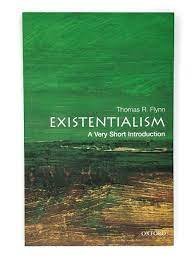
Reading Journal 2023: Existentialism: A Very Short Introduction Author: Thomas R. Flynn
One might ask, is it possible to write a book that breaks existentialism down into words the common person can read and understand? Flynn gives this his best shot in this short introduction. But alas, if this is any indication, such a question is bound to become its own form of an existential crisis.
In truth, I’m not sure the existential philsophers entirely understand their own ideas. In many ways, such understanding kind of betrays the point of a philosophy that is designed to live in the tension of an existence both seemingly bound by the constraints of time an beholden to the problem of infinity.
What Flynn does undoubtedly achieve however is giving us a necessary foundation from which to explore existentialism. If there is a single defining factor, Flynn breaks it down to this idea- authenticity. Existentialism is ultimately interested in locating the authentic self in response to the problem of self deception. And part of what leads this endeavor into a perpetual state of crisis is the fact that authenticity is, by its very nature, an allusive construct.
How can we speak of the self when it seems impossible to locate ourselves in the present, the past always defining us and the future always deconstructing us?
How can we speak of truth when all truth is perpetually bound to contingency?
How do reconcile the fact that our lives seem pulled and driven by conceptions of the infinite when they are simitaneously bound by time
How can we build our ideas around an idealised humanism when reality seems determined to redefine us according to the universal rules and laws of nature?
How can find joy in the midst of despair?
How do we find the real when all of the mind seems built on illusion?
How do we recognize the importance of irrationality when authenticity demands we be concerned with the rational.
How do we reposition our focus in the practicalities of living in the present when such investments demand an allegiance to the irrational experiences of awe?
How do we give allegiance to the self when reality tells us the self is a construct and an illusion?
How do we appeal to the idea of the free self when such freedom is depenendent on the external forces that define it?
How do we live when the process of life is defined by dying
How can the reality of finitude motivate us to live when to live seems to need the infinite to justify itself?
How can we speak of freedom as responsiblity when nothing in life appears to be within our contol.
These are the sorts of questions that lie underneath the density of the philosophy. It is what allows for a diversity of thought to exist within the uniformity of that existential concern for authenticity, or the authentic self. And yet this diversity of thought also exists within the realization that such concerns place the weight of existence on their shoulders. To think of such things is to be embroiled not simply in the hard matters of existence, but in the fact that a perpetual awareness of what these hard matters actually are leaves existence stuck in the tension. Its kind of like the concept of love. When we understand what love is, we are faced with the realizationn that love is the reality of a physiological process doing its thing and creating the illusion of a feeling. We are faced with the truth that such physiological realities have a clear biological purpose- suriival. We recognize that love is not some external reality that exists outside of ourselves as some motivating force. An we recognize that love is a highly manipulatable construct.
And yet, to say anything at all about the authentic self also seems to require us to give the illusion allegiance as a motivating force. To speak of love as though it is something that exists outside of ourselves. So which is more true? And how does one exist alongside the other? This is the sort of tension that gives rise to the existential crisis. When we know what is happening when we fall in love, for example, and we note the processes that give rise to the emotion, and further when we can note the process and how easy it is to manipulate it, would such manipulation be more or less authentic to the self? Take this a step further- what if love, in reality, is all a matter of manipulation based on illusions of the self? Could we still authentically fall in love?
We can apply this same reasonsing to the concept of the self. In fact, this is what all of existentialism ultimately boils down to. If the self is not some entity that exists external to our “self”, as in something preexistent that we grow into or discover, and if the self is an emergent property based on circumstance and choice, and if circumstance and choice bind the self to the external forces that shape us, then what do we do with something that can’t be whittled down to the present? If we are always becoming how can we be? And more astutely, if becoming is something we can manipulate and which is also completely beyond our control, how can we even speak about something such as authenticity in concrete terms?
It would make complete sense if you look at all that and simply choose to walk away. In some sense its easier to live rather than to think about living. And yet, at the same time the thinking matters because life is ridiculously hard. Sometimes it just seems necessary to pose the hard questions back at it. Does such angst actually have anywhere to go but into the empty space of that large philosophical void? Debatable. But it can be a way of allowing us to navigate the crisis. Or at the very least allowing us to feel like we are. For some of the existentialists there certainly was a sense of ultimate defeat lingering in the background. of this philosophical process That’s the risk. For others, there are moments of freedom that emerge, even if the path is long and treacherous and steep. This is just my observation, but where that intersection seems to meet is at the point where the authentic self meets with some sense of an ultimate reality. A freedom to say, this is true, or at the very least I can believe this to be true of reality. That is the singular, necessary facet of the process that then allows one to pursue authenticity in relationship to that ultimate reality, precisely because authenticity has something to measure itself by. And thats when we can recognize where our lives deviate from this measure and become inauthentic, or self deception. This won’t afford us certainty, but it can afford us functionality inbetween the inevitability of our next existential crisis.
(some pictures used from different promotional online sites or undocumentated available pictures online)
A local resident to Alabama described their state to me in the following way- the money’s in Huntsville, the cultures in Birmingham, and the power is in Montgomery (meanwhile, the good folks over there in Mobile seem to defy definition).
I was thinking about this descriptive while visiting the iconic southern locale. In fact, a number of people I talked to even suggested that the “southern” label is something that no longer makes complete sense when speaking of their “sweet home”. When you consider who is living and working in Huntsville today, for example, what you find is a space populated by leaders in the field of space, nuclear military, and technological development whom come from every corner of the greater United States and beyond. A truly international community. This thread continues through the diverse landscape that is modern day Birmingham.
I’m sure there would be plenty Alabama residents who might disagree with this descriptive, and for legitimate reasons, but it actually rings true to my own experience of visiting their space. This was not the south that I expected to find. What I found was something more nuanced and complex.
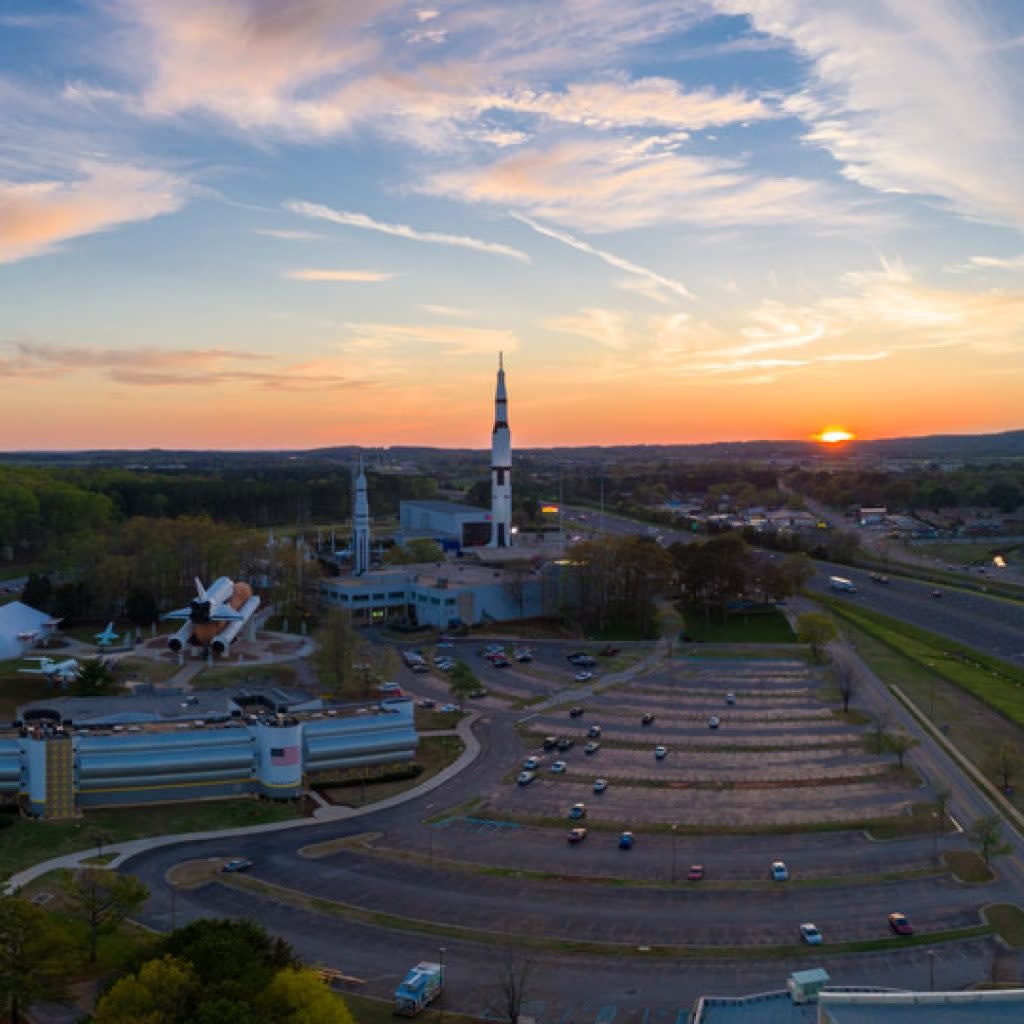
If I was to restate the above sentiment in my own words, I might say it this way- Huntsville is progress, Birmingham is present, and Montgomery is the past. What’s curious to me about this descriptive is the way these three things seem to function together as somewhat disparate entities, however unified they might be within the same overarching narrative of the southern experience, an indeed the larger umbrella of the American experience. This would be especially true when you consider the kind of progress that Huntsville represents. It boasts the marks of an upscale city marked perhaps most definitively by one of its most iconic sites, the U.S. Space and Rocket Center.
Taken from Huntsville website
Last year it topped the U.S.’s best places to live list largely based on a mix of economic opportunity and a still relatively low cost of living, both of which are playing a role in its prestigious position as a leading player in a number of essential fields. With both eyes on the future, it is remaking itself in the glow of some America’s most wealthy and important companies.
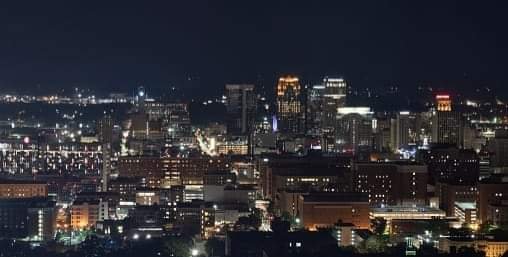
Just an hour and a half further south, standing at the top of Birmingham’s gradual incline, a veritable city on a hill, is the unmistakable site of the Sloss Furnaces, a national historic landmark reflecting Birmingham’s long standing role in the industrial revolution.
Taken from sloss furnaces website
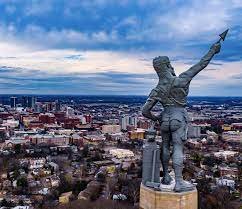
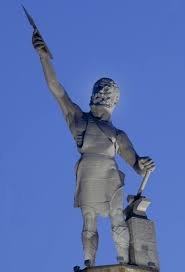
Alongside this stands a massive statue of the Roman god, Vulcan, known as the god of fire forge, directly overlooking Birmingham’s university district.
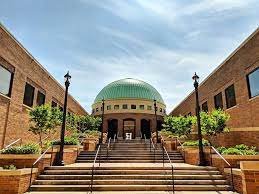
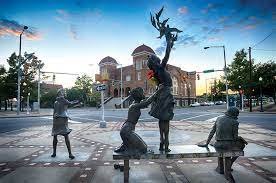
These two images taken together provide a compelling portrait of the city that lays unassumingly at its feet, one steeped in its industrial past but one also shaped by a commitment to modern intellectualism. Birmingham truly is a city of the present, priding itself on a massive subsidation of the arts and culture. Fueled by a growing and diverse population and anchored in a well formed value for real diversity, led as it is by its deeply charismatic “put all the people first” mayor (43 year old Randall Woodfin, who is worth a google), the city uses its civil rights district, a testament to its pivotal role in the civil rights movement (something I’m looking to dive into with Diane McWhorter’s book Carry Me Home: Birmingham, Alabama, the Climatic Battle of The Civil Rights Revolution) to tie its storied and often tragic past to its present in a tangible way.
Taken from Birminghams national historic site website
This is a city that invests in and values its creatives, a fact that is nearly impossible to miss traversing its different neighborhoods. It is through its diverse cast of creatives that it finds an opportunity to tell its story in a way that translates to the lived experience, for those who’s lives connect directly to the past and those who have found themselves adopted into it. If the past is all but invisible in the perfectly paved streets and illustrious institutions of Huntsville, Birmingham finds new life by making the past a clear part of the narrative going forward. Nicknamed magic city for its iron rich landscape, to me this place presented itself as a case study for how build forward towards true reconciliation.
As one resident proclaimed, Birmingham might not be flashy, but its honest and homegrown, passionate, and real. A sentiment one might find in the sheer absence, relatively speaking, of endless suburbs and big box/chain stores.
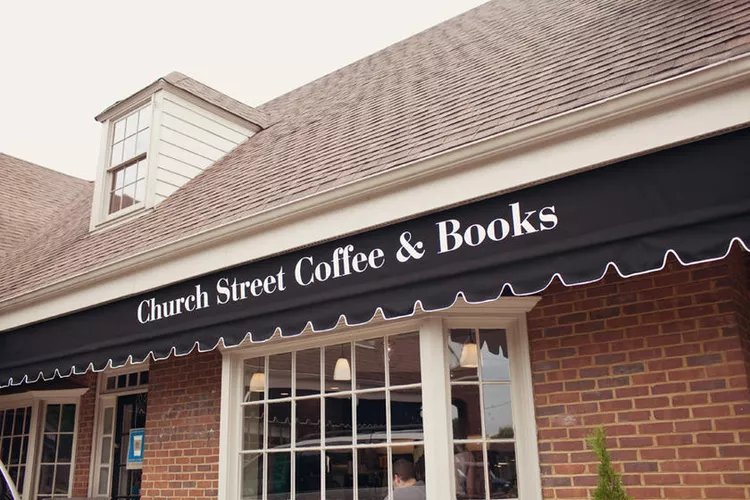
I used a day to tour the city’s neighborhoods via its bookstores, which took me from historic Woodlawn
Beautiful Mountain Brook, a unique neighborhood tucked away into Ruffner Mountain
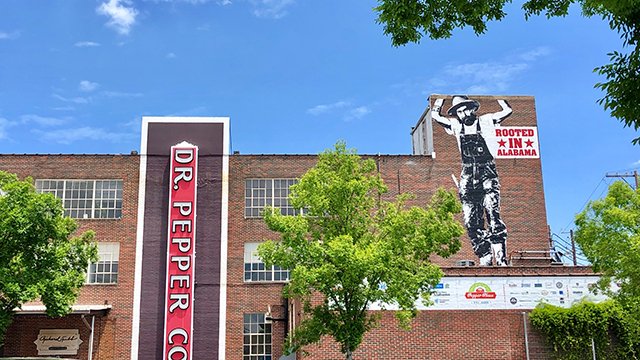
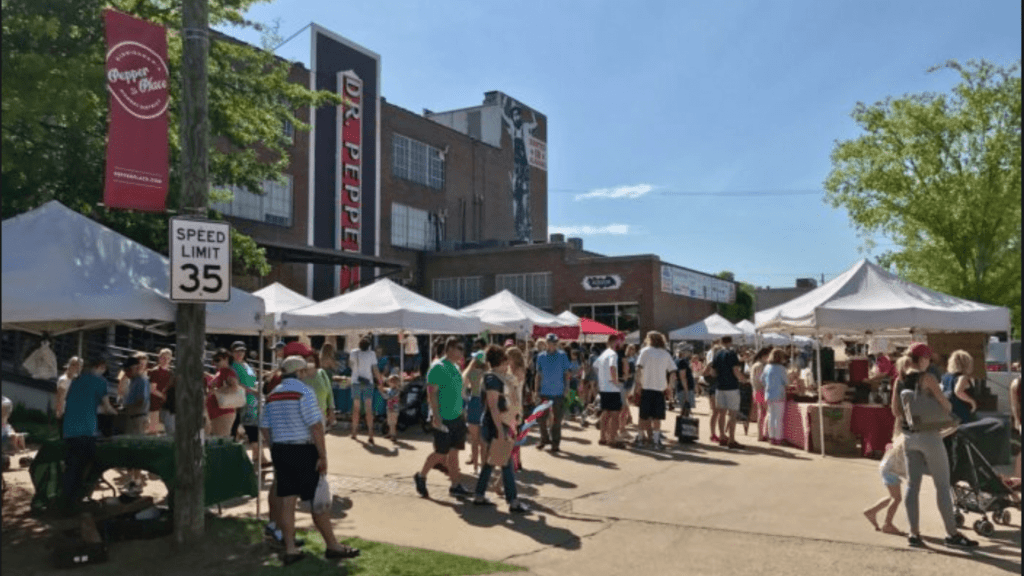
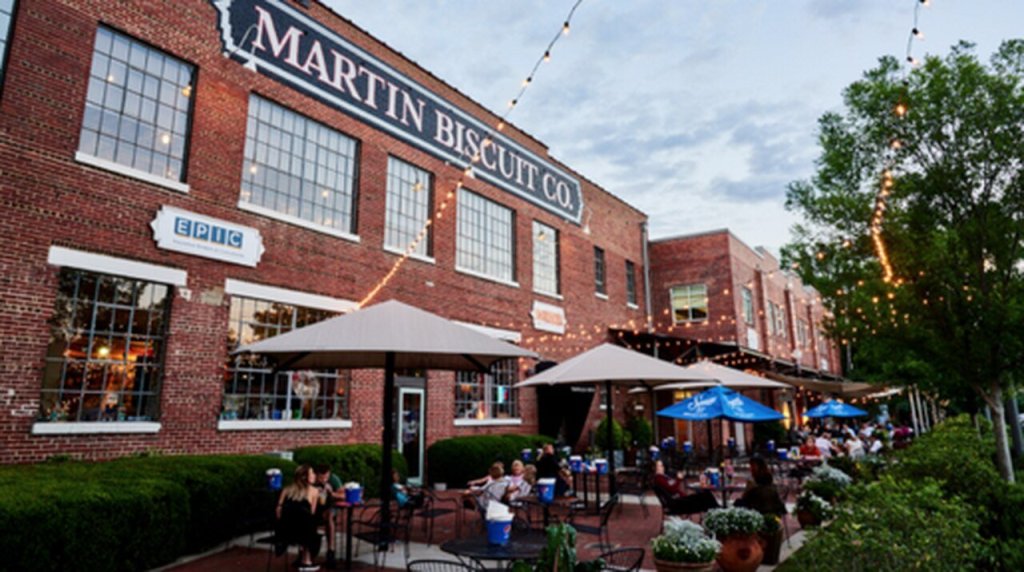
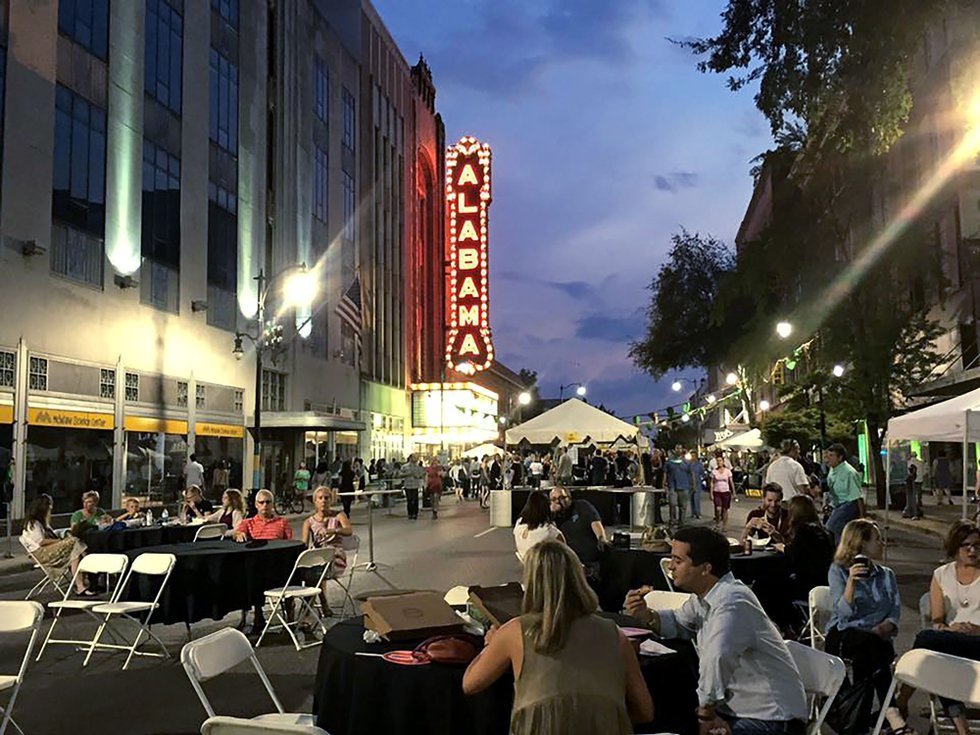
A local market built into an old Dr. Pepper bottling plant in a once glorified suburb now dedicated to local goods, markets and store fronts and connected directly to its culturally rich downtown hub
Taken from Pepper Place website
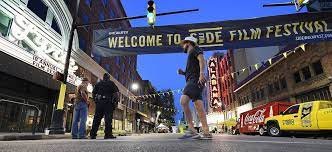
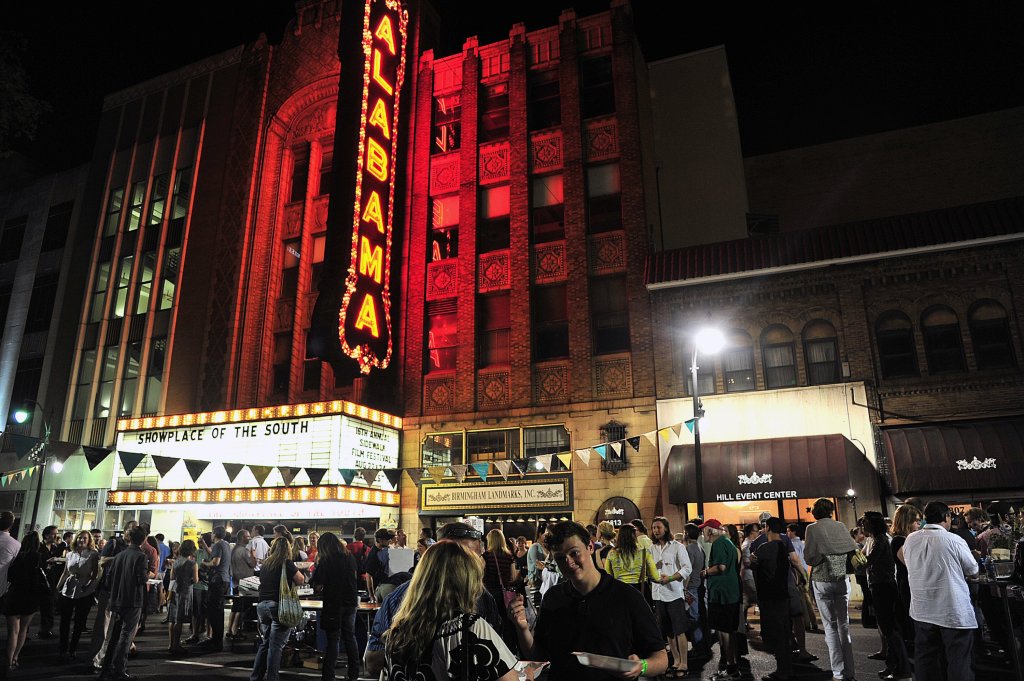
A downtown hub bustling during my visit with its annual sidewalk film festival.
Taken from siddewalk film festival website
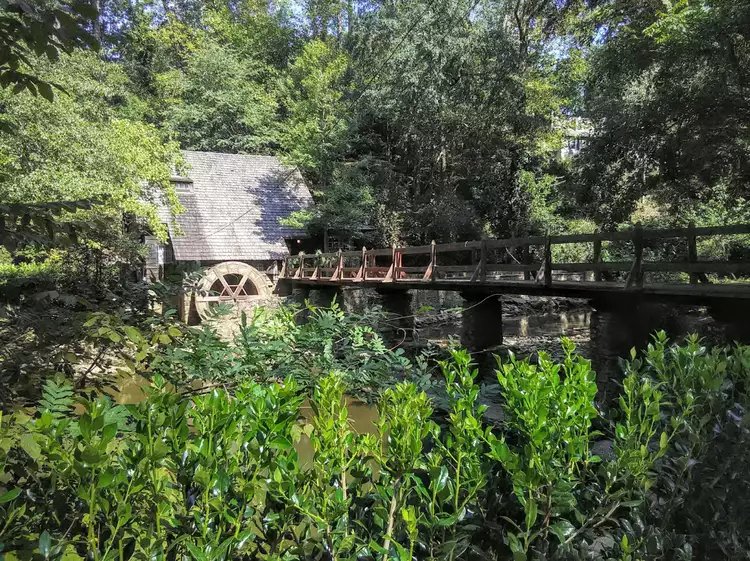
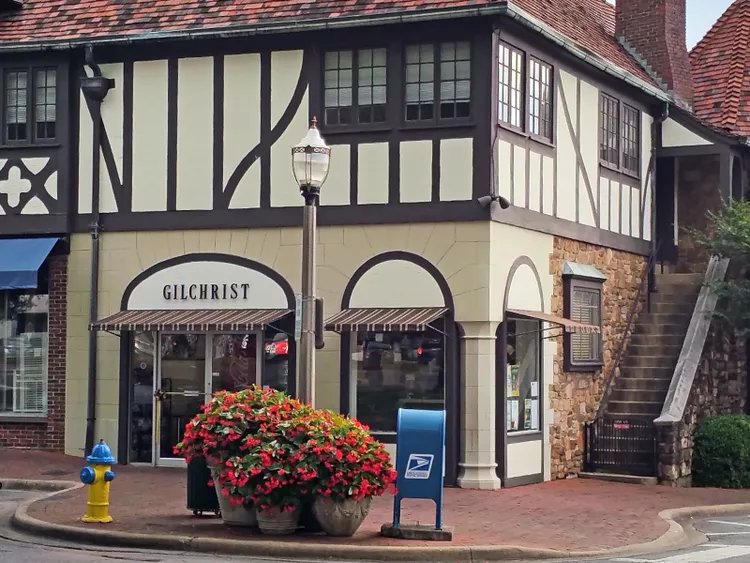
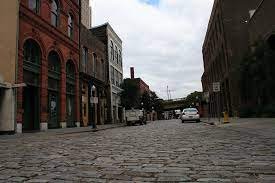
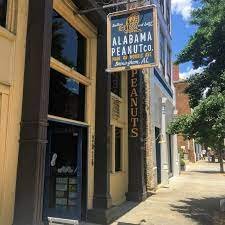
Occupying the outskirts of the downtown area is also the railroad park, sitting directly adjacent to the cobblestone streets of Morris avenue, one of many sections of the city utilizing green space and forest as the driving force of its development. Morris avenue, by the way, a fact made apparently by its well marked signs, originated here through business aspirations from Montgomery, naming its district, an indeed modelling it after the famed English city from which it drew its inspiration. Take a walk down the historic street and you’ll be greeted by the smell of peanuts at the classic Alabama Peanut Co. and an endless array of local shops, cafes and restaurants. A perfect stroll to combine with the Park.
Taken from Birmingham tourism site
Its literary history and presence, which of course spills out into the rural, Alabama countryside, was my main draw, but you couldn’t talk to a local resident without the first thing out of their mouth being- the food. Perhaps due to chef Adam Evans winning the James Beard award, there is something in the air here that seems to be generating excitement over being the next great paradise for foodies. Beyond the homebred southern fare (I’m told beyond the typical BBQ and biscuits, hot chicken, pimento cheese fried green tomatoes, and boiled/freshly roasted peanuts are the must tries) which has apparently been trending more and more in Birmingham towards emphasizing its proximity to the coast, you’ll find a heavy mix of African and Mexican fare (I heard one person say that Birmingham was leading the way in important and necessary African studies).
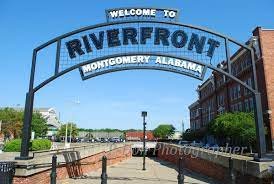
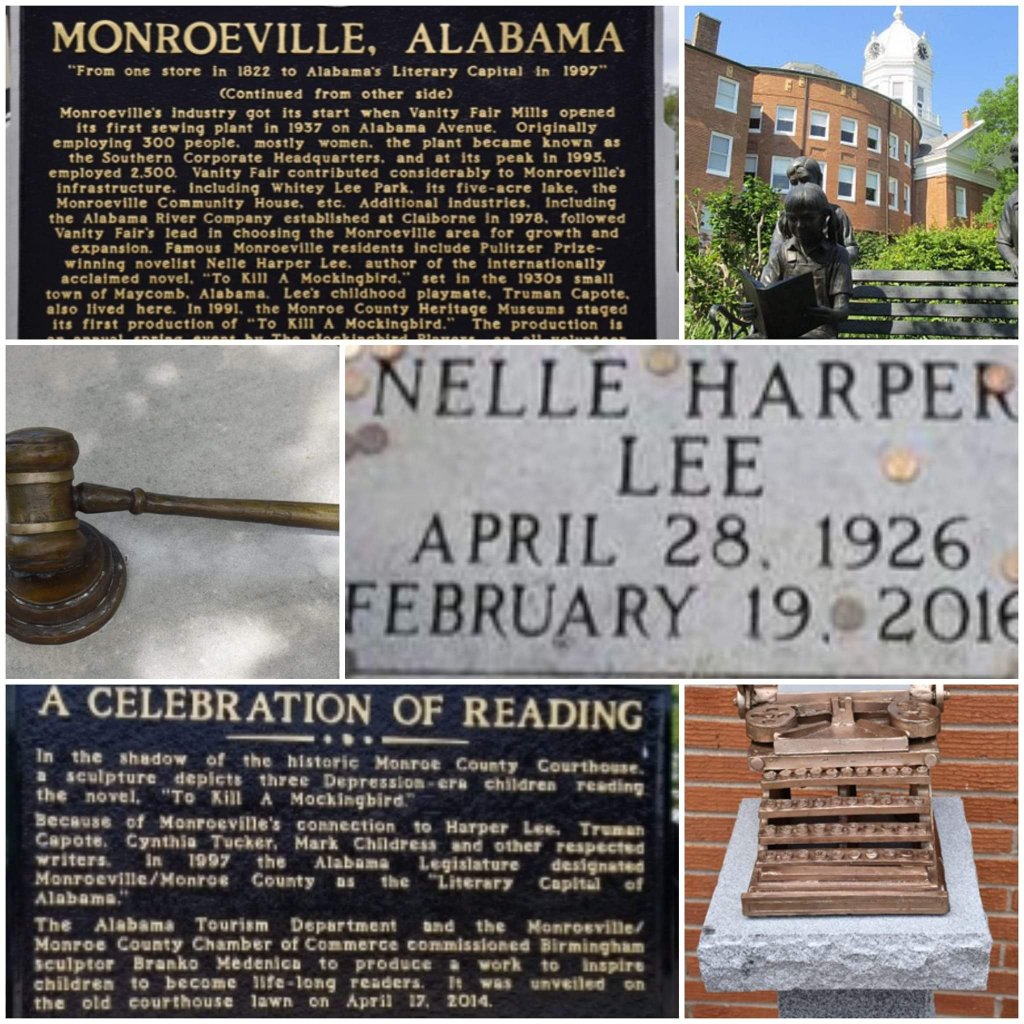
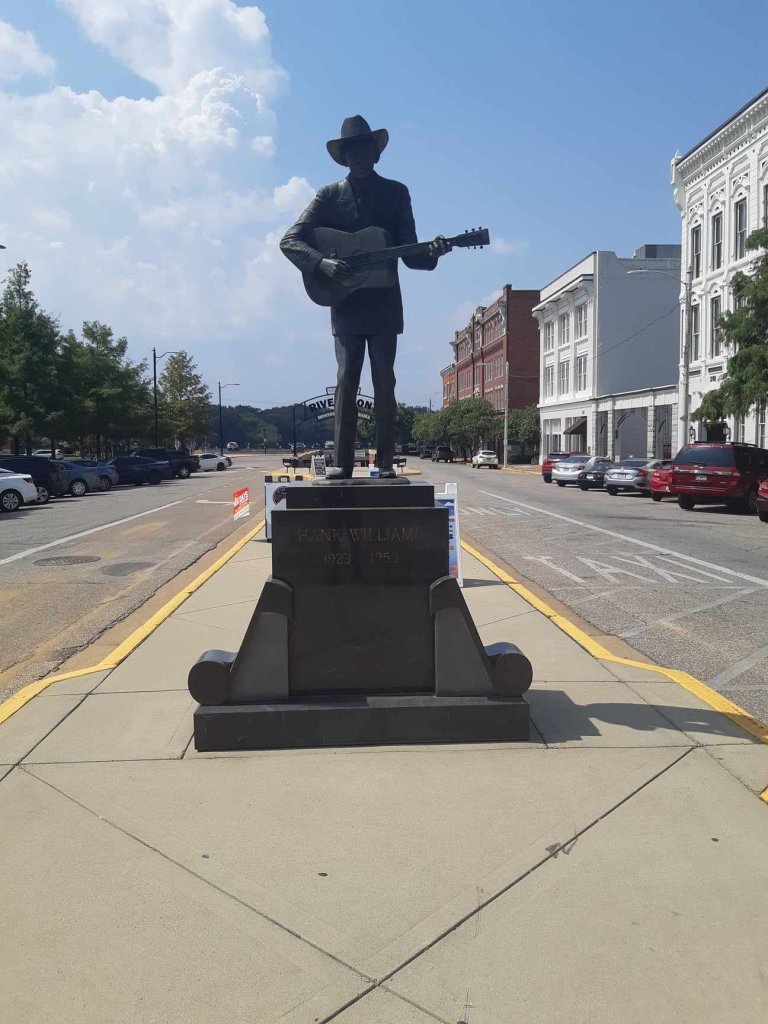
About an hour further South of Birmingham, through the colorful mountain ridges and valleys that form the Red Mountain landscape, the foothills of the Appalachian region, is Montgomery. Trending towards the coastal regions of the Gulf of Mexico, this small city center looms large as the State’s capital. Truth be told, stepping on to its streets is like travelling back in time, the political shape of Montgomery rooted firmly in the story of its past. Its position on the Alabama river gives its coastal identity the sense of being a hub, connected to the southern trade routes from its inland position. You can actually smell the ocean air the minute you exit the valley and enter its city limits. This is a long ways off from the modern flourishes of Huntsville, to be sure, and its here that I actually felt most connected to what I perceived to be a genuine portrait of the “south”, if only because everywhere I went people were telling its story as a distinctly “southern” one. Perhaps the most southern experience I had, outside of my eventual stop in Charleston (which is a whole other thing), was the opportunity to then get off the interstate and drive the backroads to places like Monroeville and Selma. Here the biscuits and grits, if only I could have indulged as a celiac, really come alive. Walking in the footsteps of the inspiration for To Kill a Mockingbird at Harper Lee’s hometown. Stopping at the small fruit and veggie stands. Reveling in the ability of brief rain showers to break the humidity (I’m sure I seemed strange driving with my sunroof open and my windows down as the rain came down, but it was glorious surrounded as I was by the long leaf pines), it was hard to experience the area without hearing Nat King Cole and Hank Williams lingering in the background, two natives to Montgomery’s past. Singing some lines from Hey, Good Lookin’ just seemed necessary to ordering up any necessary fare, if just to say I had some Jambalya on the Bayou.
Taken from Montgomery tourism site
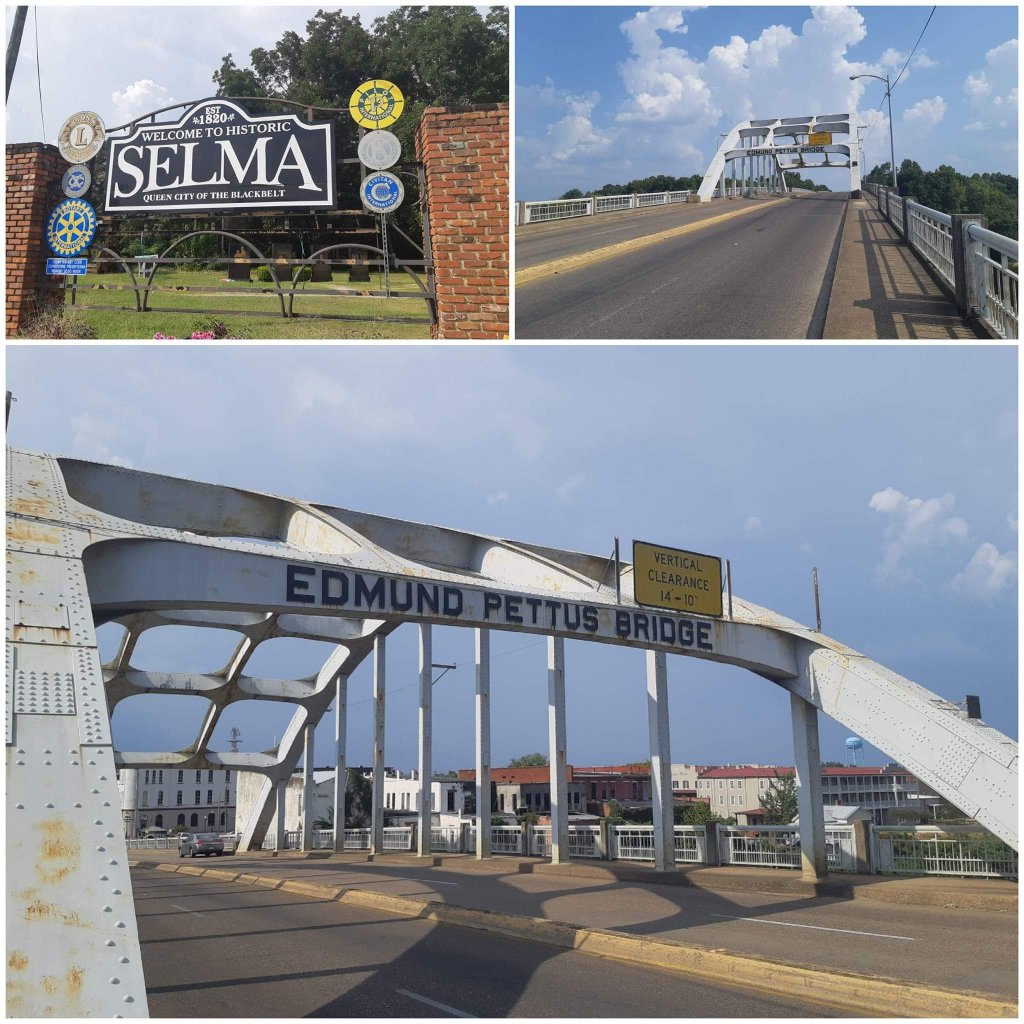
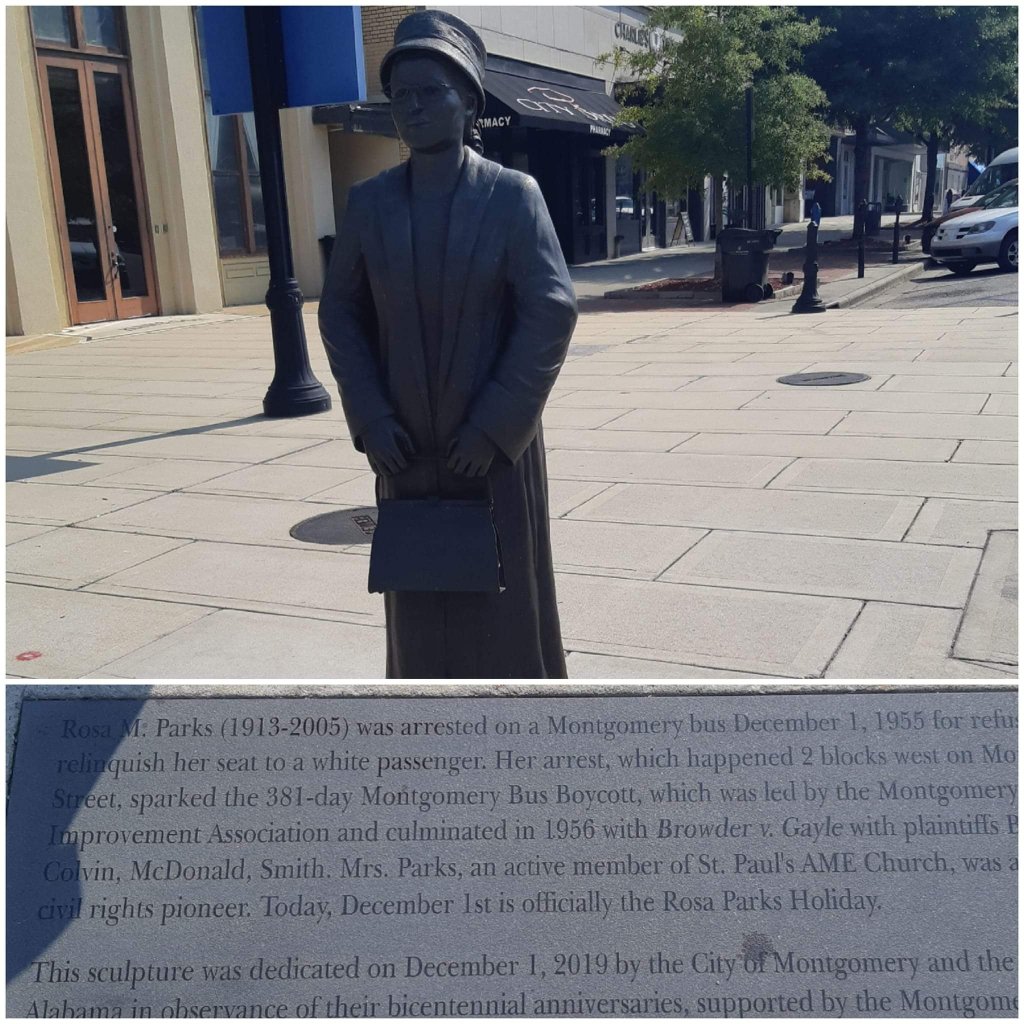
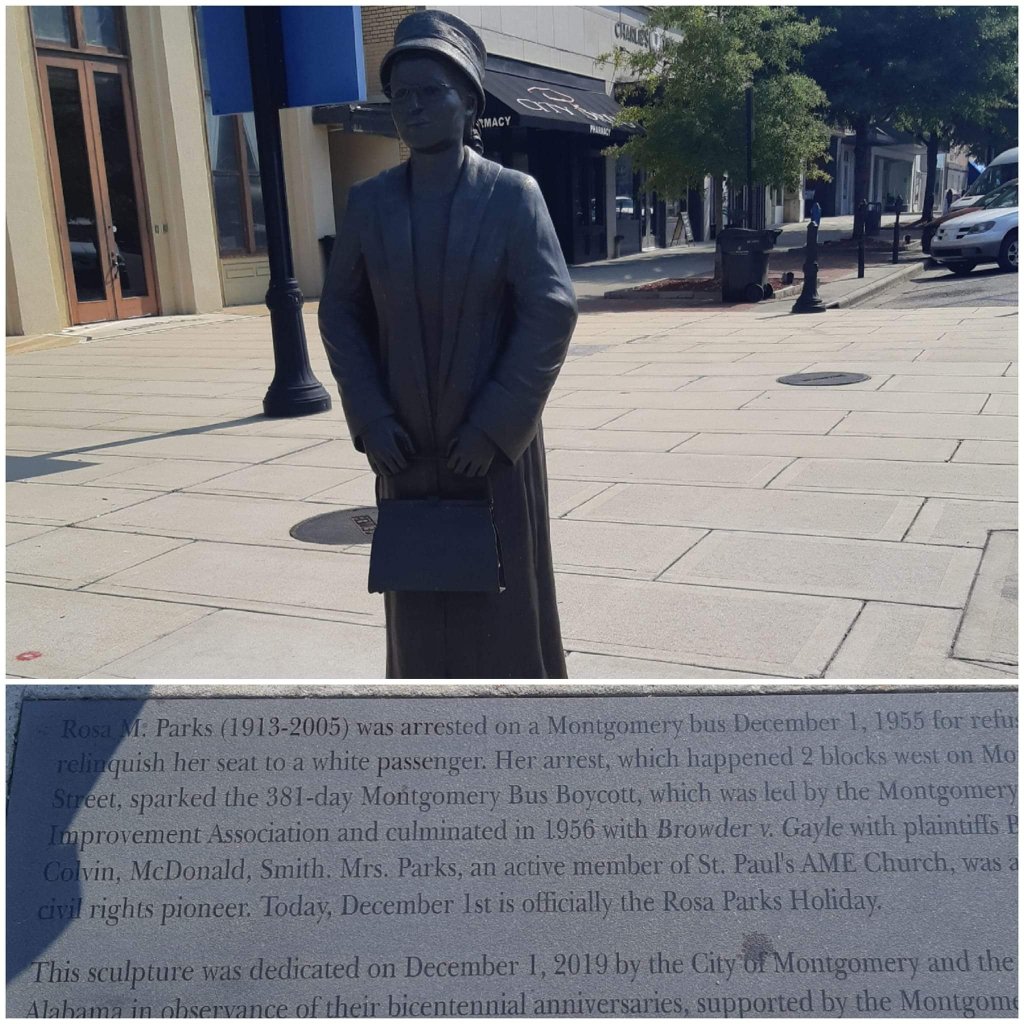
Getting off the interstate and onto the backroads was actually the perfect way to process the weightiness of Montgomery’s history, captured so poignantly by its visual presence be it through the incredible and quite modern Equal Justice Initiative’s Legacy Museum and National Memorial for Peace and Justice, its well marked paths noting the story of Rosa Park, Martin Luther King, the Freedom Fighters, or on the road to Selma.
These backroads would eventually merge with Birmingham’s now familiar cityscape, bringing with this small loop the voices of reconstruction and the civil rights movement. As it encounters the revitalized culture of this present space, it attempts to reimagine a better way of living together. This to me sat in powerful contrast to the very visible notes of progress in Huntsville, cloaked as it is in the allure of the enlightenment project. Truth be told, its money comes from a history as a cotton trading center. I wondered, then, about the promises of these institutions as they continue to exist beyond the confines of this necessary conversation with Alabama’s past, and perhaps some of the irony to be found in the fact that Huntsville remains Alabama’s birthplace. Without Montgomery would we even know the right questions to ask of this unending pursuit of progress and advancement? To what end do these projects reach? I’m not sure myself when it comes to the right questions an potential answers. What I can say though is that I felt more sure of these questions navigating and experiencing the streets of Birmingham, anchored more firmly in the here and now. An unexpected place that, to me, reminded of the inevitable draw that I have towards Omaha, Nebraska, an equally unexpected small sized city that sort of reformed my idea of what a place can be when it is free to grapple with its past. In truth, it had been Charleston and Asheville that had long been on my checklist, one immersed in the sort of highly charged allegiances to confederacy and independence that I expected to find in the south, the other clearly prided on upholding its commitment to liberal ideas in the middle of Appalachia. In the end it was the understated Birmingham that won me over, a city I hope to return to someday.
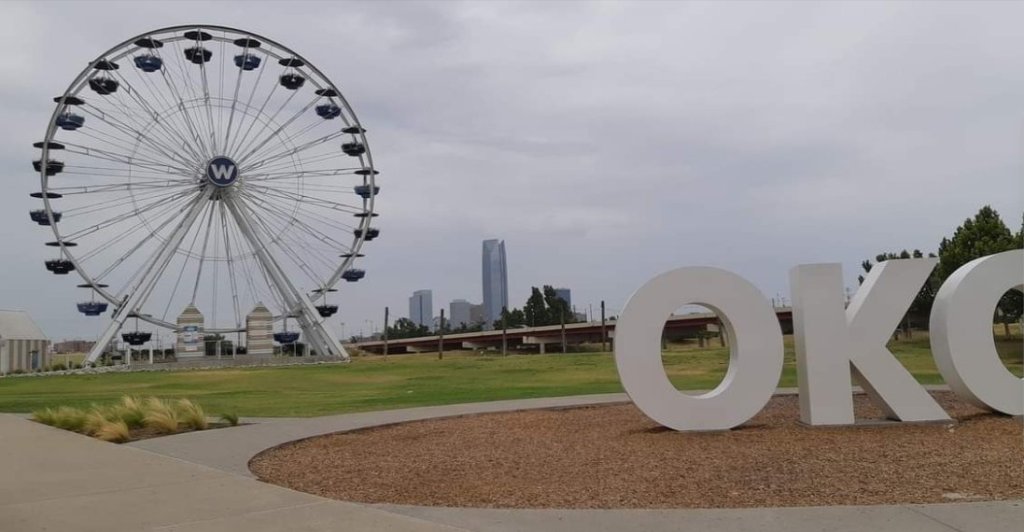
Rewind to summer 2022. More than a little stir crazy from a prolonged pandemic, borders had finally begun to swing open, offering us an opportunity to go somewhere. Anywhere but here was the mantra. After some time deliberating, we ended up in Oklahoma City. Why Oklahoma City is a question we would be asked more times than we could count. If I sat down to explain the path to this somewhat obscure, mid-western escape, I promise it would make sense. It just became easier after a while to reduce it to a simple “why not”.
Summer 2023. Once again in deliberations, this time staring down potential flights to England as they jumped to an average price of $1500. Where to go when prices are literally sky high. We already had an early trip to Milwaukee planned around a concert, but it is a long summer- rest assured that’s not a complaint- and for as much as I love that Wisconsin cheese I was craving something more substantial.
As the summer days whittled away, so did potential ideas and options for getting away. We had some potential pieces on the table, but no significant agreement and even less that made practical sense to necessary budget travelers like us. The closer we got to the start of a new school season, the less desirable it was for Jen to venture too far off the beaten path. That’s when the idea of a potential solo trip came to the table.
Full disclosure: I had never travelled by myself before, so this was a first. I wasn’t sure how I would feel about the experience. But we started the initial thought process. Where is somewhere I would like to go that Jen has little interest in? What were the parameters?
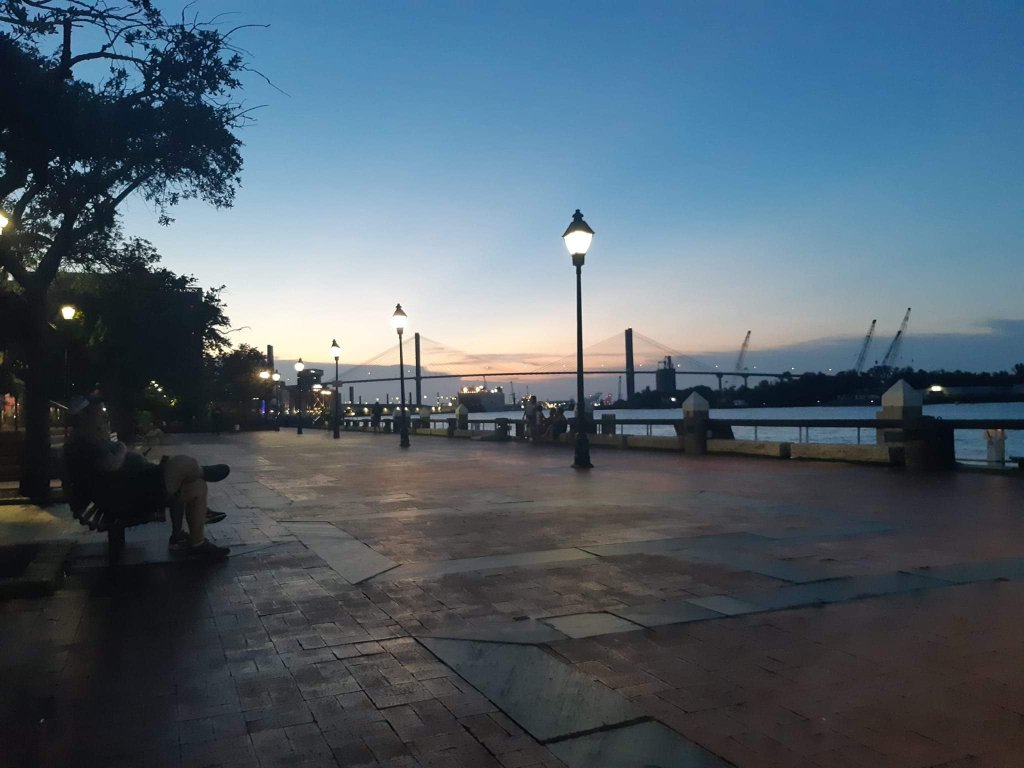
Sky high prices continue to rule out overseas. Local flights to particular North American destinations were within reason. Places I can drive to even more reasonable. One place that had been sitting at the top of my list was Charleston, South Carolina. It often finds itself in the fray of travel magazines and site’s top places to visit from year to year. I love the ocean. There was intrigue over the history and its stated old world charm. Considering that late August would put it in the thick of that southern, summer heat, such an idea was an immediate write off for Jen.
That’s when some other potential pieces started to fall into place. I had just started reading the recently released biography by Jonathan Elg on Martin Luther King.
What about taking those other southern states and turning that into a kind of pilgrimage? Giving the biography some boots on the ground context? Birmingham and Atlanta weren’t exactly on my radar in terms of potential travel destinations, but the more I reflected on its potential the more it seemed like a perfect fit for a solo venture.
Plans started to take shape and a last minute late summer escape came into being.
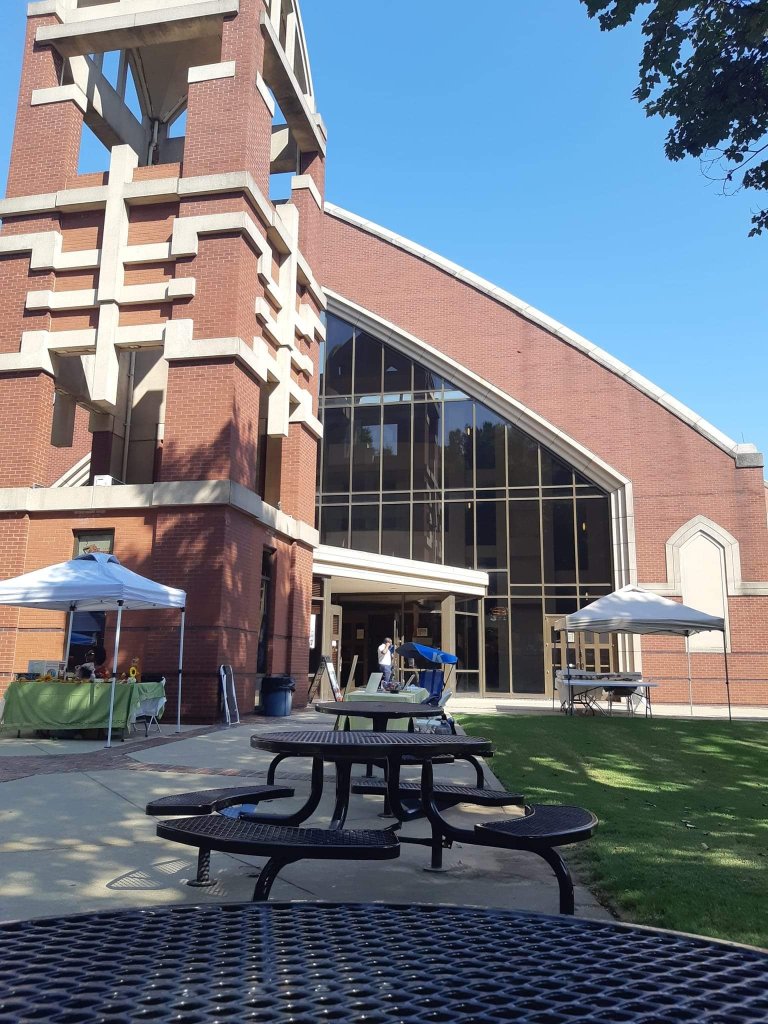
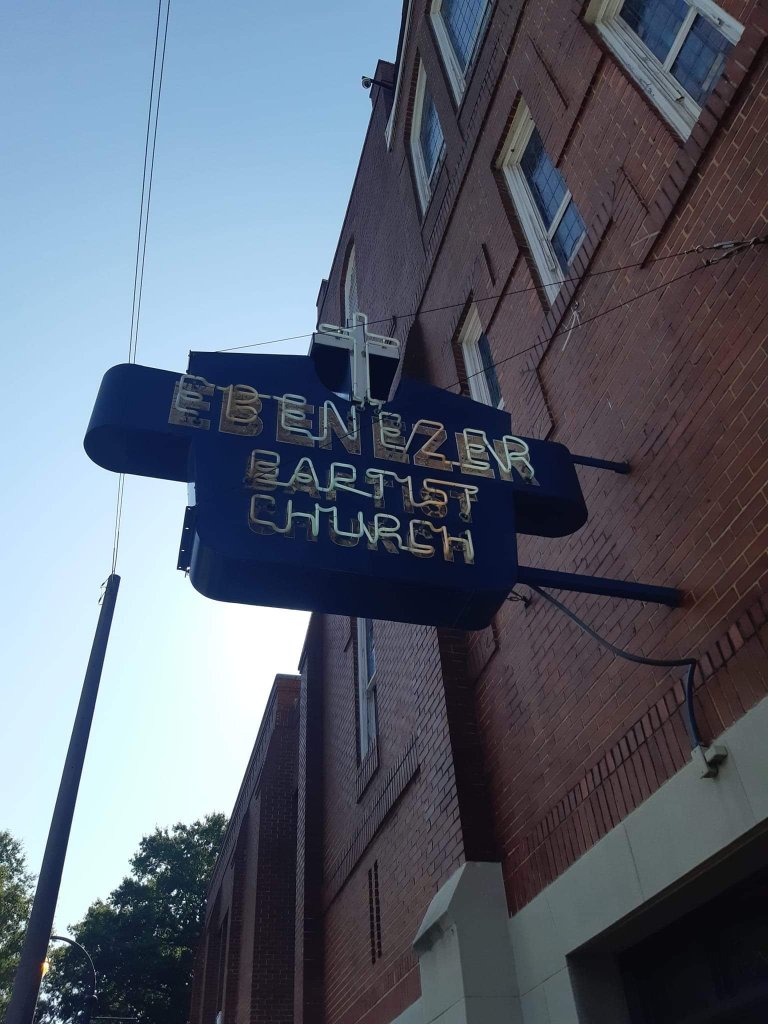
Along the way- and yes, for anyone wondering, this budget traveler did decide to drive the 2300 kilometer stretch to Birmingham by myself- I used the time to reflect, making my way through Elg’s biography. As I went along, the story of MLK turned into the story of America, and in many ways began to form into a cross-cultural movement from my own context into another. That last point is significant to me. I recall the moment this really hit for me, sitting just outside the doors of the historic Ebenezer Baptist Church on Sunday morning, the day before the anniversary of King’s “I Have a Dream” speech an historic march.
Borrowing from the story behind the album, DJ Khaled’s album God Did, the preacher used Ezekiel 37:1-14 as a way to tie the story of Israel to the story of King to the story of the Black experience, to the story of the Black experience in Atlanta, to the story of Atlanta, to the story of America, to the story of the world, and ultimately to the story of me an you.The message walked through these following observations and questions: Something happens when God changes your viewpoint from high to low. “The hand of the Lord was on me, and he brought me out by the Spirit of the Lord and set me in the middle of the a valley; it was full of bones.” (Ezekiel 37:1)
Can these dead bones speak? “Son of man, can these bones live?” (37:3)
Surrounded by death, do we believe in the power of the resurrection? “So I prophesied as I was commanded. And as I was prophesying, there was a noise, a rattling sound, an the bones came together, bone to bone. I looked, and tendons and flesh appeared on them an skin covered them, but there was no breath in them.” (Ezekiel 37:7-8)
Do we believe we have this power? “Come breath, from the four winds and breathe into these slain, that they may live… these bones are the people of Israel. They say, Our bones are dried up and our hope is gone; we are cut off. Therefore prophesy and say to them: This is what the Sovereign Lord says; My people, I am going to open your graves and bring you up from them; I will bring you back to the land of Israel…. I will put my Spirit in you and you will live, and I will settle you in your own land.” (Ezekiel 37:11-14)
The phrase that binds this portrait together as a picture of hope is this- “Then you, my people, will know that I am the Lord” (Ezekiel 37:13). If you read further in the passage this connects directly to the idea of God’s faithfulness to the covenant promise. Even in the midst of dry bones, God makes an “everlasting promise”, a “covenant of peace” (37:26). A promise that “God’s dwelling place will be with them”, these raised up bones, and “I will be their God, and they will be my people.”
I came into this service still shaken from my time visiting Birmingham/Montgomery/Selma.
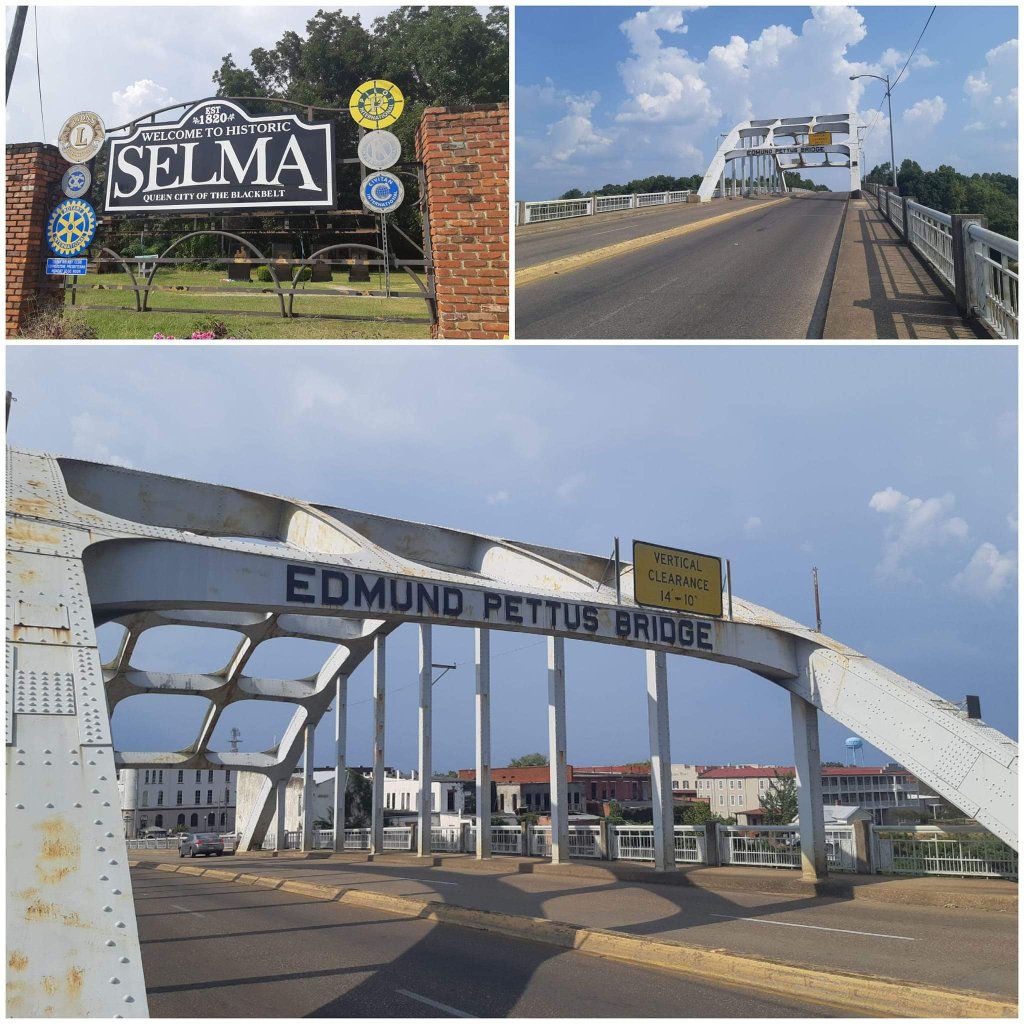
If there was one thing I was struck by, and to be sure there were many revelatory moments, standing in the spot where Rosa Parks boarded that bus, traversing the path of the freedom riders, walking the Edmund Pettus Bridge, or experiencing the EJI’s (Equal Justice Initiative) incredible museum and memorial, it was just how much of a cross cultural movement this was for me. As a Canadian I tend to encounter two primary responses to things going on south of the border. Either I encounter those who, on the grounds of Canada’s tendency to major in American history and minor in our own, want to distance our story from theirs claiming full understanding of what that story is, or I encounter those who want to shine on a light on the story of black discrimination north of the border, resisting those moves to distance ourselves from the problem.
And yet what became clear to me was, this is not my story. This is not Canada’s story. And the story I thought I knew was not the one I encountered. Not unlike the sentiments in an opinion piece on the anniversary of the march on washington penned by Jamelle Bouie for the New York Times titled The Forgotten Radicalism of the March on Washington, it was clear how easy it is to reduce the civil rights movement to a quick list of popular touchpoints, kind of like a tourist hitting all the necessary sights. And yet, as Bouie points out, “less well remembered… is the fact that both the march an King’s speech were organized around much more than opposition to anti-Black discrimination.” Bouie goes on to say that the “march wasn’t a demand for a more inclusive arrangement under the umbrella of postwar American liberalism… it was a demand for something more.- for a social democracy of equals, grounded in the long Black American struggle to realize the promises of the Declaration of Independence and the potential of Reconstruction”, defined as they were by the official ten demands given to Washington.
Which is to say, this is a distinctly American story with an American context and a very real concern for the oppression that existed an exists on American soil. Which is also to say- this is not my story. This is not the story of Canada. Canada has its own story. If I am to know this story I must resist the tendency to make the story synonymous with my own.
And yet, as the sermon that Sunday demonstrated, it is at the same time a story that is not contained to such boundaries. To hear and to learn how the Black experience approaches an applies the story of Israel, for example, is to invite me to consider how I read the same story from my own vantage point. For me, the a portrait of a prophet speaking to an enslaved and divided nation, offering a word of hope to those dry bones, who are being raised up and given power to enact change and declare liberation, was an invitation to know this same God in my own context. standing as I was on the outside looking in. To know that this story is not simply about an oppressed people being afforded liberation and life, but that such liberation and life comes with the invitation to bear witness of this knowledge of God to the whole world is the thing that invites me in as a participant.
Talking to one Atlanta resident prior to the service, I noted how the weight of my experience in Birmingham, Montgomery and Selma, an experience that evoked similar emotions to visiting Auschwitz, contrasted with the hopefulness that I felt travelling this path from King’s childhood home and boyhood neighborhood to his final resting place and Church. There was something in the air here that helped turn immense tragedy to life, even in a climate where, as the sentiments they shared seemed to echo, the dry bones of this present moment felt more like witnessing to zombies wandering around in a zombie land (to borrow the language of the preacher).
Right before I left on my trip someone sent me a timely article. It was also from the New York Times, and it represented two different opinions on the subject of travel. In one article, penned by Agnes Collard titled “The Case Against Travel”, the general sentiment was that “travel turns us into the worst versions of ourselves while convincing us that we’re at our best”. The target of this sentiment was this- travel as a status symbol. This can equally be applied to being well read or well educated. Collard conjures up the great philosophers of the past and contrasts them with this emergent idea called “tourism”, locating the greatest ideas and most fruitful accomplishments in those who disdained the idea of turning other places into shrines. When we are at home we tend to avoid touristy spots like the plague. When we travel, touristy spots become the portrait we find of places not our home. And the only thing travel really tends to foster are people who love to talk about their travels and those who hate to listen to travellers talk. As the writer puts it, “forms of communication driven more by the needs of the producer than the consumer.” The primary question becomes this: “(One) might speak of their travel as though it were transformative, a once in a lifetime experience, but will you be able to notice a difference in their behavior, their beliefs, their moral compass? Will there be any difference at all?” And then they pose this question:
“Imagine how your life would look if you discovered that you would never again travel.”
Collard suggests that what would become immediately clear is all the ways in which travel functions as an illusionary practice breaking up the monotony of life in a singular place, “obscuring from view the certainty of annihilation.” And just to dial this down even more, Collard accentuates this with the following sentiment: “You don’t like to think about the fact that someday you will do nothing and be nobody. You will only allow yourself to preview this experience when you can disguise it in a narrative about how you are doing many exciting and edifying things…. Socrates said that philosophy is a preparation for death. For everyone else, there’s travel.”
“Seen clearly, one might argue, the entire world is shot through with majesty, which is why the perfectly enlightened need never practice tourism. But there are places where the sublimity is especially strong… Going in search of such places is no substitute for seeking deeper forms of conversion an communion. But neither is it just a detour or distraction from those obligations. The sublime justifies itself.”
I had these dueling think pieces lingering in the back of my mind for most of my trip. I wondered about what the sublime means, what enlightenment means, what it means to distinguish between a traveler and a pilgrim or even if we need to, and how my own sense of wanderlust relates to this. For me I returned, as a I typically do, with a greater appreciation for my home. But I also returned with a greater awareness of what travel means for me- it broadens my world. It broadens my awareness of the world. It helps me to see how this place I call home is indeed a microcosm of the bigger picture of this story we call the world, one pertinant an aware with its own particularities and questions.
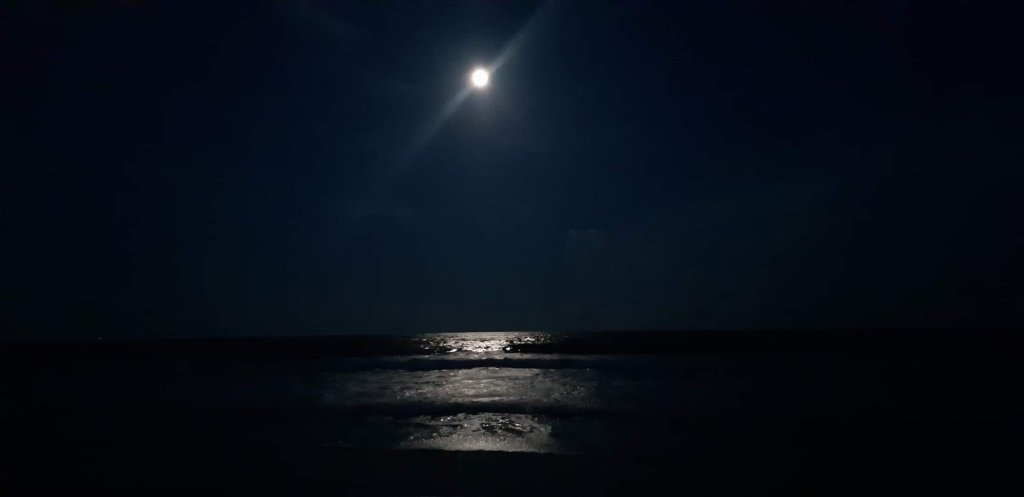
One of the things that Elg’s biography did, being the first to incorporate the recent release of a mountain of information and documents along with testimonies of eye witnesses now free to speak this many years later, is demythologize King in the public eye. He was a complicated human with very real shortcomings. And yet it is in the demythologizing that we are able to see the true power of his accomplishments. As travelers, we romanticize the places we have not been to and have not seen. To traverse these places is to have them stripped of their mystery and cast in a new light. The real question becomes, is a demythologized figure someone we can still find wonder in? Is a demytholgoized place somewhere we can still find wonder in? The true worth of travel for me is its ability to encourage us to do just this. To recover the sort of wonder that is willing to reclaim the mystery of the myth in a world that threatens to redefine these stories as mere illusion. The problem with demythologizing is that things like wonder an hope tend to be tossed out the door as well. And yet thats not what I experience in the doors of this church. Rather, what I found was an inate desire to allow the God known in the demythologizing of these dry bones to reveal the greater reality of the resurrrection, hope in a world often thrust into darkness. In this sense the myth becomes a truer representation of their reality. In this sense travel opens us up to a greater awarness of the world and its genuine mystery an wonder. That we can appreciate and enjoy the art of good travel at the same time- good food, good sunsets, the joy of an ocean front, good company, interesting and awe inspiring sites- is simply part of the wonder.
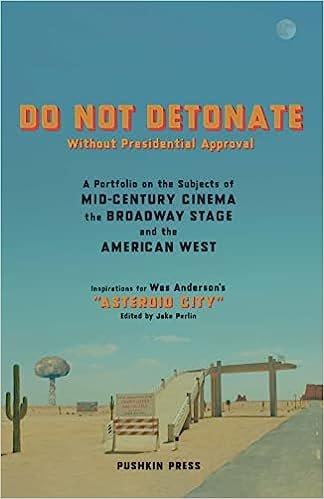
Reaing Journal 2023: DO NOT DETONATE Without Presidential Approval: A Portfolio on the Subjects of Mid-century Cinema, the Broadway Stage and the American West Edited by Wes Anderson and Pushkin Press
Do Not Detonate is a collection of Essays written by different voices about the different films that inspire Wes Anderson’s recent film Asteroid City. This is all anchored by an opening conversation between Jake Perlin and Wes Anderson as they discuss the creation of the film. It is here that its main source of inspiration- 1950’s- is fully fleshed out. The films themselves span different time periods, but this is where we fin the films rich setting being actualized.
Beyond the conversation piece, the essays begin with a reflection on Lee Stasberg and his filmmaking process, particularly when it comes to method acting. We can see this emphasis on “real emotion” playing into certain aspects of Andersons film, especially when it comes to Scarlott Johannsons character. On the other side of the “process” is the final chapter is a story by Sam Shepard which establishes an emphasis on theme. This is arguably the strongest and most interesting essay given its ability to contextualize the collection of essays in a simple idea, one that the film evokes through the wildness of its setting.
By far, the largest of the essays surrounds Marilyn Munroe, a story that has rich influence in Asteroid City an its focus on the relationship between art, artist and viewer. Other dominant themes are the desert, and experiences behind the set, be it theatrical or film. Jorge Luis Borges delves into the relevance of allegory in his essay on The Petrified Forest. Or Ace in the Holes emphasis on post war America. The emphasis on a fusion of styles, be it noir, the western, nostalgia, comedy, abstract in Desert Fury. The political backrop of a particular time in Americas history (Fail Safe), or the cultural commentary of the film Nashville.
Taken together, what becomes clear is how big the questions actually are in Asteroid City, while also being contextualized into a very particular time in America’s history. Art helps us to navigate these questions, and yet they exist as an interpretive exercise that arrives without the baggage of needing concrete answers. It is a film, as the influences suggests, that balance fear with ideology, the world the artist is then navigating and speaking to. An as an artist, what Anderson seems to be finding in all of these influences is a freedom to allow the art to say what it will.. That it exists in such an uncertain world is perhaps the most important thing.
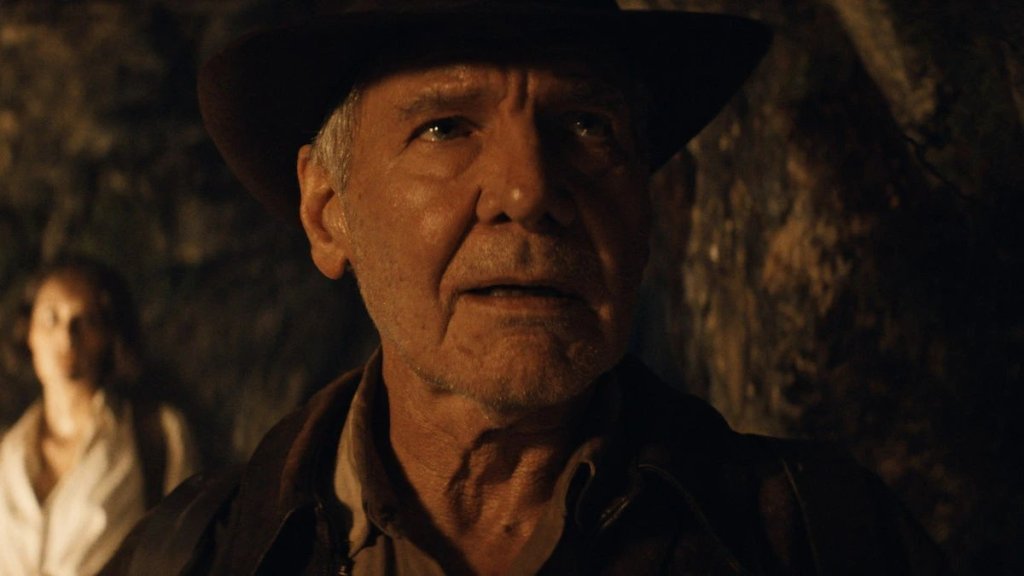
Chicago film critic Josh Larsen notes in his review of the recent Indiana Jones movie, Dial of Destiny, Mangold’s interest in demythologizing Indiana Jones He strips away the hero’s storied past and creates the necessary space for exploring who this figure is and what he is all about in light of his story seemingly coming to an end.
Where Indy was once romanticized and idolized as the young teacher inspiring bright minded students to engage with history, now he is all but ignored by a class of fresh, bright eyed students shoving him aside in favor of a “new age” of exploration. The hero has seemingly been made irrelevant by progress, his aged, shirtless body sitting in stark contrast to the fully clothe and deaged relic of the past. For the all the adventures Indy has experienced, it seems aging in the midst of an ever changing wold is too great of an opponant to overcome.
As Josh notes, the film is about time, and your place in time, and further yet “the appropriateness of your place in time”. Jones is resisting all the forces that are threatening to “move him ahead in time” while giving in to a pesistant cynicism regarding his life an this world at the same time. His typical ornery an disgruntled persona finally suits his circumstances, in a nearly poetic fashion. On the larger level of the mythos of Indiana Jones, what hangs in the balance is “his relationship to us and to the world” today.
As mentioned, Jones has always been something of a cynic. Someone who is constantly battling against the nature of his experiences, which threaten to undermine the safety and certainy of his reasoned and compartmentalized understanding of reality, as an academic and historian an as an adventurer. Such existential and theological crisis are apparent throughout the series, surfacing in different ways and in different forms. In a sort of penultimate statement, all of this angst comes to a head when Jones confesses in Dial of Destiny, “I don’t believe in magic. But a few times in my life I’ve seen things, things I can’t explain.” How does he manage this in the face of his commitment to reason? He goes on to say, “I have come to believe its not so much about what you believe, but how hard you believe it.” What is interesting about this statement is how Jones applies this to time itself. To the reality that who he is in the world no longer seems to matter or hold significance. This is, I think, what forms the existential crisis in Dial of Destiny. Does his strength come from resisting the truth of his aging by believing he still has significance, or does his cynicism hold more power when it comes to recognizing he no longer has a place in this world?
If Jone’s passion for history rings true, what seems abundantly clear is that he now finds himself wondering whether his own history had any worth at all. The question “does the past matter” and the subsequent question “does my past matter” seem inseperable when it comes to weighing a world defined by inevitable progress. On a more meta level, the film wonders about a world that no longer seems to have room for Indy and this franchise as well. What the film lingers on and lets perculate, is the idea that Jones has finally given up. He has to reckon with “who he is now, and whether he wants to be a part of this world”, as Josh surmises. Late in the film this point of crisis comes to a head when Jones literally wants to stay buried with the past, faded from the world’s consciousness. Given the mythology of Indy, this seems fitting. Given the demythologizing of Indy this seems tragic. As Josh Larsen suggests, “It’s okay for him to be done.” But even as we say this, something about this statement feels to be not quite right. In truth, if we do say this, we must then wrecken with where this character goes when his time has come and gone and why it mattered at all. Lest we think we are immuune to such things, those of us who grew up with Indy then become bound to the same fate and to the same point of crisis. Who is Indy becomes a question that then gets turned in on ourselves: who am I. A question that we can dial up even further in the grander scope of this film: what then is the meaning of existence.
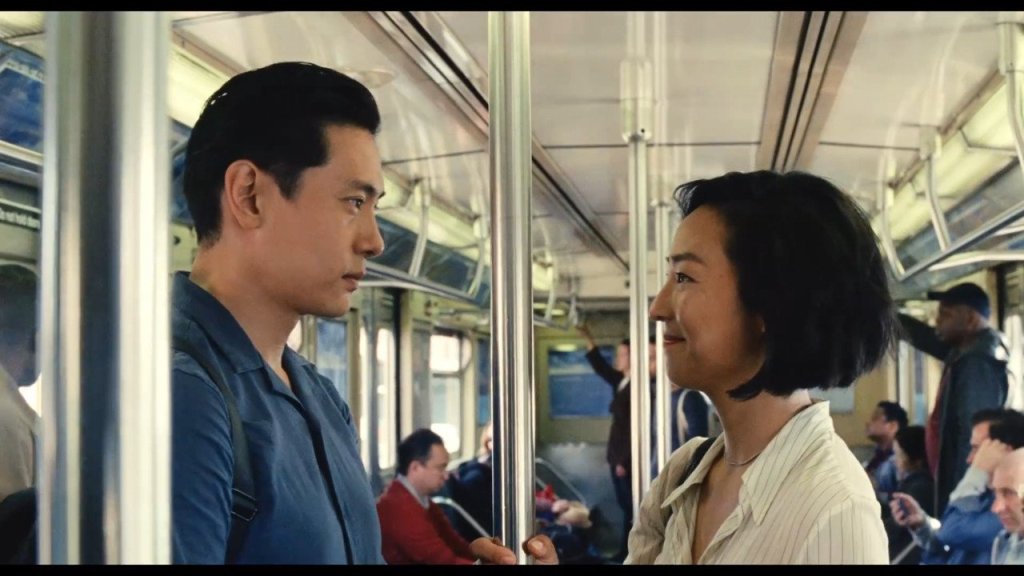
It is not dealing with a “dial”, not unless you count the internet in a post dial up world, but Celine Song’s much celebrated indie film Past Lives also happens to be dealing with some of these questions as it explores matters of destiny. As the official synopssis outlines: Nora and Hae Sung, two deeply connected chilhood freinds, are wrest apart after Nora’s family emigrates from South Korea. 20 years later, they are reunited for one fateful week as they confront notions of love and destiny.
Through this contemplative and richly thematic exploration of our relationship to time and to the passing of time, Celine Song pushes us as viewers to think about our lives in terms of story. The motif of past lives is functioning on multiple levels within the film, digging underneath the what if’s of all our past choices and potentialities, all of which intersect with the different moments, people, possibilities and actualities inherent in the story of our lives. Song seems to differentiate the stories that we are given by way of living in the present time from the stories we tell outside of time by way of the past. The now that we occupy brings us into relationship with all of the past that has brought us to where we are, making memory less than static as a function. It develops. It grows. It emerges within our storytelling. It can help us to mark one path from another, even as these paths are ultimately connected and bound together, the ones we take and the ones we diverged from. We are different things to different people, and within this hangs all the myriad sides of lifes pontentiality, be it realized in the now or lost in time. There is a real sense that hidden in the passage of time is a deeply rooted anxiety regarding the possible lives that have indeed passed us by, leading to an inate sense that the story we are living now is the story we have, and yet how we make sense of this story in light of the past is a much harder notion to wrestle down. How do we keep the story we are occupying in the now from locating its true measure in the stories of our past. This question seems to be, in a very real way, at the root of how it is we figure out this thing we call a life.
This blogspace was birthed out of my own existential crisis over turning 40. As I’ve written a few times over, this was a real dark point in my story. The story that I was occupying at that time felt deeply uncertain when I set it in relationship to my past. If I’m honest, I’ve made efforts to recover, but I’m not sure how far I’ve actually come. With every new year my experience of turning 40 becomes more and more indebted to the past, the story of now more and more freighted. That is how this life seems to go: forever forward with the baggage in tow, leaving us only with the uncertainty of the now.
Perhaps the more difficult thing for me to process is that these ruminations reach far beyond “my” place in this world. Not unlike Indy, these personal questions tend to push further into questions about the nature of existence as I wonder about whether this world still has room for “me” at all. Much harder to reconcile is the idea that so many of the things that once made this world matter, things that my younger self would have insisted were necessary to the now, no longer do. Opinions. Knowledge, Truths, Pursuits, Convictions, Investments. Experiences. Many of these things have become relics of a story now lost to history, in danger of at least feeling like they are becoming increasingly given to insignificance and irrelevance as time pushes forward. In truth, in my most cynical an struggling moments, this raises serious questions about what truth an reality even is. The longer I live, the more I find myself living in a world that I no longer share a language with, the past erasing the necessary lines of communication that can enable me to live into the now with much significance and clarity. And the more these feelings surface, the more I tend to retreat into the handful of equally fading relics that surround me, feeling like a passive observer stuck in time as the world grows narrower and narrower.
Perhaps this is what makes the ending of Dial of Destiny so poignant for me personally. Not because it answers this point of crisis directly, but because it locates the singular space where we are able to wrestle with such feelings and thoughts. Its no accident, in classic storytelling form, that this singular space is the very thing that ties the ending of Dial of Destiny back to its beginning: the relationships an experiences that hold this world together with some semblance of meaning, however illusive it might become. The journey Indy takes towards recognizing, or perhaps reconciling, when his story definitively goes from one that is “being told” to one “that is finding its completion” is worth reflecting on. Attached to this is Past Live’s exploration of a similar and parallel process, linking this quesetion to the increasingly narrowing gap that exists between our present potentiality and its gradual loss. The more time pushes forward the narrower this gap becomes, begging the sorts of questions that we find surfacing in Dial of Destiny relating to Indy’s aged self navigating an unfamiliar world: How long do we fight to stay relevant, and when does time begin to pull us back into the past and tell us to stop. This has real implications for how we navigate the now, especially when we begin to attach this to questions about truth and meaning.
That poignancy surfaces for me all the more as I face down 47, my birthday having just passsed me by on August 4th. If my 40 year old self imagined my story 7 years later I’m not sure if its the cynicism or the optimism that wins out. I’m not sure which belief is the strongest, and likely that changes day by day, week by week. As my 47 year old self, the one who occupies the now, reflects on the past 7 years, I’m not so certain I know what to do with this story, especially as I think about the ever narrowing gap of between my own potentiality and the loss of it. The only thing I can say with confidence is, something sustained me. I was 40. Now I am 47. And if I look hard enough there is a story to tell, and maybe one worth telling. And the more days I live, the more need there is, I feel, to reflect on both sides of that story, spending less and less time on the now and more and more time on the past that led up to the now. Which of course feels antithetical to how I was always taught to live: in the now. This is why such ruminations are a fearful and uncertain exercise, to be sure, as such truths leave me uncertain about the power of the now to shape my story. As I continue to wrestle with my anxiety surrounding the act of living in the face of my own aged self, the past has a way of unsettling the things that seem important to me today. And I don’t know if that is a defeating thought or a liberating one.
Thinking about Celine Songs film though, one thing that seems to unsettle that picture for me is this: as long as I’m reflecting I’m still living somewhere. On my best days I can relate to Indy’s dilemma. I get the past. In many ways I feel like I belong to the past. It is a story I know and know well. This is my mythology. Am I fooling myself into thinking that this story matters? Those are the doubts that anxiety fuels, and the reality of the now and its unfamiliar terrain has a powerful tendency to stoke these flames. The world can be a lonely place when you can’t speak its language and when it seems to have little to no interest in learning yours. This is just the honest places that my mind sometimes goes to when I confront these yearly markers. And yet, as Past Lives seems to suggest, time is not a concept that can make sense of the problem of infinite regress on its own. That’s why it attaches itself to the passage, to the idea of beginnings an endings as a conception that our minds can handle in the now. But Song never lets that cannibalize the nature of reality itself. She leaves room for mystery to weave its way into the tendency to comparmentalize and rationalize our experiences away. Likely for the same reason Indiana Jones can’t simply rely on reason alone: because he’s experienced things. Things he can’t explain. If we are being honest, I think we all have. And often it is that mystery that sustains us, even if it is against the powerful efforts of our cynicism to undermine it. That’s not always enough. On August 4th I wasn’t convinced it was. But today is different, and for now that’s enough.
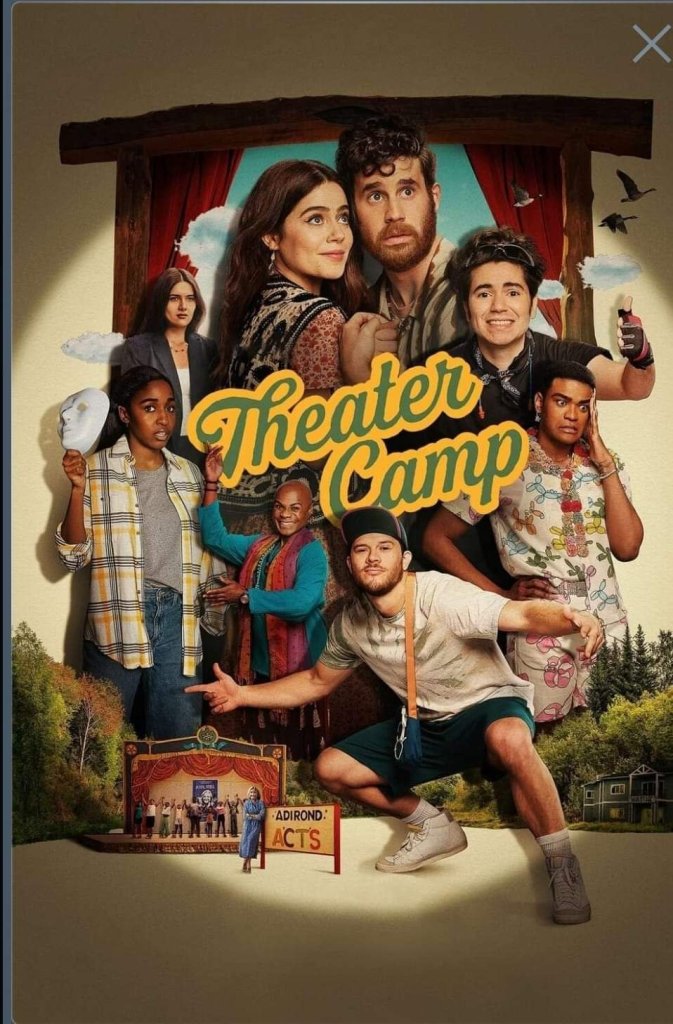
Film Journal 2023: Theater Camp Directed by Molly Gordon and Nick Lieberman
The aim of this mocumentary is so pure it almost dares you to not want these characters to be real. And certainly the power of its depictmemt of “theater kids” comes from the fact that this subset of culture is in fact very real.
Which does leave this film as something of an insider’s commentary of this experience. Meaning, someone like me are left looking in at this from the outside. Even if it wants me to know that “I’m not one of them”, it nevertheless is wanting me to learn and experience something of what it means to be them. And not just as a culture separated from the world, but as part of the universal human experience.
Thus I felt welcome not just to observe, but to participate, and despite being at a necessary distance, these things translated to a deeply satisfying experience. Its laugh out loud funny, effortlessly charming and entertaining, and within all that bursting with meaning and heart.
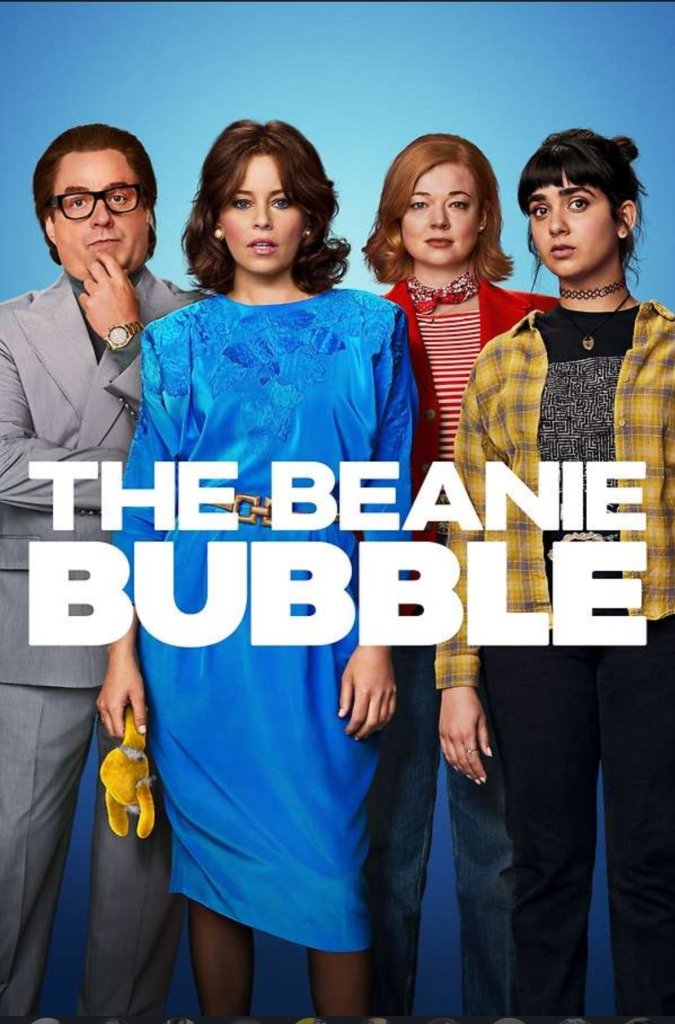
Film Journal 2023: The Beanie Bubble Directed by Kristin Gore and Damian Kulash
The whole “product origins” trend in film this year is admittedly getting a bit tired at this point. There is little doubt The Beanie Bubble falls prey to this exhaustion, made all the more relevant by the fact that its predecessors are simply the better films.
Set that aside though and this film has a decent amount working in its favor. I thought the editing was really solid, interspersing the straight forward progression of the story with jumps back and forth in time. And the performances, anchored by the three women who’s story this film is telling, are all solid. To the films benefit, these things only get stronger as the film goes on thanks to the genuine intrigue of its real world point of crisis.
Even if the film never quite finds a way to go from good to great, which i would argue is mainly because the intrigue of the source material is fairly limited in its scope, the way these stories are meant to be a microcosm of capitalism in general is still very effective. It makes you wonder if this isn’t the story that follows every product that exists in our world. The film would want us to believe that there are heroes at play here, examples of the good ones who fight back against the system. I don’t know how much of this story maps onto reality and how much is interpretive licence serving the drama; there is little doubt who the enemy is here, presenting one of the most unlikeable characters of the year. But at the very least it’s also wanting to offer a bit of hope. I certainly won’t begrudge it for that


























 The Stories of my Life