Reading Journal 2023: The Last Unicorn

Reading Journal 2023: The Last Unicorn
Author: Peter S. Beagle

A fantasy quest novel in classic form. Took me straight back to a childhood filled with the stories like The Never Ending Story, Narnia, The Princess’ Bride and Coopers The Dark is Rising.

One thing that distinguishes Beales fantasy epic is just how small it feels on the surface. This is, i think, by design, allowing the scale to open up underneath in expected ways by way of the simple joys of the stories details, filled as it is with wonderful creatures, simple questions and longings, kingdoms and threats.

If I had to boil the story down into a simple descriptive, it could be contained in the word “hopeful”. Not unlike The Never Ending Story, this hopeful spirit emerges from the darkest places, unveiling the sorts of heros made in the throes of struggle and suffering. The unicorns quest to figure out what happened to the rest of the unicorns is met with moments of transformation that come from learning the art of sadness and pain. And yet this does not strip the world of true joy and beauty. The book becomes a pervasive argument both for leaning a deliberate embrace of reality as it is, and also by a greater magic that informs and is reforming such a reality towards its true identity.

It could be said that this exercise is a grand philosophical metaphor that explores what it means to be human. I think it is fairer to say that it gives us an imagination to see this undeniable humanness as more than merely something that we can observe and experience on the surface, a product of a material reality that bears out more suffering and sadness than we might care to admit. The story is a reminder that there is a reality that is bigger than these simple matters of perspective, one with the power to both inform this life and to liberate it, one that beckons us forward on a journey destined to grow our imagination for what this thing we call reality truly is.

Film Journal 2023: Artifice Girl

Film Journal 2023: Artifice Girl
Directed by Franklin Ritch

A stunning and sure handed debut that marries the intelligence of its questions with a simple but effective story structure. Best to go in as blind as possible, as I think the way plot unfolds is part of the beauty of the intellectual process at play here. It is an intricate dance between big ideas and broader realities regarding this world and the essential problem of the human condition, and the intimacy of the characters experiences of an uncertain, often feared and always changing world when it comes to technology and AI. The premise itself is intriguing, but it’s the developing relationships between the small cast of character that proves most compelling.

If one of its most pertinent questions is, what does it mean to feel, the Director uses this thematic interest as a way to explore what it means to be human, blurring the lines in all directions and unsettling our frame of reference. The film leaves plenty of ambiguity in terms of its humanistic convictions and it’s decentering of such assumptions of uniqueness and exceptionalism, but does so without letting go of the larger questions that bind the human will to either a creator or a process.

If you get a chance, this is a real gem hiding in the shadows of a strong first half of the 2023 film year.

Film Journal 2023: The Little Mermaid

Film Journal 2023: The Little Mermaid
Directed by Rob Marshall

There is a lot to love and much to appreciate in a film that exhibits a few minor issues when it comes to “translation”.

Live action remakes tend to demand particular attention to what they want to emphasize and what gets reimagined so to speak within a different mode of filmmaking. Where The Little Mermaid is able to use the live action to its advantage is in accentuating the different settings. With the whole motif of worlds colliding-worlds reconciling, be it sea and land or parent and child, the film utilizes different aesthetics as a way of emphasizing the otherworldly vibrancy of the world under the sea and the old world romanticism of the seaside village on land.

Further yet, the filmmakers flesh out a clear thematic focus using contrasts, like the diversity of the mermaid daughters meeting with the diversity of the lands cultural expression. Or the mirrored stories of daughter and son being confined on land and sea. Of course the familiar beats of the story use the larger backdrop of stigmatization towards land and sea creatures as a means of bringing these worlds together, but there is a certain intimacy this remake affords the characters themselves in terms of the subtext of their own journies being given clarity and voice.

Where the film shines the most actually is where it spends a good deal of time on the land, telling what feels like a good, old fashioned medieval love story. Here the humor and the set pieces and the plot are all working in perfect cohesion, providing a really satisfying arc to follow from sea to land and back again. As I mentioned, it is soaked in old world charm, and this whole middle section I found to be particularly riveting.

This is purely my opinion, and others might have a different experience to this end, but the weakest part of the film “in translation” is the third act climatic moments. This isn’t all that surprising given that this is where the CGi is demanded the most, and where the source material is least suited to the live action approach..I would also add my other critique here, which is that too much of the film is cloaked in darkness. There are moments when it works (a moonlight boat ride for example), but there are also moments where it becomes difficult to make out the details. That’s a small note though in a film also filled with wonderful and striking visual sequences.

To add to the above, I would also suggest that I feel Melissa McCarthy was slightly miscast as Ursula. She has moments where it is clicking, but the third act problem could have benefited from a more grounded persona. Her tendency to play over the top makes the character slightly campy when it felt to me like it should have veered darker and more serious. An opportunity to give Ursula that real world human presence. Bardem gets closer on this front.

Overall though I do think this film proves to be a resounding success, and if I had to hang that one single dynamic I would single out Halle Bailey. This is a true star in the making moment, and she deserves all the accolades that should be going her way. Closely tied to that is the chemistry between her and Jonah Hauer-King, who plays Eric. Pitch perfect and resounding with heart. In fact, the whole film is resounding with heart. Say whatever you will about the remake, it feels authentic and true and even timely and important. And that goes a long way in making a case for its existence. I think Beauty and the Beast more effectively managed all three acts on a visual level, striking a more consistent tone, but the moments where this one clicks, it really shines.

Film Journal 2023: You Hurt My Feelings

Film Journal 2023: You Hurt My Feelings
Directed by Nicole Holofcener

The small, indie dramatic comedy is always a welcome aspect of a given film year, and this unassuming effort fits the bill perfectly. It balances genuine laugh out loud moments, built as they are on what is mostly situational comedy, and grounds that with a small, contained premise that explores relatable and familiar questions regarding our relationships and the lies we tell to uphold them.

The story never feels obliged to stretch further than this, even when the plot faces certain temptations to further it as the film goes on. Any step forward to this end is met with an intentional step backwards into the simple nature of those questions and its core concern. It functions as a what if scenario; what if someone you care about and who cares about you lied about their feelings towards something that matters to you. And it throws this into a blender that demonstrates the ebb and flow of relational dynamics. And not just dynamics, but how we live in and respond to those dynamics.

The film takes the time to draw out each character, giving us just enough to understand where they are coming from, each from a unique perspective relating to their personal circumstances and challenges and desires. And yet that agency is intimately bound up in the whole of this group of family and friends, all asking similar questions when it comes to the blender of emotions and responses. It’s super effective and extremely relatable, making it easy to miss where the film edges you from laughing at its situational comedy towards laughing at oursleves. It makes it only to easy to say, “I feel like I’ve been there”. More pertinent to say, “I feel like WE’VE been their.” Which is to say, just because this is a small film with fewer screens, don’t underestimate the value of seeing a film like this together. Not just for the laughs, but for its therapeutic power.

From California to the Misssissippi: Competing Stories of America

I love it when two seemingly disassociated current reads, which I’ve only just begun, come together in unexpected ways.

I have long been fascinated by the Mississippi, and years back it was a bucket list item to travel the river road from its start close to where I live to its mouth. Didn’t make it to the gulf coast, but we did make it from Winnipeg to Memphis. In Rinker Buck’s new book Life on the Mississippi, his own fascination with the rivers history led him to build a boat and travel in the wake of its now forgotten past.

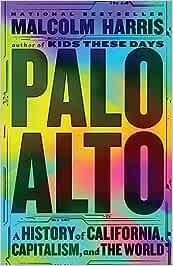
In Malcolm Harris’ book Palo Alto: A History of California, Capitalism, and the World, he narrows in on Palo Alto in efforts to show how California became the seedbed for the emergence of Ameican style capitalism through a series of developments, including the creation of mass farming and Hollywood.

Buck’s interests are in locating the river as a lost portrait of America that remained somewhat detached from the ideological interests of the east coast, consumed as it was in establishing American principles over and against the presence of Britain. If the East Coast became the entry point for immigration into the new world, the river became synonymous with building and maintaining relationships with the old world. This river culture eventually becomes consumed by the obsession with land and westward expansion, formulated as it was around the western mythos.

Harris picks up the story from the West coast now pushing Eastward with its new vision of capitalist pursuit. The two together provide an interesting way of seeing this development unfold.

A Brief Reflection on a Piece of Metal

I know it’s just a piece of metal. And this happened back before spring break.

But there is a whole lot of memories wrapped up in this thing I affectionally called Old Blue. More specifically, my, and our, 2005 Ford Focus. Creeping close to 400,000, I really thought we’d make it to 20 years. Just in time to inherit the car Jen is currently driving. But alas.

I remember driving Old Blue on a cross country trip from Winnipeg to California, the base model/no air conditioning proving to be an adventure in Arizona and Nevada in the thick of summer. The car was the first car we bought together after getting married, and it has been with us for all but the first months of our married years. It was the first time we were able to negotiate a good deal- 10,000 brand new, no tax, and free extended warranty.

Through those years we had a number of cars come and go, and Old Blue just never seemed to stop, coming to the rescue numerous times. Even after sitting for a long time over Covid, a moment when I genuinely thought the kilometers were done.

Here is a cool story too. We bought Old Blue 18 years ago because I managed to wreck Jens Pontiac Grand Am driving the stretch of Grassie between Lag and Plessis. Fast forward and I wrecked Old Blue driving that exact same stretch of street. Only to end up buying a Pontaic G5 as a replacement.

All three cars staying in the tradition of the stick shift.

In any case. Seems strange to grieve a car. But it was sad to see Old Blue go, not gonna lie.

Film Journal 2023: Still: A Michael J. Fox Movie

Film Journal 2023: Still: A Michael J. Fox Movie
Directed by Davis Guggenheim

A case study in how to make a documentary proper. Far more than simple details or the dissemination of details and facts, the filmmakers find ways to creatively imagine Fox’s story so as to unearth some surprising revelations. Not only that, but they map the essential pacing and energy to Fox’s exuberance, a storytelling choice that takes those revelations and makes them immersive.

It’s easy to parse out the basic beats of the story; a rising young star struggles with the inherent tension that exists between the challenges of fame and his responsibility to life, before a life changing event brings him crashing down to earth. What the film invites us into is an exploration of how the ways we often deal with this tension is by masking. Masking our true selves from the world, and likewise from oursleves. This journey then becomes something of a fall from innocence that moves into a process of maturing, largely by way of Wisdom incarnated into the spaces of his experience.

This is a must see for any fan of Fox and his career. It is poignant, reflective, fun and insightful. A peak behind curtain, but probing even greater depths still. More so it is an expertly crafted doc that should resonate far beyond the simple constraints of fandom. It finds a striking syncronicity between the storylines of his career and the story of his life, breathing into the film’s title multiple meanings. It strives to take a larger than life persona and ground it in lessons we can all afford to learn from, regardless of our experience. In that sense this really does feel like someone who is seeking out a legacy from the scattered lines of his unscripted life, demonstrating that hope can come even from the greatest challenges and failures of our past

Film Journal 2023: Blackberry

Film Journal 2023: Blackberry
Directed by Matt Johnson

The film’s grainy texture compliments the nostalgic vibes, while the hand held camera melds nicely with the real life news footage interspersed throughout the story. The nostalgic vibes run underneath a story that feels, at this point in time, as forgotten as it was the day Apple announced its iPhone. Thank goodness for this sudden interest in older properties. A film about Air Jordan. Tetris. The pinball machine. A weird trend to be sure, but given the quality of those aforementioned films, I’m here for it.

I’m tempted to say this is a story so crazy it seems impossible to believe. However, the film’s “fictionalized” take on real world events works as well as it does becasue it feels far too indebted to its inspiration to be made up.

It would be an understatement to suggest this is a story about capitalism run amok. This is a depiction of a world tied to its ruthless system, governed as it is by money that doesn’t exist, hostile takeovers that threaten at every turn, the looming threat of rising and crashing stocks, and of course rich powerful men. There is something unsettling about the fact that this is what drives such legacies. How fickle and fragile it is. Here it is Tmthe person who comes up with the idea who becomes lost to time, with corporate corruption ruling the day. Even more unsettling is to realize how the consumers who are both controlled by the system and simultaneously the ones who feed it. It’s what makes the world go round.

The film does an expert job of handling the tonal shift that occurs at a pivotal point in the story. It captures the abruptness of the whole enterprise moving from the energy of a group of young, inspired minds to the hostile takeover of their dreams. The irony being that their inspiration hinges on this hostile takeover being a thing. How else does the blackberry make it’s way out into the world, becoming the seedbed for Apples hostile takeover.

The first words I uttered about this film, out loud while walking out of my viewing, was “that was stressful”. It is absolutely that captivating and that absorbing. The casting is so spot on, creating not just a portrait of a corrupt system but filling it with unsettling figures ready to be despised. The “co-CEO” who comes in with the promise of changing these young persons lives just might be one of the more memorable villains of the last while. Fits the persona so perfectly. And it’s such a bizarre story to tell simply in it’s own right. Like a train wreck you can’t look away from. And yet one you both want to cheer for and against all at the same time. This film creates the space to choose your poison, which is what makes it so dang entertaining.

Shout out as well to the film’s Canadian roots too. Or perhaps more to the point, this is Waterloo, and don’t you forget it. So get out there and support good Canadian film while you have the opportunity.

Reading Journal 2023: Ultimate Questions; The Story of Philosophy

Reading Journal 2023: Ultimate Questions; The Story of Philsophy
Author: Bryan Magee

I paired this with Magee’s The Story of Philosophy. If Philosophy functions as a textbook inviting us to consider philosophy as a means of common wonder rooted in reason, ultimate questions is a heart laid bare autobiography into why Magee values philosophy. One is personal the other is didactic. One is void of documentation and details, the other an in depth examination of the how philosophy came to be.

There are definite overlaps however. Such as the notion of Platos cave, which rests on the idea that we can only ever see and understand the world from our unique perspective, bound as we are to our bodies. Or the relevance of language as the container through which we can express what we know. Language is the thing that limits our ability to know. It’s also what allows us to know.

Or the stark relationship between space and time, especially as it relates to past, present and future. Experience roots us in the present, but knowledge itself is not bound by such constraints. Within that we have the push and pull of philosophy in many different directions- towards the relativists, the humanists, the skeptics, the nihilists, the materialists, the romantics, the stoics, and on and on, shaping, movements throughout history from its common beginnings to its Greek expressions to its modern evolution. Magee is distinctly interested in its western progression, which shows itself most clearly in Ultimate Questions, although you can see his bias’ sown into the fabric of his textbook material as well.

On a base level Magee hitches the story of his fascination with philosophy on a trajectory away from religion. He does so, however, under the guise of a wanted agnosticism. His ultimate goal in Ultimate is to demonstrate that knowledge is limited, it will always be limited, therfore we operate on the basis of not knowing which moves us forward in our questions towards a reconciling of our limited knowledge with the truth that knowledge itself stands apart from the confines of our experiences. This, he says, is a good thing, and I’m inclined to agree.

At the same time though, I think he betrays some of his own inconsistencies towards that end. He wants to distance himself from religion because he sees religion as anchored in claims of certainty. And yet the very reason he does this is based on certain claims he believes to be true about religion. Here he demonstrates a tendency to avoid the fact that he holds convictions, and those convictions drive how he sees the world and how he experiences reality. In truth, in naming knowledge as limited he refuses to apply those same constraints when it comes to his convictions. He can’t quite figure out a way to avoid becoming what he desperately does not want to be; a person making certain claims about the world. Thus he uses religion as a scapegoat hoping that it will divert the attention away from him. Perhaps the most noted thing that Magee glosses over is that there are different ways of knowing, and that knowing doesn’t mean the absence of mystery.

Now don’t get me wrong. I actually really enjoyed reading through The Story of Philosphy. The facts can still stand even while acknowledging the interpretation exists alongside that. Something I think Magee could stand to learn. And there is much about his personal journey that I agree with and connected with, even if I interpret the same ideas towards different ends. I really appreciated how he highlights the importance of language. I think language lies at the heart of understanding the relationship between philosophy and religion and knowing God and ourselves. I like his appeal to mystery and a willingness to ask questions. I loved his reflections on space and time. I think he places western philosophy on way too high of a pedestal and misconstrues its strengths when it comes to dealing with life’s biggest questions, but I do like the way he uses it to reason in concise and well constructed patterns of thought. The books might seem daunting, and demand rereading large sections in order to connect the flow of thought, but it’s actually quite accessible. On the front I would definitely recommend.

Film Journal 2023: Master Gardener

Film Journal 2023: Master Gardener
Directed by Paul Schrader

Parallels the plot and structure of Schraders most recent films, almost to the point where you could map whole sequences from one film on to another and have it work seamlessly within that story. There is the man trying to leave a complicated past behind, a journal operating as a narrator, the unexpected relationship that proves redemption and forgivness is something this man still needs to find, the moment of transcendence that breaks the otherwise grounded narrative, ect ect. This is, of course, an intentional draw of what has been billed as “the man in the room” trilogy. But the thematic and structural interplay between the three films definitely makes itself known in a stand alone viewing, for better or for worse.

The story is slightly more optimistic than his previous efforts, which might be where I would be interested in a repeat viewing just to see the film in light of its predecessors. That wasn’t top of mind here for me in my initial viewing, so I am wondering if noting a trajectory between these three stories in terms of Schraders interest in using personal stories to say something about America at large, past and present (here the personal maps on to the subject of racism) might actually help me appreciate what he is doing on a macro level. I some ways this third film can’t help but be more hopeful given the whole gardening metaphor. It forecasts the essential theme of the tended flowers in the manure growing and thriving and being rejuvenated with the seasons and necessary hands that help us grow and mend in to new life. The film adds a wrinkle with the unexpected friendship, a young woman dealing with the muck of her own life being brought in to work in the garden as a way of therapy and recovery and investment. This provides some decent subtext in terms of the connective threads that ultimately bind her and the gardner togther in the mud of their perspective lives.

Sadly though, this latest project by Schrader can’t seem to rise to the occasion. There is a great idea here left to be explored, and further gets explored in his previous films with far more poignancy, but the plot itself feels disjointed, the editing is a mess, and by the time it reaches the end it feels like the journey itself is being held together by a thin thread. The fact that all of this simply hyperlinks back to much better films, particularly with The Card Counter and First Reformed, just underscores the film’s shortcomings.

The flavors and stylings that drive Schraders work are nevertheless here, and make it worth at least an initial viewing. Quintessa Swindell is particularly good as an up and coming star in her own right. Ridiculously charming and captivating to watch, she shows a great deal of control over and investment in her craft. Being cast alongside Joel Edgerton, who despite feeling constrained by the disjointed nature of the script manages to carve out something of substance, provides the necessary chemistry needed to at least allow us to feel what this story was going for.

Disappointing given my love for Schrader. But truth be told, even his worst efforts can mine something from the mess. Perhaps, at the very least, fitting for the themes in this film