Reading Journal 2023: This Time Tomorrow Author: Emma Straub
I love time travel. I love books about time travel. A book about a father who wrote a book about time travel and a daughter who finds herself caught up in her fathers time travel stories feels tailor made for me. Add to this the fact that this was my initial foray into someone who is a beloved and celebrated author by many and I was ready to dive in.
Unfortunately I found myself labouring to really get into the story in the early going, which kind of tarnished the bits of redemptive value the final third manages to conjure. The writing is not the issue. Straub is clearly good at her craft and has a handle on pacing and plot development. It was the characters I couldn’t connect with. Worse yet, I found them mostly unlikeable and superficial. I get this was part of the point; the superficiality of the daughters life leads to certain revelations later on. But it never felt to me like Straub was willing to fully confront the superficiality of the past that she tables in the first quarter of the novel. It just kind of sticks around colouring the slightly more aware persona that emerges from the journey Alice (the daughter) takes over the course of the narrative. Even worse yet, Straub makes some predictable moves to encase what is at its heart an existential crisis in a romanticised nihilism. There are are some decent lessons to mine underneath it all for the art and act of living in the present, but for me even that rings a bit false considering the authors failure to truly attend for the reality of our main characters past.
That’s a lot of negative, and so its worth saying that I did actually appreciate the way Straub imagines the time travel motif. It felt fresh and original, even if it borrows from some familiar motifs and ideas. She strikes a nice balance between upholding the rules of the game within her story (always important) while.never letting that burden the story itself. It has a natural telling in that sense. You can enjoy the straightforward premise without needing to understand a complicated theory about time and its philosophical interests. Full credit there, and for me it was the strongest element of this story.
Outlawed is a feminist alternative (neo) western. The setting is early America and barren women are being outcast from society, labeled witches and curses and a blight on society’s need to progress. The book, as is expected positions religion as the backdrop, marrying it to the politics of such positions of power and control. It also makes some strides, albeit, more nods than anything truly fleshed out, to see barrenness as broader than simply a “young woman who cannot conceive, pushing to locate the systemic issue across lines of gender and race. One of the options for women (and others) who have been given the mark of death is to become an Outlaw. This is what our main character Ada does, fleeing the accusations that follow not bearing a child. For her, she has heard rumors of a place and person(s) who are educated about what causes barrenness and feels driven to find his place and learn from these persons studying as she had been to be a midwife alongside her fairly liberal minded mother. This begins a partnership with the outlaw gang that becomes the basis for the unfolding story.
This book is advertised as progressive feminism in line with genre interests. Seemingly it has riled up readers with knowledge and awareness of the genre, who seem to be saying the book doesn’t push nearly far enough when it comes to tackling feminism from the full spectrum of gender and race related issues. It as even been accused of whitewashing and has even been called toxic, which seems a little drastic to me and doesn’t make a whole lot of sense in context of the story. I don’t really have strong enough feelings for the book to come too hard to its defense, but if this book is being jettisoned by modern voices, it seems like very little could actually win in such a contest. I did enjoy what felt like a unique take on the western, and the story moves fluidly. The strongest parts were in the first quarter, losing some steam as it goes. But the hook feels decently present nonetheless the whole way through, contained as it is to the partnership and the mission that emerges from its formation,
Film Journal 2023: Are You There God, Its Me Margaret Directed by Kelly Fremon Craig
One of the best coming of age stories to release in a while. Honest and authentic to its core. Perfectly captures what it is to go through puberty with all its uncertainty and struggles, and does so with grace and sensitivity without sacrificing the raw reality of the process. Even where the particularities of this story about a young girl becoming a woman sits outside of my own realm of experience, I think the story itself can translate universally.
I have never read any of Blooms books, and my only point of reference was the recent documentary from this year on the author, which I confess left a bit of a sour taste in my mouth. My fear was that this film would be anti-religious and cater to what the doc portrayed as a deeply rooted allegiance to individualism and the cult of the self. That’s not at all, however, what this film is.
Given the way it parallels the religious conflict with the uncertainty of growing up in to puberty, I thought the script did a really nice job of demonstrating how growth and understanding comes through maturity. Maturity brings wisdom, and Margaret’s honest seeking after God comes in light of her struggles, where God seems to be all but silent. And yet the film dares to imagine the struggle as an invitation to seek God in the process of living. The film likewise extends a welcome freedom both to ask questions and to learn how to form and hold convictions in the uncertainty.
Religion becomes the divisive backdrop that echos Blooms own experience growing up. Religion becomes for Margaret a source of hurt and pain, not hope. And yet, whereas the doc would suggest that Bloom found an answer to her struggles by replacing God with a renewed commitment to the “I”, as though stripping God from the equation could solve her personal crisis and get rid of the division, the film never loses sight of the fact that the crisis is born not of religion but of the human experience. To sacrifice God on the alter of our experiences might be the most honest reaction we can find, but I think this film shows that it doesn’t take long for an allegiance to the self to find itself mired in a need to be anchored in something bigger than the “I”.
If there is a message that flows from Margarets own wrestling it is that the graces we need to navigate this thing we call existence often arrive against expectations. Which might just be the most hopeful portrait of God we can find.
Film Journal 2023: Fast X Directed by Louis Leterrier Wherr to watch: now playing in theaters
I have an interesting relationship with the Fast franchise. I mostly ignored it up until the point when we adopted our then 13 year old son back in 2015. Truth be told, navigating life with a kid who doesn’t speak English was a challenge. Turned out Fast and Furious is a universal language. Or at least one of a handful of films he had watched when he was back in Ukraine.
That year was the release of Fast 7, which ended up basically being my introduction to the series. Fast forward to today and I wouldn’t necessarily say I’m heading in with expectations. Truth be told I’ve resigned myself to knowing that Fast 7 is and remains and will always remain the height of the series. But 8 through 10 have become something of a mainstay over the last 8 years as one of the few films I can count on seeing with my now significantly older and English speaking son. Not to mention they have continued to occupy my wife’s birthday weekend. “Hey mom, guess where I’m taking you for your birthday” has basically become an inside joke at this point.
Which is all also to say, at this point I know what I’m walking into. I know how the series has evolved. And I get the long term fascination with and subsequent hate of this franchise, depending on who you talk to, that refuses to die.
If Fast X proves anything though, it still has the ability to surprise me. Say what you will about the bombasticism of the most recent entries- they are a far cry from grounded nature of the earlier films or the emotional charge of 7’s perfectly orchestrated tribute to its varied arc and deceased star. In a sense 8 and 9 are of a piece, both revelling in their desire to reinvent themselves as the bigger is better franchise on the other side of the series defining loss of Paul Walker. What makes Fast 10 work as well as it does, especially given it is now a two part final installment, is that it knows both where it comes from and where it is now. The film takes a road that feels tailer made for bringing all the different facets of what it represents to a fitting close. This is about the four essential F’s: fast, furious, faith and family. And as this film explores, what this culminates in is fear. Fear can either break you or it can reveal what truly matters. And the film leaves plenty of space in its 2 and half hour mash up of mayhem to remind us of the long road that brought this group to this precise place at this precise point.
Say what you will about this franchise overplaying its hand and persisting long after its fallen out of favor, but Fast X demonstrates that it has more than enough life left in it to remind us of why this franchise mattered in the first place. It is the quintessential summer blockbuster shouting out loud that familiar phrasing: alright guys, one more time with feeling.
Someone recently forwarded me this Podcast Episode on music and the emergence of A.I, reflecting on it from a philosophical perspective. It hit on some things I’ve been observing and thinking about lately.
The discussion relating to music is, of course, not dissimilar to discussions going on in film. A first point of interest from the podcast episode is where it reflects on an increasingly AI saturated future driven not by concerns about artistic merit, but rather copyrights and lawsuits. What is currently not owned will become owned, and what is currently a benign playground for select groups (think podcasters who need intro music, or social media influencers needing material) will gradually shift to corporations as copyrights start to adjust so as to consider distinctives like tonal inflection and appearance.
And here is what is interesting. The future is being paved by generations who have been trained to see art itself as content. In theory, the questions that concern those driving the discussions today regarding the concerns of AI will continue to shift. Its worth asking in what ways, what questions are worth preserving, and which are no longer or will no longer be relevant. And to recognize that we ask this in the midst of some undefinable fears and anxieties that are both uniform in their expression and culturally divisive (think non religious and religous responses).
It is not unusual to find such fears and anxieties surface in relationship to a new technology. In some ways the emergence of chatgpt is simply repeating the past in terms of new technology that we don’t quite understand. But if the rise of the smartphone has taught us anything it’s that this more than simply a matter of generational change. It’s a fundamental change in how we relate to information, change and human function. The line between humans as the driving force of technology and technology driving human function is and has been blurred.
What I have noticed from this latest iteration is the following: People having these conversations tend to be quickly dismissive of AI as not being human but rather dependent on humanity activity and the technology’s creators. I think this remains ignorant though of just how entrenched technology is within the human experience. It reeks of an appeal to blind human exceptionalism, and what’s ironic about that is that so many of these voices would readily dismiss something like religion on the basis of its view of humanity being made in the image of God. Yet here we find responses to AI being made on the basis this same concern for image. It cannot be taken seriously, they say, because it is not human.
The fear then seems to be the implications of AI being more human than we are comfortable with. But lets ask the question, what makes AI less than human, or what makes humans more human? That might might be boiled down to the following; – the ability to respond to ones environment. Biologically speaking, human distinction emerges from this responsiveness on a cognitive level, but if consciousness is understood to be boiled down to a product of material function, there is no reason to believe that AI could not eventually replicate this
– the ability to experience suffering. Although all life forms do, humanity is understood to experience it on the level of awareness. And yet what this again bypasses is the biological root of suffering. If suffering is merely about awareness of adversity (we are aware, therefore we feel pain), then awareness can be contextualized within the experience of AI. Also completely bypassed in these discussions is the fact that so much of this technology (and medication) is geared towards eliminating suffering by affecting our awareness of it.
– togetherness. This is a point the podcast brings up, and it remains the most compelling point. Its not about whether AI can create genuinely interesting art- it can and it will, and it already has been doing so within popular art- it is whether it can, or whether it can even desire to, participate in community. In truth, people aren’t dismissive of AI making art based on what it can and will be able to contribute. They are dismissive because they are aware that something is AI.
But here is the thing. Many of people know the mechanics of a materialistic approach to human function. On that basis there is no reason to fear AI. And yet these same people would be deeply affected by losing that sense of human exceptionalism. Could it be that the same sort of willful ignorance that allows them to still live in the face of the facts about what being human actually is and means is the willful ignorance they are employing to deal with AI? And what if we applied that to a world shaped by smart phones? What happens when they can no longer ignore the facts about AIs continued emergence? Will this result in another crisis of meaning as we’ve seen become so pervasive in the realm of philosophy and phsychology in the last 20 years?
A while back I was opened up to the idea that the whole of scripture is ultimately hyperlinking back to Genesis 1-9, and then later on to th Exodus story (which functions as a hyperlink back to Genesis 1-9).
I was taught that to properly meditate on the scriptures and the biblical story it involves being so familiar with Genesis 1:9 that we are attune to the patterns and symbols and references. I try to spend time in Genesis 1-9 every week for that reason.
I can’t believe that I had never seen this before, but this observation from a recent episode of The Bible Project Podcast kind of flipped my understanding of these stories upside down. It has to do with the relationship between Sodom and Gomorrah and the Flood narrative.
There are a ton more hyperlinks, but this is one small example of how the patterns work from story to story.
So consider that preceding the flood story we have a story of spiritual beings coming down and having sex with humans. The text says that this becomes the root of the evil that fills the earth. Also note how the flood story ends, with the planting of a vineyard (Eden), getting drunk on the fruit (the fall) and Noah’s sons coming into his tent and finding him naked (a hyperlink back to Adam and Eve) and then taking advantage of him by having sex with his wife (scholarship seems to suggest that this is the meaning of “saw his father’s nakedness) and then Noah getting covered (Genesis 3 callback to Adam and Eve being covered).
Now here is where it gets near. Notice how in the Sodom and Gomorrah story it is the humans who are looking to have sex with the spiritual beings (the two strangers who go to Lots house). And then notice how Lot ends up getting drunk, is naked, and his daughters take advantage of him just like Ham did Noah.
Huge parallels. What I’m still mulling over right now is the connection between the righteous figures: Noah, who is seen to be the one, Abraham who is called righteous and bargains God down to 10 (why not down to 1?). And of course later Moses, who is presented as a righteous intercessor in the way of Abraham.
Continuing to read in Bryan Magee’s book Ultimate Questions, and came across a common philosophical assertion within philosophy that I continue to find a bit wanting
He’s talking about the nature of knowledge in relationship to time and space. More specifically he is dealing with how it is that we can claim to know transcendent truths, which he describes as making an existent claim about reality that is not a fact in the empiracle world, such as value or beauty.
He begins by asserting a necessary agnosticism as a “positive principle of procedure” and an “openness to the fact that we do not know” or cannot know in certain terms. He pairs this with an “intellectually honest enquiry in full receptivity of mind”.
Honest enquiry he binds to language. “Far from the limits of what is linguistically intelligible to us determining the limits of what we can apprehend, the truth is the opposite: the limits of what we can apprehend determine the limits of what is linguistically (language) intelligible to us.” He uses this to so suggest that while one might be tempted to say that ethics is transcendental in nature, the very fact that we can articulate right or wrong from the center of our conscious awareness using language should suggest otherwise. He posits that “experience leads me to suspect that among the causes why so many people deny that ethical and value statements can be true, and give as their reason the fact that such statements cannot be rationally validated, is a fear of letting religion in by the back door…” He goes on to suggest that this is a baseless fear because “in any honest intellectual enquiry there is no place for religion.”
Why does he say there is no place? Because “when religious people say ‘why don’t you accept our calling the noumenal God?” they have “no grounds for doing so. To do (so) implies a characterization of it, and insinuates an attitude towards it, (and) you have no justification for the implying, or the insinuating, or the characterization (of religion). You are allowing yourself to think you are in a postion you are not in- and then proceed from there.” He goes on to say that “religious discourse has this general characteristic. It is a form of unjustified evasion, a failure to face up to the reality of ignorance as our natural and inevitable starting point. Anyone who sets off in honest and serious pursuit of truth needs to know that in doing that he is leaving religion behind.”
He uses this to uphold the claim that “I have never found myself able to believe in the existence of a god” even, as he suggests, where he cannot prove gods non existence. “To extend my metaphysical understanding I am driven in other directions”, thus the limits of his knowledge about god becomes tangible reason to not believe precisely because, unlike transcendental ideas such as awe and value and beauty, god cannot be understood in the limits of our language.
This argument tends to tackle the issue of ontology, meaning the idea of whether such truths are created from the ground up towards something transcendental or whether it moves from the top down informing our language according to what we observe about the transcendental realities. For Magee, it is our ignorance (that which cannot be known) that reveals our knowledge of what can be known. If we experience awe it must be rooted in what we know about human, social and biological functions, for example. If we experience value, it must point backwards to what we do know about the fact that we value in the first place.
And yet, it remains unclear why he would disallow the same reasoning when it comes to the existence of God. Its equally unclear why he would make such a strong disassociation between things like love, awe, value, beauty, and the idea of god, as though these things must be separated in our intellectual inquiry. It seems like the thing he both wants to assume and deny is the presence of conviction. He wants to discredit religion because he sees it as appealing to certain transcendental realities that lie beyond the limits of our knowledge, but he also refuses to admit that for him awe operates precisely as such a certainty. Enough so that it fuels his convictions about what can be real and what is not. I find this dishonest, and an approach that runs rampant in philosophy.
It’s also curious why he doesn’t allow for the limits of language to work in the opposite direction; that the very limits of our language points to that which we cannot otherwise describe. This binds itself to what I think becomes his rigid defintion of knowledge. There are ways of knowing that reach beyond such limitations.
Film Journal 2023: Love Again Directed by Jim Strouse Where to watch: now playing at Polo Park Theater
Took a chance on this romantic comedy by the Director of the powerful and engrossing Grace is Gone while everyone else was at the new Guardians. It turns out its pretty charming. It takes a casual approach to the story, which actually aids a no frills and down to earth cast. The way it incorporates superstar Celine Dion works quite well too in contrast, using her songs and her persona as a story device and to fill out the subtext of our main characters. She’s more than up for the game of having a bit of fun with her stardom too. The soundtrack is worth a mention here as well, featuring Celine fairly prominently.
As circumstances thrust two reluctant strangers into each others paths, Strouse uses the lyrical emphasis of Dion’s soundtrack on complicated love to flesh out their journey towards one another in both comical and meaningful fashion. It is definitely cheesy, which actually plays in its favor, and there is more than enough here to cater a decent cross section of viewers, young and old. If it stays a bit muted and subdued in terms of its arc, it plays decently enough to an audience to reward a night out without demanding too much. Which is to say, it manages to do and be exactly what it needed to in order to tell this story, a remake of a German film, successfully
I have long been interested in the subject of architecture, and specifically its relationship to matters of the human experience and our relationship to God and one another. This is connected of course to a fascination with and passion for the idea of the city (which also brings with it interesting points of historical study as well).
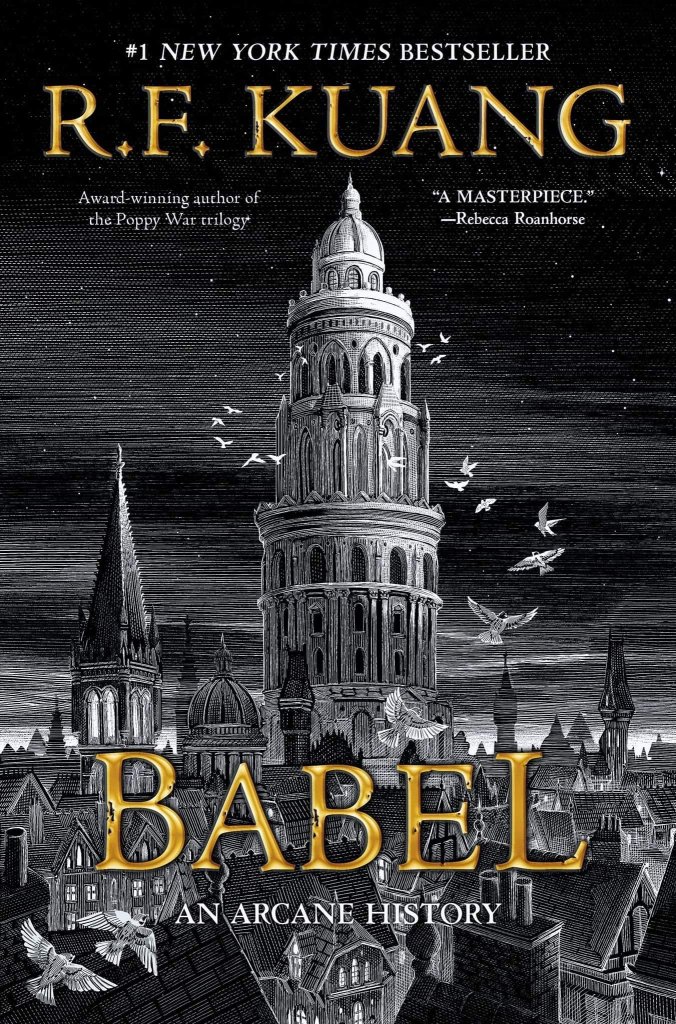
So I was super excited when the Bible Project peeps landed on “the city” as the subject of its latest series of podcasts. Thus far it has been quite interesting, if just scratching the surface of what is a broad theme. Perhaps most noted is how they begin with this simple question: how do we reconcile the scriptures presenting of the city as a symptom or product of the essential human problem (violence and division) with the idea that the city becomes a picture of the new creation. It’s an interesting question that weaves it’s way into a study of the patterns we find in Genesis 1-9 regarding the formation of the city. They help show how the story of Cain and Abel and the story of Babel are both parallel depictions of the city, simply from opposite ends (its building and its deconstruction)
One idea that has really stuck out for me as well is how they note the parallel of Cain’s “building” of the city with God’s building of Eve. In Genesis 1 and 2 the first time we see something described as “not good” is when mankind is seen to be alone. This problem is connected to the call to be fruitful and multiply and fill the earth- to create- which humanity cannot do alone. The same structure and language is employed in the Cain and Abel story, only in this case it is from the perspective of living in the wilderness space rather than the garden space. When Cain kills Abel not only is he alone, but he notes the problem that “he will most surely die” (a callback to the Adam and Eve narrative). Where God “clothes” Adam and Eve, God marks Cain. The curious thing though is that the mark of Cain doesn’t just promise protection, it promises protection by way of breaking a cycle of perpetual reparation. As it reads,
15 But the Lord said to him, “Not so anyone who kills Cain will suffer vengeance seven times over.” Then the Lord put a mark on Cain so that no one who found him would kill him.
Putting a stop to the cycle of violence comes in response to the fact that “anyone who kills Cain will suffer vengeance seven times over”. Certainly there is a correlation here to Jesus’ later command to forgive seventy times seven.
The ensuing contrast then comes in Cain’s failure to trust in Gods provision and protection. His building of the city, marked as it was in the ancient world by walls that would shut itsself out from external threats, becomes the basis of the portrait of violence based on perpetual repayment for death that then fills the earth.
Fast forward and what you have in the flood story is a reversal of the creation story (a decreation) meant to reset the story and begin to imagine it from the perspective of building a world in the way of God. As the Noah story indicates, death is still present in the wilderness space Noah occupies on the other side of the flood, and yet the promise of new creation follows in the image of the city, a city of contrasts. One in which the gates are never shut.
Further yet, what you then find in the story of Babel is a depiction of a built city being deconstructed. The organizing principle in Cain leading to the chaos of confusion. This also parallels with the same creation-decreation cycle that we find in the creation and flood stories.
Film Journal 2023: Guardians of the Galaxy Vol. 3 Directed by James Gunn Where to watch: now playing in theaters
When the first Guardians film came out it was a bit of a novelty. It represented a slight break from the Marvel formula, allowing Gunn to put his personal touch on a relatively unknown story about a cast of misfits thrust together and bound to protecting the universe against otherworldly threats.
With Volume 3, Gunns sensibilities take even more of a center stage, making this the most personal and most invested of the three. It’s also the darkest, especially considering the humor that dominates volume 2. It’s not that the humor is absent here, but it takes a backseat to the films dramatic and creative concern. In truth, this reflects some awkward tonal shifts that might unsettle or distance some viewers, and Gunns taking some definite swings here on his way out of the franchise and the MCU that don’t always work completely. But the films creative voice overshadows that, proving that there is still plenty of room to explore when it comes to reimagining these stories in unique ways and finding different ways to tell Marvel stories. Truth be told, when the swings do land it’s quite exceptional; visually, structurally, aesthetically, technically.
What allows this film to soar though is how Gunn locates the trilogies thematic force in the story of Rocket. The film is a beautiful send off to these beloved characters, and by giving the trilogy a singular and unifying focus it allows the narrative to reflect back on the journey as a whole with perspective and awareness of its growth. There are some genuinely powerful and emotionally gripping moments, and some stunning ones,that make the emotional investment deeply worthwhile.
A franchise about unlikely friendship grows into a story about found family, taking the time to really explore the weight of their individual stories and struggles and how they fit together. This is a genuine feeler that stands as a reminder of why the MCU has had such a lasting presence in the cinematic landscape.