Isaiah, John and the Hopeful Work of Unbelief

*note the parallel references to Isaiah that tell the fuller story of “faith” in light of the exile and the hoped for messianic expectation. Taken together, verses 37-39 don’t refer to some predetermined election to salvation and damination, belief and unbelief. In both Isaiah and John these words are speaking into a present state of exile to note a percieved resistance to trusting in the work of God to be faithful to the promise. Resistance here doesn’t come from a people wanting to do horrible things, as the Pharisees are often caricatured to be. In the fuller picture of Isaiah unbelief of some percieved reprobate doesn’t become necessary to the belief of some elected remnant, it is simply the present backdrop through which God’s saving work becomes actualized and made known to the world in the whole of creation. Likewise in John, who brings this picture to fruition in Jesus by way of a Gospel that is all about connecting signs to a promised fulfillment.

The saving work here is not the saving work of some “individuals” over and against other “individuals. That misses the larger picture that this passage is tumbling towards with Isaiahs expectant messianic hope in view- Jesus. We are not the culmination of a saving work that becomes hope for the world, Jesus is:

37 Even after Jesus had performed so many signs in their presence, they still would not believe in him. 38 This was to fulfill the word of Isaiah the prophet: “Lord, who has believed our message and to whom has the arm of the Lord been revealed?” 39 For this reason they could not believe, because, as Isaiah says elsewhere:

40 “He has blinded their eyes and hardened their hearts, so they can neither see with their eyes, nor understand with their hearts, nor turn—and I would heal them.” 41 Isaiah said this because he saw Jesus’ glory and spoke about him. 42 Yet at the same time many even among the leaders believed in him. But because of the Pharisees they would not openly acknowledge their faith for fear they would be put out of the synagogue; 43 for they loved human praise more than praise from God. Jesus’ Observations about Faith 44 Then Jesus cried out, “Whoever believes in me does not believe in me only, but in the one who sent me. 45 The one who looks at me is seeing the one who sent me. 46 I have come into the world as a light, so that no one who believes in me should stay in darkness.

47 “If anyone hears my words but does not keep them, I do not judge that person. For I did not come to judge the world, but to save the world. 48 There is a judge for the one who rejects me and does not accept my words; the very words I have spoken will condemn them at the last day. 49 For I did not speak on my own, but the Father who sent me commanded me to say all that I have spoken. 50 I know that his command leads to eternal life. So whatever I say is just what the Father has told me to say.”
-John 12:37-50

From Scott McKnight commentary:
John’s Gospel was written so people would believe in Jesus as God’s Son and Messiah (20:30–31)… John begins to explain that lack of faith by working with two passages from Isaiah, the first from 53:1 and the second from 6:10.

Isaiah’s experience of his contemporaries not trusting his prophetic words anticipates how the leaders of Jerusalem respond to Jesus’ mighty signs (John 12:38). Isaiah extolled the glories of the “good news” that “Your God reigns!” (52:7) because God will redeem Israel, but when God’s Messiah enters Jerusalem, the leaders do not embrace the Messiah. They reject him.

Second, John appeals to a correspondence between divine purpose and human response in John 12:39–41 by turning all the way back in his Bible to Isaiah 6. There the prophet Isaiah was given a vision of “the Lord, high and exalted, seated on a throne” surrounded by “seraphim” and, after confessing his own unworthiness to glimpse the throne room of God, he is sent to tell the people of God—notice that—their response would be dull and inadequate until “the cities lie ruined” (because of exile). But he turns at the end of Isaiah 6 to announce there will still be life in the stumps that remain. Their condition of unbelief would end with belief.

“God intends persistent unbelief to lead to decisive judgment, consequent repentance, and ultimate deliverance” (Quast, John, 92). Too many forget the context of Isaiah 6 and see here a brutally unfair god. The Father of Jesus, however, would never hold someone responsible for unbelief if he both determined and caused unbelief. Never. John is here suggesting the unbelief of these leaders will someday be turned into faith…

“many even among the leaders believed in him” (12:42), indicating another dimension of faith: humans remain responsible. Sadly, John continues, these leaders who do believe in Jesus would not declare their allegiance to Jesus because of the social pressure put on them by the “Pharisees”—and John says they “loved human praise more than praise from God” (12:43). Perhaps we need to give some grace by remembering that faith is a journey, and they were just beginning.

Top 12 Films at the Halfway Point: Film Journal 2023 (And The Best of the Rest)

Checking in at the halfway point to see how things are shaping up for my working list of top films of the year. Best, favorite, I know there is a distinction. But for me those lines get blurred fairly quickly when I’m sitting down and looking through which titles must be represented. Perhaps a better phrasing might be “most memorable”. These are the films I’m still thinking about the most in terms of my viewing experience.

Looking at where my list was at the first quarter back at the end of March, I’m noting a good deal of change and shuffling with a handful of titles holding strong. There might not be a ton of 4.5 or 5 star experiences, but this year has been really strong at the 4 star level. Thus, all of my honorable mentions could easily contend for a spot on my top 12 on a different day and/or with a rewatch.

I’ll begin with the best of the rest:

The product origin stories: Blackberry, Tetris, Air, Flamin Hot, Pinball: The Man Who Saved The Game

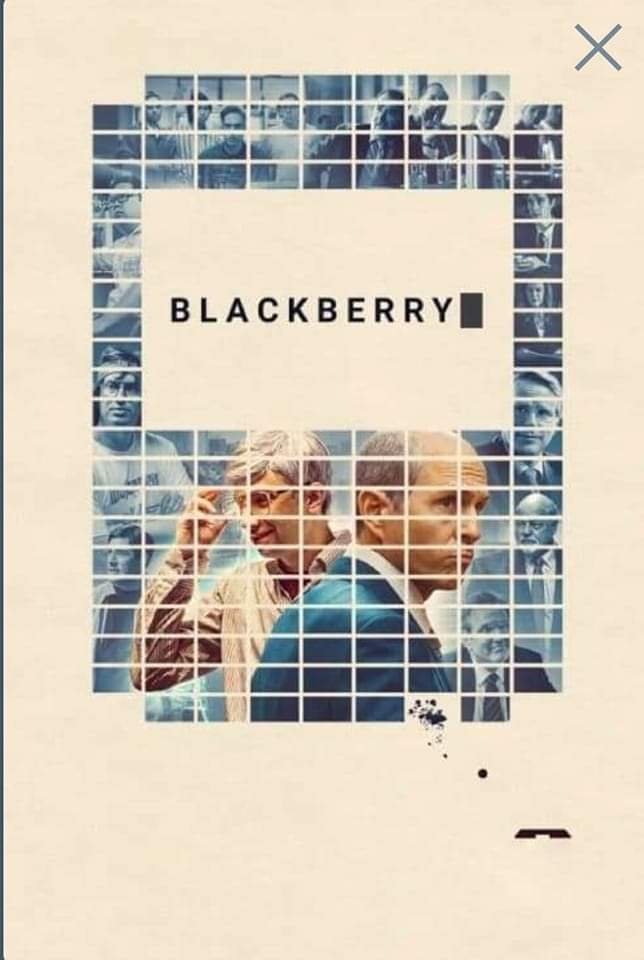
If anyone has an answer for this recent trend, I know of a good deal of Film Twitter that would love to hear it. That puzzle aside, I’m here for it. Air remains one of the most fun theatrical experiences of the year, its energetic script proving to be a genuine crowd pleaser, while Blackberry boasts some surprising artistic merit and indie cred with some captivating performances anchoring a familiar story in some surprising twists and turns. Pinballs melding of doc and drama played nearly as strong as the accompanying mustache, while Flamin Hot inspired while fostering some interesting conversation regarding how legacies get written and told adjacent to the products. And then there’s Tetris. One of the best globe trotting action/spy thrillers of 2023? Bring on the trend.

The 2022 Holdovers: Broker, No Bears, A Quiet Girl, Close, Women Talking

All of these films could be wrestling for my number 1 spot, so I figured I would spotlight them given their wide release in 2023 conflicts with their awards season representation and/or official release date in 2022. Broker leads the pack with one of the great Directors of our day (Kore-eda) demonstrating his penchant for strong themes and emotional gut punches mixed with humor and reflection on found family, forgiveness, all mixed with a good dose of moral ambiguity. Another iconic Director (Jafar Panahi) delivers what i think might be his most personal and intriguing work to date in No Bears, fusing his personal experience with film about telling the necessary stories in a messy and difficult and often dangerous world. The Quiet Girl is a profound exploration of telling stories without unnecessary words, while Women Talking is a powerful film about giving voice to the voiceless. And if Close has its way, it binds the quiet and the voice of the voiceless to a startling exploration of finding closeness in a world made of social constructs designed to keep us apart

Polite Society

In case we mistake a continually struggling box office with an absence of good, original fare, Polite Society braved those obstacles on its way to giving us a charming, creative indie action drama that hits in all the right ways, exploring a familial setting rich with cultural touchpoints and sibling dynamics. Flew under the radar, but absolutely deserves to be seen and celebrated.

The Indies: Brother, Hannah Ha Ha, Until Branches Bend, The Last Film Show, The Blind Man Who Did Not Want to See Titanic, Retrograde, A Thousand and One

Smaller films that deserve some attention, beginning with Clement Virgos Brother, who continues the trend of excellent dramas set in Scarborough (see last year’s Scarborough). It tells a story of siblings facing the challenges of growing up as black men in an impoverished neighborhood. The jumping back and forth in the timeline is a bit messy but the films attention to detail, intimate characterization, and the crafting of some really strong sequences more than make up for it.

Hannah Ha Ha is a startling achievement given a film so seemingly small in scope. It was shot on 75mm in IMAX format. The strongest case for why even the smallest films deserve to be seen on the big screen outside of A Thousand and Ones brilliant recreation of 90s era New York. The way this film is shot accents not just the landscape, but the scope of the challenges Hannah faces in the seeming smallness and mundaneness of her isolated life. In Sophie Jarvis’ impressive visually driven debut, the experience is shaped in the opposite direction, taking big and seemingly insurmountable challenges and making them small in the life and context of this community and the young woman at the center of its struggles. Smaller yet is the confined setting of Retrograde, a window into generation Z by way of simple conversational sequences.
And then there are two films, The Blind Man Who Did Not Want to See Titanic and The Last Film, which work to reframe our perspective. In the case of the former, an astute human drama fused with romance that, using a cinematic approach, works to place us into the experience of a blind man trying to find his place in the world. In the latter, a film that plays reminiscent to Cinema Paradiso, celebrating the art form that allows Directors to do just that.

Dungeons and Dragons

In case you missed it, a film many wrote off turned out to be one of the freshest, fun and entertaining big budget blockbusters of 2023 thus far. A complete delight from start to finish

The Dramatic Comedies: You Hurt My Feelings/The Swearing Jar/Somewhere in Queens

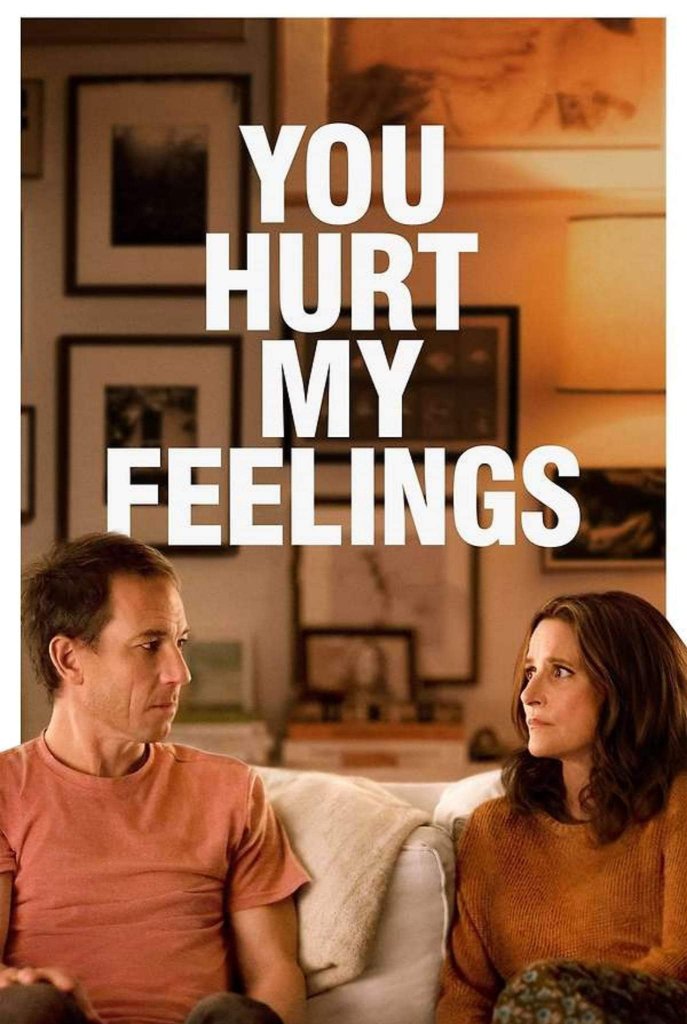
The small dramatic comedy isn’t dead yet, even if the box office wants to make it appear that way. This is situational comedy at its best, and Julia Louis Dreyfus leads the way in an extremely relatable and hyper focused scenario driven story about the ways we relate to one another. Occupying a similar space is the relationship driven dramatic comedy The Swearing Jar, which uses music and cleverly designed narrative structure to sneak up on you with a big emotional punch. More rugged and given to its natural dialogue and dry sense of humor, Somewhere in Queens rounds this out as a wonderful exploration of familial relationship and generational divide.

How To Blow Up a Pipeline

Plays like a thriller. Acts like a thriller. Sounds like a thriller. Which makes this small, unassuming tension filled indie romp an edge of your seat experience. It’s not perfect, but it definitely plays

The Horror: Skinamarink, Emily, Knock At The Cabin, Godless: The Eastfield Exorcism

Skinamarink came out early and divided audiences. You either connected with it or you didn’t, and the film doesn’t leave much space to operate inbetween. For me it brought all my childhood nightmares, chronic as they were, straight to the surface. Little did me in like this experience. On the other end of the horror spectrum is Emily, a much more studied period piece that digs deep into the profundity of its questions relating to the fears that drive us forward and hold us back. The cinematography is particularly memorable, as is the literary approach. There is also the rich themes found in M. Nights Knock At The Cahin, led by a memorable performance by Batista, and the visceral experience of Eastfield, a film that will evoke the full spectrum of emotions (pair that with the Pope’s Exorcist like a fine wine)

A Good Person

This one fought the hardest for a spot in my top 12. The reaction for this one was mixed, but it really resonated with me in a big way when it came to the performances, the story and the themes. Speaking of “most memorable”. This one continues to linger,


Top 12 at The Halfway Point of 2023

12. Elemental

An animated film that plays to an older crowd, delving deep into generational trauma, the parent-child relationship, immigration, coming of age, cultural heritage, growing old. For a film that appears to rest on very obvious and surface metaphors, this one does a lot to bring the depth underneath to the surface in a satisfying way, boasting a nice visual style and some interesting world building.

11. Riceboy Sleeps

Reminiscent of Minari, if not quite as rich in its thematic focus. Where it excels is in immersing us in the world and experiences of a Korean immigrant widow and her son attempting to find their way in a foreign land (Canada). The film represents a gut punch, and there is so much beauty and sadness in the way these two people try to find their way together.

10 The Artifice Girl

A profound film in terms of its embrace of tough, philosophical questions. Even more impressive given the small budget and even smaller scale that informs the storytelling. What does it mean to feel. What does it mean to be human. What does it mean to exist. All of these questions begin to blur together into a singular existential concern when it comes to imaging a future driven by increasingly adaptive and intelligent AI. Lest we feel like this is a question for later generations, the film ŕeminds us that we are very much already here.

9. Linoleum

I wrote in my initial review that this film reminded me of why I love movies and what makes them so special. It’s quirky, unique, creative, and rich in its ability to tap into the core of the human experience. The film might set its ambitions on the big existential questions that accompany space exploration, but its true interest is the relationships on the ground.

8. I Like Movies

Still one of my most memorable movie going experiences this year. This tapped into nostalgia for a bygone era. More so it gave me a lens through which to see my own experience as someone who grew up with the majestic old downtown theaters and the onset of home VHS and DVD rentals. It allowed me to consider what that meant to me growing up, and how it became a place where I could fit in where I otherwise  did not.

7. Asteroid City

Symmetry, color, comedy, visual storytelling, philosophical wonderings, quirky  characters. It’s all here in a film that feels as much a call back to Andersons earlier work as it does a spiritual sequel to French Dispatch. Equal parts captivating and brilliant from one of the great modern visionaries.

6. Beau is Afraid

This is what happens when you give an already unhinged Director a blank check and free reign. Its bizarre, at points nonsensical and outrageous, but never less than captivating. The danger might be to assume the film fails to say anything coherent, but that would be to betray its narrative brilliance. And as someone who struggles with anxiety and who has mental illness in the family, the film hit a resonant note for me personally, and its one I’m still thinking about quite a bit.

5. Guardians of the Galaxy Vol 3

Volume 3 caught me off guard with just how meaningful it proved this franchise and it characters to be. This final goodbye pulled on the heartstrings and left me with all the feels, showing how you wrap up a trilogy with respect and care. One of my favorite MCU entries.

4. The Eight Mountains

Visually stunning, this big in scope intimate in detail story about a life long friendship contending with the hard realities of this world is a true cinematic experience. It blends metaphor and experiential drama as it finds its way into the different conflicts embedded into this reality. It leaves you with questions to ponder long after the credits roll

3. Showing Up

The follow up to the profound First Cow, Showing Up manages to exhibit a similar intellectual and artistic focus while treading new ground and exploring new space. It’s dialed back in all the right ways, focusing the expansiveness of its questions not on social and political constructs but on the nature of art, artist and viewer. The intricacies here show the filmmaker at her most open and intimate.

2. Past Lives

Rich in nuance and overflowing with visual and narrative poetry, the best way to describe this film is “prose in motion”. Less an intellectual exercise meant to be understood and more an experience meant to immerse yourself in. The past lives motif functions on multiple levels, but perhaps it’s most profound accomplishment is making the particulars of its story applicable on such a universal level.

1. Are You There God, It’s Me Margeret

I never expected a movie about a preteen girl going through puberty to land at my number one spot at the half point of the year, and yet here we are. Honest and authentic to its core, it’s a film about how to grow up with our questions and our struggles. Given the way the film parallels questions of God’s existence with the uncertainties of puberty, I think one of its most profound sentiments is the idea that whatever it is that we sacrifice for the sake of the self, it doesn’t take long for that allegiance to betray its need to be anchored in something bigger than the I. Which is why the grace notes we all need to navigate this thing we call existence arrive against expectations. That is what we call an exercise of maturity, and this just might be one of the most mature films I’ve seen in a long, long while, beginning with one of the best lead

The Genesis of Creation, The Problem of Violence, and God’s Revealing Work of Goodness

This is two posts in one:

Post #1

I know this is a lot verses, but I wanted to outline the flow of the early chapters of Genesis in terms of it being a story about God’s promise. Note how each of the stories is marked by an act that leads to something contrary to what God calls very good, followed by a promise by God to act in response according to its reversal.

And notice how the reversal is continually rooted in a reversal of the curse placed on the land, which is paralleled with the command to be fruitful and fill the earth

And notice how Noah is raised up as a righteous figure whom will bring comfort relating to the curse on the ground by declaring its promised reversal. That reversal is attached to generations which, in this thread, ends with the promise to Abraham to make him fruitful and to fill the earth (father of many nations), and how that will come about for the sake of the scattered in the previous verses through the decendents that will be given the land of Canaan where he dwells (Israel). Precisely by being their God and them Gods people. From this comes the name Yahweh. Through this the promise of the reversal of the curse creation finds itself under will be reversed.

And don’t miss how this is tied to the seed of the serpent and the woman in conflict, with the Serpents head being crushed. If the movement Eastward to occupy and live off the cursed land is so that they might not live forever in that compromised state, the movement back, which must go through the fire, happens through God’s faithfulness to liberate the land (creation) from its curse:

Genesis 1:28-31
28 God blessed them and said to them, “Be fruitful and increase in number; fill the earth and subdue it. Rule over the fish in the sea and the birds in the sky and over every living creature that moves on the ground.”
29 Then God said, “I give you every seed-bearing plant on the face of the whole earth and every tree that has fruit with seed in it. They will be yours for food. 30 And to all the beasts of the earth and all the birds in the sky and all the creatures that move along the ground—everything that has the breath of life in it—I give every green plant for food.” And it was so.
31 God saw all that he had made, and it was very good.

Genesis 2:16-17
16 And the Lord God commanded the man, “You are free to eat from any tree in the garden; 17 but you must not eat from the tree of the knowledge of good and evil, for when you eat from it you will certainly die.”

Genesis 3:15
I will put enmity
between you and the woman,
and between your offspring and hers;
he will crushb your head,
and you will strike his heel.”

Genesis 3:17-19
Cursed is the ground because of you;
through painful toil you will eat food from it
all the days of your life.
18 It will produce thorns and thistles for you,
and you will eat the plants of the field.
19 By the sweat of your brow
you will eat your food
until you return to the ground,
since from it you were taken;
for dust you are
and to dust you will return.”

Genesis 3:22-24
22 And the Lord God said, “The man has now become like one of us, knowing good and evil. He must not be allowed to reach out his hand and take also from the tree of life and eat, and live forever.” 23 So the Lord God banished him from the Garden of Eden to work the ground from which he had been taken. 24 After he drove the man out, he placed on the east side of the Garden of Eden cherubim and a flaming sword flashing back and forth to guard the way to the tree of life.

Genesis 4:10-12
10 The Lord said, “What have you done? Listen! Your brother’s blood cries out to me from the ground. 11 Now you are under a curse and driven from the ground, which opened its mouth to receive your brother’s blood from your hand. 12 When you work the ground, it will no longer yield its crops for you. You will be a restless wanderer on the earth.”

Genesis 4:15
15 But the Lord said to him, “Not so, anyone who kills Cain will suffer vengeance seven times over.” Then the Lord put a mark on Cain so that no one who found him would kill him.

Genesis 4:24
24 If Cain is avenged seven times,
then Lamech seventy-seven times.”

Genesis 6:1; 5
When human beings began to increase in number on the earth and daughters were born to them… The Lord saw how great the wickedness of the human race had become on the earth, and that every inclination of the thoughts of the human heart was only evil all the time

Genesis 5:29
29 He named him Noah and said, “He will comfort us in the labor and painful toil of our hands caused by the ground the Lord has cursed.”

Genesis 6:18
“But I will establish my covenant with you, and you will enter the ark—you and your sons and your wife and your sons’ wives with you,”

Genesis 8:21-22
“Never again will I curse the ground because of humans, even though every inclination of the human heart is evil from childhood. And never again will I destroy all living creatures, as I have done.

“As long as the earth endures,
seedtime and harvest,
cold and heat,
summer and winter,
day and night
will never cease.”

Genesis 9:4-7
4 “But you must not eat meat that has its lifeblood still in it. 5 And for your lifeblood I will surely demand an accounting. I will demand an accounting from every animal. And from each human being, too, I will demand an accounting for the life of another human being.

6 “Whoever sheds human blood,
by humans shall their blood be shed;
for in the image of God
has God made mankind.

7 As for you, be fruitful and increase in number; multiply on the earth and increase upon it.”

Genesis 9:1
9 Then God blessed Noah and his sons, saying to them, “Be fruitful and increase in number and fill the earth.

Genesis 9:8-11
8 Then God said to Noah and to his sons with him: 9 “I now establish my covenant with you and with your descendants after you 10 and with every living creature that was with you—the birds, the livestock and all the wild animals, all those that came out of the ark with you—every living creature on earth. 11 I establish my covenant with you: Never again will all life be destroyed by the waters of a flood; never again will there be a flood to destroy the earth.”

Genesis 10:32
32 These are the clans of Noah’s sons, according to their lines of descent, within their nations. From these the nations spread out over the earth after the flood.

Genesis 11:1;6
11 Now the whole world had one language and a common speech. 2 As people moved eastward they found a plain in Shinar and settled there… the Lord scattered them from there over all the earth

Genesis 12:3
I will bless those who bless you,
and whoever curses you I will curse;
and all peoples on earth
will be blessed through you.”

Genesis 17:3-8
3 Abram fell facedown, and God said to him, 4 “As for me, this is my covenant with you: You will be the father of many nations. 5 No longer will you be called Abram your name will be Abraham, for I have made you a father of many nations. 6 I will make you very fruitful; I will make nations of you, and kings will come from you. 7 I will establish my covenant as an everlasting covenant between me and you and your descendants after you for the generations to come, to be your God and the God of your descendants after you. 8 The whole land of Canaan, where you now reside as a foreigner, I will give as an everlasting possession to you and your descendants after you; and I will be their God.”

Post #2

Some observations from the book Flood and Fury by Matthew Lynch

Joshua 24:12
12 I sent the hornet ahead of you, which drove them out before you—also the two Amorite kings. You did not do it with your own sword and bow. 13 So I gave you a land on which you did not toil and cities you did not build; and you live in them and eat from vineyards and olive groves that you did not plant.’

See my previous post which strings tougher all the verses in Geneis 1-12 relating to covenant and its association with the land. Now note here at the end of Joshua, the conquest book, the hyperlinks back to those stories and that promise; did not toil, cities you did not build (Cain and Abel and the Tower of Babel), the image of the land giving blessing instead of being cursed.

And even notice the reference to a bow. Lynch notes that in ancient stories it was common for a messenger of the god to show up and hand a leader a sword. This was a kind of anointing and a proclamation that “you fight for me”. This word for bow is the same language employed in the story of bow, which is Gods bow. Lynch links the note at the end of the story that God claims to be the one who does the action and carrys the bow with Joshua’s version of the messenger showing up with a sword in chapter 5. The messenger wields the sword, it doesn’t give the sword as would be expected in such a story.

Lynch then narrows in on 5:13 and the question “are you for us (Israel), or for our enemies”. The answer that comes: neither. This messenger is a commander of “the Lord”. Again, see my previous post that walks through the references to promise or covenant in Genesis 1-12 and note the emphasis on Gods work and Gods faithfulness to do what He promised to do in light of those sequential stories. As Joshua 5 continues it hyperlinks back to Moses at the burning bush with the call to “take off your sandals for the place where you stand is holy”.

Now here is where things get really cool. Let’s backtrack to the story of Abraham.
Genesis 12:1 , “Go from your country, your people and your father’s household to the land.”

Connect the land to the cursed land of Genesis 1-11

Then note the progression of the specific call that comes to Abraham in light of this promise . “I am God Almighty walk before me faithfully and be blameless”, followed by “You are to undergo circumcision, and it will be the sign of the covenant between me and you.”

Now fast forward to Joshua 1-5 and note the progession in chapter 1 “to go” in relationship to the land followed by an unexpected turn of events. Rather than preparing them for battle the swords given are given for circumcision.

Backtrack again to Exodus 3 and 4 and the messenger to Moses and parallel that story with Joshua 1-5. Note the progression in that story that culminates in an act of circumcision that reshapes Moses understanding of who God is and how God is working in the world.

Lynch notes how these stories all parallel and connect with one another in this basic truth: that where the problem of Genesis 1-11 is this connection between the problem of violence and division, the idea that we fix this problem with the sword is always met with the divine revelation of Gods name and character wielding the sword in a different fashion.

Are you for us or for our enemies? Neither. Here God calls for submission to a different way of being in the world according to the kingdom He is building FOR the world, not against it.

The Measure of a Life: The Philosophical Quandry of Meaning

Here is a philosophical idea I have been playing with lately. Mostly in response to questions I have been grappling with and which others have posed to me.

It has to do with how we measure or lay claim to the value of a life. Or perhaps more specifically, the question of a meaningful life. Or what is an ideal life. All three questions get at the same thing.

One of the most oft sentiments I hear is this. A meaningful life depends first on the conviction that less suffering is better than more suffering in a world where some level of suffering is inevitable. This applies most readily to uneccessary suffering.

It depends on secondly on individual liberty, meaning the ability of one to do with their life what they choose.

In the absence of either of these things a meaningful life, or the ability to live a meaningful life, is seen to be compromised.

If that is the foundation, what follows then is the question of contextualizing such a life. When asked what is the ideal life I tend to get two answers from those I am in conversation with. On one hand there is an appeal to a kind of relativism, albeit typically relativism that operates within the parameters and rules of knowledge and reason. On the other hand it seems commonplace that the measure of such value or idealism is dependent on a set number of years. Since the framework that we know today is, to simplify, a lifetime that moves from 0-100, absent of external factors such as suffering we tend to believe that the narrower the gap between life and death is within that given time frame (the reality that we know) the more tragic the loss is. For example, we deem it a greater tragedy that a 12 year old loses their life than an 80 year old.

Chances are that we will also say that both lives hold the same intrinsic value, philosophical quandries that force one to choose between either or aside. And yet, such a measure seems to force us to say at the same time that a life lived 100 years is a more valuable life in terms of its meaningfulness and its pointing to the ideal, creating certain philipshical tensions between the two claims. This tension is particularly relevant to the one posing certain existential demands to life itself.

The measure that we use to make both claims is the same. We measure it based on opportunity lost and opportunity gained , and that opportunity is based on that 0-100 time frame.

So that has me asking the following questions. It is often said by those who oppose religion that the idea of living forever is not attractive. We might desire it in the face of tragedy, but when we really consider it I have had many say to me that most of us wouldn’t want that. A world without death and suffering would be a world absent of life, because death and suffering are the things that allow us to know that we are living.

But is this really the logical conclusion of life and death, or our question of what makes a meaningful life? Let’s consider this. The reason we might think this to be true is because it cannot make sense of our present point of perspective and experience. But what if we rewound to not so many years ago when common life expectancy was 50. Suddenly 50 becomes the ideal.

Or what if we fastforward and imagine a lifespan of 200 where we eradicate certain diseases associated with aging. Would our perspective not change again? And where would we percieve to draw the line in that regard? At some point do we just say enough?

Or what about suffering? If we assume that less suffering is better than more, where do we draw the line when it comes to cancer research, for example? Do we imagine a world absent of suffering only to a certain point? And what do we do with a modern age where technological advancement is almost entirely about conveniences (the absence of certain forms of suffering) rather than necessities? Is that not all given to a matter of perspective as well?

Here is my wondering. I agree with the idea of inherent value. But I think what that demands of us is a similar given statement that recognizes death and suffering as adversaries to life. Without that our logical systems when it comes to the value of life falls apart. And I think that forces us to be honest about the arbitrary lines that we draw that allow us to label death and suffering as necessary to life.

It is no less rational to suggest that to think of the concept of a world absent of death and suffering than it is to rationalize a world with death and suffering. Both force us to appeal to mathers of limited perspective and demand of us a greater imagination when it comes to how we live in a world with death and suffering

Film Journal 2023: The Covenant

Film Journal 2023: The Covenant
Directed by Guy Ritchie

It took a little bit for me to wrap my head around Guy Ritchie taking on something this serious and this studied and dark. The first half of this film, which is where it really shines, goes a long ways in proving this marriage can work. Its chalk full of intricate sequences, delicate drama, and memorable moments. The way the action sequences are shot, using Ritchie’s signature style, is much more subtle than you might expect, toning down his normal energetic approach without muting it or disguising it.

The film is ultimately about the journey of this interpreter, which affords the film a window into a more nuanced discussion than you might find with someone like Bay, who does not shy away from an heavy set patriotism. Unfortunately some of that thematic weight gets muddled by the inconsistent nature of the pacing in the second half. Its there where i think the argument can be made that the wonderful performance by Dar Salim starts to shine a light on the miscasting of Jake Gyllenhaal. He’s not bad, it’s just that the moments in the second half where I felt myself slipping in and out of full engagement with the film led to over analyzing his role. Something felt a little off, even if I couldn’t out my finger on it.

Overall a pleasant surprise, especially for anyone who is a fan of Ritchie’s work. Adds a different flavor to his filmography that has an aged presence.

The Elementals of the Parent-Child Relationship: Finding Fatherhood in Pixar

Film Journal 2023: Elemental
Directed by Peter Sohn

The Good Dinosaur is not among my highest rated Pixar films, but to this day it remains one of my favorites. It trades the typical complexities of Pixars more legendary titles for simple storytelling, drawing out themes not through conceptual designs and intricate storytelling devices but through employjng an old fashioned narrative approach. It has been criticized for this, often occupying the lower tiers of people’s rankings. I have often argued that this is less a question of quality and more a question of expectation; i highly recommend this review for parsing out some of that complicated reality: thetwingeeks.com/2023/06/12/elemental-pixar-the-good-dinosaur-and-the-weight-of-expectations/?fbclid=IwAR2SHpiWuhjI-OgACTYmB7ojRcfbLghikKStTD3IkeGotkbiTC7xP9ze0_s

If the high concept element of the film is limited to the question, what if the asteroid that wiped out the dinosaurs had actually missed earth, the thematic exploration of family, belonging, adoption and growing up/coming of age in an uncertain world filled with trauma and struggle really connected for me. Given that Elemental is not only Peter Sohns follow up film but also the second film of his career, now spanning 8 years, it is fitting that this could be called a spiritual sequel of sorts. The interconnecting ideas and themes overlay both stories in a powerful way, the Good Dinosaur reaching a younger audience and Elemental reaching an older one given the ages and experiences of their main characters.
It will be interesting to see how far Elemental’s reach will be when it comes to finding its target audience. It’s worth repeating that the film does veer older, with its subject matter dealing with the relationship between a younger adolescent and her relationship to her father. It is a perfect fit for fathers day, and I think it serves best speaking to either the parents in the crowd grappling with their relationship with a son/daughter, or the 16-21 year old crowd grappling with issues surrounding what it means to be an adult in a confusing and often difficult world.

In all honesty, the two films function really well as a double feature, both capturing the different phases of growing up and living the grown up life. They ask similar questions, and yet pose them from slightly different vantage points. What made the Good Dinosaur especially meaningful to me is that it came out the year that we adopted our then 12 year old son. The way it tackles the idea of found family and the idea of family being bigger than blood proved a powerful complement to our own experience of becoming a family 8 years ago. Elemental, in contrast, begins with the larger theme of immigration, following a family as they move from one country to another in efforts to begin anew. This cross cultural context, although different than our own, adds something to my personal experience with this film, as we adopted our son from Ukraine, traveling to unfamiliar territory to find him and he coming to this completely unfamiliar country called Canada after the family became official.

The story that we find in Elemental is actually deceptively rich. I have heard of some writing it off already simply on the basis of the trailer naming the main character, a fire Elemental, “Ember”. Yes, the metaphor at play is on the nose, all the way down to Ember having a firey temper given to fits of rage and her eventual encounter with water characters who are in touch with their feelings and prone to being a sobbing mess. The available puns that come from this make no efforts to hide themselves. But the world the film builds around this metaphor is endlessly interesting and unquestionably beautiful. The story even more so. I loved how the layers of the narrative form these progressively narrowing circles of plot lines and thematic focus, taking the broader context of the immigration story and playing that first in to the developing romance between the two polarized elementals, and then narrower yet into the internal struggle of Ember. The glue that binds these things together is the family dynamic, taking these ever narrowing circles and broadening it back out again into the films intergenerational dynamics, exploring how it is that the relationship between parent and child reflect these cyclical patterns and realities, some that hold us hostage and others that promise liberation. It’s in this sense that the film affords the two sides of its experiences, parent and adolescent, a proper entry point into the story.

For many of us who know what it is to be both, I would imagine the story might resonate on both sides of that metaphorical fence. I know it did for me, hitting on some heavy trigger points when it comes to my own grappling with these given realities and experiences. Perhaps most apparent is that deep rooted fear that my son hears much of the same messaging as Ember hears from her own father, and knowing how to communicate what I would really would want him to hear feels like an impossibility sometimes, even on our best days. That feeling of being misunderstood, and of misunderstanding, looms large in this story, with past regrets and failures lingering in the background of it’s own pertinent efforts to face these truths head on.

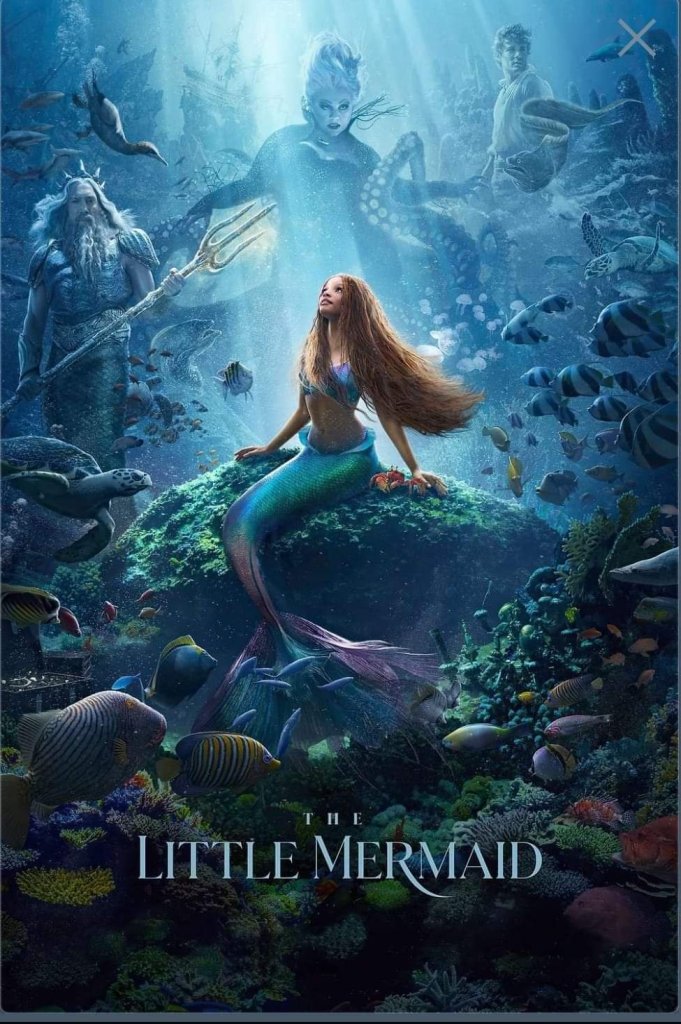
One last thing. I get that this film is not technically perfect (no film is). There is a degree to which it might be stretching itself too broadly in terms of its themes. For a surface level metaphor it is juggling quite a bit, and there is a chance someone might latch on to one element of the interconnected storylines and miss the rest. That’s the danger of trying to bring two sides of the audience in to the same story. You might end up spending so much time trying to find yourself in this story that you miss the other perspective. And the more subtext the film brings in the more likely that is. On that same note, I actually really liked what they did with the developing love story between the two young adults. It reminded me of the similarly lovely and immersive romance sequence in the live action The Little Mermaid. It’s a good example of how, at its strongest, this film is able to take those particulars and spin them as universals, with the romance bleeding necessary nuance into the other plot lines as they develop alongside it. If nothing else, the two sides of the conversation affords exactly that- important conversations across generational lines.

I do know that, without question, I personally am deeply appreciative of this film. Even more so of the Director. The stories he wants to tell, or that he feels he needs to tell, are stories that have deeply impacted my own life and grown my understanding of this world and my experiences of it. I would trade technical veracity for this type of grounded and accessible and personally invested storytelling any day, even with its imperfections.

Pride: The Meaning of Words And Symbols And The People Who Share Them

I am a school bus driver by trade. I drive for a private Christian school which has its name printed I bold, advertised letters on the side of my bus. The other day while I was fueling, a trucker beside me at the pumps decided to engage me in conversation. It started with noting the beauty of that mornings sunrise, one of the perks and blessings of being on the road. Then he switched gears. Nodding at the name on the side of my bus he suddenly asks me what I think of this whole pride month thing. The way he asked me was as though the name on the side of my bus indicated that we shared a common viewpoint and a common language. He assumed that we would be able to say what needed to be said without using words that could be overheard and thus get us in trouble and/or persecuted. He assumed that because I drive a bus with the word “Christian” on the side that I must have certain feelings about all this pride being celebrated, and that part of that shared language was wrapped up in necessary conviction that our free speech was under threat and, as he made sure to note, his veteran status was being undermined. One day to celebrate his service, as he put it. A month to celebrate Pride.

Something about how that whole conversation went down left my unsettled.  Wasn’t sure quite what to do with it. The irony of it was that if I said anything in that moment that challenged his assumptions about our shared language it would be me being the oppressor. He was clearly far less interested in hearing more I thought than he was in maintaining the relevance of this insiders club.

And then I came to this article, and I thought it was an interesting perspective and take on Pride month and how words and language play into how we see their meaning. Written by a Christian who is also gay. Been pondering this quote inparticular:

“The question is not, “What does rainbow flag symbolism mean?” The question is, “To whom does rainbow flag symbolism have meaning? Who am I trying to communicate with, and what will they understand this symbolism to mean?”..

In cases where the people I encounter have different understandings of the same symbol, whose understanding is a higher priority to me? Who am I willing to risk being misunderstood by? Will I have an opportunity to clarify my meaning to one audience but not to another? In which case will correct understanding create more good, and in which case will misunderstanding create more harm?”…

perhaps we’d be better off if we approached these situations with fewer categorical answers and more genuine questions. Perhaps we’d be better off if we asked the people we love what these symbols mean to them, instead of assuming we already know their answers.”

https://www.centerforfaith.com/blog/rainbow-flags-and-symbolic-ambiguity?fbclid=IwAR2aw6eZL637qrnQD04nJHfvTmjnFLUXcJnsjJQFY04O2pC_ixdbf8jKaCk

Film Journal 2023: Flamin Hot

Film Journal 2023: Flamin Hot
Directed by Eva Longitis

Maybe this will be a hot take, appropriately so, but those crying foul over the news reports demonstrating that Montanez, the real life character behind the Memoir this film is based on, did not actually invent flamin hot cheetos are making a mountain out of a molehill. And largely missing the point of what a Memoir is- your story written from your perspective.

It would be entirely diffent if this whole thing was causing harm. Choosing to tell his story the way he did was little more than a matter of accentuating certain aspects so as to dramatize the points he really wanted to make. In fact, even a small bit of research can show that most of what we find in this film is rooted in something true, be it about his life, his career, or even the creation of flamin hot cheetos. Does he rewrite some of that history to serve the whole janitor to manager American dream story? Yep. Does it collapse relevant bits together to speak and write more smoothly? For sure. Does it glamorize and romanticize assembly line work to a degree? Certainly. Although, having grown up doing that work myself it didn’t fill altogether false.

Rest assured though that the basic beats of the story beyond his efforts to present his story at the center of something he played an important role in even if he did not “invent it”. And the story is pretty dang effective and entertaining as it is. I have not read his Memoir, but from what it sounds like it captures his spirit and his energy perfectly, and it is infectious.

Perhaps even more so though is the window this film affords us into the job he eventually came to work his way into; marketing products. In fact, that is exactly what this film is, an exploration of how marketing works. It wants to sell his story as much as the product, and it does not hide how this works. It works by making us feel a certain way about it. It packages it up into something that will sell, and the CEO essentially explains this pretty directly in the film.

And truth be told, most of us live our lives buying into that all the time. Most of life works exactly this way, even when it comes to selling ourselves. That bubble only bursts or matters in the face of true controversy and wrong doing. But I am convinced at this point in time, and full credit to the film, that this is not the case when it comes to the man who invented the flamin hot cheeto

Film Journal 2023: The Wrath of Becky

Film Journal 2023: The Wrath of Becky
Directed by Matt Angel and Suzanne Coote

Loses a bit of the magic of the first absent a scene stealing turn from Kevin James as the central antagonist. Seann William Scott is capable, but we don’t get enough time here, nor enough of a story for him to occupy the stage like his predecessor did. As well, where the first one had a natural arc when it came to the character of Becky, starting off one person and becoming something different in light of the threat and the trauma, in this one the character is written far more singular, catering more to a stylish graphic novel vibe. Full points to the film though for still retaining its focus on trauma and the ways it impacts who we are. That remains inherent in the subtext and it gives this film a necessary weight and sense of intrigue that elevates the slasher premise. And to be fair, that singularity fits the amped up campiness of the sequel just fine, even if it does feel slightly less memorable.

This sequel manages to have some fun with the whole premise by leaning into Becky’s world (her world reclaimed from the invaders), and any time we get one on ones with Becky and any number of the films supporting characters, Lulu Wilson’s all out commitment to the role helps make the films tight run time (under an hour and a half) completely worth it.

Reading Journal 2023: Life On The Mississippi: An Epic American Adventure

Reading Journal 2023: Life On The Mississippi: An Epic American Adventure
Author: Rinker Buck

“American children have been raised for more than two hundred years on the cherished rubrics of the Declaration of Independence, “all men are created equal” and the inalienable right to “life, liberty, and the pursuit of happiness.” But the founders who gave civilization these words… also lusted for the West.”

This is the story of Rinker Buck’s seemingly crazy endeavor to follow in the footsteps of the flatboaters of the past by building a boat and traveling the Mississippi down to the New Orleans. In the early chapters he sets the stage for the above quote to represent the thrust of the lessons he would come to glean from his journey. Caught inbetween the ideological push of the east and the capitalist expansion of the west is a buried but significant and altogether defining portion of America’s history, and even its present: the river. In many ways it is the river that holds in its grasp the potential promise of a country unencumbered by either of those two polarities, even as it becomes clouded by the push and pull of the sheer force of power inherent in the two sides.

What is interesting about these lessons is that it unintentionally manifests itself in the crew that Buck assembles. A mix of conservative and liberal voices and personalities that render his navigating of the waters and its history a refreshing appeal for balance and genuine inquiry. It helps the lessons and observations to feel less targeted than it is honest about what the river celebrates and also helps to hide.

I have read quite a few books on the rivers history, long fascinated by its story. 8 or so years ago I did a trip that followed the river road from its humble beginnings in northern Minnesota to Memphis. One day I hope to finish it by making it to New Orleans. So I was really excited to read of Buck’s experience and gain his perspective on a path I had likewise traveled in interest of gaining an intimate awareness of its history, albeit by road rather than boat. It’s worth pointing out a small criticism here towards that end: he spends most of his time on the Ohio, not the Mississippi. For as much as I really enjoyed the story of the Ohio, I was slightly let down by how little attention the Mississippi was actually given. Once I realized the focus was on traversing in the footsteps of the economic trade route, which remains active and thriving on the riverbeds to this day even if the river has now largely been tamed and reshaped into a man-made structure, then I was able to settle in for the ride with greater ease.

What sets this one apart is the experiment of the endeavor. The book essentially follows his journey from the seedbed of an idea to researching how to do it (safely and successfully) to embarking on the journey, the book ultimately being his reflections on that experience. Intermixed with that is the byproduct of the research he did on the history of the river itself. If you like adventure, I imagine the thrill of figuring out how to build a boat and how to navigate the river safely and actually executing that in reality will make this book worthwhile. If you like history there is also plenty of that.

Or, if you are like me, you’ll appreciate both aspects along with a third; the philosophical wonderings that emerge along the ride, perfectly suited for capturing both the romanticism of the river and its wildness.

I do think the book is important as well. It makes some interesting lived and read observations about America present and America past, relating specifically to the question of its story or its defining narrative. For me it was fascinating, and even validating, to read about the uniqueness the river holds in this story. It helps to reformulated the typical ways in which left and right are both held hostage to the “land”. In the river we find both a deeply rooted connection to the wider world as well as the trappings of that east-west divide imprisoned in its banks. Knowing how to tell both of those stories together is a part of the art of Buck’s honest search for the truth of the rivers “mythology”.