Romans, the terminology, and the single word group of justificaiton and righteousness: A Journey Towards True Justice

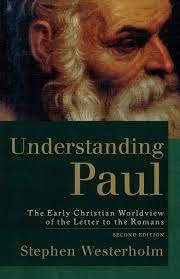
Getting back into Romans with Michael Gorman in my endeavor to parse out what it means to seek a “just” world (excellent so far by the way) with conversation partners in Scott McKnights Reading Romans Backwards, the Voxology Podcast’s present series on imaging in Romans, Faith Improvised’s recent series on Romans, and Beverly Gaventa’s When in Romans among others.

I’m reminded of just how much is packed in to the opening 17 verses of Romans alone; including a reconstituting of the familiar structure of the ancient letter in order to establish it as a narrative. Here we find the establishing of a thesis (the Gospel of God concerning his Son), the inclusion of key terms that will carry through into the unpacking of this theme (obedience, righteousness, peace, justice or justification, faith, unity, belief, imaging, idolatry)

So what are the implications of this when it comes to our understanding of justice, which was seen as the foundation of virtues in Rome and fundamental to Pauls “Gospel” of Christ? First, if we see righteousness in tandem with its Greek word family then we can see the emphasis if these “words” placed on the notion of making what is wrong right rather than placing the emphasis on matters of moral “righteousness”, which is often what happens when the two words are separated in English. As in common in Reformed understandings of Romans, the Gospel is made out to be a matter of works-righteousness, meaning that it sees in the life of Israel a dependence on works as that which saves and sees in Christ a perfect moral righteousness that is given (imparted) to us through the cross as satisfying the necessary punishment for our moral failure. This is then married back into the word justify, or just/justification as the thing that is being made right by way of this necessary punishment that God endures on our behalf, meriting undeserved grace and freeing us from a law (works based righteousness) that we cannot keep satisfactorily.

And already, at the heart of the tendency towards division over how to best interpret these different terms stands the most contentious element of Paul’s letter, that of the ideas of righteousness and justification, two words that, as Gorman astutely draws out, share one word family in Greek but which have cometo get expressed in modern translation through two word families. This has led to the confusing of terms, or the disconnecting of related terms, over the years, including, problematic moves to seperate justification and sanctification as two seperate parts of the same coin. The problem is that the two words in English translation are forced to operate separately given the two word families, leading to theologies that use the word righteousness as on outcome of justification when the two words should be functioning together. What makes this equally difficult is that “just” has the ability to translate to just and justify and justification, whereas righteous cannot (righteousify or righteousification simply doesn’t work), so one is limited in its usage, the other is not, leading to very intentional renderings in later translations that try and make two different words with two different theological defintions fit together in a singular thought or theology.

What happens when we see the words justice and righteous together as part of the same family is that it then broadens the narrative and thus our perspective on the Gospel Paul is presenting, reframing our focus on what it is precisely that Paul sees the Gospel of God concerning His son to be all about. It allows us to contend for the very real realities apparent in Pauls letter(s) in ways that make more narrative sense (moral righteousness simply cannot translate across central themes; instead it makes itself the Gospel while rendering everything else as subtext). This includes, in the first 17 verses, a critique (or reform) of honor-shame systems, the intentional contrasting or the Gospels concern for peace with Rome’s equal concern for peace, and his concern for unity that comes through a unity of faith and obedience that open us up to notions of restoration and transformation as participatory realities.

One of the sad outcomes that I can note from an emphasis on moral righteousness is that it tends to prop up views or forms of justice that is forced to rest on God’s election of some at the exclusion of others. Further, it “justifies” views of justice that then see the Gospel all about this exclusive community being properly transformed through Christ’s propitiated gift of salvation, thus making it the duty of the chosen few to proclaim gods judgement of the world while laying claim to grace as the great gift of salvation. This is justified in a theological and a practical sense because gods choosing to salvation and to death is considered “just” by measure of God’s grace. This is how Gods grace is upheld as being something that is “freely given” and not in any way earned. Thus justice becomes and can only ever be about the necessary punishment that then frees some in God’s gracious move to pour out his wrath on His Son in our place to move towards full transformation of the spirit in moral terms while others are condemned (elected) to the death that our depravity deserves.

And yet, as this commentary uncovers and as I tend to believe, this way of thinking misses and miscontrues so much of the Gospel. Coming to see these two words in relationship as part of the same family can help move our readings of Romans, and thus our ideas of justice, towards a greater vision of the Gospels work and movement in the world Paul sees and describes. It can move us from ideas of moral righteousness, which has far more in common with Rome than Christ, to covenental nomism, where we see righteousness associated with God’s promise and faithfulness to the promise rather than Jesus’ moral perfection. And we can see justice then associated with peace rather than necessary punishment, a positive and forward movement towards making what is wrong in this world right. And we can make room for the world and also communal restoration rather than being forced to mine the Gospel through individual satisfaction and salvation, moving with the letter of Romans towards the clash of kingdoms that it ultimately imagines. It can see in the activity of God the function of who God is rather than the function of what God does. This gets us closer then to a better way of dialouguing about the kind of moral understanding that fits with a faith paired with obedience or allegiance, two ideas that speak to the Gospel’s interest in tansformation, which reflects much differently than the moral systems we see in the world that reflect a sin-guilt-punishment framework (such as the American justice system). That system leaves us enslaved to the very cycles God declares liberation from.

Some thoughts anyways

Confronting the Cycles of Injustice and Imaging True Justice in a World Both Familiar and Unfamiliar: Finding the Imaging and the Idolatry in Robert Egger’s The Northman

I’ve heard this described as the film you get if Director Robert Eggers was given 90 million dollars to make a Robert Eggers film.

Which of course is what did happen. More than just being an obvious observation however, this statement captures a key tension inherent within The Northman- the fact that this is a Robert Eggers film that needs to appeal to the masses. The real question then is, does his intentional and specific style leave this 90 million dollar film inaccessible, or on the other end does it sacrfice Egger’s authenticity and ingenuitity? Or does it find the magic number inbetween? I think Egger’s own process and willingness to adapt to a new world with studio demands and fresh new budgets successsfully carves that necessary path to reach that intended audience without alienating his fans. The story is more straight forward than The Witch and The Lighthouse, two films equally interested in history and mythology and deeply spiritual/religious questions, but he funnels the layered imagery, metaphor and commentary of those films into a meticulously researched historical setting and context. This is a film that immerses viewers in a world both familiar and foreign, bringing to life not merely what the medieval setting would have looked and felt like but how they would have perceived the world from their own vantage point. This means a world that will likley sit slightly uncomfortable for those of us in the West long conditioned away from a worldview that assumes a supernatural realtiy to be everybit as real as the material one. This is a world deeply interested in asking questions not about humanity’s relationship to one another, but to the gods and the spirits. Here the symbols and the metaphors bleed into the on the ground and at times all too real realities of the historical setting, filled as it is with chaos and brutality, Princely sucession and family rule based on real honor-shame aspiraitons. You might be forgiven for wondering if the world ever looked and functioned like it does in The Northman. I think the true punch of Egger’s vision and script comes when it leads us to question whether our world really loook and functions all that different today. The uncertainty of that question is what is meant to linger.

The history is centered on but not confined to the story of Amleth, most well known for inspiring Shakespeare’s Hamlet. Now just in case that inspires a little bit of anxiety for some (Shakespeare is not for everyone), its worth saying this film is not Shakespeare. We do get some of the basic construct of the Hamlet story, but what Egger’s is doing is taking the historical evidence for the story of Amleth, of which we have very little, and weaving that into an immersive world of storytelling traditions. As a bunch of different story’s kind of intersect what we get then is a striking portrait of the world that would have been engaged in the telling of these stories. This is where the astonishing level of detail comes rushing to the surface in full bloodied and full bodied form.

I do think Egger’s is also, in his own way, making very real call backs to his previous films. If you have never done this exercise, research and view the ways that The Witch and The Lighthouse are meant to function together as a cohesive narrative. The same thing is evident here with the movement based on this rise and this decent (which of course takes us to both hell and to heaven) and the richly symbolic colors (notice the movement from muted to the final sequences of blood red) mixing with the symbolism of creature and gods (the film begins with the Crow, which of course signifies Oden and Death itself). A final moment of transcendence punctuates an equally earthbound story, bringing history and myth together in a way that, hopefully, can break open our view of the world and our understanding of reality into something much, much bigger.

Thematically, this film uses some of those tragic Hamlet elements as a way into a world built and formed around particular views of justice. As I was watching this film my mind was being taken back to the story of Cain and Abel at multiple points. Not just with the family strife, although that is clearly in play here, but with the ways in which cycles of violence take root. This is not a story about heroes of old enacting justice in an eye for an eye fashion in a medieval world soaked in expectations of blood, shame and honor. There are no heroes to be found here. No truly redemptive characters. As the story goes we begin to gain portraits of people formed by the world around them and immersed in a way of thinking, seeing and being in the world in a way that would have been completely normal to them. You die in battle, you die avenging honor. You oppose the powers, but in so doing you evoke the enslaving nature of power to do your bidding. And this happens in relationship to the gods which express themselves within nature and in ways that bring blessings or curses. And just like the Cain and Abel story what we get is the problem of perpetual vengeance where justice can only be found by way of repayment for ones sins. As it says in the Genesis story, this is what fills the world with evil that cannot be atoned. A world where justice is declared by way of necessary punishment of course is just as familiar to us today, even if we feel we can detach it from such obvious displays of the barbaric. Here Egger’s is not making a judgement on the ancient world, nor is he isolating them as somehow less enlightened- truth be told they were far more enlightened than we are today in many ways. What he is doing is taking an unfamiliar world where such a question of justice is wrapped up in a world in very real relationship to the gods and making it familiar and universal, and its a really powerful approach to an age old story about revenge.

Of course, and this is certainly true for Christians, what this film needs to break the cycles of violence fueled by the patterns of necessary repayment is something that can ultimatley stop the repayment and not pay it forward. To face the judgement of the evils and atrocities that we see (and there are many on display in this film) and to condemn the evil (or in the Christian sense condemn the Powers of Sin and Death) while also liberating the people. This is perhaps most poignant for our current day given the way we see the Viking legacy sailing through the Rus region and slaying the Slavic peoples (we get some lovely old Ukrainian in the process). This is the point where it becomes clear that moralizing any of the vengeance on display in this film is not on The Northmans mind. What we need then is a voice declaring the full forgiveness of sins while also declaring that the Powers of Sin and Death have been defeated. In this, if we view this from the perspective of the cross, we can see Christ saying to the cycles and patterns of repayment begun with Cain and Abel that the blood stops with the Cross. Instead a new way of living, being, and seeing emerges, one in which the Kingdom of God takes root in the Kingdoms of this earth transforming how it is that we relate to god and to one another.

And yet, what Christ does is reveal the true reality that our appeals to justice in this world tend to cloud. This comes in the revealing of our imaging of capital letter Sin (the Powers), which of course leads to sinful expressions that ultimately lead to death. It also comes in the revealing of the imaging we have traded in the process, that of the image of God. This is where the relationship between God, humanity and creation can be healed, is by transforming our expectation of what it is that god is about and how it is that we are called to live in allegiance to gods way of being, seeing and thinking in this word. This is the true myth, as Tolkien would say, that breaks into a world full of stories of the gods and unify’s them in a singular expression of truth, one given to mystery, a mystery that then breaks through into the injustices again and again with the transforming power of love and forgivness. This is, surprisingly, how it is that new creation, that imagined world where true justice actually reigns, is bought about. Unforutnately both we, and the gods we shape in our own image, an image traded to image ourselves rather than the creator, tend towards the opposite. We see justice in terms of demands for judgment of ones enemy and we enact the gods will to fight on our behalf. When God shows up in Jesus, breaking into history as the full revelation of gods, and our, true image, we tend to reject it, rail against it, react against it, precisely because from our vantage point it feels injustice, as though such an expression remains ignorant of giving evildoers their due and declaring specific actions to be wrong. This is what we see in the film with the gods called upon to act according to their demands and ultimately the people taking the gods actions into their own hands to enact the sort of justice they desire. This is the enslavement such views of justice express. It cannot condemn evil because it justiifies evil in the process. Worse so it believes that it does so under the blessings of the gods that fight on our behalf. When it comes at others expense we see where The Northman threatens to lead this story, towards its own demise.

I won’t spoil where this film goes, but it’s not completely without redemptive notes. I think there is powerful clarity here lingering underneath the surface that points to a natural beauty, the power of new life, the inner longings for peace and restoration, the pain of injustice leading to deeper relationship with one another. But it also leaves no question about a world still enslaved to the same cycles, something we as viewers today would do well not to relegate to some relic of unenlightened history or fantastical superstions. When it comes to injustice we would do well to remember that it is not god who has abandoned the world, rather it is we who have abandoned the way of God in our demands that justice happen in the way we expect it to happen. Encountering the mystery, not in the way of blessings and curses but in the way of imaging, we can then see how this becomes idolatry, enslaving us to cycles of injustice rather than bringing us to the liberating message of peace and forgivness.

Jesus, Justice, and the Way of the Cross

As I continue to dig deeper into the question of what justice is and what justice means, I didn’t expect to find such overlap in a random book I picked up for Holy Week. Jason Porterfield’s Fight Like Jesus: How Jesus Waged Peace Throughout Holy Week is not only highly recommended, it has much to say about the ways in which we imagine jusitce coming about. Each chapter walks through a day of Holy Week. Wednesdays chapter I found raised some compelling questions in terms of my own journey.

Porterfield imagines this chapter as the quiet before the storm, a beak in the action that precedes and proceeds as we move towards the cross. It’s in the midst of this quiet that we find two divergent roads meeting, each with their own particular concern for justice and their own imaginative picture of how this comes about, one leading towards Jesus the other away from Jesus. As he writes,

“Despite the eerie calm, major developments are taking place behind closed doors. The public events of the past three days now give way to private scenes of backroom deals and tableside scandals,” connected by way of three interrelated scenes where a person or a group of people grapple with how to respond to these divergent means of acheiving and imagining justice.

Here Porterfield points out the challenge of such fork in the road.
“We all prefer to identif with those who acted rightly in the Gospels. But sometimes the characters we most admire are the ones we least resemble.” Later he binds this to a question of expectations. When something appears to fail our expectations, when thinsg are not the way we believe things should be, we react, we judge, we respond. As the author outlines in the case of the Gospel, many times these expectations are reasonable and sensible and right in their concern, its when our responses meet the way of Jesus that our pursuit of and demand for justice is able to be critiqued and challenged. And in Jesus what gets exposed is how the true contest is between the way of peace and the way of violence.

What we find on Wednesday is the recognizable human tendency to choose the path where we justify a lesser evil in order to achieve a greater good. As Porterfield exposits, this is what is caught up in Caiaphas’ phrase, “You do no realize that it is better for you that one man die for the people than that the whole nation perish.” (John 11:49-50). In light of their shared concern for justice, the justifiable push of the Sanhedrin was a concern for order and the (seeming) good of the whole. “If a choice must be made between the destruction of one man and the destruction of an entire nation”, then the latter was “clearly the lesser of two evils.”

Here in lies the challenge of Jesus. “One of the biggest temptations we face in working for peace is to justify violent means by an imagined good end.” This is problematic because “inherent to the claim that the ends justify the means is the mistaken belief that we can accurately predict what the end result of our means will be,” followed by the proclamation “If you want to be a practitioner of Jesus’ approach to peacemaking, then you must learn to see the means you use as nothing less than the end coming into existence.”

So how does this relate to our need for and pursuit of justice? The way we pursue justice holds the power to be prophetic in the sense that the choices we make tend to determine the kind of justice we imagine. What Jesus does is two fold- He transforms our imagination of what justice is and what it looks like and then sees in our point of response the way of bringing this imagination to life in present. What becomes clear is that this leaves us uncomfortable precisely because it leaves the present caught in this space between the arleady-not yet where justice doesn’t appear to have happened where our expectations seem to demand it, and this tends to push us towards redefining or reimagining what justice is, most readily in judicial terms where we take matters of peace and order into our own hands. We see just punishment as the means to the end we desire and end up with a form of justice that sees justice as due punishment to satisfy our desires and our needs in the here and now. We see all matters of violent responses and judicial consequence as the lesser evil, which of course then eventually transforms these things into a good. In a twist of irony, the cross becomes the image of the just punishment of Jesus, something that later gets repurposed in terms of our just punishment taken by Jesus in our place, marrying the justice of Rome, so to speak, with the justice of God.

To heed Jesus’ story on Holy Wednesday, the justice of the way, the way to the cross, we need to recognize the seeds we sow bring about the prophetic vision. “For Jesus, true peace was always the fruit of justice,” and what Jesus’ ministry imagines is a kind of justice that brings the fruit of a world made right into the present so as to reform how we go about obtaining justice. As we make our demands for particular kinds of justice we miss, as they did in Holy Week, the kind of Messiah Jesus came to be. Jesus becomes something different than the messiah we signed up to follow, and that triggers our need to take control of the narrative and satisfy our need for justice in the here and now in less than ideal ways. This is what leads to death on a cross. The way of Jesus, in contrast, leads to life. Its here where our imagination can be reformed. As Porterfield says, “if crushed expectations could lead one of Jesus’ own disciples to turn on him, then they could cause us to do the same,” and often in ways we don’t even realize.

The Tabernacle, the Temple, and the Crucifixion: A Vision of God With Us

Reflecing on the pattern of the Tabernacle this afternoon after listening to a podcast about its history and its significance in the Biblical narrative.

As modern readers of scripture we often miss the significance of the mountain imagery in scripture, mostly I think because we fail to notice how central the moutain is to Genesis 1 and 2. The garden is located on a mountaintop with the four rivers bringing healing to all the nations flowing downwards. This is depicted in the ancient understanding as God’s dwelling place (also consider in the flood narrative a new creation narrative being depicted as the boat, a recreation of the garden and the trees with the paris or twos being symbolic and with the resting on a mountaintop likewise being symbolic). It is where we get the motif of the Divine Council. This is why all through scripture we get this ascending and decending imagery.

Significant to the story of the tabernacle is the story of Moses who “ascends” to the top of the mountain to where, in the ancient context, it was understood the divine council sits. This same divine council was understood to be present in the Transfiguration story, which is what Peter notes when he suggests setting up tents, which in the ancient view is part of the patterned residing of the divine council.

Moses decends the mountain with, as the book of Hebrews suggests, the patterned vision of the divine council/throne room (a vision of the garden, or creation as the union between God, humanity and creation) as that which to then establish a society of God’s people. From this we get the creation of the tabernacle, the establishing of laws, and the building of a community. What I find fascinating about thinking of this as “patterened” imagery is that this frees us to see the establishing of law and society as an imperfect expression of the created order. We often see the law as God’s direct command, but a more appropriate way to see this is as the peoples attempt to grasp God’s divine image through the establishing of law and society in ways that that are merely a shadow, sometimes wrong, sometimes kind of right, but always with the covenant promise challenging and shaping our attempts to exprsesed this patterned image in the midst of oppression, darkness, and exile. As the tabernacle and later temple is modelled, it is not the outercourt where the sacrifices are made that define God’s abode, but the inner court which is where we get the image of renewal..

The tabernacle was unique in the ancient world in that it was an itenerant depiction of Gods dwelling place. It moved and breathed with the people and their changing experience. The call to build a stationary Temple then, itself in the pattern of the divine council, arrives with a very real tension, understanding that to imagine God’s dwelling place as stationary and contained threatens to neglect God’s vision for humanity as a people meant to fill the earth. It’s for this reason that John speaks of God tabernacling among us in the form of Jesus, taking up residence in the whole of the cosmos and in the hearts of the people “in Christ”. As Jesus is crucified on a “mountain top” the temple is being torn down and raised again as encompassing the full and true marriage of heaven and earth, the declarative statment of God With Us. Where God raises up the people then it is for the sake of the whole world, not to take them out of the world. The whole of creation is the tabernacle.

Christianity and the World: How Holy Week Helps Me to Make Sense of the Worlds Diversity

Just thinking about this as I continue to read An Asian Introduction to the New Testament, and as we head into Holy Week.

One of the things the authors of this book point out (it’s a collection of writings walking through each book of the NT from a cross section of Asian theologians/scholars) is how reading scripture through an Asian perspective and context requires understanding the language of a diverse religious landscape where scripture is informing and making sense of a a diversity of languages, traditions, symbols and practices that inform how Asian communities make sense of the world. Theirs is a worldview which assumes the existence of gods and spirits and a tangible sense of the spirit world shaped through years of sharing of complex and integrated traditions and stories and testimonies.

This had me thinking about one of the most compelling aspects of faith for me personally. I think many people assume that Chrisitanity is by its nature exclusive. That it can’t make sense of or leave room for other faiths, traditions, and expressions. That it, by nature of being a monotheistic religion, can only operate by way of the call to full assimilation to a singular way of seeing the world. Indeed, I’ve even heard some argue recently (Bart Ehrman for example) that what accounts for the super spread of Christianity in the ancient world is the subsequent demand following conversion to give up all other beliefs, practices and traditions for the sake of following the one true God. This was unique in world that otherwise practiced a form of pluralism. That is, as long as you worshipped Ceasar and paid your dues you were free to worship whichever other god you wanted. In fact, in the ancient world Christians were called atheists due to the perception that in following Christ they did not worship other gods.

Typically the assumption here in the modern sense is that Christianity is exclusionary (and indeed it can be) while secularism, however ill defined that term is, with its noted seperation from religion is inclusive. In a practical and functional sense there is truth to this. However, in a moral, theoretical, and idealistic sense I do think his represents a belief that is in many ways false. This is something I grappled with when I walked away from religion for a bit years ago. I struggled to see how, if God did not exist, how we make a case for the diversity of culture and religious expression that exists in this world. You can explain it in the historical and scientific sense- that is, that we arrived at this diversity in this way. But we cannot explain why it is that we should uphold this diversity as atheists, nor could one explain how we would, at least, in my opinion, in a way that satisfied the rational argument in my mind.

For me, even though I could make a case for co-existing with religious belief, theoretically atheism compelled me to admit that an ideal future is one where such beliefs are governed and informed by a godless view of the world. This, many believe, represents a more just, inclusive, and pluralistic landscape. The more I thought about such a world the more I questioned these claims towards diversity. In truth, beliefs stripped of their power actually shape ones worldview no longer have a functional place in forming culture. Given how much of the worlds cultural diversity was birthed from these stories that reflect very real beliefs about Gods (or the gods/spirits) place in this world, a world where such beliefs no longer play this role in society means the stripping of so much of the worlds diversity of culture. Everything from food, traditions, music, ect, has its roots in these different belief systems. A global reality shaped by atheism alone (and atheism assumes it bears witness to truth at the exclusion of other beliefs in a fundamental sense), even if it leaves room for faith exprsesions to maintain a metaphorical presence, can only ever speak to one way of seeing the world, and in doing so it, by nature of what it sees to be true about this word, strips other beliefs of the necessary power to actually inspire and create a diversity of culture.

This is where I found on of the most compelling aspects of Christianity, again speaking personally not definitively. One thing people often miss about the Judeo-Christian Tradition is the way it provides a cohesive narrative through which a diversity of expressions and beliefs can be made sense of collectively. You see this at work in the Hebrew  scriptures in the diverse multitude that assembles in Egypt and leaves in the Exodus. You see this in the common adopting of the names of other deities to describe and locate Yahweh. You see this as Israel is given over to exile and must take root in foreign lands where a variety of practices and traditions co-exist. Now yes, you do see the call to not participate in the worship of foreign gods, but it is worth asking what the prophets, priests and kings were concerned about and to what end the people of God were being raised up. What you see in Christ, and in the teachings of Paul, is the retelling of the story of Israel as a way of laying claim to the idea of being raised up as a people for the world. In both Christ and Paul we see God being articulated and expressed as Christ in the flesh using the language and images and stories of the Greco-Roman world as well. In many ways this becomes the means by which Yahweh moves through the world in a revealing sense. Christ and the cruciform life becomes, to borrow Tolkiens idea, the universal story and language through which all other stories can then make sense together. In this sense Christ is not the sole property of Christianity, rather Christ is the interpretive lens through which we can then understand the diversity of the worlds beliefs, religions and traditions functioning together. Yes, there is an exclusve statment there- all stories and beliefs point to Christ, the fullness of God’s revelation in this world, the moment God breaks into human history and dwells among us so to speak. But in Christ we also find the only true way to make sense of world where a diversity of beliefs and practices co-exist. In the Greco-Roman world the way they tried to do this was through worship of Ceasar as Lord. Pluralism could only functon in this sort of highly governened and heavily controlled sense. Scripture refers to this as the way of “Empire”. In todays globalized world pluralism functions as a product of a secularized society, but purely in a functional sense at best, and in an exclusive sense at worst. It too functions under the guise of Empire. In Christ though we are given a way to contrast Empire with the rule of God. We are given the means of making sense of a world where God is expressed and understood in a variety of ways using a variety of different languages and traditions. Christ becomes the measure then of the potential for good and evil in all of these expressions.

For me, I lay claim to worship of Christ as the fullness of God’s revelation. I don’t believe this leads me towards exclusionary ways of thinking and believing in a diverse world. I also don’t think seeing Christ at play in the diverse stories that make up our world, including atheism, undercuts the exclusivity of Christ as the one who makes sense of a diverse world. I think in both cases it gives me greater cause to celebrate religious and cultural diversity. One thing An Asian Introduction to the New Testament has been teaching me is that one of the outcomes of Christianities movement West was the stripping of scriptures ability to express itself within a culture of diversity, even in places that can’t name Christ or the cruciform life overtly. This, i think, was and is one of its most compelling attributes.  It gives appropriate shape to that idea of Christ playing in 10,000 places, and of that familiar and popular prayer of St. Patrick that imagines

Christ with me,
Christ before me,
Christ behind me,
Christ in me,
Christ beneath me,
Christ above me,
Christ on my right,
Christ on my left,
Christ when I lie down,
Christ when I sit down,
Christ when I arise,
Christ in the heart of every man who thinks of me,
Christ in the mouth of everyone who speaks of me,
Christ in every eye that sees me,
Christ in every ear that hears me.

Job and the Suffering of The Righteous One: Leading into Holy Week with Tim Mackie and Bridgetown Church

Great lecture from Tim Mackie (from The Bible Project). Perfect for heading into Holy Week.

He speaks on the book of Job, setting Job within the larger context of the Hebrew scriptures in order to capture the archetypal patterns that both help frame the book and as well Jesus’ employment of the book as he articlates the nature of his own coming suffering.

I loved the part where he points out that Job, in its employment of the righteous one, is not a story about the shared suffering of humanity (although we do each share space within a suffering world) but rather stands in line with this pattern of figures set apart to tell a story of a suffering world being liberated and redeemed. The story of Job stands in line with the Christ story. If the Hebrew scriptures were ilke a song, we find the most important structure within the repeated notes of these stories beginning with Adam and playing through Noah, Jacob, Isaac, Abraham, Moses, David, Job ect..The song then comes most fully together in Jesus.

But then also importantly, the song continues to play through our stories with Christ as the song structure. As Holy Week approaches Mackie reminds me that in Job, as we see in Jesus, we see in the righteous one a righteous anger being point towards, in sufferings most honest expression, towards evil itself as it gives the suffering it redemptive force through the way of the Cross.

This link also includes the animated video by The Bible Project on Job along with audio of the teaching

https://bridgetown.church/teaching/in-this-world/lecture-a-god-of-love-a-world-of-suffering/

Issues of Justice and the Beginning of a Deep Dive in to Romans

I feel like the spirit is doing some stirring in me as of late, although I’m not entirely sure where it’s leading me yet. It’s a topic I’ve come back to at numerous intersections in my life, that of justice and the closely related idea of forgiveness. I have long wrestled with and been deeply bothered by how we in the West view justice and the closely related idea of forgivness, a word I find to be largely absent in our rhetoric and language.

Along with finding myself in conversations about these matters a few times in the last few weeks I’ve come across it a few times in stuff I’ve been reading/listening to/watching. In the book An Asian Introduction to the New Testament for example, the author speaks of cultures being broken down into three basic types- power-fear, honor-shame, and innocence-guilt worldviews. Each of these relate to justice in a slightly different way. The book, penned by a number of different authors, argues that the world which birthed Chirstianity was an honor-shame society and that much of scipture, when read from an Asian perspective, comes alive as a commentary on such a society, both celebrating its virtues and critiquing its shortcomings.

The West, by contrast is an innocence-guilt society, which informs its approach to justice in much different ways than honor-shame societies. This leads to different ways of reading scripture. An Asian Introduction to the NT argues that such a society has lost the language of honor-shame socities and thus misses the ways this is present in scripture often by turning honor-shame into negative ideas (which of course relates to negative views of Asian culture).

Which makes these subsequent voices interesting as they got added into the mix. I was listening to an episode with Rabbi Sacks (called The Power of Shame), and he was essentially arguing that the Jewish worldview was by its nature an innocence-guilt culture, seeing in that a critique of the honor-shame societies that surrounded Israel. In seeing it this way he adopts a very western and very modernist take on these social norms, seeing the Judeo worldview as the foundation of modern ideals. In contrast, I was listening to an interview with Gregg Elshof about his book For Shame: Redisovering the Virtues of a Maligned Emotion, and he argues that guilt-innocence cultures arise from miscaricaturizing honor and shame as vices rather than virtues. He makes the case that shame is a lost art (as is honor), something that our western views of justice would do well to adopt and reconsider.

Furher, I was listening to an episode of the Bema Podcast on John 8 where they make the case for Jesus’ ministry as being a series of clashes of “honor” in which Jesus continually uses the question of his honor to confront their ideas of justice (or righteousness) by transforming shame from a vice to a virtue. This has implications in John 8 for the woman accused of adultery of course, but plays throughout the Gospels.

In response to all of this I’m settled in now for a deep dive into the book of Romans, a central text for fleshing out Paul’s view of justice (and the shared term righteousnes) as he navigates the question of how it is the Gospel makes sense in the Gentile world. Starting with this new book from Michael Goreman, someone I have grown a deep respect for over the last year or so after recently discovering him (he’s very much my people, kind of like N.T. Wright for my Weslyan roots), along with a couple other books and podcasts (A Rereading of Romans by Stanley Stowers, Reading Romans Backwards by Scot Mcknight, and When in Romans: An Invitation to Linger with the Gospel According to Paul by Beverly Gaventa). I have also started a podcast where the host recently walked throug the book of Romans as part of this current season (Faith Improvised).

Hoping that some good comes from it.

Month in Review: Favorite Watches, Reads and Listens March 2022

Movies

The Batman (Matt Reeves, 2022)

The richness of Reeve’s vision for this reboot of the iconic character is made immediately known through a stunning mix of cinematography and powerful soundscape. Once this is established the film settles in with a measured pace, leaning heavily into the noir and highlighting the Detective motif. The Batman takes center stage with Bruce Wayne being used to accent the vigilante’s character study. The fiilm reads like the Planet of the Apes trilogy, with the films wonderfully imperfect presence settng the stage for what seems like it will grow into a truly exceptional whole once the full vision is made complete.

Sweet Smell of Success (Alexander Mackendrick, 1957)

A breathtaking romp through the mud of some generally disgusting and nasty human behavior. This film is chock full of memorable and great lines, but one word rings true- they are all “snakes”. No other way to describe this mash up of characters.

The story essentially follows a columnist writing for the New York Times and his efforts to break up a romance he disapproves of between his sister and a jazz musician. He has a way with words of course and is used to being in a position of control. The more things spin wildly out of control the deeper he sinks into this increasingly self interested and merciless scheme. This is where charachter and motivations and the desperation of the damaged ego rises more and more to the surface.

The fllm translates readily across eras and feels uncomfortably familiar to certain traits of modern society. While the treatment of women on display rings loud as a product of its time (making its commentary that much more profound) what’s perhaps more scary are the ways this still expresses itself today in different forms.

The black and white sinks this all into the wonderful noirish vibes, making this a real visual delight along with a near perfect script and outstanding performances.

Scarborough (Rich Willimsn, Shasha Nakhai, 2022)

I laughed and smiled, cried, gripped my chair in some serious moments of tension related anxiety. The film brings out all the emotions. Mostly though I was enraptured by the stories of these individuals, adult and child alike. A dstinctly Canadian story, the film has the feel of a doc which blurs into a subdued and constrained narrative style in a way that feels natural and accentuates an understated realism. The unhurried structure allows the script to let everything unfold in its own time, sitting in the necessary and reflective space and staying attentive to the different moments that capture and inform their constatly shifting emotional state. It results in a powerful finish that is bittersweet in its own way, holding tragedy and hope together as equal parts of the same human story as it follows these families living in a low income area and struggling to figure things out. One of my favorites of 2022 thus far.

Turning Red (Domee Shi, 2022)

Yes, I’m the clueless man who had no idea Turning Red was a grand metaphor for puberty and periods. Nicely done Pixar. Love how it anchors this developmental stage in the larger world of family and friendship and that gradual process of becoming, and the way it does this from a distinctly woman’s, and an even broader cultural perspective.

“We’ve all got a messy, loud, weird part of oursleves hidden away. And a lot of us never let it out.”

Lunana: A Yak in the Classroom (Pawo Choyning Dorji, 2021)

Lunana: a Yak in the Classroom is a film from Bhutan contending in the International Feature category at this year’s Academy Awards and it is genuinely one of the most uplifting stories of 2021. It’s sweet, deeply affecting and refreshingly simple in its approach, following an urban teacher discontent with city life and looking for a change as he relocates temporarily to a remote school high in the mountains of the Bhutan countryside.

The Yak is symbolic and also very much real (and adorable). Yak dung is also symbolic and very much real. The film also operates, in a symbolic and very real way, as a love letter to educators. This should be mandatory viewing for the many teachers who have tirelessly and faithfully navigated a pandemic. Its both inspiring and therapeutic and a great reminder of the power the teacher-student relationship holds.

Honorable Mentions: Two great 2022 horror releases in the cerebral social commentary Master, and the atsopmheric Irish tale You Are Not My Mother. Also three new releases from 2022 on the dramatic front- the surprisingly well crafted The Outfit a quiet but confident low key thriller, Luzzu, the equally quiet human drama about the intersection of family responsiblity and economic/societal demands, and the sweet but complex family drama Beneath the Banyan Tree.

Books

Index, A History of the: A Bookish Adventure From Medieval Manuscripts to the Digital Age by Dennis Duncan

I love interesting and off the beaten path histories. They often provide a unique window into the world I otherwise would not be able to see otherwise. Here we step into history by way of the Index, learning how this changed the way we process, document and remember information forever and walking through how it plays out and expresses itsef in different areas of society. Such an inconspicuous invention, but one that brought about an incredible shift in humanity and human function.

Grace By Natashia Deon

An exciting new author (for me). She writes somewhat in the horror genre, but of the strong social commentary type. This epic story spanning generations delves into the black experience by way of these connecting experiences, showing how experiences hold the power to reach basckwards and forwards within the lives of these inheriting inviduals. Strong effort, and I’m ready to dive into her second work.

When Everythings On FIre: Faith Forged From the Ashes by Brian Zhand

A book about reconstructing by way of deconstructing. Takes aim at some of the serious shortcomings of conservatives and progressives alike while gracefully imagining a more helpful way forward out of the ashes of struggle, doubt, new learnings and reshaping.

Faith in the Shadows: Finding Christ in the Midst of Doubt

A little bit too tied to his Reformed roots for my liking, but nevertheless much of what he has to say is quite good and helpful. Doubt it not the enemy, and certainty is not the opposite of doubt.

Podcasts

The Bible For Normal People, Episode 198: Anna Sieges- The Minor Prophets and Why We Shouldn’t Call Them That

A great episode with a young, leading thinker in the field of the Minor Prophets. Lots of information, and so much of what Sieges says helps to open up these books in a whole new way, challenging us to read them not in the way man of us have been trained- as individual writers and author, but as a thematic whole with a very real arc.

Amateur Traveler Travel Podcast, Episode 794: Texas Hill Country Road Trip

One of my favorite travel podcasts. When episodes really click they are often full of great information and really practical tips. In this case it made me want to visit the Texas Hill Country soon.

The Film Comment Podcas t, Episode 348: Ukranian Cinema with Anastasiya Osipova and Lukas Brasiskis

Loved this walk through Ukranian cinema especially with its an eye on the current state of it. Very informative and quite enjoyable.

The Book Review, Episodes 390 and 391: The Sciene Behind Mental Afflictions and A Personal Tour of Modern Irish History

Two great episodes in a row. One on the science behind mental afflcitions- hint, its far more integrated with the physical body and with food then we think. The other is a romp through Irish history and identity.

The History of Literature, Episode 377: Writers in Odessa, Ukraines “Black Sea Pearl”

A wonderful look at Odessa and its cultural roots. Beautiful city, beauitful place, and it has given the world important and beautiful art.

Music

Mike Edel- Threshholds

Neon Dream: Sweet Dreams till Sunbeams

The Band Camino- The Band Camino

Scenic Route to Alaska- Long Walk Home

The Sheepdogs- Live At Lees

Where’s the Justice: Will Smith, Chris Rock, and the Court of Public Opinion:

When news of the slap first started ciculating folowing the now infamous moment between Will Smith and Chris Rock at the 2022 Acadamy Awards I remember perusing my feed and realizing that not only had the Oscars decended into chaos, the world had also seemingly lost its mind. Not long after I penned a response on my own feed challenging armchair quarterbacks to dial down the muted judgment. Context is worth a lot, and even at this point there were at least a couple decent articles helping to shed light on some of the nuances of what had just transpired. Taking the time to dig underneath the spectacle and ask good questions could reap some rewards in terms of proper judgment and necessary compassion. Society loves its judgment. It also likes to think of itself as compassionate. It’s just rarely okay when someone or something judges its level of compassion. Especially when its busy losing its collective mind.

A day later and I penned another post. I thought I would inlcude it here:

Just perusing my feed and seeing that the court of public opinion on Will Smith is still very much alive and well.

For my part I felt like I needed to add a piece of clarification from the past few days as to why I hold the position that I do when it comes to our views on justice, who was in the wrong, the letter of law, ect.. I do know there have been varied responses to my point of view, a little agreement, a lot of of disagreement, some offense, and even some outright anger. And I get it. A story like this, for as superficial as it seems on the surface to some (just Hollywood being Hollywood) can tap into all kinds of very real emotions related to personal trauma, past abuses, current social issues, and even matters of race, gender, ect.. Unfortunately some have taken what I said to suggest that I am condoning abuse, and when this connects directly to personal experience/trauma then public commentary surrounding a now infamous slap becomes something far more complicated, and rightly so.

I just want to be clear given the responses that I have gotten personally- my criticisms on certain views of justice is not an endorseent of violence or abuse. Quite the opposite. I’ve said this elswhere but in my own life Chris’ actions are far more of a trigger than Will’s. In fact, I have a significant story from my own life where, after many years of wishing someone would have an emotonal response towards what I deemed consistent verbal and pyschological abuse/bullying disguised as humor, someone finally did and actually stand up for me and significantly changed the trajectory of a possibly damaging event. That part, using that interpretation of events (and we are all interpreting the event fom own careful positions of judgment, just to be clear), I get. I understand Will’s reaction even if I don’t condone the slap.

Mostly though I wanted to add to my mix of thoughts a very brief explanation of my theological stance since I do think that plays very directly into why I hold the convictions that I do. This is a discussion that would need lengthy dialogue so there’s a risk here too of course that this will further muddle my resistence to certain forms of justice and ideas of peresonal responsibiilty, but I hoped it could at least clarify some of my positions a little more clearly.

And I wanted to do so by narrowing in on the book of Genesis:

  1. Most important to reading Genesis is understanding that each story is meant to be a hyperlink both backwards and forwards to the other stories. There are incredible design patterns that are formulated into patterns of characters, types, formulas, phrases, symbols, numbers, literary structures, each repeating the same story from a slightly different angle and all looking to establish a larger narrative concern.

So, for example, to read the Cain and Abel story in Genesis 4 is to be hyperlinked back to the story of Adam and Eve and forward to the story of Noah. Noah hyperlinks us back to Cain and Abel and Adam and Eve and forward to Abraham and Sarai and so and so on, ultimately culminating in the patterned imagery of the Temple as God’s dwelling place established here as the whole of the cosmic order. Just as Adam and Eve are expelled Eastward away from Eden so do we find the exact same phrasing repeated in the story of Cain and Abel and so on, wrestling then, as it does in the Cain and Abel story, with themes of promise and exile. Married to this is the call to be “fruitful and multiply and fill the earth”, a motif that pulls us through all of these stories in important ways.

  1. With this in mind it is important to note that we aren’t meant to read the story of Adam and Eve as the sole “beginning point” from which all of the other stories then flow.Cain and Abel, for example, is equally concerned with capturing the totality of this singular narrative in telling the same story. It is engaging in intentional narrative repetition. Here’s why that matters to me theologically…
  2. Cain and Abel in their own patterned way are repeatng the points of “division” between the “two” (which will emerge again with Noah) that we find in the story of Adam and Eve, where we see the three fold impact of the curse- enmity between us and the ground, enminty between the dvided persons, and enminity between the call to “fruitfulness” and the serpent. Important motifs emerge here, but the thing I want to narrow in on is how this point of enmity plays out in the story of Cain and Abel specifically. Here we see the enmity between the two brothers, a symbol of the same self divided. The repeated phrases that we find- “desire”, “sin crouching at the door”, God comes “looking for Abel” while Cain is looking downard and ashamed (the nakedess of Adam and Eve) saying “what have you done”, the curse of enminity with the “ground” is repeated and Cain is driven out away from “Eden” eastward while God “marks” him in the same way that God “clothes” Adam and Eve in the Garden narrative as a “promise”.

Now here is what is impotant for getting at the heart of the central problem. Out of the desires of the heart Cain gives in to temptation and kills his brother. This leads to the call to be “fruitful and multiply” being corrupted, pairing the statment of God in 4:15 (that no one would kill Cain as a result of his actions and exile) with the statement of Lamech in 4:23-24 where it speaks of the direct result of Cains “fall” narrative- “if Cain is avenged seven times, then Lamech seventy-Seven times”.

Here we get two opposing portraits- the cycles of forgiveness and the cycles of unforgivness, both of which lead us straight into Genesis 6 where the same story repeats yet again. To be stuck in the cycles of unforgiveness means to fill the earth with violence that must be consistently repayed in order for there to be justice (leading to the seventy times seven scenario). This is the only way justice can work. To step into the cycles of forgivness means for that cycle to be broken and to be free to fill the earth with the goodness of God. This is a direct reference to Israel of course, but it is given a cosmic context.

  1. This is the same story that plays throughout scripture and also into today. The same polarizing tension built on two opposing ideas of justice and the necessary “repayment” of sins. Only in Jesus we can see the proclomation that “the full forgivness of sins” has been declared stripping us of our need for scapegoating. This means that when we come to the Cain and Abel story we can hyperlink to Christ and see, in that patterned image of the “son” (Seth, Moses, ect, all representative of Israel as God’s only son) that in Christ the cycle of unforgivnes has been broken. It all stops at the cross where retaliation for death was replaced with the full forgiveness of all sin (not speaking individually but cosmically). This is what heals the cursed divide.
  2. And yet we still live in a time where the cursed divisions remain leaving all matters of wrong doing needing to be judged and protected against and reconciled. In the scriptural story this is what we see in the clamoring for a King- the establishing of the letter of the Law, the building of moral structures based on honor shame systems, all which appeal in their own way to the same kind of justice as proper reperation, pirmariy because such forms of justice are arguably necessary in a world caught in the cyles of division and wresteling with hiearchal forms of sin and necessary repayment. To be caught in cycle means we need this just so that we feel we have some semblance of justice. We can’t avoid this. And yet, here is what is important to remember- this might be necessary but it cannot actually bring true justice. It can only leave us caught within cycles of repayment that have nowhere to go but persistently forward as it “fills the earth”. The way of Christ is in to a promise that says “I have dealt with the evil out there” through the victory of the cross. That snakes head in the garden, the very agency and symbol of that “desire”, has been crushed through the self giving sacrifice without retaliation and demanded repayment. Therefore rest in the truth that on the cross the cycle of unforgivness that holds us enslaved to sin has been broken through the full forgivness of “all” sin. This is not a portrait of individual responsibility but rather a declarative statement that takes us all the way back to the garden. It is a stamement about the way things are and the way things are said to be in light of the Easter story. It speaks in both directions, to things we have done and things done to us, both collectively and individually.

Now this is I think where I get misunderstood. Forgiveness of this kind does not mean acceptance of evils. Don’t forget that forgivness is about the person not the evil. The Cross is a liberting act of the oppressed told through the lens of the exile, the model we are caled to follow. This is not a call to submit ourselves to abuse because “forgiveness”. We live in a world where cries for needed “liberation”, where cries for “justice”, where the need to protect the “oppressed”, where all manners of law and choices designed to mitigate harm are necessary and necessary to hear. And yet far too often I think we come to think of these things as actual justice, as though our hierachal systems can somehow create a more just world based on appropriated and hiearcal ideas of necessary “repayment of sins”, and as though the letter of the law upholding such views of justice have the power to declare moral goodness alone. You simply can’t read through scripture and avoid the idea of these hiearchal systems being upended continually. The most scandelous message of Christianity is the call to forgive ones enemy, which remains foolish and a stumbling block to so many caught up in the systems of this world rather than the way of christ, the most fundamental concern behind the clamoing for a king that allows us to look just like a world caught in the cycles of unforgivness. We dont often realize it but we are still caught in the throes of damgaing honor-shame type systems and it has narrowed and limited our moral imagination and sense of true justice in so many ways. What this is about is being able to actually judge evil while rescuing the individual from such judgment in the process.

Liberation begins with the statment “i have overcome the world”. To put this in other words-I have made sense of the world by looking at evil and judging it so. In this we can see the good. What is true justice? Not repayment of sin. Thats the cycle that holds us enslaved. True justice is the promise of evils defeat that connects us to the cross saying the cycle has been broken and that, in this grand vision of being fruitful and filling the earth with God’s goodess, all things are in fact being made new. It is about the power of the Christian imagination to be able to lay claim to a truly just world, meaning a world where what is wrong has been made right (or rightouess). Where life has been resurrected out of the very throes of death.

So real world application. How do I approach Will and Chris in light of the Easter story? First, I need to be able to step back from my need to judge the individual and take the opportunity to locate and judge the evils behind them. Learn to see what leads to such a scenario so that we can understood the root of the problem. And then you locate that in the story of Christ as the measure of this right judgment of the evil that divides.

In general what I’ve heard from the vast majority is, the’ wrong in Chris’ action was merely verbal (that or it wasn’t wrong at all). Will’s was physical. Physical carries more weight on the scales of justice, therefore this is as simple as “assault” according to the letter of the law and Will must be punished for there to be justice. We acknowledge and right the evil by repaying the evildoer and giving them their due. The problem is, the minute we begin with condemnation of the person rather than the evil we submit ourselves to the same cycles that hold us in bondage and led to the incdent in the first place. There have a been a few think pieces detailing how Will’s slap emerges from the trauma of his own past. This is so, so important. The long history of such “comedy” has been rooted in expressions of sin that do result in psychological harm. The history between Rock and the Smith family, the pressures and expcations of Hollywood, all of this is crucial for detailing the problem once we come down from our own penhant towards rash judgments, however necessary they might be in the moment. But this is the stuff we miss and resist when we appeal to these forms of justice that cannot ultimately create a more just world. We love our notions of indivdual responsibility too much to entertain the notion that evil is a systemic reality, one in which we all ulimtately are left on some level needing to be repayed for our own wrongdoing in order for justice to be declared, which is the judgement of the serpent not Christ. Sadly both the world and much of Christianity demonstartes just how quickly and easily negleting this leads to the discarding of the indivudal in the same way people have largely discarded Will. The truth of the lie is that this will then lead back to you and it will never lead to a more just reality precisely because it is a systemic problem.

If we are to truly be able to locate evil in this world and call it such without dicarding the individual we need to begin with being able to see the two opposing realities. Consequence emerges in a world living under the rule of one and true liberation comes from living under rule of the other. Reality often bears witness to one and sadly often in the name of justice, but as Christ followers we are called to bear witness to the other even where it leaves us deeply offended and unsettled. This becomes the much harder work. As the flood story that follws Cain and Abel so aptly captures, a world given to its own cycles of unforgivness leads to its own destruction, symbolized in a grand porrait of decreation. One that we see repeated all over the place. This is, however, where the promise of God breaks through with its redemptive covental vision.

Some Thoughts on Jennifer Hechts’ Doubt: A History

Some Thoughts on Jennifer Hechts’ Doubt: A History

Its rare for me to have such a viceral negative reaction to a book (slightly more common when it comes to film). There is little that bothers me more though than a book (or film or show for that matter) that is less than honest about where it is taking its premise. That it appears to be about one thing- in this case a curious history of doubt as existing integrated with and alongside a history of faith and the schisms that have unfortunately held them at odds- but ends up being something quite other- a polemic against religion that sneakily uses this hisory to prop up a schism of its own making- betrays so much of the authors attempt to establish doubt as a hepful aspect of humanities shared appeal to mystery. Instead we get doubt as an answer to the problem of religion.

Which is so unfortunate because the first chapter starts out really strong, not as a polemic but as a treaties and a reflection on our common humanity, the very real tensions and schisms that emerge as we try to reconcile our humanity with the reality of an uncaring universe, and the ways that doubt can help us navigate this schism “faithfully”. It cites the problem as not just the naturally bred schism that exists between a conscious humanity and an unconscious universe, but also as the tendency for belief and doubt to become partisan in nature with believers and doubters then occuping different sides of the preverbial fence. The point here being that we then are tempted to assume that doubt must be synonymous with skepticism and unbelief, which of course creates more division (including the perception of a necessary divide between faith and sicence). And yet in truth, and something this history helps uncover, doubt, and our resistance to it, exists just as readily and just as apparent within modern, rationalist skepticism and unbelief. This is, in fact, what should be what the history of doubt can help teach us- this great schism between human values and a seemingly meaningless universe sees our need to locate some form of certainty when it comes to meaning consistently being undercut by the reality of this world whether we believe in God or not. Healthy doubt can be a helpful means of helping us navigating this problem and can actually lead us to a richer faith.

However, here is where we get the first signs of this book saying something quite different. Early on Hecht notes,

“Great believers and great doubters seem like opposites, but they are more similar to each other than to the mass of relatively disinterested or acquiestcent men and women. This is because they are both awake to the fact that we live between two divegent realities: On one side, there is a world in our heads- and in our lives, so long as we are not contadicted by death and disaster- and that is a world of reason and plans, love, and purpose. On the other side, there is the rld beyond our human life- an equaly real world in which ther eis no sign of caring or vaue, planning or judgment, love, or joy. We live in a meaning rupture because we are human and the universe is not.”
Doubt:A History (p xii)


If, as she goes on to say,

“Great doubters, like great believers, have been people occupied with this problem, trying to figure out whether the universe actually has a hidden version of humanness, or whether humanness is the error and people would be better off weaning themselves from their sense of narrative, justice, and love, thereby solving the schism by becoming more like the universe in which they are stuck”,


then the author is able to deftly move us towards her central thesis by way of this tension, first defining relgion as a search for “enlightenment“, establishing a history of religion as one that reveals the dominant, or oldest presence of religion in history as a belief system “without God or gods”, something she attempts to etablish as both still the norm in the East and as the most faithful expression of religion historically. Finally, Hecht moves to reinsert doubt into the picture not as a healthy element of faith but as the necessary opposition to faith in aworld “where there is no substantial evidence of the existence of God.” When God is taken out of the picture, Hecht observes, poeple must then build moral sytems in its place, and this history is intent on showing how healthy doubt can help us do this well, placing us in good company with those who have atttmped to lay claim to the promise of somehing (in this case a belief in a godless world that does in fact have the power to heal and reconcile the schism) that is “vibrant in its prescriptions for a good life, and just as passionate for the truth.”

Doubt: A History is not then about the necessary wrestling as the early going suggests. Rather, what this book quickly becomes is the establishing of the cynics, the skeptics and the unbelievers as occupying the true force of relgious and human hstory. This book becomes an oral and evolutionary history of unbelief, underscored by its journey though east and west and packaged as an origins story. The very schism it observes and critiques in the early going suddenly gives way to further schisms of its own making, smuggling in appeals then to certainty through rationalist, enlightenment approaches as the true counter to the notion that humanity has always seemed to be drawn to belief in God. The schism of its own making is betwen religion and rationlism. The great Doubting heroes are the couragous people who have persisted with the early tendencies towards unbelief even as ancient history began to see belief in God becoming the dominant force and narrative. They are the ones who have protected doubt, a word now soley defined as unbelief, from the evils and dangers of religion.

This is, I think, where Hecht’s work ceases to be very helpful, and the skewed perception that this creates is evidence of its allegiance to carving out a one sided view of history, albeit one that the author believes has been somewhat buried and which is in need of a fresh unearthing (a fair and helpuful assertion). It is also deeply contradictory in how it seeks to abolish the schisms while at the same time creating schisms between faith and doubt in order to estbalish her main claims. It also betrays some of the central concerns of religion by using a caricatured and largely dismissive view of religion as somehow existing seperate to the existence of God or gods. This misses the ways that religion, and belief in God, is legitimately concerned with this apparent schism between human consciousness and a seemingly unconscious universe, often working to reinstate or uphold this marriage between heaven and earth that wrongly and often misapplied Platonic perceptions have unfortunately worked to seperate (relegating god out there somewhere and leaving the world down here as something humanity simply then has to escape).

The author cannot solve the problem of the initial schism, and ironically she is not interested ultimatley solving it. Instead she simply reapplies it towards a fresh history of unbelief as sitting in necessary contest with the history of belief. What becomes all too apparent as she moves chronologically through the history of humanity existing in simitaneous relationship to both doubt and belief is that doubt can only be a friend to her positiion when it is used to describe and define the enemy. This is how she is ableto uphold the certainty of her own position. The irony of course being that this same history she is unearthing undercuts the assumption of her working premise left, right and center. It reveals that the moral systems and humanisitic vision she brings in to replace God and to answer the tension of the existing schism between conscious humanity and an unconscious universe is no more certain in its conclusions than anything else. It is as vulnerable to the unconscious universe as faith. Its too bad then that she couldn’t heed the helpful words of her own early assertions. There’s a wonderful “Scale of Doubt” quiz that she includes as a way of showing how we are not so different as we think in a world clouded in schisms. Understanding that faith and doubt don’t exist in hard and fast lines towards certainty can actually be a way of making faith, or confidence in the meaningful life, stronger. It can also help heal the divide and give us a way to genuinly wrestle with what is a shared and universal human struggle together. As it is, Hecht leaves no room here for someone to challenge her own unbelieving assumptions in its failure to actually address the schism. She simply assumes that the history of doubt will satisfy these very human concerns. It does’t. Far from it in fact. And given the degree of certainy she seems to have in the fact that it will it actually makes me more inclined to become a skeptic, although not in the way I think she has in mind.