During some recent attempts at house cleaning, I uncovered some old pieces of writing from years ago. Some of them are from when I was very young. One of them was a piece I wrote when I was 15. It’s not something I have ever shared. I wrote it, filed it away, and never returned to it. I only made it 2 chapters in with an idea that has long since escaped me. I thought it might be fun all these years later to recover those two chapters and post them here in its original form.
What’s interesting about rereading this today is how familiar some of this story actually feels. And yet distant at the same time. Clearly I was attempting to capture something of what was inside of me at the time, and that obviously comes with a bit of existential angst. Why my internalized self came up with this character, these questions, and formed it into a horror story I would love to think more on. For the time being though it remains what it is. A very rough draft of a long since thought up and forgotten idea. And yet existing with something to say about hopes, fears, life and death.
Chapter 1
Beyond space and time, scraping the very gist of valid reason, lies authentic vision. It reveals itself in dirigible form, one only needing to see and hear once before it becomes bound internally within your being, forming and informing your very thoughts and dreams. When it arrives it eats away, never leaving you with a moment’s solitude, blinding you or saving you from the truth of what is. Disrupting the present and leaving you to wander towards an uncertain future.
This is, on could say, as it was with her. She was just a little girl, bearing pigtails and a coy two piece overall. At the moment she stood with her head propped up against the trunk of an old oak gibbet, counting- Five, six… ten.
“Ready or not”, she shouted. The rest had scattered, hiding God knows where. Disguise offered the conjurer the benefit of the game, although she could argue the thrill of participating in the hunt was possibly the more enviable postion to hold. She wandered vicariously through the deserted street, the wind whistling around her as if longing to reveal a hidden secret. A sudden rustle in the bushes catches her attention and she begins a desperate and frantic dig through the thick, needle pointed twigs in an effort to uncover its source. Alerted by the human presence, a nervous rodent scampers from its shelter, clearly furstrated by the disturbance and pausing long enough to look back with a seeming look of disgust before continuing towards the safety of a nearby tree. The girl let out a sigh as she watched it climb the trunk of the tree and disappear into the branches. How simple it lives, she thought, spending its days rummaging for food, likely storing what it needs in one of these trees for the coming winter with rarely a concern for what might come tomorrow.
How easy it must be to live the life of a rodent.
Her years on this earth weren’t many, but oh how she longed for such an existence, to hold that simple sense of purpose that had could inevitably answer every question and solve every problem a rodent might have. Or to not have the burden of the questions to begin with. She looked back towards the street, reminded once again of the others who still hid and the responsibility she held to try and find them. The others temporarily waiting anxiously not to be found, while she remained determined to do the finding. If she was being honest, perhaps the most enviable position of all might infact be the thrill of being found. This at least removes any need to win and any fear of not being found at all, and reminds us that we are in fact still participants in the game. The game needs us. This is, after all, what allows the game to repeat itself with a newfound desire to hide or seek all over again. Yes, perhaps the is the most enviable position of all. But then the thrill of the search still beckoned.
“Christy”, came a voice ringing unseen from somewhere down the block. “Come for supper.” The shrill, punctiious call pulled the girl from her thoughts. It was her mother. She looked across the road towards a short, shallow creek that lied framing the horizen. Across from that river stood a stout and stately farm building, weathered from the years but still proudly boasting in the timelessnes of its architectural strength. A tall, brick laden chimney stood over top, reflecting staunchly in the gradually setting sun as it soaked it in a resplendent tranquility. It stood in this moment as if in a sedulous attempt to touch the sky. Looking one last time at the street and over at theadjacent field, where the others still lay silently concealed, waiting, she decided to pick herself up and carry herself over the thick brickets and out into the openness of the meadow, away from the game, away from the demands of the calling voice. The cool wind flowing with a soft reverence through her hair, she felt as though she could fly. She would leave it all behind. Who knows how long they might hide for, how long her mother might keep caling, but she would not be the one to find them, and, at least for the moment, she would not be the one to be found.
She ran until her legs would carry her no further. Collapsing on the brink of a plateau just ahead of the river, her chest heaved in an attempt to regain composure. The clouds lingering overhead sank slowly down over the horizon, the west winds carrying with them a wisp of frost. The birds fluttered overhead, stretching their wings in an overlapping maze of motion. She releaxed with her head laden on a rock, closing her eyes in a residing state. She pictured herself soaring over the highest mountain tops, brushing the snow capped peaks as her body sailed forward. Her flight introduced her to the capitvating beauty of nature, of creation, sailing into a valley filled with forested oak and spruce, over grand canyons, and through crystal blue and maroon waters.
Then suddenly it ended. She was back in the meadow being snapped back to reality. The old farm house stood still, looming in front of her, while whithered plants cluttered the ground and tree bases protruded partially from the rocky foundation. Able to rest and catch her breath, even for an instant, she realized how much she did in fact savor the chance to escape to become lost. Perhaps into something like life. Maybe into death. This is what thoughts of death must be driven by, she thought to herself. The revealing of a hoped for illusion, a dream of or a desire for what could be, of what seemed to be within ones reach but never yet a reality. A vision of the world set against the truth of what is. In this moment what was being reavealed was the longing of being found by the dream, while also being secretly terrified by the thought that it might never find her. Is this was death becomes? Life must be hidden in here somewhere, clouded by what is but driven by the hope of the dream, the illusion, the vision that feels lies outside of her grasp. This is the burden of the seeker. The burden of the one who is lost. This is the hope of one day being found.
She looked back up. The sky was starting to turn dark. What had been lingering on the horizen had now grown into luminous storm clouds gathering in the endless limits of space and time that allowed it it to form, continuing to roll across the endless expanse devouring all the light that lie in its path like a famished beast. As she lay in the field looking up at the sky, lightning began to reach its arm across the fields, bringing with it whatever light the clouds had since subsumed. A flood of rain began to fall as the air howled in angry defiance. As the night sky moved in, so did the storm. And as soon as the storm came in it seemed to retreat. That’s when she saw it. Cold, wet and shivering, she saw it, standing there staring back at her illuminated by the gowing moonlight and the setting sun. What it was she didn’t know, but whatever it was seemed to see straight inside her soul.
Chapter 2
The slowly diminishing sun rays cast dancing shadows across the silent city streets of Jordan, Manitoba. The cool night chill had settled itself in, a breeze carrying with it the scent of a fresh rainfall. The storm had receeded, leaving the city soaked now in the moonlight. A speckled sk decorated the heavens, a calm allure amidst the chaos, contrasting the possibility of the morning with the inevitablness of the falling darkness now cloaking the world with its heavy embrace. Lights in homes were being turned off, most now settled in for the evening. Even those who had found a seat on an open patio to watch the lightning and feel the thunder under their feet were getting ready to pack it in. Thoughts of having to get up for the 7 a.m. shift lingered, memories of what it is to have to leave a warm bed behind for the chill of the morning dawn instilled in the minds of many. For the time being though, a reprieve. The last of the porch lights flickered off as dogs were called in from doing their business. Bedtime prayers, for those who participated in such rituals, were uttered, and children were tucked in, parents retiring to books and bottles of wine and brief moments of solitude. The routine of these nighttime rituals held within its grip the reality of another day come and gone.
Oak Street stretched from the north end and continued on as it cut its way through the heart of the city. Light from rows of lamp posts offered limiting vision, enough to make it feel safe should one need to find their way in the dead of the night. With the storm the streets tonight were quieter than normal, the silence of the night ruminating in the chance to finally speak unencumbered. That’s when the earth started to speak back.
Underneath the glare of the lampposts a gentle rumble could be felt, shaking the ground that kept them anchored and stable. Some loose fragments of gravel shifted positions, one lone piece rolling out from a freshly paved driveway only to find its life being sucked away as it dropped through a fresh crack in the asphalt. The sudden crash of hard metal colliding with the solid concrete of the road awoke a couple weary bodies, simultaneously dragging themselves over to where they could better observe the commotion. More crashes. More wide eyes waking. As these eyes took in the sudden turn of events unfolding, they could see a noticeable crack now forming in the road, proceeding to stretch a couple of kilometers southward up Oak Street and into the distance. All along the curb light posts were being uprooted and toppled, many ending up on nearby cars and roofs. The broken glass of shattered car windows now covered layers of tar existing from years of necessary repair. Alarms were screaming in terror. Some of the braver ones had run outside now to gain an even closer look, while others retreated further into the perceived saftey of their rooms, sheltering loved ones and comforting their children. Police and emergency units had since been allerted to the problem, promptly arriving to begin forming blockades at both ends of the sabatoged drive, evacuating occupied houses as they went.
Fire fighters were busy putting out the flames caused by exposed electrical wires, with more available security arriving on the scene and the desperate crowd growing bigger. What seemed to be out of anyones control was met with reassurances of safety that emergeny responders would soon have things under control. In the meantime, calls to remain calm were repeated. Then, almost as though someone had simply flicked a switch, a sudden silence overtook the crowd. The abruptness of the silence emerged like a wave, rushing over those who lined the street and immersing them in a haunting remnant of the recent memory of a night that once promised to lie undisturbed. Not a noise could be heard, not even the stray barking of a dog or the distant chirping of a cricket from the adjacent river. In the silence all eyes had turned towards a near-bye field that lay just beyond the river, a popular space for picnics and walks. A cloud of dust had arose from the ground, each disparate particle clinging together to form a single, indistinguishable, distorted image. The image at first, and at a distance, appeared to resemble something like a bull or a boar. As the shadows bounced harmlessly against the outlined image it began to move slowly up and down with the movement of the wind. Then, as quickly as it had emerged it suddenly disipated, returning to the earth from which it had formed.
It was no wonder those who had witnessed the event would fin themselves trapped in fear and questions, standing stunned in their still persisting silence, seemingly frozen in place and unable to move. Soon after a scream carried from the other end of the street, weaving its way through the silence and echoing against the neighboring houses. A middle aged women, a wife and mother, a daughter, a volunteer at the local human society and an employee for many years at a local bookstore, was being swallowed up into the now sinking earth. A sea of bodies followed suit, with hundreds sinking into the unseen depths of Oak Street as the once concrete form turned into a soft cushion of sand. As the last person was swallowed up by the ground, the street suddenly reemerged, reforming to a vision of its once refinished state. And once again the silence loomed thick in the air, able still to be cut with a knife. Save only for a lone girl left standing in the nearby field, alone and lost, nobody left to find her remainging in the distance, the world as she once knew it changed forever.
A briliant subversion of revenge film tropes forms the foundation for this studied character drama lead by Cage in what I would argue is a career performance. If you ever find yourself wondering how it is Cage became so iconic, this will function as definitive proof that it was not by accident. The guy has serious talent, and when given a film this rich with metaphor and emotion he has the ability to rise to the occasion.
Val (Directed by Leo Scott/Ting Poo, 2021)
Val Kilmer is not a name I would have picked out of a hat to get a potential documentary. Whch makes this documentary telling his life story such a pleasant suprise. Credit him with taking the time and making the space to document his life as he lived it, as it proves an amazing blessing being able to use the intimate nature of that material to weave it into a meaningful narrative. He’s quirky and sometimes strange, but always vulnerable and accessible, and it makes for a unique and touching film that captures what it looks like to find hope in the struggle.
Coda (Directed by Sian Heder, 2021)
There’s a world where one can make a case for this film being formulaic, melodramatic and safe. On one level it is. But to truly experience this film for what it is we need to allow ourselves to see these elements as an opportunity to stretch those creative boundaries. What this film does with the familiar is what makes it so powerful and unique. There is a specific context that sets this film apart as well with its emphasis on the deaf community, but that context is precisely what allows its story to resonate in a universal sense. One of the best of the year.
Say Your Prayers (Directed by Harry Michell, 2021)
Captures the ongoing debate in the West between modernism and religion, faith and science, stripping away the pretense and revealing this divide and this rift as a false dichotomy. This catapulted itself to one of my favorites of the year, digging underneath the superficial shouting matches and uncovering something far more nuanced. A powerful and risky finish underscores what is probably an even more significant journey that unfolds within the film’s story, following a confict between a religious person and an anti-religious speaker. Dismantles and confronts the extremism of both religion and the new atheists at the same time. Brilliant and necessary.
The Truffle Hunters (Directed by Michael Dweck and Gregory Kershaw, 2021)
It has truffles. And lots of discussion about truffles. And food. And wine. More importantly it has quirky, snarky Italian men and their dogs hunting for truffles. There is a serious commentary woven in about class distinctions and life and death, which captures a certain existential angst, but what really defines this is the film’s quiet sense of joy in the moment. I can’t imagine you could watch this without a smile on your face.
Honorable Mentions:
Horror Spotlight: Candyman/The Night House
While the big budget Candyman is a really well structured and made horror film that picks up all these years later where the first one left off expanding its metaphor and recontexutalizing its narrative into the modern age with attention to modern issues, The Night House represents low budget original fare that takes a risk with its story but has more to say than many horror films with a much bigger budget. Both similarly tackle real world and real life horrors with a nod to the power of story and narrative to attend to these horrors, be it social issues like racism and gentrification or dealing with grief and loss.
Children’s Film Spotlight: Eve and the Fire Horse/Window Horses: The Poetic Persian Epiphany of Rosie Ming/The Water Man/Sun Children
All of these films have different degrees of maturity, so vet appropriately, but all of these films stood out to me for the way they tap into some of the darker edges of the human experience but from the perspective of child. One of these will be contending for year end best of pics (Sun Children), one is animated (Window Horses), another employs magical realism with a deeply spiritual core (The Water Man) and the other is deeply entrenched in metaphor (Eve and the Fire Horse). All impacting in their own way.
Books
A Burning in My Bones: The Authorized Biography of Eugene H. Peterson by Winn Collier
It remains a great tragedy how such a saintly academic, pastor and influential individual within Christendom managed to find himself the casaulty of toxic Christian culture, threatening the ability of Peterson to hold on to his life’s story in the waning years of his amidst a struggle with dementia. A created controversy formed for the most childish and superficial reasons. This is one aspect of larger story that thankfully Collier manages to capture with care and precision. The writing here is hit and miss, but as a definitive biography and for the information and portrait alone makes this a must read.
At Home In the World: Reflections on Belonging While Wandering the Globe by Tsh Oxenreider
This book definitely has its detractors, but it landed for me in a significant way. Criticisms revolve around the fact that she has what some could describe a privileged life (who can afford to travel the way she does), that she spends more time telling her story (including her struggle with mental health) rather than descrbing the people and places she is occupying, and that she employs a kind of travelogue or blog like structure in putting this book together. All of these critiques miss what kind of book this is. It’s not a travelogue. It is a self reflective work and exercise that intersects with her surroundings rather than being about her surroundings. For me that is part of its strength. It think too often we play these cards of false humility, assuming that to speak of ourelves is automatically selfish. That is not what this book is about. I loved the journey, the nuggest of wisdom Tsh pulls from her journey and the background that informs this journey of self growth and self awareness. Yes, the structure does interrupt the flow, but I think this is woven into a larger and guiding narrative that is equally clear.
Bloodlands: Europe Between Hitler and Stalin by Timothy Snyder
An important book for anyone interested in understanding history. The book makes the argument that typical treatments of this point in history (WW2) tend to narrow in on select and narrow points within this history and miss the bigger picture. The bigger picture has important implications for how we understand the European story, and thus world history as well. Of special interest to me is the land that occupies the middle (Ukraine) of this East/West divide.
The Socrates Express: In Search of Life Lessons By Dead Philosophers by Eric Weiner
Firstly entertaining, following Weiner as he traverses the footsteps of the great philsophers in history, The Socrates Express represnts a unique approach to a travelogue. The lessons that emerge provide a broad and intimate picture of the history of philosophical thought as well, which makes this equally worhwhile. Demonstrates its worth and its limitations along with its intersection with theology and science
Dominion: How The Christian Revolution Remade the World by Tom Holland
There is a criticism one could offer of this book that notes the superficial references to what is a complex discussion of a diverse field of thought and material and data. This is because of Holland’s thesis, which is to show the general trajectory of this information and knowledge. He gives plenty of reference to the larger field of study, but he keeps this book narrowed in on the question of Christianities influence on world history. He wants to give attention to the idea that the foundation of the modern world owes itself to assumptions about the world that Christianity brought to light, and that historians can note with a fair deree of accuracy a narrative that emerges within history of a world pre-christinaity and post-Christianity, something it has to attend for and leave room for. He is an agnostic, so his concern is not for using this to prove the claims of Christianity as true, rather he wants to use it to make historicity more honest. On that end alone this book is important and evokative and intriguing.
Honorable Mentions
The Hidden Palace by Helene Wecker/Replay by Ken Grimwood
I had no fiction reads in this list, so I figured I would give a quick nod to two of my favorite fiction reads this month, The Hidden Palace and Replay, one a new release representing a sequel to a popular magical realist tale (The Hidden Palace), the other a science fiction classic that never got a sequel because of the death of its author (Replay). Both have a spritual and philsophical component that lies at the heart fits story, with the first one connecting this more directly to spiritual reflection of the material world and the other using this to explore more existetial and trandcendent ideas. Both very worthwhile.
Music
CHVRCHES (Screen Violence)
I would argue this is the best work this alt indie rock group, filled with the familiar heavy emphasis on synth and chorus and melodies. It uses the albums title as a platform to explore inner struggle and turmoil, playing on media as a metaphor for their own authorship of art. It almost feels like this is a transformative works that reflects a turn in their own understanding of what it means to be an artist, and the result is a compelling mix of intellectual songs and cutting lyrics.
Switchfoot (interrobang)
Full caveat and confession- I’m still not sure how I feel about this album. This might describe my overall silence this month surrounding this much anticipated release given how big of a fan I am. It’s dark, it’s pointed, it’s expermintal. Much of it slips and slides into some familiar notes and song structures while at the same time weaving something that feels decidedly different. The more I listen, the more it’s growing on me, but it’s not a record that seems to land immediately. And that’s not a bad thing. In any case, anything by Switchfoot is worth your attention, and time will tell how much mileage this one gets.
Sturgill Simpson (The Ballad of Dood and Juanta)
My introduction to this Country Music genius. Carves his own path through the genre touchpoints using a mix of ingenuity and reinvention. Full of heart and soul similar to Eric Church, albiet with his own stylistic flavors.
Madi Diaz (History of a Feeling)
Therapeutic, reflective, but it also plays with a definite urgency. Which highlights the compositional nature. Lovely and honest with blunt and sometimes crass lyrical prose.
John Mark McMillan (Peopled With Dreams)
Given the trickling out of new singles over the last few months, I decided to give some time this month to his release from a couple years back. It’s still what I consider his best album, employing smartly developed hooks, profound lyrics and intelligent song structure. Helps to feed my excitement for his new album.
Podcasts/Youtube
Beyond The Big Screen (Episode 59, Comic Book Movies With Roifield Brown)
An insightful and fascinating discusion about comics, comic book stories and their adpation to cinematic universes on the big screen.
The BEMA Podcast (Episode 238, Jen Rosner- The Jewish Roots of Christianity)
Helped put her new book, Healing the Schism: Karl Barth, Franz Rosenzweig and the new Jewish-Christian Encounter, on my radar. Also enjoyed the discussion making sense of the history of Messianic Judaism, a fascinating stream of Judeo-Christian history to study and locate in history and theology.
Deep Talks: Exploring Theology and Meaning Making (Episodes 103/104, Jesus and John Vervaeke)
This is my third mention in three months of John Vervaeke Here the host of this podcast reapplies his work on meaning making and science/philosophy to the theological question. A really fascinating discussion.
The History of Literature (Episode 340, Forgoten Women of Literature 5- Constance Fenimore Woolson)
The Cine-Files (Episodes 240/241, The Assassination of Jesse James By the Coward Robert Ford)
One of my favorite all time films and a two part, indepth discussion by two of the great film commentators of our day.
On Script (Episode 187, Dru Johnson- Biblical Philosophy)
Philosophy is so misuderstood within theology, and yet it is crucial to theology. Dru Johnson is a smart guy with a new book and lots of great things to say about phisoophical theology.
The Audio Long Read (Episode 654, The Revolt Against Liberalism: What’s driving Poland and Hungary’s nativist turn?/Episode 656, Neoliberalism: The idea that swallowed the world)
This would actually make a one-two (or actually three part) punch with The Sacred’s episode below (featuring a Conservative Catholic convert detailing his journey), taking a critical look at liberalism. It’s challenging and provocative.
The Sacred (Episode 105, Tim Stanley on traditionalism, his journey to Catholicism and the role of a journalist)
See above.
On Being with Krista Tippett (Episode 879, Luis Alberto Urrea- Borders are Liminal Spaces)
Itroduced me to Luis Alberto. What a lovely individual. What a lovely interview. Can’t wait to pick up some of his books. His gracious view of society and the struggles we see in society are important, respectfully broached, and immersed in his faith conviction at the same time.
As a considered fan of the Conjuring universe, it is too bad this third entry has been getting such a bad rep as it is actually a pretty strong entry in what is, I would argue, a really strong franchise. It isn’t quite as technically strong as it’s predecessors, but that shouldn’t take away from the interesting things it does manage to do both in furthering the storyline of Ed and Lorraine and in tabling specific themes surrounding their own sometimes troubled but always compelling and persistent public presence. I think critics in general are underwiting some of the technical proficiency, perhaps due to the pacing which differentiates itself from its predecessors.
There are two elements of this story that the film establishes up front- firstly the question of the real world case, which attempted to establish a historical precedent around the notion of criminal responsibility, and secondly, the aging couple (Ed and Lorraine looking appropriately weathered) facing questions about their own legacy and story. With the former, I imagine the mileage might differ on what people glean from the larger narrative, as the truth about the real story demands a lesser emphasis on the actual court room drama given how it all plays out, even as that is teased as a central tenant of the story’s larger concern. What this story is engaged in is the unfolding mystery, using the real world data to flesh that out and imagine the gaps from a particular perspective (that of a fleshed out and fully humanized Ed and Lorraine).
On the latter front, the series continues to ask viewers to reserve judgment so as to engage the idea that Ed and Lorraine were actual people with real world lives and real world convictions about how this world works. Maybe this is where the cynicism of the past couple years hampered this films performance and embrace, who knows. Controversial figures translating in controversial times challenging our perspective on the existence of darkness and evil in this world playing as entertainment seems like it could be a hard sell. Either way, this film seems to know that this is where it found success previously, and emphasizes their story as detectives, using that to form the heart and soul of this rather unusual case of possible demonic possession.
Here’s the thing. Even if one is uncomfortable with a film that humanizes Ed and Lorraine in an attempt to justify their witness to spiritual realities and use that for emoitonal points, the case itself still brings to light some interesting and compelling questions about the nature of human responsibility. The justice system here in North America is designed to ensure the safety and liberty of all, a basic human right. As the film underscores though, the way the justice system does this depends on some element of a definable human “responsibility” towards an accepted moral good. And it doesn’t take long to recognize that what guides the process and what underscores the system in the eyes of the general populace is a tendency and a need not only to judge an evil but to judge a person. What often gets sidelined within these assumptions is the science itself that we perceive to for the basis of modern Western society, which if taken at face value and at its most rational challenges many of the assumptions of personal responsibilty that play into this judgment of the invidual person. Inparticular, where this does come into play is in cases that involve questions of psychological and mental stability, which the case in this film is essentially playing on, albeit with a slightly different and radical emphasis. What they were arguing for with the real life person of Arty intersects with the familiar arguments used to plead insanity, and in the real life case this is actualy what the older brother eventually decided to argue a good deal after the fact (since then choosing to be silent after a heated battle over the book detailing this story). He cited the case as one of mental instability, a claim that remained tied to anonymous testimony and which didn’t sit entirely comfortable with the full breath of evidence, which itself was mired in uncertainty given the Court never allowed for the premise (the devil made me do it) to be used as a basis for an argument in court.
This really does cut to the heart of this perceived disconnect that exists in the modern West between science and faith, something the film is interested in pokimg a finger at. One doesn’t need to accept the way this film imagines the gaps in the story as completely factual (in fact, the film knows it is engaging an interpretive exercise) to allow the questions that emerge from those gaps to unsettle our frame of reference. After all, this is how imagining the mystery of God works. It translates to human, socially constructed and material images that help us to make sense of what we otherwise don’t have words for. That this would incorporate iconography and shared visions and narratives steeped in something like exorcisms should not be surprising. The questions behind this frame the emphasis, which is how is it that we make sense of a world cloaked in mystery regarding God, spirit and personhood but that also reveals tangible expressions of good and evil. Is science the great liberator that stands on necessary guard against this intrusive fallacy we call faith, thus causing faith to be at war with science in defence of its claims, or is the discussion more nuanced than that?
This is where the science that we assume informs the justice system becomes interesting to consider. If we take the science as it is, personal responsibilty is really just an illusion/delusion that we use to evoke personal response and to uphold the societies we are driven to protect. We play this out as more than than mere determinism though, largely in our inherent need to give and find meaning to existence, ofen locating this in our need to judge people as good or bad, good or evil. Given nature is a deteminitive force, all of us would fall somewhere within this same line of defence that could say that “nature” made me do it on some level. As science would show and demonstrate, free will is an illusion/delusion that should by nature strip us of any ability to demonstrab argue for a just sentence of the person in ways that translate to statements of given “personhood” as a factual reality, but we ignore this for the sake of building what we deem meaningful societies in the name of a progressive and linear reading of history, bringing in irrationally held assumptions about personhood and meaning to justify judging a person according to ones nature. Where this history is moving towards and why is not something science alone can justify and explain, let alone attending for the fact that these narratives can only be established retrospectively and within a time and place. It’s no surprise that when we dig behind modern expressions of this things get incredibly messy. People remain desperate to judge others, and do so using all manners of convoluted reasoning, often leading to a public sphere that is mired in hostility and untold convictions.
With the exception of those cases that do declare mental instability as a basis for determining innocence or guilt, a fact often proved using susceptible science which operates without much in the way of accepted definitions of what life is nor an inate abilty to locate precisely where we should and must draw the line between “responsible” natures and natures for which we cannot be held responsible (this is what emerged for me when I was doing my masters in counseling, one which I eventually switched to a different stream). We find something similar playing across the evidence of human activity within history. In truth, when this claim is made in particular cases popular society still has an incredibly tough time accepting such a judgment. They will still desire to judge the indivual and hold them personally responsible, and often in harsh terms (we witnessed this in my hometown of Winnipeg not that long ago with a man who murdered and ate parts of a human body on a highway bus). We are addicted to this idea of personhood even though the science would say that such a thing doesn’t truly exist except as an illusion, and we play this out in how we structure and organize our societies, often in a heirarchal and oppressive fashion.
What this film dares to ask is, what is the true difference between claiming one not responsible due to mental instability and health and claiming spiritual influence? Both claims exist within predetermined and accepted beliefs about the existance of good and evil. Both see justice as necessary (and injustice as an actualized and definable determination). Within a view that rejects the notion of spiritual reality we must contend for the fact that the way to express such dichotomies are created, emergent and functional realities that play as a result of living together as social creatures. And yet that premise rests on the truth that true personhood does not infact exist as truth outside of the illusions we give our lives to in order to have meaning (which is what injustice disrupts), raising serious questions about what it is that we are protecting and what it is we are using as our measure, let alone how that should motivate us to particular action. In truth, based on the science we can only make claims about the potential impact of actions within a material reality and within observable predictive and replicable response. And this requires the existence of determinism and repetition. We can state as a fact that if this person is a danger to society then they must be locked up for society to survive and, based on our motivating definition of such, to thrive. Judge the person though and we are translating that into transcendent truths, and as has been demonstrated, we do this in problematic and inconsistent manners that require certain irrational leaps in our judgment. Which is why the American Justice system, to use an example, remains so deeply problematic, precisely because it has its basis in a certain view of the world that is necessarily materiistic.
On the other side is the assumption of the spiritual component. Similar to the plea of insanity that evokes a deteminitive nature as reasoned basis for proving ones innocence, this evokes this notion that we live in a world where good and evil represents actual agency with the power to influence us, shape us, and yes, drive us towards certain actions and decisions. In my own experience what makes people uncomfortable with this idea is the agency part of the equation. Dig deeper though and the real piece that leaves people uncomfortable, imo, is the way this agency limits our ability to make our own judgements of the “person”. To be stripped of that power leaves people feeling out of control. And yet is there any difference between science perceiving nature as having that power over the person and the notion of spiritual powers having actual power to affect us in this world? Whether the spiritual powers are true in a factual sense, I would argue the difference is negligible, the only real question being who has the power and the control within that. While we might perceive that our allegiance then must go to our “nature”, we don’t live as though this is the case. Rather the two optons are some form of an external agency or humanity itself. Western, American society borrows from the former in order to build the latter, which is where it arrives at this convolted perception of personhood.
This is why we can note differences in retributive forms of justice and restorative justice when put in practice. I would argue that retributive justice flows from what we would define as “evil”. It is what religious texts cite as assuming the role of God, which is what spiritual forces have long been seen as capable of and determined to exploit. it is what find written into the template of Geneis in the Judeo-Christian text, with the story of Cain and Abel cited as beginning the never ending cylce of unforgiveness that fuels retributive justice. That it is so common place in a strictly materialist view of the world, repackaging what we define as evil as something good, is revealing. Restorative justice fights back against that assumption (that we must perpetuate this cycle to reach a just society) and we can see this operating naturally within different segments of society both as religious and non-religious conviction. For me though this begs the real question, which is whether a godless or spirit-less reality actually has a rational basis for living in such a manner. I’m not convinced it does. It requires us to live against our nature and assumes a definition of personhood that science cannot uphold in and of itself. That doesn’t mean people can’t live this way, and in truth what we might call goodness in this light (restorative justice) is visible in this world beyond the realm of specified or recognized embrace of faith systems. The fact that we do see this in both religious and non religious spheres of society to me is a witness to the existence of that good agency that I personally find makes most sense within a spiritual reality, precisely because this agency holds the power to declare this accepted truth of personhood into our lives in a given and actualized sense. It strips the power from us, removes it from the theory of emergence that binds the science to the natural order, and allows it to stand above us as both judge and jury of good and evil, acting as a universal truth, or a universal expression of truth. In a more integrated sense, accepting that there is a spiritual dimension to our reality where good and evil agency exists, whatever that looks like, allows me to move from judgment of the person to judement of good and evil itself in a way that is conistent with our knowleddge of reality.
Coming back to the trial at hand, what this does within my own frame of reference is challenge me not simply to accept Ed and Lorraine’s witness as true (their story has stood the test of time primarily because it stands in those gaps and invites engagement of a degree of mystery, which of course is vulnerable to expected controversy that inevitably follows and I would argue is rooted in a natural world driven equally by the allure of power and control), but rather to accept such questions as legitimate where they emerge within this imagined story. How does that challenge my view of the world? How does it challenge my own sense of power and control? How does it make me more aware of that which I call good and that which I call evil, and how does it make me more aware of the witness of these things as agencies at work within the world begging for our allegiance? And how does it challenge me to elevate my understanding of the “person” as one formed by both a material and spiritual reality?
To be clear, what this should do is collapse the never ending war between science and faith as well. This is not what is really on trial. Science and faith live in relationship to one another because the spiritual and material realities are not, as we have been conditioned in the west to believe, separated entities. What is different is how competing worldviews demand that we see and interpret the same reality and in the same information in a particular way, forcing us then to rationalize this in one direction or another and with different motovating factors from within that particular perspective. And make no mistake, if you believe that simply excising god and spirit leads to a better and more moral society you are not paying attention to how society actually works. Look at any number of social issues- racism, ecological/environmental concern, nationalism/globalism, immigration, abortion- and you will find movements that are just as prone to anger and hate and judgment of persons as the pardigms they are attempting to tear down. Again, the real question is, when we see nature and we locate good and evil as equal parts of this nature, does this point to using systems of power to gain control over pesons or does it point to submitting grace and empathy and forgiveness and love in relationship to persons. And if it is the latter, which reality makes the most rational sense of operating in this way given our competing natures? For me, faith affords me the abiltity to live into the latter most fully and most rationally precisely because it disempowers my need to be judge and jury of persons. And despite what some might argue this doesn’t make me less responsible for my actions, I find it makes me more so, precisely because the agency of good and evil stands above my own ability to conjure it, thus informing my reality. There is a freedom that I find in that, not dissimilar to the kind of freedom one might find if a court (or more importantly, a person) was to say and declare we are driven by a natue that lies within and outside of us and that who you are is not defined by good or bad actions. This is the same liberation, speaking from experience, that comes from hearing a doctor offer a diagnosis for a mental illness that helps you to distinguish between who you are and war that is happening inside of our own heads. That declaration alone has the power to liberate one towards true forgiveness and acceptance of both self and other, something that lies at the center of my own particular Christian faith. Thus the glorious truth is that we can lay claim to this precisely because a goodness operaating as agency holds the power to do this against the competing natures evident within our personhood and that society thus judges accordingly, shedding light on a greater view of reality emerging from the scientifically observable dirt of our existence. A god given reality if you will.
I counted 5 walk outs in my viewing of David Bruckner’s The Night House. Of course I have no way of knowing why they walked out, but afterwards it was fun to speculate with my viewing partner as to why. Not the film they expected? Too slow? Frustrated with the ambiguity of the working metaphor and the story? Maybe all of the above?
To be clear up front, this is a challenging watch. Much of that comes down to the Director’s intention (based on interviews I have heard) in attempting to leave its working parts slightly ambiguous so as to allow for different viewers to locate a story that fits their experience. That does leave this a bit unsettled in the moment, as, at least in my case, my own tendency was to want to locate a more concrete and overarching metaphor that could tell me clearly what the “Director” was trying to say with the story. I found that viewing the film in this way did leave me frustrated at points, wondering what kind of film this is, both thoughts that had a good deal of time to perculate as the film doesn’t rush its approach by any means.
I also can’t help but think that those walk outs missed the immensely rewarding experience of being able to sit with the film’s lingering presence in light of the bigger picture. This is where it truly comes alive. This is where the Director’s ambitions are able to take root, formulating into the story I needed to hear while awakening me to the realization that this sits in conversation with multiple other stories that this film both is and can be telling at the same time.
Before I get into spoiler territory (because this film demands spoiler conversation to make any sense of it), let me add in a few auxiliary observations. First, don’t confuse slow with a lack of intention or movement or development. Use that space to pay attention, because there are a lot of smaller details interspersed within the narrative that can help in making sense of the larger story. Also, some of the camera work here is quite exceptional. Take the time to appreciate it during your viewing. There are numerous scenes that play with perspective in some neat and highly technical ways, especially where it fits with this underlying theme of the mirror image or reversal. The ways the film achieves its scares is very effective, and comes as the result of well thought out and deeply creative sequencing and camera placement as opposed to any glossed over effects. Portions of this reflects natural filmmaking at its finest.
And shout out to Rebecca Hall who does some nice work carrying this film.
Now, on to spoilers, so SPOILER WARNING ahead. – – – – As I mentioned above, the key to experiencing this film for what it is comes from allowing yourself to experience the film the way you need to experience it. This is by design. I had a slight heads up on what to expect in this regard from interviews, but I still wasn’t prepared. Wanting to know the Director’s intent before measuring my own experience is too tightly ingrained in my psyche to let go of that easily. In this case it was the Director’s intent to create a story that could mold itself in unique ways to the individual experience while also saying something universal about the human experience.
With this in mind, if I was to narrow this film down to something universal I would say this has to do with the nature of depression and anxiety. That lies at the heart of a story which wants to explore the different spaces that inform and form depression, and the different outcomes that can arrive from this.
I am taking a shot at my best explanation of these universals knowing that I have my own indidivual interpretation of the story in view, so keep that in mind. The best way though, again for me, to make sense of a story that fluctuates between the material and the spiritual, or for lack of a better word the natural and the supernatural, is to begin by first stripping away those supernatural elements altogether. Before arriving at any form of transcendence, its best to ground it in a recognizable foundaiton. So at its most base level we find a story about a young, recently widowed woman struggling with coping with the loss of her spouse. From here we get some key details about her, her marriage, and the surrounding circumstnaces of their life. Some of the most important and most practical of these details are:
1. We know that she struggles with depression, although the film doesn’t precisely tell us why. Although the immediate context is the loss of her husband, her depression appears to reach back further than this, further than their marriage even, which has been a long lasting one.
2. Somewhere in her past she had a near death (or actual death) experience, being in a car crash where she was declared dead and revived and survived. The key bit of info surrounding this fact comes with the overarching sentiment of “nothing”. She states that when she died she experienced nothing. Therefore she has come to believe that there is nothing after death, or nothing after life depending on how you see it. She believes we cease to exist. Important to this point of observation is that she references her husband as being convinced of the opposite, that there is something after this life (or death), something that then comes together in the note he left following his suicide, which simply says “you were right, there is nothing after you… don’t worry, there is nothing to worry about, now you are safe.” These differing perspectives on the finality of life get fleshed out in the story, but underscores the importance of nothing as a narrative device, and even as a character.
3. We know that the husband committed suicide by shooting himself. At one point she (the widow), in reference to their marriage, cites this revelation that if her husband did suffer with depression she didn’t know it. She describes herself as the one with the depression and that he kept whatever was inside him bottled up where it couldn’t be seen. This opens us up to an important thread in the story that explores the possibility that there were parts of her husband that remained hidden to her. This fact will become necessary in unravelling his side of their story.
4. As she deals with her grief, at a very base level the film wants to show her struggling with knowing and perhaps accepting what is real. Acceptance of her husbands passing is a part of this. Wrestling with her ongoing pyschological stress, including seeing things in their now empty house. And then, in a very material sense, being driven to solve the mystery of some of these hidden pieces of her husband’s past.
Once the metaphor is allowed to occupy some space within the narrative all of these basic points start to make sense as they come together in some unique ways Again, if we can play this out in its simplest form, we have a widow struggling with depression in light of her husband’s passing, and as she struggles to come to terms with this loss she faces questions about life’s point, life’s worth, and contemplates taking her own life in the process, following in the footsteps of her husband. She is saved by a friend, and finds some motivation to stay alive and keep living.
But don’t stop there, because there is a lot more going on in this film than simply this. In fact, if this is the story people are looking for they likely will leave frustrated because of all the other confusing parts of the story that are also present. So let’s deal with some of that with the foundation in place:
1. So what about those books and that weird diagram? The key to understanding that is found in the book’s descriptive. This is also where we get the film’s unique visual imagination. To start with, the point of the diagram is two fold as it is presented to us in the film. First, it is meant to connect the present (modernism and humanity) with the past (ancient world, beliefs and customs). It is meant to bring to light the ways in which the ancients dealt with depression and anxiety over this world and their reality (which they saw in relationship to the gods and the land), and to parallel this with how they, husband and wife, are dealing with their depression in a different world. The whole concept of the diagram was ritualistic to a degree, but was motivated not towards escaping (as in a maze) but tricking the gods so that they could escape whatever it is that was deemed to be going on in relationship to them. This then informs the basic subplot of the mirrored house the husband is building (identitical to their own), the many woman who resemble the widow whom she finds on his computer, and the emergent encounter she has later on in the film with what we come to know simply as “nothing” (allusions to the Never Ending Story may apply), which appear to mirror what is going on with her husband and these other similar looking woman (whom she begins to see visions of). More on the specifics here in a bit, but firstly this is why this element of the story is important. it’s mostly intrested in using the ancient-present context to say something about how humans deal with the reality of what is a harsh and often cruel world. Things like disillusionment, depression and anxiety are not simply present realities, they are human realities that have been present for as long as we have been aware of this reality.
Secondly, the point then is to also challenge our own perception of reality. As the Director posits in one interview, much of this film wants to reflect on the nature of fear from two perspectives at the same time. Depending on whether you find a world where ghosts exist scarier, or a world where ghosts don’t exist scarier, that will play into the kind of story you both see this film telling and need it to tell in order to make sense of your experience. In some sense it would be a more modernized narrative to simply position “nothing” in this film as a functional allegory/metaphor for material reality. it would be a more ancient assumption to see “nothing” as the actual embodiment of death and meaninglessness itself. An actual agency that exists in this world and which holds a degree of power over us. In either case, death and meaninglessness (more on that relationship in a second) is uncovered as an enemy meant to be conquered, so these ways of seeing and understanding reality aren’t mutually exclusive, and yet they do tend to draw the story in particular ways. It is by implementing this ancient-present visual and context that the film let’s both stories and possibilities co-exist at the same time.
2. So I initially described the universal narrative here as “depression” and anxiety, those feelings of meaninglessness that can overwhelm us in the face of life’s cruel reality. I do actually think it is a bit more complex or nuanced than this within the larger narrative. Depresson can manifest itself in different ways and with different results, which is the point of the film I think. And yet I do think there is a shared dyamic that we can locate within all of its interconnecting and at times disparate threads, and that is rooted in this sense of meaninglessness. In this sense, even the presence of suicide in this film can be allegorical/metaphorical or literal representations depending on the story you are experiencing. Same too with death itself. This film is not saying something strictly about the truth of whether there is something after life or death (this is the point of the strange note the husband leaves) even though that tension could very well be at the forefront for some, rather it is saying that the tension can be seen literally or metaphorically. In the same kind of sense that we use the term fighting ones personal demons. Case in point about how this film functions, if you try to force any of this stuff into an imposed literalism you will find the details of the story falling apart at some point. If you leave it open to the possibility of interpretation it actually works quite well and profoundly.
A further point in this regard. What is obvious is the double meaning of nothing in this film. She states that when she died there was “nothing” after. As the film goes on “nothing” forms into a noun, a personified something that she then finds herself at war with. She sees it in the form of her husband, who she knows is gone. In some sense the process she is moving through and working through is the allusion of hope that she initially finds in her husbands presumed presence, which then forms into the presence of “nothing” which tells her there is no point to life. The final scene in the film after she decides not to listen to that voice assures us that this is a tension that never really leaves or goes away. Rather we live with it, thus figuring out how this translates to hope, both for the prseent and the unknown future. This is where it is again important to recognize what story we hear this telling. There are those who will see this with an inner conviction of a nihlistic end. They might see the “nothing” in its most literal sense that there is “nothing” after life (or death). Translating the story in this way can locate the challenge of living purely in the acceptance of the reality that death is inevitable, this present life is all there is, so we “ought” (in the philosophical sense”) to find a way to live it even if there doesn’t appear to be great reason to do so. That story can tell this person that it is possible to live and that some manage to do so. On the other hand, there are those who find themselves struggling with the tension itself, with the longing for greater meaning in this world to make itself known, the longing for something more than simply this present and often cruel reality, and thus the immense weight of the nothing creeping in and telling us this is all there is, particularly in the face of death. That story can say to that person, you are not alone in the struggle and that the struggle is real. Another story yet might come into this with a degree of confidence and conviction that this present reality is not all there is, that there is another story being told. That person can see “nothing” as an actual embodied agency, a force that represents this very real war between life and death. The great deciever if you will, attempting to convince us that this life is meaningless and thus you live as though it is or you join in this reality.
Add into this picture the myriad of allegorical and metaphorical possibilities (that nothing embodies depression and anxiety itself, or that nothing is a stand in for that failed relationship or that crisis of identity or job loss or whatever weight we happen to be carrying), and this is a story that is both about death and not about death, about what comes after and not about what comes after, about suicide and not about suicide, and so on. It can be about any number of things all at once while allowing all of these things to play back into a shared struggle. This is part of the Director’s brilliance in how this film is constructred.
3. Now how about that husband? Turns out he is a serial killer, which throws a certain weird and kind of offputting wrinkle into the story. Dont’ write this part off so quickly though, as it proves hugely important to fleshing out his side of this story. This of course begins with that allusion to his depression. Turns out he is struggling. While we are not clued in entirely to the why and the what, whereas her struggle seems to reach beyond their marrage, his struggle appears to be contextualized within the marriage itself. It almost appears as though he feels responsible for her struggles with depression which manifests itself in this sequencing of extremes that try and help her by tricking “nothing”, the agency (depression embodied) he sees going after his wife. This of course results in negative outcomes, but this is where we need to uphold the literal and metaphorical/allegorical parts of this story at the same time. The easiest way to translate this part of the story is to look at it this way. Sometimes when we see the suffering of someone we love we take that burden on ourselves and it manifests in negative ways within the other facets of our life. We cause harm in other ways because we are desperate to help the other ones we love, including to ourselves. On a literal front it is possible to translate this in the sense that even in such an extreme we can still see the same force (the embodied nothing) at work motivating such actions. it’s a reminder that we all struggle and that we all aren’t that much different when it is all said and done. The husband becomes so subsumed by his need to help his wife that he also neglects his own emotional well being, thus leading to such a conclusion that he is the problem and that she will be better off without him (this is where the last line of that note comes into play, which both affirms the wife’s sentiment, “you were right, there is nothing after”, and recontextualizes it to infer that yes, “Nothing” is in fact after you, but now yu are safe). This might be the most heartbreaking thread of the film to ruminate on afterwards, despite the serial killer context.
There is so much more that I could unpack here, but suffice to say that for me a recongitiion of the film’s brilliance came after my viewing when the full weight of both its possible stories and the story I heard started to come together. For me that struggle in facing the “nothing” and its inherent meaningless rose to the surface as a tension we have to live with. I see this from a position of desired hopefulness in something after that funcitons as a conviction sometimes with veracity, many times with less veracity. For me the loss itself (the death) is metaphorical for many of the parts of my own reality that represnt the tough parts about this world, while the depression itself is quite literal and real in terms of relating to her plight (as someone who has wrestled with suicide in the face of nothing). My own view of the world, despite the tension I carry in terms of that lack of certainty and aspiring to faith, sees nothing as an actual agency with power to affect our world and our view of it. It is something that for me, if we could write further subtext into this story, requires a more powerful agency to be defeated, one that doesn’t come from our own strength and ability. Too much of this world and this life tells me that to simply depend on ousrselves ends up with the husbands story, which I find emerges metaphorically/allegorically. Thus the questions and the constant questioning becomes crucial to living, as does an openness and humility to see this world as bigger than our own experience. To that end this film becomes a powerful exercise in the role of the interpretive exercise, locating those narratives and being in conversation with those narratives that arise from our experience of this world. And I fully admit, sometimes trying to square a world where ghosts (or god if you will) exists can be even more confusing and even tougher to believe in and imagine than simply accepting reality (after all, then we have to attend for why such an agency would allow suffering to exist). But for me that’s where that demand of the friend to live and the invitation of nothing to simply join him because living is pointless is left without a convicing answer. That might be the hardest hitting point for me in this film. The friend simply helps her out of the boat, but that decision doesn’t arrive with any degree of rationality, certainty, or conclusions about the why and the what. The why and the what that says she “ought” to get out of that boat is left lingering in the air. I love this honesty. It’s not despairing, rather it resists easy answers so as to allow people the room to tell their stories. And yes, in some cases that boat and the gun, joining the nothing, does emerge as the most rational answer. That’s the difficult piece to accept when looking at others. All we want looking from the other side is to offer that easy answer- just live. Don’t become nothing. There is a point. And yet to pretend like those statements arrive easily or rationally is to neglect the humillity such a story evokes. There are reasons (and entirely rational reasons even within our limited and present knowledge) people find to live either within a nihilistic premise or with a view of god and spirit, and in both cases those reasons can translate in good and bad ways. But the point of this story is that both require an irrational leap in our reasoning, our belief systems to arrive there, and doing so is never easy when faced with the reality of suffering, death and hardship. To acknowledge that the meaninglessness and even giving in to “nothing’s” claim on us and this world is an equally rational position to come to is I think part of a liberating place to least begin this important conversation together.
Still one of the most surreal experiences of my life. Arriving in Ukraine for our adoption, unaware that it was their Independance Day and walking out of our apartment in the Maidan Nezalezhnosti to this. As someone who lives in the heartland of Canadian Ukrainian immigration, which stems largely from here in Winnipeg down the Yellowhead Highway towards Edmonton, I knew shocking little to nothing about Ukrainian heritage and history. That is until I married into a Ukrainian family and, with no grandchildren yet on that side decided to adopt from Ukraine. It was there we had a chance to travel from central Ukraine (Kiev) to the south where our son is from (Odessa and Izmail right on the southern border), to the West where that distinct Ukrainian language and culture is still very much alive near the Carpathian mountains. Tracking down my wife Jen’s family village was also part of our journey, immersing us in the more remote rural setting that once led to their move to Canada.
I am thankfully a little more read and familiar now then I once was, although still very limited I am sure relatively speaking. Given it is their 30th anniversary this year, as part of Ukrainian Independence Day I thought I would put together a list of memorable films and books dealing with Ukraine that I have encountered.
Happy 30th Ukraine as you celebrate your #IndependenceDay
Chernobyl (HBO Miniseries)
It would be difficult not to lead with this masterpiece of miniseries. It’s not simply the impressive budget and production values, it’s the intimate look at one of history’s most familiar series, brought to life with striking performances and a strong script that set this apart. A must for anyone interested in great filmmaking, as well as anyone interested in an invested dramatic take on a truly horrific moment in time that has proven to have long standing consequence on Ukrainian identity and development.
The Babushkas of Chernobyl (2015)
A perfect pairing with a viewing of Chernobyl, as the looming darkness of that story is offset by the hope and beauty of these strong, determined Ukrainian women. It offers a slightly different perspective on the disaster by reminding us of the people and faces living with and within it.
Almost Holy (2015)
This is another documentary that brings us up close and personal with the people who have struggled in its ongoing pursuit of independance. This one hits close to home for us as the time frame of the film begins around the same time as our son’s birth and coincides with and ends at the time of our adoption, taking place close to where our son is from. From that angle it’s a really unique opportunity to see the world that shaped our son’s life span, memories and experiences that frame, at least in part, that hidden part of his story that are living in to along with his new life in Canada.
Bloodlands: Europe Between Hitler and Stalin by Timothy Snyder
A powerful and revealing read that revisits the story of World War 2 and the Holocaust under the premise that the picture of this period handed down in the pages of history has severely limited our understanding and the view of the bigger picture of the Bloodlands. What’s most interesting is the degree to which Ukraine orms that middle ground, stuck between Hitler and Stalin, and subsequently the emerging powers of East and West.
One of my picks for favorite films of 2020, Mr. Jones remains well implanted in my memory, and for good reason. It’s a really strong film with some compelling things to say about how it is we uncover the truth behind the noise of media and politicism, something not unfamiliar to the Ukrainian experience and fight for independance. The under discussed and little known story of Welsh journalist Gareth Jones, the one who risked himself to expose the Russian imposed and created Ukrainian famine gets a full blown treatment here. That is just the start of what makes Mr. Jones worthwhile though, as the film also happens to be brilliantly scripted and shot as well.
There is a throughline here that turns this film into a discussion about media and journalism that makes it one of the best I’ve seen in that genre. In some sense, the true life story lends itself to a bit of mystery (given where Jones’ story goes). One of the obvious sentiments being mined in the story is that of truth- what it is, how we know it, and what we do with it. We know certain things standing on this side of history, and yet what this film uncovers is that all of history is told through certain perspectives. It is often a mix of perspectives that allows us to gain a semblance of a demonstrable, singular truth, and Mr. Jones does this by using the elements of its story and context as building blocks with equal mystery. You have characters, documented realities, and governments all vying for the right to tell the story, and as we follow Mr. Jones we see him moving between all of these things at once, trying to guide our focus by way of his camera and uncovering.
Winter on Fire (2015)
This exceptionally made documentary is a must see for anyone interested in an on the ground and symbolic picture of the Maidan Revolution. With footage capturing much of this in real time, the film is also not afraid to reach for an underlying and motivating narrative, resulting in a highly emotional climax and finale.
First Star I see Tonight: Ukrainian Christmas Traditions by Orysia Tracz
It’s never too early to get into the Christmas spirit, and this book, penned by a local author, offers a great overlook at these specific Traditions which can seem confusing for those unfamiliar with some of this Eastern language and symbolism. They of course have adopted specific expressions in their translation Westward, and this book does a great job at demonstrating the deep roots in a Country, exprience and people.
Battle For Sevatopol (2015)
Similar to Mr Jones, this tells a lesser known story about a strong and determined woman who not only accomplished something extraordinary, but left a firm imprint on universal history as well. It’s a dramatic film, not a documentary, and as such it proves to be as entertaining as it is inspired and informing.
Everything is Illuminated (2005)
Stumbled across this the other day and decided to give it a try. I was intrigued by Elijah Wood given I was unfamiliar with the title.
A surprisingly emotional story. It takes place in Odessa, where Wood’s character, a young Jewish man, has set out on a journey across rural Ukraine to the find the woman who saved his grandfather’s life during the war. He is accompanied by his Grandfather, who is shockingly antisemitic. Figuring out why this is is a big part of the journey.
The film is an interesting mix of conventional type characters and an unconventional approach to the story itself. It has a good deal of humor, and in its more weighty moments brings in some nice visuals to elevate the film’s emotional presence and concern. Much of the film rests on a distinct, Ukrainian character and charm. The film is a mix of English and Russian language, letting us in on both the young, English speaking man from abroad, and his grizzled, hardened on the outside but soft on the inside, Russian speaking Ukrainian Grandpa. While these might at first appear to be caricatures or types, there is a lot more going on underneath the surface.
Really liked this one a good deal. Our adopted son is from the Odessa region, and my wife’s Grandpa of Ukrainian heritage fought in the war before coming to Canada as well, so there were some definite personal ties.
The Gates of Europe: A History of Ukraine by Serhii Plokhy
This is still to me the most exhaustive, revealing and informative history of Ukraine I have come across (with a shout out to Ukraine: A History, a 1988 book on the history of Ukraine written by Orest Subtelny). It’s written in a way that feels like an epic, with an eye towards filling in some of the gaps of the modern plight, particularly when it comes to a crisis of identity fueled by controversies and disagreements over borders, religion, and history itself. Plokhy is uneniably sympathetic to the Ukrainina plight treading a path towards a distinct Ukrainian identity, but he does so with a scholarly eye, compassion and a well articulated thesis.
Honorable Mention:
Hutsul Girl Ksenia (2019)
It’s a Ukrainian Folk (Fairy) Tale Musical. That’s really all you need to know. It’s fun, eclectic, colorful, weird, not for everyone, but a rare film to capture the Carpathia Mountains, a section of the West that is immersed in natural beauty and authentic Ukrainian cultre and language.
Anil Seth, professor of cognitive and computational neuroscience and author of the book Being You is at the forefront of seemingly surging interest in the subject of consciousness, with a barrage of books, articles, blogs, emerging studies, advances, ect making headlines in the last number of years. There is likely a number of reasons for this renewed interest, from writers believing we are narrowing in on solving one of life’s biggest mysteries, to those who believe we’ve never been closer and further away at the same time, to emergant theories to the sign of the times. In any case, I’ve been following him and others for a while as I have been interested in how it is that science approaches this mystery, with a particular interest in how al of this interest translates into everyday life.
In his book Seth describes consciousness as a “highly evolved prediction machine, constantly hallucinating the world and the self.” From this we get what we call reality. This idea of predictivness is at the heart of his work (related and tied to emergence).
If you are interested, here are a couple sources to get informed. First, his Ted Talk. Second, an interview from The Guardian which I will spend some time dialoging with below (given its concise summary of his ideas and his work).
A couple take aways from all of these sources: 1. Predictive and emergent realities run into a wall when it comes to making sense of consciousness
Emergence is of course, in his framework, entirely given to the purpose of survival. If he is going to locate and allow for a determinitive nature, this would be how he defines it. This is often where the mystery of consciousness comes up against a wall, which Seth acknolwedges. The natural and material functions that science is concerned with locating is not interested in how and why consciousness emerges as a preexisting and determining agency (he sees this question as actually inhibiting the less exciting and more arduous task of science to deal with the simpler observable functions we can hopefully that can hopefully give way to future study), but rather how it functions in the present in a materialist sense. Predictive means that there is always a cause and effect, and in the sense of emergence (a simple, explainable and observable particularity emerging from complexity) this has a trajectory of sorts, albeit an ambiguous and ever changing one that only becomes truth and fully rationalized as it emerges.
However, where this runs into a wall is when we move to apply personhood in any given sense of the word. As a scientist one day he hopes to get closer to explaining the what of consciousness, but the how and the why are not his concern. This becomes the real dilemma for integrated science because however one perceives our existence to be (or exist), the vast majority of people living in it are ultimately concerned with the why and the how. His hope is that the what can help us understand oursleves and others better, and, along with an increased understanding, for the science to then be put towards progressive means of attending to and for these human functions. And yet, at a fundamental level this remains bound to what we perceive our existence to be for. We are creatures of the present, but we inevitably live with narratives that incorporate both past and future concern and assumptions when it comes to integrating the science into everyday life.
2. Consciousness as memory subverts the function of nature and our understanding of the natural order in order to find meaning within human awareness, leading to a crisis of meaning.
From his body of work, however consciousness works it seems to be tied to memory. I’ve had this sense that this is true for a while now, which is part of what led me to do a deeper dive into the subject of memory and the way it operates as a connective piece of the puzzle we call human consciouses in both faith and science. How we come to a definition of a “person” has a lot to do with how our memories form a narrative in which a person can then exist. Now, of course this also comes to a kind of intersection in terms of how this translates in a meaningful way to declarations of the “I” that then correspond with truth. As Seth says in his book, predictiveness says “I predict myself, therefore I am”. This could be more or less determinitive depending on how we perceive consciousness as a kind of agency (the science seems to lean towards the “more” category, which Seth would seem to accept, but many scientists also disgaree that this means we live as though free will does not exist). If it is all emergent and on a material level the science of consciousness is simply a matter of boiling down the smaller parts in order to make sense of the bigger picture, this then forms a crisis of meaning when applied to everyday life (see also Verveke’s Awakening From the Meaning Crisis). On the one hand we can say meaning is located primarily in the function itself (survival). But consciousness throws this for a loop. It submits us to a need to subvert the natural and materialist sense of meaning and repositions it within this idea of the human experience as something distinct within the natural order. This is the primary reason why consciousness will likely never (something Seth kind of concedes) be whittled down to a mathematical equation. Awareness leads to something wholly other, which brings with it questions about the natural and materialist functions that evoke a different kind of meaning and don’t sit comforably with the materialist view. This remains distinctive, even if you try to strip it of its mystery and magic (which Seth is in the game of doing) and give it a strictly materialistic context. This is what causes a crisis of meaning. When meaning is attached so tightly to our experience of reality (what it means to be human), it is at best inconsistent, and at worst an emergent falsehood. Hence why suffering, which itself is such a complicated and persistent notion within the scientific field. Suffering is not categorically defined, but rather it is a way of defining ones experience, and therefore reality, regardless of status. Thus suffering is also intimately connected to memory, which is why the question of species suffering (where things like pain and pleasure are designed for survival within a natural order, but accompany memory in different ways than it does in a human) is so complicated in science, and why it becomes necsesary to uphold some level of human exceptionalism.
3. With an ambiguous “I”, integrating science into every day life becomes muddled and problematic.
If, as Seth says, “The “I” is deliberately ambiguous” in his equation (I think, therefore I am), then, as he goes on to say, “it says there is an experience arising of me being a single unified individual, with all these different attributes: memories, emotional bonds, experiences of body.” He qualifies this in his book as a hallucination. It’s entirely contingent, even if on some level it can be manipulated and coerced and shaped (for example, someone changing their diet or exercising). It’s also ambiguous in the sense of protecting a sense of the self made individual, which is what grounds the free world’s morality. There is a difference, for example, in seeing something like consent in nature (in any other species other than human) and consent within humanity. Thus the free world is built on the idea of the truly liberated human, which means a humanity liberated in a cohesive and universal sense from external constraints that we (the collective species) would deem oppressive (that is, anything that gets in the way of the self made person).
This is of course where things break down in integrating the science into everyday life. If the study of consciousness, as it is with all other science, can only be understood in mechanistic and mathematical terms, predictiveness (and emergence) ties us to something quite other than the personal, human will. Here in lies a part of the problem. Everything has a cause and effect and consequence, thus any attempts to squeeze allusions to the will and definitions of pershonhood that lie free from oppression and coercion and social formation from this are hallucinatory mechanisms designed, if seen through the lens of material science, for our survival. All of these things we imagine to be reality (and thus become reality) and that are entrenched in the stories we tell across history evoking an awareness of light and dark, truth and falsehood, hero’s and villains, good and bad, these are all interconnected as part of a forming social fabric. And to be clear, the science itself does not bind us to any over reaching morality. It would say that morality itself doesn’t exist except as a categorical definition used to determine that which emerges from these predictive senses. And in many cases, nature itself, and the science that observes it, challenges our allegiances to such a morality. We can look at it and say, this is our experience of reality (we see or experience suffering in others and call it bad for example), therefore it is true. Problems emerge quite quickly though when we see in our natures something equivalent to nationalism. Smaller groups forms allegiances, separate, and distinguish within species and orients around positions within society, mirroring the competitive sphere that we locate in nature and allowing us to both survive and to evolve much more efficiently. Add to this that nationalism can effectively guard against consciousness making us aware of global realities, thus absolving us of problem of responsibility (which is a problematic and highly inconsistant notion to begin with) and we are forced to contend with the question, what is the true worth of expanding our knowledge of the other. You can make the case that our smaller circles are affected by a global reality and thus in knowing this it is then in our best interest for future survival to bridge those gaps and work together. But this assumes certain things about the what and the how, and certainly isn’t that cut and dry. Problems of globalism, over population, and the immense resources needed to then attend for the negative outcomes of increased populations surface quite quickly. The naturalistic and materialistic view that science projects really doesn’t have a means of making sense of diversity within globalism, only the ability to observe how this diversity gets in the way or does’t get in the way of our survival (the jury is out on this matter as the worth of homogeneuity and assimilation have a long and patterned presence in nature in bringing about survival and change and yes, even diversity itself). It very quickly becomes subsumed into the same old survivalist mantra. To suggest it be anything more than this is to submit your assumptions onto the narrative in a way that shapes reality according to the surviving and more powerful force within nature.
The problem is, our hallucinatory sense of what reality is operates not just with a present, but a past and future narrative that can only be truly justified as real in an experiential sense, something that remains at constant war with nature itself, driven as it is by the laws of entropy whether we like it or not (the same war we see imagined in religious language and myths and stories and beliefs). Despite what we want to believe about ourselves, the truth of change and particularness emerging from complexity is that this renders most as a purely functionary role while the dominant forces in society and consciousness win out. This is still the same old game of life, however contested and undefined life remains even with all the progress we’ve made on scientific and technological grounds (and as an undefined consciousness one day emerges from technology this will only become increasingly muddled).
4. Consciousness creates a diferent category and leads to the philosohpical quandry- why “ought I get out of bed in the morning”
Consciousness places us in a different category as humans, despite efforts to dehumanize it and naturalize it back into the common order. It places an unparalleled set of questions onto the human experience that does not apply to other species. How this forms into questions of responsibility and intentional subversion of the natural order is where the science begins to get complicated. Even more so when these questions must get attached to questions or meaning that are unique to human perception and sit at the heart of the creation of hallucinagory reality. This is also where you run into all kinds of convoluted narratives in everyday life as well, as all of society bases what they do on assumed beliefs and assumptions about the how and the why of conscious being. We can’t escape that, even when the science makes sense of the what. It still has to be applied to the how and the what in order for society to emerge and to function within this materialistic reality.
In reflecting on the ambiguity of the I making sense of all the intricate pieces of the conscious and biological experience, Seth suggests that “For this piece of flesh and blood here, they seem to be unified – at least if I don’t reflect on it too much.” This is the concession of science that I see so often repeated. Ask too many of the wrong questions (read: the how and the what) and the science gets muddled, non-sensicle, and inhibited. Focus on the what and we can progress in our understanding of consciousness… in a purely mechanistic and mathematical sense. This can allow us to progress (in medicines and technology). Impose the why and the how questions though and the oft answers become, well, it just is. This is fine when we detach ourselves from reality (material) and lobby those questions onto a perceived reality (hallucinatory) that exists out there, which is precisely what philosophy does. This is where we find discussions about the acceptance of reality, the gradual loss of self and reality altogether as the true function of this reality, and thus the back and forth arguing about precisely what kind of meaning this existence actually has when it is all said and done (with philosophy swinging consistently between two extremes). This becomes a problem when the hallucinatory reality collides with the materialistic one. We come once again to the wall that has existed for as long as conscious awareness has been in play. Humanity cannot live and survive within consciousness without the ability to transcend this material reality and thus give it meaning or find meaning within it. What this says about things like humanity, God, nature, spirit, existence, this becomes the concern of both philosophy and theology, with the question of material reality then being slid in as the controlling narrative in line with the history of human progress in a materialist and naturalist sense. All of human history rests within this ongoing tension. Something like women’s liberation becomes the property of modernity and it’s vision of human progress and thus a materialist concern (for our survival). It is in its own right not a morally determined obligation or presupposition. It gets formed into a moral obligation when applied to a governing narrative, and that narrative, as history shows, represents a war between nature and consciousness. How do we bridge this? By attempting to make consciousness a material reality and conflate their mutually exclusive concerns. And once again we come to the problem. This is at its core an inherently selfish, determined, inconsistently applied move driven by survival. That doesn’t sell when it comes to human consciousness. So we package it within a hallucinated reality that can give it meaning and present that as truth equal to the material. This is how it is made to be meaningful as part of the human experience. That is formed then into a guiding narrative within societies, handed to the powers, and therefore most people, particularly in a liberal society, never think beyond this sense of reality and being. They assume the how and why questions are just naturally operating underneath as uncontested concerns. Which of course is not the case. Ask even the smallest questions and things start to break down pretty fast. See reality for what it is and this assumed meaning gets challenged within the varied experiences that we find in the world around us. Experiences emerge as inconsistent. Power structures become clear as day. Narratives becomes intertwined and muddled as we race to reapply the how and the why to a particular past, present and future narrative. People rise up from the bottom and protest. Suffering emerges from all sorts of places mired in the conveniences modernity has fostered and created. And the power systems persist under different labels. We divide, we band together, we politicize the narratives and those with means (the few) get in the trenches to hold sway and coerce and influence the masses in one direction or another. To say the world looks other than this is to stay firmly positioned within our hallucinatary reality and the irrational belief systems that allow it to remain intact. And all of this is done under the guise of material reality and the truth it exhibits.
Now, I know some who would interject here and say, this is complexity, and this is how reality works. What emerges will be that which survives, but that doesn’t change the simple fact that as humans we see suffering and it evokes a response. This doesn’t need an existential response, it simply is. And yet that is not it translates within the everyday. At best, what progress offers us is new ways to attend for the anxieties of this existence. Greater meaning does not equate to prolonged life spans or liberated societies free to become self made persons. That is an allusion. Many who proport an unshakeable faith in humanity to solve our problems also believe that the human species won’t survive and doesn’t deserve to survive because of its nature. We say on one hand that we are reaping the rewards of ecological neglect at the hands of progress while likewise touting our ability to be the answer to the problem. This of course is a projection of our consciousness rooted in hallucinatary senses of meaning and reality. It comes back to the why ought I get out of bed to face the day question that forms so much of philosophical thought. Must I? Ought I? Should I? Do I want to? And why and how must or ought or I should I do so? This becomes that much harder to answer when placed back within a materialistic framework. Ought, should, must becomes weighed against both the hallucinatory and materialist nature of reality. There is no categorical answer to this question of why, only ones experience of this world to fall back on. Which is what it is. Suffering exists regardless of my experience of this world. Further, suffering is caused by my experience of this world, both that which is caused by me and that which is I experience because of my reality. And if I decide to wake up and enact change, to what end am I doing this and making this sacrifice? Halllucinatory reality suggests that I can be something, do something, and thus my life will have meaning. Activism can’t excape its own selfish motivations that include belonging to something that can give us the allusion of meaning and identity. Altruim, selflessness and goodness predicated on accomplishment are some of the geat hallucinatary definitions that shape how we see something as meaningful, but the science of it, the materialist defintiion is quite different. Further questions of whether any of this actually exists to begin with, and whether I have any agency within that at all simply adds more and more “buts” to the philosophical equation. In philosophy there is always a “but”, especially when it comes to things like beauty and goodness and joy and love.
Welcome to the realm of the philosophical quandry. As science would say, just don’t ask those questions.
One final note here. I find it oddly ironic that science, in a very real sense (material) consistently falls back on the premise “don’t ask too many questions” in order to function. Of course our experience of this world is multi-faceted and complex, but modernity has made a big game out of excising God from the picture, either to a safe and managed distance or to a hallucinatory hold over of our emergent past that is better off dead then inhibiting material progress in the present. In truth science has equal contention with philosophy imposing it’s presence, it just doesn’t see it as the same kind of enemy. It’s okay with it making similar claims about hallucinatory reality simply because it is perceived as rooted in “reality” in a different way. How it’s different precisely is a bit muddled and confusing though. What’s ironic about this is religious history’s deeply rooted relationship with the material world. Push that further and what is compelling to me is Christianity’s distinct relationship with history and material reality. These things are not in contention, but rather integrated and informed together. It is not simply theology, it is natural theology. It is not simpy platonistic ideas of a god out there, but a God indwelling the whole of the material and created order. What this points out to me is the existence of a dominant narrative that is not simply interested in the mechanism of the material reality, but in the why and the how. This is something people like Seth don’t, and to a degree can’t contend for fully. It can only imagine, if this is the case (God does not exist), then this is what we observe. This can be played then to an extent, in material terms, into why hallucinatory reality must and should be taken seriously as well, just don’t ask too many questions because otherwise you will hit that wall. This willful ignorance becomes most obvious when played out into everyday life in the picture of often competing sometimes similar functional narratives. I know this is not the concern of science itself (it is simply a discipline), but ignoring this relationship is as dangerous as the possible inhibiting of science that comes from letting the philosophy/theology bleed into the science. This is especially true when it comes to consciousness. It becomes important for science to ask, why and how are we doing this, and to locate the past, present and future narrative that is motivating it’s endeavors, lest it become ignorant of these realities. Science does not simply occur in a bubble or a vacuum despite what some think. That shouldn’t inhibit or color the study of material reality as a discipline (and arguably within a philosophical/theological view of reality must not), but it should make it aware that if doesn’t happen in a vacuum then it is vulnerable to the same nature that guides human consciousness.
One example on this front. I recently came across an article regarding gender fluidity and it’s relationship to depression. This is based on 40 years of study, which correlates with the science of cultural, social and biological influence, and it raises some questions about the connection between perceived personhood, clarity of gender, and the problem that comes with confusion. There is plenty to consider and think about in this study, but play this into the modem narrative and it will undoubtedly arrive with a cry of discrimination and suggest a dangerous ethic and resistance. Does this mean the material reality the study represents is false? No. This is a case where we have consciousness awareness and halucinatory senses of meaning circumventing nature and colliding with nature all at the same time, and in this case with convoluted results. Now, understanding that all kinds of complicated aspects of this discussion emerge, and that this material reality doesn’t automatically mean we should address an emergent narrative based on both material and hallucinatory realities by attending to “nature” (after all, the science itself can point to the harms of socially constructed gender norms and gender confusion in the first place), what this does uphold is just how integrated all of these aspects are when it comes to how we perceive this world. For as much as we like to believe, science doesn’t always determine how we live, and I would argue rarely does. On a different level, look at how entrenched alcohol is in terms of the social narrative despite the wealth of science detailing it’s harm (we see the same thing just on a different front with cannibas legalization. Same story, different context). Science is more interested in changing how we live and addressing problems we often cause for oursleves and often in the name of progress. (consider this article which looks at how we deal with challenges by labeling them “mental disoders” ignoring the fact that we are given to ingnoring environmental, structural and societal functions as the cause of the problem in the first place. Similar again with cannibas legalization, driven by a hallucinatory reality and attached to a narrative that sits in contest with the science, motivated by dealing with the anxieties of our existance as opposed to actually confronting it). And while gender fluidity and norms and sexuality are far more complicated than this, it does belong in a similar boat. Same with sex. Science can tell us about all the negative outcomes of a sexually liberated society living in a modern age where modern progress has enabled sexuality to be attached to a sense of personhood in a way nature never designed by giving is everything from birth control to pornography to pleasure toys and socially constructed norms. This of course is all under the guise of that hallucinatory reality, imagining that sex itself holds value because we experience it in this way, even though it is arguably at war with our nature in very particular ways. It is one thing to insert consent and the image of the ambiguous “I” into the picture, it is quite another to step back and ask why and how sex has a given value in the first place. Why does it have the power to push us in multiple directions at once in terms of it sacredness and de-sacredization. In most cases in liberated societies people live without ever asking these questions, or they assume they have been answered, leading to all sorts of other kinds of problems when it comes to conscious reality. This emerges most readily when our hallucinatory realities crash into the material realities and narratives are challenged and exposed. The question is not whether this happens, but how it is we percieve answering and dealing with some of these questions, and even whether there is more than one narrative to follow. I tend to think the fact that we live as though there is points to the fact that there actually is a transcendent reality that exists, one that isn’t contigent on hallucination and my experience of it. One that isn’t shaken by the material, but rather revealed by it.
A new film by one of the best Director’s working today is always something to celebrate. David Lowry’s body of work might be relatively small (Ain’t Them Bodies Saints, Pete’s Dragon, A Ghost Story), but it is also exceptionally strong, includiing his latest and much anticipated The Green Knight, an adaptation of a lesser known story from the Arthurian legends. I have been thrilled to see the buzz around this release as strong in its anticipation as it has been (at least leading up to its release), as Lowry isn’t exactly conventional, and it should be said off the top that this is his most uncoventional film yet. If the snails pace nature of A Ghost Story and its emphasis on complicated imagery/metaphor/poetry reflecting deep philosophical yearnings (all elements that established it as one of the all time great works of art) was any indication of Lowry’s sensibilities, The Green Knight takes this to another level as an imaginative take on an old legend soaked in magical realism while seeking to be something of a subversion (or perhaps inversion) of legendary and mythic storytelling.
Empire, Quests, Legacy, Meaning and Crazy Uncles
If you know anything about the source material this film is pulling from this shouldn’t come as a surprise. It is based on a decided work of poetry, a strange and eclectic and at times seemingly incoherent literary work befitting your high school English class that might or might not have assigned it and left you a bit befuddled. The main character, a relative of Arthur who seems to fit the stereotype of that ambiguous and strange uncle who sits in the chair in the corner at family gatherings not saying much while others gain all the attention, but when you do go to talk to him turns out to be super smart with lots of theories about things like life, meaning, God, ect that don’t exactly fit him into the status quo. This story and character was due an adaptation, and the material seems tailor made for Lowry.
At the heart of the story of Sir Gawain and the Green Knight sits a message about the dangers of Empire. Camelot is a representation of the Empires within history that rise and fall according to the shifting sands of time. A central question that emerges within this is the question of legacy and what it means to make and leave a legacy in the telliing of our individual stories. The opening sequence introduces us to the crazy uncle in the room (our main character), someone who is clearly a bit eradic, given to whims, somewhat undisciplined and a little bit uncertain. His penchant for revalry isn’t meant to demonize him, but rather emphasizes the inner turmoil that does exist as a forming tension It is here where this question of legacy and Empire gets funneled into further and even more particular questions regarding meaning and meaning making exercises, especially where it wonders about about how much control we actually have over how our stories ultimately get told. As they (the Knights of legend) ask Sir Gawain to tell them a story, he laments that he has no story to tell. Thus when The Green Knight arrives this becomes his opportunity to make something of himself, to have a story to tell that can qualify him as a “Knight”. While no men are willing to step forward and take on the Knight’s invitation, which comes with a cost, Gawain takes it believing that he can control and direct his narrative destiny. As the journey unfolds it becomes clear that very little lies within his control. Free will emerges as a possible illusion, something that melds with Lowry’s sharp visual depiction moving between old world myth and modern day realism. The sacrificial cost of telling his story in a way that brings meaning then re-emerges with a complicated presence, wondering about how far he should commit himself and attach himself to this endeavor of virtuous accomplishment and how motivated he should be to complete this quest if it is indeed an illusion and outside of his control.
Visuals, Performances and Polarities: Virtue and Vice, Life and Death, Head and the Heart
Lowry soaks this film in his penchant for practical visuals, from the character of the Green Knight’s wonderful and welcome absence of any CGI to the carefully structured and designed sequences that conjure magic not from digital trickery but from well thought out uses of lights and shadows, along with carefully thought out angles and aesthetic. The scene where he steps out into the early light of day to begin his journey is particularly memorable for how blinding that moment is. And the way Lowry establishes this aesthetic as a combination of old world mystery and muted, modern sensibility is brilliantly imagined, especially in the way he takes a muted palate and uses it to create these sudden contrasts between the transcendent and the grounded, death and life, dream and reality. Lowry knows how to use a small budget, and here he makes the most of it. Stylistically this feels like a fusion of Ain’t Them Bodies Saints and Pete’s Dragon, and its worth noting that Lowry has been on record talking about how he wanted to design this after those familiar 80’s fantasy films like Willow and Princes Bride. You can definitely see that written in to the fabric of the film as a kind of “fantasy adventure” story.
It would be hard to go any further without mentioning Dev Patel (this is up there for me as a career defining performance with The Personal History of David Copperfield, although most will know him most readily from Lion) and the illustrious and incredible Alicia Vikander (in a dual role). They are so well cast, and both of them embody characters that would be difficult to imagine while also translating that into something recognizably human and modern. Keeping the allegorical nature of their persons both functional and in full view is no easy accomplishment, something they both manage to convey with a high degree of skill, passion and commitment.
The film’s larger narrative about Empire, which brings together questions of power and violence and the more intimate focus of its internalized and recognizably human tensions become the necessary fuel for unravelling the journey that Sir Gaiwan undertakes and the stakes that become increasingly at play as the journey unfolds. Lowry breaks this into chapters that meld the poetry of the text into the interpretive visual form (captured wonderfully in moments of important monologues and metaphorical/allegorical interest), which bring to light the constant and ever reaching dichotomies of vice and virtue that color the film’s ultimate concern. Sex and violence of course loom large here as recognizable parts of our nature, with Gaiwan’s character seemingly caught between his desire to be and do something meaningful and the challenges and temptations that seem to get in the way of this accomplishment and render it meaningless and superficial. This is perhaps most readily captured in the repeated refrain, “are you a Knight”, which gets manifested in different ways as part of a unified struggle between vice and virtue (Am I knight? You certainly look like a Knight? I don’t feel like a Knight? What does it mean to be a Knight?). Caught up in this journey is the categorization of these different virtues (such as kindnees for example) as tensions Gaiwan must carry as he figures out this question of knighthood, and vices that seem to cloud these virtues from any clear definition and clarity of captial “T” Truth, threatening to render them to contextual entities and/or obscurity. At war are the two sides of this nature that aim to not only be something, but to become something of relevance while at the same time also attempting to positio this necessarily wthin something transcendent, something that has the power to give and afford him and his story a sense of meaning. What his life is has a lot to say about what life itself is defined as, and its hard to differentiate between these two things within the film. Does one make the other? Is one dependant on the other? Do we make a meaningful life, or is life meaningful and therefore we are obligated and drawn to make something of it? And how do we measure success and failure when also navigating and wrestling with the competing natures of life and humanity, driven as it is by the inevitable laws of entropy and expressed undeniably in the stories and story of history and Empire? Here the continued rise and fall of Empire becomes emobied in the person of Gaiwan, resonating with the echos of inevitable patterns and seemingly determined ends.
All of this gets wrapped up in this question of whether we actually then have any control over our legacy, with one of the more important questions ringing forth through Gaiwan’s meandering path forward in a particular direction, “is this all there is”. A question that evokes this sense that legacy somehow needs and longs for something eternal in order to make sense of itself in the here and now. Why is it that legacy matters if not to last, and should these legacies fade with the fallen Empires of the past, buried with the death that becomes the consequence of life, what worth does “knighthood” acually have except to merit some possibility of immediate reward. This is where the ingrained need to create and leave a legacy and the drive towards the transcendant (faith or virtue) begins to expose those most honest portions of ourselves as a rationalized argument for some kind of definition, caught as it is between a matter of competing desires and seemingly shaped and determined by something that is also bigger than ourselves (whatever that is, be it something of significance or not). The reigning visual of this disconnecting of head and heart that follows Gaiwan’s story seems especially poignant here, as rational and irrational attempts to figure this tension seem as necessarily intertwined as they are at odds.
Interpretive Exercises: Navigating Old World and New World Language
One curiousity would be to parse out how precisely Lowry is interpreting the presence of The Green Knight and adapting this story into a modern age. Is the Green Knight a corrupting image? A redemptive one? Or does it embody both of these ideas at the same time, as equal parts of this apparent need to define nature and life as something recognizable, and the need to attach that to a story that gives this definition meaning? Is it the measure of this “test” of integrity that burdens and entices Gaiwan, especially as it plays into the war between vice and virtue that define our story as important and meaningful in a contexualized and collective fashion, seemingly against our control, or at least against seemingly great odds? If so, that creates a dilemma between what our nature strives to overcome (some version of a will) and the ways our nature (and Nature) looks to persist and establish itself over this semblance of a will. To return to this question, is it simply that we have a story to tell that makes life and legacy meaningful? If so that feels entirely dependent, circumstantial and determined by our experience (or lack of it). And in so many respects feels largely beyond our control.
Here it would certainly seem Lowry is drawing on the metaphorical “green”, which can indicate, as we see in the film, both life (newness of growth) and death (the moss that covers us in our decay). The green here emerges as symbolic of creation itself, the emergence of land and earth and cosmos (and in the old world setting the notion of God, in the modern setting progress and knowledge) through which life then flourishes. The journey or invitation the Green Knight offers to Gaiwan at the beginning of the film could be seen as one that cuts through the problematic noise of Empire to test not only Gaiwan himself, but the very assumptions of meaning and purpose that flow from these systems and politics and societal expectations that define us often based on some level of power and oppression and conquest. Lowry has been on record saying that he wanted this to comment on the present division in American politics, particularly when it comes to religion. Given the religious imagery present in the story, The Green Knight could then stand as a symbol of both creation and new creation marred by this loss of attention to the co-existing nature of virtue and vice as shaping agencies. If Lowry is attempting to evoke this using the old Arthurian legends, what follows is a seeming commentary on this old world-new world transition. As the modern myth emerges we leave the old gods behind, and imagine a world where we can make new choices that lead us into an enlightened world no longer mired by Empire, and thus seemingly elevating the good of our nature above the bad as the possible victorious agency.
There is a lot I think to parse out from that interpretive take, and I think Lowry is trying to bring all of this into play at once while stopping short of offering easy answers to the problem. Here is the curious thing though in Lowry’s tabling of this Old World-New World conflict and emergent narrative. Lowry infuses this film with a clear collaboration of imagery that is at once both Christian and Pagan. This is intentional on Lowry’s part in evoking an imagination of peace in times (within the Empire of America) of religious power and divide. Curiously though, a part of what Lowry is doing is evoking a period of history that stands as symbolic in this shift towards the West and the stories (legends/myths) that got left behind and excised from our common narrative and language in the process. Lowry is using old world language to say something about what he sees as a modern problem (or perhaps a modern potential), but in doing so creates an interesting commentary on the importance of these stories and the neglected and ignored impact of their loss in our modern ethos, one which has redefined myth to mean something that is not true and relegated the fairy stories to the realm of invented fantasy.
At the same time, what he is doing in tapping into the Pagan imagery is actually reaching back even further in history to offer that age old picture of Empires past and the plurality of coexisting pagan cultures that gave these Empires their strength and power (think of course Rome, but also stemming back to Babylon). Which has never worked in history, not when you assume the presence of actually diverse convictions, and this is why Empires end up exerting their power. What history has always demonstrated is that where the promise of diversity extends its welcome hand, the dominating narrative of the ruling Empire persists in the work of quiet (and not so quiet) assimilation and subservience to the modern entity controlling the narrative. Where this clashes and becomes oppressive is when co-existing diversity reveals itself as competing “convictions” within efforts to commodify a singular worldview (such as modernism). This is precisely why the modern experiment recognizes this divide between the old and new. Excise the old gods and diversified conviciton can then be controlled and formed into a single, shared belief system. The irony being that this is nothing new. For as problematic as this sounds on paper, it remains the most common answer we see history striving towards in times of chaos. Ironically, such visions of peace ultimately become the very thing that Empires are built from, over and over again, precisely because convictions and assumptions and governing worldviews always emerge and show their face within our tendency to need and to want to grapple with notions of meaning and legacy, virtue and vice.
Modern Narratives, Old Gods, Assimilation, and Necessary Humility
To this end there could be a tendency for modern viewers to see the religious language here and play it out as the true enemy, placing Gaiwan’s opportunity to create his legacy by way of human pursuit and accomplishment in its place as the “hopeful” and highly modernized and heavily Westernized message. And yet Lowry leaves some unsettled notes about the transcendent nature of meaning and the inconsistency of nature lingering in the background, which resists landing this hopful message here with any real sense of declarative purpose as a truly “modern” answer. Although I’m sure some will still read this film as an anti-religious diatribe. It’s similar to how people interpreted the film Wolfwalkers last year, narrowing in on Cromwell as a measure of this necessary shift from old to new while neglecting to give attention to the way their own modern reading of the film was committing the same sins as the colonizers, excising the conviction of that old Irish spirituality and imposing onto to it modern assumptions and readings of myth and legend as “fantasy” that degrades that sense of conviction and assimilates it into new world assumptions.
By letting some of those unsettled notes linger, Lowry writes a story that, perhaps unintentionally (maybe with intention), breathes a little bit of necessary humility into the discussion. On the other side of this confident modernist tale would be the futility of such realizations that tend to rationally uncover legacy and story and meaning as ultimately outside of our control and free will and personhood as illusions. This could lend itself to more nihilistic interpretations of the story, which would be an equally fair reading. Lingering in the background though (think the scene under water where the bubbles turn to stars) is this sense that somehow choices still do seem to matter, and that how we live our lives plays into how life is defined and how we discover meaning within it. But this requires irrational leaps in our reasoning, an embrace of the transcendent as something that comes from outside of ourselvse in order to operate with any sense of agency. This is what these old stories, entrenched in real world history, allow us to do.
Endings and Subversions: A Point of Crisis, Tension and Clarity
The subversion or inversion of the nature of legends/myth mentioned near the start ultimately happens with Lowry’s choice of ending. Here we get all of the above- the nihilistic, the purposed, and the conditional. This is an interpretive move on Lowry’s part meant to take the original story’s ending and contextualize it into the story he ultimately wants to imagine in this film. It is reminiscent of the way the recent adaptation of Little Women plays with the ending and real world setting of Alcott’s book. It’s saying something new while also commenting on the source material in a way that centers it on something old and thus eternal. What we do with these three things is I think part of what we are meant to wrestle with as viewers, and I think the film leaves room to do this within both religious and non-religious outlooks, forcing us to contend with a messy reality in ways that force us to consider both potential and determined, positive and negative realities. The same caution applies here though as it does with the film Little Women. In our rush to employ an observational and heavily assumed narrative of old to new, regressive ideologies (oppresion of women) and progressive realities (women’s liberation), we could find ourselves losing all sense of definition for life, meaning and value in the process if we simply leave history behind as outmoded and irrelevant. Or worse streamline history in a linear sense. This obscures both the patterns that shape our world in a shared sense, while repeating the story of Empires risen and fallen throughout history in our modern context. Our stories are not so much linear as they are interconnected, familiar, recognizable, determined, and beholden to context. Women’s liberation for example is not an explicitly modern victory as it is a response to the problems that exist within modern forms of Empire. There are points in history that could be deemed far more progressive than our modern age after all. This is not so much progressive (in modern usages of that word) and emergent as it is evidentially aware of our embedded nature. So it is with Gaiwan’s journey. The liberating part of this story, even if accidental on Lowrys part, is that it binds us to the old as it imagines the new in our present context. It reminds us of the power of stories long forgotten and of the way these stories root us in this history in ways that bring clarity to the division of the now.
In any case, a big part about what I love about this film is how it challenges the modern viewpoint of legend and myth, reaquaints us with a kind of storytelling lost to the emergence of the modern narrative, and in doing so challenges us at least in some respects to find our roots once again in these shared stories, even as Lowry works to subvert it. He makes “legend” a transcendent entity that evokes a marriage of the fantastical and realism, something that seems to exist above us and which informs our longings for something more than simply this present revelry in vice and virtue as interchangeable notions.
2021 has given me a new favorite Soderbergh film. It’s not simply that this fits straight in his wheelhouse, a celebration of his particular sensibilities and strengths, it’s that he’s also stretching himself at the same time as he explores the mystery-thiller dynamics. The story structure is where this really shines, starting with a bare bones premise and building as it goes, layer by layer. Even the stacked cast slide seamlessly into their roles, never feeling like they are playing versions of themselves, and each playing a character that proves an important piece of the puzzle.
Tyrannosaur(Directed by Paddy Considine)
Brutal, dark, bleak, honest. Kinda like getting a two by four upside the head, a blow that comes unexpected and unseen. You know, kind of like the unforgiving nature of life. And not a single blow, but one that strikes repeatedly until you are ready to forfeit the fight you probably didn’t sign pup for when you started this. If that sounds like an enjoyable experience then this might be right up your alley. Personally, I was entranced and mesmerized by it. I’m a glutton for punishment though.
A word of caution. Animal suffering is present in this film. For another film I watched this month featuring animals within a story about suffering and empathy, also see the powerful film Murmur (2019). Just as dark, but slightly more humane on the hopeful front.
Summer of Soul (… or, When the Revolution Could Not Be Televised) (Directed by Ahmir-Khalib Thompson, 2021)
An astonishing story about an important festival that found itself swept into the dusty and forgotten corners of history in the shadow of the much more popular Woodstock, which occured at the same time just down the road. This cultural moment from the heart of Harlem attendedby over 300,000 African American souls, cloaked in a feverish dedication to its rhythms, is a testament to a hope filled moment, a celebration able to emerge in the present despite the tragic nature of its burial in the past, feeling as timely and welcome today as it was important then.
The Believer (Directed by Henry Bean, 2001)
Cutting through the noise of racial tensions past and present, this film offers a sharp and often profound condemnation of the racist act by examining its expression within the life of a seemingly divided person, one is both a Jew and a Neo-Nazi at the same time. What makes this so profound is how it uses this contradiction of terms and identity toupll out larger questions about the nature of our ignorance. This isn’t lobbying for empathy, rather it is naming the act for what it was while attempting to recover the humanity buried beneath. This becomes the foundation through which it can the ask important questions about how such a thing arises and takes root. At the same time it mines the depths of questions of faith, doubt, God, humanity, and how we approach the problem of evil in both social and personal terms. Brilliant, challenging, and a great find hiding in my personal watchlist (also featuring a career performance by Ryan Gosling).
The Killing of Two Lovers (Directed by Robert Machoian, 2021)
A unique and effective take on marriage conlict. Technically speaking, the dreamy aspect ratio, a looming score, understated cinematography, and a structural progression in this growing sense of dread and angst anchor some emotionally centered performances and a no frills script. Thematically it hits at a larger message about the impact of marital distress. I expect this will make a case for my top 10 at the end of the year, a solid if relatively quiet indie that is worth a look.
The Green Knight
A new film from one of the best Director’s working today is always something to celebrate, and this take on a lesser known story from Aurthurian legend features some strong discussions regarding the relationship between faith, legacy, and the way that virtue and vice play into that as a working tension. Especially poignant within this is the picture it paints of the problem of “empire” (which rise and fall with history), playing into the more personal and internal struggle with questions of belonging, meaning and significance. This is formulated as a question of legacy, with the looming question “is this all there is” holding poignant force as we see our main character wrestle with his own questions of what it means to be a knight and to have a story worth telling. The way it explores how it is that our individual lives connect to the question of life itself, with this reigning visual of the disconnect between head and heart carrying through this difficult tension with some force, is quite powerful.
Honorable Mentions:
Three blockbusters: A Quiet Place Part 2, which picks up where the first one left off expanding our understanding of their struggle and widening our view of the world they now live in. Cruella, a fun live action take on a familiar story that features a dynamic lead performance, colorful costumes, and a super fun and unique vibe. And Black Widow. I’m still working through my final thoughts, but this genuine Marvel blockbuster comes as advertised, and even more so struck a chord with me personally on a thematic level. Probably counted among my favorite Marvel films as of today.
Also, a couple of International recommends: Happy Old Year(Thailand, 2019) This will infuse a whole new emotional awareness into the art of decluttering; Karnan (India, 2021) A stunning and powerful metaphorical and symbolic romp through a particular time, context and place that arrives with political and emotional urgency and real emotional concern; Boy and the World (Brazil, 2013) A 2D hand drawn animated film that mines the depths of uncertainty and fear from the perspective of a young boy. This deals with some tough stuff (loss of innocence), but it is also bursting with wonder and hope.
Books
C.S. Lewis: A Life by Alister McGrath
It might be difficult to make a strong argument for yet another biography of Lewis, but scholar and historian Alister McGrath manages to stake his claim on a piece of this important history not only be reshaping and resestablishing a commonly accepted fact about the chronology of Lewis’ life, he brings a unique focus to the relationship between his philosophical and theological development and his writing and imagining of the world and characters of Narnia. A definite must for anyone interested in Lewis, and I wouldn’t hesitate to even recomend this as a preurrser before diving into some of the more official and exhaustive biographies that precede it.
History and Eschatology: Jesus and the Promise of Natural Theology by N.T. Wright
Wright’s work tends to vascilate between the theological, the pastoral, the historical, the personal and the academic. His magnum opus, which recieved the second of a three part series in the most recent The New Testament in its World, is the summation of his academic developments in the area of history. While this pershaps doesn’t have the same reach, I would make a strong case that this might be his best and most important work. Here he gives the foundation for what forms his interest in the area of philosophy, theology, and history. It’s one of his most concise and focused works, and reads, based on a series of lectures he gave a few years back, as a reasoned and building argument for natural theology. Brilliant, exhaustive, and for me enrinching.
He Saw it Was Good: How Your Creative Life Can Change a Broken World by Sho Baraka
A must for anyone intersted in the intersection of Christianity and hip hop, and equallly so the place both of these hold in a discussion of Black history. Baraka’s thesis, which emphasizes the goodness of creation and the human vocation to create, reaches broader than this to humanity in general, but the way he is able to contextualize this into his own awareness of the above issues is both smartly articuated and deeply inspiring and important.
Proverbs: Pathways to Wisdom by Dominick Hernandez
Brings a whole new awareness to the book of Proverbs, which is notorious for being studied as a book on unrelated and random wisdom sayings. This book helps to bring awareness to the book’s intentional and cohesive literary form, and heps us to read it as an unfolding narrative with the dualistic nature of these two paths and wissdom as a personified agency that connects with the voice of Yahweh firmly in view.
Broken Horses by Brandi Carlile
I got turned on to this book after watching Dave Ghrol’s documentary series on arists and their mothers. I was so captured by her story there I immediatey wanted to hear more. And this did not disappoint. It’s honest, revealing, intimate and raw . A testament to the real challenges of navigating the world of the artist as a real person with real strengths and weakneses. Here she upholds, within the ups and downs of her own story, the importance of family, friends, integrity, art, faith, marriage, and perseverance. Beautiful book, beautiful person.
Honorable Mention: On Fairy Stories by J.R.R. Tolkien and J.R.R. Tolkien’s Sanctifying Myth by Bradley Birzer. I’ve been working my way through works by and about Tolkien in preparation for the up coming series, and these are two must reads.
Music
Needtobreathe- Into The Mystery
Patiently waited for the full release of this album since they started dropping singles. This represents a quick turn around from their last album, and it definitely was worth the wait. Honest, a bit more rootsy in terms of the country-pop albums, and undeniablly chalk full of their signature sounds and melodies..
Japanese Breakfast- Jubilee
A fusion of modern and classic sensibilities, this energetic, indie laden project looks to establish this group as more than a niche presence. This belongs on the big stage, commanding with is presence and beckoning towards something both joyous and reflectve, communal and personal.
William Fitzsimmons- Ready the Astronaut
There is a recognizable urgency and upbeat vibe to this album that isn’t present in his other work. It’s still chalk full of intricate compositions and the quiet strength of his voice, but there is something here that commands your attention as opposed to simply bringing you under its spell. Some fo his best work yet.
Chris Tomlin and Friends- Summer EP
I was a bigger fan of the previous one in this “friends” series. But this still is a much welome addition, and demands consecutive listens.
Brandi Carlisle- By the Way, I Forgive You
Since I was reading her book, I put her grammy winning album back on my rotating playlist. Brilliant album, brilliant artist, honest lyrics and intelligent song writing/melodies.
Podcasts/Youtube/Other
The Biblical World: Five Views on the Exodus (Episodes 9,10,12 and 13)
I mentioned this new series last month, but this particular collection of episodes was so interesting and informative that I had to mention it again. For anyone interested in archeology and the Bblical text.
Undeceptions with John Dickson- Christin Revolution with Tom Holland (Episode 75)
I’m almsot halfway through Holland’s book Dominion, which this episode covers, and it is brilliant. This is a great way to get familiar with what the book is all about, Holland an agnostic and historian compelled to correct some of the history out there in terms of Judaism and Christianity and its influence on the world at large.
The Reluctant Theologian- Open Theism (Episode 75), Analytic Theology (76), and a Debate with Classical Theism (Episode 77)
For anyone interested in Open Theism (and the closely related field of Analytic Theology), this collection of episodes is the most concise and exhaustive treatment of these Traditions I have heard yet. Hugely informative (and I would argue, convincing)
The Symbolic World- Frederica Matthewes Green and How We Exist Together (Episode 167)
The Symboilc World has really been on fire lately, heating up its deep dive into what it calls an era of “reenchantment”. This, along with recent episodes on how to understand the pandemmic symbolically and in line with the overarching narrative of history (including an excellent one on apocalyptic narrative and the mark of Cain) and humanity, is a great look into how the human and divine narratives interact in a historical and material world that lives and breathe a spiritual reality.
John Vervaeke: Awakening From the Meaning Crisis
This youtube series is a deep dive into the area of philosophy with an emphasis on the problem of meaning. Vervaeke is sympathetic to religion, although he is not religious himself, and argues for a recapturing and reigniting of the platonic view, something I don’t see eye to eye with him on. But the information and concerns he raises here are interesting, compelling, and worthwhile thinking about.
Fun fact (for me). I have logged 1173 watches since last stepping foot in a theater. For context on the time frame, theaters officially closed here in October 2020 after a brief attempt at reopening following the first wave. With restrictions finally lifting yesterday (that would be Saturday) I was able to celebrate my return home with an early morning showing (first of the day).
With that many watches under my belt it might be fair to wonder, why is being able to go to the theater again actually that big of a deal. It’s not like I haven’t had access to films. And to spend any time online underscores the existence of certain sentiments that suggest for many that theaters are now officially old news. And yet buying my ticket, getting into my car, sitting in a room with others, sitting with the credits and dialoguing with a friend, all of these things still seemed to hold some value. For me it is at least in part the investment. When I invest my time, energy and money into seeing a film the experience feels more important, more valuable. For me, it helps moves it from content to consume (which quickly translates to 1173 watches) to art to be appreciated. There is another aspect to this though, one that revolves around the power of story. The ability to be immersed in a narrative without distraction, to be transported into a story that has the power to transorm and to reveal Truth that would otherwise remain hidden.
I know. This all sounds overdramatic. Even melodramatic. To spend any time with history though is to find at least a hint of validity to the witness of my experience. For as long as humans have existed we have been telling stories as a way to make sense of this world, to find meaning, and to imagine (not create) transcendent “Truths” about our reality. Until recently these stories have been shared and experienced together. There is something about this sense of connectedness that makes story sacred, which is why I think I have always seen film and the theater as a sort of religious experiece. Pattern this after the same feelings that emerge from online Church services and it shouldn’t be surprising that certain feelings might emerge from stepping back into that sanctuary. Questions still abound about whether or not “theater”attendence might go the way of “Church” attendance in the gripping vice of this modern age, but for the moment it feels the way I previously put it- like coming home.
With Black Widow being the story to mark my return home, there is a personal story that I think can help accentuate both what I’ve expressed above along with detailing my specific thoughts on the film itself, which (spoiler alert), likely catapulted itself into one of my all time favorite Marvel films. For as much as there is to say about the strength of the story itself, on a purely technical level the film is ridiculously well edited (not only in the flow and pacing, but in incorporating these flashbacks and character lines so seamlessly), smartly written, and perfectly cast (Pugh steals the show). It’s easy at this point to speak of these films in terms of the “Marvel formula”, but to reduce the film to such a critique is, in my mind, to miss the uniqueness and ingenuity of the stand alone story. The beauty of Black Widow’s story getting its own treatment is that its distinctive tones and style and sensibilities are given the freedom to tell its story as part of the whole.
My story starts with a previous day’s conversation with an association (I’ll leave them anonymous). This conversation reflects an ongoing thread of questions and concerns that I personally have been working through over the last number of years surrounding the big questions in life, such as meaning, purpose, the existence (or not) of free will, and moral responsibility. These are questions that for me have only been heightened by the Pandemic. In this conversation from last night I found myself parsing through some of this stuff with someone whom I share much in common, but also with whom I happen to see the world and our place in it very differently. One of the topics we spent some time with was the subject of “free will” and whether its possible absence in rational terms (a renewed commitment that runs through much of current popular science) bears any weight on our ability to experience this world in meaningful ways. One interesting aspect of the larger discussion that is worth noting here, using definitive treatments such as Sam Harris’ “Final Thoughts on Free Will”, Pinker’s much heralded treatment on the power and worth of enlightenment era values, progressive ideals and human exceptionalism (The Better Angels of our Nature), and Harari’s equally embraced “Sapiens” led trilogy as easy focal points, is the larger framework through which to understand the discusson.
John Vervaeke, a studied cognitive and social scientist with a specialized interest in Psychology does a good job of outlining what this is in his series “Awakening From the Meaning Crisis” (available on Youtube). What he underscores is the ebb and flow of history (recognizing that while we might be processing new information in the modern age in light of ongoing scientific and historical study and technological progress, larger movements that define interest in things like free will versus determinism, socialism versus free market capitalism/libertarianism, the death or rise of interest in God/deism versus theism/Aristotarianism versus Platonism, demonsrate an ebb and flow that recognizes that everything old always becomes new again depending on our context), noting that new information about our world and new advancements in genetics and technology don’t change the questions, they merely recontextualize them into a modern age. This is what allows him to find worth in exploring the current study of cognitive science through the lens of a neo-Platonist view (which for the record provides a convenient way to attend for Transcendent Truths and realities by placing them out there, removed from our historical reality but free to be brought in and applied to it). To set this into the larger context of our most recent history, if one of the problems with Modernism was its tendency to narrow “Truth” into one way of knowing (rational reason and knowledge based systems), Post Modernism critiqued Modernism’s narrowed lens by employing forms of relativism in response. In many ways this reflects what Vervaeke describes as a meaning crisis, caught in the cross hairs of these two seemingly competing perspectives. Thus the rise of scientists writing popular level books attempting to reintegrate elements of romanticism into the sciences with the goal, as Vervaeke puts it, of getting people to fall in love with “reality”. By this he means finding meaning in our experience of reality along with a willingness to make room for other ways of knowing. The pushback on this recontextualized scientific “renaisssance” into a modern age is that such a blurring of lines (between philosophical concern and the scientific practice) can inhibit the ability of the sciences to do their work, but nevertheless the current trajectory seems to make a case for the legitimacy of this long history of wrestling with meaning and meaning making systems in light of the human experience. We need a way to tell stories that help us to experience some level of transcendence, which in the proper use of the word is what allow us to imagine governing “Truths” operating within our experience of the everyday in life giving ways. Transcendence by nature is a revelatory process that requires trust in irrational beliefs about this world and who we are (which by nature is employed by way of the past and the future) even if that irrational belief is (or can be) at the same time examined using logic and reason to shape its function in the here and now.
Here then is the central problem that informs the meaning crisis. One of the outcomes of the Post Modern experiment is a tendency towards reductive reasoning. For example, one of the critiques it makes of Modernism is that it’s emphasis on singular ways of knowing over other ways of knowing and experiencing this world leads to reductive forms of reasoning (that philsophical and theological assumptions are irrational on one side, and that Modernity and Enlightenment era rationality is necessarily nihilistic on the other). Vervaeke makes the argument that the present age needs to push back on these reductive tendencies by allowing room for multiple ways of knowing. He resists the common rhetoric that rationality is necessarily nihilistic and argues for an approach that upholds the existence of foundational knowledge (the idea that there is Truth there to know and aquire) while employing a narrative of emergence to attend for the kind of knowledge that comes from human experience (or human nature). Thus it is our experience of this world that forms our sense of meaning, and even if free will does not exist, and the narratives we build and create and hold to are essentially lies in the most rational sense of the word, they bear weight as Truth via the lived in experience of it.
The problem emerges from the upholding of these foundational Truths that inform and motivate our experiences, and this problem becomes evident the minute we attach our experiences to an imagined future and attach this to a degree of moral responsibility. If meaning is attached to our experience of this world then it is by nature limited to these experiences. The minute we step away from experiences to try and attend for meaning in this world according to a foundational Truth we are speaking of ontological Truths. And these Truths must be imposed through irrational leaps in our reasoning. Apply this to visions of imagined futures intended to generate hope, a basic human need, and we have created (imagined) and culturally conditioned Truths (such as the notion of memory, or this idea that we live on in the hearts of others. Or the generational argument that says we live on in our offspring. Or the narrative of “Progress” that sees our present value in the light of the long game of human and technological advancement). These are narratives that we buy into in order to convince ourselves that what we do in the here and now matters. But in a purely rational sense they are not true. They are worldviews that we adopt via these foundational Truths that we accept in order to then be free to formulate a narrative that gives us the illusion of meaning, thus justifying the meaning making processes that inform our societies and our lives.
Thus it is not something we can argue for on purely rational means. This might sound harmless (let us believe our lies of romantic relationships for example. After all, who actually wants to experience romance via the science of it. We don’t want to justify love as a biologically and socially constructed reality, we simply want to live and experience it as true, and only then bring in the reasoned nature of how love works on a scientific level to make it stronger or better or to make sense of why it didn’t work). But where it really matters is when we are dealing with relationships that result in harm to others. Or perhaps even more complicated is when we are thinking about issues like environmental concern that have a more embedded and future oriented lens. In a purely Naturalistic sense one can make the argument that we are able to care about the environment when it either inhibits our experience of the world or when we associate it with the suffering of others, because human awareness has evolved the capacity to respond to these realities in actualized ways (in the same manner that we have evolved to respond to sex, given that no other species cares about consent). The flipside of this is that Naturalism can make the opposite case by rational means as well. To apply false or romanticized ideals to the human species is to resist what is imbedded in our nature. Scientists have been arguing back and forth between these two ideas for a long time, vascilating between human survival and human thriving based on the fact that we appear to be able to make decisions that have direct impact on the world around us in ways other creatures don’t. Therfore the assumption is that we are responsible for the environmental crisis simply based on the idea that we caused it. This is of course different than saying we are driven to attend to an environmental crisis simply because it is in our nature to do so. Most often though, when it comes to our reasoning, these issues and these viewpoints get conflated, disguising and confusing the actual basis for the rational argument being made and often sold as an apologetic (and often with religous like fervor).
Now don’t get me wrong, I beileve in the need for environmental concern, I’m only challenging the ways we reason towards it. Of relevance to the discussion with my association mentioned above is the inconsistency that then comes from this sort of reasoning explained above. This is especially pertinant when we begin to allow for the Truth that free will is an illusion, that it doesn’t actually exist. This means that that efforts to uphold notions of individual liberty are in fact imposing an irrational asumption onto the logic in an ontological fashion. If all ideas of personhood are culturally imposed and created, and if the will is imposed onto this only as a means of fostering and upholding these meaning making narratives that we imagine for ourselves in order to exist in this world with some sense of purpose, then how and where do we justify matters of moral responsibility for the future? This is the dilemma. Especially when we begin to consider how memory works and how easy it is to manipulate. True liberty says, as long as we are not causing and inhibiting the suffering or death of another we are good and we will proper as a society when we are free to do what we will. But our notions of “goodness”, or our measure of goodness, tends to reach much beyond merely existing together as inherently good individuals with a freely constructed sense of personhood (whatever that means in the first place). What makes this more convoluted is the basic fact about how social formation and evolution works. While free will is an illusion, the actions of a few still hold the power to shape the whole by way of coercion and manipulation of our human nature. This is how social change occurs. I’m thinking of Nicholas Christakis’ work on the capacity of humanity towards goodness We don’t need people to be willfully free to be good, we just need systems which “cause” others to live in ways that allign with our working definition of “goodness”, however that arrives. We will however still judge people for being good or bad. We will still demonize sides according to where we see our moral responsibility towards this goodness. We do so irrationally of course, but it is so embedded in our culturally formed narratives that we don’t question it (which is precisely how someone like Foucault can make such a strong case for the absence of true Morality and will within our Leftist positions, a position he gladly upholds).
What does all of this have to do with Black Widow? Well, it struck me as I was sitting there experiencing this film in a transcendent fashion that the film’s themes were basically reshashing these arguments above that I had had the previous day. Of course it’s packaged in a familiar and tired American-Russian narratve (let’s be honest, history has demostrated that there will always be a representative hero and a villain in these stories, and it is usually in a Nationalistic sense), but at its root is this ever present battle between socialism (usually represented as commumism) and capitalism (libertarian free market Western American idealism). Here we have a family that is represented as a point of crisis when Natasha faces the seeming futility of the fact that this family that once framed her sense of meaning was imagined and therefore not true. This is paralled with the vision of these “Black Widows” for whom free will does not exist and who function within the realm of social control. The answer to this problem comes in Scarlet Johanson’s “Widow” character’s allegiance to freeing these Widows, an act that is celebrated in a moment when she declares them free to now go and choose who they will become. This becomes the highest value, the thing to which she sacrifices herself for and works to bring about. This is what makes her a hero, the embodiment of “goodness”. This comes to a crucial point of contention though when the false sense of “family” is reemployed as meaningful simply on the basis of their experience of it. It does not need to actually be true or representative of an embodied or given seense of the “will”, it merely needs to be experienced (seemingly as a positive) in order to hold its meaning. This of course flows back into the question of the “system” that informs the world for the rest of the Widows. It is said at one point that the system holds value becuase it is more effecient at accomplishing what appears to be shared goals. Of coure the one controlling the Widows is demonstrated as the villain and the monster, but what is unclear in this narrative is why he is a monster (okay, they frame his obvious monstrosity clearly in present terms, but why his theory itself is inately bad is unclear). If there is no such thing as personhood, on what grounds does Johanson’s Widow assume its authority in terms of this moral responsbility towards it (that which then holds the power to judge one as the villain and the other as the hero). She seemingly liberates the Widows to become precisely what culture and experience and circumstance will then shape them to be, just within a different worldview. This to me is what makes this film compelling on an intellectual and thematic level. These are questions it raises, and in some way it never answers them. It simply frames it within the familiar hero and villian narrative. This becomes most notable in the post credit sequence where we get a call back to the moral ambiguity present in Johansons character’s death in Infiinity War and Endgame, which not surprisingly comes within a narrative built around the idea of personal sacrifice.
Also not ironic was the trailer that preceded this film for the upcoming film Free Guy.
While this is only going off the trailer, it is nevertheless compelling to consider a guy living in a “fake’ and “constructed” reality (a game world) who finds himself questioning the meaning of his life and existence in light of none of it actually being real. The answer afforded to him by another character in the film is, “we’re here talking right now, right? That certainly feels like it means something.” But how is this meaning framed? The trailer insists that this meaning is derived from an existence in which three things are subseqently true and able to be taken for granted:
1. The World is inevitably going to end, along with consciousness and life
2. Free Guy can save the world by expressing his freedom to do so (the world needs a hero)
3. Thus meaning is derived from the enacting of this free will, a socially constructed idea that then leads to a better world for all.
Did you catch how we move from Past (the assumption of an essential Truth) to Future (the saving of this world for an assumed future) to the Present (this gives us a way of rationalizing and living meaningful lives). All based on a meaningless construction (the virtual game) and the creation of free will over and against the games control over him (kissing the girl… which as they say the game is not designed to do).
This way of experiencing and understanding the world, which I would argue is highly inconsisent in its rationality and its application, is prevelant in both the romanticizing of popular science and in its expression within popular culture, and its limitations often go untended and taken for granted, even under the guise of strident intellectualism, epecially where it feels the need to deconstruct ideas like religion as human constructions which make certain claims about the presence of ontological Truth through irrational means. Thus we have the one side making reductionist claims about religion’s lack of rationality while refusing to attend for their own imposition of foundational and irrationally imposed Truths, and the other side making reductonist claims about non-religious views of the world as operating as necessary Nihilists, even as it imposes its own rationalist claims about religious Truths at the expense of other ways of knowing. And this polarization plays out within both religious and non-religious ideological divides too.
I’m reminded of Brian Greene’s book Until the End of Time, where Greene submits,
“Physics is really good at giving insight into what stuff is made of and the fundamental Laws, the particles that come together… that’s only one story though. So then the chemist comes along and builds on that the story of how this- particles come together into molecular systems. The Biologist comes along and tells another story, which is how those complex chemicals that can come together into living systems. But then you really need to keep on going. You need the story that comes from the neuroscientist and the psychologist that allows us to undertand how our brains allow us to engage with the world and to feel and think and understand the world. We need the story that comes from philosophy that begins to address the big questions that a brain like ours is able to start to think about. We need the theological story as well, the kind of stories.. that helps illuminate for some people why we are here and what might be some ultimate meaning or purpose to our existence. Its only through the amalgam of all these stories that we get the fullest picture of reality.”
Brian Greene
I do love this interconnected picture so much. But I’m also puzzled by Greene’s larger argument. He begins with the notion of life as ultimately beholden to the process of disorder and disintegration. We are nothing more than particles bent towards death, and yet his book is essentially Biblical in nature, arguing for things like given meaning and moral responsibility even as he suggests that all morality tales regarding an impositional Truth are a fabrication, lies that we tell ourselves to create meaning and give value to this existence. And yet he upholds something similar to ontological Truth. The “divine nature” that he locates is humanity itself, something driven not by free will but by the Laws of Nature. And it is by learning how to fall in love with reality that he locates meaning in our experience of it. The fact that we can look up at the universe and be in awe of it is enough to call us to willfully and joyfully live in this world in a meaningful way.
At the same time, his entire moral foundation is driven by a value and focus of “eternity” as a breaking free of a limiting perspective of the long view of the future. This despite the insistence that order itself is a temporary and arbitrary gift and that the consciousness this enables will end in the not so distant future. Further, he cannot attend for differing experiences of this world in the present, only a call to trust in its inherant worth (why? simply because). That and, along with most others which argue this position of living free in a world where true freedom does not actually exist, the fact that any meaning we gain from this freedom is also dependent on our experience is something he continualy sidesteps along the way (even while acknowledging that he gets these questions quite often).
I’m reminded of another film I watched this week called Black Conflux, a film that uses a picture of two rivers in Newfoundland converging at a naturally derived point and producing something that is at once random and emergent and distinct. This is a metaphor/allegory for the film’s two main characters, a young woman dealing with a world dominated by men that oppresses her sex and a slightly older man who oppressess woman out of insecurity and uncertianty that flows from his own upbringing. The question the film raises is, if these two characters randomly happen to meet, to what end does this change their trajectory, and further, how much control did either character have over their trajectory up to this point. Further yet, how much control does either character actually have over their future. It’s a startling question that arrives wtih a fair degree of force, one that challenges much of our assumed narratives surrounding free will, meaning, and future imagination.
It’s so curious to me the plethora of books that are releasing that are feeling such a strong need to turn science into narrative and narrative into the idealizing/romanticizing of this existence (Underland by Robert MacFarlane and Work: A Deep History by James Suzman come to mind). Writing their own Bibles so to speak. As someone who believes in God, I find them inspiring. But I can’t help but observe how quickly the rationality of their arguments fall apart when it comes to the necessary impositions of foundational forms of Truth. In some ways it reminds me that as humans we all share the same needs and questions and struggles and wonderings. It provokes me as well to give greater attention to why it is that I hold faith in theological interest and callings and the presuppositions that flow from that. Its compelling to me to see how Greene fits that in to his own argument, however hesitantly, as the final piece of that story he paints, one that then looks back on the larger story he paints with a slightly different perspective in tow. This seems to me to be a more apt way of seeing the story of Black Widow. It is only by standing on an accepted and predetermined vision of the future built on a given definition of “goodness” and “Truth” that we can look back on history (which places us in the present with a sense of meaning and purpose and promise) and make sense of both the human condition and individual worth with a sense of confidence in its given meaning. Yes, we can locate this by observing human language and human nature and human tendencies, and we can experience this goodness without our knolwedge of it, but it is only by recognizing that our meaning comes from outside of ourselves, a worth that is afforded to us by an other, only then are we truly able to rationalize our experiences as inherently meaningful in a rational way. We are free to give of ourselves, to sacrifice our experience of this world for the sake of another precisely becuase goodness itself is not dependant on our experience, nor are we beholden to creating it first for it to be made true in our lives through our experience of it. Subsequently, and perhaps most importantly, we can do away with narratives of heroes and villains and make the experience of this world in its penchant for good and evil (defined by and given from outside of ourselves) the main point of concern. We are freed from having to become a Widow, and instead our meaning is inherent because of our relationship to an other. Which is where maybe there is worth in repeating what I said above:
The true beauty of Black Widow’s story getting its own treatment is that its distinctive tones and style and sensibilities are given the freedom to tell its story as part of the whole.
Who am I? Who are we? Why are we here? Why does it matter?
These are questions as old as time. These are questions that also take new shape and gain new context and nuance as time moves forward, presenting us with new ways to explore shared concerns. The book Life’s Edge: The Search For What It Means to be Alive by Carl Zimmer recently helped bring some of these questions to life in a new way, most notably in how he underscores the simple truth that there is no true and shared defintion of life that guides scientific progress and interest, only operating assumptions that inform these interests in one way or another, which, it is worth mentioning, is highly inconsistent and debated within its application. How the question of significance gets played out within an increasingly expanding cosmological view can seemingly press in two directions- exposing life here on earth as insignificant, or increasing its sense of wonder, which of course is where this moves from a seeming concern for science to an inevitable concern for questions that rightly belong in the arena of philosophy and theology. Where and how we draw lines between these fields of study and where and how they overlap is something that ebbs and flows with the ongoing trends of the day, unfortunately resulting in certain tensions and divisions more often than not.
What perhaps flows from these questons more specifically is a concern for locating meaning or meaning making within the practical pursuit of the scientific data. This is where and how the data moves from fact to narrative, informing not simply what we know but how it is that we apply this knowledge in meaningful ways to life itself. One such person arguing for a more cohesive and cooperative relationship between these fields and their shared or codependant interests is author Christopher L. Fisher, who’s working thesis in his book Human Significance in Theology and the Natural Sciences demonstrates his belief that human beings have “vital significance in the cosmos, and this significance is visible to both theology and science.” Given this visibility, Fisher believes that both science and theology can bring necessary perspective to the converstaion from within their respective fields by adopting what he calls a critical anthropocentrism. Here I would like to interact with HSTNS, along with the three voices he critiques (Pannenber, Rahner, and Zizioulas), with the goal of understanding the contemporary dialogue surrounding this notion of human significance through the lens of his two main ideas which help bring clarity to this idea of critical anthropocentrism, which desires to reject the typical markers of human exceptionalism while reemploying a critical lens as a way to uncover human significance as necessary for understanding meaning in this world. These are,
1. The idea of humanity as the center or focal point of creation/natural world
2. The idea that both fields (philosophy/theology and science) operate within specific boundaries, and any proper discussion of human significance by nature over-reaches and blurs these boundaries necessarily.
Primary Issue #1: The idea of humanity as the center or focal point of creation/natural world.
The idea of humanity as the center or focal point of creation demands attention from both a theological and scientific perspective, as it informs not only how we apply the data as a meaning-making exercise, but also the assumptions that make sense of our pursuit of the data. To pare this down to a simpler question of interest, one might want to ask, for example, whether it is appropriate, or more rightly necessary for philosophy/theology or science to present humanity as the pinnacle or height of the creative or evolutionary story. Further, is there good reason for making such an assumption when considering the nature of both philosophy/theology and science against the available data, and does thinking in such terms aid or hamper the developmpent of a proper scientific aim or theo-centric focus? And lastly, does making this assumption present any challenges for reconciling science with the philosophical/theological interest?
Establishing the two key doctrines of Christian theology as the “imago Dei” (made in the image of God) and the “incarnation” (the indwelling of God in the world), Fisher moves towards a critical anthropocentricsm, seeing it as that which attempt to “seek to incorporate appropriate sensitivities, criticisms, and nuances into an justified form of anthropocentrism.” He describes the activity of anthropocentrism as “modern Christian theology in dialogue with modern science”, which understands that when seen in relationship to one another we can then recognize and locate the modern discussion with a greater degree of clarity. Fisher sees the concepts of the Imago Dei and the Incarnation as human centric ideas grounded in a greater theo-centric reality. Here it is worth pausing to acknowledge the specific “Christian language Fisher is using, but his ideas do translate into the broader discussion of both philosophy and theism/deism. From a theological perspective, humanity is the primary means through which creation can then gain its meaning. Simply put, without humanity and its distinctiveness meaning would not be a something the world could or would be concerned with. Thus, as science engages the world it assumes that humanity holds meaning and that humanity likewise gives meaning to the whole of the natural world where it otherwise wouldn’t exist. Where these two ideas sit in tension is typically where science must then attend for this meaning in reational terms, and further for how to apply this meaning to lesser and greater degrees. Where science gets expressedas a narrative, what often gets lost in translation is that this forces it to make assumptions that sit beyond the boundaries of its particular concern. Which we can see happening all the time.
Similarly, from a theological perspective, humanity is the primary means through which creation is able to share in fellowship with the Divine/Creator, or “God”. In a more specific Christian sense, to cite an example, this is found in a developed Christology that brings both the natural and the divine into relationship with one another, the bringing together of heaven and earth so to speak, which in the ancient world (and the modern one, although we don’t often recognize it in these terms) was caught up in tendencies to remove God from the natural world and relegate the idea to a distant, largely removed and unconcerned entity, or set God in contest with humanty by way of the natural order (the elements). In any case, the necessary uniqueness of humanity remains an important question regardless of how one sees this relationship between nature/human and the divine. Which is to say, whether we are speaking of science or philosophy/theology, how we answer the question of human distinctivness will play out in the kinds of questions and concerns we give our attention to when we study and practice within these given fields, and more importantly how it is we live in this world in relationship to both the natural and/or the divine realities.
Pannenberg, who long argued that humanity exists in relationship with the natural world (his deep concern as a scientist) as part of our ongoing relationship to the divine (his deep conviction as a theologian and open theist) sees it as uniquely human to be open to transcendence within the natural and material world, as taken together this can “hope for, long for, and strive for that which can then inform our experience.” He also sees humanity through the lens of the Imago Dei, which is the image of God represented in (or within) humanity itself. It is the incarnation that allows us to fulfill this destiny and to function as image bearers of the transcendent in a physical and material world precisely because God takes residence and occupies space within and exists in relationship to the natural/physical world. This union with Christ comes by way of the spirits dwelling within the whole of the created order, which is precisely where it is able to declare creation as good and meaningful in its indwelling within nature. Both the science and the philosphy/theology would seem to agree to some end that the Imago Dei (to use its Christian sense, but also to use it in larger religious and philosphical sense), or this idea of meaning and that unique ability to afford the natural order its meaning, cannot be realized outside of humanities significance, and therefore can only be fully realized within some idea of the incarnation (again, using the particular Christian language but speaking of a universal concept), that is, meaning taking up residence in us so as to afford us the freedom to then declare this given meaning over the whole of the natural/physical world as we stand in relationship to it.
Both Pannenberg and Rahner, another scientific mind dedicated to questions of philosophy/theology, retain a sense of historicity in their shared conviction of a human centric reality, although Rahner is not quite as bound by this historicity. He sees history as a single event (the incarnation and the resurrection in a Christian sense) in which “historical, cultural, and scientific develpments are… important for uncovering the fullness of truth in any given event of God’s action in the world, because they may reveal aspects of a doctrine previously unavailable.” He views human knowledge as incomplete and necessariy grounded in the idea of “becoming”, and thus this points not to a developing and progressive moral agency but of a continuous revealing of this given Truth in each moment within history as a form of contextulization in line with human evolution. Rahner continues to flesh this idea out as a yearning that is observable within theology as an demonstrable relationship with the divine, and likewise in science as the reflection of a radical new level of evolution centralized in human form. “What natural science has done for us is show us… what we already knew philosphically/theologically: in relation to the infinite God (or the Divine nature) human beings will always be and feel finite.” This yearning can see evolution as a process that leads to Christ and Christlikeness and a greater realization and recognition of human signficance in a vast universe. Rahner and Pannenberg both agree that physical and spiritual reality must be seen as unified in their correlating ideas, even if from distinguished approaches, and that they do this precisely by uncovering the underlying working assumptions that drive this question of signficance and meaning. There has been a long standing resistance, and likewise embrace, represented within the field of scientific study towards acknowledging and recognizing that these assumptions are in fact present. Does acknowleging help or impede progress and discovery? A case can be made for both assertion. But in either case, the fact that these assumptions do exist and carry weight remains true, especially when it comes to understanding human sigificance and its ability to read meaning back into the natural world. And at the very least, admitting that this does exist can help infuse these studies with a necessary humility. As James Smith argues in his book Irrationality: The Dark Side of Reason, it is when we believe that we are rational and refuse to aknowledge our own irratitonal leaps in judgement that we become the most irrational, and a dangerous form it it at that. All reason requires a degree of irrtational assumption in order to make any sense in the everydayness of our lives.
The challenges that surface in trying to bridge theological and scientific approaches to human centrality and significance mostly revolve around the issue of causality. Modern, rationalized, scientific approaches tend to attempt to deconstruct the necessity of human significance by demonstrating that the universe does not demand transcendent causality. This might be true for the science itself, which can be done and practiced outside of any imposing or external concerns, but what drives the interests of science is intrinsically related to and wrapped up in the application of this science in terms of giving us meaning and signficance, and thus it can’t truy escape such assumptions. To assume that it can is simply being willfully dishonest about how science works, even if one can make a case for why it might be best for the science itself to leave such emotionaly concerned questions aside. Fisher interacts with these ideas in light of the issues surrounding the idea of the lack of any truly objective rational thought, which becomes evident in any discussion of boundaries. As well, the question of continuity within creation, an idea that science and evolution both see as vital and relevant to the study of material reality, demands appropriate attention. And this is because of the subsequent questions this evokes, where we ask, is it necessary to distinguish humanity apart from non-human creation or to be concerned with human significance at all? Fisher, in dialogue with all three writers represented in this book, argues that the question of human significance is relevant in so far as we are speaking of that part of human nature that distinguishes itself within reality. This fits with Rahner’s thought that humanity is preconditioned towards a yearning to become something other than what it currently is. Theological discourse then can help illuminate transcendent reaity in ways that otherwise liimted within the scope of science, but in a fashion that does not undercut the concern of science itself. In some ways it simply makes it more honest, and thus perhaps more accountable to its own driving assumptions, especially as it flounders within those many inconsistent and embattled definitions of life that I mentioned above.
When dealing with spiritual and material definitions, one must deal with human centrality in relation to a definitive sense of the source of causation, be it described as God or something other. When one raises humanity to a level of significance this automatically blurs the boundaries of our relationship to the transcendent. We are in allegiance to something. For example, if humans are significant in comparison to (insert here), do we then consider humans divine, and if so how does this divination coincide with God’s (or the authoratative other) existence as a higher power on one hand and the worth and meaning of creation and the natural world on the other? The ancients certainly elevated humans to such a degree in terms of status, and there is a strong argument that modernism does similarly. Is the divine intrinsically located within or connected to the material, or does it stand seperate from material reality? And if it stands seperate, to what degree does the divine then interact with the material world in terms of causation and relationship? Fisher addresses the issue of seeing God represented within the material as leading towawrds possible forms of dualism. Christian theology tends to speak fairly consistently of God as both in and above creation, which also recognizes a form of contention with the process of evolution, with the primary question being that of linear trajectory and progress. Are we speaking logically of an upward trajectory and movement from something that was lesser than to something greater or more significant? And this question applies equally to the way we perceive evolution and the way we perceive divination or sanctification. Of concern here is the question of whether our signficance comes from this natural progression or whether our significance is imparted from above apart from any natural progression. To see it as imparted makes sense of how it is that we then impart this same meaning and value to that which we sit in relationship to (the natural world), but how we see this question of progression has immediate impact on how see ourselves in relationship to that which we are affording value. Do we stand above it, alongside it? If we see human significance as wrapped up in our own moral progression and evolution the danger then becomes this sectioning off of portions of humanity as having more significance than others, leading to all sorts of dangerous assumptions and divisions. In any case, meaning and signficance appears to arrive as a kind of grace, be it in a linear narrative, a cyclical one, or a contextualized one.
Further, how do we bridge this notion of an upward movement with the messy and inconsistent nature of the process itself. Evidence seems to suggest that there is no true upward movement, only the results of change in response to our environment, which does seem to pose a challenge to this question of signficance and meaning, both in the material (biological, social, political, historical) sense, and in the transcendent (moral, holiness) sense. And if that idea is challenged, then this then challenges the ability of humanity to afford the natural world its meaning and signficance. This creates a conundrum of rational and logical thought that exposes the underlining assumptions that drive both science and theology. Which is why in both cases it seems better to speak of an assumed significance unrelated to progressive evolution, knowledge or divination. What is most relevant to all studies is humanities inherant “response-ability” to the world it exists within. But again, for this to truly work all studies need to willingly acknowledge such assumptions exist, and that requires the blurring of boundaries lest the whole thing start to collapse into its inherent and incoherent meaninglessness (which much of humanity hates to hear, but it is nevertheless true). Where this perhaps gets muddled and challenged the most is when we are speaking of concern for the future, because it is in thinking about the future that motivations, assumptions and value systems and motivations get most readily exposed. Whether we are speaking of a transcndent imagination or a material reality, people can only live for today if they have some hope for tomorrow. This is scientifically and spiritually true. This might be hope in the idea and promise of new creation, or it might be hope in the long term survival of the human species, but this much is clear- the significance of human life only matters in so far as it exitsts towards some end. This is why we all build our lives around irrational narratives to some degree. Because we won’t survive if we don’t. Which explains our modern obsession with the future, and further our worship of the idea of eternal youth, the very thing that built and continues to sustain the modern, Western education system.
Fisher spends time weighing this unique responsability that humanity appears to have with evidence from the larger animal world. He comes to the conclusion that one must contend both theologically and scientifically with the reality that even with the many examples of overlap and shared distinctives within species and creatures, because we only yet have one example of the evolutionary trajectory to compare ourselves to, humans do, and undeniably so, represent a singular and unique example within the universe in our level of awareness of and our abiity to interact with it. Even if this is only on a material level with no divine or spiritual impetus, this remains true. Here Zizioulas weights in, pushing us to reconsider the theological idea of creation and the fall in respect to a more robust dialogue about the nature of death and its realtionship to good and evil. He sees mortality as a pre-existent reality within creation that demands an eventual completeness or fullness in God. We were intended to move towards this fullness within the natural order, but this same order continues to reveal a tension or these competing natures that either depend on one another for their continued act of creating towards something more, or that represent that (evil) which then must be overcome by the good. In either case, this opens up necessary questions about what this looks like and how it comes about, which in theological terms is what the notion of redemption looks to explore. Zizioulas believes “the only way to overcome mortality is to find a link between creator and created without erasing or collapsing the distinctivness of either and/or devolving into damaging forms of dualism.” In this way he sees the same model of reality applying to humanity’s relaitonship with the natural world in as much as we endow it with its necessary meaning in the way that we have been endowed with a given meaning. This also lends itself to the larger, ongoing question of a preexistent purpose versus reactive action. If Christ was the intention from the get go as the full revelation of the divine, the incarnation must then be that to which humanity was purposed towards towards from the beginning. This leaves room for evil and Sin to be seen as agency rather than moral action, helping to make sense of the less than linear nature of the evolutionary process in both biological and moral terms, and likewise the ongoing move towards the fullness of this revelation being made known and expressed in human significance as imitators of the incarnate Christ. In this sense the fall is a pre-existing nature that pushes back against or interrupts the process of newness and any evidence of the ongoing fulfillment of creation’s mandate to fill the earth with what is true, good and beautiful, setting it in constant tension with itself out of which biology can note this constant order-disorder dichotomy. It’s also worth noting here that more open views are free to consider the death of Christ not as the original intention, but as God’s response to these dualing natures of order or disorder, newness and chaos. This brings up that seemingly persistant and inherenty human question of God’s participation in the order-disorder paradigm, declaring that however it is that God works within the laws of the universe (breaking them or working within them), the important Truth is that God does indeed dwell within it, which is precisely where historicity would come back into play for Pannenber in the story of the incarnation. In any case, each viewpoint plays into the material reality of the evolutionary process in different ways with different challenges and responses, but always with equal concern for recognizing the underlying assumptions that guide each approach.
Primary Issue #2: Boundaries Within Science and Theology
The second primary issue loks at the idea of boundaries within the field of science and theology. Fisher spends time examining the idea of naturalism, suggesting that an emphasis on rational and empiracal thought birthed by the enlightenment has inhibited helpful dialgogue between scientific and theological discourse. Rationalism requires truth to be universally constant and self evident, whereas transcendent theology is specific and revelatory by nature (and therefore somewhat transient). Fisher provides three primary reasons for the collapse of Naturalism as a governing worldview, which are circular and incoherent reasoning (a foundation requires reason, and reason requires a foundation, a reality that forces one to break their own rules in order to properly and effectively engage the scientific process), the presence of culturally influenced reasoning as opposed to universal truth (a failed attempt to link perception and reason), and the limitations of specific analytical techniques, which is seen in the idea that “if the supernatural is taken to be the reality distinct from the material creation, then a study of the regularities of the creaturely world will not necessarily even see supernatural reality”, doing away with such categories altogether. Fisher goes on suggest that “Biology can at best hint at something, theology can reveal.” Pannenberg sees the boundaries blurring as he attempts to link material history with a transcendent relationship to the divine. And while Pannenberg does not necessarily go this far in his argumentation, Fisher gives sharp focus to the dangers of dualism that can arise when one tries to fit the unique focus and claims of one discipline in to the claims of another. Fisher notes this in his critique of Pannenberg’s argument, and suggests that this limits (necessarily so) how science and theology can compliment each other from within definable boundaries, although it should not inhibit us from seeing the two world in cooperation.
Science can observe in humanity a rational soul, but in order to protect the science it keeps it at one level of process with the rest of nature. It does this because it is unable in and of itself to deal with the transcendental nature of humanity (found in this idea of revealed Truth). Rahner attempts to define “soul” in a way that can fit both theology and material definitions, but recognizes that both fields need to to work from within their own limitations in order to keep from unfairly undermining or superceding the other at the expense of truth. One of the key issues of rationalism is that it demands that both fields of thought speak from outside of their limitations if they are to contain relevant and coherent truths. This is where Fisher presents the idea of a critical anthropology that can acknowledge the limitations of each field while also holding them together in a cohesive fashion.
Fisher, speaking of a Copermica anthropological view, goes on writing,
The typicalview held by many in the name of natural science is that humanity… has no purpose in the cosmos, for the simple reason that the universe has no purpose. In such a universe it is certainly not easy for human beings to feel that they are the ones for whom this cosmos ultimately exists, particularly when they know themselves to be the product of an evolution which itself has to work with numerous and improbably accidents (causal environments and dependent changes).
Often this becomes the motivation for theology to seperate itself from science as incompatible. However, it is both important and necessary, according to Fisher, for theology as the study of transcendent truth to recognize how this truth fits with the corresponing reality of the material world that science studies and brings to light. It is possible to pursue a sense of compatibility while also staying true to the conviction that each discipline demands, and this flows from a dedication to the idea that meaning is not created but rather given, that we don’t arrive at meaning through a linear process of progressive ideals, but rather these ideals inform the processes by which we then evolve, both towards and against. Meaning in this sense is not wrapped up in the material process in as much as it is making sense of it from the perspective of transcendent, revealed truths and in some way operating as the measure that informs its now willfull direction in humanity and our subsequent responsibility towards it. Which is to say, culture and humanity and evolution changes, but what is True holds as constant as the laws that govern it, call it inately human, inately divine, or whatever. What we mean by these phrases is that which makes humanity significant. This resonsiblility to something that governs us from above is this same motivaiton that motivates all three writers with whom Rahner is dialoguing. Rahner recogonizes that seeing a directive nature and source in the created order is infact a theological concern and perspective that science has often borrowed in order to justify its existence. This is an important recognition, as it describes the limitation of both while also recognizing that spiritual reality by its nature is that which gives meaning and direction to the presence of human yearning, and therefore stands as a higher reality than human willfulness.
Another important sentiment that Fisher speaks to is the issue of respect. The influence of the Enlightenment has led to a disparity and seperation between the two groups (philosophy/theology and science). A mutual respect then must exist for healing to happen, in so far as transcendent beliefs and observations are allowed to speak with equal conviction and credibility as material study. A part of this argument suggests that both to a degree are observable on a rational level, but that both do need eachother in order to speak appropriately to that which stands beyond their boundaries.
Concluding Reflections and Thought
In reading through the articles interacting with Pannenberg, Rahner, and Zizioulas, it is easy to see how important and necessary this sort of dialogue is for our modern world and modern thought. The discussion reflects an attempt to bridge the historical, scientific, and transcendental reality as connected within both observation of the natural and material world and within human experience itself. In doing so, Pannenberg, for example, from within his historicity, appears to require transcendental reality in order to properly attend to his motivating concern for observable and testable data and events. The highest measure of this of course is the incarnation, that which then informs how one sees the material world in relationship to the divine revelation. There can of course be limitations to this approach, as there is in any field of study, which emerge when the material and the transcendental become so tightly bound that they become indistinguishable, but this should not negate the desire and the effort to allow these fields of study to operate together in a meaningful way. Perhaps its worth noting that the primary reason this tension exists is because acknowledging presuppostions and motivating assumptions is risky business. It leaves your field of study vulnerable, and where observation depends on certainty and consistency of laws this can lead to a feeling of confusion. Here it is worth positing that even in physics where certain laws must be assumed in order to study theories in a practical sense, the science itself leaves room for this to happen within a universe where laws are in fact largely inconsistent and uncertain. Both of these these things can co-exist. The risk that comes with employing and acknowledging necessary assumptions doesn’t need to mean something negative, and infact can be the primary way in which we strengthen both positions of faith and scientific measure.
In terms of theology, Rahner and Pannenberg come together on the idea of the incarnation as a preexisting reality, something Rahner articulates and fleshes out to a fuller degree as that which allows for the ongoing activity of revealed Truth within the material world. He views the process within the material world from the vantage point of the incarnation (the death and the resurrection), a transcendent reality that can only be seen and understood from wiithin the transcndent act itself. It is interesting to see an approach that respects the science while holding to faith in an unseen reality in a way that also embraces humility. Transcendence speaks to a higher reality because in Christ the mystery of God can hold precedence over human knowledge, even as human knowledge is elevated towards this endeavor of making sense of revealed truth. This can be true without undercutting the other precisely because one sits underneath informing motivation while the other is active and external in a lived and practical and material sense. Rahner also presents the idea that humans were elevated in terms of significance precisely so that the incarnational act could be played back out into the material world itself, something which science more or less embraces when it considers the study of human activity and function. Human significance moves us into a sense of continuity of purpose and meaning with the non-human world.
I found one of the more intriguing lines of thought in Zizioulas’ exploration of natural evil and his perspective of the fall. Zizioulas upholds a similar Christology and focus on the incarnation, but expands his view using the evolutionary framework as a way of examining how something like the fall, an idea that emerges from reflections on these dualing natures and observable relationships between order and disorder, relates to our understanding of ecclesiology (also understood as the future, for which the whole of society regardless of view employs a working narrative). Looking through the lens of the hypostatic union of the trinity, he moves forward on an understanding of personhood as that which is shaped within culture and community. The fall itself, which points to something preeixstant to itself, is any move away from the hypostatic union, which is what gives shape to human significance (again, something that is bolstered and observed by science). Zizioulsa falls short of fully fleshing out his concept of original sin, as questions still remain regarding where we locate this within history as a preexisting reality and how we frame this within a more holistic sense of humanity’s eventual reform (the new creation and good conquering evil). What’s particularly strong though about his view is that it leaves room for evil as an agency that is naturally found within a created order where existing tensions between good and evil seem to be necessary for anything that we deem to be good (working assumptions of imposed value) to emerge. This seems to free us from the weight that accompanies a fall from a “perfected” state, although it doesn’t necessarily preclude this altogether. What’s important in his theory is locating a primary and revealed Truth that can allow us to employ necessary assumptions about what is True while attending for the complicated material reality, and for him this is what Christ represents. Original sin in this sense is melded to natural theology, which allows the inherent and given goodnes of creation to be upheld within the evidence of the material function. We are made up of the ongoing struggle between good and evil.
The other dynamic at play is the idea of the relationship betwen humanity and the non-human creation. Human significance can only be elevated within this larger narrative of creation’s move towards something new and something good, both of which must be assumed and given to us by an other. This is where we find the idea of “response-able relationships, where the relationship between God and the natural world becomes the model through which we then see and relate to the natural world (as part of the natural world). This has direct implications for the the ethical and moral treatment of the natural and creaturely world. The seemingly neccesary move to establish humanity as a unique demonstration within the material and the transcendent is convincing and even hopeful, but as the book demonstrates, the end result of human significance is actually the strongest case that can be made for transcendent truths and values that govern the whole. Becoming aware of our nature makes us responsible to these truths, and participating in making these transcendent truths evident within the material world is how these truths are made aware.

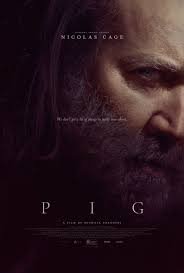
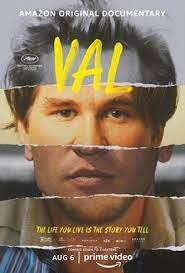
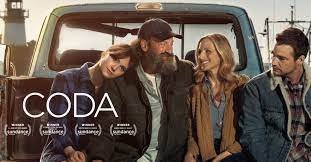
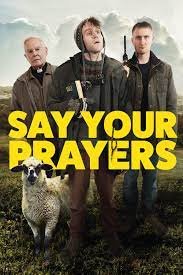
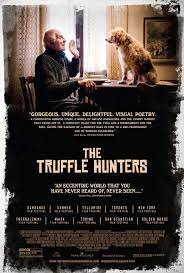
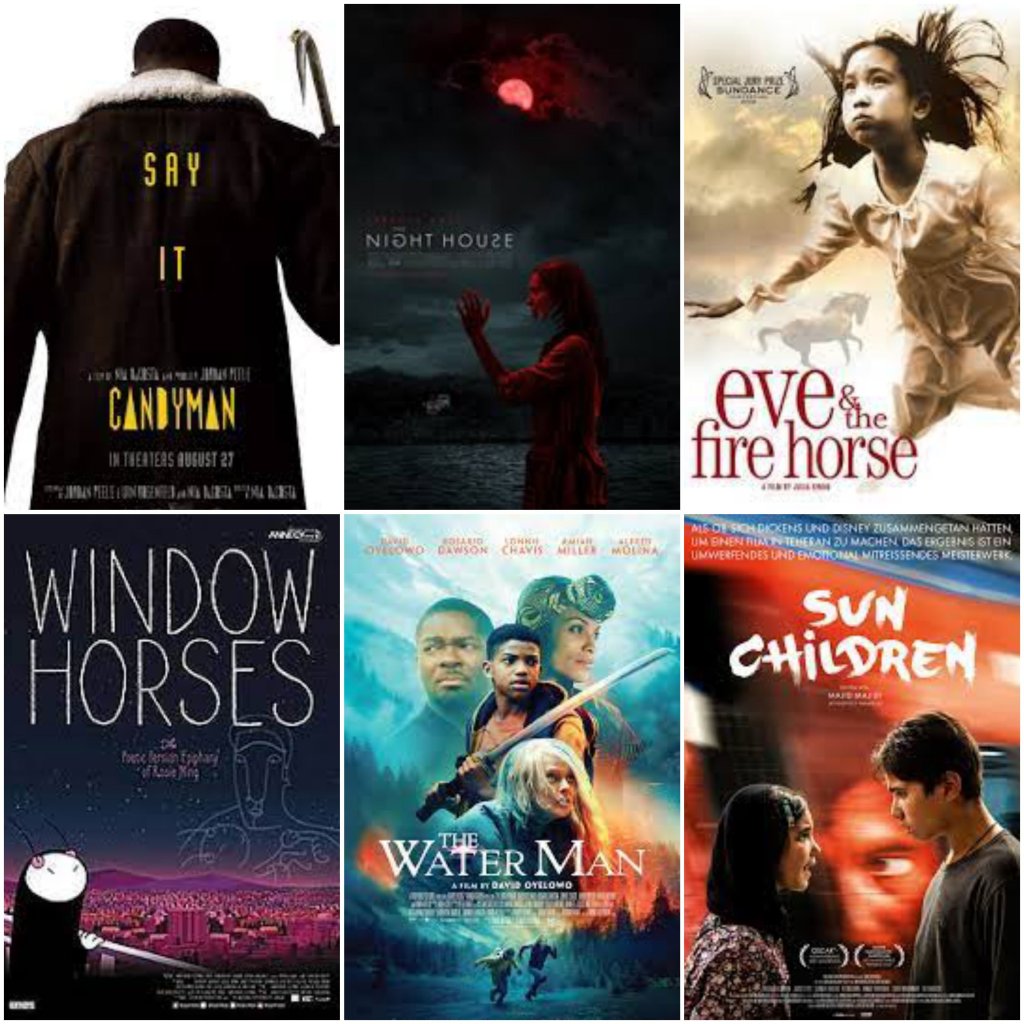
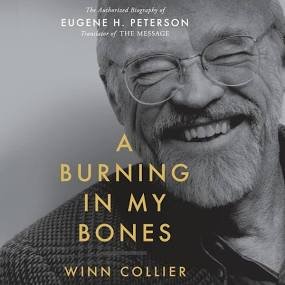
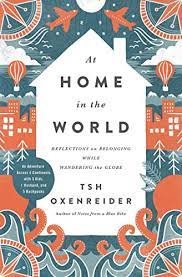
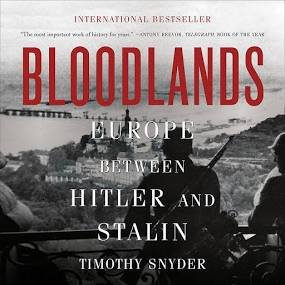
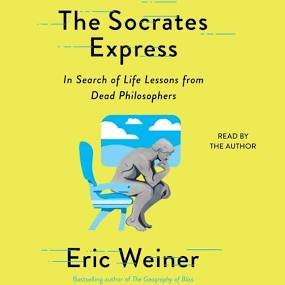
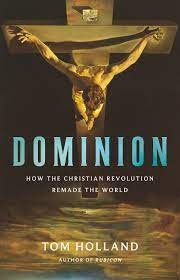

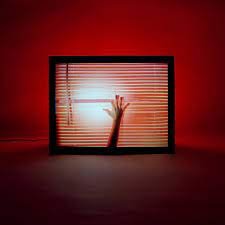



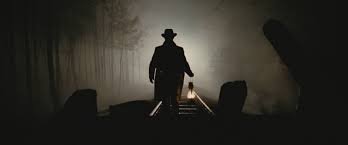

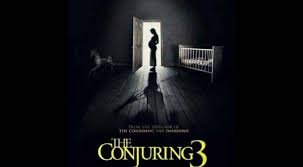
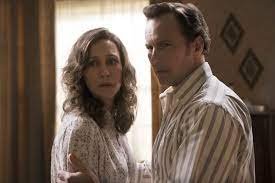

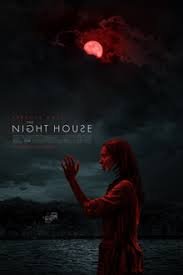
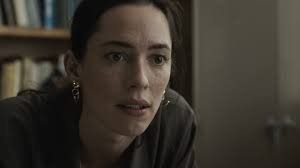
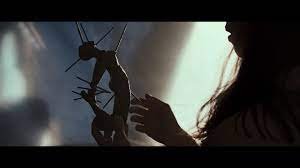
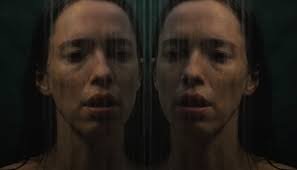
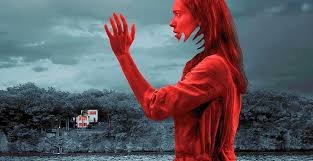
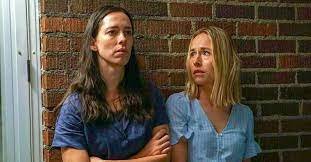
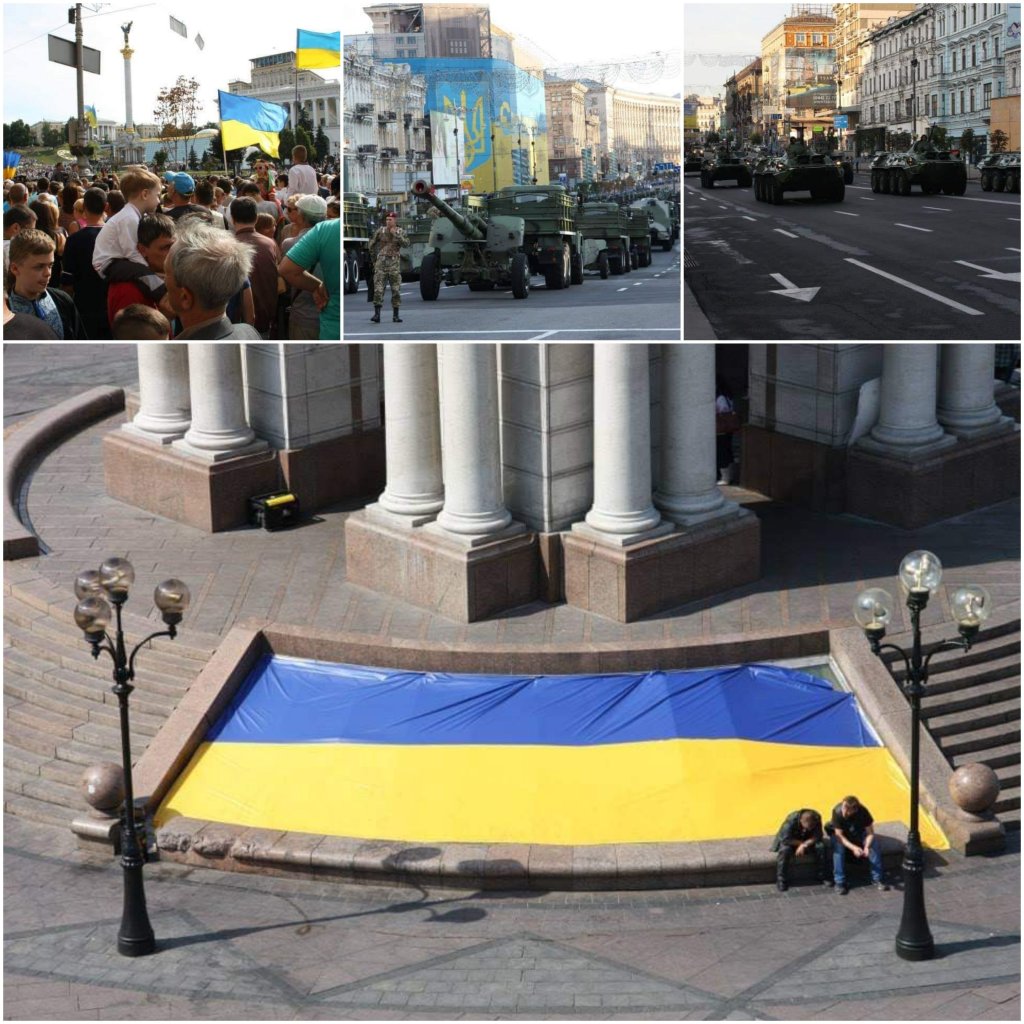
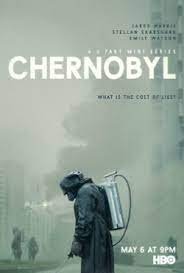
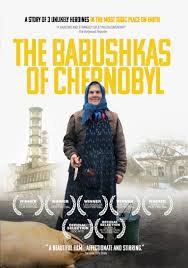
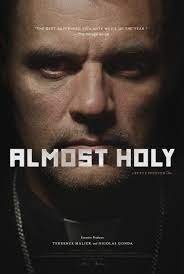
![Bloodlands: Europe Between Hitler and Stalin by [Timothy Snyder]](https://m.media-amazon.com/images/I/51CW0FHDtmL.jpg)
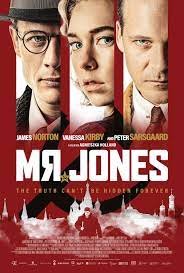
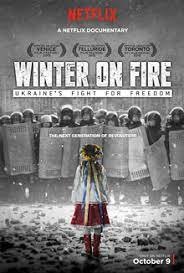
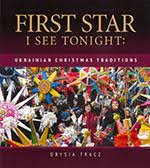
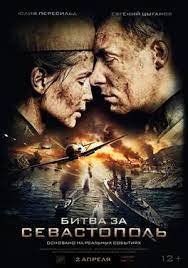
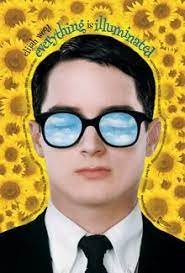
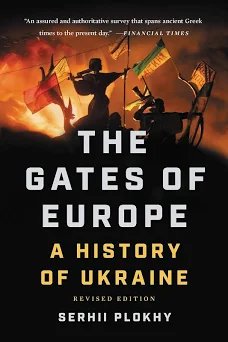
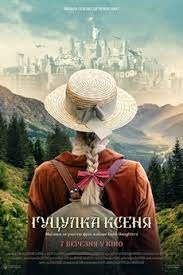
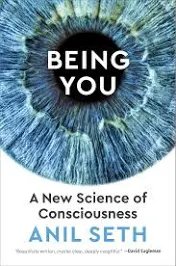
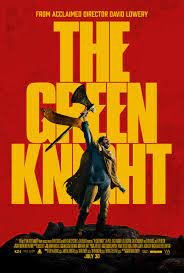

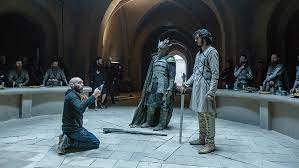
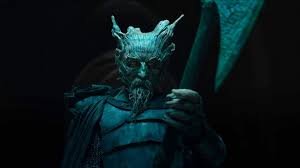

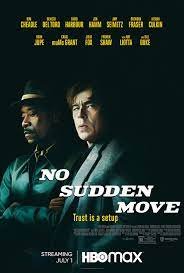
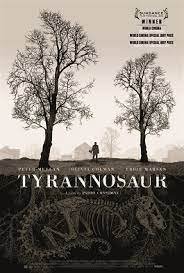




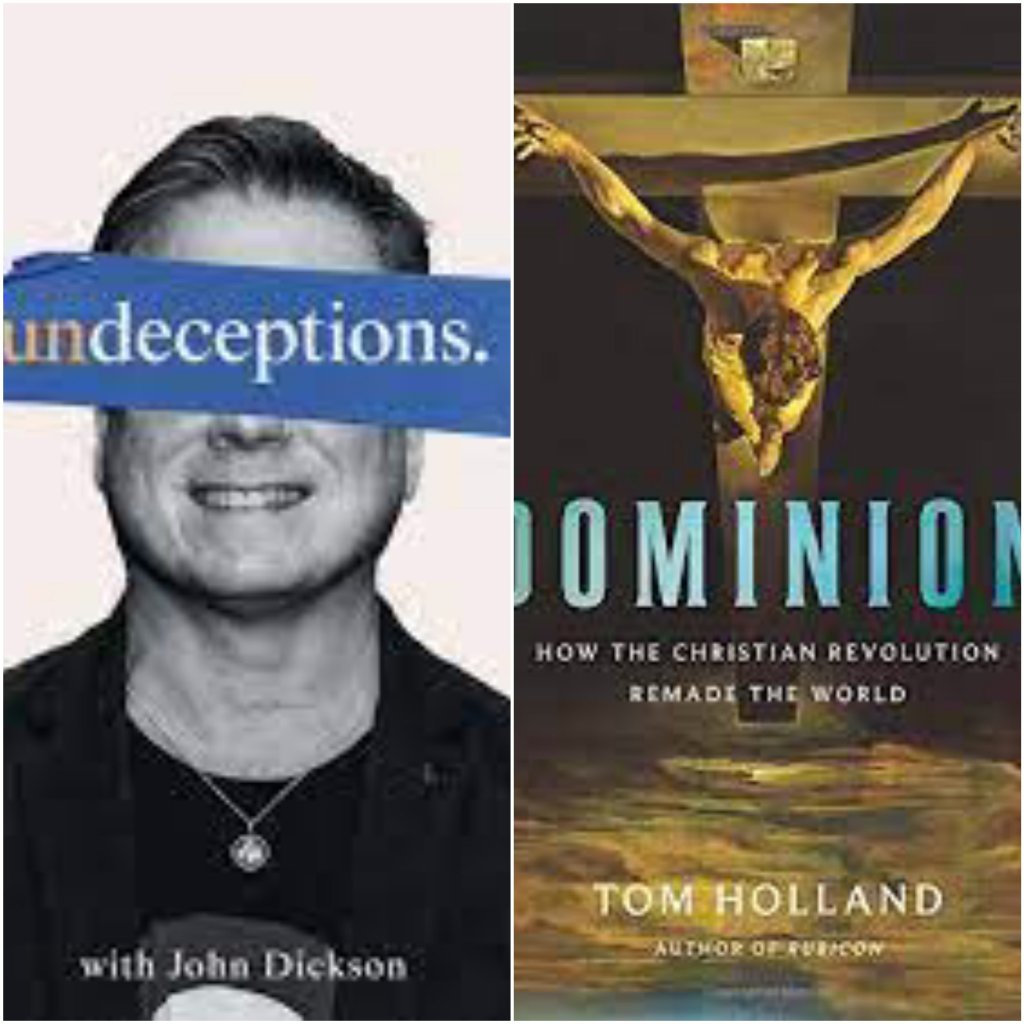

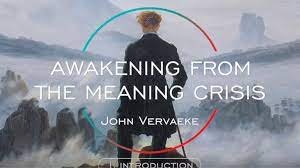
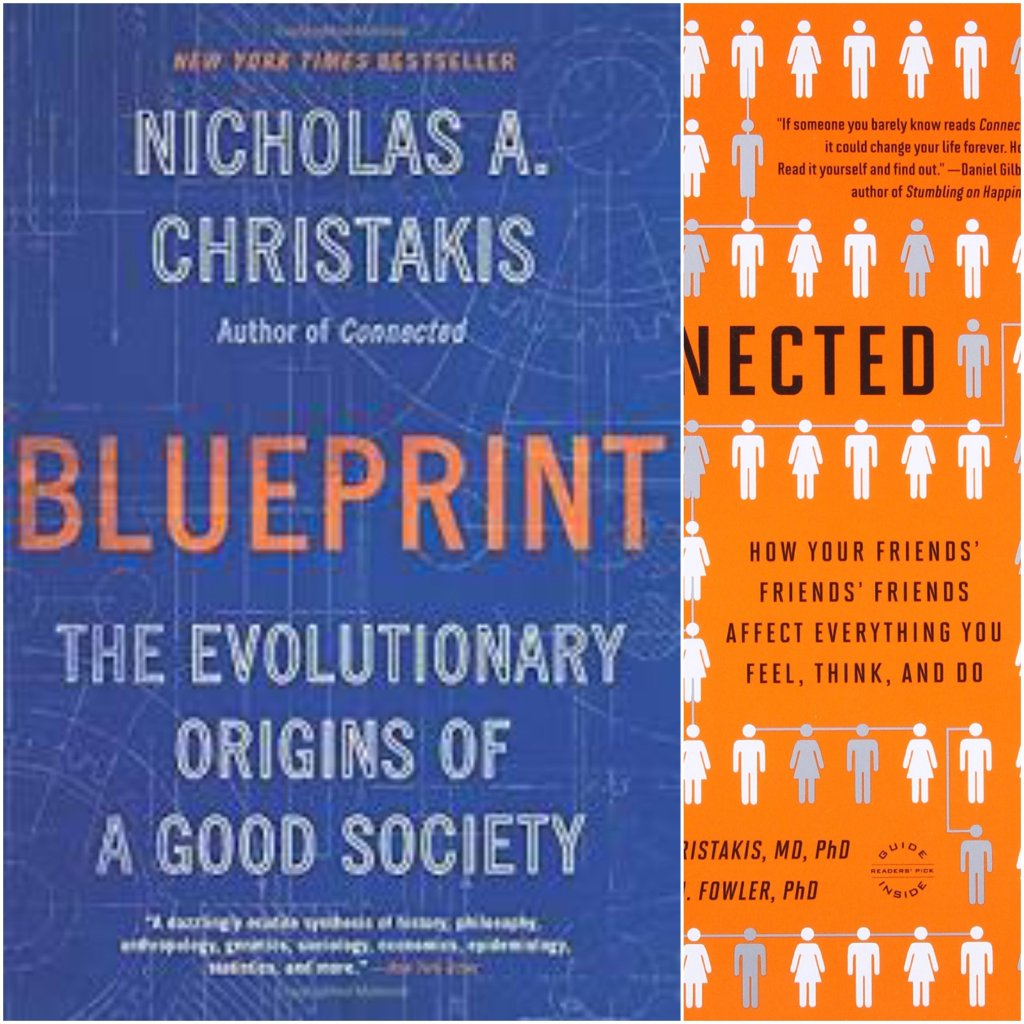
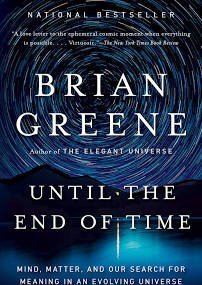
 The Stories of my Life