I’ve been reading through the passion narrative in the Gospel of Mark this morning as I reflect on the Friday that we call good. The good news of God with us, of the Christ who entered into the suffering of our world and bore the weight of sin in all of its manifestation, all so that we might be called to walk in the way of Christ as we take up our vocation in being image bearers to the whole of Creation which God declares good.
This is a good news story.
That might not be immediately clear when we enter the beginning of the end of the story in Mark 13 with all its language of destruction and turmoil, and yet, as the lesson of the fig tree emerges once again for the third time in Mark’s narrative, the declaration that “my words will not pass away” (13:31) captures the promise that in the suffering of the Christ we find the suffering of this world, and the season of fruit bearing and fruitfulness then becomes the hopeful promise that the Cross speaks over the fig tree that was not yet “in season” (11:13). Therefore, if the lesson of the fig tree is to be fully understood, it is to be understood in the call that accompanies its second mesntion, the call to “have faith in God” (12:22) and what God is doing. To have faith that God is indeed making what is wrong in this suffering world right.
And yet don’t miss this important part of the imagery of the fig tree. My words will not pass away, “but” heaven and earth will pass away”. There is an invitation that accompanies the good news of the Cross, and it is one of allowing the Cross to deconstruct our own lives in the way of the cursed fig tree of Chapter 11 so as to reshape us in the character of Christ. It is the invitation to follow in the way of Christ, to be the means by which this good news of the new creation can then be declared to the suffering in this world through our participation in Christ.
And here is the most important part of this picture in Mark 13-16- the thing being deconstructed is the Church itself. Allow that to sink in. It is no mistake that 13:1 begins with the foretelling of the destruction of the temple and ends with the prediction of it being raised again anew. The temptation of Christians reading this passage has often been to relegate these passages of “the signs of the times” (13:3-13) to the present and future suffering of the Church itself, using it as an excuse to strengthen the fortress of our Church walls against the evils of the world out there that will inevitably come against it. But as the teacher of the law brings Jesus out to admire all these “wonderful buildings” (13:1), Jesus’ striking words declare that “there will not be left here one stone upon another that will not be thrown down.”
Again, let that sink in as you read the words “the abomination of desolation” that informs 13:14-23.
The setting of the Mount of Olives that begins Mark 13 is symbolic, bringing the full breadth of the scriptural narrative to a pivotal and climatic point of crisis and potential. The imagery of Daniel, the words of the Pslams that Jesus has been applying to His own ministry, the words of the prophets, the story that begins in Genesis and runs through Abraham to Moses to David, the culminating offices of Priest and King that find their ultimate climatic shodown in the meeting of the high priest of 14:53-63 and Jesus. It all finds its culmination in Christ as the fullness of God’s revelation to a good creation. And it is here on this mountaintop that heaven and earth are about to meet and truly shake the church up. It is on the day when this meeting of heaven and earth is delcared as the Kingdom of God now arrived that the fruit of that fig tree will be in season and Christ and the cup which we partake in with Christ will be filled (14:25). And yet, we have faith in this even as the already not yet nature of this reality continues to play itself out in our midst. This is why Christ is also a call to participation in a Kingdom come and a Kingdom coming.
And why is the church being deconstructed and reconstructed? According to Mark it is so that as Jesus goes before us we can then follow (16:7). It is so that we can begin to bear witness to the goodness of this creation in the created world, a world that is now being remade and renewed in the way of Christ. This is what the Church is being raised for, not to board up our walls and wait until Jesus comes again to take us to heaven, but to recognize that on the Cross the Kingdom has arrived in our midst. Heaven has come down to earth and has shaken down the walls so that we can once again see the world God so loves and participate in it as image bearers of Christ. And in case we missed it, this whole narritive of keeping watch for the coming destruction has happened once (the first temple), will happen again (the second temple) and will continue to happen as the Cross does its deconstructing and reconstructing work in our midst. The problem of the Church is that it keeps falling asleep (13:35) and neglecting what it is that Christ is actually doing. Jesus is the temple that is being raised, and thus as we heed the words of this necessary shake down we wake up to see Jesus on the way, going before us and calling us to follow. The context for the Cross is the story of the Passover (the promise of liberation), but it is also the story of the exile, the story of Israel being shaken out of its own complacency and thus formed in the promise of its eventual return.
There’s a small note that we find in this whole section of the Gospel of Mark that I found to be quite profound as I’ve reread it this morning. The story of a (young or old) widow giving all that she had to the temple (12:41-44) that is followed immediately by the foretelling of the temple being destroyed in 13:1. In 14:3-9, the story of another young woman who this time is giving to and annointing Jesus begins the passion narrative that starts immediately after, the story of Jesus being torn down and raised up as the new temple. This curious phrase in 14:9 which says “wherever the gospel is proclaimed in the whole world” it will be “done” and “told in memory of her” strikes to the heart of what defines the very mission of Christ and the Church. In the second reference to the fig tree in chapter 11, these words ring through the waiting for this promised and hoped for season- “believe” that Christ is at work making what is wrong right, and “whenever you stand praying” to this end, forgive. We are being torn down so that we can be raised up in participation with Christ’s work in the world, and at heart of this word forgiveness is reconciliation between God and a Church that has fallen asleep, and between a divided Church and world in which we have forgotten our vocation. In this way we build the Kingdom of God in the way of Christ.
La Sapienza is not an explicitly religious film, but I think it just might feature one of the most powerful arguments for the notion of faith. At the heart of the film is a discussion about the relationship between architecture and people, with architecture containing both the stories of humanity and the stories of the divine, however one interprets the divine. Buildings are designed to do two things- to draw us in and turn our gaze upwards to whatever Truth or god this building represents, be it the gods of modernism or the gods of the ancients, and then, through its use of space and light and detail, to draw our gaze back downwards so that we can apply this upward looking perspective back into our lives here on the ground level. It is through this horizontal and vertical exercise that buildings can then tell the stories both of the eternal “Truth” which governs our trajectory, and the stories of that truth as it is then revealed in the personal journies of our lives and our relationships.
The way this film captures this relationship between people and architecture and architecture and divine is powerfully rendered then, symbolically speaking, into the relationships that govern this film’s central human arc. As it follows an architect, a creative in search of inspiration in his very modern context, he travels to the old world to find this inspiration and in the process finds the inspiration he needs to reinvest in his relationship with his wife. It’s a beautiful portrait framed by this narrative device that features performers who all remain “emotionless” and “expressionless” throughout the story, a choice that then shifts our perspective to the emotional gravity of the buildings and the world around them. It’s an inviation to be swept up in the most basic human vocation to create, but a reminder that we create in faith or trust that it is Truth that gives creation its value.
DISTANT VOICES, STILL LIVES (1988) Directed by Terence Davies
This is the second film in an “autobiographical” series reflecting the Director’s life, and here we are given insight into the working class family that defined his growing up in the 40’s/50’s in Liverpool. From the opening scene it becomes clear that the Director intends to evoke a miriad of emotions all at once, leaving me as a viewer a bit unsettled in terms of precisely what kind of film this is and where it is heading. But this becomes the means by which the film invites you into the process of what it becomes. It bears a distinct feeling of nostalgia even though this is not my world and not my life, and functions as a collection of “stills” as if it were a scrapbook of photographs set in a world full of music and visuals and experiences that allow these stills to come to life in full interprative force. That it also functions in part as a kind of musical sets these images in synch with the rhythms and lyrics of its song. A magical and stylistic vision of ones own dance with the ebb and flow of life’s journey.
MY SALINGER YEAR (2020) Directed by Philippe Falardeau
A captivating performance by Margaret Qualley anchors this exceptional look into a period of Salinger’s life from the perspective of a colelge grad who takes a clerical job working for the literary agent of Salinger. It tells the personal story of Joanna, but it is through her story that we gain insight into the literary world that she is immersed in and shares with Salinger. At it’s heart it is an exploraiton of the power of story and the telling of our stories, but it contextualizes this through the story of Joanna in her desire to become a professional writer. As she tries to make sense of her own life and her own passions and ambitions, she finds insight and inspiration within the story of this reclusive writer who is as distant as he is present in the world that surrounds her. As a period piece it is rather wonderful, but as a character study and as an examination of the power of story and the art of writing I found it quite captivating and memorable.
ELEVATOR TO THE GALLOWS/ASCENEUR POUR L’ECHAFAUD (1958) Directed by Louis Malle
There is an inevitability to the way in which events unfold in this older film noir/crime caper. The perfect crime that immediately goes wrong, leading to a sequence of things that just seem to keep spiralling towards that inevitable end, a persitant foreshadowing of a series of unfortunate events. At the same time, it is in the imperfect exucution of the perfect crime that the film finds its poetry, concocting this sense of a cycle that they both must break and that defines their collective drive and need. As poetry, the film becomes an examination of the question of how it is that the interconnected events of our lifes can be seen as a narrative rather than an inevitability, something it holds in tension but also represents as a mystery in terms of the film’s intricate detailing of colors and visuals and moments. When we can see in life a narrative to step into, this empowers the writing of a story from life’s imperfect plans.
ON-GAKU: OUR SOUND (2019) Directed by Kenji Iwaisawa
Whether you play an instrument, are in a band, or simply appreciate music, this understated animated gem is a must see. The film is not just a love letter to the power of the note to inform our world and our selves, its a love letter to that sense of being a young teen trying to discover their voice and find their way through the language of song. The animation is simple and lovingly crafted in its hand drawn detail, and as we follow the events of these young kids it brings to life the Japanse culture that surrounds them as well as inviting us into their own wandering experience through this world. While we might want to describe these kids as rebels, the films compassionate and empathetic view reframes this, particularly through the creation of their punk style music, into a universal language full of common human emotion. It could almost be described as a musical, but in its deconstruction of the punk rocker stereotype its much more than this. It’s a reminder that all human stories hold equal merit regardless of age.
Honroable Mentions: News of The World is now available on demand. It’s a film I had been waiting anxiously for as I loved the book quite a bit. The film makes a couple interesting interpretative choices that reframe the narraative ever so slightly, but it remains a powerful picture of what it is for us to see beyond the present divide and to imagine a world where relationship can draw us together regardless of language and place and culture. It’s up for some Oscars, so now is a great time to catch up with it, along with the wonderful documentary The Painter and the Thief, a film that explores themes like forgivness and restorative justice in a powerful and intimate fashion. Lastly, The Last Blockbuster proved to be a perfect romp through the nostalgia of a past, longing for some of what we have lost in our modern push towards an increasingly digital and isolated experience of what is at its heart a social and cultural exercise and expression.
SERIES/TV
ZOEY’S EXTRAORDINARY PLAYLIST SEASON 2
I was a big, big fan of the first season of this eclectic, fun and highly emotional series, and so I was curious to see how they continued the story. As the first half of season 2 has looked to find its voice and direction, a couple of things stand out for me. First, it has taken more of an episode by episode approach rather than the larger and linear storyline of the first. The result might be a bit more uneven in terms of that cohesive focus, but it has led to some of the strongest material I have seen in a series in a long, long while at the same time. Not every episode carries the same weight, but episodes like 2 and 5 see it at the peak of its game, experimenting and taking it to new heights and new places. This is especially impressive given how they had to navigate what is a show with a lot of working elements and a large cast during Covid. You can see the limitations at points, but also the creativity. As an additional note, this kind of elongated series is a lost art form, and to have this show as a part of my (and our) week is something I cherish and will cherish for as long we have it. It gives me something to look forward to and anticipate.
WANDAVISION
It’s the show everyone was eagerly anticipating, and to particapate in the collective viewing of this show across streaming platforms reminds me that every once in a while the social experience of watching together still exists and persists. As it is the show, for me, surpassed expectations, even in its amped up final episode that didn’t quite land for everyone in the same fashion. The inventiveness of its opening episodes which each refelect a different era through its sitcom style offering, shifting from black and white to color, stands as some of the most inventive Marvel storytelling to date, and the way it parallels this thematically with the story lying behing this plot device provided a startling and powerful exploration of the grief process. Quite powerful.
STORM OF THE CENTURY
I was made aware of this series through a podcast that I follow and listen to weekly called The Fear of God, and so I would direct you to their episode on this short series turned lengthy film should you be interested. It’s currently avaialable for free on YouTube. It’s an adaptation of the Stephen King novel of the same name, and it’s one of his most spiritually aware works that he has written. The themes that pour from the story are immense and powerful in their ability to frame our understanding of how it is we pair our moral awareness and the weight of certain moral choices and points of crisis/tension in our world with our responsibility to engage our social responsiblity to one another. The story goes to some dark places, but it employs its vision of spiritual forces and agencies as a metaphorical device that helps to bring to the surface just how it is that blind ourselves to the sins we bond ourselves to on a daily basis. It brings to light the idea that we sacrifice the freedom that certain choices to break sins cycle and power over us can bring for the future in exchange for the need to evade the suffering that sin brings with it now all the time. It’s a sobering realization and a genuine wake up call found within a narrative that, while in its on screen adaptation is slightly uneven, holds a real punch.
BOOKS
JIM HENSON: THE BIOGRAPHY by Brian Jay Jones
There is a bitterwseet tone to this celebrated biography of an iconic and recognizable figure in the field of children’s work, puppetry and the arts, and it comes in the way this exhaustive work draws out the honest character alongside the equally honest struggle of existing within a brutal and competitive industry. It’s even heartbreaking when we come to wonder near the end of the book and realize that perhaps it was the weight of the industry in which we were privileged to get his most creative and reknown work that was the reason for his premature death. That aside though, this book is certainly a celebration of his life and work, and it’s equally a joy to uncover the story of the man behind the art and the characters that have become so beloved. Henson was as deeply spiritual as he was creative, and that spirit shines through his creations in an undeniable way, revealing a complex man who loved people, who loved his craft and certainly found inspiration through the young minds that his art was created to serve.
IRRATIONALITY: A HISTORY OF DARK SIDE OF REASON by Justin E. H. Smith
A profound expostion of the challlenges and limitations of modernism and reason, and a critique of the strong tendency of modernism to gloss over one of the most important truths of the human experience and the human longing for truth- that humanity and reason is at its heart an irrational exercise. There is an old world-new world picture that Smith draws on to help outline the larger picture of how it is that we arrived where we are today, and by helping us to gain a well researched and well articulated picture of the bigger picture, he helps to dismantle some of the key points of contention and tension tha exists between the old world and the new world approaches to truth and reason. This book is important in how it humbles those in the West and necessary in how it calls us to recognize the ways in which, when we ignore the irrational nature of reason we actually end up becoming more irrational, and more imporantly we become irrational in the most dangerous of ways. Ways that actually steer us away from truth rather than towards it.
FLORA AND ULYSSES: THE ILLUSTRATED ADVENTURES by Kate DiCamillo and K.G Campbell
I watched the film adaption before becoming aware of the novel, and the film struck such a strong chord with me that i had to read the book. And I am so glad I did. I love stories about the struggle with adult cynicsm paired with the wonder and and magic of the childhood imagination, and this book hits all the right marks. It’s incorporation of the superhero motif is a central part of the story, bringing this discussion into the modern setting, but what the book elevates is the story’s philosphical and theological perspective. It’s a powerful picture of what it means to understand that there is more to this world than just what we see on the surface, and it presents an empowering exercise for wondering minds to perhaps be equpped to push back on some of the teachings and belief systems they have inherited from the enlightenment and western assumptions.
THE LADY FROM THE BLACK LAGOON: HOLLYWOOD MONSTERS AND THE LOST LEGACY OF MILICENT PATRICK by Mallory O’Meara
Amazing. Funny, heartbreaking, revealing, socially relevant, entertaining, part mystery, biography, and passionate for all things horror. And super readable. The way she brings to light what it is to be a horror fan and a woman (read: hard) was stuff I was aware of but needed to hear again, and again… and again. As a white male, I rarely consider the fact that while creatures and monsters are meant to express those most human parts of oursleves in metaphorical and universal ways, those images are all male, relegating women to being victims, sexualized and subservient in the genre as a whole. Brilliant book.
THE DEATH OF THE MESSIAH AND THE BIRTH OF THE NEW COVENANT: A (NOT SO) NEW MODEL OF THE ATONEMENT by Michael Gorman
What makes this book so exceptional is not simply that it’s another model to add to the mix, but that it cuts through the heart of what so often divides the Church to offer a way and a means towards real and fruitful conversation. It is, after all, our ability to converse with one another from our places of disagreements that brings unity about, and if unity is not optional, and in fact division within the Church and the people of God is the central problem that Christ came to address on the Cross and in the Resurrection, then we better sit up and take notice. What is crucial to allowing conversation to happen is the table, the eucharist, It is at the table where Christ is able to take precedence over our agreements, and thus it is our ability to come to the table together, to partake and eat together where unity comes from. If we can’t do this then we stand divided.
The key for Gorman in terms of coming to the table is, as he outlines, the new covenant reality. This new covenant reality is the place where all of the models find their intersecting conversational interests, and it offers the narrative in which all models can then be brought into conversation and thus shaped and challenged and formed by the other in light of Christ as the central force and focal point. The new covenant model offers freedom in Christ to enter into community together with our differences in tow, and to know that at the end of the day we can all still come to the table together.
MUSIC
HARRY CONNICK JR.- ALONE WITH MY FAITH
Harry Connick Jr. edges into full on Gospel territory with this latest release, and it provides a mix of upbeat and hopeful and contemplative and reflective, all of course wrapped with his signature style and tone. I’ve been listening to this one along with Andra Day’s Billie Holiday Soundtrack, and together the old school jazzy stylings have been provided a soothing and soulful soundtrack to make it through these never ending Covid days.
JON BATISTE- WE ARE
I would highly recommend the Song Explorer episode of the creation for We Are. That’s a big part of what inspired me to pick up this record, and it didn’t disappoint, It’s inspired and anthemic, and he brings a real spiritual awarness to his grassroots concern for the universal story of people seen from the unique perspective of the black experience.
JOSEPH- GOOD LUCK, KID
I came across this band by complete random chance, and this trio of women churn out some really outstanding tracks. It’s catchy, layered, and features lots of great melodies (and harmonies) and compositions set within a serious hard rock style.
MIKO MARKS- OUR COUNTRY
Apparently absent from the industry for a good while, Miko Marks makes her return with an exceptionally strong album that is simply dripping with delicious country roots. To hear her story is to know the rough go she had as a Black woman trying to break into the Country scene, something we can to the story of the autobiographal cut “We Are here”. Nevertheless she stayed true to her passions, found her niche and remains an important and iconic voice in the Country music scene.
FRUIT BATS- THE PET PARADE
This is a true band unit, with every aspect of the instrumentation, the lyrics and the vocal effort working together to create these nuanced indie folk songs steeped in atmsophere and a grass roots style simplicty. It’s the kind of album that fit a variety of moods, always ready to accompany you on a rock or a ride or simply a day at home.
Honorable Mentions: The richly spiritual and eclectic Gable Price and Friends album Fractioned Heart is one that I can listen to over and over again, and the new Julien Baker, stock full of some experimental instrumentation to help accent her songwriting and vocal skills normally set to minimal orchestration. A must listen.
Memorable Singles: Sour Widows- Crossing over, Jervis Campbell- Teach me to Dance; Wayley- Ready For It; Lighning Bug- The Right Thing is Hard To Do; Hardline Lightning Bug; Middle Kids- Today We’re the Greatest- Jackie Hill Perry- Crescendo
PODCASTS
AMON SUL, Episodes 1 and 2 (The Fellowship of the Steve and I shall Make for Weathertop)
I recently was made aware of Father Andrew’s podcast from Ancient Faith Radio which deals scripture from an Eastern Orthodox perspective, which also led to a recommendation for this podcast which is all about Tolkien and his writings. Since I have about 6 books on Tolkien ready to go in preparation for the series, this has been a perfect compliment to that foray.
And while you’re at it, check out Father Andrew’s podcast The Lord of Spirits. It is seriously amazing. Perfect for anyone who struggles witih some of that Western tendency to be cynical of magic in the world and ignorant of the power of metaphor and symbolism to open our eyes to the greater truth that lies in the unseen world.
SONG EXPLORER Episode 215 (Jon Baptiste- We Are)
I mentioned this episode already above, but it’s worth rementioning. Hearing the story of this song’s construction from the perspective of its writer and creator was eye opening and added a whole new level of appreciation for its many working parts, especially the insane amount of singers and people and voices and musicians who played a role in bringing it to life. A testament to the Black spirit but even more so a song with universal inspiration.
THE LETS READ PODCAST Episode 83 (Vacation and McDonald’s Stories- 21 True Scary Horror Stories)
Maybe I’m weird, but there’s something about hearing true horror stories that I find therapeutic. I like having my senses challenged, and I also love suspending any cynicism I might have and just letting them sweep me away, be it straight up mysteries and scary situations or something supernatural. And some of the stories are genuinly challenging for the rational mind. Thankfully I’m built for resisting cynicism and employing childlike wonder for even the craziest things. I highlighted Episode 93 not because it stands out, but because it is about travel stories, particularly going to McDonalds. Being in Covid times still, any chance to travel in other ways is more than welcome. And if you want more, I would also send you to the podcast The Confessionals (try out Episode 319, “The Monster Outside My Winidow”. It’s crazy), and Strange Journeys, a true horror podcast that hits the road.
THE BIBLE FOR NORMAL PEOPLE Episode 159 (Richard Elliot Friedman and Who Wrote the Pentateuch)
Friedman is such an excellent and distinguished speaker, but his greatest strength as a scholar and theologian is his ability to break down complex ideas and make them accessible to normal people. Here he does such an incredible breakdown of the structure and composition of the Pentateuch, and he helps walks us through some of its complexity and intricacies, especially in the different threads that we have to navigate in terms of different Traditions evident in the text, but he does it with such humility and grace and out of a great love for God and scripture that even the most difficult problems become swept up into that grander perspective and story about the relationship between God and Humanity.
MYTHS AND LEGENDS Episode 301 (Italian Folklore: Unhand Me)
Host and storyteller Jason Weiser has a gift for bringing these old myths and legends to life in a fresh way, with some of them being unfamiliar, and helping us to hear some of the stories we are familiar with in a new light and with information we might not expect. In this episode he travels to the Italian countryside to tell a story from the Pentamerone. It’s fun and lively, and because I can’t get out travel right now it gives me a slice of a culture that is able to transport me to a different time and place. I would also recommend the Podcast “Tales” if you are looking for good storytelling from different places.
As I have often said in the past, the mark of a good book is when I hightlight the heck out of it.
Having just finished Michael Gormon’s The Death of the Messiah and the Birth of the New Covenant: A (Not So) New Model of the Atonement, I’ve got a LOT of highlights from this book. Enough quotes to fill a book itself. This being my first Gorman, I’m also hooked. This book inparticular, with its emphasis on the atonement, has found me working through some of my own thoughts on the subject yet again. It’s not so much that Gorman is offering anything new, what he is doing rather is finding a way towards possible reconciliation by bringing to the surface the one thing that can make room for all of the theories to be a part of the ongoing conversation- the new covenant.
The way Gorman writes and outlines his arguments is really concise, which means he’s also an easy academic for any layperson to read. He’s very methodical in his approach. That’s not to say that this book won’t require time and investment from you. It is FULL of scripture, and it would be impossible to truly appreciate without having a Bible open and deliberately tracking along with his progression of thought.
If I was to summarize his thoughts as succinctly as I could, I would say this. The Christian Church and Christian history is full of different and even opposing ideas about what the atonement is, what it is doing, and how it achieves what it is that it is doing based on what it is. There is a good reason for why we have so many seemingly conflicting ideas about the what and the how (the fact that this is somehow wrapped up in the death and resurrection of Christ is essentially agreed upon)- Christ’s death and resurrection is in fact a multifaceted idea. It cannot simply be whittled down to a single notion of atonement or an atonement theory because the human experience is also, equally so, multifaceted. The fact that the Cross and the Resurrection is in dialogue with the human experience means that this complexity flows both way.
If there is one thing to understand about the word “atonement”, its that it is a complex word in its own right. As Father Andrew Damick describes in the The Lord of Spirits Podcast episode The Priest Shall Make Atonement, the word emerged from english translations of scripure (see Wycliffe) which itself was trying to make sense of an already difficult Greek word, which itself was also trying to make sense of an even more complext Hebrew word. It’s worth saying that atonement as a word, be it in Hebrew or Greek, was not some working theory, but rather a part of a larger story, a word that described an activity within that story. It might be fair to describe it in its complex Greek sense as trying to make sense of this notion of being “at one” with. More appropriately it is best to locate it in its Hebrew sense which, in a simplified sense, means to “cover”. It is here that we can find the context that plays through the story of Israel from Leviticus 16 that describes The Day of Atonement, important because, as Father Andrew points out, every reference in the New Testament to the word that we now translate as “atonement” is in reference to The Day of Atonement. Therefore, all of these atonement theories that we have are born from people asking necessary questions and wrestling with real challenges regarding how it is that the Cross and the Resurrection plays as good news in our life and in our world, but it is born from people asking these questions in their context with external factors playing into the word itself. Far from its original Hebrew context, we have tended to ritualize and theorize this word with all kinds of weighty concepts that these external factors have posited onto it, many of which continue to work to divide Christian communities, particularly in the Western world. This is something all of us should be aware of as we consider what it means to navigate the messiness of this divide.
The real challenge then, is to learn how to allow all these ideas to sit in dialogue with one another, to inform the other, because behind these ideas are reflections of the human experience of god in relationship to the world, and behind that is this experience as understood through the world of the text itself. It becomes dangerous when we get hung up on english words, equally dangerous when, as Father Andrew points out, we justify our english words with Greek translations, because translations by nature are making sense of ideas that are envoloped in a language that is not our own. It is dangerous when we make one single idea, and further our understanding of what that one single idea must be, the penitulant idea on which all else must then be based, because it is here when the conversation can no longer happen and when we elevate ourselves above what it is Christ is actually doing and create these divides. And while most people would love to stand up and insist that they are actually engaged in a conversation with the multifaceted idea, in truth most people are actually working to make their idea the right one. This is why we have so much division.
To press this sumary of Gorman’s ideas a little further, this is where he says that the one single measure, which becomes the very measure of his not so new new covenant approach to the atonement, is participation in this new covenant reality. Whatever the Cross is and whatever the Cross does, it must make sense in our lives, in our relationships. What Christ accomplishes on the Cross, we are also called to participate in. Too often what happens is people take their ideas of God and place them on this theological construction of a distanced other. This allows their ideas of God to then function apart from the human experience, and allows them to say things about God and God’s character that wouldn’t actually make sense within the human experience. That God is love, for example, means that the Cross is an action of love that we are called to imitate in our lives through loving others. What happens when we distance God from the human experience through our theological constructs is that the atonement becomes about protecting our knowledge of the Character of God rather than about our participation in the life of Christ. And this knowledge is divisive by nature of excluding based on who has this knowledge, and often it excludes over extremely problematic depictions of God’s character as one who stands above and apart from our own moral understanding. God is allowed to function in a different way than that to which humanity is called to follow. Which of course creates much tension. Again, for God to make sense, God must make sense within the love we are called to embody.
If there is one single thing Gorman suggests that plays through scripture as the central problem the Cross is addressing it is division and violence. From the opening pages of scripture we find the problem in Garden to be one of the serpent set against the people and creation (the land), people in contest with creation (the land), and people in contest with one another (the man with power over the woman). This plays out in a particular way as the Cain and Abel story, modeled and patterned after the Adam and Eve story, results in an outcome of violence. And violence doesn’t have to be murder, it can be anything that divides. And what we see in the story of Cain and Abel is that this gets perpetuated into a recognizable cycle. It gets stuck in an eye for an eye form of justice that sees a wrongdoing demanding repayment. The problem being that this simply increases as the cycle continues unbroken (read the Noah story). What Christ does on the Cross then is break this cycle by taking that eye for an eye form of justice, the kind that demands repayment for sins, and subverts it through the self giving love of the Cross. What Jesus does is take all of the sins of the world that find their root in this perpetuated cycle and says, I have taken it on myself. Therefore it no longer needs to be repayed. The cycle is broken. And in this Jesus can decalre the whole forgiveness of sins.
But, and here’s the catch. It is from here that we are then called to participate in this same action. This is what lies behind the tough phrases that say to forgive others as I have forgiven you, or the one that says to forgive “so that” I may forgive you. Participation in what Christ accomplishes in the atonement for our sins becomes the means by which Christ then breaks the cycle that holds us in bondage. It is by taking unforgiveness in all its forms and setting it at the foot of the Cross that we are free to step into the full forgivness of sins in a way that does not demand repayment or an eye for an eye form of justice. And we then enter into a new and greater way of peace and unity with one another, which Gorman argues is at the heart of the good news, the Gospel movement that we are called to imitate in building a culture of non-violence, and the atonement itself then is wrapped up in a multifaceted concern for every aspect of our lives, those who are oppressed and those who are oppressing. This is how forgivness works.
It walks through the development of the word “atonement” over time and through languages and translations, breaks open the context of Leviticus 16 and the Day of Atonement, and locates that setting within all of the uses of the word atonement in the New Testament and Second Temple Literature and beyond.
They have so much informative and insightful context to share regarding how it is that we come to this word atonement and break it down into theories, and by helping us to understand The Day of Atonement it enables us to reclocate the language into a larger context, including the Cross itself. We miss the the ways in which the story breathes through the New Testament text because we have reduced atonement to a system. As we live the Christian life more, we will gain understanding and meaning in the story, of The Day Atonement and the story of Christ Himself. Just to give one small example, the way the episode helps us to understand the meaning of the two goats in the Day of Atonement story helps us to understand how it is that Christ takes on the imagery of this day within His own ministry. As the blood of the one goat which represents life is brought into the sacred space, it coveres the sacred space of God’s dwelling. The second goat is then given the sins that cover the people through the laying on of hands (not individual sins, but sins as a whole) and is sent out into the wilderness (not killed) where the “spirit of the goat” (Leviticus 17) dwells, the very entity that they saw as the source of all sin. There is no sacrifice, no putting the sins on the one who’s blood is shed, and no punitive, ritiualized source to the passage and descriptive of Leviticus 16 at all. This frees us to understand, for example, Christ’s tempation narrative, which flows straight from this story, the scapegoat imagery, the blood imagery as a “covering” rather than a payment, and so much more that we find in the New Testament text.
Perhaps what struck me most of all though in the podcast episode is the way Father Andrew weaves the knowledge of the material into the experience of Christian participation. This is what really matters the most as we navigate these ancient ideas in our present and modern context. If the imagery isn’t sweeping us up into the story of God and pushing into full participation in what all this imagery represents in the life of Christ, then it really is no good. Sometimes being freed from some of the constructs that we have used to protect our isolated spaces are necessary to let go of in order to create space for the sacred calling, the sacred vocation. And at other times gaining or regaining an awareness of how the larger story works can invite us to a sense of wonder and amazement and gratitute and humility. What’s interesting in the episode is tollow how it is that God’s dwelling place travels throughout the scriptural narrative. It begins in the Garden where God’s dwelling place is the whole of the cosmos with earth as His footstool. We, as God’s creation and the image of His being, were then placed in His temple (the whole cosmos) as His idols (a common practice in the ancient world) intended to fill the earth and bear witness of God through all the world within this diversified movement. Where disorder, and thus corruption came into the picture, with the flood picture a decreation narrative providing this pivotal point that shifts us from the garden to the wilderness, we begin to see God’s dwelling place, His temple formulated through this mobile tabernacle meant to dwell with His creation in the wilderness. They now need to find a way back to the Garden, to God’s dwelling place, and the tabernacle becomes this place.
It is when the people become a nation and dwell in the land that the temple is built and God’s presence becomes seen as in there while the wilderness then gets translated as all the nations out there. This is where we begin to see this loss of focus of God’s dwelling place being the whole cosmological order, the whole of creation that is said to be good and equally loved. This is why the story of Jesus becomes so poignant and beautiful, in that it moves God’s dwelling place from temple to Jesus Himself, who’s dwelling place becomes the whole of creation once again with us once again declared to be God’s image bearers placed in the temple meant to be a light to the whole world. This is what the story of the Cross and the Resurrection invites us into, is this call to participation in the temple, the Kingdom of God by Christ breaking open the realm of His rule to reach the ends of the earth and the whole of the cosmos and to all the nations and peoples that occupy it as that good creation. Jesus in effect sprinkles God’s domain Himself, declaring that this good will dwell and the sins and powers that bear their source are driven out into the wilderness. The invitation into this story then becomes one of our desire to be swept up into this narrative, this story of what God is doing. This is what Easter is all about. More than just a theory or a construct or a muddied word that divides, rather a person and a ministry who unifies.
And when he had said these things, he went on ahead, going up to Jerusalem. When he drew near to Bethphage and Bethany, at the mount that is called Olivet, he sent two of the disciples, saying, “Go into the village in front of you, where on entering you will find a colt tied, on which no one has ever yet sat. Untie it and bring it here. If anyone asks you, ‘Why are you untying it?’ you shall say this: ‘The Lord has need of it.’” So those who were sent went away and found it just as he had told them. And as they were untying the colt, its owners said to them, “Why are you untying the colt?” And they said, “The Lord has need of it.” And they brought it to Jesus, and throwing their cloaks on the colt, they set Jesus on it. And as he rode along, they spread their cloaks on the road. As he was drawing near—already on the way down the Mount of Olives—the whole multitude of his disciples began to rejoice and praise God with a loud voice for all the mighty works that they had seen, saying, “Blessed is the King who comes in the name of the Lord! Peace in heaven and glory in the highest!” And some of the Pharisees in the crowd said to him, “Teacher, rebuke your disciples.” He answered, “I tell you, if these were silent, the very stones would cry out.”
And when he drew near and saw the city, he wept over it, saying, “Would that you, even you, had known on this day the things that make for peace! But now they are hidden from your eyes. For the days will come upon you, when your enemies will set up a barricade around you and surround you and hem you in on every side and tear you down to the ground, you and your children within you. And they will not leave one stone upon another in you, because you did not know the time of your visitation.” Luke 19:28-44
I am reminded from my Lenten devotional this morning that while we often tend to rush past Palm Sunday on our way to the Cross and the Resurrection, this passage is crucial for understanding what it is that the Cross and the Resurrection proclaims. It is a picture of celebrating that in which we place our hope before drawing back to allow the passion narrative to reshape this hope in the direction of Jesus’ death and Resurrection. The anticipation of that which we see only partly being made clear. As Jesus declares looking over Jerusalem, “would that you, even you, had known on this day the thing that make for peace!” It’s a question that rings through our own present state of affairs as one can imagine Christ looking over our lives, our cities, our Countries. Here the hopeful proclamation “Blessed is the King who comes in the name of the Lord! Peace in heaven and glory in the highest!” becomes dangerous words when reframed through the shadow of what is to come. Hope comes in the form of a sacrificial servant who likewise requires us to give up our rights and our life for the sake of this peace as we follow in the way and and on this journey. Jesus knows this struggle intimately. It is why He weeps over the city.
And yet, is here, when we arrive at the Resurrection we will ultimately arrive back at this picture of the triumphal entry, not in the way of empire or the way of conquest or power, but in the way of this servant who brings the hope of new life itself. Thus, we can then repeat the words of this proclamation, “Blessed is the King who comes in the name of the Lord! Peace in heaven and glory in the highest!” in the light of a new Kingdom vision, one that finds peace in our division through the reign of Christ and thus offers us hope for true life and true healing as image bearers of that which is good, which is perhaps the mightiest work of all.
It is often said that in our rush to get to the goodness of Resurrection Sunday we have a tendency to want to move quickly past Good Friday, forgetting that we cannot arrive fully at the Resurrection without first understanding the nature of this Friday that we call good.
In reading through the story of the Triumphant Entry into Jerusalem in Mark 11, I am struck by the fact that perhaps the reason many of us struggle with Good Friday is because we have also rushed past Palm Sunday, missing the Temple context for both Jesus’ Death and Resurrection. There is a reason why Holy Week begins with Jesus’ entrance to the Holy City, as the Death of Jesus is indeed the Defeat of the Powers of Sin and Death that rule this world and hold it in its grip, and the Resurrection is Christ’s full ascent to the throne in declaring the Kingdom of God on earth as it is in Heaven, with the resurrection hope being the truth that the ruler of the New Creation has taken His rightful place and is restoring a world once held in the grip of Sin and Death.
Further yet, what we miss when we rush past the Triumphal Entry is that Jesus comes as the fulfillment of Israel’s story. To understand how it is that Jesus’ house (the Temple) “shall be called a house of prayer for all the nations”, we must first understand how it is that the story of Israel finds its beginning in Creation and its culmination in the Resurrection. The context of Israel’s story is written all over Mark 11 and Jesus’ entry into Jersualem, beginning with the grand proclamation of Zechariah Chapter 14 that “on that day” his feet shall stand on the Mount of Olives and “living waters shall flow out from Jerusalem” declaring the truth that “the Lord will be King over all the earth” and that “on that day the Lord will be one and his name one.” (14:9) The choosing of the tethered colt flows from the story of Genesis 49:10-11 and Zechariah 9:9, with the nature of the colt falling in line with the symbolism of Numbers 19:2, Deuteronomy 21:3 and 1 Samuel 6:7. The royal procession occurs in line with the great Maccabean procession following their successful revolt, and the chants of Hosanna flow straight from Psalm 118:25-26, a word that brings together the cry of “save us” and the declaration of praise that acclaims our savior has come. The very declaraion “the coming kingdom of our father David” in Mark 11:10 tells us that to understand what is coming in the death and resurrection is happening in line with the story of Israel.
The structure of Mark 11, framing the triumphal entry against the “Markean sandwich” of the story of the fig tree is purposely rendered to capture precisely what is happening with Jesus’ rising to the throne. As author and scholar Mary Healy puts it in her commentary on the Gospel of Mark, “He comes as the Lord of the temple, who looks around the holy dwelling with his searching gaze to see whether its true purposes are being fulfilled” in line with Malachi’s great and powerful picture of a purifying judgment.
And suddenly there will come to the temple the Lord whom you seek… But who will endure the day of his coming? And who can stand when appears? For he is like the refiner’s fire.”
Malachi 3:1-2
For he is “like” the refiner’s fire. The problem is that they, the image bearers, the lights to the world, God’s people, have made it, the temple, God’s throne room, God’s dwelling place into a “den of robbers” (Mark 11:17; Jeremiah 7:9-11). The promise to Israel, the grand picture of the covenant through which God declares His faithfulness to “restore” with fire, is that God’s house will be called a house of prayer for all nations. This is the point of the fig tree passage which both precedes and then is properly contextualized and proceeds the cleansing of the temple. The symbolism of the fig tree, one of the most prominant symbols in the scriptures for Israel and God’s working within the life and renewal of Israel is most often used to describe the failure of Israel to be a light to the world, the failure to delcare to God’s good creation the truth of our (creation’s) identity as image bearers over and against the lie of the Powers that has actively worked to hide this truth from us. In the hopeful picture of Jesus’ cursing of the fig tree in Mark 11:12-14, Jesus passes by a tree that is not bearing fruit because “it was not the season for figs”. Don’t miss the fact that the cursing follows this picture of the “season”, lest we read this entirely as God’s judgment for Israel’s failure. In the context of the temple cleansing there is something more going on here than simple judgment. As the Markean Sandwich will highlight, the point is not just the cleansing, but what the cleansing is for. The curse “may no one ever eat fruit from you again” is leading somewhere good.
This simple line in 11:14, “and his disciples heard it” indicates that we will return to this story, but not before we are given the context for this parable like story. Just as Jesus arrives at this fig tree, Jesus arrives in the temple. This is not a passive and linear progression of events, but rather an interpretative device meant to reveal what is going on as Jesus enters the temple and begins to overturn the tables. If the triumphal entry is the grand proclamation of the precise accomplishment and victory that the death and resurrection will soon proclaim, then what Jesus is doing in overturning the tables is preparing to take throne. And what is being proclaimed here? They are robbing people of the goodness of God’s great creation being declared in their lives. As Jesus takes the throne, the cleansed and eventually raised temple, which the Gospel writers understand is the precise image of the death and the resurrection properly understood, will be so that it can function as a prayer “for all.”
And so we return to the story at hand, the story of this fig tree that the disciples “overheard”. As they once again pass by this fig tree the disciples notice that it has “withered away to its roots”. Don’t miss the corelation here with the cleansing of the temple. The temple has been emptied and exposed just as the tree has been withered and the roots exposed. It is Peter who points out the simple truth that this tree has withered, which we are to understand is presented as a question that as of yet stands without an answer, something they had overheard and were trying to figure out. To which Jesus now explains in a parable type explanation:
And Jesus answered them, “Have faith in God. Truly I say to you whoever says to this mountain, be taken up and thrown into the sea, and does not doubt in his heart, but believes that what he says will coe to pass, it will be done for hi. Therefore I tell you, whatever you ask in prayer, believ that you have recieved it, and it will be yours. And whenever you stand praying, forgive, if you have anything against anyone so that your Father also who is in heavn may forgive you your trespasses.”
Mark 11:22-25
“Have faith in God.” What a powerful phrase to attach to the picture of this withering fig tree and the parallel picture of the cleansing of the temple. And how often has this passage about faith been so abused when removed from the context of the triumphal entry and its preperatory work for Jesus to eventually take the throne in the death and resurrection.
Have faith in God. Faith for what? That God who is faithful will restore Israel to its true purpose, to be a light to the world. And how is God doing this? Through the cursing, through the cleansing, through the restorative work that declares in the Death and Resurrection, Christ being the faithful one in light of Israel’s failure to be faithful, and from God’s great throne room (the temple that sits at the center of Jerusalem sybmolizing Jesus occupying the throne at the center of the cosmos, the whole created order) that through God’s reign this temple will be called “a house of prayer for all nations”. Therefore, “whatever you ask in prayer” flows from the truth of what this reign wants to instill, from the truth that the victory of the death and resurrection will proclaim in its restorative purposes the true heart of God for His Creation. The beginning of the new creation built around a new order that reflects all the way back to the beginning of the story and the order given to God’s good creation in the grand story of the Genesis narrative to be fruitful, to multiply and fill God’s good earth as God’s image bearers. As theologian Mary Healy wonders, and similar to the picture of the streams flowing outwards that we find in Zechariah noted above,
The tree is not only fruitless, but completely dead. Another, more fruitful tree must take its place. Perhaps in the background is Ezekiel’s vision of the new temple, from which flowed a river with trees along its banks, bearing fruit all year round (Ezek 47:1-12; see Mark 11:13).
Mary Healy (The Gospel of Mark)
It’s no mistake that Jesus’ words here in Mark about having faith in this truth, in God’s ascent to the throne declaring a new reality, ultimately lands on this notion of “forgiveness” in 11:29. “Whenever” is an all encompassing word that carries the same inference of the word “all”. If prayers are to reach to “all” the nations, then “whenever” we pray we must be engaging in this exercise of forgivness. For, if you have “ANYTHING” against “ANYONE”, that is keeping the prayers from reaching out to “ALL”, and how can we trust that this “forgiveness” flows back to us (Israel) in this cleansing process. If the cleansing is to do its work, it must come through our participation in this Kingdom work that the Cross and Resurrection will call us towards, and we partcipate in this work through faith in what Christ has accomplished on the Cross and in the Resurrection by rising to the throne. Just as we see in Mark the disciples being sent out repeatedly two by two, an echo of the flood passage in Genesis, so will we arrive at the call of the Great Commission to participate in this prayer for all nations as the hoped for restoration of God’s good creation in Mark 16:14-20. Or to take the original ending of Mark which stops at 16:8, this is precisely what is anticipated when they are called to follow the path to Galilee where Christ “is going before” them. “There you will see him” the angel proclaims, ascending to the throne as the raised temple and declaring that the Kingdom and the hoped for rule of God has arrived in their midst.
Don’t miss the greater context of Malachi’s prophetic imagery here from the aforementioned chapter 3:1-5. If the one who takes the throne “will sit as a refiner and purifier” (vs 3), the one who purifies Israel is doing so for a purpose- to declare as a “judgement” that God is “drawing near” (vs 5). God in Jesus, or Jesus as the full revelation of God with us, will be a “swift witness” against, which means that God will subsequently be a swift witness for. And as chapter 3:1-5 draw out, where Christ has gone before them to Galilee at the end of the Gospel of Mark, both the messanger (figured in John the Baptist) and the Christ in line with the picture of this messanger fully emobided, has been determined to “prepare the way before me” (vs 1) so that they can follow and seek after and thus participate in the new ruler’s Kingdom building process. And in chapter 5 what this looks like is the judgment of the oppressors, those who are “robbing God” (vs 8) by oppressing the poor, the widow, the fatherless, so that the prayers can then freely flow out to the poor, the widow, the fatherless without inhibition. A prayer for “all” is the promise. The oppression is keeping these prayers from flowing out to all. The cleansing of Israel that Malachi imagines is so that through the story of Israel, which in Malachi 1-3 is centered on God’s faithfulness to his covenant even when Israel proves unfaithul, the covenant promise can then and now be fulfilled, giving the Gospel of Mark license to show Jesus’ charge to “have faith” in this great restorative exercise of the new rule, a statement that is ironically followed up by the closing section of Mark 11 seeing those same religious leaders Jesus’ is looking to cleanse and restore challenging Jesus’ authority to do just this.
If we come to the death and resurrection of Christ without first beginning with the triumphal entry, the danger is that we will arrive at the Resurrection and resist its grand call to “have faith” in the truth that Christ has ascended to the throne and that the new Kingdom has arrived in its fullness. We will make the Gospel about us and our salvation rather than about our participation in making “his house” a prayer for all nations. And the grand symbolism of Christ’s arrival and Christ’s ascension to the throne is that we are, as God’s created humanity, image bearers of this truth to the whole of creation. This is why we are sent out two by two and called to participate in this act of prayer being sent out to all the nations. In Christ, if this is true for Israel than it is likewise true for all the world. That we have resisted God’s rule and failed to image this truth to the world is the reason Sin and Death is allowed to hold its grip, the grip Jesus as the faithful one has defeated.
If we come to the death and resurrection without first beginning with the triumphal entry, we will miss the fact that Christ’s restorative ministry begins with our own cleansing, which is precisely the point of moving from the humbling posture of Ash Wednesday through to the Friday we call good before we arrive at the Resurrection. Don’t miss the fact that the den of robbers is aimed at those in the Jerusalem temple. The Church is the very thing being cleansed and restored for the purpose of being a “prayer to all nations” because we, collectively and consistently, have failed in being that light to the world. You, me, we that stand within the walls of the Church and call ourselves “Christians” are the ones that need to heed Malachi’s words when he asks, “who can endure the day of his coming, and who can stand when he appears” in 3:2. The inference is that God is going to restore the Church by freeing the Church to step into its true vocation through faith in what Christ has done on the Cross and in the Resurrection, which flows out into this grand picture we find in scripture of Christ’s dwelling within us and thus by nature of this dwelling cleansing and restoring our lives “like” a refiner’s fire for the purpose of that great message of inclusion that flows from this exercise of “forgiveness”. In truth, none of us can stand when he appears precisely because we are all, collectively, being withered and cleansed so that Christ can ascend and declare the promise of the new creation from His throne, out of which then we are called to get up and to follow Him in this Christ centred, Christ driven, Christ proclaimed ministry of bringing the light of the Easter message to all people and to all the world in faith. In faith that God is indeed making all things new, and God is making all things new through us.
Back at the turn of the calendar year I started to give some intentional focus to a research project on the topic of memory that I had been sitting on for quite some time. The research project was inspired by a particular experience I had years ago when I found myself really struggling with life and contemplating suicide. I had recently abandoned the faith that I had once held, and consumed by research into life and its inner workings had come to the conclusion, based on the facts, that if I could not come up with a truly rational reason “not” to commit suicide, then based on my life and who I am it felt like it just might be the most compelling answer to life’s questions that I could find. If meaning in life is constructed, people with my story were simply taking up space, and there were many, many reasons to suggest that meaning is not only constructed but temporary and highly selective. If one of the greatest challenges to prolongued human existence and survival is over population, and my life exists near the most insignificant rung at the bottom of that ladder, then it not only made significant sense not to add to the problem through procreation, but some of the most signficant voices and theories looking to the future were correct in that at some point in time this selective nature would have to take precedence over any created meaning. That was or is simply the hard truth that we chose to ignore in order to create meaning on a daily basis.
This rationalized thought process hinged on the understanding that what science tells us is that any and all human activity that is involved in meaning making of any form is at its heart irrational. This is what compelled me all those years ago, is that while I had abandoned my faith as something inherently irrational at its core, wish fullfilment and a self indulging process of meaning making, what was equally true is that in this supposedly rational world I was now occupying, the only way I could actually live in it was to actually tell myself the lie every morning that this life actually holds meaning, and to do so knowing that this meaning is illusionary at best, destructive and harmful at its worst. I was in effect having to be even more irrational in my thought process than I was before, because at least my prior faith delusions could offer me a sense of conviction that I truly believed was true. From where I now sat I had to be intentional about lying to myself knowing that I was doing precisely this very thing on a rational basis. The problem was, the more I came to know, the more knowledge became my new god, my driving force, the point of my existence. And when this knowledge, untainted by those irrtational thoughts, consistently told me that I was meaningless and irrational at my core, it became harder and harder to reconcile this in the day to day workings of propping up these irrational choices and decisions and experiences. When you know how the sausage is made (and what it is made from and the death necessary to make it) the sausage is no longer appetizing. I have to willingly ignore these facts in order to eat it and enjoy it (and even then it can leave me feeling gross more often that not in my human tendency to over indulge).
The evidence to me seemed to be undeniable. If I cannot fully justify my life without abandoning my sense of reason, then there was no good reason for me not to commit suicide, especially when it seemed I actually wanted to die in this moment. This is when I had an experience that I could not explain away. I had come to this conclusion, and I felt my last ditch effort to convince myself that faith was not actually true was a prayer to God. I felt if the notion of God was true then God would interject and intercede. And so I prayed the most honest prayer of my life with little to no expectation anything would come of it, alone with my experiences and my thoughts in the darkness of the night. I did not expect God to answer. And yet the result of that prayer was God speaking to someone who I did not know in an effort to save and repurpose my physical existence. That person was given words to write down that were meant specifically from God for me, not knowing my situation nor why they needed to share them. It recounted my prayer word for word, and called me to this one task- to remember.
And so I gave myself to this task of remembering. Remembering my memories.
So why I am bringing all of this up? I recently finished two books that brought me back to this space and that drummed up all of these thoughts once again. The first is the book Predictably Irrational: The Hidden Forces That Shape Our Decisions, in which author Dan Ariely walks through all of the ways in which who we are is shaped by external forces.
The stuff that we believe, the stuff that we argue, the stuff that we think, whether conscious or unconsciously flows from these external forces. There is small evidence that from time to time we can circumvent these influences and forces and redirect them, but by and large that is the exception to the rule, and even when we do there is no guarantee that this circumventing will lead to something positive or negative. That appears to be not a matter of logic or rational direction, but rather more a measure of luck and naturally derived determination.
The second book was called Irrationality: A History of the Dark Side of Reason.
Author Justin Smith does a masterful job at demonstrating how all of this effort by the enlightenment thinkers and subsequent inventors of modernity to replace the old gods with the gods of knowledge and reason have actually led to a more irrational society based purely on the fact that we have been trained to think we are inherently rational beings. This has led to some of the most violent and destructive tendencies and actions in human history, and, if the West can be taken as evidence of this inevitable trajectory, some of the most irrational societies in natural history. It’s basic premise suggests that at our core we are necessarily irrational beings. We have to be in order to make sense of life in the face of death. By ignoring this fact we actually end up becomming more irrational, and worse yet this irrationality becomes a weapon that creates destruction. And one of the biggest challenges facing the often presumed superiority of the West and Western thought, lined with its addiction to knowledge, reason and progress as the highest virtues, is coming to terms with the limiting nature of reason and rationality itself.
Both of these books should have come with trigger warnings. They brought me back to that space and uncovered that part of my journey once again. They reminded me of a revelatory moment I had when reading through a recommended book a friend bought for me called How to Win Friends and Influence People by Dale Carnegie years ago. I remember when I finished that book being struck by the fact that we are all inherently predicatable and thus inherently manipulatable. So much so that the science of this fact can be replicated over and over again without fail even when we are aware that we are being manipulated. In truth, as Justin Smith points out, we are all far more aware of this fact than we care to admit. We just choose to ignore it so that we can actually live.
More so, they got me thinking more about this particular research project. One of the reasons I decided to research memory is precisely because, when measured against reason and rationalism, memory is known to be an unreliable source of information. They are the way we tell and retell our stories, but more so they are the way we reconstruct the narratives that give our life meaning. As Psychologist David Clear writes regarding the science of memory,
Each time you remember something, you’re not retrieving some immutable image of what happened. You’re actually reconstructing it. In other words, you’re repainting the retrieved image when you’re remembering it.
David B. Clear
In other words, on the surface it would appear that memories are in effect lies. Falsehoods. Untruths that we tell ourselves on a daily basis in order to give our life some sense of context and identity. They are the shaping of our own personal myths in the enlightnment sense of the word, which is to say a story that is untrue but that attempts to breathe meaningful ideas into our existence as small letter truth. The fact that in the highly rational and reasoned Western world this is what gives myth its power is of course an obviously contradictory exercise, and yet as Justin Smith so aptly outlines, we continue to do it because we can’t live without it.
I am currently neck deep in my research on memory with a lot of scattered information that desperately needs organization, but at a fundamental level the two books I mentioned above sparked a resurgence and reawareness of why this subject matters to me and of the material that has been emerging through my research with consistent measure. In James Gleick’s wonderful book Time Travel: A History, he proposes that we break down into two highly generalized and very basic camps as a human species- those who would choose, if time travel existed, to travel to the future, and those who would choose to travel to the past. There is a bit of irony to the fact that the Western world as a whole is obsessed with the future while I am someone who is obsessed with the past. This explains my affection for these Old world-New World dichotomies. I am someone given to the art of nostalgia, and I value the memory making process above all else. Because I know that without memories our life and our sense of meaning fades. We are shaped either by our own memories, or in the case of our inability to remember, the memories others are able to carry on our behalf.
If memories are so integral to our sense of being, to our ability to exist and to live and to have meaning, then somehow and in someway these memories must be more than lies and untruths. They literally hold the power to shape our stories and to define who it is that we are and how we make sense of the world. And their most powerful iteration is in fact as story. Memory making is at its heart a storytelling exercise, which is why we find this notion of memory driving the very heart and substance of those old world mythologies. It’s why we see it at the heart of all cultural development. It’s why, as a Christian, memory lies is at the center of all Christian practice. The Western world and civilization, in its striving to locate and retrieve some form of individuality out of the collectivism it has long tended to demonize, has forgotten what memory is, ironically speaking, precisely because of its necessary infatuation with the future. And this is not surprising, because when rationalism and reason uncover the true meaninglessness of the human story, what remains is this constant push then to reinvent, to progress, to move forward. Because if we aren’t we are either regressing into the past or getting lost in the senselessness of the present. The end result though is that we tend to move forward without context, without that necessary story that grounds us in that necessary sense of meaning that flows from memory and the memory making process. This defines one of the greatest challenges facing Western society, which is our disconnect from history as truth and from histories ability to tell a truthful story of our world, our societies and our sense of identity. To remember the past and for the past to hold meaning, we must be able to see it and recognize it as trustworthy, as being able to say something true about who we are. This demands that we be able to let go of these Old World-New World conflicts between rationalism/reason and supposed superstion and faslehoods, and recover some sense of truth about who we are, what humanity is, and, in a necessary sense for me personally, who and what God is. This is why God remains important for me, and this task to remember remains vital to my understanding of God. If truth is merely created and manifested by way of lies and falsehoods we intentionally ignore in order to find meaning in our lives, then truth is not only subjective and relative, it is the ultimate unreliable narrator. If Truth is something that is given, revealed and discovered, something that sits above us and informs our existence whether we are aware of it or not, then that gives us something to trust in, something to believe in. Something to place our faith in. This doesn’t necessarily demand a god in the deified sense, but to me it does demand us to turn something into a god. For the Western world that god is rationalism, reason, knowledge and progress. To me those gods have been left wanting, or at least unable to afford us meaning in its truest sense. It is simply playing the role of a necessary, functional god that we have concocted in order to keep moving forward. It is completely future oriented, and it is dependent entirely on where we are headed and what we accomplish. It is the deification of truth made in our (or natures) own image.
Which, as I was taught early on in my journey beyond the fringes of faith, is a necessarily self focused endeavor that elevates humanity itself or the natural world as that which holds true authority. It is bent on future survival, not present existence. And for as much as the human experience intuitively needs to reconcile this gap, and for as much as we do so unconsciously on a daily basis, for me personally the only way this meaning becomes Truth that I can personally rest in and put my faith in is if something transcendent, something beyond ourselves and the seeming insignificance of this present world when seen within the bigger evolutionary picture, is imbuing it with meaning.
And yes, I also know that I was taught that science gives us this meaning simply by showing us how special the anomaly of life actually is when seen from the vantage point of the universe and our unlikely and up until now wholly unique existence, but that doesn’t hold water in a purely future oriented perspective. It’s a part of the lie we tell ourelves in order to survive in the present. It’s the predictably irrational behavior that human activity constantly manipulates and exploits. It’s the dark side of reason that proves us to be the most irrational creatures on the planet. It is precisely why we cannot trust our memories. And if we can’t trust our memories, then in our rush to get to the future, our meaning can only come from where we stand in the social constructs of our societies. It comes from our own happiness. And although altruism can scientifically and naturally imbue us with this meaning in an evolutionary sense, alturism itself quickly becomes a part of the same competitive field that renders this whole thing meaninglness, a way of distinguishing who and what is valuable, a self serving exercise molded into the larger narrative of survival that guides it. That doesn’t make it Truth, it makes it truth, and truth that is at its heart irrational.
The real question then for me is, to what end does the irrational hold meaning. To what end do my memories hold meaning if they are not trustworthy in and of themselves. To what end can I trust, for example, that my experience in prayer and answer to prayer represents some kind of Truth with a capital letter T? If I have to accept a lie in order for it to become truth, then to me the human endeavor starts to cave in on itself. It is limited and unreliable by nature of what it is. If it stands above me as something ready to be revealed and discovered, then it gives me reason to step out in faith and to allow it to inform my present and give this world, this life meaning. Which is what this new research project is really about- a stepping out in faith in order to recover the story of God, this world and my place in it. I totally understand that people can arrive at a similar place, and do all the time, without needing this notion of God to do so. But to me I just came to the place where I concluded that I can’t do it honestly. I don’t think any of us truly can. Without some notion of God I could only do this by simply accepting that this is the way things are, this is the reality we have been given, and thus this is how we allow ourselves to make sense of it and to live. We can only do it by submitting ourselves to something irrational, and that was something my rational mind couldn’t reconcile, especially because that appeared to have little to no answers for the present state of my life and the problem of social measure, inequality and oppression. It wasn’t a true motivating factor because it depended on my ability to invest in social currency or my ability to accept the social currency others were gaining by investing me, neither of which I could trust, neither of which were guaranteed, and neither of which were present at that time in my life. And both of which necessarily depended on perpetuating a lie as small letter truth, be it alone or together. It was, in other words, a kind of self help, a self improvement message wrapped up in social concern, the same kind of messages that drove me nuts and reeked of superficiality in the Church world. I needed something more. That moment in my life awakened me to something more, and this current research project hopefully will help grow my awarness of it. At least that continues to be my prayer.
Maybe you have to know the darkness before you can appreciate the light.” —Madeleine L’Engle
When I first started writing in this space it was an attempt to try and deal with some of the great anxiety I was feeling and experiencing over turning 40. Anxiety is something I have wrestled with my whole life. When I was in counseling around that same time 5 or so years ago it became apparent that in most cases this anxiety arises from places of fear, fear that reaches all the way back to the chronic nightmares that plagued me as a child. Even as a young mind I was struck by a mutli-faceted and confusing world that seemed to be equal parts aware and invisible, clear and hidden. At times the fear seemed to flow from the hidden spaces, that which I could not control, with that which I could see helping to shed light on those fears. At other times fear arose from that which I could see, requiring me to imagine the unseen and the unknown in order to make sense of my fears.
This is where I first fell in love with the art of story. It is only in storytelling that we can make sense of a world that is equal parts seen and unseen, and story does this by evoking the power of the imagination. Delve into modern research and you will find a renewed interest in the imagination emerging within the sciences, psychology and the field of education. This is becuase imagination is not only helpful, it is necessary for understanding the world and our place in it. For far too long modern Western society has been built on a philosophy, and therefore a psychology of rationalism and reason as the highest virtues. This is not dissimilar to the idea that growing up means to set aside our childish ways. There is something counterintuitive to this way of thinking though when it comes to our understanding of the human experience. To think this way actually increases anxiety and distances us from our ability to understand the world as it truly is.
I’m currently reading a book called Atlantic by by Simon Winchester. He tells the story of the Atlantic ocean by imagining it as a living entity and shaping it through Shakespeares famous monologue that evokes the 7 ages or stages of man. Here he depends on the art of storytelling and the act of the imagination to help us understand the Atlantic as more than simply a body of water, but as a body of water with a very real context. He takes what we see and what we know, this picture of standing on the shoreline looking out over this vast and mysterious expanse, and helps us to imagine the unseen- the people, places, history, questions, changes that inform this body of water in terms of this movement from life to death. And it is in understanding this movement that we can then shift our perspective to questions of the eternal, as in why does this body of water, which will one day represent an anomaly as being the longest surviving body of water in earth’s history, matter in the bigger picture?
I’m also reading a book right now called Irrationality: A History of the Dark Side of Reason by Justin Smith. It’s a hard hitting and incredibly compelling, perspective changing examination of reason’s limitations and the West’s problematic dependency on it. Much in the same way, Smith is arguing for a return to the imagination, a renewed ability to imagine truth and reality as something that must be revealed not obtained. True rationality then comes from a position of humility, a willingness to engage both what we see and that which we cannot see and to allow this to inform our sense of reason and rationality. Rationalism, or truth in the Western sense of the term, tends to be about three things- progress, control and reason. What the West has long neglected in the process is storytelling, imagination, and myth. And if Smith is right, this has actually led to a a more irrational society.
So why do I bring this up? Becuase I have found myself once again caught in a place of crippling anxiety. A year long journey with some health struggles that reaches back to February, 2020 and which carried through the stresses of the pandemic without much in the way of answers. In the past month things got worse, allowing my anxiety to have an even greater hold on my life. As my wife lamented at one point in recent days, “I want my husband back.” I can see that person, but in this space of fear laden anxiety over the unseen, the unknown, that person feels inevitably lost in the fog and enslaved to the very real darkness of my imagination.
For those who don’t know what an anxiety disorder is and what it can do to someone like me who suffers from it, it is an all consuming struggle. It means running through a thousand different narratives in your mind every minute of the day. It means being unable to function and be present in every day, ordinary activities. Rationality becomes the enemy because, in most cases we feel and know we cannot truly trust it. It feels better to remain imbalanced and given to irrationality than to risk the truth catching us off guard. Anxiety is an obsession that is forever caught somewhere between what we see and what we cannot see, with both of these realities equally clouded and uncertain. It robs us of our ability to live, and yet at the same time demands that in order for us to live we must learn to accept that our struggle with anxiety does not make us less than another. At the same time, more often than not social situations tend to make this anxiety that much worse, which only compounds this problem as a viscious cycle.
So what does one do with anxiety when it wreaks havoc on our lives and our ability to live? There’s no easy answer to this question, and it likely looks different for everyone. For me, one thing that has helped is prayer. There is a reason I think why a fascinaton with prayer has followed my struggle with anxiety very, very closely. I am not good at prayer. For someone with social anxiety prayer in public, or praying together is even worse. And yet typically once a year I found myself coming across a book, sometimes by searching for it and sometimes by it simply falling across my path and reminding me its time to reengage the topic, that teaches me and reteaches me about the art of prayer. Recently it was lyrics of this song that awakened this within me. It’s by Hulvey and it’s called “Reasons”:
You can’t keep going at a rate like this, running for your life when you’re meant to live. Gotta keep on breathing. There’s too many reasons. I spent late nights, I was scared to die, I ain’t wanna see the grave. I was playing games with my heartbeat instead of slowing down just to pray. You’ve been reachin’ for the hand you thought you’d never grab, but Jesus brings the hope you thought you’d never have (have, have). Tired of livin’ in a nightmare, Lord, I just wanna hear you, runnin’ ’round the same circle don’t make me feel brand new. You gotta know it ain’t over ’cause you got a hand to hold. Let His peace come rushin’ through your soul. Too many reasons for you just to let go. There’s hope
Hulvey (Reasons)
In light of these lyrics, I’m beginning a book by Sarah Bessey called “A Rhythm of Prayer”, a book that was born out of a time of great struggle in her own life and the feeling the she couldn’t pray becuase she didn’t know how.
In knowing that she was not good at prayer, it opened her up to knowing all of the ways in which prayer can happen and all of the ways prayer breaks into our lives, our questions and our struggles in unexpected ways. Perhaps most imporantly, prayer is a way of reigniting our imagination for what we can see and what we cannot see, and not surprisingly invites us into a larger story. It gives us the words, images and pictures we need to make sense of our experiences.
Last Friday morning in a moment of great anxiety over an upcoming appointment that day, I found myself in a place of prayer as I was out in the open space of the rural Manitoba countryside waiting for my first pick up (I am a school bus driver). One thing that I love about my job is that it puts me in tune with the changing seasons. It makes me aware of the timing of the sunrise and the length of the days. The other day I found myself driving in the pitch dark in one direction, only to come around the next mile in the opposite direction to encounter the sunrise bursting on the scene, a sunrise that was not there the previous week at that same time.
One of the things that I also become aware of driving a school bus is the forever changing position and size of the moon in the sky. Sitting in that same position, facing the same direction at the same time every morning as I wait for that first pick up, sometimes the moon is directly in front of me. At other times its to my left, my right or even behind me. And somtimes it looms massive in the sky long into the morning, while at other times appearing like a small orb and disappearing quickly with the earliest notes of the sunrise. Why is this? The answer to that question is the movement of the earth and the moon. While the movement of the earth, which spins giving us that 24 hour cycle of night and day, makes it appear like the sun and the moon are moving in the sky from one side to the other (rising and setting), the moon is actually moving in orbit around the earth at the same time. This illusion and this reality combined gives us a sense of night and day while also making tracking down the moon on any given morning or evening something of an adventure, a dance of the imagination. For the ancients, this would even tell a story.
On this particular morning as I was struggling with my anxiety the moon, which the previous day had been right in front me, was gone. I could not see it until I turned my head to the left and noted this perfectly halved slice hanging high in the sky which, had I not looked upwards I would never have noticed.
What struck me in this moment was this notion of seeing half the moon while the other half was hidden from my sight. To know that the moon was whole in this moment required me to use my imagination, to image what I could now only see in part. This brought to mind the famous verse by Paul in 1 Corinthians 13:12 where he writes, “For now we see only a reflection as in a mirror; then we shall see face to face. Now I know in part; then I shall know fully, even as I am fully known.” (NIV).
What Paul has in mind here is an important part of a larger train of thought that runs through his letters, that being the nature of revelation or knowledge of God, ourselves and this world (or Creation). “Then I shall know fully, even as I am fully known” evokes a sense of revelation, that art of revealing truth that the West has lost in its love affair with the enlightenment. Here we come as well to that grand theology that sees humanity as image bearers, in that what Christianity imagines in Christ is the truth of God fully revealed “in the flesh”, and thus, as God’s image bearers, the truth of our identity as sons and daughters of God is likewase made known as we imitate Christ and become a light to the world. As theologian N.T. Wright often suggests, to participate in the Kingdom of God is to then image or imagine Christ to the world and to invite all the people’s of the earth to consider and see their true identity. This working metaphor of “reflection” invokes this idea then of Truth reflecting itself into our reality in a revelatory and revealing sense, but in a way that can get clouded and abstracted by our experience in this world. This is the journey of faith then, is to be constantly growing in our persepctive of God, ourselves and this world so that the full revelation of Christ, often seen dimly and often clouded by our better judgements, can be made known.
What’s intersting is to consider the history of mirrors as a context through which to Paul’s understands words, especially as they flow through his constantly developing train of thought. Consider this from the following article on the history of mirrors https://www.furniturelibrary.com/mirror-glass-darkly/
Early glass mirrors were made of glass tiles cut from blown glass forms—thus always slightly curved, and always slightly colored, as the chemistry of clear glass manufacture remained unknown. These glass tiles were then affixed over still-hot, carefully sized, cast lead forms, with a thin layer of polished metal sheeting between the two. It was a belabored and imprecise process, resulting in mirrors of dim reflection. As attributed to Paul the apostle, “For now we see through a glass, darkly.” Around 500 AD, man began to create somewhat clearer and more reflective glass mirrors using silver-mercury amalgams. Examples of such have been found in China dated as early as c.500AD. But another thousand years would pass before silvery-mercury amalgam processes became more efficient—and less deadly, mercury being one of the most toxic elements on planet Earth. Enlightment in the Age of Reason, science, culture, philosophy—and mirror-making, did not arrive in an instant. But sometime around the 12th century, mirror-makers began to measurably improve their craft. A guild of mirror makers—the first recorded, was formed in the city of Nuremberg in 1373, soon followed by a guild in the city of Venice.
Historians and theologians have long equated these words from Paul with these famous bronze mirrors in Corinth, in which this notion of imaging was a developing idea in a rationalistic sense. Fast foward in time and we find the foundation for the enlightenment intertwined with this notion of a mirror which can accurately reflect the truth in a fully reasoned way. We move from revelation to self revelation, the notion of recieved knowledge to precieved and earned knowledge. And yet in truth, mirrors remain deceptive entitities which can easily manipulate our perspective based on light and angle. Just like the perfectly split moon that hung in the sky that Friday morning, our experience shapes our understanding of reality in particular ways. Which is precisely why imagination and story remains so integral to revelation.
As I sat there considering the moon and imagining its wholeness, I said a prayer. I then turned to my devotion for the morning in N.T. Wright’s Lent For Everyone: The Gospel of Mark. The morning’s reflection was on Mark 6:45-56, with the focus of thte relfection on 6:45-42. This is the passage following the feeding of the masses with the loaves and fishes where the disciples find themelves in a boat in the middle of the sea while Jesus remained alone on the shore praying. The disciples were having to “work hard at rowing” just to stay moving and afloat in the midst of this great wind that came “against them”, and it says that in seeing this, Jesus “came to them… walking on the sea”. We gain a description of the disciples struggling with their experience of this great wind which had left them incapacitated and unable to move foward, and when Jesus arrives they “were scared stiff” becuase they thought he was a ghost, an allusion, an appartion. Jesus’ words to them arrive as a simple yet powerful admonition- “It’s me. Don’t be afraid.”
There’s a final note ascribed to this passage that suggests that the correlation to this moment, or the revelatory potential of this moment is the preceding passage with the story of the loaves and the fishes. They “were overwhelmed” because “they hadn’t understood about the loaves.” Their hearts were “hardened”- clouded, obscured, hidden, abstracted, because of their perspective, their experience.
To which we come to these words, “It’s me. Don’t be afraid.” It’s not some fractured moon somehow cut off from the sky, it’s the moon in its fullness. It’s not an apparition, it’s Jesus. God fully revealed in human form. The Word made flesh. It’s no mistake that Paul’s words to Corinth are framed against a lengthy discourse on love as the highest ideal, the greatest truth. However complicated our experiences are, however much they osbscure the truth of our reality, however much they leave us stuck with a clouded view of the fuller picture, we can know the truth of love stands taller. This is the tension we carry in faith.
In reflecting on this passage, Wright offers the following words of insight on this tension by imagining this story from the perspective of Thomas in the boat:
Perhaps this is how it’s always going to be, for anyone who wants to follow Jesus, now or at any time. Perhaps what he wants from us is not that we should be able to explain it all but that we should just be clear we’re going to go on following him. I may not be the sharpest tool in the box (my father always used to say that, because he was a carpenter too, like Jesus’ father), but I reckon I’m in this for the long haul. I may not always understand it first time off, but I’ll still show up. Or my name’s not Thomas Didymus …
N.T. Wright
Wright finishes this reflection with a prayer for the day, a prayer that immediately washed over me in this moment as I sat in my anxious state underneath this half moon at once hidden and at once revealed. My appointment, ironically enough, would come with more unanswered questions and uncertainty. But it also arrived with something tangible, a revelation of Truth emerging from notes in my bloodwork that invited my participation in the here and now, even if a waiting game continues in terms of understanding the bigger picture, the full story. These are things that I can, and am even charged to tackle over the coming six months, the alloted time between now and my next appointment, things which can continue this journey of exploration and the search for Truth. The anxiety remains, but the opportunity to refame my perspective emerges, and an opportunty to hear the simple words “it’s me, don’t be afriad” over and over again as I continue to trust that this is true even when I can’t quite see it. I simply need to turn my head to the left, look up and allow myself to imagine, to reengage my story. This is what it means to image God in our lives. And as I do, I trust that what I only see dimly now will be revealed as whole, and I trust in this knowing that the fullness of God revealed has in fact already arrived in our midst in the person and minsitry of Jesus, the Word made flesh, love embodied.
A one man show written together along with his audience. An emotional and conceptual magic trick that proves all too real. A love letter to all those who struggle with knowing who they are, their value and their worth. And a gift to those struggling with mental illness, depression or just general feelings of lostness, sadness and hopelessness.
Who am I? Know you are more than labels and perceptions.
Dear Comrades (2020)
“It all made sense then. Who’s an enemy and who’s one of ours. She’s one of ours.”
A stunning and powerful recreation of the 1962 massacre in Novocherkassk of unarmed protesters by the Soviet army and KGB leaders. One of these leaders is a young mother who’s unflinching and often unquestioned commitment to the Soviet Union and the KGB is thrown into contest when she has to contend with the reality that her daughter is amongst these protestors.
The films isn’t trying to make a political point as much as it wants to explore a complex conversation regarding the intricate marriage of politics, people, ideologies and struggle. There’s as much in subtext as there is in the surface script, bringint to light the common humanity that drives and challenges convictions on either side of this conversation. It is within the (necessary) tension that this attention and awareness of our shared humanity creates where we can begin to enter these kinds of conversations together, which I think is what Dear Comrades ultimately desires to invoke.
Sometimes Always Never (2018)
The dry wit in this film is delicious, mouth-watering, appetizing, flavoursome, flavourful, toothsome, inviting, very enjoyable, very palatable. succulent, luscious, rich, sweet. tasty, savoury, piquant, scrumptious, delish, scrummy, yummy, yum-yum.
I totally get the elevated emotions over a game of scrabble. And the off beat reality that these character’s exist in also feels relatable in that unfamiliar way that seems to suggest in some way or form this could very well be my reality. Life as it is when we take off the filters. Kind of melancholy, kind of sad, kind of eclectic, kind of fun, and more often than not irreverent about the stuff we take seriously while being aware of the stuff we should take more seriously. All wrapped up in a mystery solving drama revolving around a missing son and a game of scrabble.
Delightful British film that offers a nice twist on the prodigal son narrative, including a meaningful and insightful angle on the son who stayed.
La Llorona (2019)
This is the international film Directed by Jayro Bustamante, not the American version released in the same year.
The film uses the ancient context of the familiar lore that informs its story to comment on what is a very modern political challenge facing Guatemala. It’s the way it does this, layering the different facets of its story into the different elements and characters that populate this modern stage, that is so effective. What one might assume would be traditional horror translates into something much more subtle. This is a drama with horror notes, and rather than use jump scares it uses visuals and tone to bring about this working commentary on the class divide. And given how this focuses in on a singular family responding to the political crisis, each family member is given a unique position to play into the story from their own contrasting perspectives.
An exceptional film with a perhaps an even more important voice.
Legend of Deification, or Jiang Ziya (2020)
This was one of two outstanding foriegn animated films I saw in Feburary (the other being 2018’s The Tower, a starling Palestinian film that explores the nature of hope in seemingly hopeless situations, rooting its story in a real world tragedy and the power of a child to find freedom in light of the past). This is the second film in a proposed new universe of films that began with the equally wonder Ne Zha from last year.
What was so impressive about Ne Zha is how it brings together cultural notes from Chinese Tradition and belief with the myths and stories that guide their history. It is a wonderful expression of what makes their culture and heritage so rich, weaving in a real sense of spirit and religious conviction that is often absent in Western stories. This second film leans darker and more serious, trading in the world building of Ne Zha for a more streamlined, quest like narrative. Both are equally impressive, and taken together prove complimentary in terms of the way they center on the Fengshen Yanyi” (Investiture of the Gods and the important intersection in their history that shapes this book, the shifting from the falling Shang Dynasty to the rise of the Zhou dynasty.
The animation is beautiful, and the storytelling feels exciting and fresh from my Western perspective, especially in its ability to imagine a real world context that is much bigger than what we can see simply on the surface.
Books
Nomadland by Jessica Bruder
An books formed from Bruder’s own journey into a sub-culture of America. It follows what is an organized community of people who live without a home and who survive “nomadically” by taking seasonal jobs in places like Amazon and State parks. There is a central figure who gives this documentation of this vast and diverse community of people a narrative shape, but every single person we encounter has arrived at this lifestyle for a different reason and with their own unique story in tow.
At the same time, there are shared concerns they all face, many of which shed light on the larger systemic problems that feed into their individual and shared challenges. Bruder helps to give this context while bringing these stories to light not as an anomaly, but as a beautiful and even necessary part of the fabric of our societies. These are not homeless, but people without homes, some by choice, some by necessity, and all with a story that is worth being told. Given how this is told as a kind of travelogue, the further Bruder finds herself on this journey of discovering this community of people, the more she finds hersself gaining empathy for and even capturing the spirit for this kind of lifestyle.
Winter People by Jennifer McMahon
A new find for me in terms of author, and after encountering her brand of introspective horror on full display in this fairly easy read I am hooked. In truth though, I was hooked after one of the best prologues I can remember reading in a long time:
“My beloved aunt, Sara Harrison Shea, was brutally murdered in the winter of 1908. She was thirty-one years old.
Shortly after her death, I gathered all of the diary pages and journals I was able to locate, pulling them out of dozens of clever hiding places throughout her house. She understood the danger these pages put her in.
It then became my task, over the next year, to organize the entries and shape them into a book. I embraced the opportunity, as I soon realized that the story these pages tell could change everything we think we understand about life and death.
I also contend that the most important entries, the ones with the most shocking secrets and revelations, were contained in the final pages of her diary, written only hours before her death.
Those pages have not yet been found.
I have taken no liberties when transcribing these entries; they are not embellished or changed in any way. I believe that, as fantastical as the story my aunt tells may be, it is indeed fact, not fiction. My aunt, contrary to popular belief, was of sound mind.”
Jesus: A Pilgrimage by James Martin, SJ
Phenomenal book that functions as a blend of travelogue, scholarship and devotional. Father James Martin, whom anchors himself in the Ignatious Tradtion of the Christian faith, structures each chapter according to an on the ground, practical pilgrimage through the Holy Land, and pairs it with thoughts on the scholarship and ultimately reflections on his own spiritual journey and awareness of encountering the text while walking in the footsteps of Jesus.
It’s incredibly accessible, highly engaging, and quite often revealing and profound as an honest depiction of this journey. It takes us into the nooks and crannies and dirty corners of the life behind the text, and brings us up close and personal to the one who claimed to be God and yet walked this earth as a man amongst humans.
The Neverending Story by Michael Ende
I could just as easily include the film in my above list as I rewatched it following this read, for the first time in over 30 years I might add. But this read was special in that it not only brough up all those childhood memories of images still anchored in my mind, but gave me a fresh perspective through which to understand this story about fear and hope. From my adult eyes, it was a process of reaching back into my childhood perspective to uncover what it could teach me about about overcoming fear and recovering hope, pushing back against the cynicism that so easily comes with those adult eyes. I wrote in this space already about my experience with this book, so I won’t rehash that. Just simply to say that I never realized how much depth there really was tothis story. Or at least it seems I had forgotten.
Age of Anger: A History of the Present by Pankaj Mishra
This is one of two books I read in February on the similar subject of anger and empathy and its roots in human development and history as a working tension (the other being the book, The Empathic Civilization: The Race to Global Consciousness in a World In Crisis, itself a natural follow up to a book I readin January called Survival of the Friendliest: Why We Love Insiders and Hate Outsiders and How We Can Rediscover Our Common Humanity). I picked this one up in preperation to read Irrationality: A History of the Dark Side of Reason over the month of March.
There’s not a table left unturned in this hardhitting, empathetic but intelligent discourse on where we are as a world, how we got here, and perhaps, if our imaginations might allow, where we could go should we confront some of the biggest problems of our modern modes of thinking. At the heart of the author’s intent, someone who lives as an adopted Westerner while also understanding this narrative from an Eastern perspective, is exploring the nature of story. The stories we tell ourselves are the stories that define us on a cultural and socio-political lives. Further, its how we understand these stories that turn something from benign history to dangerous rhetoric. And this is as true for what it means to understand the modern stories that tend to guide us in our present age, particularly in the neglect of history and this increasing allegiance to rationalism.
Much of the books premise navigates this notable shift from cultures that once built their lives around stories to a modern and largely godless culture that exists without stories, without myths, at least in the sense in which they are tied to our history. It’s shocking how much of this problematic story emerges from that modern, godless, mythless worldview. It’s also shocking how this shift from religious (given) mythtelling to created mythtelling continues to see itself as the championing of truth, when in fact it is truth built on a modern story, a story that itself hands us the same rheoric that sets one against the other. If anything, it has just revealed the consistent inconsistency and polarization that exists within the human will, along with a will that is intrinsicly tied to the stories that inform us and inform our lives. This isn’t a condemnation of religion as much as it is the will’s continued resistance to truth in a larger, universal sense. In truth, religious mythtelling, or storytelling actually allows us a greater chance to attend to the will. We might think we are more free in a rationalist driven Western society, but we are in fact not. And this will only become more and more pertinant as society progresses towards a future where we are controlled more and more by change and technology, the very things that are stealing away human vocation and guiding progress. We celebrate the success of something going viral, giving way to some of the greatest disparities the world has ever known.
Honorable Mention: Predictably Irrational: The Hidden Forces That Shape Our Decisions by Dan Ariely (A super easy read, and even a fun read given how it exploits our predictably irrational behavior as humans. There is a bit of irreverance to the way the author sheds light on the hows, whys and what’s of our decisions and choices and actions, revealing how much all of us, whether we want to admit it or recognize it or not, are very much controlled by these recognizable external forces and factors. We actually know this more often than not, which adds in the added factor that typically we don’t actually care more often than not. Or we simply choose to ignore it. And yet taking the time to reflect on some o this stuff can actually help us in those small and few moments where we can effectively circumvent the predictably irrational)
Music
Jon Foreman- Departures (2021)
As a huge fan of Switchfoot, I was keenly interested when frontman Jon Foreman first entered into the realm of solo work. His albums are much more scaled back than Switchfoot, which gives them a meditative quality (which colors his previously released Spring, Summer, Fall, Winter series). Departures is his most complex work yet, and also one of his best. Here he brings in a variety of instrumentation that lends layers to that stripped down nature, and lyrically we find him exploring even deeper realms of introspection and faith. It’s both his most overt album on a religous level, and its also his most compelling.
Foo Fighters- Medicine at Midnight (2021)
At first glance this might seem like a bit of a deviation from the material Foo Fighter’s are usually known for. Dig a little deeper though and there’s some compelling song structure and lyrics to be mined from their latest full release. It comes out firing right of the gate before settling into this grove that seems to take this ablum where it will. For my money that is to some interesting places, and thematically speaking this fits with its overt call to revolution colored by the album’s call to try and throw off that which oppresses us and both enter into the rallying cry of No Son of Mine, and also strip off the burden of Shame Shame, the deep depression apparent in the film’s title track, while getting up to dance. There’s a dark side to this album, but it’s also it’s most upbeat, lending itself to the experience of going from being on the ground to participating in the experience.
Single: Child of Love by We The Kingdom feat. Bear Rinhart of Needtobreath (2021)
This is a song that ws featured on We The Kingdom’s 2020 release, Holy Water. This new version brings in Rinhart to add his vocal powers to an already great song, and it gives this single an undeniable new force and purpose.
Vocal Few- Love will Tear Us Apart (2021)
This is a cover of Joy Division’s haunting and powerful song from the 80’s, which lyrically continues to capture the leads dark days leading up to his eventual suicide. You can feel the Vocal Few, a solo project by the front man for The Classic Crime, re-contextualizing the song for our present times. And the results are pretty effective.
Nick Cave and Warren Ellis- Carnage (2021)
If you are looking for something to accompany a journey through the dark places but with a view for optisim and hope, this deeply reflective but intentional record by someone who knows his way around the dark times is a breath of fresh air. It’s meditative of course, fitting with the artist’s overall vibe and tendencies, but it is also in a way uplifting and informing in a road trip kind of way. From the opening track, Hand of God, there is an undeniable spiritual longing that runs through the songs, looking and longing for spiritual renewal and the promise of a new reality, and perhaps even finding it.
Podcasts
The Disney Story Origins Podcast, Epidsode 14a,b (Pinocchio)
Given that there are a couple of new Pinocchio adaptations releasing this year, this was a great way to get familiar with the roots of the actual story.
The Bible For Normal People Podcast, Episode 155, Sarah Bessey
I picked up Sarah Bessey’s new book called The Rhythms of Prayer, and this was a really great interview with the author that dives into why she wrote it, what’s challenging and liberating about recovering an active prayer life, and some of the honet questions that flow from that. You can also find an interview with her on the Relevant Podcast.
The Symbolic World Podcast, Episode 144, feat John Strickland- History of the West in View of the East
I love the way the way this podcast sheds light on the stories we have lost and the history we have disconnected from in terms of the modern language we use and the oppenness we have to the lanuage of metaphor as opening us up to truth and a broader view of the world’s spiritual reality.
On Script Podcast, Episode 159, Matthew Thiessen- Jesus and the Forces of Death
I could just as easily recommend Episode 158, which features an interview with Ben Witherington 111 and Jason Myers on their new book that helps readers to navigate the broad and diverse world of the New Perspective on Paul (called Voices and Viewon Paul). But I went with this interview with Thiessen because of the light it sheds on the difficult language of the purity system. The way he was able to shed light on the differentialation between ritual, personal, demonic, and cultural impurity is really compelling, and I’m very much looking forward to picking up the book.
The Fear of God Podcast, Episode 212, The Wolf of Snow Hollow
Don’t miss the excellent episode on The Vast of Night, but I wanted to highlight this film becuase it is a bit underseen in 2020, and the conversation the hosts have around this film brings so much light to both the production of the film and some of those intricate and intimate details that mark the film’s story. Excellent companion piece to help you dialogue with the film after you see it, and please, do see the film.
It has been over 30 years since I saw the film the Neverending Story, and, full confession, I was not aware that it was based on a book. Stumbling across the novel brought back fond memories of the story, and ignited my desire to get aquainted with the source material (followed up by a rewatch of the classic film).
In comparison the book is much longer and more invested in the intracies of the journey that we find in the story on a philsophical level than the film. The film fast tracks some of the narrative portions and streamlines the story arc to read much more succinctly as an adventure film. In contrast, the book is much more epic in scope, drawing out the themes that are touched on in the film regarding the journey itself.
Which is not to say the film is bad adaptation. I appreciated both forms of the story, and the film stays mainly faithful to the heart of the book and the main story beats that we find within its pages. It’s simply to say they both offer and evoke slightly different experiences.
One thing that I really appreciated about the book is how poetic the prose is. It’s easy to sense the religious undertones, a bit more complex to tease them out. And yet that is precisely the job of the reader in engaging the depth of the narrative concern, and is, I would argue, what the author intended us to do in terms of engaging this conversation with the bigger ideas of its philosophical thought and the intracicies of its literary form.
Consider this excerpt from the article Religion and Romanticism in Michael Ende’s The Neverending Story by Kach Filmer:
“The Neverending Story is, above all, a profoundly religious text, although there is not a word in it that is specifically religious, and in it there are unmistakable elements of skepticism. But through this text, the author’s priestly role can be seen quite clearly, and the problematics of fantasy are dealt with in a context which includes spiritual, as well as psychological, growth. This is no mere fairy tale, though it invokes the whole fairy story tradition. It is a work of the Romantic Imagination, and its purpose is, as Stephen Prickett has noted in the epigraph to this paper, “to change the way the reader experiences life” (15).
In other words, it offers a lived Dialectic of Desire as Bastian Balthazar Bux pursues his ambitions and daydreams through the wonders of Fantastica, the world of fantasy and imagination. And as C.S. Lewis has written in another context, “The dialectic of Desire, faithfully fol- lowed, would retrieve all mistakes, head you off from all false paths, and force you not to propound, but to live through, a sort of ontological proof.” Lewis was writing of his own experiences of the strongly nostalgic emotion of Sehnsucht, die desire for something which can hardly be identified, but which pierces us like a rapier at the small of a bonfire, the sound of wild ducks flying overhead, the title of The Well at the World’s End, the opening lines of Kubla Khan, the morning cobwebs in late summer, or the noise of falling waves…” (10).
The author goes on to say,
“This same longing is generated for Michael Ende’s charac- ter Bastian by the experience of reading, indeed by the physical object of a book itself: “I wonder,” he said to himself, “what’s in a book while it’s closed. Oh, I know it’s full of letters printed on paper, but all the same, something must be happening, because as soon as I open it, there’s a whole story with people I don’t know yet and all kinds of adventures and deeds a nd battles. And sometimes there are storms at sea, or it takes you to strange cities and countries. All those things are somehow shut up in a book. Of course, you have to read it to find out. But it’s already there, that’s the funny thing. I just wish I knew how it could be.” (11)
There is in this passage an undoubted ontological im- petus : a world has been created and is waiting for the reader to enter it. As Tolkien has written in his essay “O n Fairy Stories,” the reader must enter and engage with this secon- dary world and with its special laws (Tolkien 48). But Ende’s text is polysemous; there is a fantasy within a fan- tasy. There is the primary tale of the small boy Bastian with which the reader engages, and there is the story of Fantas- tica into which Bastian himself is drawn. The self-reflexivity of the tale makes it highly meta-narratological. The alternation of red and green typeface (in the original versions, both German and English) also emphasizes the metanarrative technique. This might be seen as an attempt to undermine the operation of the imaginative process, since there is a deliberate return to the fictional version of the real world and the notion of readerly engagement with a text. But this, of course, is not the whole story. The role of Bastian in the metafictional world parallels the role of the reader in the act of reading any text. Readers m ust con- struct the text, as m odem theorists would have it; the author is “dead” and meaning resides only in the subjec- tive engagement of the reader with the signifying con- structs which comprise the text. Certainly Bastian con- structs the text; but the text in this novel is much more than merely words on paper, as Bastian is well aware. The text is a world, and the act of constructing the text is the act of creating a world, which is precisely the role Bastian is given in the world of Fantastica. Moreover, he is constantly referred to as a Savior by the inhabitants of Fantasica, which emphasizes his creative and godlike function, although this deus ex rnachim from the mundane world is a flawed saviour whose endeavors are not always either well-intentioned or beneficent in their effects.”
Regarding this notion of good and evil, dark and light,
“The human im agination has access to both dark and light; in the worlds of fantasy there are good and evil characters who are equally important to the story. Quests would not appeal were there not monsters to be overcome and evil creatures to outwit; they are all part of the story . In Fantastica, then, the evil characters are as valuable as the good ones, since they arise out of the same creative human faculty. The human Imagination is a dualistic faculty, and human creators are dualistic gods since they are, as Tolkien suggests in his poem, lords in rags — fallen crea- tures. Although Ende does not articulate this point ex- plicitly, it is implicit in the value he places upon the evil characters in his fantastic world — a world which clearly comprises all the realms of human im agination: myth, fantasy, legend, story, parable, allegory and marcher. The real evil in Fantastica, die terrifying threat to the world of the imagination, is the Nothing, the sense of absence and loss which pervades the story until Bastian can enter the fictional realm. And it is the idea of the Nothing which comes closest in this novel to commentary upon recent theoretical trends in literature.”
I had never really considered this film to be a horror fantasy film until I read the book and revisited the film from my now adult perspective. As it conjured up all these images from my own childhood, I could see the hidden fears that this story was evoking and coaxing to the surface. The image of the Nothing stands seared in my brain as it helps us to imagine those childhood struggles that had held me bound to fear, and in some ways continue to bear themselves out tangible ways. There is something deeply human about what Bastian faces in his own life, the things that hold this notion of fantasy and reality in tension. Childhood innocence and adult responsibility battle for his allegiance, which we hear in the film as the father chides the son to get his head out of the clouds and to take responsibility for facing life’s problems following the mother’s death.
It is here the power of the book, the power of story to transform us rises to the surface, teasing out the importance of the imagination in helping to form our perspective of this world and our experiences in necessary and spirit driven ways. This is, in fact, the role of faith, guided as it is by those old mythologies that once formed the foundation of our worldview before the West in all of its rationalistic glory replaced it with the gods of human reason and progress. This is a German based stories, and as such is entrenched in the familiar language of those old fairy tales. And yet it also translates much broader than this into the larger world of myth. Endes book is a call back to the truth of a world that once was and still is soaked in mystery and revelation.
Here in lies the value of literature forms and trends. It allows Bastian to make sense of that feeling of inevitable lostness and the nihilism that his struggling experiences threaten to impose onto his once imaginative and sacredly held worldview. And it does so by attaching this to images and ideas that are bigger than himself. The Nothing becomes the very personification of his very real fears, and the adventure he gets sucked into holds real world stakes. And behind this lies the truths that only our myths can truly capture in their essence, truths that get bound up in sacrificial, Christ type figures, realities of good and evil, vitues and failures, all of which play themselves out in real and tangible ways in the world we occupy in the here and now. Here in this story, then, we can also gain a glimpse of the character of God as something fully real, fully imagined, and fully alive in our struggle.
All of this was not something I would have understood as a child in philosophical terms. And yet my dhildhood mind would have understood this in many ways far more accutely and resolutely and unquestioningly than my adult one, which has been taught to be prone to resististing this imaginative way of seeing the world in the face of life’s perpetual struggle. This book reignitted that childhood fervor, that childhood innocence framed by what were very real and very true experiences of life’s struggles. The real difference lies in the ability of my young mind to frame this in a particular kind of story, the kind of story this book represents and that Bastian uncovers. For me, I considered my chronic nightmares, the bullying of my own childhood experience, the moments of uncertainty and questions, and perhaps more the way my growing love of stories gave my young mind a way to be formed by a reality vision of the world much larger than myself and my experiences. It created in me a love for the imagination, but even more so the ability to imagine the ebb and flow of my experience in those larger truths.
20He went into the house. A crowd gathered again, so that they couldn’t even have a meal. 21When his family heard it, they came to restrain him. ‘He’s out of his mind,’ they said. 22Experts who had come from Jerusalem were saying, ‘He is possessed by Beelzebul! He casts out demons by the prince of demons!’ 23Jesus summoned them and spoke to them in pictures. ‘How can the Accuser cast out the Accuser? 24If a kingdom splits into two factions, it can’t last; 25if a household splits into two factions, it can’t last. 26So if the Accuser revolts against himself and splits into two, he can’t last – his time is up! 27But remember: no one can get into a strong man’s house and steal his property unless first they tie up the strong man; then they can plunder his house. 28‘I’m telling you the truth: people will be forgiven all sins, and all blasphemies of whatever sort. 29But people who blaspheme the holy spirit will never find forgiveness. They will be guilty of an eternal sin.’ 30That was his response to their claim that he had an unclean spirit.
Mark 3.20–35
I have long wrestled with this passage from Mark, especially growing up in a particular Tradtion that would have emphasized the blasphemy in this verse in measurable ways. When the word blasphemy is used as a means to control the truth of the Gospel, it can very quickly turn into abuse. When we read this verse and use it to distinguish between the other as the heretic and to establish ourselves as the true believer, it can very quickly become oppressive and miss the person who lies at the center of the question fueling this accusation. Which in Mark’s Gospel is the question ‘who is this man’? Is he the Christ or something other?
Not unlike verses dealing with false prophets and sheep in wolves clothing, there is a fine line that exists between distinguishing between truth and falsehood and getting wrapped up in this accusing game. In my younger years this verse arrived in the form of heavy anxiety over whether I had committed the unpardonable sin. In my later years this matured into accusations of being called that false prophet my younger self feared. I can remember literally being called “the devil” for endorsing something that Andy Stanley, of all people, once said in one of his sermons. That’s how thin and blurred this line can get. I learned very quickly that no matter how hard one tries, there will always be a reason someone can call you the devil, and the truth of this passage is that if you call someone the devil you are evoking the nature of that unpardonable sin.
The thing that struck me about encountering this passage once again, which came up in my daily reading through N.T. Wright’s Lenton for Everyone series on the Gospel of Mark, is is that the danger of presenting ourselves as the accuser is that we ultimately end up accusing ourselves in the process. We all become the devil we see in the other. And what happens when we play the role of the accuser is that we actually begin to take up “the satan’s” work, which is to divide and foster division between the family of God. Christ on the other hand cannot stand divided. Christ came to heal a divided people and to bring unity where there is division. The truth of Christ is that this unifying work can only be found in Him, lest we end up all accusing one another to death. And if the unifying work of Christ is not true in our lives, in our communities, in our Churches, then what hope do we have in this ministry of reconciliation? This is a life, a community, a Church, a home that cannot last. Thus, especially those who call themselves Christ followers, this is serious business indeed.
Something about N.T Wright’s reflection in his Lenton for Everyone series, which I am reading his Mark version of for this present season, landed for me in a new and fresh way towards this end. I’m not sure I had ever read this passage from the lens of that division/unity theme. But I thought a portion of what he wrote was worth sharing. It helped to free some of that baggage for me personally, and perhaps it could reform your own understanding of this tricky passage as well.
Week 1: Wednesday (Mark 3:20-35; focused on 3:20-30); from Lent For Everyone: Mark, Year B by N.T. Wright
For generations people reading the gospels have wondered, quite naturally, just how much they can trust the gospels. Sceptics have suggested that it was all made up later to boost the church’s picture of the Jesus it worshipped. The bridges to historical certainty have been broken and not rebuilt. Fundamentalists have said that it was all dictated by God, so the question doesn’t arise. But most ordinary Christians are somewhere in between. Where are there solid footholds on which we know we can stand, even if it feels a bit of a splash, sometimes, to get to them?
This passage is one of those solid rocks. Nobody in the early church, however inventive they were feeling, would ever have made up a story about Jesus being accused of being in league with the devil. That would simply give too much ammunition to the new movement’s opponents, of whom there were plenty. So we can be absolutely sure this story is historically solid. You can rest your whole weight on it.
But if this story is solid, it means that we are forced, whether we want to or not, to believe that Jesus really was doing and saying things that were so remarkable that the only possible explanation – unless Jesus really was acting with a new, God-given power – was that he was in league with the devil. His opponents must have been desperate; this was all they could come up with. They couldn’t deny that Jesus had been doing extraordinary things. They could only try to hit back with smear and innuendo. The solid rock at one point enables us, then, to walk through some other bits of the fast-moving historical stream with equal confidence.
So what do we find as we do so? We find a new level of a theme we already observed: that when Jesus was behaving as if he was in charge, it wasn’t just the human ‘authorities’ that were being upstaged, and likely to strike back. It was the dark powers that hovered behind them.
There is an irony here. The legal experts from Jerusalem say that Jesus is in league with ‘the Accuser’, in other words, ‘the satan’. The word ‘satan’ actually means ‘accuser’; this reflects the ancient belief that the dark force in question was God’s ‘director of public prosecutions’, whose job it was to point the finger at evildoers, and who enjoyed the role so much that he began to incite people to commit offences for which he could then charge them. But it is they, themselves, who are ‘accusing’ – accusing Jesus! This is part of a much larger theme which continues throughout Mark’s gospel, as various dif ferent people ‘accuse’ Jesus of all sorts of things until they end up crucifying him.
But Jesus, in response, makes his strongest claim yet about what is going on through his work. What he is doing indicates clearly that the ‘Accuser’s’ kingdom – the usurped rule, in the whole world, of the power of evil – is being broken. Jesus has already made a decisive impact on it, ‘binding the strong man’ so that he can now ‘plunder his house’ (verse 27). This is the only explanation, Jesus is suggesting, that fits the facts. If Jesus had been in league with the satan, things would have got worse, not better.
The sharp, and worrying, warnings of verses 28–30 have often been taken out of context, as though there was a special ‘unforgiveable sin’ but Jesus wasn’t telling us what it was. Within the passage, though, the meaning is clear. Jesus is doing what he is doing by the power of the holy spirit. But if people look at the spirit’s work and declare that it’s the work of the devil, they are erecting a high steel wall between them and the powerful, rescuing love of God. That is a warning to all of us, whenever we are tempted to sneer at some new or different ‘Christian’ movement.
The main lesson for us, though, as we continue our journey through Lent, may well be this. If we are serious about following Jesus, people will misunderstand us, too, and may accuse us of bad motives, or prejudice, or ‘extremism’. The answer is simply to look back to Jesus, and to his victory over all the powers of evil. They can still make a lot of noise, and cause a lot of nuisance, but the ‘strong man’ has been tied up, and those who work for God’s kingdom can indeed, in the power of the spirit, set about plundering his house.
A brief word on the history of the Hebrew word translated “the satan”, or “the accuser” from an article for Biblical Archaeology authored by John Gregory Drummond
The Hebrew word śāṭān, meaning “accuser” or “adversary,” occurs several times throughout the Hebrew Bible and refers to enemies both human and celestial alike. When referring to the celestial adversary, the word is typically accompanied by the definite article. He is ha-satan—the Accuser—and it is a job description rather than a proper name. From the Accuser’s appearances in the Books of Job and Zechariah, it seems that the job entails calling attention to the unworthiness of mankind. The Accuser is essentially the prosecuting attorney of the divine court of YHWH, and part of his job includes collecting evidence to prove his cases. With this bit of knowledge in mind, it isn’t difficult to envision the various “outcries against sin,” such as that against Sodom and Gomorrah (Genesis 18:20–21), as the voice of the Accuser.
It is difficult to determine at which point in Israel’s history the Accuser began to take on a much more sinister role in the Israelite/Jewish belief structure, or how heaven’s great prosecutor became the prince of darkness (Ephesians 6:12). It is certainly easy to make the connection between Israel’s time in exile and the likely influence of the cosmic dualism of Persian religion.1 However, even within books written well after the return from foreign lands, the Accuser is still a self-righteous lawyer. Though if 1 Chronicles 21:1 is any indication,2 they began to believe the Accuser wasn’t above getting his hands dirty.
It is perfectly clear, however, that by the first century C.E., Judaism developed a belief in the divine forces of darkness doing battle against the forces of light. This can be seen within the New Testament and other extra-Biblical writings such as those found among the Dead Sea Scrolls. There are likely several factors that inspired these developments, including the influence of Persian, as well as Hellenistic, religions. If there was an army of evil spiritual forces making war on the righteous, they had to have a commander. It is at this time that the impersonal and lofty Accuser began to acquire the various names and titles that have filled the writings of western civilization for 2,000 years. The Greek word diabolos (from which “devil” is derived), meaning “slanderer,” comes from a verb that means “to hurl” (i.e., accusations). Diabolos was typically used as the Greek equivalent for the Hebrew śāṭān (in the Septuagint version of Job, for example), though it was not uncommon to simply transliterate the word into the Greek satanas (1 Kings 11:14). Other names used for the leader of the forces of evil at this time include Maśṭēmāh, which means “hatred” (1QM 13:4, 11; Jubilees 10:8), and Belial, a popular name among the writers of the Dead Sea Scrolls, which means “worthless” or “corrupt.” “Children of Belial” (Hebrew: bene-belial) was a typical phrase used to describe evil people in the Hebrew Bible (e.g., Deuteronomy 13:13; 1 Samuel 1:16; 2 Chronicles 13:7, etc.). If someone were searching for a name that personified evil in the Hebrew Bible, it would be Belial, not Satan. Interesting enough, the name only occurs once in the New Testament (2 Corinthians 6:15), as Paul’s stark contrast to Christ. It is also in this period that we begin to see the development of the tradition of equating the talking serpent in the Garden of Eden with Satan (Life of Adam and Eve xi–xvii).
Satan’s role in the New Testament, though highly expanded, has much more in common with the Accuser of the Hebrew Bible than the commander of the armies of darkness that is typically portrayed in the Dead Sea Scrolls. Even though he is given such lofty titles as “the ruler of this world” (John 12:31), “father of lies” (John 8:44), “god of this world” (2 Corinthians 4:4), “ruler of the power of the air” (Ephesians 2:2), and Beelzebul, “ruler of the demons” (Matthew 10:25; Mark 3:22; Luke 11:15), Satan is essentially treated as nothing more than a glorified prison warden who has been corrupted by his own power. Throughout the Gospels, Satan’s “kingdom” is never considered to be a burning underworld full of the tormented dead, but, rather, is equated with the bondage of sin and the curses brought upon humanity for acts of unrighteousness. According to Jesus (Matthew 12:29; Mark 3:27; Luke 11:21–22), a “strong man” (Satan) must be bound in order to plunder his house for treasures (humans), and it is clear he viewed his ministry and that of his disciples within this context. All other references to Satan in the New Testament, including those in Revelation, reflect this struggle for spiritual freedom. Over the course of several centuries of influence from many different cultures, the defeated Accuser of the Christians would go on to appropriate aspects of various divine enemies (Typhon, Hades, Ahriman, Hela, to name but a few) to become the complex mythological monster that was thrown out of heaven at the beginning of time to rule the fiery underworld and torment the souls of the damned. Such a character makes for great movies and Halloween costumes, but would have been virtually unknown to anyone in Biblical times.

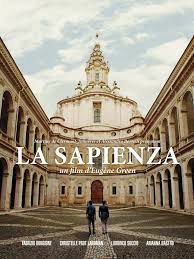

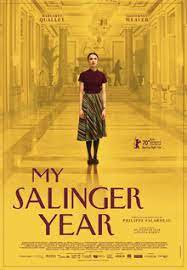




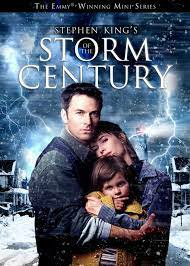
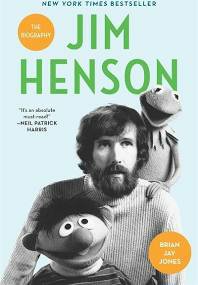
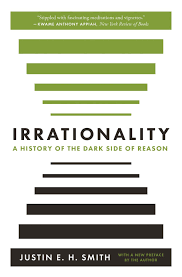
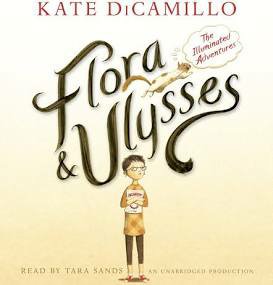
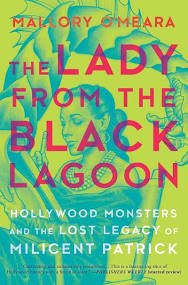
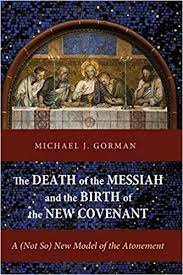

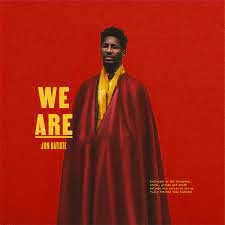
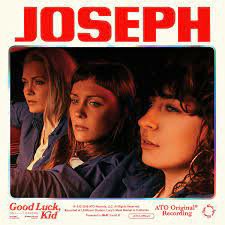
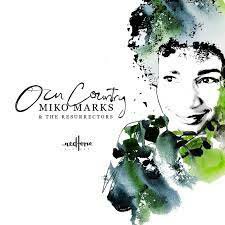
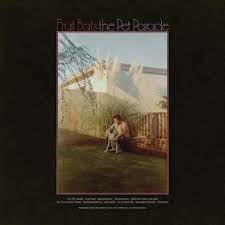



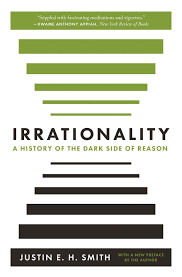









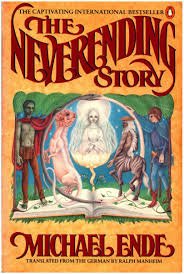
 The Stories of my Life