Why I Believe: Finding Presence, Hope and Mystery in Advent

A culmination of reading, viewing, listening, online and in person dialogue, and self reflection has had me thinking these past couple weeks about my faith in God. Not so much how it is I know God exists; the older I get the less interesting that question becomes on both sides of the apologetic fence, and in truth must be submitted to the idea that knowledge is the not the same as proof. Rather the far more interesting question for me is the why. That is where we can uncover important things like empathy, context, motivation and humility in discussion as we recognize one another at different points along this journey either towards or away from confessions of faith.

As I’ve been reflecting on this question in my own life, particularly in relationship to this Advent season and as an identifying Christian, I am struck by the degree to which my experience plays into this question in so many different directions and in different ways at different points in time. Theologian Pete Enns often refers to the Wesleyan Qaudrilateral to explain his own journey within this complicated thing we call faith, which provides a tool for theological reflection citing the interconnected methods of Reason, Scripture, Experience and Tradition. Remove any one of these from the picture and theology becomes a dangerous game no matter our disposition and our belief. Given my own Weslyan roots this picture has often resonated with me in a powerful way, and lately I’ve been trying to be more intentional about allowing it inform my own journey with faith in God, which is far less linear and static and far more given to a necessary ebb and flow within the experiences of life itself.

Perhaps most pointedly when it comes to the why question in relationship to Advent and my own Christian confession is the question of why Jesus. Or perhaps better, what difference does it make that Jesus is God, especially if, rightly, we can locate things like goodness and joy and love in an unbelieving world. I have found this to be a difficult question to examine in conversation with others because it carries with it something of a conundrum in deciphering how it is that theological truth relates to the material world. In some sense it is far easier to simply leave God somewhere out there uninvolved with the inner workings of this world, as indeed much of history has done and continues to do. Bring God into the inner workings of our world and it tends to disrupt, throwing all manners of things into confusion at the same time. Suddenly the why becomes difficult, especially when it comes to making sense of a good God in the midst of so much bad. Add to that the corruptible witness of the institutional Church and religion itself and the challenge of the why becomes that much more difficult.

And yet, at least part of my own journey is the truth that life in a world without God for me proved no more freeing, no more joy filled, and no more enticing as an experience, if that was what my reasoning was predicated on. In fact, if the why question of my then unbelief became less complicated on one hand, justifying life in the day to day became that much harder. If belief in God is merely a construct we create, an illusion we feed to give ourselves comfort in an otherwise often meaningless and cruel world for the majority, then what this underscores for me is that the problem of belief is not a religious one, it is a human one. A problem of nature that continues to push back against our attempts to find the answer in our own humanity. We have no more reason to trust any of the illusions that we feed to give this life meaning, least of all our notions of personhood and humanity. For me, my experience seemed to confirm that in this view, which I once held as true, all of life is a game that has a way of reminding you rather consistently whether you are on the winning or losing side of it. And while something like empathy and compassion, traits that are arguably unique to humanity at least in how they get expressed in conscious ways, are true, they are still traits and functions that are ultimately concerned with our survival. They breed competition. I have yet to find a compelling argument for an empathic view of human evolution that frees me from this simple, basic truth of our existence; that the meaning and worth of my existence and therefore the existence of others is intrinsicly dependent on my living in this world successfully. It is dependent on philosophies about life that makes sense when things are what we might call good, and cater to mere platitudes and increased dependency on our illusions when speaking to a life that is not. At best it locates truths about successful living that can only ever make the bad a little bit better. For me this only enslaved me further to my failures. And the more technology progresses the more this seems to get illuminated. I can locate a plethora of articles that demonstrate clearly how longer and more comfortable lives do not result in greater happiness and greater thriving. In fact it often appears to result in the opposite, which feels intutively true to my own experience.

As I have been thinking about this it is important to note that this is, again, not an argument for the existence of God. It is an argument for why. Or at least an attempt to locate elements of the why that might be evidential as i engage with this Advent season. I came up with three basic words that seemed to resonate especially strongly as why factors for me- Presence, Hope and Mystery. I’m still working to flesh these three words out in relationship to the Christ story, but one thing that did become evident to me as I have been doing so is how prominently the ideas of grace and forgiveness seem to play within all three. If there is a root of my belief it would flow from the truth of grace and forgiveness, two things that I found struggled to coexist in any sensible way within my unbelief, and which came most alive for me in my desire to believe. These two essential truths continue to undergird the ebb and flow of my personal journey, with the notion of forgiveness of ones enemy, which is as antithetical to our survival and thriving as a species as it is nonsensical to my efforts to succeed at this thing called life, continuing to prove to be the most scandalous idea birthed by my faith in a God who enters into human history and is intimately involved in its affairs. It is true that far too much of religion has given into the models of justice that pervade so much of our modern, secular ideas and systems, which when paired with a God made in our own image and beckoned to serve our will becomes even more dangerous and problematic. That it remains equally true that the revelatory truth of grace and forgiveness, which turn humility from a vice to a virtue, seem to be persistent and spiritually laden ideas that push back against attempts to narrow my definition of morality and goodness (to the idea of the the free and liberted individual) continues to be a compelling reason for me to believe, at the very least, in something bigger than my own dueling human nature. Something that reflects more than simply the emergence of human consciousness as our ticket out of the inevitable war against these two natures that seems to be imprinted into the very fabric of the universe, with what we determine to be bad (suffering and death) leading to good (new life and new creation). This of course lies at the heart of the Christ story, giving us a way to speak of death and suffering in redemptive terms. I often hear atheists suggest that we (humanity) create religion for comfort, to satisfy the desire to personally imagine immortality and cope with evidence of our finitude. This is, I believe, a fundamental misnderstunding of religious interest in death, at least when it comes to matters of theology. What is at at stake is our ability to enter into the suffering of the other and speak in terms of this redemptive process. Even further, what is at stake is our ability to enter into the workings of nature itself with this same redemptive message in view.

Which for me begins with this story of God invading history, of light illuminating the darkness in order to declare it good, not to highlight human ambition and success and awaken the grand human project in all its glory, but to awaken us to the presence, the hope and the mystery of a Holy Other. A Holy Other that is then demonstrable in the whole of nature and in the whole of humanity, helping us to make better sense of what  truly good, truly joyful and truly loving. To awaken us to the power of the Holy Other to break the cycles of unforgiveness and the violent predication towards competition that contines to hold us subtly and often overtly captive, calling us in the way of Christ to an imagined future paved in the scandelous image of self sacrificial love. The simple fact that this has been demonsatrated concretely and historically in a way that holds us captive to it as theological “truth” is one reason why it matters to me that Jesus is God.
Facebook, Meta, Change and Resistance

Reading all of these articles as of late about how the new augmented reality of Meta, Facebooks rebranding and refocusing, is going to destroy our world has left me with in a weird point of crisis. Perhaps a crisis of meaning.

I’ve spent the last number of years using online spaces to speak about and cautiion towards the potential dangers of social media and streaming. And yes, I am aware of the present irony. A part of the problem is that the physical world has deteriorated to the point where to connect with it outside of social media is often lonely and deeply isolating, be it in the absence of physical relationships, which is more difficult to maintain and foster than I have experienced in all of my 45 years of living, or be it in the general decline of physical, architectural presence and spaces. Yes, we can still retreat to nature, but nature has become a retreat from the business of our online lives. The problem is locating a participating culture in the physical world. Thus social media tends to become both necessary in such a world where the physical functions of life no longer exist in the same capacity, while also representing the problem. Thus the conundrum I find many people face when trying to disconnect.

I have often argued that people are not paying attention to the dangers of this now commonplace technology and that we are as much a product of our age (influenced by the technology) as we are free to be influencers (with free being a relative term open for debate). I’ve had plenty of hard and furious pushback over the years about how I am overpiaying that card and playing the role of the aging generational perspective preaching doom and gloom about the next generations technology. And how it is not the system or the thing that is the problem, but how we use it. People have reminded me that every generation does the same thing.

And yet here we are today. Many of my friends barely use social media or have gone off altogether. There is much being made specifically about the anger people feel over facebooks evident reach of control and corruption, with plenty I talk to these days decrying it for ruining our culture, igniting division and misinformation, ect.. These same voices are also the ones now writing a plethora of articles citing doom and gloom about the meta universe.

I wonder where the line is between this current generation facing potential monumental changes to a once normative system and suddenly climbing into that boat that says “this is what will ruin humanity”, and the next generation accepting augmented reality as the new normal. Is this not just another expression of that phenomenon?And to what extent does accepting a narrative of doom and gloom around the next emerging technology cause us to miss the real problem that people seem to fear, which seems to remain both consistent and beneath the surface- isolation, a lack of belonging and meaning, ect..

Here is what is curious to me too. A part of my pushback on the present technology that transformed the world I knew and became normative in a very short amount of time is that it represents something more than mreely a generational shift. It represents an evolutionary one. And not a natural one, rather an imposed one driven by technological progress. It represents an unprecedented time in history where for the first time technology has outpaced human invention and where the rate of change has no active corelary. Therefore we cannot measure generational change in the same way and by the same means. What we face today is not the same as the change that has governed humanity throughout history. The problem is that where change once happened in gradual increments, allowing humanity to adapt such changes to human activity, the way change happens today humans are forced to adapt to technology. The script has flipped, and with the unprecedented speed the abiilty to reflect on how such technology fits into and enhances human activity has been lost. This is real, measurable and facutal. We see this in streaming, social media, and in all of the interconnected technology that now governs our lives.

Which just begs the question. What is the real problem with Meta? What does the present uprorar reflect? Are we only now realizing the impact of such a world? Do we even have the capacity to make it different? Is transhumanism the inevitable future where human and technology simply merge and become indistinguishable? And if the uproar and fear over Meta represents a unique awakening, how do we attend for the new cycles of history in this present reality? All signs seem to point towards the repeating of history simply making itself known within this new reality, establishing new patterns of evolution anchored in artifical trajectories. As the idea behind Meta becomes a thing, and it undoubtedly will far beyond simply Facebooks reach and in ways that will feel much more practical and seamless, humanity will be forced to adapt to its trajectory. We hate what this means of course, and will intutively resist such reflections of determinitive course, but it is nevertheles true. Operating in a world without it will feel increasingly disconnected and fruitless, and nature and isolation will continue to play its role in filling that gap. While culture will still be created, our habits of consumption will be further driven by services and platforms rather than human generated cultural movements. Ownership and investment will become more and more ideas from the distant past, and with that our relationship to money will continue to change with the digital age. All of this is inevitable, bringing me back to that initial question. Is this merely the recognizable rallying cry against the loss of the old and the emergence of the new, or is there something more going on?

I dont know. Some thoughts for a Saturday morning.

Words, Labels and Identity- Feeling Lost in the Unsafe Spaces of our World

I find myself pondering this morning;

As a socialist leaning individual, by which I mean where tension exists between the rights of the individual and concern for the collective I uphold the necessary value of setting my rights as secondary to the good of the whole, it is difficult to find space where I can effectively critique problems I see with the left while knowing that I also cannot in good conscious associate myself with much of what I see on the right.

As a universalist leaning Christian, by which I mean in the tension of the mystery that is real and true justice and in navigating the difference between capital letter Sin (systemic) and small letter sin (participation) I am compelled to live and hope in such a way that believes in the possibility of the good of creation and the possibility that all might be liberated through the Gospels proclamation, it is equally difficult to find space where I can critique the Christian left while knowing that I cannot in good conscious associate myself with most of what I see on the Christian right.

Which makes it difficult to exist with necessary cause and necessary humility when engaging in conversation. It also makes it extremely aware how deeply associated politics and religion actually are in defining these polarities of thinking, both in necessary and destructive ways. Shared language and labels can be and often are important for belonging and identity. Where shared language and labels become destructive is when belonging and identity become measures of exclusion. Terms like left and right become generalizing terms that locate what we are for and what we are against. What makes matter worse is that when you occupy certain space inbetween, that undefined territory that where our beliefs can co-exist with our questions, it becomes easy to feel like we don’t actually belong anywhere and to feel isolated by all sides. To be fair I think most people would desire to see themselves as occupying this space, but the way most people operate, and I include myself, tends to thrive on the polarities.

Now, this might be a dumb thought, but since I like to spend the middle of the night ruminating on existential questions rather than sleeping it’s a further thought I had towards this end nonetheless.

I wonder if one of the biggest problems we face as humanity in this tendency to need shared and defining labels and language is our tendency to move from ‘ism’s” to “ist’s”

Allow me to explain.

For example. Humanism is an idea. To use the word “humanist” in modernist terms is to go from an idea to a worldview, which has both positive and negative interest. That is, it is a way of defining ourselves or the belief system/worldview to which we belong (positive) whole also setting us apart from that to which we don’t belong (it is common for example, for humanism to be arguing for a particular view of the world whole at the same time arguing against a particular religious view).

To use humanism as a further example, one of the problems that emerges from this is that this creates a divide between these sides that inhibits study and interest in the idea itself. It is not true that religion is not interested in humanism or that it lacks “humanist” elements. And yet, when applied as an “ist” we end up with vast generalizations anchored in this idea of defining what something is against what that thing is not. Thus interest in the study of humanism carries this connotation that we are studying something that is opposed to religion, which then plays out into something that is anti-religious, ultimately resulting in equal religious skepticism of humanism at large.

What’s interesting is that some of this problem seems to be rooted in the development of the suffix “ist”, which moves from its Greek/Latin roots into its French application and eventually it’s English counterparts. The further we get from its more nuanced roots the more it becomes fastened as a noun to this kind of identity shaping power rather than the study of or participation in an idea. Think of the word “rapist”. In this usage the action becomes conflated with an identity.

We see this problem in recent history with this shift from Darwinism (a study and an idea) to neo-Darwinist or Darwinist (a worldview), which had immense consequences in terms of the divide this created.

To use a recent example from my own life. I was in conversation with someone about Foucault and his ideas. They used the word “positivist” to describe themselves in relationship to Foucault. I immediately had a reaction because I intuitively know that this word carried the power to both define what this person is for and thus what they are against. It’s written straight into the definition that Positivism as an identity defining noun exists both for something (rationalism and socialism) and against something (metaphysics and theism).

What this seems to show is how quickly humans tend to gravitate towards these identity shaping systems and how conditioned we are to see them as needing that necessary conflict. IST isn’t the only suffix to operate in this fashion, but it is one of the most evident. Relevant to today is even the use of a word like “scientist”, which tends to evade it’s concern for “practice” or one who practices and shifts very easily in its common usage as a means of demonstrating what we align oursleves with and what we align oursleves again. The problem of course is that these things are often much broader than not and tend to digress into beliefs that these two things then must stand opposed, which of course leads to all kinds of nasty division and infighting.

I’m not sure there is an answer as much as this is an observation of our reality. It does kind of reveal the power of language, and even the limiting nature of English (in its own divided and often competing form). I’m reminded of a quote from James Gleik in his book Time Travel: A History,

“We have a tendency to take our words too seriously, which happens (paradoxically) when we are unconscious of them. Language offers a woefully meager set of choices for expressing what we need to express.”

James Gleik

And yet, at the same time I am remind of my recent foray into Tolkien, someone who captured the power of words and language and a genuine love for philology that informed his trajectory and his work. For Tolkien words are to be take seriously precisely because they hold the power to communicate truths we could not otherwise comprehend and to transform us in its revealing.

Which is all to say, perhaps what we all need most of all is safe space to speak, to learn, to be challenged and be heard beyond mere language. A space to be heard beyond the words and the labels, and a space to grow beyond the words and the labels. This is hard to foster when it seems we are consistently forced to enter into spaces, be it online or in person, that are decidedly not this and tend to elicit something quite other, be it from others and/or ourselves. It’s also true that attempts to create safe spaces can quickly be co-opted in the same way by these assumed and often necessary polarities. And yet, if we are to avoid slipping into a self defeating cynicism about it all it seems important to at least be able to uphold such a hope that such spaces are possible, and better yet to trust that even small movements towards embodying these spaces in our own lives and communities can actually make a difference.

Month in Review: Memorable Reads, Listens, and Watches for November, 2021

Movies

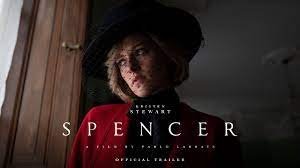
Spencer (2021, Pablo Larrain)

Spencer boasts a perfectly off kilter and eccentric personality befitting both its leading star and its subject matter. From the brilliant and immersive opening sequence, which sees Diana as someone lost in a world intent on containing her larger than life persona, we are introduced to this potential future Queen by way of a fable of contrast and conflict. Her larger than life persona is swallowed up by the endless hallways, massive rooms, and illustrious customs. The films ability to gradually coach the internal struggle to the forefront is thus almost unexpected, leading to a film that is as daring in its casting as it is in its direction and maybe even more so the transfixing score.

This all takes place over the course of a few days, which means it’s far from a sprawling or epic period piece, and that lends this a particular focus on its essential subject that brings to light not a life, but a person stepping into a life not necessarily her own. The fact that it is an imagined history; that is, an interpretive take on a very real time in Diana’s life that explores what might have happened behind closed doors, gives this film a ton of freedom to really unpack the idea behind the person as well, melding together what we know of who she is with the potential ideas of how this might have translated over the course of this couple days. Definitely one of the strongest films of the year, and one that I hope to revisit soon

The Humans (2021, Stephen Karam)

Might just be the new quintessential viewing for the holidays. The context is Thanksgiving, but it could work for any family holiday.

Categorically the film belongs with the likes of The Big Kahuna or Sunset Boulevard. It’s based on a play and the single location shoot revolves around a script that delves into matters of existential concern spanning life, family, relationship, circumstance, religion, forgivness, restitution, and hidden secrets coming to the surface. The film is beautifully shot, and script exceptionally written, and the performances perfectly captured. Viewer beware, this lays all the messiness of family gatherings to bare and thus should come with a serious trigger warning.

What the film does with these family dynamics is where the sharpness of its vision gets fully articulated. It encases it as a gradually emerging nightmare, with the momentary feelings of necessary escape being bound to the expectation that we are obligated as a family to be and to stay precisely where we are. The problem is the more we coexist within this space, the more the unspoken tensions, stifled as we try to make them, bubble up to the surface, leaving these family gatherings as an inevitable process of laying the dirty laundry on the table. In some ways this is the necessary therapeutic process, the thing that enables us to return to this space again and again despite its potential horror. For it to remain stifled is to have nowhere to go but into isolation. And yet the irony of this, something this film captures in its essence, is that this cast of familial relations are perhaps never more aware of this feeling of isolation than when they get together. This, it seems, is the conundrum of this necessary coexistence.

The definite horror notes then breathe through the narrative with an inspired sense of awareness of this dillema, using it as a way to visually represent the common experience. And yet, what undercuts this are silent moments of beauty and assurance, this unspoken word that seems to leave us with the conviction that despite its dysfunction family is necessary.

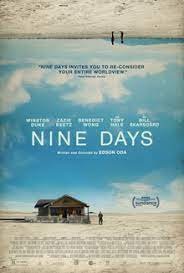
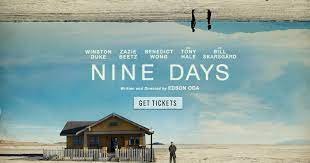
Nine Days (2021, Edson Oda)

Nine Days is a high concept film filled with intriguing existential questions about life, death, and suffering. Following a lone arbitor who has the arduous task of interviewing souls for the potential occupying of vacant life on earth, a process that takes nine days to conclude, the film digs deep into that central tension- is the chance at living truly worth the potentoal suffering, and what do we do with life when it appears that the bad far outweighs the good.
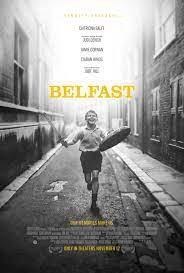
Belfast (2021, Kenneth Branagh)

This crowd.pleasing, one of a kind family drama is argubaly one of the Directors best works, taking a heartfelt and compassionate approach to a deeply personal subject- family and home, and more specifically that of Ireland and its past and its people, and weaving it into a story for audiences young and old.
The film features some exquisite framing that works with the constantly shifting camera work. There are times where it feels we are watching an elaborately screened stage production, complete with entrances and exits and choreographed to precision. There are other times where it immerses us in a dramatic sequence, with the artists imagination drawing us in through the creativity of the visuals. Still other shots settle on a specific scene, or it employs a static positioning, gradually revealing the details in the periphery that lie just outside our line of sight. Taken all together it’s a marvelous tapestry that functions as a perfect marriage with the films astute use of pacing and editing. There is a larger story being told, but much of this tends to ebb and flow with the sporadic nature of everyday life. One moment we are running through the streets, and the next moment we are navigating riots. We go from laughing to crying to shouting at the drop of a dime. It’s a beautiful ode to the experience of living in a particular moment, something this film captures so well. It’s one of the most natural and effortlessly written scripts I’ve encountered all year, and I soaked in every second of it.
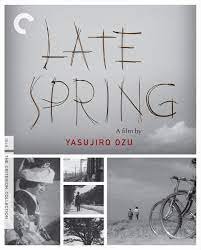
Late Spring (1949, Yasujior Ozu)

It’s always incredible to witness a master at work. Here, Director Ozu, the one behind the equally beautiful Tokyo Story, brings his penchant for simple frames, quiet narratives and memorable characters to bare in this story about a 20 something year old daughter and her aging, widowed father. Every frame is crafted with care and precision, which makes it all the more striking that the Director is able to allow these scenes the room to develop on their own. The precision like approach is simply the means through which the true, natural beauty is captured in its essence. It really is an incredible work by an all time great, and has one of the most powerful final scenes you are likely to encounter.

Honorable Mentions: There are a handful of older films that are worth mentioning here, including the 2011 neo-realist indie gem Hail, a film that explores the depths of our humanity and the inner turmoil of that which challenges it, the equally harrowing family drama Krisha which gives new meaning to holiday gatherings and dysfunction, the documentary style dramatic exercise Horse Money that just might be one of the most beautifully rendered culturally centered stories I’ve seen in a long while, the startling powerful animated feature The Adventures of Prince Achmed which is based on the stories from “The Arabian Nights”, and the wonderfully tantalizing and poetic drama about dance and art and romance and mystery called The Red Shoes.

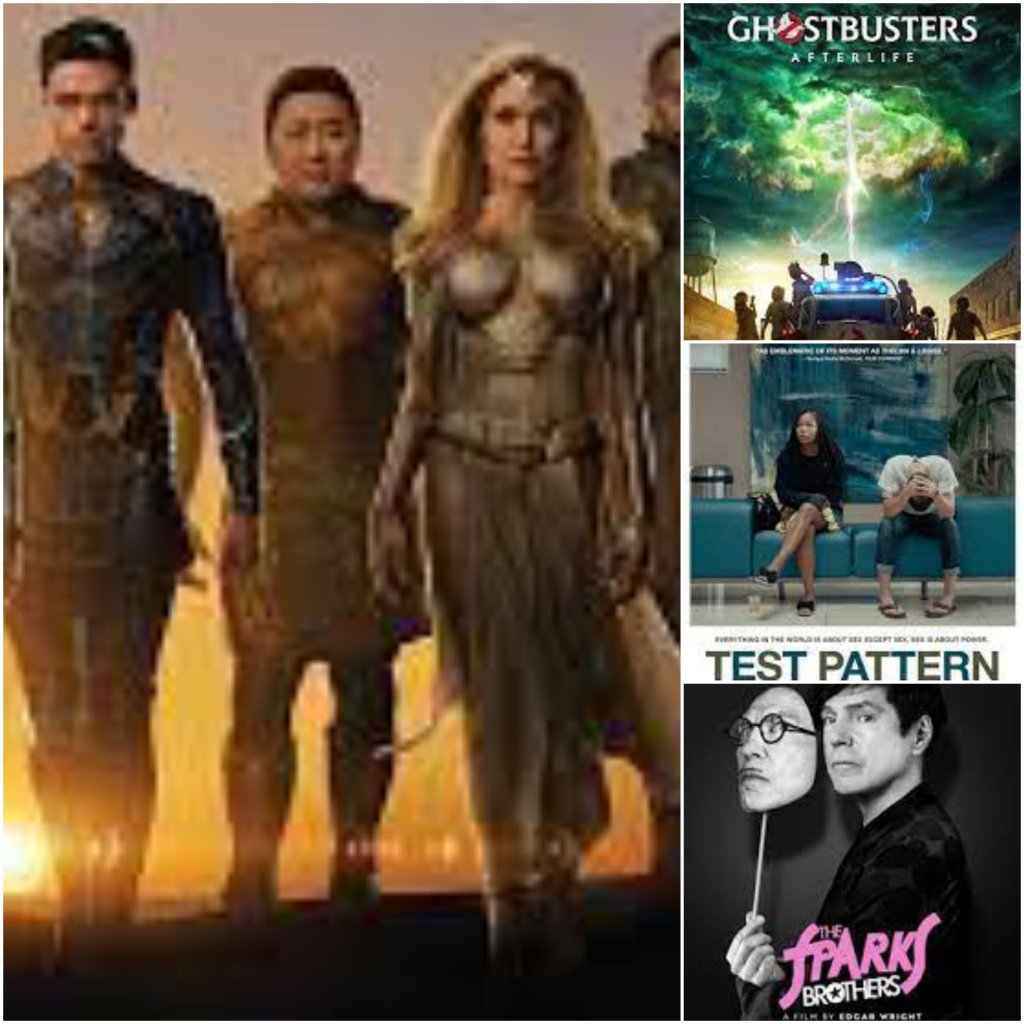
In terms of new releases it would be hard to miss the release of Eternals this past month, and it deserves mention for its daring and unique take on the Marvel formula. It was met with a bit of divisiveness, but for me its a striking visual piece rich in theological concern, taking the Thanos question and reframing it within an origins story. That a movie this big is able to feel this intimate is a testament to one of the best young Drectors working today. Equally memorable was the recent release of the entertaining sequel (of sorts), Ghostbusters: Afterlife, which finds the perfect way to merge the famiilar with something that feels fresh and new. The young cast is a blast and the films thematic focus proved touching and thought provoking. On the other side is a smaller film called Test Pattern, a 2021 film with real potential as a hidden gem, exploring a weighty subject (experiencing sexual abuse as a woman of color). It has some issues, but this is a Director worth keeping an eye on. Lastly, for the musice fans out there is Edgar Wrights other film that you might not have heard of called The Sparks Brothers, a documentary about a band you also might not have heard of. It’s a fiim that benefits from going in cold, which makes discovering this influential group that much more exciing to witness through Wrights eclectic style.

Books

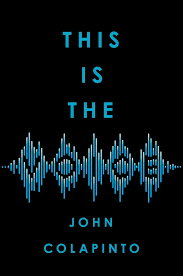
This is the Voice by John Colapinto

It seems like every other week another book comes along offering a fresh theory for the sudden explosion of humanity onto the scene in a narrow moment of history, enabling us to develop the way we did. Colapinto locates the narrative as a chance encounter with a product of nature that accidentally gave rise to our ability to emote sounds with our vocal chords and eventually formulate this into speach. This isn’t so much a book about the development of speech, although it certainly has a lot to say about that as well. Rather it is a book about what lies beneath our speech that makes it unique to us, which is the sounds that operate as communicaiton and the corelating brain development that allows us to interpret these sounds the way we do. It’s a fascinating premise, a well written book and interesting in the information it offers.

Beautiful Joe/Beautiful Joes Paradise by Marshall Saunders

I decided to revist Beauiful Joe after finding out there was a sequel. The orignal is a childood favorite and arguably one of the most formative reads in terms of shaping my perspective on life and our relationship to other created beings. The sequel, a first time read, is a beautiful and imaginative take on the hopeful truth that the creatures of the earth will be redeemed, that the powers that hold this world hostage to our destructive nature will be overcome, and that the joy these creatures were meant to experience will one day be realized in its fullness. It brings Joe back as our guide through the world to come, and the story itself is inspired by the loss of the authors own beloved pet. It’s a wonderful, hope filled story and both books stand the test of time.

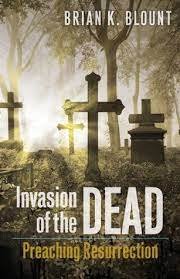
Invasion of the Dead: Preaching Resurrection by Brian K. Blount

I heard about this book through an interview and I thought it sounded intriguing. The writing is a mix of theology and philosophy with a unique use of the Walking Dead motif used to bring to light an often negected aspect of our theology- resurrection. It was a transformative read for me simply for the ways it helps to articulate these two views, the transcendent and the earthly perspectives, exploring what it means to be alive and what it means to be dead. Reimagining what we coin as the living as the walking dead, Blount makes the case that reframing our perspective in this way can help us better understand the biblical narratives focus on moving from death to life amidst the dualing realities of life and death. It’s a new way of seeing our present reality, and equally a way of imagining our future reality in the here and now.

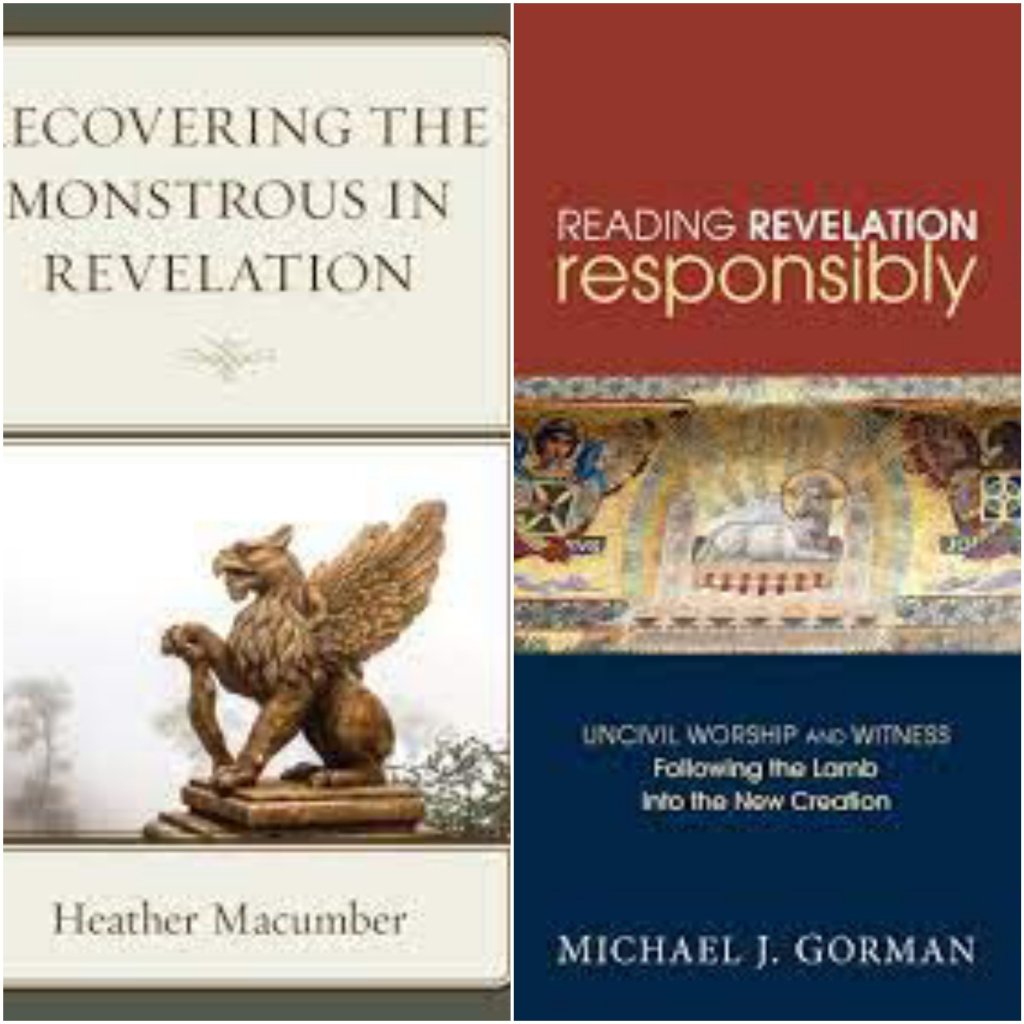
Recovering the Monstrous in Revelation by Heather Macumber/Reading Revelaton Responsibly by Michael Goreman

To be fair, Macumbers book is one that would be best served by reading it alongside a theological treaties. Her theory surrouding Revelation, and more spcifically the role of the monstrous in Revelation, something she uses Monster Theory to unpack, is fascinating and tantalizing. Shook up my perspective of the other, and the idea of the Holy Other. However, she admits that to do the work that she does she needs to step outside of the thelogical realm before moving back in, with her particular concern then being for the practical, historical, and philosophical. She spends less time thinking about what we should then do with this information in light of the spirits movement. This is where Goremans book proved to be the perfect pairing, standing as one of the most necessary and seminal works on the text for our modern age. Both are must reads for anyone interested in Revelation, with Macumbers effort being more intriguing and experimental and Goremans being a more theologically centered academic examination of the text itself

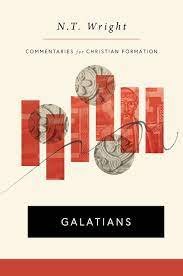
Galatians: Commentaries for Christian Formation by N.T. Wright

I have found myself recommending this commentary to those unfamiliar with Wrights body of work. It might not seem the place to find a working summary of his most important ideas, but for me they have never been given a more concise and available treatment. That these ideas can be understood while working alongside the scriptures that inform them makes this an equally formative and informative exercise.

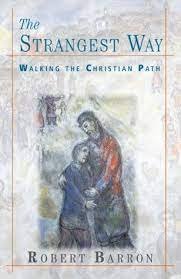
The Strangest Way: Walking The Christian Path by Robert Barron

I had never heard of Barron before, but the way he is able to take specific relfections on Catholic theology and bring them into dialogue with other Traditions was impressive and meaningful. The focus of this book is essentially unravelling how Christian spirituality leads to something like the Cross, navigating what is then the strangest way as Christianitys most compelling attribute, and Barron has many thoughtful and insightful things to say along this journey. He’s an obvious intellectual, but of the kind that wants to be a bridge between higher thinking and the practical expression of the Christian life and experience on the ground.

Podcasts/YouTube/Other

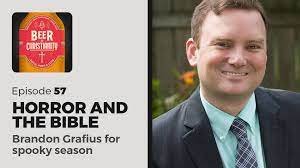
Beer Christianity, Episode 57- Horror and the Bible with Brandon Grafius

My introduction to Grafius, inspiring me to pick up a couple of his books. I love the marriage of horror and theology and this episode reveals someone who is intimately engaged with both on an informed and studied level.

Biblical World, Episode 29- Nomadism and Architectural Bias in Archaeology with Erez Ben-Yosef

I’ve long been interested in the nomadic character of the story of Isreal, and this architectural look at the subject really challenged and awakened me to just how it shapes our understanding of the Old Testament text. Yosef helps to explain what nomadism means, how it plays into our interpretation of the text, and how it can help enrich our understanding of the text.

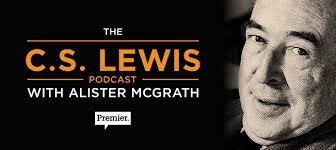
The C.S. Lewis Podcast, Episodes 22-29- The Chronicles of Narnia

For anyone with an interest in, connection to, or passion for these stories. McGrath, a Lewis scholar, has a special awareness of how these stories reveal who Lewis was, and this walk through of the different books was a really enjoyable exercise.

History of Literature, Episode 357- Louisa May Alcott

This accompanies another episode on Little Women itself, but this primer on the life of the author was really informative, especially with my growing interest which developed from the recent remake. Helped to clarify certain facts and offer some context.

The Great Books, Episode 204- “The Jewish War” by Josephus

This might sound dry but for me it most definitely was not. The interview is with a teacher, and while I differ on some of his pressumptions and assumptions regarding what this book could or could not represtent as history; I think he limits himself in the potential applicaiton of Josephus’ insights because of these predicaitons; its an exciting walk through an important historical text and source.

On Script, Episode 199- Gary Schnittjer and the Old Testaamet Use of the Old Testament

Loved the insight of Schnittjer when it comes helping us make sense of the interconnected nature of the Biblical text. We often see a focus on the New Testament use of the OT, but the OT’s use of the OT gives us the necessary groundwork to enter into that discussion appropriately and with widsdom.

Music

Adele- 30

Adeles newest requires multiple listens to fully appreciate, which is slightly different to her previous album But she is back with an undeniable confidence and force that demands attention. It’s as familiar as it is foreign, providing the perfect opportunity to invest. The reward being those subtle surprises that help shape these songs along unexpected and particular paths along the way.

Charlotte Cardin- Phoenix

Cardin captures the soul of this record via a movement between eclectic pop and dialed back balads. This informs the bend but don’t break nature of both the songs thematic concern, which largely seems to revolved around navigating the world as a young woman, and the emotional heft of its musical and often wavering crescendo. The soaring vocals of course help to embody this in a profound fashion, anchoring this ablum in her disinct craft.

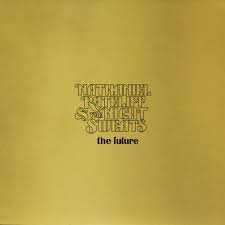
Nathaniel Rateliff & The Night Sweats- The Future

The vibe of this album is infectious, and as the third album for this group it proves to be well beyond their years, a well crafted and quite diverse cross section of tones and grooves and melodies that all come together in a truly inspired fashion.

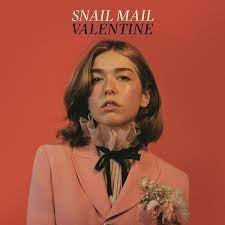
Snail Mail- Valentine

For an album titled Valentine this albums tunes aren’t all sunshine and roses. And that is to its credit, providing something decidedly cathartic as it enfolds us in some rich and layered compositions.

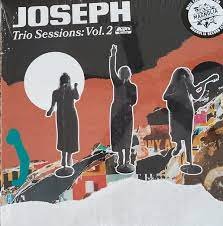
Joseph- Trio Sessions (Vol 2)

Continues where the previous one left off, featuring a stripped down take on the bands effortless melodies and showcasing the intracicies of their songwriting. It’s a whole different way to appreciate a magnificent musical team.

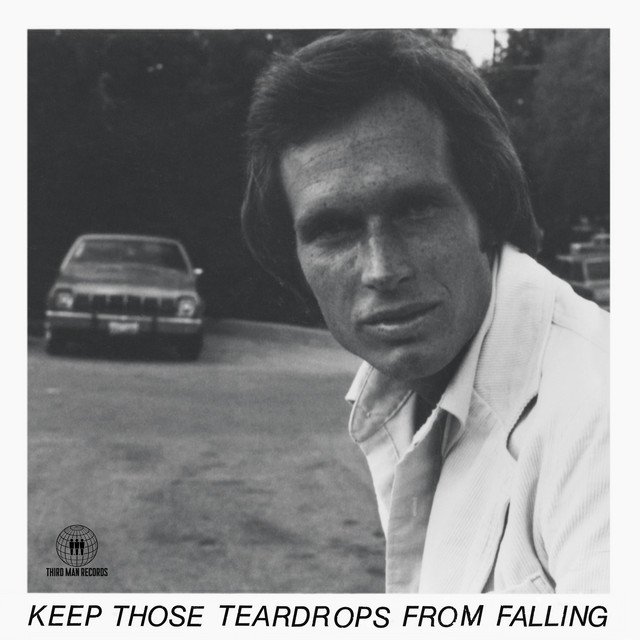
Natalie Bergman- Keep Those Teardrops from Falling

Bergman is back with her soaring vocals and thelogically attune lyrics, offering up a smaller EP that hits just as hard as the full length effort.

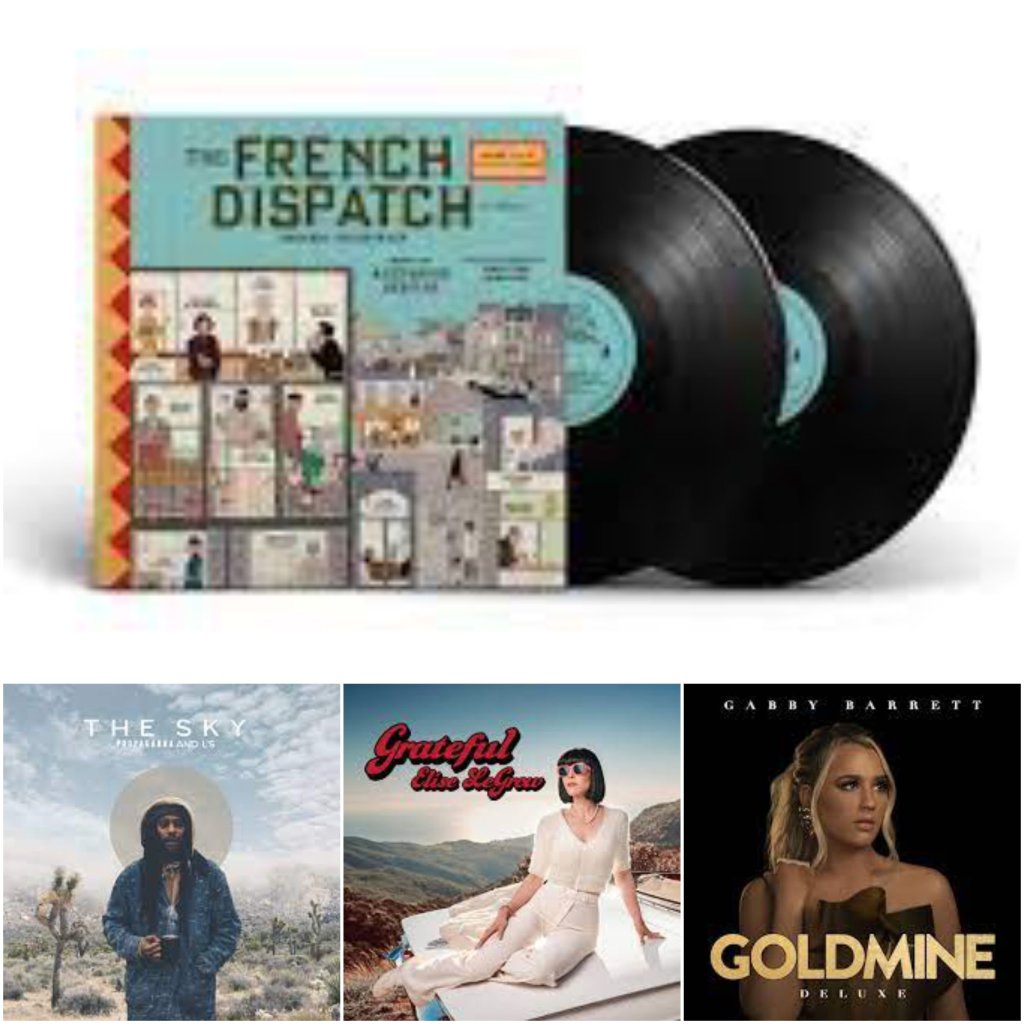
Honorable Mentions: The quirky and inspired mashup that is the French Dispatch Movie Soundtrack, The poetic hip hop and rhythmic rhymes of Propagandas Terraform: The Sky, the smooth movement of Elise LeGrows midtempo and soul filled Grateful, and the Country musings of Gabby Barretts Goldmine

Nine Days: Making a Case for Life in the Tension Filled Spaces of the Living

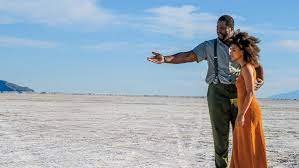
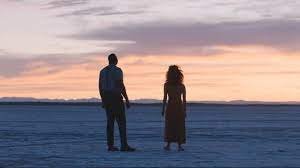
Wow. The 2021 film Nine Days, by first time Director Edson Oda, came out of nowhere. Caught me off guard as I knew next to nothing about it except that it was recommended viewing. And for good reason. It’s a high concept film filled with existential concerns about life and suffering. Following a lone arbitor who has the lengthy task of interviewing souls for the potential occupying of a vacant life on earth, a process that takes nine days to conclude, the film digs deep into that central tension- is the chance at living truly worth the potentoal suffering, and what do we do with life when it appears that the bad far outweighs the good.

As part of the interviewing process, part of being deemed capable enough to occupy life and hopefully realize it’s potential, each of the candidates watches a collection of televisions which display the lives and experiences of people down on earth, good and bad. As they absorb themselves in “life” over these nine days they are subsequently asked a series of questions and presented with different scenarios they must answer. Their answers are weighed by the arbitor, who makes the final decision on who gets to move on to life and who simply ceases to exist.

The story’s concern is for the arbitor, who’s own past experience with life seems to haunt him. As he probes the souls each candidating to occupy the role of living, we are given the sense early on that this process is also probing him. Any judgements he can make of the souls becomes a judgment of himself, which forms a big part of the films existential quandry.

What we do know early on as well is that the life that left a vacancy (in their earthly death) seems to have touched on something deeply personal for the Arbitor, leading to an unusual interest in this life’s replacement. What is revealed later on is truly heartbreaking, exposing how it is that we arrive at the film’s central tension. The difference between the souls and the humans comes down to heightened awareness (memory) and emotion (sensory experience), leaving this single point of wonderment- are these human distinctions a blessing or a curse? In some ways maybe they are both, and certainly one observation that rises to the surface is that it depends on who you ask.

Life’s “potential”, it seems, comes from locating the beauty in the tragedy, and allowing that to inform our sense of meaning. The trouble comes when beauty is unable to be reconciled with the tragedy. This is something the film doesn’t quite know how to answer. At best it can merely rest on the worth of the existing few whos experience of life affords them the ability to reflect on the beauty, and further rests on the truth that emerges from seeing life from a broader point of perspective- that some lives will mean more than others, and that taking a chance on our life being meaningful requires us to submit the chance that it might not be to the notion that it could be for a few who come after. The problem, then, comes when we try to make universal statements about life’s worth. Perhaps most personally, as this is a question I have struggled with, the problem comes when trying to answer the question, why live at all when it seems to come down to the luck of the draw, and when seen in the light of others who live more successfully, however we measure that (a poignant observation within the films motif of the judge and jury) we are rendered insignificant, unnecessary and a failure. These questions plagued me when I was wrestling with suicide, and played a big role in why I abandoned what I deemed a necessarily nihilistic secular humanism for the notion of faith. I just could not find a way to answer this essential question- why keep on living- on rational grounds.

What’s curious to me in all of this is noting the way the film brings two points of contested perceptions about the world- that it is full of tragedy, and that it is full of beauty- to a point of crisis, but never truly finds a way to reconicle them together. There is a sense in which the film wants to pull from this a message about ways of seeing- if we only see the bad we miss the good- but it can’t quite address the problem that comes when we only see the good and miss the bad. If premise one stands, and taking the time to see the good is what makes living with the bad meaningful, then it should also stand that premise 2 is equally true. Seeing the bad should challenge the good and raise the question of life’s meaning. I am certain, myself included, that many will find the general arc and message within this film inspiring as it addresses premise 1. And for good reason, as I think premise 1 does represent truth about our existence. The problem is it has nothing to say about premise 2. It can only ignore it and hope that premise 1, if we are lucky enough to live successfully, renders it just inconsequential enough as to not impose it’s rationality on our sense of being. Without some hope that the necessary tension can and will be resolved, such sentiments have more to say about the truth of human experience than they do about meaning itself, which means that truth is then transient, subjective, circumstantial, competitive, and, in many ways, arbitrary, which a more careful reading of this film would expose. And the truth of the way we deal with it is by replacing the reality with necessary lies about its meaningfulness. This of course is the common accusation lobbied against belief in God- that it appeals to the irrational in order to escape the truth of suffering and death- but what is clear from this film is that everyone does this when faced with this tension.

All of that probably sounds like a negative criticism- it’s not. I really loved this film, and it’s message hit me hard. This is simply to say how it is that I processed and interpreted it’s message. For me, the film was a reminder of my own journey towards faith and why that matters within the circumstances of my life. I think the one thing this film seems to miss and so desperately longs for at the same time is a way for our life to truly be able to turn it’s gaze away from our own experience as we make our claims about the truthfulness of living. It imagines doing this in the souls observations of these lives playing out in front of them, but, in purely rational terms, they approach this tension in ways that then cripples their own witness to the truth about what motivates them to want to live in the first place. Which is to say, if my meaning depends on my living successfully, this then is not a truth I can locate in another. Rather, it is an expectation, a condition, even if it feels more like an invitation in the moment. One that is based on a truth about life- seeing and celebrating beauty is the aim of living, and focusing on beauty increases the chance that we will experience it as meaningful- but one in which this truth becomes contingent on our experience of it, which is the measure of a successful life. That is the only means by which it can become transcendent, the problem being that we are then left with ourselves and our circumstance and the simple message that life is worth taking a chance on because it holds potential to be meaningful for the few that are lucky enough to experience it this way.

In the scope of the film, memory becomes crucial to this point of perspective. Memory is the means by which build our story in particular ways, and those memories emerge from our experiences. Take away our memories and we cease to become us. We cease to feel in the ways that humanity is capable of. At the same time, there is a crucial point in this film where it needs to submit that we are who we are even without our memories. This word of truth is offered to one of the souls vying for the chance to live. That they will forget ever being in this place and competing for this opportunity is said to not nulify the fact they they will still be them, that you will still be you. This word is afforded to them as a way of justifying the glimpses they get of the human experience with all of its varied emotions. The question is, what has the power to say this to us, to endow us with our given sense of meaning? What has the power to lay claim to the value of our life before we live it and regardless of our successful living of it? That is a question worth pondering over the course of this film. I think the Director senses this question is there, lingering and festering and gnawing at the arc of its story, but can’t quite figure out what to do with it when trying to filter this through the reality of our finite existence. To me, this is evidence of a longing that is embedded within our spirits, something we can’t always understand, but something that continually has the power to point beyond us and our experiences, beyond oursleves to a transcendent Truth, a grander narrative that enfolds this existence. A Truth that doesn’t deny or ignore the tension of existence, but which looks to speak to it in ways that feel intuitively aware of what is not right and what we hope will be made right. That our ability to lay claim to beauty is not contingent on the trajectory of our indivdiual lives or the success of a small portion of humanity is, for me, a liberating thought waiting to break into and shed light on this films concluding image.

Month in Review: Memorable Reads, Listens, and Watches for October, 2021

Blind Spots From The Vault

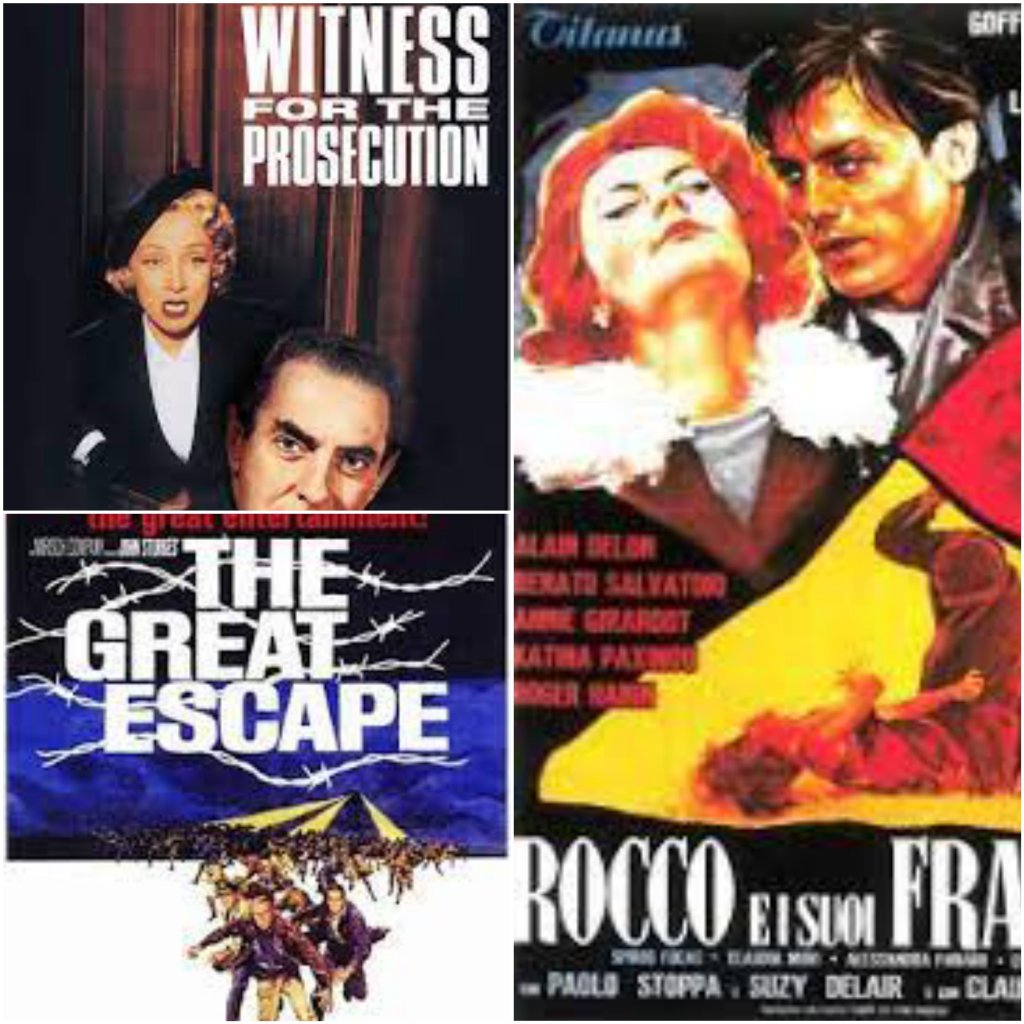
Deceptively simple as the sum of its working parts, Waiting For the Prosecution (1957) is arguably one of the best courtroom dramas of all time. Director Billy Wilder infuses it with a mix of humor, emotion, realism, drama, and character development in order to tell the sory of an aging lawyer instructed to retire from participation in active trials due to health reasons. It has a lighter touch than his previous fare. but also bears the familiar marks of his constant devotion to genre invention, using the mystery of the court room and the trial to say something important about who this man is. It has been on my watchlist for a while, and I’m super happy I was able to finally get to it.

Equally happy to check off the famous Italian masterpiece, Rocco and His Brothers (1960). I couldn’t track this one down during my previous “travelling the world through film” challenge, so when it showed up on Kanopy I jumped at the chance. This is not a family drama, but it is a drama about family, taking an intricate and intospective look at what family is and what family means. Similarly, John Sturges’ classic film The Great Escape (1963) proved a worthile study in how it is that we move from the individual to the collective, asking how it is that we experience challenges together.

Top New Releases

As new theatrical releases continue to come fast and furious following a long pandemic and endless delays, there are a few standouts to consider among the crowded fare:

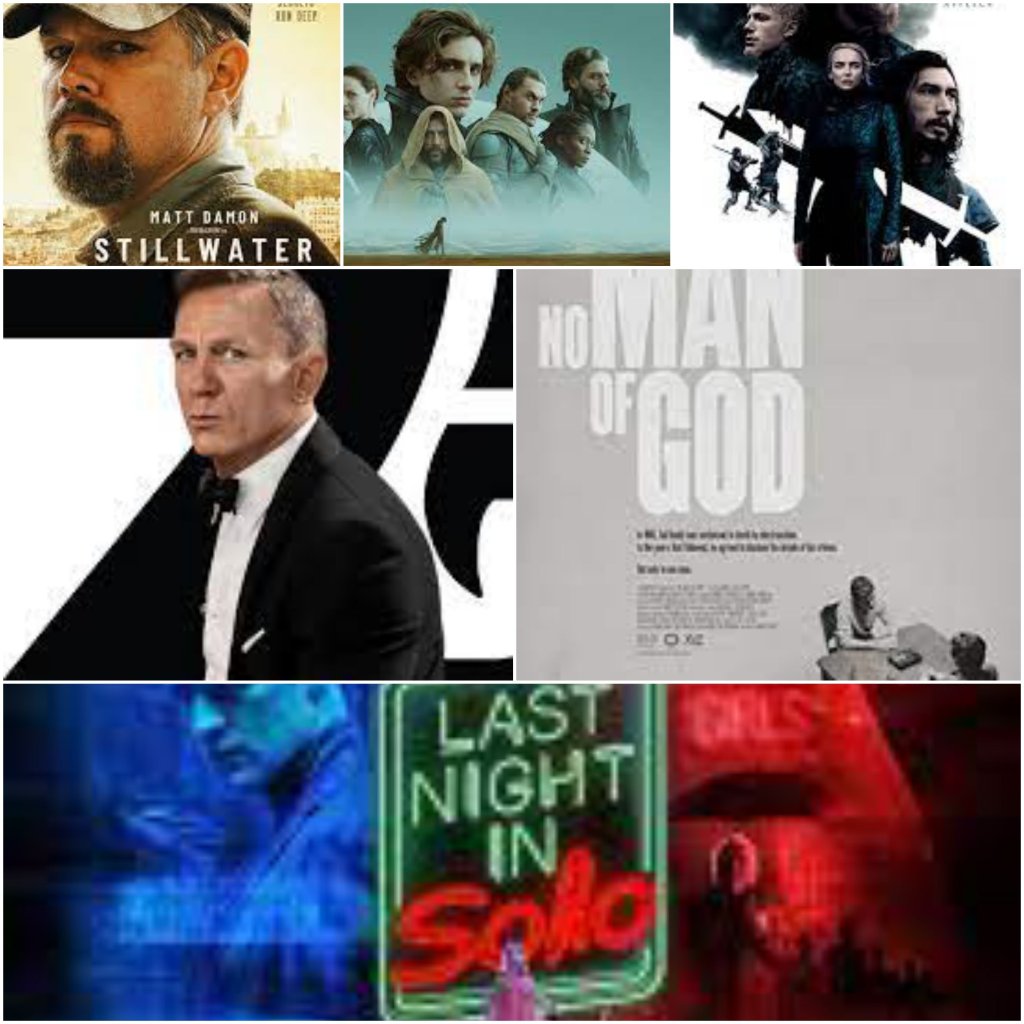
Stillwater proved to be a startling and suprisingly quiet drama about the nature of reconciliation featuring a possible career best from Damon. Damon also starred in the equally captivating, and also riveting, The Last Duel, a historical drama that uses its unique story structure, built around the three competing perspectives that frame the story, as a way into the historical context that surrounds it. It’s strikingly beautiful in its cinematography, bringing the period piece to life, and also features an outstanding turn by Jodie Comer in the role of Marguerite.

It would be difficult to miss the much anticipated and heralded release of Dune, Villeneuve’s follow up to the brilliant Blade Runner 2049 and the next attempt at bringing the complicated soruce material to life. The film’s immersive visual text allows Villeneuve the opportunity to streamline the story, shift some of the backstory to subtext, and raise up the journey of Paul as its main focus. It truly is one of the years best, and it is a masterclass in how to do sci-fi and adaptation well. Equally delayed and long anticipated is Daniel Craig’s final turn as Bond in No Tme to Die, which as a Bond film could be seen as simply another familiar entry in the long running franchise, but Director Cary joji Fukunaga finds a way to use this template to give Craig’s Bond the sendoff he deserves, infusing this with a suprising amount of heart and humanity as Bond gets effectively domesticated.

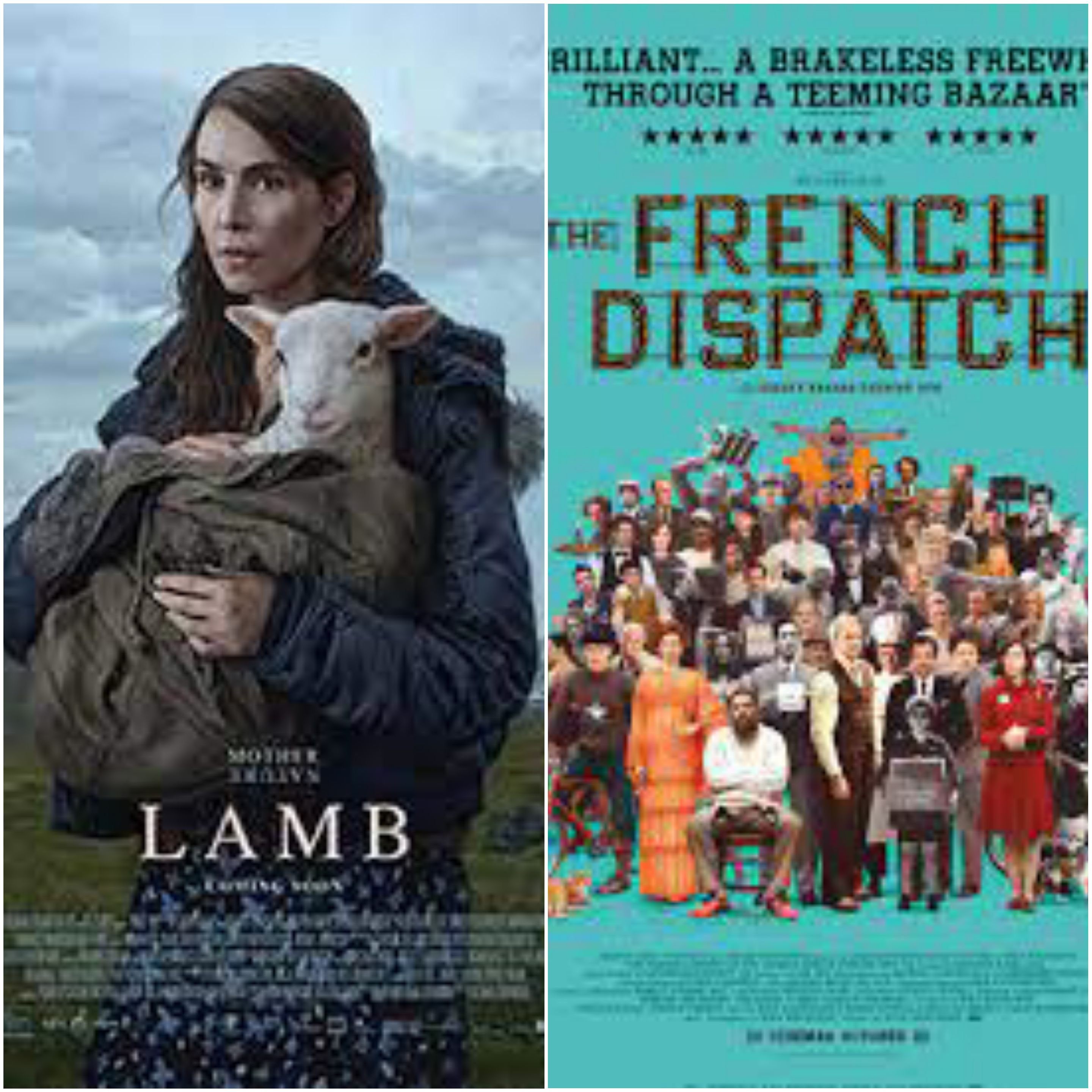
It’s also horror season, and while Edgar Wright’s Last Night in Soho is the best of the bunch, blending style, character, nostalgia, mystery/noir and atmosphere like no ones business, No Man of God deserves attention as a hard hitting but deeply formative look at the man once tasked with meeting with Bundy as the very first “FBI Profiler”. It’s not tryng to cloud any necessary morality by way of empathy, rather it uses empathy as a way into truths about the human experience that transcend these characters. In a less direct way, the parabolic nature of Lamb, a subtle Icelandic film built around metaphor and message, brings us into the human experience by way of a hybrid child-lamb being. It’s a strange film on the surface, but underneath this is a story with a very real point about that line between human and nature.

Leading the pack though is Wes Anderson’s The French Dispatch, a film that is as studied and quirky as it is grounded in the famed Director’s curious blend of humor, symmetry, and style. There is a case to be made that this film is less immediately emotionally accessible than his previous works, but it’s also true to say that this emotion has never had a stronger frame to exist within, with its visual technique reaching new heights of creative imagining. The craft on display here is mindboggling, and it simply begs for multiple rewatches in order to take it all in.

A Few Suprises

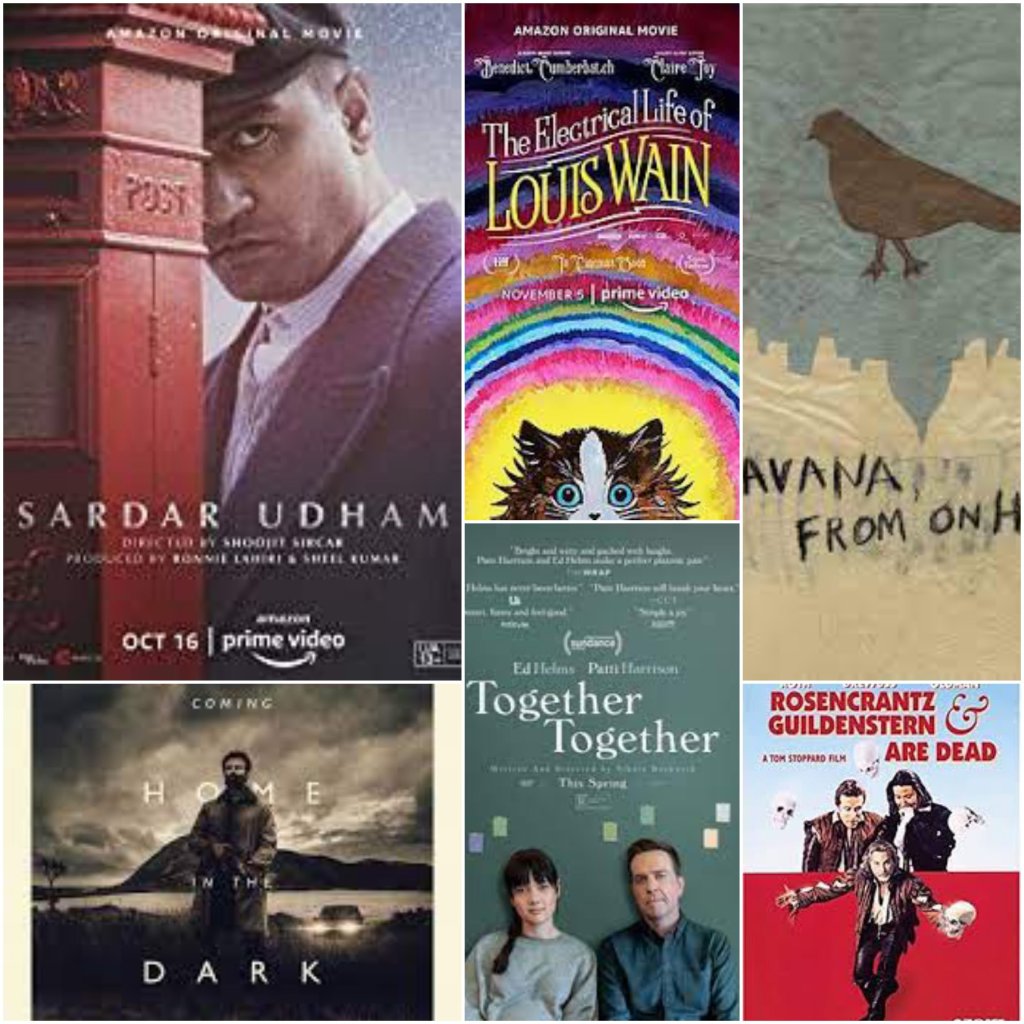
Sardar Hudham (2021) was not at all on my radar, but this is the second foreign film from India released to Amazon Prime challenging for my top spots in films of the year. It deals with a true historical narrative, and while lengthy, it allows the build up to give the final quarter an undeniable force. Also dealing with a real life historical person is The Electrical Life of Louis Wain (2021), the guy who basically popularized the idea of the cat as a household pet. The film isn’t for everyone, and it is highly visual and quite inventive in its style and storytelling, but it hit on so many checkboxes for me and left my heart smiling.

As part of our local arthouses series called “Film and Architecture”, Havana From on High (2021) gives insight into this city and culture by way of its high rise apartments, the low income residents who occupy them, and the things that such heights are able to observe. It’s a beautiful film in look and spirit. Far more grounded and stated in its embrace of the darkness, Coming Home in the Dark (2021) really took me by surprise with how insightful and effective a pared back narrative like this can be.

On the comedy level, the film Together, Together (2021) just might be one of the lovliest romantic dramas you will see this year, precisely becasue it trades the trappings of the typical romantic drama for an examination of friendship. Equally interesting and humorous is Rosencrantz and Guildenstern are Dead, a revisionist take on Shakespeare that is bursting with introspection and heart.

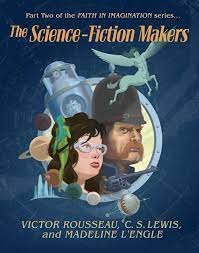
Lastly, and to prepare for this week’s release of The Reluctant Convert, a biopic about Lewis, The Science-Fiction Makers is a wonderful documentary covering writers such as Lewis and L’Engle while shedding light on a part of the “Christian” industry that flew under the radar and may have reflected its most influential and honest voice.

Books

A Way With Words: Writing, Rhetoric, And the Art of Persuasion by M.D.C Drout

This book, which is based on a course, and follows a course outline, might translate for some as too familiar and basic, but I found it to be an absorbing refresher on the subject of “rhetoric” that is communicated with expertise and wisdom and is immediately accessible in its practical application. One I will be revisiting a few times over, and a book with some really powerful and empowering information regarding how words function and how they play into communication.

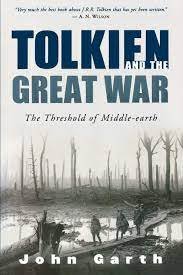
Tolkien and the Great War: The Threshhold of Middle-Earth by John Garth

I’ve been reading through a few works on Tolkien latetely, and this one stands out for its deep dive into how the Great War shaped Tolkien and his writings. So much to learn about the world that shaped the writer, and understanding this gives shape to both his writings and his motivations.

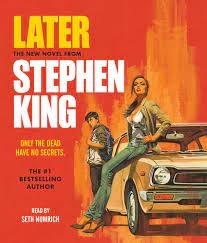
Later by Stephen King

King is one of the best writers to have graced the grand literary stage of our modern era and he seems to be getting sharper, more refined and maybe even better with age, if that is even possible. This falls in the catergory of his works that are meant to be page turners. It’s a paperback mystery with a supernatureal subtext that is brisk and entertaining, leaving us with memorable characters, a few things to think about, and heck of a good time.

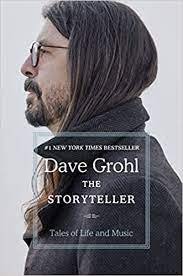
The Storyteller: Tales of Life and Music by Dave Grohl

I came to appreciate Grohl through my wife, who is a super fan. This book won’t be for everyone, but for those who are fans and who have experienced Grohl’s concerts in a way that almost feels like a religious experience or a Church service, this book should be illuminating and enriching. Grohl leaves it all on the table and is honest to a fault. He overdramatizes everything, which might be where some part ways here, but his love for music, the industry and life itself is undeniable and contagious.

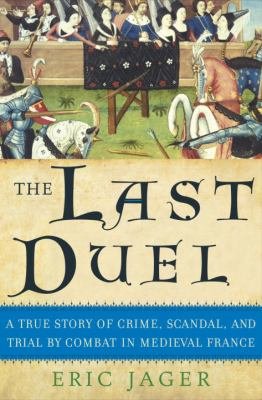
The Last Duel: A True Story of Crime, Scandal, and Trial by Combat in Medieval France by Eric Jager

The book takes a broad look at the historal context while the film uses the testimonies of the three main characters at the heart of the story to step into the history in a more introspective and interpretive fashion. Both are just as riveting and engaging in their own way.

Music

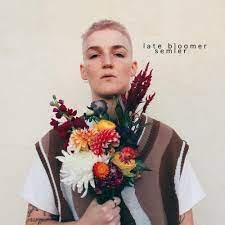
Semler- Late Bloomer

Semler has been making the headlines for being an openly queer artist making music within the Christian industry. What gives her call to inclusion, filled as it is with personal reflection, stories, lament and celebration, an extra bit of weight is the fact that Late Bloomer also happens to be a genuinely exciting and creative musical effort within the pop rock genre. The connection to the Christian industry is merely about identity, belonging and reform. The music is all about transcending such categories as a universal language.

Mimi Webb- Seven Shades of Heartbreak

The gradual release of tracks from this new EP has alraedy been making waves, and for good reason. The UK artist can write a serious hook and infuse it with genuine, spirited energy and an audible creative edge. What sets the full product apart is the cohesive narrative, dancing through the powerful notes of personal experience, relationship, love, hopes, struggle and celebration.

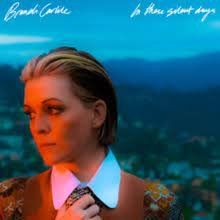
Brandi Carlile- In These Silent Days

I’ve ben primed for the release of Carlisle’s new album by her absorbing and affecting memoir and revisiting her illustrious career through past albums. Her new album takes the technical brilliance of By the Way, I Forgive You, along with its deeply personal focus, and finds a way to write that into something equally transcedent. Forgiveness turns to the nitty gritty of actual reconciliation, imagining a world where words are put into action. This makes the struggle and longing apparent in her life’s story that much more aware. The growth here is subtle but astute, feeling right at home with her familiar style and form, but willingly pushing those boundaries and stepping into new territory ever so gently and with grace

Strand of Oaks- In Heaven

Timothy Showalter’s latest effort under the name Strand of Oaks just might be the most lovely, immersive, hope filled music you will hear in 2021. It’s a celebration of all things love, facing stuff to the contrary (like loss and alcoholism) head on. It’s the kind of album you can put on and get lost in again and again, be it to brighten up a cloudy day or celebrate the sunshine.

Said the Whale- Dandelion

The first album in many years by this Canadian based Vancouver outfit is all about finding the good in the stuff that we tend to dismiss. What might seem like a weed is both purposeful and delightful, with a storied history of its arrival to North American soil giving it its drama. That society grew to see the dandelion as unwanted and disruptive and ugly is more a testament of our demeanor than the ill nature of the dandelion itself. Thankfully we have music like this to not only reorient our perspective, but to allow that story to gain a metaphorical presence we can apply to all aspects of our life and our world and our experiences.

Honorable Mention:

Mike Donehey- Flourish

Frontman for the band Tenth Avenue North stretches his legs in a safe but nevertheless lovely album that rests in spiritual reflection and inspiring songs. It fits firmly in the CCM category, so take that for what it is, but for me its one of the better efforts within the field.

Podcasts/Other

The Bible For Normal People- Episode 184, Heather Macumbe- Monsters in the Bible/Biblical World- Halloween Special- Death in Ancient Israel with Matt Suriano/Travel With Rick Steves- Episode 827, Recoleta Cemetery, Spooky Atlas Obscura, Near the Exit/Mere Fidelity- Episode 254, Funerals With Dr. Tim Perry

This 1,2,3,4 punch all coincided with the Halloween season and all revolve around the subject of monsters or death. Heather Macumbe, a prof from my local University where I studied (Providence College/University), talks about her newbook, Recovering the Monsterous, an examination of the book of Revelation through the lens of ancient imagery, beliefs and stories. It inspired me to pick up the book, which thus far is highly recommended. Tim Perry, another prof from my local University, talks about his book Funerals, which examines funerals and their development from the ancient world to our modern setting. Likewise, on the Biblical World podcast, death customs are explored through the study of Biblical Archeology. It is also based on a book by Matt Suriano and its a fascinating discussion about all things death related from the pages of history. Equaly fascinating is the author of Near the Exit, who is interviewed on Rick Steve’s Travel show. She travelled the world through different cultures and customs exporing the topic of death from different perspectives as a pastor and a Christian.

The Bible Project Podcast- Episode 273, Literature for a Lifetime- Paradigm 6

This whole series on how to read the bible, or the different paradigms through which to read the Bible, is great. This one specifically, which examines scripture as “meditation literature” was especially good as it really gets to root of how the structure and the flow of scripture in its narrative form is mean to work. Brings new life to the text.

OnScript Podcast- Episode 197, Between Doubt and Dogmatism with Josh McNall

I’m normally not that into discussions like this, as I find they turn more often than not on a tired form of apologetic. McNall finds a balance, never allowing the subject to delineate into tired tropes, and very much selling me on picking up his new book “Perhaps”, a book that is all about the liberating nature of this word when applied to our lives, and more importantly to our wrestling with belief.

The Great Books- Episode 201, Ghost Stories of an Antiquary by M.R. James

M.R. James is a fascinating individual and writer, and Jane Mainley-Piddock does a great job unpacking who he was using the framework for his classic book

History Unplugged Podcast- Episode 586, The Escape of Jack the Ripper

For anyone interested in true crime and history. Jack the Ripper always makes for great stories, and this deep dive into a portion of his story was both interesting and a great pairing for the Halloween season.

Thanksgiving: Between the Drought and the Harvest

Wishing everyone a Happy Thanksgiving.

The season that prepares us for a world in which darkness (All Hallows Eve) and light (Christmas) coexist as part of that necessary tension that awakens us to something truer, more beautiful. This is what Thanksgiving expresses, sitting somewhere between the drought and the harvest and encompassing the sin and the tragedy and the disorder that follows in its wake and informs the necessary transformation. It’s a reminder that hallowed’ means holy and sanctified and that Hallowe’een is the literal anticipated adorning of the dark in order that the light of Christs birth can be made visible. This is a sacred and holistic movement.

Thanksgiving says over and over again, “and yet, and yet”, the light shines in the darkness, calling us to those great and enviable virtues that scripture underscores as vital to this transformative work- humility, joy, love, gratitude, thankfulness.