Finding Resurrection in Ryan Coogler’s Sinners

“By this gospel you are saved… For what I received I passed on to you as of first importance- that Christ died for our sins according to the Scriptures, that he was buried, that he was raised on the third day according to the Scriptures… If there is no resurrection of the dead, then not even Christ has been raised. And if Christ has not been raised, our preaching is useless and so is your faith.”
– 1 Corinthians 15

It’s hard not to imagine this films release coinciding with Holy Week being somewhat intentional. While the animated film King of Kings appears to still be doing well, I might argue that Coogler’s film digs even deeper into the themes of the season with its emphasis on sin and death, longing and desire, resurrection and redemption. This stunning work, with its incredible sense of place and immersive cinematography is a powerful reminder of why narrative matters when it comes to making sense of this world. The story we tell shapes the way we grapple with reality, and the way we find redemption within it.

At the core of this films layered and contemplative approach is the idea of sin as a cyclical reality. Sin as an enslaving reality that holds individuals and families, generations, cultures and societies in its grip, binding together the whole within competing narratives. Everyone in this film is running from something, from a past that holds them hostage to failure, loss, oppression, suffering, fear, hurt. And it all culminates in the eventual question that follows- what is one running towards? Is there even anything to run towards?

One of the most powerful contrasts within the film, which it explores through its vampire laden premise, is the notion of resurrection. The tension here becomes one of desired redemption, and yet what haunts these desires is the question of what this hoped for resurrection represents. Does it bring the promise of the defeat of the enslaving Powers of Sin and Death, or does it simply bind us to the same destructive force that has shaped their reality?

Music plays a huge role in telling this story, with a specific emphasis on the old spirituals and the blues. The film describes the power of song as having the ability to blur the lines between past, present, and future, and indeed the overarching realities of life and death. It represents those thin places, if you will. But the dueling forces at war here suggest that in these spaces we let in both life and death, the devil and God. It becomes a question then of allegiance. Do we allow the cycles of sin to consume us, or do we break the cycle by trusting in a different way forward. The only to do this is to come to know where it is that we running towards. What it is our hope is resting in. Where it is we can find this hope. All else lead to the same reality- a world still enslaved to sin and death.

Coogler is brave enough to bring us towards notes of redemption without disguising the darkness as something other than it is. He is willing to dance with the devil in the moonlight so as to imagine, and indeed taste and see the sunrise. He has described this as his most personal and invested film to date, and what more powerful weekend to consider this narrative movement than the movement from death to life in the Easter story.

The Act of Becoming- Psalm 118 and the Movement of Palm Sunday

I’ve gotten busy at work (not a bad thing), and realized that this space was very much neglected over this past week.

Which means I’ve got an endless stream of thoughts and stories running through my mind at the moment. This is the shape of life. I’m reminded of why this space is important, as not only do these thoughts end up cluttering my mind and my spirit when I’m not writing them down, they start to get lost and muddled and confusing as they continue to wrestle for my attention.

Figured, what better place to really put my Lenten read to practice. It is called Pause: Spending Lent With the Psalms after all (by author Elizabeth Caldwell). For Palm Sunday and Holy Week, the reflection is on the traditional 118th Psalm. As she points out, this Psalm, or indeed song, was sung and used in processions to the temple, beginning and culminating with the phrasing “O give thanks.” It is the last of a series of interconnected Psalms beginning with Psalm 113 and ending with this song of thanksgiving.

Caldwell encourages us to see this as more than simply a Psalm of Thanksgiving. In context it is meant to bind the individual to the whole. The person to the shared community, and the shared community to the story of God’s faithfulness. This becomes especially aware and powerful when considered against the backdrop of the Exodus, which the refrain in verse 14 calls us back to directly- “The Lord is my strenth and my might, He has become my salvation.”

I’ve been compelled by this word “become.” This Psalm is littered with intentional contrasts between what is and what becomes:

  • “Out of my distress” becomes “The Lord answered me and set me in a broad place.” (verse 5)
  • “With the Lord on my side” becomes “The Lord is on my side.”
  • “All nations surround me” becomes “I cut them off.”
  • “I was falling” becomes “The Lord… has become my salvation.”
  • “The Lord has punished” becomes “He did not give me over to death.”
  • “Open to me the gates of righteousness” becomes “this is the gate of the Lord.”
  • “The stone the builders rejected” becomes “the chief cornerstone.”
  • “Blessed is the one who comes in the name of the Lord” becomes “We bless you from the house of the Lord.”

Here’s the thing about becomming that stuck out for me- it rings with the notes of an invitation. An invitation to move forward in the midst of  the contrary voices and forces and experiences, into this becomming. God becomming our salvation is shaped both by our story and our participation in this story- we participate IN this salvation. That’s what the Easter story is about. That’s what shapes it according to the primary distinctives of the Gospel- transformation and life.

This past Sunday my Church walked through Luke 19:28-48, a passage Scot Mcknight calls “Redemptions Arrival.” My pastor noted the curious absence of the many elements we commonly associate with Palm Sunday, and instead hightlighted the intended direction and eventual arrival- Jerusalem. Or more specifically, “the house of God”, or the temple, which Jesus specifically defines as being “a house of prayer” which has BECOME a den of robbers.

In this the house will be transformed through the story of Jesus, and in so doing the house will dwell in the lives of the people (in Christ we are the temple of God). Thus, it becomes interesting to consider that for the ancient Israelites making this journey, this progression, this Psalm is a prayer that carries them forwards. That frames the transforamtion that would come through this progression and eventual arrival. Here the invitation meets with God’s promise to move out into the whole of the world by way of the transformed people of God. This is the story.

One last thought, looking back at verse 5. What does it mean to be set on a broad place? Is this imagining a shift in physical space? A shift in spiritual and mental space? Both? However one imagines this, the becoming in this passage reflects a shift from a narrow space to a broad one. A space that is no longer restrricted to the reality that is, but is free to become. A space that is no longer restricted to narrow sightlines, but to broad perspectives and points of view. A space where we are free to move and live and breathe in the freedom that Christ brings- the invitaiton to experience the transformed life.

Lent as Pilgrimage: Learning to Wait in Hope on the Journey From Exile To Renewal

Waiting is an act of hope, a way of being present with expectant anticipation of God’s redemptive and immaninent life, always with us and waiting to emerge again and again. – Elizabeth Caldwell (Pause: Spending Lent with the Psalms)

In the fifth week of Lent, Caldwell invites her readers to reflect on the idea of pilgrimage, this ancient practice of moving towards the temple, the sacred and holy destination which frames the hopes and expectations of second temple Judea.

A journey framed, in context of the larger story, by waiting. For the ancient peoples of the second temple era, the temple is juxtaposed against the backdrop of exile, a reality that frames waiting as a longing for the people of God to be restored, and within this anticipated restoration finally mark the arrival of the promised king/kingdom as liberaton for the whole of creation.

As pilgrims then, this waiting is not simply an exercise of personal growth and fulfilmment, but of cosmic need. This reality we presently occupy is reflective of what is not right about our world. Creation itself is enslaved, and this enslavement is the Sin (and Death) that Israel needs to be liberated from. This is the necessary language of exile, otherwise understood as enslavement to the Powers of Sin and Death. The freedom to name death is the crucial point here, which frames the pilgrimage as a movement “in sin and death” towards something other- a new creation reality in which what is wrong about our world is made right. The movement for a pilgrim was about being actively purified from sin and death on the way to the place where God is said to dwell in their midst. it is here, at the temple, that they would then  be rewnewed by the promise of transformation.

A new reality breaking in. A reclamation of the whole. The naming of Life in a world defined by Death.

Growing up I always saw the whole Easter season as an uncomfortably sombre affair. So much focus on sin and death. What’s strange about this is, the older I got the more aware I became of a specific critique of Christianity that accused it of ignoring the reality of death in favor of its illusions of religious hope, reward and heaven. Even stranger that what I’ve come to find on this side of my own journey  is quite the opposite- it’s the only place where I find Sin and Death actually being taken seriously.

The only place where one is free to truly name Death, and thus become able to name Life.

In Psalm 130, one of the Psalms Caldwell notes would have been memorized and sung on the pilgrimage to the temple, it reads in verse 7,

Israel, wait for the Lord!  Because faithful love is with the Lord; because great redemption is with our God. He is the one who will redeem Israel from all its sin

Caldwell notes that the phrase “wait for the Lord” (Hebrew: yachal) is not simply waiting, but hoping. It is the call of the Psalmist to the whole  (Israel) to wait and hope. Hence why the pilgrimage is shaped by two things similtaneously- reflection/purification and forward movement towards this hoped for transformation. Reflection on that which strips this world of hope, but still moving forward in the face of this contrary word in expectation of what has been promised in God’s faithfulness. Thus as we journey, our vision of this world begins to be reshaped by an invitation to participate not according to the language of Death, but according to the language of Life. Our view of the world is being reshaped, and thus we are being reshaped by this new vision of the world.

Lent of course brings a new dynamic into this concept of the pilgrimage- Jesus. The Gospel writers depict Jesus as the raised temple which, by way of the Spirit, defeats the Powers of Sin and Death and comes to dwell in the whole. Jesus is the raised cosmic temple (creation) in whom and by whom we participate in the promised new reality having broken in, to borrow from N.T. Wright, to the middle of history. Thus we wait and hope now as new creation people. Lent becomes not simply a necessary reflection on the way reality is, but it becomes an invitation to live out this new reality in the here and now as a “realized” hope. This is the tension of Paul’s already-not yet theology. Lent is the marriage of the journey (the pilgrimage) and the destination (the arrival of the kingdom) expressing itself in the present through the risen Christ. The overlap of the ages making itself know in the practice of the Christian life as the resurrected people of God.

Which, unlike the experience of my young self, while needing the story of exile to name Death, need not be languishing in the sombre realities Easter brings to the surface. Where the Psalmist sings “faithful love is with the Lord” and “great redemption is with our God,” the Easter refrain joins the hopeful expression by answering the declaration “He is the one who WILL redeem Israel from all its sin” with the proclomation “Jesus HAS redeemed Israel from all its sin.” God’s faithful love is now dwelling with us AS the answer to the problem of exile, a word that was made synonymous with Sin and Death in the ancient world. God’s redemption is now realized with and in us. In this hope we journey forwards towards the fullness of time, bringing the redeemed story of Israel forward into this new creation reality as the definite expression of God’s saving work in our present.

My Film Journey In 2025: First Quarter Check In

We’ve reached the end of the first quarter. I recently took the time to reflect on my reading journey thus far in 2025. You can find that in a recent post in this space. I thought I would do the same thing for my journey in film.

The Oscar Films

As is true every year, January is generally devoted to catching up with the Oscar nominated films, most of which are not released wide until January and February. This year’s slate included the innovative cinematic epic The Brutalist, a film that I appreciated more than I connected with it on an emotional level.

It’s an impressive feat on a technical level, boasting some incredibly inventive camera work and cinematography for a film of this budget. The on location shots, especially in the second half, are brilliantly marked by the functionality of its raw, unfiltered approach, including its use of widescale shots and an incredible score. The story of this architect fills the breadth of is 3 and a half hour run time, beckoning back to a bygone era of storytelling methods, intermission and all. My one critique is that I struggled to connect with Brody’s character, That’s where I felt the emotional distance. His character is someone whom embodies an arc which feels bound to a singular experience. I have read some reviews expressing an appreciation for the arc’s subteties, finding the depth in the smaller details, and that leaves me curious about revisiting this one down the road. But as an initial experience I was struggling to find a way in to his personal viewpoint, which was seemingly absent of any real transformation.

On the other side of that coin is Nickel Boys, a film that is every bit as impressive in terms of its cinematic approach, filmed through the fascinating lens of its first person perspective. While this is a restrained approach that stands in contrast to the epic nature of The Brutalist, noted in the narrowed use of its aspect ratio as well, the narrative and character arc was far more evident and profound. This is a film that is all about the transformation. Its about seeing the same scene from different perspectives, allowing us to pick up details we might of have missed. This becomes even more powerful as it brings in a secondary perspective, exploring the overlap of these shared experiences and these different vantage points in relationship. One of the most powerful films of the year, to be sure. It’s still deeply sad that it remains so underseen.

Equally powerful was the white knuckle nature of now award winning international film I’m Still Here’s exploration of the pains of trauma and the healing power of familial bonds.

Or the deeply hopeful narrative of All We Imagine as Light, a story about what it is to see the world, to see ourselves in the world, in this tapestry of rain and light. It is the beauty of the spaces we occupy, both ones we have arrived at and are simultaneously beginning from.

Then there is the deceptively alluring nature of the since crowned Oscar winner Anora, a film which uses the intense plot of its story, filmed in a way that is energized and deeply entertaining, to ask big questions about how it is we judge ourselves when we are similtaneously being judged by the outside world. This judgment has the power to dictate how it is we belong, and it brings up deep philsophical questions regarding how it is that our identity is shaped. There is the external crisis of her place in the world, with its social constructions, and there is the internal crisis grappling with how it is she exists this world, naviating who she is in what is a morally and ethically complex existence.

There is a similar moral and ethical crisis running through two of the other international contenders, The Girl With the Needle, one of the most shocking and oppressive viewing experiences of 2024, and The Seed of the Sacred Fig, of which the final 60 minutes of this film represent what is probably ranking among the most intense things I saw in 2024, bringing its vulnerability and real world horrors to bear in its captivating climax.

A shout out to the documentary, Blink. Some saw it as a bit too sentimentally drawn, following what is in measure an affluent family dealing with a crisis by way of their privileged ability to drop everything and travel the world while things are still intact. I can get that, but there’s little question that it nevertheless works on an emotional level all the same.

And then there is the riveting September 5th, which plays like 2024’s Saturday Night Live with its fever pitched pacing and precision like filmmaking that is constantly moving with the characters and the unfolding events. It got the short of the end of the stick in the whole Oscars conversation, as its genuinely very good.

The Best of the Rest: Honorable Mentions

In my yearly resolutions tradition, which I call Rosebud, I reflected on the present state of the movie industry (or more specifically the American film industry, which tends to impact things here in Canada whether we want it to or not). As someone who’s love for film and visual storytelling is rooted way back in their childhood, for whom the classic theaters of the 80’s and 90’s led me to become a life long cinephile, I confessed that in all that time I have never experienced the level of cynicism and constant vitriol that has been dominating the landscape over the last couple years. Every week there is another controversy and crisis, and every week there is another compaign going after another film. As the calendar turned over, I lamented the loss of that simple joy of being able to see and appreciate films together.

Arriving at the end of the first quarter things have only gotten worse. Certainly this years Oscars plays into this with the whole debacle of Emilia Perez followed up by the contrarians launching a vile campaign against Anora’s record breaking night. But it is not contained to that. It’s either a story of films not getting seen, or it’s a story of terrible people doing and saying terrible things to whatever film they have in their sights in the present moment.

It’s exhausting. To the point where it sucks the life out of what makes cinema meaningful- the anticipation, the conversation, the collective experience, the investment. It feels like the entire thing has become so devalued at this point, little more than a politicized commodity, that finding reasons to care feels too difficult to even know where to start reclaiming some of that passion.

And yet, I persist. I continue to support the films. I continue to go to the cinema. I continue to try and keep this passion alive. And if nothing else it’s a way of holding on to that which matters- the power of story. The power of transformation. And maybe that’s enough to break through the noise.

Certainly there’s a fair deal to celebrate in the first quarter. In a landscape that has left theaters struggling to find successful ventures, horror remains a hot ticket item. 2025 has given us two Soderberg films thus far. One of those is what I would call the best horror film to release in the first quarter, Presence. A film that tells its story from the vantage point of the ghost, leaning into its small cast of characters, its single setting (a house), a distinct and developed sense of atmosphere and tension, and just the right amount of twists and turns to create its arc.

If Presence was kind of ignored at the box office, Heart Eyes and Companion both performed better, leaning into their crowd pleasing nature and fun characters. They are the sort of middle of the road horror fare that can connect with a diverse crowd, making them a fun night out at the movies.

As a big, big fan of Paul Schraeder, I was both excited and a little dismayed to find his latest release, the introspective and contemplative O Canada, quietly get dropped wide on Kanopy of all places, the free library borrowing system. Nowhere else, just Kanopy. It just might be his most personal film to date, with the story of an aging and sick filmmaker looking back on his career intersecting with elements of Schraeder’s own life and story. Although he’s not sick, he’s clearly using this as a way to look back on his own legacy and ask some big and important questions about its meaning and worth, especially where who he is remains to intimately tied to the films he has made. It’s not his best film, but it is a return to some of his most classic tendencies following the previous trilogy that has consumed him over the last number of years. Given the nature of its wide release I imagine its not likely to get an audience, but at the very least I finally got to catch up with it.

There were two underrepresented films that are worth noting here too, the first an effective and memorable romantic comedy-drama called Young Werther. I loved the back and forth of the film’s central relationship, playing as a kind of contest between characters that is less about the ultimate outcome and more about navigating the internal crisis and growth that these events inspire. It’s funny, entertaining, and also filled with charming moments.

The other is Last Breath, the dramatized take of the previously released documentary. It doesn’t add any details to the story, but as a dramatic retelling its extremely effective. Short, intense, and delivers an emotional punch (albeit in a kind of nihilistic cage, but that’s a whole other discussion).

And then there’s Mickey 17 and Snow White, two high profile films, both in their own ways massive victims of the prevailing cynicism and vitriol. Both movie’s claim to fame at this point is the weaponized headlines concerning their failed box office performance, the first ironically boasting numbers that should, in all respects, be a resounding success for an international, indie filmmaker, the second showcasing how out of touch box office expectations are with reality, naming a nearly 100 million dollar opening weekend as somehow a colossal failure. Both, in their way own way, are very good films with mixed elements.

Mickey 17 is noted for its biting satire on big budget hollywood, not to mention the present state of American culture and society. It uses its own unnecessarily bloated budget (which is what happens in Hollywood when your little indie that could, a small film called Parasite, becomes an Oscar winning cultural phenomenon- they give you the money to waste) to lean into its own brand of lunacy. It never loses touch of its commentary though, grounding it in the story’s central character, Mickey. That is part of its brilliance. Its own absurdity as a film, which throws plot points and third acts and ideas at the wall with a sense of unhinged glee, is the blinding force of superficiality that covers up and/or reveals the real substance underneath. Thus is not just a satire that critiques Hollywood, it’s an invitation for those willing to do the work to locate and experience the real themes waiting to be unearthed, actively resisting the trappings of big budget Hollywood.

Snow White is in some ways the counter opposite. It genuinely leans into its blockbuster status and takes it seriously. While the film and its star have been forced to contend with one of the most vile attacks on a character and film in recent history, it is better for its unapologetic commitment to sincerity and authenticity. Its one of the more hopeful cinematic experiences I’ve had in a good while, appealing to the truth and power of togetherness and love and kindness as a way forward.

My Top 10 Films of the First Quarter

Now for my current top 10 films at the end of the first quarter in 2025:

10. Hard Truths

A showcase role for Marianne Jean-Baptiste, featuring a case study in self destructive behavior. What makes it so powerful is that it simultaneously challenges the idea that what we see on the surface is what is really there, driving all of this destruction towards a pointed message about grace.

9. The Day The Earth Blew Up: A Looney Tunes Movie

I had no idea this film existed, let alone was releasing, until I saw the sign on my way to a different theater. Colour me intrigued. Bought a ticket. It’s delightful. A throwback to the classics, but also fittingly modernized in a way that blends into that nostalgia.

8. Paddington in Peru

New director, same delightful nature. The playground here is bigger, given the international stage, and that leads to a greater degree of creativity in the staging of the different set pieces. That’s where it gets the most mileage. It admittedly does not match the magic of the first two (which would be difficult to do), but it certainly manages to make a case for its existence, which is a definite success story given the change of guard.

7. The Order

The third biggest surprise of the first quarter. A genuinely intelligent thriller based on a true story with a stylish, recreated period piece setting providing the foundation for a patient but driving edge of your seat story.

6. Bridget Jones: Mad About The Boy

My second biggest surprise of the first quarter. Like seriously, where did this one come from. Zero expectations. I could appreciate the first one, but wasn’t attached to it in any way. And yet this new chapter comes out swinging, ultimately proving to be an incredibly powerful exploration of grief and a celebration of life.

5. Grand Theft Hamlet

Far and away my number one biggest surprise of the first quarter. A documentary about a pair of filmmakers whom use the pandemic as a chance to make a film adaptation of Hamlet set inside the game Grand Theft Auto. You’d think this would be dumb and ridiculous. It’s the furthest thing from that. It’s a deeply human, deeply felt and often very funny journey of exploration, much of which emerges in real time as they indulge this experiment. It’s unlike anything else you’ll see this year, and its destined to still be lingering around my list at the end of this year.

4. Universal Language

Took a while for this Canadian made movie set in Winnipeg to get its official first screenings here in Winnipeg. But I can testify to it taking our city by storm. While the humor is decidedly built on insider language, both as a Canadian and as a Winnipegger, it’s the commentary on Iranian cinema that is the real unsung hero of this story. Which is to say, if it’s a difficult film to get ones hands and minds around in the moment, it rewards through the subsequent digging and research that helps bring clarity to its vision. It’s an extremely coherent film ONCE you know what it is doing and what it is talking about. For the moment however, it still managed to be one of the funniest movies I’ve seen in a long, long time. And one of the best Winnipeg centered films.

3. Better Man
Shocker- another film no one saw. Which is a shame, because this one’s a banger. Tells the story of Robbie William’s journey from young kid to rising star to the constant rise and fall that marks his journey to and through fame. He might not be immediately recognizable to those of us this side of the pond (North America), but that doesn’t prevent this biopic from standing on its own. It’s creative. It’s entertaining. It’s a bonafide musical that defies genre conventions and forges its own path, ultimately resulting in a film that is a genuine crowd pleaser.

2. Exhibiting Forgiveness

A debut film that explores the idea of forgiveness through the parallel stories of son and father, father and son, standing on both sides of the generational line of shared trauma. Here it distinguishes between forgiveness and justice, or forgiveness and restitution/reconciliation. Acts of forgiveness are located in a world where justice and reconciliation is not yet realized. Therefore it can only ever acknowledge that which is wrong. It is a recognition of loss. What we attach forgiveness to- the hoped for justice or reconciliation that will one day come, is its own separate thing. Forgiveness is rooted in the promise of the reconciliation of all things, but it is not the thing that brings it about, nor does it require reconciliation to be realized. It is simply the removal of an obstacle to the free participation in that awaited reconciliation.

There is some real, understated filmmaking on display here, using different shooting choices to bring its emphasis on art and music, to the forefront of the story as well. Thus it’s a very visual film, and those visuals go a long ways in evoking the necessary emotions that give this film its power. The performances then compliment this vision by bringing their own imaginings of these characters, husband and wife, sons and fathers, to the table. An exceptional film, and one that is sure to foster discussion and dialogue.

1. Black Bag

It’s struggled to get the audience it deserves (surprise, surprise), but this slick, sexy, ridiculously entertaining relationship thriller is one of the best things Soderberg has done in a while. And he has been consistently churning out good and inventive films. It’s a dialogue driven film with twists and turns that afford it that prestigious and distinguished air befitting its perfectly sculpted cast.


My Reading Journey in 2025: First Quarter Check In

Reaching the end of the first quarter, I thought I’d take a look at where I am in my reading journey thus far in 2025. Note some relevant threads, some hightlights/lowlights:

As has been the case in previous years, I started things off with the next book in Toshikazu Kawaguchi’s Before the Coffee Gets Cold series, titled Before We Say Goodbye. Each book is built around a similar structure (a series of stories connected by shared themes, all intersecting at this coffee shop where its possible to travel back in time to any moment that occured in this coffee shop), while also advancing the larger overarchcing themes of the reoccuring characters whom run and operate this coffee shop. For me this is comfort food, with this book dealing with buried and lost moments of regret. Given that one of the rules of the travel is that one cannot actually use the past to change the present, it is always interesting to see why different people choose to travel. By its nature, it relates to changing something in onesself- a perspective, a letting a go, a knowing, a sense of closure. These are the questions that make this series compelling.

Why would I choose to go? Where would I choose to go? The interesting element of this queston centers on the notion that our memories are deeply tied to our sense of place. The moments they are revisiting are tied to experiences at this coffee shop. Thus, for me to think of when I would go back to is to think of where I would go back to, which is both a specific time and a specific place.

This is an idea that travel writer Frances Mayes explores in her book A Place in the World: Finding The Meaning of Home. This was a highly anticipated backlist read that I finally managed to get to this past January. While its also one of my biggest letdowns of the year for me thus far (a great concept marred by a lack of vision when it comes to execution), the idea, the reason I was drawn to it in the first place, is what remains compelling. What is it that ties us to our sense of place if not the memories that give these places their sense of meaning. We cannot conceive of the moments that shape us apart from the power of the places that hold them in our consciousness.

It’s interesting the follow the thread of this idea through some subsequent reads that seem to give this notion a transcendent and metaphysical presence. Such as Christopher Alexander’s fascinating and illuminating The Timeless Way of Building. A book for architects, interested n giving architecture a philosophical foundation, Alexander explores how acts of building, creative acts, bring about something that takes on its own creative possibilities- in other words, a life of its own. This philosophy is drawn from nature, looking at how nature functions, with each act of creation bringing about something that creates in and of itself. This is similar to how Kawaguchi imagines this coffee house, with a singular moment giving life to consecutive moments, all of which have the power to create their own threads of historical narrattive while being bound to this shared, singular point in space and time. Meaning, if something different had been created in this singular moment, what emerges from this moment would create subsequent moments all with different creations of their own. This is the complex web that reads against temptations for linear readings of space and time.

Or Walker Percy’s Signposts In a Strange Land, a book that uses the specific context of the American south, or the even more specific context of his hometown as a bridge or dividing line between the south and the larger framework of America, to explore the larger truths of our existence. All are signposts pointing to something true at the heart of things.

Taken together with David Bentley Hart’s magisterial All Things Are Full of Gods: The Mysteries of Mind and Life (a must read for anyone interested in these big ideas, and a truly revolutionary work that should advance the field of philosophy and metaphysics), or Spencer Klaven’s Light of the Mind, Light of the World: Illuminating Science Through Faith, a book that, similar to Hart, deconstructs materialism in favor of finding those necessary metaphysical truths which give reality its definition, grounding the creative process in a necessary foundation. This suggests that the ebb and flow of life as a creative movement is always anchored in something true.

A shared foundation, and yet one that gives life to the specifics that shape our unique stories. This becomes the ebb and flow of all philosophical and theological exercises. This is how we bind observation/experience to our sense of meaning.

Perhaps one of the most profound exercises to this end was checking off the now iconic classic work, The Sacred and the Profane by Mircea Eliade, one of the strongest arguments for the existence of a God that I’ve encountered in a long while. Which is not to say that this is what the book sets out to do, rather it is the implications of its examination of two central truths regarding the nature of this existence- our observation and experience of the sacred and the profane, and the way these two things shape both our understanding of all things and our participation in all things. Indeed, all things are full of gods, which for Hart is reflective of that singular foundation for all truth- God.

Intuitively, this is what shapes books like Brother Lawrence’s The Practice of The Presence of God (finding God’s presence in all places and as the formative, driving force of all things), or Barbara Anne Taylor’s popular An Alter in the World: A Geography of Faith.

Faith rooted in our sense of place.

It’s even found in something like Evan Friss’s The Bookshop: A History of the American Bookstore. Like The Timeless Way of Building, bookshops are defined by the relationship between a building or a space and the people that occupy them. The meaning of a place intersects with our experience of something real and true. While a bit inconsistent in its structure, I found Friss’ examination of the life of the bookshop endlessly fasciunating and engaging.

I had shelved a book by Canadian author Rice Waubgeshig titled Moon of the Crusted Snow, specifically waiting to read it in the winter months (seasonal mood reading for the win). Picked it up this past January. It’s breezy but not shallow, it has horror notes, but it’s not overtly scary (haunting perhaps). Those notes are grounded in its commentary about indigenous history here in Canada, using an apocalyptic type setting to parallel the horrors and confusion of a people ousted from their land and forced to relocate to the remote north with full expectation that they would not survive. It’s not super complicated in terms of allegory, but I thought it was creative. What makes it one of my favorite works of fiction that I’ve read in 2025 is the way it connects real historical realities to an examination of the profane, or the horrors that shape our experiences of this world. This is equally important to pulling out the sacred, that which reaches beyond acts of survival to the preservation or seeking of that which has meaning. All of this packaged in an entertaining narrative.

One of the masters of holding this tension within the framework of a propulsive blockbuster level entertaining narrative is T.J. Newman, and his newest effort, Worst Case Scenario does not disappoint.

Playing on a different wavelength, which is to say short, sweet, lovely and simple, is Sipsworth by Simon Van Booy. This had been making its rounds in the booktalk world since its release a couple years ago, winning people over with its story about an old, aging woman spending the final quarter of her life in the absence of the stuff that has afforded her an identity and meaning, forming this bond and friendship with an unsuspecting mouse. It’s not earth shattering, but it does live up to the selling point of its promised charm.

If I had to choose my top three fiction reads of the first quarter, they would be the following:

Impossible Creatures by Katherine Rundell
This one hit plenty of checkmarks for me. One of the things I loved about this teen fantasy, chalked full of magical realism, is the way it imagines, or perhaps more correctly describes, the central crisis of our world, at least here in the modern West, as a persistant neglect of our connection to the spiritual dynamics of this reality. In the world of Impossible Creatures this perceived separation of the material and spiritual world has left the spiritual world unseen and forgotten, despite these two worlds overlapping. It is the ones living in proximity to this spiritual reality that have the eyes to see, and it is the embrace of, and more important participation in this reality, this world as it truly is that can awaken us to its suffering.

There is an eternal truth that we all seek, whether we know it or not, something that is as illusive as it is present within the joys and struggles of this existence. It is this intersection where we find what is most needed- hope. A hope that stories like this, steeped in relevance as well as fun and adventure, can reawaken us to.

Aurelia by Stephen Lawhead
Lawhead is a favorite author of mine. A definite auto-buy. It has been too long since he wrapped up his previous series, and this one is actually a prequel of one of his most famous- his King Arthur series. Of course, if I had my way I would have wanted a brand new series, but as a prequel it delivers exactly what I would hope for. It’s scaled back, focused on setting the stage for the grand and epic narrative which is to follow, and can absolutely stand on its own. That and one of the great joys of my life is the opportunity to spend time with his stories and his writing, so I am just grateful to have something new that allows me to do just that. It was far and away among my most anticipated new releases of the year, so it’s not surprising at all that it would be topping my list of favorite reads thus far

Sunrise on the Reaping by Suzanne Collins
Also on my most anticipated list. Because, well, it’s a new addition to the Hunger Games series. A prequel to be exact. And a near perfect bridge between the previous prequel, documenting the rise of Snow, and the first Hunger Games book, documenting the rise of Katniss. That bridge is, of course, the story of Haymitch. This doesn’t just feel necessary, it feels essential, filling in the gaps and completing the series in a way that elevates it to greater heights

My biggest surprise of the year? Probably Eliot Stein’s Custodians of Wonder: Ancient Customs, Profound Traditions, And the Last People Keeping Them Alive. Biggest surprise if only because I had never heard of it before stumbling across it on the Rick Steves podcast. Maybe if I had been aware of the author’s career as a journalist prior to reading it, especially since over half of the book is taken from journal pieces he had previously published, it might have been less surprising, but going in blind I was absolutely taken in, not just by his writing style but by his deep affection for the human stories he is capturing, the deep questions they are posing, and the ability these stories have to recover wonder in what has become a cold and calculated world. I love it when books force me to slow down and appreciate the moment when I’m in it. This is one of those books.

A close second would be My Roman History by Alizah Holstein. This was a blind buy straight off the shelf. I was intrigued by the synopsis, using the memoir as a way into reflecting on the power of Rome as a place. What I found was so much more. Deeply philosophical. Often moving. Shaped by a genuine and real love of history, but in a way that reads this history through a boots on the ground awareness for its real life and real world impact. It is history through her eyes manifested in the present, formulated as parallel narratives working side by side- her story and the story of Rome.

My most formative or paradigm shifting reads? I’ve already mentioned David Bentley Hart’s All Things Are Full of Gods- essential reading on philosophy and metaphysics. I would toss four more into the mix, two of which have been slow reads (reading them in bits over a longer period of time). The first is the book How To Write Your Own Life Story: The Classic Guide For the Nonprofessional Writer by Lois Daniels.

This book is actually based off of a course she teaches, but what makes it paradigm shifting for me relates both to the central idea, and to the way it intersected with my own life in the present moment. On the former, it argues that this process is not self centered, but rather something everyone in any stage of life can and should do. It’s not meant only for those looking to tackle something like this, but to encourage people to consider doing it, precisely because there is great worth in doing it. On the latter front, this was something I had been trying to do for the past 3 years without success. This not only gave me the tools, it gave me the inspiration to do it. I am now three quarters of the way done in finishing that project.

The second slow read was the classic book How To Read a Film by James Monaco. This was a Christmas gift, and it’s a hefty one. No small task. And yet as a cinephile, and as someone who has a deep love for the art of story and filmmaking, it absolutely transformed how I see the form. It gave me the language and opened my eyes to the artform on a technical, historical and philosophical level. Thus why I say it was paradigm shifting.

And then there was Brant Pitre’s Jesus and Divine Christology. In terms of theological trends, this is a game changer. It resets the entire field of discussion relating to the question, who did Jesus claim he was. Not who did the Gospel writers say he was, but what, based on an objective, critical approach, did Jesus claim he was. Did he see himself as human, or did he actually claim himself as divine? Pitre takes the long standing divide between liberal and conservative scholarship and leaves little to no doubt (and that’s not hyperbolic) that not only do the Gospels claim Jesus thought he was divine, but the best explanation for why the Gospels claim this is that Jesus claimed this himself. Going forward, that classic debate should be laid to rest, and anyone grappling with the question in either theological or historical terms will have to go through Pitre’s work first.

Lastly, Shai Held’s Judaism Is About Love: Recovering the Heart of Jewish Life. In a world where the long standing divide between Christian and Jewish thought sits alongside some wrong headed assumptions about Jewish life in secularist academics and popular ideologies, Held’s book is an invitation for the seeker to reconsider what the Jewish story actually is and what it actually says. It’s the sort of book I want to hand to everyone. It’s also the sort of book that I will be revisiting many times over. And I say that as a Christian. It was a reminder of the ways Christianity cannot make sense apart from this story, and it was also one of the most helpful analysis of its distinctives, meaning how Christianity continues to tell that story in distinctively different ways than Rabbinic Judaism. One thing remains true- without a proper understanding of Judaism we cannot understand Christianity.

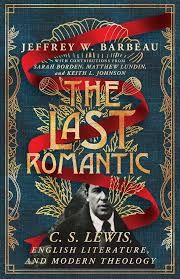
An honorable mention in this category- The Last Romantic: C.S. Lewis, English Literature, and Modern Theology by Jeffery Barbeau. There’s not shortage of academic works on Lewis. It’s rare for any new work to really set itself apart, rather what tends to happen is repeated engagement across disagreements, usually with pioneering works (such as Allister McGrath’s biography) as representatives of those sides. The Last Romantic cuts through that noise by narrowing in on an underrepresented period and facet of Lewis’s life, namely the influence of the English romantics, particularly on Lewis’ autobiographical approach. It’s short but dense, structured in a call and response (article and critique) by select conversation partners. It’s also a powerful reminder of why Lewis’ central convictions regarding myth and truth matter across disciplines today.

When Will the Kingom of God Come: Love of Jesus, Love of Enemy, Love of Justice

Every year my Church walks through a Gospel, beginning with Advent and ending after Easter. This year we are in the Gospel according to Luke

This mornings passage was on Luke 18, which Scott Mcknight’s commentary titles the “Two Redemption Parables.” I was struck by the ways this passage connected with this weeks reflections for the fourth week of Lent in Elizabeth Caldwell’s book Pause: Spending Lent With the Psalms. Here she reflects on Psalm 23.

First, some context for Luke 18:

It starts with Jesus speaking to his disciples. The reason he is speaking to the disciples is in order “to show them that they should always pray and not give up.” (18:1) Give up on what? Here you need to back up and read Luke 17, where Luke documents Jesus being asked by the Pharisees “when the kingdom of God would come.” This sparks a lengthy discourse by Jesus where he is speaking about what it looks like to anticipate the kingdom of God in the form of justice in the face of exile (the renewal of Israel). Jesus states,

“The coming of God is not something that can be observed, nor will people say, ‘Here is is,’ or ‘There it is,’ becuase the kingdom of God is in your midst (17:20-21)

This notion of the Kingdom of God coming sits at the heart of the Judeo-Christian narrative. Indeed, it sits at the heart of the Gospel, anchoring our own hoped for expectation of God making right what is wrong in this world in the story of Israel. The Kingdom of God coming is Jewish language expresssing a Jewish story regarding Jewish expectations of the fullness of time- the day in which Israel’s renewal marks the inauguration of creation’s renewal- through Israel God’s glory fills the earth.

The true power of Jesus’ words then lie in this- the kingdom of God is not a time or a place, it is in fact the person and work of Jesus. This is what it means for it to be “in their midst.”

Thus we come to Jesus’ words in 18:1. Always pray. Don’t give up. This is followed by the first parable about an unjust judge who gives in to a widows persistant plea to “grant me justice” against her adversary, or enemy.

Jesus’ ensuing question to the pharisees rings sharp- “Will not God bring about justice for Israel? (18:7). Followed by a noted proclamation- “God WILL see that justice comes. However, there is a more important question than the one we find in Chapter 17. Rather than asking “when will the kingdom come”, otherwise rendered as “God’s justice,” the better question is “will the Son of Man find faith on the earth.” (18:8)

The response from the disciples is varied. Jesus singles out one in particular-  those who “were confident” of their own righteousness, and in this confidence “looked down on everyone else.” (18:9).

Just a quick note to make sure the proper progression of this thought is being followed-

  • the initial question is, when will the kingom of God come
  • the kingom of God coming relates to “Israel’s” renewal
  • the initial parable is about a widow and her adversary, inidicating that this is about Israel and exile
  • The proclamation is that God will bring justice to Israel’s story

Jesus now follows up with a second parable, this time indicating that he is speaking to a more specific portion of this crowd of disciples- the ones who were confident.

Confident in what? That God will find faith on earth when the kingdom arrives.

Yes, of course God will. How do I know this? Because I am faithful. Unlike “those” people over there.

To which Jesus tells a parable about two men who went up to the temple to pray, a Pharisee and a tax collector. The Pharisee is described as the ones who fast and give and live a faithful life. The tax collector is seen as a Judean whom has sold out to Rome, hence being lumped in with the broad label “robbers, evildoers, adulterers.” He is a picture of the assimilation if the new dead tribes of Israel.  Read: the faithless on earth. The exiled nations.

The Pharisee’s prayer is noted- He stood by himself (proper posture for someone concerned with purity laws, meaning they stood away from those “others” who would bring impurity while at the temple). He thanks God that he is “not like them.” By contrast, “the tax collector stood at a distance,” most likely indicating distance from the Pharisee and the temple. He could not look to God directly. Rather, he “beat his breast” and prays the words “God, have mercy on me, a sinner?

Now, what struck me reading through this passage is how quickly the tendency here is for modern readers to align themselves with the “right” person, as Scot Mcknight suggests, while acting like the person they think is in the wrong. Meaning, they use the tax collector as license to demonize the Pharisee. But, considering the progression of the passage above, look at what comes next in 18:14:

I tell you that this man, rather than the other, went home justified before God. For ALL those who exalt themselves will be humbled, and those who humble themselves will be exalted?

Here’s what’s important, in my eyes, about that. If this is indeed a passage about Israel’s renewal, and if this renewal is found in Jesus, this is a passage about how that renewal will come about. Or more specifically, it is a pssage about the nature of this kingdom that marks this renewal. These are both Judeans. The exile is about a divided and scatterd Israel in the face of Judea being the sole surviving tribe returning from exile. That scattering is directly related to Israel’s failure to be faithful to God in the face of the surrounding nations, doubting that what God promised to do (make all things new, and make right what is wrong in this world through the story of Israel) was going to come about.

Remember Jesus’ question- will I find faith on the earth. This is directed to the disciples. It would stand to follow that the seemingly correct answer would be, yes, I will be faithful. To be otherwise is to delay the expecting coming of the Kingdom, or even to throw it into question.

And yet, what is the mark of the Kingdom’s arrival? That this tax collector is being exalted in light of his unfaithfulness. This is the sign that it is in their midst. This is the sign of Israel’s renewal. This is how Israel’s renewal comes about. It comes about through Gods faithfulness. Thus, the call to pray is in response to this, not the thing that brings it about. The measure of the Pharisee only leads to us versus them, Judea versus the dead tribes of Israel. The faithful versus their enemies.

Hence why using the tax collector as license to “look down” on the Pharisees misses and muddles the point. The passage is about dismantling such notions of the Kingdom of the God. Remember when the widow asks for justice against her enemy? Taken together with this second parable, the portrait here seems to be one of dismantling the concept of the enemy. That’s how liberation will come about through Jesus’ Kingdom. What we find instead is the humility of Jesus’ way. The humility of the cross, in which we find the power of the resurrection- the arrival of the kingdom of God in their midst.

In fact, rather than the usual tendency to render passages like this to be about the saved versus the unsaved, what we get is a parable about how God’s justice sits external to our need to build it on such paradigms. This has more to do with an internal crisis and an internal conflict between two people going to the same temple to do the same thing, both in anticipation of the promised story coming to its climatic moment. It is, in some ways, about the modern theological battles waged in our modern day temples, leaving Jesus’ question ringing through the noise of such divides- will I find faith on earth? The story of Israel tells us the right answer to this question- God is faithful in Jesus in the midst of our divide. That’s what we cling to, precisely because this is what Israel’s hopes clinged to.

Caldwell brings Psalm 23 into this discussion by noting three important things about passage

  • There are 55 words in the Hebrew, placing the singular phrase “you (God) are with me” at its center
  • Two uses of the word Lord frame the beginning and ending of this passage, connecting God as Shepherd, or king, to God’s house/ dwelling place, or kingdom.
  • The passage contrasts the pursuit of our percieved enemies with the pursuit of God’s goodness and mercy, suggesting that we don’t chase these things, these things seek us.

Caldwell cites Robert Alter’s translation, reading the phrase “even though I walk through the darkest valley” as, more accurately, “even though I walk in complete darkness.” This has more to do then with not being able to see. Hence the “leading” of the first portion of this passage.

Most important to the question at hand regarding Luke 18 is Psalm 23:5. “You prepare a table before me in the presence of my enemies.” In the presence. Caldwell connects this to the communion table, where enemies come together unified in Jesus. To say, as the Psalmist concludes, “I will dwell in the house of the Lord (the kingdom of God)” forever, is to say I will dwell in the presence of my enemies. This is how the kingom of God restores creation. This is how the kingdom of God proclaims justice to the earth. This is what we pray for.

Caldwell ends her reflection with a potent question- who would be on God’s guest list at your table?

The Woman in the Yard: Exploring What Thoughts of Suicide Really Are

(Major spoiler warning for Jaume Collet-Serra’s 2025 release The Woman In The Yard)

“It’s tough, you know, being a person.”

(Fran, Sometimes I Think About Dying)

I’ve been working through Lois Daniel’s book, How To Write Your Own Life Story: The Classic Guide for the Nonprofessional Writer in 2025. I had just finished writing a segment on a time in my life when I was wrestling with thoughts of suicide.

Which is not to say those thoughts ever go away. I think anyone who understands this space understands it is a tension we learn to live with. In Rachel Lambert’s 2024 film Sometimes I Think About Dying, she astutely captures and comments on the art of feeling trapped inside one’s own mind. The way she shoots the film allows her to reposition us within different vantage points, sometimes seeing from the main character’s POV (Fran, who is wrestling with the stuff of life and the idea of death), while other times seeing from the outside looking in at her, be it from the POV of the cast of characters that surround her or the camera itself.

While Sometimes I Think About Dying is more about the anxiety and depression that is sometimes running underneath thoughts of death, the recent release of Jaume Collet-Serra’s 2025 film The Woman in the Window dives head first into the subject of suicide itself. Interestingly, this is a film that is also very much about POV, however in this case it focuses on the contrasting perspectives at war inside our main character’s own mind as she wrestles with the world and its tensions,

It’s a messy film, to be sure. So much hinges on the film’s ending reshaping our understanding of the journey, which leaves the journey itself, at least in the moment, feeling disparte and disjointed. It is however the reshaping that has stuck with me, leading me to consider its perspective over and against my own.

To touch on my own story: I grew up in a prototypical evangelical Christian home. On the surface I played out the equally prototypical story of young kid adopting the faith of their parents, only to question it down the road. However, as it is with any prototypical story, dig underneath the surface and one will find the necessary nuance needed to understand that every story is in fact offering its own vantage point on the same shared reality. Part of the process of writing my life story is doing precisely that.

What I have uncovered is a thread, stemming from my childhood, as young as 5 years old if I stick with my active memories, of someone who, for whatever reason, felt drawn to the bigger questions of life. As soon as I gained the ability to look at life and say something about it, I felt this inate need to understand it.

And the more I sought to understand it, the more atune I became to its tensions. In many ways this manifested as fear. Not fear of death. At least that’s not what my story seems to be suggesting. But fear that I will fail to understand this world rightly, and the deep rooted anxiety that seeks some level of integrity between what I believe to be true and how I actually live. And perhaps more profoundly, this would translate into a deep rooted fear of being misunderstood. There is nothing more powerful in this world than the thought and realization that you are what the world, what others, say you are. This is what has ultimate power over your story in the end. Thus, it is far more necessary to ensure that this world, those others, understand how and what you see, as that’s the only way to locate your perspective in tangible relationship to and conversation with the world, or with a reality that is true.

This would follow me through the different phrases of my life. As a introverted kid, or what I would come to call in my adult years, an introverted extrovert (big gatherings or crowds lead to immense anxiety, however I also find that I do not do well being alone), I tried to stay on the boundaries of the whole church world thing. It was part of my family routine, but I was content to live it out in the context of my own carved out space, much of that devoted to my early love of reading. Books were my way of doing Church.

I did eventually find my way into the whole physical church circle thing when I was 16, somewhat ironically through what was at the time one of the biggest youth groups in Winnipeg. Here I had to figure out how to carve out space in that social setting that could allow me to co-exist as my introverted self, something I managed to do by sticking to the fringes. This entry point would go on to shape the next 15 years of my life, including a church split that spawned a house church, which grew into what would now be considered a mega-church, and my eventual departure from this community. In that time my story travelled a similar path- one foot in the middle of the tradition, another foot anchored in the fringes. It is here where that childhood tendency to constantly wrestle with the questions and the tensions was held afloat. And while I had become adept at holding this in balance, a series of life events and transformations in the church world itself eventually led me to a place where I ultimately decided to leave the whole faith in God thing behind (fast track to a different part of my story: I eventually returned to faith, albeit one that had a different shape and context).

There I was. Floundering in this new space, trying to figure out how to proceed in a world where I was losing all of the defining markers of my life. Where do I go? What do I believe? How do I establish new relationships within the framework of a new worldview, using a different paradigm to seek after that stubborn and persistant need for integrity?

However I moved forward, it needed to match up with what I believed to be true about this world and about myself. Thus I set out in efforts to figure this out. As I did so I digged deeper into the atheist circles and forums that were available to me.

This went on for a while until I started to notice some cracks in these spaces. Having come from what I would call fundamentalist Christian roots, I was beginning to notice more and more some similar fundamentalist notes in the brand of atheism I had adopted. Famously called the “new atheists”, it was led by a primary collective of thinkers and scientists and academics leading the way into this brave new world of anti-religious secularism. The power of that old paradigm, built on an over allegiance to facts, certainty and apologetics, came crashing back in, simply with its new secularist mantra in tow.

The first time I noticed this was when I started to find in my atheist circles a deep resistance to some of the challenges I was posing to some commonly held beliefs. I had thought this new community was supposed to be open to the questioning. And yet I was finding more of the same- appeals to illusion over truth, a refusal to examine the tightly guarded beliefs that hold our certain convinctions intact, a heavy set commitment to indoctrination. I knew all of this only too well.

Thus, the more I pressed this community, the more I found myself once again alone. Not retreating back to God. Just alone in my questions and my pursuit of integrity. The one thing that made sense to me at this time in terms of a worldview was materialism, and yet the implications of materialism appeared to be the thing the vast majority of humans most resisted. It was that tension that fascinated me. Or maybe that tormented me.

Things eventually came to a climax, or a focal point. for me over this one, single question that I kept returning to over and over again- is there a good reason why I shouldn’t commit suicide. Not that I was necessarily suicidal at the time. Rather it was part of the logical process I was appealing to in order to make sense of this world, my life. Here’s what I knew ,

  • Life has far more suffering than good. Suffering far outweighs any experience of the good
  • The simple act of living/existing does far more harm than good regardless of intent

Thus its extremely difficult to make a logical case for why I shouldn’t commit suicide on either beneifical grounds or on moral grounds. Thus the only way to answer the question with an appeal to the positive is to appeal to something illogical or irrational when weighed against a materialist POV. What I found is that this most often emerges in approaches that seek to romanticize the suffering. And yet, where materialism is concerned, its all based on an illusion. Everything in this view of reality is an emergent property, and yet at the same time it is necessarily deconstructed into the same basic properties- it is all construction that can be reduced to the simple truth that meaning doesn’t truly exist. It is manufactured. Thus, any view that attempts to build a case for life, for living, is necessarily bound to the expectations of privilge and success. It is not true that I have any inherent worth and value, it can only be true that worth and value are afforded based on grounds that do not have a logical or consistent foundation. Worse yet, its logically impossible for me to say that my choices, my actions, my investments actually make this world better, actually make someone elses life better. It’s equally possible that my presence, my choices, my actions, my investments make someones life worse, make the world worse, if its even possible to measure such a thing in the first place. In fact, this is most likely to be the case in a materialist POV. Thus the only justification is to be able to say, in light of that fact I still find this investment/choice/action to be valuable in the moment. in and of itself. Which is appealing to an illusion, not something true.

And then there is the additional defining point- if this was true, it undercut any moral grounds for answering the question with an appeal to integrity. Morality would, and could, be shaped by an appeal to the greater good. To this end I can logically argue that my existence is not only negligible and expendable, but wrong.

So if there was no good answer as to why I shouldn’t commit suicide, what prevents me from doing it? Why do I not do it?

This is the question I found sitting at the heart of The Woman in the Yard.

Here I think i need to delve deeper into why that is in order to truly capture, from my perspective, what this film is doing (spoiler warning again).

First off, I think it’s wrong to interpret this film as a metaphor for grief. That might be part of the picture, but its not the point of the story.

This is a metaphor for suicide.

Why is that important? It is important because, if you aren’t someone who has wrestled with thoughts of suicide on a personal level, reducing  it to grief becomes a way of categorizing the struggle in terms of shame or guilt or regret or failure. Or the bigger label- crazy. In fact, one of the biggest and most relevant threads in this film reflects the complete opposite- one of the great struggles of suicidal thoughts and tendencies is that it is in fact seeking to be logical and rational as a conceit.

Again, my opinion, but if we miss suicide as the central point of the metaphor, we miss what it wants to say about the subject. We end up reducing thoughts òf suicide to a wrong headed response to circumstance, which of course misplaces it as delusion or craziness. The tragic outcome of someone thinking wrongly.

Just to underscore this, note the way the film depicts the memory of the tragic car accident that took the life of the main characters husband. Throughout the dinner scene she is depicted as someone who is wrestling with the incongruities and cognitive dissonance that life tends to create. We then get the resulting image of the car crash, now with her behind the wheel, being rooted in the image of this woman in the mirror before driving head on into an oncoming vehicle.

Which means it is a suicide attempt.

When we arrive at this family absent now of a father, the injured and recovering mother spends her days praying for strength. The reveal is, not strength to face her grief, but strength to take her life. But here is the thing. I do not think this is depicted as a desire born out of remorse or guilt or shame or delusion. Rather, it is born out of what she deems to be the logical conclusion of her existence. Just as her existence harms her husband, her existence threatens to harm her children (hence the dualing images of over protection and outright harm, something she responds to by employing intentional distance).

As someone who has wrestled with suicidal tendencies and struggles, I can say this is one of its most potent expressions and commitments. Suicide is, at its heart, a question of logic and reason, as in, it seeks for a logical reason not to take ones life. And one of the deepest and most difficult aspects of wrestling with this logic is that it often comes back with an answer that says, there isn’t one. For every moment that says, I need to live for this, that same moment can be undercut by the very real reality that my living for this thing will most likely result in more harm than good. And no matter how much one tries to find reasons that suggest otherwise, reality keeps betraying these attempts to justify living as illusions. As irrational. As illogical. As romanticizing the brute facts of existence. We don’t like what it is, so we reframe it as something different, and when this false realty comes crashing back in- cognitive dissonance

That’s the biggest struggle with suicide. Far from being a mark of craziness or shame or guilt, it is in fact, seemingly, the most logical conclusion we can arrive at. This is, I believe, what we find in the main character.

This is also how the film arrives at its necessary appeal to ambiguity. This allows it to carry what is a difficult tension. As we arrive at the ending, it becomes clear that what is framing the main characters struggle is two competing images of the world, of her life. In the mirror image everything is backwards to what it is in reality. The proper R is a backwards R. She is stuck living through both worlds, but living them in tension, from two different vantage points or perspectives which keep getting more and more disillusioned as the story pushes forward. It all culminates with a final moment- her struggle finally committing to the logic of her situation. Her sitting in the chair with gun aimed at her chin, precisely because it’s the most rational conclusion she can come to.

 And then the camera fades away. We don’t hear the gun. We don’t see the gun. So what really happened? Here we are left with different possibilities. Different interpretations concerning what is real and what is the illusion. Was she already dead and the whole movie is in fact an illusion? Was she dead because of the car accident, and this is her mind playing out an outcome of that suicide? Or is the movie playing out in real time, with the ending imagining the different outcomes of suicide or survival? Is the romanticized life and house that emerges from her potentially setting down the gun and walking away the illusion or the reality? Is it the letting go of the romanticized illusion in the face of a successful suicide attempt? Or embracing a greater truth, however illogical it might be? In many ways the image of that ending is both an image of her enslavement and her salvation.

There is so much here to consider, and so much of it lands for me in a big way, leading me to reflect more deeply on my own journey. This uncertainty is so real to the process of wrestling with suicide. In some sense the tension will always exist, if simply because life can’t be made sense of on a purely logical and rational level. To think rationally and logically, and to consider where this leads with integrity and honesty, would force certain implications to hold true. To find a reason not to commit suicide is to seek, and indeed trust in something irrational- a stuffed animal that has been made into an imaginary friend for example.

I live with this tension all the time. I know the dark places this film is willing to go to only far too well. That’s where I found its gut punch to be so effective. It feels true. It feels real. That’s where I found it compelling. Its rare to find a film dealing with this subject so honestly in this way. Usually films that deal with suicide are looking to balance that with appeals to manufactured hope or redemption, or use it as grounds to say something about life and its worth apart from any real, concrete foundation. This film takes a different path, one that perhaps might feel more difficult to process, and thus easier to dismiss, but one that is more authentic to the struggle of living with the tension. It’s a reminder too, for those who have never experienced the struggle, to recognize the importance of honest approaches. The last thing that satisfies suicidal thoughts are appeals to illusions, to fabricated answers that tell us the experience of this tension is illogical or a harmful delusion. That only leaves us feeling more out of control.

To echo another phrase from Sometimes I Think About Dying, “The more I think about the movie, the more I like it.” Precisely because it validates my desire to live with integrity. It validates the fact that my experience of this tension appears to be true.


The Blessed Life: Learning to Bless God in the Waiting

In her book, Pause: Spending Lent With the Psalms, author Elizabeth Caldwell uses Psalm 63 to explore the theme of “blessing” during the 3rd week of Lent.

She reflects on the different ways we think of blessing. The different ways we define blessing. The different ways we bless and feel blessed. Through the lens of Psalm 63, she then formulates a vision for seeing “blessed” through the lens of trusting God AS we participate in the reciprocal nature of the blessed practice.

She paints the portrait of this space inbetween our awareness of what is wrong (the reality of a world enslaved to Sin and Death in Ash Wednesday) and the already-not yet nature of the resurrection (the defeat of Sin and Death). In some sense this is, like Christmas, a period of anticipation. And yet there is another facet that proves even more poignant over Easter- the notion of discovering what it is we are waiting for. Or more specifically, the act of allowing this period to uncover our deepest longings for God to make right what is wrong in this world. To be able to align our vision of the present with the in-breaking of God’s kingdom into a world ruled by the Powers of Sin and Death.

The reclaiming of creation and the proclaiming of new creation.

At the heart of this sits this central confession in Psalm 63:3- “Your steadfast love is better than life.”

God, I seek you. God I thirst for you. God, my body (flesh) faints for you.

Why? Because your steadfast love is better than life. 

I’ve been thinking about what this means. One common assertation that I hear in dialogue with atheists, be it my friends or online, is that religious belief is born from people’s need to avoid death. As the critique goes, it avoids reality with pie in the sky whisk me away to heaven type platitudes. 

You know, that familiar appeal to blessings that says, if I please God I’ll get my heavenly reward. Or even more potent- if I am chosen by God I’ll get my heavenly reward. 

The irony being, blessing is often the gateway into claiming this reward in the here and now. The blessed life is percieved to be one that escapes  trial and suffering and sickness and poverty.

How curious then to encounter the Psalmist saying something that sounds so blatantly contrary

Your steadfast love is better than life.

If anything this appears to call us to the opposite- to abandon the blessed life.

To be sure, I do think that would also miss the point. If this Psalm is indeed reflecting the voice of David, as it is commonly understood, and if it is placed, at least in our imaginations, in the context of David fleeing Saul in the wilderness, the Psalm appears just as concerned with how David lives his life as it is about longing for something greater. Read in context, I’m struck by the idea of these things appearing interconnected.

The Hebrew word for steadfast is chesed, and it denotes faithfulness. Thus one can read it to say your chesed hesed (love) is better than life. What feels important to me here is denoting the connection between God’s action (faithfulness) and God’s nature (love). Thus, the contrast between steadfast love and life is framed through the way this truth about God illuminates the truth about life. Life finds its true meaning in the true nature of God. This renders the contrasting portrait equally relevant- if God’s steadfast love is not true, how then do we make sense of life.

Caldwell points out where this leads the Psalmist, which is to proclaim that because of this, “I will bless you as long as I live.” (63:4)

Of all the uses of blessing that we can conjure up, I would think the least likely usage that comes to mind is us blessing God. And yet this is where the proclomation leads the Psalmist, to this overt confidence in the notion that this is precisely what life does. Life points to something beyond itself. To something greater. The question of blessing then affirms what that “greater” thing is- God’s steadfast love.

Equally pertinant to point out that the ensuing verses (63:5-8) draw out a portrait of a lived life- eating (vs 5), speaking (vs 5), sleeping (vs 6), thinking (vs 6).  It is in the trenches of our lives sthat we find the means to bless God, precisely by being willing to live in response to who God is.

Here’s the powerful conviction that this act of blessing brings about for the  Psalmist:

In the shadow of your (steadfast love) wings I sing for joy. (vs 7)

My soul clings to you (steadfast love); your (steadfast love) right hand upholds me

Here, then, is the great truth about the blessed life- it is not dependent on the circumstances of our lives. Rather, it is dependent on the unchanging nature of God. We cling to God through living. God’s right hand upholds us through His steadfast love. This is the blessed relationship. This is where the interdependence of this relationship arises as correlating acts of blessing. As we bless God through the living  of our lives, we become blessed by the knowledge of who God is. More importantly, this blessing draws us more firmly into the trenches of this life, not away from it. It frees us to  bless God from the trenches.

All of this is intuitively informed by our deepest longings, longings that blessing God  help to reveal, particulary in times of waiting such as Lent. It doesn’t long to escape this life, it longs to recast life, and thus the act of living, in a greater light.

Snow White and the Gospel: How Goodness Wins Over Cynicism

How sad that a mark of the overt cycnism that is so pervasive in this present moment would and could be the catalyist for derailing a story who’s aim it is to counter it.

Or perhaps its precisely what we should expect. After all, cyncism can be a powerful drug.

What might be even more sad is the fact that this cynicism is targeted at a young woman who happens to have opinions and a voice, investing herself into a role that is all about giving young woman a voice. The live action interpretation uses its license to take some of the storybeats that were already there and bring them to the surface. A story about contrasting views of physical beauty becomes a story about contrasting images of fairness and rightness. The power of true loves kiss becomes a story about reclaimed agency. A story about power rooted in magic becomes a story about power rooted in the social divide.

The latest in a series of live action reimaginings doesn’t hit the cinematic high notes of something like Beauty and the Beast, a movie that remains one of my most favorite and memorable theater experiences (back before the cynicism had taken root). There is however something refreshing about the way it stays grounded in the practicalities of the story, paring back the depths of its dark magic in favour of a boots on the ground depiction of the enslavement which comes from systematic oppression. In fact, this groundedness goes a long ways in aiding Gal Gadot’s rendition of the evil queen, which had been a real question mark for me personally. Rather than go the route of the Little Mermaid, leaning in to the over the top performance that easily would have rendered this pure camp, the storybeats and approach actively work to restrain and contiain that performance, making this something of a counter to The Little Meraids larger than life narrative.

And the dwarves. For all the ink spilled on the decision to go the route of CGI, the commentary completely missed the fact that they used this approach in service of the story. Rather than having real life characters surrounded by talking animals, the CGI drawvevs help to distinguish the world that Snow White falls into and uncovers as a kind of allegorical force that she carries back into the world governed by the powers and enslaved to its economic interests. The CGI dwarves not only help to center Snow White as a distinguihable figure parsing out the meaning she finds in this fantastical setting, they blend perfrectly with the CGI animals, even going so far as to make the later inclusion of a group of revolutionaries actually populated with real life little people that much more poignant. The CGI dwarves are effectively an image of society in all of its complexities, offering us perhaps the most distinguished and compelling portrait of what it means to be human in the scope of the film.

Its also worth stating that this film veers younger in its dynamic. The film opens with a simple, storybook approach, quickly moving through the story so as to arrive at what ultimiately becomes its simple interests. Here words like kindness and fairness emerge as simple childhood lessons that can be heard and understood by the youngest of the audience. And yet here is the mistake the cynics make- suggesting that this must then be reduced to simplicity or superficiality completely underwrites the power these words hold in their complexity. Just as Snow White describes these things as being alive and true in her childhood, its likely the grown up cynics that need this story most of all.

And here might be my most potent aim in terms of my frustration with the present cynicism of this world- it would take an extremely cold and callous heart to walk away from this thing not feeling something from its good spirited aims and good will intents. The lead gives a performance that is both invested and authentic, immersing this in the life of its songs which work effortlessly to move us towards a greater imagination for thinking and believing and acting more hopefully in the face of a cold and callous world. Its as much a celebration of childhood perspective as it is a call to remember it. As Snow White is offered in the early moment of the film, growing up is an invitation, a prayer, to grow into something more true. Into an emobied vision of the world and its goodness and its life that is truest of all.

One last thing that struck me. When Snow White is standing in front of the castle, awakening to the vision of this hoped for prayer, she calls it “her father’s house.” A house that makes room for all. A house that finds its power in a vision that opposes the allure of power. A house that remiagines power as being for the least of these. How fitting then, that she speaks, leading up to this vision, of this inheritance, the inheritance of this kingdom, being shaped by and for the least of these- the meek, the poor, the struggling, the hungry. Throwing open the doors of this kingdom, understandiing what it means to not have to walk this life alone, to take our understanding of what is not right in the world and to formulate this into action. God help me if this wasn’t the most powerful Gospel message I’ve encountered in a long time. So much so that the songs themselves started to formulate into one of its most vital components- worship of that which is true.

Seeking The River of Life: The Movement of Time, The Mississippi Headwaters, and The Great Hope of God’s Inbreaking In The Present

“You wrecked my world in a beautiful way. And I kinda thought that I’d always stay the same. But I heard that healthy things grow, and growing things change.”

Ben Rector (Wreck)

In The Grey Haven’s recently released  2025 EP “Where The Living is Deep”, the lyrics of the title track reflect on the nature of time as movement in space, evoking contrasting perspectives of the perception of the waters getting shallower and shallower as the past retreats and the future encroaches with the sought after conviction of the river running deep in the present.

I wanna be where the river runs deep, the lyric expresses, carrying notes of both lament and proclomation. If time is movement, the allegory of the moving river turns us towards the notion of life rather than death.

I wanna be where the livin is deep.

Somebody show me where.

Heaven knows where.

This is the longing of those driven to seek life in the rushing waters.

If the final line wonders about whether we “could finally be where the living is deep,” it leaves one to ponder what this means for the movement of time. Rather than evoking an image of anchoring ourselves in the deep waters so as to prevent time from moving forward (or us from moving forward in time), we instead find ourselves flowing with the waters as we watch the world around us change. Thus the invitation is to likewise consider the ways in which we change with it. To be in the river means that we cannot stay stationary.

And yet, to seek the living is to nonetheless seek something true, something trustworthy, something of eternal or infinite value. To find the deep waters that are able to carry us is to likewise anchor ourselves in this truth.

In her book Pause: Spending Lent With The Psalms, Elizabeth Caldwell notes a similar contrast of perspectives, writing in regards to the notion of seeking the face of God:

I’ve often thought that the youngest and the oldest people we know are the nearest to the presence of God’s spirit

It’s interesting to consider this within that image of the river the above song evokes. “Time is a look into the age old past,” the song goes. “Time is the future comin way too fast.”

Leaving one to wonder, as we float down this river called life, whether its just an inevitable march to shallow waters or whether this is all awakening us to something more than we can presently see.

This past summer I was able to check an item off my bucket list by finally visiting the headwaters of the Mississippi River. My wife and I had done the middle section of the Great River Road years ago, starting in Minneapolis and ending in Memphis, thus we still had both the headwaters and the mouth to do in order to complete the journey. With the mouth still on the list, visiting the headwaters was an eye opening experience, because looking at it you would never imagine such a thing, emerging from seemingly nothing, could go on to become the mighty river that carries so much history in its grip. This inconsequential trickle grows into something with incredible significance and storied presence.

To stand at the headwaters is to equally imagine where its all headed, to imagine the section of river I have yet to see and fully experience. With the current flowing in a single direction, there is an element of trusting that this marked beginning is flowing towards something, even if I can’t yet fully experience what that is. What I have in the present is the middle, a middle that has been shaped by the clarifying image of its source.

As Lent reminds us, in the present middle we have the incarnated Word of Jesus. In Jesus we can enter into the living of the present, the incarnation having broken into the middle of history as God’s revelation to the whole of creation. The great “wrecking” of this present order that reveals the beauty. In Jesus we enter into the deep waters that we intuitively and naturally seek in the rushing movement of time.

And yet, as Caldwell notes, “This is not so with God the Creator, who’s face is unknown.” Caldwell goes on to reflect that,

It is in that mystery (of the unknown face of God) that we are invited to engage..,

In context of the book it is an invitation to engage with Psalm 27. It can also be seen as an invitation to engage with the Reality of life, both in its source (the headwaters) and its definition (Jesus). As the Psalmist declares,

The Lord is my light and my salvation… Come, my heart says, seek God’s face (27:1;8)

Heaven knows where

This is the longing- To find God’s face in Jesus living in the present.

If, as the lyric by Ben Rector above notes, healthy things grow, and growing things change, what both sustains and informs this change is the singular reality of finding the deep waters of God’s salvation. All that changes, changes in Christ. All that flows, flows in Christ.

In her book Surprised by Paradox: The Promise of “And” in an Either-Or World, Jen Pollock Michel writes,

 “As soon as we think we have God figured out, we will have ceased to worship him as he is

Thus the living, the being carried by the river in the deep waters of Christ, becomes a process of discovering more and more of God, and in doing so coming to know more and more of this world and ourselves. As the Psalmist declares “I have sure faith that I will experience the Lord’s goodness in the land of the living (27:13).” Caldwell is convinced that what Jesus breaks open is the truth that in the present, “God’s face is most completely seen when we see and acknowledge the faces of all whom God loves.” Or it could said, all THAT God loves. This is the goodness of God’s creation.

The “you” that wrecks our world is encountering God, and in this present reality where God’s face is yet uknown, God is found through the inbreaking of the incarnation, a reality that opens up the living to encountering God in the other. This is what the revelation of Jesus proclaims. The deep waters that we seek is the welcome invitation to participate in the living, and in the process of living finding ourselves changed, transformed.

And yet. Or better yet, still. We find these deep waters within the confidence of the rivers headwaters and the anticipation of its mouth. Change, transformation, it is rooted in something true and heading towards something true, something real. The living in the present is, in fact, the very thing that anticipates this coming reality. The Lord is my salvation- the future breaking into the present- declares that this participation finds its meaning not in the forces of change in and of itself, but in the ways this “wrecking” binds the change to a greater hope. The great ocean of God’s redemptive work awaits its consumation. For us in the present seeking the deeper waters of this promise, it has also been inaugerated in the resurrection of Jesus.