“It is more important to go slow and gain the lessons you need along the journey then to rush the process and arrive at your destination empty…
Every journey that we undertake should have a purpose and a deeper meaning to it. Without a purpose or intention, travel can become just a hollow pass time, a constant meaningless party, or just another thing to consume.
The journey is more like a seed we sow in the soil and it’s the intentions that’ll help us to grow and blossom, enriching the experiences beyond our imagination.”
– Riyanka Roy
“Life can only be understood backwards, but it must be lived forwards.”
– Soren Kierkegaard
“Problems are solved with solutions — destinations. They require no experience, no risk, no mystery. Experiences are what make up our journey, the stories we tell. The unknown, the yet to come.”
– James Prescott
Life is a journey. When we stop, things don’t go right.”
– Pope Francis
Six years ago we (my wife Jen and I) had the opportunity to travel to Ukraine as part of our adoption journey. In the Ukrainian international adoption process you travel to Ukraine before you choose and meet your child (and they choose you), not knowing for certain whether you will actually meet a child or if they will be okay with you (or the Court will be okay with you), how long you will be there (estimates put it at 2-3 months), or exactly how much it will all end up costing when it is all said and done.
Similarly, despite having taken two years of Ukrainian language classes before we left and Jen having Ukrainian heritage (we actually had a chance to track down and visit her family village while we were down there, which was a once in a lifetime experience), we were travelling to a Country we had never been to, knew very little about, and where even in light of our best efforts we could not speak the language. Stepping off that plane welcomed us to a whole different world, one that felt far removed from our Western, English speaking sensibilities.
While we were in Ukraine we were able to explore the South, all the way up through Odessa and the Black Sea to the very southern point of Izmail, a modest sized town/city snuggled up against the Romanian and Moldovan borders on one side, and the Danube river, which formed the border between Ukraine and “the River Delta”, on the top end. We were able to explore the West, travelling to Lviv to visit Jen’s family village in the foothills of the Carpathian Mountains, and of course we were able to spend some time in the Country’s grand central capital of Kiev, a massive city with a grand mixture of architectural styles reflecting its rich and storied history.
Ukraine is a beautiful and sadly often ignored Country, revealing a real and true diversity. One of the dominant characteristics of Ukraine’s diversity of character is its long history of being caught or stuck in the middle, representing geographic, religious and ideological dividing lines between the global East and West. This long history of being caught in the middle still persists today.
A COUNTRY STUCK IN THE MIDDLE OF HISTORY
The most recent and recognizable expression of this divide reaches back to The Orange Revolution in 2005, which ” brought Ukraine to the brink of disintegration and civil war” over its relationship with Russia in the East and it’s potential relationship with the West, planting the seeds for hopeful ties with the EU, but also finding itself mired in continuing political corruption, seat changes, accusations and convictions, eventually culminating in what became known as the Maidan Revolution (or the Revolution of Honor) of December 2013.
Funny thing. Or not so funny thing really. December, 2013 was when we were initially scheduled to leave for Ukraine, which would have had us staying in the Maidan Square (Maidan Nezalezhnosti) right before the conflict flared up, and stuck in the middle of the conflict. Some paperwork and some changes on the Canadian end of our adoption delayed our departure, landing us in Ukraine in August, 2014 instead. We were still able to witness the aftermath of the destruction, navigating the remains of burnt tires strewn across the square, finding a massive memorial lining the rails up to the central monument honoring all those who had died, and admiring destroyed building fronts now partially covered by massive Ukrainian flags.
Despite the turmoil though, the resilient spirit that we experienced in this Country, straddling the line between East and West, was apparent, life giving, and contagious.
This was particularly evident on Ukrainian Independence Day, which somewhat ironically happened to be the day we arrived in Ukraine, unbeknownst to us. I remember not being able to sleep (we had left early in the morning our time, and arrived early in the morning their time), and so, with Jen sleeping, I decided to go for a morning stroll around the Maiden square and up the main street (Khreshchatyk Street). As I was walking up the extremely wide boulevard, which it turns out actually gets shut down for pedestrians every Sunday, I suddenly saw what looked like an entire army of tanks turning a corner and heading up towards the square, their massive missiles turned upwards in a show of military strength.
I snapped some pictures (because of course that’s the first thing one does when tanks are barreling towards you), and then hastily turned to head back to our apartment, only to discover that I was now boxed in by security stops being set up along the street and blocking my way. I ended up having to make a really long and very anxious loop around so that I could sneak through the back way. By the time I got back to our apartment we figured out what was going on (Jen got a phone call to inform us that it was Independence Day celebrations, so to expect some activity around the square… no kidding) and decided, against the advice of the worker, to head out and brave the crowd as they gathered just outside our apartment to hear the recently elected President speak on their pride of place, their continued struggle, and their refusal to give in.
I have to say, this was unlike anything I have ever experienced in my life before. The power of the unified voices ringing through the streets resonated like a grand chorus amidst the massive structures, symbolically representing this iconic mix of Soviet era and ancient influence. Experiencing this definitely helped to give us a greater sense of context for understanding the struggle of a people long caught in the middle.
HISTORY AS CONTEXT
One of the things I did while we were in Ukraine was bring a few books on Ukrainian history. It was helpful for me then to set it all into context, especially as we wandered the Countryside aware of the Orange Revolution and the more recent Maiden War, which for all we knew could start again while we were there. We had been watching the news anxiously over the months leading up to our departure.
It was also helpful for gaining a greater sense of where we were geographically, and of the people who surrounded us. We might not be able to speak their language, but understanding their situation helped to bridge some of those unspoken gaps.
Not too recently in fact, on February 3rd, 2019, an important meeting took place at Saint Sophia’s Cathedral in Kyiv, Ukraine, at least partly in response to this war, which looked to grant and recognize independence to the new “Orthodox Church of Ukraine, transferring its jurisdiction from the church of Moscow to the church of Constantinople, located in Istanbul.” (Victoria Smolkin, Why a centuries-old religious dispute over Ukraine’s Orthodox Church matters today, The Conversation) Smolkin outlines why this vote was so important, locating it within Ukraine’s continued struggle for independence as a Country situated within the ongoing power struggle between East and West in religious, political, cultural and ideological terms. Not unlike learning to speak a new language, becoming somewhat literate in the political language allows moments like this to take on a new life and meaning, especially as I can frame it not just with a mental picture, but an actualized picture of being on its soil and walking with the people.
UNPACKING UKRAINE’S HISTORICAL CONTEXT: A PEOPLE CAUGHT IN THE MIDDLE
In his book The Gates of Europe: A History of Ukraine, author Serhii Plokhy, one of the authors who accompanied me on my travels, offers a more theoretical history of the Country and people whom represent arguably one of the most complicated histories in the world. Beginning, as most histories do, with a largely unbordered territory (at the time), one can only arrive at a full understanding of the Ukrainian story by way of its mix of influences and people groups, the constantly shifting powers that surrounded them, and different invaders. It is out of this that we can notice the gradual development of a recognizable mythos and origins, that of the “Rus” people taking root in what became known in its early form as Kievan Rus. It is here, in the raising up of the Rus peoples by way of the Kievan Slavs and Princely “powers”, where we can locate the Ukrainian people of today.
The challenge of unpacking and understanding the old “Kievan Rus” territory was that it gave way to what the book calls “three modern East Slavic States”- Russia, Belarus, and Ukraine. Given how Kievan Rus, the group that would evolve with the Cossacks into Ukrainains, was eventually deconstructed (by way of problematic terms of Princely succession that led to wars and conflict and complicated territorial realities along with invasions), this uncovered a need for something to bring a sense of unity. Constantinople (now Instanbul) helped to do this by way of bringing in a state religion (Christianity), connecting the “Rus” people to Eastern Christianity (Orthodoxy). A common religion gives way to a common identity and a common law.
Plohky helps to outline how, under the Princely rule of Vladimir the Great (980-1015), the grand prince of Kiev, now a center of power, and eventually under the successor Yaroslav the Wise (1019-1054), the most prosperous leader of the lands, the rise of Kievan Rus emerged from the shadows (or the light) of Constantinople, with a developed religion, language, and territorial ties providing the Rus people with that needed sense of common identity. As Constantinople declined, so did Kievan Rus, ultimately falling at the hands of the Mongols, which was the beginning of a long and tumultuous history of being caught in the middle, with the powers shifting from East to West and West to East as modern day Ukraine remained caught, in respect to its vision of trade routes, its image of being the bread basket of goods, and a symbol of shifting power and status on a global level (whoever held the land demonstrated global power).
“The arrival of the Mongols ended the illusion of the political unity of the Kyivan realm and put an end to the very real ecclesiastical unity of the Rus’ lands. The Mongols recognized two main centers of princely rule in Rus’: the principalities of Vladimir-Suzdal in today’s Russia and Galicia-Volhynia in central and western Ukraine. Constantinople followed suit, dividing the Rus’ metropolitanate into two parts. The political and ecclesiastical unity of the Kyiv-centered Rus’ Land had disintegrated. The Galician and Vladimirian princes were now busy building Rus’ lands of their own in their home territories. Although they claimed the same name, “Rus’,” the two principalities followed very different geopolitical trajectories. Both had inherited their dynasties from Kyiv, which was also their source of Rus’ law, literary language, and religious and cultural traditions. Both found themselves under alien Mongol rule.
Further outlining this history as it relates to (symbolic) Ukraine’s gradually developing relationship to (symbolic) Russia on the East by way of this divide, he writes,
“What could account for the transfer of Prince Yaroslav’s (eventual) remains all the way to the Western Hemisphere? The answer has nothing to do with American cultural imperialism but is closely associated with the Ukrainian claim to the legacy of Kyivan Rus’. Ukrainian clergymen leaving their homeland removed the relics so as to prevent them from falling into the hands of the advancing Soviet army. Concern that if returned to Kyiv, they might end up in Russia explains enough the continuing refusal of the custodians of the Brooklyn church to discuss the issue of Yaroslav’s remains with representatives of the Ukrainian government. Both Ukrainians and Russians claim Yaroslav the Wise as one of their eminent medieval rulers, and his image appears on the banknotes of both countries. The Ukrainian bill depicts Yaroslav with a Ukrainian-style moustache in the tradition of Prince Sviatoslav and the Ukrainian Cossacks. On the Russian note, we see a monument to him as the legendary founder of the Russian city of Yaroslavl, first mentioned in a chronicle seventeen years after his death. The Russian bill shows Yaroslav with a beard in the tradition of Ivan the Terrible and the Muscovite tsars of his era.”
ORTHODOXY, THE EAST-WEST SCHISM, AND UKRAINIAN (RUS) IDENTITY
With the complicated history of the Rus people lingering, where the story of Ukraine emerges in a more particular fashion is by way of its ties to Christendom, and more importantly Orthodoxy. In the article, “Why a centuries-old religious dispute over Ukraine’s Orthodox Church matters today”, Victoria Smolkin, Associate Professor of History at Wesleyan University, writes considering the most recent meeting in 2019 (mentioned above) to realign Ukrainian Orthodoxy with Constantinople,
“In the fourth century AD, Emperor Constantine made two decisions that changed the world: he made Christianity the official religion of the Roman empire, and he moved the capital of the Roman empire from Rome to the then-modest city of Byzantium, later renamed Constantinople after the emperor. With the fall of Rome in the fifth century AD, Constantinople became the uncontested center of the Roman empire, making Byzantium the center of Christian power. In the centuries that followed, the Patriarch of Constantinople challenged the universal authority of the Pope in Rome on both theological and political grounds. In 1054, this contest between Patriarch and Pope culminated in the “Great Schism,” which split the Christian world into the Catholic “West” and Orthodox “East” — a division that has shaped politics and religion to this day. Constantinople retained its position as the imperial center of Christianity for a millennium until the city fell to the Ottomans in 1453 AD. Importantly, even after the fall of the Byzantine empire as a political order and the change of the city’s name from Constantinople to Istanbul, the church retained its original name. It is the last remnant of Byzantium in the modern world. With Constantinople’s fall, Orthodox Christianity became a minority faith under Islamic rule. Moscow’s Orthodox Church became the most powerful Eastern Christian church on sovereign territory. This allowed it to position itself as the heir of the Christian empire.”
So just to track this development, a massive majority of Ukrainians are Orthodox, but where Kiev was once the center of power at the time of Constantinople, the power of Orthodoxy is now with Moscow, thus controlling the division of the Rus identity.
A GOLDEN GATE: THE CENTER OF THE WORLD
During one of our days in Kiev, we met up with Jen’s cousin Maria, a member of the family she had never met before. She took us on a tour of Kiev, which included taking us to the Golden Gate, reconstructed from the remains of the grand entrance way built by Yaroslav the Wise in 1037. It is a gateway built on the model of Constantinople, both to honor it, but also symbolic of Kiev’s interest in aspiring to be that center of power, to be Constantinople. For me, this was like, once upon a day, standing at the epicenter of the Roman ruins, touching the reconstructed Colosseum and recognizing the humble reality of standing in a place that holds so much of our Western history in its hands. Here, at the foot of the gate, I was able to imagine standing at the entrance way to the East at the center of the world, a literal standing in the middle of the East-West divide.
THE GREAT SCHISM AND UKRAINIAN ORTHODOXY
To understand the history of Ukraine in light of its claim to Orthodoxy, one needs to understand what eventually happened during The Great Schism (the sharp divide between East and West in terms of Catholicism and Orthodoxy, which follows in line with this division within Orthodoxy itself). The schism forced Orthodoxy at the time to find a way to distinguish itself in order to survive. And so it began the building of monasteries (in itself a reforming or reclaiming of the monastic traditions which began in Egypt, flowed through the East, and then to the West), an effort to attach Orthodoxy to its spiritual ideals rather than the visible and tangible structures of Roman Catholicism. This mirrors the journey of the Rus and Cossack people in a general sense, seeing them retreating into the Steppes and high lands of now Ukraine in an effort to retain their sense of identity and resist the encroaching powers. These monasteries became pilgrimage sites, a collective presence meant to help unify Orthodoxy across the old Kievan Rus lands.
One of these monasteries, built around the 11th century, was the Caves Monasteries in KIev called the Lavra (Kiev Pechersk Lavra).
Established in 1051, the Lavra is said to be the center of Eastern Orthodoxy. Connected to Constantinople, the Lavra continues to be an integral and important (and still functioning) monastic symbol of “Ukrainian Orthodoxy”, making it relevant to the battle of Orthodox lines still happening today.
Continuing to outline the central problem of Orthodoxy in Ukraine, Victoria Smolkin writes,
“Until the 16th century, Moscow remained under the religious authority of Constantinople for 300 years. But once Moscow felt powerful enough to assert its authority over Constantinople, it leveraged its position as the largest and wealthiest Orthodox church to establish its own patriarchate, the highest religious body within Orthodox Christianity… Ukrainian Orthodoxy was under the jurisdiction of the Russian church for over 300 years, until 2019.”
Which brings us to that meeting in March of 2019 and the announcement of succession. Given Ukraine has been forever stuck in the middle of competing powers, this has consistently made Ukraine dependent on these competing powers East and West. Given how tied their identity is to Orthodox religion, it also posits them within a Orthodox and Catholic divide between Moscow, Rome, and Constantinople. As the article outlines, Constantinople, pressured to protect against encroaching powers from the West, gave Russia control over the Orthodox Church in 1686, the very thing that Ukraine is trying to break in light of the Orange Revolution, the increasing divide between East and West, and Russia’s continued attempts to keep Ukraine under political, economical, geological, and ideological control. Aligning the Ukrainian Orthodox Church back with Constantinople is not only symbolic, but an actualized and realistic move to break those ties. Up until this point, the Ukrainian Orthodox Church of the Moscow Patriarchate, the Ukrainian Orthodox Church of the Kyiv Patriarchate, and the Ukrainian Autocephalous Orthodox Church… all vied for the position of national church of Ukraine on different grounds. Up until now, Moscow has been seen as the “legitimate” form, while the other two were schisms. “For Ukraine, the realignment of Ukrainian Orthodoxy from Moscow to Constantinople takes Ukraine out of the “Russian World,” an ideology that Russia uses to make claims beyond its political borders.”
To make things more complicated, “The Russian Orthodox Church, meanwhile, has broken ties with Constantinople and does not recognize the legitimacy of Ukraine’s new Orthodox Church. It continues to claim jurisdiction over Orthodoxy in Ukraine… Orthodox churches beyond Ukraine are now forced to choose between Moscow and Constantinople. The conflict over Ukraine has moved to the global stage.”
And so the great dance continues.
A SPECIAL COUNTRY
Ukraine, it is clear, holds both a special and important place in our global story, and a significant place in the stories of a people “caught in the middle” of entities fighting and clamoring for power at their expense. This was true with the Princely powers and the great schism. This was true with the developing and ever evolving powers of the Polish Lithuanian Commonwealth and the rise of the East following the Great War, with the rise of the Soviet Union, and in the modern Maiden War. Now only did this leave the land stuck in the middle, it left a people, culture, language divided according to its common Rus legacy, its Orthodoxy, its language, and its ideals. And although the relationship between memory and recorded history is difficult, what remains clear is that the people of Ukraine continue to inspire many of us (in other nations around the world) to take our own histories more seriously. This is true for the latest contests for Ukrainian land, and it was true long before they became an official nation.
ENCOUNTERING MY OWN SPIRITUAL JOURNEY: STUCK IN THE MIDDLE
Uncovering the story of Ukraine through my Western, North American perspective helped me to reconsider my own personal faith journey as well. Like many where I live in the West, I grew up under the long shadow of the Reformation, which itself stood in the long shadow of the Enlightenment. Growing up Pentecostal, my family roots reach back to the Wesleyan tradition, moving from the divided lands of Ireland with my ancestors to eventually settle in Canada. My foray into Pastoring led me to a Lutheran, a Baptist and a Mennonite Brethren Church, eventually landing me in a smaller, lesser known tradition born from Swedish Immigrants called the Evangelical Covenant Church, covering my Protestant bases and keeping me fairly sheltered from Catholicism and Orthodox traditions for most of my life.
Not unlike visiting Rome and the Vatican, which opened up my eyes to fresh insight and new curiosity regarding the Catholic Tradition (which my romp through Protestantism left me woefully unaware and afraid of), spending time in Ukraine with its grand display of Orthodoxy was equally eye opening and inspiring. Aside from the Lavra, where we got to talk with our guide, a wonderful woman of faith, and tour the cave where the old mummified saints were kept and buried, we spent time wandering through Churches and monasteries representing different sides of the Orthodox divide. Which, by the way, unlike Protestantism, isn’t built on a theological divide but rather a political and ideological one.
One of these Churches is named Saint Sophia’s Cathedral, which was just up the hill from where we were staying (and when I say just up the hill, I mean up a long enough hill to leave me out of breath by the time we climbed it, just in time for the Cathedral to leave me equally breathless).
Built around the time of the Lavra, or the Cave Monastery (around 1011, which puts it under Vladimir the Great), it is an incredible representation of Cossack tradition and architecture. Interestingly, this Cathedral stands in contrast to the nearby St. Micheals located on St. Andrews Descent, given that St. Sophia was protected from destruction by early Russian led forces while St. Micheal’s was destroyed, leading St. Micheal’s to be remade in the Russian Orthodox style.
A WORD ON THE COSSACKS
I remember one of the workers helping us with our adoption saying when she met our son Sasha that he was a true Cossack. I had no idea what that meant at the time. Now I know that it simply refers to the people of the land. Their ancestry was formed through a mixture of groups whom first occupied the land, and whom became known for being resistance warriors, a people constantly being pushed to the Steppes and into the Country side by incoming powers, and likewise pushing back. There are Ukrainian and Russian Cossacks (and more), but what distinguishes the Ukrainian Cossacks (or Zaporozhian Cossacks) is their geographical and historical association with the land, the culture, the language, and the peoples.
The Cossacks are known as the the first ones to distinguish a “Ukrainian” identity and legacy, and have long been heralded as the ones who fought to retain this identity and independence. An important part of this was, following the Mongol invasion and the shifting powers from Constantinoples decline and Russia’s rise, it was the Cossacks who, as Russia tried to consolidate the powers by taking all the territory, protected the Principality of Galicia-Volhynia on the present day Polish-Ukrainian border established by Kievan Slavs (the Rus people).
As Erhan Afyoncu writes in the article, Deep roots in history: The Russia–Ukraine clash, “Ukraine, the name of which is hypothesized to stem from “U” (at) + “Krai” (border) meaning “borderland” in Proto-Slavic, is one of the oldest settled regions in human history”, and this is primarily because it lays claim to this mixture of Cossacks and Rus (Kievan Slavs) peoples. To borrow from the dictionary definition, “Cossack’s descended from settled Khazars (Ukrainian: хозари; khozary), a seminomadic, Turkic-speaking people that appeared in southeastern Europe after the expulsion of the Huns in the 4th century and lived in the area until the 11th century. They were the eastern neighbors of the eastern Slavic tribes and then of Kyivan Rus.” Thus, these could be considered the original peoples of the land. And, as TETYANA MATYCHAK writes in the article Why Are Cossacks Key to Understanding the Ukrainian Nation, “Historians consider Zaporozhian Cossacks to be the first purely Ukrainian society. As aproto-state nation, it fought for the right to exist, develop, and resist hostile encroachments.”
A WINNIPEGER AT HEART: STUCK IN THE MIDDLE IN THE HEART OF THE CONTINENT
What’s also interesting to me is that this idea of being stuck in the middle is something that resonates on a geographical level as well as a spiritual one. A prominent voice from my hometown, Winnipeg, Manitoba, Canada, wrote a book a while back (and since then penned a sequel on Manitoba) called “Stuck in the Middle”. Author Bartley Kives writes,
“For the sake of an exercise, pretend your a god. You can go anywhere you want, by any mode of transportation you desire. What you’re most likely to desire is to travel as far away as possible from the coastlines of the continents, where the vast majority of humanity resides. This is a logical desire, as all gods consider homo sapiens a nuisance, if not a pest species. In geographic terms, they call such a place a pole of inaccessibility… in North America, however, the farthest place from anywhere is already occupied- by Winnipeg, home to more than 700,000 people and zero gods. More than any other city on the continent, Winnipeg is stuck in the middle.”
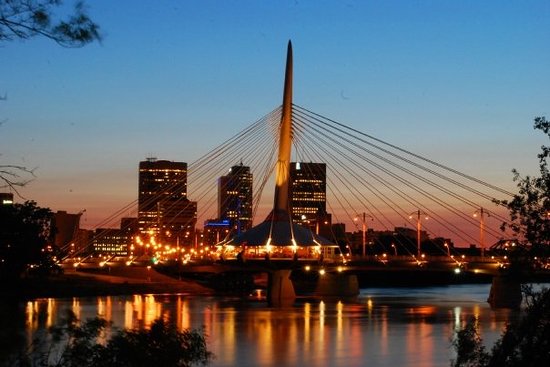
Perhaps this is why so many Ukrainians first immigrated to the Prairie lands (Winnipeg stands at a whopping 15 percent of its population). An interesting factoid. While the Prairies are reminiscent of the steppe lands in Ukraine, Ukrainian immigrants, initially choosing the prairies, established themselves strategically in the Aspen Parkland because it was reminiscent of the Carpathian Mountains, stretching from Winnipeg in an arch through Saskatchewan and into Alberta (you can follow this line on the Yellowhead Highway).
One of the interesting things about Kives’ book is how it sheds light on the relationship between being stuck in the middle and a Country (and its peoples) sense of identity. For Winnipeg, the struggle has always been measuring our wealth of natural resource and farmland and small town feel (with big city amenities) with the sense that we are stuck between the powerful economic and populated engines of Alberta on the West and Ontario in the East. As Kives writes, “There is… a half remembered sense of history. As children, most if not all of the city’s residents are imbued with at least a vague sense the city was once a very important centre, in the geopolitical context of North America as a whole. Winnipeg’s century long decent into ordinariness has given some of its residents a profound inferiority complex, as they compare the way the city is to the way it was and the way they want it to be.”
Add to this fact that Canada has a similar history of living amidst the ongoing push and pull of these East-West powers, and Winnipeg is situated within an interesting history, seemingly forever “stuck in the middle of two possible destinies”, as Kives puts it. Interestingly too, one of the defining marks of Winnipeg has been the rail road tracks that “literally” divides the city into two halves, demonstrating a clear problem of class and social struggle that doesn’t fit with it’s central motto- one with the strength of many.
For me, this curious mix of feeling stuck in the middle of this geographic and spiritual divide (between East and West) lended a particular power to my encounter with Catholicism, and then Orthodoxy in Ukraine. These grand traditions represented for me a whole new perspective and view of the world, broadening my perspective and challenging my own sense of normalcy. It’s easy when one feels stuck in the middle to consider catering to a sense of complacency and a “this is just the way it is and will always be” kind of attitude. It’s also interesting to consider the skepticism and cynicism of outsiders looking in on Winnipeg from the riches of the West or the culture of the East and laughing at our seeming “stuckness” where we are.
There is a similar feeling, then, when becoming informed and aware of these grand religious traditions that reach far back into the pages of our historical faith, predating the Reformation by quite a bit, that leads to a certain skepticism and ridicule by those who surround me in the West (beware the heresies of the East they exclaim). It reminds me of taking the bus in Ukraine, and, upon passing a Church observing the entire bus doing the sign of the cross and saying a prayer… for EVERY Church that we passed. It would have been easy for me through my Western eyes and mindset to simply write this off as strange, archaic, and even heretical. And yet, to actually engage the tradition, their faith, and their history is to grow in my perspective of my faith and become humbled in light of their own. It invites me into a greater sense of mystery, one of the great and powerful markers of Eastern Orthodoxy.
 THE MISSISSIPPI: THE OTHER FORGOTTEN MIDDLE
This sense of mystery is something that becomes that much more aware for me in considering the other forgotten middle in terms of my own geographical location- the midwest. Of course the midwest gains its proper definition south of the border, largely defined by that once (and in my mind, still) majestic body of water called the Mississippi, which winds its way from the northern point of Minnesota to the mouth of the ocean in New Orleans.
When we planned our trip down the River Road a number of years back (a year before we left for Ukraine in fact), one of the great interests for me was encountering the rivers romantic past. This of course is largely thanks to Mark Twain (Samuel Langhorne Clemens). Ever since reading his book “Life on the Mississippi”, I was fascinated by this piece of Americana.
My fascination though came namely from it’s positioning as that great dividing line between East and West. As the American East became populated, it was the river that initially informed its dream of expansion. It was the river that first began to mythologize the great American narrative by way of romantic visions of life based on its confluence of trade, development and (steamboat) culture.
At the same time, it was the push to expand Westward and the eventual development of railroads and roads that rendered the river and its culture and allure somewhat obsolete, causing it to become part of a bygone era (somewhat like Route 66). This of course meant that once aspiring cities like St. Louis, named the “Gateway to the West” because of its once upon a day desire to be what Chicago became (kind of like Kiev tried to the be the gateway to the world), would struggle in that forgotten and neglected middle space inbetween the prosperous East and the glorified West, feeling somewhat neglected as history moved forward in its wake.
Another interesting factoid- Winnipeg once upon a time also took the moniker “Chicago of the North”, aspiring to be what Chicago became.
What is left of the river culture is now mostly nostalgic in its northern sections, with the exception of Minneapolis and St. Louis which remain two grand centers of river life and culture striving to fight back and retain their unique sense of identity and location. It is not until you get all the way South that you begin to gain a sense that this river, this dividing line, still has a purpose and still leads somewhere on its way to New Orleans and the great expanse of the ocean. And yet, for travelers aware of the history, there are signs still of a river that holds both life and a sense of purpose.
THE MISSISSIPPI AS A SPIRITUAL METAPHOR
Looking back on my experience of travelling the Mississippi river road, I’ve been struck by this thought that I got from the book Old Man River: The Mississippi River in North American History by Paul Schneider. Speaking of the river’s historical development, Schneider writes,
“It’s intuitive and comforting to imagine that all rivers carve themselves a channel through the landscape, so that except in times of flood their water level is below that of the surrounding countryside. A curious feature of deltaic rivers such as the Mississippi, however, is that left to their own devices they slowly raise themselves above the level of the surrounding countryside in a twofold process that takes place over the course of thousands of flood and low-water cycles (sediment gets continually dropped raising the floor of the river and building on its foundation)… the result is that over the centuries a deltaic river rises like an aqueduct, until it is literally flowing above the surrounding countryside between levees of its own making.”
Following this process, it goes on to talk about how, prior to the 20th century and man’s attempt to control the river by building structures to keep it from changing course, that whenever the elevation became unstable, the Mississippi would jump its own banks and carve a shorter path to a lower elevation. Similarly, the river today just keeps pushing back. As the author posits, “there’s nothing that man can do that nature can’t overcome.”
I found this to provide a fascinating line of thought relating to my own spiritual journey and development. What builds the river is its foundation. What drives the river is the freedom to then explore, to question, to grow, to carve new paths. But it does this in the strength of its foundation, looking to return to this foundation when things get out of control. This reminds me of the spirits work in my life, forming me against the foundation of my faith in new directions and new perspectives as I move and flow in the direction of Jesus.
What’s interesting to note in terms of the river metaphor is the mix of both natural inquiry (changing courses or growing in the faithful expression of a flowing river) and challenges (floods, natural disaster) as influential forces. It is out of the challenges and questions of life that the foundation is made re-aware and our our faith constantly reformed. This then frees us and enables us to grow and be shaped by our challenges and our questions by the spirit (the water).
There is a line in the book that really struck me as it helped shape my own exploration of the river in this fashion. It said, “You can never step into the same river twice.” This is what it means to grow. And as we grow, we grow with the ever revealing flow of the river (the spirit), never the same as we were before, constantly being made new and renewed.
Here is what’s interesting about the Mississippi in a geographical sense to this end- it now sits in the shadow of man made progress. The life that once populated the river has faded with the development of the American dream, with the grand shape of cities like St Louis and Minneapolis and small towns like Hannibal and Davenport defiantly protecting its identity in the face of these challenges, declaring that life still happens in these forgotten places, a life that is continually defined by the river that humankind has tried to control. As the author writes, “And why should a river that remembers the mile-high ice and the rising of the Rockies worry itself with the pathetic concrete fiddlings of the Army Corps of Engineers?… Sure, the occupation of all rivers is to tear down mountains, but their great talent and art is to provide a home for all manner of riverine creatures, native and volunteer alike.” Life being carved anew by the spirit inspite of our need and desire to try and control and remake this world in our image.
STUCK IN THE MIDDLE: A LONELY BUT DEFINING PLACE
Being stuck in the middle can be a lonely, frustrating, uncertain, and tough place to be, persist, and exist. Whether we are talking about an ancient, age old conflict that reaches back centuries, threatening to undermine the identity of a whole people according to the ongoing and ever evolving power struggles between east and west. Or whether we are talking about our hometown, a city that sits geographically distant from anything of significance, itself caught up in the never ending power struggles and impossible allure of east and west. Or whether we are speaking of a forgotten river culture bound to the romance of its past and forgotten by the interests of advancement, progress, and expansion from east to west. All of these shared realities can say something significant about the spiritual journey “as” a journey. The more we experience and the more we become aware of our surroundings, including the history, the more this can challenge our perspective on faith and spiritual growth, precisely by making us aware of the struggles, particularly the struggles of being stuck in the middle. This awareness can then open us up to opportunities for growth and new discovery, challenging our givenness to the status quo and complacency.
For me, this was the inspiration I found when I stepped onto Ukrainian soil, a people aware of that sense of struggle, and given to not allowing themselves to be pulled in one direction or the other. As their history goes, so does their awareness of a distinguishable and developed Ukrainian identity, with this identity, in all of its grand Orthodoxy, providing them with a recognizable foundation on which to stake their cause and forge forward in faith and hope of newness and transformation. This was the whole purpose of Orthodoxy in the first place.
Similarly, faith as an idea moves forward in the confidence of its foundation, affirmations which can provide us with a common identity and a shared foundation, affirmations that point us towards the possibilities of discovery and growth. Faith encourages us to ask questions and to struggle, and to submit our need for certainty and answers to the foundation for the sake of this exploration and wrestling. Faith calls us not to stay stagnant and comfortable (or uncomfortable), but to be constantly striving forward in a sense of vibrancy and life and wonderment.
THE NEED FOR A FOUNDATION: IDENTITY AND FAITH
In Winnipeg, one of our biggest challenges, as Kive’s puts it, has always been the feeling that we need to “be” someone else, something else other than we are. The need to align with the more powerful West or East, to model ourselves on this model of change and growth so that we can control our destiny and become the Chicago of the North. That has always been the thing that has held us back, causing us to destroy our heritage buildings and to invest in the suburbs and the endless sprawl of new neighborhoods. Winnipeg’s strength has been, and will be found, in its common identity of a Canadian people peculiarly stuck in the middle together but leaning into our strengths, be it the arts, our Indigenous culture and story, our Exchange District, our railway system and waterways, or even our peculiar but uniquely bizarre road and pathway systems.
For the river culture, the idea of being caught between the powers of east and west falls similarly towards this idea of progress and enlightenment ideals. The kind of progress that has rendered this area of the Country a shadow of its once upon a time ambitions is a vision of progress that demonstrates the trappings of our modern, Western society. The kind of progress it imagines, one that is built around the economic engine and the American dream, is what caused the River Road to fall into decline. As it says in the book Wicked River The Mississippi When It Last Ran Wild by Lee Sandlin, “The river grew at a time when laws (or the lack of them) required people to get inventive and creative in how they purchased, managed land and approached civil life together. There was, according to the book, an extremely pervasive (and necessaary) sense of individualism required in order to surive in the developing river towns.”
And yet, to know anything about Minneapolis’ strengths is to find a city built around the waterways and its natural climate, bringing a sense of togetherness in the common love and appreciation of its natural landscape. The land of lakes and the river city is one that is carving its own path seemingly stuck in the middle of America’s grand East-West dichotomy. Similarly so for St. Louis. It’s civic and cultural revival (or many revivals) came from letting go of the need to be Chicago and figuring out what it means to be St. Louis (with a park that rivals Central Park in size btw).
For Ukraine, as it struggles in this push and pull between the Western and Eastern powers, it’s own liberty will be found in being freed to forge its own identity, not necessarily on Western or Eastern ideals, but on its own rich, Cossack and Orthodox history. To visit Ukraine is to be left awestruck by how unique and rich in history it is, and that is very much a product of being stuck in the middle. This reality has nevertheless been the same thing that has led to its ongoing struggle, leading to much oppression. But it’s future does not depend on becoming someone other than who it is, a spirited land and people with an incredible claim to civilized history, religious formation, and a devoted way of life that sits somewhere between the Turkish awareness of antiquity, the staunchness and gruffness of the Russians, the religiosity and cultural convictions of the Polish, and the romanticism of the Italians. In other words- they are distinctly Ukrainian, and that is what will lead them into the future, beholden to mystery and wonder of the world, not conformity.
LEARNING TO EMBRACE THE MYSTERY: THE NATURE OF THE JOURNEY
As the extremely talented writer Blake Collier puts it in an article on our need to know (amidst prevailing conspiracy theory in film, in his case).
“We are uncomfortable with limitations. We are uncomfortable with the inability to make sense of things. It is the long legacy of the Enlightenment bearing down on us from the 1700s. Back when we believed that science and human perception and reason would be able to reveal the dark shadows of the gods and bring about a utopia borne of this newly revealed knowledge. Yet 300 years of history has only shown us that the mystery never ends, it just recedes into the microcosms of molecular particles and expands out into the galaxies of space and potential alternate universes. Humanity is forever chained to the mysteries that follow in the wake of new discoveries.”
There is a poignant reminder regarding this embrace of mystery though that surfaces in the book Old Man River when referencing the Mississippi river’s end, Louisiana. “So Louisiana continues to sink into the sea under the weight of its load of ice-age mud, while the only thing that can save it- the river of mud that made it in the first place- is shackled from top to bottom. The bayou, in other words, has been sold down the river.”
All the efforts to control the river in the name of human progress, in the name of human knowledge and human effort are actually the thing that could sink the city that sits on the confluence of the river and the great ocean. And much of that is because progress has happened at the neglect of its foundation. It’s a reminder to remember our foundation so as to be able to rekindle and swim and flow in the freedom found in the rivers unpredictable flow. The spirits ability to reshape and remake us according to those virtues, according to its unfolding mystery, forms from its foundation.
LOOKING FROM WEST TO EAST AND BACK AGAIN: GAINING A MORE GENEROUS ORTHODOXY
“The East will tolerate any amount of schism, but no heresy. The West will tolerant any amount of heresy, but no schism. We desperately need each other.”
― Charles A. Coulombe
A part of what encountering some of the amazing aspects of the Eastern Orthodox and Catholic Traditions over the last number of years has taught me is that a deeply important part of the spiritual journey is a willingness to simply embark on the journey. I think the quote above, or at least how I’m taking it, is using it in a more generalized sense to connote the common divisions between the two sides that I have perceived in the 3 geographical places I referenced above. I was always taught as a Protestant that Catholicism and Orthodoxy was heresy and dangerous and strange and just to avoid it at all costs (even going so far as to say it would condemn me based on a false prophet). The irony is that the East looks at the many schisms in the West and sees within that a long list of theological “constructions” (read: heresies) that have set it, in some cases, far off of Orthodox (faithful Christian) belief and practice.
This while the West basically continues to differentiate itself based on the “right” Gospel, using that as the measure by which it condemns Orthodoxy as heresy while denying its own rampant schism.
The spirit, though, is seen in recognizing that we need one another. Growing in my awareness of the Christian tradition, and broadening my perspective beyond the East-West divide has allowed me to cultivate a spirit of exploration and wonder, enchanted by the sense of mystery and magic that Eastern Orthodoxy retains in the face of a far more rationalistic West. I have been taught to measure everything by my inherited Enlightenment ideals, and yet setting foot on Ukrainian soil opened me up, in my particular awareness of what it is to be stuck in the middle of my own East-West divide, to my need to give up control and the need to know. It ignited in me a spirit of humility, and gave me a way to reconnect with my sense of wonder and awe that I had seemed to have lost. For that I am forever grateful.
A GREAT BIG WORLD OF FAITH TO EXPLORE
To realize how big our world of faith actually is is to be in tune with the flow of the river, finding a common foundation made of mud and sediment holding this diversity in place, but also finding that the river is willing to jump those barriers and those banks as we grow, even against our attempts to control it and limit it to our ideals. Eastern Orthodoxy need not be heretical or scary. This truth is especially pertinent in a Western society that has been especially keen to build barriers and try and control the river so as to make it do what we want and what we expect it should do (according to our enlightenment ideals). Coming back to the general flow of the river, in its freedom to move and explore and forge new paths as it carves its own unique identity within us as persons, as peoples as Countries and as movements, is a freeing thought to me, especially understanding that the value of Tradition and Orthodoxy is in providing me with a foundation that allows me to do this as part of the sacred and embodied spiritual practice. Allowing us to uncover the mystery, not to simply call us to be content and confine myself to a singular perspective. And what a beautiful thing faith has become to me in light of this.
To quote Eastern Orthodox Elder Thaddeus of Vitovnica, “One should preach not from one’s rational mind but rather from the heart. Only that which is from the heart can touch another heart… (in this way) “humility is a Divine property and the perfection of the Christian life.” To be driven by humility is allow the river to carry us where it will, trusting that its foundation will carry us through to the grand ocean of the new creation that awaits.
One last quote from Paul Evdokmov regarding the grand image of the Cross in relationship to humanity across that East-West divide:
“The East is unfamiliar with those confessions, memoirs, and autobiographies so beloved in the West. There is a clear difference in tonality. One’s gaze never lingers on the suffering humanity of Christ, but penetrates behind the kenotic veil. To the West’s mysticism of the Cross and its veneration of the Sacred Heart corresponds the eastern mysticism of the sealed tomb, from which eternal life eternal wells up.”
SOURCES:
1. (https://www.britannica.com/place/Ukraine/The-Orange-Revolution-and-the-Yushchenko-presidency)
2. https://www.reuters.com/article/us-ukraine-church/ecumenical-patriarch-signs-decree-granting-ukraine-church-independence-idUSKCN1OZ0AO
3. https://www.washingtonpost.com/world/europe/tensions-between-russia-and-ukraine-spill-over-to-byzantine-world-of-orthodox-church/2018/10/10/89222b92-c802-11e8-9b1c-a90f1daae309_story.html
4. https://www.pri.org/stories/2019-02-19/why-centuries-old-religious-dispute-over-ukraine-s-orthodox-church-matters-today#:~:text=Its%20origins%20date%20to%20988,Rus’%20was%20subservient%20to%20Constantinople.
5. https://www.dailysabah.com/feature/2018/12/06/deep-roots-in-history-the-russiaukraine-clash
6. https://ukraineworld.org/articles/ukraine-explained/why-are-cossacks-key-understanding-ukrainian-nation
7. Ukraine: The Essential Guide to Customs and Culture
8. Awesome Ukraine: Interesting Things You Need to Know
9. Feasting On Asphalt: The River Run by Alton Brown
10. Old Man River: The Mississippi River In North American History by Paul Schneider
11. Ukraine: An Illustrated History by Paul Robert Magocsi
12. Suck in the Middle: Dissenting Views of Winnipeg by Bartley Kives
13. Wicked River: The Mississippi When it Last Ran Wild by Lee Sandlin
14. The Gates of Europe: A History of Ukraine by Serhii Plokhy

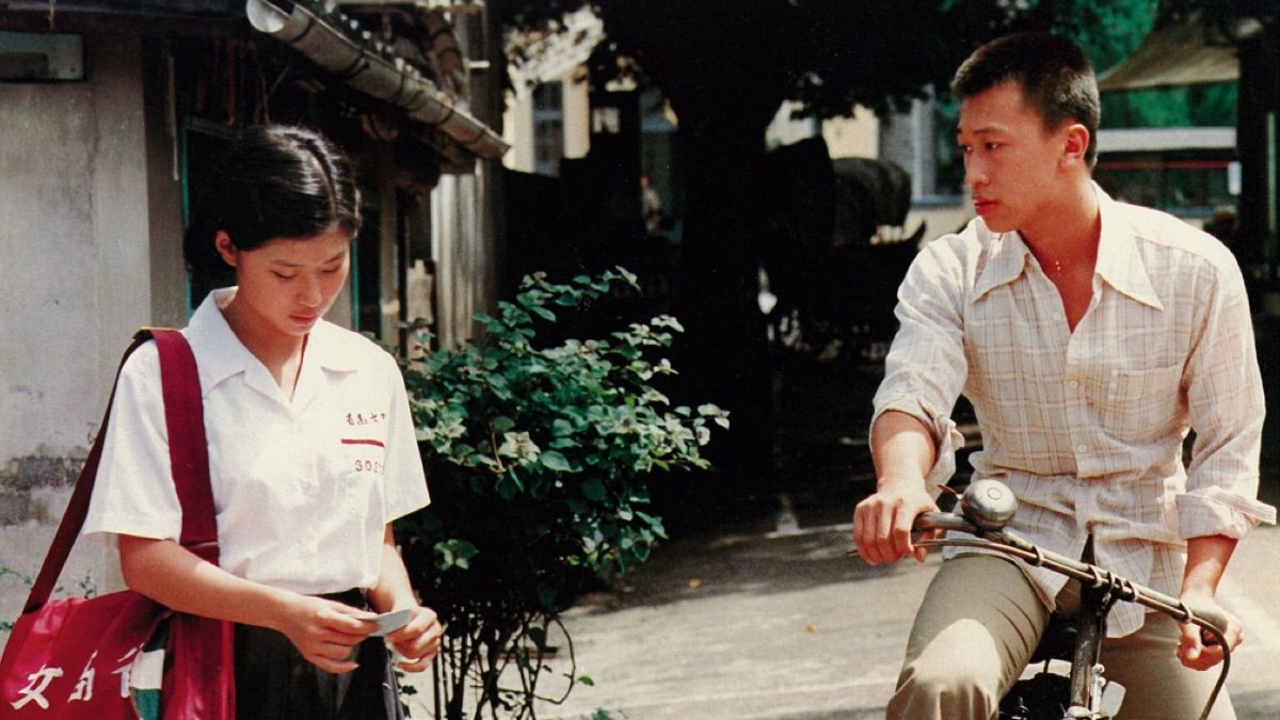 According to film historian Daw-Ming Lee, one of the major gaps in scholarship surrounding the study of Taiwan film history is the period before the 50’s.
 To truly understand Taiwanese New Cinema (New Wave), one needs to be able to understand their colonial past, as their more recent struggles to define themselves over (and depending on the lens one uses, against) mainland China has tried to locate their identity within and in relationship to this developing history. Taiwanese cinema was the earliest of Japan’s colonial industries (film markets), and can also be considered its most vibrant, which allowed the Taiwanese people to use this fact to quietly grow their culture even in in the midst of colonization.
 THE HISTORICAL CONTEXT
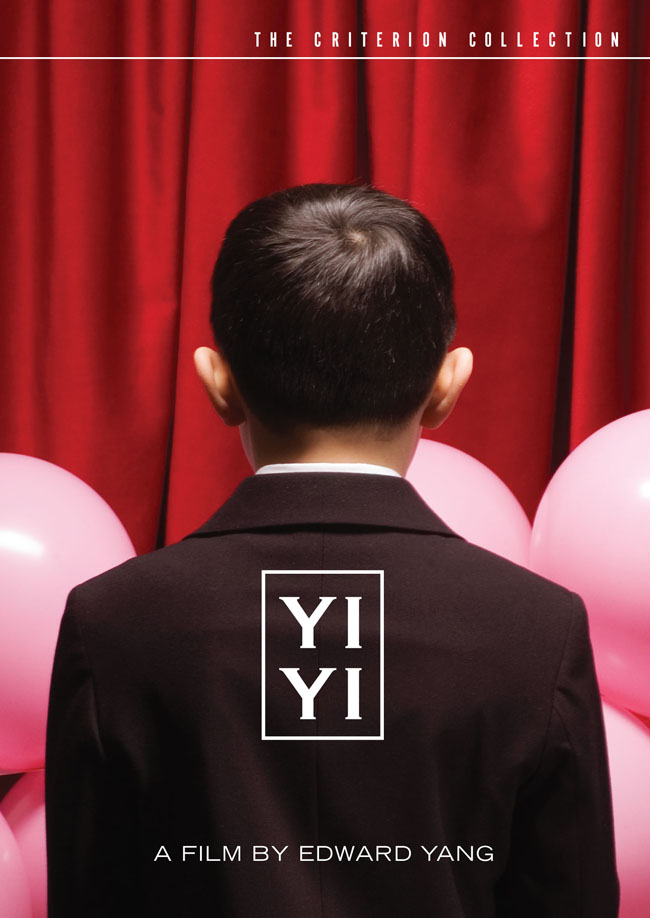 THE POWER OF LANGUAGE AND THE RELEVANCE OF ART
 A PRESENT AND FUTURE INDUSTRY
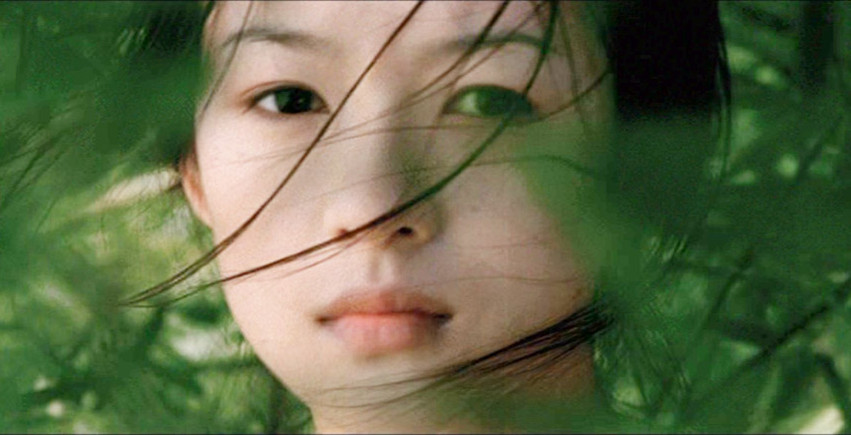 Where ever you start in exploring the Country through film, and it is likely you will begin to explore Taiwan through its New Wave films (which in and of themselves reflect a diversity within their shared focus and characteristics), what is immediately evident is the level of awareness and intelligence present in these films. As a cultured representation of a people defined by persistence, patience and awareness, these films refuse to rush their narratives. They hold a real ability to reflect, but with a past-present-future focus. And above all, they show a spirited refusal to give in to outside pressure, to conform, creating some of the most honest and integral artistic films available. A true inspiration, and an industry that will be exciting to watch develop even further.
 I first saw the film Tolkien, directed by Dome Karukoski, back when it released in theaters. Back when theaters were still open and when the world wasn’t being held captive by a virus as fierce as any dragon from Tolkien’s mythology. I remember actually showing up to the theater intent on doing a double feature (with Aretha Franklin’s concert film, Amazing Grace), but being so affected by this film that I refunded my ticket to the second showing, downloaded the soundtrack, and just went for a drive into what was one of the coldest nights of that winter.
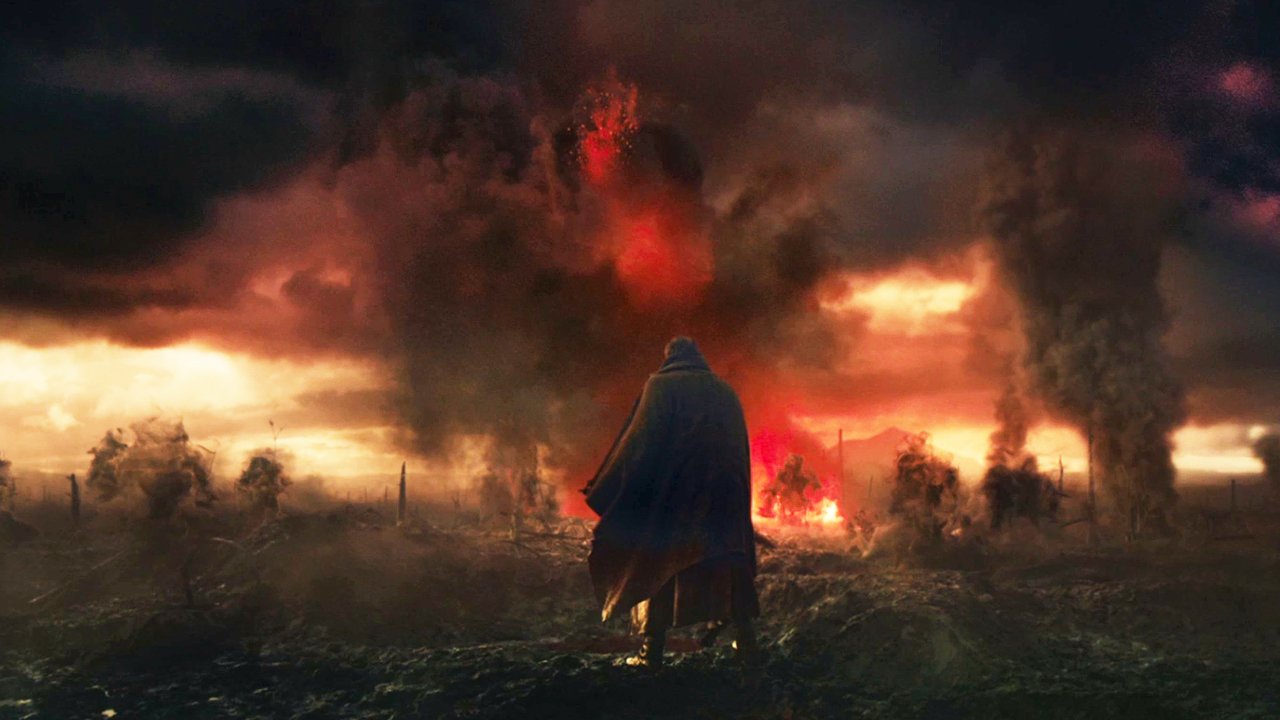 What I noticed this time around when watching the film was this intentional and constant movement from light to dark, dark to light, both on a narrative and cinematic level, allowing this to weave the narrative of Tolkien’s particular journey into one that must make sense of these two extremes living together, ultimately learning to imagine the world through his mother’s eyes, through that twisting lantern which becomes the reigning visual as it forms the backdrop of the final scene in which we witness Tolkien finally picking up a pen to write the first words of The Hobbit story.
 As these two meet, this young man and young woman from different walks of life but also with a shared understanding of poverty, the film shifts back to the darkness and we find Edith employing language in order to describe their environment and to imagine another world in the light of the kingdom motif, one where poverty is not a constraint, where the light shines brighter than the darkness. This imagining once again cuts us back to the war, which sets the stage for this developing friendship between the brotherhood of four as another light in the darkness, bringing with it this proclamation that to die is not within our control, but to live is. The brotherhood become the soldiers, using their stories, their art, as their weapon to fight for good. Here both the beauty and the horror come together in a single but complex frame, one that is willing to sit in the tension that this creates for Tolkien.
 It is this magic that brings in the other thoroughline in this narrative imagery, which is the people and forces that occupy his story. Here we see Tolkien talking about dragons much in the same way as the brotherhood was talking about hell, applying it as a slightly ambiguous fusion of both light and dark motifs. Later on in the film this causes Edith to wonder whether she is actually the dragon in this story as Tolkien quickly redirects her attempts to speak of a princess into the larger imagery that his word is now imagining in terms of their own relationship together. Tolkien takes the normal princess motif and turns it into something so much richer, which is where the girl as the dragon then merges with this image of the dragon cast against the war, once again returning us to the darkness on a cinematic level.
 One of my favorite scenes in the film is when Tolkien takes Edith to the opera. Or attempts to. As Tolkien is trying to count out pennies and comes to realize he doesn’t have enough to pay for the only remaining seats (the more expensive ones), we see the both of them coming together around their shared reality of feeling like life and circumstance has them imprisoned, a prison they both want to escape from. This leads them to duck into a passageway underneath the auditorium in the hopes of finding a way to sneak in. With all the doors locked and once again feeling dejected and defeated, the music starts to play and the two of them suddenly come alive, acting out the play as if they are a part of the story, a story they are creating for themselves. The shot of the kiss is brilliantly captured, with the camera slowly panning out and moving backwards down the passageway, giving it the allusion of the path that Tolkien had described during their dinner together.
 This encounter with the professor gives Tolkien a way back into his story, this grand vision of Middle Earth that is unfolding in his context and with real meaning and attachment to his experience and his world and the persons that embody this world. But now the timeline of the film catches up with the war, being interrupted by its announcement. There is an amazingly captured scene here where, as the war is being announced and people are erupting in emotions, Tolkien keeps trying to tell his story, even as his words slowly fade amidst the greater reality.
 It is a reuniting with Edith and the renewed expression of their love that brings these two frames, of light and dark, love and loss, together. In love, they must once again depart as he goes off to fight the war on the battlefield. Two dragons, one back at home, one he is about to face out there. One forming his darkness, one confronting his darkness and bringing it out. This is then twinned again with his relationship with Geoffrey, a narrative line that carries him through the war through Geoffrey’s death and his reuniting with Edith. The section that holds these two narrative lines together is a scene that finds him running helplessly through the battlefield, looking for the brotherhood but only finding tragedy, death, loss and horror. The film’s shooting of this scene brilliantly allows the chaos to gradually fade away, giving us an image of the Cross framed against all of the death around him, and ultimately leading him into the silence of what remains, alone with the demons of his imagination and his experience. All except for a single white horse that dots the battlefield, which contrasts with a rising figure cloaked in black. This is described by Edith as trench fever, the images given to someone scarred by what he has seen on the battlefield.
 It is out of this then that the light is able to shine amidst the darkness, not by doing away with the darkness, but by placing it into context of the larger story. Life is both light and darkness which are constantly at war, both within us and around us. And it is our ability to give words to this reality, both hopeful and devastated, heartbroken and joyful, that allows us to enter into this as a story, one in which we find ourselves, and one in which we find ourselves in relationship to others and the world around us. As we walk through the final scenes of the film, we find that Tolkien is not just to be one voice, but rather the voice of the brotherhood. Death can make us loatheless and helpless as individuals, as Geoffrey says, but it cannot put an end to the immortal four, the stuff that gives such a word its meaning. As the Priest says surveying the darkness, he speaks the liturgy because there is a comfort in ancient things that lie beyond our comprehension, and the language of this liturgy then becomes the very thing that can speak meaning and beauty into the darkness, uncovering the light the lies within us, that is being protected in our hearts.
 From out of the war we begin to gain a clearer picture of what it is that Tolkien has attached his words to, the stuff that gives him meaning. The pictures of the family by his bedside merge with the nighttime chat with his new family, the relationship with Edith and their now children. In another one of my favorite scenes, we find Edith challenging Tolkien as they sit on the steps under the night sky, the one who once wrote for pleasure and passion and now feels pointless and where language has lost its meaning, to decide what he wants from his stories, his writing. Find its meaning or abandon it. Here he returns to where the four of the brotherhood used to meet with Geoffrey’s unreleased poetry in hand. And then he returns home with Edith and his children, once again amidst nature, the images of the trees and the light that has been held captive and protected in his heart. As his family asks him what his story is about, Tolkien is finally ready to to attach his words to what is most meaningful to him. It is a story about treasure, and the treasure is love, companionship, friendship, light and dark weaved together to create something beautiful. It is a story about a quest and a journey, a fellowship, our fellowship with one another and with nature and with God.
 My introduction to Director Kelly Reich was her film Certain Women (2016), an incredibly nuanced depiction of four strong willed women who are all different in character but whom share in a visible and felt struggle to overcome the burden of sexism and oppression. The film brilliantly fuses together three different sources under a singular vision in order to bring these character lines together in one cohesive and masterfully crafted story.
 In the opening shot, Reichardt features a slow, almost laborious shot of a lone ship trudging down a river. It’s simple, spacious, and basically devoid of surrounding activity. She employs this basic image as a way of anchoring her story in a narrative that transcends time and place, both in the imagery it evokes and in how it provides this central and establishing movement from the present day to the past.
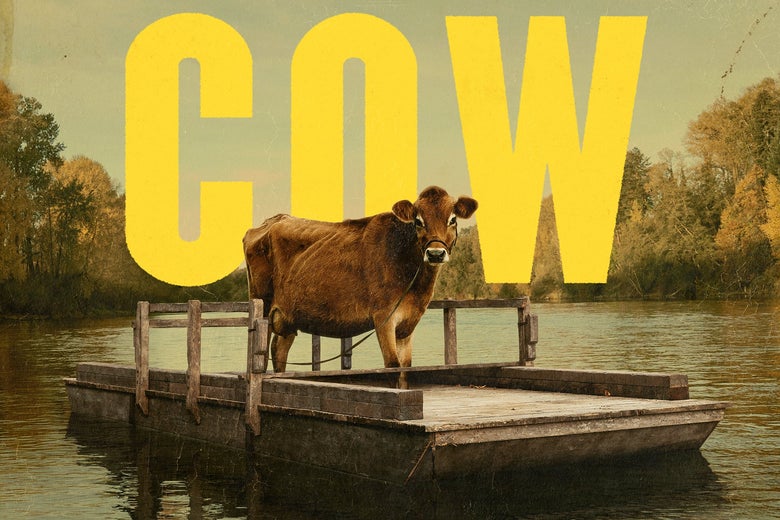
 One of the most striking things about the portrait that Reichhardt creates here through these two working images, one of modernity looking backwards, or uncovering history, and the other looking forward anticipating what lies ahead, is how she imagines it within a landscape of diverse peoples, all coexisting around this single cow. The cow itself stands as a colorful and resonant symbol both of the growing bond between Cookie and King-Lu, but also of the nature of progress, it’s milk providing the means of sustenance, cooperation and care, but also demonstrating the essential image of opportunity, the chance for one to establish ones self and get ahead in the world by using the milk to gain a foothold in a competitive environment. The most interesting part of Cookie’s character, and King-Lu for that matter, is that they both imagine from their individual vantage points sitting beneath the shadow of others, that it is okay, then, given this competitive and unfair environment, to engage in certain activities or make certain choices that will allow them to get ahead. This moral line is crossed somewhat nonchalantly, in a matter of fact way that emulates the daily chore of gathering mushrooms and foods from the forest. This is simply what one needs to do. When the milk belongs to the haves, we must rightly take some of the milk in order to help ourselves gain a foothold, to gain some level of significance in this world and be seen with some respect.
 Even more interesting is the fact that Reichardt draws this out within a landscape dotted with all kinds of people, from the settlers, to the Chinese Immigrant to the indigenous peoples. This sense of progress seems to be making its way up through this collage of peoples, providing a compelling picture to carry over into the present day picture of these two indistinguishable skeletons lying side by side. In this sense, the emerging social divide, the essential reality of those on the bottom and those on the top, does not discriminate.
 It’s an astounding vision that Reichardt presents here, one of two people across ethnic lines being bonded together in struggle, and surrounded by others on all sorts of potential sides of this struggle. But what pulls these two skeletons back into the pages of history as fully fleshed out persons is the image of the cow. The cow is both a hopeful image and a damning one, depending on which perspective we are looking from, either ahead from the past or backwards from history. What’s interesting about the image that looks backwards is that, in some sense it is equally hopeful. This image of two people from diverse backgrounds rendered indistinguishable as skeletons imagines a better future that still could be. But it must be a future built on our true understanding and recovery of the past. How we imagine the Cow as a symbol for our current economic system, and how the Cow is used to achieve our dreams and our imaginings of prosperity and progress, is one of the most important imaginative processes that we can engage in today. This is something that needs to be reformed and redeveloped as we choose to consider the past. Caught between the admiration and appreciation and seeming worship of the Cow is the stuff that eventually leads everything to spiral into chaos in the film, ultimately built by way of competition and capitalist ideals and fueled by an awareness of social placement and division and the human need to belong.
 In exploring Iran’s important cinematic history, the most striking characteristic is the overwhelming presence of a liberated cinema which, for example, boasts an incredible representation of women in cinema, but which also bears the mark of a heavily oppressed and marginalized industry (heavy censorship).
 A CINEMA IN CONTEXT
 A GROWING NATIONAL IDENTITY
 New Wave and New Iranian Cinema: Distinct Styles and Modern Voices
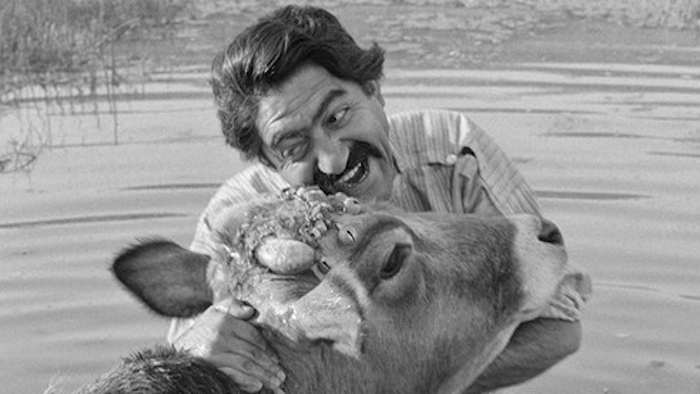
 It would be soon after that we find the development of The College of Dramatic Arts, (1963), and the infamous story of The Cow (directed by Masoud Kimiai and Darius Mehrjui), the film that was smuggled out helping to establish the New Wave as a distinct New Iranian Cinema with a continued emphasis on a visual literacy, poetic imagery, and a fusion of fiction and realism. And it is out of this that we find the Iranian Revolution redefining the landscape as a whole. I found this lengthy descriptive from the Tavoos Quarterly regarding this transitioning from the first period to the second period to be helpful:


 Hirokazu Kore-eda, the celebrated Japanese Director (Shoplifters) has returned with his latest film, The Truth. This is the first movie the Japanese writer-director has made in another tongue or country. It also finds him shifting his focus from East to West, the Truth being a French-English film focused on life in its French setting.
 The Film Within a Film: Plot Devices and Character Development

 One Last Word For the Journey
 The Stories of my Life