Chasing the Moon: The Crippling Nature of Anxiety and the Healing Power of the Imagination


Maybe you have to know the darkness before you can appreciate the light.”
—Madeleine L’Engle

When I first started writing in this space it was an attempt to try and deal with some of the great anxiety I was feeling and experiencing over turning 40. Anxiety is something I have wrestled with my whole life. When I was in counseling around that same time 5 or so years ago it became apparent that in most cases this anxiety arises from places of fear, fear that reaches all the way back to the chronic nightmares that plagued me as a child. Even as a young mind I was struck by a mutli-faceted and confusing world that seemed to be equal parts aware and invisible, clear and hidden. At times the fear seemed to flow from the hidden spaces, that which I could not control, with that which I could see helping to shed light on those fears. At other times fear arose from that which I could see, requiring me to imagine the unseen and the unknown in order to make sense of my fears.

This is where I first fell in love with the art of story. It is only in storytelling that we can make sense of a world that is equal parts seen and unseen, and story does this by evoking the power of the imagination. Delve into modern research and you will find a renewed interest in the imagination emerging within the sciences, psychology and the field of education. This is becuase imagination is not only helpful, it is necessary for understanding the world and our place in it. For far too long modern Western society has been built on a philosophy, and therefore a psychology of rationalism and reason as the highest virtues. This is not dissimilar to the idea that growing up means to set aside our childish ways. There is something counterintuitive to this way of thinking though when it comes to our understanding of the human experience. To think this way actually increases anxiety and distances us from our ability to understand the world as it truly is.
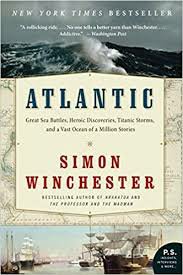
I’m currently reading a book called Atlantic by by Simon Winchester. He tells the story of the Atlantic ocean by imagining it as a living entity and shaping it through Shakespeares famous monologue that evokes the 7 ages or stages of man. Here he depends on the art of storytelling and the act of the imagination to help us understand the Atlantic as more than simply a body of water, but as a body of water with a very real context. He takes what we see and what we know, this picture of standing on the shoreline looking out over this vast and mysterious expanse, and helps us to imagine the unseen- the people, places, history, questions, changes that inform this body of water in terms of this movement from life to death. And it is in understanding this movement that we can then shift our perspective to questions of the eternal, as in why does this body of water, which will one day represent an anomaly as being the longest surviving body of water in earth’s history, matter in the bigger picture?
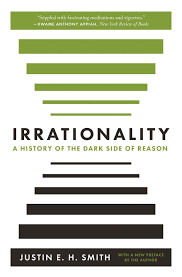
I’m also reading a book right now called Irrationality: A History of the Dark Side of Reason by Justin Smith. It’s a hard hitting and incredibly compelling, perspective changing examination of reason’s limitations and the West’s problematic dependency on it. Much in the same way, Smith is arguing for a return to the imagination, a renewed ability to imagine truth and reality as something that must be revealed not obtained. True rationality then comes from a position of humility, a willingness to engage both what we see and that which we cannot see and to allow this to inform our sense of reason and rationality. Rationalism, or truth in the Western sense of the term, tends to be about three things- progress, control and reason. What the West has long neglected in the process is storytelling, imagination, and myth. And if Smith is right, this has actually led to a a more irrational society.

So why do I bring this up? Becuase I have found myself once again caught in a place of crippling anxiety. A year long journey with some health struggles that reaches back to February, 2020 and which carried through the stresses of the pandemic without much in the way of answers. In the past month things got worse, allowing my anxiety to have an even greater hold on my life. As my wife lamented at one point in recent days, “I want my husband back.” I can see that person, but in this space of fear laden anxiety over the unseen, the unknown, that person feels inevitably lost in the fog and enslaved to the very real darkness of my imagination.

For those who don’t know what an anxiety disorder is and what it can do to someone like me who suffers from it, it is an all consuming struggle. It means running through a thousand different narratives in your mind every minute of the day. It means being unable to function and be present in every day, ordinary activities. Rationality becomes the enemy because, in most cases we feel and know we cannot truly trust it. It feels better to remain imbalanced and given to irrationality than to risk the truth catching us off guard. Anxiety is an obsession that is forever caught somewhere between what we see and what we cannot see, with both of these realities equally clouded and uncertain. It robs us of our ability to live, and yet at the same time demands that in order for us to live we must learn to accept that our struggle with anxiety does not make us less than another. At the same time, more often than not social situations tend to make this anxiety that much worse, which only compounds this problem as a viscious cycle.

So what does one do with anxiety when it wreaks havoc on our lives and our ability to live? There’s no easy answer to this question, and it likely looks different for everyone. For me, one thing that has helped is prayer. There is a reason I think why a fascinaton with prayer has followed my struggle with anxiety very, very closely. I am not good at prayer. For someone with social anxiety prayer in public, or praying together is even worse. And yet typically once a year I found myself coming across a book, sometimes by searching for it and sometimes by it simply falling across my path and reminding me its time to reengage the topic, that teaches me and reteaches me about the art of prayer. Recently it was lyrics of this song that awakened this within me. It’s by Hulvey and it’s called “Reasons”:

You can’t keep going at a rate like this, running for your life when you’re meant to live. Gotta keep on breathing. There’s too many reasons. I spent late nights, I was scared to die, I ain’t wanna see the grave. I was playing games with my heartbeat instead of slowing down just to pray. You’ve been reachin’ for the hand you thought you’d never grab, but Jesus brings the hope you thought you’d never have (have, have). Tired of livin’ in a nightmare, Lord, I just wanna hear you, runnin’ ’round the same circle don’t make me feel brand new. You gotta know it ain’t over ’cause you got a hand to hold. Let His peace come rushin’ through your soul. Too many reasons for you just to let go. There’s hope

Hulvey (Reasons)

In light of these lyrics, I’m beginning a book by Sarah Bessey called “A Rhythm of Prayer”, a book that was born out of a time of great struggle in her own life and the feeling the she couldn’t pray becuase she didn’t know how.
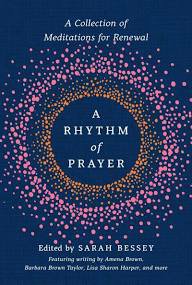
In knowing that she was not good at prayer, it opened her up to knowing all of the ways in which prayer can happen and all of the ways prayer breaks into our lives, our questions and our struggles in unexpected ways. Perhaps most imporantly, prayer is a way of reigniting our imagination for what we can see and what we cannot see, and not surprisingly invites us into a larger story. It gives us the words, images and pictures we need to make sense of our experiences.

Last Friday morning in a moment of great anxiety over an upcoming appointment that day, I found myself in a place of prayer as I was out in the open space of the rural Manitoba countryside waiting for my first pick up (I am a school bus driver). One thing that I love about my job is that it puts me in tune with the changing seasons. It makes me aware of the timing of the sunrise and the length of the days. The other day I found myself driving in the pitch dark in one direction, only to come around the next mile in the opposite direction to encounter the sunrise bursting on the scene, a sunrise that was not there the previous week at that same time.

One of the things that I also become aware of driving a school bus is the forever changing position and size of the moon in the sky. Sitting in that same position, facing the same direction at the same time every morning as I wait for that first pick up, sometimes the moon is directly in front of me. At other times its to my left, my right or even behind me. And somtimes it looms massive in the sky long into the morning, while at other times appearing like a small orb and disappearing quickly with the earliest notes of the sunrise. Why is this? The answer to that question is the movement of the earth and the moon. While the movement of the earth, which spins giving us that 24 hour cycle of night and day, makes it appear like the sun and the moon are moving in the sky from one side to the other (rising and setting), the moon is actually moving in orbit around the earth at the same time. This illusion and this reality combined gives us a sense of night and day while also making tracking down the moon on any given morning or evening something of an adventure, a dance of the imagination. For the ancients, this would even tell a story.

On this particular morning as I was struggling with my anxiety the moon, which the previous day had been right in front me, was gone. I could not see it until I turned my head to the left and noted this perfectly halved slice hanging high in the sky which, had I not looked upwards I would never have noticed.

What struck me in this moment was this notion of seeing half the moon while the other half was hidden from my sight. To know that the moon was whole in this moment required me to use my imagination, to image what I could now only see in part. This brought to mind the famous verse by Paul in 1 Corinthians 13:12 where he writes, “For now we see only a reflection as in a mirror; then we shall see face to face. Now I know in part; then I shall know fully, even as I am fully known.” (NIV).

What Paul has in mind here is an important part of a larger train of thought that runs through his letters, that being the nature of revelation or knowledge of God, ourselves and this world (or Creation). “Then I shall know fully, even as I am fully known” evokes a sense of revelation, that art of revealing truth that the West has lost in its love affair with the enlightenment. Here we come as well to that grand theology that sees humanity as image bearers, in that what Christianity imagines in Christ is the truth of God fully revealed “in the flesh”, and thus, as God’s image bearers, the truth of our identity as sons and daughters of God is likewase made known as we imitate Christ and become a light to the world. As theologian N.T. Wright often suggests, to participate in the Kingdom of God is to then image or imagine Christ to the world and to invite all the people’s of the earth to consider and see their true identity. This working metaphor of “reflection” invokes this idea then of Truth reflecting itself into our reality in a revelatory and revealing sense, but in a way that can get clouded and abstracted by our experience in this world. This is the journey of faith then, is to be constantly growing in our persepctive of God, ourselves and this world so that the full revelation of Christ, often seen dimly and often clouded by our better judgements, can be made known.

What’s intersting is to consider the history of mirrors as a context through which to Paul’s understands words, especially as they flow through his constantly developing train of thought. Consider this from the following article on the history of mirrors https://www.furniturelibrary.com/mirror-glass-darkly/

Early glass mirrors were made of glass tiles cut from blown glass forms—thus always slightly curved, and always slightly colored, as the chemistry of clear glass manufacture remained unknown. These glass tiles were then affixed over still-hot, carefully sized, cast lead forms, with a thin layer of polished metal sheeting between the two. It was a belabored and imprecise process, resulting in mirrors of dim reflection.
As attributed to Paul the apostle, “For now we see through a glass, darkly.”
Around 500 AD, man began to create somewhat clearer and more reflective glass mirrors using silver-mercury amalgams. Examples of such have been found in China dated as early as c.500AD. But another thousand years would pass before silvery-mercury amalgam processes became more efficient—and less deadly, mercury being one of the most toxic elements on planet Earth.
Enlightment in the Age of Reason, science, culture, philosophy—and mirror-making, did not arrive in an instant. But sometime around the 12th century, mirror-makers began to measurably improve their craft. A guild of mirror makers—the first recorded, was formed in the city of Nuremberg in 1373, soon followed by a guild in the city of Venice.

Historians and theologians have long equated these words from Paul with these famous bronze mirrors in Corinth, in which this notion of imaging was a developing idea in a rationalistic sense. Fast foward in time and we find the foundation for the enlightenment intertwined with this notion of a mirror which can accurately reflect the truth in a fully reasoned way. We move from revelation to self revelation, the notion of recieved knowledge to precieved and earned knowledge. And yet in truth, mirrors remain deceptive entitities which can easily manipulate our perspective based on light and angle. Just like the perfectly split moon that hung in the sky that Friday morning, our experience shapes our understanding of reality in particular ways. Which is precisely why imagination and story remains so integral to revelation.

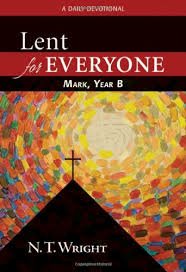
As I sat there considering the moon and imagining its wholeness, I said a prayer. I then turned to my devotion for the morning in N.T. Wright’s Lent For Everyone: The Gospel of Mark. The morning’s reflection was on Mark 6:45-56, with the focus of thte relfection on 6:45-42. This is the passage following the feeding of the masses with the loaves and fishes where the disciples find themelves in a boat in the middle of the sea while Jesus remained alone on the shore praying. The disciples were having to “work hard at rowing” just to stay moving and afloat in the midst of this great wind that came “against them”, and it says that in seeing this, Jesus “came to them… walking on the sea”. We gain a description of the disciples struggling with their experience of this great wind which had left them incapacitated and unable to move foward, and when Jesus arrives they “were scared stiff” becuase they thought he was a ghost, an allusion, an appartion. Jesus’ words to them arrive as a simple yet powerful admonition- “It’s me. Don’t be afraid.”

There’s a final note ascribed to this passage that suggests that the correlation to this moment, or the revelatory potential of this moment is the preceding passage with the story of the loaves and the fishes. They “were overwhelmed” because “they hadn’t understood about the loaves.” Their hearts were “hardened”- clouded, obscured, hidden, abstracted, because of their perspective, their experience.

To which we come to these words, “It’s me. Don’t be afraid.” It’s not some fractured moon somehow cut off from the sky, it’s the moon in its fullness. It’s not an apparition, it’s Jesus. God fully revealed in human form. The Word made flesh. It’s no mistake that Paul’s words to Corinth are framed against a lengthy discourse on love as the highest ideal, the greatest truth. However complicated our experiences are, however much they osbscure the truth of our reality, however much they leave us stuck with a clouded view of the fuller picture, we can know the truth of love stands taller. This is the tension we carry in faith.

In reflecting on this passage, Wright offers the following words of insight on this tension by imagining this story from the perspective of Thomas in the boat:

Perhaps this is how it’s always going to be, for anyone who wants to follow Jesus, now or at any time. Perhaps what he wants from us is not that we should be able to explain it all but that we should just be clear we’re going to go on following him. I may not be the sharpest tool in the box (my father always used to say that, because he was a carpenter too, like Jesus’ father), but I reckon I’m in this for the long haul. I may not always understand it first time off, but I’ll still show up. Or my name’s not Thomas Didymus …

N.T. Wright

Wright finishes this reflection with a prayer for the day, a prayer that immediately washed over me in this moment as I sat in my anxious state underneath this half moon at once hidden and at once revealed. My appointment, ironically enough, would come with more unanswered questions and uncertainty. But it also arrived with something tangible, a revelation of Truth emerging from notes in my bloodwork that invited my participation in the here and now, even if a waiting game continues in terms of understanding the bigger picture, the full story. These are things that I can, and am even charged to tackle over the coming six months, the alloted time between now and my next appointment, things which can continue this journey of exploration and the search for Truth. The anxiety remains, but the opportunity to refame my perspective emerges, and an opportunty to hear the simple words “it’s me, don’t be afriad” over and over again as I continue to trust that this is true even when I can’t quite see it. I simply need to turn my head to the left, look up and allow myself to imagine, to reengage my story. This is what it means to image God in our lives. And as I do, I trust that what I only see dimly now will be revealed as whole, and I trust in this knowing that the fullness of God revealed has in fact already arrived in our midst in the person and minsitry of Jesus, the Word made flesh, love embodied.

Month in Review: Memorable Reads, Watches and Listens For February 2021

Film

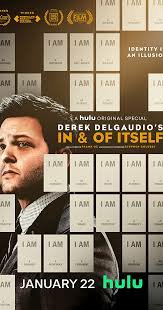
In and of Itself (2021)

A one man show written together along with his audience. An emotional and conceptual magic trick that proves all too real. A love letter to all those who struggle with knowing who they are, their value and their worth. And a gift to those struggling with mental illness, depression or just general feelings of lostness, sadness and hopelessness.

Who am I? Know you are more than labels and perceptions.

Dear Comrades (2020)

“It all made sense then. Who’s an enemy and who’s one of ours.
She’s one of ours.”

A stunning and powerful recreation of the 1962 massacre in Novocherkassk of unarmed protesters by the Soviet army and KGB leaders. One of these leaders is a young mother who’s unflinching and often unquestioned commitment to the Soviet Union and the KGB is thrown into contest when she has to contend with the reality that her daughter is amongst these protestors. 

The films isn’t trying to make a political point as much as it wants to explore a complex conversation regarding the intricate marriage of politics, people, ideologies and struggle. There’s as much in subtext as there is in the surface script, bringint to light the common humanity that drives and challenges convictions on either side of this conversation. It is within the (necessary) tension that this attention and awareness of our shared humanity creates where we can begin to enter these kinds of conversations together, which I think is what Dear Comrades ultimately desires to invoke.

Sometimes Always Never (2018)

The dry wit in this film is delicious, mouth-watering, appetizing, flavoursome, flavourful, toothsome, inviting, very enjoyable, very palatable. succulent, luscious, rich, sweet.
tasty, savoury, piquant, scrumptious, delish, scrummy, yummy, yum-yum. 

I totally get the elevated emotions over a game of scrabble. And the off beat reality that these character’s exist in also feels relatable in that unfamiliar way that seems to suggest in some way or form this could very well be my reality. Life as it is when we take off the filters. Kind of melancholy, kind of sad, kind of eclectic, kind of fun, and more often than not irreverent about the stuff we take seriously while being aware of the stuff we should take more seriously. All wrapped up in a mystery solving drama revolving around a missing son and a game of scrabble.

Delightful British film that offers a nice twist on the prodigal son narrative, including a meaningful and insightful angle on the son who stayed.

La Llorona (2019)

This is the international film Directed by Jayro Bustamante, not the American version released in the same year.

The film uses the ancient context of the familiar lore that informs its story to comment on what is a very modern political challenge facing Guatemala. It’s the way it does this, layering the different facets of its story into the different elements and characters that populate this modern stage, that is so effective. What one might assume would be traditional horror translates into something much more subtle. This is a drama with horror notes, and rather than use jump scares it uses visuals and tone to bring about this working commentary on the class divide. And given how this focuses in on a singular family responding to the political crisis, each family member is given a unique position to play into the story from their own contrasting perspectives. 

An exceptional film with a perhaps an even more important voice.

Legend of Deification, or Jiang Ziya (2020)

This was one of two outstanding foriegn animated films I saw in Feburary (the other being 2018’s The Tower, a starling Palestinian film that explores the nature of hope in seemingly hopeless situations, rooting its story in a real world tragedy and the power of a child to find freedom in light of the past). This is the second film in a proposed new universe of films that began with the equally wonder Ne Zha from last year.

What was so impressive about Ne Zha is how it brings together cultural notes from Chinese Tradition and belief with the myths and stories that guide their history. It is a wonderful expression of what makes their culture and heritage so rich, weaving in a real sense of spirit and religious conviction that is often absent in Western stories. This second film leans darker and more serious, trading in the world building of Ne Zha for a more streamlined, quest like narrative. Both are equally impressive, and taken together prove complimentary in terms of the way they center on the Fengshen Yanyi” (Investiture of the Gods and the important intersection in their history that shapes this book, the shifting from the falling Shang Dynasty to the rise of the Zhou dynasty.

The animation is beautiful, and the storytelling feels exciting and fresh from my Western perspective, especially in its ability to imagine a real world context that is much bigger than what we can see simply on the surface.

Books

Nomadland by Jessica Bruder

An books formed from Bruder’s own journey into a sub-culture of America. It follows what is an organized community of people who live without a home and who survive “nomadically” by taking seasonal jobs in places like Amazon and State parks. There is a central figure who gives this documentation of this vast and diverse community of people a narrative shape, but every single person we encounter has arrived at this lifestyle for a different reason and with their own unique story in tow.

At the same time, there are shared concerns they all face, many of which shed light on the larger systemic problems that feed into their individual and shared challenges. Bruder helps to give this context while bringing these stories to light not as an anomaly, but as a beautiful and even necessary part of the fabric of our societies. These are not homeless, but people without homes, some by choice, some by necessity, and all with a story that is worth being told. Given how this is told as a kind of travelogue, the further Bruder finds herself on this journey of discovering this community of people, the more she finds hersself gaining empathy for and even capturing the spirit for this kind of lifestyle.

Winter People by Jennifer McMahon

A new find for me in terms of author, and after encountering her brand of introspective horror on full display in this fairly easy read I am hooked. In truth though, I was hooked after one of the best prologues I can remember reading in a long time:

“My beloved aunt, Sara Harrison Shea, was brutally murdered in the winter of 1908. She was thirty-one years old.

Shortly after her death, I gathered all of the diary pages and journals I was able to locate, pulling them out of dozens of clever hiding places throughout her house. She understood the danger these pages put her in.

It then became my task, over the next year, to organize the entries and shape them into a book. I embraced the opportunity, as I soon realized that the story these pages tell could change everything we think we understand about life and death.

I also contend that the most important entries, the ones with the most shocking secrets and revelations, were contained in the final pages of her diary, written only hours before her death.

Those pages have not yet been found.

I have taken no liberties when transcribing these entries; they are not embellished or changed in any way. I believe that, as fantastical as the story my aunt tells may be, it is indeed fact, not fiction. My aunt, contrary to popular belief, was of sound mind.”

Jesus: A Pilgrimage by James Martin, SJ

Phenomenal book that functions as a blend of travelogue, scholarship and devotional. Father James Martin, whom anchors himself in the Ignatious Tradtion of the Christian faith, structures each chapter according to an on the ground, practical pilgrimage through the Holy Land, and pairs it with thoughts on the scholarship and ultimately reflections on his own spiritual journey and awareness of encountering the text while walking in the footsteps of Jesus.

It’s incredibly accessible, highly engaging, and quite often revealing and profound as an honest depiction of this journey. It takes us into the nooks and crannies and dirty corners of the life behind the text, and brings us up close and personal to the one who claimed to be God and yet walked this earth as a man amongst humans.

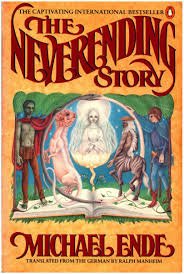
The Neverending Story by Michael Ende

I could just as easily include the film in my above list as I rewatched it following this read, for the first time in over 30 years I might add. But this read was special in that it not only brough up all those childhood memories of images still anchored in my mind, but gave me a fresh perspective through which to understand this story about fear and hope. From my adult eyes, it was a process of reaching back into my childhood perspective to uncover what it could teach me about about overcoming fear and recovering hope, pushing back against the cynicism that so easily comes with those adult eyes. I wrote in this space already about my experience with this book, so I won’t rehash that. Just simply to say that I never realized how much depth there really was tothis story. Or at least it seems I had forgotten.

Age of Anger: A History of the Present by Pankaj Mishra

This is one of two books I read in February on the similar subject of anger and empathy and its roots in human development and history as a working tension (the other being the book, The Empathic Civilization: The Race to Global Consciousness in a World In Crisis, itself a natural follow up to a book I readin January called Survival of the Friendliest: Why We Love Insiders and Hate Outsiders and How We Can Rediscover Our Common Humanity). I picked this one up in preperation to read Irrationality: A History of the Dark Side of Reason over the month of March.

There’s not a table left unturned in this hardhitting, empathetic but intelligent discourse on where we are as a world, how we got here, and perhaps, if our imaginations might allow, where we could go should we confront some of the biggest problems of our modern modes of thinking. At the heart of the author’s intent, someone who lives as an adopted Westerner while also understanding this narrative from an Eastern perspective, is exploring the nature of story. The stories we tell ourselves are the stories that define us on a cultural and socio-political lives. Further, its how we understand these stories that turn something from benign history to dangerous rhetoric. And this is as true for what it means to understand the modern stories that tend to guide us in our present age, particularly in the neglect of history and this increasing allegiance to rationalism.

Much of the books premise navigates this notable shift from cultures that once built their lives around stories to a modern and largely godless culture that exists without stories, without myths, at least in the sense in which they are tied to our history. It’s shocking how much of this problematic story emerges from that modern, godless, mythless worldview. It’s also shocking how this shift from religious (given) mythtelling to created mythtelling continues to see itself as the championing of truth, when in fact it is truth built on a modern story, a story that itself hands us the same rheoric that sets one against the other. If anything, it has just revealed the consistent inconsistency and polarization that exists within the human will, along with a will that is intrinsicly tied to the stories that inform us and inform our lives. This isn’t a condemnation of religion as much as it is the will’s continued resistance to truth in a larger, universal sense. In truth, religious mythtelling, or storytelling actually allows us a greater chance to attend to the will. We might think we are more free in a rationalist driven Western society, but we are in fact not. And this will only become more and more pertinant as society progresses towards a future where we are controlled more and more by change and technology, the very things that are stealing away human vocation and guiding progress. We celebrate the success of something going viral, giving way to some of the greatest disparities the world has ever known.

Honorable Mention: Predictably Irrational: The Hidden Forces That Shape Our Decisions by Dan Ariely (A super easy read, and even a fun read given how it exploits our predictably irrational behavior as humans. There is a bit of irreverance to the way the author sheds light on the hows, whys and what’s of our decisions and choices and actions, revealing how much all of us, whether we want to admit it or recognize it or not, are very much controlled by these recognizable external forces and factors. We actually know this more often than not, which adds in the added factor that typically we don’t actually care more often than not. Or we simply choose to ignore it. And yet taking the time to reflect on some o this stuff can actually help us in those small and few moments where we can effectively circumvent the predictably irrational)

Music

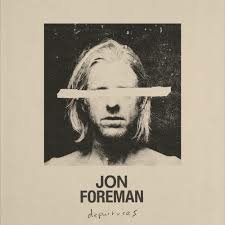
Jon Foreman- Departures (2021)

As a huge fan of Switchfoot, I was keenly interested when frontman Jon Foreman first entered into the realm of solo work. His albums are much more scaled back than Switchfoot, which gives them a meditative quality (which colors his previously released Spring, Summer, Fall, Winter series). Departures is his most complex work yet, and also one of his best. Here he brings in a variety of instrumentation that lends layers to that stripped down nature, and lyrically we find him exploring even deeper realms of introspection and faith. It’s both his most overt album on a religous level, and its also his most compelling.

Foo Fighters- Medicine at Midnight (2021)

At first glance this might seem like a bit of a deviation from the material Foo Fighter’s are usually known for. Dig a little deeper though and there’s some compelling song structure and lyrics to be mined from their latest full release. It comes out firing right of the gate before settling into this grove that seems to take this ablum where it will. For my money that is to some interesting places, and thematically speaking this fits with its overt call to revolution colored by the album’s call to try and throw off that which oppresses us and both enter into the rallying cry of No Son of Mine, and also strip off the burden of Shame Shame, the deep depression apparent in the film’s title track, while getting up to dance. There’s a dark side to this album, but it’s also it’s most upbeat, lending itself to the experience of going from being on the ground to participating in the experience.

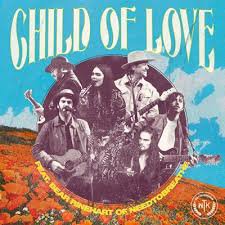
Single: Child of Love by We The Kingdom feat. Bear Rinhart of Needtobreath (2021)

This is a song that ws featured on We The Kingdom’s 2020 release, Holy Water. This new version brings in Rinhart to add his vocal powers to an already great song, and it gives this single an undeniable new force and purpose.

Vocal Few- Love will Tear Us Apart (2021)

This is a cover of Joy Division’s haunting and powerful song from the 80’s, which lyrically continues to capture the leads dark days leading up to his eventual suicide. You can feel the Vocal Few, a solo project by the front man for The Classic Crime, re-contextualizing the song for our present times. And the results are pretty effective.

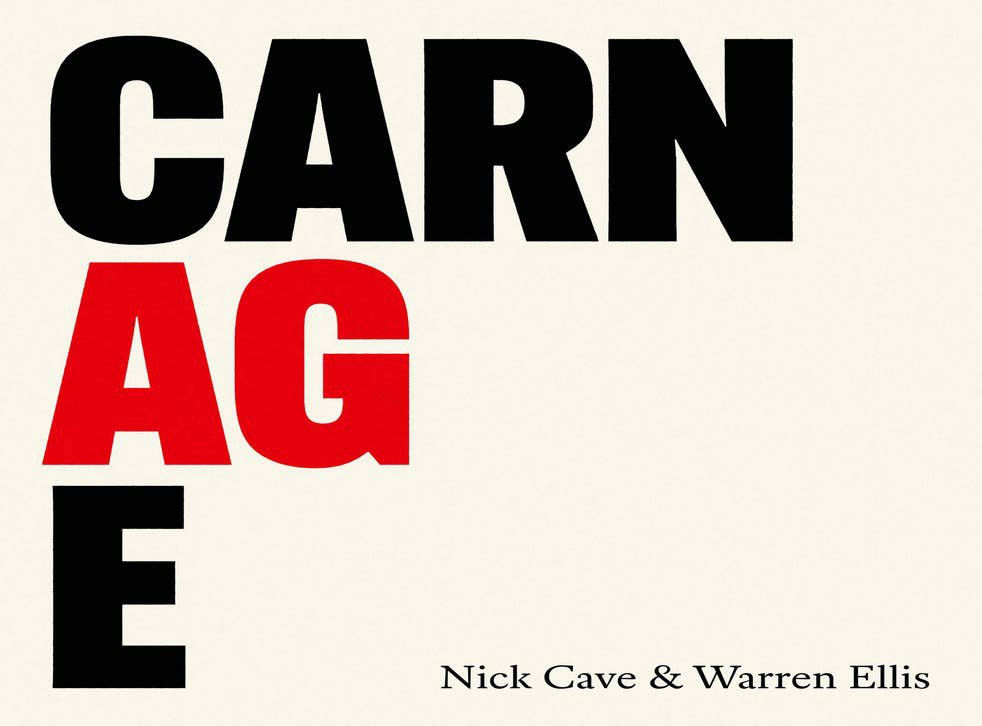
Nick Cave and Warren Ellis- Carnage (2021)

If you are looking for something to accompany a journey through the dark places but with a view for optisim and hope, this deeply reflective but intentional record by someone who knows his way around the dark times is a breath of fresh air. It’s meditative of course, fitting with the artist’s overall vibe and tendencies, but it is also in a way uplifting and informing in a road trip kind of way. From the opening track, Hand of God, there is an undeniable spiritual longing that runs through the songs, looking and longing for spiritual renewal and the promise of a new reality, and perhaps even finding it.

Podcasts

The Disney Story Origins Podcast, Epidsode 14a,b (Pinocchio)

Given that there are a couple of new Pinocchio adaptations releasing this year, this was a great way to get familiar with the roots of the actual story.

The Bible For Normal People Podcast, Episode 155, Sarah Bessey

I picked up Sarah Bessey’s new book called The Rhythms of Prayer, and this was a really great interview with the author that dives into why she wrote it, what’s challenging and liberating about recovering an active prayer life, and some of the honet questions that flow from that. You can also find an interview with her on the Relevant Podcast.

The Symbolic World Podcast, Episode 144, feat John Strickland- History of the West in View of the East

I love the way the way this podcast sheds light on the stories we have lost and the history we have disconnected from in terms of the modern language we use and the oppenness we have to the lanuage of metaphor as opening us up to truth and a broader view of the world’s spiritual reality.

On Script Podcast, Episode 159, Matthew Thiessen- Jesus and the Forces of Death

I could just as easily recommend Episode 158, which features an interview with Ben Witherington 111 and Jason Myers on their new book that helps readers to navigate the broad and diverse world of the New Perspective on Paul (called Voices and Viewon Paul). But I went with this interview with Thiessen because of the light it sheds on the difficult language of the purity system. The way he was able to shed light on the differentialation between ritual, personal, demonic, and cultural impurity is really compelling, and I’m very much looking forward to picking up the book.

The Fear of God Podcast, Episode 212, The Wolf of Snow Hollow

Don’t miss the excellent episode on The Vast of Night, but I wanted to highlight this film becuase it is a bit underseen in 2020, and the conversation the hosts have around this film brings so much light to both the production of the film and some of those intricate and intimate details that mark the film’s story. Excellent companion piece to help you dialogue with the film after you see it, and please, do see the film.

The Neverending Story and the Faith-filled Imagination

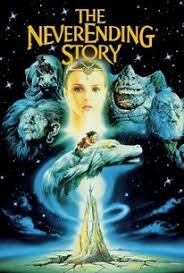
It has been over 30 years since I saw the film the Neverending Story, and, full confession, I was not aware that it was based on a book. Stumbling across the novel brought back fond memories of the story, and ignited my desire to get aquainted with the source material (followed up by a rewatch of the classic film).

In comparison the book is much longer and more invested in the intracies of the journey that we find in the story on a philsophical level than the film. The film fast tracks some of the narrative portions and streamlines the story arc to read much more succinctly as an adventure film. In contrast, the book is much more epic in scope, drawing out the themes that are touched on in the film regarding the journey itself.

Which is not to say the film is bad adaptation. I appreciated both forms of the story, and the film stays mainly faithful to the heart of the book and the main story beats that we find within its pages. It’s simply to say they both offer and evoke slightly different experiences.

One thing that I really appreciated about the book is how poetic the prose is. It’s easy to sense the religious undertones, a bit more complex to tease them out. And yet that is precisely the job of the reader in engaging the depth of the narrative concern, and is, I would argue, what the author intended us to do in terms of engaging this conversation with the bigger ideas of its philosophical thought and the intracicies of its literary form.

Consider this excerpt from the article Religion and Romanticism in Michael Ende’s The Neverending Story by Kach Filmer:

“The Neverending Story is, above all, a profoundly
religious text, although there is not a word in it that is
specifically religious, and in it there are unmistakable
elements of skepticism. But through this text, the author’s
priestly role can be seen quite clearly, and the problematics of fantasy are dealt with in a context which includes spiritual, as well as psychological, growth. This is no mere fairy tale, though it invokes the whole fairy story tradition. It is a work of the Romantic Imagination, and its purpose is, as Stephen Prickett has noted in the epigraph to this paper, “to change the way the reader experiences life” (15).


In other words, it offers a lived Dialectic of Desire as
Bastian Balthazar Bux pursues his ambitions and
daydreams through the wonders of Fantastica, the world
of fantasy and imagination. And as C.S. Lewis has written
in another context, “The dialectic of Desire, faithfully fol-
lowed, would retrieve all mistakes, head you off from all
false paths, and force you not to propound, but to live
through, a sort of ontological proof.” Lewis was writing of
his own experiences of the strongly nostalgic emotion of
Sehnsucht, die desire for something which can hardly be
identified, but which pierces us like a rapier at the small of a bonfire, the sound of wild ducks flying overhead, the title of The Well at the World’s End, the opening lines of Kubla Khan, the morning cobwebs in late summer, or the noise of falling waves…” (10).

The author goes on to say,

“This same longing is generated for Michael Ende’s charac-
ter Bastian by the experience of reading, indeed by the
physical object of a book itself:
“I wonder,” he said to himself, “what’s in a book while
it’s closed. Oh, I know it’s full of letters printed on paper,
but all the same, something must be happening, because
as soon as I open it, there’s a whole story with people I
don’t know yet and all kinds of adventures and deeds a nd
battles. And sometimes there are storms at sea, or it takes
you to strange cities and countries. All those things are
somehow shut up in a book. Of course, you have to read
it to find out. But it’s already there, that’s the funny thing.
I just wish I knew how it could be.” (11)

There is in this passage an undoubted ontological im-
petus : a world has been created and is waiting for the reader
to enter it. As Tolkien has written in his essay “O n Fairy
Stories,” the reader must enter and engage with this secon-
dary world and with its special laws (Tolkien 48). But
Ende’s text is polysemous; there is a fantasy within a fan-
tasy. There is the primary tale of the small boy Bastian with
which the reader engages, and there is the story of Fantas-
tica into which Bastian himself is drawn. The self-reflexivity of the tale makes it highly meta-narratological. The alternation of red and green typeface (in the original versions, both German and English) also emphasizes the metanarrative technique. This might be seen as an attempt to undermine
the operation of the imaginative process, since there is a
deliberate return to the fictional version of the real world
and the notion of readerly engagement with a text.
But this, of course, is not the whole story. The role of
Bastian in the metafictional world parallels the role of the
reader in the act of reading any text. Readers m ust con-
struct the text, as m odem theorists would have it; the
author is “dead” and meaning resides only in the subjec-
tive engagement of the reader with the signifying con-
structs which comprise the text. Certainly Bastian con-
structs the text; but the text in this novel is much more than merely words on paper, as Bastian is well aware. The text is a world, and the act of constructing the text is the act of creating a world, which is precisely the role Bastian is given in the world of Fantastica. Moreover, he is constantly referred to as a Savior by the inhabitants of Fantasica, which emphasizes his creative and godlike function, although this deus ex rnachim from the mundane world is a flawed saviour whose endeavors are not always either well-intentioned or beneficent in their effects.”

Regarding this notion of good and evil, dark and light,

“The human im agination has access to both dark and light;
in the worlds of fantasy there are good and evil characters
who are equally important to the story. Quests would not
appeal were there not monsters to be overcome and evil
creatures to outwit; they are all part of the story . In
Fantastica, then, the evil characters are as valuable as the
good ones, since they arise out of the same creative human
faculty. The human Imagination is a dualistic faculty, and
human creators are dualistic gods since they are, as
Tolkien suggests in his poem, lords in rags — fallen crea-
tures. Although Ende does not articulate this point ex-
plicitly, it is implicit in the value he places upon the evil
characters in his fantastic world — a world which clearly
comprises all the realms of human im agination: myth,
fantasy, legend, story, parable, allegory and marcher. The
real evil in Fantastica, die terrifying threat to the world of
the imagination, is the Nothing, the sense of absence and
loss which pervades the story until Bastian can enter the
fictional realm. And it is the idea of the Nothing which
comes closest in this novel to commentary upon recent
theoretical trends in literature.”

Here is the link to the full article:

https://dc.swosu.edu/mythlore/vol18/iss1/11/?utm_source=dc.swosu.edu%2Fmythlore%2Fvol18%2Fiss1%2F11&utm_medium=PDF&utm_campaign=PDFCoverPages

I had never really considered this film to be a horror fantasy film until I read the book and revisited the film from my now adult perspective. As it conjured up all these images from my own childhood, I could see the hidden fears that this story was evoking and coaxing to the surface. The image of the Nothing stands seared in my brain as it helps us to imagine those childhood struggles that had held me bound to fear, and in some ways continue to bear themselves out tangible ways. There is something deeply human about what Bastian faces in his own life, the things that hold this notion of fantasy and reality in tension. Childhood innocence and adult responsibility battle for his allegiance, which we hear in the film as the father chides the son to get his head out of the clouds and to take responsibility for facing life’s problems following the mother’s death.

It is here the power of the book, the power of story to transform us rises to the surface, teasing out the importance of the imagination in helping to form our perspective of this world and our experiences in necessary and spirit driven ways. This is, in fact, the role of faith, guided as it is by those old mythologies that once formed the foundation of our worldview before the West in all of its rationalistic glory replaced it with the gods of human reason and progress. This is a German based stories, and as such is entrenched in the familiar language of those old fairy tales. And yet it also translates much broader than this into the larger world of myth. Endes book is a call back to the truth of a world that once was and still is soaked in mystery and revelation.

Here in lies the value of literature forms and trends. It allows Bastian to make sense of that feeling of inevitable lostness and the nihilism that his struggling experiences threaten to impose onto his once imaginative and sacredly held worldview. And it does so by attaching this to images and ideas that are bigger than himself. The Nothing becomes the very personification of his very real fears, and the adventure he gets sucked into holds real world stakes. And behind this lies the truths that only our myths can truly capture in their essence, truths that get bound up in sacrificial, Christ type figures, realities of good and evil, vitues and failures, all of which play themselves out in real and tangible ways in the world we occupy in the here and now. Here in this story, then, we can also gain a glimpse of the character of God as something fully real, fully imagined, and fully alive in our struggle.

All of this was not something I would have understood as a child in philosophical terms. And yet my dhildhood mind would have understood this in many ways far more accutely and resolutely and unquestioningly than my adult one, which has been taught to be prone to resististing this imaginative way of seeing the world in the face of life’s perpetual struggle. This book reignitted that childhood fervor, that childhood innocence framed by what were very real and very true experiences of life’s struggles. The real difference lies in the ability of my young mind to frame this in a particular kind of story, the kind of story this book represents and that Bastian uncovers. For me, I considered my chronic nightmares, the bullying of my own childhood experience, the moments of uncertainty and questions, and perhaps more the way my growing love of stories gave my young mind a way to be formed by a reality vision of the world much larger than myself and my experiences. It created in me a love for the imagination, but even more so the ability to imagine the ebb and flow of my experience in those larger truths.

Blasphemy of the Spirit, the Work of the Accuser and Making Sense of the Unpardonable Sin (Mark 3:20-35)

20He went into the house. A crowd gathered again, so that they couldn’t even have a meal. 21When his family heard it, they came to restrain him. ‘He’s out of his mind,’ they said. 22Experts who had come from Jerusalem were saying, ‘He is possessed by Beelzebul! He casts out demons by the prince of demons!’ 23Jesus summoned them and spoke to them in pictures. ‘How can the Accuser cast out the Accuser? 24If a kingdom splits into two factions, it can’t last; 25if a household splits into two factions, it can’t last. 26So if the Accuser revolts against himself and splits into two, he can’t last – his time is up! 27But remember: no one can get into a strong man’s house and steal his property unless first they tie up the strong man; then they can plunder his house. 28‘I’m telling you the truth: people will be forgiven all sins, and all blasphemies of whatever sort. 29But people who blaspheme the holy spirit will never find forgiveness. They will be guilty of an eternal sin.’ 30That was his response to their claim that he had an unclean spirit.

Mark 3.20–35

I have long wrestled with this passage from Mark, especially growing up in a particular Tradtion that would have emphasized the blasphemy in this verse in measurable ways. When the word blasphemy is used as a means to control the truth of the Gospel, it can very quickly turn into abuse. When we read this verse and use it to distinguish between the other as the heretic and to establish ourselves as the true believer, it can very quickly become oppressive and miss the person who lies at the center of the question fueling this accusation. Which in Mark’s Gospel is the question ‘who is this man’? Is he the Christ or something other?

Not unlike verses dealing with false prophets and sheep in wolves clothing, there is a fine line that exists between distinguishing between truth and falsehood and getting wrapped up in this accusing game. In my younger years this verse arrived in the form of heavy anxiety over whether I had committed the unpardonable sin. In my later years this matured into accusations of being called that false prophet my younger self feared. I can remember literally being called “the devil” for endorsing something that Andy Stanley, of all people, once said in one of his sermons. That’s how thin and blurred this line can get. I learned very quickly that no matter how hard one tries, there will always be a reason someone can call you the devil, and the truth of this passage is that if you call someone the devil you are evoking the nature of that unpardonable sin.

The thing that struck me about encountering this passage once again, which came up in my daily reading through N.T. Wright’s Lenton for Everyone series on the Gospel of Mark, is is that the danger of presenting ourselves as the accuser is that we ultimately end up accusing ourselves in the process. We all become the devil we see in the other. And what happens when we play the role of the accuser is that we actually begin to take up “the satan’s” work, which is to divide and foster division between the family of God. Christ on the other hand cannot stand divided. Christ came to heal a divided people and to bring unity where there is division. The truth of Christ is that this unifying work can only be found in Him, lest we end up all accusing one another to death. And if the unifying work of Christ is not true in our lives, in our communities, in our Churches, then what hope do we have in this ministry of reconciliation? This is a life, a community, a Church, a home that cannot last. Thus, especially those who call themselves Christ followers, this is serious business indeed.

Something about N.T Wright’s reflection in his Lenton for Everyone series, which I am reading his Mark version of for this present season, landed for me in a new and fresh way towards this end. I’m not sure I had ever read this passage from the lens of that division/unity theme. But I thought a portion of what he wrote was worth sharing. It helped to free some of that baggage for me personally, and perhaps it could reform your own understanding of this tricky passage as well.

Week 1: Wednesday (Mark 3:20-35; focused on 3:20-30); from Lent For Everyone: Mark, Year B by N.T. Wright

For generations people reading the gospels have wondered, quite naturally, just how much they can trust the gospels. Sceptics have suggested that it was all made up later to boost the church’s picture of the Jesus it worshipped. The bridges to historical certainty have been broken and not rebuilt. Fundamentalists have said that it was all dictated by God, so the question doesn’t arise. But most ordinary Christians are somewhere in between. Where are there solid footholds on which we know we can stand, even if it feels a bit of a splash, sometimes, to get to them?

This passage is one of those solid rocks. Nobody in the early church, however inventive they were feeling, would ever have made up a story about Jesus being accused of being in league with the devil. That would simply give too much ammunition to the new movement’s opponents, of whom there were plenty. So we can be absolutely sure this story is historically solid. You can rest your whole weight on it.

But if this story is solid, it means that we are forced, whether we want to or not, to believe that Jesus really was doing and saying things that were so remarkable that the only possible explanation – unless Jesus really was acting with a new, God-given power – was that he was in league with the devil. His opponents must have been desperate; this was all they could come up with. They couldn’t deny that Jesus had been doing extraordinary things. They could only try to hit back with smear and innuendo. The solid rock at one point enables us, then, to walk through some other bits of the fast-moving historical stream with equal confidence.

So what do we find as we do so? We find a new level of a theme we already observed: that when Jesus was behaving as if he was in charge, it wasn’t just the human ‘authorities’ that were being upstaged, and likely to strike back. It was the dark powers that hovered behind them.

There is an irony here. The legal experts from Jerusalem say that Jesus is in league with ‘the Accuser’, in other words, ‘the satan’. The word ‘satan’ actually means ‘accuser’; this reflects the ancient belief that the dark force in question was God’s ‘director of public prosecutions’, whose job it was to point the finger at evildoers, and who enjoyed the role so much that he began to incite people to commit offences for which he could then charge them. But it is they, themselves, who are ‘accusing’ – accusing Jesus! This is part of a much larger theme which continues throughout Mark’s gospel, as various dif ferent people ‘accuse’ Jesus of all sorts of things until they end up crucifying him.

But Jesus, in response, makes his strongest claim yet about what is going on through his work. What he is doing indicates clearly that the ‘Accuser’s’ kingdom – the usurped rule, in the whole world, of the power of evil – is being broken. Jesus has already made a decisive impact on it, ‘binding the strong man’ so that he can now ‘plunder his house’ (verse 27). This is the only explanation, Jesus is suggesting, that fits the facts. If Jesus had been in league with the satan, things would have got worse, not better.

The sharp, and worrying, warnings of verses 28–30 have often been taken out of context, as though there was a special ‘unforgiveable sin’ but Jesus wasn’t telling us what it was. Within the passage, though, the meaning is clear. Jesus is doing what he is doing by the power of the holy spirit. But if people look at the spirit’s work and declare that it’s the work of the devil, they are erecting a high steel wall between them and the powerful, rescuing love of God. That is a warning to all of us, whenever we are tempted to sneer at some new or different ‘Christian’ movement.

The main lesson for us, though, as we continue our journey through Lent, may well be this. If we are serious about following Jesus, people will misunderstand us, too, and may accuse us of bad motives, or prejudice, or ‘extremism’. The answer is simply to look back to Jesus, and to his victory over all the powers of evil. They can still make a lot of noise, and cause a lot of nuisance, but the ‘strong man’ has been tied up, and those who work for God’s kingdom can indeed, in the power of the spirit, set about plundering his house.

A brief word on the history of the Hebrew word translated “the satan”, or “the accuser” from an article for Biblical Archaeology authored by John Gregory Drummond

The Hebrew word śāṭān, meaning “accuser” or “adversary,” occurs several times throughout the Hebrew Bible and refers to enemies both human and celestial alike. When referring to the celestial adversary, the word is typically accompanied by the definite article. He is ha-satan—the Accuser—and it is a job description rather than a proper name. From the Accuser’s appearances in the Books of Job and Zechariah, it seems that the job entails calling attention to the unworthiness of mankind. The Accuser is essentially the prosecuting attorney of the divine court of YHWH, and part of his job includes collecting evidence to prove his cases. With this bit of knowledge in mind, it isn’t difficult to envision the various “outcries against sin,” such as that against Sodom and Gomorrah (Genesis 18:20–21), as the voice of the Accuser.

It is difficult to determine at which point in Israel’s history the Accuser began to take on a much more sinister role in the Israelite/Jewish belief structure, or how heaven’s great prosecutor became the prince of darkness (Ephesians 6:12). It is certainly easy to make the connection between Israel’s time in exile and the likely influence of the cosmic dualism of Persian religion.1 However, even within books written well after the return from foreign lands, the Accuser is still a self-righteous lawyer. Though if 1 Chronicles 21:1 is any indication,2 they began to believe the Accuser wasn’t above getting his hands dirty.

It is perfectly clear, however, that by the first century C.E., Judaism developed a belief in the divine forces of darkness doing battle against the forces of light. This can be seen within the New Testament and other extra-Biblical writings such as those found among the Dead Sea Scrolls. There are likely several factors that inspired these developments, including the influence of Persian, as well as Hellenistic, religions.
If there was an army of evil spiritual forces making war on the righteous, they had to have a commander. It is at this time that the impersonal and lofty Accuser began to acquire the various names and titles that have filled the writings of western civilization for 2,000 years. The Greek word diabolos (from which “devil” is derived), meaning “slanderer,” comes from a verb that means “to hurl” (i.e., accusations).
Diabolos was typically used as the Greek equivalent for the Hebrew śāṭān (in the Septuagint version of Job, for example), though it was not uncommon to simply transliterate the word into the Greek satanas (1 Kings 11:14). Other names used for the leader of the forces of evil at this time include Maśṭēmāh, which means “hatred” (1QM 13:4, 11; Jubilees 10:8), and Belial, a popular name among the writers of the Dead Sea Scrolls, which means “worthless” or “corrupt.” “Children of Belial” (Hebrew: bene-belial) was a typical phrase used to describe evil people in the Hebrew Bible (e.g., Deuteronomy 13:13; 1 Samuel 1:16; 2 Chronicles 13:7, etc.). If someone were searching for a name that personified evil in the Hebrew Bible, it would be Belial, not Satan. Interesting enough, the name only occurs once in the New Testament (2 Corinthians 6:15), as Paul’s stark contrast to Christ.
It is also in this period that we begin to see the development of the tradition of equating the talking serpent in the Garden of Eden with Satan (Life of Adam and Eve xi–xvii).

Satan’s role in the New Testament, though highly expanded, has much more in common with the Accuser of the Hebrew Bible than the commander of the armies of darkness that is typically portrayed in the Dead Sea Scrolls. Even though he is given such lofty titles as “the ruler of this world” (John 12:31), “father of lies” (John 8:44), “god of this world” (2 Corinthians 4:4), “ruler of the power of the air” (Ephesians 2:2), and Beelzebul, “ruler of the demons” (Matthew 10:25; Mark 3:22; Luke 11:15), Satan is essentially treated as nothing more than a glorified prison warden who has been corrupted by his own power. Throughout the Gospels, Satan’s “kingdom” is never considered to be a burning underworld full of the tormented dead, but, rather, is equated with the bondage of sin and the curses brought upon humanity for acts of unrighteousness. According to Jesus (Matthew 12:29; Mark 3:27; Luke 11:21–22), a “strong man” (Satan) must be bound in order to plunder his house for treasures (humans), and it is clear he viewed his ministry and that of his disciples within this context. All other references to Satan in the New Testament, including those in Revelation, reflect this struggle for spiritual freedom.
Over the course of several centuries of influence from many different cultures, the defeated Accuser of the Christians would go on to appropriate aspects of various divine enemies (Typhon, Hades, Ahriman, Hela, to name but a few) to become the complex mythological monster that was thrown out of heaven at the beginning of time to rule the fiery underworld and torment the souls of the damned. Such a character makes for great movies and Halloween costumes, but would have been virtually unknown to anyone in Biblical times.

Participation in the Kingdom of God: A Fresh Reading of the Parable of the Sower (Mark 4)

Happy Sunday everyone.

I had a real epiphany this morning reading through a portion of Mark’s Gospel. It comes from Mark Chapter 4 and the Parable of the Sower.

Again he began to teach beside the sea. Such a very large crowd gathered around him that he got into a boat on the sea and sat there, while the whole crowd was beside the sea on the land. He began to teach them many things in parables, and in his teaching he said to them: “Listen! A sower went out to sow. And as he sowed, some seed fell on the path, and the birds came and ate it up. Other seed fell on rocky ground, where it did not have much soil, and it sprang up quickly, since it had no depth of soil. And when the sun rose, it was scorched; and since it had no root, it withered away. Other seed fell among thorns, and the thorns grew up and choked it, and it yielded no grain. Other seed fell into good soil and brought forth grain, growing up and increasing and yielding thirty and sixty and a hundredfold.” And he said, “Let anyone with ears to hear listen!”

When he was alone, those who were around him along with the twelve asked him about the parables. And he said to them, “To you has been given the secret of the kingdom of God, but for those outside, everything comes in parables; in order that

‘they may indeed look, but not precieve, and may indeed listen and not understand; so that they may not turn again and be forgiven’

And he said to them, “Do you not understand this parable? Then how will you understand all the parables? The sower sows the word. These are the ones on the path where the word is sown: when they hear, Satan immediately comes and takes away the word that is sown in them. And these are the ones sown on rocky ground: when they hear the word, they immediately receive it with joy. But they have no root, and endure only for a while; then, when trouble or persecution arises on account of the word, immediately they fall away. And others are those sown among the thorns: these are the ones who hear the word, but the cares of the world, and the lure of wealth, and the desire for other things come in and choke the word, and it yields nothing. And these are the ones sown on the good soil: they hear the word and accept it and bear fruit, thirty and sixty and a hundredfold.”

He said to them, “Is a lamp brought in to be put under the bushel basket, or under the bed, and not on the lampstand? For there is nothing hidden, except to be disclosed; nor is anything secret, except to come to light. Let anyone with ears to hear listen!” And he said to them, “Pay attention to what you hear; the measure you give will be the measure you get, and still more will be given you. For to those who have, more will be given; and from those who have nothing, even what they have will be taken away.”

He also said, “The kingdom of God is as if someone would scatter seed on the ground, and would sleep and rise night and day, and the seed would sprout and grow, he does not know how. The earth produces of itself, first the stalk, then the head, then the full grain in the head. But when the grain is ripe, at once he goes in with his sickle, because the harvest has come.”

He also said, “With what can we compare the kingdom of God, or what parable will we use for it? It is like a mustard seed, which, when sown upon the ground, is the smallest of all the seeds on earth; yet when it is sown it grows up and becomes the greatest of all shrubs, and puts forth large branches, so that the birds of the air can make nests in its shade.”

With many such parables he spoke the word to them, as they were able to hear it; he did not speak to them except in parables, but he explained everything in private to his disciples.

Mark 4:1-34

All my life I have been conditioned to read this passage unconcsiously from a deterministic point of view. If God is the sower this means that God is deliberately sowing these seeds in places that bring about specific outcomes of faith (or lack of it) according to His elective purposes. After all, the above passage seems to indicate that those on the inside are given the knowledge of their salvation while those on the outside are deliberately kept from knowing this salvation. Which for me always seemed to shift the emphasis of this parable towards the fact that there is only one good option on this “lottery” list, should I be lucky enough to be one of the seeds sown on the rich soil. That doesn’t seem like great odds.

I don’t think I had ever realized I was reading it from a deterministic direction until I realized how it is that I interepret this whole section as a proclamation of my salvation in one direction or another. How I read it in line with the phrase “nothing that is hidden except to be revealed”, inferring this to mean that in Jesus the good seed and the bad seed will be made known according to the will of the Father, which istelf occurs according to God’s deliberate opening or hardening of hearts, a phrase that surfaces in Mark 6:52 as a proclamation (Jesus Walking on the Water) and in Mark 8:17 as a question referencing their failure to understand the purpose of the feeding of the 5,000 and the 4,000. Your hearts are hardened followed by, “are your hearts hardened”, or better put, “are your hearts still hardened”.

The irony of this being that while deterministic views tend to emerge from a Tradition that desires to deemphasize a works based righteousness, to be the good seed in the Parable of the Sower remains a works based prospect in this deterministic mindset- “hear” the word, “accept” the word, and bear fruit thiry and sixty and hundredfold. A good Calvinist reading, for example, would say that this fruit is the sign of the spirit’s work within you which lets you know that you have been elected to faith. You are the seed God determined to be planted on good soil, therefore trust in the truth, this given knowledge, that you will hear the word, accept it and bear fruit thirty and sixty and hundredfold. How many times have I been told by this perspective that “one just knows” if they are saved or not, or that the simple “desire” to know indicates our election, our being the good seed. And if you don’t, well, that then is God’s will for you. God is the one who sowed the seed where it couldn’t grow after all.

And then I encountered this in Mary Healy’s pastoral commentary on Mark. She writes from a Catholic perspective.

“The explanation of the parable of the sower would have resonated with Mark’s audience as a powerful word of encouragment… It can lead the participants, and indeed all of us, to reflect on the dangers in our lives that threaten the fruitfulness of the word. What kind of soil am I? (And) What obstances are there, and how will I overcome them?”

Mary Healy (The Gospel of Mark)

I read this and I thought, why have I never read this passage as an encouragement before? Why have I never considered this parable as an actual invitation to participation in God’s Kingdom work, as seems to be pertinant for Mark’s Gospel? It’s becuase I have been taught to read it from a deterministic lens. Caught between that feeling of chosenness and not being chosen, and thus forced to interpret the work of Christ as necessarily distinguishing between insiders and outsiders as a matter of God’s choosing one over the life of another in whatever that great mystery becomes. Recognizing this allowed the whole section of Mark 1-6 to open up for me in a whole new way.

All 6 chapters are designed according to this shared trajectory that is made clear in the paired stories of the feeding of the 5,000 and the 4,000. The raising of the 12 (divided tribes) in line with the 7 loaves/fish (new creation) as the revealing of the Kingdom of God being established here on earth for the sake of the whole world, not just this the good seed. This culiminates in chapter 8 with this pattern that emerges from the story of John the Baptist, where John’s ministry foreshadows Jesus’ ministry and where John’s death foreshadows Jesus death. As the call arrives, “if anyone would come after me, let him deny himself and take up his cross and follow me. For whoever would save his life will lose it, but whoever loses his life for my sake and the gospels will save it” (8:34-35), what we find is a call towards reponse and repentance, a change in direction, a decision to follow in the way Jesus is heading and actually participate in this Kingdom work. What emerges from this is that the seed being sown is not different seed, rather is it is the nature of the soil that is different.

What is being revealed in this is not an arbitrary affirmation of my peronal salvation, but rather the proclamation that the Kingdom of God has been made manifest through the death and resurrection of Jesus, who arrived in line with the prophetic ministry and in light of this new creation story that is now unfolding. The good soil is the truth of who Jesus is and the Kingdom He proclaims, and the call to be aware of the soil we are tilling is wrapped up in te call to “follow” Jesus in the way He is headed. This brings to light the phrase in 4:24 where it says, “with the measure you use, it will be measured to you, and still more will be added to you.” How clear is this call towards willfull and open participation in this Kingdom building. This is a new beginning, not some arbitrary proclamation of a pre-determined end. This is about something bigger than simply resting in the security of our personal salvation. It is about what the death and resurrection of Jesus accomplishes and what this new reality is now. What it brings forth in our present reality. This is the hidden mystery being made known through this “Kingdom” based parable.

We are not determined by where God has sown us, but rather the sowing unfolds as a call to participate in the unfolding of this Kingdom according to the kind of soil that will bear the fruit of this Kingdom imagination, this new reality. And we participate in this as Kingdom builders by responding to the challenges that keep this seed from growing in Christ. If we are not rooted in the soil of Jesus’ ministry, this love bearing, sacrifical ministry, victory claiming ministry, the fruit of this participation cannot grow. What bears fruit is the ministry of Christ, and thus we are called to imitate this ministry in our lives by participating in this ministry and allowing it to be made known in our lives. The only thing determined in this equation is the truth that Jesus has arrived and that Jesus has established this new creation in our midst. The truth that Jesus embodies, the knowledge of this mystery being unveiled through the Cross and Resurrection.

Consider this from Mary Healy’s commentary regarding this idea of insiders and outsiders found in 4: 12

Unsure of the meaning of the parable, they ask Jesus to explain. In reply, he draws a contrast between his disciples, to whom the mystery of the kingdom has been granted, and those outside, to whom everything comes in parables. This pronouncement is one of the most difficult in the Gospel. Taken at face value it sounds as if Jesus has deliberately excluded some people from the kingdom by cloaking his words in mystery to avoid being understood. How are we to interpret this cryptic statement? The key lies in understanding “mystery,” a word that is used only here in the Gospels (see Matt 13:11; Luke 8:10), but often in the teaching of St. Paul.

Mary Healy (The Gospel of Mark)

Healy goes on to describe this mystery as God’s plans which are rooted in the story of the Hebrew scriptures. God’s plan for creation, and God’s bringing about something new in the new creation, out of the muck and mire of a Sin soaked world. She goes on to say,

They are a mystery not because God wants them unknown, but because they become known only by revelation… God’s hidden purposes are not a puzzle to be figured out, nor can they be grasped by any human intellectual methods. Like the secrets of any person’s heart, they can be known only if one freely chooses to disclose them. That is why Jesus says elsewhere that his gospel is “hidden from the wise and the learned” but “revealed to little children” (Matt 11:25; Luke 10:21). Jesus is calling his disciples to recognize that they have been granted an immense privilege (see Matt 13:17): to them the mystery of the kingdom, present in the person and teaching of Jesus, has been unveiled. The parable of the sower has prepared them to understand the mystery that he will later teach explicitly: his kingdom will be established in a hidden and unexpected way—not through a triumphant conquest, but by way of suffering, setbacks, and seeming failure. It is a mystery that will culminate in the cross.

Mary Healy (The Gospel of Mark)

Constrasting this with this notion of “outsiders”, she goes on to say,

But what about those outside? Jesus describes their predicament with a quotation from Isaiah (Isa 6:9-10).32 In the context of the passage, God forewarns Isaiah that he would be called to preach judgment to Israel at a time when the people were mired in sin and injustice, and so his message would meet with stubborn resistance. The forceful language does not mean that God himself will block the people’s ears and eyes. Rather, the prophet’s message will cause the people to blind and deafen themselves to avoid hearing it, in order to persist in their rebellion. Jesus, likewise, is addressing a wayward generation, many of whom will harden themselves to avoid grasping the implications of his words. His parables, by their hidden depths veiled in simplicity, will cause a separation by the response they evoke in listeners’ hearts. For those who ponder the parables with sincere openness, the mystery of the kingdom will be gradually unveiled. But for those who prefer to persist in their own rebellious ways, the parables will remain opaque: so that they may look and see but not perceive, and hear and listen but not understand. Their obstinacy hinders them from attaining the goal of all Jesus’ teaching: that they be converted and be forgiven. The tone of Jesus’ words expresses a longing in the heart of God, as if God were saying: “If only you would listen, my people!” (see Deut 30:10; Ps 81:13-14; Luke 19:42). Yet his pronouncement hints at a theme that Paul will later develop in great detail (Rom 9-11): even the hardening of part of Israel—the refusal of many Jews to accept the gospel—is within God’s plan and will in the end contribute to the full and glorious accomplishment of his mysterious purposes.”

Mary Healy

What’s signficant about the way she unfolds this notion of the hardening of hearts is that this bears itself out as a persistant opportunity to make good out of the messiness of our reality. This is what follows in the Genesis nature when we are said to till the ground against all manners of things that can keep fruit from growing. Thus when Jesus follows up the parable of the sower with the parable of the “growing seed”, the inference is placed on the establishing and growing of this Kingdom, not simply my personal salvation. As we participate in this kingdom work, the promise is that the spirit meets us and works within us bringing about the fruitfulness of this marriage, this relationship between God, Humanity and the new creation. As the dominant theme of the Genesis narrative reemerges, we are reminded that we, all of us, not simply some chosen remnant or elect, were created in the image of God to be image bearers. The picture is one that sees the whole cosmos as God’s temple, and us as the idols placed at its center, the last thing normally placed in ancient temples to literally imagine, in a very real sense, God’s dwelling within that temple. When Jesus is said to be the new temple, what this is saying that we are all now placed in Jesus who occupies the entire cosmos, and we are placed as His image bearers. That is how it is when we wake up and look at the seed sprouting and growing and say “we know not how”. We only know that Jesus has been revealed, and that in Him, God’s very dwelling place, the new creation is being brought to fruition. And in some mysterious way our participation in this new creation work bears fruit. This is the context for the raising of the 12, the symbolic bringing together of the divided tribes for the sake of the whole world, God’s Kingdom domain. God could have done this without our help, without our participation. The great truth found in the mystery of the Cross is that God invites our participation. He is using us to bring about the Kingdom in the truth of a crucified and raised Christ.

How much richer is this vision than the deterministic view which has hampered my reading of this passage for so many years. A vision for this passage that has whittled it down to my election, my personal salvation instead of this picture of the Kingdom come in the whole of the cosmos, God actually taking residence in our midst and amongst the created order by way of this relationally driven and relationally concerned spirit driven call to participation. A participation that has a cosmological perspective. A participation that has the whole world in mind. The chosen few called to be a light to the whole world, not the world being remade for a chosen few. That’s why the parable of the sower can be read as an encouragement. How exciting this becomes when these options aren’t simply the luck of a lottery draw, but an actual picture of this move towards participation in the hope of the spirits involvement in our lives and in all of creation, looking to bring about something new in our willing participation for the sake of the whole world.

As a side note, this also makes so much sense read in line with Mark 1, where Jesus implores the leper of 1:40-45 not to tell anyone of his healing, only to have him go and tell everyone and literally redirect Jesus’ projected path. Literally interrupting Jesus’ ministry and forcing Jesus to have to readjust that path, to take another road. Read this through a deterministic lens and you come to “the hardened hearts” inference twice mentioned and once again bearing out the same problem. God is directing all of this, pulling the strings all so that a select elect few will be saved. That to me feels like such a narrow and sad view of this Kingdom work. Once we see these passages not in line with some future sanctification but rather in line with what is being accomplished in the death and Resurrection of Christ and this New Creation reality, it unfolds as a clear call towards allegiance to this new reality. Get in on the work God is doing in and through His created order and then trust that it will bear fruit. This is what faith is all about. This notion of a determined and progressive sanctification is built around a works based theology that sees salvation as a matter of achieving some kind of moral perfection. The declaration becomes salvation through faith with sanctification bearing this out to completion with God’s judgment of a world full of bad seed. This is a wrong view of sanctification. Rather, sanctification in the OT, according to the book Already Sanctified, is the active preparation for entering into God’s work. It is tied to the act of repentance, this turning and looking and moving in a different direction than we once were. This exchanges a focus on morality for the work of Christ, the belief that in Christ something has happened in the here and now to change and transform our reality. The Powers have been defeated, the new creation has begun. As John’s Gospel projects, to borrow from the words of theologican N.T. Wright, this is a new “Genesis”. “In the beginning was the Word” John says, with his entire Gospel pulling from this imagery to imagine this text in the light of Christ’s ministry. This is the truth that Christ proclaims and that his ministry both anticipates and brings about. Thus, just as the call in the garden was to “create”, to “make”, the call in the new creation, full of all of this same garden imagery, is to create, to make. To willfully participate in what God is doing. And we do so in the image of the Creator.

It is no misstep that the first thing Jesus does is hand this Kingdom work over to us, which is risky business indeed. This is an outflow of God’s love for His Creation. Seems to me like there could have been a more direct way towards this end if not for the desire to be in relationship with His Creation. This is the way in which God desires to bring about this new reality, a working partnership between us and the spirit that dwells within us transforming this reality in the truth of this new creation vision, and in this we come to know the truth of who Jesus is and what Jesus is doing, which as we read in Mark’s Gospel is really the whole point of this insider/outsider language. It’s written into the pattern of the text, the Markean “sandwich” if you will, with these stories packaged together in parallel fashion, each section commenting on the other. The wondering of Herod in knowing who this Jesus is in chapter 6 paralleled with the declaration of Peter of Jesus as the Christ in chapter 8. The death of John paralleled with the death of Jesus, just as John’s ministry of repentance leads to the call to follow in the way of Jesus’ ministry by bearing one’s own cross. Ths new creation, this new Kingdom reality will come about, even if this partnership with us means a few detours along the way. And we can know this precisely because in Jesus, who arrives according to the scriptures and in the ministry of the prophets, has indeed brought it about despite the exile that has scattered them and us as a divided people. As all four Gospels imagine, the New Exodus has happened and as we make our way through the desert we can trust that this is bringing about a new reality, raising up a people to unify the world. Through the 12 the nations will be united for the sake of God’s love reaching out through all the world, through the whole cosmos. Out of His great love for the world God has given a way for the spirit to be present in relationship to the whole of this creation, and that way is Jesus. And when this truth comes to us as revealed knowledge? When this truth arrives at our feet as an eye opening revelation? It arrives as an invitation to participate in the mystery of this Kingdom work, to be God’s image bearers with the spirit made alive in each of us, the planted seed able to grow in abundance and love and fruitfulness as we watch this participation grow into something special, something that has in mind the whole world. So heed the words of Jesus as he brings this question to all of us,

And becoming aware of it, Jesus said to them, “Why are you talking about having no bread? Do you still not perceive or understand? Are your hearts hardened? Do you have eyes, and fail to see? Do you have ears, and fail to hear? And do you not remember? When I broke the five loaves for the five thousand, how many baskets full of broken pieces did you collect?” They said to him, “Twelve.” “And the seven for the four thousand, how many baskets full of broken pieces did you collect?” And they said to him, “Seven.” Then he said to them, “Do you not yet understand?”

Mark 8:17-21

N.T Wright, God’s Impassibility and the Problem of Theological Rhetoric

I decided to pen this blog post not necessarily to expand on the tough subject of God’s “Impassibility”, but to document some of what I have been encountering lately and offer some of my own reflections on why I find discussions like this to be more frustrating than helpful.

Why am I specifically concerned with impassibility right now? This is a term that I spent so little time on in Seminary, and yet over and over it seems to come up in public discourse, especially when it comes to (often heated, sometimes hostile) disagreement between different factions of Christianity. For an idea I spent so little time on in my personal theological education, it certainly bears much weight for many when understanding and approaching the idea of the Gospel.

The term came to light for me recently when I noticed some on the heavily Reformed side of the equation reading books on the impassibility of God. It seems to be reemerging as a hot topic of the day seemingly for those on both sides of the fence.

Some books that I have seen people reading: God is Impassible Impassioned: Toward a Theology of Divine Emotion by Rob Lister; God Without Passions by Sam Renihan; Confessing the Impassible God: The Biblical, Classical, & Confessional Doctrine of Divine Impassibility. impassibility; Divine Impassibility: Four Views of God’s Emotions and Suffering; Confessing the Impassible God: The Biblical, Classical, and Confessional Doctrine of Divine Impassibility by Ronald Baines.

I also found this list of resources: https://headhearthand.org/blog/2016/02/10/the-impassibility-of-god/

Another reason why impassibility has been on my mind lately is because of the crap storm (to put it mildly) theologian N.T. Wright has recieved over an article he wrote for Time magazine back in March regarding a Christian response to the pandemic. I was unware of the controversy until I came across someone citing it on a random post. If you just google the words Wright, Time Magazine, and Impassibility you will encounter an endless list of articles taking the article to task and offering up a defence of God’s impassibility

You can find Wright’s article here: https://time.com/5808495/coronavirus-christianity/

And some notable responses here: https://www.reformandamin.org/articles1/2020/4/1/nt-wright-is-wrong-christianity-offers-answers-and-hope-amidst-the-coronavirus-pandemic https://theconfessingmillennial.com/2020/04/04/is-wright-right-in-what-he-writes-the-undying-love-of-an-impassible-god/ https://ca.thegospelcoalition.org/columns/detrinitate/only-the-impassible-god-can-help-us-now/

While the above articles will give you a fair overview of the arguments for God’s impassibility along with their concerns for Wright’s article which they believe challenges or ignores God’s impassibility, it’s worth noting that much of the debate (not on Wright’s side, but on the side of those dialoging about the article) essentially boils down to two sides claiming the other is misunderstanding their central position. In case one might be tempted to pull for an amicable and balanced middle ground, it is worth noting that the issues push much further than this. For many this is about faithfulness to scripture, history, and the Gospel, with both sides of the discussion claiming that their view more faithfully represents all three. Trust me when I say to even attempt to reconcile this disparity will frustrate and evade even the smartest among us, because utlimately this isn’t about rationalist dialogue but conviction. And what underlies that conviction is much subtext and predetermined assumptions.

Let’s use the debate over Wright’s article as an example. For most of the detractors, the issues boil down to three statements:

“Supposing real human wisdom doesn’t mean being able to string together some dodgy speculations and say, “So that’s all right then?” What if, after all, there are moments such as T. S. Eliot recognized in the early 1940s, when the only advice is to wait without hope, because we’d be hoping for the wrong thing?”

Wright

“Rationalists (including Christian rationalists) want explanations; Romantics (including Christian romantics) want to be given a sigh of relief. But perhaps what we need more than either is to recover the biblical tradition of lament. Lament is what happens when people ask, “Why?” and don’t get an answer. It’s where we get to when we move beyond our self-centered worry about our sins and failings and look more broadly at the suffering of the world.”

Wright

“The point of lament, woven thus into the fabric of the biblical tradition, is not just that it’s an outlet for our frustration, sorrow, loneliness and sheer inability to understand what is happening or why. The mystery of the biblical story is that God also laments. Some Christians like to think of God as above all that, knowing everything, in charge of everything, calm and unaffected by the troubles in his world. That’s not the picture we get in the Bible.”

Wright

As Strachan says in his article: https://www.reformandamin.org/articles1/2020/4/1/nt-wright-is-wrong-christianity-offers-answers-and-hope-amidst-the-coronavirus-pandemic

How striking that Wright speaks against both hope and rationality (in a biblical sense) in his essay. Truly, he ends up with neither; that is, we come away from his article neither gripped with the force of resurrection hope nor struck by the beauty of the true and defensible gospel of grace. Instead, we are left pondering that God laments evil and suffering, yet does so without fullness of knowledge or power.

Strachan

Or as the Confessing Millennial says in his article: https://theconfessingmillennial.com/2020/04/04/is-wright-right-in-what-he-writes-the-undying-love-of-an-impassible-god/

Impassibility” does not mean that God has no emotional life whatsoever, but that his emotions (or “affections”) are not like ours… The doctrine of impassibility has fallen on hard times in recent years, mostly because grassroots, pop-Christianity has a caricaturized understanding of it as making God to be a cold, distant, aloof Being, indifferent to the affairs of the world, like a robot or an automoton. But correctly understood, the doctrine of impassibility is one of the central foundations for our hope in Christ. As postmoderns, this goes against our instincts because we often want to “anthropomorphize” God. As philosophers since Voltaire (at least) have suggested tongue-in-cheek: if God has made us in his image, then human beings have been trying to return the favor ever since. But God chides through the psalmist, “You thought I was just like you…” (Psalms 50:21). God is not like us. We are like God, albeit imperfectly and in a broken manner. We were created in God’s image, not the other way around. Any anthropomorphism is always, by definition, analogical. God’s “emotions” are not like our emotions. His affections and inner life comports with his perfections. The doctrine of impassibility tells us that God is dependable, that he is a constant, and that his affections are not those that ebb and flow like the fickle emotions of humanity. Impassibility forms the basis and foundation for God’s dependable.

The Confesswing Millenial

And Wyatt Graham’s repsonse from the article: https://ca.thegospelcoalition.org/columns/detrinitate/only-the-impassible-god-can-help-us-now/

Bonhoeffer’s essential insight is that God suffers alongside us and so is passible. Yet historically Christians rarely taught such a view. Instead, they affirmed that God in Christ experienced suffering. He could do so not because he was divine but because he was human. The single person of Christ remained what he was (divine) and added to himself what he was not (human). Only in this specific sense, God in Christ suffered death, even death on a cross. Yet the incarnation of Jesus Christ does not change the nature of God! He does not become passible, or able to suffer in his divine nature. That would mean God entered into change and become something he was not. But God does not change. So the Logos became human (John 1:1, 14). He took on the form of a slave (Phil 2:7). And he did so while remaining fully and truly God….So it is natural to assume God experiences emotions like us, suffers like us… And during this age of pandemic that we live in, how comforting would it be to know that God knows how we feel? He is just like us, we sometimes assume. And yet almost no Christians before this century and the last would have spoken of God like this. Most would have felt it entirely improper and uncomforting to know that God suffers. Why might that be?

Wyatt Graham

Graham is responding to Wright’s statement that “God was grieved to his heart, Genesis declares, over the violent wickedness of his human creatures. He was devastated when his own bride, the people of Israel, turned away from him. And when God came back to his people in person—the story of Jesus is meaningless unless that’s what it’s about—he wept at the tomb of his friend. St. Paul speaks of the Holy Spirit “groaning” within us, as we ourselves groan within the pain of the whole creation. The ancient doctrine of the Trinity teaches us to recognize the One God in the tears of Jesus and the anguish of the Spirit.”

So to summarize, where Wright is saying we need a fresh sense of the mystery of God, a fresh understanding of our Christian hope, and a fresh reading of God’s relationship to suffering that resists the trappings of rationalist and enlightenment tendencies, opponents are pushing back saying we need a reclaiming and doubling down on the traditional sense of the mystery of God, the traditional proclomation of the Christian hope, and a response to suffering that rests on a rationalist defence of the true Gospel. And for these opponents the key seems to lie in reclaiming and upholding God’s impassibility. This mirrors the larger conversation that seems to be evident in this new found and re-invigored interest in this theological idea that some feel is under attack and others feel needs reform. While one side is saying that impassibility borrows from Greek ideas rather than scripture, the other side is saying that it uses Greek language to describe a specifically and uniquely Christian ideas. Both sides are accusing the other of ignoring scripture, history and Tradition, and both sides are accusing the other of working from wrong headed and sweeping generalizations along with invoking imporoper definitions of either impassibility or passibility. Does your head hurt yet?

One article that has been championed as a fair and concise representation for strident and strong proponants of a necessary theology of impassibility is this one from the The Gospel Coalition, which should be noted is a site that deals exclusively with Reformed Theology, often from the Calvinist perspective. https://www.thegospelcoalition.org/themelios/article/the-impassible-god-who-cried/

Impassibility is the idea that “God does not experience emotional changes either from within or effected by his relationship to creation”. While on the surface this working definition might seem to lead to a picture of God who is cold, calculated, emotionally distant and removed from creation, propronents of impassibiity as a necessary theology will maintain that this is a misunderstanding of the term. To think in such terms is to apply human definitions and human emotions to what are divinely given and demonstrated attributes, and God is by nature wholly (and Holy) other. What is most important in this theological stream of thought is for the Creator-Created distinction to be upheld, especially when it comes to speaking about the incarnation. If we lose sight of this we lose our Christian hope, for it is precisely because of God’s unchanging nature that we can hope in the first place. Therefore for God to become human is not for God to suffer and thus change in nature, but for God to take human suffering, which is caused by human sinfulness and/or God’s necessary judgment of human sinfulness, and give it a redemptive purpose. As Wesley Hill puts it in his article, https://www.firstthings.com/blogs/firstthoughts/2015/01/the-impassible-god-of-the-bible,
this is the very point of what it means for God to enter into human suffering as one who cannot suffer and who does not change:

The reason the pagans could not conceive of anything like the incarnation is that their gods are part of the world, and the union of any two natures in the world is bound to be, in some way, unnatural, because of the otherness that lets one thing be itself only by not being the other. But the Christian God is not a part of the world and is not a ‘kind’ of being at all. Therefore the incarnation is not meaningless or impossible or destructive.


Put positively, because the Christian God is radically transcendent (which “impassibility” gestures toward), therefore God can take human nature to himself without displacing it or destroying it. And because the transcendent God has taken human nature to himself, the suffering which God undergoes in that nature is redemptive, rather than simply passive victimhood and solidarity with us. Because it is God who suffers in Christ, that suffering is not simply the suffering a fellow-sufferer who understands but is instead the suffering of One who is able to end all suffering by overcoming it in resurrection and ascension and immortality. Paradoxically, perhaps, it is only by affirming impassibility that we can maintain the deepest soteriological import of the suffering God takes on himself in and through the Incarnation.

Wesley Hill

In short, if God was not unchangeable, God could not be in full control, thus stripping Christianity of its hopeful proclamation. For God to be in control it requires God to be above Creation and wholly (and Holy) other. God is not simply loving, God is love. Thus this requires that God cannot be moved or swayed by human limitation and human experiences of suffering, the mark of created and fallen order. Thus when we approach the problem if suffering we must see it in terms of God’s accomodation of this distinct human fallenness and human depravity. We must see the revelation of God making itself known through the limited nature and language of the human experience as an unchanging reality freely given. As Wyatt Graham writes,

If God could suffer pains of the body, he would be no God; he would be a human. If God could get angry due to hunger, then he is a creature. If God’s mood changes on the basis of weather, hormones, or heat, then his love does not outpour upon us with constancy. If God could suffer the pains of loss, his love could be an act of protection to avoid loss. But God loves freely without any need to protect himself. He is open and never-closing. If God could lose what he has, what hope do you have that he could lose you? If God’s love changes, then can something come between you and God’s love for you in Christ Jesus? God did become human in Christ Jesus, and so he experienced everything that by nature divinity could not. But through this mysterious union of divinity and humanity, Christ’s divinity and humanity did not mix together to create a third thing. Christ’s two natures kept their integrity: he was fully God and fully man, not a mixture of the two. And so even in the incarnation, God considered in himself remains impassible. And what a glory that is because apart from the impassible God there is no ever-beneficent flow of Goodness. And when we enter into suffering, we need a God whose affections for us does not rely on his self-preservation or our response but solely on his good and loving nature. In difficult days like today, only the impassible God can help us

A couple thoughts from my own world of experience and struggle. And I note, these are not acadmically driven thoughts. They are personally driven. While I did not study the doctrine of impassibility in seminary, what is clear is that so much of my experience of Christianity and my own journey of faith interesects with it in very specific and important ways. I grew up unconsciously adopting a theology of impassibility even if I could not give it a name, while much of my subsequent and later struggle with Christianity stemmed from an unconscious rejection of it. While I love Jesus, theology and scripture, these discussions of God’s impassiblity strike me as less important than they are muddled, frustrated and divisive. They are an example of how theology itself can become an idol, a demonstration of our devotion to rationalist depictions, knowledge driven approaches and control. It becomes less a discussion of those existential wonderings regarding this working tension that exists between the human experience and the mystery of God, and fare more a demonstration of these knowledge based systems that lead to and inform our salvation. Maybe this sounds trite, but it seems to me the last thing someone needs in the midst of suffering and questions are complicated theological systems of thoughts that pretend to offer us the right answers to the tension. Which is why I for one apprciate Wright’s call to uphold the mystery of faith rather than rushing towards these kinds of theological systems, especially when these theological systems arrive with so much baggage in tow. Love and humility seem to be in right order when approaching the subject of suffering. Further, if both sides agree that we can appropriately speak of God as being present in our suffering, why do we need to color this language with our “yes buts” rather than simply being free to say that God is with us in our suffering. Or better yet, demonstrating that God is with us in our suffering by being there in the suffering of others.

As an avid reader of Wright and as someone who has been deeply affected by his work, I can bring my personal biases to the table here. When Wright speaks of the necessary mystery, the need to temper our devotion to ideologies and theological systems with the simple practice of sitting with things that don’t quite make sense, I am inclined to hear in that the wisdom of the Biblical writers and the great mystics of our Tradition. This has been a fruitful exercise that I have come to hold near and dear through the years as I have become free to wrestle with my own faith. And as I have given myself the freedom to actually wrestle with my own faith, I have come to fall more and more in love with Jesus. It’s strange how that works. When theology is no longer an idol I must worship but rather an invitation to enter into the mysteries of God and Creation something beautiful emerges in its place- Christ-likeness.

Towards this end, one of the most important ideas that I have been freed to explore through Wright’s work is a theology of Creation and the New Creation. Whenever I encounter staunch protectors of God’s impassibility I typically find that the story of creation takes a back seat to the story of the fall. We move quickly past the idea of humankind made in God’s image towards a declaration of humanities depravity, using this as the necessary differentiating between Creator and Creation. Wright has done a lot of work towards this end, speaking to what we lose when we move so quickly from creation to fallenness without the necessary picture of creation and new creation that Christ embodies and the Gospels proclaim. We lose the necessary context of humanity as God’s image bearers within creation and the imagery of creation as God’s temple. We end up with theologies that then demand these complicated solutions to the problem in order to deal with the gaps that end up existing within a good God and a fallen creation, often turning these theologies into heavy laden doctrines that read this Creator-Created distinctions primarily through the idea of total depravity and all that flows from this in terms of how this retains this distinction. And lest our systems of faith collapse in on themselves, we must uphold all of these theologies at all cost. We lose the ability to actually appreciate the imagery and the metaphors and the pictures that emerge within the larger story of God and His people as we find them in their mystery, their nuance, their tension, and their simplicity.

If one thing has become clear from reading all of this exhaustive debate surrounding the notion of God’s impassibility, it is that even those who hold up God’s impassibility as the “answer” to the problem of suffering and salvation aren’t actually offering anything different in terms of the solution. For both sides the answer is ultimately Jesus. The question is, where do our theologies begin to hide Jesus from our view and where do they raise Jesus more firmly into view. And as Wright puts it in his article for Time, this might be precisely where we need to give lament its due, so that we ensure our hope is not being placed in something other than Jesus and the story in which Jesus belongs. Because to rush towards the answers of our theological systems is to replace Jesus with our built theologies.

Another thing that has become clear to me is that while both sides of the impassibility question tend to blame the other for misappropriating the terms and missing the necessary nuance in favor of generalizations, in truth, any soft or nuanced forms of these ideas would be better off discarding the term altogether. There is no true middle ground available when it comes to subscribing to something like impassibility, only distinctions between those open to embracing the mystery of the faith and those who are not. For those who are not, theological systems lead to more theological systems until the whole thing becomes a systematic theology full of ideas that are inherantly dependent on the other. It no longer becomes about Jesus, but rather about any number of the theological ideas which, if removed from the equation will cause the whole system to come crashing down. And sadly, often this kind of theology has little to say to our real world context or to someone who actually needs to hear the message of the Gospel.

To come back to the conversation of God’s impassibility, one of my struggles is with the sheer brevity of theological ideas it requies in order to stay upright, many of which exist to answer that question, how does a good God allow or cause suffering, by upholding God’s divine obligation or right to operate according to a different kind of love as that to which we are called as God’s image bearers to emulate. And this usually is described in accordance with some form of divine justice. Maybe I’m just naïve, but it seems to me that I am to make sense of God in my life and at work in this world, the love which I am called to embody as an image bearer should be the same love embodied in the Creator. Many of the theological treaties that I encounter speaking about God’s freedom to embody a different kind of love sound smart and feel well argued and are largely colorful in appearance, but in truth, far more often than not I come away from these theological proclamations feeling anything but hope and freedom, typically because of the ways in which it removes this simple truth from the equation. It leaves me needing to answer the problem of suffering in the world, for example, with answers that say that somehow God is the author of our suffering. And this is precisely the kind of thing Wright is taking to task in his article for Time magazine. Rather than pertain to offer such answers to what is a deeply human struggle, better to point to Christ as the one who entered into our suffering with us, and to allow Christ to free us to enter into the suffering of others. This seems so clear to me when I read the Gospels, unmuddied by the brain fog of God’s impassability. This simple truth evades our needs to contextualize it into our theological systems. It just rings with a senes of fidelity to the Christian story and feels like it fits with the challenge and need of the human experience rather than lofty theological statements.

Here’s the truth. Those who hold to God’s impassibility largely do not believe that God is distant from Creation or devoid of emotion. Those who hold to God’s passibility largely do not believe that we cannot trust in the promise of God’s New Creation and that God’s charachter changes. Both are reductionist views of the opposing positions. At the same time, both sides do come to some necessary points regarding who God is and who God must be in order for their position to be distinguished. It’s important to recognize both of these aspects of the larger discussion. I have heard hard nosed Calvinists say that if Calvinism was not true they could not believe in God. Somehow they find comfort in the idea that God determines all things, good or evil. For me, I walked away from that kind of determinism because if that was true I could not believe in God. For me it did not bring hope, it brought the opposite. So how do we reconcile these two experiences? This is why I appreciate Wright’s article and his larger body of work. Wright would say we need to return to Jesus who came, died and rose again “according to the scriptures”. And what are the scriptures? It is the story of God and God’s people. A part of engaging the mystery of God then is thinking of these things in line with this story, a story that culminates in and is fully expressed in the Word made flesh. And what’s fascinating to me is how little these responses to Wright’s article take heed of the words he actually penned regarding this shift in focus from our own suffering to the suffering of the world. Where do we find this modeled for us? Precisely in the pereson and ministry of Christ Himself.

Month in Review: Memborable January Reads, Listens and Views

FILM

1. Two of my hands down favorite watches- Italy’s Martin Eden (2019), part love story between cynic and idealist, and part love letter to Italy, the film is an exploration of the relationship between art and meaning with an emphasis on given meaning from which we are then able to create the story of our lives and this world. Secondly, The White Ribbon (2009), a tough watch but also a powerful parable about the origins and roots of evil, with the story taking the time to onder about how it is that we arrive at a world where something like the Nazis and the Holocaust could arise.

2. 1974s quiet psychological horror The Conversation, featuring a young Gene Hackman in full form, tells the story of a surveillance detective, looking thematically at the ways in which we perceive things and the people around us, including ourslelves. Blurred lines between what is real and what is not function as a working tension throughout the story, digging deep into the nature of what our character does and what this says about who we are.

3. Finding Vivian Maier (2013)– A wonderful documentary about this woman photographer who’s life and work gets uncovered yeas after her death by an unsuspecting young man, who then decides to make a film about figuring out who she was and why she hid herself and her work from the world. This takes him on a journey to France, in which the story turns into something of a travelogue as well with a wonderful backdrop through which to discover Vivian Maier.

3. Journey Into Light (1951) is a film all about the deconstruction and reconstruction process of belief and faith in God. It’s an older film, but it’s still quite poignant and packs an emotional punch.

4. Blacanieves (2012) If you ever watched or read the story of Snow White and thought to yourself, I know what this can use. Matadors and bullfighting!!, then this is the film for you. It’s made in an esquisite black and white format which accents the richness of the fairy tale like story.

5. Please Stand By (2016)- I had been waiting FOREVER to see this film, and it finally became available and I fell for it big time. Tells the story of a young woman with autism who finds purpose in her writing and in the mythology of Star Trek. Part road trip film, part existential drama, and plenty of plain old human spirit.

Also caught up with the amazing One Night in Miami, Amazon’s Oscar hopeful, and I’ve been exploring Mubi for the first time this month from which I’ve watched some great titles. One that stands out is the deeply spiritual Beginning (2020), a foreign film that’s a mix of Malick and Italian neo-realism, and is a deeply contemplative exercise on the nature of forgiveness and redemption set amidst some startling images of tragedy, joy, sadness and life.

SERIES/TV

I’m not a big series guy, but I started the new season of Zoeys Extraordinary Playlist (so much fun), and I have been following along with HBOs 30 Coins, which has been a really great horror piece.Also happy to finally be getting back to the new MacGyver season. I know, a weird one to watch, but the payoff of a super niche storyline for those of us who stuck with it has been one of the few things my son and I have been able to watch and enjoy together. So it’s a cherished tradition and imo a lot of fun.

BOOKS

I’ve been immersed lately in reading about early Jewish life, tradition, and history, particularly the important points of transition from Israel to Second Temple Judaism to Rabbinic Judaism. Two books on the history of the Samaritans I found super enlightening, Samaritans: A Profile by Reinhard Pummer and The Samaritans: The Question of Jewish Identity by Juan Guiterrez. Learning about the Samaritans, a particular and diverse Jewish sect, offered a window not only to the story of Israel, but into Christianity. Both books challenged some of my perspective of what it means for Christianity to emerge as a sect of Second Temple Judaism.

I caught up with last year’s The Hidden Life of Addie La Rue, and it sparked some personal reflection. Has a lot to do with matters of life and death and what it means to live. Brings in themes of immortality and mortality, exploring some of the questions that emerge from these ideas in relationship to one another.

Finally got back into the Miss Peregrine’s Peculiar Children series with the fourth book, Map of Days. It’s different from the other 3, but it does a good job at taking what has so far been a more contained story and blowing it wide open. Sets the stage for the mythology to expand and grow.

I also read two unexpected finds. One satisfied a secret and unfilled passion for horses (my city bred blood ensured I never got to realize that in my life). It’s called Horse Crazy: The Story of a Woman and a World in Love with an Animal by Sarah Maslin Nir. I loved how it structured the story of her life by using the different horses she had encountered along her journey. And secondly, I read this book called The Survival of the Friendliest: Why We Love Insiders and Hate Outsiders, and How We Can Rediscover Our Common Humanity by Brian Hare and Vanessa Woods. It was an interesting process to read this in line with my Christian faith as so much of this book about reimagining the science and theories of humanities explosive emergence late on the scene reads like a Biblical type narrative. There is a point where the authors wonder about an answer to the problem of things like violence and racism and genocide, where humanities greatest strength (our unique ability to communicate and respond in cooperative relationship with one another) is also our greatest weakness (causes us to exclude outsiders at any cost). And I found myself shouting JESUS! Not in an evangelistic kind of sense, but in a revelatory sense. In the way of something clicking for me and challenging me personally.

MUSIC

Ani DiFrancos Revolutionary Love , Charlie Peacocks new release Skin and Wind, Josh Garrels new release Early Works Part 2, and new singles by Crowder, Foo Fighters and We The Kingdom have been occupying my playlistAnd why not throw in

PODCASTS

I’ve been eating up the recent series by The Bible Project called The Family of God. Reshaping my understanding of the Biblical narrative in some wonderful ways. In a Certain Kingdom is a podcast by a Russian, Eastern Orthodox guy who tells the story of a particular Russian fairytale and then offers insight on the fairy tales from the perspective of faith and philosophy. The episode called Sister Alionushka and Brother Ivanushka was a particularly profound episode about a couple of orphans who wander the wide world and encounter danger and evil.

Deep Talks: Exploring Theology and Meaning Making did an episode on Open Theism with a couple key figures from that movement or tradition (Greg Boyd being one of them) that I found super interesting. Always good to hear the range of approaches and perspectives when it comes to the field of theology, and it’s interesting to hear consider what key questions and challenges anc convictions are driving that movement, especially in how they read scripture and the Biblical story.

Two memorable episodes from On Script– the one on John Behr dialoging with Origen, and the one on Wil Gafney about Womanist Midrash. The Great Books did a rerelease of their AMAZING set of three episodes on the Lord of the Rings with professor and author Bradley Birzer. Incredible. And Travel With Rick Steves did an excellent episode on spiritual travel and on visiting Greek Mythology this month that I found very meaningful.

Keep Your Eyes on The Trees: Sam Mendes’ 1917, Genesis One and Further Theological Reflection on a Life Lived and Experienced Between Two Trees


It seems an eternity ago since going to the theater was still a functional part of my daily routine. This became all the more apparent when revisiting the Sam Mendes Directed 1917, a cinematic experience built for the big screen experience and a much celebarated part of the 2019/2020 film season.

One thing that I distinctly remember about Mendes’ film is the vivid imagery of these trees, or a tree that bookend the film, functioning as the starting point in the narrative and forming the end of this visual, and in many ways very spiritual journey from death to life. I remember noting the presence of the trees but finding myself a little bit lost in how to properly contextualize them within the larger narrative, a curiousity that I hoped to give attention to on rewatch.

A little while after seeing the film I encountered one of the most startling articles that essentially narrowed in on the functioning symbol of these trees as the heart of the film’s thematic awareness.

You can read the article here:
https://providencemag.com/2020/05/keep-your-eyes-trees-1917-movie-review/

This was not only one of the most exceptional film reviews I have read in some time, but it also offered a rebuttle to some of the misinformed critique that had labeled this film as all trick (in reference to it being edited to appear as one long, single take shot) and no substance. I highly recommend giving this article a close read, and then bringing it with you into a rewatch of 1917. It will help blow the narrative wide open and see the richness of the story it is telling.

Shane Woods’ Between Two Trees: Our Transformation From Life to Death and The Bible Poject: The Tree of Life
Every since reading this review I had been wanting to give some time to both a rewatch of the film myself while also considering the potential ideas contained within this review in line with Shane Woods, “Between Two Trees: Our Transformation From Life to Death”, a book I had recently read.

Similarly, I also finished a lenghty series from The Bible Project team in which they walk through the Biblical imagery of trees contained within the Biblical story with a sharply defined emphasis on the reigning image of the “Tree of Life”.

You can find the series here, or on any podcast platform:
https://bibleproject.com/podcast/series/tree-life-podcast

Along with an accompanying summary video here:
https://bibleproject.com/learn/tree-of-life/

As host and Biblical Scholar Tim Mackie suggets, when it comes to scripture, “Trees are not passive objects. They play an active role in the Biblical story.”

Mackie refers to the inclusion of trees as representing bookends in the Biblical narrative, as design patterns intended to say something important about the God-Human-Creation relationship. Where you encounter a tree in the Bible we typically find a time of “testing” and “choice” paired with an intimate concern for “communion with God”.

“People meet God at trees in high places and either succeed or fail at tests.”


What Woods then does in his book, “Between Two Trees”, is he narrows down the essential narrative of the two trees that frame the Genesis narrative and bookend the Biblical story, beginning in Genesis and culminating in Revelation, into a question of union- union with Death and union with Life. If we begin with creation and end with the promise of the new creation, what forms the essential tension of this life giving, creative movementini the present is the reality of Death itself, or what scripture refers to as the Powers of Sin and Death.

This becomes a movement then of a singular created purpose, but from death to new life in Christ, a return to the Garden setting the forms this narrative bookend. Approaching the Biblical narrative then is about making sense of thie God-Human-Creation story between these two trees, a place where New Life is being created but death still wields its destructive force. For Woods, this notion of living life “between two trees” isn’t about God controlling our story, but rather about God creating His story according to this declaration of God’s good creation. From the tree of life flows the life source that gives this its worth. And as God promises to stay faithful to this declarative creative purpose, we are likewise invited to participate in this life giving creation as God’s image bearers, to give allegiance to God’s story rather than Death’s story. If life declare our true identity as part of the good creation, Death affords us a false identity of a sin marred and self destructive reality. Tansformation, this movement from death to life then, is marked by this notion of planting and cultivating within creation with the tree, revealed in the Person and Ministry of Christ, planted at its center, calling us to take up the mantle of being image bearers of the Creator.

I’m reminded of this wonderful quote from Makoto Fufimura in his book, Art and Faith: Theology of Making.

“It’s important to note that God does not obliterate the darkness; rather, God names it and limits it—puts boundaries on it. The boundary is the light.. Just as Caesar’s portrait is stamped on a coin as an icon to represent earthly power, God places God’s “face” upon our hearts. God’s presence is real, even in the midst of oppression and darkness. God is the light that shines and places limits on evil and injustice on the earth. What if, in response… we began to paint (or write songs, plays, and poems) into the darkness with such a light? What if we began to live our lives generatively facing our darkness? What if we all began to trust our intuition in the Holy Spirit’s whispers, remove our masks of self-defense, and create into our true identities hidden in Christ beyond the darkness? What if our lives are artworks re-presented back to the Creator… Proper stewardship is part of our poetic responsibility to Creation… One aspect of our stewardship is to become poets of Creation, to sing alongside the Creator over Creation.

God’s Word is the Light; Jesus told us that he is the Light. If light places boundaries over the darkness, then our art needs to do the same. God is not just restoring us to Eden; God is creating through us a garden, an abundant city of God’s Kingdom. What we build, design, and depict on this side of eternity matters, because in some mysterious way, those creations will become part of the future city of God.

In seeking justice and fighting against injustices of the world, if we do not depict future hopes, as Martin Luther King, Jr., did in his “I Have a Dream” speech, we will be constantly defined by the opposition or the power of oppression. Art can be a means to liberate us from such oppression by depicting the world through beauty and truth, to point to the New.”
Similarly, Mackie reminds us in The Tree of Life series, Humans and Trees are deeply intertwined in terms of carrying this vision for creation. Both are described with the words seed, fruit, uprooted (infertile), cut off, water, and leaves. The biblical narrative sets us up to see how humans will act as either trees of testing or trees of life to one another.


Matthew Sleeth’s Reforesting Faith: What Trees Teach us About The Nature of God and His Love For Us
Since seeing 1917,, reading Woods’ Between Two Trees, and working through the series The Tree of Life by the Bible Poject people, I recently encountered and finished this book by Sleeth which brings the trees that bookend the Biblical narrative into even greater focus.

As Sleeth writes,

“Other than God and people, the Bible mentions trees more than any other living thing. There is a tree on the first page of Genesis, in the first psalm, on the first page of the New Testament, and on the last page of Revelation. Every significant theological event in the Bible is marked by a tree. Whether it is the Fall, the Flood, or the overthrow of Pharaoh, every major event in the Bible has a tree, branch, fruit, seed, or some part of a tree marking the spot…. every major character in the Bible appears in conjunction with a tree.”


Sleeth basically walks through the Biblical story from start to finish using the construct of a tree as a signpost to guide our way from Creation to Exile to the Cross and towards the grand proclamation of the New Creation vision in Revelation. He submits that,

“As I first began uncovering trees in the Bible, God’s underlying reason for choosing them to be the workhorse metaphor of Christian life was not immediately apparent. I’ve come to understand that God chose trees because at every stage of their lives, trees give.”
Going on to apply this directly to Jesus’ work on the Cross.

“First, Jesus came to act as Jacob’s ladder— to be a bridge between heaven and earth, between God and humanity. Adam and Eve hid themselves using fig leaves; thus, the fig became a symbol of the separation between God and man. Jesus came to deal with this symbol and the sin it signifies… When Jesus died on the cross, he balanced an equation. He took the sins of all humankind on himself. The crown of thorns around his head represented the curse of the earth— the thorns and thistles Adam was burdened with in Genesis 3— and
this curse was absorbed by Christ.”
As he suggests, “When you spot a tree in the Bible, you can be confident that heaven is on the way.”


The Lost World of Genesis One and Genesis (Biblical Commentary) by John Walton
To gain a true appreciation of this notion of trees as Biblical imagery, this necessary academic work helps to outline the structure of the Genesis story, especially as it relates to the God-Human-Creation relationship.

As Mackie suggests in the Tree of Life series, borrowing in fact from Walton, each day unfolds in two acts, with Day 6 coresponding with Day 3 in the poetry of the Genesis text. This connects the second act of Day 6 with the second act of Day 3, humans and trees, both of which have seed. This self replicating life that mirror’s God’s life. Trees are commissioned to reproduce, as are humans.

What Walton and Mackie do is give this narrative force a context, which flows from the Exodus story to the mountain top on which Moses stands in communion with God, establishing this marriage or this covenant between God and His Creation, the very embodiment of this promise breaking through in the story of Noah and Abraham, to bring about the New Heavens and the New Earth, all while the people remain down below taking the name of Yahweh and turning it into idol, making God in their own image rather than bearing out the image of God as witness to this life giving, creative purpose. It is from here that we move from the vision of the Promised Land to this contrasting picture of the exile, the fundamental picture of these two trees taking root as opposing ideas amidst the God-Human-Creation relationship.

The tree becomes an embodiment of our origins as God’s good creation, our present reality found in the perpetuating and tension filled exile, and the hope of what God is building, that which calls us forward towards allegiance to this life giving promise emerging from the replanting of this tree in the New Creation, the tree that culiminates in the life giving reign of Christ. We embark on this journey in the midst of this present darkness, with the light breaking through in the incarnation and the establishment of Jesus as the new Adam, the new Moses, the new Temple being raised at the center of the cosmos, and God’s witness subsequently bearing itself out in our participation within this new Kingdom reality.

Sam Mendes’ Film 1917


Sleeth basically walks through the Biblical story from start to finish using the construct of a tree as a signpost to guide our way from Creation to Exile to the Cross and towards the grand proclamation of the New Creation vision in Revelation. He submits that,

“As I first began uncovering trees in the Bible, God’s underlying reason for choosing them to be the workhorse metaphor of Christian life was not immediately apparent. I’ve come to understand that God chose trees because at every stage of their lives, trees give.”
Going on to apply this directly to Jesus’ work on the Cross.

“First, Jesus came to act as Jacob’s ladder— to be a bridge between heaven and earth, between God and humanity. Adam and Eve hid themselves using fig leaves; thus, the fig became a symbol of the separation between God and man. Jesus came to deal with this symbol and the sin it signifies… When Jesus died on the cross, he balanced an equation. He took the sins of all humankind on himself. The crown of thorns around his head represented the curse of the earth— the thorns and thistles Adam was burdened with in Genesis 3— and
this curse was absorbed by Christ.”
As he suggests, “When you spot a tree in the Bible, you can be confident that heaven is on the way.”


The Lost World of Genesis One and Genesis (Biblical Commentary) by John Walton
To gain a true appreciation of this notion of trees as Biblical imagery, this necessary academic work helps to outline the structure of the Genesis story, especially as it relates to the God-Human-Creation relationship.

As Mackie suggests in the Tree of Life series, borrowing in fact from Walton, each day unfolds in two acts, with Day 6 coresponding with Day 3 in the poetry of the Genesis text. This connects the second act of Day 6 with the second act of Day 3, humans and trees, both of which have seed. This self replicating life that mirror’s God’s life. Trees are commissioned to reproduce, as are humans.

What Walton and Mackie do is give this narrative force a context, which flows from the Exodus story to the mountain top on which Moses stands in communion with God, establishing this marriage or this covenant between God and His Creation, the very embodiment of this promise breaking through in the story of Noah and Abraham, to bring about the New Heavens and the New Earth, all while the people remain down below taking the name of Yahweh and turning it into idol, making God in their own image rather than bearing out the image of God as witness to this life giving, creative purpose. It is from here that we move from the vision of the Promised Land to this contrasting picture of the exile, the fundamental picture of these two trees taking root as opposing ideas amidst the God-Human-Creation relationship.

The tree becomes an embodiment of our origins as God’s good creation, our present reality found in the perpetuating and tension filled exile, and the hope of what God is building, that which calls us forward towards allegiance to this life giving promise emerging from the replanting of this tree in the New Creation, the tree that culiminates in the life giving reign of Christ. We embark on this journey in the midst of this present darkness, with the light breaking through in the incarnation and the establishment of Jesus as the new Adam, the new Moses, the new Temple being raised at the center of the cosmos, and God’s witness subsequently bearing itself out in our participation within this new Kingdom reality.

Sam Mendes’ Film 1917

Now coming back to 1917 and the above refrenced review. As the author, Owen Strachan, suggests,

“The movie is at base a stirring philosophical meditation on the meaning of life; it is an aesthetic inquiry into the good, beautiful, and true.”


All merited on this uttered line in the film, “Keep your eyes on the trees”

He goes on to write,

“Throughout the movie, where trees flourish, there is rest; conversely, where trees have been hacked and hewn to evil ends, there is ruin and pain. In a manner consistent with the lush arboreality represented by Frederick Law Olmsted in design, J.R.R. Tolkien in literature, and Terrence Malick in auteur cinema, Mendes (and Wilson-Cairns) are telling us something vital. I mean “vital” in the deep sense, not the cursory. Bearing fruit, trees “manifest life” (from the Latin vitalis, fourteenth-century origin). Trees show us something of the created order as designed by God: it was not fashioned for death, but for life.”


In line with Woods, Sleeth, Mackie and Walton, Strachan speaks about this death-life, darkness-light reality bearing itself out in this marriage of God’s covenant and the beckoning call of our participation in this new Kingdom work as a working tension that flows from the Garden imagery. “Nature stewarded in celebration of life yields still more goodness, while nature sublimated to purposes of needless destruction makes creation nothing less than a witness to hell.”


One of the more profound observations comes from Strachan’s noting of the Cherry Trees, something Blake notices but Schofield doesn’t in the unfolding story. In the reference to them wading through the destructive reality of death that surrounds them, and in light of the hopeful notion of new life that persistently pulls them forward, we hear this statement.

“They’ll grow again when the stones rot. You’ll end up with more trees than before.”

As Strachan notes, “Man does terrible things to man, and to creation besides. But even with evil loose in the world, bringing desperate suffering to living things, beauty will win in the end”, going on to say, “The death of the grove means the flowering of a much greater forest. Transposed in theological terms, evil is not only overcome; evil’s purposes are turned on its head, and goodness expands in ironic fashion because of evil’s destructive schemes” Here he notes the persistant imagery of the cherry trees as an image of hope, be it in this picture of life emerging with this mother and child from the ruins, or the use of the cherry tree leaf falling on Schofield and reviving him following this flirting with death’s destructive force. Humans and Trees sit side by side in this good creation, destined to give life but also marred by death. It is in light of the promise that God is still at work in this world that we can then rise up in allegiance to this greater vision for the world. This becomes the choice between these two trees that plays itself out in the corners of our lives.

“Existence is not merely a test of survival. The created order is not intended for consumption, least of all for mindless destruction. Evil is everywhere, but the cherry trees—representing civilization—will grow back, and in greater number. Goodness, truth, and beauty are all around us, and will be found in greater measure in the age to come.”


This arrives with the notes of a song ringing through the fabric of this war torn countryside. “But golden fields lie just before me / Where God’s redeemed shall ever sleep”, ringing in line with the Biblical narrative.


“It was a tree misused that damned us. It was a tree fitted for torture that saved us. Like Schofield at the end of his journey, sitting in peace beneath a tree, a living thing that is itself a witness to the goodness of God’s creation, so it will be a tree’s leaves that heal us weary pilgrims in the New Jerusalem (Revelation 22:2).”


Terrance Malick’s Tree of Life
Given how Strachan incorporates reference to another film, Malick’s Tree of Life, I figured a good way to bring this all together would be to pull from my own reflection on that film’s materful and majestic view of trees and life’s creative force. As the tagline for this film suggests, in process “nothings stands still”. As the tagline for 1917 suggests, “Time is the Enemy”. Time moves forward with or without us. But that shouldn’t leave us as a people without hope. The power of this realization comes in the truth that it is in process that we can begin to trust that we are growing into grace, and growing towards a greater understanding of the ways grace and grace alone is given the final word. The film utilizes the art (or gift) of silence, allowing the visuals to speak through the absence of dialogue. The scenes jump quickly, and then slow, only to be given over to the chaos again and again in almost frustrating fashion. The performances submit, seemingly intentionally, to this same movement, their performances a prisoner to this same degree of chaos. If we gain a glimpse of grace, a break in the unending cycle, it is in the nature of the relationship between Jack and his father.

It is this relationship that allows the film to take the unfathomable, the unseen, the uncertainty, the unknown of life’s great mystery, and to allow it to take concrete shape as a deliberate human process, one that happens on the inside even if not always visible on the outside. Through this relationship we are encouraged, in the moments between the silence and the chaos, to find glimpses of our own inner struggle that pulls between our fallen nature and the grace and love that exists in the often unseen parts of our human (and spiritual) formation. It is this grace that gives worth to what can otherwise appear to be a meaningless endeavor of living in the chaos. And ultimately for each of us, this is what life is. Life is an ongoing battle between these two worlds, these two tensions, with the idea of hope being our single anchor. And the more we learn what it means to hope or to have hope, the more we can learn to see in the silence a means to live above (and in the midst of) the chaos, a vision and idea this film helps bring to the forefront of our own imaginations. In other words, the silence can help us see what the chaos is trying to teach us. And what this teaches us is found in the image of a tree of life bearing itelf out against this competing notion of death. The order formed from the chaos, the order undone in the chaos, order restored in its created and creative process.”

Shaking the Heavens and Revealing the Wonder of the New Creation: The Gospel According to Mark 1

If, as the Gospel according to Mark declares in light of the arrival of the one who “will baptize with the Holy Spirit” and thus fufll the words of the prophets (1:8), “the time is fulfilled, the Kingdom is at hand” (1:15), this declaration becomes the basis by which we encounter the ensuing invitation of Jesus to “follow me” in the way of this new Kingdom being established in our midst. What’s striking about how this movement towards the Kingdom enfolds into a call for the “participation” of the people is precisely how Mark already imagines and frames this kingdom vision within the opening verses of his Gospel account.

“The beginning of the gospel of Jesus Christ, the Son of God.”

Mark 1:1

This word “beginning” becomes even more pronounced in the Gospel according to John, where it fleshes out the phrase “In the beginning was the Word.” (John 1:1). Or in the Gospel according to Matthew where the opening geneology places Jesus both at the beginning and at the end of this family lineage, forming a working reference often recognized by scholars to Matthew’s vision of a new Pentateuch being established around Jesus as the embodiment of “the Word”, similar to what we find in Luke’s geneology which ends with Jesus as a “new Adam”, echoed in Matthews vision of a new Moses and a new Temple.

All of this points to this idea of the new creation. This is the beginning point of this Gospel vision found in Mark. The vision of a new creation story shaped not by the violence that permeates the nation building of Genesis, but on the self serving, self giving love of Jesus who is seen as the fufillment of the covenant promise God established with a created order given to perpetual disorder.

And what was this covenant promise? It is a promise anchored in the source of life itself, guarded by a flaming sword as the whole of humanity is driven “eastward”, that perpetual symbol of exile that emerges over and over again throughout the scriptural narrative. It is a promise that breathes through the creation and eventual decreation narrative of the flood, a covenant that speaks to the promise to restore not to destroy, standing as the very antithesis of the violence that builds the nations of the world through thes story of Cain and Abel and once again through the sons of Noah.

The promise of a Kingdom built on love.

This is the same covenant that is shaped by the promise to Abraham through which “all the families of the earth shall be blessed”, the same covenant established with Moses and the people of God raised up to be participants in this new Kingdom building as a light on the mountain shining the truth of this love to all the earth.

This is the promise of the new creation.

I am reminded of the most recent series by The Bible Poject called The Family of God. The series tracks this covenant promise, this new creation vision, as the bringing together of the family of God. This is what lies at the heart of the Biblical narrative- the healing of the division that happened in Cain and Abel. The establishing of life giving peace on earth rather than death wielding violence. The series refers to the Biblical story as one long standing “sibling rivalry”, with all of the nations that stand in contest with later Irael emerging as the picture of a divided family rooted back to the story of Cain and Abel and Noah and his sons. In its vision for the new humanity, the very heart of the Isaiah proclamation that follows Mark’s new “beginning” in 1:2-3, estalishing “the way of the Lord”, Isaiah 60:5-6 gives us the context for the magi and the gifts who surround the birth narrative absent in Mark’s Gospel but neverheless entirely present in its understanding of Jesus as the revealing of God’s self to a world in exile:

“Then you will see and be radiant, and your heart will thrill and rejoice; because the abundance of the sea will be turned to you. The wealth of the nations will come to you. A multititude of camels will cover you, the young camels of Midian and Ephah; all those from Sheba will come. They will bring gold and frankincense, and will bear good news of the praises of the Lord.”

Isaiah 60:5-6

The Bible Project people describe this Kingdom vision as “the nations streaming to the place where heaven and earth are unified.” N.T. Wright, who has done a lot of work on the topic of the new creation, imagines a vision presented in the pages of scripture not of “escaping this wicked world and going to heaven”, but of heaven being brought down to earth where rewnewal can then take place. This is what allows him to say in his article, The Road to New Creation”, “God will make new heavens and new earth, and give us new bodies to live and work and take delight in his new creation. The good news of the Christian gospel (then) is that this new world, this new creation, has already begun.” And as becomes clear in the Biblical narrative, the primary vision of this new creation is bringing back together a divided people. The divided creation once again being made whole. The family of God.

The great truth that Wright goes on to posit in much of his work echos this great vision in the opening chapter of Mark. As it reads following Jesus’ baptism, a myserious act that seems to hold this grand proclamation of new creation in its grip,

“And when he came up out of the water, immediately he saw the heavens being “shaken” and the Spirit descending on Him like a dove.”

Mark 1:10-11

This is the bringing down of Heaven to earth, the Kingdom being known on earth as it is in Heaven. The shaking of heavens that brings down the goodness of God in the fullness of the person of Christ. And as God looks on this moment we hear the words, “With you I am well pleased.” Make no mistake, these words are intended to bring us all the way back to God’s good creation imagined in the pages of the Genesis. As the full revelation of God’s vision for this world, the fulfillment of this covenant promise, God’s dwelling with and amidst this creation, the swords guarding the source of life have opened up and made itself known in this very moment. New creation. Recreation. This is the grand statement that follows the deconstruction process represented within the Biblical narrative of Israel. This is the fully constituted reconstruction process. In the image of God taking the form of humankind, which in Genesis is made in the very image of God’s self, we are awoken to our great vocation as the image bearers of God within the whole of this good creation. The inference of Christ as “the way” offers us the clarity of vision for this vocation to then bring and bear this good news to a broken and hurting world.

The time is fulfilled, the Kingdom is at hand (1:15). As we follow along the way, what will open up for as readers of the Gospel according to Matthew at the foot of the Cross and this grand witness to the promised Resurrection that becomes Mark’s startling and concice proclomation point “He is Risen”, a statment left to the mystery of the now unfolding new creation story, is the idea that the same spirit decended on Christ in the baptism narrative of Mark 1 decends on us as the people of God made participants and empowered within this grand vocation of a people for the world.

There is a curious aspect to this vocational vision within Mark 1 as we come to the final verses and the story of the healed leper. As the leper is healed Jesus tells him “to say nothing to anyone, but go, show yourself to the Priest and offer yourself for your cleansing what Moses comanded, for a proof to them.” (Mark 1:44). The man doesn’t listen and instead goes and tells everyone about what Jesus has done in his life. What’s important to note here is the immediate interruption this has in terms of what Jesus came to do. In verse 1:35 we see Jesus going to the “desolate place” to pray, and when his disciples “seek him out” because of the crowd of people trying to track him down in need of their own healing, Jesus says that they should go to the “next towns” because that is what he came to do. (1:38). Following the man’s healing in Mark 1:44, Jesus is now forced to return to the desolate place as He “could not longer openly enter a town.” (1:45). This interupts the mission that is said to begin in Jerusalem (tell the Priest) and moves to the ends of the earth, the essential story of the book of Acts.

This is the new creation vision. It is a vision without borders. It is a vision that sets this grand contest between the demons and the spirit of God, death and life, division and unity, violence and love within the ministry of Christ. It is a vision that imagines us as Kingdom participants, image bearers of Christ, doing the work of the spirit as we continue on the way to seeing God’s Kingdom pronounced. The time is fulfilled, the Kingdom is at hand, two phrases that accompany Jesus’ arrival as a way to say, the new creation is now, so get to work imagining it in the work that you do today and in the life you live now for the sake if this unifying, love defining, heaven shaking work.

With this in view, I am reminded of the words of Wright’s further words in his wonderful article “The Road to New Creation”.

“The work you do declares, more powerfully than mere words can do, that there is a different way to be human, a way which shows up selfish individualism for what it is, a way which answers brilliantly our current questions about childhood and education, a way which declares, in the face of all the postmodern cynicism and deconstruction, that there is such a thing as self-giving love, and it’s glorious and it works. What you do, and what you are, stands as a sign of contradiction to the follies of our world, because it stands as a signpost pointing along the pilgrim way, the holy way, the highway to Zion, the road along which you travel looking for those in need of healing and hope: the road, in fact, to God’s new creation.”

N.T. Wright (The Road to New Creationi

Disney’s Soul And The True Measure of a Life


Pixar’s Soul was my number one film of 2020, and not just for the exceptional animation, which blends abstract and surrealist style with some genuine attention to detail. To echo the words of Chicago film critic Josh Larsen, “when I watched Soul, I needed Soul.” After an extremely difficult year, Soul offered a timely message about the beauty to be found in a struggling world. A reminder that life is still worth living.

But there is a curious aspect of the conversation surrounding Soulthat has been troubling me. Certainly it has been widely embraced and largely praised by both audiences and critics alike, but for all of that embrace, what has been troubling me has been the seeming refusal of movie viewers to actually talk about the “soul”.This despite the fact that the film is literally called “Soul”. That it tells a story about the soul. This despite the fact that they spent countless hours researching the idea of the soul represented in different faith traditions. This despite the fact that Director Pete Docter is a commmited and still searching Christian who set out to make a film to deal with existential questions regarding the soul.


I’ve experienced Christians avoiding the subject matter because they think its bad theology. Safer to consider it a simple story or parable about our material existence.

I’ve heard atheists avoid it becuase it would be entertaining the film’s spiritual components. Better to keep it relegated to the real world.

And nearly everthing inbetween.

Which has left me, as a Christian, feeling somewhat frustrated and defeated. Here we have a film that is actually tackling the subject of the soul and no one wants to actually talk about the nature of the soul. Instead it feels like a deeeply spiritual film has been stripped of it soul and turned into a materialist, feel good mantra about living your best life. Ironically, I feel like this is actually the very message the film is looking to deconsustruc. As the Director suggests in his own words,

I think where we come to in the end (of the film) is existentialism,” Docter says of Soul’s own journey. “[Purpose] is not just meant to be localized over here and then the rest of my life happens. All of life is spiritual. Everything you do contributes to who you are as a person and to the overall meaning of your life.”

In other words, this disaassociating the soul from the body, or the spirit from the material, or this treating the body as fair game for discussion while limiting the soul to the outer reaches of a fantasy or parable is the kind of thinking that needs to be challenged, especially here in the West. This kind of dualism is damaging, especially when we consider how readily it is recognized that this film brings attention to and works to celebrate the black experience. To disconnect a concern for the spirit from social concern is a dangerous business.


“Those really aren’t purposes, 22. That’s just regular old living.”

“The truth is, I’ve always worried that there is someting wrong with me, like I’m not good enough for living.

Expectations, Jazz and the Story of a Life
The film follows the story of Joe Gardern, a middle school music teacher who struggles with what he sees as a lifeless job, one that stands in contrast to his true passion- being a professional jazz musician.

The offer to turn a term position into a full time job at the school brings to light the tension that exists at home between Joe and his mother regarding his career and his passion. His mother sees the full time job and financial security, while Joe sees what his mother refers to as “dead end” gigging. Underneath this is the face of his father, no longer alive in the physical sense but very much alive within Joe’s ambition to follow in his footsteps. As we find out later in the film, it was his father that first introduced him to jazz and inspired his own love of the form.

The ever growing tension emerges even more sharply when he is suddenly handed an opportunity to play for popular jazz musician Dorothy Williams. As he says, “I would die a happy man if I could perform with Dorothy Williams”, a statement that not only foreshadows what is about to happen to him as he subsequently falls down a manhole, distracted by visions of grandeur and ending up in a coma. But it also foreshadows his later confession where he admits to his mother, “I’m just afraid that if I died today, that my life would have amounted to nothing.”

After falling down the manhole, Joe finds himself on this grand and gradually ascending escelator in a strange dimensional world, initially alone but ultimately joined by a mutitude of others as they head towards a bright light above. He refers to this light as “death” itself, and later it is redifined as the Great Beyond. Not ready to die and feeling he is on the cusp of realizing a life long dream, Joe’s desperate attempts to flee the bright light eventually land him in a place called the “Great Before”.

The Great Before and Jewish Thought
The concept of the great before actually comes from an ancient Jewish tradition regarding the nature of the souls creation. As opposed to the idea that the soul predates creation, the Jewish idea sees the soul wrapped up in the creation of humanity, the very breath of God breathed into the physical body and giving it life. In Jewish thought, and equally so in Christian Tradition, soul and body are interconnected, much in the same way that heaven and earth are mutual expressions of the whole of the created order. A cosmological reality. And while heaven is an expression of God’s great vision for this cosmic creation, God’s very dwelling place being made known and being established here on earth, so a soul is the very real expression or manifestation of God’s very image being endowed within the person and giving them life. In this sense, neither body nor soul can live apart from the other but rather become fully alive in their mutuality.

As Rabia Simlai puts it,

“Just as the Holy One of Blessing fills the world, so does the soul [neshamah] fill the body. Just as the Holy One of Blessing sees but cannot be seen, so does the soul see but cannot be seen… Just as the Holy One of Blessing is pure, so is the soul pure”


Further to this he says,
“The midrash Tanhumah tells us that all souls were made during the six days of Creation. Before the birth of each person, God calls forward the proper soul and has angels show that soul how earthly existence benefits spirit by allowing for spiritual development.”


As the old story goes, once a soul is given a body, the angel taps it on the lip causing an indent, leading the baby to forget all that it had learned. Living then is meant for recovering all that has been lostin this movement from heaven to earth. The rediscovering of the truth of this world, of God and personhood.

Created Versus Given Knowledge
One of the things that really struck me about this film’s intentional delving into the nature of the soul is its emphasis on this kind of “given” knowledge. One of the problems with seeing Soul through a purely materialist point of perspective is that it essentially imprisons the films message within the idea of “created” knowledge, the very foundation of modern western approaches to progress and enlightenement.

Consider the story of 22, the new “soul’ that Joe gets paired with as a default mentor in the Great Before.


His job is to try and prepare him for life on earth. As the film suggests, again in a very Jewish sense, the great before has been rebranded as the “You Seminar”. This evokes that ancient idea of being taught all there is to know about God, the world and ourselves before being sent to earth to forget and thus to live. Once the young souls have a complete personality, only then they can go on to earth and begin living.

What emerges from Joe’s endeavor as a “mentor” is that the most allusive thing about this personality training is what they call a “spark”. Joe interprets the spark as that thing which gives life meaning and purpose, something he finds in his pursuit of becoming a jazz musician. This, he believes, is his spark. Encountering a montage of his life  in one of the seminar rooms, we as viewers are let in on his backstory. Life didn’t go the way he wanted, leaving him with a trail of rejections and failures that have left him feeling like he is worthless. Which is why this gig means so much to him. It means he is worth something, and thus getting 22 to complete his/her personality means a better chance of finding a way back to his own life on earth.

The Lessons of a Young Soul
As 22 says at one poing, “You can’t crush a soul here, that’s what life on earth is for.” 22 has chosen to skip life altogether, being fine with the mundanity of his/her existence in the great before. But Joe changes that for 22. “I’ve neer seen anything that’s made me want to live” he/she says. Then you came along. Your life is sad and pathetic and you’re working so hard to get back to it.” The curiousity of why this is leads 22 to want to stick with Joe in his efforts to return to earth, and together they find a way to get Joe back to earth where. Only Joe’s soul ends up in a cat while 22’s soul now occupies his body.

As they try to find a way to fix this mishap, what ends up unfolding is an often funny but also deeply revalatory journey. As 22 begins to engage with the art of living in this strange, overwhelming and completely foreign land, he/she begins to discover the true nature of this spark they have been learning about in the Great Before. At one point the question is asked, “is all this living really worth dying for?” We see this from 22’s still to be born perspective and Joe’s almost dead perspective. Where the initial sentiment finds 22 exclaiming “I can’t believe I’m in a body on this hellish planet”, this sentiment eventually leads to a revelation about life’s ultimate beauty.

“The truth is, I’ve always worried that there is someting wrong with me, like I’m not good enough for living. But then you showed me about purpose and passion… Maybe skywatching can be my spark. Or walking. I’m really good at walking.”

This emerges from 22’s growing awarness of the small things. This fresh perspective of a foreign world has awakened this sense of wonder in the seemingly mundane, things that no longer seem beautiful or wonderous to those of us conditioned to life’s harsher edges. We see this in his/her’s awareness of the little girls’ passion for jazz. We see it in the interest 22 pays to the barber’s life and story. We see this in experiencing things ike the smell and taste and emotions. We see this in the simple joy of a falling leaf that breaks into the monotony of their existence and pushes 22 to want to live.

These are all of the things that Joe has been failing to see in his own life causing him to respond to 22’s sentimental reactions by saying, “Those really aren’t purposes, 22. That’s just regular old living.” In other words, that’s not life. For Joe, this gig, this opportunity to be a real jazz musician is what defines him. That is his purpose. His spark. That is what life, or his life, is meant to be about.
The Interconnected Stories of our Lives
What’s so exceptional about the way the Director draws this out in the narrative is that he essentially binds these two stories together as an interconnnected journey. The lessons that 22 learns by “walking a mile” in Joe’s shoes become the same lessons that Joe needs to learn as his own life is given a greater awareness through the fresh perspective that 22 brings to his life. Seemingly mundane moments like drinking coffee, walking down the street, a falling leaf, this pocket full of seeming trash comes alive for Joe later on through this beautiful rendered montage that imbues them with meaning, meaning that affords these simple things context and perspective from 22’s eyes. By seeing life through the other’s eyes, both Joe and 22 discover what it means to live with the kind of meaning and purpose that the Great Before affords them. Life becomes the means by which they discover what they’ve learned in the seminar, giving it purpose and meaning in the context of their lives.

What Joe learns is that in his obsession over being a somebody in the jazz community, he has missed the beaut and meaning of life itself. Jazz is not the spark. The spark that infuses his world with wonder is  a matter of perspective, an idea that poetically moves us in the film from the earth and outwards to the heavens where we can see the earth and life in its fullness. And as he gazes back down on the earth, he discovers that he does not need to make his life meaningful, his life has been given meaning, beauty, worth. It’s his job to live into this truth. To discover it. This is the spark that can inspire his love for jazz, not the other way around. Becoming a professional jazz musician doesn’t make his life worthwhile, jazz is a beautiful expression and outpouring of the truth that he already has worth in light of the Divine.
Life and Jazz: Playing the Same Notes
In terms of the films larger motif, which uses jazz music to symbolize life, there is a good deal of power to be found in this idea that jazz can only function the way it does if it has a foundation. All the improvisation, all the creativity and personality and exploration that comes with “jazzing”, be it in life or in jazz, is free to express itself because it has its roots in this foundational structure, the thing that holds it together and gives it its shape. Getting lost in the music, being in the “zone”, is getting lost in the beauty of this process so that it can then reveal some of this beauty and meaning and purpose to us. We can allow this truth to find us and shape us as we participate in its creative force. As Joe insists at one point, “Music and life operate by very different rules.” What he comes to discover is that they actually operate by the very same rules, and this truth is what living and jazzing is all about.

“Just as the Holy One of Blessing fills the world, so does the soul [neshamah] fill the body. Just as the Holy One of Blessing sees but cannot be seen, so does the soul see but cannot be seen… Just as the Holy One of Blessing is pure, so is the soul pure”


The Mystics and the Mystery of God
I’ve heard some dismiss this film as superficial because it incoporates an element of meditative practice, the only place where we actually hear mention of a kind of religion (Eastern religions). This is described as the intersection between heaven and earth. These “mystics without borders” also help lost souls without a home rediscover their spark, indicating that the spark is easy to lose and that we need to reorient ourselves heavenword constantly in order to regain perspective.

If you are someone who sees this is a problematic idea because of your Christian faith, one thing I would say is that this idea of meditative practice is also very present with traditions like the Jewish and Catholic mystics. I would also say that one of the things that both the Jewish and Christian tradition push back on is the idea of the englightened or the glorified self, this idea that we gain the necessary knolwedge ourselves and create meaning for ourselves. This is actually more a Western, individualist and stridently humanist idea than it is a religious one. It has to do with differing worldviews. If you look carefully at Soul, it is telling a story that is very much concerned with the nature of “revealed” or given knowledge. It is about the coming together of heaven and earth as a fuller image of the good creation. It consistenly points us outside of ourselves and towards communion with God and others. And yes, the Director made a key decision not to speak God’s name directly. And the closest thing we get to God is this ambiguous reference to something (the Jerry’s) that we cannot see or comprehend or understand. Therefore it appears to us in a form that we can understand in order to communicate its truth to us. This idea is actually a very Jewish and Christian idea at its heart. God and the Divine is a mystery to be revealed and an idea to be uncovered, and we find this in the idea of God with us, in the images of God revealed to us.


Transformation and Longing For The New Creation

As well, underneath the idea of this revelation or this notion of enlightenment in the film is this intentional focus on transformation, not just of the person but of the community and the world. As well, Joe’s living leads to the willing sacrfice of himself for the sake of another, which is the means by which he is granted this kind of rebirth, this new life. Sacrifice is the one thing that has the power to conquer death, and we see this motif represented as an image of the divine nature. This becomes the means of renewal and restoration, a glimpse of what The Great Beyond is all about as it takes root in the here and now. A manifested beauty within the confines of relationship to one another.

One moment in the film that I also found kind of striking is when Joe first lands on this ascending escalator and discovers there are others there with him. A clearly older lady tells him as he looks upwards towards “death” that she has been waiting for this for a long, long time. That she anticipates the Great Beyond. Even seems to long for it. A materialist approach to this film would find in this statement a simple allusion to living life the fullest so that when we die, we die happy. Not only does this undercut the suffering that Joe is experiencing and his decision to sacrifice himself for 22 amidst his contending with a failed life, it immediately diminishes the Great Before as having any forming power in our lives. What informs Joe is this larger persepective of God, the world and himself. This becomes the measure of his growth.

Rabbi Benjamin Resnick I think says it best when he suggests,

“One of the movie’s central messages is that true personhood is rooted in the union of body and soul, that they are both indispensable ingredients of life’s confection. If Joe Gardner’s adventure with an unborn soul named “22” yields any concrete moral, it is that corporeality and spirituality are intimately bound up with one another. Each is incomplete, perhaps woefully so, without the other. And of the many ideas that Pixar gracefully bandies about in “Soul,” it is this one that strikes me as the most profoundly Jewish.”

Just as 22 finds purpose in feeding into the life of a young girl struggling to see herself as good enough to be a musician. Just as 22 finds meaning in the story of the Barber. In the same way Joe comes to discvoer that 22 is not “only loving this stuff because” he’s “in my body”, but rather 22 is discovering what it is that brings us together as people, a people created for something more than visions of material success. Gaining perspective grows our empathy for others, which allows us to find the beauty in the story of this grand creation outside of ourselves. “Get ready Joe Gardner, your life is about to start” is a phrase that has a two fold meaning in Soul. It represents his flawed vision of what it means to live, and it represents the revealed truth that he gains from 22’s own journey from feeling meaningless and worthless to being worthwhile and ready to live. But we cannot forget that this worth comes from outside of 22. This worth comes from the empathy and love and concern and investment of an other. It comes from that which the Great Before has endowed him/her with- God given personhood. Given meaning, not created meaning. This is what it means to be truly freed from the constraints of life’s expectations and our flawed visions of success and material longing. Free to discover the beauty of this created world.

As Rabbi Simlai says, “God makes Himself discoverable in small ways, called hashgacha pratit, or divine providence”, and this divine providience is made most aware through relationship, through awareness of the greater reality that exists all around us. This is why Rabbi Simlai goes on to say, speaking about hte covenant or the oath made with the new born as they begin their life on earth,

“You are righteous” – be in your own eyes like a wicked person [i.e. don’t become complacent because of other people’s praise of your good deeds – always be aware that there so much more that you can grow]. Be aware that the Holy One, Blessed Is He, is pure; and his Heavenly servants are pure, and the soul that He has placed in you is also pure. If, throughout your sojourn on earth, you guard it in purity, fine; but if not, I shall take it back from you.”
Is all this dying worth the living. When death holds agency over us, life becomes meaningless. When we become free to live, death becomes transformed into something more. The Director has been on the record saying the reason he chose to only show this by way of a bright light is to leave that something more to a mystery ready to be uncovered. The greater message is that this truth is already being made known and being revealed in our midst, on earth as it is in Heaven.


Is all this dying worth the living. When death holds agency over us, life becomes meaningless. When we become free to live, death becomes transformed into something more. The Director has been on the record saying the reason he chose to only show this by way of a bright light is to leave that something more to a mystery ready to be uncovered. The greater message is that this truth is already being made known and being revealed in our midst, on earth as it is in Heaven.