
I have fond memories growing up of being that kid in school who would typically end up having most of the box from those infamouse scholastic book fair orders being plopped straight on their desk. Some might have called it a problem. I called it my obsession. There was little I looked forward to more than unearthing unknown titles and being surprised by the latest slate of purchases. Sometimes they were classics of the time. Sometimes they were the latest titles to hit the shelves. To me they were all unfamiliar and new. And over the years many of them would go on to take up space as a permanent title on my shelves, representing my all time favorites.
For as much as life looks much different these days, living on the other side of 40, its surprising how much things do stay the same. These days its bookstores and online orders that remain my obsession. Just knowing that these books are there, making it possible for the right book to end up in my hands at the right time, brings me comfort and joy. These stories remain a mix of classics and recent releases, and for me represent a collection made out of recommendations, blind buys and known titles. All equally new to me.
Perusing my reading list in 2023, the ones that found the right place and right time this year, there were many misses, to be sure. But even if the hits aren’t as numerous, part of that process is finding and experiencing these new gems that can take a permanent spot on my shelf as the reads which have shaped and formed me over the years. It has been an exciting year to that end.
As is the case for me, rather than do a typical ranked list, I like to look at my reads in a more formative way, seeing how I can track some of the important moments and experiences, learnings and themes over the course of the year as I track through the different stories that stood out for me. These, then, are the books that stood out for me and the larger story that I see them occupying in my life:
My 2023 In Books: Fiction
There seems to me to be a bit of an unintentional trend that has emerged over the last number of years- beginning the year with one of the entries in Toshikazu Kawaguchi’s Before the Coffee Gets Cold series. As I’m sitting here on January first looking at starting the next in the series, Before Your Memory Fades, I’m reflecting on how this time last year had me digging into Tales From the Café.
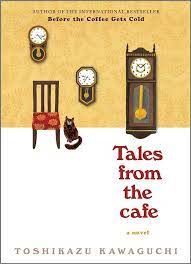
Time travel and coffee is of course a match made in heaven, and beginning the year here feels like it has a certain poetic resonance with where I ended the year with Jack Finney’s Time and Again, a book that marries time travel, New York, and Christmas.
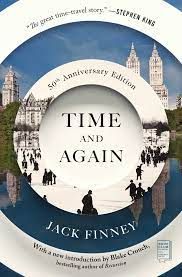
Both books deal with our relationship to the past. Both are stories about our need to understand the past in order to make sense of the present, and in both cases, in their own way, it follows characters who cannot change the past, but merely face it. Observe it. Reconcile it to where they are in the present. Kawaguchi’s story is the simpler of the two, contained to the stories of these persons whom come to this café, each for their own reasons and with their own needs. Time and Again is more expansive, looking at larger historical and social realites. Both books though leave the reader with the most important question- how do you move forward from where you are given how you are formed by the past.
Another possible trend.: I’m sitting here on January 1st looking at the sequel to Travis Baldree’s satisfying and endearing fantasy book Legends an L:attes, a book I read in tandem with Tales From the Café.
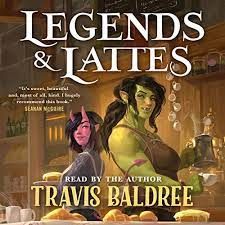
Aside from the obvious shared interest in coffee, Legends and Lattes follows a character whom desires to start afresh, to break from the burdens and shackles of her past and forge a new identity based on the person she feels she has become and the person she wants to be. Here the question of how much of our identity is attached to the past, and what this means for who we desire to be and become, becomes a crucial part of the journey she goes on in finding a new town an opening up a new café. In many ways, not unlike the story in Tales From the Café, we are as much a product of the past as we are our present. And part of forging a path ahead means accepting and understanding the whole of our story.
Past and present come colliding together in the wonderful and endearing intergenerational story of The Door to Door Bookstore.

Here we follow the growing bond between a young girl and an elderly man in a quintessential English town. Two different perspectives, one full of optimism looking forward, one looking backwards burdened by cynicism. Both find connection and healing through the power of story.
The power of story carries through another book I read this year, a classic that I was finally able to check off my list- William Goldman’s The Princess Bride, a pure delight that adds an entirely new dimension to the film.
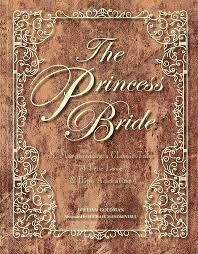
Here this story, full of that old world charm filled with adventure, swords, love, dangers, and companions,, is bound to the idea of the simple “telling” of this story as a fairy tale, an idea that becomes a part of the book’s larger construct. The father recognizes what it is for a fairy tale to be able to capture the imagination, but the grown son recognzes what it is to see the story in the true light of reality, now trying to live in this world with two competing realities. Thus we get the story of his imagination merging with the questions and thoughts of his grown up mind, functioning as a conversation. It’s a memorable exercise that captures the spirit of storytelling as a powerful device.
Another book that celebrates the power of story is Scary Stories For Young Foxes by Christian Heidicker, a sweet and emotionally affecting read that finds the storyteller as that frightening figure that threatens everything these young foxes know to be true about the world.
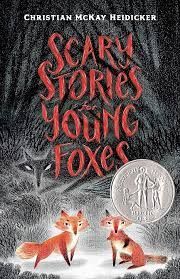
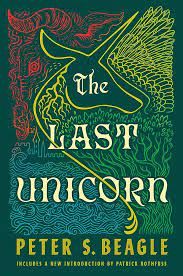
The journey, at once away and towards the storyteller, is an invitation to hear a greater story that is able to help these young foxes make sense of the dueling sides of the natural world that surrounds them. Dangers that threaten and lurk in the shadows on one hand, and the protective nature of their familial bonds on the other. Life on one hand, death and decay on the other. Love on one hand, hate on the other. As the book ultimately posits, breaking through these opposing forces is the invitation to simply live. A sentiment that feels pertinent in another classic I managed to check off the list, The Last Unicorn by Peter S. Beagle, a classic fantasy story fillled with wonderful creatures and big questions, but one that imagines hope emerging from the darkest places of this. Where transformation happens in the face of sadness and pain and fear.
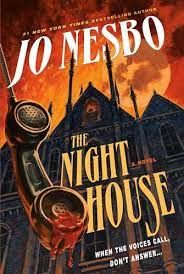
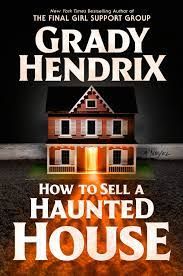
Over the course of October I read Jo Nesbo’s The Night House, a story that uses a house in some clever and interesting ways to explore the nature of our fears, while Grady Hendrix’s How To Sell a Haunted House uses it a means to confront the nature and process of grief. Both stories about how we contend with the nature of reality.
I finally finished Ransom Rigg’s series Miss Peregrine’s Peculiar Children series, The Desolations of Devil’s Acre being the last entry. And in a different way this book confronts a world that is not right, at a moment when the stakes are the highest. Its own answer to the question of the fears that face these children, fears that exist beyond the particularities of their own experiences, relating as they do to the state of the world at large, connects back to togetherness. Who they are together says something about who they are as individuals, and this is something that I think carries through How to Sell a Haunted House as well.
The Magicians Daughter by H.G. Parry, a book I paired with Brandon Sanderson’s Tress of The Emerald Sea for reasons relating to their shared premise (a young woman faced with a crisis and forced to go on a journey into unknown and dangerous territory with the crisis hanging in the balance).
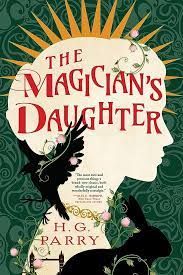
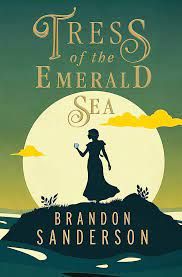
Tress being a take on The Princess Bride, fittingly enough for my 2023 year, was good not great, but The Magicians Daughter ended up being one of my years top 2 most favorite reads, occupying a space on my shelf soon after I finished. It also represents a fitting bookend to the journey that I found over the course of 2023. It is an invitation to believe again that magic exists and that it has the power to transform the darkness of our world into light.
My number one favorite book of the year was The Lost Year by Katherine Marsh.
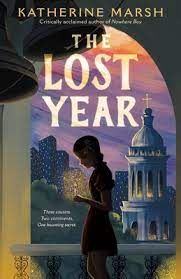
It’s a book that traverses the passage of time, connecting a young boy living in 2020 with the tragedy of Holodomor in the 1930’s. It is part mystery and part history, but ultimately it is a story of discovery, uncovering the mystery of that unknown history in a way that reshapes the young boy’s perspective not just of the world, but of his place in it. It’s a book about how we become captive to narratives, and how the narrative we bind ourselves to matters a lot to who we are and how we live in this world. It is a story about how we reconcile faith with the tragedy, and about the relationship between hope and cynicism, something that takes me back to The Door to Door salesman as well. There is a powerful thematic throughline that speaks not to just the stories we hear and the stories we hold to, but to how we tell our stories and how we tell the stories of others. Stories have power. We also have the power to shape these stories, be it our own or the stories of others. This is, as my journey in 2023 suggests, how we then learn to live in and exist in this world with hope, especially amidst the crisis.

