
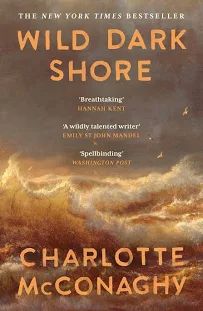
My month started with two hold overs from 2025, the buzzy Wild Dark Shore by Charlotte McConaghy (format: physical book) and the massive tome, Mark Twain by Ron Chernow (format: audiobook). Both books are ones in which I read the majority last year, but finished in the early weeks of January. McConaghy’s patient mystery lived up to expectations, finding a way to use it’s multiple POV’s in service of a linear storyline, its poetic and symbolic presence overcoming a slight identity crisis. It’s a story that begs the question, where do we find hope amidst the wild dark shores of this world.
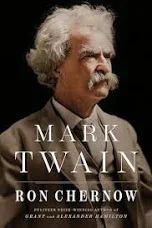
Chernow on the other hand has managed what I would suggest is the definitive work on Twain and a must read for anyone interested in his life. It is exhaustive, made up of a broad collection of stories which blend together to create a nuanced and intimate picture of a complex life and enigmatic figure. It’s great in audio format, as it functions very much as oral storytelling, immersing the reader in the rhythms of the narrative.
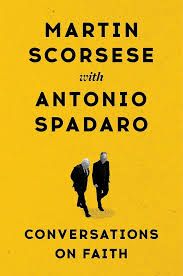
The first book I started in 2026 was Martin Scorsese’s Conversations on Faith (format: physical book), a short 100 pages that boasts an often powerful and substantive window into Scorsese’s relationship to both film and faith. A must read for any fan of the filmmaker.
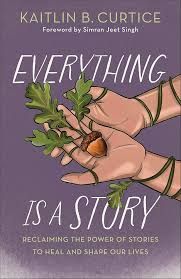
The first in a series of books I am reading on the importance of story and narrative was Kaitlin B. Curtice’s Everything Is a Story: Reclaiming the Power of Stories to Heal and Shape Our Lives (format: Kobo digital) This one was a bit of a mixed bag. It relies heavily on a working allegory, and if that allegory doesn’t land (for me it didn’t fully land) it ends up undercutting some of the observations the author wants to make. But I did do a lot of highlighting, and there were bits and pieces that I did find profound, beginning with the simple act of seeing everything as a story, and even more importantly recognizing that we are all born into a story that is already unfolding. Equally so it is the world around us that begins telling our story long before we come into awareness of it. I also appreciated the insights Curtice brings to the subject from the vantage point of her indigenous roots and spirituality.
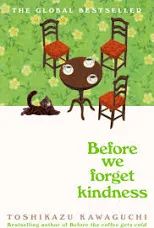
The first fiction novel I read was Toshikazu Kawaguchi’s Before We Forget Kindness (format: physical book) , the next and final book in the Before the Coffee Gets Cold series. One of two books I read this month featuring time travel and coffee, which is of course is an outstanding fact. As the final book this one does a really nice job of summarizing the journey of all of the characters, which I appreciated. It follows the familiar patterns, and while there’s nothing ground breaking here it has the touching and lovely dynamic that I’ve come to expect.
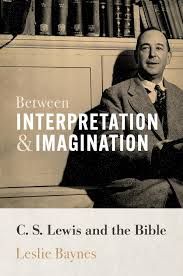
Leslie Baynes Between Interpretation and Imagination: C.S. Lewis and the Bible continues the welcome and apparent renassaince of renewed interest in Lewis and Tolkien as of late. This one focuses specifically on his relationship to the scriptures, which gives it a unique spin. The highlight by far is the second half of the book which walks through each book from the Narnia series making the argument that it remains his best expositional work. I found it not only incredibly persuasive (you’ll never look at the stories the same way), but enlightening.
I was less taken with Hugo Mendez’s The Gospel of John: A New History (format: Kobo digital) which I found to be full of questionable assumptions regarding the nature of this Gospel, both in its readings and its theories. For Ehrman apologists, of whom he is a student of and shares his views with, I imagine they will go for this like gangbusters. But to me there is so much other scholarship out there doing far better work on the relationship between John’s hellenized elements and its distinct Jewish presence, something Mendez continually ignores.
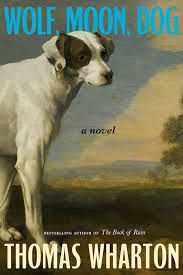
Wolf, Moon Dog by Thomas Wharton (format: public library): loved the premise, thought it was less effective in its execution. The early moments are good, but once it starts to move through broad sections of history and time it starts to get more and more unfocused as a narrative.
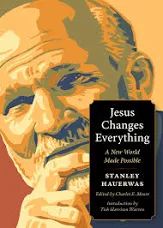
Jesus Changes Everything: A New World Made Possibler by Stanely Hauerwas (format: Kobo digital) is a great introduction to the hard hitting theologian, bringing together short essays that exhibit his unfiltered approach in speaking to what he sees as the demanding but liberating call of the Gospel. Full of great bite size quotes and readily desires to unsettle comfortable positions.
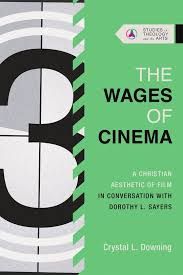
The Wages of Cinema: A Christian Aesthatic of Film in Conversation with Dorothy L. Sayers (format: Kobo digital) by Crystal L. Downing is about Sayers, about the technical art of film, and its about a particular christian aesthatic. Which is to say- it’s about a lot. Do all of these things work as effectively entry points depending on your point of interest? Maybe. For me I am deeply interested in the art of film and its intersection (in dialogue) with the Christian faith. I had only cursary knowledge of Sayers. From that vantage point I enjoyed a lot of it, although I can see where it is probably trying to do too much at the same time.
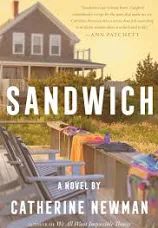
Sandwhich by Catherine Newman (format: Kindle digital) was my “actively dislike” read of the month. I went in blind, and wish I hadn’t because everything from the structure to the subject matter was not for me. It takes a plotless approach and binds it to superficial characters. Wasn’t a fan.
Mark as Story: An Introduction to the Narrative of a Gospel by David M. Rhoads (format: Kobo digital) was my the first book I finished in tandem with my journey this year through the Gospel according to Mark. A good place to start given my equal interest in narrative. It’s not the strongest work overall, but for anyone interested in reading the Gospel through the lens of story its a helpful treatment of literary style and structure and form. It’s a reminder that the Gospel is a literary construction as much as it is also a Gospel.
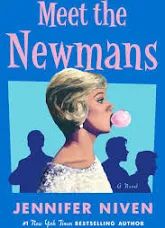
The next book I read is one that I really enjoyed, which is the recently released Meet the Newmans by Jennifer Niven (format: Libra audiobook). I loved the nostalgia of its 50’s/60’s Hollywood setting, but what I didn’t expect was how timely the commentary would feel, depicting a film industry in the throes of uncertainty and upheaval. Here the commentary speaks broadly, but it also has an intimate element as well, revolving around a memorable cast of characters and a really effective story structure. The way it centers on two pivotal moments, both essentially defining the arc in its own way on either side of each moment in the story gave it layers and intrigue. I’ll be thinking about this one for a while.
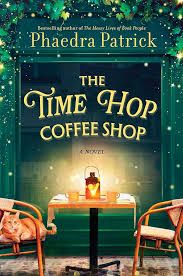
The Time Hop Coffee Shop by Phaedra Patrick (format: physical book) was a blind buy, and is the second book featuring time travel (sort of) and coffee. It’s surface level, although the idea is good and elements were endearing. As a whole some of the plot devices didn’t work as well as they needed to fully get me to where I needed to be with the character transofrmations. It id inspire a write up though in conversation with Meet the Newmans, as there is some interesting overlap in themes reagarding nostalgia and the different worlds we occupy.
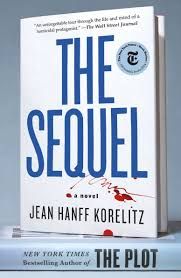
The Sequel by Jean Hanff Korelitz (format: Libby digital) is a sequel to the great blockbuster The Plot, which I read last year. It’s not quite as strong, with the construction of the plot devices feeling a bit too aware and at times forced, but it still works and it was still entertaining. It’s one I feel could grow in my appreciation over time. I just need to reconcile the slow build of the first half.
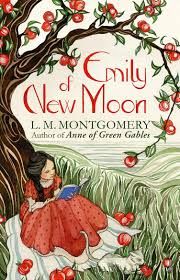
The final book I read in January was also my favorite, which is Emily of New Moon by L.M. Montgomery, the first of three books I am planning to read by and about the famed author this year. It was my introduction to Montgomery and I really fell in love with her language, her style, and found great affinity with the character of Emily. I love when a book helps me to feel understood, and in this case very much affirmed in some of my own strange quirks questions and tendencies and passions.

