
“I like the idea that Oz the Great and Terrible was just a little tiny man behind a curtian with a great big voice. And I’ve always thought that death is like that, you know? That Oz the Great and Terrible is really just a faker.”
“How is death a faker?” I ask
“I think that when we get there, we’re all going to say, is that what it was? Is that all?”
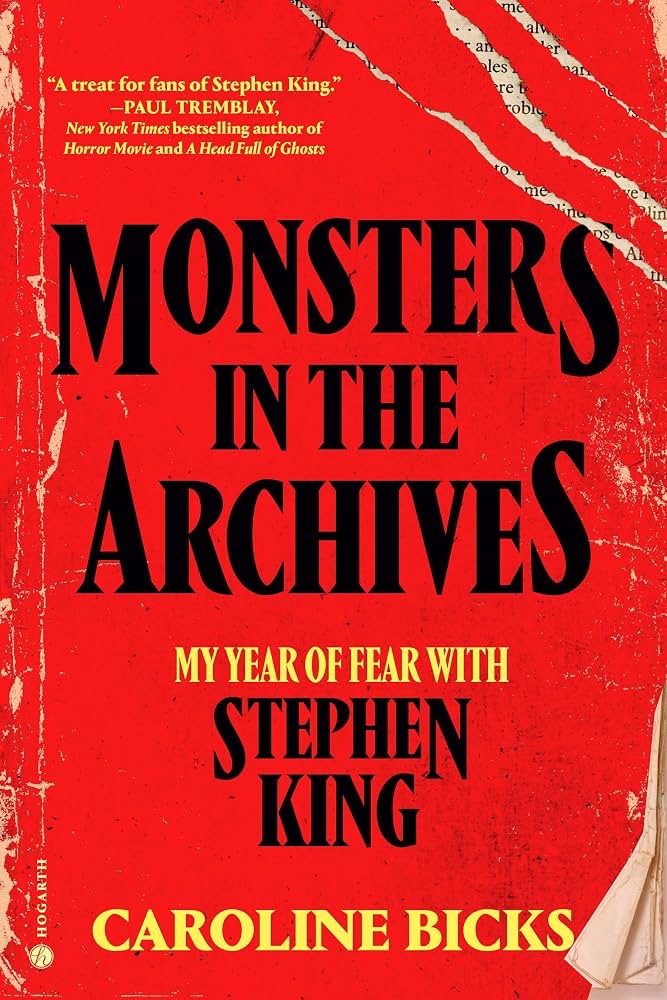
This is an excerpt from the book Monsters in the Archives: My Year With Stephen King, where author Caroline Bicks is discussing the compostion history of Carrie with King.
(spoiler warning)
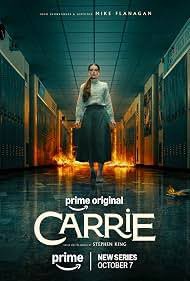
It’s a pertinent word given what Flanagan does with the material and how he chooses to end it, effectlivy reshaping the entire trajectory of the story’s thematic interest. If, for King, this is a story about death, Flanagan chooses to gloss over this essential facet of the story, rendering the complexities of the human characters and their wrestling dishonest and confused. The single choice to allow Carrie to live shifts the entire focus of the conversation, the real problem being that the problem inherent in the source material is still in play. It just gets swept under the rug in favor of a romanticized materialism that refuses to look its own challenges and implications square in the mirror. That a scene so tragic as the mass loss of life in the gym can end up feeling trite and insignificant is, for me, a central betrayl of some of Flanagan’s worst tendencies as a storyteller.
That he is such a gifted “visual” storyteller is what raises the stakes, particularly in how we are able to grapple with Flanagan’s atheist and materialist worldview on rational grounds. Here it’s worth grappling with the central differences between King’s and Flanagan’s approaches to the problem of death. And not inconsequentially, you have two people telling this same story from the vantage point of a history of substance addiction and sobriety, and two people with equal penchants towards critiquing organized religion (Flanagan growing up Catholic and King growing up Methodist). Organized religion is nearly always the central villain in Flanagan’s stories, and often a backdrop in King’s.
The two storyteller’s couldn’t be further apart however in how they apply these crtiques to rational and probing questions about the nature of reality. One of Flanagan’s great sleight of hands has long been parlaying that same discussion of death cited above into glorified and romanticized portraits of life affirming visions that he refuses to actually do the hard work of actually justifying. Rather they act and function as a means of escaping and avoiding the hard problem of evil. Like he does in Midnight Mass, all of the questions raised by the complex systems at play in Carrie’s world are sidestepped by scenes which portray the robust materialism of typical high school narratives as liberation and freedom. Along with the religious constructs, so goes the relationship between parent and child (family systems), teacher and child (formative systems), and even the self (the implications of pulling the individual from a world where all structures have been dismantled). What we find in its place is a burn it all down mantrar followed by the ultimate emergence of the liberated individual, freed by the knowledge of such enlightnement ideals (religion as oppressive and science as liberation). Actually grappling with this new found knolwedge of humanity and the world and it’s implications? Who needs that when a beautiful score and manipulative visuals are busy claiming allegiance on our emotions. “Isn’t life wonderful” the show wants us to say, even as the cruel and brutal nature keeps rearing its ugly head. Flanagan leaves no room to actually attend for the words, “mom, you were right, the world is a horrible place,” because he is too obsessed with the gleeful idea of tearing down it’s systems. This becomes clearest in the final sequence where Carrie becomes a symbol of this humanist vision alongside the horrors.
Then we come to King. Someone who has often spoken against such sentimetnalism and who’s own relationship to questions of faith and relgion upholds the value of the Divine and the spiritual when held in the same hands as our necessary grappling with the problem of evil (see his conversation with the Archbishop of Canterbury). One of the more striking observations in Bick’s book is King’s deep interest in the idea of coming of age. He never seeks to isolate the adolescent from either child or adult, but rather sees this as a liminal space where a conversation about our shared fears and shared human struggles and longings can wrestle with both vantage points. Unlike Flanagan’s take on the story, the adults in King’s world are not the villains, rather they are prophetic visions of the ways we learn to understand and flesh out our childhoods against this looming sense that growing up is an act of discovering that everything we were taught about the world is a lie (for example, King’s formative experience of grappling with the loss of his mother).
For King, death is the problem. It is not merely understood as a crossroads between religious convictions regarding life after death and materialist visions of finite mortality. Rather it reaches broadly into our responsibility towards being honest about the true shape of our reality. This is not an ignorance of or doing away with beauty and meaning, although King’s stories (again, something Bick powerfully demonstartes in her book following King’s own journey through a chronological study of his works and their development seeking King’s motivations by pouring through the archives of the editorial process), rather it is a conviction that however we get to the Divine, it must travel through and confront the horrors of our reality. Even in the darkest places of our lives, which are the context for a lot of King’s works.
To suggest that death is a faker is only a sentiment we can apply where we take the horrors and the implications of our worldviews seriously. One of the great failures of Flanagn’s adaptation is that he refuses to do just this. And if we cannot name death, we cannot name life, at least not in a way that is honest about the true shape of this world.

