
This book was my choice for that short period beteeen the end of spooky season and those weeks leading up to Remembrance Day. Usually I try to pick something that relates to loss and memory and the storied history of civilizations. I had been saving this for precisely that reason
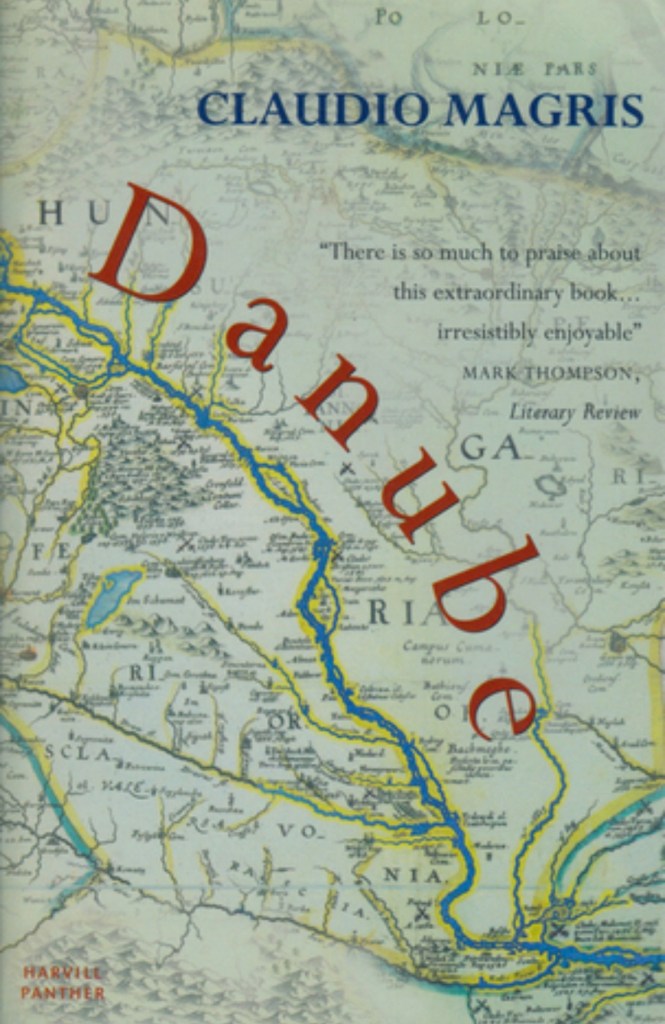
My thoughts:
To reach the dell of the Breg one has to go down the short slope, albeit only for a yard or two. There begins the river, and it;s descent, As we follow it, we shall do well to lool for places to pause, and detours, and delays; fo, as Rilke knew, there is no point in thinking about victories: the only thing that matters is survival,”
- page 38
A compelling way to begin this journey down the Danube, anticipating the storied landscapes Magris will encounter alomg the way. It’s a celebration of the river, a subject that remains an impassioned fascination of mine (the symbolism and presence of rivers and the ways in which they connect civilication), It’s also drawing a portrait of central Europe in a period where its civilizations were defined by the constant state of shifting borders and uncertain powers.
It’s a physical journey, to be sure, one that stops and lingers as it goes. I find myself curious about the personal journey of the author. What we get is a point of perspective, one that is observational, but also an interpretation. The author floats between moments of cynicism, a quiet nihilism, skepticism, interupted by moments of hope. It’s uncertain whether the journey is forming conclusions or raising questions, whether its an existential crisis or a seeking after something more. Whatever it is, it’s an honest mix of beauty and despair as the river itself continues to bring about this inevitable collosiion between past and present.
“Time is not a single train, moving in one direction at a constant speed. Every so often it meets another train coming in the opposite direction, from the past, and for a short while that past is with us, by our side, in our present.”
- Page 39
And it is here that one can glimpse the subtle notes of transformation. “To aquire a new identity,” the author states, “does not mean betraying the first one, but enriching one’s own self with a new soul.” (page 41) This is what happens in that liminal space where past and present meet, and yet equally true is to recognize that what we see is shadowed by that unknown future all the same;
“Here the Danube is young, and Austria is still far off, but clearly the river is already a sinuous master of irony…” (page 58) An irony Magris notes, that “creates the greatness of Central Europe” while also upholding the “misunderstandings and contradictions of life.” I love this line from Magris;
“Tolerance of the imbalances and deformities of the world, of its parallel lines that never meet, does not diminish our faith that those parallels meet at infinity, but it does not force them into meeting any earlier,” (page 58)
Later on Magris utters the line, “the interplay of coincidences which holds the universe in its grip,” now standing in Austria, the coloured grasses, the bird song, the smell of morning on one side and the Empire on the other. He notes havng this “vague sense of being a traitor, a man who has gone over to the other side” to steal a glimpse and a sense of beaity and happiness. At the end of a section he calls Cafe Central, Magris speaks about Vienna as a homecoming, observing that “our identity is partly made up of places…” It is with this sense of place that “the enchantment of things,,, becomes ever fresher with time,” Which of course is calling back to the train analogy, where memory and moment become intertwined and transformed into identity. If, as he describes Vienna, the city is “one vast cafe, scene if methodical habits and of casual comings and goings,” one might be prompted in journey’s like this to think of arrivals and departures and returns in the scope of ones life, Can we be precise about these mysteries regarding life and death? Caught between the “gloom and the glorious,” what remains in the moment is the desire or need to belong where we are somehow and in someway, seeking to trust that the river is leading somewhere,
Which in a physical sense is the Black Sea.
“According to Nestor the name “black” given to the internal sea by the indigenous peoples living round it, was interpreted by the Greeks as inhospitable, They later oriceeded to describe it as hospitable when they had founded their cities along coasts and transformed it into a Hellenic sea.”
- page 381
These concluding moments of the journey I thought were such a captivating reflection on some of the great tensions the journey holds. Like the comings and goings of the city, here we have the deeply felt contradictions embedded in the history of the world’s civilizations that its rivers hold near in its memory and its present. Here the grand promises of the modern world collide with the ugliness of its creation, symbolized in “those waters which sometimes look black, as if night had her cradle there,” Sort of like death pushing back on life, Does such a water “result in the emptying out of life,” Magris wonders, equally aware of what this does for the journey itse;f. “The Christian other world contains souls and bodies, the pagan one only shades,,, (the water) a pagan shroud, an ultimate passage beyond which there is no knowledge, no answer to so many questions, but only a dim limbo… (truth) nothing but interest abated… it is a cinema repeatedly projecting the film of a reality already non-existent, the mere silhouettes of life,”
You can see where the nihilism shows its face, And yet, “Tradition attests to the serenity,,,” of that which the land holds in its memory as a witness, The question then becomes, “where did this serentiy come from?” A serenity that against all odds allows such a witness to emerge from lands which seemingly “do not know how to believe in God or to look atoms or the void in the face” honestly,
Some semblance of an answer comes for Magris in the image of monuments and an old city along the later portions of the riverbed, once the movement of the forefathers along the Danube towards the days of summer and the land of the sun. Into the Romanian Steppes and out into its emptying, Here “the canal runs on, runs on, calmly and confidently into the sea, and it is no longer a canal, a limitation, a Regulation, but a flowing outwards that opens and abandons itself to all the waters and oceans of the entire globe, and to the creatures living in their depths, Lord let my death be like the flowing of a river into the great sea,”
If you can hear the nihilism, you can also hear the hope the river evokes seeking to reveal itself into the mix, Both feel to be equally necessary parts of this storied journey and the wrestling it demands of its travellers,

