In her book, Pause: Spending Lent With the Psalms, author Elizabeth Caldwell uses Psalm 63 to explore the theme of “blessing” during the 3rd week of Lent.
She reflects on the different ways we think of blessing. The different ways we define blessing. The different ways we bless and feel blessed. Through the lens of Psalm 63, she then formulates a vision for seeing “blessed” through the lens of trusting God AS we participate in the reciprocal nature of the blessed practice.
She paints the portrait of this space inbetween our awareness of what is wrong (the reality of a world enslaved to Sin and Death in Ash Wednesday) and the already-not yet nature of the resurrection (the defeat of Sin and Death). In some sense this is, like Christmas, a period of anticipation. And yet there is another facet that proves even more poignant over Easter- the notion of discovering what it is we are waiting for. Or more specifically, the act of allowing this period to uncover our deepest longings for God to make right what is wrong in this world. To be able to align our vision of the present with the in-breaking of God’s kingdom into a world ruled by the Powers of Sin and Death.
The reclaiming of creation and the proclaiming of new creation.
At the heart of this sits this central confession in Psalm 63:3- “Your steadfast love is better than life.”
God, I seek you. God I thirst for you. God, my body (flesh) faints for you.
Why? Because your steadfast love is better than life.
I’ve been thinking about what this means. One common assertation that I hear in dialogue with atheists, be it my friends or online, is that religious belief is born from people’s need to avoid death. As the critique goes, it avoids reality with pie in the sky whisk me away to heaven type platitudes.
You know, that familiar appeal to blessings that says, if I please God I’ll get my heavenly reward. Or even more potent- if I am chosen by God I’ll get my heavenly reward.
The irony being, blessing is often the gateway into claiming this reward in the here and now. The blessed life is percieved to be one that escapes trial and suffering and sickness and poverty.
How curious then to encounter the Psalmist saying something that sounds so blatantly contrary
Your steadfast love is better than life.
If anything this appears to call us to the opposite- to abandon the blessed life.
To be sure, I do think that would also miss the point. If this Psalm is indeed reflecting the voice of David, as it is commonly understood, and if it is placed, at least in our imaginations, in the context of David fleeing Saul in the wilderness, the Psalm appears just as concerned with how David lives his life as it is about longing for something greater. Read in context, I’m struck by the idea of these things appearing interconnected.
The Hebrew word for steadfast is chesed, and it denotes faithfulness. Thus one can read it to say your chesed hesed (love) is better than life. What feels important to me here is denoting the connection between God’s action (faithfulness) and God’s nature (love). Thus, the contrast between steadfast love and life is framed through the way this truth about God illuminates the truth about life. Life finds its true meaning in the true nature of God. This renders the contrasting portrait equally relevant- if God’s steadfast love is not true, how then do we make sense of life.
Caldwell points out where this leads the Psalmist, which is to proclaim that because of this, “I will bless you as long as I live.” (63:4)
Of all the uses of blessing that we can conjure up, I would think the least likely usage that comes to mind is us blessing God. And yet this is where the proclomation leads the Psalmist, to this overt confidence in the notion that this is precisely what life does. Life points to something beyond itself. To something greater. The question of blessing then affirms what that “greater” thing is- God’s steadfast love.
Equally pertinant to point out that the ensuing verses (63:5-8) draw out a portrait of a lived life- eating (vs 5), speaking (vs 5), sleeping (vs 6), thinking (vs 6). It is in the trenches of our lives sthat we find the means to bless God, precisely by being willing to live in response to who God is.
Here’s the powerful conviction that this act of blessing brings about for the Psalmist:
In the shadow of your (steadfast love) wings I sing for joy. (vs 7)
My soul clings to you (steadfast love); your (steadfast love) right hand upholds me
Here, then, is the great truth about the blessed life- it is not dependent on the circumstances of our lives. Rather, it is dependent on the unchanging nature of God. We cling to God through living. God’s right hand upholds us through His steadfast love. This is the blessed relationship. This is where the interdependence of this relationship arises as correlating acts of blessing. As we bless God through the living of our lives, we become blessed by the knowledge of who God is. More importantly, this blessing draws us more firmly into the trenches of this life, not away from it. It frees us to bless God from the trenches.
All of this is intuitively informed by our deepest longings, longings that blessing God help to reveal, particulary in times of waiting such as Lent. It doesn’t long to escape this life, it longs to recast life, and thus the act of living, in a greater light.
How sad that a mark of the overt cycnism that is so pervasive in this present moment would and could be the catalyist for derailing a story who’s aim it is to counter it.
Or perhaps its precisely what we should expect. After all, cyncism can be a powerful drug.
What might be even more sad is the fact that this cynicism is targeted at a young woman who happens to have opinions and a voice, investing herself into a role that is all about giving young woman a voice. The live action interpretation uses its license to take some of the storybeats that were already there and bring them to the surface. A story about contrasting views of physical beauty becomes a story about contrasting images of fairness and rightness. The power of true loves kiss becomes a story about reclaimed agency. A story about power rooted in magic becomes a story about power rooted in the social divide.
The latest in a series of live action reimaginings doesn’t hit the cinematic high notes of something like Beauty and the Beast, a movie that remains one of my most favorite and memorable theater experiences (back before the cynicism had taken root). There is however something refreshing about the way it stays grounded in the practicalities of the story, paring back the depths of its dark magic in favour of a boots on the ground depiction of the enslavement which comes from systematic oppression. In fact, this groundedness goes a long ways in aiding Gal Gadot’s rendition of the evil queen, which had been a real question mark for me personally. Rather than go the route of the Little Mermaid, leaning in to the over the top performance that easily would have rendered this pure camp, the storybeats and approach actively work to restrain and contiain that performance, making this something of a counter to The Little Meraids larger than life narrative.
And the dwarves. For all the ink spilled on the decision to go the route of CGI, the commentary completely missed the fact that they used this approach in service of the story. Rather than having real life characters surrounded by talking animals, the CGI drawvevs help to distinguish the world that Snow White falls into and uncovers as a kind of allegorical force that she carries back into the world governed by the powers and enslaved to its economic interests. The CGI dwarves not only help to center Snow White as a distinguihable figure parsing out the meaning she finds in this fantastical setting, they blend perfrectly with the CGI animals, even going so far as to make the later inclusion of a group of revolutionaries actually populated with real life little people that much more poignant. The CGI dwarves are effectively an image of society in all of its complexities, offering us perhaps the most distinguished and compelling portrait of what it means to be human in the scope of the film.
Its also worth stating that this film veers younger in its dynamic. The film opens with a simple, storybook approach, quickly moving through the story so as to arrive at what ultimiately becomes its simple interests. Here words like kindness and fairness emerge as simple childhood lessons that can be heard and understood by the youngest of the audience. And yet here is the mistake the cynics make- suggesting that this must then be reduced to simplicity or superficiality completely underwrites the power these words hold in their complexity. Just as Snow White describes these things as being alive and true in her childhood, its likely the grown up cynics that need this story most of all.
And here might be my most potent aim in terms of my frustration with the present cynicism of this world- it would take an extremely cold and callous heart to walk away from this thing not feeling something from its good spirited aims and good will intents. The lead gives a performance that is both invested and authentic, immersing this in the life of its songs which work effortlessly to move us towards a greater imagination for thinking and believing and acting more hopefully in the face of a cold and callous world. Its as much a celebration of childhood perspective as it is a call to remember it. As Snow White is offered in the early moment of the film, growing up is an invitation, a prayer, to grow into something more true. Into an emobied vision of the world and its goodness and its life that is truest of all.
One last thing that struck me. When Snow White is standing in front of the castle, awakening to the vision of this hoped for prayer, she calls it “her father’s house.” A house that makes room for all. A house that finds its power in a vision that opposes the allure of power. A house that remiagines power as being for the least of these. How fitting then, that she speaks, leading up to this vision, of this inheritance, the inheritance of this kingdom, being shaped by and for the least of these- the meek, the poor, the struggling, the hungry. Throwing open the doors of this kingdom, understandiing what it means to not have to walk this life alone, to take our understanding of what is not right in the world and to formulate this into action. God help me if this wasn’t the most powerful Gospel message I’ve encountered in a long time. So much so that the songs themselves started to formulate into one of its most vital components- worship of that which is true.
“You wrecked my world in a beautiful way. And I kinda thought that I’d always stay the same. But I heard that healthy things grow, and growing things change.”
Ben Rector (Wreck)
In The Grey Haven’s recently released 2025 EP “Where The Living is Deep”, the lyrics of the title track reflect on the nature of time as movement in space, evoking contrasting perspectives of the perception of the waters getting shallower and shallower as the past retreats and the future encroaches with the sought after conviction of the river running deep in the present.
I wanna be where the river runs deep, the lyric expresses, carrying notes of both lament and proclomation. If time is movement, the allegory of the moving river turns us towards the notion of life rather than death.
I wanna be where the livin is deep.
Somebody show me where.
Heaven knows where.
This is the longing of those driven to seek life in the rushing waters.
If the final line wonders about whether we “could finally be where the living is deep,” it leaves one to ponder what this means for the movement of time. Rather than evoking an image of anchoring ourselves in the deep waters so as to prevent time from moving forward (or us from moving forward in time), we instead find ourselves flowing with the waters as we watch the world around us change. Thus the invitation is to likewise consider the ways in which we change with it. To be in the river means that we cannot stay stationary.
And yet, to seek the living is to nonetheless seek something true, something trustworthy, something of eternal or infinite value. To find the deep waters that are able to carry us is to likewise anchor ourselves in this truth.
In her book Pause: Spending Lent With The Psalms, Elizabeth Caldwell notes a similar contrast of perspectives, writing in regards to the notion of seeking the face of God:
I’ve often thought that the youngest and the oldest people we know are the nearest to the presence of God’s spirit
It’s interesting to consider this within that image of the river the above song evokes. “Time is a look into the age old past,” the song goes. “Time is the future comin way too fast.”
Leaving one to wonder, as we float down this river called life, whether its just an inevitable march to shallow waters or whether this is all awakening us to something more than we can presently see.
This past summer I was able to check an item off my bucket list by finally visiting the headwaters of the Mississippi River. My wife and I had done the middle section of the Great River Road years ago, starting in Minneapolis and ending in Memphis, thus we still had both the headwaters and the mouth to do in order to complete the journey. With the mouth still on the list, visiting the headwaters was an eye opening experience, because looking at it you would never imagine such a thing, emerging from seemingly nothing, could go on to become the mighty river that carries so much history in its grip. This inconsequential trickle grows into something with incredible significance and storied presence.
To stand at the headwaters is to equally imagine where its all headed, to imagine the section of river I have yet to see and fully experience. With the current flowing in a single direction, there is an element of trusting that this marked beginning is flowing towards something, even if I can’t yet fully experience what that is. What I have in the present is the middle, a middle that has been shaped by the clarifying image of its source.
As Lent reminds us, in the present middle we have the incarnated Word of Jesus. In Jesus we can enter into the living of the present, the incarnation having broken into the middle of history as God’s revelation to the whole of creation. The great “wrecking” of this present order that reveals the beauty. In Jesus we enter into the deep waters that we intuitively and naturally seek in the rushing movement of time.
And yet, as Caldwell notes, “This is not so with God the Creator, who’s face is unknown.” Caldwell goes on to reflect that,
It is in that mystery (of the unknown face of God) that we are invited to engage..,
In context of the book it is an invitation to engage with Psalm 27. It can also be seen as an invitation to engage with the Reality of life, both in its source (the headwaters) and its definition (Jesus). As the Psalmist declares,
The Lord is my light and my salvation… Come, my heart says, seek God’s face (27:1;8)
Heaven knows where
This is the longing- To find God’s face in Jesus living in the present.
If, as the lyric by Ben Rector above notes, healthy things grow, and growing things change, what both sustains and informs this change is the singular reality of finding the deep waters of God’s salvation. All that changes, changes in Christ. All that flows, flows in Christ.
In her book Surprised by Paradox: The Promise of “And” in an Either-Or World, Jen Pollock Michel writes,
“As soon as we think we have God figured out, we will have ceased to worship him as he is
Thus the living, the being carried by the river in the deep waters of Christ, becomes a process of discovering more and more of God, and in doing so coming to know more and more of this world and ourselves. As the Psalmist declares “I have sure faith that I will experience the Lord’s goodness in the land of the living (27:13).” Caldwell is convinced that what Jesus breaks open is the truth that in the present, “God’s face is most completely seen when we see and acknowledge the faces of all whom God loves.” Or it could said, all THAT God loves. This is the goodness of God’s creation.
The “you” that wrecks our world is encountering God, and in this present reality where God’s face is yet uknown, God is found through the inbreaking of the incarnation, a reality that opens up the living to encountering God in the other. This is what the revelation of Jesus proclaims. The deep waters that we seek is the welcome invitation to participate in the living, and in the process of living finding ourselves changed, transformed.
And yet. Or better yet, still. We find these deep waters within the confidence of the rivers headwaters and the anticipation of its mouth. Change, transformation, it is rooted in something true and heading towards something true, something real. The living in the present is, in fact, the very thing that anticipates this coming reality. The Lord is my salvation- the future breaking into the present- declares that this participation finds its meaning not in the forces of change in and of itself, but in the ways this “wrecking” binds the change to a greater hope. The great ocean of God’s redemptive work awaits its consumation. For us in the present seeking the deeper waters of this promise, it has also been inaugerated in the resurrection of Jesus.
If you aren’t familiar with the book J.R.R. Tolkien’s Sanctifying Myth (Bradley Birzer). it’s a must read. It was transformative for me, to be sure. Not only in my understanding of Tolkien, but in how I understand myth. As Birzer writes,
To the modernist, “myth,” like religion, merely signifies a comfortable and entrenched lie. For the postmodernist, myth simply represents one story, one narrative among many; it is purely subjective, certainly signifying nothing of transcendent or any other kind of importance.”
In contrast, as Birzer writes (in his article The Sanctifying Myth, which functions as the introduction to the book),
Myth (J.R.R. Tolkien thought) can convey the sort of profound truth that is intransigent to description or analysis in terms of facts and figures…. To enter faerie- that is, a sacramental and liturgical understanding of creation- is to open oneself to the gradual discovery of beauty, truth, and excellence. One arrives in faerie only by invitation, and, even then, only at one’s peril. The truths to be found within faerie are greater than those that can be obtained through mere human understanding
In a modern, western world where the phrase “its just a myth” is as pervasive as the phrase “mythbusters”, it should stand as no suprise that what has also been sacrificed in its wake is an essential part of how we know anything at all- story.
This was of course popularized in The Hero with a Thousand Faces’ by Joseph Campbell, still prerequisite reading for anyone looking to understand how and why story, or myth, matters to our ability to know truth. Here, myth is a type of speech that transforms meaning into form, as I heard it once put.
In common use today, myth is something that’s seen as true but is in fact false. Which is quite far off from what it meant in the ancient world. This common use is then used to set the modern world above the ancient one in regards to knowing the truth about this world, about reality. In its sights, of course, is religious myth. As the argument goes, the ancient world created religious myth to explain a world they didn’t understand. We understand the world now through science, therefore we can do away with the lie (the old religious myths).
The root of the word myth comes from mythos, which means “story.” It is, by its nature, anchored in history. While it might be common to attach to this the subsequent label “a story that isn’t true”, this is in fact quite the opposite of its role and function in the ancient world. By way of ones assessment of history and the world, formative myths bind people to a shared story in a way that then defines what this history says. It fleshes out what they believe to be true about God, the world, and the self. These days, with our hyper-modernist appeal to literalism and scientism, there is discomfort and skepticicism with how these ancient texts and societies and stories influse history and meaning as a way of appealing to truth. And yet, history without narrative, facts apart from story, cannot actually speak or say anything at all about God, the world or the self. Myth, then, has more to do with how a people understand these facts, this history, pointing to something true then it does with dictating of passing down information. Myth endeavors to pull us out of the shackles of literalism and into a place where our observation and experience of this world can be formulated into an embodied story. This is how we are bound to truth in a way where it can be known.
We know this intuitively. To tell our family story, for example, is to shape it into myths, not a series of dead and impotent facts. This is how we come to know who we are and what we belong to. Myth at once binds us to the past, and in so doing transforms the present, precisely by enveloping the whole into a shared narrative. Or as I heard it put once, “myth naturalizes history and transforms culture into nature.” (I apologize, I could not track this quote down for citation). It formulates a beginning and binds us to the progression that otherwise cannot be seen or understood. Our story becomes part of THE story.
So why am I talking about myths? It’s been on my mind this week as I’ve been trying to catch up on some of my photobooks on shutterfly. My pictures have been sitting there dormant, and I have a couple years worth to add to my physical photobook collection.
It was in the process of doing this that I was revisiting my trip to Toronto last summer for a friends 25th wedding anniversary. I decided to take the route through the U.S., which travels from Winnipeg either through Michigan, or by way of Minneapolis/Chicago if I was sticking with the major interestates. Traverse City had been on my bucket list for a while, and given that I was travelling by myself, I took the opportunity to make the short detour and stop over on the way.
Loved the city. Aside from being giddy over its infamous film culture (courtesy of my favorite filmmaker, Del Toro), its downtown core of shops and canals and lakefront and forests is exactly the sort of thing that lends a small, midwest city its charm. Throw in the cherries (it’s noted as the cherry capital of the world, which of course means coming home with everything from cherry bbq sauce, which I fell in love with after trying it on a pizza, to cherry jam to… well you get the picture), and its officially complete.
And don’t miss out on the Mile 22 drive. You don’t know Michigan until you’ve traversed this scenic 116 mile stretch of coastal heaven, quaint small towns and all.
During my time there I ended up at a restaurant where I chose to cozy up to the bar, seeing as it was just, me, myself and I. I ended up sitting beside a local who, aside from being well watered over a few drinks, was also extremely talkative. I’m still not certain of his story (he was married, but seemingly going through something, and without a doubt sitting at the bar alone having a few drinks), but in the midst of bragging on this job (with some high up company that sent him all over the world), he did give me some helpful perspective on this place he called home. In the summer the population quadruples, if not more. Which is just to say, parsing out what makes Traverse City “Traverse City” to the locals requires reading between the lines of its summer getaway status (read: cottage country for us manitobans). Those who live there permanently, according to my new friend at the bar, are a passionate bunch dedicated to the lifestyle and the perservation of its indie culture, witnessed to by the shops and spaces that dot the core. Given that the city is not corrupted by sprawl, where the toursist and local meet is, and can only be, in the shared, centralized space. Which is part of what fascianted me about it all.
This meant that getting to know its story didn’t require getting off the beaten path. It meant immersing myself in the singular fabric of its centralized ethos. Which is what I did- I parked my car and I wandered.
Along the way I happened across a local store run by local artist Eric Buist. What stopped me there was my interest in getting some genuine locally made local attire. As I walked into the store I was met by Buist’s friendly smile and invitation to browse the different collections of Michigan related options. As I was doing so I kept coming across different things that had what appeared to be a collection of animated monsters adorning their fronts. No text, just monsters. Curious about it, I asked him what that was all about. He happily told me the story of what was his own creation, an image that was meant to capture what is called “mythic Michigan.” Each figure told a story that reaches long back into Michigan’s past, binding the present state into a shared story. So much so that it has helped to shape the division between the Upper and Lower Peninsula through the well worn moniker of trolls (lower) and yoopers (upper), divided geogrpahically by the famous Mackinac Bridge (where trolls are seen to reside under the bridge, and yoopers on the bridge). Here the images of the mythicized monsters give life to the entrenched stories of their Michigan past. bringing the place alive with its sense of mystery and identity.
And here’s the thing. Behind each and every one of those stories is the history of the place’s development, binding the indigenous people’s legacy to the modern landscape in a way that brings us up close and personal to its waters, its endless array of atmospheric forests, its sand dunes, along with its more modern lumber industry. Through this myth telling, I am able to understand the experiences of the old French traders crossing what was known as the “long bay”, and the preservation of the Old Mission area encased by the now M22 roadway.
While colonialism has a long and tragic past when it comes to the formaution of American land and spaces that cannot be ignored (and should be addressed through bringing contrasting myths into conversation), with Michigan being a famous lanuching point for the further establishment of areas to the southeast and southwest, one of the outcomes of this expansion is that areas like Traverse City, which were quickly left behind in the march toward more ambitious goals (read: Detroit), are given the necessary space to form this unique fusion of stories old and new. These were allowed to formulate here within the localized industries, the protected bays, and, if my friend at the bar is correct, the old money coming down from Chicago. These carry the story of the eventual progression of tourism and the infusion of the film indsutry, but they also help preserve the indigenous culture and stories.
Myths usually tell us something about why the world is the way it is. They also tell us about why a place is the way it is. They are a window into the perceptions of a people and place, both regarding themselves and regarding the world around them. They also tell us something about why this history is meaningful within the larger story. The people relate to the city. Traverse City connects to the State. The State connects to the country (or the Republic if you want). The Country connects to North America. North America connects to the world.
And as it is with all myths, the world connects to God, even in a world where God has perceivable been killed off. Myths, by their nature, formulate an understanding of the meta-narratives that frame our beliefs and our understandings, which for Tolkien was the true myth that makes sense of all the world’s stories. The true myth that brings everthing in to focus. This is where we find our shared meaning. This is where Reality gains its shared meaning. To lose the ability to tell these stories is to lose the ability to make sense of Reality.
I had this thought walking out of that store with my shirt now in hand. As I told the store owner, while the other shirts adorned with the words “Michigan” and “cherry capital” were obvious wants and easy sells, what sold me on his particular creation was the fact that it invited telling its story rather than providing the exposition. That to me felt and seemed far more enticing. Where an onlooker might not know its Michigan by looking at it, they will come to know Michigan in a truer and real way by hearing its stories. By having these figures explained.
i had another thought. I wonder about the ways in which myth can help break open some of the dissonence between the colonized and now developed city of Traverse City (a necessary part of the present) and the pre-existing life of these spaces that can help frame this progression in a necessary context, good and bad. How is it that mythic michigan can help me celebrate the uniqueness of its indie culture in a way that coexists with the story of colonization. Here the mythic creatures I think can help bring to the forefront another central and necessary aspect of myth that’s worth considering- its cyclical nature. There’s a broader story that binds the particulars together. Rather than telling the myth of progress, we can see Michigans mythic past anchored in those circular narratives that the ancient world employed. Where we arrive back at the questions that framed our beginnings with fresh perspective. A new way of seeing in the present. This is the power that myth holds, being told and retold through generations. This is where the present resident of Traverse City can look out at the waters and speak the story of its legendary serpent emerging from the caverounous valleys left behind by the glaciors, not as some relic of the past, but as a way of knowing Reality. A way of seeing Reality beyond the mask of the modernist materialist enterprise. Its a way of awakening to the spirit and mystery of the place. The magic if you will.
Listened to this on audio. Wish I had picked it up in paper copy or on kindle. In fact, I will be doing precisely that, because this is the kind of book I needed to highlight and underline and mark up. It’s that good.
It’s the sort of book I immediately want to put into the hands of everyone I talk to as well. The way it unpacks the essential nature of Judaism and Jewish life is often profound, and even more importantly relevant and necessary. It’s not just that it’s a necessary corrective to common misconceptions, sadly much of which has been perpetuated by us Christians, it’s a fervent reminder of why this ancient Tradition and story remains so vitally important to our present times.
And yes, I came into this book as a Christian. Held approaches this book not in an exclusionary way, but as an invitation. Yes, Held is Jewish, and he sees certain distinctives of his Jewishness whcih set him in conversation with Christianity, but he also allows us to see the shared story. We do not arrive at Christianity apart from Judaism. This is as much a part of who we are as it is for Held.
Which of course remains one of the more fascinating parts of this book for me personally. It helps me to both gain a renewed appreciation for Christianity’s Jewish foundation, both in what that is and why it matters, especially when it comes to the central conception of love. It also helps me to gain more clarity on what it means for me to be a Christian. This is super reductive, but if I had to boil it down, I would say the distinctives are wrapped up in these two things- the notion of fulfillment, and the notion of loving ones enemy. It’s on these two fronts that Christianity sees the world differently, albeit still through a distinctly Jewish lens. It is worth pointing out that these two things are intimately connected.
While Held devotes a whole chapter to unpacking the love our enemies portion (Chapter 9), the fulfillment aspect is woven into the whole. It really comes down to this central point. If the fullness of time did not arrive in Jesus, then from a Jewish perspective the story is still a story of exile. The paradigm remains one of slavery or opppression (our reality) waiting on God’s promised renewal. Thus the heavy emphasis on the here and now, the preservation of this present reallity as one of enslavement, and the continued shaping of the Jewish life as a matter of expectation as opposed to a realized hope.
Likewise, it is on this front that Judaism also upholds its theology of chosenness. While Christianity anchors itself in the spirits movement out into the whole of the world (a mark of the Jewish expectation), Judaism holds to the necessary theology of Israel’s election. Not over and against the world, but in a way that sees it focused on this particular story in this particular time or age. This story is being told for the sake of Israel. The fulfillment of this story will, in the fullness of time, become a story for the world. Thus chosenness does not mean at the expense of, it means in light of the present shape of things.
One of implications of this is that Judaiism does not concern itself with “evangelism”. It is marked by its ability to be concerned for Jewish life and its ability to coexist within the diversity of the world. It is not its concern that Judaism go out and transform the world in this moment. It is its concern that Judaism itself continues in the need for constant and necessary reform according to love of God and love of neighbor. And it is in this sense that the Christian call to love ones enemies feels somewhat antithetical to its ability to shape this reform around their distinct awareness of the cycles of oppression and liberation. In some sense, to lose sight of this story, one in which the story of Judaism necessarily calls one to pray for God’s demonstration of the good through the liberation of the Jewish people from the bad, is to lose sight of love itself. In contrast, if Jesus is the fulfillment of this promise, then love itself has been revealed in its truest form. We live as though this liberation has in fact already happen. For Held, this notion doesn’t make sense to the Jewish life and the story of Judaism. The present is marked by exile.
I loved the way the initial chapters invite us into a process, not of certainty or dogmatism, but into an embodied life and story. One shaped by the intersection of faith and doubt. One shaped by what Held calls a sacred indignation and a theology of protest (chapter 3, which was one of my favorites). Judaism is about being given the language to not only make sense of what is wrong in this world, but to name it. And in naming what is wrong, we can name what is right. Equally cruicial to this is Judaism’s inherent focus on the goodness of creation (as opposed to what it sees as Christianity’s emphasis ont the badness or evil of creation, which its worth noting is a specific, western, protestantized portion of christianity that is not met with full agreement). We love this world, we love humanity, we love creaiton. Not because these things are the same as loving God, but because in loving God we are infused with a love for what is God’s.
There are definitely points where I can see Held navigating the difficult conversation that is the relationship between Judaism and Christianity with grace and humility, albeit in ways that also try to give some form and shape of an answer. I can’t help but feel that in the gaps that do exist, while the call to consider the flavor and strength and robustness of Judaism is necessary, there remains room to consider that the divide is possible to breach. There’s a fine line between calling out some tendencies and turning those things into truisms. Where held looks to define some of those departure points, at each and every step of the way I found myself saying, but wait, there’s room here to challenge or reconsider those points as possibly being too reductionist. As a Christian, I want what you are selling (or more accurately not selling) precisely because it feels integral to my own faith. And I’m not sure that what you are describing always reflects how I understand my Christian faith. Sure, disagreement on the fulfillment of the story is a hard point to get around. But its no small thing either to see this fulfillment as acting in line with the love of Judaism. With the story of Israel. For me, I might insist that the Christian perspective is an invitation to step into the imagination of a liberated creation, however at odds that might feel to the present state of our reality. But I require Judaism, the story of Israel, to be able to define what that means. To be able to name what is bad, and thus step into what is good (Love). That is the only reason the fulfillment means anything at all, and to that end Helds book left me wanting to run into the streets proclaiming the story that Love has indeed arrived. This story that Held is telling actually has the power to transform the world, despite his resistance to seeing that universal concern applied in the here and now. Judaism is the gift.
Here’s a final thought I pulled from a previous reflection I penned in this blog space: God is said to be Love We (humanity) are said to be made in God’s image. Therefore another way to state this is, we (humanity) are said to be made in Love’s image.
A further implication: We (humanity, or in this story Israel) are said to be image bearers of God to the world God is said to be Love Thus we are to be image bearers of Love to the world.
Held has this powerful section where he shows how Love in aramaic shares the root word from which we get all of these additional words, like compassion and mercy and kindness. If Love is, as he says, a disposition and a posture, Held notes that in ancient Jewish practice emotion and practice are held together as one in the same. From this angle, all such formative actions are ones of Love.
Held further describes this using the language of gift giving. Life is a gift. Without this gift we could not know love or be able to (image) love in response. We have been given this gift, and we have been tasked with this act of giving. This is at the root of understanding Love as a formative and transcendent truth. Not one that removes us from our present context, but one which finds us in our present context with an invitation to both be shaped by this grander story of Love and to participate in the particulars of its function. The way to the universal story of Love is through the particulars of love in action. This is how knowledge of Truth, or Wisdom, comes about- through participationist theology. This is what lies at the heart of Judaism, and thus at the heart of Christianity. To know God is to participate in Love.
For Lent this year I am spending time in the Psalms with the help of Elizabeth Caldwell’s new book Pause: Spending Lent With the Psalms.
The first week of Lent has found me in Psalm 25, considering the theme of “paths”. Caldwell leads her readers in a series of reflections regarding where we find ourselves in our present moment, and how we measure this moment according to this push and pull in Psalm 25 between its two central descriptives- waiting for God and taking refuge in God. Quoting Walter Brueggemann, she writes,
This mismatch between human ambiguity and divine singularity is the hallmark of biblical faith
Hence we find the invitation. The invitation from Caldwell to consider
How has our path of faith been enriched or hindered by the ways we have come to or continue to understand the nature of God’s relationship with humankind
And then by the Psalmist to consider, could it be that in our turning our face upwards to God we might find that God is the one who has been waiting and present all along.
One of the outcomes of these invitations is encountering a very real and present tension- do we fear that instead we might find a God who is otherwise? If so, Caldwell’s question wonders about where this fear emerges from. As she says, we all inheret our paths of faith. We do not walk these paths apart from the world that shapes us. Thus part of the challenge, part of “seeing a way forward”, to borrow Caldwell’s words, “requires vision, strength and imagination.”
It is this last one that captivated me. For when we feel stuck in what what feels like a reality framed by God’s absence, God’s judgment, whatever it is that frames our beliefs in the present about the nature of God in our lives, this is when those longings and desires for a God who is present and with us and acting for us requires seeing differently. It requires a sanctified imagination. Or in other words- a realized hope. It is here that the Psalmist can provide us a pattern for moving from a place of fear to a place of hope:
Psalm 25 is structured in the following way:
Beginning (verses 1-3)
Middle (4-15)
Conclusion (16-21)
Caldwell points out the significance of two repetitions of three- 3 times of waiting (3, 5, 21), and three times of affirming God’s hesed, or love (6, 7, 10). Its here where we find that push and pull, that te
The chapter is also framed by two bookends which begins in verse 1 with an act of turning upwards (I lift up my soul) so that ones oppression and struggle might be made low. This has the sense of changing ones vantage point, of gaining a different point of perspective in the midst of difficulty and struggle. Of changing spaces in ones “imagination”, not to do away with the struggle, but to frame it in light of God’s promise to show up in its midst. An imagination that is able to hold the promise of God to make right what is wrong in this world.
The other side of the bookend, the concluding section, similary begins with a refrain, but this time it is marked by the request for God to “turn to me”, once again evoking the repeated phrase “do not let me be put to shame.” As in, do not let my act of turning be in vein. Do not let my act of turning show this hoped for expectation to be wrong.
In my struggle, I turn with the expectation that God will likewise turn and face my struggle.
This feels so resonant with my own life. In my experience, this is the tension that a life of faith represents, reality pushing in threatening to overturn my imagination, and my imagination pressing back to say no, there is more to this reality than I can see from this present vantage point.
My eyes are upward. God, please, make yourself visible in the silence, in the absence. This is the sanctied imagination, informing what it means to wait on the Lord.
The flow of the introduction outlines some first steps- To(wards) you I turn. To you I give my fears and longings and desires.
The next step, repeated three times in verses 1-3, is found in the refrain “do not”, which rings out simitaneously as both a proclamation and a request. Perhaps most striking is the way this phrasing appears to hold God to account.
It is as we enter the middle section that we hear what the Psalmist is holding God to account for- “your name” (verse 11). Thus this is not about getting God to bend to our demands, but about us trusting in who God has declared Himself to be. It is about claiming this to be true in the midst of a reality that appears to say otherwise. That appears to throw the whole thing into question.
Do not, O Lord, for your “names” sake.
These do nots then gain clarity and specificity in verses 4-7 as they morph into do’s.
Make me
Lead me
Be mindful of me
Do not remember my sins
If God has said, or more correclty in light of God saying that He is good and upright (verse 8), we come to an important therefore in the passage. Therefore,
instruct
lead
teach
In what? In steadfast love and faithfulness (verse 10).
What’s striking here is the immediate connection that emerges within this tension filled plea for God to “do not” (and subsequently to do), and the clarifying invitation presented for us to choose one path or another. Or, as I imagine this phrasing, to either follow the path of our fear on one hand, or to follow the path of our hope on the other. As the Psalmist states, “teach them the way that they should choose.”
Theologian Michael Gorman has been a big influence on my life when it comes to my theology, adhering to what he calls participationalism, or participationalist theology. The philosophy behind this is simple- as opposed to propositional knowledge, knowledge (of God, of the world, of self, of others) comes through participation. We know by living. We know through participation in a given reality. But this pushes even further. More statedly, we know what we live. Thus to live differently is to see differently, to know the world, to know God, to know one’s self, to know others, differently.
This knoweldge, the knowledge we week when we turn our face towards God, is for those “who fear the Lord”, the Psalmist declares in verse 14. And in a fascinating use of poetic repetition, this arrives in response to the preceding question, who are they who fear the Lord (verse 12). This brings together the two fundamental relationship of this act of sacred imagination between doing and knowing. Who are the ones who fear the Lord? The ones who fear the Lord. To fear the Lord is to become one who fears the Lord.
Thus, although this sounds obvious and trite, I think it holds profound significance for our lives. The true essence of faith is not blind hope, but willful allegaince to that which we believe to be true. Faith is, more appropriately, rendered faithfulness. This is what brings the Psalmist to the concluding verses.
To you I turn (verse 1) now becomes God, turn towards me (verse 16). Relieve me (verse 17), consider my affliction (verse 18-19), guard my life (verse 20). All of this is stated to be God’s action.
For I take refuge in you (verse 20). For I wait for you (verse 21). These thins are indicative of our action, setting us in direct relationship to the God we trust will meet us in this movement, in this dance.
If it is true, as Caldwell suggested at the start, that we all inherit the paths that shape us, the Psalmists firm conviction becomes this simple, stated truth. By allowing our imagination to change the space we occupy, the place in which we stand, we then find ourselves being shaped differently precisely as we begin to live into this new reality. As the Psalmist puts it, a new reality that is shaped through integrity and uprightness. This is the hoped for transformation that we seek in the midst of our present. Thus this should buffer any temptation to want to reframe this as “if I do this, God will redeem me,” which is one step away from rewriting this Psalm to read “if I do this, I will redeem myself.” This notion is precisely how we come to trade a sanctified imagination for our present reality in the first place. The psalmists call is for God to preserve (verse 21) them through their participation, a participation which flows from occupying a different vantage point, a different vantage point. Which is to say, our participation mirrors the reality which we occupy, the reality which we give allegiance to.
A final point I’ve been mulling over. The juxtaposition of the popular image of narrow and wide paths is familiar to most, even if one is not directly familiar with the scriptures. It has become part of our common language, not unlike the phrase “the prodigal son.” This may be taking too much liberty here, but I found myself wondering about the usual interpretation of this motif as representing the easy and hard path. Meaning, we are called to choose the hard (narrow) path over the easy (wide) one. Setting this within this context of this Psalm, with the Psalmist asking God to instruct us on the right path, it might then be understood that our present reality is easy, but the path that God requires of us is hard. This seems to be a bit at odds with what I’m hearing from this passage though. I wonder if there is room to consider a slightly different approach to that whole motif. Here the picture is one of uncertainty. I am on this path and the gap between my fears and my hope feels and appears wide. Thus the temptation is to align ourselves with this reality, acting as though our hope is not true. We begin to seek after the many ways this wide path affords to try and make it through on our own in a world where the promises we hold to do not prove true.
In contrast, the narrow path emerges as a reshaping of how it is we travel this travel the path we are on with God. It is a narrowing in on God’s persepective. It is obtaining a knowledge that reshapes not our circumstances, but how we see. It allows our circumstances to move us towards necessary transformation. It exchanges that uncertainty for hope.
The hard part then is not the travelling, but the turning. Why is that the hard part? Because we fear it might prove not to be true. We fear that our imagination, our hope, might prove false. Thus we stay stuck on the wide path, fighting our way forward on our own terms, desperate to cling to our illusions, or even giving in to them when they prove themselves to be false. This is easier than facing those fears head on, because the much harder thing is taking the risk that faith represents.
Perhaps this is where the books invitation to “pause” really comes into play, into a point of clarity. Pausing not so that it might lead us into a place of inaction, but rather to lead us towards a place of clarified action. Where we are free to act. The act of turning towards God so that our fears can be reshaped by hope. The act of reclaiming the freedom to imagine.
The final refrain in Psalm 25 reads as follows
Redeem Israel, O God, out of all its troubles
This is ultimately where this week has brought me. This is where the I, or the me, of the passage suddenly gets recast, at least for modern readers of the text whom might be conditioned to see everything through the lens of the individual, within a larger story called “Israel”. A story, if we’ve been paying attention, that is found both in the familiar language of exile which covers this text, but also in the language of promise, or covenant. The Psalmist is speaking not just of Gods particular action in their own life, but of the broader question of the expected promise of God’s redeeming act which holds each and every particularity, every hope, desire, and need, in its grip.. The ushering in of the promised new reality, the new creation that the story of Israel imagines for us in the face of what is the true enemy- the enslaving Powers of Sin and Death. Its a stark reminder that no matter where we find ourselves in the present, all of our particualars are caught up in this essential word- God is making all things new in our midst, and God has made all things new in our midst. God is true to His name, a name that has been revealed through the story of Israel.
This is in fact the good news of the Gospel. In the person and work of Jesus we find the inbreaking of this promise in the resurrection of the one who fulfills it. The story no longer speaks from the position of exile, it speaks from the position of this resurrected reality, echoing with the Psalmists own longings and desires by saying the time is now, the long awaited knidgom has finally come. God has in fact been turned in our direction all along. As modern readers of the Psalm then, what informs our waiting is the perspective of this new, resurrected reality where a redeemed Israel gets caught up in its own wanted vision and imagination- Jesus’ fufillment of this story, of this idea called Israel, is now, at long last, proclaiming the redemption of the whole.
How much more then do we stand with the Psalmist saying,
Make your ways known to me, Lord; teach me your paths (25:4)
On the latest episode of The Good Fight (title: Jonathan Rauch on the Politicization of Christianity), host Yascha Mounk interviews Jonathan Rauch about the role religion plays in society, the subject of his latest book. In it Rauch, for as much as I disagree with many aspects of his approach regarding religion and religious history, says something that I found both rare and shocking when it comes to how atheists often speak about religion. He calls out the “patronizing”nature of atheists attempting to make space for the good of religion while completely neglecting and ignoring its most necessary quality- the fact that people are only religious because they believe it to be true. If people didn’t think it was true they would abandon it. Mounk uses the parallel of secularized democracy, imagining what it would sound like if we said well, I know democracy doesn’t actually exist, but I’m glad people believe in it because we would be worse off without it.
Atheists who do this are essentially engaging in what is a condescending pat on the back, almost like using a perceivably amicable and friendly apologetic for secularism to say, oh look how silly their beliefs are, isn’t that cute. Why don’t we, standing above them in the great truth of secularism, pretend like we can have an intelligent conversation with them and maybe they’ll come around.
For as terrible as the whole new atheist movement was in all its vile hate towards religion, this new approach almost feels and appears to be worse. It’s like they are taking a page out of Christian apologetics, but doing it not in satire but in seriousness.
As Mounk and Rauch flesh out, this shift from seeing religion as the source of all that is bad towards seeing religion as a potential source of good, or from seeing religion acting in tension with democracy towards seeing religion as a positive for democracy, is, to borrow Mounk’s phrasing, justified on the basis that “it is the right kind of approach to what religious faith means in the secular world.” This is the most telling qualification. We will tolerate it for as long as it doesn’t undermine our own beliefs. And yet, what becomes abundantly clear throughout the epidsode are the clear contradictions that underlay this sentiment when talking about they ultimately need from religion to make secularization true.
For example, while they acknoweldge that what lies underneath the clear politicization of religion we are seeing today, which they see as the source of its decline and failure, is actually the loss of that religious identity which can produce the sort of things that benefit societies. And yet, in saying this they are continually forced to straddle this line between entertaining religion as a social construct while ignoring the fact that these benefits are tied not to the construct but rather to a belief system, They want to acknowledge that the helpfulness of religion is bound to the necessary beliefs that allow for things like morality and meaning to emerge, while similtaneously ignoring the fact that they do not believe religion to be true. This actually strips the necessary foundation from the equation. It becomes a contradiciton.
Now, I can perceive that me saying that could be called out for placing too much burden on rationality, and likewise imposing unhelpful black and white binaries. I’ve been told this by many an atheist. Rauch at least admits this when he describes his own journey. He states that he has never been bothered by the question of mortality, and that he is content not being able to defend believing in morals without a foundation.
In other words, he knows and understands his limitations, and he is content with letting these contradictions be, precisely because he is certain religion, to quote, is silly on the level of belief.
Welcome to the patronizing being snuck right back into the equation.
Here’s what I find even more fascinating. Rauch centers his rejection of religion in his “not being bothered by mortality.” And yet he misses the actual concern of religion, which is what we can logically and rationally say about life, or the living. Which is awfully curious, because he goes on to assume all kinds of secularized beliefs about life and the living that, if I was afford it the same treatment and response he affords religion, could be deemed “silly” and irrational.
And yet, to his credit, he still acknowledges what is lying underneath the surface of his approach. Rauch states that he wants to get away from speaking of religion as social structure, where we might say “religion is not true, but I’m glad other people believe it.” This is the patronizing effect he wants to apparently avoid. And yet, seemingly because he cannot act otherwise given that he cannot escape the necessity of his own belief, he engages in it on the very next turn of phrase.
Also to his credit, I think he uses his awareness to bring two imporant observations or questions to the table regarding the questions secular liberalism cannot answer apart from religion-
Why I am here
What is the basis for understanding good and evil as something other than a competition between personal preferences.
He later calls this being “colour blind”, by which he means that people of faith are able to see this world with a deeper dimensionality than those without it. Rauch states that he himself, and thus his own belief system as an atheist, is incomplete without answers to those questions. Thus secular liberalism and religion remain in existential need of each other.
Mounk pushes back asking a necessary question- where do we draw the line between being jealous about how religious people see the world, see truth, and the need to understand when and how and why seeing something we don’t believe to be true can become a problem rather than a good? If we believe it is not true, is the virtue in exposing that as an untruth, even if it benefits society? He is pushing Rauch to actually attend for the inconsistency and contradiction that is created when we state on one hand that the religious are seeing something that we recognize as good and true, while similtaneously stating on the other hand that we don’t in fact believe it to be true. In one telling point, Rauch states that, in a society where religion exists, secular liberalism gains the freedom to not have to asnwer the bigger questions.
Which to me feels precisely the place where I have been told by many an atheist that I am placing too much weight on rationalism. Which has always been baffling to me. Its clear neither the host nor the author live this way, as though these bigger questions don’t matter or aren’t relevant. It’s clear they absolutely do and absolutely are. These truths are inteegral to how they live. Mounk describes himself as an agnostic, meaning he lives as though God is not true. And yet, based on this convo it becomes clear that he lives quite the opposite. He lives as a secular atheist (or agnostic) in a world where he can assume religious truths without having to acknoweldge their foundation (beliefs).
Things get more strange when Rauch moves to assess the present state of Christianity as the dominant religion and its possible renewal. I think he rightly describes part of the problem, even if his history is problematic, by parallelling the way the mainline churches shifted to a social gospel, eventually coming to believe they could serve the social Gospel without the trappings of religion, and on the other side the evangelicals calling for a return to the true faith embraced politicization, eventually comning to recognize that they can do politics without the trappings of religion. This is a sentiment I’ve heard in other circles as well, even from someone like Tom Holland (author of Dominion) and Alex O’ Connor The best thing the church can do is distinguish itself from secularism and get back to “being weird”, as Ive heard it stated.
Maybe. But here Rauch runs into another contradiction. He wants to isolate the things that he desires from the equation (such as the social Gospel), and make them the property of secularization, while relegating religion back to the arena of belief systems which he does not share and finds silly. Its as though he imagines a world where its logical to have the social gospel without an actual foundation (beliefs) through which to justify and make sense of it. This detached view creates a kind of smokescreen for what he is ultimately admitting- secular liberalism isn’t logical when it comes to its beliefs. Its adhering to illusions, falsehoods, things that should be deemed “silly” if it were being treated through the same lens. Even more so, its borrowing from the religion both authors seem to want to paint as dying out or losing their relevance. Is this really, then, the fading of religion?
And that smokescreen is made even thicker by attempting to reattach Christian belief to a greater adherence for the next world rather than this one, a statment that seems completely out of touch with the renewal that is actually going on and the scholarship that we find (just look at all the work N.T. Wright has done over the last 40 or so years deconstructing that exact thought. It belongs in the same category of caricature as his rendering of religion to a concern for mortality rather than life. He is quite wrong on this front. Religion isn’t an answer to death, its an asnwer to life. Its a belief that formulates out of observation and experience of this world, not some next world. Which not subsequently would, or could, be the answer to his incredulitity regarding how someone like Frances Collins, an intelligent man of God he cites and references, could believe both in science and faith. It is precisely because science illuminates this world, this reality, this life, that we arrive at God. That’s why we believe, whether we are a scientist or not.
I do find it extremely interesting how dialogue between atheist tend to get around these things. And to be clear, it could be that they are right and I am wrong when it comes to our fundamental observations about reality and God. That’s not the point. The point is how we justify our beliefs and whether we do so by appealing to logic and reason. There are reasonable grounds for arriving at an atheist position. I don’t think Rauch’s process and position are one of them, precisely because he cannot actually attend for the implications, even while I states the logical limitations of his own posiition. Or he doesn’t want to. Perhaps more importantly, arrving at atheism as a reasonable and logical conclusion can only happen if one allows for religion to be a logical and rational conclusion as well. The minute we abandon that is the minute we cease to be logical and rational about our own approach.
My church has this tradition called “guess who’s coming for lunch”, where a Sunday is set aside, speaking to those who want to participate, for the community to sign up to either host or be hosted for lunch following the service. Names are collected and paired by the church staff, thus who you are gathering with and where constitutes the guessing part, up until we receieve our emails in the week leading up to the event.
It’s a tradition I have always appreciated. It inevitably results in gathering with people you don’t really know all that well, which has the affect of opening us up to being surprised. Being willfully positioned within this intimate setting condusive to uninhibited and honest conversation and connection allows for great and unexpected stories to emerge, often ones that reveal these persons to be completely other than my perceptions or expectations might have assessed them to be from a distance.
And perhaps more importantly, while these momentary connections might not always be reflective of shared perspectives or life long friendships, they do inevitably bridge the gap between what was otherwise a name, or sometimes a role (I know that person as a greeter, for example), and what becomes an embodied story.
We held this event a few weeks back. We were hosted. The couple who hosted us was slightly younger than my wife and I. We shared space as well with a couple that was slightly older. What became immediately clear, aside from the fact that the host and myself shared a celiac diagnosis, was that the inroad into our shared stories, each being expressed from our unique vantage point in life, was our travels.
More specifically, we had one couple experiencing the momentary thrills of being in the present moment of their late thirties with energy and ambition and potential, one couple on the other side of 50 having been shaped by stories of crisis and struggle, and us, both fast approaching 50 and feeling the weight of looming crisis and anxiety that this transition tends to bring with it.
One couple not yet asking the questions that could and would inevitably come with age, another having wrestled with those questions and formulated a sense of renewal on the other side.
And us feeling stuck right in the middle, feeling plagued by the questions of the present.
All of us subsequently shaping these things around significant, perspective shaping trips.
The younger couple revelled in a recently embarked upon bucket list trip to Japan, with all the necessary energy needed to make the most of it in their prime, the trip setting the stage for the opportunities for home, life and work that filled their time and energy. The older couple reflected on the ways 50 inspired them to start aknew following, among other things, divorce and upheavel, with a trip to England and Spain. For the former, the trip was inspired by their present passions and a sense of building their life in real time. Life is still an endless future. For the latter, these trips were a way of recovering who they were over and against the reality that life was an endless past, their present story being something that had gotten lost in the shuffle of that precarious decade between 40 and 50.
In the weeks following, questions that have been popping up with increased frequency in our home- how do we know what our story is supposed to be? How do we know we are living the story God desires for us? Do we write our stories and fit God into it? Do we live into the story God desires for us? Why is it that approaching 50 brings with it this sense of anxiety, this fear that the whole idea of our story has been lost entirely? As though the crashing inevitabilies of the prior decade coming to an end act more as a stark reminder of the fleeting failures of those once ambitions and promises enabled by our 30’s and 40’s, to produce and lead somwhere, anywhere, with realized clarity. If this is true of the prior 20 years, how much truer will it be of the next 20, which, given the assumption that we are lucky enough to play out an average life span, will place us near the end of our lives and subsequently the end of such questions?
Being stuck in the middle, we found these polarizing feelings. Cynicism, jealousy and skepticism of that familiar optimism undergirding the younger couple in the prime of their lives on one hand, and the hopeful possibility of this older couple story, whom found their way to the other side of their common crisis with some recognizble portion of grace, revelation and growth. Caught in the middle, we found ourselves grappling with certain temptations- solve our present crisis by using the jealousy to motivate us towards replicating the experience of the seasoned sourjourners. The immediate result of this temptation? Suddenly our home computers have flights to England logged in our search engines. Since relocation and renovations were also part of their story, we found ourselves at the bank talking about refinancing. Since the revitalization of their art and ambitions was on the table, everthing from job changes to scattered pipe dreams seemed to dominate our supper conversations.
At which point I found myself throwing up my hands this week and saying, hold up. I think we need to pump the breaks for a moment. I don’t have answers to our questions. I know the anxieties and fears intimately. Feeling lost is far worse than feeling the fleeting nature of time, although those things go hand in hand. Yet, I do know that attempts to wrestle with the questions, with those anxieties, with that feeling of lostness, will not be satisfied by replicating someone else’s story. It will not be solved by chasing after someone else’s story. By comparing our life, our story, to another.
If nothing else, seeking clarity in those questions above requires locating how God is speaking and what God is speaking into the present shape and moment of our own lives. Our story must always be in conversation with where we find ourselves, not acting in opposition to it. Not finding our answers in the present space of another. If we are to imagine one day that being us sitting at someones table over lunch representing the couple who is the seasoned sojourner, where we are in the future moment will only be able to make sense to anyone, let alone oursleves, if it is in dialogue with our present. If we are feeling lost right now, to find our story is to continue living the plot. An act of faith? If the older couple is a testament, then yes, definitely. An act of faith without precedence? Without hope? Absolutely not. If that older couple’s story teaches us anything, it is that growing into the next decade is as much about remembering as it is about continuing to shape a future.
Interestingly, for Lent this year I’ve decided to spend time in Elizabeth F. Caldwell’s new book Pause: Spending Lent with the Psalms. The first words of her introduction read the following:
Consider these words: running to the next thing. to do list. pause. interruption. wait for it. slow down. keep going. stop. Which of these defines the pace of your daily life…. (either descsribing the present, or what you need)
I immediately harkened back to the frenzy of feelings and emotions that followed this lunch, and my own cry to STOP. To apply the breaks. To pause. If these words apply to the daily pace of life, I think they also apply to this kind of human processing. Pause is a word that invites interruption. Interruption is what brings clarity.
As she says about the Psalms,
It may be helpful to imagine these words being written by someone just like yourself, who is experiencing both the challenges of life and the hope in God’s abiding presence….
Both a precedent and an invitation to forge a story anew.
And then perhaps most timely for my ponderings above, I come to this reflection for the first week of Lent
Sometimes the way forward is very clear. And sometimes you can barely see the path…. One of the yearnings we all share is to see clearly, to know what’s ahead, to find our own way through life. But we also know that paths through life change. Sometimes the path feels blocked or uncertain. Sometimes the only constant is change itself. And following a path or paths requires adaptability and the ability to deal with change. Lent gives us a chance to pause in the midst of all this change and listen to the rhythm and music of our lives It offers us time to reflect on our journeys, where we’ve been, and where we might be headed.
Make me to know your ways, O Lord, says the Psalmist in Psalm 25. Teach me your paths.
For YOU are the God of my salvation.
For YOU I wait all day long.
As the Psalm finishes with the plea to “gaurd my life and deliver me”, it becomes a vivid reminder, especially given the context of the Psalm relating to the story of Israel, that my story, our story/stories, belongs to something bigger and broader than our own specific place within it. This is what binds those three perspectives sitting around the table together. We do not write our stories from the present without precedence and without hope. We write it with the promise that salvation – the thing every story hinges on- is its defining point. It is the thing that frees us to live from the present into the questioned tomorrows.
In 2018, a British documentary titled Last Breathe, directed by Richard da Costa and Alex Parkinson, detailed the story of diver Chris Lemons, one of a series of workers occupying what has been stated as “one of the most dangerous occupations in the world”, saturation diving with the task of repairing pipelines over 300 feet deep in the North Sea.
Long story short- a storm causes the primary vessel’s important positioning system to fail (the thing that keeps the ship anchored in place so as to ensure the divers below can stay tethered and connected to the main vessel above water). A failed system means the anchor vessel drifts, and the drifting causes the submerged vessel’s underneath to be carried with it. Which becomes an even greater problem when divers are actively outside of the submerged vessels attending to the pipes.
Lemons got caught in the pull, and as he was being dragged, the umbilical chord that maintains temperature (the water is cold enough to send one into immediate hypothermic shock) and oxygen get severed, leaving him lost on the floor of the sea without a sense of direction and his emergency backup oxygen source affording him five minutes to find his way back or be rescued.
The documentary is of course telling the unbelievable story of Lemon’s eventual rescue and survival, with the most striking point being that he was stranded unconconscious in the freezing waters without oxygen for over 30 minutes. That he recovered without brain damage or other physical issues is part of the puzzle left to be reckoned with by theorists on the other side.
This weekend (February 28th, 2025) marks the release of the feature length dramatization, likewise directed by Alex Parkinson. It’s his first feature, and for a film I had very low expectations for (it felt like a throw away, late February mid budget failure meant to buffer the bigger tentpoles and releases on either side of the equation), it proved surprisingly effective in creating a white knuckle experience with legitimate emotional depth and high stakes. It’s a tight script that keeps us focused on the small crew (one of a collection of vessels) and the extraordinary events that transpired, disciplining itself against the need to pad it with any unennecesary third act theatrics or embellishments. What we get on film is what happened in the true to life story, which proves to be a great strength of the film’s translation of the story to the big screen.
All of that though is not what I left pondering after my viewing. Anyone aware of Lemon’s post experience life will know that he has turned the experience into inspirational talks, particularly with the aim of speaking to people wrestling with tragic events. We get these thoughts in the film (and documentary), but he uses his near death experience, which interestingly enough he had other NDE’s previous to this event as well, to encourage and bring comfort to those wrestling with the hard questions.
With this one caveat- he is an atheist. He believes in the finiteness of existence. Thus his encouragement flows from his assertation that, from his vantage point, death is not something to fear because it is in fact a peaceful endeavor that finds reconciliation in the moment of its happening, as your brain shifts from resistance to acceptance.
I found this interesting, given NDE’s are often occupying the realm of those whom reemerge into this life with a renewed or new sense of life being more than what we see and understand from our finite perspective. So I went on a deep dive, looking into some of the online conversation surrounding his story. One point became startling clear to me- for a segment of athiests, his story was essentially functioning as an anti-NDE treaties. Instead of proof of the afterlife, its being touted as proof of the finite. Proof that NDE’s have their needed explanation in the function of the dying brain. This despite the fact that there is no concrete theory yet for exactly what happened to Lemon (as in, did he actually die at all).
These same people, however, respond emotionally to Lemon’s description of dying, comparing it to the peaceful act of falling asleep. They find his sentimentalizing of the act not only comforting, but inspirational. Which again, is super interesting to me, as the common dismissives of NDE’s tends to go after the intellectual credibility of such accounts. And yet, here we have someone recounting a single experience that may or may not corelate with an NDE, a story that also has to grapple with the wider body of science telling us that death might not be the rose coloured glasses he is seeing it through in every case, or even the majority of cases.
In fact, many of the studies I have encountered theorizing about the actual experience of the moment of death from a purely materialist vantage point are importing observations about living memory into the equation. The portion of the brain that gets supercharged in the moment of dying is the part that relates to and governs memory processes. Therefore it is believed that the experience reflects being disconnected from the physical senses (the peacefulness) and a heightened awareness of those detached memories being formed into a concrete narrative designed to partion out the inconsistencies reality otherwsiwe holds and represents.
Yet, stories of less than peaceful deaths abound, typically dictated by how one wrestles with the reality of that less than desirable narrative memory leading up to death. The science that sugggests heightened and elevated brain activity also suggests that we just might be aware that we are dead, stuck with whatever mental state our brains force us to endure.
Hardly the assurance that the supposed intellectual acceptance of this peaceful endeavor promises to offer. So why is it the case that I’m encountering so many atheists, supposely committed to rational thought, ready and willing to accept this explanation of an NDE and not the myriad of others, particularly when a purely materialistic approach to death binds us to certain conclusions that would challenge the reliability of such beliefs on a broader scale?
No matter where one lands on NDE’s, the lenghty history of its study and interest within the scientific community, leading back to the 70’s with Greyson and Moody and Saborn, and the re-emergence in the 80’s with the increased support and funding (Peter Fenwick, Jeffrey Long), offers us plenty of theoretical positions based on the data that is hard to ignore. One of the biggest things pushing back on Lemon’s sweeping generalization of the experience of dying is the fact that so many NDE accounts are not contained to the brain, but actively reporting things external to that narrative memory process. What’s a bit ironic is that a purely materialist approach would be forced to compare the experience of dying to a robust hallucination, effectively bending those final moments towards an illusion, something the atheists I am reading sort of glide past without actually attending for the larger and necessary implications. After all, if this is the case in death, this must be the case in life as well. If this is what we mean by peace, this is how we seek and find happiness in the present. Yet, one of the primary findings of NDE research is that they do not contain the markings of hallucinations. They expressely witness to something categorically different. Certainly when it comes to one of their key components (life transformation, something its worth noting that Lemon admits did not happen for him- his life remained the same, and in fact he was back out doing the same thing shortly after, unchanged).
This brings me to a key observation. So often atheists make something like religious convinction to be about life after death. They are seen as beliefs born out of fear of death, and constructed in order to deal with death. This, I think, miscaricaturizes what religion is actually about- life, not death. I think the hand that wants to play such things as escaping the here and now grossly overplay how much religion actually focuses on the “afterlife”. This is underscored by the fact that NDE’s tend to involve not an absolution of fear, but a heightened sense of the revelation that they afford, gaining a greater awareness of the meaning of ones existence. The transformation applies to how one sees the world they occupy differently, not into a hope that one needs to escape it. Further, how much difference is there in the atheist leaning on the myth of a “peaceful” death to deal with their fears than the hope of an afterlife they categorize as “superficial”? Does one have more integrity than the other?
One last thought. I get this from Dale Alison and Craig Keener, the former which has done his own work in the area of NDE’s, and the latter whom has done what might be the most definitive work to date on the question of miracles and spiritual experiences. Often an athiest (and I am speaking of a segment, not the whole) will question the reliability of religious belief/spirititual experience, which reflects the majority of people in history, by theorizing delusion and influence as a wholesale explanation. The problem with this is, and this is something I have become convinced of, when you actually do the research, and when you actually get out and talk with people across comparitive relgions, the vast majority of cases do not have these markers. They express themselves very differently, often appealing to real, measurable and tangible external factors. And perhaps the most compleling aspect of these beliefs/experiences, including NDE’s, is the transformed lives they leave in their wake.
James Monaco’s (fourth edition) How To Read a Film is a monumental and necessary read for anyone interested in understanding the art of film. It does get fairly technical, and the later chapters lean heavily into the functional details of the form, but it is framed by some incredible theory and often profound thematic insights, all of which help postion film within the larger history of storytelling traditions methods. Film might be unique in the broader scope of history, but it is not an island.
As the book repeats over and over, when storytelling methods emerge they gain a coded language. The uniqueness of film in this regard is not only found in its particular nature (capturing as it does the moving image in time and space), but in its indebtedness as an artform to technology. It is the technological aspect that sheds light on the ensuing relationship that develops between art, artist and viewer, leading the art of film to become a fluid and captive entity in ways that set it apart from other forms. On top of this, not only does there emerge a coded langauge necessary for reading a film, there is also a coded langauge for making a film. As such, the artform contains a kind of dynamism that ebbs and flows within it’s own advancements.
If film has shaped humanity’s story over the last 120 years, holding in its grip economic geo/socio-political and social evolutions, the nature of film has always straddled this line between the direction of its technological pursuits and its cultural applications. Near the end of the book the author talks about how we’ve spent most of those last 120 years learning what it means to read a film, and now we must learn how to see a film. Which becomes a kind of precarious endeavor since we find ourselves at a cultural moment where the technology is no longer about how we can push boundaries, but about how the technology is shaping us.
In one sense film is still anchored in its hisotirical presence, but the older our auteurs get, the more this history threatens to disappear into the ever increasing presence of the future, leaving emergent filmmakers with decisions to make regarding where they stand in that long line of storytellers and what and how we might preseve it, if at all. This is especially true given the ever changing economic landscape. In many ways film has morphed into something largely unrecognizable, collapsed as it is into the barrage of different social media expressions. And yet, for the time being, it still stands as stubborn resistance to the sometimes- or often times- shortsighted nature of progress.
Of course, with this future oriented progression comes the loss of coded language. Without a shared language film cannot funcion. And yet, one of the more compelling thematic threads that runs through this book is the question of whether the developed language of film has the capacity to hold these shifting tides in both tension and cohesion. If it does, this can only come from our ability to submit the technological form to the universal and etermal power of story and storytelling. This is, and must remain, its essential anchor. There must be a universal langauge behind the art that is able to navigate the changing tides of technology and culture. Meaning, no matter the form, and no matter the present state of the form, the truth of art, and the truth that art looks to reveal, remains its guiding light.
Without this, film, and it wouldn’t by hyperbolic to say humanity, stands to simply gets lost in the weeds of progress, without aim and direction and without that necessary sense of the meaning of things that inform the more scientific elements of form and function. It is easier for art forms like literature and painting to remember this. It’s much harder with an artform where the base level relationship between form and function is far more complex and allusive and fleeting. An artform tied to the very tehcnology that is presently lighting the way.
In some sense, and this is also something the author examines, film has grown from a once bastion of human creation and accomplishment into a godlike entity in and of itself. This is especially true where the loss of common setting and shared tradition are concerned (the role of the theatrical, the task of the filmmaker). As has been stated, the lines have been blurred between the artist creating art in the image of the world, and the technological creation now re-creating the world in its own image.
The final word of this book is one that I found to be rather powerful. It is a call to remember what art is- imitation. It imitates reality in order to illuminate the truths within. Thus it is always necessary to remember its aim- to equip and call us to reenter reality with fresh perspective and revelation. That’s every bit as integral to the process of reading a film as seeing a film.
Perhaps even more astutely, in some ways, in the present moment that we occupy, it’s even increasingly becoming about recovering reality.
I found myself contemplating these things as I finished the final words of this 800 page behemoth. As someone with a deep love of film, and who’s roots for this passion are founded in a love of literature, how do I become a better “viewer”. If this book has equipped me to be a better reader of film, how do I learn how to see more clearly? It just might be that the question of seeing a film is better framed as learning how to see the world. How to see reality. Even further though, and perhaps the much more difficult endeavor, is learning how to allow my engaging of film to push me to greater engagement with reality. To participate in the world rather than escape it. To find in the imitaiton something more true, something more real awaiting those final credits.




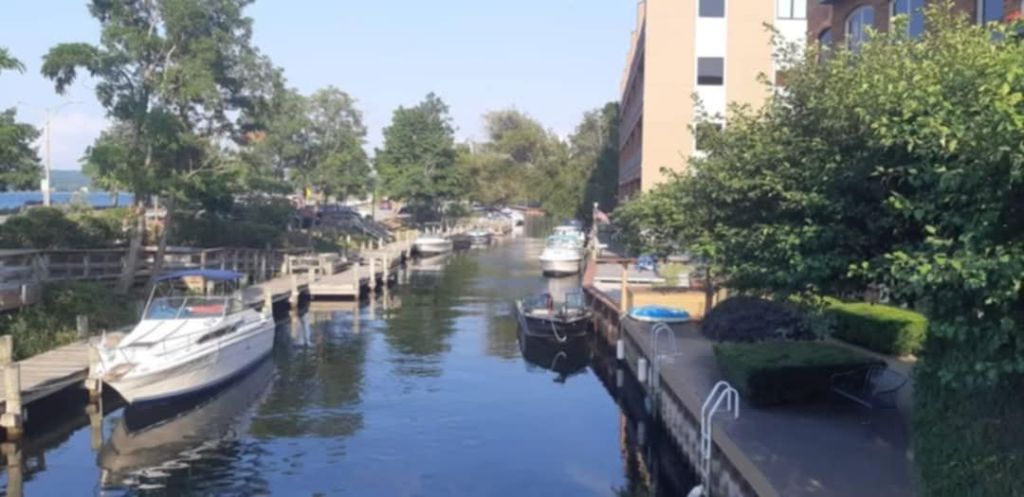



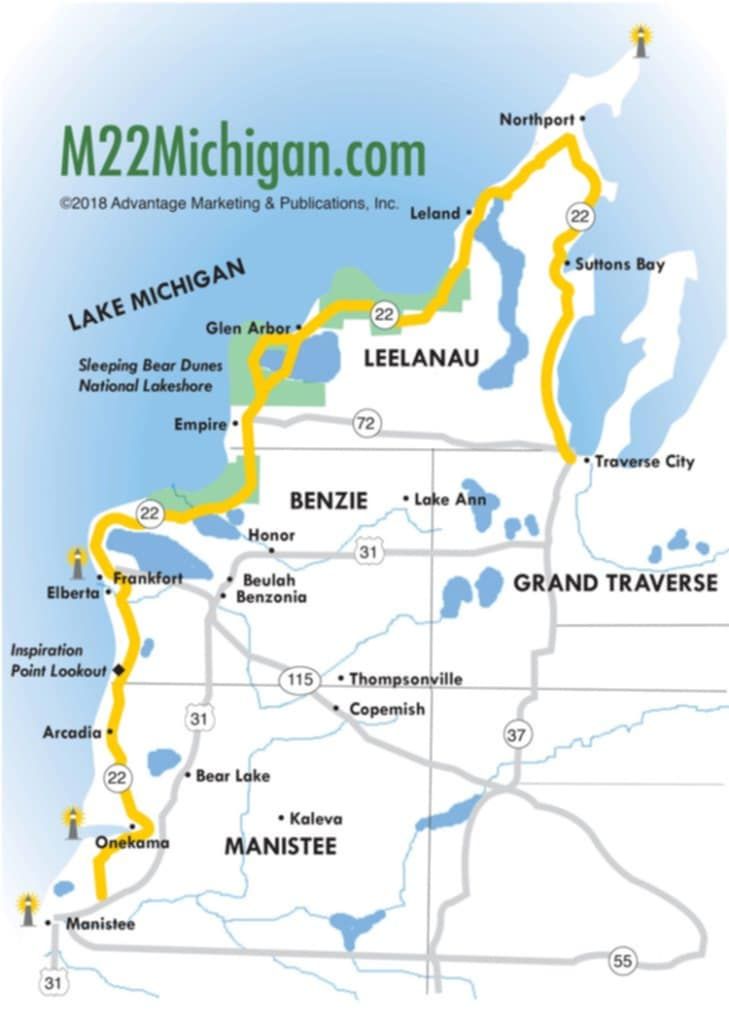





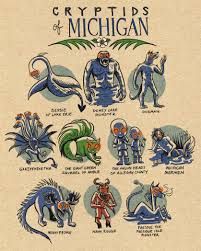

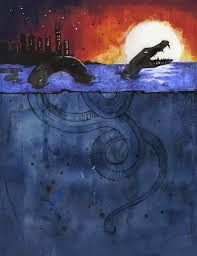


 The Stories of my Life