
The subject of memory became crucially important to me following an experience I had some years ago during a particular dark night of the soul. I detailed that experience in this space before, and I also talk about it with the Fear of God Podcast in a conversation about the film The Never Ending Story (part of a what scares us and what saves us series). At the heart of my story however was something that I called “my letter from God.”. That letter called me out of the darkness and into an act of remembering. Or more specifically, left me with the charge to remember my story rightly. I have been on a journey of remembering ever since.
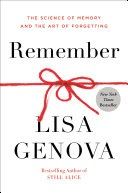
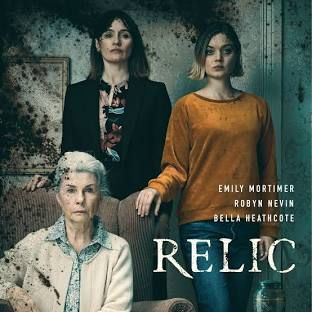
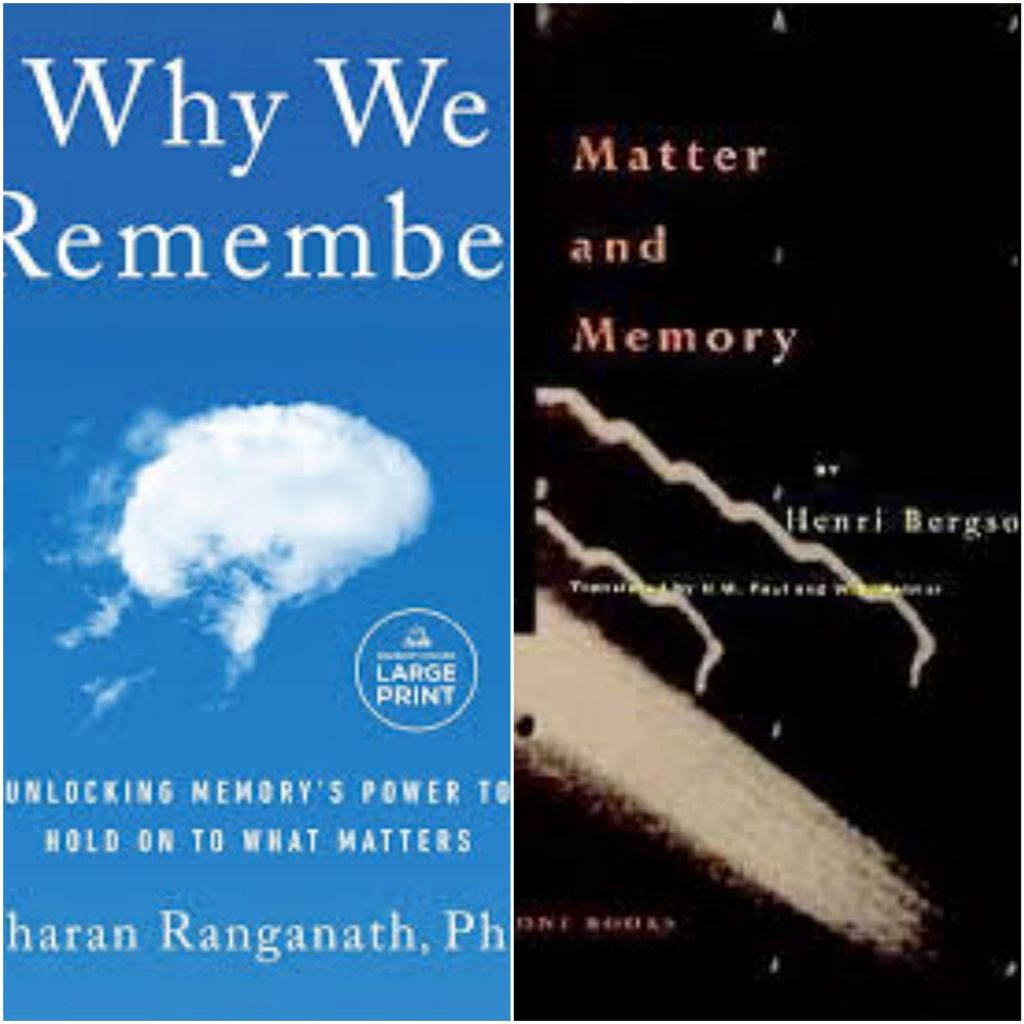
In part 1 of this reflection on memory, i dialogue with the 2020 film Relic and the book Remember: The Science of Memory and the Art of Forgetting by author Lisa Genova. I cited Robert Vosloo from his article Time in our Time: On Theology And Future-Oriented Memory. Vosloo notes that the importance of remembering is an explicitly Judeo-Christian idea that emerges in conversation with the Greco-Roman world. At the same time he describes a larger cultural idea, one that pushes back on a history of turning forgetting into a virtue and an artform Michiel van Veldhuizen is anothef scholar who fleshes this out further in his article A Theology of Memory: The Concept of Memory in the Greek Experience of the Divine;
“Without sacred texts and dogmas, the Greek polytheistic system depends on the functional interaction between mortal human beings and the pantheon of immortal gods; and in a system of highly ritualized rules of reciprocity, the proper procedure is of defining importance… memory fulfills this role, in bridging mortality and immortality, life and death… the knowledge to which the Muses and Zeus have access, through their structural proximity to Mnemosyne, is the knowledge of the past, which is to be ritually commemorated through the performative powers of the Muses.”
In the Greco-Roman world, MNEMOSYNE was the Titan goddess of memory and remembrance and the inventor of language and words.
“Mnemosyne sits at the heart of the pantheon, bearing Zeus nine children (muses), out of which memory plays out in the human experience.”
Thus, in the Greek goddess we have this established relationship between forgetfulness and remembrance built on necessary opposition.
“Forgetfulness seems to denote more than the simple absence of pain or grief; rather, it implies a state of being that belongs to the realm of divine perfection, while sorrow belongs to the realm of human misery, suffering, and mortality… the dialectic reciprocity of, for that matter, any Greek divinity… Mnemosyne provides access to a kind of knowledge that in itself resembles a religious initiation.”
In other words, to forget is divine, to remember is to be human. Transplant this into the enlightenment and it could read: forgetfulness is to progress, to remember is to regress.
Genova locates a similar discussion of how memory works in the sciences, suggesting, in this chasm that exists between remembering and forgetting, that our brains could not function if it remembered each and every detail of our lives.
“Most of us paint forgetting as our mortal adversary, but it isn’t always an obstacle to overcome. Effective remembering often requires forgetting.”(Page 7)
In her view, forgetting is necessary because of the way memory functions as a relationship between different kinds of memory, be it conscious or unconscious, working memory (what we know right now) versus static memory (knowledge that decays), declarative or muscle memory, episodic or semantic memory. When we encounter a new piece of information or a new experience, our brains change, incorporating new patterns of information that are then stored and able to be either retrieved or formed into an unconscious function of memory. This retrieval is not like “replaying a home video”. Rather,
“remembering is an associative scavenger hunt, a reconstruction job that involves the activation of many disparate but connected parts of the brain… Whenever we remember something, we are reactivating the various elements of the information we experienced, woven together as a single unit.” (p23)
Memory, then, is a matter a stimulation and association that begins with something we have either inadvertently or intentionally payed attention to /experienced by way of living in this world, information that our brains subsequently filter through deciding what to keep and what to discard for our benefit.
According to scholar Matthew Potts, who argues in his book Forgiveness: An Alternative Account for a redefining of forgiveness not as a forgetting of the past but as remembering it properly, Miroslav Volf in his work The End of Memory is cited as seeing
“…human memory as a constant interplay between the practical impossibility of total recall and the everyday reality of selective, often unintended, forgetting… to remember a wrong(doing) is to struggle against it.” (p188)
Further,
“when remembered wrongly, the past metastasizes into the territory of the future, and the future, drained of new possibilities, mutates into an extension of the painful past.”
At the same time he suggests that “the absence” of memory “whitewashes” wrongs. (Volf, 81, 143) As Potts points out, we are, all of us, “composed of our histories.” So, “if forgiveness is forgetting, then don’t we risk losing ourselves?” And if memory hinges on an act of forgetting, as Genova suggests, how do we then find ourselves without devolvimg into an existential crisis?
Or, is it as Paul Ricoeur writes in Memory, History, and Forgetting: “memories do not reproduce the past, they reconstruct it.”
They, in fact, “interpret” it. Which means we are, at first glance at least, the primary interpreters of our own stories.
It is worth saying here that this conversation about memory is intimately related to a further question about the nature of consciousness. Without getting into the weeds of that scientific, academic and philosophical interest, what’s clear to me is that the main point of contention comes from debating which direction consciousness flows from. Does it emerge from the material function of our memory as a constructed reality, or do we best understand it as something that shapes our ability to remember from the top down? Are we appealing to something true, something with the authority to afford us identity and personhood, or is identity/personhood a construction that then becomes our truth.
These differences in ontology say something about the idea of consciousness, suggesting in their own ways that a person either emerges from or is found in the unique vantage point of our positioning in this world. Our memories might function in the same way on a biological level, but it is because we see and experience this information within the confines of our own bodies that they exist uniquely as part of ourselves.
If this is the case, how do we then process memory as a measure of this self, this personhood? If forgetting is necessary to who we are, but also an impediment to knowing ourselves, or in the light of my own personal story to knowing God, and if remembering rightly seems equally critical to this act of knowing, how do we move from this apparent conflict towards saying something true about ourselves?
Robert Vosloo in his article Time in our Time: On Theology And Future-Oriented Memory, suggests that
“Memory is connected to our understanding of phenomena like identity, time, knowledge, and history—personal as well as cultural… (equally so) classical antiquity itself has provided us with the ruins that stir up memories of a distant ‘other.”
In other words, crucial to understanding who we are, or who we remember ourselves to be, is the idea that memory shapes us in relationship to this world and to one another. It connects us to what otherwise would remain distant, and rather than leaving memory mired in contradiction, it connects us through an act of remembering (trauma) and forgetting (triumph) rightly. To remember and to forget rightly means to situate these processes in the act not simply of living, but living in connection to something true, something that sees from a vantage point beyond our narrowed point of embodied perspective.
The way the film Relic, to return to that discussion, imagines cutting through the tension of this seeming contrast is through this same notion of togetherness. We are forced to wrestle with the idea that we are what we remember, a sentiment that turns sharply on this even more precarious notion that we become what, or who, we are remembered to be. With this sentiment comes a sense that perhaps we have far less control over who we are than we realize, and at the same time we have far more agency in shaping who we see others to be than we often realize, a fact that, I think, can also speak as well to those who’s ability to remember is compromised or limited in biological terms. It is at this crossroad that the act of forgetting and remembering meet. In the story of Relic this becomes a way for the daughters to remember for their mother when the only thing she can do is forget, but this involves the painful process of remembering rightly by facing their tendency to sweep her disease under the rug of the relics nostalgia.
Perhaps it is, then, that memory locates the story of who we are in the here and now, but this story exists only in relationship to the tangible experiences of this world that we share together. This is what makes a memory true. And it is in this truth that we are then freed to remember rightly.
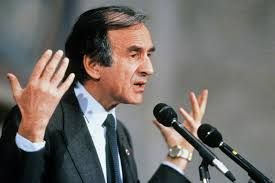
ElieWiesel imagines it this way;
“The Talmud tells us that without the ability to forget, man would soon cease to learn. Without the ability to forget, man would live in a permanent, paralyzing fear of death. Only God and God alone can and must remember everything… Faith is essential to rebellion, and that hope is possible beyond despair. The source of this hope was memory, as it must be ours. Because I remember, I despair. Because I remember, I have the duty to reject despair.”
If this is true then I could restate it in this way: This memory is shared and therefore is true. This means it is always something afforded to us by an other. And it is here, in relationship to the other, that we are then free to become. And to become is the measure of our hope.
This is the essential point of remembrance that we find running rampant within the Judeo-Christian Tradition, specifically where it sits in conversation with the second temple and Greco-Roman worlds. Memory marks the journey from creation to new creation. The central story of Israel- the Exodus- is marked by the call to remember. It is equally marred by the continual act of forgetting and simultaneously swept up in the hope of a promised renewal. When Christ takes up the Exodus as a way of articulating His own ministry, His liberating work is likewise marked by a call to remember in light of this forgotten past and a promised future. Only in Christ are past and future seen to collide in the memory of the present. To remember rightly in this sense is, in line with our working brains, to reconstruct the Christ event into our present moment as a way of remembering rightly the true nature of God and creation, which is then able to inform the darkness, the messiness, and the perceived wrongs which continue to occupy the stories of our lives in this world.
Just as in Relic, where the daughter strips away the mothers skin so as to be able to remember who she is with alziemers, an act framed by the powerful phrase “I am loved” as someone with this disease, so do we remember Jesus through the cross, an act of remembrance that flows in both directions; we find God in remembering the suffering of Christ, and Christ remembers us in our suffering, calling us to this movement towards transformation in relationship to God and one another; shaping memories, shaping identity, together.
Could it be then that forgetting rightly has less to do with erasure of the past and far more to do with this act of becoming? If memory is an act of interpretation, with our brains acting as interpreters reconstructing the past in light of a present newness, then forgetting rids us of the pasts constraints and resists its control over our ability to be properly transformed by an act of remembering rightly. We aren’t our memories, we are who our memories allow us to become. That this happens in the context of family (Relic) and community (Christ), is simply a reminder that becoming is an act that inevitably binds us to an other, justifying our stories as ones which have been inevitably shaped by the past. Perhaps the best way, then, to deal with the problem of memory is to simply say this; we are remembered, therefore we are; we remember, therefore we become.

















 The Stories of my Life