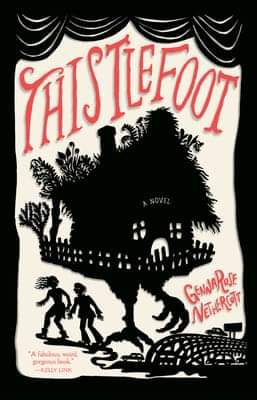
Full credit to this book for introducing me to the legend of Baba Yaga, an enigmatic and popular figure in Slavic folklore (full points too for the Ukrainian backdrop for this most recent adaptation of the famed story). This also helped me to make sense of its reference in the John Wick series, but that’s an aside.
Baba Yaga has certain distinctives, including being an animate house that stands on chicken legs. Depending on the iteration, the figure can be either good or evil. The figure also tends to aid in times of transition, especially when it comes to life and death.
Baba Yaga has a history of being recontextualized into different times and settings and roles. As it writes, in Thistlefoot, it “reimagines Baba Yaga as a Jewish woman living in an Eastern European shtetl in 1919, during a time of civil war and pogroms.”
In this iteration in specific, it is something of a back tale and origins approach as well. Which I found to be a decent starting point for someone like me who is reading in ignorance. I’ll be honest, it’s a long read, mostly because it’s a difficult read. It requires attention, and it’s not a book you can rush. Given that I not only had little awareness of the figure, but also of the historical and social context the folklore is attending to, it took double the effort to really enter into its world. I’m not sure if it’s a weakness, but the world is never really fleshed out. It simply is what it is. It’s a world where an animated house that stands and walks on chicken legs exists, and where different abilities coexist. I’m certain it all has an allegorical place, but when you are missing a lot of that context it can feel like you are missing a good deal of the process.
That said, I really liked Bellatine, who was the driving force and beating heart of the narrative. Thankfully her portions were easier to follow. I also thought the films central evil, Longshadow Man, was effective and creepy, giving this a legitimate horror vibe.
Ultimately I left feeling like I know this story has power. I felt much of that power come through the writing. I understood far less of it. Taken together though I was able to experience and thus know how this story could easily be contextualized into any number of more familiar scenarios. And that sparked my imagination, helping me to see the history behind the folklore more clearly. It left me thinking, sometimes it’s good to encounter a book that requires you to work for the experience, and to work to uncover its meaning. All the better when it opens you up to a cultural touchpoint that I previously was unfamiliar with.
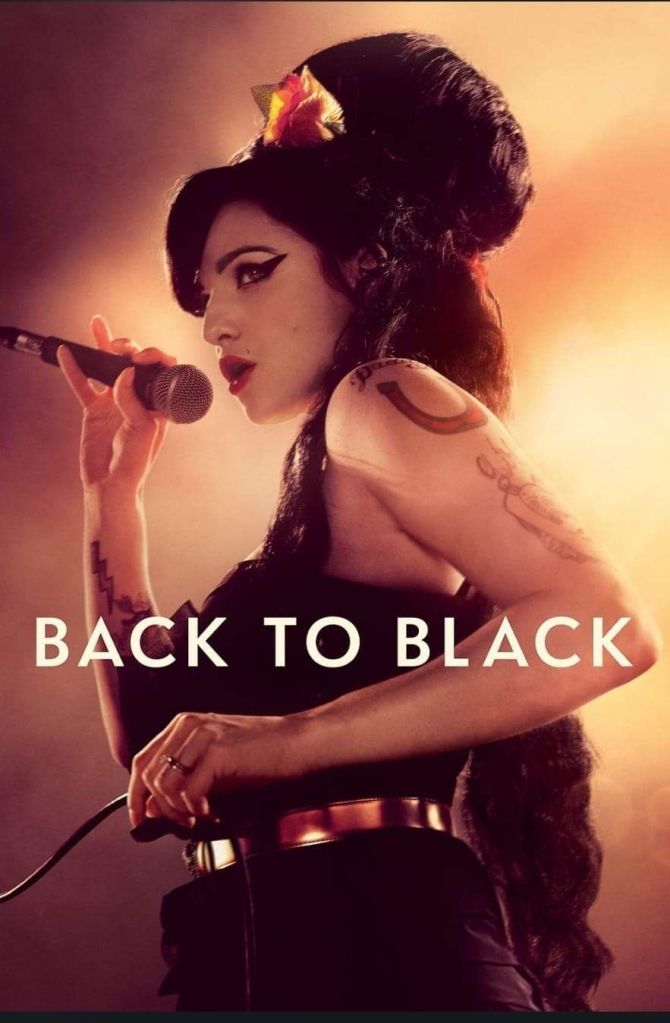
Film Journal 2024: Back to Black Directed by Sam Taylor-Johnson
It’s a flawed film, to be sure. The way they shoot the film is very flat, and it definitely could have used some cinematic flourishes to give the thing some layers. It throws us straight into her personal struggles, leaving very little room for an expressive or recognizable arc. It also gives us too much of Winehouse the musician, saturating the film to the point where the expected climatic moments loses some of its power. It doesn’t help that the supporting cast is given very little room to play too, choosing instead to keep us centered on Winehouse for the full 2 hour run time. Any external point of perspective fades quicker than it surfaces, lost to quick edits and some curious decisions to fast track past some of the more interesting parts of the story.
As a film it still works though, largely because of Marisa Abela’s performance. I kind of wished the film had given her more room to flesh out some earlier years, just so that she could have more of an arc and transformation to flesh out and capture. But she does really good work with the narrowed portrait that she is given. Taken scene by scene as well, there is some compelling scriptwork as well, giving us as viewers a clear sense of the story’s potential. I wanted more of the character interactions and more time sitting with some of the key and important transitionary points, especially the ones that are kept off screen. It should have streamlined some of the more repetitive portions of the dramatization of her ebb and flow between addiction and performance and digged deeper into the moments that could have given us more of the persons who’s lives and interests intersected with hers.
Overall it’s a decent biopic. I think there is enough to appreciate here if you are a fan of Winehouse, and even if you are not I think there is enough here to draw you in and become interested in this enigmatic and troubled figure.
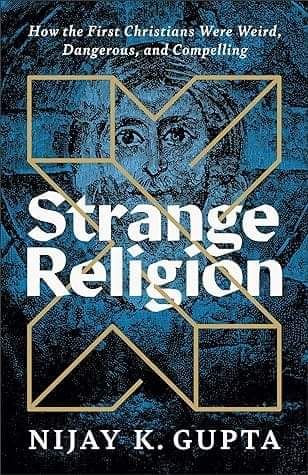
Reading Journal 2024: Strange Religion: How the First Christians Were Weird, Dangerous, and Compelling Author: Nijay K Gupta
In Ann Jarvis’ Paul and Time, she makes a persuasive argument against familiar conceptions of either the overlap of the ages (old and new creation), or views that see the new age as future occurrence. Indeed, Jesus did in fact accomplish something in the resurrection and ascension, and that accomplishment, by its nature, accompanies the proclamation that the kingdom of God has arrived, having been established in our midst. The mistake, she believes, that the above conceptions make, each in their own way, is failing to recognize how the early Christians, rooted as they were in the Jewish Tradition and expectation, understood time as both a cyclical process and a linear progression which finds its culmination in Christ. For Jarvis, it’s not as though we await a moment in time where we pass from one reality to another. What happens in both death and the awaited consummation of Jesus’ person and work is in fact a continuation of the time we are already embodying in the here and now. This becomes an important distinction for how we read and understand Paul, and it’s most immediate implication is how we understand the relationship of the now to the not yet. It is, in my opinion, a groundbreaking and paradigm shifting work.
So why mention it here? Because I heard of the book through Gupta, and there are sizeable sections of this book that utilize its ideas in establishing how and why the early Christians stood out as so strange in the ancient world. Their conception of the fulness of time is but one way in which their beliefs and practices clashed with the norms of their day.
Gupta’s essential thesis is, for as simple as it sounds, that the early Christians and their religion were strange. To understand what this strangeness was requires us to know the norms of the ancient Greco-Roman world and how the ancient Chrisitians existed in relationship to these norms. Which is what the bulk of this book sets out to unpack.In truth, we are conditioned to see the ancient world as strange and our modern norms as the measure, but thinking this way blinds us to the particular strangeness of the early Christians and what actually set them apart in a largely pluralistic society. Even the term pluralistic means something different then than it does today, as would the term atheism. This was, after all, not a world divided by belief in God and belief in no God. What largely defined this world, and certainly the Roman Empire, was a world filled with gods which demanded a hierarchy for Empires to successfully bind together worship (or ritual) and Power. People were free to worship whatever god(s) they wished as long as this worship was subservient and payed allegiance to the authority of the Roman Empire and its pantheon.
It would be difficult to know if there is a singular, overarching descriptive that could explain and define why the early Christians became such a well documented anomaly in this ancient context, but there are a few defining distinctives. One would be the absence of a temple, a fact that owes itself to the storied period of Israel’s exiles. This allowed for the practice of these early Christians to see God both present and at work in the world around them as opposed to viewing the interaction between the gods and the world mostly within the Temple and its accompanying rituals. A second would be the breaking down of hierarchal systems, something that would have cut through the honor-shame systems that defined the socio-politcial systems of their day.
These are broader observations, and to be honest aren’t revelatory in and of themsleves. These defining aspects of the early Christians have been well documented in plenty of other spaces and by the different facets of academia. What sets Gupta’s work apart is the attention he gives to the minor details, something born from the many years he has given to the study of ancient Greco-Roman religion and society. What makes this book an intriguing addition to that field of study is the way he binds this to a specific comparative in its world. The tendency in scholarship is either to whitewash this strangeness by collapsing the whole enterprise of antiquity together, thus representing it as a singular comparative to our more enlightened modern norms, or to redefine early Christianity according to modern norms so as to use it as a means of declaring the strangeness of the ancient world that surrounded it. In truth, the ancient Christians would be as strange to us today as they were to the ancient world, and this is an important and necessary observation if we are to be interested in the question of what this strangeness means for us today, either as Christians or for understanding Christianity’s history.
It should be noted, Gupta is a practicing Christian, and for lack of a better descriptive, a Protetant Christian who came from a Hindu family and background and occupies space here in the West. He’s also not afraid to allow his faith to intersect with his academics, which might frustrate some who might come to this looking merely for information. Personally, I think more academics should allow their worldview and their working assumptions to have a clarufying place in their academics, as it helps to contextualze the information accordingly and keeps ideas and implications accountable. There are points of disagreement that I do hold with certain aspects of Gupta’s confessional interests, but I also note he is one of the better Protestant voices working and writing today. He is willing to grapple with ideas, he is aware of current trends in scholarship, and he’s widely read in his field of interest (Greco-Roman history). All of which fuels the insights he tables here.
One last point. It’s always a point of contention to wade into the waters of any viewpoint that looks to single out Christianity with any intent. There is a working tension that exists in much of modern scholarship that wants to resist any claim to uniqueness or particularness, even when it flies against the facts as we have them. Part of this resistance exists because of the potential for such claims to sit uncomfortably beside working assumptions regarding a godless reality. Part of it exists because monotheistic tendencies tend to be deemed as the enemy to romanticized visions of pluralistic societies like Rome (which ironically whitewashes the facts of Rome while isolating Judaism and Christianity). In any case, Gupta does give some time to qualifying this strangeness by pointing it back to Jesus rather than His followers. While it is true that we find this strangeness reflected in these early communities of Jesus followers, it would be a mistake to make a people and their religion into an appeal towards exceptionalism. This is certainly not the case, especially if we are to see the Gospel as being for the world and relevant to all. This strangeness exists only because the person and work of Jesus broke into this ancient context. It speaks similarly to all of the strangeness of the Greco-Roman world because it reflects a Kingdom that truly does clash with the kingdoms of this world. It is about a particular revelatory and historical witness, not the propping up of another power system, one in which we can conceive and percieve ofthe power systems being defeated. This is what made Jesus so weird, dangerous and compelling.
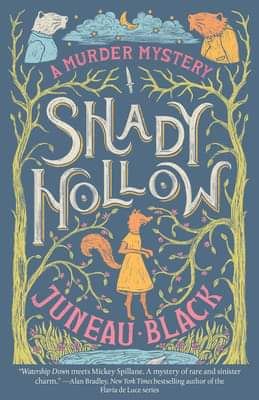
Reading Journal 2024: Shady Hollow Author: Juneau Black
I noticed a descriptive that cited this as Wind in the Willows meets Agatha Christie. Not sure that totally works, but it’s fun to imagine and gets you thinking in the right direction in terms of the vibe of this book.
I’m not typically a big fan of mysteries, but when it is cloaked in a town filled with walking, talking, working, living, animals, and when the town is cloaked in a larger world building exercise that imagines such social classes and cultures exists, i will absolutely embrace it.
And in truth, this is straight up comfort food. Quirky, fun, charming, enjoyable comfort food.
I actually came across this book when I was visiting Mikwauke last summer. Penned by a local author whom residents are quite fond of and gladly recommended. It has that small city, working class, blue collar vibe too, where the local businesses and the local arts and culture are integrated. The kind of place where an unusual murder and the collective effort to solve it can frame the ethos of a place.
Definitely a world I wouldn’t mind returning to (would love to visit Milwaukee again too). And conveniently this book is listed as the first in a series 😀
If you know those places of wrestling with and walking through periods of disenchantment when it comes to faith and God and church, this (Will Carlisle’s The Crocus) is an album for those honest questions and those honest places to be layed bare and given validation. Raw. Poignant. Healing. Liberating.
The opening track begins a journey in the darkness that leads to towards the final track, proclaiming the doubts in the face of the mystery, as the place where the doubtless grows, the place where the bitter place of haunting fears becomes the place where you find hope. Where you can say, this is my hallelujah.
Where is My Hallelujah I’ve been asking lots of questions, with answers I don’t know. I’m feeling less like Nazareth, and more like Jericho. The Sunday morning pastors read Scriptures that I know, they say I’m just like Lazarus, but I’m not sure I rose.
And it’s funny how I can’t shake who I’m afraid I’ll be someday, it’s funny how I’m homesick for a place I’ve never been. The more I change myself, the more I feel like I belong back down in hell. And its scary how I can’t shake who I’m afraid I’ll be someday. It’s stupid that I’m homesick for some place that I’ve never been.
Where is my hallelujah. Where is my hallelujah. Where is my hallelujah. I used to feel it in my bones. Where is my hallelujah. I used to call that place my home. Where is my hallelujah Was it all just make believe Where is my hallelujah. Did you take it back from me.
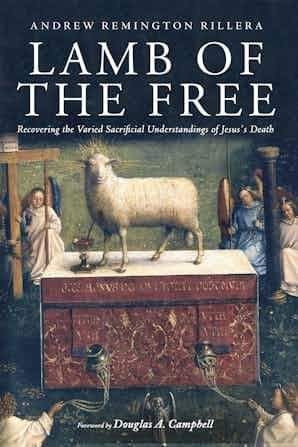
Reading Journal 2024: Lamb of the Free: Recovering the Varied Sacrificial Understandings of Jesus’s Death Author: Andrew Remington Rillera
Lamb of the Free provides the perfect compliment to a preexisting body of work that is revisiting and reexaminjng some commonly held beliefs about the Atonement, the cross, and our understanding of salvation, including David M. Moffitt’s Rethinking the Atonement: New Perspectives on Jesus’s Death, Resurrection, and Ascension, The Sacrifice of Jesus: Understanding Atonement Biblically by Christian A. Eberhart, works by Douglas Campbell and Matthew Thiessen, just to name a few. More than simply a compliment, I do believe that this phenomenonal and monumental work by Rillera will become a definitive resource regarding the larger umbrella of modern biblical scholarship to which this belongs, not least because it brings all these different voices together into a complete and cohesive examination-Eberhart’s emphasis on the OT sacrificial system, Moffitt’s emphasis on the letter to the Hebrews, and Thiessen’s emphasis on the Gospels. Rillera adds a robust and researched treatment of Leviticus to the picture, connecting the pieces of the puzzle in a way that feels exhaustive, proven and convincing. Indeed, this is required reading for anyone truly interested in exploring the concept of Biblical sacrifice and atonement.
One of the great strengths of this book is its structure, moving methodically through the Torah with an emphasis on Levitivus, Exodus and Deuteronomy, then moving to the prophets, and finally to the NT. Each chapter begins with a clarifying set of points that the chapter will be looking to argue and show, and ends with a summary of those arguments, making the complex set of data and information easy to follow. Rillera is deeply interested as well in bringing together faithful study and academics on both a historical and theological front with a robust interest in matters of faithful practice and allegiance to the text. At the root of his central thesis is an interest in showing what he believes the text is actually saying about matters of sacrifice and atonement.
It would be nearly impossible to summarize this book in a simple set of sentences. One part of its agenda is to do away with the concept of penal substitution, which the author sees as the primary problem when it comes to misreading and misunderstanding the function of sacrifice and atonement in the Scriptures. Another part of its agenda is explaining and showing how the sacrificial system operated in the ancient world, allowing this to inform our understandings of the prophets and the NT writers application to the person and work of Jesus.
Obviously both of these points are interconnected. By understanding the sacrificial system, it can help us understand how Jesus functions within this system, and subsequently find the means to counter the misunderstanding that penal substitution presents with a more faithful view of atonement.
At the core of the sacrificial system is a dual function. “There are two main categories for sacrifices broadly speaking: these are “the categories of gift-offering-display and/or pollution removal.” In the terms I have been using thus far, in the Torah these are the “non-atoning well-being sacrifices” and the “atoning sacrifices,” respectively… Atonement rituals decontaminate the dwelling place and ritual purity regulations ensure that human beings (both priest and lay) are fit to access the sacred space and foods… (the well being sacrifices) elicit God’s presence (and thereby God’s blessing)… The primary function for the non-atoning sacrifices is to share in a holy meal in God’s presence, often to give thanks for some prior act of divine deliverance.”
Rillera goes to great lengths to show the primary sacrificial language used in association with Jesus comes from the Exodus, which has nothing to do with sin. Where we find atonement is not in the death of Jesus but in the resurrection and ascension. Further, as Rillera insists and demonstrates, “Neither death nor suffering nor punishment of the animal has any place in the sacrificial system. Therefore, all Christian theologies that attempt to derive a view of justice on the mistaken view that biblical sacrifice is about punishment or substitutionary death must be utterly rejected by any Christians seeking to anchor their views in the biblical texts themselves.”
The fundamental means by which he makes this claim is by recognizing precisely what a blood sacrifice was seen to be and do in practice. In a Jewish context, it was seen to deal with the problem of death. Death is never ritualized in the Jewish rites, and in-fact what we find is precisely the opposite. Sacrifices revolve around feasts, and a Jewish understanding saw the spilling of any blood as murder, or more aptly a result of a creation (land) that is under the reign of Sin and Death. What blood sacrifice does is take death and reconstitute it as life by bringing it into the presence of God.
The primary purpose of atonement then is to purge (remove) the pollution of sin and death from the sanctuary while also preparing the Priest to enter it. While there are greater complexities at play, this becomes an important facet for understanding how the NT affords Jesus a Priestly duty using the sacrificial language. Perhaps most important is recognizing how the sacrifices themselves were never seen to deal with corrupted land or people, which in rhe Jewish view is interconnected. This requires another work that is not sacrificial in nature and whcih we find in the water purification rites.
As Rillera summarizes in his concluding remarks, “The consistent message throughout the entire NT is not that Jesus died instead of us; rather, it repeatedly indicates that Jesus dies ahead of us so that we can unite with him and be conformed the image of his death (Rom 6:5; Phil 3:10)… Jesus’s death is soteriologically unique. And part of its uniqueness is because Jesus is our pioneer and forerunner, setting the pattern and paradigm for what covenant faithfulness of loving God and loving neighbor means. Jesus’s death is unique, especially since it generates the singular reality that grounds Christian ethics that all can share in—or rather, will share in (Col 1:27 and 3:10–11). We are baptized with his same baptism of the cross, we drink from his same cup of the cross (cf. Mark 10:38–45). The point is union with Christ (participation and solidarity), not separation and distance (substitution). It is solidarity and participation all the way down.”
If it’s not clear by this point (and it should be), I really loved this book. More than that, I think it’s a book that anyone interested in theology needs to read. It’s a reclamation of an important facet of the Chtistian confession, and it does amazing work in helping us navigate a foreign language and culture with all its practices, language and customs. It is from this ancient culture that we find a window into the revelatory work of God in Jesus. There is a sense in which this is a simple truth. But simplicity can also go very wrong, especially when the cross-cultural context is misread and those ideas become firmly entrenched. This requires untangling the complexities behind the misunderstandings. It is from this position then that we can arrive back at that simplicity, simply with the work of scholars like Rillera clearing the landscape and rearticulating the basic claims of the Gospel. Here the key words can be described as liberation and participation and renewal. For this I am grateful.
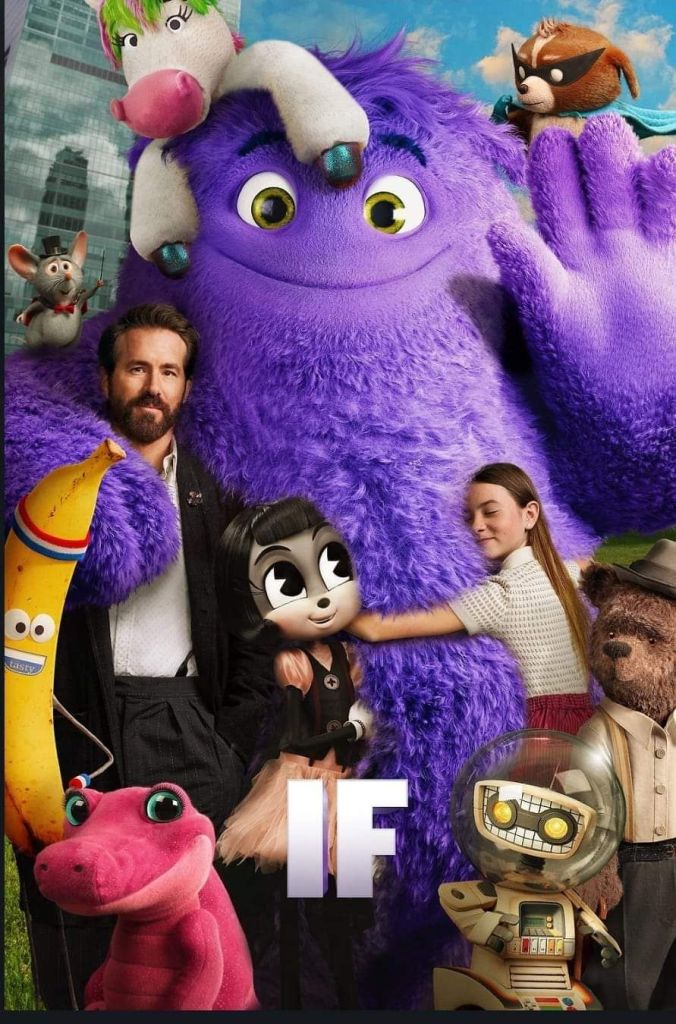
I recognize there is probably room for sone level of critique here, but I really resonated with the spirit and themes of this film. It’s a specific audience, gearing older then I expected, not in terms of content but in terms of theme and target. It’s a family film, to be sure, but it is speaking to the pairing, a father and a 12 year old daughter, each in their own way.
At the core of the story is an invitation to tell your story. And the vehicle for storytelling of this nature is memory. This becomes a stepping off point for Krasinski to then lean into his distinct visual approach, with NYC proving the perfect setting to strike that perfect balance between a necessary nostalgia and a modern aesthetic. What binds this together is a commitment to the story’s magical realism as well, bringing together that childhood imagination and the the grown up perspective in a way that really meshes well with Krasinski’s style. Really loved too how he utilizes the camera in ways that evoke these differing perspectives. It’s a creative approach that evokes plenty of emotional moments along with moments of fun and charm while making a lot of use out of the set design.
Whatever one might want to say about the specific target audience, which might leave younger kids a bit lost in the shuffle, Kransiki mirrors this after family films of a bygone era. Perhaps its greatest strength to this end is its authenticity and its heart,feeling like a genuine passion project from father to kid in its rawest form, which from what I understand is what this project was born from.
Loved Cailey Fleming in the role of the 12 year old too. A definite natural charisma.
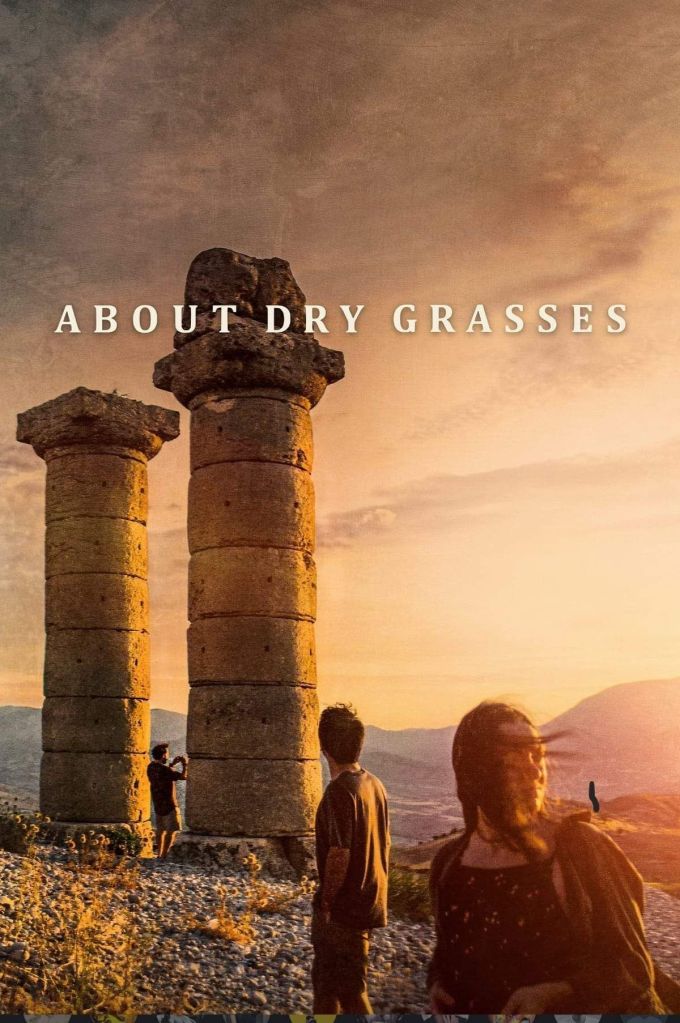
Film Journal 2024: About Dry Grasses Directed by Nuri Bilge Ceylan
You could say a nearly 3 and half hour run time documenting a gradual spiral into an existential crisis using a script made up primarily of dialigue/conversation doesn’t sound like riveting cinema.
Rest assured it is. The fact that it never really resolves its inate grappling with things like hopelessness, despair, isolation and meaninglessness makes it even more engrossing.
It’s about a teacher who finds himself doing a practicum in a small village school in hopes of gaining a more prestigious position elsewhere. A controversy keeps him trapped in this village however, setting off the point of crisis. Along the way, or in process, the film keeps posing questions about, or perhaps at, existence. Such as, do our lives actually make a difference or are we just part of a grand social order? Does good mean anything when in reality existence is just about being good enough? Can we actually claim meaning in a world where even altruism seems predetermined?
Heavy questions. Whether it’s meant to drive us to self reflection is up to the viewer, but it most certainly is meant to shake us up in one direction or another. Perhaps to simply accept the truth of hopelessness and meaninglessness, or perhaps to push us to believe that hope and meaning exist, even if just as a possibility or as a constructed illusion. This is where the lack of resolve cuts through like a sharp knife, never allowing us to settle by constantly shifting our point of perspective within the ongoing dialogue. There might be meaning, it might all be meaningless, and inbetween we have this thing called a life pulling us between these incongruities and grasping at illusions of meaning just to keep on functioning.
Kinda like dry grasses seeking the rain and the sun.
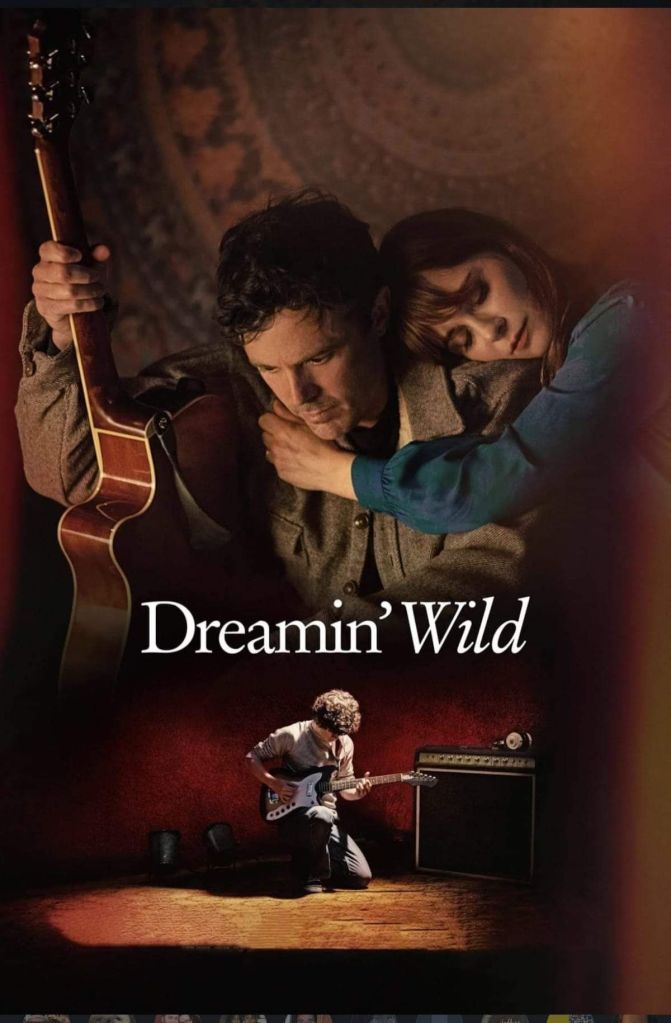
Film Journal 2024: Dreamin Wild Directed by Bill Pohlad
I’m a big fan of Casey Affleck, and this story about a middle aged man coming to realize his dream to make music and be successful later in life hits at my own once upon a time ambitions and dreams as a musician. Which is to say, this had all the marks to really land for me and yet found a way to slip under the radar. Given that its now widely available through borrowing and rental platforms, it’s a good opportunity to catch up with this hidden gem. The fact that it came and went without much notice is especially surprising since the Director gave us one of the all time great films in Love and Mercy.
One of its best and most genuine qualities is its decision to keep the story quiet, avoiding the trappings of elevated and sensationalized drama. One of the big through-lines here is that we are made of our dreams, but much of the time those dreams express themsleves in different and unexpected ways over the course of time. Thus how the middle aged man comes to realize his teenage ambitions isn’t the stuff of happily ever after and grand fireworks, but rather something far more subtle and expressive. Here the film captures that real sense of how life works, and there is a beauty to the composition, the script written like a song with ebbs and flows and choruses and bridges.
The music in the film is also fitting as it captures and reflects that real singer-songwriter vibe. It has an earthy feel indicative of that indie record that has its followers but not a ton of fame.
There are a few moments here and there that feel a bit rough around the edges or which veer into the tell rather than show type plotting. But most of this is content to sit in the space of its simple narrative arc and let the interplay between the younger and older self do the emotional work and heavy lifting. The end result is an inspiring story that sings its own unique tune, proving that the best art is sometimes found in those hidden and hard to find spaces just waiting to be discovered and uncovered.
Film Journal 2024: Furiosa: A Mad Max Saga Directed by George Miller
A different kind of movie than Fury Road in the way the story is structured and in the way the film is shot. However, these differences exist as the perfect compliment to a more complete experience and fleshed out narrative.
The fever pitch nature of Fury Road is traded for something not necessarily less intense and less energized, but more character driven and fleshed out. It fills in those parts of the world and story that were never explained in Fury Road while building out it’s own ideas at the same time. In this sense Furiosa is more of an investment than an experience, which is what allows it to make Fury Road an even better film.than it already is.
You can feel this in the way Furiosa is structured around chapter breaks and clearly drawn arcs that build as the story of Furiosa goes forward. It’s designed to bring us into the story of the characters rather than just allowing us to experience the madness of this post apocalyptic world. If there was one point of criticism, and I don’t know that it ultimately is one, it is that this investment in character and story does lead Miller to utilize CGI more than the outright practical set pieces that we find in Fury Road. It’s not distracting so much as it tames some of that fever pitch nature, funneling our attention to a more studied development. In truth, this choice works for the kind of film that Furiosa is.
The performances here are all top notch, with Hemsworth giving a career performance and Joy doing some amazing work in bringing together the nuances of Theron in Fury Road with her own developing persona. Not to be left out would be the performance of the even younger Furiosa, played by Alyla Browne, whom we get a surprising amount of and is doing amazing work of her own.
Does it succeed in matching or beating Fury Road? I don’t think thats the right question. The question is, does it belong and enhance the collection of films and does it prove necessary to the larger story. Without a doubt it does, and it does this in some surprising ways.


 The Stories of my Life