Film Journal 2024: Hundreds of Beavers Directed by Mike Cheslik
This film is looney tunes. In all senses of that phrase. One of them being an apt descriptive that marries a kind of live action Looney Tunes styling with an outright homage to the silent film era while blending in notes of satire, folklore (think Paul Bunyan) and a dark commentary on America’s colonialist past.
Its unlike anything else you’ll watch this year, I can guarantee it. It’s strange and admittedly stretches its premise past its breaking point. However, it has all the markings of a film that I would have loved when I was 20 years younger, especially given that it likely would have been that solid find from browsing the indie section at Blockbuster. I know I would have been immediately passing this on to all my friends.
Watching it now, I definitely respect it, and I’m glad I gave it a try, but I’m not sure I have the energy or wits to be helping give this the shelf life it probably deserves. Not to mention it is difficult to know how precisely this film manages to find it’s way to cult classic territory in today’s landscape. I’m not sure it’s possible, but I’m glad it is out there trying and doing its thing.
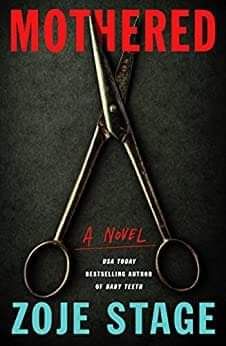
Stage is one of my favorite horror authors. This is probably my least favorite of her books. Great premise, less than stellar execution.
I have to hand it to her though- she knows how to write dysfunctional families and messed up mother-child relationships like it’s no one else’s business.
So what makes the premise great? It was written during the pandemic, and the pandemic plays into the story in a way that proves the perfect set up for the mother-daughter interplay. Over the course of the pandemic Grace has just bought a house and just lost her job. Her mother Jackie has just lost her husband and her health but gained some money. She makes a suggestion that she move in with Grace so that she can help Grace to keep the house. Grace agrees.
But there are questions surrounding the obvious tensions that are inherent in this relationship early on, questions that play into who is good and who is evil. One of the key questions concerns a dead twin sister who was born with cerebral palsy, a death that seemingly drove a wedge into their relationship. Thrust back into close and closed quarters, how will the past reemerge and what will the past tell us about their conflict and how or will it be resolved?
Great premise with tons of potential. And truth be told, it starts off strong. So why didn’t it ultimately land for me? It was the use of an unreliable narrator and dream sequences. Dreams are fine as a plot device, but when they are used to keep you uncertain about what is real and what is not, things can fall of the rails pretty quickly. Which is exactly what happened here. The ending, taken on it’s own, is actually decent. The problem is the entire middle of the book is taken up by these slight of hands. So much so that nothing really happens. It becomes a bit of a game that is being played on us as readers, and one that ultimately is intended to mislead. It’s like we are stuck being pulled back and forth and back and forth, and where we land no one knows until the final chapters. And where we land in terms of dream or reality we might never know. Or at least thats how it feels going through the process.
I did like the characters however. I like that all of them had the potential to occupy different spaces at different times in ways that rewrite their narrative. I also liked the underlying subtext of grief and trauma. As the blurb on the back says, “home is where the ghosts are”, and there were a few sections where these ghosts from the past come out to play where I found it genuinely effective and unsettling, frightening even. It’s too bad the author couldn’t have honed in more on an actual progession of plot and story. It needed something to ground it for the relational dynamics to have their impact.
If there is one word to describe Robinson’s demeanor and approach it would be grace-filled. This word drives her theological commitments. It drives her scholarship. It drives her exploration of ideas and her deeply felt interest in the God-human story.
Perhaps another word might be warranted here- nuanced. Not only in her examination of the text, which in this case is the Biblical book of Genesis, but in her willingness to bring in a multi-faceted discipline and approach. What she is engaging in here is historical criticism, to be sure, but also infusing theological, narrative and textual criticism, along with philosophical approaches. She never wants to hand one element power over the other, choosing instead to see all these disciplines operating in conversation together.
Full disclosure. I am not a calvinist. The sheer fact that she writes as a calvinist was an issue I had to grapple with personally in her previous book, The Givenness of Things. In the case of Robinson, I had to engage a level of humility and a necessary openness in order to recognize that what she was actually advocating for was not the version of Calvinism I had studied and rejected. As I said in that review, if anyone could convince me of its merits, she could, precisely because she is willing to bend its claims to what one could call a generous orthodoxy. There is no version of her belief system that settles for anything less than a God for all people, nor anything less than a God in whom we can properly locate and define the necessary polarities inherent in the Judeo-Christian strory- good and evil, life and death, love and hate. What she believes in is the goodness of God and the goodness of Gods creation, and however we appropriate the text and theology and narrative of Genesis to explain the world and our experience of the world, it must bear witness to this simple truth.
One example of such nuance is the way she traverses portions of the text that are notorious for being applied in support of a hard determinism or compatibalism (which, for me, is a fallacy built and used to suggest the appearance of a loving God by talking around the problem of hate and evil inherent in calvinist theology). I love the way she uses the literary function of the text to tease out a fundamental and critical observation. Yes, on one hand we can say the story is designed to show a series of interconnected events which all lead towards a purposed end. She notes how this is bookended in the text by two parallel stories- Cain and Abel on one end and Joseph and his brothers on the other end. Thus one, assuming a more modernist perspective that uses a sharply drawn literalism to define the text, might be left wondering, well what if this person hadn’t done this or that person hadn’t done that. Would it not have derailed the story and subverted Gods willed for means and ends? Surely this points us to the theological value of determinism. Robinson pushes back on this assertion by leaning into the text in its world, noting how not only would the authors not have been thinking in such terms, but the very fact that we have the story that we have does not suggest determinism but rather providentialism. And there is a difference. In the former, the point is that God needed to determine every movement and every choice in order to be truly sovereign. Here it is the events leading up to the climax of the story that matter as the means to such an end. In the latter, it’s not about the different events so much as it is about a people confronted with Gods faithfulness looking back on their story and writing it in that light. In truth, the same story could have been written in an endless number of ways according to people’s responsiveness and particpation. We have the story that we do at least in part because this is the history that happened. The point of tying that together with a conviction in Gods faithfulness, and in writing it as though all od these differnt events are tied up in its known end, is in order to show that God is always at work to bring about His ends in a chaotic and unpredictable world, which is a huge thematic interest of Genesis, and which is at its heart a work that is for the world.
I love Robinson’s eye too for the smaller details in the text. The way she pulls out different observations of certain narrative flows, and the way she revels in the creaive design of the text, including its poetry. She does not allow herself to get bound either to a heavy set literalism or a direct rejection of the texts historicity. Rather she genuinely wants to look at how the text functions as a creative and theological work, and what that would have meant to the world of its authors and readers. She does an incredible job of showing how Genesis is a book that sits in conversation with the wider ancient world and the reigning mythologies. She is able to show, compellingly and distinctively, the way Genesis is challenging common conceptions of God and humanity and creation, particularly in how these perceptions relate to each other. It had a very real polemical purpose, and understanding why and what this polemic is can help us get behind what the text wants us to understand and why it needs us to understand this. She, along with many others, have found these points to sit at the foundation for why they take this text seriously and why they have allowed it to inform their Christian conviction and faith. The more aware one becomes about the books purpose, the more we are forced to wrestle with it, and wrestling demands a response.
Everything in this book really does boil down to discovering the nuance, and within that nuance finding the concrete expression and truth of grace. This is the driving and motivating force of what I think is an exceptional work on a familiar but often misunderstood book. And it shines through the quiet brilliance of her reflections and observations. Part of the process here is actually jumping from these observations and reflections into actually reading the text itself, thus she builds into the back half of the book the entirety of rhe text so that one can engage with it all in context. And, I think, if her book has its way, it should be an invitation to this end to embrace mystery and wonder and beauty, to be genuinely curious and not beholden to bias’, and to allow the external observations to tease out an inner truth, one in which the spirit is able to truly speak.
Reading Journal 2024: The Sovereignty of Good Author: Iris Murdoch
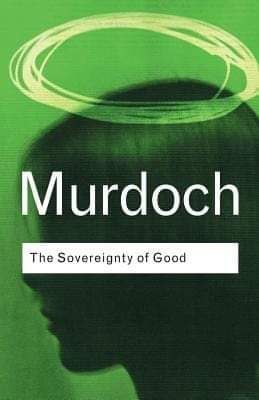
A fascinating little book, which is really more a collection of essays brought together to form a cohesive, and often persuasive argument against modern philosophy (read: Kant, existentialism, empiricists) and for a reclamation of Platonic ideals. I don’t agree with all of it, and I do find those Platonic ideas to be problematic in their own right, but what’s most interesting about the philosophical postion Murdoch is arguing for is noting the emptiness of the modern experiment. It cries out for a kind of re-enchanting of our philopshical aims, something he finds in history.
The critique begins with a dismantling of the cult of the self. Philosophy, in its modern context and largely due to the existential problem it creates, has found itself forced to reposition an unattainable higher virtue using concrete terms. We might call this science. We might call this humanism. We might call this progress. We might call this liberty or freedoms or human rights or globalism or nationalism. Whatever it is, such virtues function as the highest order largely detached from our ability to reason either from it or towards it. The end result of any reasoned attempt to claim that an empirical process is able and content to define and locate goodness on it’s own and within the observable functions of a society or natural order has been a sharp detachment, however invisible and out of sight it sometimes tends to be, from the very thing that is required for goodness to be sovereign.
What Murdoch argues for is an essential differentiating between beauty and goodness. Beauty is that which we can observe and experience as a shadow, while goodness is the higher virtue that can only be seen dimly. To say that goodness can never truly be grasped or seen or reached or defined might seem antithetical to the modern approach, but it is in fact the very thing that allows us to locate it within the empirical process. What we observe then in beauty (and its counter, the ugly) is freed from having to bear the weight of explaining it’s own existence, and it is this act of seeing that binds us necessarily to knowledge as an intrinsically external reality. It exists, even though we cannot see it, and we can know it exists because of its relationship to a functional reality that can be observed.
The sovereignty of the good seems to push us to want to name the good. There is soenthing in our human nature that seems to drive us in this direction. But this is precisely where the interchange becomes necessary and important between the sovereign and the functional realities that guide our existence. To name the good is to make the functional sovereign, when it is in fact not. Thus goodness must remain an unattainable and unexplainable mystery. Although not a mystery in the sense of being unknowable, but a mystery in the sense of being sovereign. A mystery that has the explanatory power to justify and define and explain things like morality precisely because it is not morality and contains the power to explain its own existence.
Here I would note a divergence between Murdoch and myself. One of the places Murdoch ultimately ends his argument is in making the claim that engaging the sovereignty of the good means recognizing and accepting our functional reality. This means, somewhat ironically, acceptance of the reality that the self does not exist, and that meaning does not exist, and that the humble man knows that he is in fact nothing and that virtue is in fact pointless. It is only by accepting these things that we can become virtuous or discover and see goodness and discover the self. Here in lies the great conundrum of reasoned existence. In some sense I recognize this sort of honest assessment of reality as a strength of his argument. It is the one of the great shortcomings of much modern philosophy that it has lost sight of this essential reasoned conclusion, thus demonstrating much of modern empiricism to be operating on a fallacy, even if through a willful ignorance. At the same time though, the modern experiment does reveal an important point about this philopshical postion all the same- awareness of the truthfulness of this kind of futility, nihilism and meaninglessness, even if the philopshical exercise desires to reclaim existence, meaning and purpose from its grip, needs and requires allegiance to our illusions in order to work. We have to remain at least willfully ignorant, even if the will is equally an illusion, in order to accept goodness as sovereign over our lives. And that’s a precarious postion for philosophy to find itself in.
There is another way though, which is perhaps sought after by those looking back at the philosophers who did not seprate the philopshical aims from theological ones. Its not difficult to see the religious language of Murdoch’s argumentation. We see Truth or goodness only partly or dimly, as we see God. Goodness must be able to justify it’s own existence, as would god. We see goodness in the functional, as we see god. We seek goodness as we seek God apart from our own workings. Murdoch acknowledges as much, but sees religion as an expression or outworking of his philosophical position, not as its source. It is simply the natural outcome of not naming the good in the modern sense. It is simply langauge that would translate to good/goodness rather than god/godliness. I’m not convinced that this works, however. I don’t think the argument in this book is able to accomplish what it sets out to do, which is to afford goodness a transcendent quality. Goodness is held captive to the necessary recontextualization that effectively makes it a moving target. Goodness becomes dependent on something else to explain its existence. In some sense the concept of god operates in this way as well, but the difference is that recontextualization doesn’t redefine god, rather god is a Truth that, by its nature, must always be contextualized and re-contextualized. This is two ways of seeing dimly, seeing partially, of seeing the shadows of the true thing.
A compelling read in any case. Lots to think about here and lots to revisit and wrestle with. And most importantly, I think it is well argued and succinct and compact as a philopshical treaties.
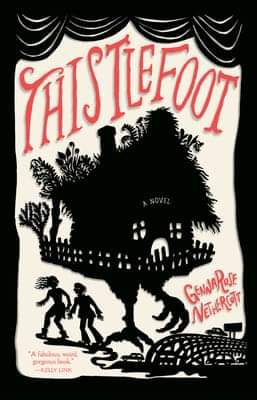
Full credit to this book for introducing me to the legend of Baba Yaga, an enigmatic and popular figure in Slavic folklore (full points too for the Ukrainian backdrop for this most recent adaptation of the famed story). This also helped me to make sense of its reference in the John Wick series, but that’s an aside.
Baba Yaga has certain distinctives, including being an animate house that stands on chicken legs. Depending on the iteration, the figure can be either good or evil. The figure also tends to aid in times of transition, especially when it comes to life and death.
Baba Yaga has a history of being recontextualized into different times and settings and roles. As it writes, in Thistlefoot, it “reimagines Baba Yaga as a Jewish woman living in an Eastern European shtetl in 1919, during a time of civil war and pogroms.”
In this iteration in specific, it is something of a back tale and origins approach as well. Which I found to be a decent starting point for someone like me who is reading in ignorance. I’ll be honest, it’s a long read, mostly because it’s a difficult read. It requires attention, and it’s not a book you can rush. Given that I not only had little awareness of the figure, but also of the historical and social context the folklore is attending to, it took double the effort to really enter into its world. I’m not sure if it’s a weakness, but the world is never really fleshed out. It simply is what it is. It’s a world where an animated house that stands and walks on chicken legs exists, and where different abilities coexist. I’m certain it all has an allegorical place, but when you are missing a lot of that context it can feel like you are missing a good deal of the process.
That said, I really liked Bellatine, who was the driving force and beating heart of the narrative. Thankfully her portions were easier to follow. I also thought the films central evil, Longshadow Man, was effective and creepy, giving this a legitimate horror vibe.
Ultimately I left feeling like I know this story has power. I felt much of that power come through the writing. I understood far less of it. Taken together though I was able to experience and thus know how this story could easily be contextualized into any number of more familiar scenarios. And that sparked my imagination, helping me to see the history behind the folklore more clearly. It left me thinking, sometimes it’s good to encounter a book that requires you to work for the experience, and to work to uncover its meaning. All the better when it opens you up to a cultural touchpoint that I previously was unfamiliar with.
Film Journal 2024: Back to Black Directed by Sam Taylor-Johnson
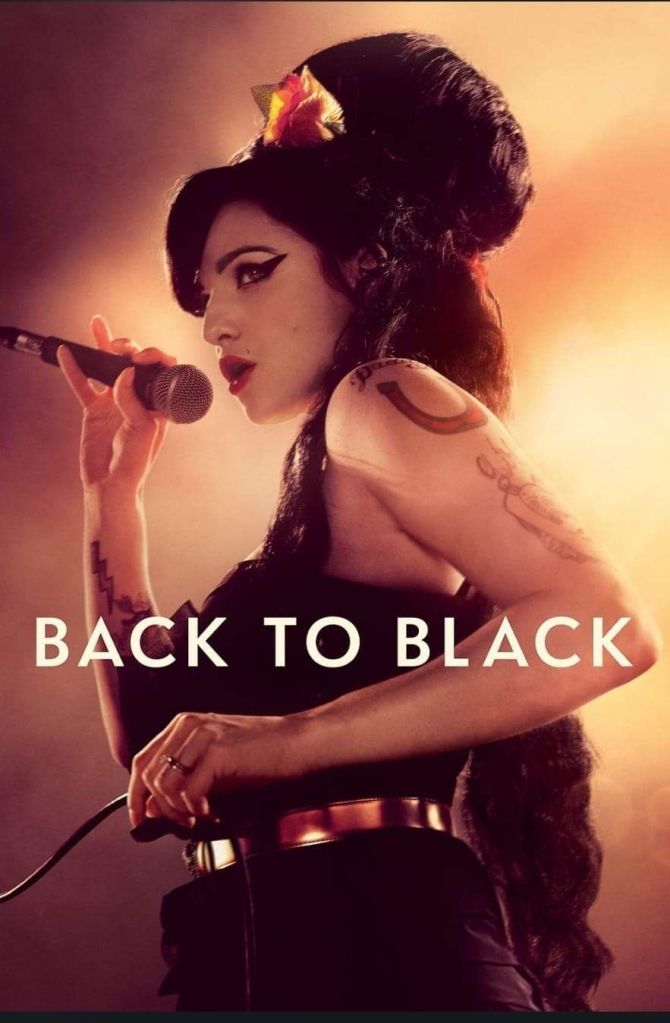
It’s a flawed film, to be sure. The way they shoot the film is very flat, and it definitely could have used some cinematic flourishes to give the thing some layers. It throws us straight into her personal struggles, leaving very little room for an expressive or recognizable arc. It also gives us too much of Winehouse the musician, saturating the film to the point where the expected climatic moments loses some of its power. It doesn’t help that the supporting cast is given very little room to play too, choosing instead to keep us centered on Winehouse for the full 2 hour run time. Any external point of perspective fades quicker than it surfaces, lost to quick edits and some curious decisions to fast track past some of the more interesting parts of the story.
As a film it still works though, largely because of Marisa Abela’s performance. I kind of wished the film had given her more room to flesh out some earlier years, just so that she could have more of an arc and transformation to flesh out and capture. But she does really good work with the narrowed portrait that she is given. Taken scene by scene as well, there is some compelling scriptwork as well, giving us as viewers a clear sense of the story’s potential. I wanted more of the character interactions and more time sitting with some of the key and important transitionary points, especially the ones that are kept off screen. It should have streamlined some of the more repetitive portions of the dramatization of her ebb and flow between addiction and performance and digged deeper into the moments that could have given us more of the persons who’s lives and interests intersected with hers.
Overall it’s a decent biopic. I think there is enough to appreciate here if you are a fan of Winehouse, and even if you are not I think there is enough here to draw you in and become interested in this enigmatic and troubled figure.
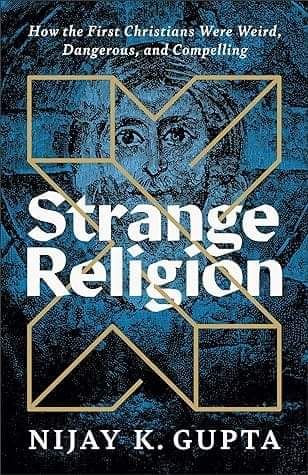
Reading Journal 2024: Strange Religion: How the First Christians Were Weird, Dangerous, and Compelling Author: Nijay K Gupta
In Ann Jarvis’ Paul and Time, she makes a persuasive argument against familiar conceptions of either the overlap of the ages (old and new creation), or views that see the new age as future occurrence. Indeed, Jesus did in fact accomplish something in the resurrection and ascension, and that accomplishment, by its nature, accompanies the proclamation that the kingdom of God has arrived, having been established in our midst. The mistake, she believes, that the above conceptions make, each in their own way, is failing to recognize how the early Christians, rooted as they were in the Jewish Tradition and expectation, understood time as both a cyclical process and a linear progression which finds its culmination in Christ. For Jarvis, it’s not as though we await a moment in time where we pass from one reality to another. What happens in both death and the awaited consummation of Jesus’ person and work is in fact a continuation of the time we are already embodying in the here and now. This becomes an important distinction for how we read and understand Paul, and it’s most immediate implication is how we understand the relationship of the now to the not yet. It is, in my opinion, a groundbreaking and paradigm shifting work.
So why mention it here? Because I heard of the book through Gupta, and there are sizeable sections of this book that utilize its ideas in establishing how and why the early Christians stood out as so strange in the ancient world. Their conception of the fulness of time is but one way in which their beliefs and practices clashed with the norms of their day.
Gupta’s essential thesis is, for as simple as it sounds, that the early Christians and their religion were strange. To understand what this strangeness was requires us to know the norms of the ancient Greco-Roman world and how the ancient Chrisitians existed in relationship to these norms. Which is what the bulk of this book sets out to unpack.In truth, we are conditioned to see the ancient world as strange and our modern norms as the measure, but thinking this way blinds us to the particular strangeness of the early Christians and what actually set them apart in a largely pluralistic society. Even the term pluralistic means something different then than it does today, as would the term atheism. This was, after all, not a world divided by belief in God and belief in no God. What largely defined this world, and certainly the Roman Empire, was a world filled with gods which demanded a hierarchy for Empires to successfully bind together worship (or ritual) and Power. People were free to worship whatever god(s) they wished as long as this worship was subservient and payed allegiance to the authority of the Roman Empire and its pantheon.
It would be difficult to know if there is a singular, overarching descriptive that could explain and define why the early Christians became such a well documented anomaly in this ancient context, but there are a few defining distinctives. One would be the absence of a temple, a fact that owes itself to the storied period of Israel’s exiles. This allowed for the practice of these early Christians to see God both present and at work in the world around them as opposed to viewing the interaction between the gods and the world mostly within the Temple and its accompanying rituals. A second would be the breaking down of hierarchal systems, something that would have cut through the honor-shame systems that defined the socio-politcial systems of their day.
These are broader observations, and to be honest aren’t revelatory in and of themsleves. These defining aspects of the early Christians have been well documented in plenty of other spaces and by the different facets of academia. What sets Gupta’s work apart is the attention he gives to the minor details, something born from the many years he has given to the study of ancient Greco-Roman religion and society. What makes this book an intriguing addition to that field of study is the way he binds this to a specific comparative in its world. The tendency in scholarship is either to whitewash this strangeness by collapsing the whole enterprise of antiquity together, thus representing it as a singular comparative to our more enlightened modern norms, or to redefine early Christianity according to modern norms so as to use it as a means of declaring the strangeness of the ancient world that surrounded it. In truth, the ancient Christians would be as strange to us today as they were to the ancient world, and this is an important and necessary observation if we are to be interested in the question of what this strangeness means for us today, either as Christians or for understanding Christianity’s history.
It should be noted, Gupta is a practicing Christian, and for lack of a better descriptive, a Protetant Christian who came from a Hindu family and background and occupies space here in the West. He’s also not afraid to allow his faith to intersect with his academics, which might frustrate some who might come to this looking merely for information. Personally, I think more academics should allow their worldview and their working assumptions to have a clarufying place in their academics, as it helps to contextualze the information accordingly and keeps ideas and implications accountable. There are points of disagreement that I do hold with certain aspects of Gupta’s confessional interests, but I also note he is one of the better Protestant voices working and writing today. He is willing to grapple with ideas, he is aware of current trends in scholarship, and he’s widely read in his field of interest (Greco-Roman history). All of which fuels the insights he tables here.
One last point. It’s always a point of contention to wade into the waters of any viewpoint that looks to single out Christianity with any intent. There is a working tension that exists in much of modern scholarship that wants to resist any claim to uniqueness or particularness, even when it flies against the facts as we have them. Part of this resistance exists because of the potential for such claims to sit uncomfortably beside working assumptions regarding a godless reality. Part of it exists because monotheistic tendencies tend to be deemed as the enemy to romanticized visions of pluralistic societies like Rome (which ironically whitewashes the facts of Rome while isolating Judaism and Christianity). In any case, Gupta does give some time to qualifying this strangeness by pointing it back to Jesus rather than His followers. While it is true that we find this strangeness reflected in these early communities of Jesus followers, it would be a mistake to make a people and their religion into an appeal towards exceptionalism. This is certainly not the case, especially if we are to see the Gospel as being for the world and relevant to all. This strangeness exists only because the person and work of Jesus broke into this ancient context. It speaks similarly to all of the strangeness of the Greco-Roman world because it reflects a Kingdom that truly does clash with the kingdoms of this world. It is about a particular revelatory and historical witness, not the propping up of another power system, one in which we can conceive and percieve ofthe power systems being defeated. This is what made Jesus so weird, dangerous and compelling.
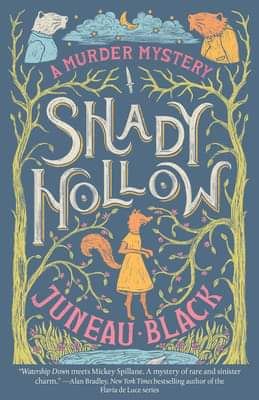
Reading Journal 2024: Shady Hollow Author: Juneau Black
I noticed a descriptive that cited this as Wind in the Willows meets Agatha Christie. Not sure that totally works, but it’s fun to imagine and gets you thinking in the right direction in terms of the vibe of this book.
I’m not typically a big fan of mysteries, but when it is cloaked in a town filled with walking, talking, working, living, animals, and when the town is cloaked in a larger world building exercise that imagines such social classes and cultures exists, i will absolutely embrace it.
And in truth, this is straight up comfort food. Quirky, fun, charming, enjoyable comfort food.
I actually came across this book when I was visiting Mikwauke last summer. Penned by a local author whom residents are quite fond of and gladly recommended. It has that small city, working class, blue collar vibe too, where the local businesses and the local arts and culture are integrated. The kind of place where an unusual murder and the collective effort to solve it can frame the ethos of a place.
Definitely a world I wouldn’t mind returning to (would love to visit Milwaukee again too). And conveniently this book is listed as the first in a series 😀
If you know those places of wrestling with and walking through periods of disenchantment when it comes to faith and God and church, this (Will Carlisle’s The Crocus) is an album for those honest questions and those honest places to be layed bare and given validation. Raw. Poignant. Healing. Liberating.
The opening track begins a journey in the darkness that leads to towards the final track, proclaiming the doubts in the face of the mystery, as the place where the doubtless grows, the place where the bitter place of haunting fears becomes the place where you find hope. Where you can say, this is my hallelujah.
Where is My Hallelujah I’ve been asking lots of questions, with answers I don’t know. I’m feeling less like Nazareth, and more like Jericho. The Sunday morning pastors read Scriptures that I know, they say I’m just like Lazarus, but I’m not sure I rose.
And it’s funny how I can’t shake who I’m afraid I’ll be someday, it’s funny how I’m homesick for a place I’ve never been. The more I change myself, the more I feel like I belong back down in hell. And its scary how I can’t shake who I’m afraid I’ll be someday. It’s stupid that I’m homesick for some place that I’ve never been.
Where is my hallelujah. Where is my hallelujah. Where is my hallelujah. I used to feel it in my bones. Where is my hallelujah. I used to call that place my home. Where is my hallelujah Was it all just make believe Where is my hallelujah. Did you take it back from me.
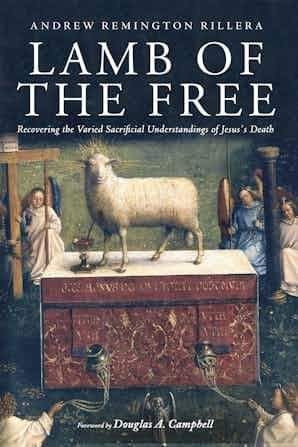
Reading Journal 2024: Lamb of the Free: Recovering the Varied Sacrificial Understandings of Jesus’s Death Author: Andrew Remington Rillera
Lamb of the Free provides the perfect compliment to a preexisting body of work that is revisiting and reexaminjng some commonly held beliefs about the Atonement, the cross, and our understanding of salvation, including David M. Moffitt’s Rethinking the Atonement: New Perspectives on Jesus’s Death, Resurrection, and Ascension, The Sacrifice of Jesus: Understanding Atonement Biblically by Christian A. Eberhart, works by Douglas Campbell and Matthew Thiessen, just to name a few. More than simply a compliment, I do believe that this phenomenonal and monumental work by Rillera will become a definitive resource regarding the larger umbrella of modern biblical scholarship to which this belongs, not least because it brings all these different voices together into a complete and cohesive examination-Eberhart’s emphasis on the OT sacrificial system, Moffitt’s emphasis on the letter to the Hebrews, and Thiessen’s emphasis on the Gospels. Rillera adds a robust and researched treatment of Leviticus to the picture, connecting the pieces of the puzzle in a way that feels exhaustive, proven and convincing. Indeed, this is required reading for anyone truly interested in exploring the concept of Biblical sacrifice and atonement.
One of the great strengths of this book is its structure, moving methodically through the Torah with an emphasis on Levitivus, Exodus and Deuteronomy, then moving to the prophets, and finally to the NT. Each chapter begins with a clarifying set of points that the chapter will be looking to argue and show, and ends with a summary of those arguments, making the complex set of data and information easy to follow. Rillera is deeply interested as well in bringing together faithful study and academics on both a historical and theological front with a robust interest in matters of faithful practice and allegiance to the text. At the root of his central thesis is an interest in showing what he believes the text is actually saying about matters of sacrifice and atonement.
It would be nearly impossible to summarize this book in a simple set of sentences. One part of its agenda is to do away with the concept of penal substitution, which the author sees as the primary problem when it comes to misreading and misunderstanding the function of sacrifice and atonement in the Scriptures. Another part of its agenda is explaining and showing how the sacrificial system operated in the ancient world, allowing this to inform our understandings of the prophets and the NT writers application to the person and work of Jesus.
Obviously both of these points are interconnected. By understanding the sacrificial system, it can help us understand how Jesus functions within this system, and subsequently find the means to counter the misunderstanding that penal substitution presents with a more faithful view of atonement.
At the core of the sacrificial system is a dual function. “There are two main categories for sacrifices broadly speaking: these are “the categories of gift-offering-display and/or pollution removal.” In the terms I have been using thus far, in the Torah these are the “non-atoning well-being sacrifices” and the “atoning sacrifices,” respectively… Atonement rituals decontaminate the dwelling place and ritual purity regulations ensure that human beings (both priest and lay) are fit to access the sacred space and foods… (the well being sacrifices) elicit God’s presence (and thereby God’s blessing)… The primary function for the non-atoning sacrifices is to share in a holy meal in God’s presence, often to give thanks for some prior act of divine deliverance.”
Rillera goes to great lengths to show the primary sacrificial language used in association with Jesus comes from the Exodus, which has nothing to do with sin. Where we find atonement is not in the death of Jesus but in the resurrection and ascension. Further, as Rillera insists and demonstrates, “Neither death nor suffering nor punishment of the animal has any place in the sacrificial system. Therefore, all Christian theologies that attempt to derive a view of justice on the mistaken view that biblical sacrifice is about punishment or substitutionary death must be utterly rejected by any Christians seeking to anchor their views in the biblical texts themselves.”
The fundamental means by which he makes this claim is by recognizing precisely what a blood sacrifice was seen to be and do in practice. In a Jewish context, it was seen to deal with the problem of death. Death is never ritualized in the Jewish rites, and in-fact what we find is precisely the opposite. Sacrifices revolve around feasts, and a Jewish understanding saw the spilling of any blood as murder, or more aptly a result of a creation (land) that is under the reign of Sin and Death. What blood sacrifice does is take death and reconstitute it as life by bringing it into the presence of God.
The primary purpose of atonement then is to purge (remove) the pollution of sin and death from the sanctuary while also preparing the Priest to enter it. While there are greater complexities at play, this becomes an important facet for understanding how the NT affords Jesus a Priestly duty using the sacrificial language. Perhaps most important is recognizing how the sacrifices themselves were never seen to deal with corrupted land or people, which in rhe Jewish view is interconnected. This requires another work that is not sacrificial in nature and whcih we find in the water purification rites.
As Rillera summarizes in his concluding remarks, “The consistent message throughout the entire NT is not that Jesus died instead of us; rather, it repeatedly indicates that Jesus dies ahead of us so that we can unite with him and be conformed the image of his death (Rom 6:5; Phil 3:10)… Jesus’s death is soteriologically unique. And part of its uniqueness is because Jesus is our pioneer and forerunner, setting the pattern and paradigm for what covenant faithfulness of loving God and loving neighbor means. Jesus’s death is unique, especially since it generates the singular reality that grounds Christian ethics that all can share in—or rather, will share in (Col 1:27 and 3:10–11). We are baptized with his same baptism of the cross, we drink from his same cup of the cross (cf. Mark 10:38–45). The point is union with Christ (participation and solidarity), not separation and distance (substitution). It is solidarity and participation all the way down.”
If it’s not clear by this point (and it should be), I really loved this book. More than that, I think it’s a book that anyone interested in theology needs to read. It’s a reclamation of an important facet of the Chtistian confession, and it does amazing work in helping us navigate a foreign language and culture with all its practices, language and customs. It is from this ancient culture that we find a window into the revelatory work of God in Jesus. There is a sense in which this is a simple truth. But simplicity can also go very wrong, especially when the cross-cultural context is misread and those ideas become firmly entrenched. This requires untangling the complexities behind the misunderstandings. It is from this position then that we can arrive back at that simplicity, simply with the work of scholars like Rillera clearing the landscape and rearticulating the basic claims of the Gospel. Here the key words can be described as liberation and participation and renewal. For this I am grateful.