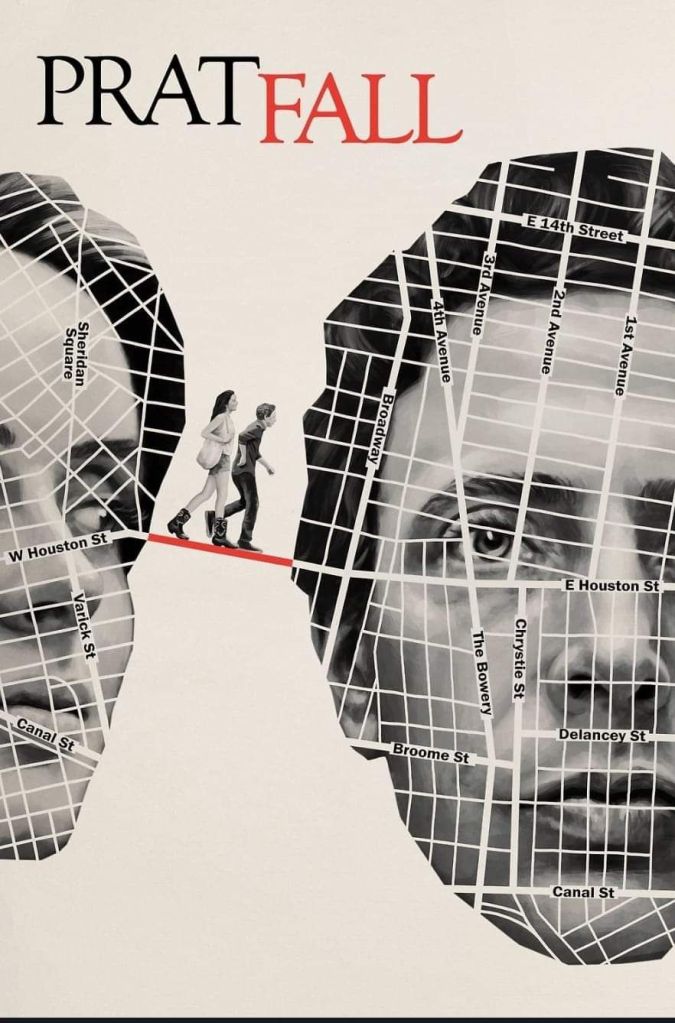
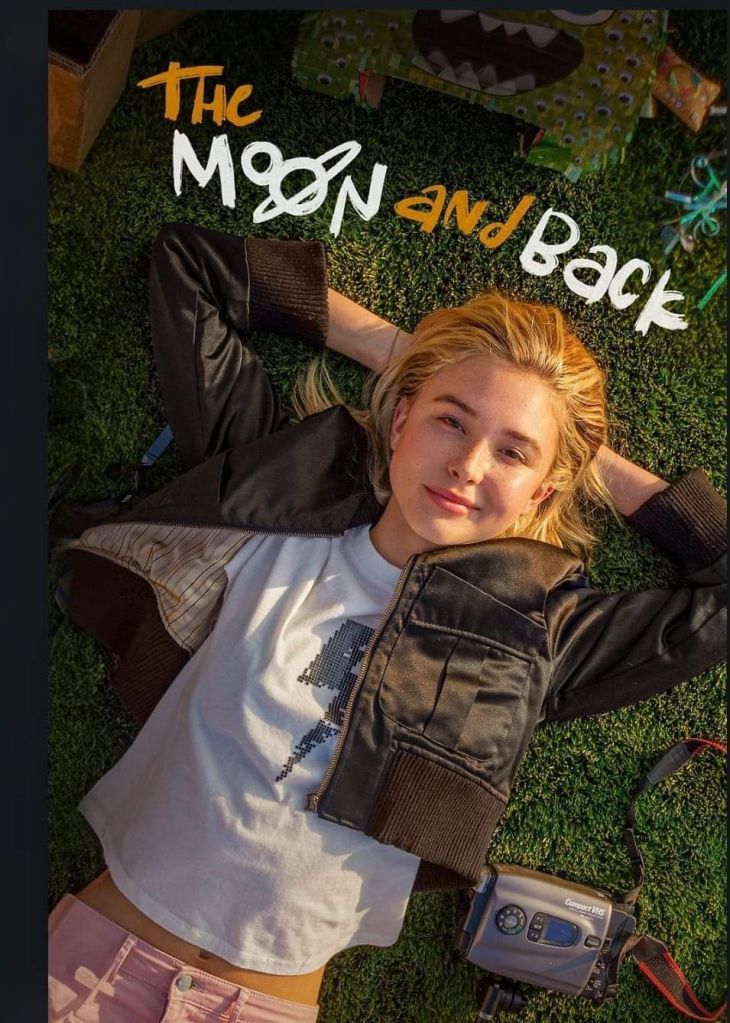
I recognize there is probably room for sone level of critique here, but I really resonated with the spirit and themes of this film. It’s a specific audience, gearing older then I expected, not in terms of content but in terms of theme and target. It’s a family film, to be sure, but it is speaking to the pairing, a father and a 12 year old daughter, each in their own way.
At the core of the story is an invitation to tell your story. And the vehicle for storytelling of this nature is memory. This becomes a stepping off point for Krasinski to then lean into his distinct visual approach, with NYC proving the perfect setting to strike that perfect balance between a necessary nostalgia and a modern aesthetic. What binds this together is a commitment to the story’s magical realism as well, bringing together that childhood imagination and the the grown up perspective in a way that really meshes well with Krasinski’s style. Really loved too how he utilizes the camera in ways that evoke these differing perspectives. It’s a creative approach that evokes plenty of emotional moments along with moments of fun and charm while making a lot of use out of the set design.
Whatever one might want to say about the specific target audience, which might leave younger kids a bit lost in the shuffle, Kransiki mirrors this after family films of a bygone era. Perhaps its greatest strength to this end is its authenticity and its heart,feeling like a genuine passion project from father to kid in its rawest form, which from what I understand is what this project was born from.
Loved Cailey Fleming in the role of the 12 year old too. A definite natural charisma.
Film Journal 2024: About Dry Grasses Directed by Nuri Bilge Ceylan
You could say a nearly 3 and half hour run time documenting a gradual spiral into an existential crisis using a script made up primarily of dialigue/conversation doesn’t sound like riveting cinema.
Rest assured it is. The fact that it never really resolves its inate grappling with things like hopelessness, despair, isolation and meaninglessness makes it even more engrossing.
It’s about a teacher who finds himself doing a practicum in a small village school in hopes of gaining a more prestigious position elsewhere. A controversy keeps him trapped in this village however, setting off the point of crisis. Along the way, or in process, the film keeps posing questions about, or perhaps at, existence. Such as, do our lives actually make a difference or are we just part of a grand social order? Does good mean anything when in reality existence is just about being good enough? Can we actually claim meaning in a world where even altruism seems predetermined?
Heavy questions. Whether it’s meant to drive us to self reflection is up to the viewer, but it most certainly is meant to shake us up in one direction or another. Perhaps to simply accept the truth of hopelessness and meaninglessness, or perhaps to push us to believe that hope and meaning exist, even if just as a possibility or as a constructed illusion. This is where the lack of resolve cuts through like a sharp knife, never allowing us to settle by constantly shifting our point of perspective within the ongoing dialogue. There might be meaning, it might all be meaningless, and inbetween we have this thing called a life pulling us between these incongruities and grasping at illusions of meaning just to keep on functioning.
Kinda like dry grasses seeking the rain and the sun.
Film Journal 2024: Dreamin Wild Directed by Bill Pohlad
I’m a big fan of Casey Affleck, and this story about a middle aged man coming to realize his dream to make music and be successful later in life hits at my own once upon a time ambitions and dreams as a musician. Which is to say, this had all the marks to really land for me and yet found a way to slip under the radar. Given that its now widely available through borrowing and rental platforms, it’s a good opportunity to catch up with this hidden gem. The fact that it came and went without much notice is especially surprising since the Director gave us one of the all time great films in Love and Mercy.
One of its best and most genuine qualities is its decision to keep the story quiet, avoiding the trappings of elevated and sensationalized drama. One of the big through-lines here is that we are made of our dreams, but much of the time those dreams express themsleves in different and unexpected ways over the course of time. Thus how the middle aged man comes to realize his teenage ambitions isn’t the stuff of happily ever after and grand fireworks, but rather something far more subtle and expressive. Here the film captures that real sense of how life works, and there is a beauty to the composition, the script written like a song with ebbs and flows and choruses and bridges.
The music in the film is also fitting as it captures and reflects that real singer-songwriter vibe. It has an earthy feel indicative of that indie record that has its followers but not a ton of fame.
There are a few moments here and there that feel a bit rough around the edges or which veer into the tell rather than show type plotting. But most of this is content to sit in the space of its simple narrative arc and let the interplay between the younger and older self do the emotional work and heavy lifting. The end result is an inspiring story that sings its own unique tune, proving that the best art is sometimes found in those hidden and hard to find spaces just waiting to be discovered and uncovered.
Film Journal 2024: Furiosa: A Mad Max Saga Directed by George Miller
A different kind of movie than Fury Road in the way the story is structured and in the way the film is shot. However, these differences exist as the perfect compliment to a more complete experience and fleshed out narrative.
The fever pitch nature of Fury Road is traded for something not necessarily less intense and less energized, but more character driven and fleshed out. It fills in those parts of the world and story that were never explained in Fury Road while building out it’s own ideas at the same time. In this sense Furiosa is more of an investment than an experience, which is what allows it to make Fury Road an even better film.than it already is.
You can feel this in the way Furiosa is structured around chapter breaks and clearly drawn arcs that build as the story of Furiosa goes forward. It’s designed to bring us into the story of the characters rather than just allowing us to experience the madness of this post apocalyptic world. If there was one point of criticism, and I don’t know that it ultimately is one, it is that this investment in character and story does lead Miller to utilize CGI more than the outright practical set pieces that we find in Fury Road. It’s not distracting so much as it tames some of that fever pitch nature, funneling our attention to a more studied development. In truth, this choice works for the kind of film that Furiosa is.
The performances here are all top notch, with Hemsworth giving a career performance and Joy doing some amazing work in bringing together the nuances of Theron in Fury Road with her own developing persona. Not to be left out would be the performance of the even younger Furiosa, played by Alyla Browne, whom we get a surprising amount of and is doing amazing work of her own.
Does it succeed in matching or beating Fury Road? I don’t think thats the right question. The question is, does it belong and enhance the collection of films and does it prove necessary to the larger story. Without a doubt it does, and it does this in some surprising ways.
For the Life of the World: Sacraments and Orthodoxy Author: Alexander Schmemann
In the Preface for the book, Schmemann notes that while he essentially set out to outline the liturgical experience of the Orthodox Tradition for Orthodox Christians, the book ended up gaining a much broader reach. This of course would indicate the emergence of an Orthodox seeking generation, which, and this is my own assessment not the authors, would indicate a resurgence of renewed interest in the liturgy. Why is this the case? I personally believe it is because many of us who grew up in the Protestant West have been inundated with Christian doctrine at the expense of hearing, encountering and experiencing the Christian “story”. While its fair to say that most of us would probably struggle with being an actual practicing (Eastern) Orthodox Christian, it is within the liturgy of the Church that many of us have been rediscovering the basic power of the ancient Christian story.
For me, I’ve long been fascinated by and with the liturgy of the Eastern Orthodox Church, finding much solace, growth and worth in its narrative emphasis. I love reading and encountering Orthodox authors, and have incorporated much of its approach and its ideas into my own theological outlook and Christian practice. For me, reading books like this one often help me to feel seen and heard, helping to make sense of my questions and struggles.
The best descriptive of this book is that it simply outlines the narrative that one finds in the liturgy of the Eastern Orthodox Tradition, beginning with the story of creation and ending with the story of our Spirit empowered witness as we await the consummation of the new creation promise. This is the story that you would find embedded in the worship service of the Church.
So what are some important markers of this story? Whereas I grew up hearing much about an evil and corrupted creation, often made synonymous with the “world”, Eastern Orthodoxy emphasizes the goodness of creation while maintaining a sharp contrast between the Church and secularity on the level of worldview and participation rather than inherent natures. One of the big emphasis of the story it is telling is the question of what is Truth, and how can Truth inform our reality. Within this, Orthodoxy seeks to collapse the traditional dualism that has tended to divide spirit against flesh and God against world, or even humanity against God in certain theological convictions, and instead place our attention on three essential divides and oppositions-Life and Death, sin and transformation, Good and Evil rules or Powers. The story of creation is defined first of all in its cosmic sense, playing the story of salvation likewise out in the cosmic renewal as its end goal
Orthodoxy doesn’t place our interests in individual salvation and thus imagine the story being about us escaping a sinful world and going to heaven, although such matters of individual participation in the kingdom of God or outside of the kingdom of God very much do come into play,. It places our interest in the promised new creation, which we find in Jesus coming to earth as it is in heaven. And it is in Jesus that we are not taken out of this world, but rather placed back in it as witnesss to the person and work of the worlds savior. We are called to bear witness to His life, His resurrection, His love, His victory, His kingship and rule, and to proclaim this Truth in the face of the suffering, sin and death that we find still evidenced in this world. Schnemann has a fascinating chapter on how the sacrament of the eucharist helps us to make sense of the already-not yet nature of the Gospel, a sacrament that is rooted in two overlapping conceptions of time and reality. To follow in the Way of Christ is to follow Christ back into the world, and to follow Christ back into the World is to participate in the new creation. As he notes, the eucharist is best understood as a journey. First to Chirst, and secondly to the world, presenting the “One in whom all things are at their end, and all things are at their beginning.” We, as Chrsitians find this story in its sacred revelarory nature even as we occupy this space in the middle of history.
One of my most cherished chapters is chapter 6, the chapter that tells the story of Deaths defeat. That chapter begins by noting that we live in a death denying world. By which it doesn’t solely mean avoiding its reality and its existence, rather it means resistance to the notion of Death being opposed to Life. Modern, secularity has grown a resistance to polarities and oppositions, which in itself becomes ironic once we note the many polarities and oppositions that do exist within secularism as an ideology. What flows from this though is a tendency to romanticize death, something that we find most commonly in an illogical idolization of nature. One of the big problems that emerges from this is, once we romanticize death we’ve lost all means and ability to locate Good and Evil in the world on a narrative level. It might be true to observe, at least in part, that part of the reason we find such thought processes being normalized even in the Western Church is because we have spent so long battling against readings of doctrine that make persons and things good or evil, or which make the Church/Secular divide about Heaven versus the world, or faith versus culture. These things fairly deserve to be dismantled and deconstructed. However, if we go so far as to lose sight of the true enemy- the enslaving Powers of Sin and Death which holds creation in its grip- we lose the story of Christs defeat and reign. We lose the grounds by which we can define Death in terms of that which is wrong which Jesus’ person and work makes right. This includes suffering, decay, oppression, the patterns of Empire, all things that find their source in the enslaving agency that is central to the Orthodox narrative. Death is often reduced to non-existence, while its defintion in Orthodoxy reaches so much broader than this. Death is not something we embrace or romanticize or make good because we believe it has been given a redemptive quality or is part of the natural order. It is the very defintion of disorder, and has no place in Gods goodness and love. It is the thing that Gods life and love judges.
Why do I note this as significant to me? Because nothing has isolated me more in this world than my simple conviction that Death is the enemy of life. This isolated me equally from both relgious and non-religious circles. And often with an impassioned opposition. Nothing seems to incite anger more than opposing Death for some reason. And yet, in a religious sense, without this conviction, I could not make sense of either my belief or my unbelief. Existence, be it mine or Gods, would cease to have relevance and worth. Nature and science itself would cease to make rational sense. Certainly, the story of God, let alone the story of Christianity, would cease to have relevance.
An important note here- opposition is not the same as avoidance or escapism. The Orthodox narrative is not about wish fulfillment. Rather, it embraces reality and makes sense of it by allowing Truth to inform and transform it within our witness to the story that holds Life and Death together as a coherent plot. It casts our hope in the embrace of the fullness of reality as we see and experience and know it. Which to me is one of the biggest things that brought me back to faith as a coherent and rational means of making sense of the world I observe.
I might not be a participant in a Traditional sense. But one of the most beautiful things about Orthodoxy to me is it timeless nature, and also its ability to contextualize and re-contextualize within time. It leaves so much room for the imagination to challenge and pose questions and to navigate spaces of great uncertainty. But the wonder is that this comes from its deeply held convictions in a story, and to telling that story. It simply accepts that all reason and rationality flows from our working assumptions, and it’s working assumption is that the story it tells of God and humanity and creation brought together in Jesus as Life for a world enslaved to Sin and Death, can help us to make sense of the world we observe, of the reality we observe. And it is by telling this story that we then learn to embody it, which is the ultimate outcome of our particpation in the new creation reality Jesus brings about.
Reading Journal 2024: The Wishing Game Author: Meg Shaffer
Reads like a mix between The Inheretance Games and Willy Wonka, just with a literary subtext woven in. The whole adult-child relationship, following our main character’s obsession with an author and his books amidst a problematic childhood, provides a vantage point for exploring differing perspectives on life. Given that the story is being told from the vantage point of a grown woman, one who is looking back on her life while trying to make sense of her present, the YA element straddles a line between pushing towards maturity and recovering that childhood wonder and hope that maturity often threatens to strip away. Conceptually speaking, the book finds a unique way into the idea that our adult selves are rooted very much in those childhood experiences, particularly those moments that act as transitions between these two worlds.
I wasn’t the biggest fan of the romance, but I imagine it would land better for its target audience. Thematically speaking, the book also plays it relatively safe. There are no huge surprises, and it definitely wraps up its themes and its plotlines with a nice and tidy and happy ending. That is, I think, what the book advertises itself as, which makes that an ultimately satisfying element of The Wishing Game. Call it a comfort read, with just enough emotional power and resolution to make it engaging and trustworthy.
Although I could have used even more of the literary motif, it also gets points for its celebration of the power of the book and the imagination. Hope would be lost without its transformative power.
Reading Journal 2024: Days at the Morisaki Bookshop: A Novel Author: Satoshi Yagisawa
The story kind of snuck up on me, told with a gentle hand and a quiet urgency. It’s mostly relationship drama, and much of this unfolds through conversations a 25 year old Takako has with the different people suddenly thrust into her life after things start to fall apart. A sudden phone call from a distant uncle brings her to his bookshop in the heart of Tokyo’s famed “book district”, where she finds herself discovering new things about her past, herself in the present and finds fresh vision for the future.
Parallel to Takako’s story is her uncle’s story, which is where we find the real heart behind this novel. If he finds her in a time of need, she comes into his life in a time of need. And it is in the simple confines of this bookshop that their worlds are able to find meaning in this sudden collision of experiences. Not simply in the bookshop, but in the pages of the books that can help us understand and tell our own stories.
It’s a quiet novel, largely focused on the routines and the day to day happenings of our main characters, but the relational stakes are also weighty and interesting. It’s also endearing, giving us plenty of ways into these characters lives with their quirks and sensibilities. The more I sat with them and was content simply letting this small sliver of their lives play out as it would, the more I was able to care about the end result. I enjoyed too, the emphasis on persons in different points of transition, even where they aren’t necessary and wanted ones.
Film Journal 2024: Monkey-Man Directed by Dev Patel
The comparisons to John Wick are warranted. So much so that we get a couple of direct nods in the film itself. Those comparisons are simply a jumping off point for something that is in fact a fusion of different ideas and influences. It functions almost as an intentional homage on this front, giving it a level of authenticity befitting a passion project.
On the John Wick front, any comparisons would postion this well in the vein of the first film. One of the clear differences between the two is, while that franchise is defined by its world building and mythology, using the hyper-violence as a means to explore and push different cinematic boundaries while, above all, entertaining its audience, Monkey-Man takes a more stripped down approach. It is earthy, grounded, and at its heart a more serious film, one that is immersed in some very real cultural notes and thematic interests evoking a legitimate historical backdrop. It is actually these characteristics that offer this film’s greatest sense of intrigue and surprise, taking the story into some unexpected places. Certainly helps that the films sudden release out of nowhere, a big ticket item that I don’t think anyone knew existed until not that long ago, also contributes to that sense of surprise. It is ultimately less interested in entertaining its audience than it is in challenging us to experience the transformation it is exploring on a human and spiritual level. Themes of retribution and justice run through the fabric of its story, grappling with the challenges of personal and social trauma and oppression it goes.
This is, of course, Dev Patel’s film, and as mentioned, I feel like this qualifies as a passion project. A film he felt he needed to make. It is new territory for him, and I think it really does help make him an intriguing voice to watch behind the camera as well as in front of it. A way of establishing his fingerprints and tabling his sensibilities as an artist, avoiding the polish and trappings of being over-produced and leaning into the sort of rough around the edges intimacy that let’s him experiment and take chances. And I’m here for it. I’m excited to see where he goes next.
Film Journal 2024: Riddle of Fire Directed by Weston Razooli
The official synopsis describes this as a neo-fairy tale. That’s a decent categorization for a film that manages to defy categorization, albeit while feeling, at the same time, like an impassioned ode to a bygone era of filmmaking. An era where the simple art of imagination and a feeling of adventure are your tools rather than CGI, and where grassroots and no frills storytelling bolstered by natural chemistry between your characters is enough to make a meaningful and memorable film on a very small budget
I almost want to suggest that it has an old school Disney classic feel, but it is more like imagining if a Disney classic was allowed to color outside the lines. There’s a definite charm to the kids pervasive cursing, playing without supervision, and minor disdemenears.
There’s a ton of heart too, evoking the once upon a time familiar joys of a childhood spent outside with your friends and nothing but your imagination ro occupy you. This is the way into the magic of its premise, gently wielding the presence of witches and young girls with powers and ancient myths into the stark realism of their escapades. It’s a grand narrative tied to a simple plotline- at the end of the day the kids really just want that egg so they can make that pie.
That dance scene in particular is pure cinematic perfection, and the ending rises to some sweet and charming emotional heights befitting the films practical, grounded, and personable approach. Most of all though, one of the film’s most defintie delights is simply the banter between this cast of kids. The world is their stage, and the privilege here is the opportunity to follow them on their adventures.
Film Journal 2024: Sting Directed by Kiah Roache-Turner
A quiet and unassuming horror that embodies the spirit of the classic creature feature. It is bolstered by a solid script, a tight run time, and solid performances. A quality film that has gotten little to no advertising or press, but is definitely worth your time. Its not on a lot of screens, but if you can track it down, support it.