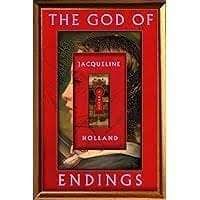
Didn’t love the non-linear approach, but for every moment I found myself wavering there was an encounter with a page, a plot turn, a section, a conversation that grabbed me and pulled me right back in. It is those moments of beautiful and inspired prose that govern the larger narrative, providing a powerful reflection on the nature of the forces of life and death. Yes, it is in its own way a horror story about a vampire. But this is a long ways from your atypical stories of vampires. This is, at its heart, an essential human drama facing down some of the hard questions of human existence.
Here are portions of the book that, for me, outline and shed light on the meta-narrative that resonated for me:
“They aren’t just for me, you know- the visions. I see, on occasion, what is always there is always true. It’s all there right now: this world the lower branches of a beautiful, fruiting tree, and the perfect glory of God filtering down through the branches, radiant creatuers filling the air, everything singing with joy, and all of it pulling us up, me and you, into love.”
He laughed softely, threw a twig into the fire. ‘I used to never speak of it. I knew it made me sound like a madman. But then, it stopped mattering. People thought I was mad no matter what, so I stopped hiding it. I began just to offer it, to say “the glory and the love that surrounds you, that you breathe in with every braeth, it’s there, if you want it. ‘ What I see is yours as much as it is mine– if you want it…. I have my God. I have my painting. I have my love. I have the world. It’s too much goodness.” – excerpt from Jacqueline Holland’s The God of Endings
“Like you, I have sensed the pursuit of both Czernobog and Belobog for most of my life– not singly, but as one. I have heard and seen strange and terrifying and wondrous things, just as it seems you have, but I have noticed a pattern– and this is a conclusion, mind you, so place no blind trust in it– but the pattern I have seen is that the Emptier must empty before the Filler can fill, a space must be cleared for a gift.”
“… We children do not like emptying, clearing. We do not want Czernobog’s darkness, only Belobog’s light. Even us very old children. We forget that light, without shadow or variation, is blinding. We malign and fear and slander the Emptier, Czernobog, the Dark One, the god of endings. Perhaps we would do well to wait, like children learning patience, learning trust, and see what fills the space he clears, what light breaks into his darkness.” – excerpt from Jacqueline Holland’s The God of Endings
“One short sleep past,” reads the line in the stone, “we wake eternally. And Death shall be no more. Death, thou shalt die.” We wake eternally. Vano was right, as always. A new way, a gift I could never foresee. And his beloved spirit- I can feel iit near me now like a hand in mine, a gentle midwife, speaking reassurances and coaxing the trembling laborer through the loss of all that was and the birth of the unimaginable.” – excerpt from Jacqueline Holland’s The God of Endings
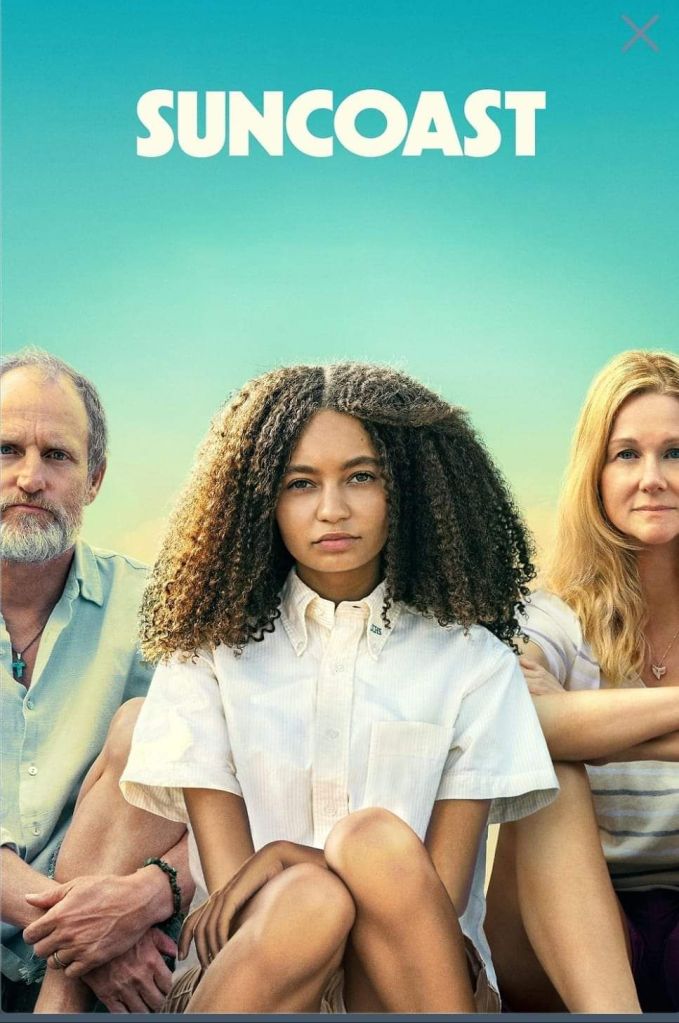
Film Journal 2024: Suncoast Directed by Laura Chinn
Totally my descriptive, not the films, but dang it if this thing didn’t quietly stake its claim for me as one of the best “faith” based films I’ve seen in a long while. Raw, vulnerable, uncensored, and real. Unafraid to bring nuance and empathy to a complex portrait. The mature elements (which are present) befit its subject matter and its approach.
A tender hearted coming of age drama that becomes a studied examination of grief and family. Boasts a quiet but confident lead performance that we should still be talking about at the end of the year.
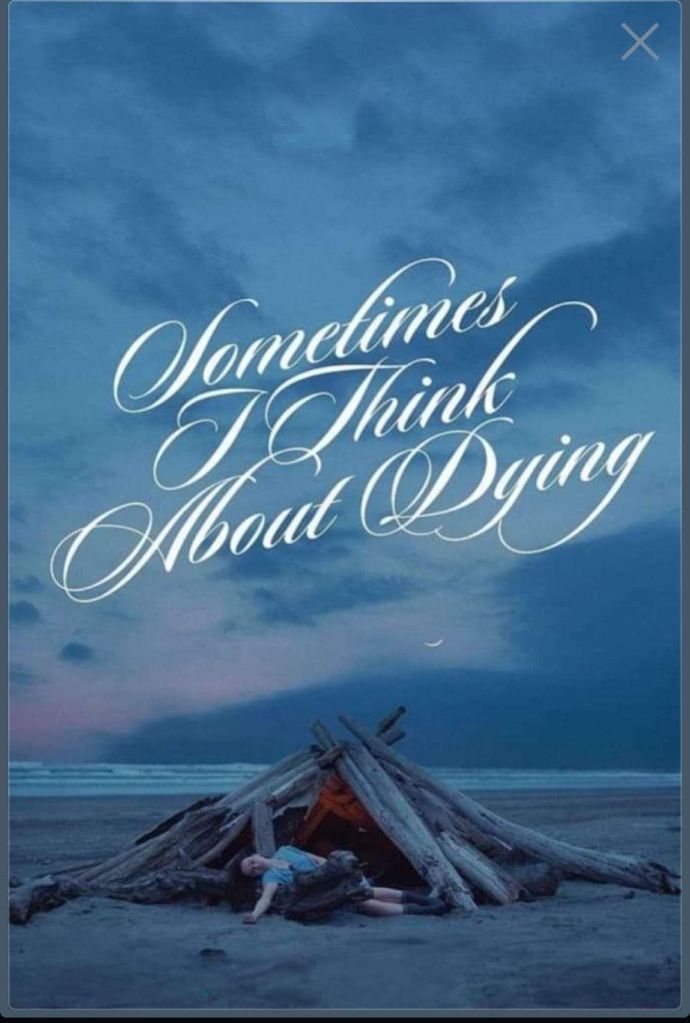
Film Journal 2024: Sometimes I Think About Dying Directed by Rachel Lambert
“Its tough, you know, being a person.”
“The more I think about the movie, the more I like it.”
If the overall execution of this film is uneven and disjointed at times, which is definitely felt in the films deliberate pacing early on, the vision for this film remains abundabtly clear. And the more the film goes on, the clearer, and stronger, it becomes.
I found the films visuals and its aesthetic captivating and mesmerizing. The way it weaves back and forth between different perspectives, using different camera shots and angles. The way it pauses to capture these staid external shots and moments, soaked as they are in atmosphere and imagery. Striking might be the best word.
These visuals also help to establish the tone, including employing a patient and curious approach to exploring the subject matter. It follows a young woman working at a menial office job, navigating a stated and ongoing struggle with social anxieties and inarticulated internal battles with depression. The way the filmmakers help to capture the essence of these things, including a willingness to sit in silence and in a plethora of awkward moments, is super effective. It demonstrates how such struggles can leave one feeling trapped inside their own mind. Which is what makes the different perspectives so poignant and important. Sometimes we get her vantage point, either of the world around her or of herself. At other points we see from the outside looking in at her, an element that establishes this tension between who she sees herself to be and who others see her to be. And then sometimes we see from the perspective of the camera, watching the whole in a more concrete and objective sense.
I really came to appreciate Ridley’s performance as well, tackling a sheltered and protected persona with care and sensitivity. Given how much her character closes herself off from viewpoints other than her own, something which she then keeps guarded and out of view from others in the film, the performance depends on her leaning into the subtleties, and Ridley manages to capture this so well, never allowing her character to slide into a singular conception or expression. She does a lot of work with facial expressions, especially with her smile, which becomes probably the clearest window into her emotions.
It’s not perfect, and it has a defintie indie vibe, for better or for worse in this case (for me I grew to appreciate it more and more as the film went on). It definitely is doing some interesting things on a conceptual and technical level though. Where it ultimately hit for me was in the way it helped to validate experiences with anxiety and depression as real and important.
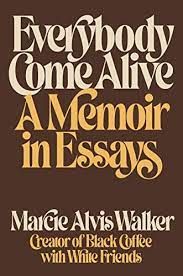
Reading Journal 2024: Everybody Come Alive: A Memoir in Essays Author: Marcie Alvis Walker
Walker writes with a careful hand of someone with experience. Someone for whom these experiences shaped a perspectives on what, as she says, it means for her to be a woman, to be black, and to be holy in this world
A world that has mired these three things in a history of racism, gender oppression, and problematic views of God.
The book follows a series of interconnected essays in a way that explores the process of growing up into this world as a child of 70s America. There are multiple layers to her story, beginning with her complex relationship with her mother, and flowing outwards into her relationship with her own children, the world and God.
All of which play into her relationship with herself. Who she is as a black woman in America, and ultimately as a child of God. A life, as she says, anchored in being born of the very same Spirit that said “Let there be light” and “declared that it was good.”
It is, above all else, a story of hope. A particular story that wants to give voice to the whole. A reminder that beauty can be found in the pain. That God can be found in the confusion. That being a woman, and being black, can be reclaimed from the childhood that at once tried to steal and conceal it while also giving her the experiences to know what this means.
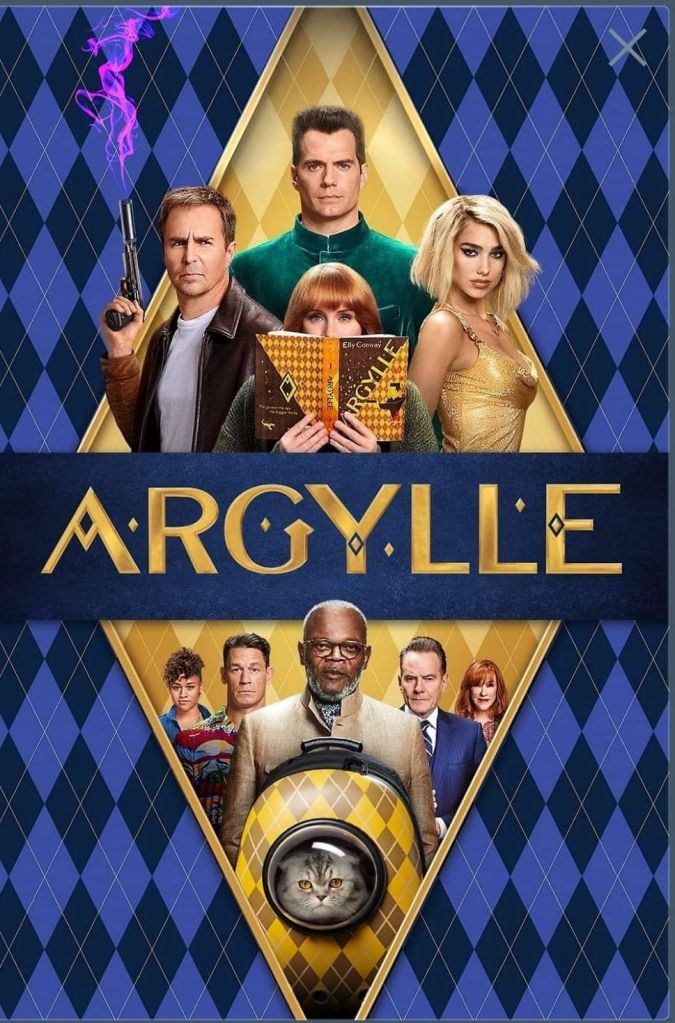
Film Journal 2024: Argylle Directed by Matthew Vaughn Where to watch: now playing in theaters
Seems to find this strangely and somewhat ambiguous soft spot between being even more over the top than it actually is, which would have been one option the filmmakers could have taken, and trying to play this thing pared back and dialed in. The result is a sure handed double, straight into center field. Personally speaking, I found it to be a good deal of fun, even if it trends towards one third act twist too many. Even, I might say, inventive and creative in a go for broke kind of way. Certainly the two leads are enjoyable, each leaning into the quirkiness of the scenario based plotting of the story, and proving to have a decent amount of chemistry.
A solid, mid-budget blockbuster with a decent dose of escapism to fill out those early days of February
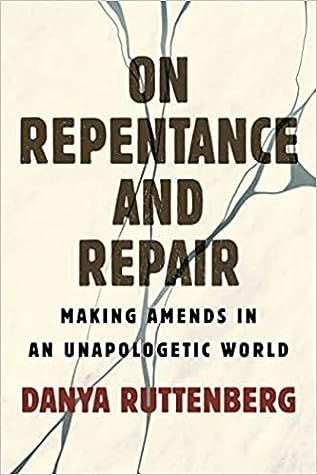
Reading Journal 2024: On Repentance and Repair: Making Amends in an Unaologetic World Author: Danya Ruttenberg
Rabbi Danya Ruttenberg, a celebrated and award winning author, scholar, activist, and thinker, tackles the tough subject of repentance and reconciliation in her book, On Repentance and Repair, using the philosophy of Maimonides as her guide. She moves seamlessly between the personal and the systemic, breaking down heavy set binaries as she goes. As the introductory chapter suggests, we all cause harm, we have all been harmed, and we are all bystanders to harm. Therefore, “it’s critical for all of us to think through the work of repentance.”
Pertinent to the conception of repentance she wants to bring to light is the necessary recognition of categories of thought when it comes to the different words we use to speak of a singular idea. This would include the words forgiveness, atonement, reconciliation and repentance. Knowing that these words express different ideas is crucial to locating the specific force of each one as it relates to wholeness, healing and justice. Distinguishing between these ideas can then help us break down the binaries that often work to prevent wholeness, healing, and justice in our homes, in our relationships, in our workplaces, and in the world. Doing the hard work of understanding these words as social functions with social concern is also a bug part of this picture.
Ruttenberg first moves to give definition to the concept of repentance, before moving to flesh out its personal, public expressions. She then moves through the specifics of institutional, national concern, before ending with broad reflections on justice systems and the complicated social and religious ideas of forgiveness and atonement, key facets of the bigger picture to which repentance belongs.
At the heart of repentance is the concept of returning, or turning to move in the right direction towards where we want to be (wholeness restoration). Part of the reason it’s important to distinguish between repentance and forgivness, for example, is that too often forgiveness is made synonymous with wholeness (or salvation). Equally so with equating repentance with atonement (wholeness, reconciliation, or salvation). If forgivness is the thing that frees us to move in the right direction, it is neither repentance or atonement. Repentance holds in its hands the active force of participating in a different way, but it does not bring about forgivness or atonement. Repentance begins with naming and owning harm, and ends, by acts of change, with things functioning differently.
One of the difficulties here for modern western culture, as Ruttenberg notes, is that our individualistic mindset often leads us to see functioning differently, or rightly, as a purely personal endeavor, as though the aim of repentance, forgiveness, and atonement is our own salvation. The problem is, of course, that harm is never simply reduced to ourselves, and for things to function differently requires us to see how we function in relationship. The end goal is not individual salvation, but restoration of the whole. “The work of repentance, all the way through, is the work of transformation.”
Or, it rests on the hope of promised transformation.
While Ruttenberg keeps God somewhat to the side in favor of fleshing out how this works on a grassroots level in our lives and in the world, it is abundantly clear that what guides the philosophy of Maimonides is his conception of God. Repentance is a concept that pushes and pulls in both directions, stemming from the work on the ground, but also finding its definition and meaning in the divine. This becomes especially important when we consider repentance as a model. We act out of what has been afforded to us in real and conceptualized terms. This is how we know and understand and are able to name, that we are all imperfect people operating in different capacities within different kinds of harm (caused, received, observed). “The work of repentance is, in many ways, the work of looking outside ourselves…”
Looking outside of ourselves also allows us to ask that crucial question, “to whom am I responsible?”
Ruttenberg does a great job of helping us see how these conceptual and functional ideas matter as much to interpersonal relationships as they do to institutions, countries and systems. Lest we forget that we operate in this world together. Knowing how the same rules apply in all these capacities can help us to respond to (or take responsibility for) things that are far bigger than our small section of existence as well. This is, after all, written into the Jewish sacrificial system and rites. Our addiction to make everything into the salvation of the individual misses the essential idea that the day of atonement, the same language we use to understand Jesus, was all about purifying our collective association with a world in which harm (sin and death) exists. It’s primary role is to create a space defined by wholeness and restoration (meaning, a space absent of sin and death), and to declare forgiveness as the removing of all obstacles towards moving in repentance towards participation in this space. It’s the grand vision of Torah, fulfilled as it is in Jesus. And it’s the very thing that calls us all to necessary repentance.
A beautiful and freeing vision for this world and our lives indeed.
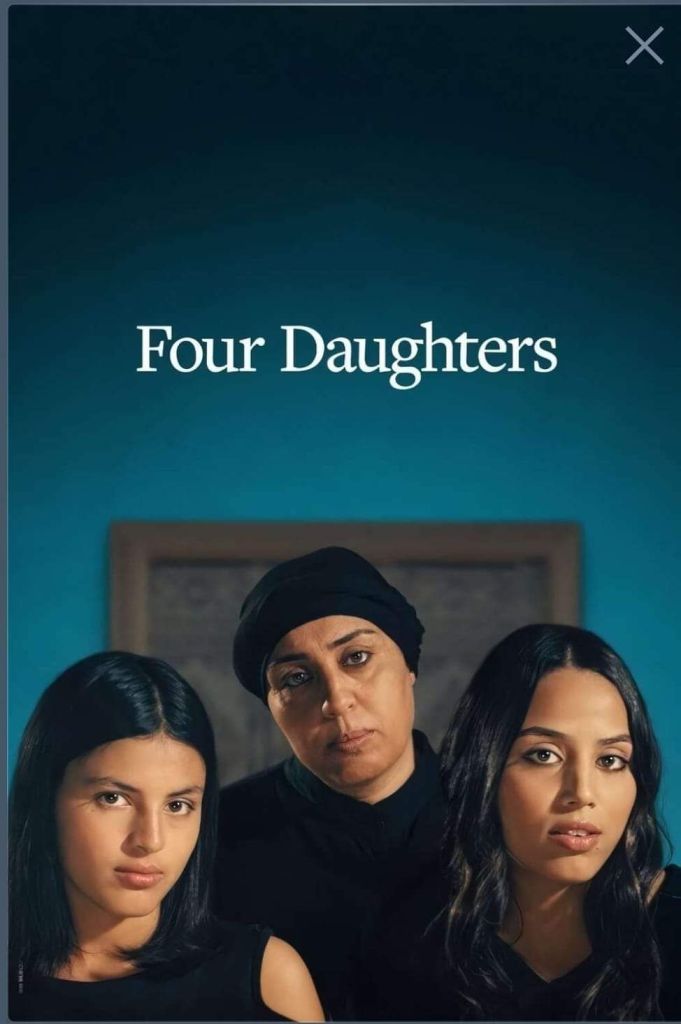
Film Journal 2024: Four Daughters Directed by Kaouther Ben Hania Where to watch: now playing at cinematheque
Four Daughters is a unique docu-drama that blends the documentary elements in an unconventional way. It’s a bit isolating at first as I tried to gain my bearings, but once I found the rhythm I was able to understand what the filmmakers were trying to do. It’s a layered approach designed to really bring you in on the journey itself, creating an atmosphere of complete transparency and vulnerability.
The film also hits hard with some unexpected twists and turns, making for a disconcerting but resonant viewing experience. Its designed so that portions will have you laughing before you realize that a given scene is actually not that humorous, or shocked/saddened before you realize the characters are making a joke. I know that my emotions were all over the map in any given moment, which is by design and the mark of what is a really strong film with real world stakes.
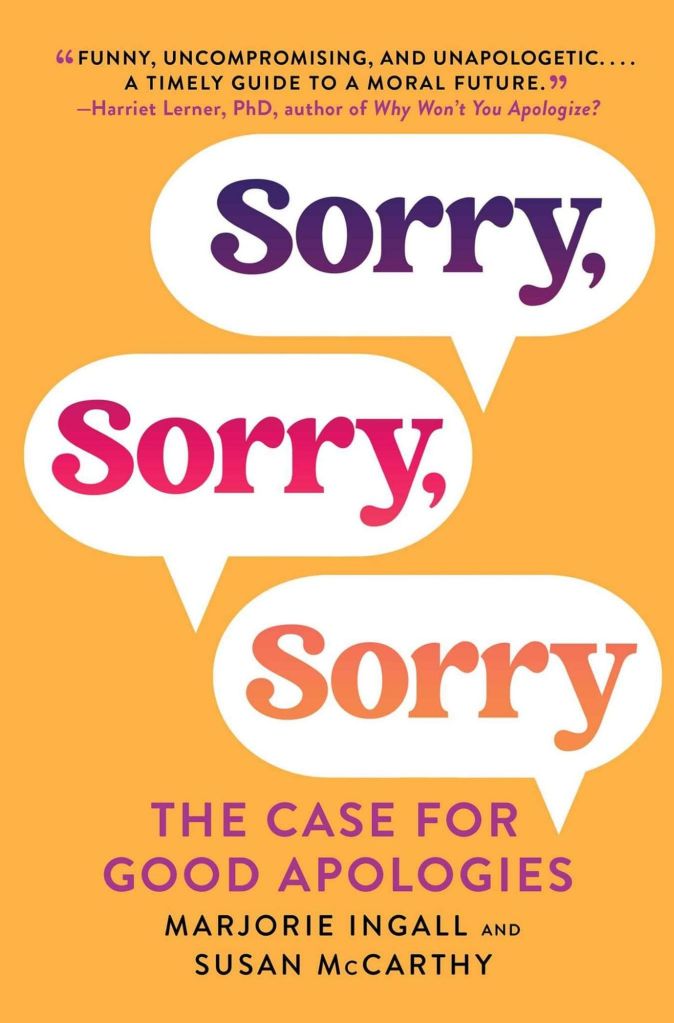
Reading Journal 2024: Sorry, Sorry, Sorry: The Case For Good Apologies Authors: Marjorie Ingall and Susan McCarthy
A quick overview of my experience with this exhaustive guide to and study of the art of good (and bad) apologies: There are portions that are incredibly insightful
There are a few sections that will be necessary to have accessible, as learning how to apologize well, as they suggest, is not only a life long endeavor, it’s a practice that needs, well, practice.
There are portions that I found frustrating, most notably the chapter on forgiveness.
A caveat on that front. I am someone that tends to be far less interested in the how than I am in the why, and the why of apologies is limited to what could be a single sentence stated at both the front and the back of the book- apologizing makes us wiser (because it requires us to learn), it makes the world kinder and a better place to live in.
Or to cite the books opening line, “apologies are evidence of a society that cares about itself , a society that honors other people’s experiences, thoughts, and feelings as precious. In tiny ways, and larger ones, apologies move us toward justice.”
Yes, I know. This sounds great. Optimal. Do we need more motivation? If the only concern is the functional, maybe not. The problem, for me anyways, is that the why tends to play into the functional in more ways than we think. And when the necessary foundation or worldview of the one making certain claims or arguments is absent or not clarified, it creates problems once we are knee deep in the discussion.
And let me be perfectly clear. This book is almost entirely functional in its concern, filled with case studies, dabbling in some science, borrowing from a self stated well versed bibliography on the topic, anecdotal evidence, and plenty of how too’s (including some very helpful bad apology bingo cards
To a fault? Perhaps. Depends on the reader.
The book starts off simple enough. In case it needs to be said (and arguably, it does), there are bad apologies and there are good ones. And it matters. Why? At its heart, it would seem, the authors believe it is because apologizing has to do with matters of power.
And this is a crucial point to consider: to apologize is to give some of your power away.
And “that’s hard”.
Thus the author moves into “six simple steps to getting it right”. What does getting it right look like? It “corrects imbalances, respects a person’s value, and takes away an insult.” What does it look like to get it wrong? it makes matters “worse”. That’s our measure.
Here we start to get into some of the nitty gritty of the art of apologizing well, and it involves checking some of our hard and fast tendencies at the door. One of the biggest mistakes is apologizing in ways that make you and your feelings the central concern. Expressing regret. emphasizing excuses or reasons. Apologizing using ambiguities or generalities. Apologizing badly also includes phrases like, “I’m sorry but…”, or “I’m sorry you felt harmed by my words…”
Apologizing well should include clarity, specifics, and action words. At the heart of any apology is letting an offended party know that you know what the harm is.
These are the strongest portions of the book. From here we begin to delve into the science, which I was interested in, and into institutions, celebrities, and politics, all of which I had far less interest in (although since I am as privy to culturally entrenched apologies as most others, some of it was entertaining to walk through).
On the science front, the authors begin with the statement that we all have “a compelling psychological need to see ourselves as the hero of our own story”, and a tendency to deal with the cognitive dissonance this creates when such conceptions clash with reality (yes, we all make mistakes and cause harm) in specific ways.
And, shock of all shocks, we all have egos and biases, although as, the authors state, inherently good persons (although such an ambiguously applied statement gets betrayed soon after when the assumption needs there to be not so good persons).
Here I came across a bit of cognitive dissonance of my own. I’m listening to the authors describe the majority of people who believe themselves to be inherently good and the heros of their story, and my mind is saying, but that’s not my experience. And I didn’t quite know what to do with that.
I have often held to the adage that there are two ways to tell the narrative of your life. One that shows it to be a success story, the other that shows it to be an abject failure. And, rationally speaking, based on how our minds construct these narratives, its possible neither are true, both are true, or that we survive by convincing ourselves of the success story (based on a constructed set of measures) when in fact the failures represent reality.
I would argue that, if we are simply taking the science in purely functional terms, we are forced to admit that apologizing is in fact an act of manipulation. Our brains do this, we must manipulate it into doing or thinking something different. And there is a very real danger there of such a truth actually being a play of power when applied to life’s functionality. The authors desperately try to appeal to sincerity as a governing rule (if you don’t truly mean it, don’t say it), but that ends up betrayed by the functional depictions of what is going on when we apologize. Scientifically we are a product of our brains, and those brains can be manipulated accordingly. Not only that, but efforts to appeal to sincerity as an inherent value fall flat pretty quickly when applied to the science of apologies and the brain. Sincerity doesn’t actually matter as much as the authors seem to believe it does. Conceptions of sincerity matter. This is perhaps no more apparent than the many examples it gives from the entertainment industry and politics.
This is one reason why doing the heavy work of fleshing out the why and building a necessary foundation for any like-minded projects and topics is so important. Otherwise we end up binding ourselves to inconsistencies that, when questions are posed of it, begin to easily fall apart.
What’s the answer in my opinion? Building a clear foundation based on articulated assumptions. The assumptions don’t need to be proven, they simply need to be stated and established as the things we are reasoning from, something the authors don’t quite do as well as dealing with the functional (which have limitations here as well).
Lets take how they deal with the subject of forgiveness. Unlike the apology, forgiveness is treated as an optional function of choice relating to the person doing the forgiving. It is also defined, although with a lack of clarity, in terms of the western justice system, which shows its ugly head in some reductive descriptors of world religions.
Again, my opinion, but I would flip the equation somewhat, making forgivness the foundation as a governing concept, albeit one that is defined differently than the authors seem to employ (I would reject penal and transactional terms and replace it with restorative and active terms), and the apology as the functional practice within that. Forgiveness is not optional, it’s a fundamental truth of existence that governs how we understand god, the world, and humanity.
If this all sounds overly critical, I do admit that the book struck different chords as I went along. To be clear, I suspect many readers will be far less concerned with the why than I am, and thus these portions of the book I address above would be far less complicated. For me it matters a lot to deciphering and considering my motivations towards something, especially where it concerns matters of reality and identity.
That said, I would not hesitate to recommend it, and will be happy to have my owned copy at hand as a resource, even if I don’t see eye to eye with it all. I picked it up on recommendation (a shout out to said individual), at least in part because I had just finished two other related books (On Repentance and Repair, and Loving Disagreement). And it was a good compliment, for sure. I found it speaking to some hard conflict stuff of the past number of months in my own life, giving me more awareness and understanding of some of the hurt I felt, why I felt it, and some things I could have managed better as well. And that’s always a measure of a worthwhile read.
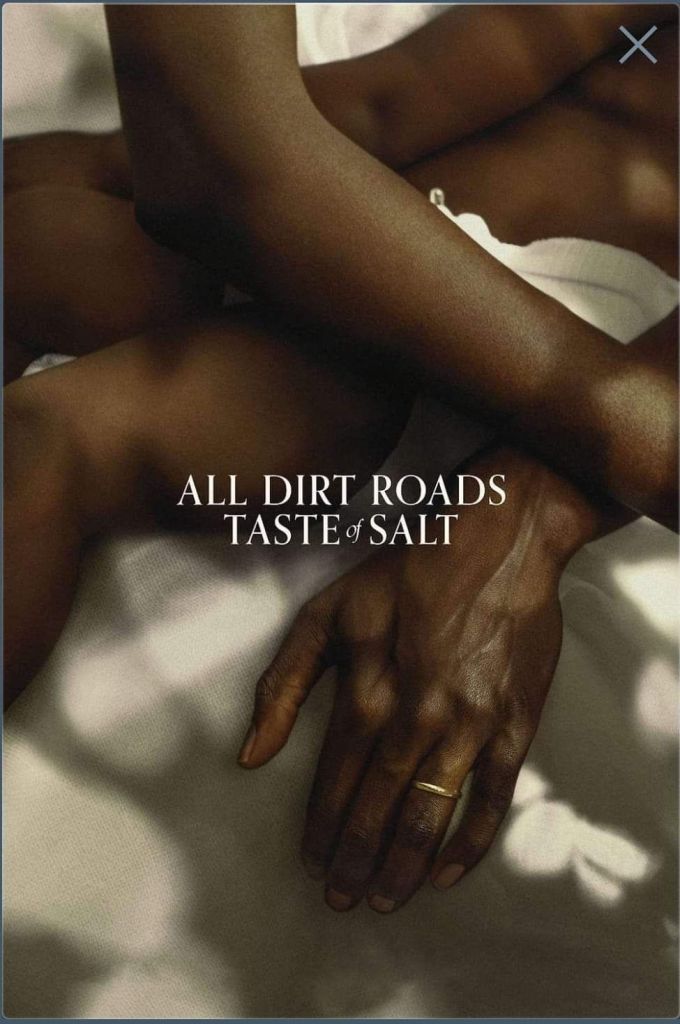
Film Journal 2024: All Dirt Roads Taste of Salt Directed by Raven Jackson Where to watch: available on VOD
“An ode to connection — with loved ones and with place.”
This descriptive from the official synopsis perfectly captures the spirit of this film. It’s a series of moments, captured as memories, strung together in the way we often try to make sense of our lives, our stories- non linear, with the sort of illusionary appeal to randomness that betrays the inspirations and triggers behind our recollections. The vantage point we are given here is that of a young black girl come of age in Mississippi, a viewpoint that traverses the symbolic nature of the young eventual mother seeking meaning from her own perspective childhood. Thus we move between observations from the smallness of the child’s sought after imagination, to the maturing sightlines of one who knows a more comprehensive reality filled with both wonder and loss. It’s a stark and beautiful contrast of images that locate the films larger thematic interests and narrative cohesion in the act of growing up into the world.
And not just the world, but a particular time and place, one captured in the power of the senses. What one sees in the blades of the grass. What one feels in an embrace or a breeze. The smells that both create and evoke memory. What one hears in the silence, in the rush of water, in gentle chorus of crickets.
The films opening sequence, which focuses on a series of images involving the young girl and a fish, becomes a lasting symbol for how this young girl experiences the world. We see in these moments a gentle mix of beauty and horror, life and death. Things that coexist not in balance, but in tension. Anytime we confront moments of tragedy or sorrow in the experiences of our main protagonist, we are called to seek and to hold the quiet moments of contrast. Two kinds of soil, one promising hope, the other seeded with the stuff of sorrow and struggle. “You gotta find the right bank and dig for it. It’s not just any dirt.” A truth that finds its meaning in the water that frames the films reigning imagery of life’s ebb and flow… “it doesn’t end or begin, it just changes form.”
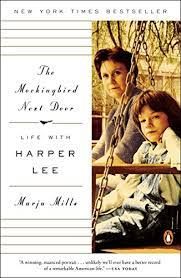
Reading Journal 2024: The Mockingbird Next Door: Life With Harper Lee Author: Marja Mills
Nothing sullies a reading experience like being made aware of controversies after you finish the book.
In this case, the controversy stems from a statement, issued in Lee’s name, saying that she was not made aware of this book before its release, nor of Mill’s intentions to use their relationship to release the book. Which, for anyone who has read The Mockingbird Next Door, a book that follows Mill’s unexpected invitation to meet with Lee, who was notorious for her privacy and her outright disdain for rumours regarding her and her private life, and the even more suprising time-extended relationship that ensued (leading to a move of temporary residence for Mills in Monroeville, a former writer for the Chicago Tribune), will render this book a lie.
Here is the coles notes of the controvery: Lee gains unprecedented access to Lee and her closest relationships (Alice and Tom). Lee eventually pens and releases this memoir about her relatiionship with Lee. An official statment is released saying that Lee never consented to the book and denies any suggestions that she did. Some take this as a condemnation of Mills. More reports suggest that the statement came from Lee’s estate and lawyers after she could not longer speak for herself. There is also testimony from Tom that seems to speak in support of Mills, and signed consent from Alice, which have likewise been disputed by the estate as being unverified in their reliability (meaning, she was old and may or may not have been in her right mind).
What is the truth? I’m not sure. One things for certain though. It would be a highly difficult thing to argue that Mill’s book is in any way negative, decieving, or slighting when it comes to her descriptions of Lee. It is, in fact, quite the opposite. It is deeply resepectful, adoring, detailed and uplifting. My suspicion is, just based on the details that we get from the book, that perhaps all of this happened out of view of the estate and the lawyers, and thus the reactionary part came from people for whom the details of this relationship had been kept secret. It is also entirely possible that some of the chapters were included after Lee’s stroke, an those might be the ones they are reacting to (the ones that start to veer into the reporters conjecture). But who knows.
As for the book itself, taken on its own terms? Let me get this out of the way first- the writing isn’t very good. You can hear the reporter in her words, to be sure, but you can also see her struggling to adapt to the 250 page exercise. The first half is better than the second half, as it is in the second half that things start to get repetitive, where it takes random jumps into different subjects that break the overall flow of the book (such as Lee’s relationship with Capote).
That said, there is a certain charm to the grassroots style. Something forgiving about it being rough around the edges.
There is also the question of the book’s subject matter. This is as much about Mills as it is about Lee, and while we are given direct citations from Lee, and while Mills allows portions to be directed by Lee without conjecture or interpretation, the lines get blurred often enough to make this much more about Mill’s adventure of a lifetime, for better and for worse depending on what you are expecting from it. I bought this book during my trip to the south and the area this book largely helps to bring to life. As such, it satsified my hopes in that it allowed me to see and feel the same roads and sights that I travelled, giving me a better picture of the area and the town. If nothing else, Lee comes alive in these pages through her relationship to this place that informed and formed her, and Mills makes sure to allow that aspect to shine through.
Apart from that, its a quaint, at times lovely, at other times overdone, romp through the ebb and flow of their unexpected relationship. Whatever one thinks of the controversy, I can’t find anything that suggests that details that Mills records, of life in Lee’s house, of engaging in their favorite past times, of going to their favorite eating spots, of unearthing Lee’s favorite authors and books, ect ect, are in any way lies. They feel authentic, and Mills remembering and retelling of these experiences feels deeply appreciative. Lee was an enigma, given that she never wrote another book after the success of To Kill a Mockingbird. She remains an enigma to this end, even after reading this book, which is part of the respect Mills affords. We get snippets of why Lee was so resistant of publicity, And we get more mystery. And perhaps that is exactly the way it should be.

 The Stories of my Life