Considering Pauls letter to the Romans, N.T Wright writes in his book The New Testament In Its World,
“Romans gives us a vision of what Paul thought he was trying to achieve by his apostolic labours. He was not an itinerant philosopher out to make a quick profit. Nor was he selling a kind of messianic faith as a “Judaism-lite” option for gentiles looking for a new religious path. He certainly not trying to add one more deiry to the already overcrowded pantheon of Roman gods and goddesses. No, Paul believed that it was his vocation, a very Jewish vocation, rooted in Israel’s scriptures, to announce that the promises and purposes of Israel’s God had been fulfilled, overcoming the dark powers of evil (elsewhere named the Powers of Sin and Death) and thus enabling idol-worshopping, sexually immoral, and ritually impure gentiles to come into the transformative obedience of faith. Thus by fulfilling Israel’s scriptures, the gentiles might glorify God for his mercy, while Jews like Paul himself could celebrate the world changing achievements of Israel’s true Messiah.”
He then goes on to articulate where the Jews, or Israel, sits in this letters concern.
“Was not Israel called to be the means of putting the world right (2:17-20)? Yes, indeed, but the prophets themselves declared (and virtually all second temple Jews would have agreed) that Israel had failed in this vocation, suffering the ongoing exile spoken of in Daniel 9 and referred to by many writers in the period (2:21-24l)… if God were to create a new covenant people whose hearts had been softened so that they were able to do do the Law (Deuternonmy 30) in a whole new way- then that would fulfill scripture (the covenant promise of Gods faithfulness) in a whole new way, even redifing the word Jew in the process (2:15-29)..This however, might seem to call into question Gods faithfulness.”
This question is what Romans is concerned about. The idea that “God has done what he promised” within Israel’s covenental failure and according to Israel’s story by fulfilling that story is what makes God faithful and thus trustworthy.
Wright goes on. “This leaves Paul in a situation no Jew had faced before: what happens when God fulfills his promises, sending his Messiah to fulfill the ancient promises, and Israel as a whole looks the other way? This is where the incipient Roman anti-Jewish sentiment might kick in: supposing God has changed his mind… No Paul says.”
He goes on to explain how and why the gentile story is good news for Israel. But this point is crucial for understanding Romans. It is a letter dealing with a divided community, and addessing both sides of the divide through the faithful articulation of the Jewish story and its fulfillment in the Messiah.
In Gail R. O’Day’s article titled I Have Called You Friends, she writes about the subject of friendship. She notes two dimensions of friendship in antiquity that can help us make sense of Jesus’ understanding of friendship— “the gift of one’s life for one’s friends and the use of frank and open speech, (both) informed the way that the Gospel of John and its readers understood language about friendship.”
She goes on to say that “the Christian vocation is to give love freely and generously without counting the cost or wondering and worrying about who is on the receiving end of our limitless love…. Jesus gave everything to his friends—his knowledge of God and his own life. Jesus is our model for friendship—because he loved without limits—and he makes it possible for us to live a life of friendship because we have been transformed by everything he shared with us. Through friendship we come to know God and through friendship we enact the love of God. We can risk being friends because Jesus has been a friend to us.”
If our beginning assumption is that Jesus makes such friendship conditional, that Jesus withholds friendship from some on the basis of those conditions, that Jesus chooses some to be friends while discarding the rest, then we are seriously missing a key aspect of who God is.
When Jesus says in John 15:12, “My command is this: Love each other as I have loved you. Greater love has no one than this: to lay down one’s life for one’s friends. You are my friends if you do what I command”, He is not limiting the scope of His friendship towards us, He is attaching our actions and words- our willingness to be a friend to God- to the command to love. The quesion at hand is whether we are being a friend to God by loving each other.
To say to someone, we cannot be friends or you are not my friends or I am not interested in friendship with you, is to instead call that person my enemy. And if we are to take the above verse seriously, this is akin to saying to God, you, then, are my enemy.
Jesus’ love has no bounds, no limits. Jesus does not make friendship conditional, He makes it necessary. More than this, He embodies it in His death and resurrection. We are, each of us, called to walk the same path without condition.
“And when now in our enlightened age, where all anthropomorphic and anthropopathic conceptions of God are deemed inappropriate, it is none the less not considered inappropriate to think of God as a judge, like an ordinary magistrate or a superior military judge…”
Soren Kierkegaard (The Sickness unto Death)
I have a nephew who has been in university getting his degree in criminology. This semester he is taking a philosophy class, studying the existentialists. He is not a believer in God, but we have plenty of great conversation when it comes to religion and philosophy. He inspired me to dive back in to the existentialists, just to ensure I can be a better conversation partner. I forgot how much this stuff speaks my language.
In particular, Kierkegaard, our resident existentialist, has a whole lot to to say about the relationship between things like despair and our conceptions of God. I really appreciated the broader implications of the above quote to this end, especially in context of the book itself. One of the questions the quote begs is this; there are tendencies within Christianity to conceive of God as wholly (or holy) other, and subsequently to resist anthropomorphic depictions and to actively distance the creator from creation.
With one exception- the judge. There seems to be very little hesitancy in these same theological leanings to parlay human conceptions of justice on to the character of God, even to the point of assuming that certain societal constructs and systems are direct reflections of how God does and would act when it comes to justice. We (a generalized we) say, if we would act this way, then God must act this way. And often this way includes ideas such as a God who must punish to be just and/or who must punish with death to be just.
I wonder if this is a point of great inconsistency when it comes to such theological approaches.
I believe that Romans is commonly misread and misapplied due to prior allegiances to the idea of law as “works that save” and grace as “imputed righteousness”, or unmerited favor/grace. This understanding of the law versus faith/grace paradigm also lends itself to particular understandings of other terminology and ideas inherent in the text, such as defining righteousness as “moral righteousness” or seeing in Paul’s letter an in interest in the progression of salvation within an individual. Romans has long been fertile ground for Protestants to see in its pages arguments for divine election and predestination.
All of these things, in my opinion, are readings that fail attend for both Paul’s audience and the context for which he is writing, often ignoring these things outright in favor of upholding particular doctrines, which of course get imposed back on to our readings of Romans effectively pulling the text out of its context and failing to ask the appropriate questions of the text in its world.
So how might I make this case? I think one way would be to appeal to the arc of Pauls story as it develops and forms within actual history. If we begin at the start, meaning if we look at the earliest writings that we have from him chronologically speaking, this is a good way to see the seeds of his ideas taking shape against the larger backdrop of the Jerusalem council, recorded in Acts 15. This is where we see an agreement being reached with the “pillar apostles in Jerusalem (Wright, The New Testament in its World) regarding the primary issues facing the early church amidst Paul’s ministry to the Gentiles.
So where do we begin chronologically? With Paul’s letter to the Galatains. It doesn’t take long to note that the same issues regarding Law and Gospel are present here, if in an earlier state of formation. Wright even suggests that “this letter is sometimes percieved as the angry younger sibling of the more composed and reflective letter to Rome.”
Right from the start, its important to see in Galatians an assumption within certain segments of protestant writings that Paul is “saying Farewell to his Jewish heritage”. This is where we find the seeds of the age old Christainity versus Judaism storyline. That is worth noting because that’s a massive obstacle one would need to overcome in order to even begin to reconsider common readings of Romans. It is that ingrained into our thinking. To change course would feel like losing a grip on the Gospel (I know this because this is what I went through). And yet this is actually intended to get us closer to the Gospel.
To dig a little deeper, one of the things that seems to bolster such views of us versus them is the presence of certain opponents in Galatains. It would be the seeds of these opponents that Paul references in Romans 15 and 16, meaning that the division that we find in the Roman Church is the fruit of these seeds taking root. But as Wright suggests, “if we are to avoid making Paul a proto-Marcionite, if we are going to refuse temptations to project our own theological disputes into the letter, then we need to read Galatains very carefully, attentive to both its context and content.”
So who are these opponents? “Paul writes this letter to the Galatians after learning that certain agitators or intruders have gained a foothold in these churches, urging the male gentile believers to be circumsized.”
For reference, the issue dividing the Roman Church following the gradual return of Jews to Rome after being purged, was a “majority gentile church arguing over whether gentile converts need to be circumsized in order to follow Jesus.”
Wright notes the complicated political and theological backdrop behind this concern. Often what gets assumed by specific protestant readings focused on those conceptions of law and Gospel in conflict is that the Jews assumed that works of the law are the things that saved a person whereas Jesus demonstrated that it is only by grace through faith that one is saved, grace anchored in the death of Jesus as the free gift imputed to us by way of His moral righteousness. But, in my opinion and according to my studies, this is not an accurate reflection of what is going on within the text in its world. The discovery of the Dead Sea Scrolls opened up a window into the ancient Jewish world that turns this idea of Law and Gospel on its head, sparking a movement of reform in relationship to that whole Jews versus christianity narrative that had crept into the western, protestant church.
In Galatains, Paul is opposing two things:
The agreement reached by the Jerusalem council being undermined
2..A departure from the Gospel
What is the Gospel in Galatains. In line with Paul calling it “the Gospel of Jesus” in Romans, here in Galatians it is simply “the death and resurrection of Jesus the Christ”. As Wright suggests, “the choice that Paul puts to the Galatian believers is whether or not Jesus is Israel’s Messiah.” This has to do with “whether he brings people into the promised new exodus by his own faithfulness to the (covenant promise), or whether he simply adds to and enhances the old dispensation of Moses.”
In simple terms: did Jesus fulfill the promise by ushering in the promised new age, or did he not. And if he did not, what are we left with but the reality of a still persisting exile. That is what concerns Paul. For the objectors, the failed promise is rooted in Israel’s failure to be faithful to the covenant by way of participating in pagan worship and idolatry. This is why circumsicion mattered to them, because it meant that one was being called out of their old life and set apart for particpation in the new. It was the counter to exile. For Paul though, “if righteousness, that is, the status of being forgiven and possessing a right standing within the covenant, could be gained or validated by means of observing Torah, the Jewish Law”, then not only did “the Messish die for nothing”, but the story of Torah has no way of making sense of itself. The story of Torah, which is the proper understanding of the law (not moral works) ended with exile. Therefore this is what circumcision binds them to. Paul’s argument in Galatains, which sets the stage for his dramatic rendering in Romans, is that Jesus invites this community into the remainder of this story, proclaiming the arrival of a new exodus as the true answer to the exile. Something that arrives in line with the story of Torah and the ensuing reality of messianic expctation. Therefore, Law is not understood here as works that save. It is understood as the story of exile, through which the story of enslavement and liberation looms large in the background. It is reflective of a story that says something about their present reality. The Gospel breaks into this not as an altrernative portrait of salvation, but as a way of finding in this story the very thing that allows salvation to come about and be proclaimed- the good news that, according to the scriptures (the covenant promise and messianic expectation), God has at long last did what He said He would do, demonstrating His faithfulness and ushering in the new age. As Wright puts it, he has rescued creation from the grips of “the Evil age”, which Romans describes as the “reign of (Sin) and Death”. Gods “new world has dawned”, and for both the Galatains and the Roman communities, Paul is speaking to those who have already heard this Gospel and who have been met with and responded to the subsequent invitation this brings (the exodus comes first, Sinai follows) towards living as a people of the newly established kingdom, and who are dealing with seeds that threaten to undermine this story and erode their hope in the truth that Jesus is who He says He is and did what He said He did as the fulfillment of Gods covenental promise. It’s on this basis that Paul looks to faith, or faithfulness (allegiance to the kingdom of God) as the thing that cuts through both stories and demonstrates the true point of the Gospel as invitation to particpation, the story of Israel and that of the Gentiles, binding them together under this singular act of Gods faithfulness to acting in and for the world.
In N.T. Wrights book The New Testament in His World, he writes of the process of canonization stating that “the New Testament canon was shaped and developed, in the first three centuries, because the leaders of the early church were determined to keep alive, and present afresh, the news that in Jesus the one true God was setting up his kingdom on earth as it is in heaven.”
It’s a statement that on its face pushes back against liberal attestations that suggest the canon is tied to later politics and highly corruptible processes. And yet, at the same time, the statement arrives with clear push back against certain conservative conceptions about the canon and why it matters. Wright also insists that, in the world that gave rise to the process of canonization, by which he means the world that formed nearly immediately after Jesus’ ascension, “there was openness to a variety of Christian writings” in the “culture of the developing Church. If the diverse set of criteria used to determine the canon, for which despite the varied differences between East and West retain a strong sense of catholic cohesiveness, emerged from the convictions of these centuries, these same centuries reflect both a willingness to use, reference and read beyond the canon we have today as well as reflect a willingness to shape this into confessional liturgy regardless of, or in concert with, much dispute and disagreement.
A key aspect of canon formation that perhaps we have lost side of its adoption.
I was listening to an interview with author Cole Arthur Riley on her book This Here Flesh: Spirituality, Liberation, and the Stories that Make Us
In it she says that “the truest stories are rarely the ones that get told”. By this she means the stories we tell about ourselves, about others, and about the world in which we live.
She locates the primary reason for this in the fact that such stories are shaped primarily by external forces. We are, others are, the world is, the stories those external forces tell about us. And it is often the forces with the most power that determine which of those stories get told. This is as true for those of us who exist in a group like this, as it is for the ways the stories we can tell about the world shape how we see the world and act in the world. What makes this more problematic is that, be it in theology or in the world, we tend to take such stories and turn them into propositional truths which then bind one or the world or an idea to that proposition. The stories not only define us, but ones interpretation of that story defines us.
This had me thinking of another book that I recommend quite often- Biography as Theology: How Life Stories Can Remake Today’s Theology by James William McClendon Jr.
In this book McClendon makes a case for biographical theology as the antidote for propositional theology, which has run rampant through much of the modern theological landscape. Biographical theology is really just a reconstitution of narrative theology given a personalized and relational twist. Such an approach dares to wonder about this- if an existent God tells a story about Himself, about us, and about this world, how would this reshape who we are, how we see the world, and who we see God to be, if we gave this story the same sort of defining power over our world and over our lives? Which of course begs the further observation- which story is in fact being told, and how do we genuinely hear the story of God without our own stories getting in the way?
We can, I believe, say this with confidence: the stories we tell, or the stories another tell about us, matter deeply, and perhaps matter most of all. Because they determine who God is, who we are, and how we see the world. The challenge of biographical theology then is to pay attention to the ways we find ourselves in those stories and who precisely has the power to place us in them in particular ways. If we can begin with that question, we can then begin to ask how it might look different to belong to a different story.
And then, as it just may be, we might also be confronted with the truth that we have the power to shape another’s story based on how we tell it. And we can begin to think about how our own words and actions place others in the stories we have determined to tell. Which of course, is something that matters greatly.
I was listening to an interview with new testament scholar John Dominic Crossan (titled The Other Gospels) on how it is that we understand the nature of the four Gospels and their adoption as liturgy in the life of the early church given that they emerged in a world where there were many gospels in existence.
He notes that it would be a mistake to simply discard and ignore the other Gospels using blanket terms like gnostic, for example. It would be much better to recognize that these gospels emerge in a world shared by the synoptics and John, they have a history, a theology and a polemic that can help us understand that world,.and they can point to the larger conversation that did exist at the time.
He also talks about how understanding the nature of the four gospels adopted into the NT can allow us to see how they don’t function apart from that larger conversation. For example, if, as it is often suggested, Mark was written first, and if, as is often suggested, Matthew and Luke (and even John) borrowed from Mark, what this then tells us about tradition of Matthew, Luke and John is that they had some of these other gospels and in fact incorporated them into their own retellings of Mark with intention. Crossan makes the interesting observation that the gospel (or gospels) they incorporate are in fact apocalyptic traditions, whereas something like the gospel according to Thomas is functioning as a polemic against the apocalyptic tradition. This suggests a shared world with two different viewpoints, likely determined by context.
Perhaps the most important point comes from his assessment of the 4 gospels shared genre/tradition being one of the primary reasons they got primacy- they are narrative gospels, or belong to the narrative tradition/genre. Meaning, for these gospel writers, telling the story was necessary. In fact, it is this narrative function and characteristic that binds them more directly and intentionally than any other known gospels to Judaism.
I was then listening to a podcast episode from the historical Jesus. It was titled Interpreting the Visitation. In it the host leans into the necessary place of the theophany in Jewish and Christian history. Meaning, telling the story of God. He cites Ezekiel as an example, noting how in Ezekiel 34 it begins with the promise to send a shepherd, followed by the statement that “I will be your shepherd”. Eveything that follows the proclamation of what this shepherd will do is defined as Gods work. So when we get to the story of Jesus and Jesus is applying the words of the shepherd to Himself, the story comes alive as theophany. Same with the way John the Baptist is depicted as leaping in the womb when he encounters the infant Jesus in Mary, langauge that is pulled directly from David dancing (leaping) before the ark. The theophany comes alive.
A reminder of how the Christain Tradition is anchored in the art of storytelling. This is how we encounter God, through the shared story. Crossan calls this the art of gospeling. News is information, but good is an act of interpretation. And the good news becomes the gospel according to you and me when we tell the story within our own contexts.
Matthew 16:13-16 13 When Jesus came to the region of Caesarea Philippi, he asked his disciples, “Who do people say the Son of Man is?”
14 They replied, “Some say John the Baptist; others say Elijah; and still others, Jeremiah or one of the prophets.”
15 “But what about you?” he asked. “Who do you say I am?”
16 Simon Peter answered, “You are the Messiah, the Son of the living God.”
1 John 2:21-23 21 I do not write to you because you do not know the truth, but because you do know it and because no lie comes from the truth. 22 Who is the liar? It is whoever denies that Jesus is the Christ. Such a person is the antichrist—denying the Father and the Son. 23 No one who denies the Son has the Father; whoever acknowledges the Son has the Father also.
I’ve been spending some time with the existential philosophers lately, with Kierkegaard topping the list. One of the things that Kierkegaard argues is that true despair can only come from rejection of eternity, and rejection can only come through knowledge of eternity. By eternity he means the infinite, or god, or that which the finite/mortal challenges.
In many ways, I think this same idea is present when it comes to Jesus. One cannot escape the fact that all four gospels are shaped by the question, who is Jesus. This question drives the narratives, frames the tension, and informs their proclamation (good news).
The implication is this. The greatest praise comes when who Jesus is finds its proper confession. The greatest warnings come when those who know this confession set out to convince Jesus followers that He is someone else. Why? Scholar Colan Kruse does a great job in his commentary on 1 John detailing the warning of 2:21-23- by convincing people that Jesus was not who He said He was and did not do what He said He did they are being stripped of their hope. And as Kierkegaard suggests, this is the truest and most tragic form of despair. This is precisely what the dissenters who had broken away from the church and who were now infiltrating the church were doing to the readers of 1 John.
For Peter to declare that jesus was the messiah, the son of the living God, was to locate Jesus not as the prophet that the others were citing, but within the expectation of Gods promised work. In the story of Israel this identity couldn’t have been more clear, and yet in the person and work of Jesus it also does something quite unexpected- it announces that God has in fact broken into the middle of history and done a new thing. And when we get to 1 John, it makes these bold statements: (1:2) He is the atoning sacrifice for our sins, and not only for ours but also for the sins of the whole world.
1:1 That which was from the beginning (the Gospel of the person and work of Jesus the Christ), which we have heard, which we have seen with our eyes, which we have looked at and our hands have touched—this we proclaim concerning the Word of life
1:3 Our fellowship is with the Father and with his Son, Jesus Christ
3:16 This is how we know what love is: Jesus Christ laid down his life for us. And we ought to lay down our lives for our brothers and sisters… This is his command: to believe in the name of his Son, Jesus Christ, and to love one another as he commanded us
4: I have seen and testify that the Father has sent his Son to be the Savior of the world
4:2-3 Every spirit that acknowledges that Jesus Christ has come in the flesh is from God, 3 but every spirit that does not acknowledge Jesus is not from God.
4:9 He sent his one and only Son into the world that we might live through him
Now, there can be some disagreement on this front regarding how this knowledge is known and whether it needs to be known in order for one to be in the kingdom of God. But I don’t think one can deny that in the scriptures we find the harshest words saved for those who know this to be true and who strip this hope from those for whom this truth is very real. It is to say that this reality that we know; this world enslaved to Sin and Death, our suffering and exile, enslavement and poverty, is more true than the proclamation that God has at long last done something about it. It is to say that our faithfulness, our conviction to live in allegiance to God and in the way of His character by way of obedience to His Word, is all in vain and meaningless.
1 John is probably the best place to go to hear what God thinks of such dissension. But it’s also readily apparent through the whole of the Gospels. Who am I, or who are you, is the most vital question concerning Christianity. That’s what made it so scandalous.
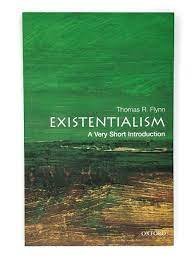
Reading Journal 2023: Existentialism: A Very Short Introduction Author: Thomas R. Flynn
One might ask, is it possible to write a book that breaks existentialism down into words the common person can read and understand? Flynn gives this his best shot in this short introduction. But alas, if this is any indication, such a question is bound to become its own form of an existential crisis.
In truth, I’m not sure the existential philsophers entirely understand their own ideas. In many ways, such understanding kind of betrays the point of a philosophy that is designed to live in the tension of an existence both seemingly bound by the constraints of time an beholden to the problem of infinity.
What Flynn does undoubtedly achieve however is giving us a necessary foundation from which to explore existentialism. If there is a single defining factor, Flynn breaks it down to this idea- authenticity. Existentialism is ultimately interested in locating the authentic self in response to the problem of self deception. And part of what leads this endeavor into a perpetual state of crisis is the fact that authenticity is, by its very nature, an allusive construct.
How can we speak of the self when it seems impossible to locate ourselves in the present, the past always defining us and the future always deconstructing us?
How can we speak of truth when all truth is perpetually bound to contingency?
How do reconcile the fact that our lives seem pulled and driven by conceptions of the infinite when they are simitaneously bound by time
How can we build our ideas around an idealised humanism when reality seems determined to redefine us according to the universal rules and laws of nature?
How can find joy in the midst of despair?
How do we find the real when all of the mind seems built on illusion?
How do we recognize the importance of irrationality when authenticity demands we be concerned with the rational.
How do we reposition our focus in the practicalities of living in the present when such investments demand an allegiance to the irrational experiences of awe?
How do we give allegiance to the self when reality tells us the self is a construct and an illusion?
How do we appeal to the idea of the free self when such freedom is depenendent on the external forces that define it?
How do we live when the process of life is defined by dying
How can the reality of finitude motivate us to live when to live seems to need the infinite to justify itself?
How can we speak of freedom as responsiblity when nothing in life appears to be within our contol.
These are the sorts of questions that lie underneath the density of the philosophy. It is what allows for a diversity of thought to exist within the uniformity of that existential concern for authenticity, or the authentic self. And yet this diversity of thought also exists within the realization that such concerns place the weight of existence on their shoulders. To think of such things is to be embroiled not simply in the hard matters of existence, but in the fact that a perpetual awareness of what these hard matters actually are leaves existence stuck in the tension. Its kind of like the concept of love. When we understand what love is, we are faced with the realizationn that love is the reality of a physiological process doing its thing and creating the illusion of a feeling. We are faced with the truth that such physiological realities have a clear biological purpose- suriival. We recognize that love is not some external reality that exists outside of ourselves as some motivating force. An we recognize that love is a highly manipulatable construct.
And yet, to say anything at all about the authentic self also seems to require us to give the illusion allegiance as a motivating force. To speak of love as though it is something that exists outside of ourselves. So which is more true? And how does one exist alongside the other? This is the sort of tension that gives rise to the existential crisis. When we know what is happening when we fall in love, for example, and we note the processes that give rise to the emotion, and further when we can note the process and how easy it is to manipulate it, would such manipulation be more or less authentic to the self? Take this a step further- what if love, in reality, is all a matter of manipulation based on illusions of the self? Could we still authentically fall in love?
We can apply this same reasonsing to the concept of the self. In fact, this is what all of existentialism ultimately boils down to. If the self is not some entity that exists external to our “self”, as in something preexistent that we grow into or discover, and if the self is an emergent property based on circumstance and choice, and if circumstance and choice bind the self to the external forces that shape us, then what do we do with something that can’t be whittled down to the present? If we are always becoming how can we be? And more astutely, if becoming is something we can manipulate and which is also completely beyond our control, how can we even speak about something such as authenticity in concrete terms?
It would make complete sense if you look at all that and simply choose to walk away. In some sense its easier to live rather than to think about living. And yet, at the same time the thinking matters because life is ridiculously hard. Sometimes it just seems necessary to pose the hard questions back at it. Does such angst actually have anywhere to go but into the empty space of that large philosophical void? Debatable. But it can be a way of allowing us to navigate the crisis. Or at the very least allowing us to feel like we are. For some of the existentialists there certainly was a sense of ultimate defeat lingering in the background. of this philosophical process That’s the risk. For others, there are moments of freedom that emerge, even if the path is long and treacherous and steep. This is just my observation, but where that intersection seems to meet is at the point where the authentic self meets with some sense of an ultimate reality. A freedom to say, this is true, or at the very least I can believe this to be true of reality. That is the singular, necessary facet of the process that then allows one to pursue authenticity in relationship to that ultimate reality, precisely because authenticity has something to measure itself by. And thats when we can recognize where our lives deviate from this measure and become inauthentic, or self deception. This won’t afford us certainty, but it can afford us functionality inbetween the inevitability of our next existential crisis.
(some pictures used from different promotional online sites or undocumentated available pictures online)
A local resident to Alabama described their state to me in the following way- the money’s in Huntsville, the cultures in Birmingham, and the power is in Montgomery (meanwhile, the good folks over there in Mobile seem to defy definition).
I was thinking about this descriptive while visiting the iconic southern locale. In fact, a number of people I talked to even suggested that the “southern” label is something that no longer makes complete sense when speaking of their “sweet home”. When you consider who is living and working in Huntsville today, for example, what you find is a space populated by leaders in the field of space, nuclear military, and technological development whom come from every corner of the greater United States and beyond. A truly international community. This thread continues through the diverse landscape that is modern day Birmingham.
I’m sure there would be plenty Alabama residents who might disagree with this descriptive, and for legitimate reasons, but it actually rings true to my own experience of visiting their space. This was not the south that I expected to find. What I found was something more nuanced and complex.
If I was to restate the above sentiment in my own words, I might say it this way- Huntsville is progress, Birmingham is present, and Montgomery is the past. What’s curious to me about this descriptive is the way these three things seem to function together as somewhat disparate entities, however unified they might be within the same overarching narrative of the southern experience, an indeed the larger umbrella of the American experience. This would be especially true when you consider the kind of progress that Huntsville represents. It boasts the marks of an upscale city marked perhaps most definitively by one of its most iconic sites, the U.S. Space and Rocket Center.
Taken from Huntsville website
Last year it topped the U.S.’s best places to live list largely based on a mix of economic opportunity and a still relatively low cost of living, both of which are playing a role in its prestigious position as a leading player in a number of essential fields. With both eyes on the future, it is remaking itself in the glow of some America’s most wealthy and important companies.
Just an hour and a half further south, standing at the top of Birmingham’s gradual incline, a veritable city on a hill, is the unmistakable site of the Sloss Furnaces, a national historic landmark reflecting Birmingham’s long standing role in the industrial revolution.
Taken from sloss furnaces website
Alongside this stands a massive statue of the Roman god, Vulcan, known as the god of fire forge, directly overlooking Birmingham’s university district.
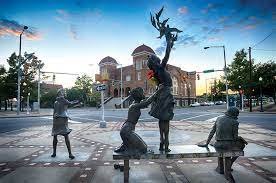
These two images taken together provide a compelling portrait of the city that lays unassumingly at its feet, one steeped in its industrial past but one also shaped by a commitment to modern intellectualism. Birmingham truly is a city of the present, priding itself on a massive subsidation of the arts and culture. Fueled by a growing and diverse population and anchored in a well formed value for real diversity, led as it is by its deeply charismatic “put all the people first” mayor (43 year old Randall Woodfin, who is worth a google), the city uses its civil rights district, a testament to its pivotal role in the civil rights movement (something I’m looking to dive into with Diane McWhorter’s book Carry Me Home: Birmingham, Alabama, the Climatic Battle of The Civil Rights Revolution) to tie its storied and often tragic past to its present in a tangible way.
Taken from Birminghams national historic site website
This is a city that invests in and values its creatives, a fact that is nearly impossible to miss traversing its different neighborhoods. It is through its diverse cast of creatives that it finds an opportunity to tell its story in a way that translates to the lived experience, for those who’s lives connect directly to the past and those who have found themselves adopted into it. If the past is all but invisible in the perfectly paved streets and illustrious institutions of Huntsville, Birmingham finds new life by making the past a clear part of the narrative going forward. Nicknamed magic city for its iron rich landscape, to me this place presented itself as a case study for how build forward towards true reconciliation.
As one resident proclaimed, Birmingham might not be flashy, but its honest and homegrown, passionate, and real. A sentiment one might find in the sheer absence, relatively speaking, of endless suburbs and big box/chain stores.
I used a day to tour the city’s neighborhoods via its bookstores, which took me from historic Woodlawn
Beautiful Mountain Brook, a unique neighborhood tucked away into Ruffner Mountain
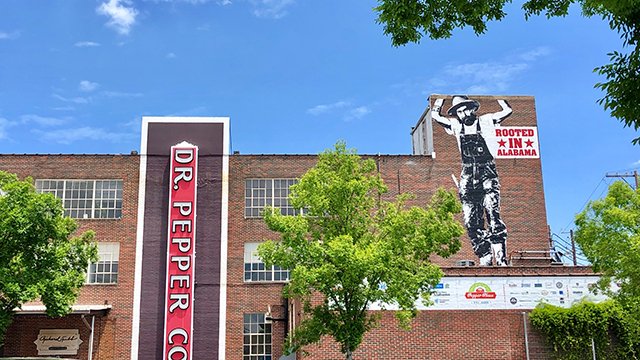
A local market built into an old Dr. Pepper bottling plant in a once glorified suburb now dedicated to local goods, markets and store fronts and connected directly to its culturally rich downtown hub
Taken from Pepper Place website
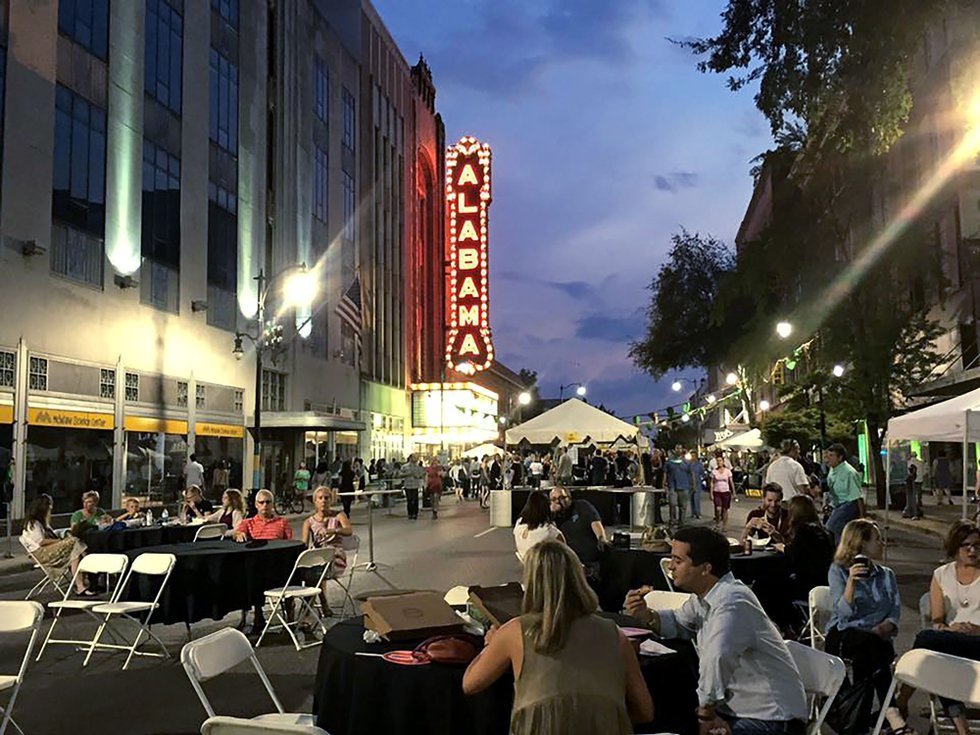
A downtown hub bustling during my visit with its annual sidewalk film festival.
Taken from siddewalk film festival website
Occupying the outskirts of the downtown area is also the railroad park, sitting directly adjacent to the cobblestone streets of Morris avenue, one of many sections of the city utilizing green space and forest as the driving force of its development. Morris avenue, by the way, a fact made apparently by its well marked signs, originated here through business aspirations from Montgomery, naming its district, an indeed modelling it after the famed English city from which it drew its inspiration. Take a walk down the historic street and you’ll be greeted by the smell of peanuts at the classic Alabama Peanut Co. and an endless array of local shops, cafes and restaurants. A perfect stroll to combine with the Park.
Taken from Birmingham tourism site
Its literary history and presence, which of course spills out into the rural, Alabama countryside, was my main draw, but you couldn’t talk to a local resident without the first thing out of their mouth being- the food. Perhaps due to chef Adam Evans winning the James Beard award, there is something in the air here that seems to be generating excitement over being the next great paradise for foodies. Beyond the homebred southern fare (I’m told beyond the typical BBQ and biscuits, hot chicken, pimento cheese fried green tomatoes, and boiled/freshly roasted peanuts are the must tries) which has apparently been trending more and more in Birmingham towards emphasizing its proximity to the coast, you’ll find a heavy mix of African and Mexican fare (I heard one person say that Birmingham was leading the way in important and necessary African studies).
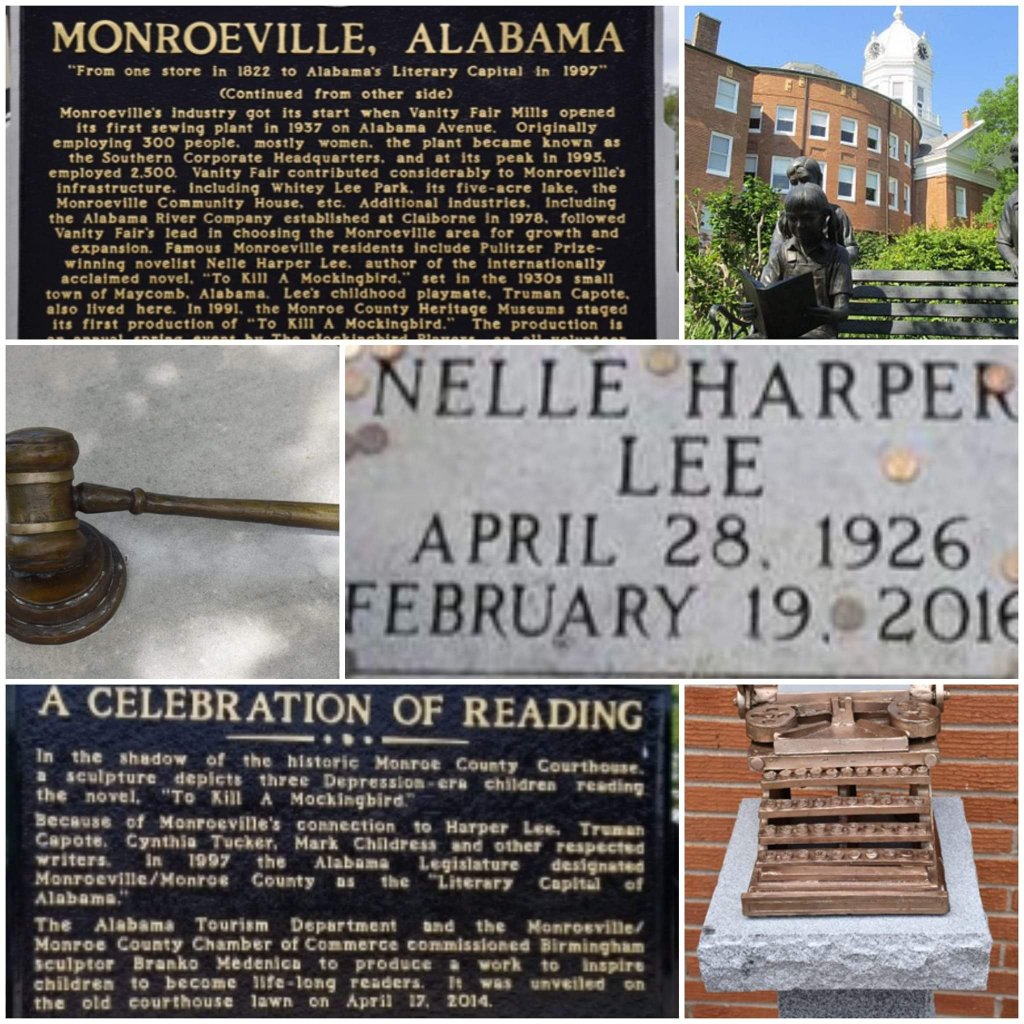
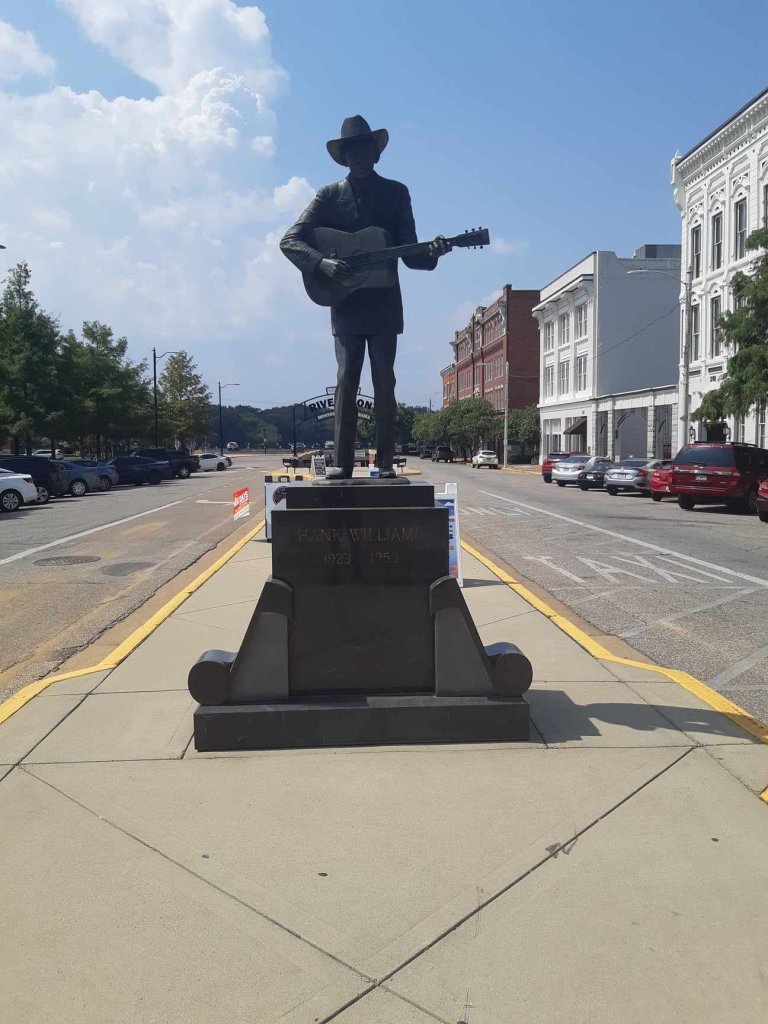
About an hour further South of Birmingham, through the colorful mountain ridges and valleys that form the Red Mountain landscape, the foothills of the Appalachian region, is Montgomery. Trending towards the coastal regions of the Gulf of Mexico, this small city center looms large as the State’s capital. Truth be told, stepping on to its streets is like travelling back in time, the political shape of Montgomery rooted firmly in the story of its past. Its position on the Alabama river gives its coastal identity the sense of being a hub, connected to the southern trade routes from its inland position. You can actually smell the ocean air the minute you exit the valley and enter its city limits. This is a long ways off from the modern flourishes of Huntsville, to be sure, and its here that I actually felt most connected to what I perceived to be a genuine portrait of the “south”, if only because everywhere I went people were telling its story as a distinctly “southern” one. Perhaps the most southern experience I had, outside of my eventual stop in Charleston (which is a whole other thing), was the opportunity to then get off the interstate and drive the backroads to places like Monroeville and Selma. Here the biscuits and grits, if only I could have indulged as a celiac, really come alive. Walking in the footsteps of the inspiration for To Kill a Mockingbird at Harper Lee’s hometown. Stopping at the small fruit and veggie stands. Reveling in the ability of brief rain showers to break the humidity (I’m sure I seemed strange driving with my sunroof open and my windows down as the rain came down, but it was glorious surrounded as I was by the long leaf pines), it was hard to experience the area without hearing Nat King Cole and Hank Williams lingering in the background, two natives to Montgomery’s past. Singing some lines from Hey, Good Lookin’ just seemed necessary to ordering up any necessary fare, if just to say I had some Jambalya on the Bayou.
Taken from Montgomery tourism site
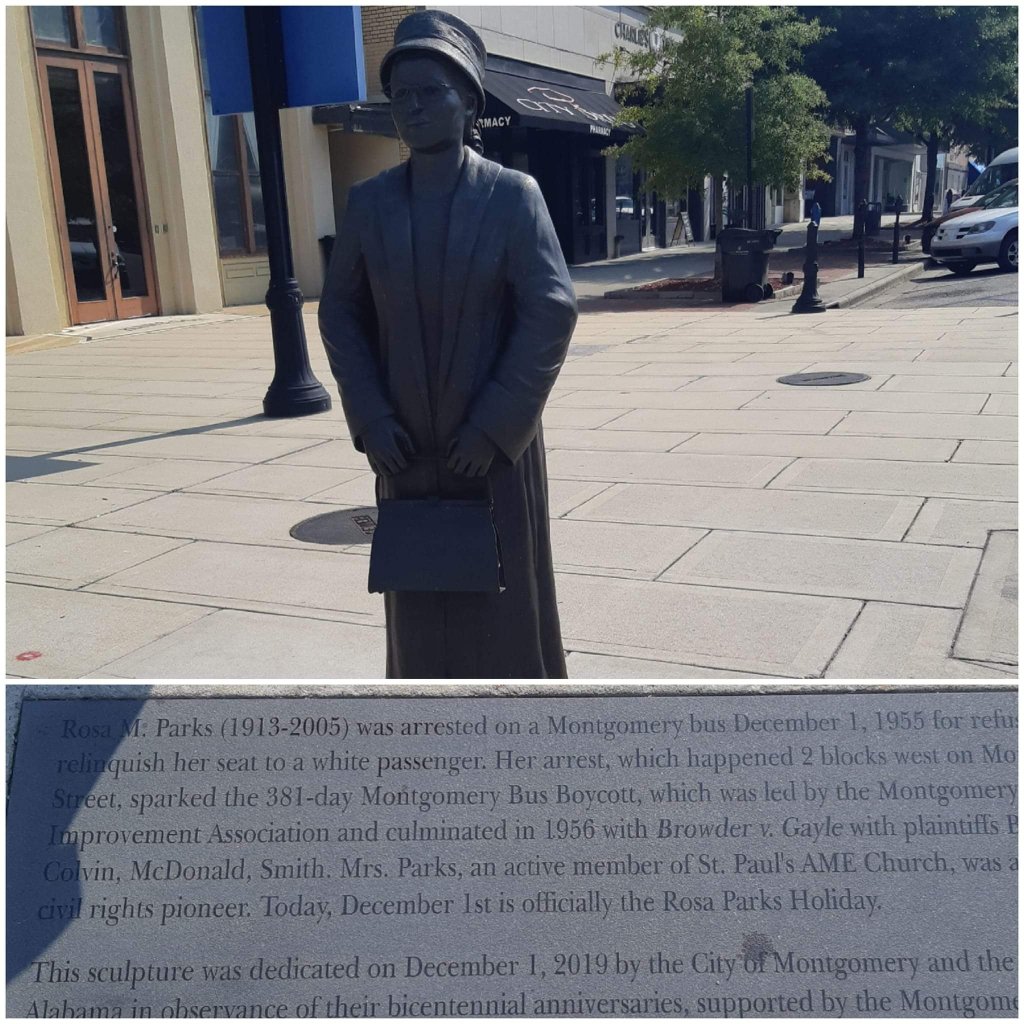
Getting off the interstate and onto the backroads was actually the perfect way to process the weightiness of Montgomery’s history, captured so poignantly by its visual presence be it through the incredible and quite modern Equal Justice Initiative’s Legacy Museum and National Memorial for Peace and Justice, its well marked paths noting the story of Rosa Park, Martin Luther King, the Freedom Fighters, or on the road to Selma.
These backroads would eventually merge with Birmingham’s now familiar cityscape, bringing with this small loop the voices of reconstruction and the civil rights movement. As it encounters the revitalized culture of this present space, it attempts to reimagine a better way of living together. This to me sat in powerful contrast to the very visible notes of progress in Huntsville, cloaked as it is in the allure of the enlightenment project. Truth be told, its money comes from a history as a cotton trading center. I wondered, then, about the promises of these institutions as they continue to exist beyond the confines of this necessary conversation with Alabama’s past, and perhaps some of the irony to be found in the fact that Huntsville remains Alabama’s birthplace. Without Montgomery would we even know the right questions to ask of this unending pursuit of progress and advancement? To what end do these projects reach? I’m not sure myself when it comes to the right questions an potential answers. What I can say though is that I felt more sure of these questions navigating and experiencing the streets of Birmingham, anchored more firmly in the here and now. An unexpected place that, to me, reminded of the inevitable draw that I have towards Omaha, Nebraska, an equally unexpected small sized city that sort of reformed my idea of what a place can be when it is free to grapple with its past. In truth, it had been Charleston and Asheville that had long been on my checklist, one immersed in the sort of highly charged allegiances to confederacy and independence that I expected to find in the south, the other clearly prided on upholding its commitment to liberal ideas in the middle of Appalachia. In the end it was the understated Birmingham that won me over, a city I hope to return to someday.







































 The Stories of my Life