Film Journal 2023: The Covenant Directed by Guy Ritchie
It took a little bit for me to wrap my head around Guy Ritchie taking on something this serious and this studied and dark. The first half of this film, which is where it really shines, goes a long ways in proving this marriage can work. Its chalk full of intricate sequences, delicate drama, and memorable moments. The way the action sequences are shot, using Ritchie’s signature style, is much more subtle than you might expect, toning down his normal energetic approach without muting it or disguising it.
The film is ultimately about the journey of this interpreter, which affords the film a window into a more nuanced discussion than you might find with someone like Bay, who does not shy away from an heavy set patriotism. Unfortunately some of that thematic weight gets muddled by the inconsistent nature of the pacing in the second half. Its there where i think the argument can be made that the wonderful performance by Dar Salim starts to shine a light on the miscasting of Jake Gyllenhaal. He’s not bad, it’s just that the moments in the second half where I felt myself slipping in and out of full engagement with the film led to over analyzing his role. Something felt a little off, even if I couldn’t out my finger on it.
Overall a pleasant surprise, especially for anyone who is a fan of Ritchie’s work. Adds a different flavor to his filmography that has an aged presence.
Film Journal 2023: Elemental Directed by Peter Sohn
The Good Dinosaur is not among my highest rated Pixar films, but to this day it remains one of my favorites. It trades the typical complexities of Pixars more legendary titles for simple storytelling, drawing out themes not through conceptual designs and intricate storytelling devices but through employjng an old fashioned narrative approach. It has been criticized for this, often occupying the lower tiers of people’s rankings. I have often argued that this is less a question of quality and more a question of expectation; i highly recommend this review for parsing out some of that complicated reality: thetwingeeks.com/2023/06/12/elemental-pixar-the-good-dinosaur-and-the-weight-of-expectations/?fbclid=IwAR2SHpiWuhjI-OgACTYmB7ojRcfbLghikKStTD3IkeGotkbiTC7xP9ze0_s
If the high concept element of the film is limited to the question, what if the asteroid that wiped out the dinosaurs had actually missed earth, the thematic exploration of family, belonging, adoption and growing up/coming of age in an uncertain world filled with trauma and struggle really connected for me. Given that Elemental is not only Peter Sohns follow up film but also the second film of his career, now spanning 8 years, it is fitting that this could be called a spiritual sequel of sorts. The interconnecting ideas and themes overlay both stories in a powerful way, the Good Dinosaur reaching a younger audience and Elemental reaching an older one given the ages and experiences of their main characters. It will be interesting to see how far Elemental’s reach will be when it comes to finding its target audience. It’s worth repeating that the film does veer older, with its subject matter dealing with the relationship between a younger adolescent and her relationship to her father. It is a perfect fit for fathers day, and I think it serves best speaking to either the parents in the crowd grappling with their relationship with a son/daughter, or the 16-21 year old crowd grappling with issues surrounding what it means to be an adult in a confusing and often difficult world.
In all honesty, the two films function really well as a double feature, both capturing the different phases of growing up and living the grown up life. They ask similar questions, and yet pose them from slightly different vantage points. What made the Good Dinosaur especially meaningful to me is that it came out the year that we adopted our then 12 year old son. The way it tackles the idea of found family and the idea of family being bigger than blood proved a powerful complement to our own experience of becoming a family 8 years ago. Elemental, in contrast, begins with the larger theme of immigration, following a family as they move from one country to another in efforts to begin anew. This cross cultural context, although different than our own, adds something to my personal experience with this film, as we adopted our son from Ukraine, traveling to unfamiliar territory to find him and he coming to this completely unfamiliar country called Canada after the family became official.
The story that we find in Elemental is actually deceptively rich. I have heard of some writing it off already simply on the basis of the trailer naming the main character, a fire Elemental, “Ember”. Yes, the metaphor at play is on the nose, all the way down to Ember having a firey temper given to fits of rage and her eventual encounter with water characters who are in touch with their feelings and prone to being a sobbing mess. The available puns that come from this make no efforts to hide themselves. But the world the film builds around this metaphor is endlessly interesting and unquestionably beautiful. The story even more so. I loved how the layers of the narrative form these progressively narrowing circles of plot lines and thematic focus, taking the broader context of the immigration story and playing that first in to the developing romance between the two polarized elementals, and then narrower yet into the internal struggle of Ember. The glue that binds these things together is the family dynamic, taking these ever narrowing circles and broadening it back out again into the films intergenerational dynamics, exploring how it is that the relationship between parent and child reflect these cyclical patterns and realities, some that hold us hostage and others that promise liberation. It’s in this sense that the film affords the two sides of its experiences, parent and adolescent, a proper entry point into the story.
For many of us who know what it is to be both, I would imagine the story might resonate on both sides of that metaphorical fence. I know it did for me, hitting on some heavy trigger points when it comes to my own grappling with these given realities and experiences. Perhaps most apparent is that deep rooted fear that my son hears much of the same messaging as Ember hears from her own father, and knowing how to communicate what I would really would want him to hear feels like an impossibility sometimes, even on our best days. That feeling of being misunderstood, and of misunderstanding, looms large in this story, with past regrets and failures lingering in the background of it’s own pertinent efforts to face these truths head on.
One last thing. I get that this film is not technically perfect (no film is). There is a degree to which it might be stretching itself too broadly in terms of its themes. For a surface level metaphor it is juggling quite a bit, and there is a chance someone might latch on to one element of the interconnected storylines and miss the rest. That’s the danger of trying to bring two sides of the audience in to the same story. You might end up spending so much time trying to find yourself in this story that you miss the other perspective. And the more subtext the film brings in the more likely that is. On that same note, I actually really liked what they did with the developing love story between the two young adults. It reminded me of the similarly lovely and immersive romance sequence in the live action The Little Mermaid. It’s a good example of how, at its strongest, this film is able to take those particulars and spin them as universals, with the romance bleeding necessary nuance into the other plot lines as they develop alongside it. If nothing else, the two sides of the conversation affords exactly that- important conversations across generational lines.
I do know that, without question, I personally am deeply appreciative of this film. Even more so of the Director. The stories he wants to tell, or that he feels he needs to tell, are stories that have deeply impacted my own life and grown my understanding of this world and my experiences of it. I would trade technical veracity for this type of grounded and accessible and personally invested storytelling any day, even with its imperfections.
I am a school bus driver by trade. I drive for a private Christian school which has its name printed I bold, advertised letters on the side of my bus. The other day while I was fueling, a trucker beside me at the pumps decided to engage me in conversation. It started with noting the beauty of that mornings sunrise, one of the perks and blessings of being on the road. Then he switched gears. Nodding at the name on the side of my bus he suddenly asks me what I think of this whole pride month thing. The way he asked me was as though the name on the side of my bus indicated that we shared a common viewpoint and a common language. He assumed that we would be able to say what needed to be said without using words that could be overheard and thus get us in trouble and/or persecuted. He assumed that because I drive a bus with the word “Christian” on the side that I must have certain feelings about all this pride being celebrated, and that part of that shared language was wrapped up in necessary conviction that our free speech was under threat and, as he made sure to note, his veteran status was being undermined. One day to celebrate his service, as he put it. A month to celebrate Pride.
Something about how that whole conversation went down left my unsettled. Wasn’t sure quite what to do with it. The irony of it was that if I said anything in that moment that challenged his assumptions about our shared language it would be me being the oppressor. He was clearly far less interested in hearing more I thought than he was in maintaining the relevance of this insiders club.
And then I came to this article, and I thought it was an interesting perspective and take on Pride month and how words and language play into how we see their meaning. Written by a Christian who is also gay. Been pondering this quote inparticular:
“The question is not, “What does rainbow flag symbolism mean?” The question is, “To whom does rainbow flag symbolism have meaning? Who am I trying to communicate with, and what will they understand this symbolism to mean?”..
In cases where the people I encounter have different understandings of the same symbol, whose understanding is a higher priority to me? Who am I willing to risk being misunderstood by? Will I have an opportunity to clarify my meaning to one audience but not to another? In which case will correct understanding create more good, and in which case will misunderstanding create more harm?”…
perhaps we’d be better off if we approached these situations with fewer categorical answers and more genuine questions. Perhaps we’d be better off if we asked the people we love what these symbols mean to them, instead of assuming we already know their answers.”
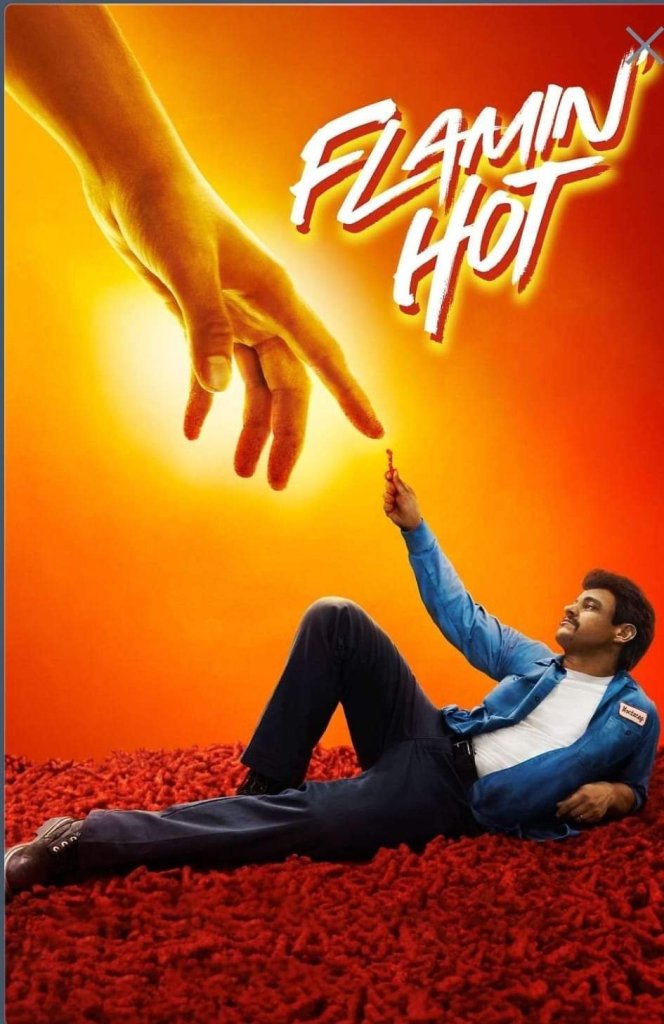
Film Journal 2023: Flamin Hot Directed by Eva Longitis
Maybe this will be a hot take, appropriately so, but those crying foul over the news reports demonstrating that Montanez, the real life character behind the Memoir this film is based on, did not actually invent flamin hot cheetos are making a mountain out of a molehill. And largely missing the point of what a Memoir is- your story written from your perspective.
It would be entirely diffent if this whole thing was causing harm. Choosing to tell his story the way he did was little more than a matter of accentuating certain aspects so as to dramatize the points he really wanted to make. In fact, even a small bit of research can show that most of what we find in this film is rooted in something true, be it about his life, his career, or even the creation of flamin hot cheetos. Does he rewrite some of that history to serve the whole janitor to manager American dream story? Yep. Does it collapse relevant bits together to speak and write more smoothly? For sure. Does it glamorize and romanticize assembly line work to a degree? Certainly. Although, having grown up doing that work myself it didn’t fill altogether false.
Rest assured though that the basic beats of the story beyond his efforts to present his story at the center of something he played an important role in even if he did not “invent it”. And the story is pretty dang effective and entertaining as it is. I have not read his Memoir, but from what it sounds like it captures his spirit and his energy perfectly, and it is infectious.
Perhaps even more so though is the window this film affords us into the job he eventually came to work his way into; marketing products. In fact, that is exactly what this film is, an exploration of how marketing works. It wants to sell his story as much as the product, and it does not hide how this works. It works by making us feel a certain way about it. It packages it up into something that will sell, and the CEO essentially explains this pretty directly in the film.
And truth be told, most of us live our lives buying into that all the time. Most of life works exactly this way, even when it comes to selling ourselves. That bubble only bursts or matters in the face of true controversy and wrong doing. But I am convinced at this point in time, and full credit to the film, that this is not the case when it comes to the man who invented the flamin hot cheeto
Film Journal 2023: The Wrath of Becky Directed by Matt Angel and Suzanne Coote
Loses a bit of the magic of the first absent a scene stealing turn from Kevin James as the central antagonist. Seann William Scott is capable, but we don’t get enough time here, nor enough of a story for him to occupy the stage like his predecessor did. As well, where the first one had a natural arc when it came to the character of Becky, starting off one person and becoming something different in light of the threat and the trauma, in this one the character is written far more singular, catering more to a stylish graphic novel vibe. Full points to the film though for still retaining its focus on trauma and the ways it impacts who we are. That remains inherent in the subtext and it gives this film a necessary weight and sense of intrigue that elevates the slasher premise. And to be fair, that singularity fits the amped up campiness of the sequel just fine, even if it does feel slightly less memorable.
This sequel manages to have some fun with the whole premise by leaning into Becky’s world (her world reclaimed from the invaders), and any time we get one on ones with Becky and any number of the films supporting characters, Lulu Wilson’s all out commitment to the role helps make the films tight run time (under an hour and a half) completely worth it.
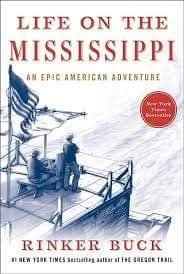
Reading Journal 2023: Life On The Mississippi: An Epic American Adventure Author: Rinker Buck
“American children have been raised for more than two hundred years on the cherished rubrics of the Declaration of Independence, “all men are created equal” and the inalienable right to “life, liberty, and the pursuit of happiness.” But the founders who gave civilization these words… also lusted for the West.”
This is the story of Rinker Buck’s seemingly crazy endeavor to follow in the footsteps of the flatboaters of the past by building a boat and traveling the Mississippi down to the New Orleans. In the early chapters he sets the stage for the above quote to represent the thrust of the lessons he would come to glean from his journey. Caught inbetween the ideological push of the east and the capitalist expansion of the west is a buried but significant and altogether defining portion of America’s history, and even its present: the river. In many ways it is the river that holds in its grasp the potential promise of a country unencumbered by either of those two polarities, even as it becomes clouded by the push and pull of the sheer force of power inherent in the two sides.
What is interesting about these lessons is that it unintentionally manifests itself in the crew that Buck assembles. A mix of conservative and liberal voices and personalities that render his navigating of the waters and its history a refreshing appeal for balance and genuine inquiry. It helps the lessons and observations to feel less targeted than it is honest about what the river celebrates and also helps to hide.
I have read quite a few books on the rivers history, long fascinated by its story. 8 or so years ago I did a trip that followed the river road from its humble beginnings in northern Minnesota to Memphis. One day I hope to finish it by making it to New Orleans. So I was really excited to read of Buck’s experience and gain his perspective on a path I had likewise traveled in interest of gaining an intimate awareness of its history, albeit by road rather than boat. It’s worth pointing out a small criticism here towards that end: he spends most of his time on the Ohio, not the Mississippi. For as much as I really enjoyed the story of the Ohio, I was slightly let down by how little attention the Mississippi was actually given. Once I realized the focus was on traversing in the footsteps of the economic trade route, which remains active and thriving on the riverbeds to this day even if the river has now largely been tamed and reshaped into a man-made structure, then I was able to settle in for the ride with greater ease.
What sets this one apart is the experiment of the endeavor. The book essentially follows his journey from the seedbed of an idea to researching how to do it (safely and successfully) to embarking on the journey, the book ultimately being his reflections on that experience. Intermixed with that is the byproduct of the research he did on the history of the river itself. If you like adventure, I imagine the thrill of figuring out how to build a boat and how to navigate the river safely and actually executing that in reality will make this book worthwhile. If you like history there is also plenty of that.
Or, if you are like me, you’ll appreciate both aspects along with a third; the philosophical wonderings that emerge along the ride, perfectly suited for capturing both the romanticism of the river and its wildness.
I do think the book is important as well. It makes some interesting lived and read observations about America present and America past, relating specifically to the question of its story or its defining narrative. For me it was fascinating, and even validating, to read about the uniqueness the river holds in this story. It helps to reformulated the typical ways in which left and right are both held hostage to the “land”. In the river we find both a deeply rooted connection to the wider world as well as the trappings of that east-west divide imprisoned in its banks. Knowing how to tell both of those stories together is a part of the art of Buck’s honest search for the truth of the rivers “mythology”.
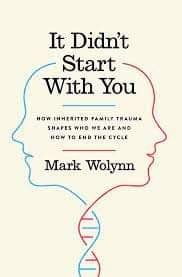
Reading Journal 2023: It Didn’t Start With You: How Inherited Family Trauma Shapes Who We Are And How To End The Cycle Author: Mark Wolynn
First off, let me address the apparent elephant in the room when it comes to this book. I had some suspicions in the early pages that the author might fall in the category of pseudoscience rather than being qualified to speak on the subject of epigenetics and genetically based trauma. Turns out I wasn’t alone, as goodreads affronts you with big bold capitalized letter reviews warning any and all readers curious over this books alluring title about his lack of qualifications and peer reviewed research.
I’m not sure how much of that is true. A little bit of research uncovered that he is the founder of the Family Constellation Institute, an established teacher at reputable educational institutions and published in the Elepehant Journal, the New Yorker and Pscyh Central. But his approach certainly veers towards popular theory as opposed to scholarship.
Credit where due though, the early chapters do make plenty of references to legitimate scientific studies and his notes are chalk full of reputable books, absent a bibliography. In truth, the uncertainty of that whole thing aside, that’s not even my biggest issue with the book. I’ve read plenty by authors musing over theoretical ideas that have been more than worthwhile. My bigger issue is with how his ideas essentially get wrapped up in a self help premise that abuses examples from his own work and clinic by presenting them as proof text for his own ideas. It’s like the whole thing is designed to say, look at how my ideas helped these people successfully overcome their trauma. Now you can do it too. Worse yet is how it tows this line, and I would argue crosses it, where the one experiencing the trauma is made the victim of their own making.
Here is the nuts and bolts of the books main ideas (or idea; the whole exercise is set up so as to narrow down and locate ones trauma in a single sentence). He begins with a discussion about fear, and how those fears are bound to inherited family trauma. He defines inherited family trauma as a web, interconnecting the experiences of generations, and it is trauma that, relating to its core expression- fear- we cannot articulate, it expresses itself unconsciously. Thus the rest of the book is given to formulating a practice of necessary articulation. We must locate, as he calls it, the family mind, or family consciousness, which is essentially the story of the genetic factors carrying our trauma, and then utilize the “core language approach”, which is simply searching out the clues of the central “unconscious themes” of our life (where we merge with our familial past, where we have rejected or blamed it or cut ourselves off from it, where we have experienced early interruptions to our development when it comes to our parents, and where we identity ourselves with another family member other than our parents). These unconscious themes can then become the basis for articulating our core complaint (what we feel the problem is), our core descriptor (how we define the problem in words or adjectives), our core sentence (taking the problem and our adjectives and putting it in to a sentence), and eventually allowing that sentence to define our core trauma. Rewriting the sentence into a positive statement rather than a fear based statement can then become a way of addressing the trauma and gaining agency over it. This relates to the final third of the book which reimagines core trauma in light of the core languages of our transformation- bonds/separation, relationships, success, and medicine.
This idea can apply to other circles of our life beyond family in certain ways, however the science, and its a real science, applies directly to the genetic and biological factors that lie behind trauma. Thus it has a specific interest in family dynamics. Much of this does feel like common sense. Perhaps not something most of us really would desire to confront or even recognize. And yet it seems to be true that we all carry this, and leaving it as unconscious factors in our lives, or worse yet unintentionally living distant from it, is often a way to give it power over us.
It’s fair to say that I’m sure there will be readers for whom this book will be helpful. I found it personally disaffecting, if even a bit problematic, but I tend to be fairly adverse to the self help genre, especially where it can lend itself to pseudoscience. His work seems to be based in something true, but operates outside of the general system of research and thought. Whether that is a positive or a negative will likely depend on the reader.
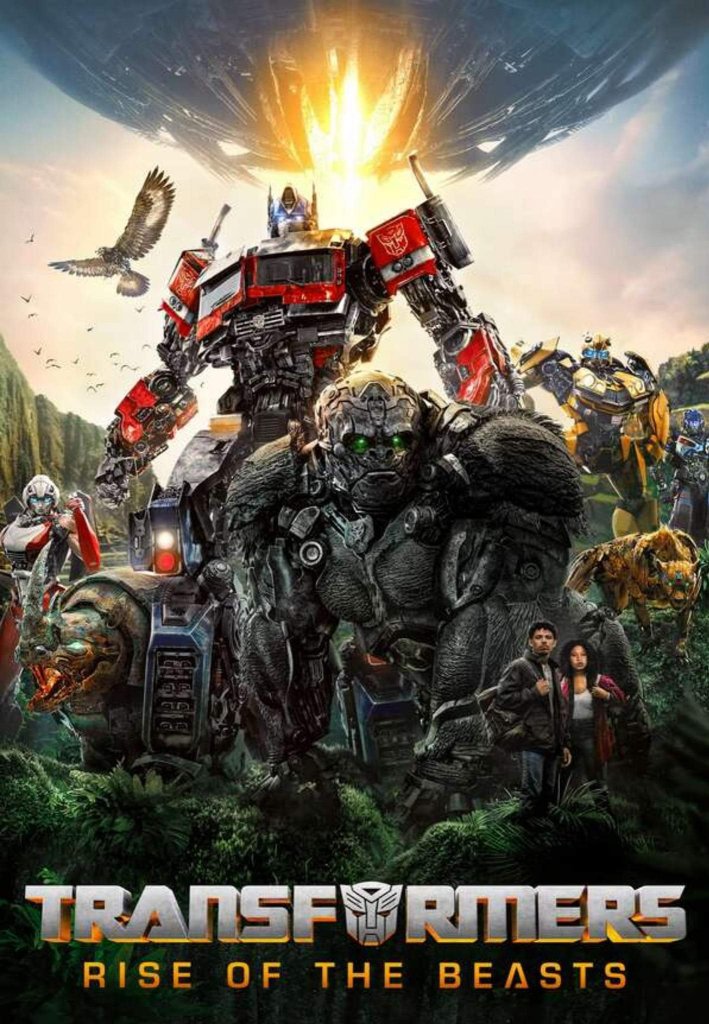
Film Journal 2023: Transformers: Rise of the Beasts Directed by Steven Caple Jr.
Positioned somewhere between Bumblebee’s not so subtle rewriting of the timeline when it came to Bay’s ever growing mythology, and Bay’s original Transformers, the jury’s out on whether to call this a sequel, a prequel or a reboot. And while it shares certain characteristics with both of those aforementioned films, blending Bay’s reverence for the source material with the pure storytelling and clear sentimentality of Travis Knights reimagined stand alone entry, Steven Caple Jr. (Creed 2) brings his own distinctive touch to the franchise.
Thematically speaking, one of the things that becomes abundantly clear in the early going of Rise of the Beasts, following an opening sequence designed to set the stage for the larger story and essential conflict, is the space Caple Jr. wants to give to the human counterparts. The story, set as it is near the beginning of the timeline, features a rough and gruff Prime suspicious of humans and their motivations, and uses this to say something about the essential human relationship to the alien Transformers. A shared plight (the literal end of the universe) parallels the subsequent journeys of Prime and Anthony (featuring a solid performance by Noah Diaz), establishing an intimate concern for the journey underneath the bombastic action of the larger narrative. This is a surprisingly patient film when it comes to the pacing, trading a lot of the busy action of Bay’s films for one on one interactions.
This also affords Caple the ability to give attention to the detail and design of the Transformers and the landscape that they occupy. There is some nice work on the cinematography front, and the clarity of the alien machines is sharply rendered in their “transforming”. Mirage is a particularly cool addition. It is a world that is meant to be appreciated as much as it’s meant to be enjoyed.
I’m actually a considerate fan of Bay’s entries. I feel like he gets grossly misunderstood, and his fans can certainly attest to the fact that the care he gives to the lore and catering to the fandom is clear, littering his films with the smallest details designed to capture the attention of those invested in the comics and the different iterations of the story. Say what you will about Bay’s stylings and the over expansiveness of his storytelling approach, there is a certain awareness that he has of the franchises sensibilities and style that absolutely deserve praise and acknowledgment.
If Caple has made a film that should win over some who find Bay’s cinematic tendencies offensive and grating, it might also isolate, as Bumblee did, die hard Bay fans. There is a world where you can see this standing as a definitive response to the over abundance of those previous films. However, at the same time, one of the clear strengths of Rise of the Beasts is it’s straight up homage to the stories 90s. This is playing directly off the popular “beasts” series, and more than this is calling back to the stories I grew up with. Set in 1994, my graduating year, it functions as a glorious call back to the franchises original heyday, captured wonderfully in a recreated New York City. The “liberating” playlist is super fun, the vibe is super fun, and it all serves as a reminder of what made this franchise fun back in the day. And given where this film ends up, the best is yet to come.
I had some similar thoughts floating around in my head, but I couldn’t quite place it or make sense of this. The element of these pieces that helped me narrow it down to something comprehensible was simply this; in Into the Spiderverse the question being asked is “who can be Spiderman”. The answer we get is anyone can be Spiderman. The question being asked in Across the Spiderverse is “what does it mean to be Spiderman”
The author and host of these pieces then finds in that a correlation between the central question plaguing the NT letters (does one need to be circumcised to follow Jesus) and the answer that comes with the proclamation of the Gospel being taken to the Gentile (all) the world.
Now, I do disagree slightly with some of the Protestant assumptions of the above writers and hosts. The answer they find is the classic refrain “by faith through grace”. My own reading of that verse rests on the assumption that grace is the gift of the person and work of Jesus in establishing the kingdom of God through the defeat of the enslaving Powers of Sin and Death, and that faith is best rendered faithfulness to or allegiance to the Kingdom of God. But I do love how they tease out the parallels and the simple and concise correlation between the questions of the film and the questions of the text.
It called up for me another two films as well: The Last Jedi (who can be a Jedi) and Rise of Skywalker (what does it mean to be a Jedi). What I especially appreciated about those two questions is how, taken together, they point to the importance of being bound to a larger story. Simply to say that anyone can be a Jedi is meaningless without the greater hope the story the Jedi is attached to. Without that all they would have is enslavement and defeat. The Darkside wins.
In Spiderman the question is more intimately tied to that basic relationship between being and becoming. If it is simply about becoming, then the portrait we are left with is one that remains detached from the larger story. As the above works note, by saying that anyone can be Spiderman, Across the Spiderverse is forced to wrestle with the problem of community, and diversity within community. Without a grand narrative to bind these spiderpersons together, any sense of being Spiderman becomes pointless and defeatist.
Being roots us in a larger story that then informs our becoming. The question then is, what does it mean to be Spiderman. Similarly, what does it mean to be a follower of Jesus, or in broader terms a child of God. Here is where story matters, both to the film and to the biblical narrative. Ephesians 2:8-9 is often rendered;
For it is by grace you have been saved, through faith—and this is not from yourselves, it is the gift of God— not by works, so that no one can boast.
The better rendering, in my opinion, would be the following; For it is by (the grace gift) you have been saved, through (the faithfulness of Jesus)- and this is not from yourselves, it is the gift of God- not by (circumcision), so that no one can boast
This simple reappropriation of the language of the text moves it from being focused on us as individuals to the larger story that defines us and beckons us to participation. Thus, to be Spiderman means to bind ourselves to the nature or character of Spiderman in a formative sense. This does not diminish our agency and distinctiveness, it affirms it and locates it as well in the common human experience. It anchors us in community and allows the diversity of our becoming to be caught up in the hope this represents. Across the Spideverse locates this overarching story in family and relationship, rooting it in a central portrait of home, something that has the power to define who they are as spiderpeople even as the story gets recontextualixed into the particular fabric of their lives and their experiences
You can access this podcast episode on any platform you use for your podcasts through onscript.
This is a dialouge with a scholar named David Moffitt about his new book Rethinking the Atonement. He specializes in the letter to the Hebrews, and this latest book is sort of summation of his interest in the subject of atonement that has emerged over the course of his career.
I wanted to post it. First because it resonates with much of my own personal journey when it comes to understanding atonement as a theology. Second because he at least aligns himself with the reformed tradition (Baptist variety), which I typically struggle with. The interview is both a good example of the policing and control that happens within reformed circles and the potential of thinkers within those circles when they are willing to challenge some of those tightly guarded ideas. His ideas here are profound and important, and you can see and feel him caught in the push and pull of his Tradition.
What resonated for me in terms of his ideas? He presents three fundamental truths about atonement and its relationship to sacrifice that challenge commonly held assumptions 1. Often blood gets associated with death when in scripture it is explicitly associated with life, especially when it comes to the sacrificial system. When we apply this both to the sacrifice of Jesus and to the day of atonement it changes how we perceive the cross and what the cross does
2. In the sacrificial system death always happens outside God’s dwelling place. It is seen by the ancient communities to be associated with the wilderness space. What’s really interesting about how he draws this up as a portrait is that he sees the cross (the death) as one part of a much larger story, and whereas the tendency is to boil atonement down to the cross and to interpret it through a necessary death, atonement is actually something that comes latter in the story.
To this end he imagines the story as a movement from one space to another. He notes how in the sacrifice system, which is telling a story itself through the different parts of the rites, most of which have nothing to do with death at all, it involves bringing a gift to God which can then be determined as acceptable in terms of how it fits into that story. These gifts are burnt and rise up into the space (the tabernacle/temple) where God dwells. Where it concerns the blood, the power of the unpolluted life is seen to cleanse the external space where God dwells of she pollution that occurs in proximity to the wilderness.
When we apply this to Jesus, what we have is the blood cleansing the temple space (creation) as it becomes an acceptable gift of God given to humanity. The death is not the gift, the blood is. As it is with all creatures, the blood resides with God as a representative work. The representation is not a necessary death but a transformed life in a transformed space that we can now reside in by way of the blood (life’s) transforming power. Thus Jesus resides at the right hand of the Father becoming our means of participation in this transformed space, leading to our transformation through faithfulness. This is where we find not a death that declares us forgiven but a proclamation of the full forgiveness
3. It is through the resurrection that we have the subsequent part of the story: the defeat of the enslaving Powers of Sin and Death, and in the ascension the establishing of a king over the new creation space. This is, Moffitt suggests, the difference between Jesus as an eternal high priest and the high priests who have died (citing Hebrews). Is that Jesus sits with the Father advocating for us. This is the continual work. And tgay advocating is tied to the idea of the acceptable gift. What is notable there is that the acceptable gift is not a sinless life but rather is a representative idea of what our lives become conformed to through faithfulness.
In this sense, the story is so much bigger than the cross, the cross is not a necessary death in that portrait, and as a story atonement becomes more of a multifaceted answer to the problem that we see in the world. I loved how he put this. That all have sinned is to break down the things that we use to separate us versus them, but what this does not mean is that this story is about total depravity needing a necessary payment of death as punishment. That’s not the story at all. The story that we get is Jesus, and Jesus’ story is telling the story of Israel as a Gospel for the whole of humanity. And thus we do have a portrait, especially where it intersects with passover of both oppressed and oppressor, sinner and sufferer. Atonement speaks, for example, as much to the abused as it does the abuser, and in different ways from different angles of and points in the larger story,




 The Stories of my Life