“Don’t try to defeat your opposition, focus in winning the audience.”
Scott McKnight
Been thinking about this a lot. McKnight doesn’t apply this solely to high profile adversaries. Rather he applies it to any thought, teaching, conviction ect that you see to be crucially important, regardless of what that might be.
In truth, we all have opposition. Opposition doesn’t mean adversary (in the Biblical sense there is only one adversary). It might be someone or something that we are in conflict with directly. It might simply be a voice or idea that preaches in conflict with that which you deem to be crucially important. It could be a friend, a family member, an acquaintance, a group member, a coworker.
In truth, if we cannot locate these points of opposition it likely means we simply haven’t given enough thought to what we are passionate about, to what drives us. We all have a stage. We all have influence whether we know it or not. That is what it means to exist in this world.
Sometimes there is a need for confrontation, to be sure. But I think what needs to be considered is when the opposition becomes our entire audience. Suddenly the credibility of our conviction rests solely on defeating our opposition. Which of course is likely to never happen.
When we are focused entirely on defeating our opposition two other things happen;
We lose sight of the way we are shaped by such conversations and how we grow most often on the other side of them. Where we grow the least is when we are on the inside of them for too long and conversations turn into wars. Our convictions should be convictions, but that never means they must become static
We miss how our own words and actions will be their own best witness not to our opposition but to our audience. If one convictions have merit and are indeed important, they will find their way in to the places where they are most apt to be recieved (and vice versa for ourselves)
This isn’t about a hard and fast rule of discourse of course. Rather it is about how we become free to debate, to speak, and to listen appropriately in a world where the temptation to make our opposition our audience looms large.
This article talks about a Christ Hermeneutic, and addresses these verses:
And beginning with Moses and all the prophets, he interpreted to them in all the scriptures the things concerning himself. (Luke 24:27)
If you believed Moses, you would believe me, for he wrote of me. But if you do not believe his writings, how will you believe my words?” (John 5:47)
As I was reading through the Gospel of John this morning I got on this rabbit trail. Growing up I was always taught that this verse was pointing to some specific literal writing from Moses. What seems clear to me though is that this phrasing, echoed as it is in Luke, is teaching something much broader and apart from a literal word. What is being taught here is how to read the scriptures as echos of Jesus. In John 5 alone, the phrasing comes on the heals of an exposition of the Son’s identity. Perhaps most startling is how 5:17, which captures the tension of Jesus working on the Sabbath, an act which would seemingly set Him in tension with Moses, points not to some abolishing of the law (as so many often read it) but as an identifying feature of the Son doing that (work) which is uniquely the Fathers. This is the point of the “signs”, and it is the point of the four witnesses to Jesus’ identity that Jesus witness to Himself (John the Baptist, the signs themsleves, the Father, and finally Moses). It is the point of the I Am statements.
It is revealing that on the basis of these witnesses it is said to be Moses who will file charges against them. Which, when reflected upon, can only arise because of Jesus’ identity being tied to the idea of embodying the story of Torah, the very place where we then see Him as one with the Father. To know Jesus is to know Torah, to know Torah is to know Jesus by way of a Jesus hermeneutic.
Film Journal 2023: Beau Is Afraid Directed by Ari Aster
There will be lots of people, I’m sure who will hate this film. And I get it. It’s the sort of film you have to vibe with or it’s going to end up feeling like a bit of a bludgeon.
To get on the wave length of this film, if you even desire to, one of the things you will need to do is accept that whatever story this film is telling won’t become relevant until after you’ve experienced the entirety of the film, sat with it, and let it sink in. If you spend your time trying to locate plot points it will drive you to madness. Not because they aren’t there, but because the film, by design, is meant to experience first and then piece back together.
The film is structured around the hero’s journey, simply flipped upside down, which positions it as an epic. It’s also, aesthetically and tonally, very much in the vein of a dark fairy tale. This isn’t outright horror, so be prepared for that. But it could be said to be the stuff of nightmares.
One of the initial scenes in the movie has an adult Beau, cast as he is in the light of a once secure baby being thrust out into a cruel and unforgiving world, sitting across from his therapist. It is established that he deals with anxiety, giving the movies title its blunt force. This anxiety is rooted in some past family trauma relating specifically to his mother. As the film moves forward from this sequence we are brought in on this journey which takes us deeper and deeper inside of his head. It might be fair to say that the film is balancing a kind of unreliable narrator to this end, but for as much as it might seem that way, I think there is actually something far more aware and intentional at play. Rather than playing around with what’s real and what’s not, what it is doing is bringing us into the world Beau understands. This is the primary place, I think, where viewers will either attach or detach from his character, and the film will have varying mileage depending on which direction you go.
The film is not afraid to leave a good deal of this as well open to interpretation. There are key plot points that are able to reshape the story in slightly different ways, all of which I think hold legitimacy. Without giving anything too much away, let me just say that for me personally, the aspect of this film that I connected with was the weight it imagines in the simple thought, what if the way I think the world perceives me in my own head proves true.
This becomes part of a patterned narrative in Beau’s journey, where moments of positivity and motivation are confronted with the sources of anxiety, leading him to fold in and to run, giving way to the next sequence and the next in what is a uniquely episodic vision by Aster. This pattern is established in a visual sense through an incredible sense of control over the differnt set pieces and set design. There is a ton of creative flourishes here that really work to break open this world, adding to it as it goes. Even if you don’t appreciate the character and the film, I imagine one would have to respect the craft.
I have diagnosed anxiety rooted in the past. This is likely one of the big reasons this film resonated for me even with all of its out there imagination and artistic ambition. It’s not the kind of film that binds a strong emotional resonance to its characters, to be sure. What it wants to do is unsettle by exploring what’s inside the head. And in true Aster style he finds some rather shocking ways to do that. So at the very least be aware of what you are getting into, because there is a lot of crazy packed into a 3 hour run time. Befitting the film itself though, the whole thing is incredibly disorienting, so any sense of time while I was watching really became a non factor. To be honest, the primary challenge was simply figuring out where I was at different points, as its easy to get lost in.
“If I find in myself a desire which no experience in this world can satisfy, the most probable explanation is that I was made for another world.” (Mere Christianity, Bk. III, chap. 10, “Hope”)
This argument from desire has long become a trope in the world of skeptics, who have dismissed the argument as fodder.
There are many reasons for why I came back to belief in God. At the risk of this devolving into a prooftext (not my intent), I will say that, for me, this idea (of reasoning from desire) remains compelling for me.
I would flesh it out though on a couple different fronts
Dismissals of the argument often come on two fronts, it is cited as wish fulfillment (see Ludwig Feuerbach), and/or it is accused of appealing to something subjective in order to make an objective statement about God. The common response to this is to note that there are differnt kinds of desires. A desire that is inherent to our nature, such as hunger, does indeed point to something inherently true outside of itself. While it’s more difficult to apply this reasoning universally regarding a desire for God (although it can be done), this at the very least makes sense for many who do hold belief in God.
I would add this though. I think the tendency is to jump ahead when it comes to dismissal of the argument from desire to try and locate the desire in, for example, not the hunger but an endless feast. Thus the wish fulfillment accusation. This misplaces what the desire points us towards and assumes that it is the desire for a feast that drives the invention of God. Feast in this sense comes to mean something self serving and frivolous rather than an actual present God. It also reduces legitimate appeals to experiences of this God connected to desire to superficial literalism or dogma (as in, the desire is only made legitimate when expressed as dogma).
It is sometimes pointed out that if the presence of desire was a legitimate argument for God, then what do we do with the fact that not everyone appears to desire God. This confuses though two claims- the argument for desire and the argument for propositional truth. If one assumes that the desire is propositional, then the argument will be reduced to propositional claims, which of course excludes many. If we locate desire though in inherent universal human concerns, it changes the framework for how we speak of desire for God. It shifts it towards questions relating to where and how inherent desires point us beyond mere survival.
The other dynamic of desire that is important is the way it emphasizes the place of language. All expressions of desire depend on langauge. Unfortunately what often happens is skeptics see language as evidence of something being invented to serve wish fulfillment. That langauge removes us somehow from our ability to attend for reality. And yet our experience of reality can only be expressed through language. And those experiences can only be shaped by desire
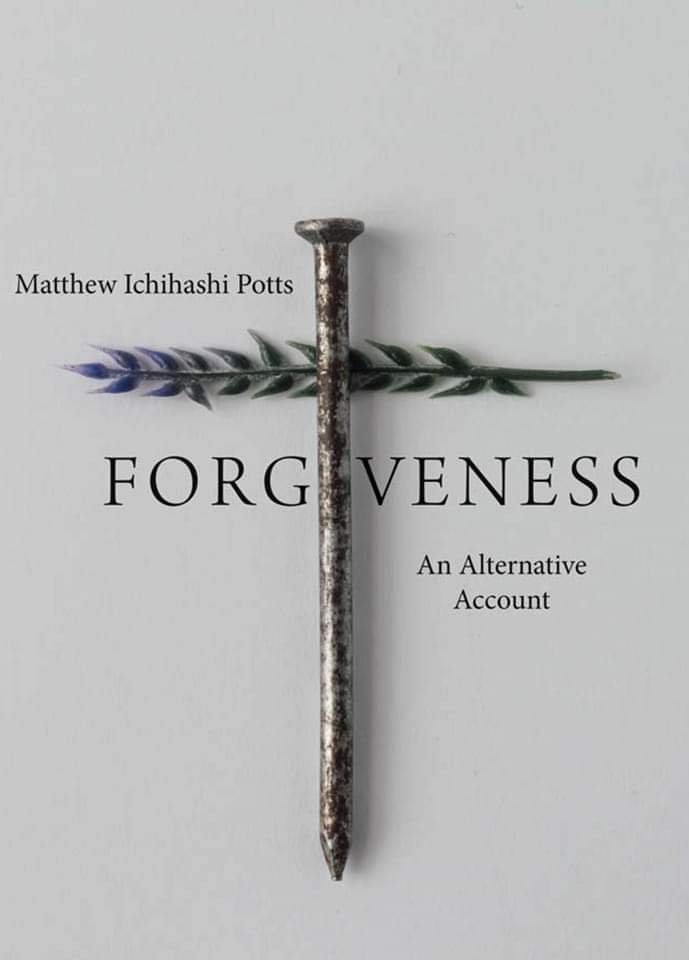
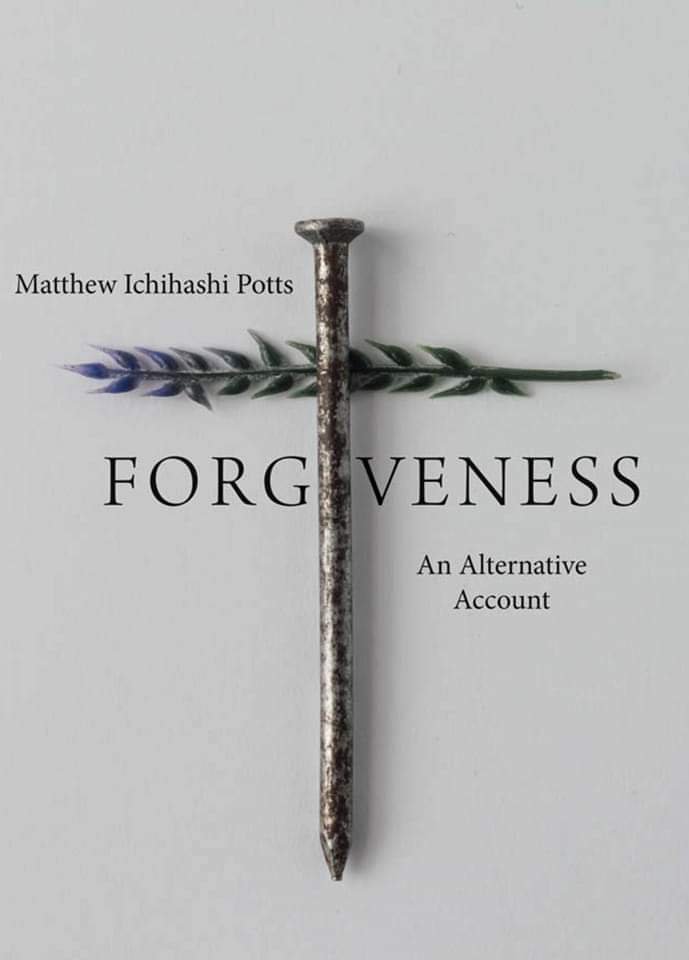
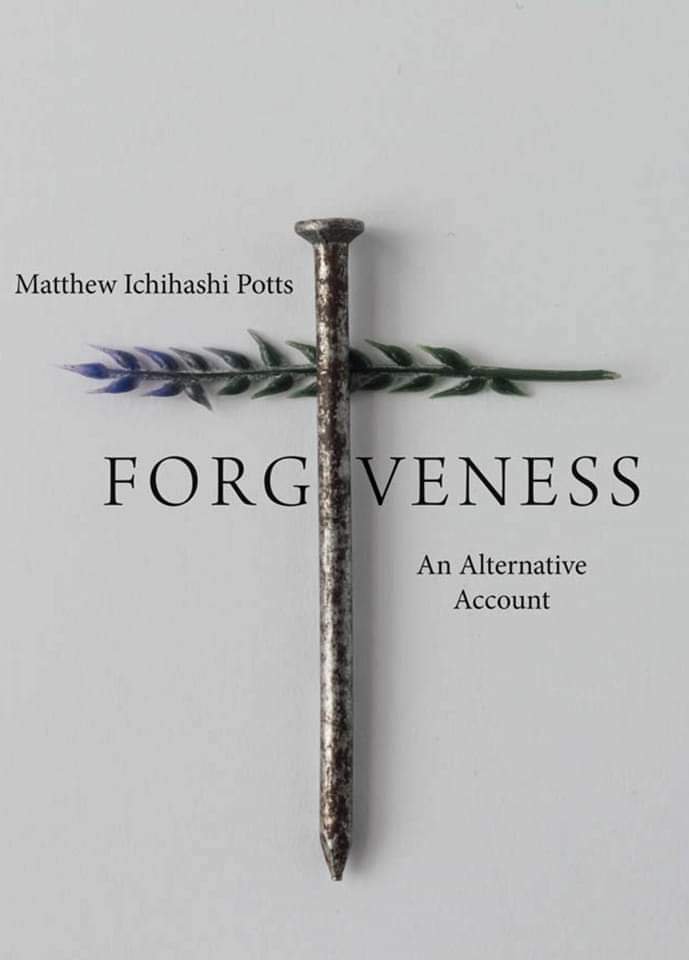
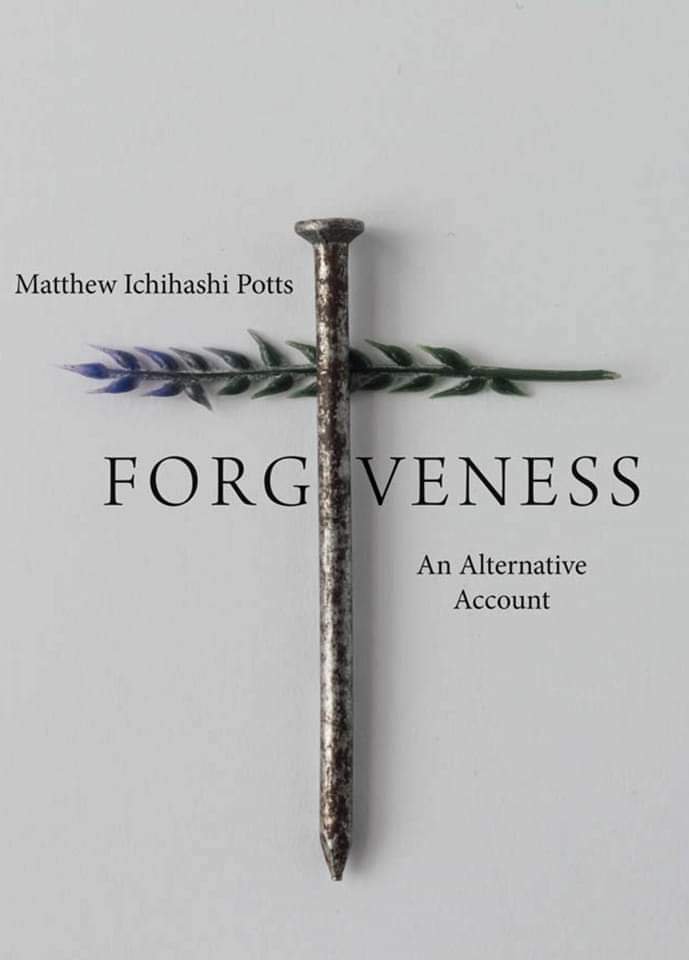
In his book Forgiveness: An Alternative Account , Mathew Potts suggests that at the crossroads of forgiveness and promise lies a necessary appeal to newness, or new beginnings. What binds these two ideas together is the very thing that has been jettisoned by tendencies to read forgiveness as the promise, which is action, or one’s freedom to act.
Potts notes the centrality of human action; “We enter the human world through our words and our deeds, an entrance that resembles a “second birth in which we confirm and take upon ourselves the naked fact of our original physical appearance… Action establishes the agent within a sociality or a plurality; it reveals who the agent is in fundamental ways.”
This acting within and upon the very reality of our birth (or our existence) is what calls forth newness. Potts writes, “This insertion of ourselves into the human world is conditioned by, and represents a continuation of our birth, since birth grounds our every opportunity to begin “something new on our own initiative.”
Action, Potts notes, “has etymological roots in beginning (as in the Greek work archein, to begin, to lead, and eventually to rule indicates).” The “capacity to begin”, then, is “to act”, and this is what “distinguishes humans from other animals”, is the idea that “the unexpected can be expected from humans.” These are acts of freedom. Acts of disclosure. “Through word and deed others come to know us.” We “come into intersubjective being by acting among others in word and deed, by setting forth a new beginning… to be human is to begin.”
But, as Potts points out, it is here that the central issue emerges. Actions inevitably have “unintended consequences “ which lead to “unpredictable results.” Acting, to put it another way, is risky business. “Because we place our actions into a public space not entirely- or even signicantly- under our own power, we must ultimately yield those actions and their outcomes to the world to come.”
Here Potts offers a critique of the Western movement of philosophy (and theology); “This lack of complete control has been a constant worry for Western philosophy. Because uncertainty haunts all our unintended outcomes, the West has sought conceptual refuge from unpredictability and uncertainty in its philosophy… Western thought has traditionally displaced action as the singular freedom of the human in the hope of escaping the unpredictability of sociality, in order to evade that haphazardness and moral irresponsibility inherent in a plurality of agents. Indeed, escape from the frailty of human affairs into the solidity of quiet and order, a passage from social vulnerability into the perfect freedom of unconditioned self grounding, becomes a singular priority of Western political philosophy.”
Trading uncertainty and frailty for quiet and order- marks of “unconditioned exceptionality” runs rampant through western philosophy. To be “unencumbered by the messiness of intersubjective action” is what it means to be truly free and unencumbered, “condemning action for luring men into necessity…” Liberation of the individual from the uncertainty of beginning and for self sufficiency of arriving is the goal of western philosophy.
Here Potts arrives at a necessary corrective; “To be free to act among and with others means to be caught up in the consequences of free actions too… The fact that humans cannot escape contingency and condition does not mean they are incapable of acting… this is our freedom, not to be entirely unconditioned, but to initiate a new possibility into the conditions and contingencies out of which we have arisen… This accepts the risks of the future without pretending to have broken with the past.”
Promise and forgiveness taken together reveal the human possibility to begin again, to begin anew. “Redemption from the predicament of irreversibility- (of being unable to undo what has happened)- is the faculty of forgiveness…. Forgiveness is the only reaction which does not merely react but acts anew and unexpectedly… (it) risks a new beginning.”
Walter Brueggemann writes in his Lenten devotional titled “A Way Other Than Our Own”, “While his followers met where the doors were “locked for fear,” he came. He stood there in the midst of the violent restless empire, and he said, “Peace be with you.” (John 20:19)… And then, “He breathed on them.” In the Bible the notion of “breath” is the same word as “spirit.” He gave them spirit.”
Brueggemann goes on by giving this charge to Easter Sunday- “Imagine a world of life come amid the destructiveness of empire. It is this life-carrier who said to his followers, “I give you the power to forgive sin.” I recruit you for the forgiveness business. I charge you with healing, transformative reconciliation. It was then, and always is, a hard work for the church, because in the empire there is no free lunch, no open hand, no breaking of the vicious cycles of fear and violence and failure. So here is my pitch. Imagine that you and I, today, are a part of the Easter movement of civil disobedience that contradicts the empire. Let’s see what happens. Let’s see if life is longer than death. Some will never move and will keep trusting in the empire. But we know this much: we have been breathed on. We have been addressed. To us he said, “Peace be with you.” He said it three times, and then he charged us with forgiveness. We are on the receiving end of his offer of life . . . praise God!”
This is how the promise of Easter meets the proclamation of forgiveness that flows from Jesus’ person and work through the cross. When we detach forgiveness from the idea of necessary retribution. When we begin to see it not as the result of a necessary punishment for sin and death but instead as the freedom to name the reality of Sin and Death in this world and in our lives, we can then see how forgiveness then frees us to act within this reality by claiming the power of new beginnings shaped in the shadows of that which we mourn and grieve in this world and in our lives and in the light of Jesus’ promise of new creation. This is what resurrection hope is all about, not the erasure of the past through the forgiveness of the cross, but the invitation to allow our mourning to lead to new beginnings. If John sees Jesus as the author of a new Genesis, and if the other Gospel writers see Him as ushering in a new Exodus, then what we find in Jesus is God’s acting in and for the world by way of the promise to renew the whole of creation, to defeat the Powers of Sin and Death which define our present reality. The fact that Easter Sunday declares this to be already true is what invites us to risk acting in forgiveness. Not because Sin and Death cease to define our present reality in all its uncertainty, but because we lay claim to a certain hope- God has acted in Jesus. The new creation project has begun, and the wonderful truth about forgiveness is that it removes all obstacles to our free participation in it. To act in forgiveness is to embrace life rather than death while being given the ability to name both.
“For Nietzsche pain is a mnemonic.” And as Potts outlines in his book Forgiveness: An Alternative Account, this recourse to pain “all begins in the human capacity to make promises.” For Nietzsche, “To inspire trust in his promise to repay and guarantee the sanctity of his promise, the indebted promiser pledges to his creditors “his body, his wife, his freedom, or even his life as collateral or substitute if he should fail to repay what is owed.” The substitute “reminds debtors of what they owe and what they have failed to repay, while the threat of punishment can inspire others obligation to be met.” In this sense it not only reminds us that a wrong was done, it ensures the other will never forget that they hurt you.- the perceived balancing of debts and guilts.” This categorizes then as a kind of pleasure.
Punishment is a social construction, not an expression of a wrongdoers debt but a compensating pleasure to the wronged. “Punishment is not what crime naturally or necessarily merits or deserves; it is simply what anger wants.” This anger, however, is “held in check and modified by the idea that every injury has its equivalent and can actually be paid back.”
It is on the basis of this equation that individual wrongs eventually get swept up into the notion of community and society, wherein an “economy of crime and punishment” develops. But here’s the thing. “The law of talion” only pretends towards equivalence. It plays at a common currency of pain, but in fact what retaliation offers the wronged as payment for their suffering exchanges one currency for another… what compensates for suffering is not equal suffering, and certainly not the replacement of a lost good, but the satisfaction of seeing wrongs visited upon the one whom we resent.” It is at its heart, then both irrational and an illusion. “If your tooth is not equally given for mine, then how much of your suffering should serve my pleasure?” As Potts describes, in this view “there is no rational standard for how much pain pays; there is no going rate for punishment.”
So what is the worth of this plain-pleasure equation? It is “self worth and self assertion” (a feeling of individual autonomy and control or mastery over the wrongdoer) of the offended. Or in broader terms, the illusion of order and balance, the nagging sense that “to eschew retribution is to undermine justice and to give moral license to iniquity in our world… vengeance is the original passion for justice.” It is in this sense that the inconsistencies of retribution cease to matter.
In this same light though, does it not undercut morality to “see people, even offenders, as objects by which ones own status might be restored.” Is it not a problem to assume “that status can be restored only through the same means by which it was taken?” The “problem with (retribution as necessary payment) as “a moral paradigm or framing metaphor” is that “all too often no payment is actually possible… though retaliation offers some satisfaction, it satiates the wrong desire… punishment may have purposes other than payback, but our philosophical justifications of retribution and our penal practices of justice tend especially to cling quite firmly to the idea that payback is crucial and primary.” What also seems clear is that “this compensatory intuition is constructed and conditioned, not natural and necessary.” Whatever payment we imagine such forgiveness satisfying does not actually right a wrong.
Perhaps, Potts surmises, ‘what we really most want is to remember, and we have been tricked by custom or instinct into believing pain will be our best mnemonic… (when) in fact, to remember the past rightly would be to admit that no payment is possible, that what is lost is really lost.” Thus, “grief/lament rather than retaliation should be the outcome or partner of our anger… the fullest, truest memory of the past would acknowledge and address that past’s irrevocability, the irrecuperability of its wrongs and wounds… the will’s loneliest misery is its inability to alter the past.” Therefore, if “law cannot fully determine justice because it is founded on violence and covertly perpetuates it… forgiveness reveals that a fundamental mourning haunts any human justice, and it is upon this irrevocable grief rather than the illusion of its avoidance that both freedom and forgiveness might establish themselves.” This is why “forgiveness is and must remain a fundamentally unthinkable, irrational action… it can serve a heuristic purpose in our reflection and can be a way of diagnosing the limiting frames of our moral reasoning.” As he goes on to say, forgiveness is not limited in terms of human practice, rather it is limited in our attempts (capacity or ability) to think about or conceptualize it in an actualized way.
So how does this all translate theologically? First off, I wonder if our predication towards retaliation has led to tendencies to elevate the story of Adam and Eve as one of crime and necessary punishment, while leading us to miss the larger narrative flow of the story that follows in Cain and Abel. Both stories are patterned after the other, and both examine the issue of injustice in this world from a slightly different vantage point.
The first story tells us how the reality of injustice gained a foothold and entered God’s good creation (through Adam Sin and Death entered the world). It tells the story of a good creation through which we can then perceive that which is wrong- a world where such injustice exists. This is, as they often say in the Orthodox Tradition, a fall from innocence, and the words that cloak this movement from one reality to another are “so that they might not live forever” in this unjust reality. This is framed by two things- God’s promise to make right what is wrong and to make a way back to the garden (the good creation space once again made whole), and the call to participate in the way of God’s working for the sake of the whole, or the other
The second story then is about human participation in this reality of injustice versus participation in the way of God. There are two important markers in this story. The first is a defining of the root of injustice (read: Sin), which is desire for what someone else has culminating in envy. Envy produces fear which produces anger which produces violence. The point in which God addresses Cain is at the point of desire, following God’s favor being poured out on Abel. God asks Cain why his face is downcast. Cain sees this act of God as an injustice and he fails to see how this act of God is in fact the means by which justice will be given to the whole. Instead of trusting in the way of God Cain appeals to his fear and engages in an act of injustice.
The second important point then is this- just like in the Adam and Eve story, Cain is driven eastward and set in conflict with the “earth” or the good creation. As opposed to the once fruitfulness of Adam and Eve meant to image the way of God, the lineages that follow are defined by death (each name is marked by a birth and their death) and an endless cycle of repayment and retribution (if Cain is avenged seven times, then Lamech seventy-seven times, which in the ensuing chapter fills the whole world with death). It is into this picture that we find this curious mention of the mark of Cain which stands in contrast to this cycle of death and restitution- “The LORD put a mark on Cain so that no one who found him would kill him.” This phrasing is paralleled with another key passage often overlooked, which is the birth of a new child “in place of Abel”, born once more to Adam and Eve- Seth.
Two parallel stories which then define the two realities moving forward in the biblical narrative- a reality of injustice defined by necessary repayment, and a reality of justice defined by forgiveness. Both stories marked by a good creation given to perpetuating cycles of violence and death, the only true end of appeals to necessary repayment. Into this comes the story of Jesus as the one who will crush the head of the serpent, which careful readers will note is tied to the story (seeds) of Seth and Cain.
As Potts suggests, there are two essential realities when it comes to forgiveness:
“Without any wrong, forgiveness will search in vain for its object… since forgiveness arises with the wrong, insofar as that wrong is reduced or erased- whether by expiation, explanation, remediation, restoration, reparation, or atonement- forgiveness will be reduced or erased as well.”
“If people earn our forgiveness in some manner and we grant them the pardon they have come to deserve, then all we will have really rendered them is their due.”
What cuts through the tension of these two problems is the idea that “forgiveness does not right any wrong, it responds to a wrong that cannot be made right… Forgiveness answers a wrong that refuses to be overcome.” If this is the case, Potts insists that “this should not necessarily prevent our practice of forgiveness, even if it confounds our reasons for it.” It is, as he notes, an act we participate in precisely because it reminds us that a wrong is real and irrevocable and yet we can forgive anyway. “History will continue and with it reconciliation , but with the equivocation of a forgiveness mixed up with the work of mourning… a mourning like this would thus embrace its own incompetence to repair the past or even provide redress in the present. It’s work would be the work of accepting incomprehension… the work of mourning is the spiritual-political kingdom- the difficulty sustained, the transcendence of actual justice.”
It is precisely in this space that we can begin to make sense of Jesus’ death. Where Jesus embraces the inevitable consequence of this perpetual cycle of repayment while simultaneously speaking in to this an inescplicable word of forgiveness. As Potts suggests, “each time forgiveness is effectively exercised, it seems to suppose some sovereign power… one only forgives where one can judge and punish.” And yet, what we find in Jesus is a “worthwhile aspiration” that is also not, in and of itself, a “happy ending”.
“Preserving forgiveness’s conceptual and impossible purity should assist us in recognizing what is more deeply at stake in our systems of everyday and impure judgement and punishment, even in our orchestrations of sovereignty.”
To “dream of” a “forgiveness without power: unconditional but without sovereignty” is to open us up to the idea that “to be sovereign is to be free from the need to answer wrong with wrong.” And this is precisely what we find at the cross, is the necessary paradox of God’s promise being fulfilled (to make right what is wrong) with the unconditional embrace of mourning a present wrong, a reality marked by injustice, the very reality God enters into by way of Jesus. This is what it means for Jesus to proclaim “Father forgive them for they know not what they do.” This is what it looks like for Jesus to shed tears in the garden and to lament over Jerusalem. This is a forgiveness that “mourns forgiveness”, an unconditional forgiveness that is also “unconditioned by sovereignty.” This is the sort of forgiveness we are called to embrace and enact as followers of Jesus on the way back to the garden, the promised healing of a divided creation.
This is what enables us to locate and name both goodness and the evil, to locate and name disorder and order, to locate and name injustice and justice. We do not move past the cross on the way to resurrection, we remember the cross so as to properly imagine resurrection hope.
I have started this book (Forgivness: An Alternative Account by Matthew Ichihashi Potts) as part of my Holy Week reading.
In the introduction Potts makes the proposition- “If forgiveness is real, then it’s a problem.”
He goes on to say, “Forgiveness as it is typically understood definitionally defies our ethical vocabulary and destabilizes our moral foundations… Forgiveness resists rationalization.
To wonder about the problematic possibility of forgiveness at all is to presume some limits to our moral language, some gaps in our moral models… I suggest that any “real” forgivness will and must challenge the assumptions and test the boundaries of our moral instincts themsleves… What forgivness actually reveals when it strains our moral sense is not its own unreality or impossibility but the hidden limitations of our moral reasoning.”
These words from this mere introduction has already been unsettling me in a big way. It’s tabled all sorts of questions in my mind. Like, if love of God and love of other cannot be separated or treated as two seperate ideas, what about God’s forgiveness of us and our forgiveness of others?
At the root of the words scandalous nature is the idea that it is “offered without any condition at all.” Take this away and word becomes meaningless. I do wonder though. In our efforts to systematize the idea of forgiveness in scripture as part of a necessary process of salvation, I wonder if we have inadvertently reduced the word to a mere function of God’s doing while also limiting it to a truncated form (as in, God can only forgive if He is first satisfied by something).
On the same level, I wonder if reducing and truncating the word in such ways necessarily muddles what it means and what it looks like for us to freely forgive as God forgives. How can we forgive others freely if we perceive Gods forgivness, as it is in much of western theology, to be attached to certain prerequisites, be it moral behavior or imputed righteouness?
I have no idea yet where Potts is headed with his treaties, but his initial words about forgiveness, which reframe it in light of our limitations in moral reasoning, might require us to reimagine one of the central facets of the Christain faith- the saving work of Jesus in the death and resurrection- beyond the limiting capacity of our systematics and within the land of the living.
What if, rather than making forgiveness of one’s sins the point of the Gospel, we make the work of Jesus in establishing the kingdom of God the point of the Gospel. What would it look like then to see forgiveness not as the saving act but as the outflow of this kingdom way? What if rather than tying forgiveness to theories of satisfaction we instead see it as something freely given SO THAT we might then experience the liberating work of Jesus in our lives and in this world? What if, rather than tying it to theologies of satisfaction we instead tied it to participationist theology, rightly freeing the work of God in Jesus from the whole grace versus works Protestant hang up altogether?
“To mourn Jesus in at least one sense is to seek some habitable meaning for and from his death in our own world.”
Matthew Ichihashi Potts (Forgivness: An Alternative Account)
Potts suggests that forgivness and redemption are categorically different, even though we have become conditioned in the modern west to read them as one in the same. It is on this basis that he wants to step in to a discussion of forgiveness by way of this simple definition- a decision to abstain from retaliation. He anchors this definition in a recognition that forgiveness is always applied to a loss that cannot be recovered, thus rendering the langauge of debt repayment, common to western theologies or forgiveness, insufficient.
Potts argues away from the primacy of debt metaphors, especially considering that such metaphors get muddled in translation from the ancient to the modern, and he argues towards the primacy of spacial language and imagery.
“The governing analogy of sin in the Christian West is economic, and its roots do reach to the New Testament. But there are other ways to read aphiemi (forgiveness)…Aphiemi (Greek) and remittere (Latin)… concern not debt but distance in their literal etymologies. Aphiemi means to send away. To remit, at its root, is to establish a distance…
Were we to think of sin not as a debt to God but as distance from God, and were we then to consider the mission of the Son sent away (aphiemi) by the Father to be the crossing of a distance, the opening of a loving space capacious enough to contain sin; if we thought of Christ’s work as the journey into a far country, rather than the payment of an awful price, we might find that the typically nifty logic of atonment- that the cost of sin must be paid in full and that only the God-man can pay it- falls away and is replaced by another, perhaps more lovingly tragic, far less cruelly heroic one. If sin is distance, then the Son’s obedient estrangement from the Father is a journey already implicated in sin, a mission always and already also a remission. If Sin is distance, then God’s love will be signaled by the chasm Christ crosses to meet us rather than the torture he bears to win us.”
To be clear, Potts is not dismissing the language of debt out of hand. He is simply suggesting we view it through the primacy of distance. It is on this basis then that forgiveness is then freed from the trappings of redemption. It is allowed to embrace the tragedy and the mess. It can be something we necessarily act upon apart from reconciliation. And what does this do for our theologies of atonement? How freeing might it be to say that forgiveness is that which sets us in the space where redemption and transformation is not only possible but promised? How freeing might it be to imagine that forgiving a person or a loss or a tragedy can give us space to mourn rather than the expectation that it in itself must be the restoring work?
Further, and this might be the most shocking observation- what might it look like to grieve the death of Christ in the face of circumstances that look less like the promise than the loss? And similarly, what might it look like to actually forgive in the face of that if to forgive means to resist retaliation? Something I’m mulling over.
Reading Journal 2023: Gichigami Hearts: Stories and Histories from Misaabekong Author: Linda Legarde Grover
In the waning days of summer 2022 my wife and i hopped in the car and took a drive up the Michigan peninsula to spend a few days at the famed Mackinac Island. Michigan wasn’t new to us, but the island was, and whenever I embark on a trip I always try to track down a local bookstore and purchase at least one book by a local author telling a story rooted in the place we are visiting.
In this case I went with the familiar, having come across this book by an indigenous author detailing Duluths history from the perspective of her Ojibwe past. I have always loved visiting Duluth, and this intimate composition, which is part Memoir, part lore, affords it a deeply personal touch.
The book moves easily between the particular locale of a shoe repair shop or a childhood home, for example, to the lands rich spiritual heritage, stretching from the rocks that frame the city to the waters below and framed against the story of the authors ancestors. Anchoring these stories is a portrait of the familiar Point of Rocks. Having driven the highway that breaks into majestic views of this valley and these cliffs many times, I was able to conjure this image as a way of stepping into the greater imagination of Grivers winding and meandering journey.
This book gives us the tools to see both that which is visible and that which lies unseen, recognizing that both shape the reality of this place as part of the cities ethos and Govers shared heritage.
“There is something about the Gospels unlike anything else in the whole Bible. The books of the prophets of the Old Testament, often divided into major and minor prophets, record what the prophets said. We learn very little about their biographies. Our four Gospels are a bit like the vignettes of the patriarchs and Moses and kings and others in the historical books of the Old Testament. Unlike the prophets, our Gospels do not turn their pages into quotations of Jesus. Instead, the Gospels are obsessed, which is the only word for it unless there’s a stronger one I don’t know, with one person from verse 1:1 to the end of the Gospels. In our case, the Gospel of John. If we fail to see this shift in focus—from what the prophet said or even to some short vignettes to lengthy narratives about what Jesus did, with whom he interacted, who decided to follow him, who didn’t like him, how he was arrested and crucified and raised—we fail to read this Gospel well. Every passage of the Gospel of John is about Jesus. Not us. Not you. Not me. Jesus.
Reading John’s Gospel requires something counter-intuitive. What is intuitive works like this: We have a good idea of who or what God is, and we ask, “Does what we already know about God fit Jesus?” The counter-intuitive works like this: We only know who or what God is in knowing who Jesus is, so we now ask the counter-intuitive, “Does God fit what we know about Jesus?” In other words, God is Jesus. The Gospel of John invites us to a fresh reconception of God by showcasing Jesus from 1:1 to 21:25. A Gospel has a mission: to “gospel.” That is, to tell the story of Jesus in a way that compels response. In their essence, then, every paragraph in a Gospel is about Jesus. Who he is, or who the reader understands him to be, shapes how that reader responds to Jesus. In John’s Gospel Jesus is first and foremost the Logos/Word…
in order that God can be revealed for who God truly is. The proper response to this Logos Jesus is faith or believing, and that faith is ongoing abiding in who he is, ongoing obedience to what he calls his followers to do, and ongoing witness to the world about who Jesus is. Those who respond to this Logos Jesus enter into nothing less than eternal life in the here and now as it opens them up to eternal life in the there and then…
Why Logos? Greeks commonly used this term for Reason, for Meaning, for Logic, and for Words Spoken. The Old Testament, however, is John’s world even more than the Greek world, and this term Logos/Word evokes:
creation (cf. 1:3–5)
the revelation of God’s tent and glory and love at Sinai,
the Wisdom of God (Proverbs 1:20–33; 8—9),
God speaking and communicating and revealing his will and law (cf. Psalm 119:9, 25, 28, 65, 107, 169),
and the prophets declaring the word of God to the people of God (Isaiah 40:11; Psalm 33:6).
John baptizes these Jewish ideas into Greek waters when he uses “Logos,” but his sensibilities are more Jewish than Greek. In this Gospel Jesus is the Logos who reveals the truth, the word of God, to humans (1:1, 3, 14; 5:37–38; 17:14, 17). He is then both God’s revelation and the One who reveals God as the living, speaking Word… “the Logos did not merely descend upon or enter into Jesus, the Logos of God became the human nature Jesus bore.” Which leads him to a profound next line: “The life of Jesus is the history of God himself on earth” (Quast, John, 13). We have become far too comfortable with what John writes in 1:1. Jesus is God in the flesh.”
The purpose of the Gospel of John is explicitly stated at the end of the Gospel (20:30–31)… “these are written that you may believe that Jesus is the Messiah, the Son of God, and that by believing you may have life in his name.”



 The Stories of my Life