Continuing this week with some Oscar reflections, today I wanted to shed light on the documetary Flee, which is up for Animated Feature Film, Documentary Feature, and International Feature Film.
Directed by Jonas Poher Rasmussen, the official entry from Denmark is a documentary that mixes animated and live action sequences as it tells the story of Amin, an unaccompanied minor who lives in Denmark but immigated from Afghanistan. At 36 years the film tells his story by way of a conversation between Amin and a close friend where we find him confiding in him by telling his story out loud for the first time. Embedded into this are secrets from his past which bear real weight on his present, making it important for him to finally find a way to articulate this past in a way that allows him to deal with the present and find a way forward. It very much uses the physical journey to shed light on the internal one, highlighting issues of identity, acceptance and belonging. It is a simple story but it is also a powerful and important one that really celebrates Amin’s courageous willingness to tell his story and to finally make it real.
The Oscar Story: The big story here is of course the film’s presence in all three of these categories. While this is historic in and of itself, the very notion that it could possibly walk away with awards in all three categories would be truly historical should it happen.
How likely is it that this would happen? I would say highly unlikely. But the sheer idea does make this one exciting to watch. The greater interest is pondering which category it stands the best shot at winning. This is where things get difficult.
Animated Feature Dethroning Encanto from the top spot in animated feature would be a challenge (and despite advocates of Mitchells and the Machines believing it has a shot, I think this is more a dream than reality. But hey, the Osars always need to throw in a couple surprises). Luca and Raya and the Last Dragon fill out the other two spots in this category (yes, although Luca is Pixar technically this means Disney is dominating here with three nominations), and of those two Raya has been cited by pundits to hold the number two spot.
With that said, there are some quietly picking Flee in that number 2 spot, and while Encanto appears to be so far ahead here and represents the familiar and popular pick (I personally have no qualms here as i think it is the best animated film to release in 2021), there is a chance Flee could pull the upset simply based on its clear representation in the other two categories. If nothing else this proves it has its fans and that people have indeed seen it, and that bodes well in its favor.
Documentary Feature The fiercest competition here is Summer of Soul, generally accepted as the clear front runner and most likely winner. And deservedly so, it’s a phenomenal film and the Acadamy does like music films in this category. What makes this category intriguing is that when you look at the other nominations there is no clear number 2. All three of the other noms- Ascension, Attica, Writing with Fire, occupy similar space in that they are generally respected but not necessarily widely seen nor universally embraced as potential competitors in the race. This leaves Flee wide open to make a legitimate run at dethroning Summer of Soul
International Feature Film Similar to documentary, international film sports a clear front runner (Japan’s Drive My Car) with three other nominations vying for that second spot- Italy’s The Hand of God, Bhutan’s Lunana: A Yak in the Classroom, and Norway’s The Worst Person in the World). One central dfference here is The Worst Person in the World did manage to snag a nomination in the original screenplay category, which might seem inconsequential but does carry some weight in regards to its possible contending here. It also has passionate support (although i personally find it overrated). When you consider that Drive My Car also occupies a slot in the Best Picture line up, one that I don’t think it has a chance of winning, its hard to think that the well regarded film wouldn’t be given international film in its place.
So what to do with this film then? Is it possible that these historic noms could actually walk away with nothing? That seems equally hard to fathom. If I had to make a best guess I am probably leaning towards its best chance being Documentary. However, my own “go for broke” prediction in the animated feature category (just to offset the Mitchells and the Machines enthusiasts) is willing to at least suggest the scenario of Flee quietly sneaking in and upseting the Disney juggernaut. There is an irony here though given that I think the film is most deserving as an international feature and documentary and least deserving as an animated feature. The animation is fine but it’s nothing exceptional, and even arguably a bit blandly drawn. It works really well as a compliment to the live action bits, and it doesn’t need to be flashy given the strength of the story and its focus on the material and the structure, but that just accentuates its strengh as an inventive documentary and strong international feature.
It’s Oscar week. Which means ramping up the pontificating and predictions for anyone who still cares.
I’ve been on record plenty of times in the past defending the relevance of the ceremony and its importance for the industry (and yes, I know I am Canadian, but it’s near impossible to escape the shadow of the American film industry, and the canadian film industry operates a bit differently none the less, so that’s a discussion for another day). Historically, the Oscars have played a significant role in shining a spotlight on smaller films and smaller studios that often otherwise would not be seen by a wider audience, even as this same history sees a long standing and existing tension between the equal need to showcase films that people have seen for the sake of viewership numberes and the related ad revenue. When it comes to this tension this year has been no different, seeing the Acadamy (or the Network that currently owns the rights to the Oscars- ABC) attempting to stave off the continued ratings decline with some questionable, and at times bizarre decisions (see the the popular film category for example, or the decision to bump below the line categories to a pre oscar ceremony) when it comes to the live broadcast this Sunday night. Of course the ceremony will tell the fuller story in terms of potential dividends and/or further losses, but at present it feels like they are successfully earning the scorn of those who don’t care about the show while further isolating those who do.
Now, I am far from an authority on the Oscars. I do however spend time over the year listening to awards show podcasts, perusing articles and think pieces, and generally following the season as it unfolds. And of course I have a deep interest in seeing the nominated films while also engaging in vibrant dialogue (which sadly is nothing like it used to be) regarding “would have, could have, should have” preferences. So at the very least I can speak something to that. Which is what I thought i would do this week, spotlighting some films, Directors, performances, technicals, that have earned a nomination along with some that didn’t who could be said to have been in the discussion along the way.
Beginning with a personal ranking of the Best Picture nominees, from least to best with one caveat- I have not yet been able to see Drive My Car so that won’t be represented here, and followed by my prediction for what will win and what I think has the best shot at an upset. This year there are 10 Nominees in the Best Picture category:
My Personal Ranking of the 2022 Oscar Best Picture Nominees
9. Don’t Look Up
8. The Power of the Dog
7. King Richard
6. West Side Story
5 Coda
4. Nightmare Alley
3. Dune
2. Licorice Pizza
1. Belfast
Licorice Pizza actually ranks higher on my best of 2021 list, but for me personally, when I think of a Best Picture winner I am thinking about a film that successfully represents the year thematically or through the storyline of its production and release and cultural footprint. I think Belfast seems to fit really well as a film that speaks to some of the challenges of the past year (from its emphasis on struggle, division, political turmoil, family, togetherness and isolation, its sense of home and its sense of place, culture, diaspora and war). It is also a film that speaks to hope and to this notion of returning to that which we cherish and which affords us our identity. Or at least to an understanding that home is where we are together. The story of Ireland (and this is a true love letter to Ireland) is one which I think can have much to say to the present struggles in Ukraine of course, but it also feels apt for the experience of the pandemic. Sure, the film didn’t do great at the box office (very few films did in 2021, including streaming films like The Power of the Dog), but it did have the benefit of positive early buzz and it is the kind of film that is able to translate across boundaries and age brackets with a sense of optimism and imagination. It’s the kind of crowd pleasing drama that I think can bring people together, and a Best Picture nod could be the perfect opportunity to celebrate this.
If there is a knock on the film it is that too many critics have been comparing this to Roma, of which a byproduct has been the tendency to then measure this against those qualities, something it can’t live up to because it it in fact a very different kind of film despite sharing the black and white aesthetic. Very few hate the film, but a growing number at this stage in the game seem to be questioning whether it is truly deserving of a best picture win. It did hold the spot of frontrunner for quite a while, but most pundits believe it no longer has a genuine shot at the big award, especially given some of the below the line nominations it was shut out from. But if it somehow does win I would be quite happy with the result.
What will win: The Power of the Dog
When Belfast was dethroned a film that early predictors didn’t think would threaten found a way to do just that. It has been sweeping its way through awards season thus far in multiple categories, and while its not unusual for a dominating film to lose out at the Acadamy, especially when its not that accessible to a wider audience (the Oscars work on a preferential ballot and thus the DGA and PGA winners are often key indicators of what a preferential ballad might bring), its still difficult to vote against at this point in the game. It has a lot of money behind it (Netflix) and while it has many a detractor its supporters are a passionate bunch. It also has the strength of Nomadlands win from 2021 to play off of in its favor, a less accessible indie that steamrolled the season along with taking the major prize. I personally would love to see an upset here for a few reasons- I am not a fan of the film, I think thematically it would be a dire and quite confusing representation of the year in film given its emphasis on the depravity of its story and characters, and while it does seem inevitable that if it doesn’t happen this year it will soon (given Netflix’s mad obsession with winning Best Picture and the sheer amount of money they are putting towards that) I do fear a Netflix win creating a snowball effect where they will dominate the nominations even more than they do now. Unlike other big money representations such as Disney, they have the ability to take over multiple categories including animated, international, and drama). This means that the smaller entities that the Oscars typically helps support will be pushed even further to the margins and have an even harder time competing. But I still do think this is the year Netflix wins.
A Possible Upset: Coda
Much has been written regarding this late stage surge by the unsuspecting Coda. Apple has been pushing their campaign pretty hard and many pundits have been suggesting that its gradually increasing representation in the more recent awards might signal that it will legitimately push for that Best Picture win. All eyes were on the PGA winner, and with Coda taking this spot there is a fairly strong argument one could make for this translating to Oscar night. It’s generally beloved, even more so I think than Belfast despite Belfast being a better representation of the kind of film that wins at the Oscars (or at least one type- this fits I think in the Green Book category). It’s arguably more beloved than The Power of the Dog, something that benefits that preferrential ballot. If Coda does win it would be, I think, a bit of a shock and a bit of an anomaly, but one that I think plenty would more than gladly embrace and praise. It’s a crowd pleaser, and it breaks barriers in terms of representation by shining a spot light on the deaf community. Even if it doesn’t win I’m glad to see it getting the push it deserves.
I was listening to an episode of Kingdom Roots podcast this morning titled Discipling Our Emotions speaking with scholar and theologian Becky Castle Miller, and they were unpacking the recent and revolutionary research on science of “emotions” that surfaced back around 2016 and has since been growing to become the dominant view.
The shift represents a move away from seeing emotions as a list of common feelings shared by the whole of humanity towards an understanding of emotions as cultural constructs which express themselves in diverse ways within different peoples and cultures as part of their distinct context. In other words, while we all feel emotions we don’t all feel emotions the same way. Existing emotions are a window into the cultural constructs that shape us while feelings are a way of giving these emotions meaning.
As I’ve been doing a deeper dive into this idea, perusing the research and reading articles it’s becoming clear to me that this has massive implications not only for how we understand and relate to one another but to how we approach and understand God, the scriptural text and how we apply the cultural context of the text to our own. It can, for example, help us understand how it is that we arrive at gender constructs by way of emotions. It can shed light on how emotions divide us in all manner of ways, and how it is that travelling across cultures requires learning the language of emotion, and how making sense of our own culture, and even oursleves, requires an understanding of our own language of emotion as well. Why and how it is that we feel things differently from within our constructed vantage point. We do not feel emotions in a bubble. Emotional constructs arise from a shared environment and play a massive role in binding people togther based on what we are taught to attach meaning (feeling) to. This should do a couple things- push back on the belief that our “feelings” are normative and should be and/or are common across the whole of humanity, remind us that feelings can be sources of good and bad, and challenge us to see how seeing feeling from emotion as mutual but seperate parts of the equation (as opposed to setting one over the other) can be a way of helping to assess the good and bad within cultural constructions while also freeing us to see emotions as something that can be shaped and reshaped developed and grown with intention.
Apparently she’s deep into work on the relationship between this new science of emotion and our theologies of Christ. Exited to see where that leads 🙂
The best that can be said of Irish cinema today is that it certainly exists. Even with its strata of ‘worthy’ and ‘unworthy’ films, its commercial entertainments and its dark dramas, Irish film at least now produces enough films for there to be such divisions in the first place.
The identity of an Irish cinema by Dr. Harvey O’Brien
Brooklyn, John Crowley’s internationally celebrated Irish film from 2015, features a recognizable and common distinctive among Irish film- the relationship between a longing for a distinctive Irish culture and presence and the reality of it’s prolonged Diaspora. The tension between these two sometimes complimentary and often opposing cultural forces still exists today even as Ireland’s modern cinematic landscape has managed to grow a stronger sense of identity, with some animosity existing between the Irish and Irish-Americans/Canadians (for example) who often lay claim to the idea of Irish heritage. As one writer put it, as this conflict grew, more and more it became an obvious struggle between empire on one side and capitalism on the other.
From famine to war, to civil war to division, from the never ending diaspora and political unrest, we can follow Irelands cinematic story from the arrival of the first Lumiere images, which captured in their way a rare and brief glimpse of optimism and peace, to the present day struggles for national identity, preservation of history and culture and the undying spirit of romanticism and song, Irelands cinematic history holds in its hands the story of a unique people, an influential and important history, and a universal spiritual longing. These early picturesque depictions of the early emergence of the moving image would become an important symbol for Irish cinema, the product of a small island and a modest population. Given how the Potato Famine had displaced its people to foreign territory, the struggle of early Irish cinema would set the tone for years to come, forcing Irish film to depict Ireland from a distance. As these stories evolved, they came to depict the immigrants story somewhere between a love and longing for the homeland and the promise of more prosperous conditions elsewhere. And while the Country continued to struggle on a socio-political level, what is clear today is how important Irish cinema would become to protecting and developing a true Irish heritage. As the Country went so did its cinematic presence, and it becomes clear looking back, and even looking at Ireland today, that where Ireland was able to establish a localized industry and film community, Country and people were also at their strongest.
As John Ford would release one of Ireland’s most defining films (The Quiet Man) in 1952, the rise of television would, as one writer put it, have “a disastrous affect on Irish Identity, combining with the decline of cinema.” And yet, the inspiration of the Irish cinematic story is one that leaves my own Irish-Canadian heritage jealous. As we enter the 1970’s we see a reinvigorated and hard nosed commitment to not let cinema die, and a desire to breathe into it a fresh light on the Irish people and identity. And while Irish Cinema today is a shadow of what, say, American Cinema represents in content and numbers, their conviction to the art form in the face of consistent outside pressures, streaming, and international imports actually stands taller in its relevance. With the pride of cinema comes a pride of Irish heritage and a stronger and more unified Country, something doubly important in a land still divided. The Film Act of 1970 allowed Irish Film to expand and to grow, while the Irish government was one of the first and early adapters of a film tax initiative. The films that emerged from this became what is known as the Irish First Wave, demonstrating a fresh vision for art and Country.
“What all of these New Wave films have in common is their desire to challenge what had gone before them in cinematic terms. These films aggressively debunked stereotypical images of Ireland and Irish people on film and sought to challenge audiences to see Ireland in a different light.”
The future continued (and continues) to have its challenges of course, particularly in the eventual demise of The Irish Film Board in 1987 and the loss of that unifying voice. But the persistence of the Irish people resulted in films like My Left Foot (Jim Sheridan), The Crying Game (Neil Jordan), The Commitments (Alan Parker), all independent Irish products, paving the way for the rebirth of The Irish Film Board in 1993. Fast forward to today and you have an industry that, not unlike the earlier days of Italian cinema, has found a way to grow in genres, proving to leave quite a footprint in animation (Cartoon Saloon) and even in the likes of horror. But the most important undercurrent appears to be this-
“While big-budget international productions keep crews working and are enormously valuable to the country, it is the indigenous industry that is at the heart of creating opportunity and giving skills and experience to Irish producers, directors, writers and crew, telling the stories that emerge from Irish-based talent.”
Cinema plays the role it does precisely because it has the ability to bring people together around these collective stories of identity and form in the way other artforms cannot. Films can hold national identity in one hand and establish that on international soil with the other. As cinema goes, so does Irish identity. And like modern Ukraine, the stronger their identity the stronger Irish Cinema is becoming. It is proving that it doesn’t need to be America in order to succeed, boasting the highest rate of cinema admissions in Europe. It can, simply, be Ireland.
My top 10 Favorite Irish films:
Honorable Mentions: The Secret Scripture (the story of a woman caught in a world dominated by the men and held hostage by both power and institution. It is a period piece and part mystery, and something of a slow burn with beautiful cinematography and memorable characters); Here Before (another slow burn mystery about the mother-daughter bond, this time with notes of horror); Sing Street (an addictive and entertaining coming of age musical and love story from the writers of Once and Begin Again); The Commitments (soul music, the slums of Dublin, this gets into the nitty gritty of what makes the place, once upon a time, tick)
(Ranked in decending order)
The Secret of Roan Irish The films folktale nature captures the spirit of Irish storytelling with its mix of history, myth and the relationship between humanity and creation. It’s rare to encounter family films such as this, which is told in the old ways of lore and esteemed in mystery meant to illuminate the hopeful light. This is where the unexpected can break into our reality.
The Breadwinner Honest, raw and deeply revealing, this is the kind of animated film that can draw together young and old with its mix of memorable characters, its emphasis on real world history and conflict, and its willingness to find beauty in the dark places without glossing over the tough stuff of life, particularly a story like this that sheds light on particular cultural hardship.
Song of the Sea A powerful exploration of the spaces in which grief and sorrow form necessary parts of our lives and how we often work to cover up these necessary emotions. Even more so about how these things play into the life of a child and a childlike perspective. Here Irish Tradition meets experience as a modern reflection on timeless Irish symbolism and culture given a universal application.
Wild Mountain Thyme One of a handful of films here that immerse you not just in the folklore but in the countryside itself. Culture and spirit shine here in this charming and emotional Irish love tale, bringing together a rich art of storytelling, romanticism, metaphor, song, and poetry.
The Secret of Kells As the film suggests, “everything in this life is mist.” The mist is a metaphor for what clouds the truth of ourselves and this world, and it is this darkness that allows the light to illuminate the necessary knowledge. I have often considered this first and foremost a Christmas film with its reigning image of the coming light that brings hope to the world and the promise of God with us, and it fleshes this out in such an amazing way through the relationship between adult and child.
Hunger There is a pivotal scene in this film where a simple conversation affords us a break in the brutality of it all. It is a scene that offers us a chance to ponder all that has happened up to this point, and to be sure it is one of the greatest cinematic moments in history. Dealing with questions of freedom, faith, oppression it ponders where the line between dying and living, suicide or willful survival, gets drawn and how these things create opposition within ourselves. It uses this to draw out, in the larger context of the film, the two polarizing sides within Irish history. It’s a tough watch but oh so rewarding.
Calvary “Forgiveness is underrated”. Whether one chooses to qualify this as a faith based film, it is simply undeniable that it is one of the most powerful “films” ever made. As the film suggests, the only darkness greater than our refusal or inability to forgive one another is our inability to receive forgiveness and to forgive ourselves.
Belfast Up for an Academy Award this year Belfast is one of the most vibrant and expressive (and lovely and humorous) explorations of Irish history, culture and people put to film. It is not only visually creative with its mix of black and white and color, panning shots, and intimate captures, it is deeply personal. This is, much like Brooklyn, a film that faces the conflict of the Diaspora head on, and in doing so becomes a genuine love letter to Ireland itself.
Wolfwalkers One of my all time favorite animated films Wolfwalkers walks us through the history of colonization while recovering an ancient, Irish spirituality that still exists and persists underneath the christianization. It’s easy to see how the two can come together as a uniquely Irish identity and language, and the film attempts to imagine this ancient character coming alive in the present day in a revitalized Irish landscape. Stunning, rich, and beautiful.
Brooklyn This film continues to hold a special place for me. It’s a coming of age drama that explores the nature of change and transition. As it follows a young woman moving from Ireland to Brooklyn it also becomes about how it is that we are shaped by the idea of home. Home is something she both leaves behind and also remakes, which becomes an allegory for both her life and the love story that frames the journey of longing for that which we have romanticized either in our imagining of the new or the cherishing of the old. No matter where we find ourselves within this push and pull though the truth remains that home is the places and people that we invest in and build together.
Who would have thought I would be ready for and fully emabracing a pandemic movie in the early goings of 2022. And yet here I am not only embracing it but fully feeling the emotional weight of its tightly woven and intimately drawn human drama. It really is that dang good, not least of which is a stellar performance by the wonderful Jodie Comer. The Director clearly knows the strength of the films lead and utilizes the camera to capture the smallest nuances of her emotional journey.
Lotawana (2022) (Directed by Trevor Hawkins)
The stripped back nature might betray the strength of this films thematic and structural presence. The way the Director draws out the underlying tension of this relationship between two indivduals looking to escape from the pressures of the world, ultimately finding motivation to do so in eachother, and the way the Director does this using specific visual and design techniques is really impressive. These tensions have a way of invading the idealistic space they are trying to establish and protect out on a Missouri lake, often hitting by way of unexpected revelations, unwanted news, relational disagreements, uncertainty, or family tensions. Their intentions are good and even admirable, but it is their inate responsibilty to life itself and the what ihs says about the worlds they occupy separately and together that prove vital to working out the films tension in a tangible way.
All The Moons (2020) Directed by Igor Legarreta
Reminiscent of something like Only Lovers Left Alive with its unique approach to the idea of the vampire motif, one that is less focused on them being evil and more so in formulating it into an exercise of empathy for the vampire characters. Or perhaps this is even more readily comparable to the vastly underseen Transfiguration, a YA film that uses the vampire motif as a way to explore their relationship to the world and to one another. Features beautiful visuals and really strong technicals in terms of the cinematography, visual design, story structure, score and performances, all of which help to examine deeper themes about making sense of struggle and loss.
The Sky is Everywhere (2022) Directed by Josephine Decker
Definitely an aquired taste. This is either going to turn some people off in the first 10 minutes (or cause them to turn it off) or there’s a good chance you might be primed to fall under its spell. I really like Shirley and this film employs some of those same idiosyncratic traits. It has a lovely aesthetic that employs a level of magical realism, a way of getting into the mind and heart of a grieving young woman. The way it challenges us to see beneath to surface and to imagine feelings as expressive and emotive sequences, images, sounds and colors lends this film its decisive creative edge. I found it all quite enchanting even if the structure poses some challenges to telling it’s story in a clean and sufficient manner. It left me intrigued to take these side roads and content to let it find its way back to the central thread.
Patterns (1956) Directed by Fielder Cook
Riveting, unsettling, effortlessly engaging and hard hitting. This boardroom drama, staged as it is within the ruthless and competitive confines of the workplace where the high powered execs reside, hits with such force it genuinely left me breathless in moments. It probes the ehtical quandry of choices bound to the truth of what it takes to survive, both personally and as a company, and how decisions at the top inevitably demand the compromising of morals in order to get ahead. This is as much about the successors as it is the causalities leaving me to wonder how it is precisely that we justify such a system as normative and necessary. Complicating this even more is the assertion that occupying these high positions demands the sacrifice of some in the moment in order to find gain for the many in the future. This is, one character insists, how successful business works. This frames a demonstrable lack of moral concern around a greater ethical responsibility towards what they deem to be the greater good. Progress and success is how humanity gets ahead. One wonders where the truth and the lie meet in this equation and whether the ends, muddled as that eventually becomes in and of itself, ever justifies the means.
Knowing that this is a snapshot of reality and true to form of capitalisms function gives this film an added element of horror and drama. However we justify such systems existing in our own time and place sets us right in the middle of the heated dialogue and human plight, and it aims to leave us in a place of honest and true reflection. Powerful film all around.
Honorable Mentions:Cyrano might be a bit falsely advertised given that this is both based on a play and very much a modern musical (two things I had no idea about before seeing it), but as the musical the love story shines, if in a bittersweet and slightly less than conventional fashion. This is a film for the romantics, not the cynics, but in being so it doesn’t undercut the intelligence of is shakesperean type dance. Marry Me is the more conventional romantic comedy, but on its end it also shines as a love story in its purest form, sporting a strong premise and even stronger chemistry.
Books
Wholehearted Faith by Rachel Held Evans
Published posthumously, this final book by the beloved author is based off the bits and pieces that form the rough draft of her then anticipated next work. A friend of hers did the work of bringing these pieces together and forming it into a cohesive whole. The final product is both inspiring and extremely helpful, navigating that space between faith and doubt that informs much of our wrestling. It’s hopeful, and at times haeartbreaking reading these works with the knowledge of her untimely passing. Ultimatley it becomes a way of imagining faith aknew in a world where there is so much darkness and struggle. A way of capturing the beauty of life and new creation promise.
Maeve Binchy: The Biography by Piers Dudgeon
This was my introduction to Binchy. Being of Irish heritage I was looking for good Irish voices. I found Binchy’s personal story to be really interseting, especially where we see her faith journey move from narrow belief to loss of belief to a longing for something more. I can’t help but feel like had she encountered other voices within the faith she might have found in it something rich and something that could have shed great light on pre-Christian Ireland and its roots in spiritual mysticism and ancient stories. In any case I love the way she works to uncover that Irish history and spiritual past. So many modern writers, in their rush to rightly condmen the damaging nature of colonialism ultimately end up doing the same thing in their simitaneous condemnation of religion. You can’t embrace Irish history without attending for its spiritualism and its awareness of a greater reality than that which we can merely observe with our rational eyes. Binchy stands in foosteps of a rich tradition and legacy that is keeping these roots alive.
Kingdom of Characters: The Language Revolution That Made China Modern by Jing Tsu
While the book isn’t specifically about this (it is about the really interesting story of the Chinese language and the impact of the rise of the English language on both it’s development and it’s preservation), it’s compelling to see so many of our worlds problems as rooted in the English languages overtaking of the global world and economy. This often gets neglected in favor of this picture of a “common language”, but the story in this book covers dominant part of our human and cultural history and reveals just how English became synonymous with things like conquest, empire, power, west over east, and progress, which in itself leads to some of the underpinnings of western narratives, racism, and colonialism. The book then explores this tension between traditional Chinese characters and their simplifying lies at the heart of understanding the Chinese identity.
A key point is the relationship between change and our attachment to history and tradition, key parts of what make up our identity. That the English language was (and is) at the root of supposed progress erasing entire stories, people’s, cultures and traditions, and that it has the power to do this, is eye opening. Brings new light to my experience in Ukraine where, at least in Ismail there were almost no English speakers. We were told that the thing they looked down upon was not just what English symbolizes in the erasing of cultures but English speakers penchant for only knowing a single language. This makes sense of some of what our presence would have symbolized.
Moments of Perception: Experimental Film in Canada by Michael Zyrd
How much mileage one gets from this book will likely dependon how much interest they have in the history of Canadian film. The second half of the book is solely devote to this history in a practical sense, looking through in detail the different experimental artists that have shaped the artfom as Canadians. The first half of the book however is far more accessible, looking at film in a global sense and showing how, and where, Canadian film history fits into that. It offers some profound and insightful observations about why film and film industry matters and also looks at different defintiions (such as the difference between independant film, experimental film, studio film) which can help us understand how the industry works. Really happy i stumbled across it.
Talking to Strangers: What We Should Know About the People We Don’t Know by Malcolm Gladwell
In his book Talking to Strangers, Canadian writer Malcolm Gladwell delves into the psychology of our togetherness, a key part of which makes us human. His particular focus is on how it is that we relate to one another in a world filled with competing information. Understanding that we come together with “different assumptions, perspectives and backgrounds” and different ways of regarding which of this information is true and which is not, we also can exhibit identifiable behaviors that have more to say about our need to uphold such binaries (between truth and lies, good and evil) than the importance of truth itself. As he points out, we are wired towards a need to “trust”. To be wired to distrust means society and our species would collapse, unable to function. Thus when truth becomes necessary to uncover (primarily because the deceptions cross a line between benign to destructive) it is less a matter of presenting evidence and more a question of how much evidence we need along with the timing and placement of this infomation that moves us over the line from trust to distrust. Gladwell suggests that knowing this can be helpful to understanding how we as humans operate when it comes to living in this world together. This feels timely.
Honorable Mention: The Black Church: This is Our Story, This is Our Song by Henry Louis Gates Jr. Less an apologetic for the Christian faith and far more a historical examination of the role of the Black Church in Black history. It’s really well researched and written with an eye for showing how the Black Church has shaped how it is that Persons of Color see and understand the world in an increasingly secularized culture here in the West. Definitely left me curious about how this might connect and relate to the growing relevance of Christianity in Africa in erms of Black culure here and Black culture there. That would make an interesting follow up book.
Podcasts/Youtube/Ect
Beer Christianity: Episode 63 Ukraine Crisis: Love During Wartime (the propaganda episode)
An important and timely reflection on how to see the present crisis in Ukraine from the perspective of a Country caught between the equally corrupt powers of East and West. Helps uncover how it is that we in the West have missed much of our own complictness in the problem, and suggests that perhaps we don’t understand the world as well as we like to think we do. Nor is western democracy the harmonious ideal we like to think it is.
Faculty of Horror: Episode 104 Dark Ages: Whatever Happened to Baby Jane? And Relic
The hosts of this podcast, intimately interested in feminist perspective, often hold no punches. Here they tackle the problem of ageism, and ageism from both male and female perspectives. And they do it while discussing one of my favorite horror films of 2020 in Relic.
Mere Fidelity: Episode 265- The Psalms with Dr. James Hamilton
Breaks the Psalms wide open discussing Hamitons new two volume commentary. Can’t wait to get my hands on it, but for now this will suffice.
Biblical World: Sodom and Gomorrah and the Cities on the Plain (Part 1): Chris McKinny and Kyle Keimer
Fascinating discussion about the archeology relating to study of Sodom and Gomorrah. Really walks through the detail of the traditions, the land, and the relevance of archeology in shedding light on our understanding of the story..
History Unplugged: Episode 625 How Clocks Created Earths First Global Supply Chain in the 1700’s- And Keep GPS Alive Today
I love geekish books that use a point of history, in this case clocks, to tell the human story. Learned a ton about how time works and how it develops in line with global societies.
Honorable Mention:The Bible For Normal People Episode 198 Lisa Sharon Harper- The Meaning of the Image of God I am super excited to pick up Harpers book. I found what she had to say about the nature of image, identity, and its relationship to what it means to be human really helpful.
Music
Penny and Sparrow- Olly Olly
Reflects a genuine mix match of tones, sensibilities and musical styles. In many ways this feels like fresh territory for the band, but make no mistake it also feels deeply authentic. In a way that places this latest album into intimate relationship with the songwriters themselves, befitting a move towards something more independent.
Tegan and Sara- Still Jealous
A reworking of an older album that proves a fascinating experiment in reimagination. Definitely for fans, but it just proves how timeless this duo is.
Eddie Vedder- Earthling
Love having Vedder back, and dang if this latest album hasn’t been on repeat. This shares much with the old fashioned alt rock of Pearl Jam featuring big melodies, anthems and plenty of riffs. The guy feels at his prime.
Dashboard Confessionals All the Truth that I can tell
Feels like a return to their roots. It’s also some of their best work to date. Full of great rhythms and riffs and melodies befitting their well honed style.
Bastille- Give Me The Future
Musically expressive in the best ways, Bastille crafts an album that feels remarkably hopeful for an album that digs deep into present anxities and struggles that are present in this world.
Half Alive- Give me your shouders
Compelling, intelligent and crafted with intention, a band known for its creative melodies and song structures feels as alive here as they have ever been, and even a bit more spiritually aware and vulnerable. Its impressive that they have resisted categories and genres as much as potential pull into the realm of the “faith based” industry. They are far better traversing the mystery of this space between.
Shout out Louds- House
Swedish, guitar driven pop at its finest. For the good days in the sun shine.
Underoath- Voyeurist
If you need an outlet for you angst, this hard hitting new album from the hardcore masters will be just the ticket.
Jann Arden- Decendants
An album of the year candidate for sure. Brilliant return to the music wor;with a brand new album.
*this is the transcipt for a sermon I gave on John 16 on Sunday, March 6th, 2022.
Back in the summer of 2021 Jen and I took advantage of the recently opened provincial borders to travel to Eastern Canada. We were definitely feeling the isolation of the last year with the ongoing pandemic. We were packed and overly excited even just to cross a provincial border. We actually ended up crossing two, deciding to do a loop through Ottawa up to Quebec City and then back down to Toronto to visit my family, stopping at a few fromageries along the way. One of the reasons we chose Quebec was for the culture shock. After over a year of being cooped up at home we needed something to shake us out of our slumber. And if you have never been, travelling to Quebec is like stepping off the plane in Europe, only in our own backyard. Not speaking a word of French meant needing to rise to the challenge of communicating across a cultural divide channeling something other than my middle grade french class where I have forgotten more than I learned. Although thank goodness for the universal language of coffee and poutine. Although we were good to go on the food front with Jen having trained under a french chef. It didn’t take long to find ourselves pushed out of our comfort zone.
I tell this story simply to underscore the challenge of entering into a context foreign to us This is also true for coming to the text. The text for this morning is John 16, and more specifically I wanted to focus in on verse 33, arguably its most familiar verse, where it reads- “In this world you will have trouble. But take heart I have overcome the world”.
It should not be surprising that this reads as a comforting word for many in the face of whatever it is that is giving them trouble. Where I started to struggle with this verse though is when it came to filling in the blank of this ambiguously labeled thing called the world. It’s one thing to internalize it and to speak of my own troubles as one who exists in this world- this is good and necessary. Many use the verse in this way. Where it gets tricky is when we use it to then make sense of the stuff that troubles us out there in the world. The world then becomes the enemy and the word overcome begins to take on the flavor of necessary opposition, something we must oppose and/or escape. Where this gets more difficult is when I found myself using this to justify my own opinions about what I find troublesome in this world. And yes, I have opinions. I make sense of the world by filling in that blank with the stuff that I think is wrong and that I don’t like based on those beliefs and ideas. This of course can become the source for all manner of division and us and them categories, including between us and God, when focused on my opinions of what is wrong rather than Christ as the one who overcomes. This feels especially cautionary given the state of things in our world today, divided by a global pandemic and now trying to find unity as we are watching a literal possible world war unfold in Ukraine.
When I chatted with my pastor about my struggles leading up to preaching on this subject- as in given this word and these times, how do I preach on this- he had a helpful word- don’t stand above the text with our own context. Far better to let the text read you, to allow it mean what it means and say what it says and then ask what it has to say to us today. When I did this it became immediately clear that this view I was assuming, or at worst imposing, didn’t quite fit with what I had been reading in the Gospel of John thus far, a Gospel that sets itself up in the opening chapters as a new Genesis, of a God who created this world and called it good, a God who entered into this world that He so loves, the God who did not come to judge the world but to save it. As N.T. Wright puts it in his book Broken Signposts, reflecting on John 16:
“This is one of the reasons John begins his gospel with such a clear echo of Genesis : “In the beginning…” (What would have) leaped off the page to anyone in ancient Israel, or for that matter in ancient Rome, Greece, Egypt, or Babylon, where all kinds of different theories about the origin of the world were rife (is that) according to the Genesis story… the point is that the world was made very good, by a very good God.”
N.T. Wright (Broken Signposts)
As well, the more I dug into this passage the more it appeared to me that such a comforting and hopeful word was actually pushing me out into the world where the troubles supposedly are, not away from it, as that is precisely where we find Christ. Much easier to locate trouble in the world than to embrace a troubled world. Especially when I have opinions. Did I mention I have opinions?
This is my prayer for a passage that, I think, is very much about the spirit’s revealing work, which I know I need. This chapter is a call to humility, and then to service. To demonstrate this I figured what I would do this morning is simply attempt to work backwards from this familiar passage with a concern for locating what John means by the “world” and subsequently what it means for Jesus to say he has “overcome” the world, with an interest in shifting our vantage point to standing in the text rather than above it, hopefully learning how to see the world as Jesus does. Let me read from the words of Jesus in chapter 17 as a prayer to this end “Father, I want those you have given me to be with me where I am, and to see my glory, the glory you have given me because you loved me before the creation of the world.”
In chapter 15 the set up for seeing the world that Jesus overcomes is a world that it says will hate us for following Jesus. This seems to tell us that the world, however we define it from our vantage point, often bringing in our own context, will be our opposition. What I would like to propose though is beginning with a broader and more cosmological view of the “world” which at its root speaks of order or arrangement. This is in keeping with the notion of John as a new Genesis invoking the creation of the world described in Genesis 1. The broader narrative that John’s Gospel begins to invite us into is then one of order given to disorder, compelling us to turn our attention to what it means to trust, or believe, that this disordered world is being put back to proper order. It is within this broader cosmological view that John frames our attention not on the world- Jesus did not come to judge the world but to save it- but on the prince of this world, a figure, an entity, a reality, an idea that emerges in chapter 12:31-32 “now is the time for judgment of this world, now the prince of this world will be driven out. But I, when I am lifted up from the earth, will draw all humanity to myself.” Note where the attention shifts here in terms of the opposition- away from the world and its occupants and towards the prince of this world and towards Christ. Again the prince emerges in 14:30, in line with the thief of John 10, and in 16:11 when it talks about one of this passages central themes- the work of the coming spirit, which it describes in 16:9-12 as convicting the world on three accounts- sin (disorder) and righteousness (order), and the judgment of the prince of this world (that which sows disorder). Notice too the emphasis here on division and Jesus drawing us back together. In John 16: 32 its says a result of Prince’s presence is that they will scatter, divided, leaving Christ alone in His time. Christ draws us together, unifying us in this simpe truth that He has driven out the Prince of this world.
The question then becomes, what are we being drawn together for. John Stott frames the larger context of this passage in a way that I found helpful by using the following literary structure- the crucial call to discipleship (15:1-17), the cost of mission (15:18-16:4), and the resources available to us in the work of mission (16:5-33). We are being drawn together in order to then go out into the world, the same world it says will hate us.
So the framing passages here are 14:15 and 15:17 which presents the conflict between love and hate as two ways of being in the world. In 14:15- “If you love me you will obey what I command”, followed by 14:24- “they who do not love me will not obey my teaching”- culminating in “this is my command. Love each other.” (15:17) Love becomes the clear word that informs this move then from disorder- what is not right- to order- what is wrong being made right, reflecting this transition from the command to love to the expectation of the worlds resistance to this love. Here it is important to reapply that cosmological view seeing the root of hate in the prince of this world and the root of love in Christ. This protects us from slipping into us and them categories in a world that we all occupy and share together. This becomes the basis for chapter 16’s focus on the disciples grief. This comes in response to Jesus saying “in a little while you won’t see me” 16:16 (which connects to Jesus’ prediction that “they will leave him all alone” in 16:32, a reference to the cross, the trouble he is about to face. Keep that in mind). To which the disciples say, What does he mean?” We don’t understand. Speak plainly please. For the record, my wife Jen say this to me all the time. How can this possibly be good news that you are leaving us precisely when we need you the most? In any case, I felt a little less alone in wrestling with this passage.
This is where Jesus moves them towards something more hopeful by adding “and then after a little while you will see me.” (16:16). This carries a present and future sense- invoking the coming death and resurrection, but also speaking of ascension and awaited return and describing what it is to face any manner of trouble in a world where Christ, or in Christs case the Father, might appear absent. In all of these cases Jesus locates the hopeful word in these two truths- Christ is going ahead of us facing the trouble alone 16:32- they left Christ as they scattered. And second Christ is bringing the scattered together through a promise that the thing that divides us has been dealt with. The question then becomes not how do we live opposed to the world but how do we live opposed to that which tears our world apart, be that internally or externally. This is where Jesus goes ahead of us to show us the way forward, how to live according to this new reality when it seems like the Prince still has a grip.
Now hear the hopeful word of 16:32 again in its full form: “You will leave me all alone, Jesus says, yet I am not alone.” This is where Father, Son and Spirit read as one. Read this back into the whole of chapter 16 and what rings true is the promise that “I will leave you alone, Jesus says, yet you are not alone.” The spirit is with us and this holds the power to draw the world together in love. This is not Jesus existing in contest with the created world but rather love existing in tension with hate, order in tension with disorder, light in tension with the darkness, with the intent to “reveal” the truth about this story, the truth of who Christ is. This is what it means to be chosen out of the world and why D.A.Carson argues that hate and love in these chapters is not primarily sociological but theological. As Stott adds, “we have been chosen “out” of this world, not as opposition to the world but as bearing witness to the work of Christ in redeeming it.” 17:18, where Jesus, speaking of the disciples, says “As you sent me into the world, I have sent them into the world.” And 20:21 “As the Father has sent me, I am sending you.” As Stott goes on to say,
“The gracious indwelling of God with his people is not an invitation to settle down and forget the rest of the world: It is a summons to mission, for the Lord who dwells with his people is the one who goes before them in the pillar of fire and cloud.”
John Stott (The Gospel of John)
This is why, then, the coming Spirt matters so much in this chapter. This is why, Jesus says, he is leaving them alone in their division, is so the spirit can come and unify them through the call to love. And the spirits work, John says, is to convict, which can also be understood as to reveal truth in regards to:
Sin (what is wrong). Why? Because men do not believe in me
Righteousness (what is wrong being made right) Why? Because I am going where you can no longer see me- to the Father, so that you might believe
Judgement of the Prince of this World (This is how what is wrong is being made right)
Finally, coming back to verse 33: “I have told you these things, so that in me you may have peace. In this world you will have trouble. But take heart! I have overcome the world.” (16:33) Here is something really cool. This should take us back to John 1:5: The light shines in the darkness, and the darkness has not overcome it.” What is really interesting here is how one common translation of the word overcome might be more readily applied as comprehend, to know, to make sense of.”, which some of your translations will use. The “light is testified about, believed, and serves to enlighten.” This contrasts with the fact that they did not believe because they did not know. Jesus’ has comprehended the troubled world and has declared it good and loved. Jesus has comprehended our troubled selves and declared us good and loved. In the spirit Jesus has allowed us to comprehend the world from Jesus’ vantage point, as one who has decended from above, as one who then liberates the world from that which holds it divided in the way of self giving love.
This is the light that shines in the darkness, revealing to a world deeply divided and mired in this existing tension between what is wrong and what is being made right the different between love and hate, Christ and the Prince. Love will always stand in tension with hate, light with dark, unity with disunity. This is a battle that wages inside of us between these two natures- love and hate. It’s also a battle that wages in the world. True peace comes from entering into a troubled world with the hope that this tension can then reveal Christ, the one who has made sense of things so that we might believe and thus bring love to the world. I have overcome the world. Better yet, I have made sense of the world, so have peace, Christ is making all things new.
A couple practical notes given our present divided times:
Yes, we can pray. This is the whole of Chapter 17 for a reason
We can use this season of Lent to follow the way of Christ and descend into the tension and wrestle with it. Ask questions of it. Invite this to cause us to rail not against one another but against what is wrong in us and out there.
We can follow Jesus into the world with this single measure as our guide- love. As the final chapter, at the cusp of Jesus’ ascencsion where he once again is leaving in the wake of the coming spirit, it says- “feed my lambs”, “take care of my sheep”. It doesn’t get more simple than that, but this requires us to enter into and embrace the world where the sheep reside.
“Even as I still believe that God calls us to help change the world, to make it more just, to make it more equitable, to make it more loving, I also believe that God empowers the world to help change us, to make us more just, to make us more equitable, to make us more loving. The stubbornness of my cynicism, it turns out, is no match for the resilience of God’s love or for the steady work of living water.”
Rachel Held Evans (Whole Hearted Faith)
“The biblical drama is the heaven-and-earth story, the story of God and the world, of creation and covenant, of creation spoiled and covenant broken and then of covnant renewed and creation restored. The New Testament is the book where all this comes into land, and it lands in the form of an invitation: this can be and should be your story, my story, the story which makes sense of us, which restores to sense the nonsense of our lives, the story which breathes hope into a world of chaos, and love into cold hearts and lives.
In his book Talking to Strangers, Canadian writer Malcolm Gladwell delves into the psychology of our togetherness which makes us human. His particular focus is on how it is that we relate to on another in a world filled with competing information. Understanding that we come together with “different assumptions, perspectives and backgrounds” and different ways of regarding which of this information is true and which is not, we also can exhibit identifiable behaviors that have more to say about our need to uphold such binaries (between truth and lies, good and evil) than truth itself. As he suggests in an interview for the Guardian, “any element which disrupts the equilibrium between two strangers… becomes problematic.” Thus our inherent and built in need to protect against such disruptions is greater than any need to disrupt the order in search for the truth. This is simpy how human interactions function. It is, in fact, what allowed us to develop the way we have. Human interaction, key to our development, could not function otherwise. As he suggests, we are naturally driven towards “trust”, and thus when it comes to our awareness of the potentially disruptive realities in our world and in our lives its not so much about the evidence for something being true or not, it is about how much evidence, and furher which particular evidence at which particular time pushes our interactions over the line of trust into the chaos of distrust, thus requiring us to then face the truth of our reality and to respond.
Gladwell uses examples of cases of abuse and wrongdoing throughout the book to underscore how it is that this predication to trust works and how it is that certain information can push us to recognize something as a lie They are fascinating examples precisely because they can easily translate across our different experiences, be it our personal interactions with others, existing within a polarizing pandemic where allegiances to truth and accusations of lies has left us in a position of persistant chaos and division, or even war breaking out in Ukraine where we see a people caught between competing powers to the east and the west in contest over matters of truth and lies. Here is what Gladwell helps underscore- allegiances to truth (trust) and the resulting chaos of distrust in the truth is far more complex than simple right and wrong. The way out of chaos is not so much to uncover the truth- although truth is important- but to be able to once again trust. And more than this- to re-assume our unconscious trust in one another and our governing systems.
Perhaps one key part of his observation is how this necessary binary seems to lead us towards the creation of villains. Trust, as he says, “enables us” to exist together, and without it we could not exist together. Everything would deteriorate into perpetuated cycnicism of everything and all. We could not send our kids to school, we could not take our cars to mechanics, we could not drive cars made by companies, abide by instituted laws, etc without an assumed and prior trust in one another and in how the world works. “I can’t converse with you, for instance, if I subject every statement that comes out of your mouth to critical scrutiny before I accept it as true. Conversation cannot proceed without default to the truth.” The problem is that this also leaves us open to deception, and thus to protect against deception we establish these villains so as to allow our exclusive circles to feel safe enough to trust. This tendency makes it difficult to then note when the true villain needs to be addressed from within.
Here is where the complexity comes into focus. Assumed trust is neither blind nor universally applied when it comes to scientifically observable human behavior. We exist, necessarily, within exclusively formed societal bonds and assumptions that allow us to trust one another within the specific societal frameworks that we occupy. Displace us and trust gets disrupted. Insert a stranger that doesn’t appear to belong in our circle and trust gets disrupted.
Break this down even further and we find exclusively formed societal bonds in political divisions, religious divisisions, neighborhood divisions, and so on. What this reveals is how dependent our social function is on having recognizable, if not always directly defined, villains which often surface in the form of an other, something we see as disrupting the necessary order. This brings us to two central issues, or two-fold issues, when it comes to locating our predication to trust within a larger picture of patterned order and disorder. First is the human tendency to protect order and defend against disorder by way of establishing villains based on us and them paradigms. This reveals how our interactions work not according to truth but according to necessary trust, the latter being most important to uphold when it comes to functioning civilization. The problem is this necessary trust can convince us of the need to villainize the other whether this is true or not, and in doing so it can distract us from the real issues we need to attend to within our own circles.
The second part of this two-fold problem is the more serious, which is the truth that in this world sometimes distrust is necessary and upsetting the order is required in order for trust to operate. This is true when it comes to issues of oppression, power, abuse, harm. This is where it is important to locate that tipping point, the piece of information or the magic number in the amount of information needed to allow the lies (or the truth) to emerge and to challenge our trust in persons, institutions, events, ect. In these cases Gladwell points out that it is almost never the majority that achieves this tipping point, rather it is almost always a minute selection of individuals or even, in a lot of cases, an individual, that causes this tipping point to be reached.
The problem here then becomes exasperbated by our tendency towards needing villains to define our exclusive societal structures as reliable and to allow us to feel safe enough to function together within them in unconscious ways. This plays a key role in allowing us to assume trust, which is necessary for humans to function. To be clear, globalization and the age of the internet which has understandably collapsed borders and boundaries and broadened our awareness of the world hasn’t done away with our human penchant towards exlusivity. This is fundamental to the nature of being human whether we see this as a good and necessary thing or not. It has simply made it more targeted and reapplied it to the ways we live online and the ways we move through this world in the modern age. In truth we survive together in large part by securing the villains which subsequently upholds ourselves as the victims (or potential victims) whether this is true or not. This makes it that much harder to be able to address where the true victims are and to locate the source of the problem creating the oppression, which is not people but the systems and structures that govern us based on this mutual trust in one another.
To be clear there is no great answer to the problem of disorder and chaos and division, except to say more clearly where this is rooted, why it happens, and perhaps to become more aware of the inate relationship between trust and deception. Deception matters less when it is not causing harm. Trust matters less when deception is causing harm. Being attentive to where possible oppression exists and where it is causing harm is then necessary and important, even if we can’t allow this to dominate us and turn us into cynics where everything is a lie and everything is the enemy. Gladwell suggests that here is where we can perhaps take comfort in the idea that healthy functioning societies seem to exist where the majority are able to trust and where the few are free to be cynics. There is something about this equation, even if it doesn’t quite translate equitably, that allows for that tipping point to occur even if it takes a while to surface within the many predicated towards trust. It’s in societies where the cynics are oppressed and unable to be heard or where the majority live with cynicism, or even where there are too many exclusive circles holding power over one another, that the problem is that much greater.
As I was reading the book I kept thinking about how this intersects with my Christian faith, a faith that imagines a world where the diverse multitude that makes up humanity are able to exist and flourish together. A faith which does locate in its meta-narrative a real awareness of existing binaries between truth and lies. It feels like one crucial point is where trust in “God” becomes the great unifier. This trust allows us to assume that what is wrong will be made right, that truth will be revealed. Another aspect is a meta-narrative that alows us to not to see these binaries as existing in people but rather in nature itself where, in view of the biblical narrative, good and evil do exist as tangible and real agencies governing our existence. This is something that seperates the assumptions of the faith from strictly material views of the world where good and evil are not seen as agencies and where actions are essential benign and amoral functions in and of themselves. Seeing it this way through the lens of faith allows us to trust in the inherent goodness of people and creation while understanding that the potential for evil, and our participation in evil, exists as well.
A part of being faithful followers of Christ then is learning how to disinguish between that which brings order and that which sows disorder. In the Biblical narrative this is connected to two pictures- disorder caused by sin and necessary disorder which disrupts sin. The measure of this then is Christ who is the full revelation of truth and in whom we can place our trust as we move out into the world in ways that bring order to the disorder. But we also know that Christ is being revealed in ways that remind us that we don’t always see truth clearly or fully. We find Christ by calling out in our own places of trials and struggles and trusting that God is in this word and pariticpating in our struggles. We follow Christ through trust by way of locating and attending to the oppressed, the sick, the hurting in this world and being God’s presence in this world. By trusting in Christ we can assume greater trust in one another while also calling out the evil that threatens to throw our lives together into chaos. Key to Gladwell’s psychological anaylisis of the value and the problem of trust then is that order and disorder is something that happens as much in our togetherness as it does within ourselves. This is where division and disorder theatens to distract us from the real oppression that Christ is attending to and calling us to attend to on the way to the promise of new creation, new order. Here is the important point though- disorder in our lives can come as a result of sin. It can also be a result of necessary transformation. And usually this is where Christ disrupts our inner life with the truth that we need to hear precisely so that we can be Christ in the world. This is how God makes God’s presence known in this world. This is how we relearn to trust in the truth of who Christ is, who we are, and who we are living in this world together.
Watching the news this week and with everything happening in Ukraine caused me to look back on the film travels exercise I did in 2020, where I travelled the world through film researching individual film cultures, watching their films, and then reflecting on what I learned through my travels.
One of the biggest things I learned is how the state of film (and the health of its industry) in any given country often mirrors, and in many cases can determine a Country’s given struggles and successes. This is why strong policies that protect local industries matter. This is why protecting against the dominating force of imports matters (see the global reality of the American film industry for example, something that has been unfortunately heightened by the dominating force of Netflix around the world, an American enterprise that has rewritten the problem of globalization). This is why the question of a country’s ability to export film also matters. Ukraine remains a great example of these truths.
Some key points in Ukrainian film history:
As is the common story around the world it begins with the arrival of the Lumiere Brothers, in this case at Odessa (a key point of film production going forward)
Photographer Alfred Fedetsky becomes a key voice early on in shaping the potential of film to capture the Ukrainian story through real world footage in a way that begins to provide a unifying voice leading up to and reaching beyond the Ukrainian Revolution of 1917 where we see the emergence of a Ukrainian Republic. With the early days of soviet rule film industries were nationalized playing a key role in allowing a distinct Ukrainian identity to emerge from its slavic roots located in the steppes and centered around a fierce attachment to this protected culture (I highly recommend the book The Gates of Europe: A History of Ukraine by Serhii Plokhy for a more in depth look at this history)
As history moves forward we see this identity challenged and the film industry being pulled in two different directions- The Russifying of Ukrainian films on one side and the constant threat of Western dominance and imports on the other. This makes it a challenge in terms of locating the Ukrainian story, telling the Ukrainian story, and growing the culture by way of the experience of its people. The sharp and drastic decline of the film industry mirrors some dark days reaching through the 40’s and up until the 50’s and 60’s until we see the recovery of its literary staples and classics being reworked through this public and visual artform. This represented the recovery of a language that still matters to this day.
There are key films and key points in Ukraines history that are worth noting, but it’s not really until we get to 2014 and the recent revolution that we can speak of something significant. As one source puts it, one direct outcome of this moment was the sharp rise in Ukrainian film which goes hand in hand with the ongoing battle to protect their identity:
“More films are being made in Ukraine now than at any time in its 27-year history of independence. More government money is being allocated to keep them coming. And more than ever before, they are gaining attention at home and winning awards at top international film festivals.”
Unfortunately Ukrainian films remain notoriously difficult to access on international shores, which plays in to the relationship between the health of a culture and the health of its film industry. I still have an extremely lengthy watchlist and continue to try and gain access to its most important works. However, from my limited viewing here are some films, should you be interested, that I think are worthwhile viewing:
Winter on Fire/Olegs Choice Two films that represent different perspectives, one capturing the real time story of Ukrainians duing the 2014 revolution and war and the other taking a camera into the Donbass region close to the Russian border to follow and explore two Russian soldiers who face a crisis of purpose as they try to make sense of why they are fighting. Both equally interesting if different types of documentaries. Olegs Choice is much more quiet and subtle while Winter on Fire is big and emotional.
Olegs Choice is available to stream for free on Kanopy in Winipeg (your library service) and for rent while Winter on Fire is available on Netflix
Everything Is Illuminated/Hutsul Girl Ksenca Takes place in Odessa and stars Elijah Wood. Follows a Jewish man on a journey through Ukrainian soil in search for a Ukrainian woman who saved his grandfathers life during the war. Its funny and deeply entrenched in Ukrainian culture.
Hutsul Girl Ksenia is a much more artsy and creative look at Ukrainian culture immeresed in its lanuage and story and mythogies. Its less accessible but offers a beautiful portrait of the Carpathian area. Everything is available to stream on Crave and for rent and Hutsul is available for free on Hoopla in Winnipeg, also your library service.
Mr Jones Tells the little known story of Welsh journalist Gareth Jones who risked his life to expose the imposed and man made famine on the Ukrainian people. One of my favorites of its year (2019) and a powerful film about Ukrainian identity.
Available in Winnipeg to stream free through Hoopla or for rent.
Almost Holy A documentary about a pastor who sets out to attend to Ukrainian youth in the period beginning in 2001 and ending in 2015. What makes this meaningful to me is that our son was born in 2001 and was adopted in 2015, and much of this travels through territory close to where he lived and grew up giving me a greater sense of the world that would have informed his experience.
Available to watch on Tubi for free or for rent.
Winter of the Braves (or Kruty 1918)/Alisa in Warland Speaking of the 1917 Revolution, this tells the story of a group of university students who changed the face of that war and brought about change to the Ukrainan Republic.
Alisa in Warand also tells the story of a university student, this one a student of film looking to make sense of the role of art in the oppressive landscape that becomes the 2014 revolution.
Winter of the Braves is available to stream on Prime or for rent and Alisa is avaiable for free on Kanopy or for rent.
Lastly, because this deserves its own category altogether, is the HBO miniseries Chernobyl. I’m not really into series or tv that much these days, but this is one of the most phenomenal modern works to be made in a long while. Available on Crave.
And to add that, if you want a good complimentary viewing check out The Babushkas of Chernobyl. Its equally sad but a good contrast to the darknes of Chernobyl given that it is also very inspiring, joy filled and hopeful.
“In this world you will have trouble. But take heart I have overcome the world.” John 16:33
So much hinges on this small verse at the end of a section commonly understood to depict Jesus’ followers as standing opposed to a world that “hates” them and persecutes them for simply believing in Jesus. To be hated is seen as proof of ones faith, a vindication of our rights to worship the one true God and a resisting of the world and all its vileness. So often this verse is used to go from us being hated by the world to us justifying our hate of the world.
Crucial to this is our defintion of the world. In fact, so much of this hinges on our misunderstanding of the word “world” and the word “overcome” within John’s Gospel, two words that find their source “in Christ”.
1. The World: “In the beginning” introduces us to the “Word”, the word that was “with God” and the word that was “God”. This Word is the same word that waas spoken in order to bring about God’s “good” creation in Genesis. This Word is the same Jesus that now is “in the world” which “God so loves”. The Word that is says was made “flesh”.
The proclamation goes,”He was in the world, and though the world was made through him, the world did not recognize him.” (1:10), which echoes the earlier statment that “the light shines in the darkness, but the darkness has not understood it.” The world “not understanding”, a world that has been plunged into darkness where the Powers of Sin and Death reign, this is where we find Jesus as the “word” made flesh, a motif that plays throughout John’s Gospel and which envelopes not just the disciples but the whole world, the entire order of the cosmos.
Here is what is important for the context of John 16- the world is in fact the whole of the created order. In Johns Gospel it reflects the cosmic vision of a world that finds itself in a state of being, caught somewhere between the lies we know and the truth that needs to be revealed. This is the reason for the three fold conviction that informs the three central truths of this passage, which states that “in a little while you won’t see me” because Jesus is going to the Father, and the reason Jesus is going to the Father is in order to send the spirit to convict the world of sin, righteousness, and judgment. In John this is “good news”. Now note the three fold movement- sin (what is wrong with the world), righteousness (best understood with the shared word “justify” or justification, which suggests that what is wrong is being made right), judgment (victory over the spiritual Powers that rule this world). This is cosmic in scope. This is universally hopeful. This is goodness being expressed. This is what is being made right and how it is being made right.
2. Overcome: How often we encounter this passage and see it as justification of this idea that the world is against me because I am on the side of the Gospel, and how often do we make the Gospel synonymous with whatever cause it is that sets us in conflict with the world. And yet this misses completely the true force of this word that has much in common with the word “convict”, a word that also carries with it a positive conotation. The word translated “overcome” is not understood to be war like language. It is not “us versus them” language. It is not “defeating” or “vanqiushing” language. It is in fact redemptive language. It is freeing language. It is inclusive language.
It is also a word blanketed by the “I”, which invokes an image of the same Word that created this world and called it good, the same Word that came into this world in order to declare it so loved. If, as the sending of the spirit declares, Jesus is in fact God, this is not then a picture of a God who is against the world, rather it is a picture of a God who is for the world which finds itself caught between two competing identities. It is a picture of a God who is in the world desiring to bring libration from the false identity which holds us hostage and to reveal our true identity in Christ, declaring this great truth- in Jesus we can say this world is good, this world is loved, God is in this world. As the great conviction states, what is wrong is being made right because this world is no longer under the rule of the spiritual Powers which lay claim to our false idenity as prisoners, but rather we are free in Christ who has judged the world righty as the good creation. Christ has overcome, which means that Christ stands above all that is wrong, the one who is able then to declare our true identity by shining a light into the darkness and revealing the truth. The true conflict is a world under the rule of the Powers and a world under the rule of Christ, a conflict God responds to in self giving love.
How often we miss this mark in our rush to create these us versus them narratives, to declare ourselves persecuted and in necessary opposition to the world. It is in the world that we find Christ on the way to the cross, bearing the weight of our troubles as he goes ahead of us, and thus shining a light so as to make known what is true and good and right on the way. We are, then, simply asked to follow, but Christ must go first so as to model the way. As this passage suggests, these two things must go together in Christ in order to reframe our necessary conflict with what is wrong in this world that we occupy together. The true and good and right that is anchored in the verse that begins this section in John 15:16- “This is my command: Love each other”, a command that becomes clear in the self giving nature of the way of Christ which a world in darkness “hates”. This is what it means to truly stand in conflict with the “world”. If Christ is in the world and we are in Christ, to hate the world is to hate ourselves, and to hate ourselves is to hate Chirst because Christ is love. To operate in love then is to embrace our true identity by seeing the true identity of Christ who reveals to us the true identity of this world. Unfortunately the times that we live in seems to have confused this command for something else entirely. Convoys continue to protest alligning Christians with its charge to hate the world under a false premise of unity and love. Cries for freedom are expressed but in ways that seem to allign more with the allure of the tree in the garden than the way of the cross. We seem to desire the false identity rather than the truth of being in Christ, and as a result we have misplaced our conflict by placing it on this world rather than on the Powers that hold it hostage. We have rushed to tear down what we see as an oppressive Empire only to erect an oppressive Empire in its place and thus call it good, somehow believing this to set us apart from the world. And yet Christ continues to be “in the world” calling us to follow on the way, shining a light into our darkness in order to expose the lies that hold us enslaved. The real question is, are we following in the way of Christ or are we resting in the lies.
Some thoughts that came from a discussion with someone regarding what, if we could just take a step back from the highly charged division and speak honestly for a second, it is that I genuinely think, fear and wonder about coming out of this past week living and Canada and measuring the reality of the convoy. And just for the record, since this inevitably overlaps with politics, I would qualify myself as a generally leaning socially minded Canadian rather than holding any particular political allegiance. Liberal/democratic and conservative/Republican in the U.S. and Canada are all equally as corrupt as they come in my eyes, a fact we have to live with while trying to uphold democracy. One is just far better at allowing us to address real social concern in the meantime in my opinion.
I don’t fear a speculative future where perceived experimental vaccines end up leaving us with long term negative impact. I am concerned about what we do know today, which includes long term Covid effects for those even with minor symptoms, actual and potential deaths due to irresponsible behavior, and the freedom and ability to respond to things like vaccine side effects, hospital overload, taxed workers, emerging data, and economic, social and mental struggles caused by being in a pandemic, things that proper research can help us target.
I desperately fear what this pandemic is going to do when it comes to empowering those who have married it to political agendas and power on both sides, because while I believe this world is good I do also believe that such tendencies bear very real consequence in the here and now, both for matters of social concern and for matters of faith, which really should be one in the same.
I fear what happens moving forward with this perpetuated political divide in terms of creating even more resistance to good polices that can help address real, systemic problems. I fear a world where any attempts by the experts to continually guide us through this pandemic is going to be co-opted for a political cause. I fear the way I hear people using such political causes as a way to define freedom in problematic ways, and I fear this is going to undermine our ability to respond to the very real problems we encounter in this world.
I don’t fear communism. In truth, far more than fearing the so called liberal left, because I believe we have the tools to filter through the corruption on that side, I fear the power of an unchecked political right (read: fascism) which tends to blur the lines much more sharply between notions of freedom and notions of power, particularly when it comes to its full on dedication to a belief in the liberated person, something that I think gets shown to be a fallacy pretty quickly. None of us live alone, therefore none of us are truly free. There is also a reason that dangerous forms of the alt right can so easily co-opt this political side for their own purposes, and there is so much tendency towards thinking in pardigms that portion out this world in us and them terms. This is so much bigger than Covid, this is about that beast that we know, historically speaking, gaining traction here in Canada, and it is far harder to wrestle that version of the far right down because of how it utilizes power and economics in ways that oppose policies concerned with real social issues and becaus of how it utilizes the cult of the indiviual to do so.
Personally I fear a world where should I get sick my sickness will be inevitable fuel for that political side to say, see, I told you so. We were right. We are the self proclaimed prophets of this new freedom movement. This is already happening as we see governments responding to good and right data about this most recent variant, something that was in process long before the convoy, and it is already inhibiting our ability to bring us out of this pandemic in a responsible and measured manner. People are far more interested in believing a heavily entrenched and apocalyptic narrative to be true than in measured discussion about good and bad mandates. We are in for a long haul not in a fight for freedom but of incredible political divide that will outlive this pandemic.
I grieve for the Christian witness. I see so many Christians representing Ceasar rather than Christ and embracing toxic forms of Empire rather than the Kingdom of God. How we hear Christ telling Peter to put down his sword in this I have no idea, but a faith that is more interested in upholding the sort of ideals of freedom that would have run rampant in Rome while also paying allegiance to the gods of material success, personal health, the cult of the individual, power, and economic interest at the same time is what Christ came to overturn.
I’ve been thinking lately about the imagery of the river crossings in scripture, something a friend brought to mind again today. Interestingly it is this imagery that the Gospel writers use to depict Jesus’ baptism. He goes out of Egypt and through the water. I do wonder if one thing we often miss in this movement out of Egypt and towards the promised land is the importance of Sinai. As the Gospels tell Jesus’ story he ends up ascending and descending the mountain like Moses with the Beatitudes, a Sinai moment. It is here that we are meant to be shaped as the people of God and in the ways of God. The real question posed, I think, in these two parallel stories is how does this speak to the problem of Empire, which in the story of Israel is patterned after Babylon and Egypt. What we find as the people of God enter the land is they forget about Sinai and what this means. They forget about the Covenant which establishes them not as a people arrived at the promised land but as a people who arrive at the promised land “for” the sake of the world. A people called to represent a different picture rather than Empire. Thus they establish themselves immediately in the pattern and image of Empire becuase this is what such allusions to freedom, when not defined in Exodus terms, leads to. They see freedom as power and the upholding of their rights and they become more and more exclusively minded and protective of these rights rather than representing what scripture calls the “mixed multitude” who were carried out of Egypt for the sake of the world. They become image bearers of the wrong thing losing sight of their true identity.
This is genuinely my concern with what is going on right now. The end result in the story of Israel is a community misplacing what freedom is and means, forgetting the story of Gods faithfulness, neglecting the call of Sinai, establishing a kingdom based on power, and ultimately doing destructive things and being given to the destruction around them at the hands of the next emerging Empire. The desert turns to exile. I don’t think the desert is a picture of slavery and oppression, rather it is where they are shaped against the temptation of power and Empire, something Jesus resists and ultimately rises to tear down and rebuild, beginning with the temple itself. That temple then is also us and it is, in the promises and faithfulness of God, the whole of creation. That’s what we are called to at Sinai, at the Sermon on the Mount, to participate in, is the Kingdom of God. This is the part that I worry about, especially when we know this is cyclical. Every generation ends up in exile precisely at the point that they take the form of Empire losing sight of the way of Christ and the picture of the covenant promise to make my people a people for the world. My prayer continues to be that we don’t miss the way of Christ in this which leads to the Cross.
In truth, it is not fearing some side effects 5/20 years down the road that is the problem to me- even if that did happen I would still say we did the right thing in the moment based on what we know and I would still believe helpful protocols and vaccines helped save a lot of lives that would have otherwise died. It’s fearing the very real challenges of a Christianity that has lost the ability to locate freedom in Christ working in relationship with politics and government for the sake of the world. That has very real consequence in the here and now. Imagining a world with policies that address systemic issues is going to be an even greater uphill battle.
The real problem with defintions of freedom floating around out there is that when we say “us” it includes “me”. While sometimes this is imporant, particularly as it deifnes the cries of the disenfranchised, this can also be incredibly dangerous and destructive. This says: we are the victims therefore it matters, as opposed to there are the oppressed hear their cries. And the problem is the oppression being cited by the opposition describes the same sacrifices all of us have made in order to help the oppressed. This is not oppression, and if it is then we all are facing the same thing together. There is no us and them paradigm at work here, which is why it is so difficult to locate compassion and empathy for these self proclaimed freedom fighters. Further, desiring to see “them” rather than “us” is going to take a lot of work to uncover and model in the aftermath of this pandemic, especially following the rhetoric of the convoy.
And while I genuinely believe MRNA is going to become commonplace in future treatments and medicine, a church already lagging behind these discussions is going to increasingly be unable to ensure that we keep asking the most important questions when it comes to navigating the ethics of these sorts of changes and developments. In all honesty I can’t remember the last time when I struggled so much with the words “Christian” and “Canadian”, two words that intersect with my own life, beliefs and value systems, and that genuinely breaks my heart.
These are my fears. Hope, the more important subject, requires more thought.

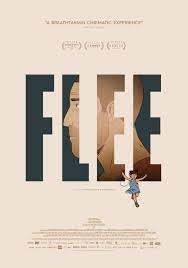
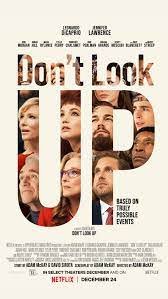


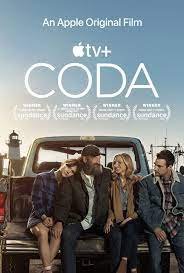


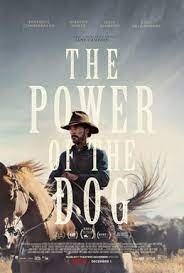
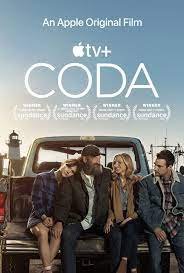

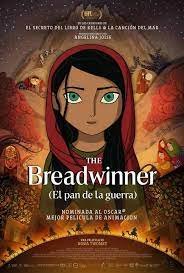
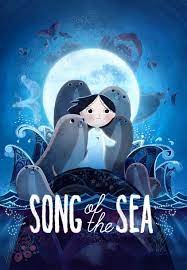
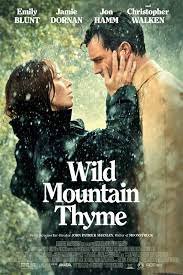
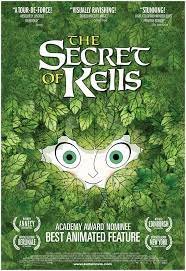
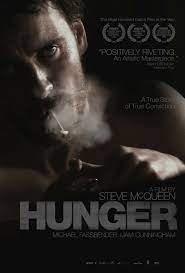
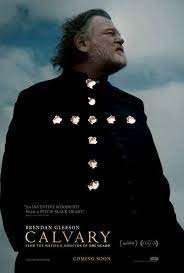
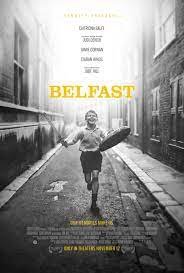
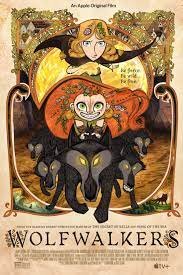
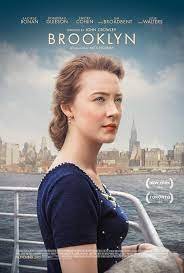
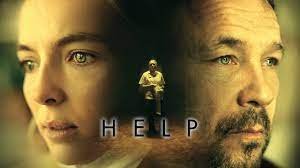

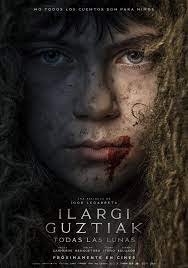

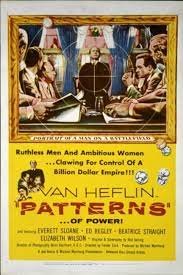
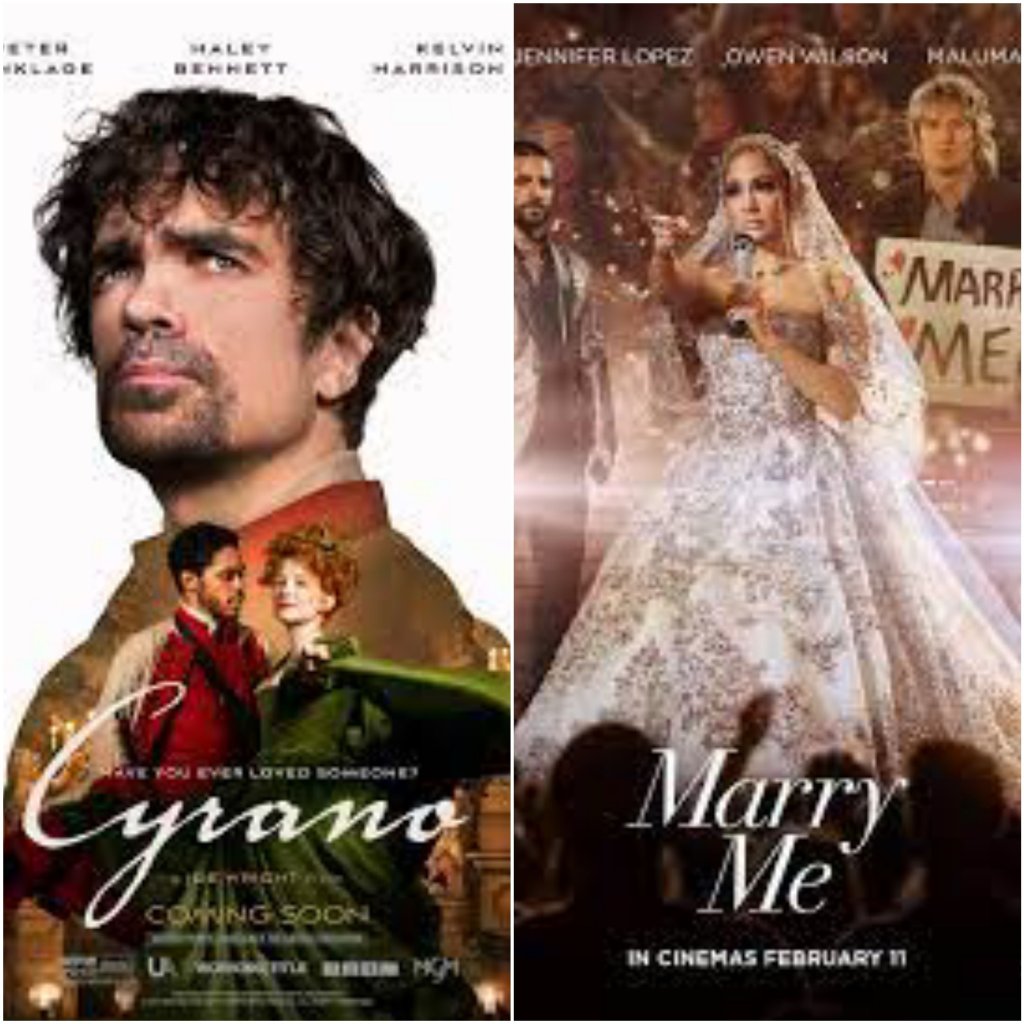
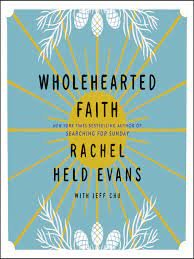
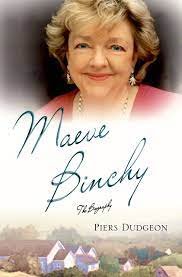

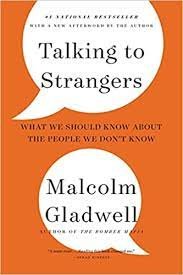
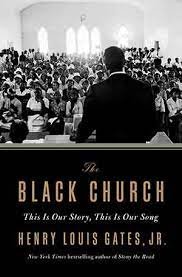




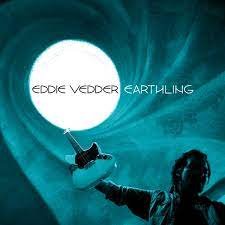

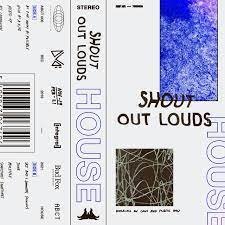
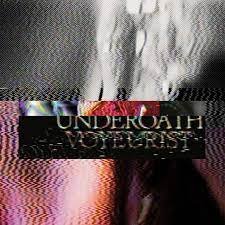

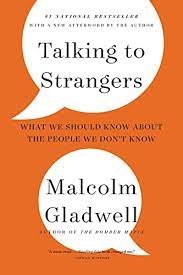
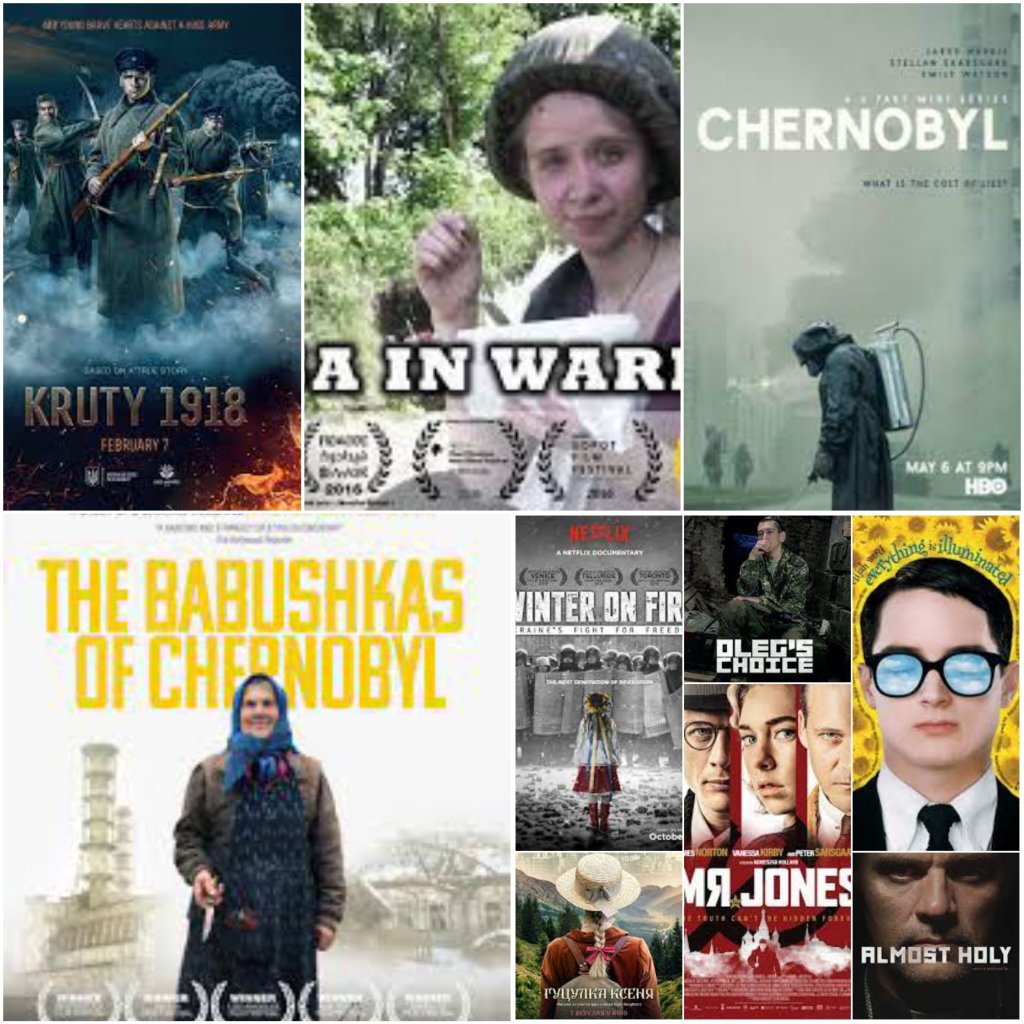
 The Stories of my Life