#10: The Nolan Variations: The Movies, Mysteries, and Marvels of Christopher Nolan by Tom Shore
#9: Think Again; The Power of Knowing What You Don’t Know by Adam Grant
#8: The Free World: Art and Thought in the Cold War by Louis Menand
#7: In Pursuit of Disobedient Women: A Memoir of Love, Rebellion, and Family, Far Away by Dionne Searcey
I went into this one on recommendation a bit skeptical over how much I was going to enjoy it (books centered on politics aren’t really my thing), and I found that I was absolutely hooked after the first 20 pages. Author Dionne Searcey is essentially recounting her time as a reporter for the New York Times that saw her uprooting her family to move to West Africa (Nigeria) back in 2015. I think what really helped me personally connect with this story was that she was able to bring us as readers into the politics by way of the very accessible travel and family narrative that frames the story. Her journey into the heart of Nigeria and its political strife is blanketed by these wonderful anecdotal stories that bring us along for the ride into their new found, if temporary, life in a foreign country. We get as much of the turmoil (and her reporting of it) through some white knuckle experiences as we do of the beautiful side of Nigerian culture as well, mainly by centering us within those family dynamics.
The other part that I really, really loved was the way Searcey formulates themes by paralleling the stories she is reporting on in regard to the plight of Nigerian women, and her own experience of learning how to navigate a marraige in such difficult circumstances and in a foreign land, sometimes separated by distance. Her striving to do what she is good at and to place herself in danger’s path for lengthy periods is set in tension with the responsibilities and commitments she him being both a wife and a mother. She begins to understand this part of her life through the stories of the women she meets who are struggling in their own way to find the freedom to become who they are while also balancing their need for relationship and family and responsibility for the other. It’s an intimate way to marry the particular cultural struggle as a complex and universal tension between the autonomous self and our relationship to specific social realities that define our sense of self. The way she writes about these themes allows her to bring her life and experiences from back home in America into the experiences she is learning about in Nigeria in a way that both makes sense of and allows them to be informed by the other (without losing the distinct and very real challenges of the other in the process).
Along with all of that is the writing, which demonstrates excellent flow and pace, reads is an easy read,, and that is chalk full of wonderful moments, be it funny, emotional, thrilling, shocking, or lovely. It’s the whole package
The Free World: Art and Thought in the Cold War by Louis Menand
The synopsis for Menands book suggest that “the Cold War was not just a contest of power. It was also about ideas, in the broadest sense – economic and political, artistic and personal.” What’s interesting about how the book arrives at this basic thesis is that it takes a look at America during the Cold War era from the outside looking in. Often when we think about the influence of American culture it is assumes, and I say this as a Canadian, a trajectory of American culture influencing the world. The most illuminating aspect of this book for me was seeing how the rise of American culture emerges fom the international voices and experiences that surround it.
The book is admittedly far reaching given its emphasis on a particular period. It is sectioned off thematically using the above categories to frame its focus, be it economics, politics, or art. And it it is peppered with a ton of interesting facts about these different themes that are interesting in and of themselves. It is the portrait of this distinct historial development that remains the books primary strength however, especially where it traverses the movement from Avante Garde to popular culture. Popular culture in the sense that we know it today is a recent idea, and it is in understanding what it is and how it came to be, especially where intersects with the unique standpoint of this historical period that we can gain a better understanding of the relationship between thought and art. Perhaps most fascinating to consider is how this gave rise for the first time in history to what we would call “youth culture”. Up until this time this did not exist, and from this also flows the creation of high school and post secondary education, a structural system built to categorize the youth as a marketable entity. From this of course comes this notion of a clash of cultures or the seperation of cultures within generations, leading ultimatley to the glorifcation of youth almost as an idol. This is information I knew, but reading it in context of the emergence of American culture, art, and thought helped to illuminate some of these realities for me in a fresh way.
Feeling, as it does, that the cultural landscape around the world has been especially burdened by Covid, not to mention recent years, it is easy to narrow in on the current state of American culture, fraught as it is with its mess of technical advancement and economic uncertainty, and assume these are the same challenges playing out worldwide. Much of this assumes the rise of streaming services as the new reality, but one distinguishing fact about American culture is how its idealization of youth culture contines to keep it detached from history in ways that international communities are not. And as is apparent in this book, art is never detached from interconnected realities such as economy and politics and social realities. To understand one we need to understand them all, and from this emerges the uniqueness of thought. Perhaps in one sense this remains the beating heart of this thing called liberty or the free world. In another sense its a reminder that America, as is apparent in their economics and politics, is not as free as is often assumed within their art. Perhaps this book, ripe with history as it is, can effectively reconnect the story with history in a way that can help illuminate the power and importance of both art and thought.
My Most Important Reads of 2021: #9 Think Again: The Power of Knowing What You Don’t Know by Adam Grant
Practical and hard hitting, Think again cuts straight through the noise and tries to infiltrate the never ending conflict of “sides” with a secret weapon called humility. Knowing what we don’t know is a powerful tool it turns out, especially when it comes to empathizing with ideas that challenge our own.
If I had a single critique of this book I would be that the author doesn’t spend enough time detailing how living with conviction and operating on the principle that one should always be changing ones mind can work together. The truth is that we also need to rest on convictions in order to actually live in this world, and this is as important to open discussion as a willingness to change our perspective. This is of course where conflict tends to arise, which is likely why he doesn’t tackle it head on, but by not addressing this necessary tension I think some of what he writes could be misapplied as rhetoric and weaponized (as a science versus religion war for example).
I think this book has the power to transform how it is that we process and articulate information which is a necessary tool when it comes to learning how to converse with one another. I especially appreciated how he advocates for pushing through the challenges of debate rather than shutting down conversations. Embracing the power of the spirited debate is a lost art in our online world, and it would be well to reclaim it in service of humility. We were once able to hash things out with passion and then head out for dinner or coffee as though this were a normal part of how forming friendship operates. Now debate is reduced to stating opinions, blocking/ignoring, or stating tired phrases like “I’m glad it worked for you but…”
In reality, science and rationalism is simply a way of rationalizing the knowledge we presently have, and we do that within our individual convictions and worldviews. Sometimes those convictions change, but not often. Nor should they until they must. That is why hard and challenging discourse matters. One trick of the art of discussion that comes into play here is both rationalizing from within our own point of perspective and working assumptions and then stepping out and seeing the same rational argument play out from within anothers point of perspective and working assumptions. Both hold equal value and both are necessary for two people to come together and understand the other from within these differing points of view using the same science/data. That’s how we further an argument together..
Discussion and debate is a lost art, and online conversation can be more disheartening and damaging than helpful and fruitful. A book like this could hopefully help recover some of what has been lost, helping to cut through the noise of the online world and create the kind of safe places where we are willing to commit to heated debate and allow it to unsettle, challenge and shape us on ways that make us better people, better societies, and a better world.
It’s that time of year again when I start to look back before looking ahead, reflecting on my favorite and most important watches/reads/listens and engaging with my ongoing new years reflections on the year as a whole (i use a practice called Rosebud).
I thought I would start with pulling out what I consider to be my most important reads of 2021. I tallied 190 reads, and of those I pulled 10 titles that I consider to be the most relevant to my personal journey for various reasons, beginning with this title at #10:
My Most Important Reads #10: The Nolan Variations: The Movies, Mysteries, and Marvels of Christopher Nolan by Tom Shone
Those who know me know that while books are my first love film is probably the art I engage with the most at this present time. I cherish the intracies of the form which brings together a broad cross section of disciplines and which represents the fading practice of the shared cultural experience. We live increasingly in a world where escape largely means escape from culture and into nature rather into it. Whereas books are singular in their expression and largely function as an exercise of the imagination mapped to the page, film operates as an interpretive exercise that puts you in relationship with the artist, the art and one another in a purely subjective sense. It requires objective critique, bred from a fascinating history rooted as it is in the development of higher art criticism in literature; this is what makes it a form, but it also requires that immersive, conversational and collective experience to function as a culturally formed expression. This is what makes film unique and distinct and what separates it even from long form series and television.
Why is Nolan Variations one of my most important reads in 2021? Because it helps to tell the story of why film matters, not simply as form but as expression, as function. What film is and how we experience it matters as much to the form as the stories they tell. One striking thing about reading Nolan’s story from the perspective of his developing career as a filmmaker is that his unique ability to shape the form requires him to be a student of the form. This is how critique of the form works. It requires an attachment to and awareness of history.
This is something Nolan intuitively understands and that Shore argues for and attempts to capture in this studious and deeply personal work. As he writes, “The cinemas Nolan frequented as a boy have almost all disappeared”, Going on to quote Nolan.
“People are all interested in ‘will movies die? It’s a thing right now. There’s a huge drive to seperate the presentation from the content. You really can’t… No, I don’t (have a problem with people seeing Dunkirk on their phone or whatever), but the reason I don’t is because it’s put into these big theaters as it’s primary form, or its initial distribution. And that experience trickles down, to the extent where, if you have an iPad and you’re watching a movie, you carry with you your knowledge and you’re understanding of what the cinematic experience would be and you extrapolate that.”
Nolan Variations, Page 343/344
I think this gets at something crucial when it comes to understanding film as form and what the potential danger is in the current state of the industry. The larger story of his career also helps to accentuate this. No, not everyone needs to see a film in the theater and not every film needs to release to the theater. However, when we lose our sense of what the cinematic experience is, which reaches beyond the theater towards what it represents and what it upholds, the form gets lost. it’s not so much adapt or die as it it is die and become something entirely other. We still get movies but they are no longer functioning as film. We trade the form for something different, which represents a shift from visual storytelling to narrative storytelling in a way that functions more like books, including accelerating the exclusive nature of that experience. That is why the lines between long form series and film is being blurred and.erased. The the thing being critiqued these days is primarily the narrative form, and an interesting side note to me is to compare that to the function of literary critique, the difference being that book criticism understands its history and knows where the critique is pointing towards. I think film criticism at large is loosing this foresight and intuition with most of the think tanks stuck in arguments about the form itself (the tired streaming versus theater debate being bludgeoned to death and largely missing the point). And the more that critics, the last true bastion of film goers, view the glutton of content at home,, which is becoming more and more common, the more distanced we all become from what makes film film. It becomes left to old men and women (usually men unfortunately) screaming at the cloud memes. Yes, we have greater access to a glutton of content at basically no cost and investment, but when it comes to understanding and investing in what film is this is not the most important thing. These things are symptoms of a bigger problem and can often disguise the notion that there is a problem to begin with, and even contribute to it.
I am convinced having read this book that we do not get a story like Nolan’s in our modern age. A student of the craft growing into an artist of the craft and emerging as an influencer and innovated of the craft, all centred in the development and celebration of the form. These sorts of filmmakers are still around and we still have much film to celebrate, but they remain because of the slivers of historical context that survive. The more this fades the less invested these filmmakers will be in upholding the intracies of the craft and the more focused on narrative filmmaking they will become. And this of course will inform emerging generations as they see film more as content, distribution as services, and immersion as clicks, and all of this as a platform for narrative. Nolan’s book is a deep dive into what we potentially lose in this process, which is the ability to even know what we are missing and how to ask the right questions. Film matters, and we will always have content. In fact we have too much in my opinion. But it would be a mistake to think, in line with Shore and Nolan, that film can’t die and that it won’t die in the absence of our investment in the craft. It absolutely can, and there are many days when I fear it already has.
This past week I watched the original Matrix in preparation for the release of Resurrection, the fourth film in the series. I was curious to see how it held up as it’s been a while, and also because I didn’t enjoy the sequels, and so the first one had gotten buried beneath my growing disinterest in the world. I was interested in exploring why I enjoyed the first one so much and what my struggles with the sequels stemmed from. I think it comes down to the story and how well the films allow the story to be told. The visuals in the first film, given their cultural placement in revolutionizing the game and redefining the action film and the limits of CGI, actually hold up decent, even if they don’t have quite the same impact they had when it first released in theaters. The story though, however buried it might get as the series goes forward, is where the first one truly shines.
Matrix: The Incarnate Word Made Flesh and the Fulfillment of the Messianic Hope
When it comes to the story I think what resonated so strongly for me all those years ago was the way it deals with its messianic themes and the way these themes dial back into some of the most essential existential questions relating to human existence. I can’t remember when I was given this book, but I can imagine it being around a similar time in my life. It was the book How to Win Friends and Influence People: How to Stop Worrying and Start Living by Dale Carnegie. That was what began this inevitable journey towards discovering how it is that our lives, as Matrix suggests, are products of our biology/chemistry and how easily these things can be manipulated and controlled and how predictive our actions truly are when pared back to contingency and cause. It challenged the ways I see and distinguish between free will and determinism. That free will does not exist is a basic tenant of the Matrix and a conclusion that I think fits with the smarest minds. That the things we call reality are illusions created by the cultural norms and expeeriences that give us purpose and definition is likewise a key facet of this discussion.
Of course key to the existential wondering of the Matrix is this basic tension between what is better; is ignorance bliss or is it better to face the truth of our existence? And can facing the truth recover the simple and unquestioned ability to embrace life in our willed or unconscious ignorance. That question is arguably up for debate, especially when we consider that positivist approaches to life hinge on these illusions giving us purpose every single day. What disrupts this is of course suffering, oppression, and struggle, which is the motivating force of the resistance movement in the film. Seeing the reality of our enslavement sparks the need for hope. And yet one of the key questions of the Matrix is how we live in hope on the other side of this unveiled reality. To see the need for liberation is one thing. The questions of how we lay claim to promised liberation when reality says otherwise, and further what it means to live as a liberated people when things like personhood and choice are simply illusions we hold to in order to reach liberation is another question altogether.
Here is where the film gets startlingly honest though. There is a common tendency in humanist approaches to conflate or even pit against natural evolution and cultural evolution. Culturally speaking the truth evident in the Matrix is that the natural progression of cultural evolution is the gradual blurring of technology and biology, the product of our creations versus the basic value of the human living in a natural world. Natural evolution plays into this, and even against it, by speaking about human distinctiveness, highlighting humanities drive to “be fruitful and multiply” as a distinct trait and, in the film, equating that with the workings of a virus, the only other life form that shares this trait. This sets the question of our existence into the natural order as a question of survival and necessary change. What the Matrix understands is that lives in tension with a tendency towards human exceptionalism, the move to see cultural evolution as a mark of humanity and as then necessarily winning the war over natural evolution in the same way as the virus. This is where the Matrix doubles down on that peculiar thing called choice, exploring how it is that choice can both be something that is not real but also have real world implications at the same time, caught up in the system that creates us and thus having the power to enslave us as products of this world. The second film explores this a bit more in relationship to that hope. Where choice comes in to play is in this relationship to hope for a healed world versus humans being bound necessarily to our human nature, which the second film posits as the problem of any movement towards necessary human salvation. At best, it offers, we have the greatest potential to thrive when we merely believe that we have choice in a world operating by a benevolent authority or creator, benevolence being something of a contingent term. It is the feeling that we don’t have choice that disrupts the natural order of human evoluiton, and that leads to great potential for destruction, making it challenging to imagine any sort of saving work that rests on human ambition alone.
This is where the film’s messianic themes come into play. The “One” raised up in line with the prophetic voice, the one predicted on the hope of liberation, and one that insists on some level of necessary sacrifice as the contrasting voice to the natural order that holds us in balance. This is how this balance is necessarily broken, with the question of whether it should be up for grabs. What the Matrix imagines though is the nature of such a messianic figure, particularly when it comes to the ancient understanding of such figures being human or divine, is a crucial part of this discussion. This is where we find that familiar Jewish/Christian expectation coming into focus, caught up in its struggle to make sense of a messianic figure that is both human and divine (disrupting the natural order of empire) that stands opposed to the way of Ceasar (as the natural order). The statement “there is a difference between knowing and acting” in the way of truth seems to echo the Jewish/Christian mystery of Divine revelation making known the truth of the relationship between the human and divine natures. This is particularly pertinant when it comes to the “One” needing to invade the space of the Matrix in order to make this truth known, this decending move of the incarnate Word, of God made man, that challenges the upward movement of Ceasar towards becoming the Divine. This is where we find the meeting of heaven and earth in the birth of this messianic figure in the Matrix. We also see this in the Gospels portrayal of Jesus as the fulfllment of Jewish expectations.
As Morphius suggests, hope requires a vision of the future to be true, even if we don’t know the present outcome of our choices. How we lay claim to this promised vision within this conundrum forms a crucial concern of the matrix. The power to enact change comes from choice, but choice itself is contingent on something greater than mere will. Choice after all isn’t actual choice in the way we often mean it. The messianic figure emerges precisely at the point where the choice, which is demonstrated more as the necessary action, is not bound to the same rules as the laws of nature even as it operates within it. This is the Divine nature, which is not defined as the ability to create but rather as the ability to embody the fullness of what intuition or the spirit suggests is goodness itself. The power to speak to a natural world where darkness and death has the last word and to lay claim to a different reality. This is what we find in Neos Resurrection. Without that the story has no hope. As the third film suggests, where good and evil, light and dark are at war, the question is not how this brings about necessary change; that is the limit of humanist ideals as they remain bound to the natural order that demands death and darkness to maintain balance and order. The question is how does change operate within a greater vision of reality. How do we actually lay claim to the promise of a different reality and call it good. Here in lies the problem of choice that is bound to the natural order, the laws of a determinitive nature. Hope then is the freedom to give oursleves to the uncertainty of momentary decisions knowing that good and the light have already layed claim to the victory and been declared as true. This is how the messianic figure lives into the way of this eartly ministry so to speak, much in the way that we see in Christ. As the Gospels repeat over and over, now is not the right time, only in the fulfillment is the fullness of time revealed. Until then we know what we need to hear for this present time, or we hear what we are able to know in this present ime, which is why such a messianic picture plays into the microcosms of the cyclical rise and fall of empires, even as the world continues to change and evolve with time. Questions and truths remain the same. But in the birth of a baby who arrives in the messianic hope we participate in these microcosms of the here and now knowing there is a future reality we can lay claim to as a promised fulfillment.
Matrix Resurrection: Navigating a Post Resurrection Reality
As my story goes, just to rearticulate it for context, I loved the first film, was let down by the second and angered at the third (after having resisted seeing it for the longest time). So I wasn’t actually anticipating much from this fourth entry, or this sequel to the trilogy as they say.
And then some of the initial think pieces started releasing, which seemed to indicate that this latest entry was landing most assuredly for those who loved the first and hated the sequels. That was good news to me as it seemed to suggest that this one might resist the trappings of the bloated action in the sequels and recover the movies strong philosophical core. In a narrative move that proves this latest entries degree of self awareness the film takes the time to actually weave this tension into the story. I’ll get to spoiler thoughts in a moment as there is much to unpack here on a thematic level, but the way it structures the story and this return to the Matrix finds a way to be able to comment on the real world narrative of the franchise even as it works to then recontextualize the narrative for a modern audience with its increased emphasis on living false lives online through screens. One of the questions that it casts onto the table is what precisely defined the story of the Matrix as a cultural phenenon, especially when you consider how widely embraced the first film was and how universally rejected the subsequent installments were. This latest entry makes the decision to not try to recapture that ability to revolutionize the action film through state of the art CGI, instead updating and smoothing out the edges of the some of its trademark CGI and practical action/set pieces for the modern age and then grounding it in an integrated fashion so as to render it a more holistic part of the larger story. The action being simply melded into the overall structure without standing out as it’s defining trait allows the film to double down on the philosophical and existential joruney that pervades this franchise at its core. This is where it shines, so much that it is actually, shockingly enough to me, contending for one of my films of the year. I genuinely think the script, with its emphasis on theme and character, is that strong.
Now for some spoiler thoughts, so I’ll throw the SPOILER WARNING up here. – – – To repeat, my love for the first film came down to how I saw the film fleshing out the messianic themes within its story. I found the intracy of the story to remain intact through all three, but the second and third films muddle it with the bloated action. Questions then that are as old as time struggle to find their way to breathe through the spectacle and the noise, turning what was rich mythology into some watered down science fiction fantasy.
This fourth installment does the opposite. It does the work of removing the clutter and reclaiming the central story, and what stood out for me again is how it deals with the presence of the One, this messianic figure.
As mentioned, I thought the first three films tapped into, be it unintentionally, some key portions of the Judeo-Christian narrative, especially as it tries to make sense of the messianic figure as having a distinct salvific purpose over and against illusions of empire. The way it presents the decending nature of Neo’s savior like figure over and against assumptions of the ascending figure of the allegorical Caeser, narrowing in the question of how it is that divine and human come together in the One, and how it is that this must, by its nature, break the laws of nature in order to declare liberation in an authoritative sense (which is what happens in the resurrection), was astute and profound, especially when it comes to then contextualizing this into the philosophical wrestling.
What I imagjned as I was watching the fourth, staying with the Judeo-Christian narrative, is a Jewish people facing the destruction of the temple and the next generation asking the question, where is the One who promised liberation. If it was not to remain true, how true then can his resurrection be. Is not his death then made more real than the claims of the resurrection by looking at their present reality? This sits at the heart of Trinity’s assertion that she both longed for Neo’s anticipated return and also wondered why it took him so long to show up. This captures the essence of that Jewish expectation as attempts to wrestle with the messianic presence amidst its lingering absence.
This is what the people, having moved on from Neo and established their own means of “surviving” the present struggle, are forced to contend with when encountering the resurrected Neo. The question at the heart of this film is, what did Neo actually accomplish if the truth of their reality remains the same, and what does his resurrected presence mean for reimagining a different reality moving forward.
One key element that renders their present reality different than the one they faced when Neo first invaded the Matrix is that the battle between good and evil has been decided. Like a good theological exposition of Christus Victor, the film recognizes that this is crucial to asking the follow up question, which is how then does this make sense of the already-not yet nature of our reality. If the state of our world has changed and good has won the war over evil, how do we then enter into a world where evil still exists and live differently, imagine differently. This is at the heart of the Apostle Pauls letters, who calls a people content to simply integrate into the surrounding society and avoid unnecessary conflict to live as though this is true, that Christ actually accomplished something and that this is hope and good news a world still wrestling with the state of things and the ever existing cycle of this clash of empire. This is where revolution flows from.
And here in lies the root of Neos story and the Gospel message. It is by seeing the war between good and evil as an external reality to humanity itself, and as embodied in systems and a natural order predicted on death and suffering rather than hard and fast depictions of good and evil people or a good and evil creation being created evil, that we are then free to see a world where our reality looks different. We are free to see a world where goodness wins, precisely because it has already won and it is reshaping our understanding of who we are and what this created world is. We are free to see humanity, and thus creation as good precisely because it is declared to be so. As this latest Matrix entry suggests, in this new reality the only true power evil has is operating within a Matrix that is self sustaining precisely because it is self decieving. Its power is the lie of a false identity, befitting the Jewish and Christian idea of the Powers being the great Deciever, the author of lies that betrays our true identity. As the system itself says at one point, I exist because this is what the people utlimately want. They want the self deception. They want the illusion. And who’s to say that the illusion isn’t more true than the reality if we experience it that way? The message that emerges then is that this invasion of the Matrix that declares this new reality to be the more fulfilling and true way to life is predicated on relationship, a relationship that in the victory of the first three films begins with the faithfulness of the One to stay true to the promise of self sacrificially coming to the Matrix and bringing the reality of Heaven to it. Here the question then moves to the faithfulness of those who’s lives have been changed by his story. It is in this that the new creation becomes both a reality and a potential. This is what we find in the relationship between Neo and Trintity. As the system declares they will never win over the true desires of the people, and this remains their biggest obstacle, they declare back that as Trintity takes on Christ likeness, beginning with the self sacrificial act, she works in relationship with Neo (the Christ figure) to bring about what has already been declared to be true- that a new world will be built and it begins with them. As it says at one point, the difference between Neo and Smith is that anyone can be Neo while Smith can be anyone. This demonstrates the way in which the good ultimately wins over evil. In God becomming human and humans becomming Christ the world is saved through relationship to the other. With the Matrix people are bound to the system, to the laws, that shape it.
This becomes the powerful picture present in the film. All the questions that the first Matrix tabled and that the franchise has been wrestling with are cast in the truth a new post resurrection reality. What is choice? What is real? What is fate? All of this is reframed as a question of what story we are living in to as we move to image a new creation taking root, one of peace, love and goodness. In Christ, as in Neo, we are given that story, one that must then continue to be told in each new generation. As the film suggests, it is the same story being told over and over again, it is simply a new context. This is how change moves from the embattled place of binaries, of good and evil in contest, to the creative expression that it simply is good. This is the true freedom Christ affords us in the new creation. Otherwise change is left perpetually and eternally trying to write the better ending to the story, something that, as the film suggests, leaves us bound to nature itself where hope and despair are really the same indistinguishble code. This is where we exist by nature, forming things into narratives that give us meaning even as they are based in illusions, forever depending on that which we wish to attain and that which we do not have as the necessary and upholding tension. That is what keeps ‘human” nature both purposed and enslaved, ultimately always leading to systems of power and violence based on scarcity being marketed as abundance. What Neo and Christ announce is that this cycle has been broken, imagined in this embrace of the human and the divine.
I just love this picture so much. As I said, I think it unintentionally captures this Gospel proclamation, which is what makes this so powerful to me. It’s truly rare that you find a film like this tackling serious philopshical questions without deviating into the modern trappings of strict humanist ideals. This is far more challenging than that, and far smarter. It recognizes the weight of its questions while also daring to imagine where it might lead. In truth choosing to escape the Matrix is risky business. It means the abandoment of self for the sake of true freedom. It means facing the questions of god with us head on. And yet the reward is life. And as we gain this life what we find is new meaning and purpose in the call to create, to make, and to serve. And we do so in relationship as we see and know the suffering of others and declare the good news of hope, standing in the truth that the new reality has already arrived in our midst and that because of this we can rest in the promise that our work is in fact building a better world. We and this world and this exisence become broken signposts of the beauty, joy, newness and goodness that define the liberated world over and against the lies of the great Deciever.
Good news that begins with the birth of the one who invades this earthly reality and in whom heaven and earth collide.
In a previous post I found myself in a place of pondering and wondering; asking myself not what it is that I believe but why I believe when it comes to God, humanity, creation and life. I reflected on how the older I get the less interesting the what becomes and the more crucial the why becomes. It’s in the “why” spaces that I discover the most important truths of love; relationship, empathy, compassion, understanding, patience, self giving, sacrifice.
I had mentioned that in my pondering I came away with three words as most readily capturing the why for me when it comes to questions of faith: presence, hope, and mystery. As I’m finishing the book Honest Advent: Awakening to the Wonder of God-With-Us Then, Here, and Now by Scott Erickson and reading through the birth narrative from the Gospel of Matthew, this central proclamation rings forth into the early hours of this Christmas morning;
Behold, the virgin shall conceive and bear a son, and they shall call his name “Immanuel” (which means God with us).”
Matthew 1:23 (ESV)
The very beginning of the Gospel, which echos through the hallways of John’s grand theologial treaties of the same subject, declaring the Word become flesh, is at its heart a story concerned with locating the presence of the Divine within our earthly and material reality. The bringing together of heaven and earth in order to say something about how see and know this reality. And of course to this end there is a what; Jesus has invaded this material space and, if we read the preceding verses of this passage, this is what this meant to the ancient readers and witnesses. It is the why that quickly comes into focus though, mining through the muddiness of the messianic hopes, their understanding of the cosmos, and their basic human longing for what is wrong to be made right in this world in relationship to God.
I feel like I’m a well read person. I grew up with books as my first love, with books like the existentially charged Charlottes Web evoking similar questions in my young mind; how is it that we make sense of this idea called God in a complicated world. Even as a child I sensed this to be a question we must attend for as we attempt to occupy the spaces of this world. As I got older these questions gradually developed into more specific questions about God’s existence with this one crucial difference; whereas my childs self was concerned with the why, my adult self became more and more concerned with the what. This informed both my belief and my unbelief. And the older I got the more complicated life and the inevitable quesitons seemed to become, challenging my allegiance to certainty and facts. This is where I came to understand something crucial about my own journey; if its not about proving God’s existence, then it is about why be concerned with God’s existence at all. This is the question that I find continues to invade my wrestling today.
So why does God’s presence matter? For me this is a two fold question. On one hand I have found that the older I get the more resistant I seem to become to the idea of using “experience” of God as potential evidence to justify my own longing for God to be present in this world. It feels less than rational, and to be honest can easily be relegated to the background when obsessing with the what, and even further readily abused and manipulated. And yet, in the honest spaces of my own life I am forced to contend for this basic reality. I can talk all day about my own experiences and the experiences of others who have informed my life. These are experiences that, despite what I once assumed, can’t simpy be dismissed. They are not conjured up out of a need to believe, and even if they were still compell me towards the why. Choosing to label these experiences as illusions is something that consistently doubled back on my unbelief and my rational processes in an equally destabilitizing way. Such ways of thinking, in my unbelieving spaces, also reeked of a neglect to actually talk with those who have experienced God and take them as seriously as I took my own intellectual process. This was my arrogance. To me there seems to a common characteristic to these experiences as I have encountered them in my own life and in the life of others; they are necessarily invasive. They disrupt. And they always arrive with a singular message, to declare God or spirit with us.
The other side of this then is the more pragmatic side. The more I read the more evident it seems to me that as we parse through the pages of history this basic idea; is God here in the world with us or somewhere out there distanced from us, seems to permeate our prolonged wrestling as a species and inform our relationship with the mysteries of this existence. Even if modern questions have become prone to partnering this with the idea of God’s potential or assumed non-existence in a way the ancients would not have considered, the ebb and flow of this quandry remains the same. Bring God into the world and this world and the natural laws get disrupted, and this is precisely because it forces us to ask deeper questions we otherwise ignore. On the other hand keep God out there and we become bound to ideas about God and how God relates to this world that cannot be disrupted largely because it removes these kinds of questions. And history suggests that outwardly we prefer it this way. And yet the hidden longings of the human spirit betray this on an internal level. Thus this idea of God with us remains both a deep longing and a persistant obstacle to belief.
I eventually became convinced that Jesus’ story, bringing together all of our religious stories into a singular sense of meaning, informs a crucial point in history where our wrestling with this question of Gods presence has an embodied answer; calling us to place such wrestling in this simple proclamation that God is indeed with us however difficult it is to make sense of. That Jesus arrives in line with a universal human question and longing that supersedes this historical reality seemed abundantly clear to me from the textual and historical evidence as well. This freed me to then explore the why quesiton in my own life with a greater degree of honesty. What I discovered is that this idea of God being present in my life is as much a part of my story and my memories as any practical experience I can recall. I cared as a child because I saw this world as good and so much seemed to challenge that assumption. I cared as a child because I saw this world as a wondrous place even while so much seemed insistent on stealing that wonder. I cared as a child because I needed to make sense of these apparent binaries that captured my imagination through story and experience, of good and evil, life and death, light and dark, and this was something I could not make sense of without story. The experience and the idea of Gods presence enabled me to see the good, the light, the life as the defining and governing principle of this natural world. As a child I experienced this in the mystery of God even as I fought back furiously with my questions. It captured my imagination. As an adult I challenged God by locating the answers elsewhere. And yet, as I grew to embrace and understand, it is equally true to say that the invasive presence that captured my childhood continued to invade my adult world, forcing me to turn this same wrestling back towards my doubts and my unbelief. What I discovered is that as an adult the why never changed, it just got buried beneath my allegiance to the what. I insisted that truth was predicated on the fact that I can proclaim God is, and whatever I filled the blank with is the stuff that either proved or disproved the presence of God in this world and in my life. Learning to live with that blank space and still be ble to declare that God is has become the necessary process.
This Christmas I am reminded that I encounter these words, God with us, not as some deifnitive proof of God’s existence but as a compelling way to make sense of my own story and to locate myself in a larger one. This might evoke an eye roll from some who find this appeal to a meta narrative to be cliche, but the function of memory, whether we believe in God or not, is the same. As the latest Matrix film suggests, we all need a narrative to justify this existence. One of the most powerful parts of the Christmas story to me is digging deep into what this narrative meant for the people of its time anchored as it is in creation-exodus-tabernacle theology. Most exciting for me is to then attempt to recontextualize it continually into my own experiences in my modern context, allowing it inform the very act of declaring that somehow and in someway, even when it brings up so many questions that cause me to resist and rail against such an idea, God is still with us today. Given that I have spent this Advent season reading through Scott Ericksons book Honest Advent: Awakening to the Wonder of God-With-Us Then, Here, and Now, I am reminded that in my most honest moments, including in my unbelief, I am still compelled to see that as a hopeful, unexpected, and transformative proclamation; as good news.
A culmination of reading, viewing, listening, online and in person dialogue, and self reflection has had me thinking these past couple weeks about my faith in God. Not so much how it is I know God exists; the older I get the less interesting that question becomes on both sides of the apologetic fence, and in truth must be submitted to the idea that knowledge is the not the same as proof. Rather the far more interesting question for me is the why. That is where we can uncover important things like empathy, context, motivation and humility in discussion as we recognize one another at different points along this journey either towards or away from confessions of faith.
As I’ve been reflecting on this question in my own life, particularly in relationship to this Advent season and as an identifying Christian, I am struck by the degree to which my experience plays into this question in so many different directions and in different ways at different points in time. Theologian Pete Enns often refers to the Wesleyan Qaudrilateral to explain his own journey within this complicated thing we call faith, which provides a tool for theological reflection citing the interconnected methods of Reason, Scripture, Experience and Tradition. Remove any one of these from the picture and theology becomes a dangerous game no matter our disposition and our belief. Given my own Weslyan roots this picture has often resonated with me in a powerful way, and lately I’ve been trying to be more intentional about allowing it inform my own journey with faith in God, which is far less linear and static and far more given to a necessary ebb and flow within the experiences of life itself.
Perhaps most pointedly when it comes to the why question in relationship to Advent and my own Christian confession is the question of why Jesus. Or perhaps better, what difference does it make that Jesus is God, especially if, rightly, we can locate things like goodness and joy and love in an unbelieving world. I have found this to be a difficult question to examine in conversation with others because it carries with it something of a conundrum in deciphering how it is that theological truth relates to the material world. In some sense it is far easier to simply leave God somewhere out there uninvolved with the inner workings of this world, as indeed much of history has done and continues to do. Bring God into the inner workings of our world and it tends to disrupt, throwing all manners of things into confusion at the same time. Suddenly the why becomes difficult, especially when it comes to making sense of a good God in the midst of so much bad. Add to that the corruptible witness of the institutional Church and religion itself and the challenge of the why becomes that much more difficult.
And yet, at least part of my own journey is the truth that life in a world without God for me proved no more freeing, no more joy filled, and no more enticing as an experience, if that was what my reasoning was predicated on. In fact, if the why question of my then unbelief became less complicated on one hand, justifying life in the day to day became that much harder. If belief in God is merely a construct we create, an illusion we feed to give ourselves comfort in an otherwise often meaningless and cruel world for the majority, then what this underscores for me is that the problem of belief is not a religious one, it is a human one. A problem of nature that continues to push back against our attempts to find the answer in our own humanity. We have no more reason to trust any of the illusions that we feed to give this life meaning, least of all our notions of personhood and humanity. For me, my experience seemed to confirm that in this view, which I once held as true, all of life is a game that has a way of reminding you rather consistently whether you are on the winning or losing side of it. And while something like empathy and compassion, traits that are arguably unique to humanity at least in how they get expressed in conscious ways, are true, they are still traits and functions that are ultimately concerned with our survival. They breed competition. I have yet to find a compelling argument for an empathic view of human evolution that frees me from this simple, basic truth of our existence; that the meaning and worth of my existence and therefore the existence of others is intrinsicly dependent on my living in this world successfully. It is dependent on philosophies about life that makes sense when things are what we might call good, and cater to mere platitudes and increased dependency on our illusions when speaking to a life that is not. At best it locates truths about successful living that can only ever make the bad a little bit better. For me this only enslaved me further to my failures. And the more technology progresses the more this seems to get illuminated. I can locate a plethora of articles that demonstrate clearly how longer and more comfortable lives do not result in greater happiness and greater thriving. In fact it often appears to result in the opposite, which feels intutively true to my own experience.
As I have been thinking about this it is important to note that this is, again, not an argument for the existence of God. It is an argument for why. Or at least an attempt to locate elements of the why that might be evidential as i engage with this Advent season. I came up with three basic words that seemed to resonate especially strongly as why factors for me- Presence, Hope and Mystery. I’m still working to flesh these three words out in relationship to the Christ story, but one thing that did become evident to me as I have been doing so is how prominently the ideas of grace and forgiveness seem to play within all three. If there is a root of my belief it would flow from the truth of grace and forgiveness, two things that I found struggled to coexist in any sensible way within my unbelief, and which came most alive for me in my desire to believe. These two essential truths continue to undergird the ebb and flow of my personal journey, with the notion of forgiveness of ones enemy, which is as antithetical to our survival and thriving as a species as it is nonsensical to my efforts to succeed at this thing called life, continuing to prove to be the most scandalous idea birthed by my faith in a God who enters into human history and is intimately involved in its affairs. It is true that far too much of religion has given into the models of justice that pervade so much of our modern, secular ideas and systems, which when paired with a God made in our own image and beckoned to serve our will becomes even more dangerous and problematic. That it remains equally true that the revelatory truth of grace and forgiveness, which turn humility from a vice to a virtue, seem to be persistent and spiritually laden ideas that push back against attempts to narrow my definition of morality and goodness (to the idea of the the free and liberted individual) continues to be a compelling reason for me to believe, at the very least, in something bigger than my own dueling human nature. Something that reflects more than simply the emergence of human consciousness as our ticket out of the inevitable war against these two natures that seems to be imprinted into the very fabric of the universe, with what we determine to be bad (suffering and death) leading to good (new life and new creation). This of course lies at the heart of the Christ story, giving us a way to speak of death and suffering in redemptive terms. I often hear atheists suggest that we (humanity) create religion for comfort, to satisfy the desire to personally imagine immortality and cope with evidence of our finitude. This is, I believe, a fundamental misnderstunding of religious interest in death, at least when it comes to matters of theology. What is at at stake is our ability to enter into the suffering of the other and speak in terms of this redemptive process. Even further, what is at stake is our ability to enter into the workings of nature itself with this same redemptive message in view.
Which for me begins with this story of God invading history, of light illuminating the darkness in order to declare it good, not to highlight human ambition and success and awaken the grand human project in all its glory, but to awaken us to the presence, the hope and the mystery of a Holy Other. A Holy Other that is then demonstrable in the whole of nature and in the whole of humanity, helping us to make better sense of what truly good, truly joyful and truly loving. To awaken us to the power of the Holy Other to break the cycles of unforgiveness and the violent predication towards competition that contines to hold us subtly and often overtly captive, calling us in the way of Christ to an imagined future paved in the scandelous image of self sacrificial love. The simple fact that this has been demonsatrated concretely and historically in a way that holds us captive to it as theological “truth” is one reason why it matters to me that Jesus is God.
Reading all of these articles as of late about how the new augmented reality of Meta, Facebooks rebranding and refocusing, is going to destroy our world has left me with in a weird point of crisis. Perhaps a crisis of meaning.
I’ve spent the last number of years using online spaces to speak about and cautiion towards the potential dangers of social media and streaming. And yes, I am aware of the present irony. A part of the problem is that the physical world has deteriorated to the point where to connect with it outside of social media is often lonely and deeply isolating, be it in the absence of physical relationships, which is more difficult to maintain and foster than I have experienced in all of my 45 years of living, or be it in the general decline of physical, architectural presence and spaces. Yes, we can still retreat to nature, but nature has become a retreat from the business of our online lives. The problem is locating a participating culture in the physical world. Thus social media tends to become both necessary in such a world where the physical functions of life no longer exist in the same capacity, while also representing the problem. Thus the conundrum I find many people face when trying to disconnect.
I have often argued that people are not paying attention to the dangers of this now commonplace technology and that we are as much a product of our age (influenced by the technology) as we are free to be influencers (with free being a relative term open for debate). I’ve had plenty of hard and furious pushback over the years about how I am overpiaying that card and playing the role of the aging generational perspective preaching doom and gloom about the next generations technology. And how it is not the system or the thing that is the problem, but how we use it. People have reminded me that every generation does the same thing.
And yet here we are today. Many of my friends barely use social media or have gone off altogether. There is much being made specifically about the anger people feel over facebooks evident reach of control and corruption, with plenty I talk to these days decrying it for ruining our culture, igniting division and misinformation, ect.. These same voices are also the ones now writing a plethora of articles citing doom and gloom about the meta universe.
I wonder where the line is between this current generation facing potential monumental changes to a once normative system and suddenly climbing into that boat that says “this is what will ruin humanity”, and the next generation accepting augmented reality as the new normal. Is this not just another expression of that phenomenon?And to what extent does accepting a narrative of doom and gloom around the next emerging technology cause us to miss the real problem that people seem to fear, which seems to remain both consistent and beneath the surface- isolation, a lack of belonging and meaning, ect..
Here is what is curious to me too. A part of my pushback on the present technology that transformed the world I knew and became normative in a very short amount of time is that it represents something more than mreely a generational shift. It represents an evolutionary one. And not a natural one, rather an imposed one driven by technological progress. It represents an unprecedented time in history where for the first time technology has outpaced human invention and where the rate of change has no active corelary. Therefore we cannot measure generational change in the same way and by the same means. What we face today is not the same as the change that has governed humanity throughout history. The problem is that where change once happened in gradual increments, allowing humanity to adapt such changes to human activity, the way change happens today humans are forced to adapt to technology. The script has flipped, and with the unprecedented speed the abiilty to reflect on how such technology fits into and enhances human activity has been lost. This is real, measurable and facutal. We see this in streaming, social media, and in all of the interconnected technology that now governs our lives.
Which just begs the question. What is the real problem with Meta? What does the present uprorar reflect? Are we only now realizing the impact of such a world? Do we even have the capacity to make it different? Is transhumanism the inevitable future where human and technology simply merge and become indistinguishable? And if the uproar and fear over Meta represents a unique awakening, how do we attend for the new cycles of history in this present reality? All signs seem to point towards the repeating of history simply making itself known within this new reality, establishing new patterns of evolution anchored in artifical trajectories. As the idea behind Meta becomes a thing, and it undoubtedly will far beyond simply Facebooks reach and in ways that will feel much more practical and seamless, humanity will be forced to adapt to its trajectory. We hate what this means of course, and will intutively resist such reflections of determinitive course, but it is nevertheles true. Operating in a world without it will feel increasingly disconnected and fruitless, and nature and isolation will continue to play its role in filling that gap. While culture will still be created, our habits of consumption will be further driven by services and platforms rather than human generated cultural movements. Ownership and investment will become more and more ideas from the distant past, and with that our relationship to money will continue to change with the digital age. All of this is inevitable, bringing me back to that initial question. Is this merely the recognizable rallying cry against the loss of the old and the emergence of the new, or is there something more going on?
I dont know. Some thoughts for a Saturday morning.
As a socialist leaning individual, by which I mean where tension exists between the rights of the individual and concern for the collective I uphold the necessary value of setting my rights as secondary to the good of the whole, it is difficult to find space where I can effectively critique problems I see with the left while knowing that I also cannot in good conscious associate myself with much of what I see on the right.
As a universalist leaning Christian, by which I mean in the tension of the mystery that is real and true justice and in navigating the difference between capital letter Sin (systemic) and small letter sin (participation) I am compelled to live and hope in such a way that believes in the possibility of the good of creation and the possibility that all might be liberated through the Gospels proclamation, it is equally difficult to find space where I can critique the Christian left while knowing that I cannot in good conscious associate myself with most of what I see on the Christian right.
Which makes it difficult to exist with necessary cause and necessary humility when engaging in conversation. It also makes it extremely aware how deeply associated politics and religion actually are in defining these polarities of thinking, both in necessary and destructive ways. Shared language and labels can be and often are important for belonging and identity. Where shared language and labels become destructive is when belonging and identity become measures of exclusion. Terms like left and right become generalizing terms that locate what we are for and what we are against. What makes matter worse is that when you occupy certain space inbetween, that undefined territory that where our beliefs can co-exist with our questions, it becomes easy to feel like we don’t actually belong anywhere and to feel isolated by all sides. To be fair I think most people would desire to see themselves as occupying this space, but the way most people operate, and I include myself, tends to thrive on the polarities.
Now, this might be a dumb thought, but since I like to spend the middle of the night ruminating on existential questions rather than sleeping it’s a further thought I had towards this end nonetheless.
I wonder if one of the biggest problems we face as humanity in this tendency to need shared and defining labels and language is our tendency to move from ‘ism’s” to “ist’s”
Allow me to explain.
For example. Humanism is an idea. To use the word “humanist” in modernist terms is to go from an idea to a worldview, which has both positive and negative interest. That is, it is a way of defining ourselves or the belief system/worldview to which we belong (positive) whole also setting us apart from that to which we don’t belong (it is common for example, for humanism to be arguing for a particular view of the world whole at the same time arguing against a particular religious view).
To use humanism as a further example, one of the problems that emerges from this is that this creates a divide between these sides that inhibits study and interest in the idea itself. It is not true that religion is not interested in humanism or that it lacks “humanist” elements. And yet, when applied as an “ist” we end up with vast generalizations anchored in this idea of defining what something is against what that thing is not. Thus interest in the study of humanism carries this connotation that we are studying something that is opposed to religion, which then plays out into something that is anti-religious, ultimately resulting in equal religious skepticism of humanism at large.
What’s interesting is that some of this problem seems to be rooted in the development of the suffix “ist”, which moves from its Greek/Latin roots into its French application and eventually it’s English counterparts. The further we get from its more nuanced roots the more it becomes fastened as a noun to this kind of identity shaping power rather than the study of or participation in an idea. Think of the word “rapist”. In this usage the action becomes conflated with an identity.
We see this problem in recent history with this shift from Darwinism (a study and an idea) to neo-Darwinist or Darwinist (a worldview), which had immense consequences in terms of the divide this created.
To use a recent example from my own life. I was in conversation with someone about Foucault and his ideas. They used the word “positivist” to describe themselves in relationship to Foucault. I immediately had a reaction because I intuitively know that this word carried the power to both define what this person is for and thus what they are against. It’s written straight into the definition that Positivism as an identity defining noun exists both for something (rationalism and socialism) and against something (metaphysics and theism).
What this seems to show is how quickly humans tend to gravitate towards these identity shaping systems and how conditioned we are to see them as needing that necessary conflict. IST isn’t the only suffix to operate in this fashion, but it is one of the most evident. Relevant to today is even the use of a word like “scientist”, which tends to evade it’s concern for “practice” or one who practices and shifts very easily in its common usage as a means of demonstrating what we align oursleves with and what we align oursleves again. The problem of course is that these things are often much broader than not and tend to digress into beliefs that these two things then must stand opposed, which of course leads to all kinds of nasty division and infighting.
I’m not sure there is an answer as much as this is an observation of our reality. It does kind of reveal the power of language, and even the limiting nature of English (in its own divided and often competing form). I’m reminded of a quote from James Gleik in his book Time Travel: A History,
“We have a tendency to take our words too seriously, which happens (paradoxically) when we are unconscious of them. Language offers a woefully meager set of choices for expressing what we need to express.”
James Gleik
And yet, at the same time I am remind of my recent foray into Tolkien, someone who captured the power of words and language and a genuine love for philology that informed his trajectory and his work. For Tolkien words are to be take seriously precisely because they hold the power to communicate truths we could not otherwise comprehend and to transform us in its revealing.
Which is all to say, perhaps what we all need most of all is safe space to speak, to learn, to be challenged and be heard beyond mere language. A space to be heard beyond the words and the labels, and a space to grow beyond the words and the labels. This is hard to foster when it seems we are consistently forced to enter into spaces, be it online or in person, that are decidedly not this and tend to elicit something quite other, be it from others and/or ourselves. It’s also true that attempts to create safe spaces can quickly be co-opted in the same way by these assumed and often necessary polarities. And yet, if we are to avoid slipping into a self defeating cynicism about it all it seems important to at least be able to uphold such a hope that such spaces are possible, and better yet to trust that even small movements towards embodying these spaces in our own lives and communities can actually make a difference.
Spencer boasts a perfectly off kilter and eccentric personality befitting both its leading star and its subject matter. From the brilliant and immersive opening sequence, which sees Diana as someone lost in a world intent on containing her larger than life persona, we are introduced to this potential future Queen by way of a fable of contrast and conflict. Her larger than life persona is swallowed up by the endless hallways, massive rooms, and illustrious customs. The films ability to gradually coach the internal struggle to the forefront is thus almost unexpected, leading to a film that is as daring in its casting as it is in its direction and maybe even more so the transfixing score.
This all takes place over the course of a few days, which means it’s far from a sprawling or epic period piece, and that lends this a particular focus on its essential subject that brings to light not a life, but a person stepping into a life not necessarily her own. The fact that it is an imagined history; that is, an interpretive take on a very real time in Diana’s life that explores what might have happened behind closed doors, gives this film a ton of freedom to really unpack the idea behind the person as well, melding together what we know of who she is with the potential ideas of how this might have translated over the course of this couple days. Definitely one of the strongest films of the year, and one that I hope to revisit soon
The Humans (2021, Stephen Karam)
Might just be the new quintessential viewing for the holidays. The context is Thanksgiving, but it could work for any family holiday.
Categorically the film belongs with the likes of The Big Kahuna or Sunset Boulevard. It’s based on a play and the single location shoot revolves around a script that delves into matters of existential concern spanning life, family, relationship, circumstance, religion, forgivness, restitution, and hidden secrets coming to the surface. The film is beautifully shot, and script exceptionally written, and the performances perfectly captured. Viewer beware, this lays all the messiness of family gatherings to bare and thus should come with a serious trigger warning.
What the film does with these family dynamics is where the sharpness of its vision gets fully articulated. It encases it as a gradually emerging nightmare, with the momentary feelings of necessary escape being bound to the expectation that we are obligated as a family to be and to stay precisely where we are. The problem is the more we coexist within this space, the more the unspoken tensions, stifled as we try to make them, bubble up to the surface, leaving these family gatherings as an inevitable process of laying the dirty laundry on the table. In some ways this is the necessary therapeutic process, the thing that enables us to return to this space again and again despite its potential horror. For it to remain stifled is to have nowhere to go but into isolation. And yet the irony of this, something this film captures in its essence, is that this cast of familial relations are perhaps never more aware of this feeling of isolation than when they get together. This, it seems, is the conundrum of this necessary coexistence.
The definite horror notes then breathe through the narrative with an inspired sense of awareness of this dillema, using it as a way to visually represent the common experience. And yet, what undercuts this are silent moments of beauty and assurance, this unspoken word that seems to leave us with the conviction that despite its dysfunction family is necessary.
Nine Days (2021, Edson Oda)
Nine Days is a high concept film filled with intriguing existential questions about life, death, and suffering. Following a lone arbitor who has the arduous task of interviewing souls for the potential occupying of vacant life on earth, a process that takes nine days to conclude, the film digs deep into that central tension- is the chance at living truly worth the potentoal suffering, and what do we do with life when it appears that the bad far outweighs the good.
Belfast (2021, Kenneth Branagh)
This crowd.pleasing, one of a kind family drama is argubaly one of the Directors best works, taking a heartfelt and compassionate approach to a deeply personal subject- family and home, and more specifically that of Ireland and its past and its people, and weaving it into a story for audiences young and old.
The film features some exquisite framing that works with the constantly shifting camera work. There are times where it feels we are watching an elaborately screened stage production, complete with entrances and exits and choreographed to precision. There are other times where it immerses us in a dramatic sequence, with the artists imagination drawing us in through the creativity of the visuals. Still other shots settle on a specific scene, or it employs a static positioning, gradually revealing the details in the periphery that lie just outside our line of sight. Taken all together it’s a marvelous tapestry that functions as a perfect marriage with the films astute use of pacing and editing. There is a larger story being told, but much of this tends to ebb and flow with the sporadic nature of everyday life. One moment we are running through the streets, and the next moment we are navigating riots. We go from laughing to crying to shouting at the drop of a dime. It’s a beautiful ode to the experience of living in a particular moment, something this film captures so well. It’s one of the most natural and effortlessly written scripts I’ve encountered all year, and I soaked in every second of it.
Late Spring (1949, Yasujior Ozu)
It’s always incredible to witness a master at work. Here, Director Ozu, the one behind the equally beautiful Tokyo Story, brings his penchant for simple frames, quiet narratives and memorable characters to bare in this story about a 20 something year old daughter and her aging, widowed father. Every frame is crafted with care and precision, which makes it all the more striking that the Director is able to allow these scenes the room to develop on their own. The precision like approach is simply the means through which the true, natural beauty is captured in its essence. It really is an incredible work by an all time great, and has one of the most powerful final scenes you are likely to encounter.
Honorable Mentions: There are a handful of older films that are worth mentioning here, including the 2011 neo-realist indie gem Hail, a film that explores the depths of our humanity and the inner turmoil of that which challenges it, the equally harrowing family drama Krisha which gives new meaning to holiday gatherings and dysfunction, the documentary style dramatic exercise Horse Money that just might be one of the most beautifully rendered culturally centered stories I’ve seen in a long while, the startling powerful animated feature The Adventures of Prince Achmed which is based on the stories from “The Arabian Nights”, and the wonderfully tantalizing and poetic drama about dance and art and romance and mystery called The Red Shoes.
In terms of new releases it would be hard to miss the release of Eternals this past month, and it deserves mention for its daring and unique take on the Marvel formula. It was met with a bit of divisiveness, but for me its a striking visual piece rich in theological concern, taking the Thanos question and reframing it within an origins story. That a movie this big is able to feel this intimate is a testament to one of the best young Drectors working today. Equally memorable was the recent release of the entertaining sequel (of sorts), Ghostbusters: Afterlife, which finds the perfect way to merge the famiilar with something that feels fresh and new. The young cast is a blast and the films thematic focus proved touching and thought provoking. On the other side is a smaller film called Test Pattern, a 2021 film with real potential as a hidden gem, exploring a weighty subject (experiencing sexual abuse as a woman of color). It has some issues, but this is a Director worth keeping an eye on. Lastly, for the musice fans out there is Edgar Wrights other film that you might not have heard of called The Sparks Brothers, a documentary about a band you also might not have heard of. It’s a fiim that benefits from going in cold, which makes discovering this influential group that much more exciing to witness through Wrights eclectic style.
Books
This is the Voice by John Colapinto
It seems like every other week another book comes along offering a fresh theory for the sudden explosion of humanity onto the scene in a narrow moment of history, enabling us to develop the way we did. Colapinto locates the narrative as a chance encounter with a product of nature that accidentally gave rise to our ability to emote sounds with our vocal chords and eventually formulate this into speach. This isn’t so much a book about the development of speech, although it certainly has a lot to say about that as well. Rather it is a book about what lies beneath our speech that makes it unique to us, which is the sounds that operate as communicaiton and the corelating brain development that allows us to interpret these sounds the way we do. It’s a fascinating premise, a well written book and interesting in the information it offers.
Beautiful Joe/Beautiful Joes Paradise by Marshall Saunders
I decided to revist Beauiful Joe after finding out there was a sequel. The orignal is a childood favorite and arguably one of the most formative reads in terms of shaping my perspective on life and our relationship to other created beings. The sequel, a first time read, is a beautiful and imaginative take on the hopeful truth that the creatures of the earth will be redeemed, that the powers that hold this world hostage to our destructive nature will be overcome, and that the joy these creatures were meant to experience will one day be realized in its fullness. It brings Joe back as our guide through the world to come, and the story itself is inspired by the loss of the authors own beloved pet. It’s a wonderful, hope filled story and both books stand the test of time.
Invasion of the Dead: Preaching Resurrection by Brian K. Blount
I heard about this book through an interview and I thought it sounded intriguing. The writing is a mix of theology and philosophy with a unique use of the Walking Dead motif used to bring to light an often negected aspect of our theology- resurrection. It was a transformative read for me simply for the ways it helps to articulate these two views, the transcendent and the earthly perspectives, exploring what it means to be alive and what it means to be dead. Reimagining what we coin as the living as the walking dead, Blount makes the case that reframing our perspective in this way can help us better understand the biblical narratives focus on moving from death to life amidst the dualing realities of life and death. It’s a new way of seeing our present reality, and equally a way of imagining our future reality in the here and now.
Recovering the Monstrous in Revelation by Heather Macumber/Reading Revelaton Responsibly by Michael Goreman
To be fair, Macumbers book is one that would be best served by reading it alongside a theological treaties. Her theory surrouding Revelation, and more spcifically the role of the monstrous in Revelation, something she uses Monster Theory to unpack, is fascinating and tantalizing. Shook up my perspective of the other, and the idea of the Holy Other. However, she admits that to do the work that she does she needs to step outside of the thelogical realm before moving back in, with her particular concern then being for the practical, historical, and philosophical. She spends less time thinking about what we should then do with this information in light of the spirits movement. This is where Goremans book proved to be the perfect pairing, standing as one of the most necessary and seminal works on the text for our modern age. Both are must reads for anyone interested in Revelation, with Macumbers effort being more intriguing and experimental and Goremans being a more theologically centered academic examination of the text itself
Galatians: Commentaries for Christian Formation by N.T. Wright
I have found myself recommending this commentary to those unfamiliar with Wrights body of work. It might not seem the place to find a working summary of his most important ideas, but for me they have never been given a more concise and available treatment. That these ideas can be understood while working alongside the scriptures that inform them makes this an equally formative and informative exercise.
The Strangest Way: Walking The Christian Path by Robert Barron
I had never heard of Barron before, but the way he is able to take specific relfections on Catholic theology and bring them into dialogue with other Traditions was impressive and meaningful. The focus of this book is essentially unravelling how Christian spirituality leads to something like the Cross, navigating what is then the strangest way as Christianitys most compelling attribute, and Barron has many thoughtful and insightful things to say along this journey. He’s an obvious intellectual, but of the kind that wants to be a bridge between higher thinking and the practical expression of the Christian life and experience on the ground.
Podcasts/YouTube/Other
Beer Christianity, Episode 57- Horror and the Bible with Brandon Grafius
My introduction to Grafius, inspiring me to pick up a couple of his books. I love the marriage of horror and theology and this episode reveals someone who is intimately engaged with both on an informed and studied level.
Biblical World, Episode 29- Nomadism and Architectural Bias in Archaeology with Erez Ben-Yosef
I’ve long been interested in the nomadic character of the story of Isreal, and this architectural look at the subject really challenged and awakened me to just how it shapes our understanding of the Old Testament text. Yosef helps to explain what nomadism means, how it plays into our interpretation of the text, and how it can help enrich our understanding of the text.
The C.S. Lewis Podcast, Episodes 22-29- The Chronicles of Narnia
For anyone with an interest in, connection to, or passion for these stories. McGrath, a Lewis scholar, has a special awareness of how these stories reveal who Lewis was, and this walk through of the different books was a really enjoyable exercise.
History of Literature, Episode 357- Louisa May Alcott
This accompanies another episode on Little Women itself, but this primer on the life of the author was really informative, especially with my growing interest which developed from the recent remake. Helped to clarify certain facts and offer some context.
The Great Books, Episode 204- “The Jewish War” by Josephus
This might sound dry but for me it most definitely was not. The interview is with a teacher, and while I differ on some of his pressumptions and assumptions regarding what this book could or could not represtent as history; I think he limits himself in the potential applicaiton of Josephus’ insights because of these predicaitons; its an exciting walk through an important historical text and source.
On Script, Episode 199- Gary Schnittjer and the Old Testaamet Use of the Old Testament
Loved the insight of Schnittjer when it comes helping us make sense of the interconnected nature of the Biblical text. We often see a focus on the New Testament use of the OT, but the OT’s use of the OT gives us the necessary groundwork to enter into that discussion appropriately and with widsdom.
Music
Adele- 30
Adeles newest requires multiple listens to fully appreciate, which is slightly different to her previous album But she is back with an undeniable confidence and force that demands attention. It’s as familiar as it is foreign, providing the perfect opportunity to invest. The reward being those subtle surprises that help shape these songs along unexpected and particular paths along the way.
Charlotte Cardin- Phoenix
Cardin captures the soul of this record via a movement between eclectic pop and dialed back balads. This informs the bend but don’t break nature of both the songs thematic concern, which largely seems to revolved around navigating the world as a young woman, and the emotional heft of its musical and often wavering crescendo. The soaring vocals of course help to embody this in a profound fashion, anchoring this ablum in her disinct craft.
Nathaniel Rateliff & The Night Sweats- The Future
The vibe of this album is infectious, and as the third album for this group it proves to be well beyond their years, a well crafted and quite diverse cross section of tones and grooves and melodies that all come together in a truly inspired fashion.
Snail Mail- Valentine
For an album titled Valentine this albums tunes aren’t all sunshine and roses. And that is to its credit, providing something decidedly cathartic as it enfolds us in some rich and layered compositions.
Joseph- Trio Sessions (Vol 2)
Continues where the previous one left off, featuring a stripped down take on the bands effortless melodies and showcasing the intracicies of their songwriting. It’s a whole different way to appreciate a magnificent musical team.
Natalie Bergman- Keep Those Teardrops from Falling
Bergman is back with her soaring vocals and thelogically attune lyrics, offering up a smaller EP that hits just as hard as the full length effort.
Honorable Mentions: The quirky and inspired mashup that is the French Dispatch Movie Soundtrack, The poetic hip hop and rhythmic rhymes of PropagandasTerraform: The Sky, the smooth movement of Elise LeGrows midtempo and soul filled Grateful, and the Country musings of Gabby Barretts Goldmine

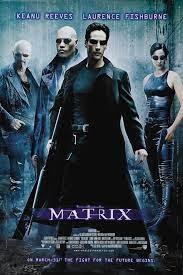
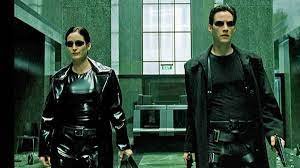
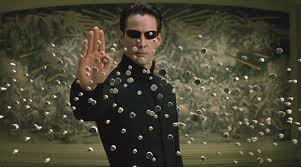
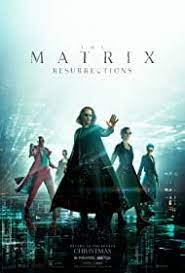
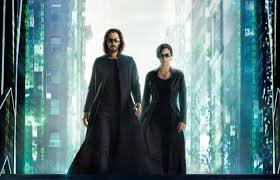
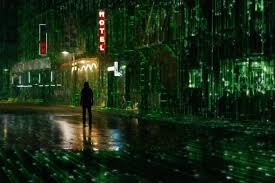
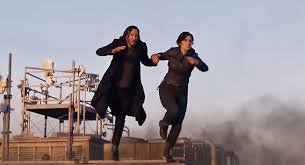
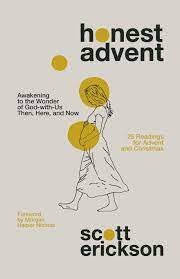
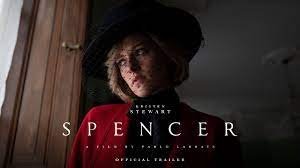

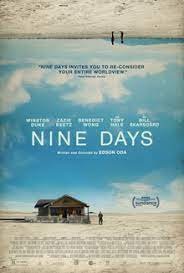
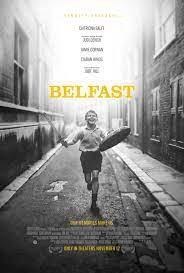
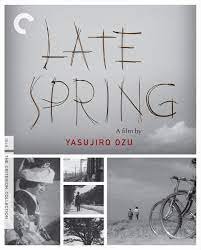

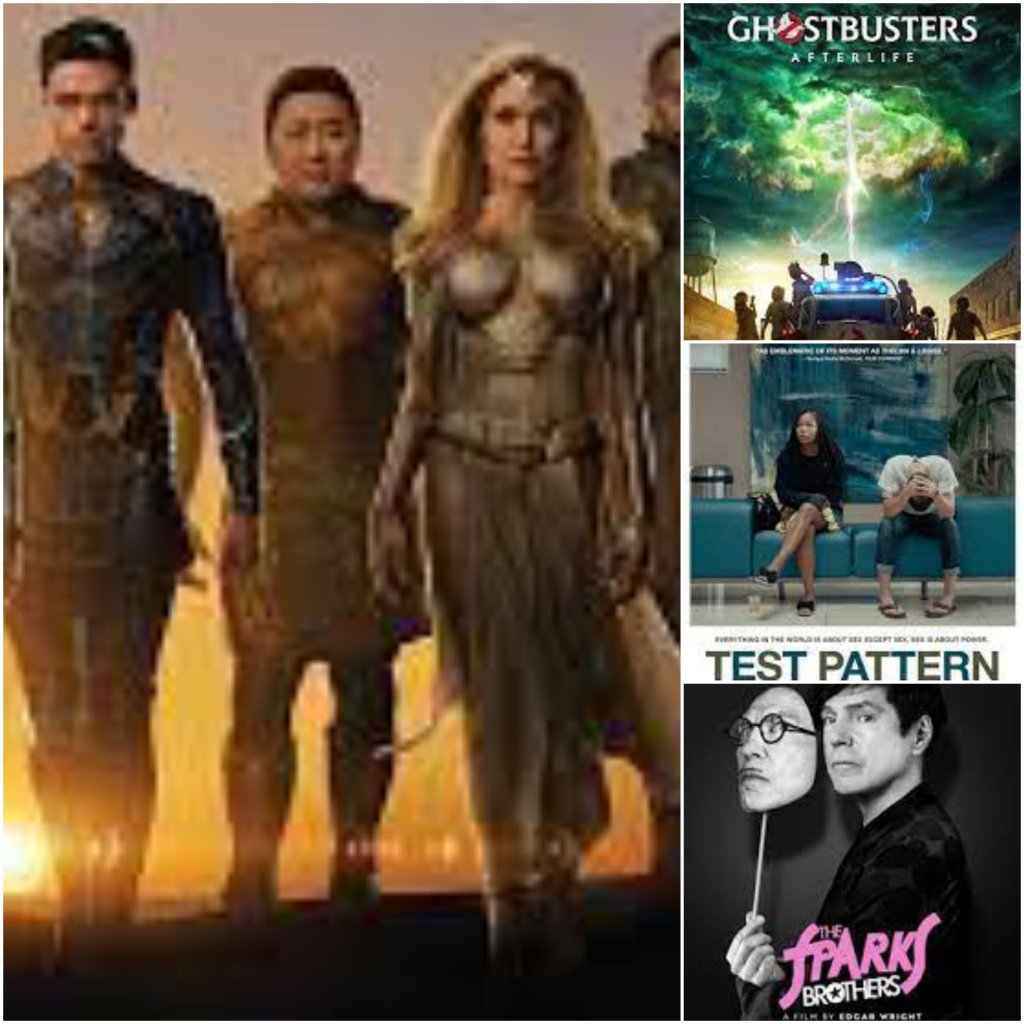

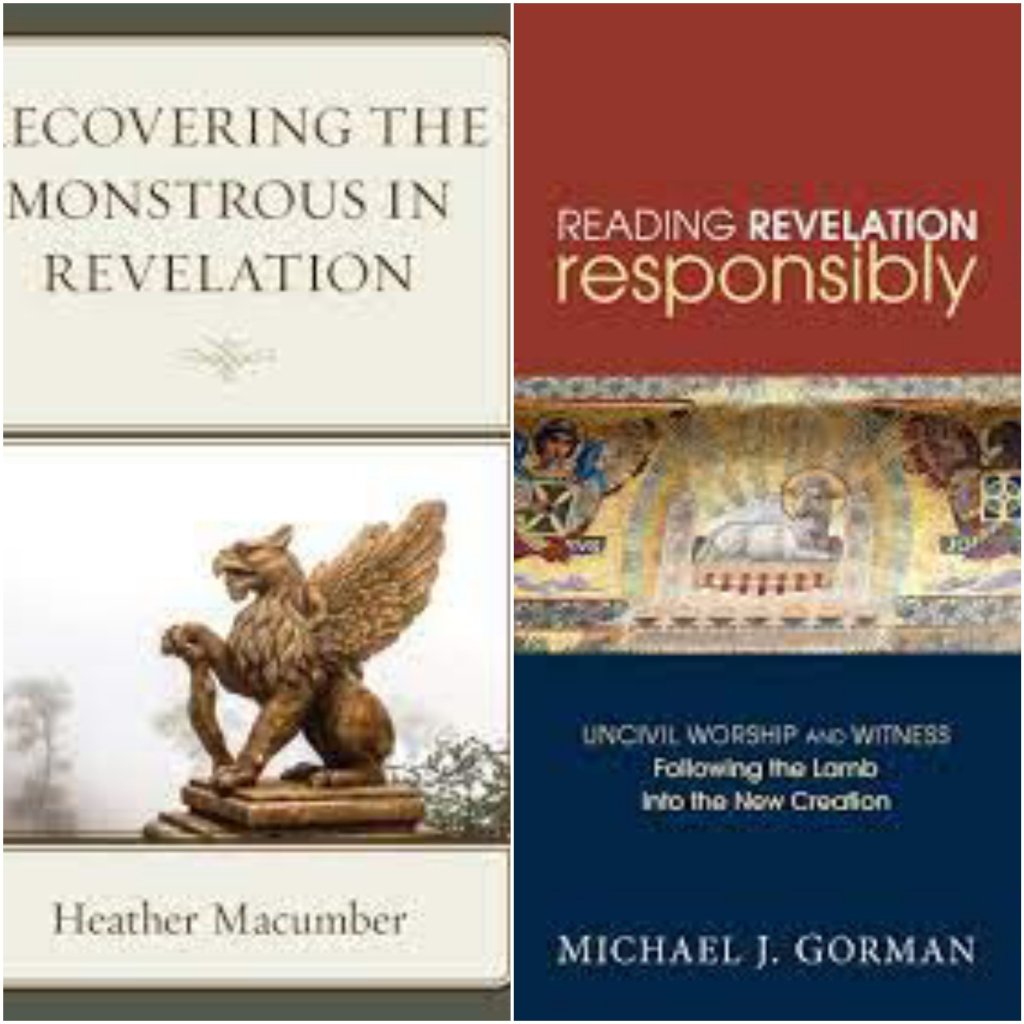



 The Stories of my Life