
Wrote a piece in reflection on a recent podcast episode I did with the Fear of God on the film My Life as a Zucchini and the subject of adoption. Availble at the Fear of God website here
Chvrches, Horror Tropes, and the 90s
Wrote a piece for the Fear of God Podcast site on the recent release from Chvrches, Screen Violence, in conversation with a book by Alexander West on the Final Girl trope and the horror cycle of the 90’s. Available here
The Last Duel, Christopher Nolan, and The Bible Project
Wrote a piece for the Fear of God Podcast on the film and book The Last Duel in conversation with the book The Nolan Variations and a recent episode of The Bible Project. Available here
Nine Days: Making a Case for Life in the Tension Filled Spaces of the Living
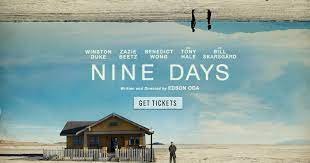
Wow. The 2021 film Nine Days, by first time Director Edson Oda, came out of nowhere. Caught me off guard as I knew next to nothing about it except that it was recommended viewing. And for good reason. It’s a high concept film filled with existential concerns about life and suffering. Following a lone arbitor who has the lengthy task of interviewing souls for the potential occupying of a vacant life on earth, a process that takes nine days to conclude, the film digs deep into that central tension- is the chance at living truly worth the potentoal suffering, and what do we do with life when it appears that the bad far outweighs the good.
As part of the interviewing process, part of being deemed capable enough to occupy life and hopefully realize it’s potential, each of the candidates watches a collection of televisions which display the lives and experiences of people down on earth, good and bad. As they absorb themselves in “life” over these nine days they are subsequently asked a series of questions and presented with different scenarios they must answer. Their answers are weighed by the arbitor, who makes the final decision on who gets to move on to life and who simply ceases to exist.

The story’s concern is for the arbitor, who’s own past experience with life seems to haunt him. As he probes the souls each candidating to occupy the role of living, we are given the sense early on that this process is also probing him. Any judgements he can make of the souls becomes a judgment of himself, which forms a big part of the films existential quandry.
What we do know early on as well is that the life that left a vacancy (in their earthly death) seems to have touched on something deeply personal for the Arbitor, leading to an unusual interest in this life’s replacement. What is revealed later on is truly heartbreaking, exposing how it is that we arrive at the film’s central tension. The difference between the souls and the humans comes down to heightened awareness (memory) and emotion (sensory experience), leaving this single point of wonderment- are these human distinctions a blessing or a curse? In some ways maybe they are both, and certainly one observation that rises to the surface is that it depends on who you ask.
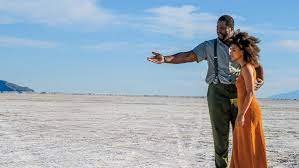
Life’s “potential”, it seems, comes from locating the beauty in the tragedy, and allowing that to inform our sense of meaning. The trouble comes when beauty is unable to be reconciled with the tragedy. This is something the film doesn’t quite know how to answer. At best it can merely rest on the worth of the existing few whos experience of life affords them the ability to reflect on the beauty, and further rests on the truth that emerges from seeing life from a broader point of perspective- that some lives will mean more than others, and that taking a chance on our life being meaningful requires us to submit the chance that it might not be to the notion that it could be for a few who come after. The problem, then, comes when we try to make universal statements about life’s worth. Perhaps most personally, as this is a question I have struggled with, the problem comes when trying to answer the question, why live at all when it seems to come down to the luck of the draw, and when seen in the light of others who live more successfully, however we measure that (a poignant observation within the films motif of the judge and jury) we are rendered insignificant, unnecessary and a failure. These questions plagued me when I was wrestling with suicide, and played a big role in why I abandoned what I deemed a necessarily nihilistic secular humanism for the notion of faith. I just could not find a way to answer this essential question- why keep on living- on rational grounds.
What’s curious to me in all of this is noting the way the film brings two points of contested perceptions about the world- that it is full of tragedy, and that it is full of beauty- to a point of crisis, but never truly finds a way to reconicle them together. There is a sense in which the film wants to pull from this a message about ways of seeing- if we only see the bad we miss the good- but it can’t quite address the problem that comes when we only see the good and miss the bad. If premise one stands, and taking the time to see the good is what makes living with the bad meaningful, then it should also stand that premise 2 is equally true. Seeing the bad should challenge the good and raise the question of life’s meaning. I am certain, myself included, that many will find the general arc and message within this film inspiring as it addresses premise 1. And for good reason, as I think premise 1 does represent truth about our existence. The problem is it has nothing to say about premise 2. It can only ignore it and hope that premise 1, if we are lucky enough to live successfully, renders it just inconsequential enough as to not impose it’s rationality on our sense of being. Without some hope that the necessary tension can and will be resolved, such sentiments have more to say about the truth of human experience than they do about meaning itself, which means that truth is then transient, subjective, circumstantial, competitive, and, in many ways, arbitrary, which a more careful reading of this film would expose. And the truth of the way we deal with it is by replacing the reality with necessary lies about its meaningfulness. This of course is the common accusation lobbied against belief in God- that it appeals to the irrational in order to escape the truth of suffering and death- but what is clear from this film is that everyone does this when faced with this tension.
All of that probably sounds like a negative criticism- it’s not. I really loved this film, and it’s message hit me hard. This is simply to say how it is that I processed and interpreted it’s message. For me, the film was a reminder of my own journey towards faith and why that matters within the circumstances of my life. I think the one thing this film seems to miss and so desperately longs for at the same time is a way for our life to truly be able to turn it’s gaze away from our own experience as we make our claims about the truthfulness of living. It imagines doing this in the souls observations of these lives playing out in front of them, but, in purely rational terms, they approach this tension in ways that then cripples their own witness to the truth about what motivates them to want to live in the first place. Which is to say, if my meaning depends on my living successfully, this then is not a truth I can locate in another. Rather, it is an expectation, a condition, even if it feels more like an invitation in the moment. One that is based on a truth about life- seeing and celebrating beauty is the aim of living, and focusing on beauty increases the chance that we will experience it as meaningful- but one in which this truth becomes contingent on our experience of it, which is the measure of a successful life. That is the only means by which it can become transcendent, the problem being that we are then left with ourselves and our circumstance and the simple message that life is worth taking a chance on because it holds potential to be meaningful for the few that are lucky enough to experience it this way.
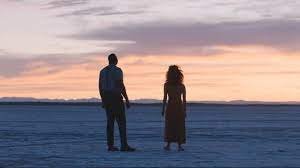
In the scope of the film, memory becomes crucial to this point of perspective. Memory is the means by which build our story in particular ways, and those memories emerge from our experiences. Take away our memories and we cease to become us. We cease to feel in the ways that humanity is capable of. At the same time, there is a crucial point in this film where it needs to submit that we are who we are even without our memories. This word of truth is offered to one of the souls vying for the chance to live. That they will forget ever being in this place and competing for this opportunity is said to not nulify the fact they they will still be them, that you will still be you. This word is afforded to them as a way of justifying the glimpses they get of the human experience with all of its varied emotions. The question is, what has the power to say this to us, to endow us with our given sense of meaning? What has the power to lay claim to the value of our life before we live it and regardless of our successful living of it? That is a question worth pondering over the course of this film. I think the Director senses this question is there, lingering and festering and gnawing at the arc of its story, but can’t quite figure out what to do with it when trying to filter this through the reality of our finite existence. To me, this is evidence of a longing that is embedded within our spirits, something we can’t always understand, but something that continually has the power to point beyond us and our experiences, beyond oursleves to a transcendent Truth, a grander narrative that enfolds this existence. A Truth that doesn’t deny or ignore the tension of existence, but which looks to speak to it in ways that feel intuitively aware of what is not right and what we hope will be made right. That our ability to lay claim to beauty is not contingent on the trajectory of our indivdiual lives or the success of a small portion of humanity is, for me, a liberating thought waiting to break into and shed light on this films concluding image.
Month in Review: Memorable Reads, Listens, and Watches for October, 2021
Blind Spots From The Vault
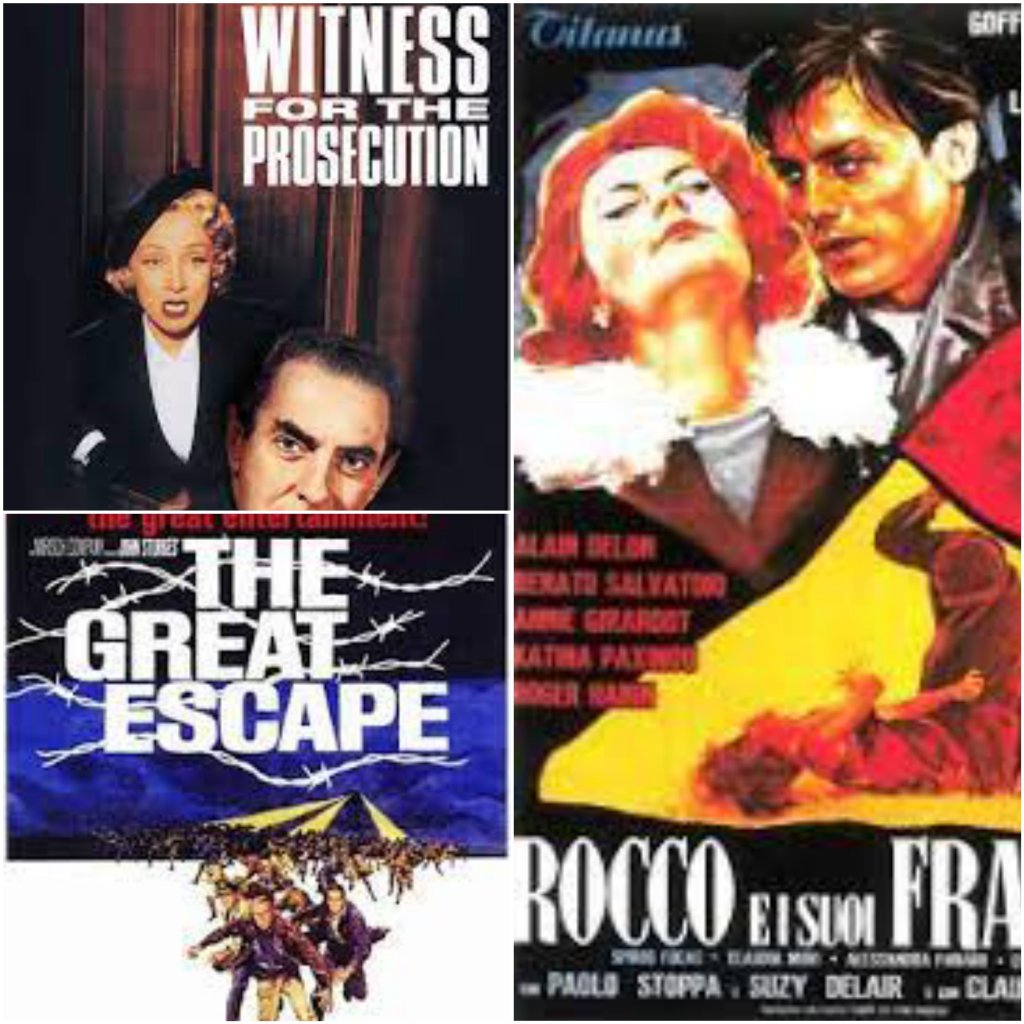
Deceptively simple as the sum of its working parts, Waiting For the Prosecution (1957) is arguably one of the best courtroom dramas of all time. Director Billy Wilder infuses it with a mix of humor, emotion, realism, drama, and character development in order to tell the sory of an aging lawyer instructed to retire from participation in active trials due to health reasons. It has a lighter touch than his previous fare. but also bears the familiar marks of his constant devotion to genre invention, using the mystery of the court room and the trial to say something important about who this man is. It has been on my watchlist for a while, and I’m super happy I was able to finally get to it.
Equally happy to check off the famous Italian masterpiece, Rocco and His Brothers (1960). I couldn’t track this one down during my previous “travelling the world through film” challenge, so when it showed up on Kanopy I jumped at the chance. This is not a family drama, but it is a drama about family, taking an intricate and intospective look at what family is and what family means. Similarly, John Sturges’ classic film The Great Escape (1963) proved a worthile study in how it is that we move from the individual to the collective, asking how it is that we experience challenges together.
Top New Releases
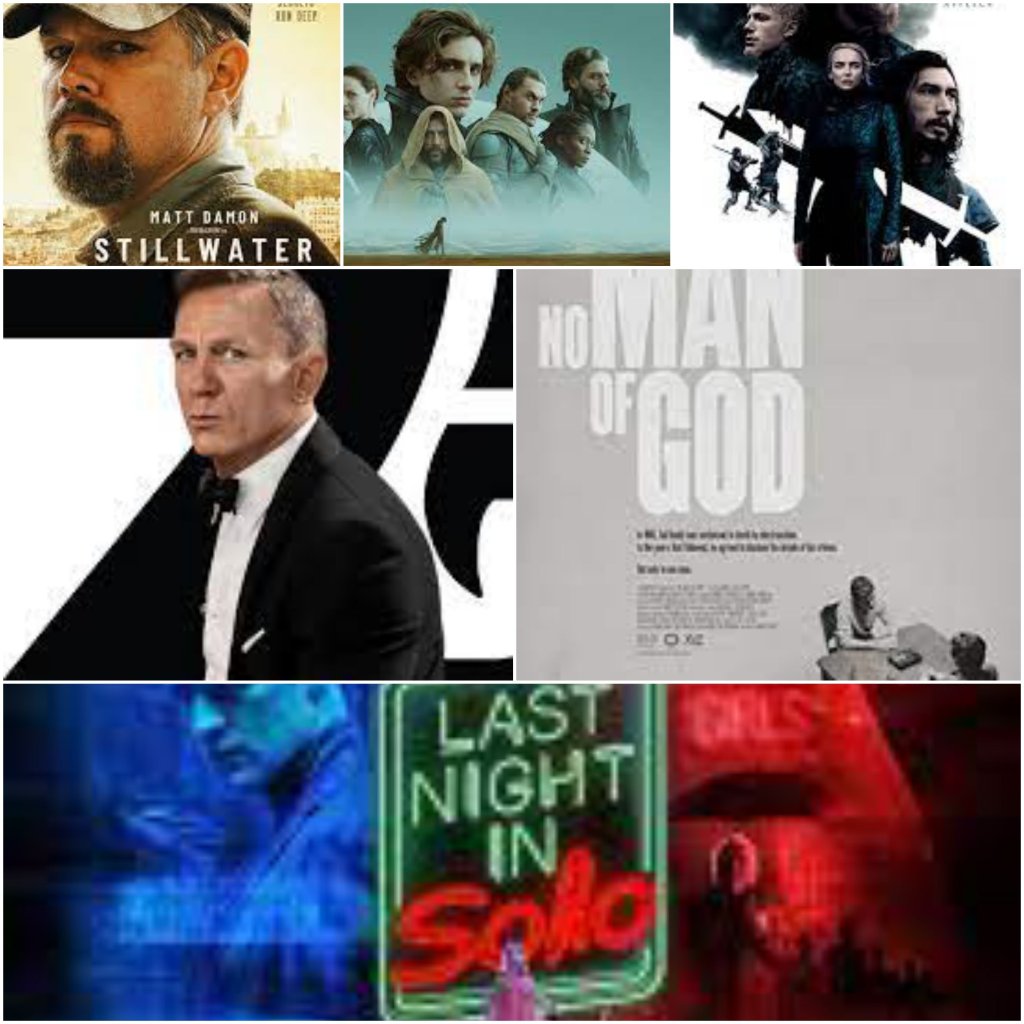
As new theatrical releases continue to come fast and furious following a long pandemic and endless delays, there are a few standouts to consider among the crowded fare:
Stillwater proved to be a startling and suprisingly quiet drama about the nature of reconciliation featuring a possible career best from Damon. Damon also starred in the equally captivating, and also riveting, The Last Duel, a historical drama that uses its unique story structure, built around the three competing perspectives that frame the story, as a way into the historical context that surrounds it. It’s strikingly beautiful in its cinematography, bringing the period piece to life, and also features an outstanding turn by Jodie Comer in the role of Marguerite.
It would be difficult to miss the much anticipated and heralded release of Dune, Villeneuve’s follow up to the brilliant Blade Runner 2049 and the next attempt at bringing the complicated soruce material to life. The film’s immersive visual text allows Villeneuve the opportunity to streamline the story, shift some of the backstory to subtext, and raise up the journey of Paul as its main focus. It truly is one of the years best, and it is a masterclass in how to do sci-fi and adaptation well. Equally delayed and long anticipated is Daniel Craig’s final turn as Bond in No Tme to Die, which as a Bond film could be seen as simply another familiar entry in the long running franchise, but Director Cary joji Fukunaga finds a way to use this template to give Craig’s Bond the sendoff he deserves, infusing this with a suprising amount of heart and humanity as Bond gets effectively domesticated.
It’s also horror season, and while Edgar Wright’s Last Night in Soho is the best of the bunch, blending style, character, nostalgia, mystery/noir and atmosphere like no ones business, No Man of God deserves attention as a hard hitting but deeply formative look at the man once tasked with meeting with Bundy as the very first “FBI Profiler”. It’s not tryng to cloud any necessary morality by way of empathy, rather it uses empathy as a way into truths about the human experience that transcend these characters. In a less direct way, the parabolic nature of Lamb, a subtle Icelandic film built around metaphor and message, brings us into the human experience by way of a hybrid child-lamb being. It’s a strange film on the surface, but underneath this is a story with a very real point about that line between human and nature.
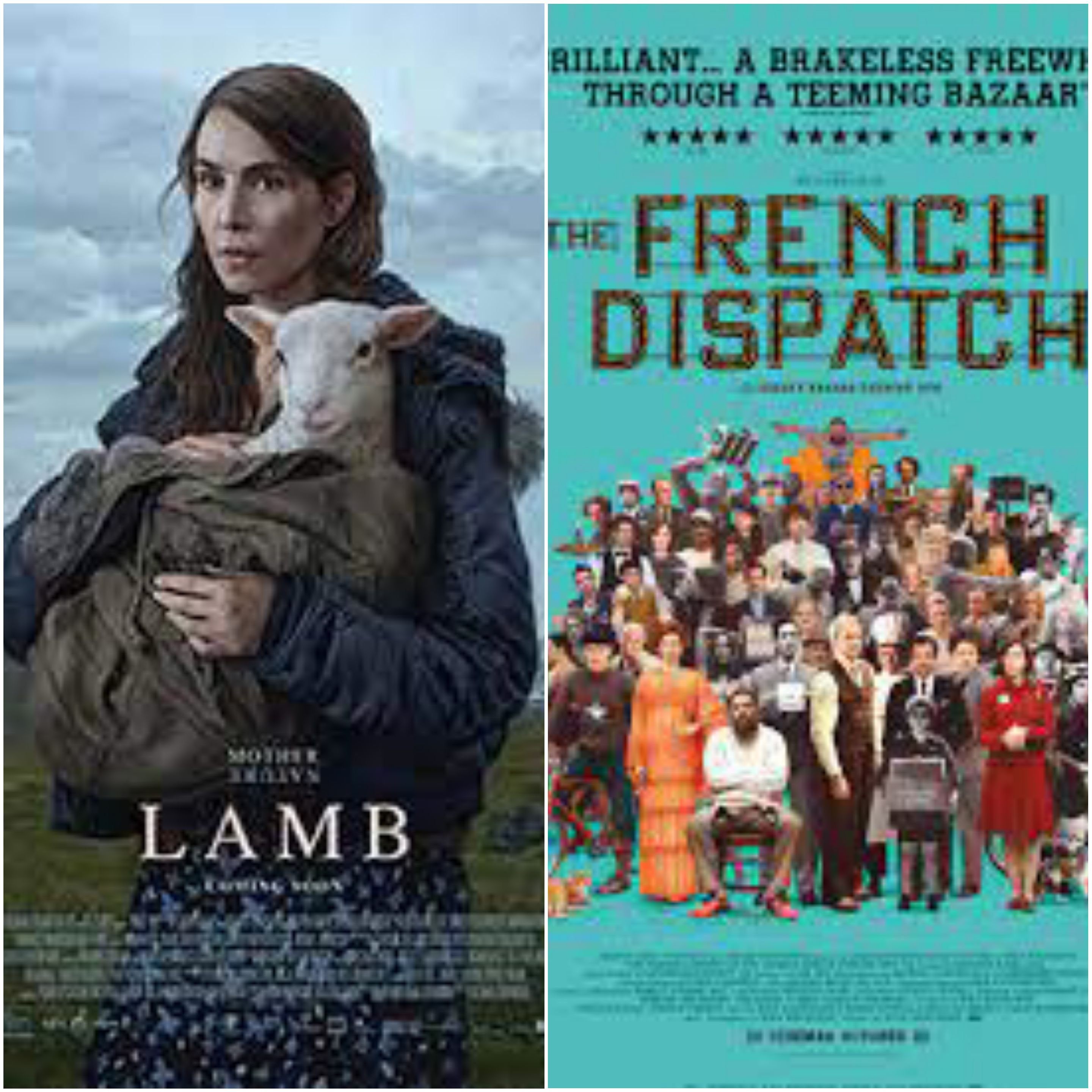
Leading the pack though is Wes Anderson’s The French Dispatch, a film that is as studied and quirky as it is grounded in the famed Director’s curious blend of humor, symmetry, and style. There is a case to be made that this film is less immediately emotionally accessible than his previous works, but it’s also true to say that this emotion has never had a stronger frame to exist within, with its visual technique reaching new heights of creative imagining. The craft on display here is mindboggling, and it simply begs for multiple rewatches in order to take it all in.
A Few Suprises
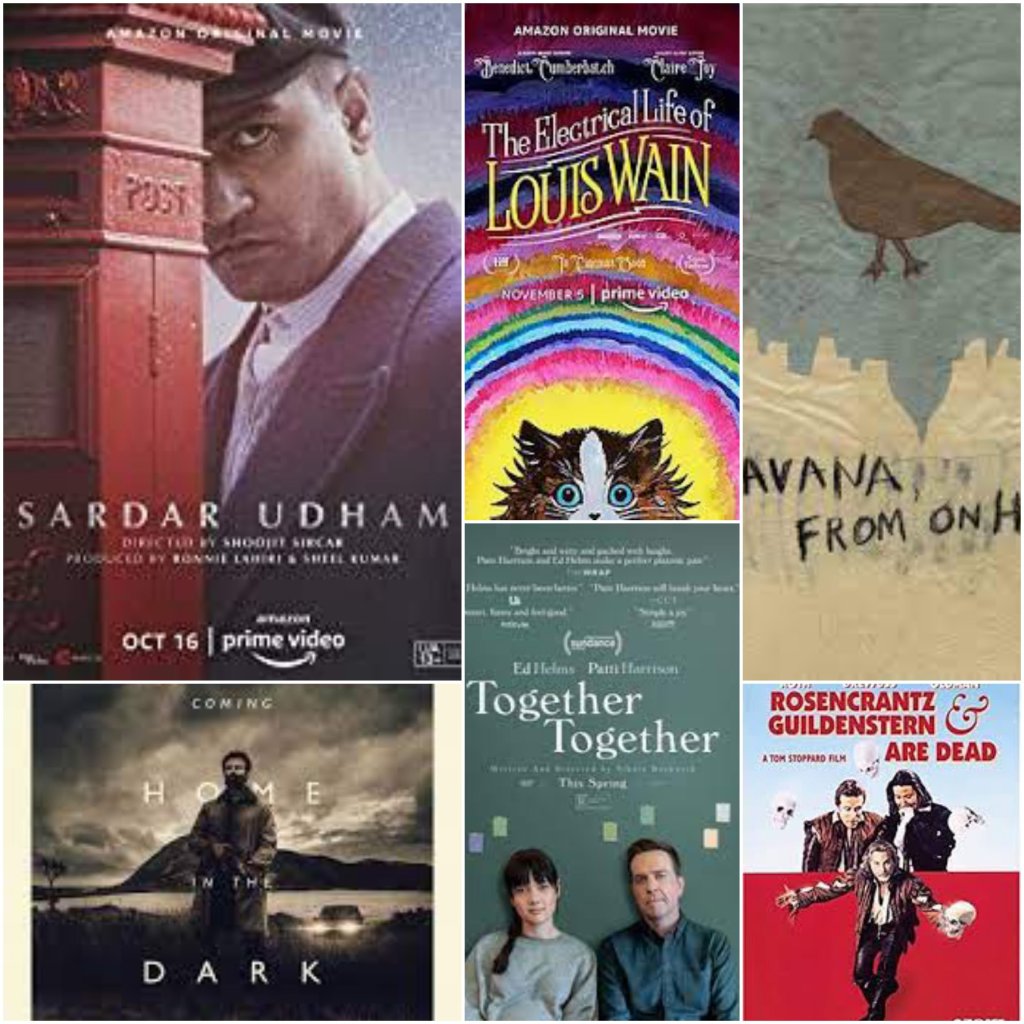
Sardar Hudham (2021) was not at all on my radar, but this is the second foreign film from India released to Amazon Prime challenging for my top spots in films of the year. It deals with a true historical narrative, and while lengthy, it allows the build up to give the final quarter an undeniable force. Also dealing with a real life historical person is The Electrical Life of Louis Wain (2021), the guy who basically popularized the idea of the cat as a household pet. The film isn’t for everyone, and it is highly visual and quite inventive in its style and storytelling, but it hit on so many checkboxes for me and left my heart smiling.
As part of our local arthouses series called “Film and Architecture”, Havana From on High (2021) gives insight into this city and culture by way of its high rise apartments, the low income residents who occupy them, and the things that such heights are able to observe. It’s a beautiful film in look and spirit. Far more grounded and stated in its embrace of the darkness, Coming Home in the Dark (2021) really took me by surprise with how insightful and effective a pared back narrative like this can be.
On the comedy level, the film Together, Together (2021) just might be one of the lovliest romantic dramas you will see this year, precisely becasue it trades the trappings of the typical romantic drama for an examination of friendship. Equally interesting and humorous is Rosencrantz and Guildenstern are Dead, a revisionist take on Shakespeare that is bursting with introspection and heart.
Lastly, and to prepare for this week’s release of The Reluctant Convert, a biopic about Lewis, The Science-Fiction Makers is a wonderful documentary covering writers such as Lewis and L’Engle while shedding light on a part of the “Christian” industry that flew under the radar and may have reflected its most influential and honest voice.
Books

A Way With Words: Writing, Rhetoric, And the Art of Persuasion by M.D.C Drout
This book, which is based on a course, and follows a course outline, might translate for some as too familiar and basic, but I found it to be an absorbing refresher on the subject of “rhetoric” that is communicated with expertise and wisdom and is immediately accessible in its practical application. One I will be revisiting a few times over, and a book with some really powerful and empowering information regarding how words function and how they play into communication.
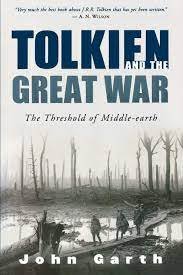
Tolkien and the Great War: The Threshhold of Middle-Earth by John Garth
I’ve been reading through a few works on Tolkien latetely, and this one stands out for its deep dive into how the Great War shaped Tolkien and his writings. So much to learn about the world that shaped the writer, and understanding this gives shape to both his writings and his motivations.
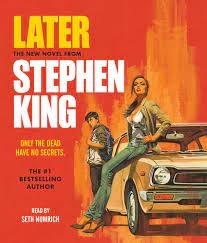
Later by Stephen King
King is one of the best writers to have graced the grand literary stage of our modern era and he seems to be getting sharper, more refined and maybe even better with age, if that is even possible. This falls in the catergory of his works that are meant to be page turners. It’s a paperback mystery with a supernatureal subtext that is brisk and entertaining, leaving us with memorable characters, a few things to think about, and heck of a good time.
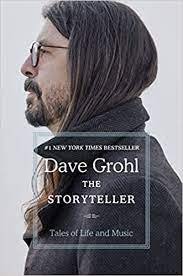
The Storyteller: Tales of Life and Music by Dave Grohl
I came to appreciate Grohl through my wife, who is a super fan. This book won’t be for everyone, but for those who are fans and who have experienced Grohl’s concerts in a way that almost feels like a religious experience or a Church service, this book should be illuminating and enriching. Grohl leaves it all on the table and is honest to a fault. He overdramatizes everything, which might be where some part ways here, but his love for music, the industry and life itself is undeniable and contagious.
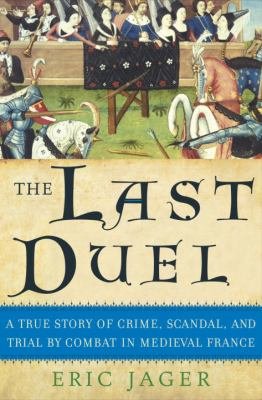
The Last Duel: A True Story of Crime, Scandal, and Trial by Combat in Medieval France by Eric Jager
The book takes a broad look at the historal context while the film uses the testimonies of the three main characters at the heart of the story to step into the history in a more introspective and interpretive fashion. Both are just as riveting and engaging in their own way.
Music

Semler- Late Bloomer
Semler has been making the headlines for being an openly queer artist making music within the Christian industry. What gives her call to inclusion, filled as it is with personal reflection, stories, lament and celebration, an extra bit of weight is the fact that Late Bloomer also happens to be a genuinely exciting and creative musical effort within the pop rock genre. The connection to the Christian industry is merely about identity, belonging and reform. The music is all about transcending such categories as a universal language.

Mimi Webb- Seven Shades of Heartbreak
The gradual release of tracks from this new EP has alraedy been making waves, and for good reason. The UK artist can write a serious hook and infuse it with genuine, spirited energy and an audible creative edge. What sets the full product apart is the cohesive narrative, dancing through the powerful notes of personal experience, relationship, love, hopes, struggle and celebration.
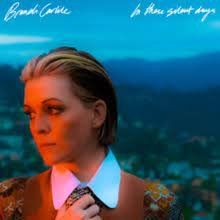
Brandi Carlile- In These Silent Days
I’ve ben primed for the release of Carlisle’s new album by her absorbing and affecting memoir and revisiting her illustrious career through past albums. Her new album takes the technical brilliance of By the Way, I Forgive You, along with its deeply personal focus, and finds a way to write that into something equally transcedent. Forgiveness turns to the nitty gritty of actual reconciliation, imagining a world where words are put into action. This makes the struggle and longing apparent in her life’s story that much more aware. The growth here is subtle but astute, feeling right at home with her familiar style and form, but willingly pushing those boundaries and stepping into new territory ever so gently and with grace
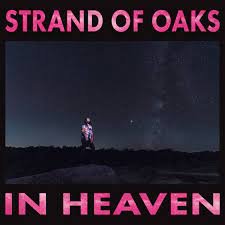
Strand of Oaks- In Heaven
Timothy Showalter’s latest effort under the name Strand of Oaks just might be the most lovely, immersive, hope filled music you will hear in 2021. It’s a celebration of all things love, facing stuff to the contrary (like loss and alcoholism) head on. It’s the kind of album you can put on and get lost in again and again, be it to brighten up a cloudy day or celebrate the sunshine.

Said the Whale- Dandelion
The first album in many years by this Canadian based Vancouver outfit is all about finding the good in the stuff that we tend to dismiss. What might seem like a weed is both purposeful and delightful, with a storied history of its arrival to North American soil giving it its drama. That society grew to see the dandelion as unwanted and disruptive and ugly is more a testament of our demeanor than the ill nature of the dandelion itself. Thankfully we have music like this to not only reorient our perspective, but to allow that story to gain a metaphorical presence we can apply to all aspects of our life and our world and our experiences.
Honorable Mention:
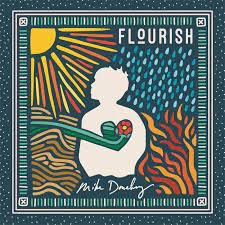
Mike Donehey- Flourish
Frontman for the band Tenth Avenue North stretches his legs in a safe but nevertheless lovely album that rests in spiritual reflection and inspiring songs. It fits firmly in the CCM category, so take that for what it is, but for me its one of the better efforts within the field.
Podcasts/Other

The Bible For Normal People- Episode 184, Heather Macumbe- Monsters in the Bible/Biblical World- Halloween Special- Death in Ancient Israel with Matt Suriano/Travel With Rick Steves- Episode 827, Recoleta Cemetery, Spooky Atlas Obscura, Near the Exit/Mere Fidelity- Episode 254, Funerals With Dr. Tim Perry
This 1,2,3,4 punch all coincided with the Halloween season and all revolve around the subject of monsters or death. Heather Macumbe, a prof from my local University where I studied (Providence College/University), talks about her newbook, Recovering the Monsterous, an examination of the book of Revelation through the lens of ancient imagery, beliefs and stories. It inspired me to pick up the book, which thus far is highly recommended. Tim Perry, another prof from my local University, talks about his book Funerals, which examines funerals and their development from the ancient world to our modern setting. Likewise, on the Biblical World podcast, death customs are explored through the study of Biblical Archeology. It is also based on a book by Matt Suriano and its a fascinating discussion about all things death related from the pages of history. Equaly fascinating is the author of Near the Exit, who is interviewed on Rick Steve’s Travel show. She travelled the world through different cultures and customs exporing the topic of death from different perspectives as a pastor and a Christian.

The Bible Project Podcast- Episode 273, Literature for a Lifetime- Paradigm 6
This whole series on how to read the bible, or the different paradigms through which to read the Bible, is great. This one specifically, which examines scripture as “meditation literature” was especially good as it really gets to root of how the structure and the flow of scripture in its narrative form is mean to work. Brings new life to the text.
OnScript Podcast- Episode 197, Between Doubt and Dogmatism with Josh McNall
I’m normally not that into discussions like this, as I find they turn more often than not on a tired form of apologetic. McNall finds a balance, never allowing the subject to delineate into tired tropes, and very much selling me on picking up his new book “Perhaps”, a book that is all about the liberating nature of this word when applied to our lives, and more importantly to our wrestling with belief.
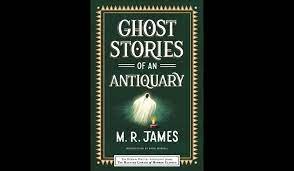
The Great Books- Episode 201, Ghost Stories of an Antiquary by M.R. James
M.R. James is a fascinating individual and writer, and Jane Mainley-Piddock does a great job unpacking who he was using the framework for his classic book
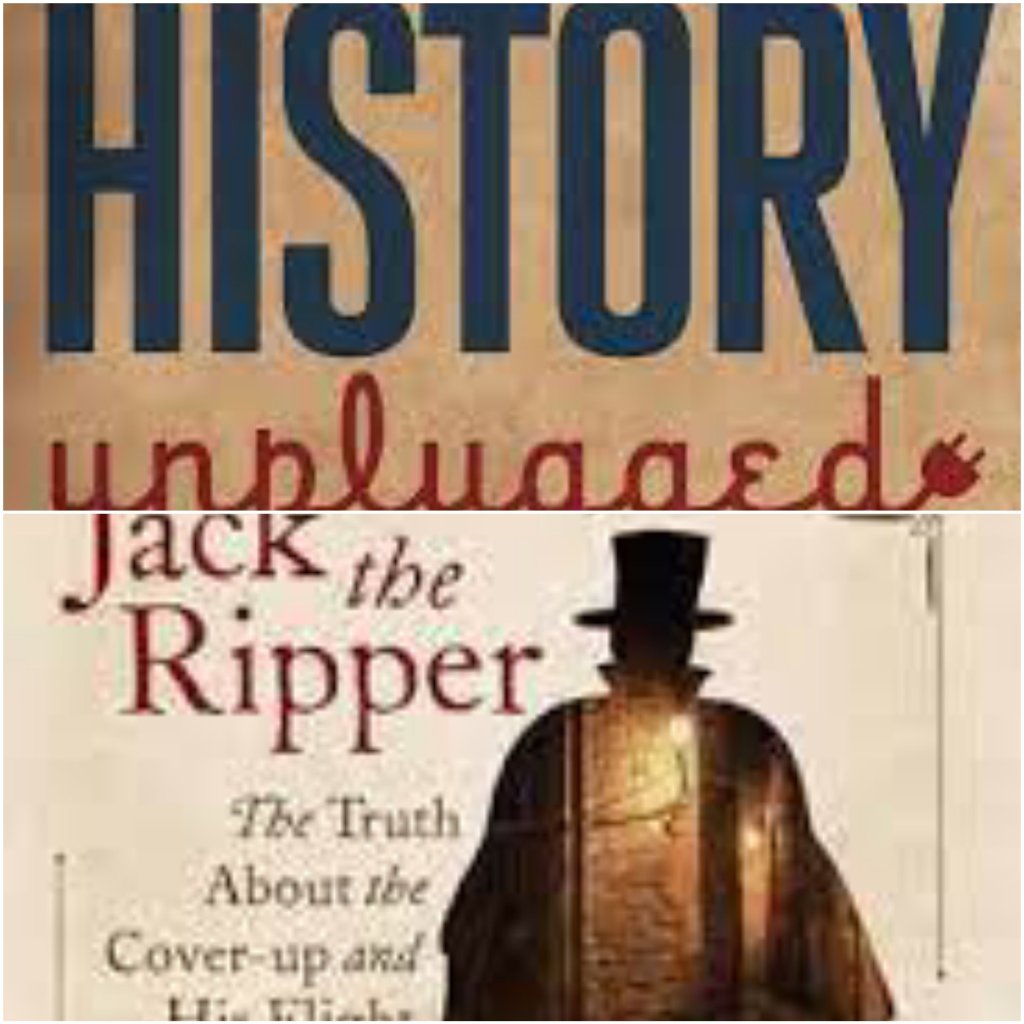
History Unplugged Podcast- Episode 586, The Escape of Jack the Ripper
For anyone interested in true crime and history. Jack the Ripper always makes for great stories, and this deep dive into a portion of his story was both interesting and a great pairing for the Halloween season.
Thanksgiving: Between the Drought and the Harvest
Wishing everyone a Happy Thanksgiving.

The season that prepares us for a world in which darkness (All Hallows Eve) and light (Christmas) coexist as part of that necessary tension that awakens us to something truer, more beautiful. This is what Thanksgiving expresses, sitting somewhere between the drought and the harvest and encompassing the sin and the tragedy and the disorder that follows in its wake and informs the necessary transformation. It’s a reminder that hallowed’ means holy and sanctified and that Hallowe’een is the literal anticipated adorning of the dark in order that the light of Christs birth can be made visible. This is a sacred and holistic movement.
Thanksgiving says over and over again, “and yet, and yet”, the light shines in the darkness, calling us to those great and enviable virtues that scripture underscores as vital to this transformative work- humility, joy, love, gratitude, thankfulness.
Midnight Mass: Where Faith Meets Doubt

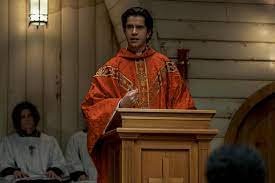
It’s been nearly a week since I finished the new series by Mike Flanagan, Midnight Mass, and it would be an understatement to suggest many thoughts and feelings after watching this show remain. To its credit I suppose, except that those feelings come with a good deal of tension and frustration. I don’t think I’ve been this frustrated by a story since the finale of The Good Place. And that’s saying something, because that shows final season and the way it takes a brilliant premise and formulates it into a superficially imposed and convoluted vision of life and death and meaning still gets under my skin.
Full transparency- I watched this show as a person of faith. A person of heavily deconstructed and reconstructed faith mind you, but nevertheless as one who finds value in and who is convinced by the idea of transcendent Truth and Knowledge and a personal Creator. And in case you were not aware, questions of faith and doubt and God play a prominant role in this series. On this front, I found the questions and struggles and tensions the show brings to light poignant and pertinant, and unquestioningly timely given the progressive failures of the church in recent years that have been coming to light in the form of abuses, scandals, political affiliations and more. The show has some good and important things on its mind in speaking of these things, but unfortunately this all becomes problematic and troubling when the story reaches its ultimate resolution
I should also say upfront, my struggles with this show are less a critique of its quality (it has some structural issues, and I feel like it would have worked far better as a 2/2 and a half hour film rather than a drawn out series, but overall it is a decently constructed if not altogether great horror series that follows on the heels of the success of Hill House), and more a critique of its themes.
With that in mind, I should throw up a SPOILER WARNING here.
Death, Faith, Forgiveness and the Universal Struggle
So right from the start the show tells us it’s going to be about three main things-
1. Death and the stuff that death exposes in terms of our failures, our successes and our legacy
2. Faith’s answer to the problem of death and the affiliated problem of suffering and struggle, with a particular focus on the notion of God’s absence or God’s involvement forming a tension within this suffering.
3. Forgiveness, and further forgiveness in light of an often corrupted and fallible Church which bears the witness of God in the world, as a key part of the answer to the problem of death and suffering
The third point is the one that gets the least fleshed out despite its prominance in the early going. The second is used both as a framing device (with chapters walking through the biblical story from Genesis to Revelation, and Psalms, lament, Wisdom/Proverbs, including a unique transitional movement from the new to the old covenant forming the inbetween) and as a way of locating and contextualizing the characters within their different experiences and trauma and struggle. The first acts as the great unifier, weaving it’s way through the individual stories of these characters and bringing them together in the image of Christ’s death, an image we must then translate withn the problematic witness of the Church itself, using the uncomfortable imagery of Christs sacrifice to bring to light.
Here’s the thing. I imagine someone who doesn’t hold to faith could be far less invested in the series’ questions and, to a lesser degree, it’s eventual answers. Not because death and struggle is not a universal reality, but because they will be seeing this story entirely through the illusionary nature of its existential struggle. In this light it’s all a grand metaphor, which includes an entertaining if then sometimes silly piece of horror that shouldn’t be taken all that seriously because neither should God and the Devil and least of all the Church, which then of course encapsaltes the religious as a whole. To say that bluntly, I have had many conversations with the non-religious in which they aren’t really concerned with wrestling with the question of God at all. Which is to say, at least part of why I reacted to this film so strongly is because I took and take it very seriously
And in taking it seriously, rather than simply seeing it as a simple statement about the corruption and dangers of religion and the Church, I see the show confronting the struggles of the Church in a way that makes it recognizably human and only all too relevant for anyone struggling with the failure of both to uphold and locate goodness and love in this world. In many ways this is a show that at least wants to function as a conversation from the inside, one informed by the genuine awareness of what the Church represents (hope) and what it often resembles (hopelessness), but one that then finds its roots in a universal reality that makes sense in the stories of all.
The Illusion of the Self, the Fallacy of Belief, And a Loss of Diversity
There is a crucial scene where our two main characters, a young man recently released from prison for killing someone in a drunk driving accident (which frames the simple but complex reasoning for why he has abandoned his faith), and a young woman with a troubled and rebellious past who has found her way back to faith, are discussing the question, what happens when we die. The woman makes an important observation within this, or one that flows from this- the man can’t possibly take her seriously since she believes in God. If they are being honest he has to see her as delusionary, a fool, or something inbetween. He denies this, but as things progress this gets betrayed for what it actually is, demonstrating that with his conviction this is the way he is then forced to hear and translate her story.
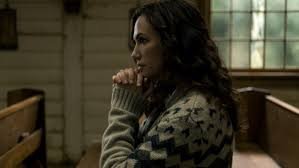
This brought to mind for me some recent conversations I have had with some non-religious friends where I posed a very similar question. I wondered about how it is that they could sit in a room with people who believe in God and not see themsleves as necessarily above them in terms of their awareness of reality, as one who is closer to the rational and reasonable facts, and therefore truth of our existence. I asked them how it is that, in a scenario that finds them in a room full of ten people who hold to religious conviction, regardeless of which religion, they could hear these stories and these convictions and see them as something other than delusional expressions of the mind. My friends all responded the same way as the young man in this series. They also inevitably betrayed themselves in the same fashion as thinking otherwise at more than a few points in our subsequent conversation.
I told these friends that, as a person of faith nothing could be more frustrating than to know that I am forced to be misunderstood and not fully known as I am in conversation with someone else. If I know nothing else, there at least seems to be a need and a desire for my experiences to be seen as true and legitimate, and not simply in a relatvistic sense, which loses its lustre and relevance pretty quickly. In my view, given the nature of how conviction works within our different worldviews, non-faith is forced to express on some level as a position of certainty while faith is a necessary embrace of uncertainty and mystery, both of which flow in their own way from our shared experiences and questions as people. I pushed this further in my personal conversations and maintained that it is inevitable that the ones necessarily ostrisized and isolated in a secular society are the religious. This is why a truly secular society can never be truly diverse one. When conviction of belief is divorced from life and forced to function outside of the boundaries of our guiding structures, diversity becomes impossible. To imagine a world devoid of religion is to imagine a world devoid of our defining and shaping stories and myths and culture, along with our inherent differences. A world where everything is essentially and necessarily homogeneous. Just look at the Western influence invading places where this culture still has a presence and this becomes very evident.
Now, of course its is pertinent to point out here that one of the main messages of the series is that religion, with its convictions, very quickly and quite often becomes a picture of exclusion, married to systems of power and politics that lead to corruption. And yet it also demonstrates this truth using distinctly religious terms, such as sin, evil, the darkness, the devil. However we address the problem it is apparent we need the language of religion in order to judge it appropriately. There is even a distinct awareness that runs through the show that the problem is infact an inherently human one where this language seems to be intuiive in all of its symbolic presence, even as it represents itself within broken systems and failed actions. This should inhibit anyone from propping up the Church itself as the primary problem and thus trumpeting a godless vision of the world as the true answer to the problem, but if reviews and reactions thus far are any indication, this is far from the case.
The Problem of the Self, the Laws of Entropy, and the Nature of Religious Language
Where this ultimately leads in the show is towards this confronting of individualism and power as interrlated parts of the same central problem of light and dark, good and evil, that Genesis imagines. This is captured in the move to replace God with self. The question that remains as the series approaches its final episode is, if this is the problem how do we then truly move from the self to the other. If not through religion and or with the aid of religious language, how does this world and the lives within it be and become about something other than oursleves. After all, in a strictly materialist sense nature is determinitive, driven as it is by cause and effect and the laws of entropy that govern the universe. And this includes the puzzle that is consciousness. In a godless world we rest on the assumption that when broken down to its most basic function, consciousness is simple cause and effect. The selfish gene is what allows us to survive and to thrive and to categorize even the most basic evidential traits of cooperative activity as necessary and good, even if “selfishness” doesn’t actually exist as a moral truth in a materialist sense when seen in light of nature.
So then, what do we do when we strip this world of our delusions and see it as it is? What do the characters in this story do when their faith in God reaches a point of crisis, such as in how it is that a loving God can allow or ignore suffering. And what do these characters do when the Church is revealed for what it is- a seemingly failed instituion? As this wonderful article and assessment of the show posits, why is it seemingly easier to believe in vampires than God? At so many points along the way the series makes attempts to uncover something of the mystery that pulls us forward and holds us togther. Mystery, it seems, is important whether we believe in God or not, as it is in the mystery that we find hope. It is by upholding a sense of mystery that we can then also uphold something of the transcendent, however that translates into our view of the world. We can begin to imagine, irrationally speaking, life being more than its struggle. We can begin to imagine a light shinging in the dark, where the sun shines on both good and evil giving it it’s redemptive glow. Making something out of nothing if you will. Finding meaning in the governing laws of entropy. And yet, what also becomes clear here is the confronting of this very basic fact- in letting go of or rejecting the delusion of God, humans inevitably and consistently replace it with a different delusions in order to justify and rationalize this sense of meaning. We simply replace God with something else, and most often, something the show begins to imagine with a rich sense of irony, we replace God with the illusion of the self, the same thing it wants to then deconstruct. The conundrum of existence is that, when seen for what it seemingly is we quickly become dissillusioned. And thus we fill in the gaps with a lie, often using religious lanuage to do so, whether we are aware of it or not.
The Basic Conundrum: What Has The Power to Unify the Human Experience Within its Diversity and It’s Shared Struggle
Which is what makes the series’ conclusion, the point where the film abandons it’s tensions and moves to provide an answer to the conundrum of existence, almost hypocritical in a sense. A big reason for this is because of how the series develops the young woman, among others, as people wrestling with the stuff of life. They have genuine questions and concerns, and life itself, speaking in a strictly materialist sense, has left them wanting in its measure of inequity, illusions of justice, and matters of chance. And this is what is curious to me. We live in a world where such religion as the show depicts has spent a lot of time being destructive and exclusionary and unhelpful in addressing this question. This has played a role in many walking away from the faith and has inspired much hate and cynicism over religion, much like the young man in this series. People like me on the other hand have been equally disillusioned, but in finding our way back to faith continue to engage in critique from the inside, much like the young woman. The Church doesn’t seem to represent an answer as much as it offers the promise of something that feels desperately and consistently just outside of our grasp.
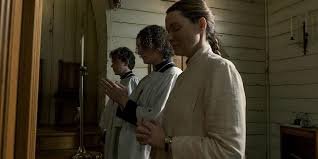
But here is the thing. The question that remains in this conundrum is, what unifies us. What brings us together in our differences, in our questions and our struggles? What has the power to say life is good, love is true, and we belong, and present us with a future where these things will have their say, where the light will do away with the darkness? That’s the lingering question that swirls around within the the film’s overarching narrative, with the intention being to imagine a world where all of the religions, the secular structures, the religious and non religious, can find their meaning togther, in a single truth, in a larger narrative if you will that shares this hope filled trajectory. We can critique religiious tedencies towards illusions of hope, but we are then faced with secular visions of progress that work equally towards such a future in its eradication of disease and its own versions of immortality. The question then is, how do we move from the self to the other. The problem is that the film attempts to imagine this in a way that doesn’t ring true for all. In fact, I would even wager the show’s answer to this question doesn’t ring true to the experience of any if we are being fully honest. The answer that emerges in the series’ final monologue, one given by the young woman and which attempts to bridge her answer to the question, what happens when we die, with the young mans, is one that strips the world of its ability to hold conviction in something greater than ourselves, and which dismisses the young woman’s disillusionment and struggle at the same time, something that holds the disparate threads of these characters in relationship to eachother, altogether. In this final dialogue even the young, stillborn child she loses fades from view. The way it does this is by leaning into the materialist vision that the self is an illusion, a falsehood, a lie, and that life is built on the fabric of memories that ultimatley get forgotten. There is no such thing as a person, therefore the problem of self does not exist either. It encases this in a highly romanticized vision of reality of course, which is why even though the non religious generally do not accept this way of thinking when it comes to how they live in the day to day, they also usually build their own rational arguments about life and death around it unconsciously and necessarily. As was already pointed out, in a purely materialist sense this is in fact true. The self is an illusion that we create in order to give us meaning. We might have excised God from the picture, but very few are legitimately comfortable imagining a world without the things that God represents. Very few live as nihilists, and for good reason. When faced with reailty life doesn’t beg to lived, it begs to be survived. Modernist comforts and conveniences have blinded us to this, but it doesn’t take long to note that comforts and conveniences don’t do away with the questions this show brings to the table and wants to take seriously. In fact, science seems to demonstrate that they often heighten these questions and make these anxieties even more apparent.
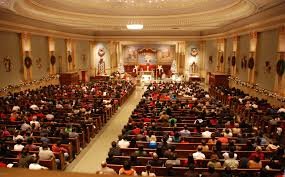
Failed Answers in the lllusions
The real question then is, when we face the problem (death and suffering and struggle), and we take God out of the picture, do we have the ability to then attend to these questions rationally? I think this series pretends that we can, but it does so while also making a case that that this requires irrational beliefs to be upheld. It plays it’s cards and then exposes a trick deck, and what gets sacrificed is the honest questions and the struggle that makes us human and defines our search for meaning. It can only ever say that suffering exists inspite of our good experiences in this world. It can only ever strive to make life a little bit better than it is, to borrow from Neil Pasricha, the author of the infamous blog 1000 Days of Awesome and its subsequent and complimentary book The Book of Awesome . It offers a vision of the world where we are but material beings, but where we can make this material mean something. How? By elevating the power of the self- making and manipulating our memories, living life, loving, being togther. Never mind the things that the film brings up as the darkeness- cancer, violence, personal failures, death and more death, isolation, poverty, pain, struggle, rejection, broken families and communities, unfulfilled longings and desires. As Pasricha would argue, happiness comes from the constant manipuation of our minds in writing these things into an imposed narrative, one that does not need to be true in order to be helpful. Ironically, for both Pasricha and this show the self is the only thing that really remains in the end, and that is in itself an illusion, a fleeting blip in time that fades into oblivion as though it never existed at all, precisely because it never did. Detach ourselves from the idea that it must exist and you will find happiness.
For all the accuastions lobbied on to the idea of God in the guise of “how could a loving God exist when…” type questions which permeate this film, the emptiness of the answer it imagines in God’s absence takes the easy road out. It fails to actually address the suffering of its own premise. It lacks no actual hope, merely illusions that exist to sere the self and thus enable survival. In this movement from the self to the other, even such an existential concern is exposed as selfish in its gain. It is what I would describe as genuinely hopeless. The best it can do is imagine something that doesn’t exist, oddly enough, and even then this only really makes sense to the privileged who are lucky enough to have the means make the most of their existence. Worst yet, all of the judgment lobbied at the chuch has nowhere to go when God exists as an illusion. The problem then must circle back on reality, life itself, or if we are humble enough onto human nature (or nature), creating something of a conundrm for human consciousness, the basis for which we formulate our sense of unique responsibility within nature, something we don’t apply elsewere in the same way.
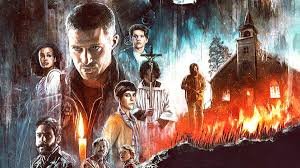
This is why I struggled so deeply with this series’ vision of death, and thus this series vision of life and meaning. It left me exactly where I found myself once upon a time, wrestling with the only true thing about this world and the laws that we can observe within it- nihilism. The same thing I find the non religious often resist and ignore despite the evidential nature of the science. It’s common for life to get romanticized in this view, but strip away those superficial notes, which often mimic superficial religiosity, and what lies underneath is hollow darkness. An inconsistent expression of some undefined notions of love, goodness and happiness functioning without a universal definition of life and sentience that only need to do enough to make us feel that we aren’t bad in order to satisfy its existence. And it all rests on this one thing- memories. Memories that are illusions. Memories that literally formulate time where it otherwise does not physically exist. And it does so for the sake of, at best, our temporary future survival.
Answering the Question, Why Do I Believe
Which is where I come back to what faith means to me. For me what faith affords me is a genuine diversity, a way of saying that things like love, goodness and Truth have their source in something greater than my forgotten memories. It provides me with something to step into, something that has the power to rationally declare life in death, hope in struggle, meaning in meaninglessness, belonging in isolation and rejection, love in hate. Our darkness and our goodness gets illuminated by the light. Faith affords this world a narrative, one that breathes through all of the convictions and religions and ideologies a sense of coexisting forming and revelatory Truth. Faith is relationship, the reason why I can say I am not alone, and the reason why I can say we are not alone. Faith gives me something to participate in, a given meaning rather than a created one. It gives me the freedom to step into one of its most scandalous notions- forgivness, of self and other, with an eternal perspective in mind.
Faith ultimately gives me hope. A way of seeing every end as a new, eternal beginning. A way of standing in a new creation reality and imagining it in our midst. Where God feels absent I am present, and that given sense of self becomes a witness to Gods presence in our midst in its fallible and broken nature, in both its goodness and its darkness
And all of these things (here is the beauty of faith for me) rest in the truth that all living beings and all of creation is good, and all participate in this goodness whether they know it or not. That’s the beauty of being able to lay claim to Truth. It stands apart from us, visible as we see the signposts of the good in the broken. It brings all of the stories, all of the religions, all of the struggle togther into a uniform story about the god-human-creation narrative. Yes, as the young woman in the film suggests, this is what we are saying when we say God, but God isn’t just a metaphorical idea. If that is what God is, simply a romanticizing of the material reality, then God is an illusion just as is the idea of the self, and God does not hold the power to truly redeem what we sense is not as it should be. God is left like the final vision of this series, fading with us into the finiteness of the universe which will one day find its end in the laws of entropy. Evil and death and destruction will win and the darkness will reign. This is the only true narrative in a godless world that remains. Attempts to convince ourselves otherwise in here and now are what they are- lies made to distract us from the reality and attend to the disillusioned self. Any sense that order was somehow imagined from the disorder will go with it into that final oblivion. This is the grand project of life, lest we impose a different narrative on to it. And as this show suggests, this is difficult to do, if not impossible, when the reality of this world shows itself for what it is, injust and full of struggle. We are enslaved to seeing meaning as attached to happiness, happineess attached to the notion of the self, and the self dependent on our ability to control and manipulate the illusions that hold it together.
If God is real and present and True, this reality looks different. What we do here actually matters. It is not forgotten. It is part of a grander project that is bringing life to death, hope to despair, love to the hated and disenfranchised and the oprhaned, joy to the brokenhearted. It is actually transforming this thing we call life into something new and beautiful, which looks different than the grand experiment we like to call the enlightenment, which upholds self and progress as the highest ideal. As religious language would posit, with this comes forgivness of all sins, thus sweeping us up into this story despite how we see oursleves, how we see God, and how we experience this world. This is the true invitation, something this series tables so definitively but then desperately misses in its final translation.
Month in Review: Memorable Reads, Watches and Listens for September, 2021
Film
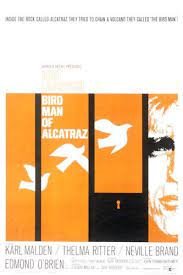
Birdman of Alcatraz (1962, Directed by John Frankenheimer)
You might not expect a story about a man and his birds to be this powerful, this astute in its observations on life, hope and redemption, or this aware of both nature and humanity. And yet here we are, finding our way into this particular man’s story, one given up on by the world, defined and judged by a past with no expectation of possible change, by way of the presence of a lone saparrow. Here we learn about what it means to pursue justice through restoration rather than retribution. We arrive at the individual by way of relationship with the other. If the first duty of life is to live, the last duty of life is to forgive, and in this we find real life. If both bird and man are confined by a cage, it is here that we gain a glimpse of that open door that seperates the cage from the world, liberation from slavery. This is where we learn to fly.
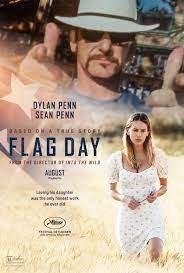
Flag Day (2021, Directed by Sean Penn)
A keenly aware family drama that thrives on its nuanced exploration of guilt and forgiveness and is colored by its sense of time and place and circumstance. This is a film that is as embodied within its characters as it is invested in its lived in spaces. Fire and flame plays a definitive role as a reigning metaphor here. It is both destructive and renewing, shaping the trajectory of these lives attempting to live in light of both tragedy and hope. Penn, in the Directors chair as well as in the role of the dad, imbues this with a melodramatic flair, but does so in order to play with these expectations. Which is a part of the beauty of the film. It’s real and its also transcendent, which is precisely where I found myself drawn so readily into its story.
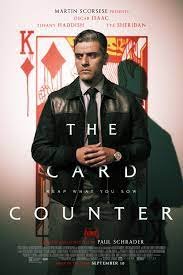
The Card Counter (2021, Directed by Paul Schrader)
A profoundly affecting follow up to the transcendent and thought provoking First Reformed, Paul Schrader gives us a more immediately accessible story and character this time around. Framing it around the symbolism and metaphor of the card counting, he follows a man’s journey towards undestanding the nature of forgiveness and redemption. What gives this journey its power is the marriage of personal, societal and familial tensions that exists within the film’s unconventional editing and style. Schrader sees this as the thing that can point us outside of ourselves to something greater. It is more accessible, yes, but no less transcendent.
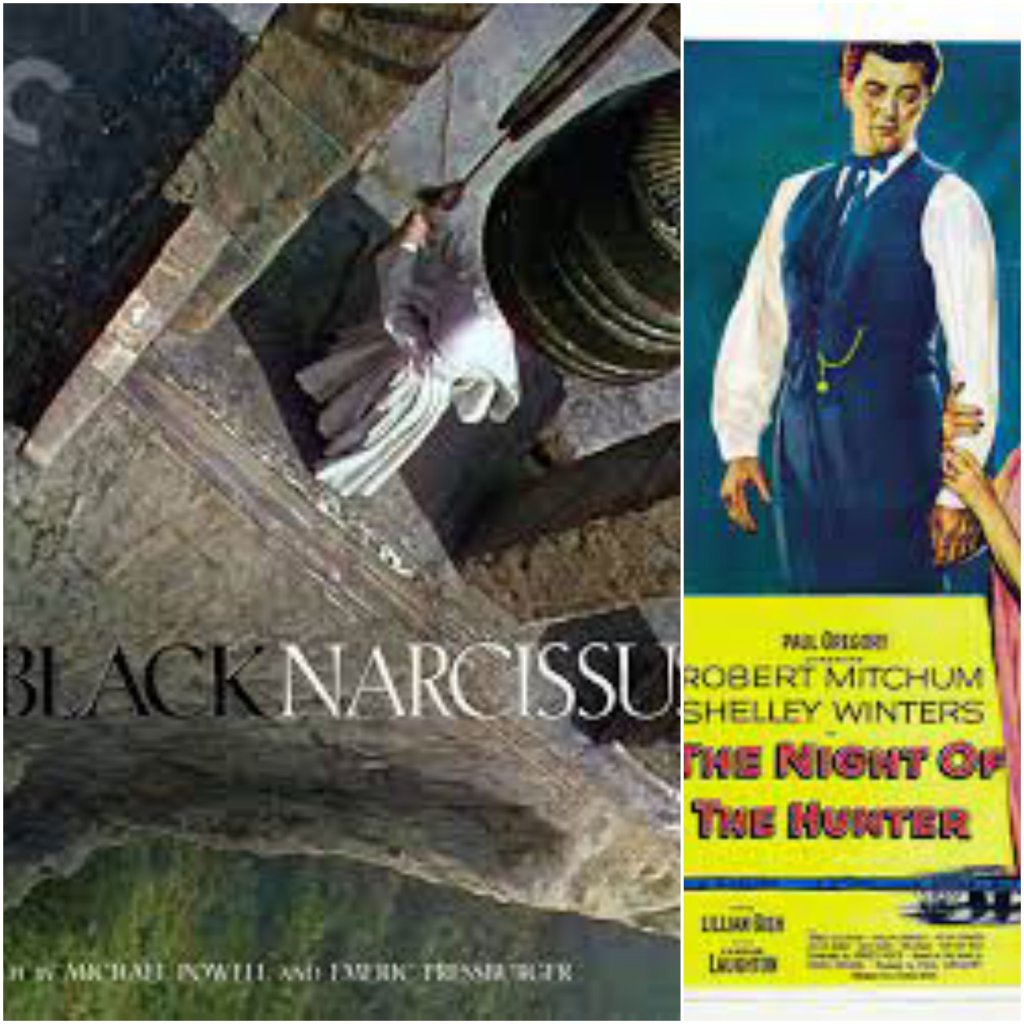
Black Narcissus (1947, Directed by Emeric Pressburger)/The Night of the Hunter (1955, Directed by Charles Laughton)
Figured I would combine these two as both are older films with a strong religious subtext and with the slight nuance of a horror premise. The first is soaked in realism, following a group of Anglican Nuns as they are sent to the Himalayas. Here they start a school and a hospital while navigating these different reltaionships that begin to form in this isolated place. Through this we get thoughts about faith, love and the human/societal/social struggle. In the latter we get a film that is much more poetic and visual, steeped in imagery and metaphor. This film explores the topic of faith, and particularly how it is that we approach our faith intellectually. Especially when hope and fear are held in necessary tension. Good and evil get representation here in its enigmatic main character, playing out into what is at its heart a childrens story, a grown up fairy tale if you will. Both beauifully shot and captured films with much on their minds that is worth wrestling with.
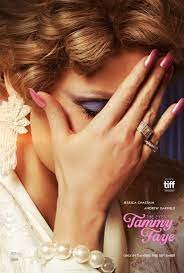
The Eyes of Tammy Faye (2021, Directed by Michael Showalter)
I imagine some might struggle with the attempt of this film to apply a degree of empathy to Faye’s character. Which is a shame, not only because this is precisely what this film sets out to do and does so well, but because this sheds light on an extremely problematic and contradictory nature that exists within society- the desire to judge the religious for judging others. The fervor with which people move to judge the Church with glee when scandals like this emerge results in a deep unwillingness to imagine an equal forgiveness, grace and redemption flowing to the Church at the same time. This is why this film is so important. It asks us to find the human in what are flawed characters. To imagine that whether within or outisde of a religious context people are still people. Or a flawed character, depicted with embodied and transformative precision by Jessica Chastain, which sees in Faye someone who deeply struggled under the oppressive reality of a powerful male dominated world. Hopefully this gains an audience, because it deserves it.
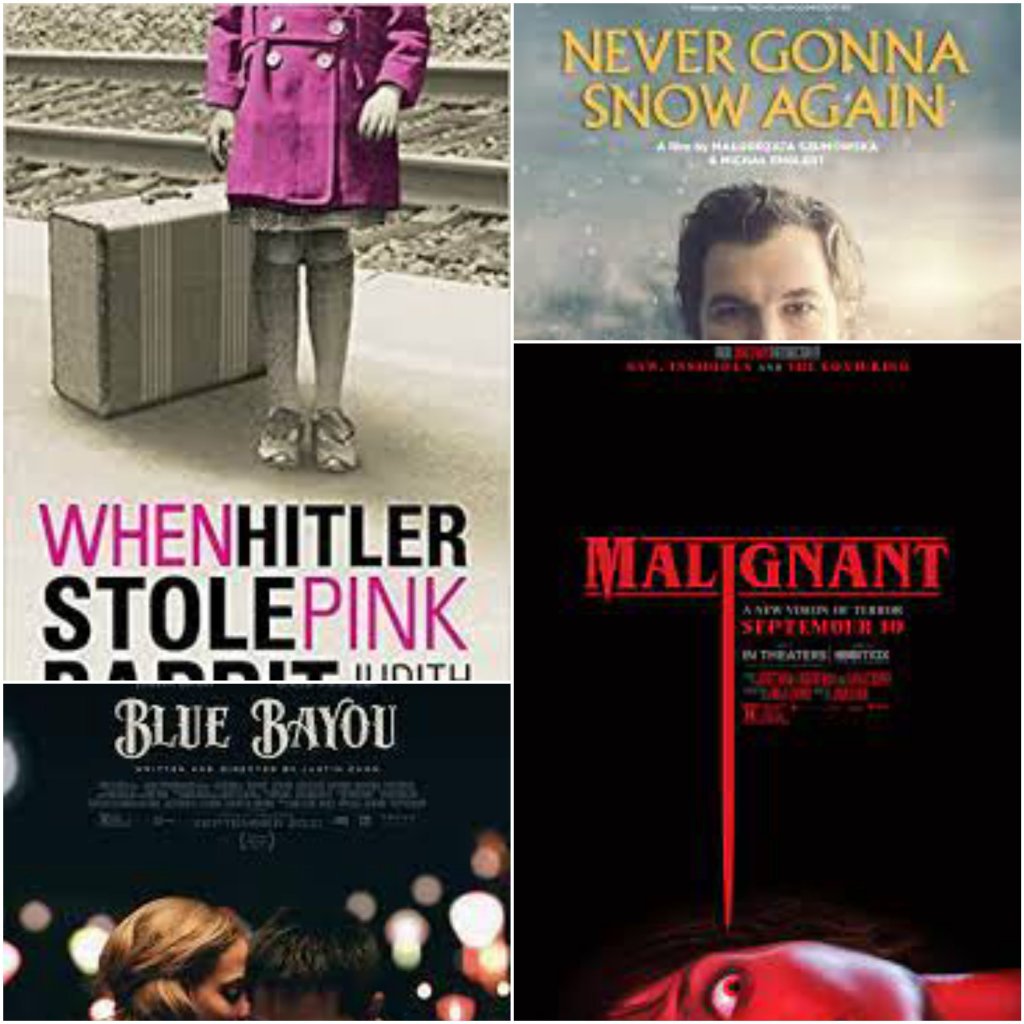
Honorable Mentions: When Hitler Stole Pink Rabbit is an introspective look at the life of a young woman looking back to 1933 where, as a nine year old Jewish girl in Berlin, her and her family were forced to flee to safety. The rabbit signfies something important that was left behind in the process, leading to a poignant reflection on what it means to have a home and belong somewhere. Never Gonna Snow Again is a powerful Canadian indie drama that, through a slow build examines the nature of the masks we wear and what happens when these masks get exposed in relationship to one another. Blue Bayou has gotten divided reactions, but for me I deeply resonated with its quiet examination of immigration through the very specific portrait of this family who stand to become a casaulty of current policies. Lastly, if you haven’t yet caught up with the twisty horror film Malignant, tis the season to do so. The third act alone is a great example of why the big screen is still relevant.
Books
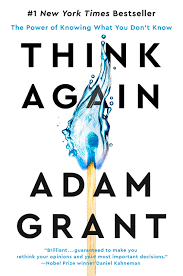
Think Again; The Power of Knowing What You Don’t Know by Adam M. Grant
I had a single gripe with this book, but it was a big one. I struggled with the reality that the way the material in this book is formulated could easily undercut its intentions. The whole point of the book’s central thesis- thinking better- is to help us to embody humility and thus bridge divides. Grant’s tendency to avoid the difference between the knowledge of facts and the knowledge of beliefs could easily lead to someone reading this and saying to the next religious person, see, I told you. Science for the win. Which is not Grant’s point, and actually misses his call for humility altogether. Knowing what we don’t know means always being wrong, and in being wrong constantly growing more into or towards rightness. But we can only do this by beginning with our assumptions and our beliefs. We grow and learn and challenge ourselves within these assumptions and beliefs, and while sometimes these larger frames do get deconstructed and shift, more often they don’t. Otherwise we would’t be able to actually live as truth becomes non-existent. Despite this potential for more divide, if we can read Grant’s book through the lens that i think he wants it to be read- in humility- it is full of hard hitting practical advice on how to think, and therefore be better.
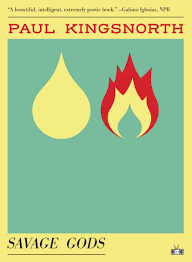
Savage Gods by Paul Kingsnorth
I got turned on to this author through a podcast, and this book is my first foray into his body of work. A semi auto-biography reflecting on his journey as an author, it provides a snapshot of someone who is lost but slowly, hopefully, finding his way. Not through certainty, but through the questions. He saves his most definite words about truthfulness for the last chapters, which is where I found the book at its weakest. Where we get his honest longings, tensions and uncertainties is where he shines, kicking my butt all over the place with his call to step into such spaces and recognize them for what they are.
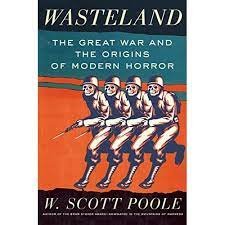
Wastelands: The Great War and the Origins of Modern Horror
A must read for anyone intrested in the horror genre, or even for those who are not. Explores how it is that horror captures the general feelings of the times we live in, giving it a way to be articulated in words or vision in a constantly contextualizing fashion. It does so though by rooting its emergence in the Great War, helping us as readers to see how it is that our own paradigms and understandings of the world play off of this all too often forgotten and neglected moment in time. To understand our world we need to understand what gave our world its shape, and the horror genre is a means towards that end.
The Good News of the Return of the King by Michael Jahosky
Functions as a powerful, modern apologetic, not in the old evangelical sense but in the philosophical sense. In preperation for the upcoming Amazon Lord of the Rings series it also is an amazing inroad into what the story actually is and what it was born from. Jahosky’s main thesis is that LOTR is a parable, and that brings with it a certain kind of storytelling that often gets missed when people detach it from Tolkien’s larger worldview of faith. This is an intentionally drawn and deeply entrenched Christian story that finds its resonance with the masses because of that, even if many don’t realize it. Limiting it to modern genre definitions of fantasy actually strips it of this power, and misinterprets it. I think Jahosky makes a pretty ironclad argument towards this end that, should readers be willing to examine their own relationship to the story, will open this up in a whole new way.

The Mysteries of Cinema: Movies and Imagination by Peter Conrad
Conrad uses a religious and Biblical framework to outline the evolution of the cinematic imagination. And for good reason. Cinema as religious expression is an apt allegory to begin with, but Conrad also demonsrates how uniquely tied cinema is to the religious experience itself. Moving from creation to the godlike presence of the Director, it is the illusionary nature of the artform that reaches for some sense of the sacred by bringing together image and reality in ways that make us open to seeing something more, something transcendent. We find in film the anticipation of hope, apocalyptic fears, both the human and the divine, material and immaterial, fairy tale and reality. And we find this in ways that are unique to cinema as an artform. And further as a “social” artform. It’s a reminder that cinema is born from and within a sense of community, something that is gradually being undercut by its formulation into content, individual curation and isolated viewing trends. The true power of film, as it is with religion, is found in the collective where our relationship with the transcendent contines to push us from our self centered ways into relationship with the Other.
Honorable Mentions: This Hallelujah Banquet: How the End of What We Were Reveals Who We Can Be by Eugene Peterson is a book born from a series of sermons Peterson gave early in his days as a pastor. It melds together his life’s work on the book of Revelation, the end result being a beautful reflection on how it is that the Christian faith understands itself as a series of endings with new beginnings, the very heart of the new creation reality. Similarly, This Beautiful Truth: How God’s Goodness Breaks into Our Darkness by Sarah Clarkson imagines the beauty of becoming in the here and now, goodness breaking into the darkness to reveal something new.
Podcasts and Other
3 Books With Neil Pasricha, Episode 97- Bookmark: Ologies
This particular espisode features an interview with Neil Pasricha, the author of The Happiness Equation and The Book of Awesome and the blog 1000 Awesome Things. It inspired a reflection in tihs space on the nature of happiness, and while I do challenge some of his lack of definitions in the larger discussion, his ideas and his approach, while dealing with obvious practical advice, is both insightful and welcome.
The Bema Podcast, Episodes 234-238- Jewish Roots
I’m still thrilled by the larger movement bridging the ill defined Christian-Jewish divide in both academic and laypersons circles. This can be traced back to the NPP, which has grown a diverse and intricate discussion filled with many wonderful voices. This taps into some of those voices over a multiple episode series, including one with the always wonderful Jen Rosner.
The Lord of Spirits, Episode 28- According to the Order of Melchizedek
The Lord of Spirits has a wonderful way of digging into both history and scripture from an Orthodox point of perspective, and the often difficult to understand imagery of Melchizedek is given the couple hour treatment here, diving into its formation as typology, exploring references throughout the Biblical narrative, and examining its importance in understanding Christ.

The Audo Long Read, Episode 667- The Real Urban Jungle; How Ancient Societies Reimagined What Cities Could Be
I’ve always been fascinated with the marriage of city/architecture and nature. Design and policies have much to do with social concern and the question of how it is that we live and exist together, an idealism that cities hold within their basic fabric and design, and this interesting episode narrows in on one example of how this might translate.

Bridgetown Audio Podast, Episode 694- Be With Jesus, Become Like Jesus, Do What Jesus Did
I am a fairly faithful listener of this podcast, which features sermons from the popular Church in the U.S.. This one landed particularly hard for me as it tapped into some topics and ideas that had been perculating in my mind regarding the simple act of bing a Christian. The title is indeed simple, but the sermon itself weaves it into a really strong and poignant reflection on the Gospel itself.
Music
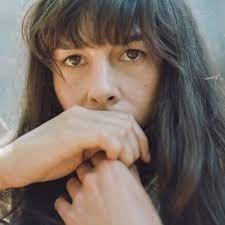
Madi Diaz- History of a Feeling
Madi Diaz’s new album, History of a Feeling, has an obvious context- a transition and a recent break up- but it reaches beyond this in order to capture a wide spectrum of emotions that can speak to things both past, present and hopeful. It’s easy to note the sheer control of her vocal performance, evident from the first track and holding the album in its grace filled grip. It’s also worth noting the brilliance of the songwriting itself, taking a muted soundscape and turning it into something with real strength and power, each note and each movement framing a larger, orchestrated narrative.
Arkells- Blink Once
Blink Once is at once familiar to anyone who has followed the band through the years. After their stripped down campfires release, this returns them to their 2018 form without skipping a beat. At the same time you can sense some added, and even experimental aspects, be it a straight up ballad, a guest vocalist, or moments of unexpected musical deviations (the title track feels notable for its synth like anthem vibe). For the most part this stays tried and true, while offering just enough to remind us this is a band not content to simply stick with the status quo. Lyrically it deals with the unexpected and finding ways to face reality with a certain kind of unspoken and undefined resiliance.
Thrice- Horizons/East
This album is admittedly hard to categorize. Gone is the more recent foray into overt and progressive melodies and hooks- this album requires a good deal of patience and work to fully appreciate. The intracacy of their songwriting is definitely still present, but it’s buried beneath the gradual and gradient arc of the songs themselves. Lyrically the album is equally demanding, offering us songs that feel largely left to the interpreter to parse out. There’s a felt direction to it all, but one that seems to ask for a degree of time and investment, both in experiencing it and likewise in its interpretation.
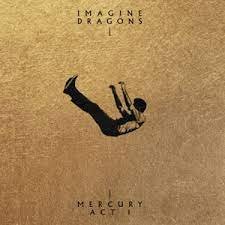
Imagine Dragons- Mercury: Act 1
Imagine Dragons has always reminded me of Jars of Clay. Which might sound like a weird comparison because musically the two bands share little to nothing in common. I say that because in both cases a band typically known for the odd, catchy single, really find their true voice in the songs that don’t catch the attention of the masses. Which is why Jars of Clay remains so deeply underappreciated. The brilliance of their songwriting remains lost in translation. Thankfully Imagine Dragon’s larger stage has helped keep them from fading into obscurity, and Mercury is the true reward for those familiar with their larger body of work. This just might be their best effort yet, particularly when it comes to the vocals, which stretch boundaries here and explore foreign territory.
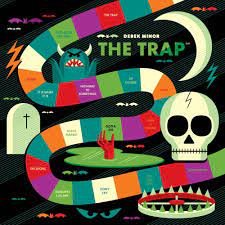
Derek Minor- The Trap
This is a definitive example of just how far Christian Hip Hop, or perhaps better, Hip Hop artists navigating their faith in an often hard edged and nuanced genre, has come. If Derek Minor has anything to say about the game, finding ways to exist as an artist, to be a person of faith, and not to fall into the trappings of such an ill defined industry divide, will help future artists of faith to travel this line with greater honestly, freedom and creativity. The secular-Christian divide might still exist in the shadows of that industries long and trepidated history, but thankfully this way of thinking is becoming less and less of a thing. And the reward is seeing an artist of faith transition into a period of unprecedented creativity. Here he tackles issues such as racism and police brutality head on, while laying tracks that move from simple to layered. A real accomplishment.
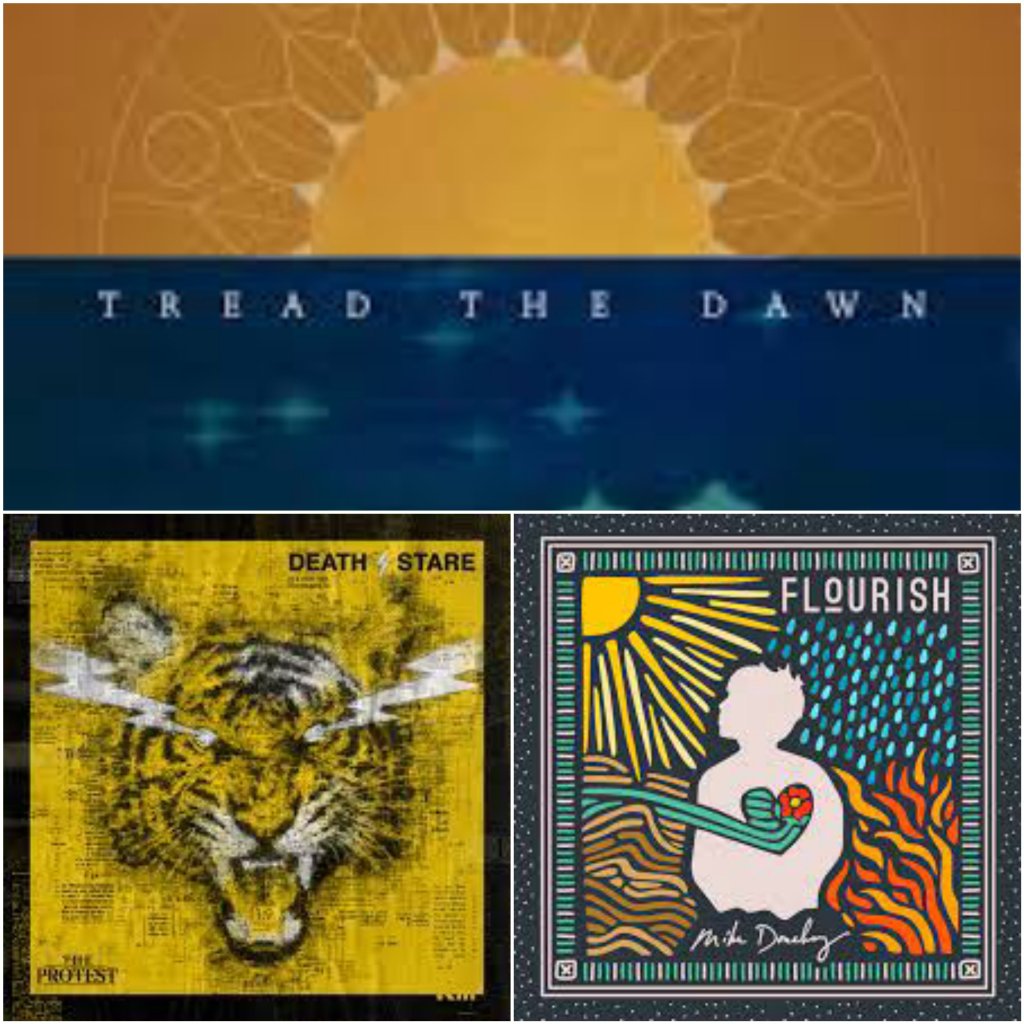
Honorable Mentions: I don’t listen to a lot of hardcore these days, but every once in a while I like to indulge. The Protest’s new album stands out for its emphasis on facing our fears and finding hope. The Grey Haven have been slowly releasing tracks over the recent months, and their full album lives up to its anticipation with big melodies and inspired tunes. Mike Donehey tackles spirituality with his album Flourish, a positive voice in trying times.
What’s In A Name?- The Fear of God Podcast
I wrote a reflection piece on the 2017 film My Life as a Zucchini. The reflection piece accompanies a recent podcast episode I participated in for the podcast. The piece is linked here, and the podcast episode can also be found through this site:
https://www.thefearofgodpodcast.com/blog/afterthoughtszucchini
The Happiness Equation and This Hallelujah Banquet- What Does it Mean to Be Happy
I had a slightly disorienting experience this week with one of my current reads (Eugene Peterson’s final book, This Hallelujah Banquet, and a recent podcast episode from Bookmark: Ologies (episode 97) and featuring an interview with Neil Pasricha, the author of The Book of Awesome/The Happiness Equation and the 1000 Awesome Things blog.
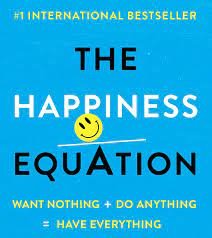
The episode, as is Pasricha’s book, is all about the importance of happiness and how to be happier than we currently are (as opposed to happy). Pasricha cites a lot of studies in his argument for the potential of present and future happiness, building it around his three A’s- Attitude, Awareness, and Authenticity. It’s worth noting that a simple google search brings up a plethora of articles all shaping their findings around similar sets of “threes” using different but similarly meaning words and equations.
Much of what Pasricha argues is common sense stuff that we intuitively know and should not be suprised by. The suprise perhaps comes from our inherent resistance to happiness. Some of this comes as a result of the evolutionary process (the fight or flight portion of our brain), some of it comes from social formation and experiences, and some of it from our addiction to the negative and the power of addictive activities such as smart phones and social media (which he submits is by design, although he leaves it a little unclear how much of this is tapping into the human condition or how much of it is shaping the human condition contrary to its nature).
Crucial to his understanding of happiness is the mathematical equation that sees the detmination of happiness parsed out in the following way- 50 percent is biological, 10 percent is circumstantial, and 40 percent is due to human choices. Although he cites this equation, I remain a bit skeptical on this front. It seems to me that there would be a necessary ebb and flow to this equation that is shaped by our experiences and our circumstnaces and our biology to differing degrees. To submit 40 percent to our choices also faces an uphill battle when wrestling with the science of what notions of free will actually is, and whether there is such a thing at all. To be taken seriously, or as something more than mere popular science attending to the emotions, this would need a lot of more work in my mind to exposit. Especially when it comes to contextualization, because human choice making up 40 percent of the Happiness Equation feels like an American centric way of thinking and viewing the world where the self made individual takes precedence. Which is ironic given that America rarely if never sits near the top of the only global happiness study that happens each year within the UN (a unique and collaborative researched agreement between all of the nations).
This is important to note because his entire premise depends on this equation being true. We can posit, for example, the science behind nature being good for us (like taking the time for a walks in the woods), but while this can remain true, circumstances can often render this more or less inconsequential or more or less helpful. Along with this, too much of his premise assumes his articulated vision of happiness leading to more productiveness leading to success (as opposed to the typical American dream, and in his case being from India and chasing after the American dream, that sees success as equal to happiness). The problem is he doesn’t really articulate what success is. What it is that we are motived towards. Why if, as he submits, happiness takes a lot of work and effort and doesn’t always promise reward, we should still invest in happiness in such a way.
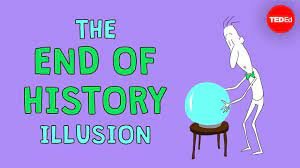
What perhaps brought this most to light for me is when he cites the article/study detailing the End of History Illusion (by Jordi Quoidbach and Daniel Gilbert). This study, which looked at around 19,000 individuals came to the overwhelming consensus that humans have a very real tendency to see their circumstances as staying the same when thinking about the future even though their past demonstrates that they do not in fact remain the same. When looking at the past we can see how who we are now and where we are now is different from who we were and where we were before, but for some reason our minds seem unable to translate that into hope for the future. As the article suggests, this has implications for how we then motivate ourselvses towards change by way of hope (although ineresting enough, change in this study, if measured by our past, still seems to occur regardless of hope).
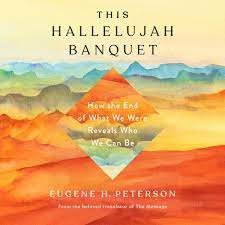
Getting to what was disorienting about this all, it was interesting then to crack open Peterson’s book titled “How the End of What We Were Reveals Who We Can Be”. I was not even 10 pages in when my mind started to make the connection between his words and the interview from the podcast. The overlap was undeniable. Now here is what is interesting. This book by Peterson, who has since passed away, was put together posthumuosly using a sermon series he gave in the 60’s and incorporating his ongoing work through the years on the book of Revelation. Peterson’s own understanding of the “end” of history would likely sound like this, quoting T.S. Elliot:
What we call the beginning is often the end. And to make an end is to make a beginning. The end is where we start from.”
page 3, This Hallelujah Banquet
Using the book of Revelation as his focal point, Peterson imagines this book as representing a point of crisis when it comes to “hope” and hope filled ideals. If Revelation says the future will be this, and life seems to reflect the opposite in the present, how do we then hope for a future that looks different than where we are now? Further, if, as Peterson submits, Revelation is being read wrongly as a future oriented vision, and the real call is to lay claim to its new creation vision in the here and now today, how do we reconcile the fact that today does not feel like this promised new creation vision?
These are the same sort of questions Pasricha is forced to confront with his own happiness equation. As Pasricha notes, these are the questions he gets most often- how do I take happiness seriously when circumstances seem to work towards the contrary? While I would encourage everyone to take the time to listen to his answer to this question, my own summary would boil it down to this- in all his encounters with people after the fact (of asking this question), he has never met anyone who looked back on a moment of distress years later and didn’t say that they are better for it. A job loss, well devastating in the moment, leads to better opportunities, for example.
What is revealing about this answer is that he confates reflection with “better” almost unintentionally. This to me sounds like the best answer one can come to when personal happiness alone, and for that matter happiness undefined (as he admits… it looks different for every person), remains the ultimate goal. He can speak of things like altruism as good, but only in the sense that it serves the self. He can speak of self care as necessary for good relationships, but again, only in so far as it serves the self. The equation- happiness leads to greater productivity leads to greater success- remains static and firm. Even if he chooses to see progress as the natural outcome of happiness, this is still remains the end to which we strive, with happiness intrinsicly tied to this view of success. To say or feel that we did something successful with the very few minutes that we ultimately have in this life, even if this is determined by our nature, becomes the goal, thus making success the determinitive factor. While he makes efforts to distinguish his response from those old platitudes such as “everything happens for a reason” or “things will get better”, I can’t help but hear those same platitudes simply colored by a slightly more hued sentimentality. Actual hope seems allusive and slightly superficially applied in his equation when we speak of such an end. At best it can say that the “science” shows that if we do this we will be more likely to be happy. At best it can relegate our motivation to the same nature that also binds us to our disillusionment with this world and that enables us to survive. It represents a bit of a quagmire that is stuck trying to piece together the researched parts of his premise into a confusing and unarticulated meta-narrative that doesn’t really exist. Self help notes given an intellectual tinge meant to drive us towards success using emotional touchpoints without any real sense of why or without any real concrete sense of promise that can actually lead to real hope.
Which is where Peterson’s words stand out for me. While he tackles the same subject with the same concerns and the same themes with some striking overlap in conclusions, Peterson’s approach to “hope” centers the endgame not on happiness or success but on the present as a new beginning. And what’s striking is how what he shares emerges from truth that the modern age has long buried with its efforts to kill off religion and that Pasricha is simply playing off of in his own way by citing this “surprising’ science. Listening to the host of the podcast respond to Pasricha’s insights (which they are) with an obvious sense of awe and confoundment underscores how it is that we see something as profound and even profoundly liberating. That this is the same stuff religion has posited long before Pasricha should tell us something crucial about the bigger questions of human nature and its relationship to the divine, however we define that. Which to me is the problem with Pasricha’s approach, is that without some sense of the divine this becomes little more than simply another repackaged expression of the modern project that has hid happiness from our midst and handed us a false illusion in its place. The End of History Illusion simpy replaces the illusion with a different one, with the question of what that illusion is being crucial to how we reconcile hope within this equation, be it in a given sense or purely in a materialist and scientific sense.
One point of overlap that both Peterson and Pasricha share is their insistance on honesty in our expressions of happiness. Anything less is superficial and false. Peterson’s own word for happiness is “praise”, but it follows the same trajectory. While Pasricha suggests that happiness is not faking our way through the tough stuff, nor is it ignoring the tough stuff, Peterson puts it this way:
If we are to live praising lives, robust lives of affirmation, we must live truly, honestly, and coureously. We cannot take shortcuts to the act of praising. We cannot praise prematurely
page 18, This Hallelujah Banquet
Pasricha essentially says something similar when he says happiness is hard work. We cannot take shorcuts. This acknowledges with Peterson that “We have moments, it is true, when we give praise. But mostly we are aware of wants, of needs, of frustrations, of incompletions.” (page 19, This Hallelujah Banquet). Pasricha would say this is both ingrained in us by our nature, persisted in us by our genetics, and manipulated/grown in us by culture and society. Thus the 40 percent of that equation that comes down to choice, or, although he never goes so far as to label it as such, free will, as our ticket to freedom from despair. We see the reality of hardship and failure and suffering and venture to overcome it. This is the great American dream. And in many ways, according to his philosophy, we endeavor to overcome the lesser parts our natures, or at least what we perceive to be the negative parts of our nature, because this is the great modern human project. By contrast, Peterson, seeing in this not simply the patterns of human nature but the pattern of the Biblical story, says ” We don’t become praising people by avoiding or skipping or denying the pain and the poverty and the doubt and the guilt but by entering into them, exploring them, minding their significance, embracing the reality of these experiences.” (p20, This Hallelujah Banquet) We come into this world crying and kicking and screaming. We grow into happiness (or for Peterson praise) by living into a fuller story. As Peterson writes,
The only way genuine, authentic, and deep praise is ever accomplished is by embracing what is real. By accepting whatever takes place and living through it as thoroughly as we are able in faith. For in these moments, in these passages, we become human.
page 22, This Hallelujah Banquet
This is what Peterson describes as the way of Christ. Many theologians and scholars of the Judeo-Christian story have noted this as the distinct and uniquely patterened way of redemptive suffering. This is, Peterson declares “why praise is so exhilerating. It has nothing to do with slapping a happy face on a bad situation and grinning through it. It is fashioned deep within us, out of the sin and guilt and doubt and lonely despaiar that neverthless believes.” (Page 23, This Hallelujah Banquet)
And “in that believing, becomes whole.” The way to become whole is to live a praising life, but not a superficial one, rather one of honesty. Although I don’t recall Pasricha using the word “wholeness”, this does feel inferred by some of his unarticulated and underlying motivating assumptions. Similarly, he would and does argue that happiness has to come honestly if it is to be worth anything. This is, however, where I would push back on his thesis. Because honesty is not necessary if happiness is simply an illusion. What matters is that we “feel” happy, not that this happiness reflects something true about our world and about ourselves. The science that informs Pasricha can be helpful and meaningful in terms of locating truth, to be sure (as in, if we do this there is a greater likelihood of this outcome, for example), but without a clear meta-narrative it remains both unnecessary, contextualized, limiting, and illusionary in nature. It is merely truth then to be used for the manipulation of our brains so as to perceive and experience this world as better than reality demonstrates it to be. And we do so either for self motivating purposes, species survival, and/or for determintive naturally derived aims.
Which gets at the heart of my own disorienting response to the book and the podcast this week. Pasricha’s work can be extremely helpful in a world that has been burdened and bogged down by the modern experiment for far too long. Many emergent writings are now dealing with the widespread problem of disenchantment. But it is helpful in so far as it can show the inner workings of a life that appears to orient us towards something greater than ourselves. This is why the “ends” matters. This is where Pasricha’s philosophy of happiness falls short. It hinges on a future that has an end that is shaky and inconsistent at best and outright lie at worst, and presents us with a vision of happiness that at one in the same time notes the damaging nature of competition and success oriented thinking while pushing us straight back into this equation as the ultimate goal. It’s no wonder disillusionment is so easy to come by. It is caught between the desire and the need to do away with desire. It is caught between the self made individual and the need to do away with illusions of the self. Which, its worth noting, is a long standing interest of philosophy. It depends on, as much of the science would show, memory weaving past and present into a self constructing narrative that then can imagine a future that we inherently distrust when faced with reality. In this sense, and what Pasricha would have to contend with for the science to really hold weight, what ultimately matters is not our present happiness but rather our ability to weave past experiences into a memory that says something different about our stories when looking back than we once thought. This is the metanarrative he employs. We create these illusions in order to be happy, and this follows us to our graves not based on what is “real” and “true” in a scientific sense, but rather on an experiential or feeling sense of what we want our life to be.
Peterson suggsets that for praise to emerge honestly it needs to contend with a hope filled present that enables us with a vision for the future that does not depend on our own ability to construct it. For him, the Biblical story imagines this by God being present now. God does not say “I will make all things new” but “I am making all things new”. This is why the claim of being the beginning and the end, the alpha and the omega, is so crucial to this definition of hope. In the ancient world this would have been spoken into an understanding of hypostasis (that God can be multiple things at once) that represents God as both possibly limited and unlimited in God’s nature all at once (see The Lord of Spirit’s podcast episode, According to the Order of Melchizedek for a good discussion of this). To speak of Yahweh using trinitarian type language is revelatory precisely because of the way it both contains God’s nature in a singular and limiting sense and in the way it then anchors God’s nature as a defining Truth where, as Peterson puts it, “the whole of time is his.” Beginning here indicates the “source and origin- the basic substratum underlying all things” rather than the idea of first and last, which presents us with a vision of reality where “every day is a new day for God, creation, and redemption.” In a poignant, added note Peterson adds that “it is only our blindness and sloth that keep us from seeing that openness in it.” (page 13 Hallelujah Banquet). Revelation, Peterson contends, has told us something about the future in that “it has taken the same gospel of Jesus Christ- that God is present with us to bring us to new life, to support us, to fulfill us- and applied it to the future. There is no different Gospel for the future than for the present or the past.” (page 12, This Hallelujah Banquet). In this sense Yahweh (or the Divine) is also distinguished in the ancient world from the creation (the sun, the moon the stars for example), so as to declare God’s presence within it.

So where does Peterson reorient my disoriented state of mind? I think he gets at a crucial part of what faith in the future, crucial to happiness, is and what it demonstrates. Happiness is not contingent on our success, nor is it relegated to simply a process of manipulating our illusions of reality so as to make us happier (welcome to the resurgance of interest in drugs and psychotics that can do this job for us). Rather, it is contingent on our growing awareness of truth itself. It sees endings as perpetual beginnings, but weaves this in light of a given meta-narrative that is constantly sweeping us up into a lager story of the Divine-Human-Creation relationship. Happiness therefore is not a feeling but a state of being in relationship to God and others. A state of increased knowing. This is the only way it can truly be detached from the competitive nature of success and our mutual natures. It is neither a loss of self nor the doing away with desire, rather it recognizes that self and desire have both true and false dseignations, and that this is made aware in relaltionship to another. And ultimately, the way to avoid finding happiness in our own image, or in basing our happiness on others, is to find our True identity in relationship to God/the Divine, which has the power to declare the Truth of our being, of reality, to be universally present, true, real and timeless. We are then free to step into Pasricha’s work and see it as offering glimpses of this Truth in its creative and responsive expression, indicatations that breathe their scientific observations into our reality in a way that then can shape us towards greater knowledge of self and God (or the Divine). This is how true hope can be made aware in our lives in a way that is not simply a part of a self constructing, self making endeavor with our happiness or success as its ultimate end. But rather a hope that sees in these endings of what we were the constant and ever unfolding story of new beginnings, the hope of who we are becoming in the pattern of God’s creative purposes and in light of the Divine image in which we find ourselves. This is where praise, or happiness, emerges as a state of being. This is where it emerges as a motivating aim. This is where it emerges with the potential for spiritual growth rather than success. This is where it emerges as hope.
 The Stories of my Life