2020 Retrospective: My Year in Film (Top Films of the Year)

And at last we come to my top films of the year. For me personally, I also like to highlight documentaries and special releases as there are more than enough dramatic films to fill multiple lists.

My favorite special release of 2020:

Black is King
This stunning “visual” album by Beyonce is an imaginative take on the familiar The Lion King story told with plenty of references and the subtext of real life struggle and social context. Plus, I don’t really have anwhere else to slot it. Black is truly queen here, and while I imagine and hope this will inspire plenty of young minds out there who need to hear the message of this film, for someone like me, an older white male, becoming familiar with the story behind the story is a big part of what makes this film imporant “as” a documentary.

My top 5 favorite documentaries of the year:

1. The Mole Agent

Beautiful, sobering, heart wrenching, powerful, funny, entertaining, memorable. What more could I ask for in my favorite documentary of the year.

What this film is about though unexpected lessons that emerge for the mole, an aging man looking for something to occupy his time, as he takes on this uncoventional opportunty for work, an idea that gives him a reinvigorated sense of life. Where it goes hits, and hits HARD. Especially for someone like me now firmly in the second half of life.

2. Time
Using home camera footage, Time constructs this story about a modern day matriarch and abolitionist in a way that is spellbounding and deeply affecting. It’s part love story, part social commentary, part liberation story, and all heart.

3. Robin’s Wish
It’s not exactly the most well constructed documentary out there. On a purely technical level it’s not even the best of the year. But for fans of Robin Williams and for anyone interested in his story and who he was, this tribute hits all the right marks. Be forewarned, it will make you cry.

4. Rewind
A heartbreaking look at sexual abuse. In following one young man’s endeavor to uncover their family story, the film looks to bring light to an all too often unspoken reality and the processes by which victims can begin to find healing.

5. Dick Johnson is Dead
A powerful depiction of alziemers and an even more powerful rumination on death. Be assured though, in the midst of both of these things life and the invitation to live is on full display, especially as it brings it ever so subtly into the realm of faith.

And finally, here is my official Top 20 Films of the Year:

20. Baby Teeth

19. The Assisant

18. The Nest

17. Never Rarely Sometimes Always

16. The Dark and the Wicked

15. Black Bear

14. Tommaso

13. Charm City Kings

12. Relic

11. Small Axe Anthology

10. The Personal History of David Copperfield

The Personal History of David Copperfield is one of three films this year that genuinely felt they were made just for me (the others being Wendy and Summerland). I love unconventional storytelling and less than linear narrative structures, and the way the Director experiments with different visuals to engage with these methods brought this story to life for me in a very real way. The frenetic pacing features a mix of all kinds of emotions, moving from very real joy to deeply felt sadness and back again, and the way the story is told finds a way to take a personal story and turns it into a universal truth regarding what it means to feel like you belong in this world. It brings together themes about the releationship between art and artist, and how this plays into the telling of our human stories in a meaninful way. And coming off of one of my worst films of 2020 (I’m Thinking of Ending Things), a film that left me depressed and angry and bitter, this film landed in a very timely sernse, helping me to reclaim that sense of life and wonder and hope that I felt had been stripped away. So very imaginative and for me so very welcome.

9. Summerland
Summerland is a story about childhood wonder set against the cynicism of the grown up world. In other words, this was made for me. It’s a wonder-filled story that uses myth, history and culture as a way of digging into the the truth of its very human concern and story. As it says, stories come from somewhere, and these stories reflect that shared need for hope amidst the darkness. The film parallels this same idea with the tendency to set modern ideas in conflict with ancient truths, challenging us to consider that just as growing up threatens our ability to believe, so do things like progress and the enlightenment. As this film posits though, to think that we have solved the mystery of life is not only misguided, its short sighted, and to have the world opened up for us again as a place of hope and wonder and imagination requires a necessary humility and a willingness to see again, to see anew.

8. On The Rocks

As cozy as a warm, comforting fire on a cold, fall/winter day, On the Rocks is the perfect tonic for these trying times. So glad to have the gift of Coppola and Murray gracing the big (and small) screen again. A special kind of combo that proves how much of a treasure both of them really are. But while we’re at it, let’s not undersell the chemistry between Murray and Rashida Jones. They are a match made in heaven.

7. To The Stars

This film swept me up, had me under its spell, and never let me go. The small town charm, the simple Oklahoma backdrop, the well drawn characters, the gorgeous camera work. It all deserves mention here, but really it’s the performances and the script that elevate this to something special. This is a film about friendship, bit even more than this it is a film about friendship in a particular place and time.

To the stars holds layered meaning here, both in the sense of the secluded place that holds the unfolding friendship in sacred hands, and in the more symbolic notion of inner dreams, longings and struggles. These are characters who are trying to escape their circumstances, but maybe even more so themselves.

6. Wendy

Every once in a while I encounter a film that feels like it was made just for me. This was one of those films. An interpretative take on the familiar Peter Pan story, Zeitlin, the Director of the equally imaginative Beasts of the Souther Wild, gives us an inspired and emotionally gripping examination of childhood lost and reclaimed. Wendy is a reminder that no matter how big the struggle, no matter how much “grown up” life has stolen, hope remains and the adventure continues.

5. First Cow

Kelly Reichhardt returns to the screen with one of her most reflective and introspective works to date. Here she returns to Oregon, this time set in 1820 and telling a singular and particular story adapted from author Jonathan Raymond’s book, The Half Life. At the same time it also manages to be a universal story about what it means to not only co-exist, but to persist within the trappings of the great American Dream. It’s simple and spacious, but also bursting with imagery that looks to evoke a sense of time, a kind of vision of an expectant modernity that looks backwards and forwards at the same time, uncovering history and anticipating from within its present landscape of diverse peoples and weighted nature some idea of an uncertain future. There is a beauty in the way she captures this functioning society in its innerworkings, but also a solemn reminder of what it so often becomes in its rush towards progress.

4. Wolfwalkers

This stunning, animated feature from the studio that gave us the likes of The Book of Kells and Song of Seas is a love letter to Irish culture. Capturing a time in its history where they were under the control of Cromwell and the British colonizers, this intricately drawn portrait of a people forced to lose sight and let go of their spiritual identity comes alive in its efforts to reclaim its buried and forgotten past. The animation is nothing short of brilliant, using its 2D hand drawn format to play around with different kinds of filming, shifting between split screens, aspect rations, different blends of colors and different kinds of images to evoke this sense of two worlds contrasted alongside one another in a working tension. Equally stunning is the music, both the soundtrack and score which help give this film its transcendent quality, especially as it blends with themes that run through elements of friendship, family, the oppresion of woman and the strength of the woman’s voice, the darkness of these kinds of colonizing powers, and ultimatley the power of the spirit that brings together the human and the divine. These are weighty subjects for a children’s film, but it is wrapped up in a story that any child will be able to resonate with.

3. Sound of Metal

Talking about Sound of Metal will inevitable lead to its impressive sound design and its memorable lead performance, both of which represent this film’s greatest strengths. For me though it is the narrative that caught me off guard. As someone with a large degree of hearing loss, the way this film opens up that world for those who do not and cannot otherwise understand this experience is humbling and inspiring. It never treats it as a disability, but rather sees it as someting one must learn to adapt towards. To this end, the main characater arc in this film is underappreciated I think for how it navigates this journey from someone who can hear to someone who cannot, and the ways in which this changes his everyday life. What is truly stunning about this film aside from the many things I have alredy mentioned is how all of the supporting characters in this film feel fully fleshed out and absolutely necessary to the story even when they are in the film for only a very short time. This is a testament to the film’s script which never loses a step along this incredibly nuanced and complex journey.

2. The Truth

When this new film from the ridiculously talented Hirokezu Kore-eda came out it inspired some lengthy reflection from me on its themes and its characters. This is Kore-eda’s most accessible film to date, and is described as his first film made for Western audiences. The question that frames the story’s journey is, “what will you say when you get to Heaven”, with the truth having layered meaning as it digs into the life of our main character. There is a film within a film narrative device at play here that is incorporated with vision and purpose, and it provides the bridge for us to see our main character’s professional life from the lens of her family context. Here the Director is also able to use this film within a film device to cleverly imagine this quesiton from the perspective of these generations, bringing in discussions about the passage of time drawing lines between what it is to consider what is performance and what is truth, and gradually bringing us to a point of necessary self reflection. It’s a powerful journey, and one that is both shared and deeply personal.

1. Soul

As the caption for this film says, “is all this living really worth dying for?” Not exactly the kind of existential question you might expect to find in a children’s animated film, but Soul proves to be the most adult film Pixar has made yet. This film is everything that we need right now during these gouth times, and its abiblity to break through all the clutter and the noise of different emotions and feelings with a message of hope is a true gift.

In navigating questions about complex emotions, with topics like purpose, meaning and personality on its mind. It weaves these things into its jazzy script that takes the time to lay out its foundation through a world building process before giving itsself over to improvisation. In establishing this concept of the great before and the great beyond, what the film can then begin to explore is the present. The regular living. The spiritual awakening. And what this film does is invite us into this process of dying to ourselves so that we can gain perspective on what it is to live again, to truly live, to find that spark that carrires us foward. A perfect film to not only end the year on, but to begin a new one.

2020 Retrospective: My Year In Film (Film Travels 2020)

Back in December of 2019, I came up with the idea of travelling the world through film in 2020 and tagged it filmtravels2020. This would include compiling and watching films from that Country where available, researching that Country’s film history, and doing a reflection on what I learned where time allowed.

To be honest, when I came up with the idea I had no idea how far I would get with this exercise. It felt a bit ambitious, and tracking down films from all of these different Countries was certainly going to represent a challenge. But then Covid hit, and the film travels not only seemed that much more doable, but also timely. When you can’t actually go anywhere physically, what better way to see the world than through their films?

While I’m certain there are more Countries represented in the lengthy list of films I was able to watch in 2020, in terms of intention I tallied my final log as visiting 25 Countries in 12 months. Over these 12 months I feel I learned a lot about how the film industry works not just here in my own Country, but on a global scale, making this endeavor a worthwhile investment

TOP FILMS FROM MY TRAVELS AROUND THE WORLD

For each Country that I visited, I tallied and ranked my list of films. I broke this down by Country below listing my top 3 films from each Country with a brief descriptive and spotlighting one worthwhile title that I think captures the essence of that Country. The ones not included here are Ukraine, Philippines, and India.

AUSTRALIA
Mad Max: Fury Road
The Great Gatsby
Sweet Country

In the spotlight: Hotel Sorrento

One of challenges the Australian film industry has faced over the years is its over reliance on international (read: American) features. This has made it a challenge for getting Austalians to actually watch Australian films, which plays an important role in telling the story of their culture. Hotel Sorrento sheds a light on this disconnect by telling the story of a writer who wrote a book about the Australia she left behind and returns to her homeland to attempt to reconcile its modern story with the story from her memory. This mirrors the story of the Director who was trying to recapture a sense of Australian identity through this film, and the result is a passionate love letter to her country along with an examination of the relationship between art, the people and culture.

ITALY
Cinema Paradiso
Bicycle Thieves

Tree of Wooden Clogs

In the Spotlight: Journey to Italy

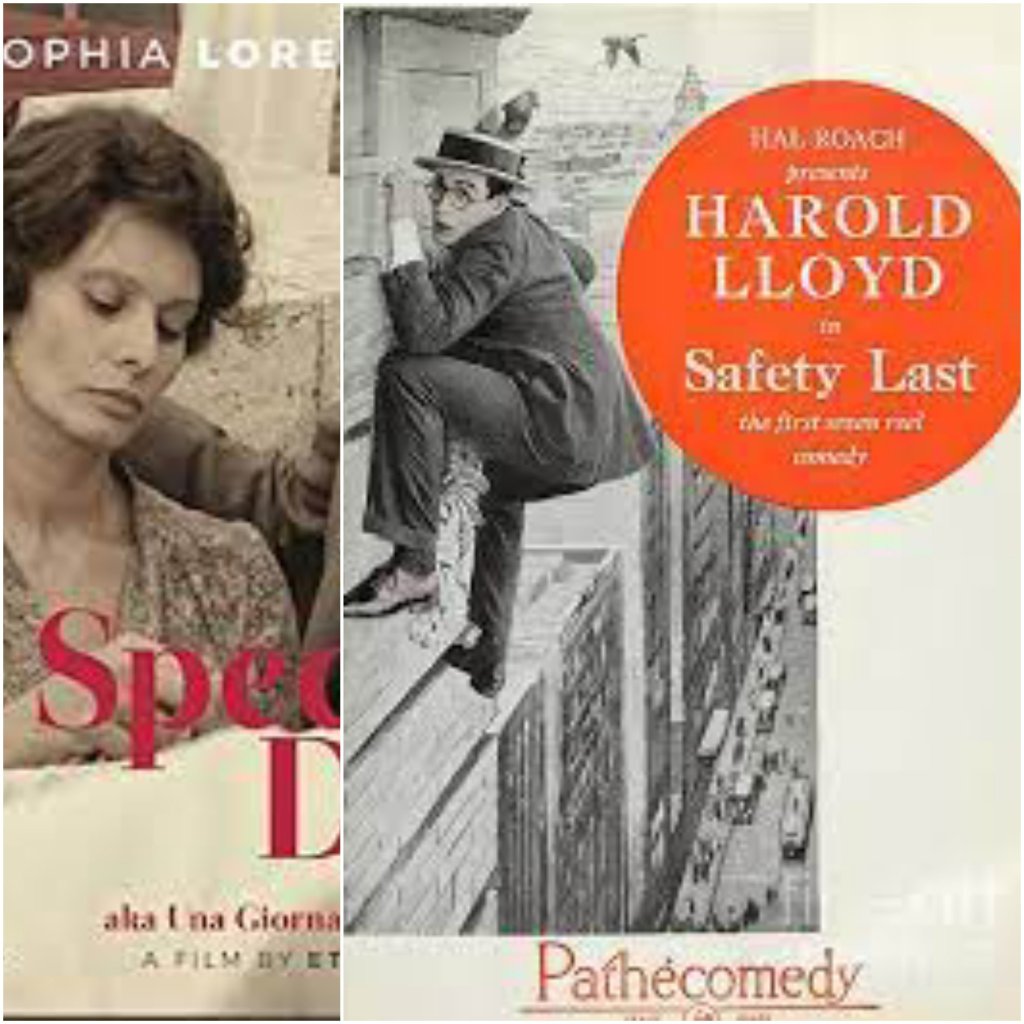
The list of Italian films that I could have chosen to highlight is vast. Failing to mention classic works like Umberto D. and even the more modern Happy as Lazzaro feels like a travesty. It was my favorite Country to visit, and their role in shaping the film industry on a global front while retaining their unique sense of of culture is nothing short of astonishing. The reason I chose Journey to Italy to highlight is because it functions as the perfect film both for gaining a sense of Italian culture and Countryside and for getting to know the rich legacy of Italian neo-realism. The way it gives us the perspective of these keen eyed, curious tourists brings Italy to life in its romanticized and idealized form without ever losing sight of the authentic markings of what is a very real and inhabited culture.

TAIWAN

The Tiime to Live and the Time to Die
A Brighter Summer Day
Yi Yi

In the spotlight: Eat Drink Man Woman

One of the most amazing aspects of Taiwanese film is its connection to a real sense of place. You can note much of the symmetry similar to Japanese film, along with it’s tendency to balance this framing of intiimate living quarters with the larger backdrop of the culture, country or city. Taiwanese films tend to be much quieter and much more specific than Japanese films though despite these similarities, something you can see even in one of it’s most recent works, this years A Sun, a sauntering journey through the life of a fractured family. I easily could have picked any of the above films to spotlight as they all shed light on a specific moment in Taiwan’s history, including the epic A City of Sadness. The reason I chose Eat Drink Man Woman is because of the unique way in which it offers us a sense of the culture through its food. The human drama is just as compelling, but there was something special about considering the connections between this family through the simple nature of dish, of the cuisine that helps them locate themselves in the comfot and familiarity of their traditions.

SOUTH KOREA

The Wailing
The World of Us
Secret Sunshine

In the Spotlight: A Taxi Driver

America was thankfully awoken this past year to the wonder of South Korean film through the immensly popular Parasite, a film that managed to find its cultural moment in an unparalleled fashion. Which is great, because there are rich treasures that await anyone willing to dive into the Country’s rich catalogue of directers and films. One of these films is Jang Hoon’s A Taxi Driver, a film that is equal parts devastating and heartwarming as it journey’s through South Korea at a pivotal point in their history. What might have been most compelling to me about this film is the way it shed light on this Korean man’s willingness to see his collective family (his community) as valued as his immediate family. This feels like an afront to Western sensibitilies where the value of the individual tends to be elevated above all, but this is part of the power of watching international films is that it can open you up to to the sensibilities, world views and assumptions of other cultures.

IRAN

Certified Copy
A Seperation
Children of Heaven

In the spotlight: 3 Faces

It was tough to single out one film that could accurately reflect Iranian film history and culture. Iran proved to be such a fascinating culture to travel through precisely because of the ways in which so many Iranian Directors are writing Iranian stories from the outside looking in. Iran’s history has this interesting mix of progressivism and traditionalism that are at once in contest but also seemingly in conversation. And while it would be impossible to talk about Iran without going through Asghar Farhadi, represnted above in the spectacular and emotional film A Seperation, Farhadi is far from the only filmmaker doing incredible work. I toyed with the earlier classic The Cow, a film that brings Iranian culture front and center, and one of my favorites, Radio Dreams, which tells the story of an Iranian writer using music as a way into the Country’s ethos. But I landed on more recent film called 3 Faces because of its ability to shed light on the plight of women in Iranian cinema, and likwise the incredible strength Iranian women have had in finding and retaining their voice.

FRANCE
Certified Copy
Au Hasard Bauthazar
The 400 Blows

In the spotlight: Playtime

In contest with Italy as one of the most relevant film cultures in cinema’s history, France’s lengthy list of films feels as endless as its influence. They have consistently demonstrated an ability to experiment while also valuing the artform as something accessible, culturally specific and universally applicable. Perhaps there is no greater example of this than the joyous romp through Paris that is Jacques Tati’s Playtime. The interest in capturing a place in time and amidst change is as brilliantly imagined as it is thrilling to experience.

SPAIN

The Skin I Live In

The Orphanage

Timecrimes

In the spotlight: Pain and Glory

As history goes, often understanding the influences of one place can help shed light on the character of another. This can come from the reality of conquest and colonization. It can also be because of the ways in which certain cultural trends flowing inwards came to define a dominant Country’s own ethos. Spain is both of these things, being a window into much of South America while also understanding itself through the influences of surrounding Countries, including Fance and Italy. Although Spanish film certainly reaches further than Antonio Banderas and Pedro Almmodovar, it is near impossible to overlook their presence in the local industry and abroad. Pain and Glory is their most recent collaboration, and it is not only visually wonderful and ambitious in its narrative structure, it is a window into the story of the Director, shedding light on what it is to live and embody Spanish culture

MEXICO

Pans Labyrinth

Tigers Are Not Afriad

Amores Perro

In the spotlight: El Violin

Del Toro is my favorite Director of all time so it would be easy for me to highlight any of his work as a staple of the Mexican cinematic identity, but one of the Mexican films I saw in my travels that blew me away in its ability to narrow in on the culture’s nuances and sensibiltiies is El Violin (The Violin). It takes place in an unnamed Latin American country that clearly is meant to symbolize Mexico, and by telling its story with a generational focus it is able to give us a picture of the Country and its challenges and its people that feels more aware and intimate than any other film I saw on my travels.

SOUTH AMERICA

The Film Critic

Behind the Sun

Wild Tales

Embrace the Serpent

Aquarius

Monos

In the Spotlight: City of God

I included five films here because the area encompassed by South America is vast and diverse. I narrowed it down because I included it as a collective body of films in my travels while researching the distinct cultural flavors of each Country during my travels. The unifying language of revolution runs through these Countries, with another common narrative being Mexico’s distinguishing presence sheltering them from the invading force of the American Hollywood industry. There is a more modern presence in the film industries I encountered, and thus much of the films available are from this perspective. City of God actually tells a story from the 80’s, but it is without a doubt the film that comes to mind when I think of South America. It tells the story of a place, but in the way it focuses on the people helps to make this a great window into this exercise of learning to see the world and struggle through the eyes of others.

DENMARK

Ordet
The Hunt
As it is in Heaven

In the Spotlight: Pelle The Conqueror

For as interconnected as all of the scandinavian/eureopean industries are, it was also a lot of fun getting to know some of the distinctives that set them apart. As I learned, much of this has to do with how events such as the war impacted the Countries in different ways, with Denmark’s history bearing more weight to this end than a place like Iceland or Sweden. What also becomes very aware when moving through Denmark’s cinematic history is an emphasis on the rural/urban relationship, with Pelle The Conqueror being a distinct example of a film that sheds light on the intimate nature of this relationship as one full of hope and struggle, particiticularly from the eyes of an immigrant family.

POLAND
Ida
The Mill and the Cross
Loving Vincent

In the Spotlight: Cold War

I loved reading about the journey of Poland through the history of its cinema. It would be nice to read of these industries as a unified story of its birth, its development and its success, but that is not the story of every industry. Poland’s struggles are a great example of how a Country’s film industry can both mirror and impact a Country’s socio poliitical reality and its sense of identity. The films that have emerged from this struggle, especially those who have managed to gain an international presence, have proved to hold immense power as cinematic storytelling. Cold War is no excpetion. From the Director of Ida, it really takes us inside Polish culture in a way that feels honest and deeply connected. It’s a beautiful film on a visual and narrative level, but it is the smaller things like the music and the people and the setting that made this one so memorable. Truly felt like I went on a journey there and back.

Germany

Phoneix
Stations of the Cross
The Last Laugh (1924)

In the Spotlight: Never Look Away

There is a wonderful war film named Land of Mine that tells the story of a particular group of soldiers in post war Germany. It’s one of the best war films I’ve seen this year, told with humanity and tension. The film that best captures Germany to me though is the recent Never Look Away. It’s emphasis on the relationship between culture and art not only helps to shed a light on the German people and their heritage and history, it speaks to the German Expressionism that came to define its long cinematic heritage. One of the challenges for Germany is finding a way to tell their stories that doesn’t simply do away with or dwell on the darkness of its past. Making their past a part of their fabric while also capturing a people able to emerge from those shadows in a renewed sense of reform is what these more modern films aim to do, and thankfully they have a rich history reaching back to the ealry 1900’s to pull from for inspiration.

JAPAN
Departures
Millennieum Actress
Tokyo Story

In the Spotlight: Seven Samurai

Japan was a relatively easy Country to travel through because of its strong presence abroad in North America, a well established industry, and a wealth of great and important films to see. This accessibility shouldn’t neglect the necessary conversation about Japanese culture though. Researching Japan’s film industry revealed a complicated relationship, especially where it exists between Japan and China and Japan and America, two economic giants. The same relationship that makes Japanese culture so accessible in North America leads to necessary diligence in assuring that their film industry doesn’t simply get assimilated into foreign ideas and structures. The biggest way they have done this is by using their films to anchor their identity in their sense of history, which reaches much further back than America. This history then translates into a sense of celebrated identity. This is the story that surrounds the making of Seven Samurai, a film that intended to break into the American industry by telling the Japanese story. It remains one of the most well known international features and one of the great classics of Japanese cinema.

CHINA
Ash is Purest White
Shadow

Long Journey Into Night

In the Spotlight: The Assassin

China’s industry is a discussion of seeming contradiction. It mirrors the American industry in may ways, dividing itself by it’s wealth of high budget blockbusters and historical dramas/high art. The overall aesthetic of Chinese films tends to be quite different than Taiwan despite the relationship between the two, with China’s film’s being busier with higher budgets and a more sweeping sense of history. The Assassin is a great example of this kind of film on the high art end of things. It’s a beautifully drawn epic that is rich in history and features expansive landscapes. It offers great insight into the cultural nuances as well, entrenched in the tradtion, worldview and cultural practices.

SWEDEN

Wild Strawberries
Let the Right One In

The Sacrifice

In the Spotlight) Force Majeure

One of the reasons I chose to spotlight Force Majeure in light of Ingmar Bergman’s illustrious and storied career is because of the opprotunity it gave me this year to compare the Swedish version with the American remake. This is a window into the specific ways in which two different cultures can approach the same narrative with an entirely different set of questions and concerns in mind. The existenstial nature of Force Majeure that is willing to sit in the tension stands as a contrast to the need for the American version to present its story as a more progressive structure with something concrete to say. The collective focus of the original also stands in constrast with the individualism of the remake. This existential quality is of course written all over the Swedish culture, with The Sacrifice being another great example. These films are always challenging, and offer great insight into the point of view of a culture and their experiences.

I also need to give a nod to a Swedish film called The Phantom Carriage. It’s such a great window into the Swedish landscape and culture, a film that utilizes its sense of place and time as well.

NORWAY

A Man Called Ove

Oslo, August 31st

The 12th Man

In the Spotlight: King of Devil’s Island

Compared to other European Countries, Norway’s film industry didn’t develop until much later, putting it’s development in line with World War 2 and thus putting it in a good position to recreate itself in the post war period. Documentaries and documentary style is big in Norway with the later developments following after the French New Wave and American modernist movements. The stories that did emerge were a mix of culturally dark material, cynicism, and social commentary. The King of Devil’s Island is a good example of these kinds of qualities, especially given how it tells a part of Norway’s history, but with a modernist flare for also telling an entertaining story.

IRELAND
Brooklyn

Calvary

Hunger

In the Spotlight: The Secret of Roan Inish

Anyone familiar with Ireland and Irish heritage will know that Ireland knows how to tell a good story. It’s written into their DNA, and although Irish film are entrenched in social reform and resistance, one doesn’t need to look far to find the beauty of their tradition, their land and their people being captured through their film. The Secret of Roan Inish is a great example of this kind of magical and often highly romatic storytelling. It sweeps you away into is lore and asks you to imagine a world where the secrets of the land and their lives as people exist in an intimate and expressive relationship, always ready to reveal itself to the other in its necessary timing.

UK
The Souvenir
Never Let Me Go
A Matter of Life and Death

In the Spotlight: When the Wind Blows

The U.K. isn’t exactly the biggest leap from my home Country of Canada, but there are still some very specific differences that emerge in terms of culture. The uninhibited nature of Canadian films which tend to be small in focus and big on that northern anything goes mentality, gives way to a slightly more high minded and sophisticated brand of film. When the Wind Blows is a perfect example of this kind of sophistication, which displays this same kind of uninhibited appraoch just with a greater rootedness in their history and intellectual vigor. All of the loveliness of the Biritish spirit comes alive in this animated film, while its dark edges also refuse to be polished. You get the sense that stories like these emerge from somwhere concrete and visible, something that British history is able to afford its films in a very real way.

AFRICA
A Screaming Man
Atlantics
Cairo Station

In the Spotlight: I Am Not A Witch

Not unlike my trip through South America, my trip through Africa brought together diverse cultures with a common identity and experience. The reason African cinema has taken so long to develop mirrors the reasons for its current resurgence and development- colonization and oppression that worked to disconnect them from their story. Building their film industry means recovering and telling their story, which is precisely what they have set out to do. There is a celebratory nature to films from South Africa that is aware of its past but also hopeful for its future, and gaining this perspective is a big part of what is driving these storytellers forward. Being able to capature this on film through language, experience, worldview, spiritual belief systems, and pariticular politics and revolutionaries represents a world of untapped potential ready to take visual form. The harrowing feature I Am Not a Witch takes us inside a culture and language in a way that gives it presence, urgency and life. It’s a beatuful if difficult portrait of a people and their struggle.

RUSSIA
Leviathan/The Return/Loveless/Banishment
Beanpole
Hard to Be a God

In the spotlight: How I ended This Summer

Cold and harsh might be a recognizable distinctive of Russian culture, but it is also highly intellectual. It would be rare to encounter a serious Russian film that veers towards the superficial, and many of them are intently interested in the question of human worth, especially as it has something to say about hardship and struggle. What I like about How I Ended This Summer, even if it would be impossible to speak of Russia without acknowledging my favorite Director (Anrey Zvyagintsev of Leviathan and The Return), is the way it tells the story of an everyday, normal young man recently graduated and taking an interim over the summer so that he can figure out what he wants to do with his life. This is contrasted with the older man who is his boss, offering us these two perspectives on life in Russia. It’s a really interesting character study that brings in certain cultural assumptions in order to tell its story from the perspective of these young ambitions and this world weariness.

Iceland
Woman at War
Heartstone
Juniper Tree

In the Spotlight: Metalhead
Not unlike the other European countrires that surround it, Iceland is a study of the ways in which certain levels of isolation, homogenuity, and specific economic realities can shape a Country’s culture in very particular ways. When it comes to film, this becomes readily apparent in Iceland’s penchant for matter of factness when it comes to life and awareness of it. There’s an illustriousness to their films that comes from an industry that hasn’t faced a lot of struggle and change but that also remains modest and focused on life lived in their Country. This is paired with the darker edges of their locale, which can be both a point of mundaness and beauty. It is out of this that we get something like Metalhead, a film that finds something universal in the particular and seemingly very Iceleandic story of this young girl caught between two worlds, or two ideas of the world she occupies.

2020 Retrospective: My Year in Film (Stats, First Time Watches, and Outliers)

It’s that time of year when many of us spend time looking back on the year that was. For us cinephiles that means making lists, checking them twice and trying to decide which films were deserving and which films were not. In Part 1 of my 2020 retrospective on film, I look here at my personal stats, some of the pre-2020 first time watches that left their mark, and then look at some of the outliers from the 2020 slate of films that did not make my top 20 list but that deserve your attention.

Part 2 will look back at my filmtravels2020 exercise, and Part 3 will finally look at my top 20 of 2020.


My Peresonal Stats
Every year I log all the films I watch on Letterboxd, an online community and database that allows you to to create diaries, lists, and track personal stats.

Here are some of my stats from this yearTotal number of films watched in 2020:Total number of 2020 Releases watched:

Total number of films watched in a lifetime at the end of the year: 4,118
Total Number of Films Watched in 2020: 1,175
Total Number of 2020 Releases Viewed: 238
Peak viewing Months: June (40) and December (38)
Monthly Viewing Average: 97.9 films
Weekly Viewing Average: 22.2 films
Most watched genres in 2020: Drama (738) and Horror/Thriller (451)
Most watched Directors: Alfred Hitchcock (28 films, Hayao Miyazaki (8 films), Fritz Lang (6 films), Steve McQueen (6 films), Michelangelo Antonioni (5 films), Jean-Luc Godard (5 films), Isao Takahata (4 films), Wilson Yip (4 films), Ingmar Bergman (4 films), Jean-Pierre Melville (3 films)

A couple of added notes on these stats:
1. I surpassed and celebrated my 4,000th film watched, which for me was significant.

2. At the beginning of the year I revamped the focus of my reviews to read more simply and more coherently with my ratings. That included rewriting the description of my star rating and defining my reviews as mostly interested in theme and story rather than the technicals. Narrative is what speaks to me the most.

One outcome of this was a greater participation in Letterboxd community. I started the year with approximately 60 followers, and I ended the year with 409 followers, which is significant not becuase of the number but because it seems to indicate that something in my approach to dialoguing about film seems to be connecting with others, and conversation about film is a value that I uphold.

First Time Watches
In a year where I had anticipated dialing back on the number of films I watch and making my viewings more intentional, well… it’s been a year, that’s for sure. With theaters being shutdown because of Covid it has changed release patterns, how we see films, and the way we converse about films on a number of levels. Time off of work in 2020 also meant watching more film.

Given that most of these films were first time watches (60 of the total watches were rewatches), there were plenty of changes to my personalized lists. Leaving any new international favorites to my filmtravels2020 summary post, an endeaver I took on at the beginning of the year, here are some notable films that stood out:
1. A rewatch of TOLKIEN bumped up my rating and made it one of a few new 5 star additions (5/5) that joined my all time favorites list.

2. ONCE UPON A TIME IN THE WEST became my new favorite Western (also one of my new 5 star additions)

3. Two genres that saw the most changes in terms of my personal favorites lists: horror and animated.

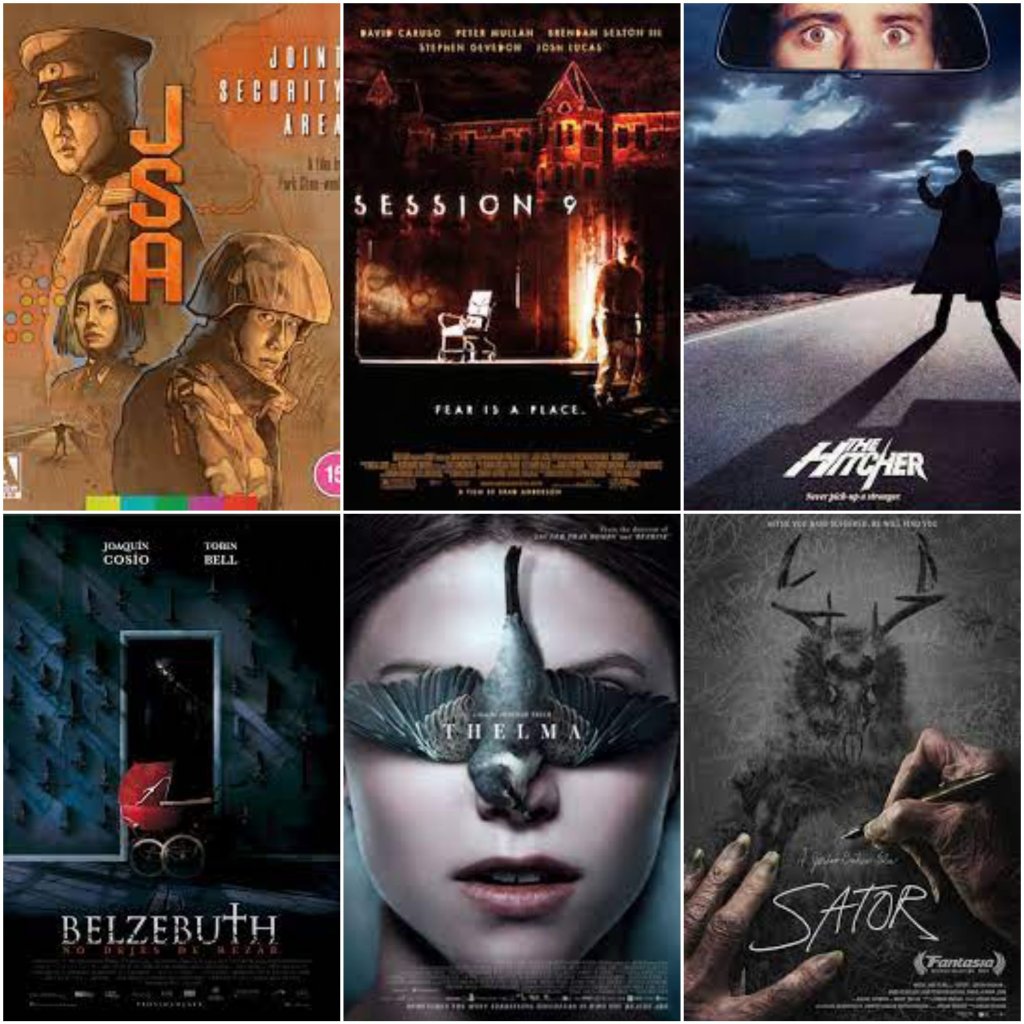
Of note on the HORROR front is the imaginative horror-fantasy LOST RIVER, Ryan Gosling’s incredible Directorial debut, a number of international gems like I SAW THE DEVIL, MOTHER, ONIBABA, and DEMONS, first time watches of bonafide classics in POLTERGIEST, NIGHT OF THE LIVING DEAD, THE CITY AND THE DEAD, LISA AND THE DEVIL and THE TINGLER, the thematically eompelling BEFORE I WAKE, new Canadian favorite PONTYPOOL, and four great additions from 2020 in THE INVISIBLE MAN, RELIC, THE LODGE, and THE DARK AND THE WICKED.

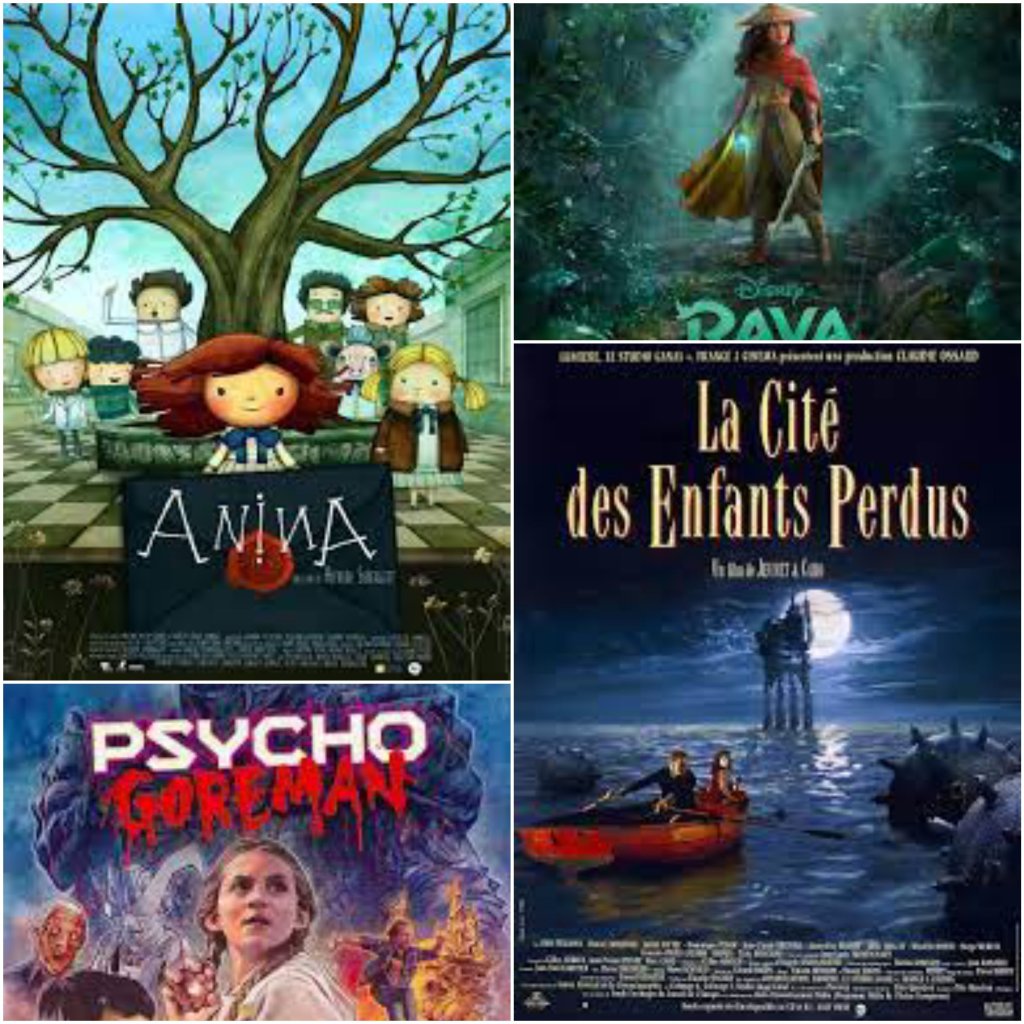
On the ANIMATED front, there were a handful of new international favorites including PERFECT BLUE, NIGHT IS SHORT WALK ON GIRL, and TOKYO GODFATHERS, a few of the unseen Ghibli classics I was able to check off my list (THE TALE OF PRINCESS KAGUYA a noticeable new favorite), the heartbreaking but brilliant British animated film WHEN THE WIND BLOWS, the heartfelt Spanish entry A DOG’S COURAGE, and two memorable additions from 2020 in SOUL and WOLFWALKERS.

4. I also checked off some major blindspots with long held CLASSICS like PARIS, TEXAS, DOG DAY AFTERNOON, A MATTER OF LIFE AND DEATH, HUNGER, 8 AND A HALF, The BELLS OF ST. MARYS, THE PASSENGER, ALL THE PRESIDENTS MEN, Hitchcock’s filmography, BIG NIGHT, and the silent films CITY LIGHTS/MODERN TIMES/THE KID, all of which could make a fair case for my top films of all time list.

2020: The Outliers
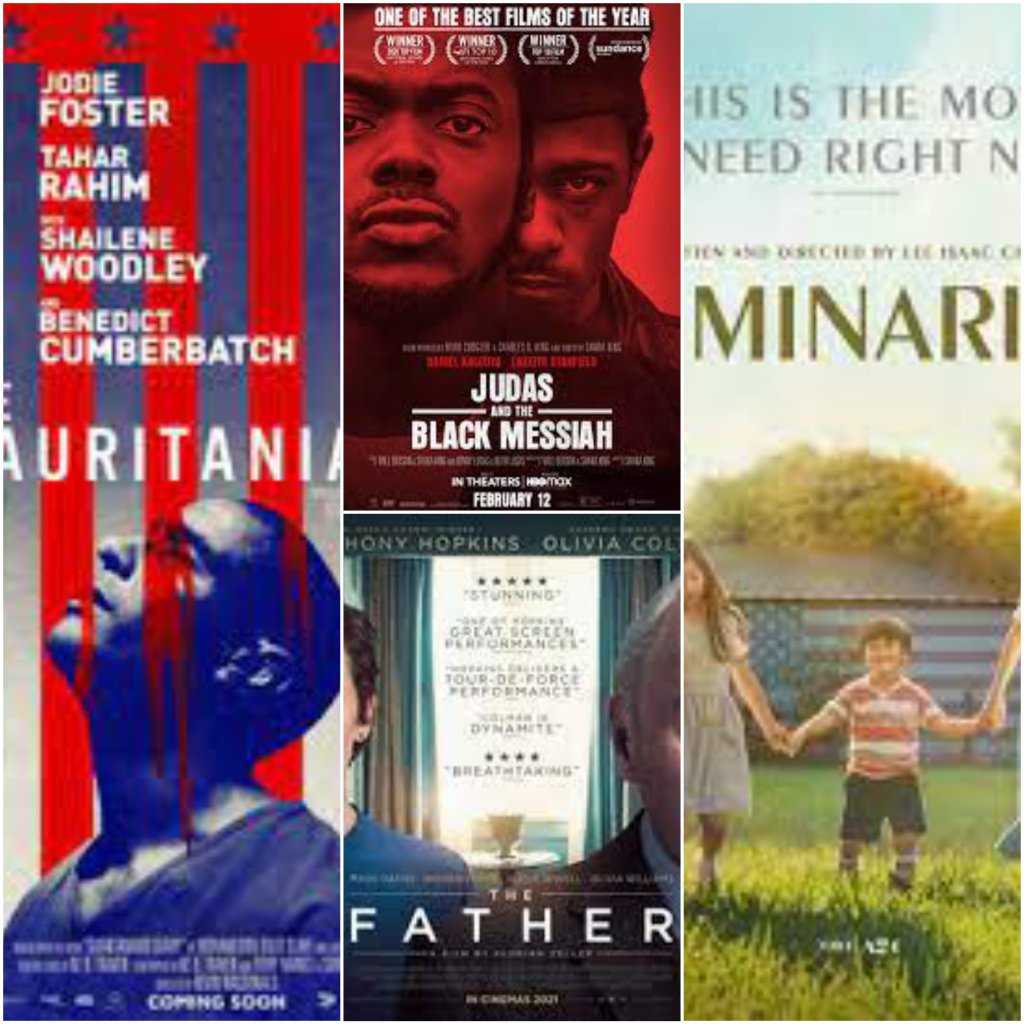
One of the givens in any year is that many of the films that make the festival run, some of which emerge as Oscar hopefuls, don’t actually see wide release until well into next year. This has been amplified in 2020 by the odd release patterns, the closing of theaters, the delayed Oscars date, and delayed releases overall. Of note are these much buzzed and talked about releases that I simply have not had an opportunity to see: PROMISING YOUNG WOMAN, MINARI, NOMADLAND, ONE NIGHT IN MIAMI, NEWS OF THE WORLD, FRENCH EXIT, THE FATHER, GREENLAND and JUDAS AND THE BLACK MESSIAH. Keep your eye out for these releases in the new year.

Secondly, given these release patterns, I like to give some attention to thoe 2019 releases that I wasn’t able to spotlight last year. Malick’s A HIDDEN LIFE is his most accessible film to date, and it definitely left it’s mark on me transplanting It’s a Beautiful Day in the Neighborhood as my top film of the year. The caption for the captivating international drama CORPUS CHRISTI says Sinner. Preacher. Mystery, which sums up the storyline with precision. These three elements would have had it as my number one of this year, but in context it made its way to the number 4 spot of last years list. The colorful and visually mesmerizing PORTRAIT OF A LADY ON FIRE ended up slotted in at number 12, and BEANPOLE, the gripping international Russian set drama which I described as a fascinating study of faces set in the context of war, also cracked my top 20 of last year.

Thirdly, I always enjoy shedding some light on films that tend to get lost in the shuffle of the more illustrious top lists of the year. So to start with, here are 20 HIDDEN GEMS from 2020 that did not make my top 20 but that I think definitely are well deserving your attention:

1. Mr. Jones
A fascinating look at a little known story that uses a mix of creative visuals, tightly crafted tonal shifts, a wonderful literary device and a journalism backdrop to examine notions of truth. A “what if” question that brings together this rich and troubling history and sense of imagination to explore someting very real. The Ukraine setting also had me excited to watch it.

2. Banana split
A love letter to the power and beauty of platonic freindships. It’s a bit of a rauncy comedy, but it also has a lot of heart.

3. Miss Juneteenth
Convention becomes the canvas through which to create an unexpected but powerful character study in this little indie drama. With a sharp eye for family dynamics and the struggles of the single mom that sit at its center, this is one of the best underseen films of 2020

4. Driveways
The rich symbolism of the driveways illuminates the beautifully realized mutli-generational aspect of its relationship drama. A rich and compelling emotional story that isn’t being talked about near enough.

5. The Vast of Night
Unfolds like an old time, late night radio show, an aspect of the film that is utilized to great effect through its visuals and incredible sound design. Features one of the most jaw dropping cinematic sequences of the year, a how did they do that tracking shot that illuminates the film’s rich, dark aesthetic. This is a small, high concept, sci fi drama that is less about the the destination and far more about the journey. Give yourself over to it and it transforms into something special.

5. Residue
Don’t let the non-linear storyline of this film fool you, this intimate, indie, street view drama offers a clear picture of the problem of gentrification, examines the challenges of memory (think this years Last Black Man in San Francisco), and uses the wonder of poetry and cinematic vision to capture the beauty of its human, urban and cultural backdrop.

6. The Glorias
This underrated gem features some of the best and most stunning cinematography of 2020. The way it uses the timelines and the multiple performances of “the Glorias” to draw a portrait of Steinheim from within the different stages of her life I thought was a brilliant narrative device, making this not simply an exceptional visual accomplishment, but a compelling story.

7. Radioactive
An equally creative biopic that employs timelines and a creative story structure to offer us a portrait of an important female figure in human history. Marie Curie, the person who discovered radium, is brought to life by emphasizing the tension her discovery, something that holds the potential for both good and bad, unfolding this tension into the visual storytelling in ways that made this an unexpected surprise and an invested and compelling watch.

8. Broken Hearts Gallery
This film had the unenviable position of releasing when theaters were just beginning to open back up (before closing again). Which is a shame, because this is the perfect film to see with a crowd. It’s funny, charming, and touching, and features a charismatic lead that helps make this entertaining romantic comedy kind of impossible to resist.

9. The Midnight Sky
Critically maligned upon its release mostly for what has been described as a head scratching final twist and a disjointed narrative, this understated and largely misunderstood existential sci fi drama boasts a deeply humanist concern and qualifies as my “most underrated” pick of 2020. It tables some compelling questions about the future of our planet and about humanities worth, layering the narrative with a mix of grounded drama and cosmic reach.

10. Save Yourself
This indie, apocalyptic comedy-drama uses a sweetly captured and affectionately drawn central relationship to offer an astute commentary on our addiction to technology. The performances make this work, but the script, which works its way towards a love it or hate it ending, deserves credit for taking something a bit off the wall and making it so effortlesly watchable and emotionally meaningful. Examining the nature of human connection is always a rich well to drink from, and it serves this film well.

11. Troop Zero
If you are looking for something to watch with your children but that also explores grown up themes like grief, struggle, sadness, belonging, identity and fear, this is your ticket. It’s not talked about near enough despite it being well recieved by those who have seen it. A childhood drama with a whole lot of heart and a very mature soul proved to be one of the more memorable viewings of 2020.

12. The Call
This is the kind of film that, once you see it you want to tell everyone else about it, if just so you can have someone to talk about it with. There are some exceptional visuals in this film, but the hook is the premise, a tightly scripted and well crafted time travel narrative with a neat twist.

13. Ash
The story of the making of this film is almost as compelling as the story itself, with both facets of the film adding its own element of risk and controversy to the narrative. Mileage will likely vary on the controversial elements, but I love films that dare to pull the cover off of tightly guarded moral questions. This film takes a difficult moral subject and uses it to push the boundaries of nuance, empathy and compassion. The physical forest fires that form the backdrop of the narrative provide the metaphor for the internal fires that are raging within, with the question of whether it would be better to just let it all burn hanging in the balance.

14. Blow The Man Down
With a real Coen Brothers vibe, the rich Maine, seaside setting, and an enchanting soundtrack, Blow The Man Down was a highly enjoyable watch that swept me away into it’s quaint, isolated venture filled with some fun and dark tonal shifts. This was this Spring’s answer to last fall’s equally Coen-esque Cold Pursuit.

15. The Kid Detective
A solid story anchors this quirky, fun, indie drama about a young detective who grows up harboring feelings of resentment, regret, and emotional hurt. The film is filled with humorous notes, and there is an entertaining mytery that carries us through the bulk of the film, but it never loses sight of what the mystery, and the solving of this mystery means to our central character. Sometimes the hardest puzzles to solve are ourselves.

16. The Rest of Us
The family dynamics feel familiar, dealing with matters of disconnect and estrangment and dysfunction, but it is the thing that brings these characters back together that gives this film its weight. Good performances and a strong concept give way to this film’s true selling point- it’s heart.

17. Burden
If you are looking for a spiritually concerned drama featuring a transformational arc that tackles the tough subject of racism from a somewhat unique lens, this film makes some narrative choices that play out the “burden” that it carries in a multi layered fashion. It was one of the more transcendent film experiences for me in 2020.

18. Selah and the Spades
As a familiar YA drama in a crowded field this feels surprisingly unique and fresh. It takes a famliar genre and uses the story to subvert expectations. What we get is some wonderful world building, a rich tapestry of characters, and an entertaining story. Watch for the upcoming spin off series but make sure to see this one first.

19. Uncle Frank
A sweet and also heartbreaking charcter study about an uncle and his niece who are both trying to find their way in a world they feel they don’t quite belong in, one an aging, closeted gay man and the other a lost young woman just finding her way into the great unknown of her coming of age world. Some great performances provide this film with it’s foundation, with the two leads exhibiting a ton of great chemisty, but its the quiet, emotional punch that elevates this as a memorable and timeless story.

20. Judy and Punch
The ending of this colorful depiction of an old world, historical setting does admittedly falter a bit. This is a problem of its own rather large ambitions. This is a small drawback in an otherwise lofty and yes, ambitious film that should satisfy your need for an adventerous and often fantastical period piece while also offering you the more modern expostion of its focus on gender struggles and social struggle. It’s a wonderfully visual composition as well, making full use of its imaginative backdrop to draw out the larger themes of good and evil and the smaller more intimate themes of its relationships and personal struggles. Really enjoyed this one.

Its a Wonderful Matter of Perspective: Christmas Films, Love Stories, And Discovering The World Past The Seven Levels of the Candy Cane Forest

Do a simple google search for “love across cultures” and you will enounter articles about a very specific study done over the last number of years that has been interested in answering the simple question, is the idea of the “love story” a modern Western construct, or is it a universal idea? Dig into the results of this study and you will find that the answer to this question is a decisive no, followed by an even more decisive “but”. The “but” centers around love as a matter of cultural perspective. Which is to say, what one culture means by love can differ greatly in definition, expectation and usage around the world, “but” also with this one caveat. The kind of love this study was interested in is of the personal and romantic kind.

As one study put it, “Falling in love is arguably about pleasing yourself, and some cultures put more emphasis than westerners do on serving your family or your community.” As with most things in this historical East/West divide, these differing focuses on individualism and collectivism play a central role in distinguishing the kind of stories we tell and the way in which we tell them.

And here then is the same “but” at play in the reverse direction… these differing definitions and expectations should not or does not translate necessarily into the absence of the personal love story.

Long story short, falling in love is a universal endeavor. Which is also to say, as I look at my own love story it emerges as much from my own Western cultural context as it does from a universal longing, one that comes with risk and reward and both personal and shared outcomes.

This is an interesting article based on this study, a short but interesting read if you are interested:
https://family.jrank.org/pages/1086/Love-Love-Across-Cultures.html

One interesting point of conclusion in this article comes near the end when it outlines precisely how this universal understanding of love translates across cultures:”In considering what we know about love across cultures, it is likely that the propensity for romantic love is cross-cultural and may well be part of our genetic heritage. But love is also construed and constructed within contexts of culture and country. As William R. Jankowiak (1995) observed, “Romantic passion is a complex, multifaceted emotional phenomenon that is a byproduct of an interplay between biology, self, and society”

Which brings me to a point of personal reflection on my own love story that surfaced in an unexpected way this holiday season.


This happened as my wife and I were watching It’s a Wonderful Life. What’s interesting about our annual viewing of this film is that it usually happens the same way every year. We put it on after the both of us have gone to bed on Christmas Eve, and usually, following a long evening of food and celebration, we inevitably fall asleep with it playing in the background. It’s a quaint way for the story drift us off towards the great anticipation of Christmas morning, with the added outcome that it is also difficult to remember the last time we actually watched the film beyond the half way point.

This year my wife decided to put it on and finish it after we got up on Christmas morning, prompting her to tell me that this is her favorite Christmas film, a fact I actually wasn’t aware of even after almost 16 years of being married. This sparked a question on my part: why is it your favorite? Her response surprised me. She said it was the love story.


For me, I always saw this classic holiday film as centering around George Bailey as an individual and the lessons he learns about what really matters- family, friends and togetherness. Forgetting these things leads him towards death and despair, something I can relate to personally speaking, and being awakened to these things brings life and joy.

For my wife Jen, she saw the love story between George and Mary as its most hopeful aspect. Further, she explained that she saw in me the same qualities she appreciated in George Bailey, a man she described as “sacrificial” and wholly “committed” to doing good for others, giving of himself for the sake of their well being.

I’ll be honest, this is not the way I see myself, even on my best days. And yet this is what she sees in me. A part of the challenge of hearing these words is to be able to accept this matter of perspective in the same way that George Bailey must learn to hear that his own life has made a difference in the life of others. Again, if anything, the part about George that I resonate with the most is the despair, the feelings of lostness and insignficance and failure. I have been at the side of that bridge looking over and wondering about that water.


Even looking back over our 16 years of marriage, which has not been without its struggle, what I can see most clearly is all the ways decisions I have made led to failure, be it financial distress, shifts in career, or the outcome of my regular old bumbling nature. For me, Mary, or Jen, is my best quality.

And yet, from her vantage point she sees me as the one who bears these qualities I feel I could only ever aspire towards. Love is a wonderous thing indeed.

It’s A Wonderful Life and Tom Sawyer: Gaining Perspective
One aspect of It’s a Wonderful Life that often gets overlooked are the present parallels between this story and the story of Tom Sawyer, a book that factors into most of the 2 hour run time. The part of the story where Tom is witnessing his own funeral plays into Bailey’s own self revelatory experience with a world in which he had never existed. In fact, it’s likely that Clarence, who is reading Tom Sawyer, gets the idea for presenting George with this reality directly from his reading of these chapters. As well, the pressure and responsibility placed on Tom that lead to his seeming failure also mirror Bailey’s own story. And then there are the obvious parallels between Muff Potter and Mr. Potter, and even in the idea that Tom Sawyer is cherished by Clarence for a reason, somehow fitting into his concealed backstory of untold failures that have led him to not getting his wings (and those less than nice angels with wings who keep teasing him for failing to measure up).

Ultimately though there is one aspect of Tom Sawyer’s story that stood out for me when considering these parallels in a more indirect way- lovers leap.


When you visit the town of Hannibal, Missouri, a place now immortalized by Mark Twain fame and a place Jen and I had the pleasure of seeing on our trip down the River Road, one of the places you can visit is Lovers Leap. When you get to the top of Lover’s Leap you can read a sign that informs you about the legend from which it gets its name. At the heart of this legend is the story of two young lovers from two different indigenous tribes (and therefore cultural experiences) bound together against their differences and forced to jump off the cliff and into the river because of the tribes refusal to accept that these differences were reconcilable (like Tom and Becky in a way). It’s kind of a tragic story actually, but one that is entrenched in this universal language of love. Two people drawn together from opposite sides of the river and afforded their own story over and against the one imposed on them by the world around them. Where the world lays divided, the love story holds the power to heal the divide.


Miracle on 34th Street: Faith as a Matter of Perspective on Love
If someone were to ask me what my favorite Christmas film is, one answer I could point to is my annual tradition of watching Miracle on 34th Street (either version) every Christmas morning since I was young. Since I am always up before everyone else, even as a grown almost 45 year man, this became the film that I would watch by myself as I awaited the sunrise and the eventual awakened presence of the rest of the family. Back when gifts still filled the base of the Christmas tree (a tradition sadly lost to time and age), I would even take the time to separate and organize these gifts while the movie played in the background.

If someone was to ask me why I always watch this film every Christmas morning I would point to one simple aspect of the story- it’s allusions to faith. In truth, the older I get the more important this becomes. For me, this story about a child’s ability to believe set against the mother’s inability to believe always struck me as a curious but fascinating tension, one that Christmas was always able to reconcile, at least in my own mind. Christmas was where that sense of childlike wonder for the world and for life was able to sneak its way back into the mix, often against our own will, and this became an inevitable part of my own life’s liturgy if you will.


The beginning of the love story between God and humankind, a story ready to be told anew, and likewise the beginning of the love story between humankind of the world ready to be told anew.

Which brings me back to my own love story, one that infact formed itself around the Christmas season, the season in which we both met and got married coming from two different perspectives of the world and, ironically, even of Christmas (Jen has always presented herself as disliking Christmas while I am known as Mr. Christmas). Two different experiences merging into a single cohesive.

As I mentioned in this blogspace already, one of the forming narratives of our life together, the beginning of our story together, was actually seeing the film Elf. It came out the year that we met, it was the first film we saw together and our first real date outside of meeting in her apartment. In it’s story we found a mutual love for this seemingly unlikely pairing of individuals, an idea that only grew in awareness when we ended up in New York City for our honeymoon. For me, meeting Jen came at a dark time in my life and offered me a chance to gain a new perspective on God, the world, and love itself.

What strikes me though in considering this new found awareness of Jen’s fondness for It’s a Wonderful Life is the ways in which two differing perspectives on the same narrative can illuminate the other when seen in the confines of a relationship. For me, when I watch Elf I see this bumbling fool trying to find his way in a foreign land, lost in the isolation of his own story and failures only to suddenly have this beautiful woman see something in him that he is unable to see in himself. Not unlike connecting more readily with the failures of George Bailey rather than his immediate worth and his value, this is the story I know and feel when I consider my own love story. I am married to a woman who I see as way out of my league and who continues to baffle me with her undying love towards me. Where I adore all the qualities that I see in her, she sees in me all the qualities of George Bailey the same way Jovie sees all the qualities of Buddy in Elf.


What this sheds light on is how often Jen also fails to see the best parts of herself as well. What she sees in Mary is the hoped for desire of the ideals she sees in George. Which reminds me of a story actually of when Jen and I first met.

We met at a mutual friend’s birthday party. She knew this friend from Selkirk, a town a mere 50 kilometers from the city we now reside in (Winnipeg) and where I grew up, but which couldn’t be further apart geographically and culturally speaking. Selkirk was as foreign to me as continents thousands of miles away. I knew this mutual friend from his moving to Winnipeg. Ironically enough, he actually had planned two different parties, one for his Selkirk friends the other for his Winnipeg friends. Jen couldn’t make it to the Selkirk one and so she ended up at the Winnipeg one, which is where we met for the first time (sort of anyways, but that’s a story for another time).

At this party she immediately caught my eye, and I haven’t stopped looking her way ever since, even when she doesn’t realize it. But one of the things that I remember striking me about this beautiful but still unfamiliar woman was her willingness to befriend another wayward sole who ended up at this party but without any connection to either of these crowds. Noticing her struggle to fit in, she went outside with this person when she retreated for a smoke break just to keep her company. This self serving mentality, this ability to simply see the story of someones mental and social struggle and bind herself to it became the thing I continue to uphold in Jen and the thing she has the hardest time believing about herself. She is more like the best parts of George Bailey then she realizes, and far more like Jovie than she would readily accept.

Funny enough, one of the running jokes that we have in our marriage comes from early on in our relationship when I made the unquestionably dumb move of expressing my undying love and commitment to love Jen until the day I die. Keep in mind that this was essentially on our first real date somewhere other than her apartment, and on the same day that we went to see Elf. I told you I was a bumbling fool.

She has never let me live this down, and yet here in this film I never knew was her favorite Christmas film until this year is a young girl named Mary who leans over to whisper into a deaf ear (ironically I am also completely deaf from childhood in my right ear) the promise to love George Bailey until the day she dies. Is this what we might call poetic irony?

Which I suppose is all to say, if it is true that love, despite its differing definitions and cultural applications, is a universal language, this is equally as true across cultures as it is within our own cultures. Two people living in the same proximity can see the world from a very different perspective, and the power of the love story on a universal level is that it brings these differing perspectives together to create a single, shared narrative revolving around all those things that we often cannot or fail to see in ourselves. It reshapes the way we see our narrative and the narrative of the world at large. A love story is that journey through the 7 levels of the Candy Cane Forest, past the sea of swirly twirly gumdrops, throught the Lincoln Tunnel and into that new adventure.
Where, as the story goes, “Buddy quickly learned that New York City truly was a magical place.”

The NutrackerAnd The Four Realms and The Family of God: A Renewed Vision of God With Us

One of the podcasts I follow pretty faithfully is a non-profit, privately funded resource group called The Bible Project.Headed by Tim Mackie and Jon Colllins, The Bible Project makes videos on different themes and topics related to the Bible along wih producing podcast espisodes that expolore themes and topics related to the Bible, with both videos and podcasts functioning together in a connective fashion.

Their current series for the podcast is called The Family of God with an accompanying video on Genesis and the story of the cosmos helping to set the foundation. As far as the series goes this one does get a bit complicated and messy comparitively speaking. It’s not one that you can simply listen to on the run as it takes a while for the throught process to really come together. You need to be dialed in to parse through where the conversation is heading and what precisely it is trying to say, but I can say that 5 episodes in I am finding it to be landing with me in a very meaningful way. It has reformed my understanding of the stories we find in the book of Genesis, which provide the foundation through which to understand the whole of the Biblical narrative, especially where it has to do with human diversity and participation, two key themes of the Creation pattern. Understanding the typology and patterns that emerge from these early pages becomes the key to understanding the rest of the story, including our own.

You can listen to the series on any supporting platform, but here is a link to the home page: https://bibleproject.com/podcast/series/family-of-god

You can also find decent summaries of the important points on each episode page as well. But to narrow in on what has inspired me in particular, here is a very brief walk through of the idea of the Family of God in these episodes from my perspective.

1. Genesis 1 sets up an understanding of the cosmos, with the heavens (the sky) and the earth (the land) surrounded by the waters above and the waters below- order out of chaos, or nothingness.

2. Genesis is built on a pattern of 7, a number which is woven throughout the narrative structure and the larger narrative of scripture. 7 means completeness. While each of the six days is marked by “morning” and “night”, the 7th day is eternally marked by extending God’s vision for creation.

3. Humanity is placed in the garden as God’s image bearers. But not humanity as in male and female, rather one humanity (the meaning of the word Adam), out of which we find humanity’s diversity, the literal mirror image (male and female). In the ancient world idols were the last thing to be placed in the temple, and in God’s temple, the whole of the cosmos, a heavenly throne room that reaches from the skies as God’s abode to the earth as God’s footstool, singular humanity is the image of God which is called to be “fruitful and multiply” and to “fill the earth” through its diversity.

4. The diversity of the family of God is captured in this unique sense- humanity as one is divided (male and female in the biblical story), and through these diverse entities we find a unified whole (a child). This whole is then divided (separated from mother and father as its own individual) before becoming whole again. This picture or vision of diversity, a working metaphor that scripture returns to again and again, is what is meant to build the Kingdom of God (the whole cosmos). One divided against itself becoming whole. This is why, with humanity being created in the image of God in a “singular” sense rather than a “masculine” sense is so important to uphold. The mirror image of one becoming two (Adam being divided) becomes the means by which we can also become one. When we encounter another, scripture tells us we are seeing the image of God, and therefore the image of ourselves in our diversity.

5. This question of “family” runs through all the myths of the ancient world, with one key difference separating this Judeo-Christian vision- diversity from the myths that surrounded this nation chosen by God to uphold the vision of creatio. As they talk about in the podcast, rather than fill the earth with uniifed diversity, they fill the earth with violence and “homogeneity”, which literally becomes the basis for the term “Babylon” and the story of Babel. Babel becomes the working picture of these ancient ideas of conquest, which are demonstrated by a dominant people (nation) meant to rule the world as the true people, the true Kingdom. This is where we find the idea of empire which premeates the story of Israel, with Babylon as the all encompassing term for empire and conquest. Babylon then becomes contrasted with the New Jerusalem, an embodiment of the 7th day of Creation made known through what was the covenant promise- a servant people (nation) meant to bless the world.

If we understand these passages in this light, two things emerge. First, these texts become a clear polemic against the violence and homogeneity they see in the ancient myths and nations that surround them. The best way to understand Genesis is as a “temple text”, and to see it as a temple text is to see the story of Israel through Jacob and Moses first, with Moses on the mountain marking the “covenant” while the people down below form Yahweh into an image, an idol, thus confusing their role as image bearers. In this light, the stories of Abraham and Noah and Adam can be seen as origin stories. When you see it this way you can recognize what these narratives are trying to say in relationship to the stories that surround Israel. In the light of empire and conquest, Israel becomes unified through of a different narrative.

Second, we are given a lens through which to understand the unfolding drama of the biblical story, a greater vision through which to frame its trajectory. And as we move from the creation story we can begin to locate these necessary patterns of creation, decreation, and ultimately recreation. If Genesis seperates the land and the waters creating order from chaos, then the flood story becomes the decreation pattern, the divine order that holds back the waters being removed and order giving way to chaos once again. This story is equally marked by the creatures of the earth which come in pairs (diversity upheld) and a single family or single humanity once again purposed to be fruitful and multiply and fill the earth. Noah is an Adam type, partaking of fruit which leads to his nakedness and the covenant, and with the sons once again symbolizing the unfolding violence of the nations being established, dividing them and setting them against one another. Just as the nations form out of Adam’s (humanity) sons, out of Noah’s sons come the nations that will dominate the conflict in the Biblical story.

This sets the stage for one humanity being expressed through Abraham, and through Abraham one family and through Jacob one nation raised up as a blessing for all the world. What becomes most important here though is that this does not happen through conquest, as in one nation ruling the world, but rather it happens through serving others in their diversity, a unfied family of God made up of all tribes, nations, peoples and tongues. This becomes the antithesis to Babel where it says they “all spoke one language”, only, as we will quickly see, the pattern of violence and homogeneity will repeat itself through the human stories from Abraham onwards until it is brought to its fulness in Jesus, which in the larger story we understand as the bringing together of this story- the new Adam, the new Moses, the new Temple.

Perhaps what struck me even more is that out of this pattern of human diverstity we find the means through which all this diversity is brought together- adoption. I am a father to an adopted son, and thus this picture, this metaphor is powerful to me because it means “family” happens through many different forms and realities. As we see Israel being formed out of Egypt, we see it being formed as a mix match of diverse peoples unified by a single reality- oppression. This Exodus narrative becomes the framework for understanding what the vision of “the new Jerusalem” has to say to those under “Babylon”, with the people of God (Israel in its fullest sense) raised up to attend to this oppression by embracing the diversity of humanity. It’s a beautiful and liberating picture.

THE NUTCRACKER AND THE FOUR REALMS: REDISCOVERING GOD’S VISION FOR OUR WORLD

I found myself thinking about this series as I was rewatching Disney’s recent and woefully underrated and underappreciated adaptation of the familiar Nutcracker story called The Nutcracker and the Four Realms. I think people misrepresent its simplicity, its grass roots story and its refreshingly dialed back vision which incorporates genuine set pieces into its CGI as its dominant aesthetic, as cheap and superficial. This is a nod to more classic, storytelling techniques, a lost art in some of what dominates even Disney’s vast aray of remakes today.

(Spoiler Warning Ahead)

In this story we have a young woman, a daughter named Clara, who comes to discover on Christmas Eve that her dying mother had left her a final present- a mysterious egg that requires a key to open and an accompanying note that says everything she needs is inside this egg. Thus she must figure out how to open it, a quest that takes her to a parallel world called the four realms where she encounters the Nutcracker.

As she discovers the story of the realms, she discovers that her mother was the queen of the realms and as the “image” of her mother, a fact those in the realm repeatedly point out, she is the princesss, the heir. She is given a grand tour of the realms origin story, not unlike Genesis gives us a grand tour of the cosmos, by way of a special dance production.

As the story unfolds through this lyrical dance we get this vision of a land once unified in its diversity. We also get the corrupted idea of this vision in the story of an evil force (Mother Ginger) who divides the land by attempting to elevate one realm over the others.

The twist of the story comes when it is revealed that the Sugar Plum Fairy, the ruler of the land of the sweets, is actually the one who is dividing the land. She is angry at Clara’s mother’s precieved abandonment of their lands, leaving them to seemingly figure things out on their own. Thus she wants this invention initially intended for good so that she can rule the lands through conquest rather than blessings. A picture of the cyclical patterns that we find in the concept of “Babylon”. This inventions requires a similiar looking key to the one that opens Clara’s eggs, a concept that echos these two trees set in the garden. One brings life, the other brings death.

Clara comes to realize that the gift that her mother imparted her was in fact the image of herself- a mirror hidden inside the egg. A mirror in which she sees herself empowered to be the answer to this division, which in light of the tragic outcome of this Babylon type conquest of uniformity and violence must confront these competing visions of the world and rediscover its intended vision as a unified whole within its diversity. What’s beautiful about the way this story draws that vision out is that it usese this parallel realm as a kind of cosmic viewpoint through which to see her life and her family back home. Torn apart by the death of her mother, that Christmas had to contend with her absence. Death divides. Instead of dancing with her father that Christmas Eve, she rejects that invitation and separates herself from that world. It is in the realms that we get this moment where, from the position of this clock (which represents the notion of time in this story) which sits high above looking down on the room in which she left her father, she gains a fresh perspective, a larger perspective on what is going on. In grieving the loss of her mother, she fails to see her father’s grief for this divided picture, her father’s desire to see the answer to that grief in her. As she sees her father sitting alone on the bench in obvious sorrow and pain, she begins to recognize what it means for them to reunite, to come back together as a family. Thus when she utlimately returns home with this newfound identity as the “image” of her mother, the image of the queen and the ruler of the lands in tow, the dance she shares with her father becomes a unifying work. A way of healing the divide.

For me, this becomes a picture of how it is that we can heal our own divided land, our own divided spaces. God knows that for all that 2020 has brought with it, a unifying global pandemic which has brought us together through a shared struggle, it has also brought equal potential for division. It feels like we are stuck between these two competing divisions made more accute for this present generation than ever before- unity through our diversity or division through our homogenuity, with ideas of conquest and peace clashing at every turn. On one hand we hear loud voices from their differing sides clamoring to convince the other that their side is the right one. We see political lines being drawn even more firmly in the sand. And at the heart of this we see the consequences- violence and conquest, even if that conquest is more ideological in the digital age. We see depression and isolation and further demonstations of power. We see death.

And then we arrive at Christmas, the culmination of the Judeo-Christian story. The unifying work of Christ being made known through the very image of God made flesh. The new Adam out of which we find the fullest revelation of our role as image bearers of God, called to be imitators of Jesus. For us to be called image bearers, God first “imaged” Himself in the form of his creation, in the form of humanity. Christ is like that mirror being turned on ourselves before repeating that oft phrase that follows the call to be fruitful and multiply and fill the earth- be a blessing to all that fill the earth. This becomes the Christmas message. As the ministry of Christ on earth begins, so does ours. We are to follow in the way of Jesus. Thus as we come to the birth of Jesus, we are returning to our own origins story. We are being afforded a grand, cosmological view of the vision for a humanity unified in our diversity, and thus unified in our dividedness. We are called to be God’s hands and feet in the building of the New Jerusalem, the very image of completeness, fullness, healing, peace, joy and love. As The Bible Project people so aptly put it, on the 7th day God rests. We should not, as they did in the story of the Nutcracker, take this to mean God’s absence. Rather we should take it to mean God’s image dwelling among them, God’s residing in the throne room of the temple, the bringing together of heaven and earth, the “realms” and the “land”, the filling of the earth with its diversity as a unifying whole. The very vision of God with us. The very vision of the kind of “dominion” that God imagined for the original creation (embodied in Jerusalem), and the very vision of “dominion” God imagines for the people of The New Jerusalem (new creation). God with us, Jesus’ self giving ministry, frees us to be a blessing to others, and thus begin the work of “recreation”. The call to begin the work of bringing good will and peace to all humanity through the singular acts of our own self giving.

Wolf Walkers, Princes, Fairy Tales and Myth: Finding the Truth of the Christmas Story

It should not be suprising I suppose that one of my favorite films of the year (spoiler alert) came from the small, Irish, animation studio (Cartoon Saloon) that gave us the likes of The Breadwalker, Song of the Sea and The Book of Kells. This long awaited 2020 release arrived with much hope and anticipation and did not disappoint in its dazzling example of cinematic invention.

The studio’s films have long been interested in shedding light on the beauty of Irish mysticism and mythology, but unlike the afforementioned films (Song of the Sea and The Book of Kells), the Celtic Mysticism in this beautifully hand drawn 2D animated film sneaks up on the story. The quiet nature of the first half hour gives us the space to really get to know these characters, the village and community, while offering us glimpses of the forming culture that surrounds them, much of which lies invisible and forgotten by the village dwellers. We get the sense that their world is much bigger than what lies witin the shelter of the city wall, and this sets us up to desire the revealing of this mystery which lies just beyond in the thick of the surrounding forests, the same forests now envisioned as a roadblock to their wanted progress.

One of the thing Wolfwalkers does is bring together myth and history as a way of helping us to understand the larger story of the Irish people. With the inclusion of The Lord Protector as Oliver Cromwell, Wolfwalkers reimagines the conquest and Chrsitianizing of the Irish peoples in its historical and mythological context, with the wolves symbolizing the Irish heritage lost to this tragic story of theses abuses of power and progress. The mystery of the woods contains the myths of this heritage, something the people living within the walls of the city have been taught to now fear and oppress. From the perspective of the Lord Protector, the obstacle that stands in the way of progress is the forest, and what stands in the way of tearing down the forest are these mythological wolves and the wolfwakers thought to live among them in Irish lore.

What the film does so brilliantly is weave together this sense of history and myth as a way of locating this deep rooted Irish spirituality and coaxing it to the surface as liberating and opposing view to this kind of destructive power. Caught up in this reclamation of Irish cultural beauty are modern notes of feminism and racism as well, which intermixes seamlessly with the ancient perspective of its spiritual traditions. It’s a well crafted script that works in perfect tandem with the brilliant animation, which takes the nostalgia of that old hand drawn animation and creavitely imagines it as a fresh taspestry on which to explore new ideas and approaches. A memorable soundtrack and score also allows it to reach for moments of true tanscendence.

So imagine my surprise then when I encountered multiple podcasts talking about this film in a fashion that unabashedly, if unintentionally writes off this rich Irish spirituality as little more than an ancient lie. Reclaiming this Irish heritage for these think pieces essentially means learning how to see these old belief systems as one and the same- outdated modes of thinking that have been superseded by modern science and thus can be enjoyed today as “fairy tales” (to borrow the most oft phrase I heard) rewritten from a modern and very Western enlightenment lens.

What’s ironic about these interpretations of the film is that the very image they are condemning (Christian conquest and assimilation) becomes the fuel for their own analysis of the story. For these critics and podcasters, there is no distinction between myths, fairy tale, Irish spirituality or Christian history. They are simply all to seen in t he same light as falsehoods, dangerous superstitions better relegated to categories of our “rationalized” imaginations.

Which to me is a very narrow understanding of what these ancient stories are. Equally a very narrow understanding of the ways in which myth, legend, history, folklore, and even its more modern iteration “fairy tale” work in relationship to one another.

Perhaps more so yet, it suggests a lack of awareness of the beauty of story and storytelling, or at least of what makes something like Wolfwalkers beautiful as a rich expression of a long and colorful Irish heritage. In a very real way, these criticts and podcasters and writers are actually commiting the same sin that the colonizers did so long ago. They are assimilating Irish spiritualism into their own, largely Western perception of enlightenment ideals, telling it what it should and must be in order to be valued and taken seriously. The problem is, once you diminish this story to these calculated and heavily guarded definitions of “fairy tale” as falsehood. you have lost the source of its beauty and your ability to see images like wolves not simply as a cold and empty metaphor, but as a living breathing picture of the cultural spirit that informs it and gives it life.

I found myself in a similar conversation recently regarding how to understand the story of Christ’s birth, with people who casually toss it aside as “just a myth”. They used this word in a highly dissmissive and condescending fashion, suggesting that one could not appropriately understand the story of Christ’s birth without carefully categorizing it as a lie and a product of old superstitions. What happens then is an often misunderstood temptation for many to want to condemn the Christianizing of the pagan stories that they see informing it. And in doing so they likewise, if inadvertently, force these pagan stories to submit to the same “modernized” rules of how story must work.

Once again, this all falls under the same category of falsehood and calculated imagination, stripping the stories of the source of their power and diminishing their ability to speak as “spirit” filled stories in the ancient perspective. This limits our ability to be formed by their truth, taking spiritual truths and rewriting them as simple, moral lessons, even though these stories have a much broader point of perspective in mind.

I was having a terrible time of trying to to get this point across when, purely at random, I came across this wonderful new podcast called In A Certain Kingdom, cited as a “Retelling of Slavic Fairytales and Myths, and an Explanation of How These Stories Help Us Better See and Live in the Real World”. It is a podcast born out of the Eastern Orthodox Church, a culture and faith expression that looks and feels much different than our Western expressions of faith, with Orthodoxy retaining much of the wonder and magic of that ancient context and form of of storytelling. In this tradition, myth is not seen as the enemy of truth, rather it is the doorway to truth, the bringing together of revelation and history, of inquiry and imparted knowledge.

The first episode of the podcast looks at the old Russian fairytale “The Tale of Prince Ivan and the Grey Wolf”, retelling the story and then taking some time to intelligently reflect on its significance for us as modern readers. As a story full of ancient symbols and ideas, from firebirds, trees and water to ideas of life emerging from death and of hidden spiritual knowledge being revealed through our awareness of the other, it provides an amazing lens through which to approach both this ancient story and ancient world that we find in Wolfwalkers and the Christmas story. It raises the beauty of an ancient cultural perspective perhaps long lost to our modern biases to the surface, daring to imagine what it is to find wonder in transcendent notions such as God, creation, spirit and beauty.

To this end, there is a transcript that goes along with the first espisode of In a Certain Kingdom that I thought provided some really powerful words regarding our relationship to story and our ability to truly encounter someting like the Christmas story with a true openness to its ancient perspecive. I will link here to the full episode should you rather find the time to listen to the whole episode as you prepare for the culmination of the advent season (or as someone who doesn’t celebrate Christmas in the Christian sense), but the part that I quote below I found especially compelling as I think about the relationship between faith, memory and and story, something that I think is equally true for any faith tradition, regardless of whether you celebrate Christmas or not. In truth, in a society like my own that has its own unfortunate history of Christian led abuses and historical tragedies, Christmas as a largely embraced and secularized holiday can feel oppressive to many simply because of what it represents (tragedy). As Wolfwalkers reminded me of though, the answer is not to simply conform these ancient cultures and belief systems to some kind of idealized and monolithic modern, Western narrative in response. To do so would be to commmit the same tragedy, just in a more ideological form. Perhaps the answer is to actually come to these stories with humility, inviting them to reveal something to us that we need to hear, to be open to the spirits forming work in and through their cherished and long held narratives.

Link to the full podcast episode: https://www.ancientfaith.com/podcasts/certainkingdom/prince_ivan_and_the_grey_wolf

(EXCERPT FROM THE TRANSCRIPT FOR THE PODCAST “IN A CERTAIN KINGDOM”, EPISODE 1, The Tale of Prince Ivan and the Grey Wolf)

Whatever shadow may fall on your life—maybe you’re worried about the fate of your country, or perhaps dark thoughts visit you concerning your own future, or maybe your entire life seems an unbearable wound—remember the fairy tale. Listen to her quiet, ancient, wise voice.

These perhaps surprising words were spoken by a Russian philosopher named Ivan Ilyin, speaking to an audience of Russians in Germany in 1934. Strange, it sounds a lot like something you might hear now in our pandemic-ridden country. His world had fallen apart already. His country had been overwhelmed by Communists, and he was just about to witness the worst slaughter ever inflicted by man upon fellow man. And yet, where did he find his consolation? In the simple, some would say childish, fairy tale. He says:

Don’t think the fairy tale is a childish diversion, not worthy of the attention of a grown man. And don’t think that adults are smart and children are stupid. Don’t imagine that an adult has to stupefy himself to tell a story to a child. No (he continues), is it not perhaps the opposite? Aren’t our minds the source of most of our woes? And what is stupidity, anyway? Is all stupidity dangerous or shameful, or is there perhaps a kind of intelligent stupidity? Or better yet, let’s call it simplicity, something desirable and blessed, that begins in stupidity but ends in wisdom.

Socrates famously said, “All I know is that I know nothing.” And yet, even now so many of us are convinced, whether we realize it or not, that our own minds can contain the universe, that science can help us understand the mysteries of life, that a thorough training of our minds can make us masters of our own existence. Well, that hasn’t been happening these past few months as the pandemic rages, and it seems to me that the more people read and the more science they seem to have on their side, the less they seem to understand what is actually happening. And yet the more we feed our minds, the less we think about our hearts. That’s the point. And the results are not good. Many of us have lost the ability to see the beautiful in the world completely, not only because of the pandemic—even before. Many of us were stuck in our own chosen ideologies, points of view. And how often have you seen people on social media or in person battering down those who disagree with them into submission to their own will? And it’s true, our world is no longer as enchanted as it was when we were children; the magic is simply gone. Have you noticed that for many of us, so has the joy? Well, Ilyin has something to say about that, too; here’s what he says:

Only he who worships at the altar of facts and has lost the ability to contemplate a state of being ignores fairy tales. Only he who wants to see with his physical eyes alone, plucking out his spiritual eyes in the process, considers the fairy tale to be dead. Fine, let’s call the fairy tale simplistic, but it is at least modest in its simplicity. And for its modesty, we forgive it its stupidity. After all, it takes courage to be simple. The fairy tale doesn’t even try to hide its inaccuracies. It’s not ashamed of its simplicity. It’s not afraid of strict questions or mocking smiles.

Ilyin continues; he says:

Fairy tales are not fabrications or tall tales, but they are poetic illumination, essential reality, maybe even the beginning of all philosophy (and, who knows, possibly even theology). Fairy tales won’t become obsolete if we lose the wisdom to live by them, no. We have perverted our emotional and spiritual culture, and we will dissipate and die off if we lose access to these tales.

I’m talking not about physical death, but about something much worse; I’m talking about spiritual death.

What is this access to fairy tales? (continues Ilyin). What must we do to make the fairy tale like the house on chicken feet, turn its back to the forest and face us? How can we see it and live by it? How can we illuminate its prophetic death and make clear its true spiritual meaning?

But, really, Ivan Ilyin, are you serious? Spiritual meaning? Talking wolves, houses on chicken feet, and wimpy princes crying on tree stumps? What are you talking about? Well, Ilyin’s talking about an entirely different way of relating to the world. Here’s what he says; he says:

For this, we must not cling to the sober mind of the daylight consciousness with all its observations, its generalizations, its laws of nature. The fairy tale sees something other than this daylight consciousness; it sees other things in other ways. You see, the story itself is art. It conceals and reveals in its words an entire world of images, and these images symbolize profound spiritual states.

Spiritual realities transcend what we can see or express in words, and yet we know they exist. We know it in the relics that we see, in the myrrh-streaming icons we smell, and in the lives of men who transform everyone around them from beast to angel. I’m talking about the saints. These realities, before we can grow up spiritually to experience them for ourselves, they’re often best expressed in metaphors, in images, or in symbols—in other words, in stories. It’s a kind of art similar to myths and songs. Here’s what Ivan Ilyin says; he says:

It comes from the same places as dreams, premonitions, and prophecies. This is why the birth of a story is at the same time artistic and magical. It not only tells a story, but it sings it into being. And the more a fairy tale sings, the easier it enters into the soul, and the stronger is its magical force: to calm, to order, and then to illumine the soul. The fairy tale comes from the same sources as the songs of mages with their commanding power. This is why stories repeat phrases and images so often.

After all, think about it: Christ himself, reaching down to the low level of his fallen creation, told the most compelling truths in the most compelling way: through parables and through symbols. Here’s another quote for you. This is J.R.R. Tolkien, from Beowulf: The Monsters and the Critics. He says:

The significance of a myth is not easily to be pinned down on paper by analytical reasoning. Its defender is thus at a disadvantage. Unless he is careful and speaks in parables, he will kill what he is studying by vivisection, and he will be left with the formal or mechanical allegory, and what is more, probably with one that will not work. For a myth is alive at once and in all its parts, and it dies before it can be dissected.

The Story of Christmas: The Darkness of Winter Solstice, the Light of Christmas, and My Top Favorite Christmas Films


It’s no secret to anyone who knows me that I am a considerate fan of Christmas. I used to be in that bombastic, over the top kind of way. Over the years I have come to enjoy it in a more reflective and introspective kind of way.

I always said, for all the struggles that life tends to hold, Christmas is the one time of year where it seems we can set that aside, if for a moment, and consider a more hopeful narrative. This is a big reason why it is always been so important for me. It is a time to celebrate what it means to reclaim the childhood wonder that adulthood often tries to steal. A chance to reclaim a childlike perspective on the darkness that comes with the dark days symbolized by the Winter Solstice, the celebration of the first day of the long winter and the shortest day of the year. There is a bit of a poetic rendering to the idea that the darkest day of the year only points towards the days getting brighter, even though it might not seem this way in the moment. This is precisely where the Christmas spirit and message is able to break through and shine the brightest. In fact, in purely astronomical terms, what today means (December 21st) is that we are tilted as far away from the Sun as possible, making the sun’s travels across the sky low and brief and ironically almost indistinguishable in terms of its trajectory from dawn to setting. This can evoke a feeling of being stuck in a never ending cycle of cold and darkness, and yet what both Christmas and Solistice can remind us of is that there is still light in the darkness despite the long shadow it casts this time of year.

As writer and Luthern minister Rachel Schwenke suggests on her page, the Salt Collective in an article title “Celebrating Winter Solstice as a Christian Family”,

“Christians have long wrestled with how to interact with culture and pagan heritage. Some pagan symbols, like the Christmas tree, have become fully embraced by the Church and reclaimed from their pagan origins. However, most Christians reject pagan practices of praying to celestial bodies or worshipping Mother Earth.
For me, the solstice falls into a different category. It’s not something that a culture has created or a feast that a specific tribal religion has mandated. We are not worshipping the star Sol or our planet that revolves around it. We are honoring the creation of the unknowable God revealed in Jesus Christ and the world God made.

I don’t want to replace the solstice. For me the seasons and turnings of our planet are spiritual and holy. God created this wonderful dance in the heavens. The winter solstice reminds me of death and rebirth. The candle in the darkness reminds me of the Light that is to come.”

One of my favorite things to do in these more introspective times is to spend time with a good Christmas story. These stories have the power to hold the darkness and the coming light in tension, evoking a sense that creation is being made anew through the promise of the sun (and in the Christian sense, the Son). With this spirit in mind, I thought this would be a good time to post my ranked Top 10 Favorite Christmas films and spotlight some titles I did not yet mention in my Stories of Christmas series to help welcome in the Winter Solstice and the coming Christmas season with wonder and expectation.

My Top 10 Favorite Christmas Films
10. Hector (2015)
9. A Christmas Story (1983)
8. Elf (2003)
7. J.T. (1969)
6. The Shop Around The Corner (1940)
5. The Grinch (2018)
4. It’s a Wonderful Life (1946)
3. The Holly and The Ivy (1952)
2. Arthur Christmas (2011)
1. A Charlie Brown Christmas (1965)

*here is a link to my full top 40 list: http://Top 40 Favorite Christmas Films of All Time (Ranked) https://boxd.it/ay4Am

In The Spotlight
Five additional Christmas films that deserve your attention

The Phantom Carriage (1921)
If I were to continue with my potential Christmas pairings in “The Stories of Christmas”, I would have included this one with your seasonal revisit of the classic A Christmas Carol (my personal preferences are 1951’s Scrooge, The Muppets Christmas Carol, or for the little ones the hand drawn 1971 animated version). There is a shared concern for the “spirits” and for themes of forgiveness and redemption. As a Swedish silent film, the film immerses us in the natural terrain while giving it a creative, cinematic presence. The visuals are truly breathtaking. There is a merging in the story of these two ideas, of the human will and want to change and the spirits work within us, bringing about this change. It’s a beautiful reminder that no one is beyond the reach of forgiveness, grace and reform.


Black Christmas (1974)
Forget the remake. If you are looking for something possibly unconventional (depending on your sensibilities), this classic horror take on the holiday film is a perfect example of how to shape conventions. It is easy to see the ways in which this quietly and humbly influenced an entire genre. Even more so, this is a great example of “smart” horror. Aside from the expertly drawn tone and the compelling mystery, what is most impressive about this Christmas “commentary” is the way it balances a cast of characters. Every single one of them plays an integral role in the crafting of the story, allowing this to have fun with the unfolding mystery while also building a real sense of dread and meaningful arcs.


Christmas, Again (2014)
Speaking of Christmas pairings, Christmas, Again would make a great viewing with the 2012 dramatic comedy All is Bright. The comedy might be decidedly less apparent in this small, unassuming indie Swiss gem, but it shares a love for the melancholy. It’s best to read this title with the comma in tow and an ensuing infliction of an exasperated question mark in its tone. Which is not to say there isn’t hope and beauty and light to find in the story. I never knew how absorbing a scene of sitting in the silence watching a flower bloom in a simple cup of water actually could be. Somehow this film manages to take an otherwise static scene and turn it into poetry. It’s a reminder that not everything is sunshine and roses when it comes to Christmas morning, and yet sometimes its worthwhile seeing the promise of the season more like that budding flower. It might seem like nothing is happening and that Christmas as come and gone without that expected and hoped for change, but in fact something is blooming.


The Shop Around the Corner (1940)

This undeniable classic deserves its chance in the limelight alonside the cherished It’s a Wonderful Life. It is the inspiration for the also wonderful You Got Mail, however this is the far superior version. It’s worth noting that while there are familiar scenes in both films, they are also quite different in their own ways. What struck me about The Shop Around the Corner is its deep rooted affection for a long lost art- letter writing, something it locates in story of these two main charcters, two opposites drawn together through quiet and undefined aspiraitons and anxieties. The dialogue is perfectly drawn, and there is a kind of lyrical dance to the whole affair that is simply a joy to watch as it moves back and forth and back again, pushing us towards what we believe is its inevitable conclusion. The chemistry is undeniable and endlessly watchable, affording this film a timless nature.


Remember The Night (1940)
Another undersold classic that released in the same year, Remember the Night is far more subtle in its approch than The Shop Around The Corner, a fact that gives it a startling complexity. The narrative and character arc is less of that crowd pleasing variety and more a desired study of the intracies of its moral backdrop. The court case at the beginning of the film that leads to this relationship between a defence lawyer and shoplifter looks to locate emotions like love and empathy in an unlikely place, navigating across the moral lines that define this percieved “criminal” and law maker attraction. It is almost like there are two cases being made along parallel lines, the court case announcing her judgment, and the love story announcing their verdict. And it makes for a wonderfully compelling watch.

Happiest Season/Fatman (2020)Figured I would highlight two of the better seasonal watches to come out in 2020, even though they could not be further apart. Happiest Season is perhaps a bit conventional, but the charisma of its leads (Levy is so good), the wit of the script, and a really well crafted relational drama that follows two young woman as they navigate Christmas with a family that does not know they are together or that their daughter is gay elevate this as a very worthwhile Christmas viewing. It’s very funny, quite moving at points, and chalk full of all the stuff you might want from a good, sweet holiday film.

Fatman on the other hand is likely one of the most unconventional takes on the traditional santa story you are likely to find. And for my money that reaps some great rewards. Love him or hate him, Gibson’s role as St. Nick is a wonderfully weathered, raw and grounded performance that takes the familiar character and imagines him in a real world context. Marianne Jean-Baptiste plays Ruth (Mrs. Claus) in an equally wonderful and studied take on the santa lore as Santa’s (or Chris) balanced half. Watching them having to deal with things like economic challenges, paying bills, relational struggle might feel odd at first, but then it ever so quietly sneaks up on you as the Christmas adaptation you never knew you needed. If the idea of santa wrestling with an under the table agreement with the government in order to help salvage Christmas (on a purely economical level… as Chris says, they need them as much as they need the government in this relationship. Christmas after all is one of the biggest economic generators of the year) doesn’t get you at least a bit giddy, then this might not be for you. If it does though, there is a whole lot of fun to be had here in a Santa that is represented as both jury and judge. It’s a compelling concept that actually ends up far more meaningful than you might think, in large part thanks to Gibson’s almost therapeutic performance.

Rebranding: Finding Me In the Second Half of Life

It was five years around this same time that I sat down to write my first blog. At the time this was meant to be a place for me to journal about some of my anxieties about quickly approaching 40. Over the years it has grown into a place for me to reflect on the stuff of life that shapes me- theology, film, books, travel, reflections.

As I now approach 45, I have never felt more deeply, and inevitably entrenched in the second half of life. Thus I felt it was tim to rebrand this space. The new name- thestoriesofmylife.ca, is meant to evoke a slightly new directive in terms of what I hope this space can become. I wanted it to reflect my desire to capture not simply my anxieties about growing older, but the stories of the people, places, experiences, memories, and art that have and continue to inspire me. This will continue to include my passion for theology, film, books, and travel of course, but I hope that my writings can effectively capture why these things are important to me and give them a proper voice.

On a practical front, here are a couple of things I am hoping to do in 2021:
1. Bring an increased focus to my love of story and narrative storytelling. I still have a link on my home page to my letterboxd profile, which is where I will continue to diary and log the films I watch. But my goal is to focus in on setting these films, as well as books and poetry and art, in conversation with the stories they tell and hopefully capture why these stories are meaningful to me.

2. One thing I really enjoyed doing in these last weeks of 2020 is offering pairings of films/books and other art. I loved the way this was able to to shed greater light on the stories that mean a lot to me, and I hope to do more of this in 2021

3. Use this space to engage a personal research project on the relationship between memory, faith, personhood and community. Over the last bit of 2020 I’ve managed to compile over 75 pages of material. My desire is to use this research to write a book, an autobiography built from my memories, my experiences, my passions and my learnings. This is a long term project that I hope this space can help foster and encourage.

4. I have decided to upgrade my space as well to hopefully make it more accessible to others should they desire to follow along with this life long journey we are all fellow travellers on, be that through reading, dialoguing or sharing.

In any case, I know this is a small, humble site and I am simply a single individual, but I did want to set some of this in writing for those who do follow and also to myself accountable. I have been so grateful for the chance to write over the years, and I have greatly appreciated everyone who has been there with me, listening to some of my ramblings, encouraging my passions, and wondering with me as I ask questions, work out anxieties and work out these sometimes disparate and confusing thoughts. This space has often been a life line for me personally. Here’s to making the journey ahead into the second half of life equally as meaningful.

The Stories of Christmas: 15 Timeless Tales That Capture the Spirit of the Season (Day 15)

Since we are isolated and stuck inside during this Christmas season, I decided this year I was going to put together a list of of my favorite Christmas stories. The angle I took in putting this together is Christmas “pairings”, be it in book form or film. These are stories that seem to me to have a connection in spirit and focus, and which have inspired me over the years.

I have come up with 15 pairings of films/books in total, and my plan is to present those films one a day along with a brief reflection on why these stories resonated for me, how I see them fitting together, and what I think they can say to us in a more difficult Christmas season.
Here is my fifteenth pairing 🙂

THE HOLLY AND THE IVY (1952) and HECTOR (2015)

In an article for the Huffington Post about the timeless nature of the Christmas classic It’s a Wonderful Life, a film that never really caught on with critics and the general public until years after its release (apparently it was even declared the “worst” Christmas film ever made once upon a time), writer John Farr notes that one of the great things about these old films is that while the film’s never change, we and the world do. This is what makes revisiting these films in the seasons of our lives so valuable, as the messages we are able and even willing to hear from them will change with our perspective. He describes the themes in It’s a Wonderful Life in far reaching fashion, speaking to “the values of basic goodness and sacrifice, the gift of friendship, the pitfalls of greed and commercialism, the sense of community and belonging that helps us feel truly connected in a society.” He notes one of the defining marks of the holiday classic, which is found in the idea that, for reasons bound up in the nature of these seasonal celebrations, “there is no lonelier time for an already lonely person than in December“, and likewise there is no better time to reflect on the value of togetherness.

In both of the films represented above I found a deeply felt and resonant expression of this lonliness and reflecting on togetherness being held in necessary tension. In The Holly and the Ivy, the story revolves around an aging father, the local Priest in their hometown, and his largely estranged family. It follows one particular holiday season as the family, all separated by their lives and their experiences, decide to reunite at their old family village in their old family home thanks to the father’s wishes. As the film unfolds, we begin to learn about the reasons for the estrangement of these individuals, forcing the family to confront the demons that have kept them apart all these years together.

In Hector we get a similar story only from the opposite perspective. Hector is an aging, homeless man who has long since distanced himself from his family. A random call from a family member sets him off on a journey to reconnect with his relatives all living a good distance away. As he embarks on this journey we are gradually given the puzzle pieces to the story of how he ended up where he is, using the holiday setting as a way to peel back the layers of his past experiences and uncover why it is that he felt he could not reconnect with his family.

It is often the fear of what togetherness exposes that motivates these seasonal struggles. In The Holly and the Ivy it is the fear of their father’s rejection that kept this family apart. Each of the siblings arrives with a story that they have kept hidden because of how they think the father will respond. Behind these stories lies particular struggles that have caused these family member to question the faith that their father holds near and dear, and thus they have assumed that these struggles could never be understood by the limited perspective of their father’s Priestly duties. As they say, he would never understand their real life struggles, their questioning of their faith. Rather than face this potential rejection and assumed ignorance they feel it would be better to remain isolated and to bear their struggles alone. And for them, the threat of this togetherness and this wrestling with questions of faith go hand in hand. What coming together exposes though is that in their own feelings of isolation they very well may have misunderstood their father’s own faith and struggle. This leads to an opportunity for their baggage to be placed at the the common table of this seasonal celebration, finding togetherness in their differences, where their individual struggles can be shaped by what it is that they share in common.

In Hector, it is the baggage of this single, aging man that risks being exposed as the seasonal expectation draws him homeward. The family members have assumed certain things about his story, and as the pieces of this story come together what becomes clear is that they have misunderstood why he isolated himself from them. And in his own struggles Hector must come to terms with what it means to risk the kind of vulnerability that togetherness poses. The journey of this single individual broadens our perspective of what togetherness and family can mean, bringing people together from differing perspectives and circumstances while also binding us together by what it is that we share- the struggles that isolate us and the need for togetherness to heal those struggles.

And perhaps the beauty of seeing both of these films in their equally timeless nature is that in both seasons of struggle and seasons of togetherness the stories have the power to speak something necessary and unexpected into our ever changing perspectives. This is the same power that encountering the story of Christmas anew each and every year holds in a liturgical sense, helping to remind us that in the light of the eternal God-Human-Creation relationship, there is always someting new to uncover from the story of Christ’s birth in each and every season of our life. While the story might be familiar, our perspective is always changing, which is why the liturgy and Tradition of the season remains so vital and important.

The Stories of Christmas: 15 Timeless Tales That Capture the Spirit of the Season (Day 14)

Since we are isolated and stuck inside during this Christmas season, I decided this year I was going to put together a list of of my favorite Christmas stories. The angle I took in putting this together is Christmas “pairings”, be it in book form or film. These are stories that seem to me to have a connection in spirit and focus, and which have inspired me over the years.

I have come up with 15 pairings of films/books in total, and my plan is to present those films one a day along with a brief reflection on why these stories resonated for me, how I see them fitting together, and what I think they can say to us in a more difficult Christmas season.
Here is my fourteenth pairing 🙂

ELF (2003) and LOST LOST LOST (1976)

These two films definitely could not be further apart. One is a more recent and highly popular American Classic featuring Will Ferrell, while the other is an immigrant born and bred, and very lengthy experimental documentary from someone who is described as a “poet and hero of the American counter-culture”. Given how Director Mekas, a Lithuanian exile forced from his land by Nazi and Soviety invasions, is said to have invented the “diary form” of filmmaking, I recognize that it is highly unlikely that these two films would cater to the same audience, but if you can go with me on this one for a moment, I think there are some powerful, overlapping themes to pull from both stories.

Lost Lost Lost is a 1976 film that is the product of 14 years of filming and captures Mekas journey from Lithuania to New York City as a “displaced refugee”. In speaking of this film, the director suggested that,

“The period I am dealing with in these six reels was a period of desperation, of attempts to desperately grow roots into the new ground, create new memories. In these six painful reels I tried to indicate how it feels to be an exile, how I felt in those years. They describe the mood of a Displaced Person who hasn’t yet forgotten his native country but hasn’t yet gained a new one. The sixth reel is a transitional reel where we begin to see some relaxation, where I begin to find moments of happiness. New life begins…”

The sole critic to review the film on Rotten Tomatos describes it this way:

A photographic Homer of his own odyssey, Mekas journeys — like us all — in irrevocable exile from his own past, attempting to reconstruct that invisible nation of youth to which he can never return.

– Ed Halter

In the film Elf, a film that holds an important place in my own story, we follow a young man (played by Ferrell) who found himself estranged from his family as a baby and taken in by Santa and his elves, who upon learning of his true identity embarks from the North Pole, the only home he has ever known, to New York City in order to track down his birth father. In a sense you have a picture here of a double exile, first by his abandonment which takes him away from his home in New York, and in a secondary sense the abandonment of his adopted home to return to somewhere now unfamiliar and reconnect with his birth father.

It’s not simply that these two films share the backdrop of New York City in common, it’s that they equally capture a picture of someone exiled from the home they know and forced to contend with an unfamiliar landscape and culture. The bombastic and deeply funny nature of Elf meets with the serious study of Lost Lost Lost, if from differing perpsectives and contexts, giving us this portrait of two individuals encountering this foreign culture and looking to create equally counter-cultural experiences.

What is also shared in common within these two narratives is this idea of holding both “homes”, the homeland and the land of exile, in relationship and in view. For Mekas, he is looking to capture the landscape of this new home while also holding his memory and awarness and present attachment to his homeland firmly in view. In Elf, we see him looking to connect both worlds as equal parts of hiimself, with the final images in the film being of this shared space. Being caught in the middle, this kind of feeling of lostness that we find in both films, is powerfully brought to light through the idea of relationship. This becomes the lens through which to locate a place to belong, to exist and co-exist with this lostness as a part of our forming experience. And out of the tragedy and devastation can grow something beautiful.

The reason why Elf is such an important film in my own life is two fold. First, it was the first date I went on with my now wife and then girlfriend. Elf became a touchstone for us, as eventually did our mutual love and appreciation for New York City which is where we went on our honeymoon and also where we returned five years later on our anniversary over Christmas time. We had the chance to see the musical stage production of Elf at this time and relive some of that wonderful connection. There is a bit of irony at play here two in that Lost Lost Lost released in 1976 barely a month after I was born.

The other reason it is so important is the parallel thread of Ferrell’s character embarking on this unfamiliar journey and finding this releationship with this wonderful young woman named Jovi (whom we always said, if we had been able to have blood born birth children we would have named her Jovie if she had been a girl). Two individuals who couldn’t seem to be further apart but whom share a desire to recapture that familiar childhood spirit that Christmas tends to evoke. A need to reclaim that lost sense of wonder and reconcile the tension that life often represents through its darker edges.

Before I met my (now) wife, I had actually recently moved out of home, embarking on my own sense of adventure while also dealing with some incredibly weighty stuff. Some of the darkest points of my life in fact. To say I was lost in the middle of the only home I had known and this new home I had inherited would be an understatement. And yet in my own journey of trying to reclaim that lost sense of wonder, this beautiful and amazing young woman, this adorable and deeply charming Christmas classic, and eventually the overwhelming biggness of driving up to that New York City skyline for the first time awakened me to a new sense of life.