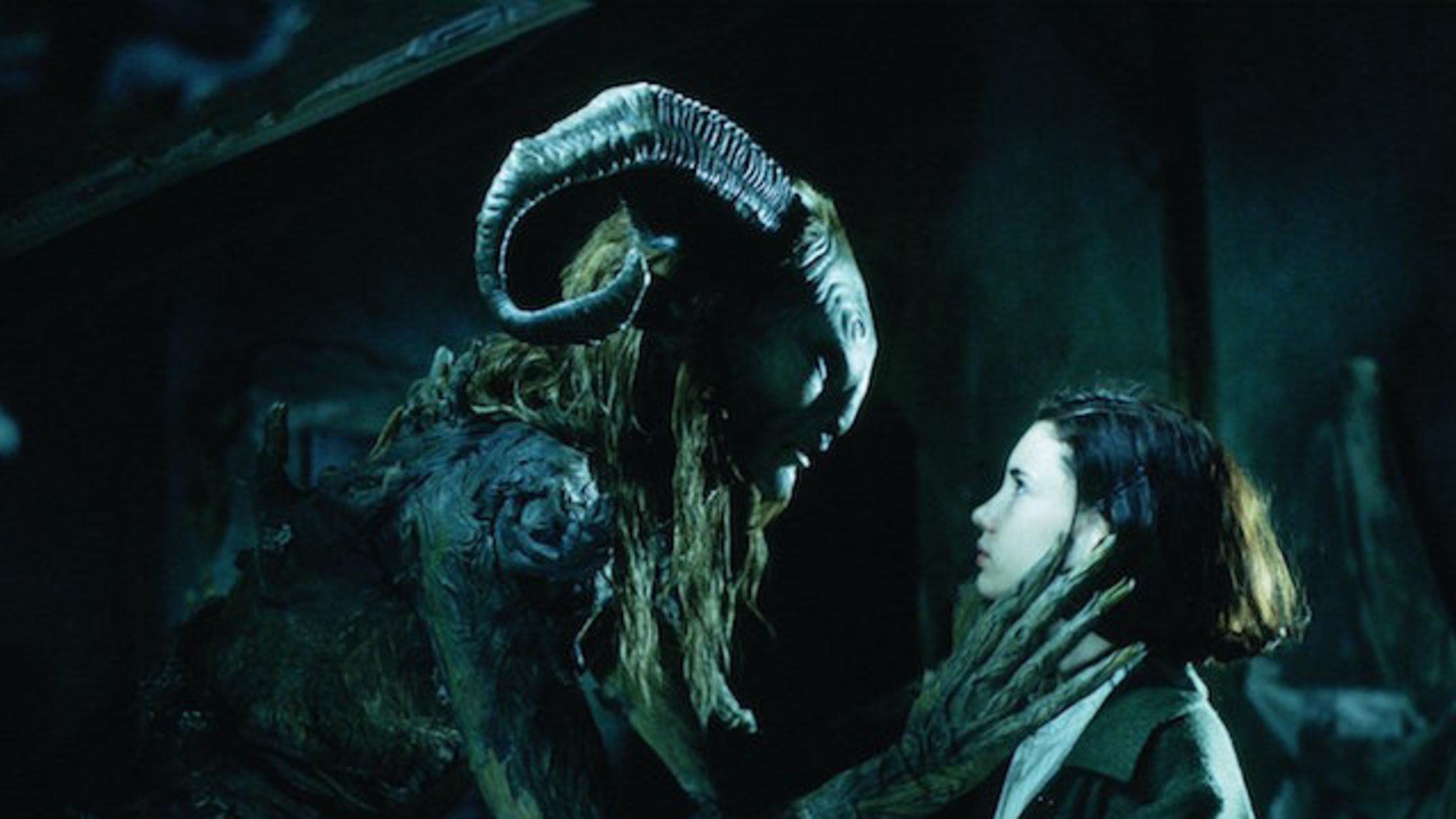
What is it that we desire? Reflections on Matthew 8:1-17

This morning at Church our reflection was on Matthew Chapter 8:1-17. This is what the chapter division looks like (NRSV):
Matthew 8:1-4- Jesus Cleanses a leper
Matthew 8:5-13- Jesus Heals a Centurion’s Servant
Matthew 8:14-17- Jesus Heals Many at Peter’s House

Our pastor went on to reflect on how understanding the structure of this passage can help us think more deeply about the nature of our desire and Jesus’ desire for us.

Each section centers around a need and a subsequent healing:
– In the first section we see a leper approach Jesus desiring personal healing.
– In the second second section we see someone approach Jesus desiring someone else’s healing.
– In the third section we see Jesus approaching others with the promise of healing. 

The first thing we can pull from this structure then is this: We all desire something, and clearest evidence that we do comes in our times of need.

But what is most revealing is what this structure tells us about these desires:
SECTION 1: The first section is the easiest entry point into this discussion because it pictures us bringing our need (desire) to Jesus. I feel like most of us can understand this.

SECTION 2: It is slightly less easy to entertain the second section because it forces us to consider the idea of intercession (people going to Jesus on our behalf). This is something I think most of us can understand but have a hard time accepting, investing in, or we take it for granted.


SECTION 3: The third section is by far the most difficult to reconcile because it requires us to believe and trust in this idea that Jesus is pursuing us for the purpose of meeting our desire. And what taking this passage as a whole can show us is that the reason this is difficult is often because of the way we approach Jesus in section one. 

There are three things we can learn from the first section of Chapter 8 that can help us reconcile this idea that Jesus pursues us:
1. “Lord, if you choose..” (8:2) To have desires and expectations that these desire will be met is human. What we find in jesus is the truth that healing is His to give. It is not transactional. To approach Jesus is not a matter of coming with the right words and the right ideas and in the right way. It’s simply to encounter Jesus and trust that healing is His to give.

2. “… make me clean” (8:2) The beauty of this word clean is in the way we can contextualize it into the experience of the leper. This is more than a request for healing, it is a request for transformation. What ails this man also comes with social oppression and isolation, a thoroughline that we find in each of these sections. They are all socially oppressed in some fashion, or as my Pastor suggested, outsiders looking in.

There is a sense in which this word evokes a plea of desperation, an overarching request that he is unable to even articulate in its fullness. All he knows is that he needs Jesus, and recognizing this need in the way that our simple morning confessional states (Lord, something is wrong in me, and around me) can help us understand what our true desire is. Too often we neglect this part, staying on the surface of our daily needs and wants until life forces our hand.

3. “I do choose. Be made clean!” (8:3) Jesus pursues us. The reason our desires matter is because Jesus has desires for us. He desires for us to be made clean, to be healed in the context of our own lives.

RECONCILING JESUS WITH OUR DESIRE
If Jesus has desires for us, and we have desires we hope will be met in our daily lives, it is the question of how these desires match up that makes the third section so difficult to entertain. When they don’t appear to match up we get frustrated. We assume that Jesus is not pursuing us, otherwise why is our life the way it is.

But here is how this truth that desire is Jesus’ alone to give as He chooses can help us see our own desire in a new light. What Jesus desires for us to see the true desire of our heart.  The work of approaching Jesus with the desires that we have is learning to trust that He will help us to know the true desires that they point us towards. This is where the true healing happens, and this is why we all need Jesus.

The work of praying for healing in the lives of others then is to reveal the healing that needs to take place. And the work of Jesus in pursuing us to this end is His desire that we would find the healing that we need, whichwe often do not yet realize.

It’s a powerful realization to know that we can come to Jesus with whatever desires we have, and that we can trust in Jesus to reveal the hidden desires of our heart that motivate them. This is where true transformation can happen.

Perhaps an even more powerful thought is that we can know we are  not in this alone in this process. We have people praying on our behalf and helping us along the way. And we have Jesus, whom scripture tells us is busy taking our desires to the Father and praying on our behalf. And while we might struggle with the idea of others praying for us, and doubt that Jesus cares enough to go out of his way for us when our desires don’t quite match up with the healing He wants to give, the truth is that Jesus is always pursuing us, always with us and always hoping for us to find life in its fullness. This is our great and transformative hope. This is what it means to be redeemed, to discover all of the things we don’t yet have words for, just like the leper in the first section of this passage speaks to the wholeness of his own desperation.

QUESTIONS TO PONDER
Which brings me to our homework this week (yes, we get homework at Church :)). This week we are supposed to reflect on these two questions (which I’ve actually formulated into three questions):
1. What do you actually believe Jesus desires for you?
2. What is it that you desire? 

And in submitting these two questions to our own spiritual reflection, a follow up one:
3. What is it that you actually desire (the deeper desire being revealed to us through the work of the spirit).

2019 In Review: Favorite Movie Experiences

Just to be clear, favorite movie “experiences” is different than my favorite films of 2019. These are the films that represent specific memories, events, moments, or inspiration. It could be a theater experience or something different. I could be something I saw with others or something I saw myself. It can be a film I loved or a film I didn’t love as much. The only prerequisite for making this list is that there is something specific that I can attach to that film or movie going experience that makes it stand out as relevant, important, meaningful, fun, sad, transformative.

What I decided to do is break these favorite movie experiences down into chronological order. That way I can contextualize these experiences into a larger story.

1. Franchise Films and Childhood Memories (RAMBO)
Every year around this time I end up putting together lists of reflections on year past and hopefuls for the new year. This includes putting together a list of most anticipated films, and last year there was one title that had me particularly excited- RAMBO was coming back.

Given the number of franchise films that were releasing in 2019, I decided to jump on the bandwagon and start to engage in some rewatches as a means of preparing. So I dug out my old copy of the series from my closet, dusted it off and decided to invite my 17 year old son in on the endeavor. He agreed and I popped in FIRST BLOOD, my official first viewing of 2019.

That’s when I realized how much of a non-action action film FIRST BLOOD actually was. I mean it wouldn’t be out of the question to suggest it is kind of an arthouse film, and about halfway through I started to think man, Sasha (our son) is not going to like this. That’s when I look over and find him engaged and enthralled. Curious to unpack this unexpected response, I asked him after the film finished what it is that he enjoyed about Rambo. A slew of words came out, but the one thing I picked up on in his answer is that he RELATED to the character. As we continued through the series I started to pay attention to those character beats and soon came to realize why he connected to Rambo- it reminded him of his own upbringing. Adopted from an orphanage, he was raised to fend for himself and without a family home. Growing up in Ukraine, he was also immersed in a particular militaristic environment (largely concerned with Russia) which framed his idea of nationalist pride around the image of Rambo. This is how he saw himself mattering and belonging in a world that seemed to mirror his own.

I know it sounds odd, but this connective tissue between my childhood and his more recent upbringing that emerged around this unlikely and seemingly antiquated hero was a joy to discover. Equally joyous was the chance to build up anticipation for the new theatrical release (LAST BLOOD) by getting him familiar with the story and seeing it finish together. Regardless of what you or I think about the film (he loved it for what it’s worth… brought the story back to FIRST BLOOD), this was one of my most memorable viewing experience because of this.

2. COLD, ATMOSPHERE, CULTURE AND ISOLATION (COLD WAR AND ARCTIC) 
It was around the time of the Oscars that my local theater was finally screening an Oscar hopeful I had been desperate to check of my list, COLD WAR. The weather was a good deal below freezing, and our Northern locale was long since blanketed in snow. Unfortunately the only time I could find to head out was on one of the coldest nights, and it happened to be playing in the theater farthest from me.

Because of the trek I decided to squeeze in a double future to make it worthwhile. Fittingly the other film playing was ARCTIC, helping to really emphasize the temperature factor.

The double feature was great, and COLD WAR ended up being one of my favorite of the International nominated films. What made this experience special though was the environment in which I saw it. Cold War was up first, and the only other ones in my theater were a group of older Polish ladies who came in bundled up and excited about a film they had clearly been looking forward to. During the film I could hear and see them continue to chat excitedly in their language about the film and the story. I have no idea what they were saying, but I certainly was able to observe what the film meant to them as they pointed at the screen and informed each other of details that were foreign to me. It was in this moment that I felt the joy of being there in their midst, experiencing this film through them and with them. Even without the details, this was something I would have missed out on otherwise, and it reminded me of how film expands our world in amazing ways.

Contrast this with my second feature, ARCTIC. I was the only one in the theater watching a movie about a man isolated from the world. The irony was not lost on me 🙂

3. WORLD BUILDING, STORIES AND THE JOY OF CINEMA (ALITA)
Coming back to the story of RAMBO, one of the things I have tried to do in the years since Sasha joined our family is instill in him a love for movies and invest in this as a way to grow it. Which initially wasn’t hard, because when he first arrived to Canada he was thrilled and fascinated by the theater. He loved going, and we went a lot.

The older he gets the less we go unfortunately. It’s the sad reality of the youtube culture that has absorbed him. And so I have to be extra aware of films that catch his eye and films that he might respond to. In 2018 one of his most anticipated was Ready Player One, and it is a film he still talks about to this day. This year the one that seemed to have his attention was ALITA. So I spent a lot of time making sure to replay the trailer when I could, talking about when it was releasing and anticipating plans.

We got to go to ALITA as a family, and it was one of the most joy filled theatrical experiences of the year for me seeing him respond to it with such passion. In conversation afterwards I realized once again that what mattered to him along with the big spectacle and the incredible visuals was the story, and this was a character he connected to because of some auxiliary adoption themes. I wrote about these themes in my Letterboxd review, having these types of stories and characters that are able to speak across our differing experiences and cultural divides is something I know both my wife and I cherish. Now hopefully they’ll find a way to get that sequel done, cause I would love to build on that memorable experience 🙂

4. LITERARY HEROES AND INSPIRATIONAL MOMENTS (TOLKIEN)
If you spent any time with me in 2019, it was likely you were going to pick up on my anticipation for this new biopic called TOLKIEN. I was counting the days, and when it released I was desperate to find my way to it.

Once again, it was playing in the theater farthest from me, and once again I planned out a double feature, TOLKIEN and another biopic AMAZING GRACE. It was a quiet night, and I had settled in for the film, the lights go down and the music and opening visuals begin. I was taken with this film in a matter of seconds, and settled in for what I knew was going to be a meaningful couple hours.

What floored me was how meaningful the film was going to be. This never happens to me, but the film affected me so deeply that I couldn’t do the double feature. Instead of going to Amazing Grace I decided to download the soundtrack and go for a ride just to let it absorb. I didn’t want to lose the moment. It’s one of the few solitary viewing experiences that stands out for me in this way just by nature of being the film that it is (the other being IF BEALE STREET COULD TALK, a film that evoked a very similar experience).

5.  THE POWER OF MUSIC AND THE JOY OF COMMUNITY (AMAZING GRACE)
And it’s a good thing I missed out on that double feature, because the next time I had a chance to see AMAZING GRACE is when it released in my local arthouse theater. It took me two tries (the first was sold out), but I finally got to see this biopic on screen. What makes this such a memorable experience was the people I was able to see it with. I have never in my life been to a film where people were dancing, singing, praying along. All of that was present during my screening, and it was a truly beautiful thing to behold. People were swept away in the music and the musician and the moment.

I am so glad I made that decision. It allowed me the chance to savor and cherish two of my favorite movie going experiences of 2019.

6. RECOMMENDS AND SOCIAL CONNECTIONS  (A TAXI DRIVER and THE HOLLY AND THE IVY)
I have two stories of recommendations that led to special viewing experiences in their own way.

The first comes by way of a Korean family from my Church with whom I happened to one day strike up a conversation about film. Given how much international film I was watching in 2019, I was elated to find out that I was able to share some cultural touchpoints with them through films I had seen.

This led to a recommend of a film that was special to them, one that helped tell the story of Korea’s particular social struggle. It was called A TAXI DRIVER, which they invited me to watch (and that I absolutely loved). There is little that I love more than getting recommends, and the fact that this was one that was offering a little piece of them in an effort to build community made this one of my most memorable viewing experiences of 2019.

A second recommendation that I got this year was for a film called THE HOLLY AND THE IVY. This recommendation excited me because of the way it was given. This individual saw this film, thought of me and felt it would be a great fit with my sensibilities. And they were right on the money. It is a Christmas film that I had never heard of, and it is one that has gone on to become one of my new favorite classics. I watched it on an evening when I was feeling particularly down surrounded by the glow of candlelight, and its message and story resonated with me in a big way.

7. THE PARTICIPATORY AND COLLECTIVE NATURE OF VIEWING FILM TOGETHER (PARASITE AND A BEAUTIFUL DAY IN THE NEIGHBORHOOD)
These two stories are simply and yet equally powerful in their own right. They are two films from this year which truly invited the audience into the story they were telling as participants. And it is the way they did this and the act of experiencing this with a collective audience that made them both so memorable for me. They are films that made my top 5, one of them my #1 of the year, for this reason. They are PARASITE and A BEAUTIFUL DAY IN THE NEIGHBORHOOD.

In the case of PARASITE, the film’s films central premise leads us as viewers to a moment where what is a humorous and entertaining ride suddenly takes a shift. It happens so subtly and so powerfully that it caught me and the audience I was seeing it with off guard. The moment takes such a sharp turn that it moves us from laughing to an uncomfortable silence, and the presence of this silence was palpable. Through the silence the film then invites us as viewers to consider how we are to respond to the social commentary being presented to us in such a stark fashion. It’s a moment that shook me and challenged me big time.

A BEAUTIFUL DAY IN THE NEIGHBORHOOD also has a scene in which silence becomes the tool through which to reach its audience. It comes in a diner, and for anyone who knows the story of Rogers it shouldn’t come as a surprise. He was known to evoke silence as a means of connecting with those he is talking to.

And yet, through a brilliant choice of direction the film uses this moment to break the fourth wall in a way I have never experienced before. It turns this from a story we are experiencing to a story that is teaching us directly. It takes the conversation and puts us in the center of it. It is the single most powerful cinematic moment I encountered in 2019, and it left me absolutely humbled and inspired. A true gift.

8. WHERE ART MIRRORS LIFE (ALMOST HOLY)
I think its fitting this late into the story of my year to come to a film I only recently saw this past December. It’s a film called ALMOST HOLY. I knew it was a documentary about a Ukrainian Pastor. What I didn’t know is the personal connection this film was going to evoke. I wrote about it here at length:
https://letterboxd.com/davetcourt/film/almost-holy/

But suffice to say that what I did not expect was a film that was essentially going to document Ukrainian’s history from the year that our adopted son was born to the year he arrived home with us in Canada. Because of this time frame, this documentary essentially told the story of the Country in which Sasha was born, the Country he grew up in, and the challenging times it faced leading up our adoption, our own travels and our return. When I realized what was happening I was dumb struck, because where it takes place is not far from our son grew up. And so we were offered something of a peek behind the curtain, some context to his story that we never had before. Amazing, and a real gift.

9. WHEN ART INSPIRES LIFE (UNCUT GEMS)
I’m going to leave this final story here since it is so recent and I wrote about it at length in my review.
https://letterboxd.com/davetcourt/film/uncut-gems/

Suffice to say though, I never thought that UNCUT GEMS would be a film that would offer me needed inspiration. It turns out, as cinema can do, it couldn’t have been more timely in my own life.

Year in Review (2019): Top 12 Films of 2019

If its fair to say, as a number of cinephiles would maintain, that 2019 got off to a rocky start for film releases, it would be hard to dispute that it also went out with a bang, even going so far as to make this one of the strongest years for film releases in recent memory.

This certainly made any attempts to filter through my top 30 films an incredibly tough and bitter sweet process. Which simply means two things.

First, it feels fair to say that any of the films in my top 30 not mentioned here could have easily earned a spot in a different year. And second, every film that did end up making my top 12 list of 2019 really stretched me to come up with very specific reasons for why they should be considered over and above the others. This has led, I think, to a fairly diverse representation and a list I can I can say I am proud of and excited for.

If there is a commonality to the 12 that I chose it is that each of these films emphasizes a clear and memorable narrative structure, each of these films vary to degrees in their emphasis on and distinctions between favorite and best (which to me is always the sign of a good year), and each of these are films that I would be super excited to celebrate and champion with others as recommendations (unlike say, The Lighthouse, which got bumped off the list for being too niche… I love it but I wouldn’t know how to recommend it to a wider audience). 

I have included my link here to the full list of films that I watched in 2019 on Letterboxd (which is where I log and review films as I watch), which is based off of 222 film that I saw this year with a 2019 release date. I also included the link to my Letterboxd top 12 in full list form:
https://letterboxd.com/davetcourt/list/year-in-review-2019-top-12-films/https://letterboxd.com/davetcourt/list/year-in-review-2019-ranked/

So, with all that said, on to my top 12 films of 2019. I will be counting down here from 12 to my #1 film of the year. Cheers to another year of great films.


download (2)12. THE PEANUT BUTTER FALCON
There are so many things I could praise about this touching and affecting drama, but the one thing that really stands out for me is simply this- it is a great story.

With a cast of characters who are defined purposefully and distinctly according to their differences, the film explores the way these differences, using a wonderful travelogue style of narrative, can unite us within relationship. Relationships stretch our understanding of things like family and belonging and see past our differences to remind us of what we share. To call someone a friend or family is freeing, liberating precisely because it calls us to abandon the labels that tell us we are not.

While I personally could have envisioned the film with a different ending than it chooses for itself, the film earns every inch of the ground it treads to get where it does, making this one of the standout emotional gems of 2019.

91N9LM3+FqL._RI_11. LAST BLACK MAN IN SAN FRANCISCO
A memorable narrative with a real creative edge bolsters this films immense and distinct cinematic voice. I love films that exude a real sense of place, and Last Black Man in San Francisco uses cinematography to bring its historical, geographical and contextualized interest to light.

In the case of this film, the conduit is a literal home, the person is the real Jimmy Fails played by the true Jimmy Fails, and the place is the exquisitely captured cityscape of San Francisco, which the film captures through a mix of romanticism and raw honesty.

There is always a richness to films that are influenced or inspired by real life relationships , and the relationship between the Director and (the real world) Jimmy is both palipatable and captivating as it is set against the story of the city that gave it life through the memory of its streets, neighborhoods and house, bearing these things out as an imaginative and eternal force.

“Let us find the courage to see beyond the stories we were born into” is the calling card and desperate cry of this films impassioned concern, which calls on the power of place to reconcile past, present and future, both within the intimacy of their relationship but also in the collective experience of the city and neighborhood that informs it.

ad_astra_DF_00642FD_R2_rgb.010. AD ASTRA
Intimate. Powerful. Dramatic. Visual. Structured as a gradual but progressive world building exercise, Ad Astra begins with an earth centered view and slowly pushes as as viewers further and further outwards towards a more cosmic point of perspective. And with each step outwards, the film builds into this world building exercise greater depths of detail and more expansive pictures of humanities advancement.

At the same time, we are offered a really effective and fascinating parallel line in the character arc of father and son that exposes an innate need to be asking more meaningful and introspective questions surrounding the idea of space travel and human advancement.

By inspiring us to ask these tough questions, and by demonstrating a real and overwhelming concern for the human condition at the same time, this film demonstrates through startling images, breathtaking visuals and profound narrative arc a real theological relevance that definitely left its mark on me in 2019.

Light-of-My-Life-Promo-1024x10249. LIGHT OF MY LIFE
This subtle and quiet gem of a film also happens to be a powerful and hard hitting metaphor for the modern landscape. It reminds us that we are living in world in which the woman’s voice is still being silenced and their place in the world is still being oppressed.

This is 100 percent speculative so take it for what you will, but I still feel that Affleck’s problematic history in this area does appear to take on an almost therapeutic and reconciling presence here, giving this patient drama a personal sense of urgency as well.

This is ultimately a film written around the idea of telling stories, and stories can be a powerful force for personal and cultural reflection. It certainly proves so here. What lingers in this case is a hopeful spirit. If this is a metaphor for particular cultural challenges of both history and our modern age, the story’s arc imagines a future that could and can be shaped in a different kind of trajectory. One in which a woman’s voice is no longer silenced and their presence no longer oppressed.

This is of course an unexpected place to find this message, given this film is in the hands of a male Director who has allegedly contributed to the issue. But it is also a welcome message to find here as well, perhaps the result of a willing and grace filled intention to change and see both his actions and the world a bit differently. And if this also inspires change in us as viewers, this is simply a testament to the power of great films to inspire. And as inspirational films go, this is a standout for me in 2019.

91am5z6Fj1L._RI_8. TOLKIEN
This is without a doubt the most meaningful narrative experience that I encountered in 2019. Exchanging a pure character study of Tolkien the writer for a more prominent thematic exploration of what inspired his writing, the film challenged my expectations and reformed my understanding of the kind of range biopics can have. Using plenty of visuals and rich, tonal undertones, this film brings to light the most important things in Tolkien’s life, and in doing so it illuminates the writer that exists behind the person.

As a big Tolkien fan and enthusiast, the fact that this film took some risks in its approach to familiar Biopic sensibilities is what endeared me to it in such a resonant fashion. It doesn’t necessarily bring much to the table that one wouldn’t already know through other available sources, but what this does do is offer us a spirit filled romp through an iconic individual’s life shaping experiences. We see his loves and how these loves gave shape to his writing, and for me I found this part of the journey to be both emotionally powerful and enlightening in a way few other films were in 2019.

MV5BMTg2NzI4NjY1Nl5BMl5BanBnXkFtZTgwNjUxOTc3NTM@._V1_UY1200_CR92,0,630,1200_AL_7. THE MAN WHO KILLED HITLER AND THEN BIGFOOT
A grace filled romp through some impressive narrative, emotional and tonal shifts. This film didn’t make much noise when it released, and many still aren’t aware of its existence, but its technical prowess, cinematic presence, and narrative conviction pairs so perfectly with its enigmatic lead that I couldn’t look away or stop thinking about it for a long time afterwards.

This film checks all of my favorite boxes, not the least of which is its thematic concern. This is a film about what separates man from beast, and recognizes that exploring this theme connects us intimately to both nature and spirit. But it’s the way it explores this theme that was most unexpected, digging deep to offer something incredibly emotional and absolutely profound.

And ridiculously entertaining too. That’s the real icing on the cake here.

joker-trailer6. JOKER
What was likely the most talked about film about 2019 also happens to be a film that reformed our conversation about film moving forward in a variety of ways. This film is the very definition of a cultural touchpoint, and it earns that definition by way of being a truly fascinating and compelling film that is as divisive as it is compelling.

One wouldn’t expect to find this in a film about Batman’s most famous villain, but the ways in which its Director manages the story, approaching it in an astute and sure handed fashion, elevates this story beyond genre distinctions. You could be watching the evolution of the Joker or you could be watching the story of an unstable man responding to the external forces that shaped him. The film works on both levels, and for me represents the most intellectually interesting film of 2019. That it is also an emotional ride, inspiring such different emotional experiences across viewing experiences as well, is astounding and astonishing. It would be near impossible to ignore this film even if I tried, but thankfully this is a film that I don’t want to forget any time soon.

91ZbQIZn1LL._RI_5. THE FAREWELL
I like to call this the little film that could. I don’t think I expected The Farewell to persist so high on my list so far into the year. It takes this spot because of this persistence, which for me is the surest sign that its spot here on my list was truly earned.

There easily could have been something of a cultural divide that might have prevented such a culturally entrenched story from translating across diverse lines. But what The Farewell does so incredibly well is use the story it is telling as a way to embody and speak to this cultural divide. By building this into the fabric of the story it is then able to  bring the nuances of its culturally bound story to the surface, helping a broad audience to really understand who these characters are and what the struggle is. And the more I was able to understand this, the more aware I was of how universal these struggles are.

This film is about the idea of cultural conditionings, particularly as it translates from one foreign culture to another, and in being about this it is able to help us to see in the life of this family both a particular culture and a universal struggle. It’s out of these two things that The Farewell is able to traverse an impress amount of emotional ground, evoking plenty of happy tears and sad tears along the way.

MV5BZjU0Yzk2MzEtMjAzYy00MzY0LTg2YmItM2RkNzdkY2ZhN2JkXkEyXkFqcGdeQXVyNDg4NjY5OTQ@._V1_4. JO JO RABBIT
I am a big fan of Taika Waititi, so when he releases a project that I consider to be his best work, it comes as no surprise to me that it would land this high on my end of year rankings.

The concept definitely comes with a good deal of risk, but it reaps immense reward with its ability to use Waitit’s token humor to tap into an immense cross section of emotions and meaningful dialogue and commentary. Stylistically this film could be considered a masterclass in filmmaking all its own, but the richness of the characters and the execution of its story are what make me convinced that conceptually this could only have worked with Waititi as its guiding force.

This is one that’s going to persist in my cinematic consciousness for many years to come, I’m certain of this. Hopeful notes are huge for me in film, and the fact that this was able to bring a hopeful and redemptive light to one of the darkest pieces of human history that we know is an incredible feat. That it manages to do this without making light of the tragedy, even elevating it for me to certain visceral and contemplative levels I hadn’t considered before, is astounding.

MV5BYWZjMjk3ZTItODQ2ZC00NTY5LWE0ZDYtZTI3MjcwN2Q5NTVkXkEyXkFqcGdeQXVyODk4OTc3MTY@._V1_UY1200_CR90,0,630,1200_AL_3. PARASITE
The second most memorable theatrical experience of 2019 for me. There are films that hit harder on an emotional level in 2019, that is for sure. But what this film undoubtedly is is a true technical masterpiece from start to finish. It is immaculately crafted towards a true social experience, which is precisely what allows its powerful social commentary to take front and center. You have a series of characters that are represented in complex ways, leaving viewers in a complicated place in terms of knowing where to place our empathy over the course of this film.

And this is where the film elevates our own participation in the story. By playing with this sense of allegiance and our penchant for needing to know where to attach our emotions in a given story, the lack of immediate clarity it provides in terms of who these characters are and what it is that motivates them to do what they do allows the film to turn this narrative on ourselves, forcing us to reckon with how it is that we enter into discussions of social concern within our own context. And once some of these motivations begin to gain some clarity, much of that coming in retrospect for me, the film raises to a whole other level yet.

It’s uncomfortable, humbling and also revealing, and its a viewing experience I won’t soon forget.

large_550_tmp_2F1564689670242-l594ae4eo6-23f90fa1fffd7eb7f27b5a097cb2232c_2Fimage0032. ONCE UPON A TIME IN HOLLYWOOD
This is a love letter to cinema through and through, both as an artform and as an experience. The technicals on display here, from the narrative vision to the set design to the music to the casting to the camera work, are all something to behold. This is the rich stuff of a true master, and it is a film that seems to reflect someone who has spent years honing his craft and is now reflecting on his own life’s work at the same time. There is a maturity here that I don’t think we have seen in this Director before, bringing his wealth of experience to the table in a way that feels deeply personal.

For me this is hands down the most complete film of 2019, and it is one that will only get better with age.

MV5BYmI3YWFkNTUtZWYzMC00M2FmLWE2YjgtYTRjNTY2MmFiOGQ2XkEyXkFqcGdeQWFybm8@._V1_CR0,78,1500,844_AL_UX477_CR0,0,477,268_AL_1. A BEAUTIFUL DAY IN THE NEIGHBORHOOD
This was one of my most anticipated films of 2019, so I came into it with a whole lot of expectation. That the film caught me so off guard and gave me something so unexpected is a testament to the brilliance of this films vision. This film isn’t technically perfect, but it represents the most perfect and powerful emotional experience of 2019 for me personally.

I also feel like the film couldn’t be more timely or necessary. This is a film about cynicism, and the way it uses the story of a cynic to explore the spirit of who Mr. Rogers was in such an incredible and deeply affecting way is something I am still shaken over and caught by as I write this.

There are a couple different facets of filmmaking that could define this films strengths, one of those being the Direction, the other being its vision and structure. Both of these things come around a narrative idea that I felt couldn’t have been a more perfect way back into the story that we came to love in the previous Documentary. It’s a one two punch that works in true and pure complimentary fashion.

This isn’t your usual biopic. What it is is an artistic take on an iconic figure that we all know, and feel we know personally and intimately, from Hank’s brave interpretation that avoids any sense of impersonation, to the set design that helps us re-imagine Mr. Rogers show from a slightly different point of view, to the message about forgiveness, to the way it gave me my most memorable theatrical experience of 2019. This was a film concerned for the collective, and a film interested in reaching the collective with a real message that is able to say something about what cynicism is and how we counter it.

This absolutely believe this film was a true gift. I laughed, I cried, I learned, and I even participated. It is a testament to what the power of cinema can be and do, and it is a film I am proud to have as my #1 of the year.


Rosebud 2020: A New Years Resolution Plan

A few years ago I started a New Years Resolution Plan called Rosebud, which I heard about through one of my travel podcasts. Rosebud is less about making goals and more about setting a direction. One of the benefits of logging this from year to year is that it allows me to see these year to year plans as part of a larger narrative as opposed to a simple checkpoint of things that will qualify as either a failure or success. This makes this exercise an ideal point of reflection that can help give shape to where I am focusing my attention in a given year.

The process essentially looks like this:

Step 1: List Three Roses-
This is the stuff that I would consider the greatest strengths, successes or accomplishments of the past year, the stuff that has managed to blossom into a Rose.

Step 2: List One Thorn
This would reflect my greatest personal struggle of the past year.

Step 3: List Three Buds
Weight my strengths against my weakness and come up with a list of 3 things (goals) I would like to “bud” into Roses in the coming year.

Step 4: Come up with a word for the year
This should be a single word that can help reflect the direction I want to head in the coming year, a single word that can give my year a theme or a recognizable focus and narrative.

A quick added note on this challenge. The reason for the disparity between the number of strengths and weakness, something I asked myself when I started this process, is human nature. For as much as we sometimes demonstrate differently on the outside, if you ask the average person (and there are stats and research to back this up as well) to list their strengths they are likely to have a really hard time being able to come up with more than one. Ask them to list their weaknesses though and a good number of us can come up with a list longer than a page on the spot.

Setting the challenge up like this pushes us into some uncomfortable spaces and keeps us from getting lost in an exercise of self lament. It focuses us towards the positive and the potential for growth.

Looking Back at My Rosebud 2019 Challenge
Weakness: Cynicism
3 Buds:
1. Reconsider and give thought to where I am with the idea of ministry as a vocation
2. Challenge myself (as an introvert with strong social anxiety) to talk and listen more to people I do not know well or at all.
3. Use my reading and film related challenges to help me grow in a greater awareness of the place where I live (think about how to make the most out of home, work and neighborhood), and consider some larger perspective questions on what this life is all about.
One Word: Perspective

Rosebud 2020
3 Roses
1. Dedication to my film related challenge
Last year I challenged myself to really lean into the end of a decade by using 2019 to catch up on my film watchlist, including blindspots and lists. To help me do that I came up with a plan. Each month I worked through one year from the past decade (2010’s), compiling lists of films and prioritizing them. At the end of the month I would then come up with a top list for that year, working towards a final top 100 films of the decade list which is to be finished and posted before the new year in this space.

To say that this was successful is an understatement. I have had by far my most successful year in film yet. I am part of an online film community and database called Letterboxd that documents and keeps stats of what I watch. According to these stats, and with 4 days left on the calendar year, I have logged 782 Diary Entries, 772 Reviews, 49 Lists and 1393 film watching hours. I have always loved film, but this is very much an anomaly that is unlikely to ever happen again.

What it does speak to though is the dedication I was able to find to sticking with my goal, something that also required a willingness and need to adjust and improvise. Early on I recognized that I couldn’t keep up with both the film challenge AND plans to read and write, and so I allowed the latter two to fall by the wayside. And it payed dividends for my ability to focus on something more manageable. This is a learning I hope can translate in positive ways into other areas of my life.

2. More integrated with my students at work
I am a School Bus Driver. Given the nature of my job, every year sees transition and movement in the students that I drive. The last two years I had a particularly rough group of students. To help respond to this I decided to make part of the focus of last years challenge spending more time with my students. Given how rough it was it was far too easy to simply avoid the situation by spending time in the coffee room or chatting with other teachers rather than embracing the time I have with them in between and during runs.

Efforts last year feel to be paying dividends this year with a fresh group that is more open to interaction. Given that success, this year feels like a good opportunity to push this even further by establishing even stronger relationships.

3. Got reconnected with the youth group
It took a while and some wrestling with this idea, but I decided to come on board as a leader for the youth at our Church as part of this process of working through the question that I was pondering from last year- is ministry done with me or am I done with ministry (vocationally speaking).

So far I feel oddly like a fish out of water, having to navigate territory that feels like it should be familiar but, largely thanks to anxiety and ministry baggage, feels foreign. As someone already with social anxiety, starting from scratch brings with it a thousand and one relationship dynamics from leaders to students to my own son who is graduating and in his final year of youth group that feel entirely overwhelming and make every youth night feel like one very big step into the unknown and the uncertain. But it is a step nonetheless, and we will see how this goes.

1 Thorn: Anxiety
This is both internal and external, social and psychological, and it’s even more realized in its online form (social media, groups and communities, messaging).

I’ve picked this thorn because, the longer I do this Rosebud challenge the more opportunity there is for personal growth. And the more opportunity there is for personal growth the stronger the force of this anxiety seems to become. I feel it particularly when it comes to this time of year (Christmas), a time that I cherish for the ways it lets me let go of some of these concerns if only for a moment, but that also feels heightened in the challenge to maintain this overwhelming concern for letting go of this anxiety for a season and focusing on things that are important and that matter.

Anxiety, wherever it rears its ugly head, has a way of taking a whole year of positives and spinning them in a negative direction.

3 Buds
1. Read more and write more intentionally
This past year with the success of my film challenge, my ability to keep up with writing and reading took a hit. My goal this year is to create a more integrated challenge that will better connect my film watching experience to my reading and my writing. I’ve been leading up to this in the back half of 2019, but my plan for 2020 is to travel the world in film while integrating this more intentionally with a reading and writing plan. Here is a link to the particulars of this challenge:

2020 FILM, WRITING AND READING CHALLENGE
I wrote a separate blog in this space on the particulars, but here is some of what I am focusing on this year, the reasons why, and the ways I hope it enriches my engagement with art, culture as a social form. Here’s the link:
https://findingmeatfortysite.wordpress.com/2019/12/27/my-2020-film-writing-and-reading-challenge/?fbclid=IwAR16OC59ou1DJii2gbgnS0ckI7kudGr7zdsK5rZ6UR4UaUD7uA1WC3oSfig

2. Grow my sense of place and perspective even more
There are some interesting and significant transitions coming for us in the next couple years that could see us wrestling with any number of spirit led nudges that could broaden our world and our sense of place. As I travel the world in film and reading, one of the things I want to do is start to give thought to how this broadening awareness and perspective translates to life at home. Which leads into my third bud.

3. Invest in Family traditions
Speaking of anxiety riddled scenarios, our son, whom we adopted at 13, is graduating this year. Turning 18 and seeing the end of this part of his journey on the horizon is bringing with it a whole host of changes and questions. One of the most overwhelming is thinking back on the ways we have tried to instill in him a sense of family and what family means. Adoption brings with it a very unique set of concerns and challenges in terms of how family happens and how family is established. The bonding is particular and attachment never something we can take for granted. As graduation approaches, it feels important to be even more intentional this year about how we invest in continuing to build this sense of family that he is learning, figuring out and hopefully coming to trust in.

This reminds me of a book I read a few years back from one of my favorite authors, Jonathan Wilson Hartgrove, called The Wisdom of Stability. It is all about balancing growth and movement with investment in the places we occupy now. In a world where the one constant is change and where change is happening all around us at a rate unlike anything we’ve seen before in human history, stability feels counterintuitive and even boring. And yet it is also essential. For us as a family, this is a crucial year for helping us all to embrace the changes that will come with Sasha’s graduation while helping all of us to know that family will always be here no matter where these changes lead us.

My Word For the Year: Stability

My 2020 Film, Writing and Reading Challenge

My 2020 Film, Writing and Reading Challenge:
Travelling Around the World Through Film, Blog and Book

The Particulars:
International Film Challenge
I’ll be using the full list of Oscar submissions as my base (available here: https://www.screendaily.com/…/full-list…/5133396.article)

Beginning with a Country’s submission from this list, I’ll be doing research on films and Directors etc. from that Country, making a list of necessary and important films and viewing the coinciding projects.

For the reading challenge side of it, I’m hoping to pair books on the history of film and culture within these particular regions with the Country these films are concerned with.

I have no set number or timeline for how long to spend in a given Country, so I will see how far I get.

Integrated Writing and Reading Challenge
I define a film critic primarily as someone who writes/talks about film and who has a base of followers. These two distinctives are what separates a critic from a fan (or hobbiest, or lover, or whatever label best fits for you).

The other side of this is my personal definition of film “criticism”. Anyone who has feelings and thoughts about a film is engaging in criticism, and I think it is important to recognize that criticism at its root is not a negative term. It simply means to think about or assess a films qualities and distinctives.

I love to write and talk about film (criticism), and I engage with critics who have followers because they offer me a place to write and talk with others about film. The best critics I have found encourage a given community to think about the art and the craft of filmmaking in light of our experiences, and the best communities care about providing and sustaining a safe place to express these thoughts with one another

The ongoing challenge of film criticism for those who share a love of film as a critical medium is balancing awareness of the craft with our experience of a film. The danger of engaging film criticism within a functioning community is its penchant to categorize people, opinions and thoughts in terms of who is right or who is wrong. When this persists it creates insiders and outsiders (cliques). I see this happen with film critics. I also see it happen in film communities.

Sadly, in my own experience too often conversation about film gets boiled down to right and wrong, subjective versus objective, and when ones experiences differs from another’s, our default response becomes one of predetermined dismissiveness- I’m glad it worked for you, but it didn’t for me. These types of responses are good for protecting against unnecessary conflict, but they do little to alleviate the existence of insiders and outsiders, and dont help in our understanding of what film “criticism” actually is- conversation rather than opinion. And I am guilty of this same thing myself. Our experience of film should never be something we feel we need to protect or defend, rather it should be something that our mutual conversations look to shape.

The truth is, our awareness of the craft is ALWAYS subservient to our experience of the craft. All objective opinion is measured subjectively. This is the marriage we work within when we participate in the art of conversation together. To see film and film criticism any other way is dishonest and disingenuine, and worse yet can be dismissive and demeaning.

And yet often the pressure does exist within film communities to appear more objective than we are for the sake of being taken seriously in conversation with others. What this leads to though is elitism, always and consistently, and it, by default, provides fuel to the idea that there are insiders and outsiders within this systematized approach to what should be a communal exercise.

What makes film such an important art form is its social component, and the strength of its social component is found in the shared experience and the shared discussion in a way that is not discriminatory. An ability to converse on equal ground is key to our ability to engagement and likewise learn, whether we are a critic or a viewer. This means listening first and speaking second, with emphasis on the fact that conversation depends on this two way street.

In 2019, and as someone who cherishes film, I found myself confronted with the reality of these insider/outsider categorizations. The reality that so much of our social interaction (and sometimes all of it) comes from online forms compounds these categories, largely because they are able to persist in these spaces silently and at a detached distance. We arent responsible for the inclusion  and acceptance of others we cannot see, thus it becomes incredibly easy online to feel, rightly or wrongly, that you and your opinions belong and somehow are at the bottom of a perceived, figurative, and also very real at times social ladder. The sad part of the reality is for some, if not many, is that there is shame in admitting that we think or feel this way at all, especially when it comes to communities built around things we are passionate about.

In truth, within the context of online film communities these realities can easily turn thinking and writing about film into a socially driven fear and a challenge rather than a joy. Because film is such a passionate and personal medium, missing the nuance of social interaction is all too common in a virtual world predicated by quick wit, single sentence (lest it succumb to TLDR), story breaking, eye catching, popularized online vernacular. Like too much high art, praise too many blockbusters, write too long, too short, see films too late or too soon, don’t watch enough, watch too many, read the right stuff or the wrong stuff, be emotional or not emotional enough, have a hot take or a dumb take, taken together all of these things can hold significant sway in whether you feel you do or don’t belong in conversation with others and whether you are an insider or outsider in these online communities.

It is the nature of conversation as an art and writing as a form. The first belongs to everyone as a product of being a social creature. The other comes with the baggage of being a given and aquired talent and skill. The problem is that in physical social context we can find like minded individuals more easily. In the online world not all writing is considered equal, and yet writing (and the wit that accompanies it) is a singular and measured form. What follows then when this becomes the dominant form of relating to one another within film communities is the loss of one’s ability to converse on equal grounds as “people”. We are only as good as our ability to converse in written form.

This can be a nasty and awfully hard world to navigate at the best of times, particularly for an artistic medium where experience, and the sharing of those experiences, is such an integral facet of its expression. To be sheltered behind a keyboard means it is that much easier to disappear behind it as well. Write an unpopular opinion or say something too emotional or pen something in the wrong form and the wrong way and it cause you to feel isolated in the virtual eyes of others forever (when most of the time people arent aware this is happening). And if you arent witty or savvy enough or elegant enough to navigate out of these trappings it can feel very defeating and near impossible to avoid this feeling of isolation. It is a powerful force.

And theory and research seems to show that virtual isolation can be even more damaging than physical isolation primarily because it allows us to remain ignorant of its impact and to create the existence of this isolation in particular ways in our own heads that allows it to grow into monstrous forms.

And yes, every group will say that everyone belongs, but everyone who is a part of a community also knows how real the feeling and presence of that isolating social ladder is. There are always people at the top and people at the bottom, and when we translate this to film community and film discussion, what make this doubly destructive is that the medium is one that invites us into conversation, only to make us feel more isolated in response when we feel our online opinions dont measure up. It can feel like we’ve been mislead or duped into a false sense of hope and identity.

It is the challenge for those who experience this to persist in speaking and to find the motivation to keep writing about something that is meaningful to them even when they feel that their opinions dont matter, might be judged or wont be heard. And the reason to keep doing this is because we need this community, and we need to share our experiences with film with one another as part of what it means to be human. One way to ensure this doesnt happen at all is simply not to share and not to write at all, which would be more harmful.

As the world turns and physical social reaction around film becomes less and less common, there remains a desperate need to figure out how to make this online community work. One of the things I am trying to do this year is to rediscover my own voice in this context. I spent so much of 2019 trying to figure out how to balance hanging with the elite of the online film groups I am a part of, and I came to realize that is something I could be chasing after forever. It doesn’t help to make me feel like I belong. If anything it just reminds me of why I dont. So how do I respond? How do I still engage in these communities in a healthy and meaningful way?

First, knowing that it is important for me to feel that I am not writing simply for my own sake or in a vacuum (or in online form, a virtual vacuum), the only true response I can have that is within my control is to continue to commit to reading the work of others. If someone takes the time to write, pens a review, has some thoughts, regardless of who they are or where they are on this social ladder I take the time to read their work from start to finish and genuinely consider it worthwhile. No excuses.

Second, I decided to give far more time to writing this year in a way that best expresses my voice in an honest way. I am someone who is interested in narrative over character and story over performance. I appreciate all aspects of film, but the films that inspire me and the scenes that speak to me are the ones with strong narrative focus and a meaningful story. My hope is to focus back in on that aspect of film and to give more voice to the stories and narratives that stand out to me in 2020 rather than feeling the need to qualify those feelings with certain external polishes (giving lower star ratings, elevating weaknesses to something they aren’t, using certain emphasis) just so that I can feel I can participate in the discussion.

To coincide with this, I am also hoping to work into my reading challenge books on film technique and storytelling methods. It’s been a while since I’ve read one, and I think re-familiarizing myself with the nuts and bolts off narrative structure would be a helpful asset as I write more as well.

And one more thing to add as an aside…
Additional Reading Challenge
I have made a list of books to read that my favorite films are based on/were adapted from to include in my reading challenge for this year as well.


Happy New Years everyone. May it bring more great reads, watches and reflections for you all.

Liturgy and Film: The Way and the Peace of Advent

“They say that miracles happen out here.”

There is a beautiful moment in The Way, a 2010 film Directed by Emilio Estevez, where Tom (Martin Sheen), following the loss of his wife and son, makes a decision to complete a journey his late son only had a chance to start. Setting off with no training, few provisions and little in the way of purpose and direction, we see him decidedly and firmly exit the door, plant his feet, and start off in the wrong direction on the popular Santiago de Compostela in Spain. Only to recognize his need to correct course.

The WayThe Way of Jesus
In the third chapter of The Gospel of John, “John replied in the words of Isaiah the prophet, “I am the voice of one calling in the wilderness, ‘Make straight the way for the Lord.’ As I wrote in a previous blog in this space, as this passage foretells the Christmas Story what we find is a deep, contextualized concern for a discussion of “repentance.” According to Craig Keener, a Christian scholar and theologian, a common understanding of repentance in the ancient Greco-Roman world would have been a change of mind or matter of thought. In its Judeo-Christian usage, the idea of repentance signified rather a complete change in direction, which is more a matter of sight than thought. It is about the ways in which we see God, the world and ourselves.

Speaking to this same context, the Gospel of Matthew chapter 3 speaks about baptism through water, which in the ministry of john the Baptist is this matter of repentance. The writer of Matthew then contrasts this with an emphasis on another type of baptism- fire and spirit (verse 11). The use of fire and spirit seems to indicate two unique and complimentary aspects of Jesus’ ministry- one is salvific (spirit), the other sanctifying (refining). This is the direction John the Baptist desires his audience to turn towards, in the way of Christ’s transformative work.

What I love about this moment of course correction in the film is that it accents the fact that Tom has to come to terms with the idea  that he has no real idea what he is doing, and even less idea about where he is headed. This is what the darkness reminds us of, is our lack of control and our dependence on something bigger than ourselves. Here he is simply acting out of a moment of need and a simple prodding of his spirit to do something that feels necessary and important to healing and reconciliation regarding this disconnect that he feels between the life he once controlled and the life that sits outside of his control. And like the idea of repentance that we find in John the Baptist and the Gospels, the film uses the fact that Tom is an eye doctor to open up a necessary metaphor for this journey of learning “see God, the world and ourselves more clearly,” which in the Advent season begins with hope and is made real through the kind of faith that brings both joy and peace.

Before he embarks on this journey, in this moment of loss and grief we find Tom sitting in a Church attempting to reconcile what has happened with his idea of faith in something more hopeful and just. We hear the priest lean over and ask Tom if he would like to pray with him. Tom’s stark answer, which he accentuates later on in this journey, is both stark and also honest as a pure witness to his pain and grief, his feeling of being out of control. “What for,” he says, echoed later in his insistence that he is not a deeply religious man. And yet it is this unexpected spiritual quest that reforms this what for into a “what if” as he embarks on the Way. And this what if becomes the foundation for the possibility of hope and faith renewed in the midst of the darkness he carries.

We come to learn that there was a pre-existing strain in the relationship between him and his son, a difference in the way they view the world. He doesn’t understand his son, and his son remains exasperated about how short sighted his father’s view of the world is. And when Tom’s son declares his decision to get on a plane and see the world it leaves the two of them at both a figurative and geographical distance.

This pilgrimage is a way of bridging that distance, of coming to peace with both their broken relationship and his broken view of God, the world and himself. What he doesn’t expect and can’t foresee is the transformation that awaits him on The Way. which arrives more as a reformation than a reclamation. The old giving way to the new. This is what it means to see differently, to be transformed through repentance.

Peace and the Virtue of a True Pilgrim
On the fourth Sunday in advent we light a candle that represents Peace. We enter Advent in the HOPE (first candle) our FAITH will endure, and this faith is what allows us to find JOY in the darkest of places and PEACE in the promise of what awaits us on Christmas day. This is a peace that transcends our understanding and our experiences, peace that arrives as a gift and which invites us on this pilgrimage of our own.

One of the key questions of this film then is, “what makes a true pilgrim.” There is a pretty incredible scene in the middle of the film where we see Tom and the group of travellers he meets on The Way, all of them travelling this road with their own baggage in tow, pondering this question. Is a true pilgrim required to ask for more burdens and look for more suffering? Or is a pilgrim someone inspired to take this journey because of the suffering we already know? Or is a pilgrim simply one who embarks on The Way from wherever it is that we find ourselves, be that seekers, the sick, those looking for change and to grow, those looking for inspiration, or those dealing with grief and loss?

At the heart of this question lies an even deeper question. Are each of us then defined by the baggage we carry? This is unfortunately how we often approach the idea of faith. We live in constant comparison to others, and because of this we live under the judgment both of what we have done and what is being redeemed. Our stories define our worth. What The Way submits is a different way of seeing. As pilgrims we are not defined by our baggage, but by a promise of transformation. We are then judged not by what we have done or left undone, but by our need. And what we find in our places of need is the necessary gift of hope, faith, joy and peace. These are the transformative pieces that define us as people on The Way. When we judge ourselves we are left with unforgiveness, a lack of reconciliation and a hopeless notion precisely because we are forced to compare ourselves to the lives of others. When we allow ourselves to be judged by God, we find forgiveness, reconciliation and hope precisely because we no longer need to compare ourselves to the lives of others. This is the freedom that comes from being pilgrims on the way together, each submitting ourselves to our need for transformation.

These are the same questions that we ask when we follow Jesus on The Way. The truth is that the call of John the Baptist is to all with ears to hear and from wherever it is that we find ourselves and with however heavy or light or condemning our baggage is. Entering The Way is primarily about seeing in a different direction than the one we are currently on. It assumes that this is something we need, and it promises that this new way of seeing God, the world and ourselves will bring true transformation to even the darkest of places, even when we can only see what’s right in front of us. What matters is the direction we are walking in, not that we have arrived. Are we moving towards hope or away from it. Are we being defined by the present or by this declaration that we can live as transformed people.

martin-sheen-the-way-movieFor Tom, his change in direction brings him to the possibility of healing and reconciliation. Coming to the foot of the cross, he finds peace in the end once again within the walls of a church. It’s a beautiful and freeing moment where we see him finally fully broken and vulnerable, open to what The Way has to teach him as a forgiven, fully reconciled and hopeful child of God. And it is this moment that frees him to reconcile with his son at the ocean side by spreading his ashes at the final, declarative point of this journey. Not as a way of saying we arrived and been transformed, but as a way of saying we live in the promise of this transformation now even though we are still being made new every single day.

The Peace of Christmas
Christmas is about calling us to see the world differently, to see in a different direction than we currently are in the midst of the darkness. It is about moving towards the gradual illumination of the light in the darkness with whatever our baggage happens to be in tow. It is about finding hope, and choosing to hope in faith.

As Tom’s son says, “you don’t chose a life, you make one.” The foundation for this truth is that what gives us the desire and strength to live is hope. And hope, faith, joy and peace, all of the virtues that Advent represents, are gifts. This is what it is to celebrate the birth of Christ, to declare the gift of hope, faith, joy and peace that imposes itself even into the darkest of places. In Christ God entered into our experience and is walking The Way before us, ahead of us and with us every step of the way.

Liturgy and Film- If Beale Street Could Talk and the Joy of Advent

MV5BZWVkMzY5NzgtMTdlNS00NjY5LThjOTktZWFkNDU3NmQzMDIwXkEyXkFqcGdeQXVyODk2NDQ3MTA@._V1_To help celebrate Christmas this year I chose a grouping of films to watch over the Advent season (6 in total), with each film coinciding with one of the virtues that Advent celebrates through the lighting of the candles. The first Sunday is hope, and the second Sunday is Faith. This past Sunday, for which I chose my favorite film of last year “If Beale Street Could Talk”, was Joy. With the emphasis that Advent places on darkness and light, where we arrive at joy in this seasonal and liturgical process is by way of the darkness that helps emphasize the slow and gradual illumination of the light.

I chose this film to represent JOY because of the way it approaches its narrative structure as a gradual and growing contrast of light and dark with the darkness giving emphasis to the light through intimate and personal cinematic process. In the very first scene we hear the words spoken from the novel on which this film is based, declaring “I hope no one has to look at someone they love through glass.” Love becomes the bearer of the light, which is an integral part of the films visual telling. The light comes in swaths and bursts in this story, often times sneaking through the darkest of places. It illuminates and uplifts, carrying the characters in this story forward into a uncertain future in which hope and defeat wage constant war.

Ths glass symbolizes the darkness. The darkness permeates this love story, but at the same time it helps to illuminate the films larger social commentary and context, the world into which love is ultimately expressed. The story of this central couple separated by the glass and bars of these prison walls informs the larger reality of the Black experience as a social reality, and the Black experience likewise informs their personal story.

What holds the light and dark in relationship to each other as informing entities is the image of this promised and expectant baby. The hopeful words that follow the films opening sentence are simply this- “We’re having a baby… don’t you worry.”

Structurally speaking, the film then moves to give context for the love story that gave life to this child first, and the tragic story that found this love story strained, challenged and separated by glass second.

At the heart of this love story is the challenge that finds the welcome of this baby into the world. Conceived into a world of hope and faith, the childs conception is marred by the darkness of their circumstance. A strained situation reflective of a broken world where the mention near the beginning of a longed for family and marriage, this once hoped for future, gives way to the reality of the prison walls, a burdened and impoverished Black community, alienation and judgement, and vast feelings of uncertainty. In some ways it’s not unlike the story of Mary, who found herself stigmatized and equally burdened by outside pressures as the baby she bears sits in direct contrast to the darkness that surrounds her in the Christmas narrative.

There is a powerful exchange that happens between the two families that becomes framed by two strong sentiments- That the child “was born of sin,” but also that “my” child will be forgiven… even now locked up in some dungeon. “only the love of God will get him out.” This is followed up by the statement “what difference does it make how it gets here, this is still your (grand) child.” This statement speaks to the baby, but even more directly to their judgment and acceptance of the couple, their grown children.

These two statements positioned together evoke the present darkness and the hope of an illuminating light. The hoped for family and marriage in this film symbolizes what is a lost hope. As they say in the end of the film, “We still aren’t married. After all that’s happened, neither of us cares what that means.” For this couple, they know the darkness that has imposed itself on them. In the scene that opens the film, she is the one telling him to not worry. Later on, following a sequence in which their hopes feel all but lost, we hear her quietly speak the words “Lord have mercy” and him being the one to now encourage her and tell her not to worry.

images.jpegThis becomes a pivotal point in the film in which hopelessness then leads to this ultimate picture of hopefulness, the arrival of this expectant child bursting into the world in a grand display of light. It’s an incredible moment, and I think it encapsulates what the joy of Christmas is all about. Into the darkest of places the Christ Child arrives, and in this Child we find the promise of what feels like a still uncertain future. That’s what we hold onto, and that is where we are free to reclaim the joy that this season offers. Not that things will be made right in the here and now or that our problems will be solved. The film brilliantly leaves the idea of him getting out of prison and them getting married and how long they will remain separated as ambiguous. We arent given this information. What we do get to see though is a joy reclaimed through the promise of this child. As she says in the end, “we have the life we have been given, and by (this life) our children can be free.

This is what it means to be a Christian. We are children of God made free to live into and towards the promise of a redeemed and just world. By recognizing the darkness we can then see the light. We can have faith that we are not alone because love alone remains stronger than the darkness. This promise is written all over the film, this sense of knowing what this love is. We see it when she says, “even though he was turned away laughing, he was still holding my hand.” Or when the best friend breaks down seeing their love and says, “I ain’t got nothing like that.” And it’s a love that is meant to emanate outwards in both directions, from God and family to them, and from them to their child and the world.

Its a love that breaks through with the call to “not be afraid” and to lift up our head. And this lifting up comes to fruition in the films final scene where a young boy draws and writes a hopeful picture of their family together and calls them to lift their heads in prayer towards the light once again. This is pure and true joy expressed in an unshakeable and eternal fashion.

The beauty in this film uncovers the darkness, but it also exposes us to the light. The way it captures their relationship, born from their own Beale Street setting (which is symbolic for the darkness of the larger social reality they live in) and one marred by the darkness of their experience, illuminates with the joy of finding moments of dancing and holding and loving in its midst. They have joy because they know they are not alone. They have joy because the judgment that comes in the beginning of the film by both family and society gives way to a love that calls them out of the darkness and sets them free to live towards a greater and redeemed reality, letting them know they arent forgotten, that they are forgiven, that they are loved and that they are not alone. A true picture of Christmas indeed.

Liturgy and Film- Hugo and the Faith of Advent

For my personalized Liturgy Watchlist I chose a selection of films that I feel reflect the different virtues of the Advent season. Each lit candle symbolizes one of the virtues represented over the four Sundays of Advent, culminating in the Christ Candle as the true and full expression of these virtues embodied in the Christmas Eve/Christmas Day services.

As we move through a time of waiting and anticipating in Advent, each of these virtues brings us closer, with an increasing realization of the lights growing illumination, to the celebration of Christ as the light of the world. With each celebrated and recognized virtue the light grows stronger in the expectant arrival of the Christ Child. Through this journey we find JOY and PEACE as we come to reflect on what it means to HOPE in FAITH, a journey that is as interested in the darkness as it is the light. And as I reflected on in my initial post (see:
https://findingmeatfortysite.wordpress.com/2019/12/14/liturgical-watchlist-advent-in-film/), faith emerges as the most important virtue in this exercise. Faith is what endures when hope feels all but lost. Without faith in something we remain hopeless, and the truth of what faith is AS a virtue, which is equally so for each of the virtues that we encounter in the season of Advent, is that it arrives as a gift not an acquisition of merit.

download
HUGO AND THE VIRTUE OF FAITH
Hugo, a 2010 dramatized work by famed Director Martin Scorsese, is intimately interested in this question of merit. It follows a young, now orphaned boy as he finds himself holed up in the confines and hidden mazework of the machinated clocks that help document the time and function of a Paris train station and keep everything moving and on schedule (working like clockwork). Invisible to the public eye, Hugo observes the daily routines and functions of humanity from afar, evoking in him an existential query regarding questions of purpose and meaning, driven primarily around solving this perpetuating mystery around his fathers passing and this odd creation he left behind. At one point we see Hugo gazing over the expansive Paris landscape and wondering about the ways in which this seemingly intricate system of machinated function imposes itself on these greater and evasive ideas of purpose and meaning. Otherwise, he seems to ruminate, where does someone like him fit in this vast world?

This is a boy who knows and has experienced darkness, something we come to know has touched each character in the film in their own way- in war, loss, struggle, unforgiveness. From Hugo’s unique vantage point, Scorsese is able to give us glimpses of what this hopeful young boy sees, inspired not by the mindless routine of peoples coming and going (again, like clockwork) but instead by an intimate awareness of the smaller “human” moments that seem to disrupt and calm its flow.

Which is precisely what Hugo becomes over the course of this film, a disruption of the routine. An imposition into the organized chaos of life.

downloadWhich is precisely what the darkness is imagined to be as well. A disrupter. Only over the course of the film what we come to realize is that what the darkness disrupts is our sense of self reliance, the very thing that opens us up to this desperate and innately driven need of FAITH as the thing that can reorient us towards the light when things feel largely aimless, lost and out of our control. The same faith that can then shine a light into the world at large.

What permeates this discussion of faith is a reoccurring theme of brokenness. A broken situation leads to this broken creation that leads to and awareness of and feelings around Hugo’s own brokenness and the brokenness of others, including the shop owner that he comes into contact with over the course of this film. Interestingly, what initially unfolds within this relationship between Hugo and the shop owner is this idea of debts incurred and debts paid, a matter of merit. This is what the darkness submits us towards and enslaves us to. And yet it is by entering into this relationship and uncovering its mystery that true freedom, redemption and purpose is found. And the beauty of this picture, imagined in this grand intertwining of creator and artist, young boy and family lost and family gained, is that it is in our brokenness that we are being made whole.

downloadThis is what the light does. This is what Christmas celebrates. As we stand looking out over the world with our own existential questions and our own awareness of the darkness in mind, we are able to frame (or reframe) our place in the world not according to our weakness or our strength, but according to the idea that in our weakness we are a part of a grander story.

It’s no secret that Scorsese wrote Hugo with an understanding of his own life as an artist, and what he seems to be reflecting on here is the idea that in art, in our finite creations, hope and faith in something bigger than ourselves and our own brokenness is being expressed. Something with eternal and life shaping, or light shaping, power.

In Advent we recognize this power in a God who chose to enter into the human story rather than stand above or removed from it. The God-Human story is one built on our relationship to the one who gives us life and the world into which His light persists. God created, and called us to participate according to our own creative intuitions, each according to our experiences, stories and inspirations. What breathes life into these creations though is the light that guides it, forms it, shapes it and gifts it with a necessary and enduring faith. And it is towards the light that the darkness points.

FAITH AS WAITING AND ANTICIPATING
As we await the coming Christ Child over the Advent season, the second candle awakens us to the reality that Christ is the light of the world, the one in whom we find our purpose. Christ is the one whom shines in the darkness and that the darkness hopes for in faithful precision. Christ is the one to whom we find healing and worth in our most broken of places. Christ is the true gift of faith.

As Christ awakens us to the darkness, may He also gift us with the faith that endures as we continue to reorient ourselves towards the hoped for light.

Liturgy Wathlist: Celebrating Advent through Film

I was inspired by a recent podcast episode from Think Christian to think about film in a Liturgical sense. Growing into a liturgical environment in my later and most recent years, Liturgy is something I have grown to challenge and cherish as it has helped to inform my relationship with God. This episode about faith, liturgy and film inspired me to be intentional about marrying my love of film with my love of God by way of liturgy, beginning with the Advent season.

I had been writing a piece on this hopeful intention for this blogspace and it ended up getting published here: feel free to read this is you desire to know more about this process on my end, where it is coming from and where I hope it leads. 🙂

https://www.reelworldtheology.com/liturgy-watchlist-advent/

ADVENT REFLECTION: MATTHEW 3:1-12

Matthew 3:1-12 English Standard Version (ESV)

John the Baptist Prepares the Way

In those days John the Baptist came preaching in the wilderness of Judea, “Repent, for the kingdom of heaven is at hand.”[a] For this is he who was spoken of by the prophet Isaiah when he said,

“The voice of one crying in the wilderness:
‘Prepare[b] the way of the Lord;
    make his paths straight.’”

Now John wore a garment of camel’s hair and a leather belt around his waist, and his food was locusts and wild honey. Then Jerusalem and all Judea and all the region about the Jordan were going out to him, and they were baptized by him in the river Jordan, confessing their sins.

But when he saw many of the Pharisees and Sadducees coming to his baptism, he said to them, “You brood of vipers! Who warned you to flee from the wrath to come? Bear fruit in keeping with repentance. And do not presume to say to yourselves, ‘We have Abraham as our father,’ for I tell you, God is able from these stones to raise up children for Abraham. 10 Even now the axe is laid to the root of the trees. Every tree therefore that does not bear good fruit is cut down and thrown into the fire.

11 “I baptize you with water for repentance, but he who is coming after me is mightier than I, whose sandals I am not worthy to carry. He will baptize you with the Holy Spirit and fire. 12 His winnowing fork is in his hand, and he will clear his threshing floor and gather his wheat into the barn, but the chaff he will burn with unquenchable fire.”

 
ADVENT REFLECTION
Theologian and scholar Craig Keener suggests that, in order to truly understand John the Baptist, we must see him in the light of the prophets. In a world where the prophetic ministry had appeared to cease, Matthew 3:3 sees John as a sign of its expected fulfillment (Isaiah and Malachi).  The description of John as one who “came preaching in the wilderness of Judea” (vs 1) wearing a “garment of camel’s hair” (vs 4) evokes Elijah and the Exodus story, expressing the hope they, as children of Abraham, held for Elijah’s return and the promise of a new Exodus.

The audience in this passage are the children of Abraham (verse 7). The warning is for the presumptions they have regarding the nature of John’s baptism and their salvation. They expected John to be a sign of their coming salvation in an external sense. What they did not expect was the call for individual repentance.

According to Keener, a common understanding of repentance in the ancient Greco-Roman world would have been a change of mind or matter of thought. In the Judeo-Christian usage, repentance signified a complete change in direction, which is a matter of seeing. Contrasted with baptism through water in Matthew 3, which in John’s ministry is a matter of repentance, we find an emphasis on another type of baptism- fire and spirit (verse 11). The use of fire and spirit seems to indicate two unique and complimentary aspects of Jesus’ ministry- one is salvific (spirit), the other sanctifying (refining). This is the direction John desires his audience to turn towards, in the way of Christ.

So if John’s baptism desires to point us in the direction of Jesus, Jesus’ baptism is then God’s actual saving (purifying, refining) work. This is where John’s own prophetic voice in Matthew 3 begins to take root as an expression of renewed expectation through Jesus. For the children of Abraham, God was expected to establish His Kingdom in the world for their sake. John reforms their expectation by pointing them towards Jesus as the full expression of this kingdom building, which is refining us for the sake of the world.

Advent is a time of waiting and expectation as we anticipate Jesus. In this time of waiting, here are two worthwhile questions to consider. Where do our expectations need to be reformed, and how do our lives need to be refined?